视频库 / NO.091ASK THE BEST MINDS THE BIG QUESTIONS
视频库 / NO.091
字幕 字幕位置
--:--
点击播放,这里会跟随视频显示当前句的中英字幕。

Interview Prof. Miranda Fricker (English) - Epistemic Injustice

节目发布 2023-08-17 · ceberlin
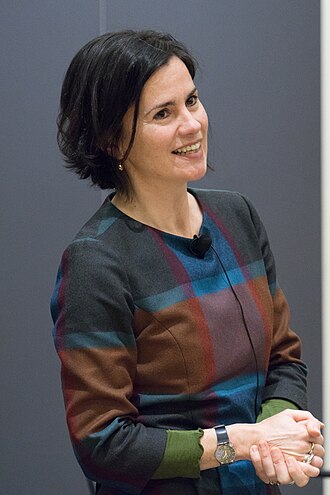
米兰达·弗里克 CClara
本期追问 · 点击跳到视频对应位置
听来的知识可靠吗?举证责任应该落在谁身上?谁在定义现实?知识从哪里来?
归入 Ⅱ·08 听来的知识可靠吗? →
EDITED TRANSCRIPT · 依据现场录音编译整理,可划线生成便签
编者按:2023年,米兰达·弗里克(Miranda Fricker)的《认识的不正义》(Epistemic Injustice)德译本出版,距英文原版问世已十六年。德语区一档哲学访谈节目的主持人克拉拉以英语连线身在纽约的弗里克,就她的学术道路、这本书的核心论证、理论在司法与医疗领域的落地,以及学界的性别不平等展开长谈。弗里克是纽约大学哲学系教授,此前任教于纽约市立大学研究生中心、谢菲尔德大学和伦敦大学伯贝克学院,长期致力于把女性主义视角引入道德哲学与认识论。本文依据现场录音编译整理,仅删去口语枝节与寒暄,论证与细节悉数保留。

自我介绍与德译本的反响

主持人: 欢迎您,弗里克教授。请先做个自我介绍吧。

弗里克: 我叫米兰达·弗里克,现在在纽约大学哲学系任教,直到去年还在纽约市立大学研究生中心。所以我刚换了工作。在那之前,您从口音大概听得出来,我是英国人,不是美国人。我七年前搬来美国,时间过得真快,我都不敢相信已经这么多年了。再往前,我在谢菲尔德大学,更早则是在伦敦大学伯贝克学院待了很多年,很愉快的很多年。所以我算是个伦敦人,如今生活在纽约这座让人兴奋的大城市。我做的就是一份普通的哲学工作,领域是道德哲学和认识论,或者说社会认识论,也就是知识理论。我一直感兴趣的,是把女性主义以及其他更具社会性的视角,用到道德哲学和认识论里去。

主持人: 您刚才描述了自己工作的几个方面,但您做的事一定有特别之处,否则《认识的不正义》不会在出版十六年之后被译成德文。

弗里克: 这本书能在德国出版,我非常高兴。更让我高兴的是它受到的关注和接纳的程度。我在瑞士电视台做了一次访谈,听说这本书在非虚构类图书里卖得相当好。我觉得这完全要归功于德国读者,他们对这类问题有如此鲜活的兴趣。

主持人: 不过他们也有点慢。

弗里克: 我们英国人的外语很糟糕,其他欧洲人阅读非母语文献的能力比英国人强得多。很多只以英文出版的学术书,德国的学生、教师,还有学界之外的读者,早就读过了,因为大家的英语水平实在太好。在这方面英国人是被惯坏了。

从文学到哲学:女性主义的启蒙

主持人: 什么影响了您?是什么让您成为今天的您?

弗里克: 说到学术上的影响,我今年五十七岁,干这行已经很久了。旅居海外的一个后果是永久的怀旧,年纪渐长也让人越来越怀旧。最近我常常想到,自己多么感激当年周围的那些学者和哲学家,尤其是九十年代初我还是学生时身边的那些女性。

我本科是八十年代末读的,专业是哲学和法国文学。从某种意义上说,写文学评论一直是我最喜欢做的事,不过我其实喜欢两样东西:一样是谈小说和诗歌,放开想象力,关注文本的形式;另一样是论证。哲学让我走进了论证的那一半,而我至今仍然非常怀念文学的那一半。所以在我的工作里,包括您待会儿要问到的那本书,我很享受花大量篇幅去关注戏剧、小说、回忆录和电影剧本,用它们来阐明我想提出的哲学观点。可以说,我所受教育中的文学影响和哲学影响如今越来越交融,我也希望继续把它们结合下去,在自己的工作里越来越多地借助文学。

至于具体的人,我一定要提到几位。哲学与法文本科快毕业的时候,我对女性主义、对女性主义政治产生了浓厚的兴趣,于是去肯特大学读了一个女性研究的硕士。我相信肯特大学是最早开设女性研究硕士项目的大学,所以那个项目是高度跨学科的。当时我完全没有回到哲学或者进入学界的打算,只知道自己真的对女性主义感兴趣,想把这件事想得更透。所以我在伦敦做一份兼职,然后下到肯特去读硕士。教那个项目的女性学者都非常出色,尤其是安·塞勒(Ann Seller),可惜她已经去世了。她是那里的哲学家,对我们影响很大。可以说正是她的教学让我想到:也许我愿意回去再想想哲学,再想想本科时学的那一整套知识理论。那套理论里完全不提社会身份、性别、种族、阶级和权力关系。仿佛所有社会性的东西都属于另一个领域,而哲学在这边,是一组关于理性存在者的纯粹抽象问题,从不涉及年轻人或老人、健全者或残障者、黑人或白人、男性或女性。而女性主义在说:不对,不对,性别是相关的。它在努力弄清性别可能以哪些不同的方式相关。

所以我非常感激一个叫「女性哲学学会」(Society for Women in Philosophy,SWIP)的组织,尤其是它的英国分会。它至今还在,是一个很了不起的组织。参与其中的女性举办工作坊和各种活动,滋养了我们所有人的想法,让我们能自由地探索这些在学界其他地方几乎还不存在的思想。如果要我挑出一个组织、一群人,回望时由衷地脱帽致敬,敬她们的独立思考、投入和有趣的思想,敬她们对我们这些刚刚萌生兴趣、渴望把这些问题弄明白的年轻女性的付出,那就是主持 SWIP 的那些女性,以及我在肯特大学结识的那些女性。我非常非常感激她们。我认为她们,还有整整那一代女性主义者和女性主义哲学家,影响巨大。因为那只是极少数人,持的又是哲学界里极不受欢迎的立场。主流哲学当时还在说:「我看不出这两样东西有什么关系,那听起来像是政治的事,我们只关心理性存在者。」而这些女性坚持说:「不,这里面有东西。」所以我感谢她们以某种方式滋养了我们。那已经是很久以前的事了,此后也有很多人做了很多工作,但我想特别提出这个组织。正如我说的,它至今活跃,在许多国家做着出色的工作。我提到的是英国的 SWIP,但我也参与纽约的女性哲学学会,它们遍布美国,也在墨西哥等其他国家。它是一个非常好的组织,滋养思想,滋养哲学界的女性,无论她们研究什么,同时也特别滋养女性主义的思想。

学术假的焦虑与纽约生活

主持人: 您现在在哲学工作里最享受的是什么?教学,还是写作与思考?

弗里克: 这是个有意思的问题。说实话,我刚休了一段学术假,这是很美妙的、很大的特权。我盼了六年,想着「太好了,我要休假了」,休假也确实很美好。可我同时发现它在情绪上极其难熬。我会因为自己的工作而有点抑郁。我不太擅长整天、每天都只写作和思考,因为我需要截止期限,需要结构。我能做到,但它并不像我事先想象的那样让我快乐。我和所有人一样拼命盼着它,但老实说,几件事情混在一起的时候我最快乐。我很想做兼职:每周两天写作和思考,另外三天教学、做行政、做讲座,以及其他各种事情。那会是我心目中天堂一般的工作。当然,现实通常是某一样东西在某个时段总是太多了。

我喜欢这种混合。我喜欢教学带来的社交互动,与年轻人的互动,以及日常工作里那种普通的满足感:一堂课讲得不错,几篇论文批完了,见了几个学生并帮到了他们,在一个会议上做了点事,一个正常的工作日就这样结束,然后你想「啊,好,今晚可以休息了」。但如果你整天独自一人,每天都在试着写,心里想着「天哪,写得太糟了」,那就难多了。所以我喜欢混合。

主持人: 哲学家在纽约的生活怎么样?

弗里克: 很棒。新冠疫情那几年当然很奇怪,全世界都一样,那是非常奇怪的几年。但我真的很爱大城市,那种令人兴奋的大城市。我在伦敦住了很多年,很爱那里,也爱那种在繁忙大都市中追求智识生活、在学院里工作的感觉。纽约让我着迷的也是这一点。让我惊叹的是,跳上地铁坐三站,就能去百老汇,或者更好的选择是外百老汇,因为百老汇实在太贵。外百老汇有戏剧、爵士、音乐、咖啡馆和餐馆,纽约那些显而易见的好东西。我真的很爱,很享受,觉得「太好了,这真有趣」。

当然,住在城里也有压力。城市很贵,很不容易,从一个地方到另一个地方总是很费劲。而且与伦敦相比,与我也略知一二的柏林相比,纽约更像是一个公共空间从来没人费心去收尾的地方。比如地铁,看上去还像个工地,但它能用。你得慢慢接受这种审美。但这里非常令人兴奋,非常有趣,我真的很享受在这里的生活。

新书预告:责备作为沟通而非报复

主持人: 您现在在做什么?

弗里克: 最近是两个项目同时进行,但主要的一个是一本关于责备与宽恕的书。这本书我断断续续做了很久,写了不少论文。我想这正是学术假让我觉得难熬的原因:你回头去看旧作,觉得「啊,这差不多可以用了」,可当你真的试着把五年前写的一章改成书里的两章时,这个过程里有某种东西让我觉得非常难。

但我热爱这个题目。我喜欢思考:当我们为过错互相责备时,我们到底在做什么?有人认为,我们彼此完全不责备会更好。有人认为,责备另一个人在本质上就是报复性的。假设您对我做了什么坏事,克拉拉,我相信您绝不会,但假设您上周对我撒了谎,我发现了,我责备您,并向您表达我的责备,说:「克拉拉,你怎么能那样对待我?」也许我很生气,也许这让您很难受。有些人认为,我这样做的时候,必然是在惩罚您,试图让您痛苦,用伤害来回敬您对我的伤害。也就是说,责备基本上总是一种有分寸的复仇。如果我认为人际间的责备必然如此,我就会认为我们应该努力停止责备,因为我并不相信「以痛还痛」的交换有什么道德价值或社会价值,哪怕它是有分寸、成比例的,无论「成比例」意味着什么。

我所相信的、值得保留的那种责备,也就是我认为责备有时候是、而且如果我们能把报复的情绪再收敛一点就总可以是的那种责备,是一种尝试:向您传达您冤枉了我,以及您是怎样冤枉了我。我可能会跟您理论,可能会愤怒、带有敌意,我可能会说:「克拉拉,你怎么能那样对我?」我确实认为责备在本质上、在必然性上带有指控性。但如果目的在于,或者至少有些时候我用这种指控的口吻同您说话所达到的效果在于,让您看到您冤枉了我,让您想到「是的,我不该那样做」,然后倾向于说「对不起」,因为您现在比先前更充分地学到了、被提醒了、真正领会了您不该那样对我撒谎,那么这就是一种沟通性的目的:增进并巩固我们共享的道德态度。我认为这不仅值得,不仅有道德价值,而且既不残忍也不是报复。我认为它对于拥有一种共享的道德生活而言是必不可少的。

有些作者特别强调,这个过程需要是双向的沟通,我同意他们。假设我说:「克拉拉,你怎么能那样对我?你对我撒谎太自私了,你怎么能这样不尊重我?」您可能会回答:「米兰达,那其实只是个小谎,我这么做是有原因的,因为我不想让你听到真相就发火,我本来打算过后告诉你。」这时您在向我反向沟通,我在重新思考那个谎言,我会想:「也许总的来说你还是不该那么做,但没有我原先以为的那么糟。」于是我也从这场交流里学到了东西。

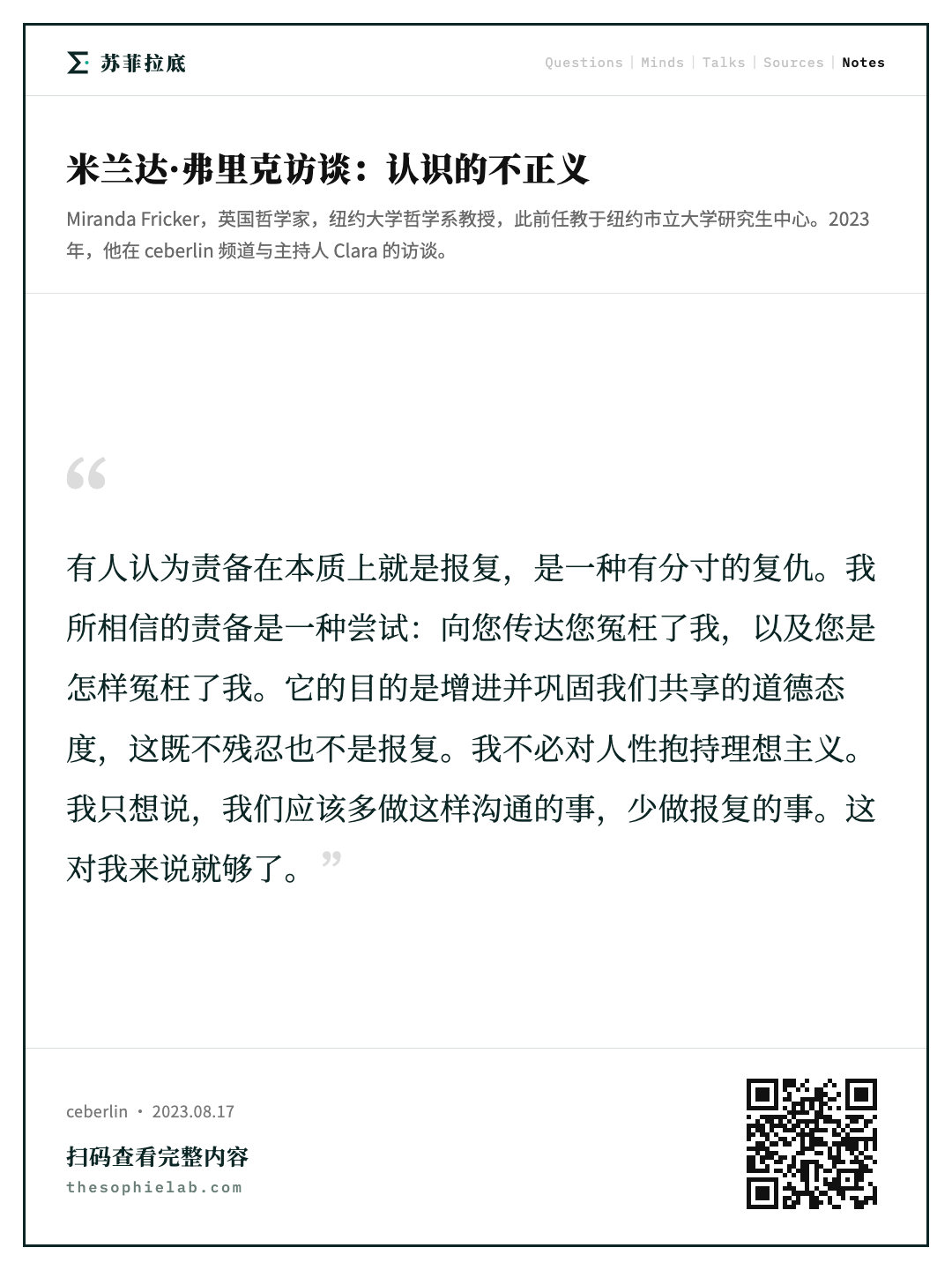
所以我看不出为什么我们的责备习惯不能变得越来越具有沟通性和对话性。就算我们是人,永远做不到那一步,因为我们受了伤就会反击,有时确实希望别人受苦,确实有报复的情绪。我不必对人性抱持理想主义。我只想给出一种关于责备的理论,强调我们确实常常以这种沟通的方式责备,而这种责备在共享的道德生活里承担着一项根本的功能:我们让彼此更多地分享各自的道德理由。我们应该多做这样的事,少做那另一种事,少做报复的事。这对我来说就够了。

这本书也谈宽恕,不过关于这本书我大概已经说得够多了。如果您愿意,我随时可以谈谈宽恕的部分。

主持人: 好的,也许后面的问题可以穿插进来。我很期待关于责备的内容,我有个女儿,母女之间经常上演这一幕。

牛津岁月:导师、姐姐与威廉斯

主持人: 回到您的经历。您是在传奇的牛津大学读的博士。牛津让您做到了在别处做不到的事吗?

弗里克: 好问题。从某种意义上说答案必定是「是」,因为它是一所声望极高的学校,我无疑从这些东西里受益了,所以,是的,显然是的,只是这些受益的方式我自己很难追踪。从外面看,当然,这样的学校必定帮到了你。从里面看,我对它给予我的东西感激不尽。

我本科就是在牛津读的,之后如我所说去肯特大学读了硕士。然后我其实并不想、也没打算回牛津读博士,也就是那里所谓的 DPhil,因为我已经在那儿待过,而且当时住在伦敦,想找个更中立、在我眼里也更与时俱进的地方。回牛津本来不在计划之内。但我很清楚自己博士论文想写什么。结果恰恰是牛津对我最合适,首先是因为那里有一位哲学家,萨比娜·洛维邦德(Sabina Lovibond),她现在退休了,但她当时非常出色,我觉得她的写作处在女性主义哲学的最前沿。她同时也研究古代哲学和伦理学,但她有这方面的女性主义工作。我开始读她的作品,其实是伦敦大学学院一位女性主义哲学家萨拉·里士满(Sarah Richmond)的建议。里士满做的是女性主义哲学,但偏法国女性主义和精神分析,那不是我想走的方向。她说:「我觉得你也许应该申请回牛津,因为洛维邦德在那儿。」她完全说对了,那段经历棒极了,我非常感激萨比娜在我整个论文期间的指导。

然后我有了第二桩幸运,大概是在第二年。我第一年其实没有任何资助,所以在伦敦做兼职,差一点就根本不读博士了,因为没拿到钱。这里我要非常感谢我的姐姐伊丽莎白·弗里克(Elizabeth Fricker),她也是哲学家,最近刚退休。她和她丈夫每周都收留我,我每周在他们家住两三个晚上,他们付钱让我照看他们的儿子朱利安,当时他还很小,如今也成了哲学家。所以我非常感激莉齐,非常感激萨比娜,也非常感激我的第二位导师伯纳德·威廉斯(Bernard Williams)。我想是在第二年,萨比娜大概去休假了,于是有了一个问题:谁来指导这个人?那时我们不能自己选导师,牛津系里一定有人说:「哦,谁来指导弗里克?伯纳德·威廉斯现在每年有半年从伯克利过来,也许他愿意收她。」他非常慷慨地答应了,尽管我的课题看起来跟他的研究没什么关系。这在今天看来很好笑,因为我觉得我现在做的一切都浸透着对威廉斯的兴趣。于是他开始与萨比娜共同指导我。所以我有威廉斯,有在牛津做哲学家的姐姐一路支持,那里还有其他哲学家,比如詹妮弗·霍恩斯比(Jennifer Hornsby),一位出色的哲学家,后来在伯贝克成了我的同事,她在牛津始终对女性主义研究给予极大的支持。这些女性、这些人,还有其他许多人,给了我非常多的东西:了不起的导师,各种支持,以及我结交的朋友。所以在智识上、教育上和个人层面,我都很感激牛津,对它有许多非常美好的回忆。

拒绝把理性让给男性:做哲学而非只批判

主持人: 女性主义是怎样变得对您如此重要的?

弗里克: 首先就是对性别问题、对父权制在我生活里的种种表现感到愤怒。我当时二十多岁,普通的女性主义意识正在我身上觉醒,我对一切都怒不可遏。但我不想一直对一切都怒不可遏。我想试着理解性别,理解那些明的暗的权力不对称,它们似乎渗透在一切之中,个人的、政治的和学术的。我读的哲学专业女性极少,我们读的哲学著作几乎没有女性写的。种族、阶级等等也一样,不过我当时聚焦在性别上,想把它弄明白。这推动我去读了女性研究的硕士。

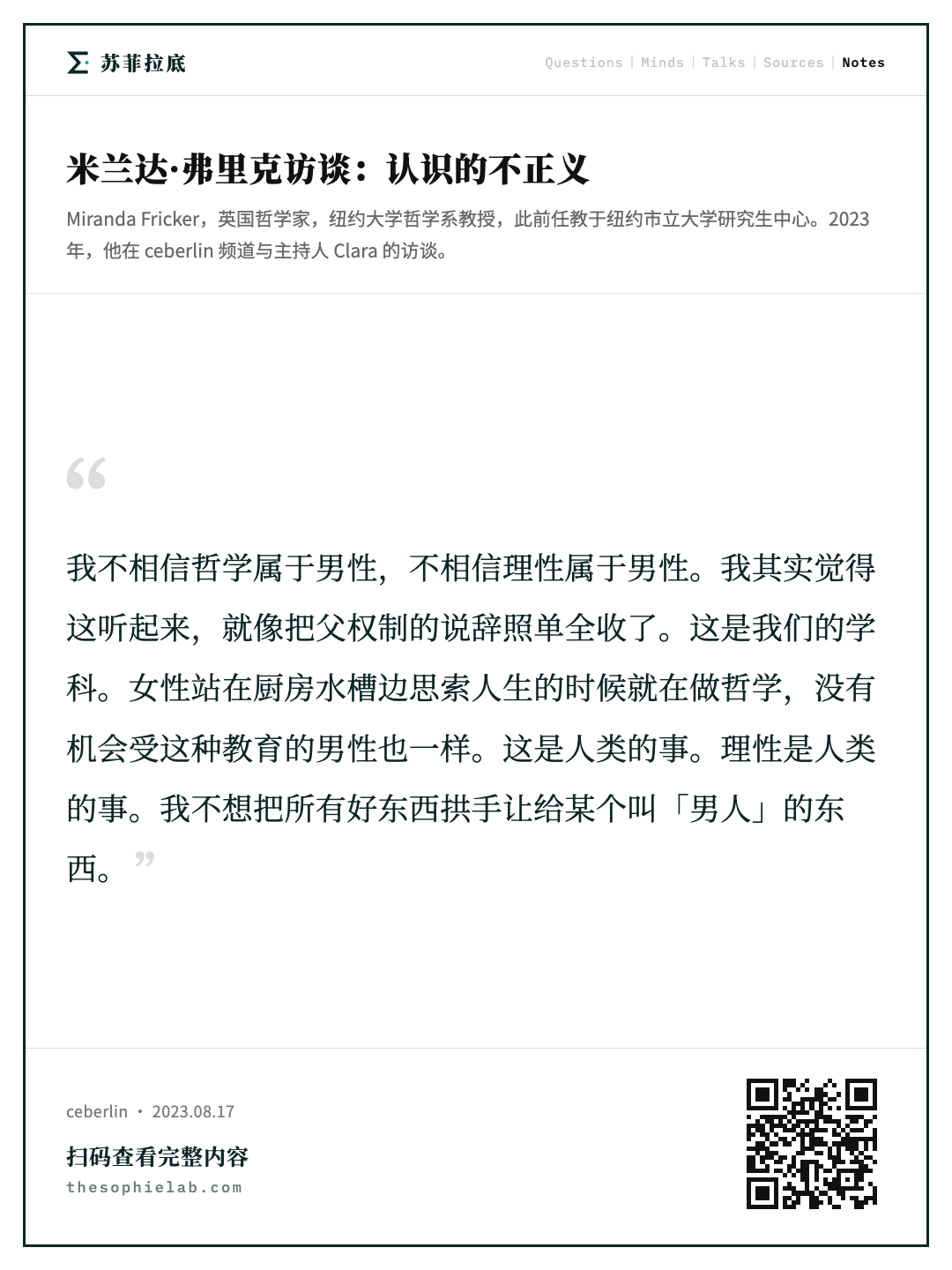
我也清楚地记得,尤其在硕士快结束时,我觉得面前有一个选择。要么永远对一切都愤怒,对一切都感到疏离;要么,这在今天听起来可能很过时,但当时有大量女性主义修辞在说:哲学是男性的,哲学是父权制,理性是男性的,理性建立在一种独特的男性化的、二元的性与性别观念之上,建立在男性的心理性欲构造之上,一切都是逻各斯中心主义的、二元的,就像男性的性一样。那时有很多非常二元的想法:哲学坏,女性必须为一切另辟蹊径。我就想,我真的不信这一套。我不相信哲学属于男性,不相信理性属于男性,不相信语法结构属于男性。我其实觉得这听起来,请原谅我说粗话,就像把父权制的说辞照单全收了。我想,不,这是我们的学科。女性在被允许的时候总是多少在做这件事。女性站在厨房水槽边思索人生的时候就在做哲学,没有机会受这种教育的男性也一样。这是人类的事。理性是人类的事。我真的相信这一点。

所以我想找到一种做哲学的方式,一种思考生活的方式,既能吸收女性主义批判中有力的、赋人以力量的部分,又不把所有好东西,所有这些美好的人类事物,我想做的、也希望女性多做的事情,拱手让给某个叫「男人」的东西。很多男性也不希望那样。我想摆脱那种非常二元、疏离而令人沮丧的思维,也不想困在批判里。我认为批判非常重要,也确实能赋人以力量,但女性主义思想有时会困在纯粹的批判里。我想做的是另外证明一件事:你可以用一种已经吸收了这些女性主义视角的方式来做哲学,某种意义上敢于把这些视角视为理所当然,然后就去做哲学。我觉得那会很有趣,对我来说也比「留在他们的哲学里,从外部以女性主义视角批判它」更能赋人以力量。我觉得后者有一种自我边缘化的风险,而且我意识到这种风险会贯穿整个人生。我不想那样活,不想那样做哲学,也不想那样过日子。我认为你必须抓住机会,接受妥协,尽力找到能把新视角带进来的做事方式。

分析哲学的自我免疫与搭桥的尝试

主持人: 通过「认识的不正义」,您开辟了一条此前并不存在的进路。有过某个灵感时刻吗?

弗里克: 说它不存在,是就我受训的那种哲学而言,也就是分析哲学、英美哲学。但这类思考在其他思想传统里早就存在,在学院之外也很可能存在了很久。来自别处的女性主义思想,尤其是马克思主义,还有英国人所说的「欧陆哲学」,那种深受马克思和黑格尔影响的欧陆哲学,一直在谈权力、社会身份、知识的建构等等。我还提到了女性主义精神分析理论。在美国,则有种族理论和刚刚起步的种族哲学,它们承接了黑人学术更早的传统。还有后殖民理论,它与欧陆哲学密切相关。所以有这么多话语存在,而我的学科,分析哲学,似乎对它们免疫。它是自我免疫的,把所有那些对话的影响都挡在外面,对自己说:不,我们做的这件事只关乎理性存在者;社会性的那些东西都很有意思,但听起来都有点还原论的味道,因为我们这边相信理性和证据,所以我们就继续做自己的事。

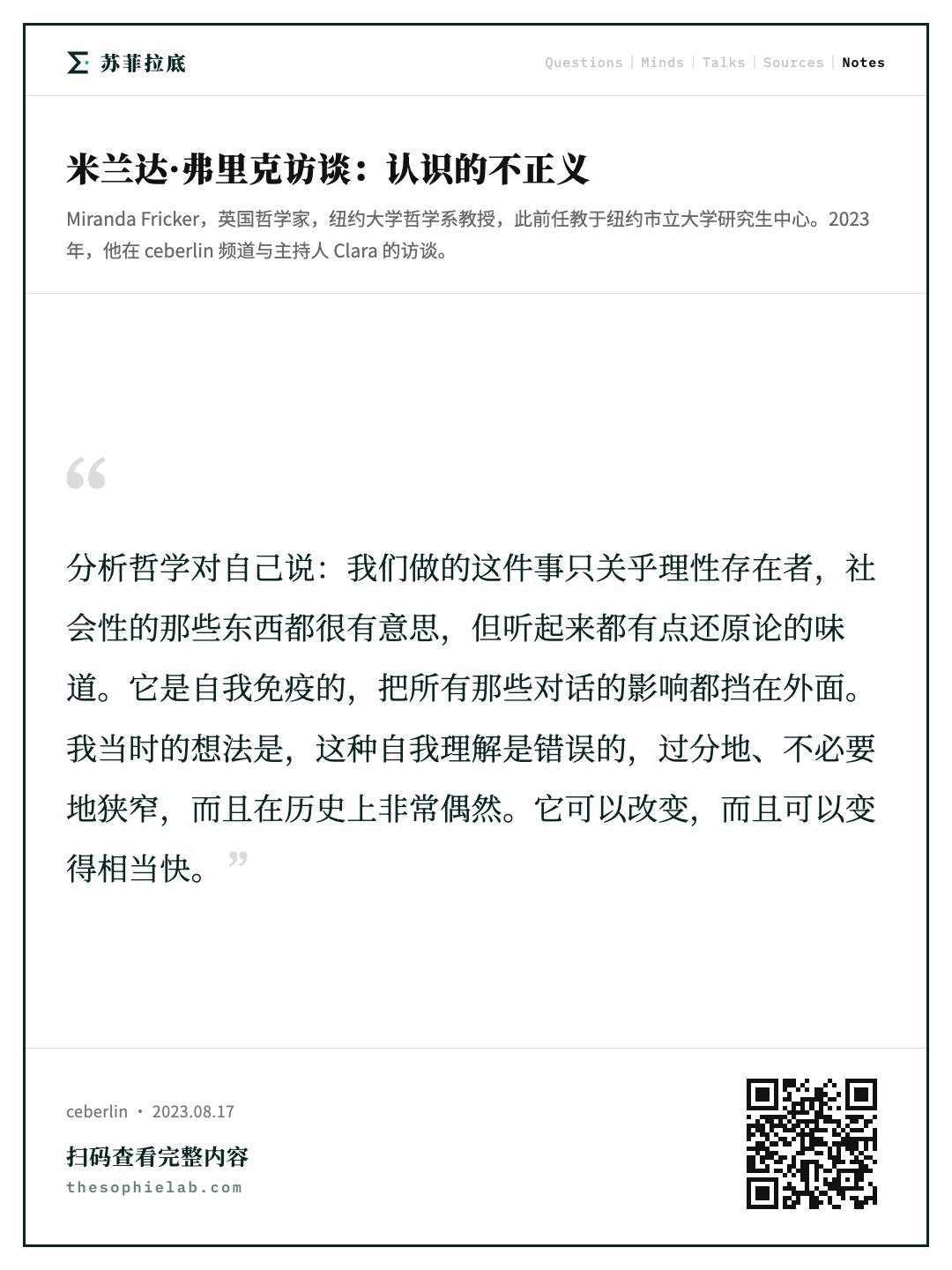
我当时的想法是,分析哲学这种自我理解是错误的,过分地、不必要地狭窄,而且在历史上非常偶然。它可以改变,而且可以变得相当快。于是我尝试了,这只是一种说法,我可以用许多不同的方式来描述它,而且每次说「我在那本书里做了这件事」我都紧张,因为一本书里你想做的是好几件事,对它也有不同的视角,既有不同的批评视角,也有不同的解释视角。但我尝试做的事情之一,是向分析哲学表明:哪怕只用它自己的工具,哪怕就是「知识」这个概念本身,也就是分析认识论最痴迷的那个问题,给知识概念下定义,某个认知者、任何认知者知道某个命题 P 是怎么回事,即便是这个问题,在某种关于我们的知识概念由什么构成的理解之下,也可能揭示出:谁说话时被谁相信,这里面的权力与偏见问题,就处在这个概念的核心。所以我试图搭一座桥,向分析哲学表明,那些看似与它无关的关于政治、权力、性别、种族等等的话语,其实是相关的,或者至少存在一条思路,能揭示它们与分析认识论的核心业务相关。这一点或许是新的,在那个文献里这么做是新的。但关于权力与知识的一般想法,自六七十年代起,自马克思和黑格尔起,当然早就有了。所以这是一个从其他话语里抽取线索、用它们建造一件分析哲学作品的问题,以此表明这些话语其实并没有那么割裂。

少抽象一点:证言不正义如何浮现

主持人: 我引一句书里的话:「关键在于看到,我们的认识行为如何能同时变得更理性、更正义。」这就是目标吗?

弗里克: 是的,这一直是我的想法。书名叫「认识的不正义」,我想表明,在认识实践之内存在一种独特的不正义,而分析哲学只要被轻轻推一下就能看见它。不需要多大的移动,只要一点点。想想证言,想想人与人之间互相告知事情。当时证言认识论正在大幅升温,许多哲学家开始写「告知」:告知的认识论是什么?克拉拉说出 P,比如说她在柏林,我怎么就仅仅因为她发出了这些声音而知道她在柏林了?这像魔法一样。我怎么就得到了这个被传递过来的知识?它是怎么运作的?这些是当时分析认识论里的问题。所以那时已经有了一个社会化的动作:不再只是一个理性存在者像笛卡尔那样想「嗯,我怎么知道这是我的手」,而是两个理性存在者,一个告诉另一个某件事,靠在社会空间里说话,像变魔法一样把一条知识传过去。这已经把分析认识论从它最个人主义的图景里拉出来,带向某种接近社会空间的东西。但它还不是完全社会性的,因为它仍然无意去思考男人与女人、种族与阶级,以及文化、历史等其他社会语境。它只是两个个体,两个理性存在者。不过这已经是朝正确方向迈出的一步,有助于别人去搭桥。

我说的是:有了这一步之后,抽象到什么程度,取决于我们,取决于理论家自己。你可以抽象。这里是克拉拉和米兰达,带着我们全部的具体性:时间、地点、阶级、性别、年龄、种族,一应俱全。然后你可以抽象到极致,说「好吧,我们是两个理性存在者」。没错,我们是。也许有些问题恰恰适合在那个最高的抽象层次上提出,那是许多分析哲学典型的层次。但也许我们可以少抽象一点,走到类似「社会类型」的层次,也就是社会学、大量欧陆哲学通常处理的抽象层次。在那里我们有男人和女人,健全者和残障者,黑人和白人,犹太人,西语裔,富人和穷人,等等。这些是社会类型,仍然是抽象,但不是最大程度的抽象。在那个层次上,一组不同的分析认识论问题也许会进入视野,而它们此前被抽象掉了。你看不见它们,因为整幅画在最高处只是一个轮廓。而在稍低一点的地方,我们对自己的描绘有了一点色彩。也许会出现一些真正的认识论问题,关于当这个人向那个人告知某事时会发生什么。

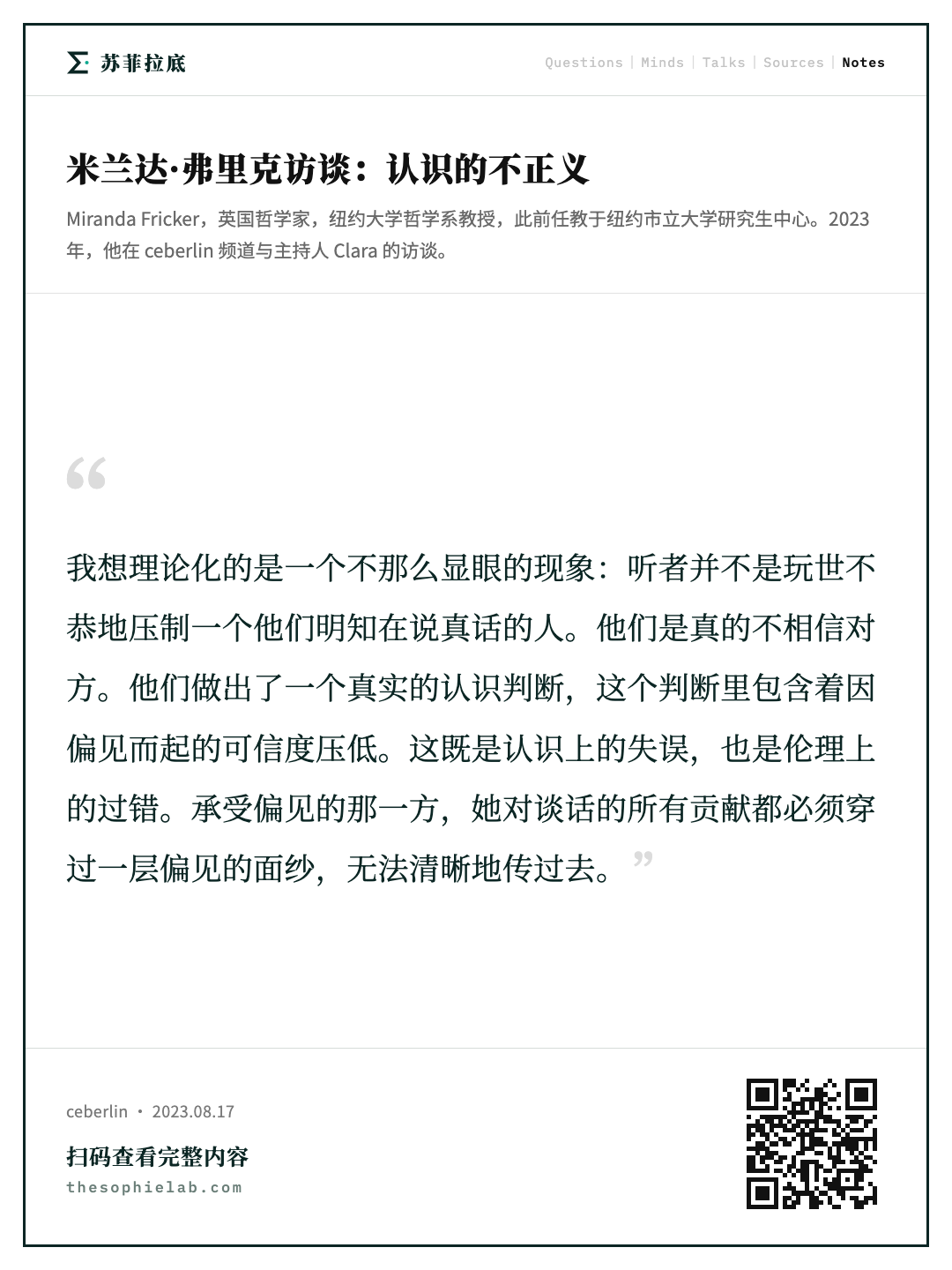
比如,一位黑人女性向一位富有的、受过教育的白人男性告知某件事。如果空气中飘着偏见,它未必在他的信念里,也许只是飘在他们说话的「气流」里,那么她的话得到的可信度(credibility)可能会因为影响他判断的偏见而被压低。这是一种特殊的不公平劣势,它伤害的是人类最基本的一项认识功能:参与知识的传播,给出知识,分享你的知识。而且不只是知识,还有分享你的想法、你的批评、你的问题、你对谈话的贡献。承受偏见的那一方,她对谈话的所有贡献都必须穿过一层偏见的面纱,无法清晰地传过去。

我对此的刻画,有不同的做法,但因为我如此关注认识这一因素,关注是什么堵住了气流,使她的知识、问题、批评或反证传不到他那里,所以我把它刻画为一种因偏见而起、因而不公平的可信度压低。于是偏见被揭示为在伦理上是坏的,在认识上也是坏的。它对他是坏的,因为他学不到她要告诉他的东西。它对共同体是坏的,因为她拥有的知识,她所有的问题和反证,无法渗透到更广的共同体里去。它们也许能渗透进一个较小的共同体,但到不了其余的地方。这在认识上是坏的,正如在伦理和政治上是坏的。所以它对她在伦理上是坏的,对他在认识上是坏的,对他在伦理上或许也是坏的,因为对别人做坏事本身就是坏的,而且它对整个共同体在认识上是坏的。

这就是我说那句话时心里想的一件事:我们想要的是一种同时更合乎伦理、更好的实践,好让这些坏事不再发生在她身上;同时也更理性,好让她所拥有的认识上的好东西以应有的方式传到别人那里,不至于仅仅因为偏见这种愚蠢的东西而让别人错失她能提供的认识益品。更理性,也更好。让我印象极深的是,这里存在一种目的上的完全和谐:伦理意义和政治意义上的正义,与认识上的益品,更多的真理、更多的理解、更多的智慧,是由同一件事来实现的,那就是根除偏见。也许这完全是显而易见的,但当时它似乎并不显而易见,也不清楚该如何把它理论化。这正是我试图做的。对我来说,做哲学到头来总是在说非常显而易见的事,但功夫在理论里,在怎么说、怎么表述,以及怎么让它与你相信的其他理论连接起来。这是分析哲学的工作,我同样热爱它。

为何聚焦不正义:偏见在知识概念核心

主持人: 所以这就是您聚焦不正义的原因。

弗里克: 没错。我聚焦不正义有一个特别的原因。从分析哲学的角度看,也许从相对优越的社会经验的角度看,人们很容易觉得值得理论化的有趣问题是实践如何运行良好。有那类理论说:「在一个正义的社会里,人人都能发表意见。」但处于非优势地位的人很清楚,他们试着发表意见,却根本没人听,而且是故意不听,因为别人不在乎。这个现象不是我要理论化的。有人可能也愿意把它叫做认识的不正义,那没问题,词怎么用是各人的自由。我想理论化的是一个不那么显眼的现象:听者并不是玩世不恭地用宣传或抹黑去压制一个他们明知在说真话的人。他们是真的不相信对方。他们做出了一个真实的认识判断,这个判断里包含着因偏见而起的可信度压低。所以他们犯了一个错误,一个判断上的错误,它既是认识上的失误,也是伦理上的过错。而一个明知对方说得对、却不想让别人听到、于是说「不,那是胡说」的人,在我的框架里,他并没有在认识上贬损那个人。他在做另一种不正义,但他没有错误地误判对方试图说出的认识内容。他根本没有误判,他知道那是真的,正因为它是真的,他才要压制它。那是另一种不正义。

我想锁定的是一种错误的误判:你或我可能在无意中冤枉了别人,因为我们出于偏见误判了对方。这也是为什么我们实践中的这种失灵是知识理论内部的事:纠正可信度判断中偏见的需要,是由一种认识上的需要驱动的,那就是获得所有提供给我们的真理、所有提供给我们的知识的需要。我论证这在证言这一最基本的人类实践中是绝对核心的。然后我借用了另一个人的理论,认识论学者爱德华·克雷格(Edward Craig)的理论,他认为交换信息的实践就是知识概念本身的核心。我正是用这一点来表明:在公平地接收他人话语的过程中纠正自己的偏见,这件政治性的事,并不只是浮在认识论表面的一条礼仪。它处在「一个人算作认知者」这件事的核心,而按照我采用的克雷格的理论,「一个人算作认知者」又处在知识概念本身的核心。这就是整个结构:试图表明正义问题,尤其是偏见的纠正,处在公平地告知与接收信息这一实践的核心,而这一实践构成了我们的知识概念本身。

主持人: 所以您写道,偏见是通往真理的障碍。

弗里克: 正是如此。偏见挡在路上。

主持人: 但您也写道,偏见是一种本能的力量。

弗里克: 是的。我提出,拥有至少某些偏见,深植于人性之中。为了论证这一点,我聚焦的那种偏见是这样的:哪怕在最基本的自然状态里,在想象中最原初的人类场景里,人们互相依赖以获取信息,这是我从克雷格那里借来的结构,即便在那个场景中,只要对人类社会的理解稍微贴近现实,就会有对外来者的猜疑。对外来者的猜疑也许部分有其道理,但极有可能溢出为纯粹的偏见,使外来者得到的信任低于他们应得的。这还没有算上其他偏见。有人可能会论证种族和性别偏见同样始终处在人类社会的核心,我很想相信这是对的,但我在书里并没有依赖这个想法,因为我认为只需要这种内外之别的偏见就足以启动论证,而人类学对这种偏见的证据极其充分。

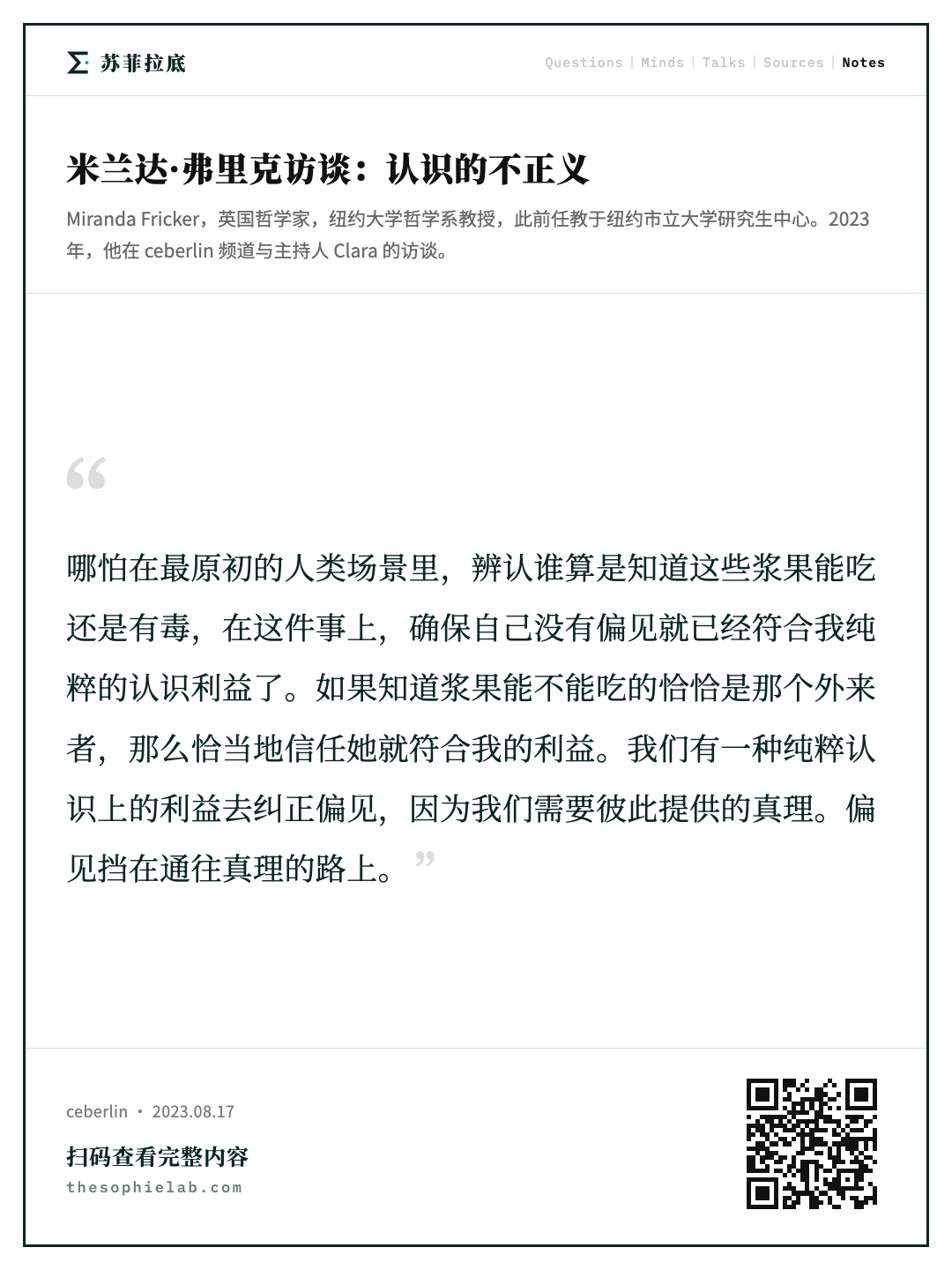
这就是全部所需。哪怕在自然状态这个核心实践里,辨认谁算是知道 P 是否成立,因而我该信任谁来告诉我这些浆果能吃还是有毒,在这件事上,确保自己没有偏见就已经符合我纯粹的认识利益了。因为如果知道浆果能不能吃的恰恰是那个外来者,那么恰当地信任她就符合我的利益,而仅仅因为她是外来者就不信任她,不符合我的认识利益。这就是我论证的意义所在:在人性中非常基本,因而在我们的告知实践中也非常基本的一点是,我们有一种纯粹认识上的利益去纠正偏见,因为我们需要彼此提供的真理。

诠释不正义:性骚扰概念的诞生

主持人: 您还写到认识的不正义有两种。能给我们解释一下证言不正义和诠释不正义分别指什么吗?

弗里克: 当然。在那本书里我只谈了这两种。我确信还有其他种类,此后也有许多人撰文阐述了其他种类的认识不正义,看着这些不同的构想陆续出现,非常有意思。不过我仍然倾向于认为认识不正义有两大领域。一个关乎可信度,就是我刚才结合证言不正义(testimonial injustice)谈的:当一个人的话,严格说不只是一个人的可信度,而是一个人的话,因为偏见而得到被压低的可信度,那就是证言不正义。但另一个错误地损害某人认识功能的领域,在我看来不在可信度,而在可理解性(intelligibility):有哪些概念可供我在社会空间里使用,来传达我的经验的性质。我把这叫做诠释不正义(hermeneutical injustice)。

这个想法借鉴了许多其他研究,尤其是立场理论,我明确借鉴了女性主义立场理论,它源自马克思主义,但我绝不想要它的全部。我只想弄清一个一般性的想法:一个人可能处在这样一种位置,他本人或他所属的社会群体,对共享的概念与社会意义之库贡献不足。这个库是人人都可以使用的,而且使用时可以有把握地相信,处在完全不同社会位置上的人也能听懂。如果情况是这样,也就是存在一个社会意义与沟通的资源库,某些群体也许贡献过多,于是所有资源都极擅长解释有权者的生活是什么样,却不那么擅长解释各种被压迫群体的生活是什么样,因为这些群体不像有权者那样有机会向这个共享的意义之库贡献,那么在人们能用来跨越社会空间让自己被理解的概念上,就已经存在一块不平的场地。从这个想法出发,就有了我所说的「被诠释性地边缘化」(hermeneutically marginalized):你在获取可跨社会空间使用的思考与沟通工具方面被边缘化了。你在自己的群体内部也许有别的思考与沟通工具,但如果你需要向那边的人传达你的处境,那些工具就没用,因为他们不共享这些概念,沟通就传不过去。

我感兴趣的是把一个连续统统一起来,即在社会可理解性方面的各种不公平的诠释劣势。它的一端是最极端的情形:我连自己都无法理解自己的经验。我用的例子是早期性骚扰的案例,来自苏珊·布朗米勒(Susan Brownmiller)关于美国妇女运动的回忆录,其中讲述了一个具体的性骚扰案例,卡米塔·伍德(Carmita Wood)的案子。她是纽约州北部伊萨卡的一位女性,正在遭受性骚扰。她其实是白人,而当时美国遭受性骚扰的绝大多数女性是黑人女性,她们尽其所能把人告上法庭,尽可能运用法律权力,真的在奋力抗争。但路上有各种阻碍,其中一个就是没有这个概念:没有法律概念,而且按那本回忆录的说法,几乎连日常的「性骚扰」概念都没有。所以这些法律申诉无法用能够真正通过并被承认的措辞提出。促成大规模意识觉醒、社会变革以及法律变革的案例之一,当然不是靠它一己之力,但在提出「性骚扰」这个新概念方面,它是一个非常突出的案例,就是卡米塔·伍德的案子。那个时期的法律史都有充分记载。她们想出了「性骚扰」这个说法。按照那本回忆录,我也和一位当时在场的女性谈过,她们真的觉得,没有这个概念,她们就无法理解发生在自己身上的事。一个人可能遭受的是真正的性侵犯,另一个人遭受的是较轻但持续不断的骚扰,在办公室里被当作调情之类的事情,而她们想要一个概念,把所有这些经验汇聚起来,确认它们是同一回事。她们想出的就是「性骚扰」。我们知道,它随后从一个相对小的、边缘化的群体那里,通过她们的运动越长越大,如今已是一个牢固确立的法律概念,一个任何人都可以在社会空间里通用的概念。这是一个非常极端的例子,因为当事人自己都觉得,在把这个概念拼合出来之前,她们无法充分理解自己的经验。

连续统的另一端,则是当事人自己能完全理解、也能向社会空间里的大多数人传达的经验,只是也许传达不到某些特定的社会机构,因为这些机构不使用这个概念。也许警方或你的雇主不使用你提出申诉、说清自己遭遇所需要的那个概念。那就是一种边缘得多的诠释不正义。所以我想把一个连续统上的各种案例汇集起来,并用不同的例子来做这件事。

解决之道:自我训练与结构改革

主持人: 您也提出了一些解决办法。比如您考察了伦理感受力与认识训练、认识社会化之间的相似性。伦理感受力、责任,与认识上的训练和社会化,应该有什么共同点?

弗里克: 谢谢。您的问题所处的层次,正是我在那本书里工作的层次,也就是人际层次。在书的开头和结尾,我说:这些问题是社会的、结构性的问题;我要考察人际层面的东西,考察其伦理与认识两方面,以便把握核心的过错是什么,它与其他理论如何契合,而这也许指向了在制度层面进行更具政治性处理的需要。这些年来,我零零散散地写了几篇论文,讨论认识的正义与不正义、认识的恶习与德性,全都关乎制度程序。我认为那才是所有这些问题的主要解决之道。

但我确实认为,人际层面的训练、自我训练等等,仍然是图景的一部分。意识到偏见的普遍存在,意识到我们评判彼此时隐性偏见的普遍存在,是有帮助的。关于隐性偏见和偏见的一些实证文献给出的结果表明,对它的觉察可以有帮助。假设你在一个面试小组里面试求职者,在面试前二十四小时内有人提醒你,你需要在观察面试者时积极地想到反偏见的刻板印象等等,我相信有些证据表明这能带来改变。麻烦在于,也有大量证据表明它没用,或者效果消退得太快,或者谁也不知道它在什么情境下起作用。所以我认为关于如何对抗偏见的科学,现在下任何结论或依赖它都为时过早。但我有一种信念:我们的社会想象力是这样一种东西,至少对自己在某个具体谈话情境中是谁保持一点批判性的自我觉察,能帮助一个人有益地悬置判断,去寻找佐证,不要太快下结论,并意识到自己关于该信谁不该信谁、该更认真对待谁的话的那套「雷达」很可能带着一点偏见,有一点失准。我认为这是一项有用的训练,既是伦理的,也是认识的。

但真正说到解决办法,几乎全在结构。大多数偏见是结构性的偏见,系统地存在于我们的教育、经济和政治体系里,存在于我们的性观念、宗教体系以及其他一切之中。这不仅影响偏见,也影响诠释边缘化的问题:哪些群体的社会意义、哪些群体用于获得可理解性的工具,能为所有人共享,能进入董事会、大学理事会或地方政府的话语。这些都是结构性的问题。认识的正义与不正义只是这些问题中的一条线索,但它是让我持续着迷的那条线索,而且我认为它非常切题。

审讯室里的可信度:从不足到过剩

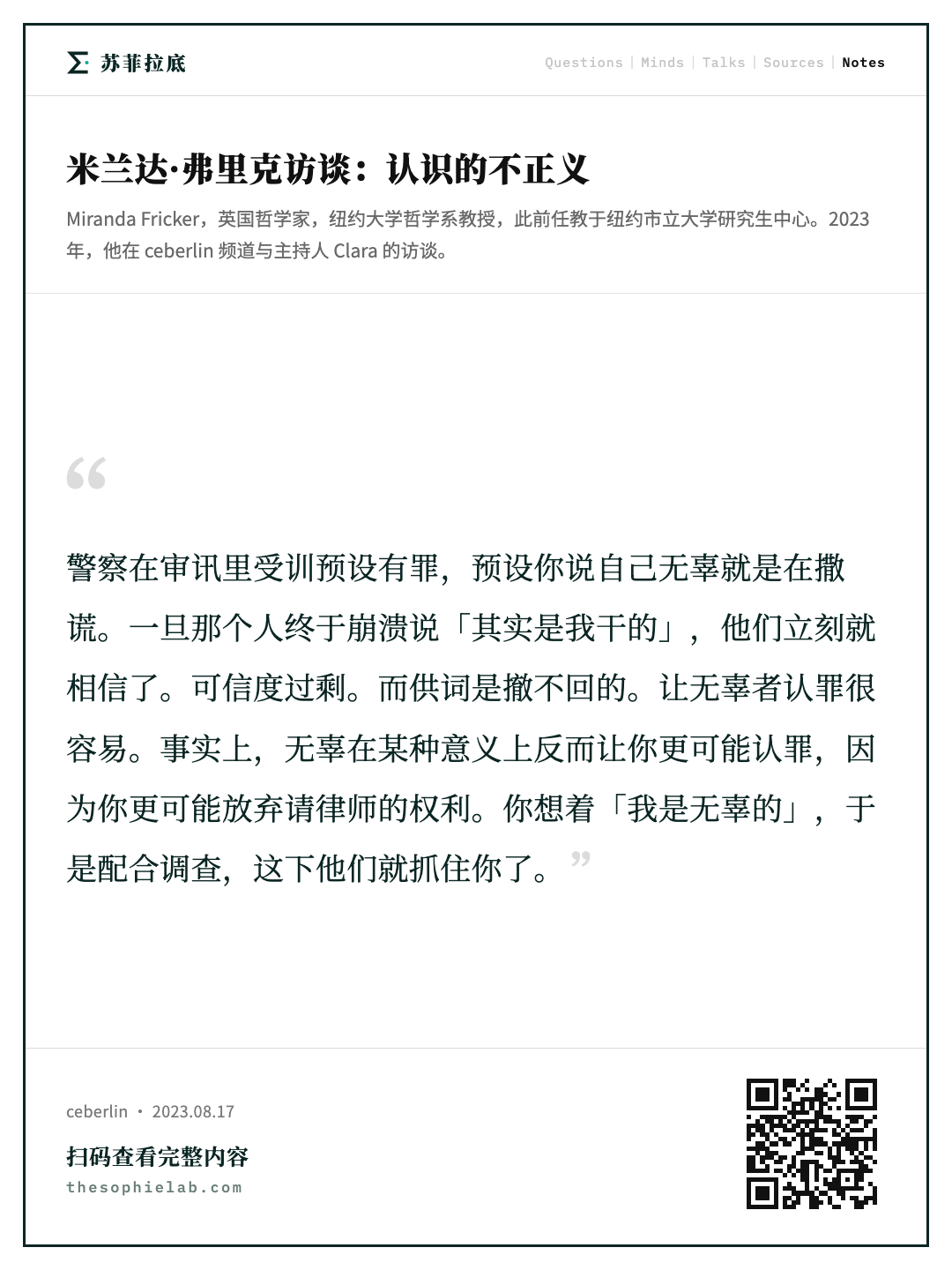
弗里克: 举个例子,詹妮弗·拉基(Jennifer Lackey)最近有非常精彩的研究,她出了一本关于刑事司法系统的新书,书名我想是《刑事证言不正义》。我和詹妮弗交流了很久,得以读到她这方面更早的论文,并开始思考这个问题。所以我也写了一点、想了一点其中的某些机制。她感兴趣的是,可信度过剩(credibility excess)有时也可以算作证言不正义,这是我书里没说的,我只把可信度不足视为不正义。但她带来了一些我认为非常出色的例子,都是美国刑事司法系统中的具体社会案例。假设有人因涉嫌犯罪被捕,只是嫌疑,什么都还没有证实。他一遍遍声称自己无辜,一遍遍不被相信。这里面往往牵涉偏见,而且其实是一种明文的偏见:警察受的训练就是在这个阶段给出可信度不足,因为他们在审讯。就算不再叠加种族偏见以及现实中必然渗透这种情境的其他偏见,光是「我们不信你,我们要让你认罪」这套方法本身就是如此。如果你处在审讯(interrogation)而非问询(interview)的情境里,官方训练就是这样。问询更开放,但如果他们认为你在撒谎,就会把你放进审讯,而美国大多数警察受训采用的所谓「里德技术」(Reid technique),主动训练他们预设有罪,预设你说自己无辜就是在撒谎。然后,正如拉基指出的,一旦那个人终于崩溃,说「其实是我干的」,他们立刻就相信了。可信度过剩。

再往后,这也是我想指出的,供词是撤不回的。一旦签了字,在形式上几乎不可能撤回供词。你就完了。你越说「不是我干的,不是我干的,我说是我干的只是因为你们说我签了字就能回家见父母」,就越回到可信度不足。所以,看看警方实际的正式程序,看看他们在审讯中受训去做的事,以及他们被训练成相信这套程序完全可靠,尽管二十年的心理学研究表明,只要施加这类典型的压力,让无辜者认罪其实非常容易,你会看到:先是因官方偏见即这一程序中的有罪预设而来的可信度不足,然后是可信度过剩,拉基称之为「温和的证言不正义」,然后又回到我所说的平常的证言不正义,即因偏见而起的可信度不足。我认为这就是警方审讯程序在形式上、就其明文程序而言的样子。

我担心的是,它基本上把「成功地通过因果和社会建构把某人变成有罪者」的权力,交到了受训执行这套程序的警察手里。再说一遍,这还没有加上警察未受训却实际做出的任何行为,这只是设想程序按理应有的方式运行:你试着敲开这颗硬核桃,如果拿到了供词,那就等于证明了是他干的。但正如我说的,多年来心理学有非常精彩的研究,尤其是我在纽约市立大学研究生中心的前同事索尔·卡辛(Saul Kassin)的研究,表明这不成立。让无辜者认罪很容易。事实上,无辜在某种意义上反而让你更可能认罪,因为你更可能放弃请律师的权利。律师会告诉你什么都别说。可你想着「我是无辜的」,于是说:「我当然配合调查。是的,那个时间我在场,但我只是在和朋友喝咖啡。」这下他们就抓住你了,因为你一旦进了审讯,他们就已经认定你在撒谎。这非常令人警醒。但我认为,这种用可信度过剩与不足来分析程序的制度性、结构性分析,提供了一个有揭示力的模型,一种为我眼中警方程序的深层失灵建模的方式。因为在这里,警察是被允许对受审者撒谎的。他们想说什么都行,可以说:「只要签了这个,你就能回家,一切都会没事。」

主持人: 您也说过,权力以许多不同的方式运作。所以这是一个权力问题吗?

弗里克: 是的,正是。制度化的权力包含着某些认识上的权力与机制,它们被制度化以「生产知识」,而不幸的是,产出的往往根本不是知识。看看虚假供词的数量吧,天知道有多少,因为浮出水面的只是那些往往在二三十年监禁之后,终于有一次 DNA 检测证明此人不可能作案、于是获得平反的案子。而据我所知,DNA 检测差不多是一个人能获平反的少数途径之一。另一条途径是别人认罪,可怕的「中央公园五人案」就是这样,他们如今被恰当地称为「获释五人」。所以谁知道美国有多少虚假供词。正如我说的,在审讯中对人撒谎以逼取供词,是完全合法、经过训练的警方程序。

主持人: 英国不是这样?

弗里克: 大多数欧洲国家都不是这样。

偏见的文化偶然性与证言感受力

主持人: 回到偏见的话题。不同的文化和历史背景,以及个人差异,会导致认识正义的不同应用乃至不同强度。您能谈谈这方面吗?毕竟不同文化里的偏见是不同的。

弗里克: 是的。我不确定还能补充多少,只能完全同意您,并强调我多么想突出偏见形式的文化特殊性,以及不同偏见强度的差异。即便在同一种文化之内,你也可能处在这个文化的某个节点上,那里的偏见并不真正影响你的感受力。在书里,我有一套理论化的方式,来说明偏见如何自发地影响我们对彼此的感知,以及对彼此可信度的感知。我谈到了证言感受力(testimonial sensibility),它是训练出来的。我是通过与亚里士多德式的认知主义或实在论道德哲学作类比来做这件事的。按照亚里士多德式或至少是新亚里士多德式的理解,如果我受过良好的非正式训练,在一个良好的伦理空间里长大,有好的榜样,能够练习做好人,我就会开始以做好人为乐,这塑造了我的品格,形成根深蒂固的习惯与态度。于是我不必去推算某件事是好是坏、是残忍还是仁慈、是正义还是不正义。我直接就那样看见它,因为我的道德感知已经浸透了那种感受力。我以类比的方式在认识的情形里搭起了同样的平行结构:如果我们在自己的文化中有一套运转良好的榜样和非正式训练,在成长过程中学会在不同情境下相信该相信的人、怀疑该怀疑的人,那么我们就会直接看见某人在这些情形下值得相信,也会直接看见某人不值得。当然,这会非常非常容易出错。谁有过那种完美的认识教养?无疑没有人。

而且即便在同一文化内部,差异也很大。我在书里用的一个例子是,某人可能仅仅因为没有在某组偏见周围长大,就在个人层面上对这组偏见是认识上正义的。我举的一个例子是北爱尔兰。我有朋友和家人在北爱尔兰长大,那里过去有、现在无疑仍有,尽管减轻了一些,一种极强的新教徒与天主教徒之间的教派意识。大体上人们总是知道谁是新教徒谁是天主教徒,而这影响一切。而我是在英格兰南部一个无神论的环境里长大的,完全没有接触过那些东西。我想正因如此,我没有那些偏见,它们从未真正塑造我的认识感受力,至少没有塑造我的证言感受力。我肯定吸收了周围其他的偏见,但我认为那不会影响我信谁不信谁,仅仅因为我在别的地方长大。所以哪怕在一个国家之内,文化空间在你接触到哪些偏见、哪些偏见侵入你的证言感受力方面,差异也可能很大。此外,个体在多大程度上容易受偏见影响,也因人而异。所以那种可能性始终存在。我认为我们永远不该把自己或任何人一笔勾销,认定他必然在某方面有偏见。让我们也希望我们都非常有弹性,能够演变。有时人们在一场谈话之间就变化很大,当他们更多地接触彼此、接触彼此的观点时,偏见有时会很快消融。有时则不会。这完全是偶然的。所以我只想同意您关于偶然性的看法。如果我是社会学家,有那些实证技能,去描绘这些东西会是个有趣的课题,不是吗?但我肯定没有那样的实证技能。

理论落地:精神科医疗与巴西法庭

主持人: 您的理论实际上正在影响新的政策吗?

弗里克: 我逐渐意识到认识不正义的思想产生了一种出人意料的影响,这些思想也由其他人发展了,尤其是在英国的医疗系统,美国也有一些,但主要在英国的精神科医疗领域。我很快要去伦敦的莫兹利医院,一家精神病院,做一场讲座,还有其他类似的场合。这特别要归功于布里斯托大学的哈维·卡雷尔(Havi Carel)和诺丁汉大学的伊恩·詹姆斯·基德(Ian James Kidd),是他们真正让这个领域开花结果。他们在医疗与认识不正义这个领域写了大量论文。我自己在这个领域没有发表过,或者说几乎没有。所以这种繁荣主要归功于他们和该领域其他研究者,是他们看到了认识不正义思想在那个领域应用和发展的潜力。这真的很美妙。我也知道一些小得多的应用,比如在管理实践中。

但在更远的地方,有一件更大的事发生在南美洲,尤其是两个南美国家。在墨西哥最高法院有过一些影响,但更多的是在巴西。有一位了不起的律师,雅奈娜·马蒂达(Janaína Matida),一直在把认识不正义与真实的法律程序结合起来发展。她同时也是学者,但她目前在法院的工作是为法官的量刑提供咨询。她偶尔会同我联系,告诉我他们如何成功地建议一位法官,比如说,以法官判断中存在认识不正义为由,不采信一份虚假的或可疑的供词。这是在巴西最高层次的法律实践中一种真正制度化的应用,让我惊叹,而这要归功于雅奈娜和她的同事们把它制度化了。所以我从这样的人身上学到了非常多,关于它在真实制度程序、真实专业医疗实践场景中的可应用性。还有其他一些领域,但这两个例子是我特别从中受益、也特别让我惊叹的。我觉得人们不断把它推向新的高度,真正让它在实践中为处于劣势的人发挥作用,这些人原本会被采信供词,原本会在法律上被定罪,而这本不该发生。

学界性别不平等与给学子的寄语

主持人: 面对科学界和学术界的性别不平等与性别歧视,我们能做些什么?您有想法吗?

弗里克: 克拉拉,谈这个我觉得自己太没有资格了。就科学界而言,我只是相信自己读到的东西:这些结构仍然存在,我们有各种制度化的机制,非常失灵,以某种方式把女性和少数群体挡在外面。想想哲学,哲学界的大多数人都真心希望哲学打开大门,变得更多元,但成效不大。这需要很长时间,也就是人们所说的「管道问题」,但大家也同意这肯定不只是管道问题,一定还有很多别的原因。就性别而言,毫无疑问,学术界仍然存在性骚扰问题。我希望它比过去少了。很难知道它有多普遍,但我确信它比我所了解的普遍得多。这正是麻烦的一部分:你必须意识到自己视野的局限。我五十多岁,在这个行当里算资深,很多发生的事情我看不到。所以我尽力倾听年轻人,了解他们的经历。这个行业肯定仍然存在性骚扰问题,毫无疑问,而且我确信哲学不是唯一如此的学科。所以我认为这是一个真实的问题。

还有很多别的真实问题。比如就业市场难得令人难以置信,它要求你在三十出头时具备极大的流动性。这对男性和女性都是问题,但对女性也许比对男性更甚。有些地方也许还存在文化上的问题。在我待过的系里,比如人们在研讨课上如何表现,我同样看不到,但我知道它在发生。我知道,一场会议或研讨课的基调可以由一位发言人或听众里某些有权势的成员定下,而这个基调可以是一种非常咄咄逼人的、竞争性的对话。我几乎从不见到这种事发生,但我认为那是因为我参加的场合,以及我会帮助定下的基调。所以我必须意识到,我不能只凭自己的证据。我必须倾听别人的发现。我知道很多年轻女性和年轻男性有时觉得那是一个相当咄咄逼人的空间,一个相当令人却步的空间。但我认为情况已经好了太多。我没法向您形容这和我读研究生的时候有多么不同。我愿意相信哲学正日益成为一个真正欢迎人的地方,但它仍然有困难。而且首先找到一份工作就难得令人难以置信,然后还要拿终身教职。各国的制度不同,我习惯的英国制度是,一旦拿到永久职位就定了,不必五年后再向同事们重新证明自己,担心没拿到终身教职就被赶走。而美国有这样一道程序,对很多希望到那个年纪生活更安稳一点的人来说,这很令人却步。所以障碍有很多种。但我们在努力。我们在努力。

主持人: 我们快到尾声了,还有两三个问题。首先,您对未来有什么计划?

弗里克: 我有了新工作,这很好,所以我打算在这里安顿下来,做点有用的事。我有两本书要写。一本是我跟您说过的关于责备与宽恕的书。另一本是关于伯纳德·威廉斯哲学的书,我也在断断续续地写论文、做讲座,慢慢把它做起来。这就是我的研究计划,我真的很想把这两本书完成。就这些吗?我想差不多就这些。我还想修好我公寓里的漏水,我现在是在办公室而不是公寓里跟您连线。这听起来一定没什么雄心壮志。就是新工作,希望做好;两本书,需要完成,也想完成。还有,我知道自己会继续努力在我们的学科和行业里鼓励多元的人和多元的项目,因为我确实认为这是每个人都想要的,只是不知怎么仍有那么多障碍要克服,而这个学科迫切需要它。不同的观点、不同的问题、不同的议程,能让这个学科获益太多。这也是我所说的在自己平常的学术工作里尽力做好的一部分,很多人都在这样做。

主持人: 您想对那些想学哲学的人说什么?

弗里克: 来学吧。对工作要现实一点。我热爱哲学可以成为的样子,我认为它极其有趣。我并不对它的全部都深感兴趣,谁会呢?但如果它有某一条线索吸引你,就去追寻它,看看会怎样。我确实相信这个学科的无限延展性。但我也认为,在学界找工作极其困难,所以人也必须现实。只有真的想做,你才该去做。这值得想清楚。你不该只是飘进来,然后想「哦,我不确定自己想经历这一切」,结果花了七年做一件通不向你想要的地方的事。我认为读哲学博士本身极其值得,但如果最终并不以学术职位为目标,那么要在这上面花多少时间和资源,就得每个人自己掂量。所以,请来学哲学。请来学哲学,尤其如果你来自多元的背景,你会给这个学科带来多得多的东西。这个学科需要它,我也希望你会乐在其中。

主持人: 如果您有一个愿望,会是什么?

弗里克: 说「我希望我们的学科在多元性上能走到那一步」,未免太老套了,尽管那确实是一个愿望。我能就用这个愿望吗?这就是我的愿望。这正是我们一直在谈的。我的愿望是哲学,其实不只是哲学,还有其他学科,但哲学能继续以越来越大的成功吸引多元的人,提供好的工作,并且在美国停止剥削兼职教师。那会是我的愿望。

主持人: 谢谢您的工作,也谢谢您的时间。

弗里克: 这是我的荣幸。非常感谢您的邀请和您的关注,这真的是一种荣誉。非常感谢。
排版 + 横图 + 来源,粘贴即成稿
章节 · 点击跳转视频
0:06 自我介绍与德译本的意外反响 ▶ 正在看
2:42 从文学到哲学:女性主义的启蒙 ▶ 正在看
8:05 学术假的焦虑与纽约生活 ▶ 正在看
11:20 新书预告:责备作为沟通而非报复 ▶ 正在看
16:16 牛津岁月:导师、姐姐与威廉斯 ▶ 正在看
20:18 拒绝把理性让给男性:做哲学而非只批判 ▶ 正在看
24:21 分析哲学的自我免疫与搭桥的尝试 ▶ 正在看
29:21 少抽象一点:证言不正义如何浮现 ▶ 正在看
35:13 为何聚焦不正义:偏见在知识概念核心 ▶ 正在看
41:23 诠释不正义:性骚扰概念的诞生 ▶ 正在看
47:49 解决之道:自我训练与结构改革 ▶ 正在看
52:07 审讯室里的可信度:从不足到过剩 ▶ 正在看
58:10 偏见的文化偶然性与证言感受力 ▶ 正在看
62:14 理论落地:精神科医疗与巴西法庭 ▶ 正在看
65:41 学界性别不平等与给学子的寄语 ▶ 正在看
本期小问 · 档案清单
—— 听来的知识可靠吗? ▶ 正在看
—— 举证责任应该落在谁身上? ▶ 正在看
—— 谁在定义现实? ▶ 正在看
—— 知识从哪里来? ▶ 正在看
本期讲者
米兰达·弗里克英国哲学家,纽约大学哲学系教授,此前任教于纽约市立大学研究生中心、谢菲尔德大学和伦敦大学伯贝克学院。2007年著作《认识的不正义》开创了「证言不正义」与「诠释不正义」概念,已成为社会认识论的核心文献。
Clara访谈主持人,德语区哲学访谈节目的主持人,围绕《认识的不正义》德译本出版对 Fricker 进行英语访谈。
01自我介绍与德译本的意外反响
0:06
Hello and welcome, Professor Fricker. Hello. Thank you so much for inviting me. Would you like to introduce yourself? Absolutely. Um so, my name's Miranda Fricker and I'm in the philosophy department at New York University and until last year I was in the philosophy department at the City University of New York Graduate Center. So, I just moved jobs and before that, as you might be able to hear, I'm I'm a I'm British, not American. I moved to the US um 7 years ago now. Time flies. I can't believe it's that many years.
您好,欢迎您,弗里克教授。您好,非常感谢邀请我。您愿意先做个自我介绍吗?当然。嗯,我叫米兰达·弗里克(Miranda Fricker),我在纽约大学哲学系任教,直到去年我还在纽约市立大学研究生中心哲学系。所以我刚换了工作。在那之前——你大概也能听出来——我是英国人,不是美国人。我到美国已经七年了。时间过得真快,我都不敢相信有这么多年了。
便签笔记
0:44
And I was at the University of Sheffield and before that the University of London Birkbeck College for many years, many happy years. So, I'm kind of a Londoner and um now I'm in this exciting big city in New York. And um I yeah, I just do a regular philosophy job and I work in moral philosophy and uh epistemology or social epistemology. So, that just means theory of knowledge and I've always been interested in putting feminist and other more socialized perspectives to work in moral philosophy and in epistemology. Ah, but you have described now some aspects of your work, but you must be doing something special since your book Epistemic Injustice was translated into German and 16 years after the publication. Well, I I'm very delighted that it's found publication in Germany and um and it even even more delighted that the sort of level of interest and uptake I've done an interview on Swiss television and uh apparently the book
之前我在谢菲尔德大学,再往前是伦敦大学伯贝克学院,待了很多年,很快乐的很多年。所以我算是个伦敦人,而现在我在纽约这个令人兴奋的大城市。嗯,我做的就是一份普通的哲学工作,研究道德哲学和认识论,或者说社会认识论。也就是知识论。我一直很有兴趣把女性主义以及其他更社会化的视角引入道德哲学和认识论的研究。啊,您刚才描述了一些您的工作,但您一定做了些特别的事,因为您的著作《认识的不正义》(Epistemic Injustice)在出版十六年后被翻译成了德语。嗯,我非常高兴它能在德国出版,更让我高兴的是大家的关注和接受程度。我接受了瑞士电视台的采访,而且据说这本书
便签笔记
1:54
was selling very well among other non-fiction books. So, I I think it's all credit to the German people that there's such a lively interest in these sorts of issues. Yeah, but they are also a bit slow. Well, I think a lot of um you know, we British are terrible at languages, but um other Europeans are much better than the British at at reading in languages other than their first tongue and I um many academic books that are published only in English do get read uh by students and teachers and no doubt other German people outside the academy, too, because people's levels of English are so good. So, um the British are very spoiled in this regard. Yes.
在众多非虚构类图书中卖得很好。所以我觉得这完全要归功于德国读者,他们对这类议题有如此活跃的兴趣。是啊,不过他们也有点慢。嗯,我觉得——你知道,我们英国人在语言上糟透了,但其他欧洲人在阅读母语之外的语言方面比英国人强得多。很多只有英文版的学术书,德国的学生和老师,还有学术圈之外的德国人,肯定也都读过,因为大家的英语水平实在太好了。所以在这方面英国人被惯坏了。是的。
便签笔记
02从文学到哲学:女性主义的启蒙
2:42
Uh but what influenced you? What made uh you the person you are today, actually? Influences um I I you know, academic influences are I know, I'm 57 and so I've been doing this a really long time and I actually one of the effects of living abroad is uh permanent nostalgia and getting older makes you permanently nostalgic and I've been thinking a lot recently about how grateful I am actually to the especially well, all the academics and and and philosophers and wider academics, but it's maybe especially the women who were around in the early days, so in the early '90s when I was a student. So, I was an undergraduate um in the late '80s and I did philosophy and French literature. And in a sort of way, writing about literature was always the main thing I liked doing, but I sort of liked doing two things, talking about novels and poems and letting my imagination go and taking an interest in the form of texts and arguing.
那么,是什么影响了您?究竟是什么造就了今天的您?影响啊……你知道,学术上的影响——我今年57岁了,做这行真的很久了。其实住在国外的一个后果就是永远的怀旧,而年纪渐长也会让人变得永远怀旧。我最近常常在想,我有多感激那些人——所有的学者、哲学家和更广泛的学界人士,但也许尤其是早年那些女性,就是九十年代初我还是学生的时候身边的那些女性。我是八十年代末上的本科,读哲学和法国文学。某种程度上,写文学评论一直是我最喜欢做的事,但我其实喜欢两件事:谈论小说和诗歌、放飞想象力、关注文本的形式,以及辩论。
便签笔记
3:53
And philosophy, I kind of got into the arguing bit. And I still really miss the more literary bit. And so, in my work, including the book um that I know you'll be asking me about, I tried to well, I just enjoyed paying a lot of attention to plays and novels and memoirs and screenplays to illustrate the philosophical points I was trying to make. So, but in a very abstract way, literary influence as well as philosophical influence in my education sort of now increasingly combine and I hope to keep combining them more and use the literary more and more in what I do, but in terms of people, I really do want to mention in the you know, at the end of my philosophy and French BA, my first degree as an undergraduate, I'd got really interested in feminism, feminist politics in general. And I went off to do a women's studies MA at the University of Kent and the University of Kent, I believe, was the very first university to offer a women's studies MA. And so, it was very interdisciplinary.
而哲学呢,我算是进入了辩论的那一部分。我至今仍然很怀念偏文学的那部分。所以在我的工作中,包括我知道你要问我的那本书里,我尽量——嗯,我就是很享受花大量心思去看戏剧、小说、回忆录和电影剧本,用它们来阐明我想表达的哲学观点。所以,以一种非常抽象的方式来说,我教育中的文学影响和哲学影响现在越来越结合在一起,我也希望能继续把它们结合得更多,在我的工作中越来越多地运用文学。不过说到人,我真的很想提一下——在我哲学与法语本科学位快结束的时候,我对女性主义、对整个女性主义政治产生了浓厚兴趣。于是我去肯特大学读了女性研究的硕士。我相信肯特大学是第一所开设女性研究硕士项目的大学。所以那个项目非常跨学科。
便签笔记
4:54
And I had no ambitions to go back to philosophy or be an academic at all at that time. I just knew I'm really interested in feminism. I want to think about this more. So, I had a part-time job in London and I'd go down to Kent and do the MA. And those women who taught on that MA were wonderful. Um in particular, Ann Celler, who sadly is no longer alive, is a was the philosopher there who influenced us a lot and in a way it was her teaching that made me think, "Maybe I I'd like to go back and think about philosophy some more and think about all that theory of knowledge I did as an undergraduate, which didn't mention anything about social identity, gender, race, class, relations of power." It's like all that social stuff was in some other domain and philosophy was here, this pure abstract set of questions about rational beings and never about the young or the old or the able-bodied or the disabled or the black or the white or the male or the female and so on.
那时候我完全没有回到哲学界或成为学者的打算。我只知道我对女性主义真的很有兴趣,我想更多地思考这个问题。所以我在伦敦有一份兼职工作,然后跑去肯特读那个硕士。教那个硕士项目的那些女性都非常出色。特别是安·塞勒(Ann Seller),可惜她已经去世了,她是那里的哲学家,对我们影响很大。某种意义上,正是她的教学让我想到:“也许我想回去再多研究一点哲学,再想想我本科时学的那些知识论——那里面完全没提到社会身份、性别、种族、阶级、权力关系。”好像所有这些社会性的东西都属于另一个领域,而哲学在这边,是一套关于理性存在者的纯粹抽象的问题,从来不涉及年轻人或老年人、健全人或残障者、黑人或白人、男性或女性等等。
便签笔记
5:50
And feminism was saying, "No, no, no, gender is relevant. Gender is relevant." And it was trying to work out some of the different ways in which gender could be relevant. And so, I'm very grateful to something called the Society for Women in Philosophy, SWIP, and SWIP UK in particular. And it still exists and it's a great organization and the women who were involved there put on workshops and events that just nurtured all of our ideas and made us free to explore these ideas, which still barely existed in the rest of the academy. So, if I was going to pick out one organization and set of individuals who I look back and I think, "Hats off for the independence of mind and the commitment and the interesting thinking and the commitment to us, the commitment to the young women coming through who had a you know, a nascent interest in these things and a desire to try and make sense of it and work with it." Those women who ran SWIP and the women in the University of of Kent who I got to know, I'm very, very grateful to them. I think they had a a huge influence and that whole generation of feminists and feminist philosophers had a huge influence cuz it was a tiny number of
而女性主义在说:“不不不,性别是相关的。性别是相关的。”它试图厘清性别可能以哪些不同方式产生关联。所以我非常感激一个叫“哲学界女性学会”(Society for Women in Philosophy,简称SWIP)的组织,特别是英国分会SWIP UK。它现在仍然存在,是个很棒的组织,参与其中的那些女性举办工作坊和活动,滋养了我们所有人的想法,让我们能自由地探索这些在学界其他地方几乎还不存在的观念。所以如果要我挑出一个组织和一群人,回头看会让我说“向她们的思想独立、她们的投入、她们有趣的思考、她们对我们的付出致敬”——她们对那些刚刚萌生兴趣、渴望理解并运用这些想法的年轻女性的付出——那就是运营SWIP的那些女性,以及我在肯特大学认识的那些女性。我非常非常感激她们。我认为她们产生了巨大的影响,那整整一代女性主义者和女性主义哲学家都产生了巨大的影响,因为当时人数极少,而且在哲学界是个非常不受欢迎的视角,
便签笔记
7:07
people in a very unpopular perspective in philosophy that mainstream philosophy was still thinking, "I don't really see how these two things are connected. That sounds like something political and we're just concerned with rational beings." But these women were saying, "No, no, there's something here." And so, I thank them for somehow nurturing us and uh that's a really long time ago now and many other people who've done a lot since then, but I would just like to pick out um that particular organization, which as I say is still um alive and kicking and doing great work now across many different countries. So, I mentioned SWIP UK, Society for Women in Philosophy UK, but there's um you know, I'm involved in the Society for Women in Philosophy in New York and they're all over the US and in other countries, too, in Mexico and elsewhere. So, it's a really great organization for just nurturing you ideas, nurturing women in philosophy people stop, no matter what they work on, but also nurturing feminist ideas in particular. Ah.
主流哲学仍然认为:“我实在看不出这两件事有什么关联。那听起来像是政治的东西,而我们只关心理性存在者。”但这些女性说:“不不,这里面有东西。”所以我感谢她们以某种方式滋养了我们。那已经是很久以前的事了,此后还有很多人做了很多工作,但我还是想特别提一下那个组织——正如我说的,它至今依然生机勃勃,在许多不同国家做着出色的工作。我提到的是SWIP UK,英国哲学界女性学会,但我现在也参与纽约的哲学界女性学会,全美各地都有,其他国家也有,比如墨西哥等等。所以这真是个很棒的组织,它滋养思想,滋养哲学界的女性,无论她们研究什么方向,同时也特别滋养女性主义的思想。啊。
便签笔记
03学术假的焦虑与纽约生活
8:05
Great. Uh and what do you enjoy most about working in philosophy now? So, teaching or writing and thinking? Uh that's a interesting question. I think um honestly, I mean, I've just had some sabbatical, which is wonderful and a great privilege and I was looking forward to it for 6 years and thinking, "Hooray, I'm going to have sabbatical." And it has been wonderful. Um but I also find it extremely hard emotionally. You know, I I get a bit depressed about my work. I find it hard to you know, I'm not very good at just all day, every day writing and thinking because I I need deadlines and I need structure. So, I I can do it, but it's not doesn't necessarily make me as happy as I think it's going to ahead of time. I look forward to it desperately like everybody else does and I think in truth, I'm happiest when I've got a mixture of things going on. It's really great. I think I'd like to work part-time. I'd like to have like 2 days a week to write and think and then teach and do admin and do talks and all the other things
太好了。那么现在,在哲学工作中您最享受什么?是教学,还是写作和思考?嗯,这是个有意思的问题。我觉得……老实说,我刚休了一段学术假,那很美好,也是莫大的特权,我盼了六年,一直想着“太好了,我要休学术假了”。它确实很棒。但我也发现这在情绪上极其难熬。你知道,我会因为自己的工作有点沮丧。我不太擅长每天从早到晚只是写作和思考,因为我需要截止日期,需要结构。所以我能做到,但它未必让我像事先想象的那么快乐。我像所有人一样拼命盼着它,但说实话,我最快乐的时候是手头有各种事情交织在一起。那真的很棒。我想我更愿意兼职工作。我想一周有两天用来写作和思考,另外三天教学、做行政、做讲座
便签笔记
9:12
that one does 3 days a week. That would be my absolute heaven heaven job. And of course, usually how it is if you've got too much of one thing at each time, but um I like the mixture. I like the social interaction and the interaction with young people that teaching brings me and just the ordinary everyday job satisfaction of oh, you know, a lecture done well, some essays graded and some students I've seen and helped them and a meeting I did something in and that's the end of a normal working day and you think, "Ah, good. Okay. And now I can take the evening off." But if you've been just on your own all day, every day trying to write and thinking, "Oh God, this is going so badly." or whatever it is, it's it's harder. So, I I like a mixture. Okay. And how is life for a philosopher in New York?
以及其他各种杂事。那会是我心目中绝对的天堂工作。当然,通常的情况是每个阶段某一件事都太多了,但我喜欢这种混合。我喜欢教学带来的社交互动,以及和年轻人的交流,还有那种平凡日常的职业满足感——哦,一堂课讲得不错,改完了一些论文,见了几个学生并帮到了他们,参加了一个会议并有所贡献,然后一个正常工作日就结束了,你会想:“啊,挺好。好了,现在我可以休息一晚上了。”但如果你每天整天独自一人试图写作,心里想着“天哪,这写得太糟了”之类的,那就难多了。所以我喜欢混合的状态。好的。那么在纽约当哲学家,生活如何?
便签笔记
10:01
Oh, well, it's it's great. I mean, you know, New York Well, it's been very strange through the years of of of COVID and pandemic as it has been throughout the world, very strange years. But, you know, I do really love big exciting cities. I loved being in London when I lived there for many years, and I love that context of pursuing intellectual life and working in the academy but in the midst of a big busy city. So, I love that about New York, and it it amazes me that I can, you know, hop on a subway and go three stops and go out on Broadway or, you know, better off Broadway. Broadway's really expensive, but anyway, off Broadway there's theater, there's jazz, there's music, there's cafes and restaurants, all the kind of obvious things about New York. I do really love and enjoy and feel like, "Yay, you know, this is fun." Um and then I, you know, there are pressures of being in a city. I think cities are also very expensive and difficult and to get from A to B is always kind of hard work, and New York much more than London and much more than Berlin, which I know a little too, is a place which feels um like, you know, the public spaces feel like they never bothered to finish them.
哦,那很棒。我是说,纽约……嗯,新冠和疫情那几年非常奇怪,全世界都一样,那是非常奇怪的几年。但你知道,我真的很爱大而热闹的城市。我在伦敦生活多年时非常喜欢那里,我喜欢那种在大都市的喧闹中追求智识生活、在学界工作的状态。所以我很喜欢纽约的这一点,而且让我惊喜的是,我可以跳上地铁坐三站,就去百老汇,或者说去外百老汇更划算——百老汇真的很贵,不过反正外百老汇有戏剧、有爵士、有音乐,还有咖啡馆和餐厅,所有那些关于纽约的显而易见的东西。我真的很喜欢、很享受,会觉得“耶,这真好玩”。当然,住在城市也有压力。我觉得城市也很贵、很不容易,从一个地方到另一个地方总是挺费劲的。纽约比伦敦费劲得多,也比我略微了解的柏林费劲得多。这是个让人感觉——你知道,公共空间给人的感觉就像他们从来懒得把它完工。
便签笔记
04新书预告:责备作为沟通而非报复
11:20
Like the subway, you know, it still looks like a building site, but it functions. You know, so you have to kind of get into that aesthetic. Um but, you know, it's very exciting and great fun, and I'm I'm really really enjoying life being here. And what are you working on now? I'm working on what sort of two projects simultaneously most recently, but the main project is a book on blaming and forgiving, which um you know, I've sort of had on the go a long time writing papers, and now I think that's why I'm finding my sabbatical difficulties, because you go back to older work and you think, "Ah, this is sort of ready to go." And then when you really try and transform a chapter that you wrote 5 years ago into two book chapters, there's just something very hard about that process that I find.
比如地铁,你知道,它看起来还像个工地,但它能运转。所以你得慢慢接受那种审美。不过你知道,这里非常令人兴奋,非常有意思,我真的非常享受在这里的生活。那您现在在做什么研究?最近我大概同时在做两个项目,但主要的项目是一本关于责备与宽恕的书。你知道,这个题目我做了很久,陆续写了一些论文,现在我想这也是我学术假过得艰难的原因——你回头去看更早的工作,会觉得“啊,这差不多可以直接用了”。可当你真的试图把五年前写的一章改造成书里的两章时,那个过程中就是有某种东西让我觉得很难。
便签笔记
12:08
Um but I I love the material. I love thinking about what are we What are we doing when we blame each other for wrongdoing? You know, is Some people think we'd be better off without blaming each other at all. Some people think that blaming another person is intrinsically retributive. So, if you do something bad to me, let's imagine Clara, I'm sure you never would. Maybe you've lied to me last week and I discovered that you've lied to me, and I I blame you for it, and I express my blame to you, and I say, "How could you wrong me in that way, Clara?" And perhaps I'm angry, and perhaps this is making you feel bad. Some people think that when I do that, I am necessarily punishing you, trying to make you feel pain or harm you for the harm you've done to me. Now, so it's basically always a kind of measured revenge. If I thought that's what interpersonal blaming was necessarily like, I would think we should try to stop doing it, because I don't really believe in the moral value or social value of pain for pain revenge exchanges, even
不过我很爱这些素材。我喜欢思考:当我们因为某人做错事而责备他时,我们究竟在做什么?有些人认为我们完全不互相责备会更好。有些人认为责备另一个人本质上就是报复性的。所以,如果你对我做了坏事——比如说克拉拉,我相信你绝不会这么做——假设你上周对我撒了谎,而我发现你骗了我,我为此责备你,我把我的责备表达出来,我说:“克拉拉,你怎么能这样对我?”也许我很生气,也许这让你感觉很糟。有些人认为,当我这样做的时候,我必然是在惩罚你,试图让你痛苦,或者为了你对我造成的伤害而伤害你。所以,责备基本上永远是一种有分寸的报复。如果我认为人际间的责备必然如此,我会觉得我们应该努力停止这么做,因为我并不真的相信以痛还痛的报复交换有什么道德价值或社会价值——哪怕它是有分寸、成比例的,无论“成比例”意味着什么。
便签笔记
13:16
when they are measured and proportionate, whatever proportionate would be. What I believe is a worthwhile form of blame or what I think blame sometimes is and could always be if we could rein our vengeful feelings in a little more, is an attempt at communicating that you wronged me and how you wronged me. So, I might remonstrate with you, and I might be angry and hostile. I might say, "Clara, how could you do that to me?" But, if the purpose, and at least some of the time, if what I achieve in talking to you in that accusatory way, I do think blame is intrinsically or necessarily accusatory, but if in doing that I I get you to see that you've wronged me, so that you think, "Yes, I shouldn't have done that." And then you're disposed to say, "I'm sorry." and so on, because you have now, as it were, learned or been reminded or really um really taken in more fully that than before that you shouldn't have lied to me like that. That is a communicative purpose of increasing our shared moral attitudes and reinforcing our shared moral attitudes that I think is not only worthwhile and of, you know, of moral value, it is not cruel or vengeful. I
我认为有价值的那种责备,或者说我认为责备有时候是、并且只要我们能多克制一点复仇欲就能一直是的那种东西,是一种沟通的尝试:告诉你,你冤枉了我,以及你是如何冤枉我的。所以我可能会跟你理论,我可能会生气、有敌意。我可能会说:“克拉拉,你怎么能那样对我?”但如果那个目的——至少在某些时候——如果我用那种指责的方式跟你说话所达成的效果是,我确实认为责备本质上或必然带有指责性,但如果在这个过程中我让你看到你冤枉了我,让你想“是啊,我不该那么做”,然后你愿意说“对不起”等等,因为你现在比以前更充分地明白了、或被提醒了、或真正接受了你不该那样骗我——那么这就是一种增进并强化我们共同道德态度的沟通目的。我认为这不仅是有价值的、有道德意义的,而且它并不残酷,也不是复仇。我
便签笔记
14:30
think it's actually essential to having a shared moral life. And, you know, sometimes as, you know, some authors really emphasize, and I'm with them, this process does need to be a two-way communication. So, supposing I say, "Clara, how could you do that to me? That was so selfish of you to lie to me like that. How could you disrespect me?" You might come back and say, "Well, it was actually, Miranda, just a small lie, and I did it for these reasons, because I didn't want you to blow up at the truth, and I was going to tell you later on." Then this is now you're communicating back to me, and I am rethinking the lie, and I am thinking, "Well, maybe on balance you still shouldn't have done it, but it wasn't as bad as I thought." And so now I am learning too from this exchange.
认为这其实是拥有共同道德生活的必要条件。而且你知道,正如一些作者特别强调的——我也同意他们——这个过程确实需要是双向沟通。所以假设我说:“克拉拉,你怎么能那样对我?你那样骗我太自私了。你怎么能这么不尊重我?”你可能会回应说:“可是米兰达,那其实只是个小谎,我这么做是有原因的,因为我不想让你听到实话就发火,我本来打算晚点告诉你的。”那么现在你就是在向我回传信息,而我在重新思考这个谎言,我会想:“嗯,也许权衡下来你还是不该那么做,但没我想的那么糟。”于是现在我也在从这次交流中学到东西。
便签笔记
15:17
So, I don't see why our blaming habits couldn't become increasingly communicative and dialogical in this way. And even if we're human beings and we're never going to get there, because we're hurt and we lash out when we're hurt, and we sometimes do want someone else to suffer, and we do have these vengeful feelings. So, one I don't have to be an idealist about human nature. I just want to have an account of blame which emphasizes that we do often blame in this communicative way, and that's the kind of blame that really serves an essential function in shared moral life. We bring each other to share our moral reasons more, and we should try and do more of that and less of the other things, less of the vengeful thing. That would be That would be enough for me. Um and then it's also about forgiveness, but perhaps I've talked talked enough about that already, but I'm happy to tell you something about the forgiveness aspect of the book if you would like it
所以我看不出为什么我们的责备习惯不能变得越来越具有沟通性和对话性。就算我们是人类,永远做不到完美——因为我们受了伤就会反击,有时候我们确实想让别人也痛苦,我们确实有这些复仇的情绪。所以,一方面我不必对人性抱有理想主义。我只是想提出一种关于责备的理论,强调我们确实常常以这种沟通的方式责备,而正是那种责备在共同的道德生活中发挥着不可或缺的功能。我们让彼此更多地共享道德理由,我们应该多做这样的事,少做别的事,少一点复仇的成分。那对我来说就够了。嗯,这本书也谈宽恕,不过也许我已经说得够多了,但如果你想听,我很乐意讲讲书中关于宽恕的部分,
便签笔记
05牛津岁月:导师、姐姐与威廉斯
16:16
at any point. Oh, yes. Okay. Then maybe with the next questions you can intertwine. Oh, we did it. Yeah, I'm looking forward about this blaming. You know, I have a daughter and daughter-mother going through this quite often. Okay. But, um now we stay on your story. You did your PhD at the legendary Oxford. Has Oxford enabled you to do things you could not have done elsewhere? That's a good question. In a sense, I um the answer must be yes, because it's a very prestigious institution, and I will have no doubt benefited from all those things, and so yes, obviously, but in ways that are difficult for me to track. But, looking from the outside, yes, of course, and an institution like that must help you. From the inside, it you know, I'm immensely grateful for what it gave me. I was I was an undergraduate there. Then I went to the
随时都可以。哦,好的。那也许在接下来的问题里可以穿插进来。哦,我们做到了。是的,我很期待谈责备这个话题。你知道,我有个女儿,母女之间这种情况经常发生。好的。不过嗯,我们还是回到您的经历。您在传奇的牛津读的博士。牛津是否让您做成了在别处做不到的事?这是个好问题。某种意义上,答案必然是肯定的,因为它是个声望极高的机构,我毫无疑问从中受益,所以显然是的,但具体是以哪些我难以追踪的方式。从外部看,当然是的,那样的机构一定会帮到你。从内部来说,我对它给予我的一切心怀无限感激。我在那里读的本科,然后我去了
便签笔记
17:19
University of Kent, as I mentioned, for an MA. Then I didn't actually want or plan to go back to Oxford to do a PhD or DPhil, as it's called there, because I'd already been there, and I was now living in London, and I sort of wanted somewhere a bit more neutral and somewhere I perceived to be a bit more sort of up-to-date, I suppose, and I it wasn't the plan. And then, but I did know exactly what I wanted to write on for my doctoral dissertation. And it turned out that just Oxford was wonderful for me for that because of the presence of a particular philosopher in the first instance, namely Sabina Lovibond, who is now uh retired, but who was absolutely wonderful and was writing absolutely at the forefront, I felt, of feminist philosophy at the time. She also was an ancient philosopher and ethicist, but she had this feminist work. And I started reading her work actually at the suggestion of a feminist philosopher at UCL in London, Sarah Richmond, who who worked more worked in feminist philosophy, but more French feminist and psychoanalytic thought,
我提到的肯特大学读硕士。之后我其实并不想、也没打算回牛津读博士——在那里叫DPhil——因为我已经在那儿待过了,而且我当时住在伦敦,我有点想去一个更中立的地方,一个我认为更与时俱进的地方。所以本来不是这个计划。但我确实很清楚我的博士论文想写什么。结果发现牛津对我来说恰恰非常合适,首先是因为那里有一位特定的哲学家,就是萨比娜·洛维邦德(Sabina Lovibond)。她现在已经退休了,但她当时非常出色,我觉得她的写作正处在当时女性主义哲学的最前沿。她同时也是古代哲学研究者和伦理学家,但她有这方面的女性主义著作。我最初开始读她的作品,其实是伦敦大学学院(UCL)一位女性主义哲学家萨拉·里士满(Sarah Richmond)建议的。她更多研究女性主义哲学,但偏向法国女性主义和精神分析思想,
便签笔记
18:24
which wasn't where I wanted to go. And she said, "I think maybe you should apply to go back to Oxford, because there'll be a Lovibonds there." And she was absolutely right, and it was fantastic, and I'm so grateful to Sabina for her supervision all through my dissertation. And then I had a second stroke of luck, which was, I think, maybe my second year or something. I didn't actually have any funding in my first year. So, I was working part-time in London, and I nearly didn't do a doctorate at all, because I hadn't got funding. Um and I'm very grateful for my sister, Elizabeth Fricker, who's also a philosopher, recently retired, who she and her husband would put me up every week. I'd stay over at their house two or three nights a week, and I they would pay me to babysit their son, Julian, who was tiny then, who's now also a philosopher.
那不是我想走的方向。她说:“我觉得也许你应该申请回牛津,因为那里有洛维邦德。”她说得完全正确,那真是太棒了,我非常感激萨比娜在我整个论文期间的指导。然后我还有第二次幸运,大概是在我第二年吧。我第一年其实完全没有资助。所以我在伦敦兼职工作,差点就没读成博士,因为拿不到资助。嗯,我非常感激我的姐姐伊丽莎白·弗里克(Elizabeth Fricker),她也是哲学家,最近退休了。她和她丈夫每周都让我住在他们家,我一周在他们家过两三个晚上,他们付钱让我给他们的儿子朱利安(Julian)当保姆。他当时还很小,现在也是哲学家了。
便签笔记
19:14
So, I'm so grateful to Lizzie, and I'm so grateful to Sabina, and I'm also very grateful to my second supervisor, Bernard Williams, who, as I said, in my in my second year, I think, Sabina must have gone on leave or something. So, there was a question, you know, who's going to supervise this person? And we didn't choose our own supervisors at that stage. So, someone in the faculty of Oxford must have said, "Oh, who's going to supervise Fricker? Oh, Bernard Williams is now coming over from Berkeley half the year. Maybe maybe he'd take her on." And he very kindly did, even though my project didn't seem to have anything much to do with his work, which seems funny now, because I feel like everything I do is saturated with an interest in Bernard Williams. And so he started co-supervising me. So I had to be in love with Bernard Williams and you know, and my sister's support throughout who was philosopher at Oxford. Um, and other philosophers there, Jennifer Hornsby was there um who was who was a wonderful philosopher whose colleague I later became at Birkbeck and she was always immensely supportive of feminist work in the University of
所以我非常感激莉齐,非常感激萨比娜,我也非常感激我的第二位导师伯纳德·威廉斯(Bernard Williams)。像我说的,大概是我第二年的时候,萨比娜大概是休假了。所以就有个问题:谁来指导这个人?那个阶段我们不能自己选导师。所以牛津系里一定有人说:“哦,谁来带弗里克?哦,伯纳德·威廉斯现在每年有半年从伯克利过来。也许他愿意带她。”他非常慷慨地答应了,尽管我的课题看起来跟他的研究没什么太大关系——这现在想来很有意思,因为我觉得我做的每件事都浸透着对伯纳德·威廉斯的兴趣。于是他开始联合指导我。所以我不得不爱上伯纳德·威廉斯,还有我姐姐一路的支持,她当时是牛津的哲学家。嗯,还有那里的其他哲学家,珍妮弗·霍恩斯比(Jennifer Hornsby)也在,她是位出色的哲学家,后来我在伯贝克成了她的同事,而她一直非常支持牛津大学里的
便签笔记
06拒绝把理性让给男性:做哲学而非只批判
20:18
Oxford. So somehow these women, these people and others also gave me a very great deal. It gave me these amazing supervisors. It gave me other kinds of support and friends that I made. So I'm very grateful to it both intellectually, educationally and personally and I have many really fond fond memories of it. And how was it that feminism became so crucial? Feminism to me? Yeah. Um, first of all it was just, you know, being angry about gender stuff, patriarchy stuff in my life. I was a in my 20s and you know, ordinary feminist consciousness was just dawning on me and
女性主义研究。所以不知怎么的,这些女性、这些人以及其他人给了我非常多。它给了我这些了不起的导师,也给了我其他各种支持和我交到的朋友。所以无论在智识上、教育上还是个人层面上,我都非常感激它,我对那段时光有很多非常美好的回忆。那么,女性主义是怎么变得如此关键的呢?女性主义对我来说吗?是的。嗯,首先就是——你知道,是对我生活中的性别问题、父权制的东西感到愤怒。我当时二十几岁,普通的女性主义意识刚刚在我心里觉醒,
便签笔记
21:02
I felt furious about everything. Um, and I didn't want to be furious about everything all of the time. I was, you know, I wanted to try and understand gender, wanted to understand these explicit and inexplicit power asymmetries that was seemed to permeate everything both personal and political and academic. You know, I was doing a subject in philosophy which had very very very few women in it. Um, and we read very very little philosophy by any women. And um you know, same can be saying said for race, class and so on. I was focused on gender at the time and I wanted to under understand it and um that's what pushed me to do the women's studies MA and I do also remember explicitly thinking especially towards the end of the MA, I feel like there's a choice. I feel like it's a choice between either being permanently angry about everything all the time and feeling alienated from everything and
我对一切都感到愤怒。嗯,可我不想一直对一切都愤怒。我想试着理解性别,想理解那些明显的和不明显的权力不对称,它们似乎渗透在一切之中——个人的、政治的、学术的。你知道,我学的是哲学,这个学科里女性极少极少。而且我们读的女性写的哲学著作也极少极少。嗯,种族、阶级等等方面也可以这么说。我当时聚焦在性别上,我想理解它。正是这促使我去读了女性研究硕士。我也确实清楚地记得,尤其是在硕士快结束的时候,我在想:我觉得这里有个选择。我觉得这是在两者之间做选择:要么一直对一切永远愤怒下去,对一切感到疏离,
便签笔记
22:11
deciding to as it were, this may sound very old fashioned now, but the rhetoric then was very there was a lot of feminist rhetoric which was philosophy is masculine, philosophy is patriarchy, reason is masculine, it's reason is all based on a distinctively male, very binary stick conception of sex and gender, male psychosexual makeup. It's all logocentric and binary like male sexuality. It was there was a lot of very binary thinking about, you know, philosophy bad, women have to find their own way of doing everything. And I just thought I don't really believe that. I don't believe that philosophy belongs to men. I don't believe that rationality belongs to men. I don't believe that structures of grammar belong to men. I actually think that sounds like, excuse me, can I swear? Patriarchal that's been taken on and I thought, no, this is our subject. Women have always done it a bit when they were allowed. Women do it when they're standing at the kitchen sink pondering life. As do men who haven't had access to that kind of education. It's a human thing.
然后决定——这么说现在听起来可能很过时,但当时的话语很……当时有很多女性主义论调认为哲学是男性的,哲学是父权制,理性是男性的,理性完全建立在一种鲜明的男性化、非常二元的性与性别观念之上,建立在男性的心理性欲结构之上。它是逻各斯中心主义的、二元的,就像男性的性一样。当时有很多非常二元的思维:哲学是坏的,女性必须找到自己做每件事的方式。而我只是觉得,我并不真的相信这个。我不相信哲学属于男人。我不相信理性属于男人。我不相信语法结构属于男人。我其实觉得那听起来像是——不好意思,我能说脏话吗——一种被内化接受了的父权观念。我想,不,这是我们的学科。只要被允许,女性一直都在做哲学。女性站在厨房水槽边思索人生时就在做哲学。那些没机会接受这类教育的男性也一样。这是属于人的事。
便签笔记
23:13
Rationality, reason is a human thing. I really believe that and so I felt that I wanted to find ways of doing philosophy or ways of thinking about life which could take on the powerful and empowering aspects of feminist critique but not hand over all the good stuff, all these good human things, things I wanted to do, things I wanted women to do more of to something called the men. Many of the men didn't want that either. So I wanted to get away from that very binary, alienated and depressive thinking and try and and also not get stuck in critique. I think critique is really important and can be really empowering, but I think that feminist thought can sometimes get stuck in just critiquing and instead I wanted to also show that you could just do philosophy in a way that had absorbed these feminist perspectives and kind of in a way dared to take them for granted and then just do some philosophy.
理性、道理是属于人的东西。我真心相信这一点,所以我觉得我想找到某些做哲学的方式,或者思考人生的方式,既能吸收女性主义批判中那些有力量、赋予人力量的方面,又不把所有好东西——所有这些美好的、属于人的东西,我想做的事,我希望女性多去做的事——统统拱手让给某个叫“男人”的东西。很多男人也并不想要那样。所以我想摆脱那种非常二元、疏离、压抑的思维方式,也想不要困在批判里。我认为批判非常重要,也可以非常赋权,但我觉得女性主义思想有时会卡在只做批判上。相反,我想证明你可以就这样做哲学,一种已经吸收了这些女性主义视角的哲学,某种意义上敢于把它们当作理所当然的前提,然后就去做哲学。
便签笔记
07分析哲学的自我免疫与搭桥的尝试
24:21
And I thought that would be fun and I thought it sounded more empowering to me than staying in their philosophy, I want to critique it from a feminist perspective from the outside. I thought there was a risk of self-marginalizing behavior in that and I it was a risk I perceived that could run through all of life and I didn't want to live my life like that. I didn't want to do philosophy like that and I didn't want to live my life like that. I think you have to kind of seize things and accept compromises and find ways of doing things that bring in new perspectives as best you can. Yeah, and with epistemic injustice you open up a new approach that was previously non-existent. Was there an inspiring moment? Well, it was rather non-existent in the kind of philosophy that I had been trained in, analytic philosophy, Anglo-American philosophy. But that kind of thinking had been alive and well in different traditions of thought and probably outside academia for a long time. I mean, feminist ideas coming from elsewhere, Marxism in particular and the kind of what Brits
我觉得那会很有意思,而且在我看来,那比停留在“那是他们的哲学,我要从外部用女性主义视角批判它”更能赋予人力量。我觉得那样有一种自我边缘化的风险,而我察觉到这种风险可能贯穿整个人生,我不想那样过我的一生。我不想那样做哲学,也不想那样生活。我觉得你得去抓住一些东西,接受一些妥协,尽你所能找到把新视角带进来的方式。是的。而通过“认识的不正义”,您开创了一条此前并不存在的路径。有没有某个带来灵感的时刻?嗯,它是在我所受训练的那种哲学——分析哲学、英美哲学——中不存在。但那类思考在其他思想传统中、很可能也在学术界之外,早已存在并生机勃勃。我是说,来自别处的女性主义思想,尤其是马克思主义,以及英国人所说的那种
便签笔记
25:30
call, you know, continental philosophy, the kind of continental philosophy that's very influenced by Marx and Hegel and so on had forever been talking about power and social identity and the construction of knowledge and so on. Um, I mentioned psych fem feminist psychoanalytic theory too and uh and in the US in particular um theory of race and sort of nascent philosophy of race picking up on earlier traditions in in um black scholarship. So there were all these and post-colonial theory too which is sort of, you know, intimately connected with continental philosophy. So there were all these other discourses which which seemed, you know, my subject, analytic philosophy, seemed, you know, immune from that. They kind of self-immunized from all the influences of those conversations again saying to yourself, nope, we do this thing that's, you know, just rational beings. All that social stuff, all very interesting, all sounds a bit all sounds a bit reductivist cuz we believe in reason and evidence over here. So we'll just keep doing this thing.
就是所谓的欧陆哲学,那种深受马克思、黑格尔等人影响的欧陆哲学,一直以来都在谈论权力、社会身份、知识的建构等等。嗯,我也提到了女性主义精神分析理论,还有,尤其是在美国,种族理论以及某种萌芽中的种族哲学,它承接了黑人学术传统中更早的一些脉络。所以有这么多这样的话语,还有后殖民理论,它跟欧陆哲学也是密切相连的。所以存在着所有这些其他的话语,而我的学科——分析哲学——似乎对它们免疫。他们某种程度上给自己打了预防针,隔绝了这些对话带来的一切影响,还对自己说:不,我们做的是这么一件事,就是纯粹的理性存在者。那些社会性的东西,都很有意思,但听起来都有点、都有点还原论,因为我们这边信奉的是理性和证据。所以我们就继续做我们自己的事就好。
便签笔记
26:37
So what I thought was that that self-conception of analytic philosophy was mistaken, excessively, unnecessarily narrow and historically very contingent. It can change, you know, quite quickly. And so I tried, this is one way of putting it. I mean, I could describe it in all sorts of different ways and I always feel nervous about saying, here's what I did in that book cuz you try to do different things in a book and there are different perspectives on it, different critical perspectives as well as different, as it were, explanatory perspectives. But one of the things I tried to do was show analytic philosophy that even using its own tools there was a conception of the even the concept of knowledge, the very concept of knowledge, that's what analytic epistemology was obsessed with, defining the concept of knowledge, what it is for some knower, any knower, to know that P, some proposition, any proposition.
所以我当时的想法是,分析哲学的那种自我认知是错的,是过度地、不必要地狭隘,而且在历史上是非常偶然的。它是可以改变的,而且可以变得相当快。所以我尝试——这是一种说法。我的意思是,我可以用各种不同的方式来描述它,而且我每次说"我在那本书里做了什么"的时候都会有点紧张,因为你在一本书里想做的事情有很多,看待它也有不同的视角,有不同的批评视角,也有不同的、可以说是解释性的视角。但我尝试做的事情之一,是向分析哲学表明:即便使用它自己的工具,也存在这样一种关于知识概念本身的构想——知识这个概念本身,正是分析知识论所痴迷的东西,即定义知识的概念,界定某个认知者、任何认知者知道P(某个命题、任何命题)究竟意味着什么。
便签笔记
27:36
And I wanted to show among other things that even that question on a certain conception of what our concept of knowledge is composed of might reveal that issues of power and prejudice in who believes who when they speak is at the heart of the very concept. So I was trying to build a bridge or show analytic philosophy that there were ways in which these apparently separate discourses about politics and power and gender and race and all that, actually they were relevant or at least there was a line of thought which would reveal them as relevant to the core business of analytic epistemology. That I think perhaps was new. But the general other general idea and new to do it in that literature, but other general ideas about power and knowledge and so on had of course been going on since the 60s and 70s and and since Marx and since
而我想表明的,除了别的以外,就是:即便是那个问题,在关于我们的知识概念由什么构成的某种特定构想下,也可能揭示出——权力和偏见的问题,即当某人说话时谁会相信谁,是处在这个概念的核心的。所以我是在尝试搭一座桥,或者说向分析哲学表明:这些看似彼此分离的、关于政治、权力、性别、种族等等的话语,其实是相关的,或者至少存在一条思路,能揭示出它们与分析知识论的核心事业息息相关。我想这一点也许是新的。但那些更一般的、其他的观念——在那个文献里这么做是新的,但关于权力与知识之类的其他一般观念,当然从六七十年代起就一直在讨论了,从马克思起,从
便签笔记
28:29
Hegel. So it was a question of drawing on threads from other discourses and trying to do something, you know, build a piece of analytic philosophy using them that would show these discourses weren't so separate after all. So now I quote from the book, is the point is to see how our epistemic conduct might become at once more rational and more just. Is it the aim? Yes, that's my that was always my conception that um I wanted to show, so the title Epistemic Injustice, I wanted to show that there was a distinctive kind of injustice that happens within epistemic practices as analytic philosophy um could be nudged to perceive them.
黑格尔起就有了。所以问题在于从其他话语里抽取一些线索,然后试着做点什么,也就是用它们来搭建一块分析哲学,从而表明这些话语其实并没有那么彼此分离。那我现在引用书里的一句话,意思是:要看到我们的认知行为如何能够同时变得更理性、也更正义。这是那个目标吗?是的,这一直是我的构想。所以书名叫《认知的不正义》,我想表明的是:在认知实践内部存在着一种独特的不正义,只要稍微推动一下,分析哲学是可以看见这些实践的。
便签笔记
08少抽象一点:证言不正义如何浮现
29:21
Not much not much movement required, just a little bit. So just think of testimony, just think of human beings telling each other things. And there was a huge um huge boost in the epistemology of testimony at that time. Um, many different philosophers were now writing about telling. What is the epistemology of telling? How is it that by magic Clara can say that P, you know, that, you know, she's in Berlin and now I know she's in Berlin just because she made these noises. That seems like magic. How come I've got this transmitted knowledge? How does that work? These were questions in analytic epistemology at the time, and so already then there was a kind of socializing move. So now we didn't just have one rational being thinking, "Hmm, how can I know this is my hand?" like Descartes did. We got two rational beings, one telling the other something something, managing to transmit a piece of knowledge by magic, by talking in a social space. So that was already bringing analytic epistemology out of
不需要太大的挪动,只要一点点。所以只要想想证言,只要想想人与人之间互相告诉对方事情。当时证言知识论有一次巨大的、巨大的兴起。嗯,很多不同的哲学家开始写关于"告知"的东西。告知的知识论是什么?克拉拉说了P——比如说她在柏林——然后仅仅因为她发出了这些声音,我现在就知道她在柏林了,这怎么可能,简直像变魔术。我怎么就获得了这种传递而来的知识?它是怎么运作的?这些都是当时分析知识论里的问题,所以那时候就已经有了一种社会化的转向。于是我们不再只有一个理性存在者在想"嗯,我怎么能知道这是我的手呢",像笛卡尔那样。我们有了两个理性存在者,一个告诉另一个某件事,靠魔法、靠在社会空间中的交谈,成功地传递了一份知识。所以这已经把分析知识论从
便签笔记
30:17
its most individualistic conception of things and into something approaching a social space. But it wasn't fully social in the sense that it still had no interest in thinking about men and women and race and class and other aspects of social context like culture and history and so on. But it was two individuals, two rational beings. So that was a step in the right direction to help others build bridges. And I said, "Once you've got that, if you just You know, it's up to us, it's up to theorists how much abstraction you go in for. You can abstract, you know, here we are, Clara and Miranda, with all our specificity, time, place, class, gender, age, race, the whole works. And then you can either abstract to the maximum and say, "Well, we're two rational beings." Yeah, we are. And maybe there are some questions that are well pitched at that level of abstraction, the maximal abstraction, the one that's typical of of much analytic philosophy. But maybe we could just abstract a bit less.
它最个体主义的那种构想中带了出来,带向某种接近社会空间的东西。但它还不是完全社会性的,因为它仍然对思考男人和女人、种族、阶级,以及文化、历史等社会语境的其他方面毫无兴趣。但它是两个个体、两个理性存在者。所以这是朝正确方向迈出的一步,有助于别人去搭桥。我说:"一旦你有了这个,只要你——你知道,这取决于我们,取决于理论家你要抽象到什么程度。你可以抽象,比如说,这里坐着的是克拉拉和米兰达,带着我们全部的具体性:时间、地点、阶级、性别、年龄、种族,全套东西。然后你既可以抽象到极致,说:'嗯,我们是两个理性存在者。'是啊,我们确实是。也许有些问题恰好适合在那个抽象层次上提出,即最大程度的抽象,那种典型的、大量分析哲学所采用的抽象。但也许我们可以少抽象一点。
便签笔记
31:22
So and go to something like social types. The level of abstraction that sociology tends to deal with and a lot of continental philosophy will deal with. Um there we've got men and women and abled and disabled and black and white and Jewish and, you know, Hispanic and rich and poor and etc. So these are now social types. It's still abstraction, but not so maximally abstracted. There perhaps a different set of analytic epistemological questions might come into view that before we're being abstracted away from. You couldn't see it because, you know, the whole thing was just an outline up here. But down down here we got a little bit of color in our picture of us. Maybe there'll be questions that are genuinely epistemological questions about what happens when this person tells that person something.
于是就走向类似"社会类型"的东西。也就是社会学通常处理的抽象层次,很多欧陆哲学也在这个层次上处理问题。嗯,在那里我们有男人和女人、健全人和残障者、黑人和白人、犹太人、拉美裔、富人和穷人等等。所以这些现在是社会类型了。它仍然是抽象,但没有抽象到极致。在那里,也许会浮现出一组不同的分析知识论问题,而这些问题在此之前被抽象掉了。你看不见它们,因为在上面那个层次上,整件事只是一个轮廓。但在下面这里,我们对自身的描绘就有了一点色彩。也许会出现一些真正属于知识论的问题,关于当这个人告诉那个人某件事时会发生什么。
便签笔记
32:11
So this black woman tells this white uh rich, educated man something. If there are prejudices in the air, as it were, might not be in his beliefs, it might be just in, as it were, the airways in which they speak. Maybe she will receive a depressed level of credibility owing to the prejudices that are affecting the credibility judgment he gives her word. Now that is a particular kind of unfair disadvantage in a really basic human epistemic function, which is being able to take part in the spread of knowledge, to give knowledge, to share your knowledge. And it might not just be knowledge, it might be share your ideas, share your criticisms, your questions, your contribution to the conversation. The person on the receiving end of the prejudice, their contribution to the conversation are all having to go through a a veil of prejudice, and they're not getting through so clearly.
比如说,这位黑人女性告诉这位白人的、富有的、受过良好教育的男性一件事。如果空气中弥漫着偏见——它可能并不在他的信念里,可能只是在他们说话所处的"电波"里。也许由于那些影响他对她的话作出可信度判断的偏见,她所获得的可信度会被压低。这是一种非常基本的人类认知功能上的、特定形式的不公平劣势,那个功能就是能够参与知识的传播、给出知识、分享你的知识。而且这可能不只是知识,也可能是分享你的想法、你的批评、你的问题、你对这场对话的贡献。处在偏见接收端的那个人,他们对对话的贡献都不得不穿过一层偏见的面纱,因而没能那么清晰地传达出来。
便签笔记
33:04
And the way I characterize that, there are different ways of doing it, but because I was so concerned with the epistemic factor and what's blocking the airways for her knowledge or her question or her criticism or her counter-evidence getting through to him, was in terms of a unfair because prejudicial depression of credibility. Now prejudice is revealed as bad ethically and also bad epistemically. It's bad for him cuz he doesn't get to learn what she has to tell him. And it's bad for the community because that knowledge that she's got, all those questions or counter-evidence that she's got don't permeate the wider community. They might permeate a smaller community, but not the rest of the community. And that's epistemically bad as well as epistemically as well as ethically and politically bad. So it's bad for her ethically, bad for him epistemically, maybe bad for him ethically, too, in that it's bad to do bad things to other people. And it's bad epistemically for the whole community.
而我刻画这一点的方式——刻画方式可以有很多种,但因为我特别关注认知层面的因素,关注是什么堵住了她的知识、她的问题、她的批评、她的反面证据传达给他的通道——就是用"由于偏见而对可信度作出的、不公平的压低"来刻画。这样一来,偏见就显露出既在伦理上是坏的,在认知上也是坏的。它对他是坏的,因为他没能学到她要告诉他的东西。它对共同体也是坏的,因为她拥有的那些知识、她拥有的所有那些问题或反面证据,无法渗透到更广的共同体中去。它们也许能渗透到一个更小的共同体里,但到不了共同体的其余部分。这在认知上也是坏的,既在认知上,也在伦理上和政治上是坏的。所以它对她在伦理上是坏的,对他在认知上是坏的,也许对他在伦理上也是坏的,因为对别人做坏事本身就是坏的。而且它对整个共同体在认知上是坏的。
便签笔记
34:04
So that's the sense in that's one of the things I had in mind when I said what we want is to move towards a practice that is at once more ethical, more good, so this bad stuff doesn't happen to her, and more rational because the good epistemic stuff she has to give gets through to others in the way that it should, so that they don't lose out on what she the epistemic goods she has to offer just because of something stupid like prejudice. So more rational and more good. And that's what it just struck me as very remarkable that there is a complete harmony of ends here, that justice in the ethical sense and the political sense and epistemic goods, getting more truth, more understanding, more wisdom, are served by the same thing, eradicating prejudice. Maybe that's completely obvious, but it didn't seem so obvious at the time, and it didn't seem obvious how to theorize it. And that's what I was trying to do. For me, doing philosophy in a way you always end up saying really obvious things, but it's in the theory and how to say them and how to articulate them and make them work in
所以,这就是我说"我们想要的是走向一种同时更合乎伦理、更好——这样那些坏事就不会发生在她身上——同时也更理性的实践"时,心里想的东西之一:更理性,是因为她所能给出的好的认知成果,能够以应有的方式传达给别人,这样他们就不会仅仅因为偏见这种愚蠢的东西,而错失她所能提供的认知产品。所以是更理性、也更好。让我觉得非常了不起的正是这一点:这里存在着目的的完全和谐——伦理意义上和政治意义上的正义,与认知上的好东西,即获得更多真理、更多理解、更多智慧,是由同一件事所促成的,那就是根除偏见。也许这完全是显而易见的,但在当时看起来并不那么显然,而且怎么把它理论化也不显然。这就是我当时试图去做的。对我来说,做哲学在某种意义上你总是最后说出一些非常显而易见的事情,但关键在于理论,在于怎么说、怎么把它表达清楚、怎么让它跟
便签笔记
09为何聚焦不正义:偏见在知识概念核心
35:13
connection with other theory that you believe. That's the work of the analytic philosophy which I also love. Oh, that's why you were focusing on injustice. Yes, well, that's right. And a particular reason why I focused on injustice was um because I think it's very certainly from the point of view of analytic philosophy and maybe once you may too from the point of view of relative privilege, social experience of relative privilege, it can all too easily look like the interesting thing to theorize is what it is for practices to go well. And you have theories like that sort of say, "Well, in a just society everybody will have their say." Or, you know, if this But but what people on the non-privileged end of things is is they know very well that they try to have
你所相信的其他理论衔接起来并发挥作用。那是分析哲学的工作,而我也热爱这一点。哦,所以这就是你聚焦于不正义的原因。是的,没错。而我之所以特别聚焦于不正义,还有一个原因,就是我认为——当然是从分析哲学的角度看,也许从相对特权的角度、从相对特权的社会经验的角度看——很容易觉得值得理论化的有趣问题是:实践进行得好是怎么一回事。你会看到一些理论大致是这么说的:"嗯,在一个正义的社会里,每个人都能说上话。"但处在非特权那一端的人非常清楚,他们试着要
便签笔记
36:11
their say and they're either they're just not listened to on purpose cuz others don't care. And that for me is not a phenomenon I was trying to theorize. Some people might choose to call that epistemic injustice as well, and that's fine because people can use the word however they like. For me, I was trying to theorize the less obvious phenomenon where the the hearers were not being cynical and just trying to oppress someone else they knew was speaking the truth with propaganda or with discredit or whatever it is. They didn't believe them. They were making a a genuine epistemic judgment which involves this prejudicial depression of credibility. So they're making an error, an error of judgment which is both epistemically mistaken and ethically wrongful. Now someone who who knows that this other person who's trying to tell them something is right, but doesn't want anyone else to listen and says, "No, that's rubbish." They're not actually doing an epistemic
说上话,可结果要么就是别人根本不听,因为别人根本不在乎。而对我来说,那并不是我想要理论化的现象。有些人可能也愿意把那叫做认知的不正义,这没问题,因为词怎么用是各人的自由。而对我来说,我想理论化的是那个不那么显而易见的现象:听者并不是在玩世不恭地、明知对方说的是真话却试图用宣传或抹黑之类的手段去压制对方。他们是真的不相信对方。他们作出的是一个真诚的认知判断,而这个判断包含了那种由偏见导致的可信度压低。所以他们犯了一个错误,一个判断上的错误,这个错误既在认知上是错的,在伦理上也是不义的。至于那种明知对方想告诉自己的事情是对的,却不希望别人听到,于是说"不,那是胡扯"的人——在我的框架里,他们其实并没有在认知上
便签笔记
37:10
discredit to that person in my in my scheme of things. They're doing another kind of injustice, but they're not wrongfully misjudging the the epistemic input, as it were, what that person's trying to say. They're not misjudging it at all. They know it's true, and because it's true, they want to suppress it. That's a different kind of injustice. I was trying to home in on a kind of wrongful misjudgment where you or I might wrong someone else inadvertently because we misjudge them owing to prejudice. And that was that was why this dysfunction in our practice is internal to the theory of knowledge um because the need to correct for prejudices in our judgments of credibility, and that that's driven by an epistemic need, the need to gain all the truths we are offered, gain all the knowledge we are offered. That's I argue absolutely core in the most basic human practice of testimony. And then I use someone else's theory, Edward Craig's theory, who's an epistemologist epistemologist who said that this
贬损那个人。他们做的是另一种不正义,但他们并没有错误地误判那份认知输入,也就是那个人试图说的东西。他们根本没有误判它。他们知道那是真的,而且正因为它是真的,他们才想压制它。那是另一种不正义。我当时想要聚焦的,是一种错误的误判:你或我可能会无意中冤枉了别人,因为我们由于偏见而误判了他们。而这也正是为什么我们实践中的这种失灵是内在于知识论的——因为在可信度判断中矫正偏见的需要,是由一种认知上的需要所驱动的,即获得所有向我们提供的真理、获得所有向我们提供的知识的需要。我论证说,这在最基本的人类证言实践中是绝对核心的。然后我借用了别人的理论,爱德华·克雷格(Edward Craig)的理论,他是一位知识论学者,他说这种
便签笔记
38:15
practice of exchanging information is core to the very concept of knowledge. And that was how I tried to show that this political stuff of correcting for your prejudices as you try to receive the word of other people in a fair way is not just, as it were, a piece of etiquette on the surface of epistemology. It's at the heart of what's involved in somebody's counting as a knower. And somebody's counting as a knower is at the heart of what's involved in the very concept of knowledge on the theory that I used by Edward Craig. So that was this whole sort of structure of trying to show that justice issues, the correction of prejudice in particular, is at the core of the the practice that of telling and receiving information fairly, which is what composes our very concept of of knowledge. That's why you write that a prejudice is an obstacle to truth.
交换信息的实践对知识概念本身是核心性的。而我就是这样试图表明:在你试图公正地接受他人的话语时矫正自己偏见的这种政治性的东西,并不只是浮在知识论表面的一种礼节。它处在"某人算作一个认知者"这件事的核心。而按照我所采用的爱德华·克雷格的理论,"某人算作一个认知者"又处在知识概念本身的核心。所以这就是整个论证结构:试图表明正义问题、尤其是对偏见的矫正,处在公正地告知与接受信息这一实践的核心,而正是这一实践构成了我们的知识概念本身。这就是为什么你写道,偏见是通往真理的障碍。
便签笔记
39:07
Exactly. Exactly. Prejudice gets in the way. But you also write that a prejudice the prejudice is a an an instinctive force. So what is Yes, well, um I suggest that it is uh very deep in human nature to have at least some prejudices. The prejudice that I focus on to try and make this case that even in the most basic state of nature, imagined basic human scenario where people are relying on each other for information. This is me borrowing from Edward Craig's Edward Craig structure. Even in that scenario uh on a remotely realistic conception of what human society is always like, there will be suspicion of outsiders. And you know, that suspicion of outsiders will be partly well grounded, maybe, but it will also be very likely to spill over into mere prejudice that that outsiders are trusted less than they should be.
正是如此,正是如此。偏见会挡道。但你也写道,偏见是一种本能性的力量。那是什么意思?是的,嗯,我认为,至少拥有某些偏见,是深植于人性之中的。我重点关注的那种偏见,是用来论证这一点的:即便在最基本的自然状态下,在想象出来的、人们彼此依赖以获取信息的基本人类情境中——这里我是在借用爱德华·克雷格的框架——即便在那种情境下,只要对人类社会一贯的样子有一点点现实的构想,就会有对外来者的猜疑。而你知道,那种对外来者的猜疑或许部分是有根据的,但它也极有可能溢出成纯粹的偏见,即外来者受到的信任比他们应得的要少。
便签笔记
40:17
And that's before you know, others one might try make the argument that race and gender are also always prejudices at the heart of human society. I'm very tempted to think that's the case, but I didn't actually rely on that idea in the book cuz I think all I need to get it going is this insider outsider prejudice, which as a matter of fact anthropology is incredibly well substantiated. And that's really all you need to show that even in this core practice in the state of nature spotting who counts as knowing whether P and so who I'm going to trust to tell me whether I can eat these berries or whether they'll poison me, that's something where it's already in my purely epistemic interest to make sure I don't have any prejudices about cuz if that outsider is the one who knows whether I can eat these berries or not, then I better I I it's in my interest to trust her appropriately and it's not in my epistemic interest to mistrust her cuz she's an outsider just because she's an outsider. So, that was the sense in which I argued that it's very basic in human nature and therefore very basic in our epistemic practice of telling that we have a purely epistemic interest in correcting
而这还没算上——有人可能会试图论证,种族和性别也一直是人类社会核心处的偏见。我很想认为事实就是如此,但我在书里其实并没有依赖这个想法,因为我觉得要把论证跑起来,我只需要这种内群体/外群体的偏见,而这一点在人类学上事实上得到了极其充分的证实。而这真的就足以表明:即便在自然状态下这一核心实践中——辨认谁算是知道P,因而我要信任谁来告诉我这些浆果能不能吃、会不会毒死我——在这件事情上,确保自己不带偏见就已经符合我纯粹的认知利益了。因为如果那个外来者恰恰是知道我能不能吃这些浆果的人,那我最好——恰当地信任她是符合我的利益的,而仅仅因为她是外来者就不信任她,是不符合我的认知利益的。所以,我就是在这个意义上论证说:这一点在人性中非常基本,因此在我们"告知"的认知实践中也非常基本,即我们有一种纯粹的认知利益去矫正
便签笔记
10诠释不正义:性骚扰概念的诞生
41:23
for prejudice cuz we need the truth that each other offer us. And you're also right that there are two kinds of epistemic injustice. Can you explain to us what you mean by testimonial and hermeneutical injustice? Yeah, sure. So, in in that book I just talk about these two kinds. I'm sure there are other kinds and many other people have written since to elaborate other kinds of epistemic injustice and you know, it's really interesting to see all these these different conceptions coming along. Um I tend to still think that there's two broad domains of epistemic injustices and one concerns credibility, which is what I've been talking about already in connection with testimonial injustices I call it, which is when one person's it's not really just a person's credibility when one person's word receives a depressed
偏见,因为我们需要彼此提供的真理。你还写道,认知的不正义有两种。你能给我们解释一下你所说的证言不正义和诠释不正义吗?当然可以。在那本书里我只谈了这两种。我确信还有其他种类,而且此后有很多人写文章阐述了其他种类的认知不正义,看到这些不同的构想陆续出现真的很有意思。嗯,我仍然倾向于认为认知不正义有两大领域,一个关乎可信度,也就是我前面一直在谈的、与我称之为证言不正义相关的东西,即当一个人的——其实不完全是一个人的可信度——当一个人的话语因为偏见而受到被压低的
便签笔记
42:19
level of credibility because of prejudice, that's testimonial injustice. But the other of the region of wrongful undermining of someone's epistemic function seems to me in not credibility but in intelligibility. What concepts are available to me to use across social space to communicate the nature of my experiences. And again, these I call this hermeneutical injustice and so the idea, you know, drawing on many other bodies of work in somewhat standpoint theory where I explicitly draw on feminist standpoint theory, which comes from Marxism but I didn't want all aspects of it by any means. I just wanted to make sense of a general idea that I can a person can be in a position where they under contribute or they're a member of a social group that under contributes to the shared pool of concepts and social meanings that are available to everyone to use and to use in a way that if they use those concepts and the words that go with
可信度时,那就是证言不正义。而另一个错误地损害某人认知功能的领域,在我看来不在于可信度,而在于可理解性。也就是:我有哪些概念可以拿来在社会空间中使用,以传达我的经验的性质。同样地,我把这个叫做诠释不正义,这个想法借鉴了许多其他的研究成果,某种程度上是立场论,我在那里明确借用了女性主义立场论,它源自马克思主义,但我绝不是想要它的全部面向。我只是想说清楚一个一般性的想法:一个人可能处在这样一种位置上,他们对那个共享的概念与社会意义的池子贡献不足,或者他们属于一个对这个池子贡献不足的社会群体——那个池子是供所有人使用的,而且使用方式是:如果他们使用那些概念以及与之相配的
便签笔记
43:34
them, they can be confident they'll be understood across social space by someone who's quite differently positioned. Now, if that's the case, so there's this pool of resources for social meaning and communication which some groups perhaps over contribute to, you know, so all the resources are great at explaining what life is like for the powerful. They're not so great at explaining what life is like for different groups of different oppressed groups because those groups don't get to contribute to that shared pool of meanings uh on as much as the powerful do. So, there's an uneven playing field already as regards the concepts that people can use to make themselves understood across social space. Now, if you start with that idea, then you've got the idea I call being hermeneutically marginalized. So, it just means you're marginalized as regards your access to tools for thought and communication that can be used across social space. You might have other tools for thought and communication within
词语,他们可以有信心自己会被社会空间中处境很不相同的人所理解。那么,如果情况是这样,也就是说存在这样一个用于社会意义和交流的资源池,某些群体对它的贡献也许过多,你知道,于是所有这些资源都很擅长解释有权势者的生活是什么样的。它们不那么擅长解释不同群体、不同受压迫群体的生活是什么样的,因为那些群体没能像有权势者那样多地对这个共享的意义池作出贡献。所以,就人们可以用来让自己在社会空间中被理解的概念而言,这里已经存在一个不平等的赛场。那么,如果你从这个想法出发,你就得到了我称之为"诠释性边缘化"的概念。它的意思就是:在获取那些可以跨越社会空间使用的思维与交流工具方面,你被边缘化了。你在自己的群体内部可能有别的思维和交流工具,
便签笔记
44:33
your own group, but that's no good if you need to communicate to those people over there what it's like for you. If they don't share the concepts, you can't get the communication across. So, I was interested in trying to unify a continuum of interpretive or disadvantage unfair disadvantages as regards social intelligibility, which would span a kind of maximal case where I can't even make sense of my experience myself and an example I used was an example of early sexual harassment, an example from Susan Brownmiller's memoir of the women's movement in the US where it's particular case of sexual harassment is recounted, a case of Carmita Wood who was a woman in Ithaca upstate and she was suffering sexual harassment. She was a white woman in fact and many the vast majority of women who were suffering sexual harassment in the US then were black women and they took their as much as possible they took people to court, exercised legal power as far as they could and really fought against it, but there were all sorts of blocks and obstacles in the way and one obstacle was that there wasn't a concept, not a legal concept and perhaps, you know, according to this
但如果你需要向那边的那些人传达你的处境是什么样的,那就没用了。如果他们不共享那些概念,你就没法把话传达过去。所以我感兴趣的是,试图把一条关于社会可理解性方面的、诠释上的不公平劣势的连续谱统一起来。这条谱的一端是某种最极端的情形,即我连自己都无法理解自己的经验。我用的一个例子是早期性骚扰的例子,来自苏珊·布朗米勒关于美国妇女运动的回忆录,其中讲述了一个具体的性骚扰案例,即卡米塔·伍德(Carmita Wood)的案子。她是纽约州北部伊萨卡的一位女性,正在遭受性骚扰。事实上她是一位白人女性,而当时在美国遭受性骚扰的女性中,绝大多数是黑人女性,她们尽可能地把人告上法庭,尽其所能地运用法律手段,真的在抗争,但一路上有各种各样的阻碍和障碍,其中一个障碍是:当时并不存在这样一个概念,既没有一个法律概念,而且按照这本
便签笔记
45:52
memoir barely a kind of everyday concept of sexual harassment. And so these legal complaints couldn't be made in terms that would really go through and be recognized and one of the cases that prompted a great deal of consciousness raising and social change and and legal change too, of course not on its own, but uh there was a it it was a very salient case in terms of coming up with the new concept of sexual harassment was Carmita Wood's case and it's been well documented in all the the legal histories of those times and they came up with the phrase sexual harassment and according to that memoir and I've spoken with one of the women who was present at that time, they really did feel that without that concept they couldn't make sense of what was happening to them. Like one person would be, you know, really suffering a sexual assault, another would be having something milder but kind of perpetual milder harassment which in the office, you know, passed for flirtation or something and they
回忆录的说法,甚至连一个日常概念意义上的"性骚扰"都几乎没有。因此这些法律申诉没法用一种真正能被受理和承认的措辞提出来。而在催生出"性骚扰"这个新概念方面,有一个引发了大量意识觉醒、社会变革以及法律变革的案子——当然不是它单独促成的——但它是一个非常突出的案子,那就是卡米塔·伍德的案子,这在那个时代的各种法律史著作中都有充分记载。她们想出了"性骚扰"这个说法,而根据那本回忆录,而且我也跟当时在场的其中一位女性谈过,她们真的觉得,如果没有那个概念,她们就无法理解自己身上正在发生的事。比如有的人可能真的遭受了性侵,另一个人遭受的是较轻但持续不断的骚扰,而这种事在办公室里被当作是调情之类的东西,于是她们
便签笔记
46:55
wanted a concept that would bring all these experiences together and identify them as the same thing. And sexual harassment was what they came up with and as we know it then became a concept that sort of it became from a relatively small, you know, marginalized group and through their campaigning grew and grew and is now a well-established legal concept and a concept that's a concept anyone can use across social space. So, that's a very extreme kind of example cuz the people concerned even felt that until they'd put that concept together, they themselves couldn't make full sense of their own experiences. And then right up the other end of the continuum would be an experience that the person themselves can perfectly well understand and they could communicate it to most people across social space, but perhaps not to particular other social agencies who don't operate with that concept. Maybe the police or your employer doesn't operate with the concept that is needed for you to make your complaint or
想要一个能把所有这些经验汇聚起来、并把它们指认为同一种东西的概念。而"性骚扰"就是她们想出来的,而且如我们所知,它随后成了一个概念,从一个相对小的、被边缘化的群体出发,通过她们的倡导不断壮大,如今已是一个确立已久的法律概念,也是一个任何人都能在社会空间中使用的概念。所以这是一个非常极端的例子,因为当事人甚至觉得,在她们把那个概念拼凑出来之前,她们自己都无法完全理解自己的经验。而在这条连续谱的另一端,则是这样一种经验:当事人自己完全能理解它,也能向社会空间中的大多数人传达它,但也许无法传达给某些特定的其他社会机构,因为那些机构并不使用那个概念。也许是警察,也许是你的雇主,他们并不使用那个你要用来提出申诉、
便签笔记
11解决之道:自我训练与结构改革
47:49
you know, make clear what has happened to you. And then that's a very much more marginal case of hermeneutical injustice. So, I was trying to bring a continuum of cases together and I used different examples to do so. Um now, you also are offering some solution of this situation. For example, if I ask you you are checking the similarities between ethical sensibility and epistemic training socialization. What what do ethical sensibility, responsibility and epistemic training socialization should have in common? Let's ask it like this. Um thank you. Uh Yeah, I mean I suppose um You know, I felt I think the solu- Sorry. So, I think your question is pitched at a level that I was operating at in that book.
或者说清楚你遭遇了什么所必需的概念。那么那就是一个边缘得多的诠释不正义案例。所以我是想把一条连续谱上的各种案例整合到一起,为此我用了不同的例子。嗯,你也提出了一些针对这种状况的解决方案。比如说,如果我问你——你在探讨伦理感受力与认知训练/社会化之间的相似性。伦理感受力、责任与认知训练/社会化应该有什么共同之处?我们就这么问吧。嗯,谢谢。呃,是的,我是说,我想,嗯,你知道,我觉得——我想那个解决方案——抱歉。我想你这个问题所处的层次,正是我在那本书里所operating的层次。
便签笔记
48:53
So, interper- thinking interpersonally and at the beginning of the book and the end of the book, I said, "Look, you know, these these problems are social and structural problems. I'm going to look at interpersonal things and look at the ethical and epistemic aspects to try and get a handle on what the core wrong is and how it fits with other theories and maybe, you know, this points to the need for a more political treatment at the level of institutions. And sin- over these past years in a sort of sporadic way, I write a paper here or there on issues of epistemic injustice or justice, epistemic vices and virtues that are all about institutional procedure which I think is that's to be the main solution to all these problems. But I do think that the interpersonal training, self-training, and so on, is still part of the picture. That our awareness of the prevalence of prejudice, the prevalence of implicit biases in how we judge each other is a help. And I think in some of the empirical literature on implicit bias and on prejudice, you get the results
也就是人际的层次。在书的开头和结尾,我说:"你们看,这些问题是社会问题和结构性问题。我要考察的是人际层面的东西,考察伦理和认知的方面,以便试着把握核心的不义究竟是什么、它如何与其他理论衔接,也许,这也指向了在制度层面进行更政治性的处理的必要性。"而在过去这些年里,我断断续续地写一些论文,谈认知不正义或认知正义的问题、认知的恶德与美德,这些都是关于制度程序的,我认为制度程序才是解决所有这些问题的主要办法。但我确实认为,人际层面的训练、自我训练等等仍然是这幅图景的一部分。我们意识到偏见的普遍存在、意识到内隐偏见在我们彼此评判时的普遍存在,是有帮助的。而且我认为,在一些关于内隐偏见和偏见的实证文献里,你会看到一些结果
便签笔记
49:58
that suggest that awareness of it can help. And having it flagged up to you, perhaps before you Supposing you are on a interview panel interviewing people for a job, having it flagged up to you, you know, within 24 hours before you do it, that you need to think positively about anti- anti-prejudicial stereotypes and so on in your perception of your interview is I I believe there's some evidence that shows that can make a difference. The trouble is there's also lots of evidence that shows that it doesn't or that the effects wear off too quickly or who knows what context it works in. So I think the science of of how to counter prejudice is very it's too soon to really draw any conclusions or rely on it. But I have a sort of faith that our social imaginations are such that at least a bit of critical self-awareness about who one is in a given in a given conversational context can help one at least suspend judgment in a useful way and look for corroborating evidence and not judge too quickly and be aware of the possibility that one's radar, as it were, about who to believe and who not to believe or
提示这种意识是有帮助的。而且事先被提醒一下——假设你要参加一个面试小组去面试求职者,在你面试前的24小时内被提醒说,你在看待面试者时需要积极地考虑反偏见、反刻板印象等等——我相信有一些证据表明这能带来差别。麻烦在于,也有大量证据表明它不起作用,或者效果消退得太快,又或者谁知道它在什么情境下才管用。所以我认为,关于如何对抗偏见的科学,现在还太早,还不能真正得出任何结论或依赖它。但我有一种信念:我们的社会想象力是这样的,至少在特定的对话情境中对"自己是谁"保持一点批判性的自我意识,能够帮助一个人至少以一种有用的方式悬置判断,去寻找佐证的证据,不要过快下判断,并意识到一种可能性——即自己关于该相信谁、不该相信谁的那种"雷达",或者说
便签笔记
51:07
whose word to take more seriously is likely to be a bit prejudiced and a bit off. I I think that's a useful piece of training which is both ethical and epistemic. But in really in terms of kind of uh solution, it's almost all structural. Prejudice Most prejudices are structural prejudices and they're systematic in our education and economic and political systems and in our sexual mores and religious systems and all the rest of it. And that will affect both not only prejudice but also the question of hermeneutical marginalization, which groups have their social meanings, their tools for intelligibility come come to be shared by all or come to be part of the discourse in the board meeting or the university council or the local the local government, you know, it's uh these are structural questions and uh uh epistemic justice and injustice is just one strand of of these things, but it's
更认真对待谁的话,很可能会带着偏见、会有偏差。我认为这是一种有用的训练,它既是伦理上的,也是认识论上的。但真正说到解决方案,那几乎全是结构性的。偏见——大多数偏见都是结构性偏见,它们系统性地存在于我们的教育、经济和政治体制中,存在于我们的性观念、宗教体系以及其他一切之中。这不仅会影响偏见本身,还会影响诠释学边缘化的问题,即哪些群体的社会意义、他们用来使自身可被理解的工具,能够被所有人共享,或者能够进入董事会会议、大学理事会、地方政府的话语之中。你知道,这些都是结构性问题,而认识论上的正义与不正义只是其中的一条线索,但这是
便签笔记
12审讯室里的可信度:从不足到过剩
52:07
the strand I feel that continues to fascinate me and I think it's very relevant. So for instance, um fascinating recent work by Jennifer Lackey in particular, a new book out by her about um the criminal justice system, testimonial uh criminal testimonial injustice, I think the title of her book is. A new book. And I've been talking with Jennifer a long time and so I was able to read earlier papers by her on this and start thinking about this. And so I've written a bit and thought a bit about certain mechanisms of She's interested in credibility excess being qualifying sometimes as a testimonial injustice, too, which I did not say in my book. I I deemed only credibility deficits as injustices. But she brings in these uh brilliant examples, I think, of uh particular social cases in in in the criminal justice system in America, for instance, where um supposing someone's arrested for crime, that, you know, they're suspected, not nothing proven yet.
我觉得一直让我着迷的那条线索,而且我认为它非常有现实意义。比如说,嗯,最近有一些很吸引人的研究,特别是 Jennifer Lackey 的工作,她新出了一本书,讲的是刑事司法系统、证言性的……刑事证言不正义,我想她那本书的书名大概是这个。一本新书。我和 Jennifer 交流很久了,所以我能读到她更早关于这个主题的论文,并开始思考这些问题。因此我也写了一些、想了一些关于某些机制的东西。她关注的是「可信度过剩」有时也可以被界定为一种证言不正义,这一点我在自己书里没有说。我当时只把可信度不足视为不正义。但她举了一些我认为非常精彩的例子,关于美国刑事司法系统中的一些具体社会情境。比如说,假设某人因犯罪被捕,你知道,他们只是嫌疑人,什么都还没被证实。
便签笔记
53:16
They're claiming they're innocent, they're claiming they're innocent, they're claiming they're innocent. And they're not believed, they're not believed, they're not believed. Very often that will involve prejudice. It's actually a kind of an explicit prejudice in that cops are trained to to to, as it were, give a deficit of credibility at that point cuz they're interrogating. And if you even before even if you don't add to that racial prejudice and other prejudices that must always be permeating that situation in the real, even just that method of we don't believe you, we're trying to get you to confess. This is what the official training is if you're in a situation of interrogation, not interview. Interview's more open, but if they think you're lying and they put you in interrogation, uh something called the Reid technique, which is how most police are trained to do in the US, actively trains them to to presume guilt and to presume that you're lying if you say you're innocent. And then, as Lackey points out, as soon as the person finally cracks and say, "Actually, I did it," suddenly they believe them. Credibility excess.
他们一直说自己是无辜的,一直说自己是无辜的,一直说自己是无辜的。但没人信他们,没人信他们,没人信他们。这里头往往涉及偏见。这其实是一种相当明确的偏见,因为警察受过的训练就是在那个时刻可以说是刻意给出可信度上的折扣,因为他们是在审讯。而且,即便你还没有把种族偏见和其他在现实中必然渗透在那种情境里的偏见考虑进去,光是「我们不相信你,我们要让你认罪」这种方法本身——这就是官方训练的内容,如果你处在审讯(interrogation)而不是问询(interview)的情境中。问询更开放,但如果他们认为你在撒谎,把你转入审讯,就会用到一种叫「里德技术」(Reid technique)的东西,美国大多数警察都是这么受训的,它主动训练警察去推定你有罪,去推定你说自己无辜就是在撒谎。然后,正如 Lackey 指出的,一旦这个人终于崩溃,说「其实是我干的」,他们突然就相信了。可信度过剩。
便签笔记
54:16
And then, as I also want to point out, you can't rescind a confession. Once you've signed, it's almost impossible formally to rescind a confession. So you're done for. That's it. And the more you say, "I didn't do it, I didn't do it. I only said I did it because you told me I could go home and see my parents if I signed it." That back to credibility deficit. So if you look at the actual formal official police procedure, what they're trained to do in interrogation, and they're trained to think it's completely reliable, even though there's 20 years of psychology that shows it's actually really easy to get innocent people to confess if you put them under these kinds of typical pressures, is credibility deficit owing to an official prejudice, the presumption of guilt in this process, then credibility excess, what Lackey calls a gentle testimonial injustice, and then back to what I call testimonial plain testimonial justice, prejudicial credibility deficit. And that I think is what the police interrogation process formally, in terms of its explicit procedure, looks like.
然后,我还想指出的是,你没法撤回口供。一旦签了字,在程序上几乎不可能撤销一份认罪供述。所以你就完了。就这样。而你越是说「我没干,我没干。我之所以说是我干的,只是因为你告诉我只要签字就能回家见我父母」,这又回到了可信度不足。所以如果你去看警方实际的、正式的官方程序,看他们在审讯中受训要做什么,而且他们被训练成认为这套方法完全可靠——尽管二十年的心理学研究表明,只要把无辜的人置于这类典型的压力之下,让他们认罪其实非常容易——那么这套流程就是:先是源于一种官方偏见(在这个过程中推定有罪)的可信度不足,然后是可信度过剩,也就是 Lackey 所说的一种温和的证言不正义,接着又回到我所说的证言不正义、纯粹的证言不正义,即带有偏见的可信度不足。我认为这就是警方审讯过程在形式上、就其明文程序而言的样子。
便签笔记
55:19
And I worry that it basically hands the power of successful causal social construction of someone to be guilty into the hands of police who are trained to do this procedure. I'm, you know, again, this is before you might add in any uh any aspects of police procedure that they're not actually trained to do. This is imagining the procedure as it's kind of supposed to happen. You try and crack the nut, and if you get a confession, that, as it were, proves they did it. But as I say, fascinating work in psychology that's been going on for many years, in particular by Saul Kassin, a former colleague of mine at the Graduate Center, City University of New York, shows that it's not true. It's easy to get innocent people to confess. In fact, being innocent makes it more likely you'll confess in a certain way because you're much more likely to waive your right to an attorney. The attorney would tell you to not say anything. But, you know, I'm innocent and I say, "Of course I'll help you with your inquiries. Yes, I was there at that time, but I was just
我担心的是,这基本上把「成功地在因果上把一个人社会性地建构成有罪」的权力,交到了受训执行这套程序的警察手中。你知道,我说的还只是在你尚未加上警方那些并非训练内容的做法之前。这只是设想这套程序按理应该如何进行:你试着把这颗坚果敲开,如果拿到了口供,那就可以说证明了他们干过。但正如我所说,心理学领域多年来一直有非常引人入胜的研究,特别是 Saul Kassin——他是我在纽约市立大学研究生中心的前同事——的研究表明事实并非如此。让无辜的人认罪很容易。事实上,无辜反而在某种意义上让你更可能认罪,因为你更有可能放弃聘请律师的权利。律师会告诉你什么都别说。但你会想,我是无辜的,所以我说「我当然愿意配合你们调查。是的,那个时候我在场,但我只是在
便签笔记
56:15
having coffee with my friend." Now they've got you because if you're in interrogation, they already think you're lying. So it's it's very sobering, but I think this kind of institutional structural analysis of procedures in terms of credibility excesses and and deficits gives a revealing model, one, you know, one way of modeling what I would regard as a deep dysfunction in police procedure here because police are actually allowed to lie to people they're interrogating. They can tell them whatever they like. They can say, "If you just sign this, you can go home. It'll be all right." And that's right. You're right that You're also right that power uh operates in many different ways. So is this a matter of power problem? Yes, exactly. Institutionalized power um incorporates certain sorts of epistemic powers and mechanisms as they are institutionalized to produce knowledge, which unfortunately is often isn't knowledge
和朋友喝咖啡。」这下他们抓住你了,因为如果你在审讯中,他们本来就认定你在撒谎。所以这确实很让人清醒。但我认为,用可信度过剩与可信度不足来对制度和结构层面的程序做这样的分析,提供了一个很有揭示性的模型,是给我所认为的警方程序中的深层功能失调建模的一种方式。因为警察实际上是被允许对被审讯者撒谎的。他们想说什么都可以。他们可以说:「你只要签了这个,就能回家。没事的。」没错。你说得对,权力确实以多种不同方式运作。所以这是个权力问题吗?正是如此。制度化的权力吸纳了某些认识论上的权力和机制,因为这些机制被制度化为生产知识的工具,而不幸的是,这些产出往往根本就不是知识。
便签笔记
57:17
at all. In in the case looking at the numbers of false confessions, which, you know, goodness knows how many there are cuz the ones that actually come to light are only those cases where often years after you know, 20, 30 years of incarceration, finally a DNA test reveals that they couldn't have done it and so they're exonerated. But DNA revelations are more or less, so far as I'm aware, all one of the few ways someone can be exonerated. Another way would be that someone else confesses, which is what happened in the terrible case of the Central Park Five exonerated five, as they're now rightly called. So who knows how many false confessions there are in the US. As I say, it's it's legal, entirely legal and trained police procedure to lie to people in interrogation to try and get them to confess. Not so UK? Not so in most European countries.
在虚假供述的数量这个问题上——天知道到底有多少,因为真正被曝光的,往往只是那些在很多年之后,你知道,坐了二三十年牢,最终一次 DNA 检测证明他们不可能是作案人,于是获得平反的案子。但据我所知,DNA 结果差不多是一个人能获得平反的少数途径之一。另一种方式是别人认罪,这正是「中央公园五人案」——如今被正名为「获平反的五人」——那桩可怕案件中所发生的。所以谁知道美国到底有多少虚假供述。就像我说的,在审讯中向嫌疑人撒谎以设法让其认罪,是完全合法的、并被纳入训练的警察程序。英国不是这样?大多数欧洲国家也不是这样。
便签笔记
13偏见的文化偶然性与证言感受力
58:10
Oh. But if we stay now on prejudice, can you tell us something about the personal differences and cultural historical settings behind the different applications or even the intensity of epistemic justice? The Just to make sure I understand, tell me something about the kinds of cultural differences, did you say? I'm not sure I got that. settings and also personal differences because, of course, prejudices are different in different culture. Yes. Yes. I mean, I I'm not sure I've got much more to add except to absolutely agree with you and and and say how much I would want to emphasize this cultural specificity of the different forms of prejudice and different strengths of different prejudices. And even within a culture, you can be in a a node of that culture where these prejudices don't really affect your sensibility. So in the book I had this um way of theorizing how spontaneously prejudices affect how we perceive each other and perceive each
哦。不过我们还是回到偏见上——你能谈谈认识论正义在不同应用乃至强度背后的个人差异和文化历史背景吗?我确认一下我有没有听懂,你是说讲讲那些文化差异?我不太确定我听清了。是背景,还有个人差异,因为当然了,不同文化中的偏见是不一样的。是的,是的。我是说,我不确定自己还能补充多少,除了完全同意你的看法,并且说我非常想强调这一点:不同形式的偏见及其不同强度的文化特殊性。而且即便在同一个文化内部,你也可能处在这个文化的某个节点上,那里这些偏见并不真的影响你的感受力。所以在书里我有一套理论,讲的是偏见如何自发地影响我们如何看待彼此、如何看待彼此的
便签笔记
59:18
other's credibility. And I talked about testimonial sensibility, which is trained. And I was doing it by way of analogy with Aristotelian cognitivist or realist moral philosophy on on an Aristotelian conception or at least a neo-Aristotelian conception uh if I've had a good as it were informal training, you know, I've I've grown up in a good ethical space with good examples and I've been able to kind of practice being good. I start to take pleasure in being good and that forms my character. sort of habit, deeply entrenched habits and attitudes then it can be such that I don't have to kind of work out whether something is good or bad, cruel or kind, just or unjust. I just see it that way because my moral perception is infused with that sensibility. And I by analogy, I built up the same sort of parallel with the epistemic case that if we if we have a functional set of examples and as it were informal training and how we're brought up in our
可信度。我谈到了「证言感受力」,它是被训练出来的。我当时是用类比的方式来做的,类比的是亚里士多德式的认知主义或实在论道德哲学。按照亚里士多德式的构想,或者至少是新亚里士多德式的构想:如果我接受了良好的、可以说是非正式的训练,你知道,我在一个良好的伦理空间中长大,身边有好的榜样,我也有机会去实践做一个好人,我开始从行善中获得愉悦,这塑造了我的品格——一种习惯,深深植根的习惯和态度——那么就可能出现这样的情况:我不需要费力去推断某件事是好是坏、是残忍还是仁慈、是正义还是不正义。我直接就那样看出来了,因为我的道德知觉已经被这种感受力浸润。类比地,我在认识论的情形中也建立了同样的平行结构:如果我们有一套良好运作的榜样,以及可以说是非正式的训练,以及我们在自己的
便签笔记
60:20
culture and we we we learn to believe the right people and to suspect the right people in different contexts um then we will just see that someone is to be believed in these circumstances and we will just see that they're not. Now, it's going to be very very very fallible. Uh and who has that perfect epistemic upbringing, you know, no doubt nobody. So, but it's varies a lot even within cultures. So, an example I use in the book is that, you know, someone could have someone could be personally epistemically just vis-a-vis a particular set of prejudices merely because they didn't grow up around them. So, one example I used is uh in Northern Ireland, I've uh friends and family who grew up in Northern Ireland where it's a high was and still is no doubt but less so a highly sectarian consciousness between
文化中被养育的方式,我们学会在不同情境下相信该相信的人、怀疑该怀疑的人,那么我们就会直接看出某人在这些情况下是可信的,也会直接看出某人不可信。当然,这非常非常容易出错。而谁又有那种完美的认识论教养呢?恐怕没有人。所以,即便在同一文化内部,差异也很大。我在书里用过一个例子:某人可能仅仅因为没在那种环境中长大,就在面对某一组特定偏见时个人层面上是认识论公正的。我用的一个例子是北爱尔兰。我有朋友和家人在北爱尔兰长大,那里曾经有——现在无疑仍然有,只是程度轻一些了——非常强的教派意识,存在于
便签笔记
61:14
Protestant and Catholic. And uh on the whole people always know who's Protestant Catholic and it affects everything. I grew up in an atheist context in the south of England. And I just wasn't exposed to any of that and I think as a result I don't have those prejudices never really informed my epistemic testimonial sensibility at least. I mean, I'm sure I took in some other prejudices around there but I don't think it would affect how who I believe or who I don't believe just cuz I was somewhere else. So, cultural space even within, you know, a country um can vary a lot in terms of what prejudices you're exposed to and what prejudice impinge on your testimonial sensibility. But then there's also individual people do vary personally in terms of how susceptible to prejudice they are. So, there's
新教徒和天主教徒之间。而且总的来说,人们总是知道谁是新教徒、谁是天主教徒,这会影响一切。我是在英格兰南部一个无神论的环境中长大的。我完全没有接触过那些东西,我想结果就是我没有那些偏见,它们至少从未真正塑造过我的认识论证言感受力。我是说,我肯定吸收了周围其他一些偏见,但我不认为它们会影响我相信谁、不相信谁,仅仅因为我当时在别的地方。所以即便在同一个国家内部,文化空间在你会接触到哪些偏见、哪些偏见会侵入你的证言感受力这方面,也可能差别很大。但除此之外,个人在对偏见的易感程度上也确实因人而异。所以
便签笔记
14理论落地:精神科医疗与巴西法庭
62:14
always there's always that possibility, too. I don't think we should ever write ourselves or anybody else off as necessarily prejudiced in one way or another and let's hope we're all also very flexible and we can sort of evolve. Sometimes people change a lot in the space of a conversation when they are exposed to more of each other and more of each other's points of view, prejudices sometimes melt away quite fast. Other times they don't. It's all entirely contingent and so I just want to agree with you about the contingency of it and if I were, you know, sociologist and had any of those empirical skills, it would be an interesting project, wouldn't it, to to map these sorts of things but I certainly don't have the empirical skills to do so. And is your theory having an impact on new policies actually? Um I have become aware of a surprising impact of ideas of epistemic injustice which have also been developed um by others in the health care system in the UK in particular. Also somewhat in the US but mainly in the UK in
这种可能性始终是存在的。我认为我们永远不该把自己或任何人一笔勾销,认定他们必然带有某种偏见。让我们希望大家也都很有弹性,能够慢慢转变。有时候人们在一场对话的时间里就会改变很多,当他们更多地接触彼此、更多地了解彼此的观点时,偏见有时消融得相当快。有时候则不会。这完全是偶然的,所以我只想在这一点上同意你——它的偶然性。如果我是社会学家、具备那些经验研究的技能,去描绘这类现象的分布图会是个很有意思的课题,不是吗?但我确实不具备那样的经验研究技能。那么你的理论实际上有没有影响到新的政策呢?嗯,我意识到认识论不正义这些观念产生了一种出人意料的影响——这些观念也由其他人发展过——尤其是在英国的医疗体系中。在美国也有一些,但主要还是在英国
便签笔记
63:24
psychiatric care. I'm going to do a talk at the Maudsley Hospital in London, psychiatric hospital um soon and um other such venues and they've been in particular the work of Havey Carell who's at University of Bristol and Ian James Kidd who's at University of Nottingham really just kind of made this area flower. They wrote a lot of papers uh in this region of health care and epistemic injustice. I have not published or very little in in that area. So, this this kind of blossoming is very much due to them and others working in that that field sort of seeing the potential for application and development of these ideas of epistemic injustice in that field. And so, that's been, you know, really kind of wonderful and, you know, I'm I'm aware of some other much smaller things um in management um practice and so on. But a bigger thing abroad from here is um in South America, two different South American countries in particular.
精神科医疗。我很快会去伦敦的莫兹利医院(Maudsley Hospital,一家精神病院)做一场演讲,还有其他一些场合。特别值得一提的是布里斯托大学的 Havi Carel 和诺丁汉大学的 Ian James Kidd 的工作,正是他们让这个领域真正繁荣起来。他们在医疗保健与认知不正义这个方向上写了很多论文。我在那个领域几乎没有发表过什么。所以这种蓬勃发展很大程度上要归功于他们,以及其他在该领域工作的人,是他们看到了把认知不正义这些理念应用和发展到那个领域的潜力。所以这真的非常美妙。我也知道另外一些规模小得多的应用,比如在管理实践等方面。不过在国外还有更大的动静,那就是在南美,尤其是两个不同的南美国家。
便签笔记
64:35
Um There's been some effect in the Mexican Supreme Court but much more in um in Brazil. Uh There's a amazing lawyer called Janaína Matida who's been developing uh epistemic injustice in connection with actual real legal process and her job at the moment, she's also an academic but her job in the legal uh in the courts at the moment is advising judges on sentencing. And she is occasionally in touch with me about how they have successfully advised a judge for instance not to accept a false confession or dodgy confession for instance on grounds of epistemic injustice in the judge's judgment. And so, that is a really institutionalized application at the highest level level of legal practice uh in Brazil that amazes me and is is down to Janaína and her colleagues institutionalizing it.
嗯,在墨西哥最高法院有一些影响,但在巴西的影响要大得多。有一位了不起的律师叫 Janaína Matida,她一直在把认知不正义与真实的法律程序结合起来加以发展。她目前的工作——她同时也是学者——但她目前在法院系统里的工作是为法官的量刑提供咨询。她偶尔会跟我联系,讲他们如何成功地建议某位法官,比如在判决中以认知不正义为由,不采信一份虚假的或有问题的供述。所以这是在巴西最高层级的法律实践中一种真正制度化的应用,这让我惊叹,而这要归功于 Janaína 和她的同事们把它制度化。
便签笔记
15学界性别不平等与给学子的寄语
65:41
So, I've learned a huge amount from people like that about applicability in real institutional processes and real professional health care practical scenarios, too. And there are some other contexts but that's just two two examples that I'm um yeah, particularly I learned a lot from and amazes me. I I feel like people are taking it to new to new levels all the time and really making it work in practice for uh for disadvantaged people, people who otherwise would have had their confession believed or go through legally and it shouldn't. Right. Uh but what can we do against gender inequality and sexism in science in academia? Have you an idea? Yeah, I I I feel so unqualified to to talk about that, you know, Clara because um in science, I mean, uh I I just sort of believe what I read that, you know, that that these structures are still there, that
所以我从这样的人身上学到了非常多东西,关于它在真实制度流程中的适用性,也关于在真实的专业医疗实践场景中的适用性。还有其他一些语境,但这只是我特别有所收获、也让我惊叹的两个例子。我觉得人们一直在把它推向新的高度,真正让它在实践中为处境不利的人发挥作用——那些原本供述会被采信、会在法律程序中被认可,而本不该如此的人。是的。那么,我们能做些什么来对抗学术界、科学界的性别不平等和性别歧视呢?您有什么想法吗?是的,克拉拉,我觉得自己很没有资格谈这个,因为在科学领域,我基本上就是相信我读到的东西:这些结构依然存在,
便签笔记
66:44
there's all sorts of ways in which we have these institutionalized mechanisms which are very dysfunctional and um sort of keep women out and keep minorities out in a way that um you know, many of our institutions and educational institutions like that look thinking of philosophy, we most people in philosophy really want philosophy to open up and become more diverse but it's not very successful. It takes a long time, that sort of pipeline issue as people call it but also people agree it's certainly not only a pipeline issue and there must be still lots of reasons of um in the case of in case of gender no question that there's a problem of sexual harassment still in in academia. Um I hope it's less than it was. It's very hard to know how pervasive it is but I'm sure it's a lot more pervasive than I am aware of. Uh that's part of the trouble that one has to be aware of one's own limitations of view as, you know, I'm in my mid-50s. I'm senior in the profession. I don't I don't I won't see a lot of things that
有各种各样的方式,让我们拥有这些非常失能的制度化机制,把女性挡在门外,把少数群体挡在门外。就像我们许多机构和教育机构那样——想想哲学吧,哲学界大多数人真的希望哲学能敞开大门、变得更多元,但成效并不显著。这需要很长时间,也就是人们所说的“输送管道”问题,但大家也都同意这肯定不只是管道问题,一定还有很多其他原因。就性别而言,毫无疑问,学术界仍然存在性骚扰的问题。我希望情况比过去好一些。很难知道它有多普遍,但我确信它比我所了解的要普遍得多。这也是麻烦的一部分:一个人必须意识到自己视野的局限。你知道,我五十多岁了,在这个行业里算资深了,我不会看到很多正在发生的事情。
便签笔记
67:58
that go on. So, um I do my best to listen to younger people and know what their experiences are and there's certainly still a problem of sexual harassment in the profession, no question and I'm sure uh you know, philosophy is not the only uh subject in which that's the case. So, I think that is one real problem. There lots of other real problems to do with how unbelievably tough the job market is in terms of requiring immense mobility around, you know, in your early 30s. And it that's a problem for men and women but it may be even more of a problem for women than it is for men. Uh and perhaps there's still a problem of culture in some places. I think in the in departments I've been in in terms of, you know, how people behave in seminars and so on, again, I I don't see it but I know it goes on. So, I I know that if, you know, if a tone can be set in a conference or a seminar by a speaker or by some powerful members of the audience and the tone can be set as a very aggressive competitive
所以我尽力去倾听年轻人,了解他们的经历。这个行业里肯定仍然存在性骚扰问题,这毫无疑问,而且我确信哲学绝不是唯一存在这种情况的学科。所以我认为这是一个真实的问题。还有很多其他真实的问题,比如就业市场难到令人难以置信,要求你在三十出头的时候具备极高的流动性。这对男性和女性都是问题,但对女性来说可能比对男性更成问题。另外,某些地方可能还存在文化上的问题。就我待过的那些系而言,比如人们在研讨会上的行为方式——我同样没有亲眼看到,但我知道确实存在。我知道,如果在一场会议或研讨会上,某位发言人或听众中某些有权势的人定下了基调,那个基调可能会变成一种非常有攻击性、竞争性的
便签笔记
69:05
conversation. And I I almost never see that happen but I think that's because of because of the kinds of things I attend and because of the kind of tone that I will help to set. And so, um I can't I have to be aware that I can't really go on my evidence. I have to listen to what others find and I know that a lot of young women and young men, you know, find it pretty pretty aggressive space sometimes, pretty off-putting space to be in sometimes. But I think it's got so much better. I mean, I just I can't tell you how different it is from when I was a graduate student. I think uh it's a I'd like to think philosophy is is actually increasingly a a really welcoming place for people, but I think also the it still has its difficulties. And actually getting a job in the first
对话。我几乎从没见过这种情况发生,但我想那是因为我参加的活动类型,也因为我自己会帮着定下的那种基调。所以我必须意识到,我不能真的只凭我自己的经验来判断。我得倾听别人的发现,我知道很多年轻女性和年轻男性有时会觉得那是个相当有攻击性的空间,有时是个相当让人望而却步的空间。但我认为情况已经好太多了。我是说,跟我读研究生那会儿相比,简直是天壤之别。我愿意认为哲学其实正越来越成为一个真正欢迎各类人的地方,但我也认为它仍然有它的困难。而且首先要找到一份工作
便签笔记
69:56
place is unbelievably hard, and then getting tenure, cuz in in all the different countries have different systems, but in the UK I was used to a system where if you get a permanent job, then that's it. You don't 5 years later have to prove yourself all over again to your colleagues and fear being kicked out if you haven't got tenure. In the US and there's that process too, which is off-putting to a lot of people if they want to be a bit more secure in their life by that time. So, there are there are many different obstacles. But we're trying. We're trying. Yeah. Okay, we're reaching for the conclusion. We just have two three more questions. So, first, what are your plans for the future?
就难得难以置信,然后是拿到终身教职。不同国家的制度都不一样,但在英国,我习惯的制度是:如果你拿到一份长期职位,那就定了。你不需要五年后再向同事们重新证明自己,也不用担心因为没拿到终身教职而被踢出去。在美国也有那样的流程,这让很多人望而却步,因为他们希望到了那个年纪生活能稳定一些。所以有很多不同的障碍。但我们在努力,我们在努力。是的。好的,我们快到尾声了,只剩两三个问题。首先,您对未来有什么计划?
便签笔记
70:39
Oh, well, um I've got my new job, which is lovely, so I plan to settle in here, be useful here. I have two books to write. The I told you about the blaming and forgiving one. The other one is that book on Bernard Williams' philosophy, which I am also sort of doing sporadic papers and talks on and working up. So, really, that's my research plans. I really want to get those books done, and I Is that it? I think that might be it. I want to fix the leaks in my apartment, which is where I'm zooming you from the office and not my apartment. I'm sure that sounds terribly unambitious. I just Yeah, new job, hope I do a good job. Two books I need to get done, want to get done. And I hope that I will Well, I know I'll continue to try to encourage diverse people and diverse projects in our subject and our profession, cuz I do think it's what everybody wants, but somehow there are still so many
哦,嗯,我有了新工作,很棒,所以我打算在这里安顿下来,在这里发挥作用。我有两本书要写。一本是我跟你说过的关于责备与宽恕的。另一本是关于伯纳德·威廉斯(Bernard Williams)哲学的那本书,我也在断断续续地就此写论文、做讲座,慢慢推进。所以这就是我的研究计划。我真的很想把这两本书写完。就这些了吗?我想差不多了。我还想把我公寓的漏水修好——我现在是从办公室而不是公寓跟你视频的。我知道这听起来一点也不宏大。就是:新工作,希望我能做好;两本必须完成、也想完成的书。我还希望……嗯,我知道我会继续努力,鼓励各种各样的人和各种各样的项目进入我们的学科和行业,因为我确实认为这是大家都想要的,但不知怎么,仍然有那么多
便签笔记
71:46
obstacles to be overcome, and it's what the subject needs desperately. The subject still needs It just benefits so much from different points of view, different sets of questions, different agendas. So, um that's part of what I mean by trying to do a good job in my regular academics job, same as lots of people do. And your message for those who want to study philosophy? Come do it. Be realistic about jobs. Uh I I love what philosophy can be. I think it's deeply interesting. I'm not deeply interested in all of it. Who is?
障碍需要克服,而这正是这个学科迫切需要的。这个学科依然需要——它从不同的视角、不同的问题集、不同的议程中获益太多了。所以,这也是我所说的“在我日常的学术工作中做好本职”的一部分,跟很多人一样。那您对想学哲学的人有什么寄语?来学吧。但对工作前景要现实一点。我热爱哲学所能成为的样子。我觉得它极其有趣。我并不是对它的每个部分都深感兴趣——谁会呢?
便签笔记
72:29
But I think there's a a If there's a a strand of it that interests you, pursue it, and see how it goes. I I do believe in the ever-expansiveness of the subject, but I also think uh you know, it's extremely hard to get a job in academia, so one also must be realistic. You You only want to do it if you really want to do it. Uh so, that's worth thinking about. You don't want to just kind of float into it and then think, "Oh, I'm not sure I want to go through this and then have spent 7 years doing something that doesn't lead to what you want. I think doing a PhD in philosophy is incredibly worthwhile in itself, but it's for every individual to think how much time and resources they want to spend on that if they're not aiming for an academic job at the end of it. So, please come and do philosophy. Please come and do philosophy, especially if you're a diverse person, you will bring so much more to the subject. And the subject needs it, and I hope you'd enjoy it.
但我觉得,如果其中有某一条脉络让你感兴趣,那就去追求它,看看会怎么样。我确实相信这个学科具有不断拓展的可能性,但我也认为,在学术界找工作极其困难,所以人也必须现实。你只有在真心想做的时候才该去做。所以这值得好好想一想。你不会希望自己就那么随波逐流地进来,然后想:“哦,我不确定我想不想经历这一切”,结果花了七年时间做一件并不通向你想要的结果的事。我认为读一个哲学博士本身就极其有价值,但每个人都要自己衡量:如果最终不以学术工作为目标,愿意在这上面投入多少时间和资源。所以,请来学哲学吧。请来学哲学,尤其如果你来自不同的背景,你会给这个学科带来多得多的东西。这个学科需要它,我也希望你会乐在其中。
便签笔记
73:37
So, if you had one wish, what would it be? Oh. It would be too cliché to say I wish we you know, we'd get there with the diversity of our subject, uh though that is a wish. Can I go with that wish? That is my wish. Yeah, that's what we've been talking about. That is my wish that we will philosophy, and it's not just philosophy, it's other subjects too, but philosophy will continue with increasing success to attract diverse people, offer good jobs, and uh stop exploiting adjuncts in the US. That would be That would be a wish.
那么,如果您有一个愿望,会是什么?哦。说“我希望我们在学科多元性上能达成目标”会不会太老套了?不过那确实是一个愿望。我可以就用这个愿望吗?那就是我的愿望。是的,这正是我们一直在谈的。我的愿望就是,哲学——不只是哲学,还有其他学科——但哲学能够越来越成功地持续吸引各种各样的人,提供好的工作岗位,以及停止在美国剥削兼职教师。那会是���个愿望。
便签笔记
74:20
Okay. Thank you for your work and for your time. My absolute pleasure. Thank you so much for asking me and and for your interest. It's It's really an honor. Thanks a lot.
好的。感谢您的工作和您的时间。这完全是我的荣幸。非常感谢你来找我,也感谢你的兴趣。这真的是一种荣幸。非常感谢。
便签笔记
视频总结 · 一句话概括与核心要点

一句话概括

纽约大学哲学家 Miranda Fricker 回顾自己从女性主义研究走向"认识论不正义"理论的思想历程,解释证言不正义与诠释不正义两大核心概念,并指出消除偏见既是道德要求又是认识论要求,其理论已在英国精神医疗、巴西司法量刑等领域产生实际影响。

核心要点

  • 女性主义是理论起点,但她拒绝"哲学属于男性"的二元论。 Fricker 本科修哲学与法国文学,后在肯特大学(英国首个开设女性研究硕士的学校)就读,受 Ann Seller 及英国女性哲学学会(SWIP UK)影响。她明确反对当时流行的"理性是男性的、逻辑中心主义是父权的"论调,认为理性是人类共有的东西,主张吸收女性主义批判后"理所当然地"继续做哲学,而非停留在外部批判并自我边缘化。
  • 分析哲学的自我封闭是历史偶然,可以用其自身工具打破。 她的策略是:借用 Edward Craig 关于知识概念源于"信息交换实践"的理论,证明校正偏见不是认识论表面的"礼仪",而是"谁算作知者"这一核心问题的内在要求——因此权力与偏见问题位于知识概念的心脏地带,而非属于另一个"政治"领域。
  • 抽象层次的选择是关键方法论。 分析哲学习惯把人抽象为"理性存在者",她建议只少抽象一点,降到社会学层面的"社会类型"(性别、种族、阶级、残障等),此时一整套原本被抽象掉的真正认识论问题(如黑人女性向白人富有男性作证时发生了什么)就会显现。
  • 证言不正义 = 因偏见导致的可信度贬损,且必须是"真诚的误判"。 她刻意排除明知对方说真话却故意压制的情形——那是另一种不正义。她关注的是听者因偏见做出真实但错误的可信度判断:这既是认识论错误又是道德过错,对说话者是伦理伤害,对听者是认识损失,对整个共同体则意味着真理和反证无法流通。
  • 正义与理性目标完全一致。 消除偏见同时服务于伦理正义和认识收益(更多真理、理解、智慧)。她以"自然状态"论证:即便只假设人类学充分证实的"内群/外群偏见",若外来者才知道哪些浆果有毒,不信任他们就纯粹违背自己的认识利益——因此校正偏见的动力是内在于认识实践的。
  • 诠释不正义 = 概念资源分配不均造成的可理解性缺失。 借鉴女性主义立场论(但不接受其全部),她指出弱势群体对共享意义库"贡献不足"。典型案例:Susan Brownmiller 回忆录中 Carmita Wood 的遭遇——"性骚扰"一词被创造之前,受害者连自己经历都难以完整理解,遑论法律申诉;该概念后来由边缘群体推动成为通用法律概念。光谱另一端是较轻微的情形:本人能理解、大多数人也能理解,只是警察或雇主等特定机构不使用该概念。
  • 解决方案主要是结构性的,个人训练只是补充。 她类比亚里士多德式道德感知,提出可训练的"证言感受力";承认关于内隐偏见干预的实证研究结论不一(有些有效但效果迅速消退)。她本人成长于英格兰南部无神论环境,因而对北爱尔兰新教/天主教的教派偏见完全"免疫",说明偏见暴露高度依赖具体文化位置和个体差异。
  • 美国警察审讯是制度化认识不正义的范本。 结合 Jennifer Lackey 关于"可信度过剩"也可构成不正义的观点(Fricker 原书只承认可信度不足),她分析 Reid 审讯法:训练警察预设有罪→嫌疑人喊冤时可信度不足→一旦认罪立即获得可信度过剩→认罪几乎无法撤回→再喊冤又回到可信度不足。Saul Kassin 的心理学研究显示无辜者反而更易认罪(更可能放弃律师权);美国警察可合法对嫌疑人撒谎,而英国和多数欧洲国家不允许。
  • 理论正在被真实制度采用。 英国精神医疗领域(Havi Carel、Ian James Kidd 推动)大量应用该框架,她将在伦敦 Maudsley 精神病院演讲;巴西律师 Janaína Matida 在法院为法官提供量刑建议时,曾以认识论不正义为由成功劝阻法官采信可疑供词;墨西哥最高法院亦有一定影响。
  • 当前研究转向责备与宽恕。 她反对把人际责备视为本质上报复性的"等量复仇",主张责备的核心是沟通性的——让对方认识到自己做错了什么,并且应当是双向对话(被责备者可以反过来修正责备者的判断),这是共享道德生活的必需功能。她同时在写一本关于 Bernard Williams 哲学的书。

结论与值得注意的细节

  • Fricker 反复强调自己的原创之处只在于"在分析哲学文献内部"建立桥梁;关于权力与知识的一般思想早已存在于马克思、黑格尔、大陆哲学、种族理论和后殖民理论之中。
  • 她的牛津博士经历充满偶然:第一年没有资助,靠给哲学家姐姐 Elizabeth Fricker 带孩子换取食宿;导师 Sabina Lovibond 休假后由 Bernard Williams 接手——当时看似与她课题无关,如今她自认所有工作都"浸透着"对 Williams 的兴趣。
  • 她坦承休假年写作反而令她情绪低落,理想是每周两天写作、三天教学行政的混合工作模式。
  • 关于学界性别不平等,她提醒自己作为资深教授"看不到"很多事情,必须倾听年轻人;指出美国终身教职制度和高流动性的就业市场对女性负担更重,并批评美国对兼职教师的剥削。
  • 给学哲学者的寄语:来学,但对就业保持现实;尤其欢迎多元背景的人,因为这门学科"迫切需要"不同视角。
  • 她的唯一愿望:哲学学科真正实现多元化,提供体面工作,停止剥削兼职教师。
核心句型 · 9
1. It's all credit to sb. that …
“I think it's all credit to the German people that there's such a lively interest in these sorts of issues.”
把功劳完全归于某人的地道说法。可用于致谢或评价:It's all credit to the team that we finished on time.
2. Hats off for/to …
“Hats off for the independence of mind and the commitment and the interesting thinking”
「向……致敬」的口语表达,常接名词短语列举值得敬佩的品质。正式写作可用 I salute … 替换。
3. If I thought that's what X was necessarily like, I would think …
“If I thought that's what interpersonal blaming was necessarily like, I would think we should try to stop doing it”
虚拟条件句用于「先承认反方前提再划清界限」。适合学术辩论:先假设对方定义成立,再说明自己为何不接受。
4. I don't have to be an idealist about X. I just want …
“I don't have to be an idealist about human nature. I just want to have an account of blame which emphasizes …”
预先化解「你太理想化」的批评:否认强主张,只保留弱主张。仿写:I don't have to be an optimist about markets; I just want a policy that …
5. at once more A and more B
“Our epistemic conduct might become at once more rational and more just”
at once 在此不是「立刻」,而是「同时」,强调两个看似不同的目标可以一并实现。书面语中比 both … and 更凝练。
6. That's before you (even) add in …
“This is before you might add in any aspects of police procedure that they're not actually trained to do”
用于「即便不考虑其他加重因素,问题已经存在」的论证。仿写:The cost is already high, and that's before you add in maintenance.
7. not just, as it were, X on the surface of Y. It's at the heart of Y.
“Is not just, as it were, a piece of etiquette on the surface of epistemology. It's at the heart of what's involved in somebody's counting as a knower.”
「表面—核心」对比句式,用来提升某个议题的重要性。as it were 是「可以这么说」的缓和插入语。
8. I can't really go on my evidence. I have to listen to …
“I have to be aware that I can't really go on my evidence. I have to listen to what others find”
go on sth. 意为「以……为依据」。这一表达适合承认自身视角局限、转向倾听他人经验的语境。
9. Be realistic about X.
“Come do it. Be realistic about jobs.”
简短祈使句给出鼓励后紧跟提醒,形成「欢迎+但要现实」的平衡语气。适用于给建议的场合。
词汇精讲 · 114 · 按出现顺序
epistemology /ɪˌpɪstəˈmɑːlədʒi/ n. 0:44
认识论,知识论
uptake /ˈʌpteɪk/ n. 0:44
接受,采纳(观念、服务等被接纳的程度)
spoiled /spɔɪld/ adj. 1:54
被惯坏的,被娇宠的
nostalgia /nɑːˈstældʒə/ n. 2:42
怀旧,乡愁
illustrate /ˈɪləstreɪt/ v. 3:53
阐明,举例说明
interdisciplinary /ˌɪntərˈdɪsəplɪneri/ adj. 3:53
跨学科的
able-bodied /ˌeɪbl ˈbɑːdid/ adj. 4:54
身体健全的
nurtured /ˈnɜːrtʃərd/ v. 5:50
培育,滋养(nurture 的过去式)
Hats off phr. 5:50
向……致敬(hats off to sb.)
nascent /ˈneɪsnt/ adj. 5:50
初生的,萌芽的
alive and kicking phr. 7:07
生机勃勃,依然活跃
sabbatical /səˈbætɪkl/ n. 8:05
学术假,休假年
on the go phr. 11:20
进行中的(have sth. on the go)
intrinsically /ɪnˈtrɪnzɪkli/ adv. 12:08
本质上,内在地
retributive /rɪˈtrɪbjətɪv/ adj. 12:08
报应的,惩罚性的
measured /ˈmeʒərd/ adj. 12:08
有分寸的,审慎的
proportionate /prəˈpɔːrʃənət/ adj. 13:16
成比例的,相称的
rein /reɪn/ v. 13:16
控制,约束(rein in)
remonstrate /rɪˈmɑːnstreɪt/ v. 13:16
抗议,规劝,据理力争
accusatory /əˈkjuːzətɔːri/ adj. 13:16
指责的,控诉的
disposed /dɪˈspoʊzd/ adj. 13:16
倾向于……的(be disposed to do)
blow up phr. 14:30
发火,勃然大怒
on balance phr. 14:30
权衡之后,总的来说
dialogical /ˌdaɪəˈlɑːdʒɪkl/ adj. 15:17
对话性的
lash out phr. 15:17
猛烈抨击,突然发作
vengeful /ˈvendʒfl/ adj. 15:17
复仇的,报复心重的
intertwine /ˌɪntərˈtwaɪn/ v. 16:16
交织,缠绕
at the forefront phr. 17:19
处于最前沿
stroke of luck phr. 18:24
一次好运,意外的幸运
put me up phr. 18:24
留宿,收留(put sb. up)
saturated /ˈsætʃəreɪtɪd/ adj. 19:14
浸透的,充满的
take her on phr. 19:14
接手指导,接收(take sb. on)
dawning on phr. 20:18
渐渐明白(dawn on sb.)
asymmetries /eɪˈsɪmətriz/ n. 21:02
不对称
permeate /ˈpɜːrmieɪt/ v. 21:02
渗透,弥漫
alienated /ˈeɪliəneɪtɪd/ adj. 21:02
疏离的,被异化的
rhetoric /ˈretərɪk/ n. 22:11
话语,修辞,论调
logocentric /ˌloʊɡoʊˈsentrɪk/ adj. 22:11
逻各斯中心主义的
patriarchal /ˌpeɪtriˈɑːrkl/ adj. 22:11
父权制的
empowering /ɪmˈpaʊərɪŋ/ adj. 23:13
赋权的,使人有力量的
critique /krɪˈtiːk/ n. 23:13
批判,批评性分析
self-marginalizing /ˌself ˈmɑːrdʒɪnəlaɪzɪŋ/ adj. 24:21
自我边缘化的
seize /siːz/ v. 24:21
抓住,把握
post-colonial /ˌpoʊst kəˈloʊniəl/ adj. 25:30
后殖民的
self-immunized /ˌself ˈɪmjunaɪzd/ v. 25:30
使自身免疫,自我隔绝
reductivist /rɪˈdʌktɪvɪst/ adj. 25:30
还原论的
contingent /kənˈtɪndʒənt/ adj. 26:37
偶然的,非必然的
proposition /ˌprɑːpəˈzɪʃn/ n. 26:37
命题
testimony /ˈtestɪmoʊni/ n. 29:21
证言,证词
individualistic /ˌɪndɪˌvɪdʒuəˈlɪstɪk/ adj. 30:17
个体主义的
the whole works phr. 30:17
全套,所有的一切
pitched at phr. 30:17
设定在(某个层次)
credibility /ˌkredəˈbɪləti/ n. 32:11
可信度
veil /veɪl/ n. 32:11
面纱,遮蔽物
prejudicial /ˌpredʒuˈdɪʃl/ adj. 33:04
带偏见的,有损的
counter-evidence /ˈkaʊntər ˌevɪdəns/ n. 33:04
反面证据
eradicating /ɪˈrædɪkeɪtɪŋ/ v. 34:04
根除,消灭
articulate /ɑːrˈtɪkjuleɪt/ v. 34:04
清晰表达,阐明
cynical /ˈsɪnɪkl/ adj. 36:11
玩世不恭的,愤世嫉俗的
discredit /dɪsˈkredɪt/ n. 36:11
抹黑,败坏名声
home in on phr. 37:10
聚焦于,瞄准
inadvertently /ˌɪnədˈvɜːrtəntli/ adv. 37:10
无意中,不经意地
etiquette /ˈetɪkət/ n. 38:15
礼节,礼仪
spill over phr. 39:07
溢出,蔓延到
substantiated /səbˈstænʃieɪtɪd/ v. 40:17
证实,证明(substantiate 的过去分词)
intelligibility /ɪnˌtelɪdʒəˈbɪləti/ n. 42:19
可理解性
hermeneutical /ˌhɜːrməˈnuːtɪkl/ adj. 42:19
诠释学的,解释的
uneven playing field phr. 43:34
不公平的竞争环境
marginalized /ˈmɑːrdʒɪnəlaɪzd/ adj. 43:34
被边缘化的
continuum /kənˈtɪnjuəm/ n. 44:33
连续体,连续谱
memoir /ˈmemwɑːr/ n. 44:33
回忆录
consciousness raising phr. 45:52
意识觉醒,提高觉悟
salient /ˈseɪliənt/ adj. 45:52
显著的,突出的
passed for phr. 45:52
被当作,被误认为
get a handle on phr. 48:53
把握,理解
sporadic /spəˈrædɪk/ adj. 48:53
零星的,断断续续的
prevalence /ˈprevələns/ n. 48:53
普遍,流行
flagged up phr. 49:58
提醒,标示出
wear off phr. 49:58
逐渐消失,效果减退
suspend judgment phr. 49:58
悬置判断,暂不下结论
corroborating /kəˈrɑːbəreɪtɪŋ/ adj. 49:58
佐证的,证实的
mores /ˈmɔːreɪz/ n. 51:07
习俗,道德观念
deemed /diːmd/ v. 52:07
认为,视为
interrogating /ɪnˈterəɡeɪtɪŋ/ v. 53:16
审讯,盘问
presume /prɪˈzuːm/ v. 53:16
推定,假定
cracks /kræks/ v. 53:16
崩溃,垮掉(crack 的第三人称单数)
rescind /rɪˈsɪnd/ v. 54:16
撤销,废除
done for phr. 54:16
完蛋了,没救了
crack the nut phr. 55:19
攻克难题,撬开(嫌疑人的嘴)
waive /weɪv/ v. 55:19
放弃(权利)
sobering /ˈsoʊbərɪŋ/ adj. 56:15
发人深省的,令人清醒的
dysfunction /dɪsˈfʌŋkʃn/ n. 56:15
功能失调
incarceration /ɪnˌkɑːrsəˈreɪʃn/ n. 57:17
监禁
exonerated /ɪɡˈzɑːnəreɪtɪd/ v. 57:17
宣告无罪,平反
entrenched /ɪnˈtrentʃt/ adj. 59:18
根深蒂固的
infused with phr. 59:18
充满,被……浸润
fallible /ˈfæləbl/ adj. 60:20
易犯错的,不可靠的
vis-a-vis /ˌviːz ə ˈviː/ prep. 60:20
相对于,关于
sectarian /sekˈteriən/ adj. 60:20
教派的,宗派的
impinge on phr. 61:14
侵犯,影响
susceptible /səˈseptəbl/ adj. 61:14
易受影响的
write ourselves off phr. 62:14
把自己一笔勾销,认定无望
melt away phr. 62:14
消融,逐渐消失
blossoming /ˈblɑːsəmɪŋ/ n. 63:24
蓬勃发展,繁荣
dodgy /ˈdɑːdʒi/ adj. 64:35
可疑的,靠不住的(英式口语)
down to phr. 64:35
归功于,由……造成
pipeline issue phr. 66:44
「输送管道」问题(人才在晋升各阶段逐级流失)
pervasive /pərˈveɪsɪv/ adj. 66:44
普遍的,弥漫的
off-putting /ˈɔːf ˌpʊtɪŋ/ adj. 69:05
令人反感的,让人望而却步的
tenure /ˈtenjər/ n. 69:56
终身教职
desperately /ˈdespərətli/ adv. 71:46
迫切地,极度地
ever-expansiveness /ˌevər ɪkˈspænsɪvnəs/ n. 72:29
不断扩展的特性
cliché /kliːˈʃeɪ/ n./adj. 73:37
陈词滥调,老套
adjuncts /ˈædʒʌŋkts/ n. 73:37
兼职教师(美国高校无终身轨的临时教员)
理解自测 · 11 题
1. Fricker 提出的两种认知不正义分别是什么?各自关乎什么?

分别是证言不正义(testimonial injustice)和诠释不正义(hermeneutical injustice)。证言不正义关乎可信度:当一个人的话语因听者的偏见而获得被压低的可信度,例如黑人女性向富有白人男性陈述时不被相信。诠释不正义关乎可理解性:某些群体对共享概念池贡献不足,导致其经验缺乏可用概念来表达,如「性骚扰」一词出现前受害者连自己的遭遇都难以命名。她在第41–42段明确区分二者,并说此后学界又发展出其他类型。

2. Fricker 的学术经历中,哪些人对她影响最大?她如何评价这些影响?

她重点提到几组人:肯特大学女性研究硕士项目的老师(尤其是哲学家 Ann Seller),让她想回到哲学并思考知识论为何不谈社会身份;SWIP(哲学界女性学会)这一组织,为九十年代初处于边缘的女性主义哲学提供了庇护;牛津的博士导师 Sabina Lovibond 和 Bernard Williams,以及姐姐 Elizabeth Fricker(也是哲学家,曾资助她读博)。她说自己的一切工作都「浸透着对威廉斯的兴趣」,目前正在写一本关于他的专著。这些出现在第3–7段和第16–20段。

3. 她在访谈中如何描述美国警方审讯中可信度的变化过程?

她借用 Jennifer Lackey 的分析,把审讯流程概括为三段:第一,嫌疑人否认时不被相信——这是源于「里德技术」推定有罪这一官方偏见的可信度不足;第二,嫌疑人崩溃认罪时立刻被相信——这是可信度过剩,Lackey 称之为「温和的证言不正义」;第三,签字后若翻供再度不被相信——回到可信度不足。她补充说口供一旦签字几乎无法撤回,且美国警察可合法对嫌疑人撒谎(如「签了就能回家」)。这出现在第52–55段。

4. 「性骚扰」概念的诞生案例来自哪里?它说明了什么?

案例来自 Susan Brownmiller 关于美国妇女运动的回忆录:1970年代纽约州伊萨卡的 Carmita Wood 遭受骚扰,但当时既无法律概念也几乎没有日常概念可以命名这类经验,申诉无法被受理。一群女性为了把性侵、持续的「调情式」骚扰等不同经验统一起来,创造了「sexual harassment」一词,后来成为法律概念。Fricker 用它说明诠释不正义的极端情形:概念空白使当事人「自己都无法完全理解自己的经验」,而该概念从边缘群体走向全社会的过程正是诠释资源被重新分配的过程(第44–46段)。

5. 为什么 Fricker 说根除偏见带来「目的的完全和谐」?

因为她论证偏见同时在伦理和认知两方面有害:对说者是伦理伤害(不被公正对待),对听者是认知损失(学不到对方所知),对整个共同体则是知识、批评和反证无法流通。因此,根除偏见既服务于正义(伦理与政治目标),也服务于真理(认知目标),两者由同一件事促成——这就是她所说的「完全和谐」。她承认这看似显然,但当时没人把它理论化,而理论化正是分析哲学的工作。这是第33–34段的核心论点。

6. Fricker 为何只依赖「对外来者的猜疑」这一种偏见来展开论证,而不依赖性别或种族偏见?

这是一种选择最弱前提的论证策略。她借用 Edward Craig 的「自然状态」框架:在最基本的人类社会中,人们互相依赖以获取信息,此时对外来者的猜疑几乎必然存在,且在人类学上得到充分证实。只要有这一种偏见,就足以说明矫正偏见内在于知识实践:若外来者恰好知道哪些浆果有毒,不信任她就损害我的纯粹认知利益。她说自己「很想认为」性别和种族偏见也总是存在,但论证不需要这么强的前提。前提越弱,结论越稳固(第39–40段)。

7. Fricker 区分了两种「不相信他人」的情形,她只把其中一种算作认知不正义,为什么?

她区分:(1)听者明知对方说的是真话,却出于利益用抹黑、宣传等手段压制;(2)听者真诚地做出了错误的可信度判断,因为偏见而低估了对方。她只把第二种算作证言不正义。理由是:第一种人并没有「误判」认知输入——他们知道那是真的,正因如此才要压制,这属于另一种不正义(政治压迫)。第二种才是真正的认知判断错误,既在认知上错,又在伦理上不义,因此这种失灵才「内在于知识论」。这一区分见第36–37段,是理解她理论边界的关键。

8. 她提出的「少抽象一点」方法论如何解释为什么传统分析知识论看不到认知不正义?

她指出抽象是有程度的。传统分析哲学习惯「最大抽象」:把说话双方还原为两个「理性存在者」,抹去时间、地点、阶级、性别、种族。在这个层次上,「整件事只是一个轮廓」,偏见问题无从浮现。若降到社会学和欧陆哲学惯用的「社会类型」层次(男/女、黑/白、富/穷),画面「有了一点色彩」,「这个黑人女性告诉这个白人男性某事时会发生什么」这类真正的知识论问题才会出现。因此不是问题不存在,而是被抽象掉了。她认为分析哲学的自我认知「狭隘且历史偶然」,可以很快改变(第30–32段)。

9. 她对「责备」的理论与她对「证言」的理论之间有什么内在联系?

两者共享同一个核心模型:人际交流是双向的、可修正的。在证言理论中,听者应公正接收说者的话,并保持自我怀疑以矫正偏见;在责备理论中,责备者应把责备当作沟通(「你冤枉了我,以及如何冤枉」),而被责备者的辩解也可以反过来修正责备者的判断(「没我想的那么糟」)。两者都反对单向的、固化的姿态——一个是固化的偏见,一个是固化的报复欲——并都寄望于「共享道德理由」或「共享知识」的增进。她自称不是人性理想主义者,只主张多做沟通、少做报复,这与她说偏见「可以在一场对话中消融」的乐观是一致的(第12–15段、第61段)。

10. 如果有人反驳说「认知不正义只是个人修养问题,靠自我训练即可解决」,Fricker 会如何回应?

她会部分同意但主要反对。她承认自我训练有价值:意识到偏见普遍存在,在对话中悬置判断、寻找佐证、不过快下结论,这是「既伦理又认知」的训练。但她明确说解决方案「几乎全是结构性的」:大多数偏见是结构性偏见,系统性地存在于教育、经济、政治、性观念和宗教体系中;诠释性边缘化更取决于哪些群体的概念能进入董事会、大学理事会和地方政府。她对内隐偏见干预的科学证据也持谨慎态度,指出效果易消退。因此她会说:个人训练是图景的一部分,但只靠它远远不够(第48–50段)。

11. 把 Fricker 的理论迁移到医疗场景(如患者向医生描述症状不被相信),她的框架还成立吗?可能需要补充什么?

成立,而且她本人在访谈中提到这正是理论应用最繁荣的领域之一:Havi Carel 和 Ian James Kidd 把认知不正义引入医疗,尤其是精神科。患者因「病人」「精神病患者」等身份标签而被压低可信度,是典型的证言不正义;患者的病痛经验缺乏医学词汇来表达,是诠释不正义。需要补充的是:医疗场景中的可信度判断部分基于专业知识差距而非纯粹偏见,需区分「合理的专业怀疑」与「偏见性压低」;同时 Lackey 的「可信度过剩」概念也适用——医生的话可能被过度相信。她自己坦言在该领域发表甚少,理论的扩展要归功于他人(第61–62段)。

精读便签
下载便签 手机:长按图片也可保存
← 上一期 · NO.090Testimony and Non-Ideal Epistemology -- Jennifer Lackey 下一期 · NO.092 →Naomi Oreskes, "Why Trust Science?"
订阅苏菲周报 每周一封:本周入库的精读、一个值得带走的问题、一条苏菲按。免费,随时退订。
免费 · 每周一封 · 一键退订
苏菲拉底 THE SOPHIE LAB · ASK THE BEST MINDS THE BIG QUESTIONS 内容仅供学习 · thesophielab.com