视频库 / NO.111ASK THE BEST MINDS THE BIG QUESTIONS
视频库 / NO.111
字幕 字幕位置
--:--
点击播放,这里会跟随视频显示当前句的中英字幕。

Theism, Naturalism, and Rationality - Alvin Plantinga

节目发布 2013-01-17 · Berkley Center
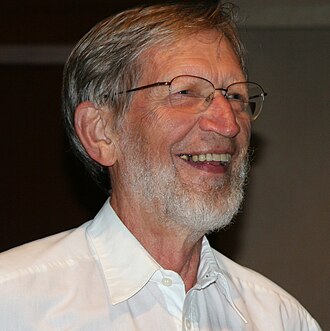
阿尔文·普兰丁格 TTim 提问者
本期追问 · 点击跳到视频对应位置
信上帝是否理性,真的取决于上帝是否真的存在吗?认为人只是演化产物,还能相信自己的头脑可靠吗?信念的内容若不参与因果,自然选择还能筛出真信念吗?上帝设定初始条件后袖手旁观,还算引导了进化吗?
归入 Ⅲ·17 信仰需要理由吗? →
EDITED TRANSCRIPT · 依据现场录音编译整理,可划线生成便签
编者按:本文整理自乔治城大学宗教自由项目学术会议上阿尔文·普兰丁格(Alvin Plantinga)的主题报告及随后的解释性问答。普兰丁格是美国分析哲学家、圣母大学荣休教授,曾两度主讲吉福德讲座,以改革宗知识论与「针对自然主义的进化论论证」闻名于世。报告由主持人蒂姆(Tim)主持,与会哲学家琳达(Linda)、马克(Mark)、迈克尔(Michael)、路易丝(Louise)、大卫(David)、理查德(Richard)、特伦顿(Trenton)等相继提问,评论人欧内斯特·索萨(Ernest Sosa)的回应安排在茶歇之后。本文依据现场录音编译整理,仅删去口语枝节,论证与问答均按原貌保留。

主持人介绍

主持人:能邀请到阿尔文·普兰丁格,我们的荣幸怎么说都不为过。普兰丁格教授在宗教哲学、形而上学与知识论领域耕耘了极为漫长的学术生涯,至少从二十世纪六十年代起就产生了非凡的影响。他先后任教于韦恩州立大学、加尔文学院和圣母大学,在众多大学担任客座教授,在福特汉姆大学和牛津大学发表过特邀讲座,也曾是古根海姆学者。他著作等身,包括《信仰与哲学》《本体论论证》《上帝与他人心灵》《必然性的本质》《上帝、自由与恶》《上帝有本性吗》《信仰与理性》《基督教学术的两大支柱》,以及关于知识保证(warrant)的三部曲:《保证与恰当功能》《保证:当前的争论》《有保证的基督教信念》。他最近的著作《冲突究竟在哪里》讨论宗教、科学与自然主义的关系,几个月前托马斯·内格尔在《纽约书评》上给了它十分同情的评论。

普兰丁格作为哲学家的成就与影响,只需看一个指标:他受邀主讲了世界上最负盛名的哲学讲座之一,苏格兰的吉福德讲座。在座各位都知道,吉福德讲座的主讲人名单读起来像一份现代思想巨人的名人录,其中有威廉·詹姆斯、阿尔伯特·施韦泽、约翰·杜威、阿诺德·汤因比、尼尔斯·玻尔、卡尔·萨根这样的哲学家和科学家。不过我注意到,这些思想巨人都只讲过一次吉福德讲座,而普兰丁格受邀讲了两次。

普兰丁格:第一次没讲对,他们就让你再试一次。

主持人:您是被「召回」的。第一次是1987到1988年,第二次是2005年。我们非常荣幸。

开场:大选之夜与讲义

普兰丁格:谢谢,谢谢蒂姆。我觉得这段介绍有点言过其实了。这让我想起神学家卡尔·亨利的一句话,当年有人介绍他,我们都觉得说得太过,他说:「我得请上帝原谅介绍人夸大其词,也原谅我听得这么受用。」

能来这里我很高兴。我有点意外,宗教自由项目居然把会议安排在今晚这场惊天动地、撼动世界的大事(指美国总统大选)的同一天。这给我个人带来了一点麻烦,因为我太太认为,凡是这种撼动世界的大事,我们俩都应该待在一起。不过生活就是这样。

日程表上说我的报告要讲一个小时,从十点到十一点。用不了一个小时。我想在座许多人已经读过我的论文,所以我只念其中一些片段,其余的简要复述。另外每个人的文件夹里都有一份讲义,大家可以对照着听。

我被要求思考两个问题。第一个问题是:「对上帝的信念在多大程度上对人类理性而言是恰当基本的?」我把「对人类理性而言」这部分省去,问题就是:「对上帝的信念在多大程度上是恰当基本的(properly basic)?」第二个问题是:「对上帝的信念在多大程度上是理性的基础?」

何谓恰当基本与理性

普兰丁格:说一个信念是基本的,我的意思是,这个信念不是基于其他信念的证据而持有的,比如许多知觉信念就是这样。

就第一个问题而言,我们得先弄清「理性的」「理性」「理性地」这些概念。「理性的」这个词可以用于各种对象。它可以用于人,一个人可以是理性的,可以在某个时候理性而在另一个时候不理性,诸如此类。它也可以用于信念,这里的「信念」可以指被相信的东西,也就是命题,也可以指相信这个命题的行为,你可以把后者看作一种行动。我要谈的是第二种意义上的理性,不是命题本身的理性(我也不太清楚那会是什么意思),而是接受某种信念、相信它这件事的理性。

理性通常被看作一件好事。持有理性的信念是好的,持有不理性的信念是坏的。比如我持有的信念中,「七加五等于十二」是理性的。不理性的信念则比如「乌龟下面还是乌龟,一直下去」,或者「下一任美国总统将是一个五岁的小女孩」。我们可以问,理性持有的信念与不理性持有的信念,区别在哪里?这里我们可以引入「理性的交付物」(deliverances of reason)这个概念:一个信念如果属于理性的交付物,就是理性的,否则就是不理性的。但谈到理性的交付物,我们必须区分两种理性:狭义的与广义的。

狭义理性与罗素悖论

普兰丁格:狭义地说,理性的交付物涉及康德所说的先天之物(a priori),也就是那些只要理解了就能看出为真、也许只需稍加反思就能看出为真的命题。「七加五等于十二」就是这样的信念,「没有任何不存在的东西」也是,至少我认为后者也属此类。其中有一些是自明的(self-evident),自明的就是稍加反思便能看出为真的那些。我们可以把狭义的理性交付物理解为全部自明真理,加上凭借自明有效的论证形式从中推演出来的东西。

值得注意的是,自明性是有程度之分的。或者你也可以换一种说法:把自明性看作另一种有程度之分的东西的最高程度,这种东西可以叫做直觉支持(intuitive support)。「七加五等于十二」有直觉支持,「没有任何不存在的东西」也有,但前者的直觉支持多于后者;而后者的直觉支持又少于「没有任何不存在的东西,并且有一些不存在的东西」这样的命题所缺乏的程度。总之,自明性有程度之分。

那么我们能否说,狭义的理性交付物就是任何具有某种程度直觉支持的信念?我认为答案是不能。这不可能对,理由之一便是罗素悖论。这个悖论大家都很熟悉:有些属性例示自身,比如「是一个属性」这个属性;有些属性不例示自身,比如「是一匹马」这个属性。于是就有两个属性:自我例示与非自我例示。可不幸的是,非自我例示这个属性例示自身,当且仅当它不例示自身,这意味着它既例示自身又不例示自身。罗素悖论的每一个前提似乎都至少有某种程度的直觉支持,通往这个糟糕结论的每一步论证形式似乎都是自明有效的。这就使得给狭义的理性交付物下定义变得非常困难。我把这个问题当作家庭作业留给大家,你们有空的时候可以研究一下,想想该怎么解释狭义的理性交付物这个概念。

宽义理性与恰当功能

普兰丁格:在广义的理性或广义的理性交付物中,我们要加进知觉、记忆,也许还有别的官能,比如托马斯·里德所说的同情(sympathy),或者归纳,也许还有证言(testimony)。这里我们可以这样说:理性的交付物是相对于某一特定的经验与信念轮廓(profile)而言的。这种广义的理性交付物因人而异,取决于每个人拥有怎样的其他信念与经验。它们是一个功能恰当的人,也就是认知官能没有发生故障或失调的人,在拥有那个特定轮廓时会形成的信念。

不过这样说还不够。正如弗洛伊德和许多人指出的,一种特定的官能或信念来源,常常受到诸如愿望满足(wish fulfillment)或自我中心之类东西的阻碍或扭曲。在这些情形下,并不是相关官能或过程功能失常,它也许运转得完全正常,你可以说愿望满足自有其位置和用处。但产生该信念的过程仍然受到了相关东西的阻碍,无论那是愿望满足还是别的什么。所以我们必须补充:相对于某一特定经验与信念轮廓的理性交付物,是一个功能恰当、且认知官能在那个场合没有受到此类阻碍的人所形成的信念。

弗洛伊德对阵神圣感

普兰丁格:有了这些准备,我们可以转向手头的问题:宗教信念,具体说就是对上帝的信念,是理性的吗?这里我念论文的第九页。

首先,「存在上帝这样一个位格」这一信念,是否与狭义的理性相抵触?确实有一些论证试图证明,一个全能、全善的位格的概念是不一致或不融贯的。比如有人主张全能的概念不融贯,即所谓「石头悖论」。还有一种带点维特根斯坦色彩的论证,说不可能有一个没有身体的位格。然而这些论证既不令人印象深刻,也没有被广泛接受,我将假定对上帝的信念并不与狭义的理性交付物相抵触。这里还有一些进一步的问题,但我们继续往前走。

对上帝的信念是否与广义的理性交付物相抵触?回想一下,这种意义上的理性交付物因人而异。对我来说,相信水永远不会呈固态是不理性的,对一个巴西部落成员来说则不然。那么我们谈的是谁的理性交付物?姑且武断地假定,我们谈的是受过教育的当代人,上过大学、也许大学毕业、也许还有博士学位的人。

许多人认为,对这样的人来说,相信上帝是不理性的;如果他们真的相信上帝,那一定是由于认知功能的某种失常。按照弗洛伊德的说法,信徒希望有神论为真,这种欲望使她看不到根本没有上帝这一事实,她无法直面现实。弗洛伊德说,自然起而与我们为敌,冷酷、无情、不可动摇,对我们的需要和欲望视而不见,她带来伤害、恐惧、痛苦,最终索取我们的死亡。我们惊恐失措、无所依靠,于是(也许是无意识地)发明出一位天上的父,他在能力和知识上远超我们尘世的父亲,在善良和仁慈上也是如此。否则我们就只能沉入抑郁、麻木、瘫痪,最后死亡。按这种说法,对上帝的信念是不理性的:信徒认知官能的恰当功能,用弗洛伊德的话说,「被这种强大的无意识欲望所阻碍或覆盖」。

许多信仰上帝的人认为情况恰恰相反:无神论或不信,至少在某些时候,才是认知官能受阻的结果。《罗马书》第一章说:「上帝的事情,人所能知道的,原显明在人心里,因为上帝已经给他们显明。自从造天地以来,上帝的永能和神性是明明可知的,虽是眼不能见,但借着所造之物就可以晓得。」这里的意思是,上帝的临在以某种方式对我们是清楚的。这段经文是加尔文「神圣感」(sensus divinitatis)学说的来源之一。

那么为什么有些人不信呢?经文接着说:「他们行不义阻挡真理。」有神论严重限制了人的自主性。按照有神论,我们人类至多是心灵与行动之共和国里资历最浅的合伙人。我们不是自主的,不是自己的立法者。而且我们的存在,我们的每一口气,都完全依赖于上帝。更进一步,有些人觉得有神论是一种无法忍受的隐私侵犯:上帝知道我的每一个念头,甚至在我想到之前就知道我将想什么。《诗篇》第一百三十九篇就隐约透着这种感受,大意是:我若逃到山上,你在那里;我若升到天上,你在那里;我若下到深处,你也在那里;我若用黑暗遮蔽自己,黑暗对你也如光明。根本无处可逃。这些想法让某些人如此恼火,以致他们逆着有神论的内在推动,拒绝相信上帝。

所以无神论者或不可知论者很可能认为,对上帝的信念是不理性的,它源于恐惧、源于无力面对这个残酷世界,或别的什么东西造成的认知阻碍。从无神论者的立场看,这是一种理智的态度。在他们看来,有神论者在人类面临的最重要问题上大错特错。那么如何解释许多在其他方面显然聪明的人竟然掉进了这个巨大的错误?弗洛伊德式的愿望满足或别的某种阻碍,似乎是最合理的解释。同样,有神论者也理智地把无神论归因于这样或那样的认知失常,某种盲目。也许就像那首古老的圣诗唱的:「我曾盲目,今得看见。」或者他们可以把无神论归因于一种过分的自主欲望。理查德·罗蒂在某处说过,马丁·海德格尔为自己存在于一个并非由他亲手创造的宇宙中而深感内疚。这显示出一种极其敏感的良心,你可能会想:要是我这辈子干过的最坏的事就是存在于一个不是我创造的宇宙里,那我对自己的感觉会相当不错。所以有神论者可以把无神论归因于过分的自主欲望,或者不愿在一个极高的存在者面前充当第十小提琴手。

信仰理性当且仅当为真

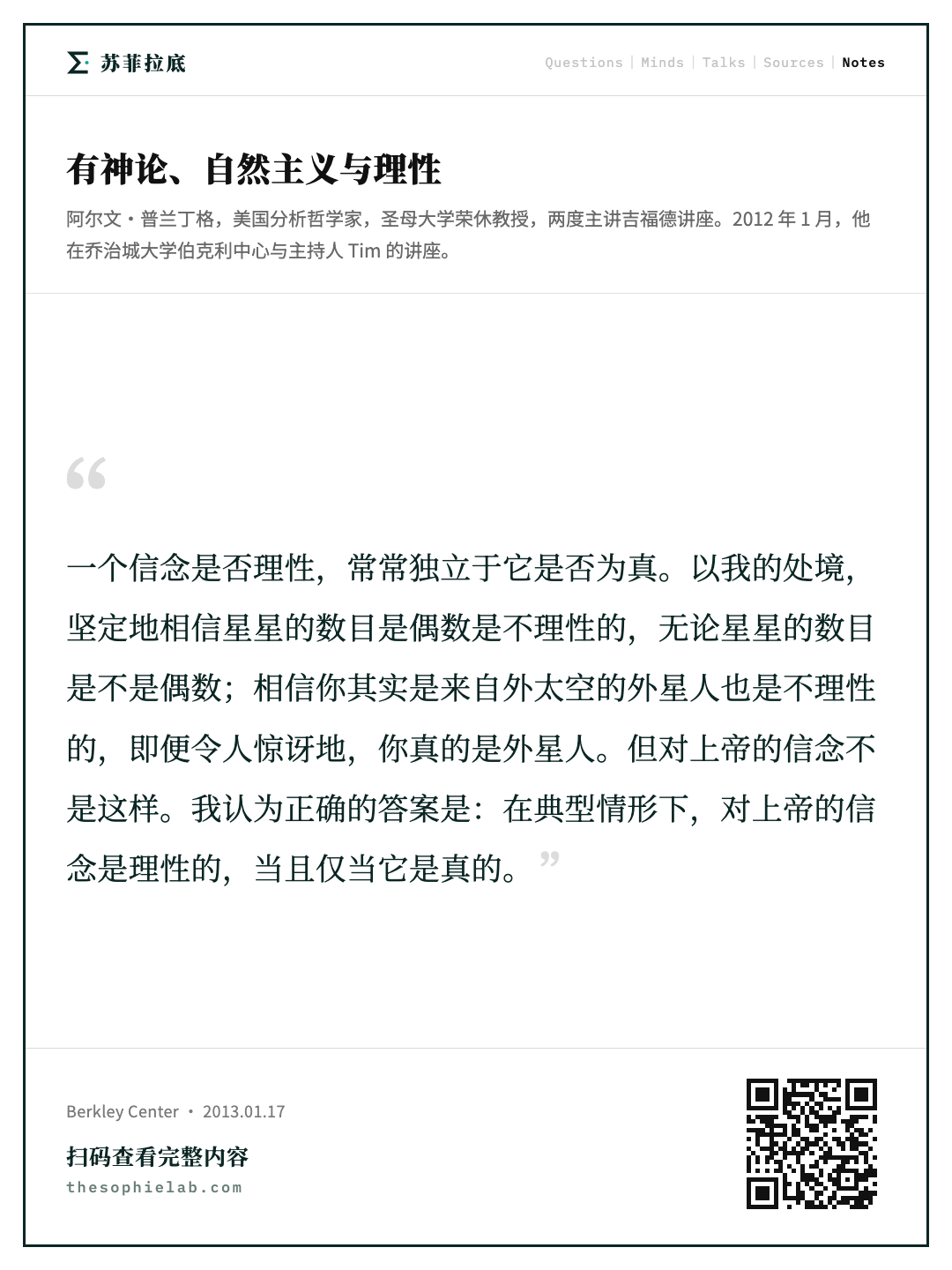
普兰丁格:谁对呢?双方都认为对方不理性,有办法在两者之间裁决吗?首先注意,一个信念是否理性,常常独立于这个信念是否为真。以我的处境,坚定地相信星星的数目是偶数是不理性的,无论星星的数目是不是偶数。以我的处境,相信你其实是来自外太空的外星人是不理性的,即便令人惊讶地,你真的是外星人。

但对上帝的信念是否理性,并不像这两个例子。我认为这里正确的答案是:在典型情形下,对上帝的信念是理性的,当且仅当它是真的。理由如下。假设有神论为真,确实存在一位全能、全知、完美慈爱的上帝,他创造了我们和我们的世界,并按自己的形象创造了我们。再假设人类的认知构造是这样的:绝大多数人相信上帝或某种类似上帝的东西,我们的认知官能中有一种强大的倾向,朝着相信上帝或类似上帝的东西的方向去。在这些前提下,极有可能上帝赋予了我们某些官能或认知过程,使我们能够觉察他和他的临在。前面提到,加尔文谈到神圣感,一种自然的官能或认知过程,使我们能够知道上帝的临在,并知道他的某些品格。阿奎那也谈到类似的东西,他说:「以一种笼统而模糊的方式知道上帝存在,是自然植入我们心中的,因为上帝就是人的福祉。」这一认知过程无疑已被罪扭曲和损坏,奥古斯丁说到「我们过犯的烟雾」,它使我们看不见上帝,遮蔽了他的临在。但即便如此,把有神论与「相信上帝或类似上帝的东西」这一极为普遍的现象放在一起,最可能的情形是:上帝以这样的方式创造了我们,使我们在认知上或知识上能够通达他的存在和他对我们的临在。

再进一步,很自然会想到:如果上帝给了我们这样通达他的认知能力,那么我们人类实际形成对上帝信念的方式,大体上就是他打算让我们认识他和他的临在的方式。但这意味着,我们形成对上帝信念的方式,至少在通常情况下,正是他打算让我们的官能运作的方式;因此当官能这样运作时,它们就是在恰当地发挥功能;因此它们产生的信念事实上是理性的。

当然,这并不意味着所有对上帝的信念都是理性的。在这一情形中,完全可以有这样的情况:对上帝的信念通常是理性的,但在某些特殊情形下不是。也许神圣感在某人身上失灵了,也许某人对他狂热的无神论父母深恶痛绝,以致接受了一个父母所鄙视的信念,而且仅仅因为父母鄙视它才去接受。但总体而言,如果有神论为真,那么有神论信念通常是理性的。

另一方面,如果有神论为假,如果根本没有上帝这样一个位格,那么有神论信念很可能是不理性的。如果有神论为假,那么对上帝的信念很可能是由失常的、或者被这样那样的东西阻碍的认知官能产生的。这里同样可能有例外,也许某人基于一个实际上误导但表面上可信的论证而相信上帝;也许某人理性地相信,至少可能存在一个最伟大的可能存在者,并且进一步看到,如果这是可能的,那么就确实存在一个最伟大的可能存在者,而这个存在者就是有神论的上帝。但大体而言,如果有神论为假,那么大多数有神论信念很可能是不理性的。

必然存在者与反事实难题

普兰丁格:这里有一个麻烦。按照古典有神论,比如阿奎那的看法,上帝是必然存在者,不存在任何上帝不存在的可能世界。这样一来,「如果有神论为假,那么大多数有神论信念很可能是不理性的」这个命题,就是一个前件必然为假的虚拟条件句或反事实条件句(counterfactual)。按照大多数有影响的虚拟条件句理论,前件必然为假的反事实条件句必然为真,无论后件是什么。于是,「如果有神论为假,那么大多数有神论信念很可能是不理性的」固然为真,但「如果有神论为假,那么大多数有神论信念很可能是理性的」同样为真。

我没有篇幅认真处理这个麻烦,坦白说我也不真正知道该怎么妥当地处理它。不过应当注意,「任何前件必然为假的反事实条件句都为真」这一点远非显而易见。「如果我证明了哥德尔定理是假的,各地的逻辑学家都会大吃一惊」,这是真的;「如果我证明了哥德尔定理是假的,各地的逻辑学家都会无聊地打哈欠」,这不是真的。假设上帝必然全知,由此并不能推出:如果上帝不是全知的,那么他会知道自己不存在。这里还有很多话要说,但我没有篇幅来说。

因此,对我的任务的第一部分,我的回答是:对上帝的信念很可能是理性的,当且仅当有神论为真。

进化论反自然主义论证

普兰丁格:现在转向第二部分,请大家回到讲义。问题是:「对上帝的信念在多大程度上是理性的基础?」我在讲义第二页的罗马数字二。

我们可以把这个问题理解为:一个人是否只有同时相信上帝,才能理性地相信我们的认知官能是可靠的?我认为答案是否定的。这不成立,即便一个不相信上帝的人,也当然可以理性地相信我们的官能是可靠的。但我确实认为,一个有反思的自然主义者,会对「我们的认知官能是可靠的」这个命题(我称之为R)获得一个挫败因(defeater)。

我用「自然主义」来指这样一种观点:不存在上帝这样一个位格,也不存在任何类似上帝的东西。所以自然主义强于无神论。你可以是无神论者而没有攀上自然主义的高峰,或者说没有堕入它的深渊;但如果你是自然主义者,你就必定是无神论者。在这个论证里我就这样使用这个词。

论证的结论是:一个有反思的自然主义者会对「我们的官能是可靠的」这一命题获得一个挫败因。它有一个窄版本和一个宽版本。

按照窄版本,自然选择也许会淘汰那些产生假信念、或者在与生存攸关的事情上产生一定比例假信念的官能,比如关于是否有捕食者、是否有食物、是否有配偶之类的事情。但自然选择大概不会淘汰那些产生错误的、我们可以称之为「形而上学」信念的官能,这里的形而上学信念不限于通常意义,也包括比如物理学高深部分的信念,还包括有神论、无神论或自然主义这样的信念。如果自然选择不会倾向于淘汰那些产生错误形而上学信念的过程,那么我们就有充分理由怀疑那些产生形而上学信念的官能的可靠性,这就给人一个挫败因,针对的是一切被认为由这类过程产生的信念,其中也包括自然主义本身。

宽版本的论证是这样的。令N为自然主义,令E为「我们是经由进化而来」这一命题。论证的第一个前提是:在N与E的条件下,我们的官能可靠的概率,也就是P(R|N&E),是低的。第二个前提是:任何接受N&E并看出第一前提为真的人,对R,也就是「我们的官能是可靠的」这一命题,都有一个未被挫败的挫败因。第三个前提是:任何对R有一个未被挫败的挫败因的人,对他所持的任何信念都有一个未被挫败的挫败因。因此,任何接受N&E并看出第一前提为真的人,这样的人就是一个有反思的自然主义者,对N,也就是自然主义本身,也有一个未被挫败的挫败因,因而不能理性地相信它。

在我看来,与欧尼(索萨)不同,他似乎愿意承认第一前提为真,而我认为第一前提是最需要辩护的,所以接下来我为它做了辩护。

唯物主义与内容副现象论

普兰丁格:首先,我把自然主义理解为包含唯物主义(materialism),这里指的是关于人的唯物主义:人彻头彻尾就是一个物质对象,仅仅是一个物质对象,而不像笛卡尔和奥古斯丁所说的那样,是一个与某个特定物质对象(即此人的身体)处于密切关系中的非物质实体。也许人与他或她的身体同一,或者与身体的某个部分同一,比如大脑,或者大脑的一个半球,或者半球的某个部分;也许人并不严格地与身体的任何部分同一,而是与由身体的同一批材料构成的某个别的物理对象同一,诸如此类。

如果你问,在唯物主义之下信念会是什么,假定确实有信念这种东西,那么一个信念大概会是大脑或神经系统中某种持续存在的事件或结构。这样一个作为信念的事件将具有两类属性。一类是神经生理属性:这个结构涉及多少神经元,它们如何相互连接,结构中一部分的放电频率与其他部分的放电频率如何关联,结构各部分的放电频率如何响应来自其他结构的输入,等等。另一类属性是:如果这个结构真的是一个信念,它就有一个内容,它必须是关于某个特定命题P的信念。比如我在论文里举的那个命题:普鲁斯特比路易斯·拉莫尔更精妙。我不知道在座有多少人知道路易斯·拉莫尔,他写了大约两百部西部小说,没有一部特别精妙,所以普鲁斯特比他精妙并不奇怪。总之信念必须有一个内容,以这个命题或别的命题作为内容。

接着问自己:在唯物主义之下,行动或身体动作是如何被引起的?引起某个身体动作的,是从大脑发出的信号;如果是一个信念在起作用或部分起作用,那就是从这个信念沿着适当的神经通道发往适当肌肉的信号,引起肌肉收缩,从而引起相关动作,比如抬起手臂之类。所以从唯物主义的观点看,一个信念之所以引起它所引起的东西,是凭借它的神经生理属性,而不是凭借它的内容。你可以把这叫做内容副现象论(content epiphenomenalism)。如果这个结构具有相同的神经生理属性而内容不同,它对行为的因果贡献仍然完全相同。但如果内容不以这种方式进入导向行为的因果链,那么内容对自然选择就是不可见的;这样一来,自然选择就不会朝着更可靠的方向去修改信念产生过程,或者说,不能指望它这样做。既然如此,正确的想法就是:我们的官能可靠的概率是低的。

第二个前提是:接受N&E并看出第一前提为真的人,对「我们的官能是可靠的」这一命题有一个未被挫败的挫败因。我认为这是我的论证中欧尼要与之较劲的那个前提,稍后我们会知道。这里你可能会想,要挫败这个迫在眉睫的挫败因,一种办法是去麻省理工学院的「认知可靠性实验室」做个检测,让他们给你开一张健康证明,至少是认知健康证明。但这当然行不通,因为你要相信自己去的确实是麻省理工的认知实验室,要相信他们确实说了你的官能没问题,等等,这些全都依赖于你的官能的可靠性。正如托马斯·里德所说:「若一个人的诚实受到质疑,却去问他本人是否诚实,那是荒谬的。」所以看起来,任何被提出来充当挫败因之挫败因的东西,都必须包含某种论证;而任何论证都有前提,我对每一个前提都拥有和我最初对R所拥有的同一个挫败因,而且对「如果这些前提为真则结论亦为真」这样的命题,我也拥有同一个挫败因。

所以我说,给定这些前提为真,结论就跟着来了:接受N&E并看出第一前提为真的人,对N有一个未被挫败的挫败因,因而不能理性地相信它。谢谢大家。

问答:靶子是唯物主义?

主持人:现在我想请大家先提出解释性的问题。如果你想就普兰丁格教授论证的恰当刻画提问,现在合适。我不希望此刻就展开对论证优劣的全面讨论,但如果有关于教授论证内容的「零售」问题,现在提出是合理的,之后我们把时间交给索萨教授。琳达,然后马克,然后迈克尔。

琳达:非常感谢阿尔的报告。我有一个关于论证的问题,就是前面那个论证。

普兰丁格:第二个论证,进化论反自然主义论证。

琳达:对,第一前提是「在N与E的条件下R的概率是低的」那个。我的问题是:这个论证在多大程度上针对自然主义,而不是针对唯物主义?按你的说法,自然主义包含无神论,也包含唯物主义,但无神论在你的论证里似乎根本不起作用,真正被攻击的对象是唯物主义。这里的唯物主义指关于人的本性的唯物主义,特别是关于信念本性的唯物主义观点,以及信念与行动之间的联系。所以我想问:这个论证能否把N换成M,也就是唯物主义论题,重新表述?如果可以,你是否愿意承认,它其实不是针对非唯物主义的无神论者的论证,而是针对唯物主义者的论证,无论他们是有神论者还是无神论者?

普兰丁格:我设想无神论或者说自然主义在这里起的作用是这样的:如果你是有神论者,你会认为上帝按自己的形象创造了我们,其中一部分就是使我们能够知道世界是什么样子,并知道关于上帝的某些事情。所以,即便一个行动不是凭借内容而被引起的,仍然可能是上帝作了这样的安排,使得我们(在唯物主义的框架下)无论以何种方式形成的信念,与真理之间存在一种相关。当然,如果你是自然主义者,你就不会持这种观点。所以在我看来,除了唯物主义,你确实还需要自然主义。换句话说,你可以是一个同时也是基督徒的唯物主义者,认为上帝作了这样的安排,让人既能认识关于上帝的事情,也能认识世界的其余部分。我当时是这样想的。

琳达:好的。

问答:有神论定义与概率

主持人:马克。

马克:我只是想澄清你所说的有神论是什么意思,它是一个多「厚」的有神论概念。当你问「假定有神论为真时我们应当接受什么」,你指的是安瑟尔谟式的关于最完美存在者的有神论吗?还是要包括基督教观念的某些独特特征?你是否要把上帝的偶然特征算进有神论里,或者那些即便考虑到上帝创造了我们这样处境中的存在者、仍然是偶然的特征?相应地,无神论者是否定这种意义上的有神论的人,还是以一种更彻底的方式否定的人?

普兰丁格:我设想的有神论是:存在一个全能(也许可以说omnipotent,也许不必)、全知、完美善良、完美慈爱的位格,他创造了世界,并按自己的形象创造了人类。我是这样想的。

主持人:这是一个相当厚的概念。

普兰丁格:对。换个说法,如果你想想基督教、犹太教和伊斯兰教这些有神论宗教,那就是在这些宗教里能找到的上帝概念。不过关于「形象」这一点,就伊斯兰教而言我不太确定。

主持人:迈克尔?

迈克尔:你有一处用了「类似上帝的东西」这个说法,要多接近才算数?比如宙斯算不算类似上帝的东西?还是不够接近?

普兰丁格:我想算。如果你相信宙斯,你就不是自然主义者,我是这么想的。我承认,按我解释的方式,自然主义这个术语是模糊的。我希望就眼下的目的而言,这种模糊无关紧要。比如你可能会问,笛卡尔式或奥古斯丁式的二元论怎么算?这样的自我或灵魂是否太像上帝,以致自然主义者不能做笛卡尔式的二元论者?我确实不知道。但我认为就眼下的目的而言这无关紧要。

主持人:顺着迈克尔的问题,更有意思的问题是斯宾诺莎。斯宾诺莎是自然主义者吗?

普兰丁格:我倾向于认为是,因为在我看来,斯宾诺莎虽然使用「上帝」这个词,但他实际持有的是自然主义的观点。

与会者:我非常不同意这一点。

普兰丁格:也许我错了,我不是斯宾诺莎专家。

与会者:我也不是,但那不说明什么。

普兰丁格:也许正确的回答是我确实不知道,但我还是希望这对眼下的目的无关紧要。

迈克尔:我能接着问吗?宙斯有妻子,我记得还是他的姐姐,等等,所以我大致假定那些男神女神都有身体。我不是希腊神话专家,但如果你把这也算作类似上帝的东西,那似乎是一个相当宽松、相似度相当低的标准。

普兰丁格:我也不太确定我们该怎么看宙斯。我不知道宙斯是一直有身体,还是想要的时候才化出一个,这究竟怎么运作并不完全清楚。

问答:有神进化论算引导吗

主持人:路易丝?

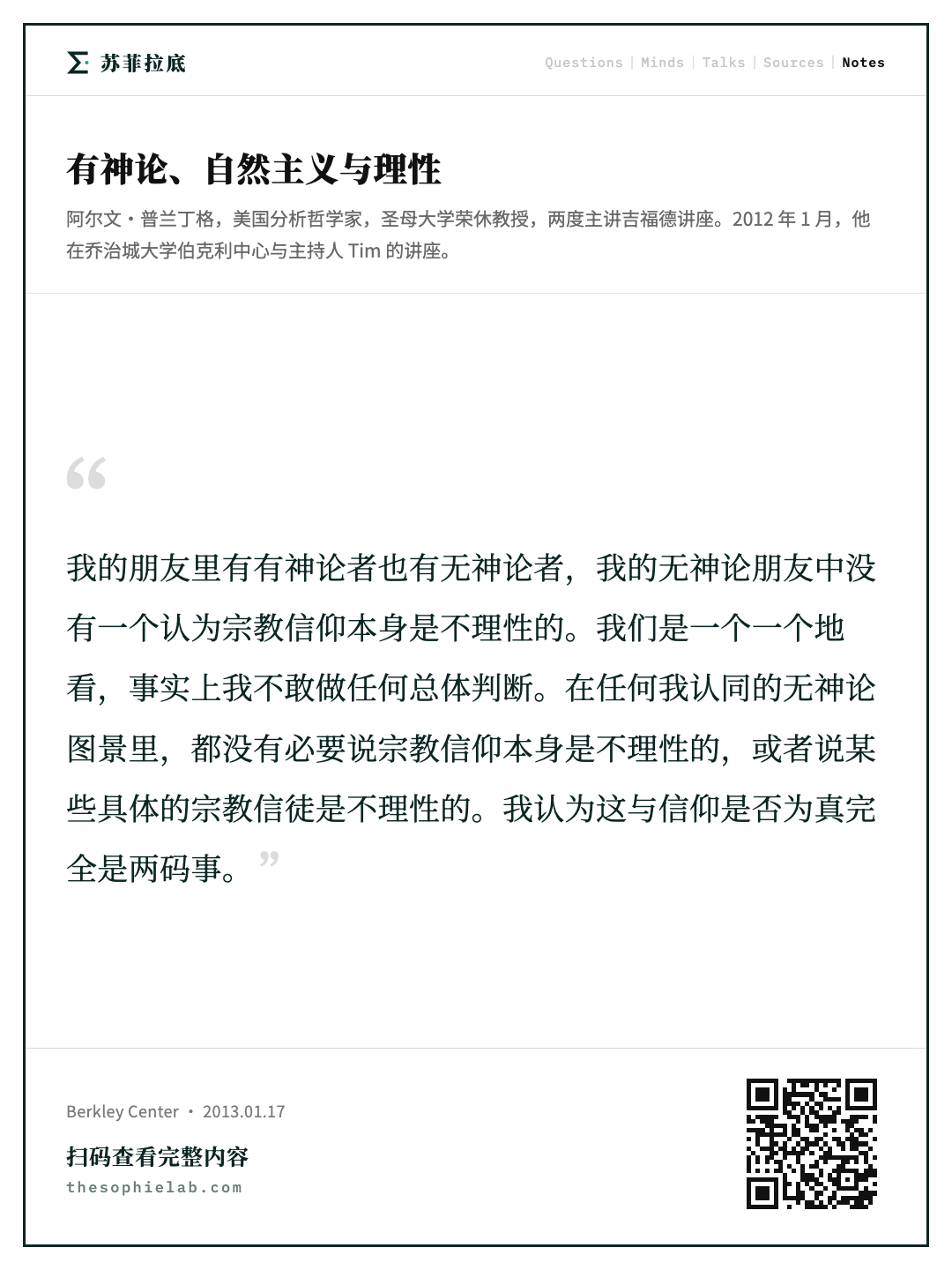
路易丝:我只想郑重声明,我的朋友里有有神论者也有无神论者,我的无神论朋友中没有一个认为宗教信仰本身是不理性的。我们是一个一个地看,事实上我不敢做任何总体判断。当然可能有少数几个人,我有把握说他们不理性地相信某些东西。但在无神论的图景里,或者任何我认同的无神论图景里,都没有必要说宗教信仰本身是不理性的,或者说某些具体的宗教信徒是不理性的,诸如此类。我认为这与信仰是否为真完全是两码事。

我想问的另一件事是,有一种立场,我小时候作为天主教女孩被教导说是正确的立场,你认为它是不融贯的,还是自我拆台的,或者你对它怎么看。我小时候刚听说进化论,非常不安,跑去问修女。她告诉我,后来许多修女和神父也都确认,一个人完全可以既做好天主教徒,又相信上帝创造自然世界的机制就包含当代生物科学所描述的那些过程。你也许可以说,有神论者需要相信在起点处有某种指引,但在我看来这是一个多余的附加。下面这个立场看来完全一致:上帝设定了某种规律框架,创造了一些初始条件,然后让它自己运转,看看会发生什么。而在这些规律和初始条件之下实际发生的事情之一,就是知觉者的出现,以及后来认知者的出现。这难道不是一个可能的立场吗?它是否同样会被进化论的证据所拆台?

普兰丁格:不会。首先,我同意一个人可以既是天主教基督徒又接受进化论。但我的想法是,基督徒所接受的进化论必须是受引导的进化,而不是无引导的进化。而设定初始条件以达到上帝预定的结果,我把这算作一种引导方式。我认为我的论证针对的是这样一种设想:进化过程完全没有引导,上帝根本没有打算让它以某种方式发展。就这种设想而言,我认为我的论证是有效的,在那种条件下我们的官能可靠的概率是低的。

路易丝:那你说的「引导」是什么意思?也许上帝想做的是创造一大批宇宙,我对物理学一无所知,但确实有人在说存在许多宇宙。也许他想创造一大批具有相同自然规律但初始条件不同的宇宙,也许还有一些具有不同的自然规律,然后看看会发生什么。

普兰丁格:就是看看会发生什么?

路易丝:对,就是这样。

普兰丁格:我谈的是我们这个世界,其他世界我不清楚。但就我们的世界而言,我把有神论理解为包含「上帝按自己的形象创造了我们」这一点。在我看来,这与「只是启动某个东西然后看看会怎样」是不相容的。它要求你意图让事情以某种方式发展,并作出安排使之如此。

路易丝:好,那么上帝能不能这样做到这一点:创造一个世界,它恰好具有当代科学告诉我们的那些自然规律,恰好具有当代或未来物理学告诉我们的那些初始条件?

普兰丁格:我不知道当代物理学说初始条件是什么。

路易丝:那就假定当代物理学是对的。我想弄清楚的是:从一组给定的初始条件出发,比如说正确的自然主义物理学告诉我们的那些初始条件,肯定存在某条可能的路径通向一个有具备可靠认知能力的认知者的世界。我想你不会否认存在这样一条路径。

普兰丁格:是的。

路易丝:那么上帝能不能选择那种世界?

普兰丁格:能,只要他知道它会按他想要的方式发展。

路易丝:他总是知道事情会怎样发展。

普兰丁格:对,只要他知道它会那样发展。

路易丝:好,但如果上帝可以这样选择,那么,抱歉,这已经进入反驳而不是解释了。

普兰丁格:这很有意思。我并不是说在N&E条件下R的概率为零,我只是认为它低。

主持人:大卫想插话,然后是理查德,然后迈克尔再发言,然后特伦顿,之后我们交给欧内斯特。

大卫:我想质疑「有神论」这个术语的整体用法。如果我理解得不错,你的做法是:有一种叫做有神论的东西,你在交谈中指出,它是犹太教、基督教、伊斯兰教这三种有神论宗教所共有的,具有某些属性。但在我看来,「有神论」这样的术语更像维特根斯坦所说的家族相似,因此很难列出这个「主义」所具有、并为三个分支所共有的一组属性。比如,我可以从我所属的犹太传统出发(我猜想基督教和伊斯兰思想中也有类似情况),对你归于有神论上帝的三大属性,全能、全知、全爱,逐一提出挑战。全能:一位选择创造、并选择赋予其创造物一定程度独立性的上帝,就此已经限制了自己的全能。全知:在近代早期犹太神学中有一条很有意思的思路,认为如果人真的要有自由选择,而不只是幻觉,上帝基本上必须放弃对未来的一切知识,因为那会摧毁自由。

主持人:理查德·斯温伯恩也是这么认为的,对吧?

大卫:对。至于全爱,一位拣选某个特定民族的上帝,更不用说基督教里拣选某个特定的人来道成肉身,似乎把他的爱局限在非常特定的对象上,并不必然是普遍的。我提出这些问题,是想说明也许最好的做法是:在聚焦这些问题时,我们实际上聚焦的是某个特定传统如何处理这些哲学问题。

普兰丁格:这些争议是可以预料的。我只是不太确定我同意你。我不认为上帝会因为创造了自由的受造物而放弃全能。确实,他不能创造这样的自由受造物:既自由,又由他决定他们做什么。所以他们可能做他不喜欢的事。但这并不损害全能。全能并不包括能做不可能的事、逻辑上不可能的事。创造既自由又被决定以某种方式行动的受造物,在逻辑上是不可能的,如果你是在那种特定意义上理解自由的话,也就是不是相容论意义上的自由,而是自由意志论意义上的自由。至于全知,也许有些人会像斯温伯恩那样认为,如果上帝想创造自由的位格,就必须放弃全知。但这是需要论证的事情。

大卫:十八世纪的思想家海姆·本-阿塔尔似乎也这样论证过,我是从他那里来的。

普兰丁格:好。「有神论」不过是一个词,我也可以发明别的术语。我可以说:我要谈的是一个全知、全能、全善的存在者,或者更好的说法,全能、全知、完美慈爱、全善的存在者。别叫它有神论,叫别的什么都行,「Geism」也罢。这就是我想谈的东西。或者,我可以按我建议的方式使用「有神论」这个词,同时承认可能还有别的用法,承认对于某种特定的存在方式是否确实构成全知或全能之类,可能存在分歧和争论。

主持人:理查德,然后特伦顿。

理查德:我有一个关于第一前提解释的简短问题,具体说是关于你所说的概率。这不是频率意义上、相对频率意义上的概率,而是人们所说的证据概率或知识概率(epistemic probability)?

普兰丁格:我把它理解为知识概率,对,或者叫证据概率,那是另一个说法。

理查德:那它是关于「在一般的自然主义论题和一般的进化论论题之下R的知识概率」的断言,还是我们还要加上各种背景信念?

普兰丁格:这是个难题。我不知道是否要加进某些背景信念,但不会加进你可以称为特殊的那些。「存在一个世界」大概要加,但也许这已经被自然主义蕴涵了?我不确定。总之,存在一个世界,存在人。

理查德:存在信念?

普兰丁格:存在信念,人有认知能力,等等。

理查德:但显然不会包括「存在许多真信念」。

普兰丁格:这个倒可以放进去,可以包括「存在许多真信念」。

理查德:「大多数是真信念」就不行。你不能加进任何本身就蕴涵信念形成过程一般可靠的东西。

普兰丁格:对,比如不能把R本身加进去。

理查德:或者任何强烈蕴涵它的东西。

普兰丁格:对,也不能加进非R。所以关于这个论证有一个问题,可以叫做可容许性问题:什么东西可以合理地加到N&E上。一个接受进化论的自然主义者,知道的显然不止N和E。这样的人还能合理地加上什么?大概不能加R本身,那行不通,因为那样任何概率性的挫败因都能轻易被挫败。但究竟是什么?在我看来这和你问的差不多是同一个问题。

理查德:是的。比如,我能加上「我知道我存在」吗?我能加进任何知识断言吗?

普兰丁格:我倾向于认为可以加进这样的东西:你知道自己被以红色的方式呈现,或者你知道自己左腿在痛,诸如此类。因为有些信念,你有理由认为不可能持有它们而它们不为真。所以,你知道这些事情,我想是可以加的。

理查德:我一度把这读成这样一个论证:自然主义者将不得不认为,相信存在任何一般可靠的信念来源都是不理性的。但你并不是这个意思。

普兰丁格:不,我不打算这么说。在陈述论证时我大概应该把这一点说得更清楚。

问答:论证能否简化

主持人:特伦顿?

特伦顿:我希望这是解释性的。我不确定。但它是善意的,所以我想算是解释性的。

普兰丁格:解释性的或者不友善的,二者选一。

特伦顿:好,那么不友善的部分。如你所知,我不认为第二前提为真。但我感觉你有一种办法可以不借助第二前提就把反自然主义的论证跑通。假定你为第一前提所作的辩护,也就是基于「唯物主义者必须说信念在因果上唯一相关的方面是物理的、神经的方面」的辩护,是完全成立的。那么你就得到这样的结果:自然主义蕴涵唯物主义,唯物主义蕴涵内容与信念所引起的东西无关。在我看来,就在这里,这本身已经是一个反自然主义的论证了,因为内容与信念所引起的东西相关,这是再明显不过的。事实上你在某处也考虑到了这一点,你说自然主义者难道不会回应说,我走到冰箱那儿当然是因为我想喝啤酒?然后你说,不,自然主义者不能这么说。我认为你应该说:自然主义者当然会这么说,因为你在跑的正是一个归谬。如果自然主义为真,那么内容不相关;但内容显然相关;于是我们得到一个矛盾。这样你就不必操心那个可疑的第二前提了。所以我的问题是,我感觉你搬出这么大的论证来辩护第一前提,如果它成立,那你其实已经有了一个新的反自然主义论证;如果这个新论证不成立,那么对第一前提的辩护也不成立。所以我感觉这个论证本可以简化。

普兰丁格:可以怎么样?

特伦顿:可以简化。

普兰丁格:让我看看我是否理解你。你说,假定第一前提是对的。

特伦顿:更具体地说,假定你基于唯物主义为第一前提所作的辩护是对的。

普兰丁格:好,我假定唯物主义。但我不太确定,也许你把刚才说的再说一遍,我还没完全看出这是怎么走的。

特伦顿:如果你对第一前提的辩护是对的,那在我看来自然主义蕴涵唯物主义。

普兰丁格:好,假定它蕴涵。我其实是把它当作前提接受的,从某种意义上说,我真正反对的是自然主义与唯物主义的合取。

特伦顿:那没问题。无论靶子是什么,是自然主义还是唯物主义,如果你说得对,这个靶子蕴涵:你的信念内容与看起来源于它的任何行动都不相关。我觉得如果这是对的,那么这就是反自然主义和唯物主义的论证。因为第二前提应该是:内容并非不相关。我想人人都会同意这一点:你去冰箱拿啤酒,是因为你相信冰箱里有啤酒并且你想喝啤酒。所以自然主义为假,因为它蕴涵了这个吓人的主张。

普兰丁格:好,这听起来是个不错的论证。它和我的论证不完全一样,不过。

特伦顿:是不一样,但我的想法是,它至少和正式的论证一样好,因为它最有争议的一步正是正式论证中有争议的那一步;而且它实际上比正式论证更好,因为它完全不涉及第二前提里的那些东西。

普兰丁格:这完全是另一种论证。它是一个论证自然主义为假的论证,而不是……

特伦顿:那就更好了,你应该更喜欢它。

普兰丁格:我挺喜欢它。我看不出为什么我得放弃这个论证,这个我也喜欢。

特伦顿:这更多是一种审美上的意见,当然还不是反驳,我们还没到那一步。但既然你为了辩护第一前提搬出了这么大的火炮,而它能给你更大的结论,那你已经有了全部资源,为什么还要绕远路去争取一个仅仅关于理性的结论?

普兰丁格:你可以有你那个论证,我保留我的,两个都行。不过有一点让我在意:内容确实参与导向行为的因果链,这在我看来并不像你说的那样绝对明显。事情可能不是这样的。比如偶因论(occasionalism)在我看来是一种相当理智的观点:引起事情的是上帝,而不是我。在那种情形下,我所相信的东西就不会参与导向行为的因果链,因为关于我的任何东西都不真正参与,而这并不明显为假。同样,一个唯物主义者说内容不参与因果,但出于别的理由认为这里存在某种相关,在我看来这也并不明显为假。

主持人:迈克尔,你想说点什么。

迈克尔:我只想很快评论一下路易丝的观点,这里我倾向于同意阿尔,这当然不奇怪。在我看来,关于自然的最合理的观点是非决定论的。当然有决定论的模型等等,但我认为非决定论的解释最有可能。而且我听说(我没打算去看细节),如果你看进化的细节,很可能会发现,在这个时间点上出现四处走动的智能存在者其实相当不可能。生命可能很快就出现,等等,但完全可能在这个时间点上,除了其他灵长类之外什么都没有,出现像人类这样的存在者需要某种特定的修改。所以,上帝当然可以创造无数个世界,那样得到智能存在者的概率会很高,但仍然不能确保。我认为那会是一种令人意外的行事方式。所以我倾向于认为,你小时候作为天主教女孩听到的那个故事大概不太靠得住。不过话说回来。

路易丝:这可真是冲着我个人来的。

主持人:在交给欧内斯特之前,按日程我们先短暂休息一下。日程上写的是十五分钟,恕我直言太慷慨了。

与会者:已经过了五分钟了。

主持人:已经过了五分钟,对。那我们十分钟后回来,不再多,然后请欧内斯特·索萨发言。
排版 + 横图 + 来源,粘贴即成稿
章节 · 点击跳转视频
0:09 主持人介绍普兰丁格生平 ▶ 正在看
2:56 开场:大选之夜与讲义 ▶ 正在看
4:22 何谓恰当基本与理性 ▶ 正在看
6:51 狭义理性与罗素悖论 ▶ 正在看
9:58 宽义理性与恰当功能 ▶ 正在看
12:41 弗洛伊德对阵神圣感 ▶ 正在看
18:32 信仰理性当且仅当为真 ▶ 正在看
22:45 必然存在者与反事实难题 ▶ 正在看
24:36 进化论反自然主义论证 ▶ 正在看
28:19 唯物主义与内容副现象论 ▶ 正在看
34:15 问答:靶子是唯物主义? ▶ 正在看
40:57 问答:有神进化论算引导吗 ▶ 正在看
46:47 问答:有神论定义与概率 ▶ 正在看
54:53 问答:论证能否简化 ▶ 正在看
本期小问 · 档案清单
—— 信上帝是否理性,真的取决于上帝是否真的存在吗? ▶ 正在看
—— 认为人只是演化产物,还能相信自己的头脑可靠吗? ▶ 正在看
—— 信念的内容若不参与因果,自然选择还能筛出真信念吗? ▶ 正在看
—— 上帝设定初始条件后袖手旁观,还算引导了进化吗? ▶ 正在看
本期讲者
阿尔文·普兰丁格美国分析哲学家,圣母大学荣休教授,两度主讲吉福德讲座。以改革宗知识论、自由意志辩护和「针对自然主义的进化论论证」闻名,著有《保证》三部曲与《冲突究竟在哪里》。
Tim乔治城大学宗教自由项目学术会议的主持人,负责介绍讲者并组织解释性问答。
提问者与会哲学家,从唯物主义、有神进化论、有神论定义、论证结构等角度对普兰丁格提问;后续评论人为欧内斯特·索萨(Ernest Sosa)。
01主持人介绍普兰丁格生平
0:09
- We really can not say enough how honored we are to be able to host Alvin Plantinga. Alvin Plantiga has been working, as I mentioned on issues of philosophy of religion, metaphysics, epistemology over a very, very long career. He really has had an extraordinary impact,
- 我们真的怎么说都不足以表达,能邀请到阿尔文·普兰丁格来做客,我们有多么荣幸。正如我刚才提到的,阿尔文·普兰丁格一直在从事宗教哲学、形而上学、知识论方面的研究,他的学术生涯非常非常漫长。他确实产生了非凡的影响,
便签笔记
0:36
as I say going back at least to the 1960's. He's had professorships at Wayne State University, Calvin College, the University of Notre Dame. He's been visiting professor many, many, many universities. He's been a lecturer, given distinguished lectures at Fordham, at Oxford. He was a Guggenheim Fellow. He's written many, many important books including Faith and Philosophy; The Ontological Argument; God and Other Minds; The Nature of Necessity; God, Freedom, and Evil; Does God Have a Nature; Faith and Rationality; The Twin Pillars of Christian Scholarship; and then a trilogy, a three volume set of books on epistemic warrant, Warrant and Proper function, Warrant the Current Debate, and Warrant of Christian Belief.
就像我说的,至少可以追溯到二十世纪六十年代。他曾在韦恩州立大学、加尔文学院、圣母大学担任教授职务。他还在非常非常多的大学担任过客座教授。他做过讲师,在福特汉姆大学、牛津大学发表过著名讲座。他曾是古根海姆学者。他写过很多很多重要的著作,包括《信仰与哲学》《本体论论证》《上帝与他人心灵》《必然性的本质》《上帝、自由与恶》《上帝有本性吗》《信仰与理性》《基督教学术的两大支柱》,还有一套三部曲,关于知识论保证(epistemic warrant)的三卷本著作:《保证与恰当功能》《保证:当前的争论》以及《基督教信念的保证》。
便签笔记
1:26
Most recently he's written, Where the Conflict Really Lies about the relationship between religion, science, and naturalism which was reviewed by Thomas Nagel a few months back in New York Review of Books very sympathetically. Just one indicator of Alvin Plantinga's success and influence as a philosopher is that he went on to be invited to deliver some of the most prestigious lectures in philosophy in the world, the Gifford Lectures in Scotland, and those of you who are here know the list of Gifford lecturers reads like a who's who of modern intellectual giants including philosophers and scientists like William James, Albert Schweitzer, John Dewey, Arnold Toynbee, Neils Bohr, and Carl Sagan.
最近他写了《冲突究竟在哪里》,探讨宗教、科学与自然主义之间的关系,几个月前托马斯·内格尔在《纽约书评》上对这本书做了非常正面的评论。要说明阿尔文·普兰丁格作为哲学家的成就和影响力,有一个标志就是他后来受邀发表了世界上哲学界最负盛名的一些讲座,也就是在苏格兰的吉福德讲座。在座的各位都知道,吉福德讲座主讲人的名单简直就是现代思想巨匠的名人录,其中既有哲学家也有科学家,比如威廉·詹姆斯、阿尔伯特·施韦泽、约翰·杜威、阿诺德·汤因比、尼尔斯·玻尔,还有卡尔·萨根。
便签笔记
2:07
Except I noted that all those intellectual giants gave the Gifford Lectures only once. Alvin Plantinga was invited to give the Gifford Lectures twice. - Well if you don't get it right the first time, they let you try again. (group laughing) - You were recalled. Once in 1987 and 1988, and then once again in 2005. So we are really honored to have you have at the planning. - Thanks, thanks Tim. I think that introduction is a bit over the top. It reminds me of something I once heard the theologian Carl Henry say when he was introducing, and we thought was a bit over the top, he said, "Well I have to ask God to forgive the introducer "for stretching the truth, "and forgive me for enjoying it so much."
不过我注意到,所有这些思想巨匠都只讲过一次吉福德讲座。而阿尔文·普兰丁格受邀主讲了两次吉福德讲座。- 嗯,要是第一次没讲好,他们就让你再试一次。(众人笑)- 你被召回了。一次是在1987到1988年,然后2005年又讲了一次。所以我们真的非常荣幸能请到您。- 谢谢,谢谢你,蒂姆。我觉得这个介绍有点过誉了。这让我想起我曾经听神学家卡尔·亨利说过的一句话,当时他在介绍——我们当时觉得有点过头了,他说:“那我得请求上帝原谅这位介绍人言过其实,“也原谅我听得这么受用。”
便签笔记
02开场:大选之夜与讲义
2:56
(group laughing) So it's a pleasure to be here. I'm a little surprised that the Religious Freedom Project would schedule a meeting for the very same day as this cataclysmic, world shaking event that's occurring this evening, It causes a certain amount of personal problems for me in that my wife thinks that any world shaking, cataclysmic event of that sort, we should be together, so. (group laughing) But that's the way life goes. I think there's a schedule here that suggests that my presentation now will take something like an hour was it?
(众人笑)所以,很高兴能来到这里。我有点意外,宗教自由项目居然把会议安排在今晚这场惊天动地的大事同一天,就是今晚要发生的那件事。这给我个人带来了一点麻烦,因为我太太觉得,凡是这种惊天动地的、了不得的大事,我们俩就该在一起,所以嘛。(众人笑)不过生活就是这样。我看这里的日程好像写着,我现在的演讲要讲差不多一个小时,是吗?
便签笔记
3:38
It says 10 o'clock to 11. It won't take an hour. I gather many of you will have already read my paper so I'll just, I will just read bits of it and recount briefly the rest. And I think also there is a handout that everybody has in their folder, that I'll be, that you can use to follow along, okay. So, I was asked to write about or think about two questions, First question, everybody find this, find the handout. - [Tim] Did you all have the handout? - [Man] The handout inside. - [Tim] If you don't have the handout just say so.
上面写的是10点到11点。不会讲一个小时的。我猜你们很多人已经读过我的论文了,所以我就只念其中一部分,剩下的简单复述一下。另外我想大家的文件夹里都有一份讲义,我会……你们可以照着它跟上我的思路,好吧。那么,人家让我写、或者说思考两个问题。第一个问题——大家先找一下,把讲义找出来。——[蒂姆] 大家都拿到讲义了吗?——[男士] 讲义在里面。——[蒂姆] 谁没拿到讲义就说一声。
便签笔记
4:15
- [Man] On the right side of the folder.
——[男士] 在文件夹右边。
便签笔记
03何谓恰当基本与理性
4:22
- I was asked to think about two questions, one question went like this, "First to what extent is belief in God properly basic", it says, "To human rationality." I'll leave of the "To human rationality" part. So, "To what extent is belief in God properly basic?" And second, "To what extent is belief in God "foundational to rationality." When I think about our beliefs being properly basic, I mean for our beliefs being basic, I think of it as a belief that's not held on the evidential basis of other beliefs.
——人家让我思考两个问题,一个问题是这样的:“第一,对人的理性而言,对上帝的信念在多大程度上是恰当基本的?”上面是这么写的。“对人的理性而言”这部分我先略过。那就是:“对上帝的信念在多大程度上是恰当基本的?”第二个问题是:“对上帝的信念在多大程度上是理性的基础?”当我说我们的信念是恰当基本的,我的意思是,说一个信念是基本的,我把它理解为:这个信念不是以其他信念为证据依据而持有的。
便签笔记
4:56
Beliefs like many perceptual beliefs for example. So with respect to that first question then, there is this notion of rational, these notions rational, rationality, rationally. The term rational could be applied to various. It could be applied to persons for example. A person could be rational, could be rational at one time and irrational at some other time and the like of that. It can also be applied to beliefs, and here you can think of a belief as either the thing believed, the proposition on the one hand, or the believing of that proposition.
比如说很多知觉信念就属于这一类。那么就第一个问题而言,这里涉及“理性的”这个概念,涉及“理性的”“理性”“合理地”这一组概念。“理性的”这个词可以用在很多东西上。比如说,它可以用在人身上。一个人可以是理性的,可以在某个时候是理性的、在另一个时候是非理性的,诸如此类。它也可以用在信念上。这里你可以把“信念”理解为所信的东西,也就是那个命题;或者理解为对那个命题的相信这件事。
便签笔记
5:33
You might think of that as a kind of act on the other hand. I'm gonna be thinking about rationality with respect to the second sort of thing, not with respect to the rationality of a proposition as such. I'm not sure just what that would be. But rather with respect to the rationality of accepting a certain kind of belief, believing it. Rationality is ordinarily thought of as a good thing. If it's a good thing to hold rational beliefs, it's a bad thing to hold irrational beliefs. Among the beliefs I hold for example, is that seven plus five equals 12, which I take it as rational.
后者你可以把它看作是一种行为。我要讨论的是第二种意义上的理性,而不是命题本身的理性。我也不太清楚那会是个什么东西。我要讨论的是接受某类信念、相信它,这件事的理性与否。理性通常被看作是好东西。如果持有理性的信念是好事,那么持有非理性的信念就是坏事。比如说,在我持有的信念当中,有“七加五等于十二”,我认为这是理性的。
便签笔记
6:14
Among the beliefs that aren't rational would be the belief that it's turtles all the way down, or that the next president of the US will be a five year old girl. And we might ask what the difference is then between rational beliefs, beliefs that are rationally held, and those that aren't. Here we can think about the deliverances of reason so that a belief could be said to be rational if it's among the deliverances of reason, irrational otherwise. But when we think about the deliverances of reason, we have to think about reason taken in two ways, taken narrowly, or taken more broadly.
而不理性的信念,比如说“底下一路驮着的全是乌龟”,或者“美国下一任总统会是个五岁的小女孩”。那我们就可以问,理性的信念、也就是被理性地持有的信念,和不理性的信念,两者的差别究竟在哪里。这里我们可以想想“理性的裁断”:如果一个信念属于理性的裁断之列,就可以说它是理性的,否则就是非理性的。但当我们谈理性的裁断时,得注意“理性”可以从两种意义上理解,狭义的理解,或者更宽泛的理解。
便签笔记
04狭义理性与罗素悖论
6:51
Taken narrowly, the deliverances of reason have to do with what sometimes, what Kant called, sometimes you could call the a priori, the sorts of beliefs, the sorts of propositions one can just see to be true, perhaps on very brief reflection, just by understanding them. So for example, seven plus five equals 12 would be a belief like that, as would be the belief that there aren't any things that don't exist, at least I say that belief is like that. Among these beliefs would be some that are self-evident.
从狭义上讲,理性的裁断涉及的是,有时候……康德所说的、有时你也可以称之为先验的东西,就是那类信念,那类你一看就能看出为真的命题——也许只需稍加思索,仅仅靠理解它们就够了。比如说,“七加五等于十二”就是这样的信念,“不存在任何不存在的东西”也是这样的信念,至少我认为这个信念属于此类。这些信念当中有一些是自明的。
便签笔记
7:26
Some would be self-evident, they would be, well I should have said, the ones that are self-evident are the ones that one can see to be true just on brief reflection. And we might think of of the deliverances of reason in the narrow sense as all the self-evident truths together with what follows from them, by self-evidently valid forms of argument. We could think of this certainly, deliverances of reason in the narrow sense as the self-evident truths together with what you could deduce from them by using self-evidently valid forms of argument.
有些是自明的,它们……嗯,我应该这么说:自明的那些,就是人们稍加思索便能看出其为真的那些。我们或许可以把狭义上的理性的裁断,理解为一切自明的真理,加上由它们通过自明有效的论证形式所推出的东西。我们当然可以这样理解:狭义的理性的裁断就是自明的真理,加上你运用自明有效的论证形式从中推演出来的东西。
便签笔记
8:04
It's worth noting that self-evident comes in degrees or if you like you could instead take self-evidence to be the maximal degree of something else that comes in degrees, namely something we could call intuitive support. So that beliefs like seven plus five equals 12 have intuitive support, as do beliefs like there are no things that don't exist. But the first has more by way of intuitive support than the second, and the second also has less by way of intuitive support than there are no things that don't exist and there are some things that don't exist, alright.
值得注意的是,自明性是有程度之分的;或者你也可以反过来,把自明性看作另一种有程度之分的东西的最高程度,我们可以把那种东西叫做直观支持度。所以像“七加五等于十二”这样的信念有直观支持度,“不存在任何不存在的东西”这类信念也有。但前者的直观支持度比后者高;而后者的直观支持度又低于“既不存在任何不存在的东西又存在某些不存在的东西”这一说法的否定,好吧。
便签笔记
8:40
Self-evident therefore comes in degrees and if we ask now, could we say that the deliverances of reason in the narrow sense are any beliefs that have some degree of intuitive support? The answer would be I think no. That couldn't be right. If for no other reason than because of the Russell Paradox. There are some, very familiar paradox, there are some properties that exemplify themselves, for example the property of being a property. There are other properties that don't exemplify themselves, for example the property of being a horse.
所以自明性是有程度的。那么现在如果我们问:能不能说,狭义上的理性的裁断就是任何具有某种程度直观支持度的信念呢?我认为答案是否定的。那样说不可能对。哪怕别的理由都不算,光是罗素悖论就够了。有一些——这是个非常熟悉的悖论——有一些属性是自我例示的,比如“是一个属性”这个属性。还有一些属性不自我例示,比如“是一匹马”这个属性。
便签笔记
9:19
So there are the two properties, self-exemplification and non-self-exemplification, but unhappily non-self-exemplification exemplifies itself, if and only if it doesn't exemplify itself. Which means that it both does and doesn't exemplify itself. Each of the premises of the Russell Paradox seems to have at least some degree of intuitive support. Each of the argument forms by which the unhappy conclusion is reached seems self-evidently valid. Which makes it really hard to give a definition of the deliverance of reason in the narrow sense.
于是就有了两个属性:自我例示性和非自我例示性。但麻烦在于,非自我例示性自我例示,当且仅当它不自我例示。这意味着它既自我例示又不自我例示。罗素悖论的每一个前提似乎都至少有某种程度的直观支持度。推出那个糟糕结论所用的每一种论证形式,看上去都是自明有效的。这就使得给狭义的理性的裁断下定义变得非常困难。
便签笔记
05宽义理性与恰当功能
9:58
And I'll just leave that as a project for homework as people say. You can work on that when you get a chance and figure out how to explain this notion of deliverance of reason taken in the narrow sense. In a broader sense of rationality or in a broader sense of reason, deliverances of reason, we would add perception, memory, and maybe other faculties. Thomas Reid's sympathy for example, or induction, maybe still others, testimony. Here we might think that we could speak of the deliverances of reason as follows, the deliverances of reason with respect to a particular profile of experience of belief, so the deliverance of reason in this polar sense will differ from one person to another depending on what other beliefs and experiences these people have.
这个我就当作大家常说的“课后作业”留给各位吧。有空你们可以琢磨琢磨,看看怎么解释狭义上“理性的裁断”这个概念。在更宽泛意义上的理性,或者说更宽泛意义上的理性、理性的裁断中,我们还要加上知觉、记忆,也许还有其他官能。比如托马斯·里德所说的同情,或者归纳,也许还有别的,比如证言。这里我们或许可以这样来谈理性的裁断:相对于某一特定的经验与信念状况而言的理性的裁断。所以这种意义上的理性的裁断会因人而异,取决于这些人还有哪些别的信念和经验。取决于他们各自的情况。
便签笔记
10:57
These are the beliefs that would be formed by a properly functioning person, a person whose cognitive faculties are not subject to malfunction or disfunction, who enjoys that particular profile. This won't quite do the job though because as Freud and many others have noted very often a particular faculty or source of belief is impeded or skewed by such things as wish fulfillment for example, or egotism, something like that. And in these cases it won't be that the faculty or process inflection isn't function properly, maybe it's functioning perfectly properly, wish fulfillment has it's place and has it's uses you might say, but still the belief in question is, the process forming the belief in question in impeded by the thing in question, wish fulfillment or whatever else it may be.
这些就是一个官能正常运作的人所会形成的信念,一个认知官能没有出故障、没有失灵的人,并且处在那种特定状况下的人。不过这样说还不太够,因为正如弗洛伊德和许多人指出过的,某一官能或信念来源常常会被诸如愿望满足之类的东西所阻碍或扭曲,或者是自我中心之类的东西。在这些情况下,并不是说相关的官能或过程没有正常运作,也许它运作得完全正常——你可以说,愿望满足自有其位置和用处——但相关的信念,或者说形成该信念的过程,仍然受到了那个东西的干扰,不管是愿望满足还是别的什么。
便签笔记
11:59
So we have to add then that the deliverances of reason with respect to a particular profile of experience and belief are the beliefs that we form by a properly functioning person, whose cognitive faculties aren't impeded in that way, on that occasion. Okay now that, I want to turn to the first question then, to what extent is belief in God foundational to rationality, and I'll read a few pages of the paper here. So given these preliminaries we can turn to the question in hand, is religious belief, belief in God say, to make the question more concrete, rational.
所以我们还得补充说:相对于某一特定经验与信念状况的理性的裁断,就是一个官能正常运作、且其认知官能在当时未受此类干扰的人所形成的那些信念。好,那么现在我想转向第一个问题:对上帝的信念在多大程度上是理性的基础,我在这里念论文中的几页。有了这些铺垫,我们就可以转向手头的问题:宗教信念,比如说对上帝的信念——把问题说得更具体些——是理性的吗?
便签笔记
06弗洛伊德对阵神圣感
12:41
I'm on page nine. First is the belief that there is such person as God contrary to reason in the narrow sense. There are some arguments designed to prove that the notion of an omnipotent, wholly good person isn't consistent or incoherent. For example there is a claim that the notion of omnipotence is incoherence, the so-called paradox of the stone. There is also the vaguely Wittgensteinian argument that it's not possible that there be a person without a body. These arguments however, are neither impressive, nor widely accepted, and I'll assume that belief in God isn't concrete to the deliverances of reason in the narrow sense.
我现在讲的是第九页。首先,“存在上帝这样一位存在者”这个信念,是否违背狭义上的理性?有一些论证意在证明,全能而全善的存在者这个概念是不自洽的、不融贯的。比如有人主张全能这个概念不融贯,就是所谓的石头悖论。还有一个带点维特根斯坦味道的论证,说不可能存在没有身体的位格。不过这些论证既不令人信服,也没有被广泛接受,所以我假定对上帝的信念并不违背狭义上的理性的裁断。
便签笔记
13:21
There are further questions here but let's press on. Is belief in God concrete to the deliverances of reason, a reason taken in the broad sense? Recall that the deliverances of reason taken this way differ widely from person to person. It's contrary to reason for me to believe that H2O never takes a solid form, not so for a Brazilian tribesman. So whose deliverances of reason are we talking about? Let's just arbitrarily suppose we're talking about educated contemporaries, people who have gone to college, maybe graduated from college, maybe even have PhDs.
这里还有更多问题可谈,但我们继续往下走。那么,对上帝的信念是否违背宽泛意义上的理性的裁断呢?请记住,这样理解的理性的裁断是因人而异、差别很大的。对我来说,相信H2O从不呈固态,那是违背理性的,但对一位巴西部落居民来说就不是这样了。那么我们说的是谁的理性判断呢?我们不妨随意假定,我们说的是受过教育的当代人,上过大学的人,也许大学毕业了,甚至可能有博士学位。
便签笔记
14:00
Many people suppose that belief in God is irrational for such people, and that if they do believe in God, it will be by virtue of some kind of lack of cognitive proper function. According to Freud, "The believer wants theism to be true, "and this desire blinds her to the fact "that there is no such person as God. "She can't face reality as it is." "Nature", says Freud, "Rises up against us, "cold, pitiless, implacable, blind to our needs and desires. "She delivers hurt, fear, pain, and in the end "she demands our death.
很多人认为,对这样的人来说,信仰上帝是不理性的,而如果他们真的信上帝,那也是因为某种认知功能失常所致。按照弗洛伊德的说法:「信徒希望有神论是真的,而这种渴望使她看不到一个事实——根本不存在上帝这样一位存在者。「她无法面对现实本来的样子。」弗洛伊德说:「大自然对我们张牙舞爪,冷酷、无情、不可撼动,对我们的需求和欲望视而不见。「她带来伤害、恐惧、痛苦,最终还要索取我们的生命。
便签笔记
14:36
"Paralyzed and appalled we invent, unconsciously perhaps, "a Father in heaven, who exceeds our earthly father, "as much in power and knowledge, "as in goodness and benevolence. "The alternative would be to sink into depression, "stupor, paralysis, and finally death." On this account, belief in God is irrational. The proper function of cognitive faculties in the believer is quote, "Impeded or overlaid "by this powerful unconscious desire." Many believers in God think the shoe is on the other foot.
「在瘫痪与惊骇之中,我们——也许是无意识地——发明了一位天上的父,他远胜我们地上的父亲,「无论在权能和知识上,还是在良善与仁慈上。「否则我们就只能陷入抑郁、麻木、瘫痪,最终走向死亡。」按照这种说法,信仰上帝是不理性的。信徒的认知官能的正常运作,用他的话说,被「这种强大的无意识欲望所阻碍或覆盖」。很多信上帝的人则认为情况恰恰相反。
便签笔记
15:13
That atheism or unbelief is at least sometimes, a result of cognitive faculties being impeded. According to Romans Two, "What may be known about God is plain to them, "because God has made it plain to them. "For since the creation of the world, "God's invisible qualities, "his eternal power and divine nature, "have been clearly seen, "being understood from what has been made." Here the suggestion is that in some way God's presence is clear to us. This passage is one source of Calvin's Doctrine of the Sensus Divinitatis.
认为无神论或不信,至少有时候,是认知官能受到阻碍的结果。按照《罗马书》第二章的说法:「上帝的事情,人所能知道的,原显明在人心里,「因为上帝已经给他们显明。「自从造天地以来,上帝的永能和神性是明明可知的,「虽是眼不能见,「但藉着所造之物就可以晓得。」这里的意思是,上帝的临在以某种方式对我们是清晰可见的。这段经文是加尔文「神圣感」(Sensus Divinitatis)教义的来源之一。
便签笔记
15:54
So why is it that some don't believe? The passage goes on to say, "They suppress the truth in unrighteousness." Theism severely limits human autonomy. According to theism, we human beings are at best, very junior partners in the republic of mind and agency. We are not autonomous, not a law unto ourselves. Furthermore we are completely dependent upon God for our being and for our very next breath. Still further some find in theism a sort of intolerable invasion of privacy. God knows my every thought and indeed knows what I will think before I think it.
那么为什么有些人不信呢?这段经文接着说:「他们行不义阻挡真理。」有神论严重限制了人的自主性。按照有神论,我们人类充其量只是心智与能动性这个共和国里非常初级的合伙人。我们不是自主的,不是自己给自己立法的。更进一步,我们的存在乃至下一口呼吸都完全依赖于上帝。还有些人从有神论中感到一种无法忍受的隐私侵犯。上帝知道我的每一个念头,甚至在我想到之前就知道我会想什么。
便签笔记
16:33
There is even a hint of this attitude in Psalm 139, which goes something, I mean it's something like this, "If I flee to the mountains you are there. "If I ascend to heaven there you are. "If I descend to the very depths you are present. "If I cover myself with darkness, "darkness is as light to you." There's just no way to get away. These thoughts so rankle some people that as a result they go against theistic promptings and reject belief in God. Atheists or agnostics therefore are likely to think belief in God is irrational.
《诗篇》139篇里甚至有这种态度的影子,大意是这样的:「我若逃到山里,你在那里。「我若升到天上,你在那里。「我若下到极深之处,你也在。「我若用黑暗遮蔽自己,黑暗在你面前也如同光明。」根本无处可逃。这些念头让一些人极为反感,结果他们抵制有神论的驱动,拒绝相信上帝。因此无神论者或不可知论者很可能认为信仰上帝是不理性的。
便签笔记
17:10
It results from cognitive impedance by fear or inability to face this cruel world, or perhaps something else. And this seems a sensible attitude for an atheist to take. From that perspective theists are dead wrong about the most important question facing us human beings. So how to account for the fact that many otherwise apparently intelligent people fall into this colossal error, Freudian wish fulfillment or some other kind of impedance seems to be the most plausible explanation. Similarly, theists sensibly attribute atheism to cognitive malfunction of one kind or another, some kind of blindness.
它源于恐惧造成的认知阻碍,或是无力面对这个残酷的世界,又或者是别的什么原因。对一个无神论者来说,这似乎是个合理的态度。从那个视角看,有神论者在我们人类面临的最重要的问题上大错特错。那么该如何解释这个事实:许多其他方面看来相当聪明的人却掉进了这个天大的错误?弗洛伊德式的愿望满足,或者别的某种阻碍,似乎是最合理的解释。同样地,有神论者也会合理地把无神论归因于这样那样的认知功能失常,某种失明。
便签笔记
17:49
The old hymn, "I was blind but now I see", perhaps. Or they may attribute atheism to an inordinate desire for autonomy. Richard Rorty said somewhere, "That Martin Heidegger "felt deeply guilty for existing in a universe "he had not himself created", which does display an exceedingly tender conscious one might think. I mean if that's the worst thing I've done is exist in a universe I haven't created, I'll feel pretty good about myself. So you can attribute atheism, they may attribute atheism to an inordinate desire for autonomy or perhaps an unwillingness to play 10th fiddle for a very high end.
也许就像那首老赞美诗所唱的:「我曾瞎眼,今得看见。」或者他们会把无神论归因于对自主性的过度渴望。理查德·罗蒂在某处说过,「马丁·海德格尔因为存在于一个并非自己创造的宇宙中而深感内疚」,这确实显示出一种可以说是极其敏感的良知。我是说,如果我做过的最坏的事就是存在于一个不是我创造的宇宙里,那我会对自己感觉相当良好。所以你可以把无神论归因于——他们可能把无神论归因于对自主性的过度渴望,或者是不愿意在一个极高的存在面前当第十小提琴手(甘居末位)。
便签笔记
07信仰理性当且仅当为真
18:32
Whose right, each thinks the other irrational, is there a way to decide between them? Note first that the question of the rationality or lack thereof of a belief is often independent of the truth of the belief. It's irrational for me, given my circumstances, to have a firm belief that the number of stars is even, and this is so whether or not the number of stars is even. Given my circumstances it's irrational for me to believe that you are really an alien for outer space, and this is true even if remarkably you are an alien from outer space.
谁对呢?双方都认为对方不理性,有办法在两者之间做出裁决吗?首先要注意,一个信念理性与否的问题,往往与该信念是否为真无关。以我所处的境况,坚定地相信星星的数目是偶数是不理性的,而无论星星的数目实际上是不是偶数,这一点都成立。以我所处的境况,相信你其实是个外星人是不理性的,而即便非常离奇地你真的是个外星人,这一点仍然成立。
便签笔记
19:07
But the question of the rationality of belief in God is not like these two. Here I believe the right answer is that in a typical case belief in God is rational, if and only if it's true. We could see this as follows, suppose theism is true, there is indeed an omnipotent, omniscient, and perfectly loving God, who has created us and our world, and has created us in his own image. Suppose furthermore that the human cognitive economy is such that the fast majority of human beings believe in God or something like God.
但信仰上帝是否理性的问题,跟这两个例子不一样。在这里我认为正确的答案是:在典型情况下,信仰上帝是理性的,当且仅当它是真的。我们可以这样来看:假设有神论为真,确实存在一位全能、全知、完全慈爱的上帝,他创造了我们和我们的世界,并按他自己的形象创造了我们。再进一步假设,人类的认知构造是这样的:绝大多数人都相信上帝或类似上帝的存在者。
便签笔记
19:44
Our cognitive faculties are such that there is this powerful tendency towards belief in God or something like God. Given these things it's very likely that God has endowed us with faculties or cognitive processes that enable us to be aware of him and his presence. As I mentioned above, Calvin speaks of his Sensus Divinitatis, a natural faculty or cognitive process that enables us to know of God's presence and something of his character. Aquinas speaks of something similar, he says, "To know that God exists in a general and confused way "is implanted in us by nature "as much as God is man's beatitude."
我们的认知官能是这样的:存在一种强烈的倾向去相信上帝或类似上帝的存在者。鉴于这些,上帝很可能赋予了我们某些官能或认知过程,使我们能够意识到他和他的临在。如我上面提到的,加尔文谈到他所说的「神圣感」,一种自然的官能或认知过程,使我们能够知道上帝的临在以及他品性的某些方面。阿奎那也谈到类似的东西,他说:「以一种笼统而模糊的方式知道上帝存在,是本性植入我们心中的,「因为上帝就是人的至福。」
便签笔记
20:24
This cognitive process, no doubt has been skewed and damaged by sin. Augustan speaks here of the, "Smoke of our wrongdoing "which blinds us to God and obscures his presence from us." Still the most likely scenario, given theism together with the vastly widespread belief in God or something like God, is that he has created us in such a way that we have cognitive or epistemic access to existence and his presence to us. It is natural still further to think that if God has given us such cognitive access to him, that probably the way in which we human beings come to believe in God is roughly at any rate, how he intends us to know of him and his presence.
这一认知过程无疑已被罪扭曲和损害。奥古斯丁在这里谈到「我们罪行的烟雾」,它使我们看不见上帝,并遮蔽了他对我们的临在。但最可能的情形仍然是:既有有神论为真,又有对上帝或类似上帝者极其普遍的信念,那就是他以这样一种方式创造了我们,使我们对他的存在和他向我们的临在有认知上或知识论上的通道。再进一步,很自然会想到:如果上帝给了我们这种通向他的认知通道,那么我们人类实际形成对上帝之信念的方式,大致上很可能就是他所意图的、让我们认识他和他临在的方式。
便签笔记
21:04
But that means that the way in which we come to believe in God is ordinarily at least, the way in which he intends our faculties to work, hence when they work in that way they are functioning properly, hence the beliefs they produce are in fact rational. Of course this doesn't mean that all belief in God is rational. It is compatible with this scenario that belief in God is ordinarily rational but in some special cases is not.
但这就意味着,我们形成对上帝之信念的方式,至少在通常情况下,就是他意图我们的官能运作的方式;因此当它们以那种方式运作时,它们就是在正常发挥功能,因此它们产生的信念事实上就是理性的。当然这并不意味着所有对上帝的信仰都是理性的。与这一图景相容的是:信仰上帝通常是理性的,但在某些特殊情况下不是。
便签笔记
21:35
Perhaps the Sensus Divinitatis fails to work in someone, that that person so deeply so dislikes his fervently atheist parents that he comes to accept a belief they hold in contempt, and does so just because they hold it in contempt. Unbalanced however if he is a mistruth and theistically disordinarily rational. On the other hand if theism is false, if there is no such person as God then probably theistically is irrational. If theism is false, then publicly belief in God is produced by cognitive faculties that are malfunctioning or impeded by one thing or an other.
也许某人身上的「神圣感」失灵了,比如那个人极其厌恶他那对狂热无神论的父母,以致他接受了一个他们所鄙视的信念,而且仅仅因为他们鄙视它才接受。但总体而言,如果有神论为真,那么有神论信念通常是理性的。另一方面,如果有神论为假,如果根本不存在上帝这样一位存在者,那么有神论信念很可能就是不理性的。如果有神论为假,那么普遍来说,对上帝的信仰是由功能失常或被这样那样的东西所阻碍的认知官能产生的。
便签笔记
22:13
Again there may be exceptions, perhaps someone believes in God on the basis of an argument that's actually misleading, but on the face of it plausible. Perhaps someone rationally believes that it is at any rate possible that there be a greatest possible being, and sees furthermore that if that is possible, then it follows that indeed there is a greatest possible being, which being would be the God of theism. For the most part however, it's likelihood theism is false then most theistic belief is irrational.
同样也可能有例外,也许某人是基于一个实际上具有误导性、但表面上看似合理的论证而相信上帝。也许某人理性地相信:无论如何,存在一个可能的最伟大存在者是可能的,并且进一步看出:如果那是可能的,那么就可以推出确实存在一个最伟大的存在者,而那个存在者就会是有神论所说的上帝。但在大多数情况下,如果有神论为假,那么大多数有神论信念就是不理性的。
便签笔记
08必然存在者与反事实难题
22:45
There's one complication here, according to classical theism, Aquinas for example, "God is a necessary being. "There is no possible world in which God does not exist." But then the proposition if theism is false, then very likely most theistic belief is irrational is a subjunctive or counter-factual conditional with a necessarily false antecedent. According to most influential accounts of subjunctives, or counter-factuals, or counter-factuals with a necessarily false antecedent, it is necessarily true no matter what the consequent.
这里有一个复杂之处:按照古典有神论,比如阿奎那,「上帝是一个必然的存在者。「不存在任何一个上帝不存在的可能世界。」但这样一来,「如果有神论为假,那么大多数有神论信念很可能是不理性的」这个命题,就是一个虚拟或反事实条件句,而且带有一个必然为假的前件。按照关于虚拟条件句或反事实条件句的大多数有影响力的解释,带有必然为假前件的反事实条件句必然为真,无论后件是什么。
便签笔记
23:19
So while if theism is false, then very likely most theistic belief is irrational is certainly true. The same can be said for if theism is false then very likely most theistic belief is rational. I don't have the space here to deal thoughtfully with this complication, and furthermore don't really know how deal with it properly. We should note however, that it's far from obvious that any counterfactual with a necessarily false antecedent is true. It's true that if I were to prove Godel's theorem false, logicians everywhere would be astonished.
所以「如果有神论为假,那么大多数有神论信念很可能是不理性的」当然为真。但同样也可以说「如果有神论为假,那么大多数有神论信念很可能是理性的」也为真。我在这里没有篇幅来周全地处理这个复杂问题,而且说实话我也不太知道该怎么恰当地处理它。不过我们应当注意,「任何带有必然为假前件的反事实条件句都为真」这一点远非显而易见。「如果我证明了哥德尔定理为假,全世界的逻辑学家都会震惊」,这是真的。
便签笔记
23:51
It's not true that if I were prove Godel's theorem false logicians everywhere would yawn in boredom. Suppose God is necessarily omniscient. It doesn't follow that if God were not omniscient then he would know that he doesn't exist. Much more needs to be said here, but I don't have the space to say it. In response to the first part of my assignment therefore, I can prove that probably belief in God is rational, if and only if theism is true. Now I want to turn to the second part, and I'll go back to this handout here.
「如果我证明了哥德尔定理为假,全世界的逻辑学家都会无聊得打哈欠」,这就不真。假设上帝必然是全知的。并不能由此推出:如果上帝不是全知的,那么他就会知道他自己不存在。这里还有很多要说的,但我没有篇幅来说了。因此,作为对我这项任务第一部分的回应,我可以论证:信仰上帝很可能是理性的,当且仅当有神论为真。现在我想转到第二部分,我再回到这份讲义上。
便签笔记
09进化论反自然主义论证
24:36
So, the question is, "To what extent is belief in God "foundational to rationality?" I'm at roman numeral two on the second page of the handout. While we could take this question as could someone rationally believe that our cognitive faculties are reliable, only if we also believe in God. And I think the answer to that question is no. That's not true, one could, even somebody who doesn't believe in God, could certainly rationally believe that our faculties are reliable. But I do think that a reflective naturalist gets a defeater for the proposition, I'll call it R, that our cognitive faculties are reliable.
那么,问题是:「信仰上帝在多大程度上是理性的基础?」我现在讲到讲义第二页的罗马数字二。我们可以把这个问题理解为:一个人是否只有同时相信上帝,才能理性地相信我们的认知官能是可靠的?我认为这个问题的答案是否定的。并不是那样,一个人——哪怕是不信上帝的人——也完全可以理性地相信我们的认知官能是可靠的。但我确实认为,一个善于反思的自然主义者会获得一个针对某个命题的击败者(defeater),我把这个命题称为 R,即:我们的认知官能是可靠的。
便签笔记
25:15
I'll be using naturalism as a name for the view that there's no such person as God, or anything like God, so that naturalism is stronger than atheism. You could be an atheist without rising to the full heights or descending to the full depths of naturalism. But if you're a naturalist, you're bound to be an atheist. That's just the way I'm gonna use the term in this argument. And there is both a narrower and a broader version of an argument for the conclusion that a reflective naturalist gets a defeater for the proposition that our faculties are reliable.
我将用「自然主义」来指称这样一种观点:不存在上帝这样一位存在者,也不存在任何类似上帝的东西,因此自然主义比无神论更强。你可以是一个无神论者,却并没有上升到、或者说下降到自然主义的全部高度或深度。但如果你是自然主义者,你就必定是无神论者。在这个论证中我就是这样使用这个词的。对于「反思型的自然主义者会获得一个击败者」这一结论,即针对「我们的官能是可靠的」这一命题,有一个较窄的版本和一个较宽的版本的论证。
便签笔记
25:55
According to the narrower version it might be that natural selection will weed out faculties that produce false beliefs, or a proportion of false beliefs about matters that are important to survival such as the presence of predators, the presence of food, presence or absence of mates, and that sort of thing. That natural selection probably wouldn't weed out cognitive faculties, that produce false, what we like to call metaphysical beliefs, and not just metaphysical beliefs in the usual sense, but say, I don't know if advanced beliefs, in advanced parts of physics, but also beliefs like theism, or atheism, or naturalism.
按照较窄的版本,自然选择也许会淘汰掉那些产生虚假信念的官能,或者说淘汰掉那些在与生存攸关的事项上产生一定比例虚假信念的官能,比如捕食者的出现、食物的有无、配偶的有无,诸如此类。但自然选择大概不会淘汰掉那些产生虚假的、我们喜欢称之为「形而上学信念」的认知官能——而且不只是通常意义上的形而上学信念,比如说,我也说不好,还有物理学高深部分里的那些高阶信念,以及像有神论、无神论或自然主义这样的信念。
便签笔记
26:38
And if natural selection would rule out such beliefs, tend to weed out the processes that produce false metaphysical beliefs, then there is good reason to doubt the reliability of the faculties that do produce metaphysical beliefs, which would give one a defeater for beliefs when it takes to be produced by such processes including naturalism itself. A broader version of the argument goes like this, take N to be naturalism, take E to be the proposition that we've come to be by way of evolution, then the argument has it's first premise, the probability of our faculties being reliable, the probability of our given inner-need is low.
如果自然选择会排除这类信念,倾向于淘汰那些产生虚假形而上学信念的过程,那么我们就有充分理由怀疑那些确实产生形而上学信念的官能的可靠性,这就会给一个人带来针对那些他认为由此类过程产生的信念的击败者——包括自然主义本身。论证的较宽版本是这样的:设 N 为自然主义,设 E 为「我们是通过演化而来的」这个命题,那么论证的第一个前提是:我们的官能是可靠的这一概率,在给定 N 和 E 的条件下,是很低的。
便签笔记
27:27
And a second premise, anyone who accepts entity, and sees that one is true as undefeated defeater for R, the proposition that our faculties are reliable. And third premise, anyone who has undefeated defeater for R has an undefeated defeater for any belief he holds, therefore for, anyone who accepts entity and sees that one is true, such a person would be a reflective naturalist, has an undefeated defeater for N, itself naturalism and hence can't rationally believe it. It's, the first premise seems to me that unlike Ernie, Ernie seems to me to concede the truth of the first premise, but I thought the first premise is the one that needs the most defense, than what came next and I defended it.
第二个前提是:任何接受 N&E 并且看出这一点为真的人,就获得了针对 R 的一个未被击败的击败者,R 即「我们的官能是可靠的」这一命题。第三个前提是:任何拥有针对 R 的未被击败的击败者的人,对他所持的任何信念都拥有一个未被击败的击败者,因此,任何接受 N&E 并且看出这一点为真的人——这样的人就是一个反思型的自然主义者——就拥有针对 N 本身、即自然主义本身的未被击败的击败者,因而不能理性地相信它。在我看来,第一个前提——不像 Ernie,Ernie 似乎是承认了第一个前提的真,但我原以为第一个前提才是最需要辩护的,比后面接着来的部分更需要,所以我为它做了辩护。
便签笔记
10唯物主义与内容副现象论
28:19
First I wanted to take naturalism as including materialism, where materialism is the idea that human, I should say that materialism with respect to human beings, where materialism is the idea that a human being is a material object through and through, just a material object, not as Descartes and Augustine had it, an immaterial substance that stands in a close relationship to a particular material object, namely this persons body, but a material object all the way through. Maybe a person is identical with his or her body, or with some part of it like the brain, or one hemisphere of the brain, or some part of a hemisphere of the brain.
首先我想把自然主义理解为包含唯物主义,这里的唯物主义是说人……我应该说,是关于人的唯物主义,即认为人从头到尾就是一个物质对象,仅仅是一个物质对象,而不是笛卡尔和奥古斯丁所主张的那样——一个与某个特定物质对象、即这个人的身体处于紧密关系中的非物质实体,而是彻头彻尾的物质对象。也许一个人就等同于他或她的身体,或者等同于身体的某个部分,比如大脑,或者大脑的一个半球,或者一个半球的某个部分。
便签笔记
29:00
Maybe a person isn't exactly identical with any part of his or her body, but with some other physical object composed of the same stuff as her body, something like that. And if you ask what a belief will be then, given materialism, presumably a belief, you suppose there really are such things as a belief, a belief will be something like a longstanding event, or structure in the brain, or nervous system. Such an event that is a belief then, will have two kinds of properties, it'll have neurophysiological properties, properties specifying how many neurons are involved in that particular structure, how they're related to each other, and how the rate of fire in one part of the structure is related to the related fire in other parts.
也许一个人并不严格等同于他或她身体的任何部分,而是等同于由与身体相同的材料构成的某个别的物理对象,诸如此类。那么如果你问,在唯物主义之下信念又会是什么呢?大概说来,一个信念——假定确实存在信念这种东西——一个信念会是大脑或神经系统中某种持久的事件或结构。那么这样一个作为信念的事件,就会具有两类属性,它会具有神经生理学属性,比如指明这个特定结构中涉及多少神经元,它们彼此如何关联,以及结构某一部分的放电频率与其他部分的放电如何相关。
便签笔记
29:55
Properties involving how the rate of fire in various parts of the structure responds to input from other structures and the like. On the other hand if this thing is really, this structure is really a belief, it's got a content. It has to be the belief that P for some particular proposition P, perhaps the proposition I said in a paper that Proust is more subtle than Louis L'Amour. I don't know if how many of you know who Louis L'Amour is, but he wrote some 200 westerns, none of which is particularly subtle.
还有一些属性涉及结构各部分的放电频率如何回应来自其他结构的输入,等等。另一方面,如果这个东西真的是、这个结构真的是一个信念,那它就有内容。它必须是关于某个特定命题 P 的那个信念,比如我在一篇论文里说过的那个命题:普鲁斯特比路易斯·拉莫尔更为精微。我不知道你们当中有多少人知道路易斯·拉莫尔,他写了大约两百部西部小说,没有一部是特别精微的。
便签笔记
30:33
So it's not surprising that Proust would be more subtle than Louis L'Amour. So the belief would have to have a content, that proposition or some other as a content, and then if you asked yourself, well how do actions or bodily motions get cause then, given materialism. Well what causes a given bodily movement would be a signal sent from the brain, perhaps if it's a belief that's doing the causing or part causing a signal sent from this belief down the appropriate nervous channels to the appropriate muscles, causing muscular contraction and hence the movement in question, raising ones arm or something like that.
所以普鲁斯特比路易斯·拉莫尔更精微,这一点并不令人惊讶。所以这个信念必须有一个内容,以那个命题或别的什么命题作为内容,然后你要是问自己:在唯物主义之下,行动或身体运动又是怎么被引起的呢?那么,引起某个特定身体运动的,会是从大脑发出的一个信号,也许,如果是某个信念在起因果作用、或部分地起因果作用,那就是从这个信念沿着相应的神经通道发出一个信号,传到相应的肌肉,引起肌肉收缩,从而产生所说的那个运动,比如举起手臂之类。
便签笔记
31:15
So from the point of view of materialism it's by virtue of the neurophysiological properties of a belief causes what it does cause. You can call this content epiphenomenalism, not by virtue of it's content. If this belief had the same neurophysiological properties, this structure, if it had the same neurophysiological properties but a different content it would make the same contribution, same causal contribution to behavior. But if content doesn't in this way get involved in the causal chain leading to behavior then content will be invisible to natural selection, in which case natural selection won't modify belief producing processes, can't be counted on to modify belief producing processes in the direction of greater reliability.
所以从唯物主义的观点看,一个信念之所以引起它所引起的东西,是凭借它的神经生理学属性,而不是凭借它的内容。你可以把这叫做「内容副现象论」。如果这个信念具有同样的神经生理学属性——这个结构,如果它具有同样的神经生理学属性但内容不同,它对行为所做的贡献仍然是一样的,同样的因果贡献。但如果内容以这种方式根本不参与导向行为的因果链条,那么内容对自然选择来说就是不可见的,这样一来自然选择就不会朝着更高可靠性的方向改造信念生成过程,也不能指望它这么做。
便签笔记
32:04
In which case the right thing to think then is that the probability of our faculty is being reliable is low. The second premise then is one who accepts entity and sees that one is true, has an undefeated defeater for our, the belief for our substance that our faculties are reliable. I think this is the premise of my argument that Ernie needs to crawl with, and we'll find out later on. But here you might think, well one way to defeat the looming defeater here would be to go to the MIT Cognitive Reliability Laboratory and be tested, they give you a clean bill of health, a clean bill of cognitive health anyway.
在这种情况下,恰当的看法就是:我们的官能是可靠的这一概率很低。那么第二个前提是:接受 N&E 并且看出这一点为真的人,就拥有一个针对 R、即「我们的官能是可靠的」这一信念的未被击败的击败者。我想这才是我的论证中 Ernie 需要死磕的那个前提,我们待会儿就会知道了。不过在这里你也许会想,要击败这个逼近的击败者,一个办法是去麻省理工的认知可靠性实验室做个检测,他们给你开一张健康证明——反正是认知健康的证明。
便签笔记
32:57
But of course that really won't work because you would then be relying on the reliability of your faculties for the proposition that it was indeed, to the MIT Cognitive Laboratory that you went, and relying on them for the proposition that they did say that your faculties are okay and the like. As Thomas Reid says, "If a man's honesty "were called into question it would be ridiculous "to refer to the man's own word, "whether he be honest or not." So it looks as if any proposed fear to fear here will have involve an argument of some sort, but any argument will have premises, and I will have the very same defeater for each of those premises that I had to start with for R, and will have furthermore the same defeater for each of the propositions to follow to the effect that if these premises are true then so is the conclusion.
但这当然行不通,因为那样你就得依赖你的官能的可靠性,来确认「你去的确实是麻省理工认知实验室」这个命题,还得依赖它们来确认「他们确实说了你的官能没问题」之类的命题。正如托马斯·里德所说:如果一个人的诚实受到质疑,那么以这个人自己的话来判定他是否诚实,就会是荒唐可笑的。所以看起来,这里任何试图消解疑虑的做法都得涉及某种论证,但任何论证都会有前提,而我一开始针对 R 所拥有的那个击败者,同样会针对其中的每一个前提;而且,对于「如果这些前提为真那么结论也为真」这类随之而来的命题,我也会拥有同样的击败者。
便签笔记
33:56
So I say, given the truth of these premises the conclusion follows, one who accepts entity and sees that one is true, has an undefeated defeater for N, and as to can't rationally believe it. Thank you.
所以我说,鉴于这些前提为真,结论就随之成立:接受 N&E 并且看出这一点为真的人,就拥有针对 N 的未被击败的击败者,因而不能理性地相信它。谢谢。
便签笔记
11问答:靶子是唯物主义?
34:15
- Well at this point, what I'd like to do is have us raise any questions of interpretation. If you want to raise a question about the characterization, the proper characterization of what Professor Plantinga has argued, that would be appropriate. I don't want to at this point have a full fledged discussion of the merits of the argument, but if there are questions, retail questions as it were about what Professor Plantinga has argued it would make sense to address those now, and then we'll turn things over to Professor Sosa.
——好,在这个时候,我想请大家提出任何关于理解方面的问题。如果你想就如何刻画、如何恰当地刻画普兰丁格教授所论证的内容提出问题,那是合适的。此刻我不想展开对这个论证本身是否成立的全面讨论,但如果有问题,就是那种关于普兰丁格教授到底论证了什么的具体问题,现在提出来是合理的,然后我们就把话筒交给索萨教授。
便签笔记
34:48
Linda did you, and then Mark, and Mike. - Well thank Al very much for the talk. I have a question about the argument, the one before. - [Alvin] The second argument, I mean the, A-A-N. - The argument that has the first premise of the probability of R, and hypothesis of N and being this low. So my question is to what extent is this an argument about naturalism as opposed to materialism? It seems that naturalism, you say includes atheism, it also includes materialism, but atheism seems to play no role at all your argument.
琳达,你先,然后是马克,再是迈克。——非常感谢阿尔的演讲。我有个关于论证的问题,就是前面那个。——[阿尔文] 第二个论证,我是说 A-A-N(针对自然主义的进化论论证)。——就是第一个前提说「在 N 和 E 的假设下 R 的概率很低」的那个论证。我的问题是:这在多大程度上是一个关于自然主义的论证,而不是关于唯物主义的论证?看起来自然主义,你说它包含无神论,也包含唯物主义,但无神论在你的论证里似乎完全没有起作用。
便签笔记
35:29
It's materialism that seems to be the object of tack. Because materialism, meaning materialism about the nature of the human being, and in particular the materialist view of the nature of beliefs, and the connection between beliefs and acts. So I guess my question is, would this argument be recast with N replaced by M, the materialist thesis, and if so would you be willing to accept that it's actually not an argument against atheists who are not materialists, but it is an argument against materialists whether or not they're theists, atheists?
真正被攻击的对象似乎是唯物主义。因为唯物主义,我指的是关于人的本性的唯物主义,尤其是关于信念之本性的唯物主义观点,以及信念与行动之间关联的观点。所以我的问题是:这个论证能不能改写成把 N 换成 M,也就是唯物主义论题?如果可以,你是否愿意承认它其实并不是一个针对那些非唯物主义的无神论者的论证,而是一个针对唯物主义者的论证——不管他们是有神论者还是无神论者?
便签笔记
36:17
- I thought of materialism as playing the following, I'm sorry atheism or naturalism as playing the following role here, if you're a theist you'll think that God has created us in his image and part of that involves being able to know what the world is like, and then something about him and the like. So that even though it's not the case that it would be by virtue of content that a given action is cause, still it might be that God has so arranged things that there is a corelation between the beliefs we come to, however we do come to them on the basis of materialism, and the truth.
——我原本认为唯物主义起的作用是这样的,抱歉,是无神论或自然主义在这里起的作用是这样的:如果你是有神论者,你会认为上帝按他自己的形象创造了我们,而这其中的一部分就是我们能够认识世界是什么样的,还能认识一些关于他的事情,等等。所以,即使并非是凭借内容而引起某个特定行动,仍然可能上帝把事情安排成这样:我们所形成的信念与真理之间存在某种相关性,不管在唯物主义的框架下我们究竟是怎么形成这些信念的。
便签笔记
36:57
Of course if you're a naturalist, you won't have that view, so it seems to me you do need the naturalism as well as just the materialism. In other words, you could be a materialist who is also a Christian, who thinks that God has so arranged things that one comes to know these things about God as well as about the rest of the world. That's what I was thinking. - [Linda] Okay. - Mark. - This really is just clarification about what you mean by theism, and how thick a conception of theism it is, right.
当然,如果你是自然主义者,你就不会有这种看法,所以在我看来你确实需要自然主义,而不只是唯物主义。换句话说,你可以是一个同时又是基督徒的唯物主义者,认为上帝把事情安排成这样:一个人能够认识关于上帝以及关于世界其余部分的这些事情。我当时是这么想的。——[琳达] 好的。——马克。——我这个真的只是想澄清一下,你所说的有神论是什么意思,以及这是一个多厚重的有神论概念,对吧。
便签笔记
37:28
So I guess what I want to know is when you ask about what we should take to be the case of theism is true, do you mean like anselmian, just anselmianism about the most perfect being? Do you mean any of the features that are distinctive of the Christian conception? Do you want to include in the contingent features of God in theism or features that are contingent even given the fact that God created beings like us in our situation. And that, and you know is the atheist someone who denies theism in that sense, or is the atheist someone who denies theism in a much more thorough going way?
所以我想知道的是,当你问到,如果有神论为真,我们应该把什么当作是事实的情况时,你指的是安瑟伦式的、也就是关于最完美存在者的安瑟伦主义吗?你指的是基督教观念中那些独有的特征吗?你是否想把神在有神论中的偶然性特征也包括进来,或者那些即便在神创造了像我们这样、处于我们这种境况的存在者这一事实之下,仍然是偶然的特征?(承上句)还有,你知道的,无神论者是指在那种意义上否认有神论的人,还是说无神论者是以一种彻底得多的方式否认有神论的人?
便签笔记
38:05
- I was thinking of theism has to do that there is an all powerful, maybe you could say omnipotent, maybe not, all knowing, perfectly good, and perfectly loving person who has created the world and created human beings in his image. That's how I was thinking of it. So, another way to say it, - [Tim] Pretty thick conception arguing point. - Yeah, right. So if you think about the theistic religions like Christianity, Judaism, and Islam, it would be the conception of God one finds in those religions.
- 我原本想的有神论是这样的:存在一个全能的,也许你可以说是无所不能的,也许不是,全知的、完全善的、完全有爱的位格,他创造了世界,并按照他的形象创造了人类。我当时就是这么想的。换个说法就是——- [Tim] 这是个相当厚重的概念,很有意思的论点。- 是的,没错。所以如果你想想那些有神论的宗教,比如基督教、犹太教和伊斯兰教,那就是人们在这些宗教中所发现的那种神的观念。
便签笔记
38:39
Though I'm not certain about image part with respect to Islam.
不过就伊斯兰教而言,我不太确定「形象」那部分。
便签笔记
38:47
- [Tim] And Michael? - At one point you used the expression something like God, how close would it have to be to qualify? Meaning, would Zeus for example be something like God, or not close enough? - Yeah, I think so. Right, so if you believed in Zeus you wouldn't be a naturalist, so I'm thinking. I admit that the term, I mean that naturalism as I understand it, as I explained it is vague. I'm hoping that for present purposes that vagueness won't matter. So you might wonder for example, what about say, Cartesian or Augustinian dualism, is that too much like,
- [Tim] 那么Michael呢?- 你有一次用了「类似于神的东西」这样的说法,那要多接近才算数呢?我的意思是,比如说宙斯算不算是「类似于神的东西」,还是说不够接近?- 是的,我想算吧。对,所以如果你信宙斯,你就不是个自然主义者,我是这么想的。我承认这个词,我是说按我的理解,按我刚才解释的那样,自然主义是含混不清的。我希望就当前的目的而言,这种含混不会造成影响。所以你可能会好奇,比方说,笛卡尔式的或奥古斯丁式的二元论怎么办,那是不是太像……
便签笔记
39:34
is such a self or soul too much like God for a naturalist to be a dualist, ala Decartes? Well I don't really know. But I don't think for present purposes that's gonna matter. - More interesting question following up on Michael's is how 'bout Spinoza? Is Spinoza a naturalist?
这样一个自我或灵魂,是不是太像神了,以至于一个自然主义者不能像笛卡尔那样做二元论者?嗯,我其实不知道。但我认为就当前的目的而言,这不会有什么影响。- 接着Michael的问题,更有意思的问题是:那斯宾诺莎怎么算?斯宾诺莎是自然主义者吗?
便签笔记
39:57
- I'm inclined to think Spinoza is, because I'm inclined to think that for Spinoza, it's a term God that gets applied. Where as what you really has naturalistic factor. - [Man] I would very much disagree with that. - What's that? - [Man] I would very much disagree with that. - Well maybe I'm wrong you know, I'm not a Spinozist or a Spinosist. - [Man] Neither am I but that doesn't mean. - But I mean maybe the right answer to say well I don't really know but again I hope it won't matter for present purposes.
- 我倾向于认为斯宾诺莎是,因为我倾向于认为,对斯宾诺莎来说,「上帝」只是一个被套用上去的词。而真正起作用的其实是自然主义的因素。- [男]这一点我非常不同意。- 你说什么?- [男]这一点我非常不同意。- 嗯,也许我错了,你知道,我不是斯宾诺莎主义者,或者说斯宾诺莎派。- [男]我也不是,但那并不意味着什么。- 不过我是说,也许正确的回答是「我其实不知道」,但我还是希望这对我们眼下要谈的问题没什么影响。
便签笔记
40:24
- Can I just follow up? I actually mean, Zeus had a wife, who I believe was his sister and so on, and so I sort of assume those guys and gals had bodies et cetera. I mean I'm not an expert on Greek mythology et cetera. So I mean if you're counting that as something like God, that seems like a pretty generous, sort of low degree resemblance. - Well I'm not too sure either about how exactly how are supposed to stand with Zeus. I don't know, (group laughing) whether Zeus had a body all the time, or to assume one when he felt like it, you know exactly how this worked.
- 我能接着问一句吗?我的意思是,宙斯是有妻子的,我记得那还是他的姐妹之类的,所以我大概会假定那些男神女神都是有身体的等等。我是说,我并不是希腊神话方面的专家之类的。所以我是说,如果你把那种东西也算作上帝的话,那这个标准好像就挺宽松的,某种程度上的低度相似。——嗯,我也不太确定我们究竟该怎么看待宙斯这个问题。我不知道,(众人笑)宙斯是不是一直都有个身体,还是说他高兴的时候才化出一个身体,你知道,具体是怎么运作的。
便签笔记
12问答:有神进化论算引导吗
40:57
That's not totally clear. - [Tim] Louise? - Yeah, I just wanted to say for the record that none of the atheists who are my friends, and I have theist friends and atheist friends, none of the atheist friends that I have think that belief in religion is irrational per se. We go on a case by case basis, and in fact in every case I would not hazard any overall, well I mean I guess I mean there might be a few cases, of someone who I feel confident believes something that they believe irrationally. But there's no necessity in the atheistic picture, or any atheistic picture that I'm sympathetic too, for saying that religious belief per se is irrational, or that particular individual religious people are irrational, or anything like that.
这一点并不完全清楚。——[蒂姆] 露易丝?——是的,我只是想在这里说明一下,我那些身为无神论者的朋友里没有一个人,我既有有神论的朋友,也有无神论的朋友,我认识的无神论朋友里,没有一个人认为宗教信仰本身就是非理性的。我们是一个个案例分开来看的,而且事实上在每一个案例中,我都不会贸然下什么整体性的判断,嗯,我是说,我想可能确实有少数几个例子,某个人让我有把握地觉得他所信的东西是非理性地信的。但在无神论的图景里,或者说在任何我认同的无神论图景里,都没有必要——去说宗教信仰本身是非理性的,或者说某些具体的宗教信徒是非理性的,诸如此类的话。
便签笔记
41:46
I think it's just totally rhethodinal to the issue whether it's true. But the other thing I wanted to ask you about was whether or not you think that a certain position, which was position that was taught to me as a Catholic girl, to be the correct position, is incoherent, or is not, is self-undermining, or what your view is of this position. So the position that I was taught when I was a girl and I went to Sister having just heard about evolution, being very upset about it. I was told, and this was later confirmed by a number of nuns and priests, that it was perfectly possible to be a good Catholic, and believe that God's mechanism for creating the natural world involved the processes that are described by contemporary biological science.
我觉得这跟它是否为真这个问题完全是两码事。不过我还想问你另外一件事,就是你是否认为某种立场——那是我小时候作为一个天主教女孩被教导为正确的立场——是不连贯的,或者不是,是自我拆台的,或者说你对这个立场怎么看。我小时候刚听说进化论时,去找修女,当时她们教给我的立场是——我为此非常不安。她们告诉我,后来也有好几位修女和神父确认过,一个人完全可以既做一个好天主教徒,又相信上帝创造自然世界的机制包含了当代生物科学所描述的那些过程。
便签笔记
42:37
And it's not that, I mean I suppose you could say that a theist would need to believe that there was direction at the beginning, but I don't see, that seems to me to be a gratuitous add-on. It's seems a perfectly consistent position to believe that God setup a certain kind of nomological framework, created some initial conditions, and let it play out, let it see what happened. And one of the things that happened in the way it happened to play out with those laws and those initial conditions was the emergence of perceivers and then later cognizers.
并不是说,我是说我想你可以说,有神论者需要相信一开始就存在某种引导,但我看不出来,在我看来那似乎是个多余的附加项。相信上帝设定了某种规律性的框架,创造了某些初始条件,然后让它自行演化,看看会发生什么——这似乎是个完全自洽的立场。而在那些定律和那些初始条件下,实际演化出来的结果之一,就是感知者的出现,以及后来认知者的出现。
便签笔记
43:20
Is that not a possible position? Is that equally undermined by belief in the evidence for evolution? - No, because I take it, well I mean first of all I agree with the suggestion that one can both be a Catholic Christian and also accept evolution. My thought though is that the evolution in Christian has to be guided evolution, not unguided evolution, and I'm thinking of setting up initial conditions in such a way as to reach a forgone conclusion on the part of God as a way of guiding it. So I don't think you can sensibly think, I mean I think my argument would work with respect to the suggestion that the process of evolution is completely unguided, God didn't intend it to turn out a certain way at all.
这难道不是一个可能的立场吗?它同样会被对进化论证据的相信所削弱吗?——不会,因为我认为,嗯,首先我同意这个说法,一个人可以既是天主教基督徒,又接受进化论。但我的想法是,基督徒眼中的进化必须是受引导的进化,而不是无引导的进化,而我所设想的是,上帝以某种方式设定初始条件,从而达成一个既定的结论,这就是他引导的方式。所以我不认为你可以合理地认为,我是说我认为我的论证适用于这样一种说法:进化过程是完全无引导的,上帝根本没有打算让它以某种特定方式收场。
便签笔记
44:07
Completely unguided, and with respect to that suggestion I think my argument would work. The probability of our faculties being rational or reliable under that condition, reliable under that condition would be low but,
完全无引导——针对这种说法,我认为我的论证是成立的。在那种条件下,我们的官能是理性的或可靠的概率,在那种条件下可靠的概率会很低,但是——
便签笔记
44:25
- I'm not, so what do you mean by guided? So God might have, maybe what God wanted to do was create a whole bunch of universes, and I don't know anything really about physics, but there are people around saying that there are many universes. Maybe he wanted to create a whole bunch with, you know there's a whole group that have the same natural laws, but are arranged with initial conditions, and maybe there are some that have different natural laws and so forth, and just see what happens. - Just see what happens?
——我不太明白,你说的“引导”是什么意思?上帝也许,也许上帝想做的是创造一大堆宇宙,我对物理学其实一无所知,但有人说存在许多个宇宙。也许他想创造一大堆,你知道,其中一整组具有相同的自然定律,但初始条件的安排不同,也许还有一些具有不同的自然定律等等,然后就看看会发生什么。——就看看会发生什么?
便签笔记
44:52
- Yeah, just that. - I thought, you see I'm talking about our world I guess, I don't know what the other worlds. But in our world I was taking it that theism includes the idea that God has created us in his image. That seems to me incompatible with just starting something off and seeing how it happens. - Okay. - It seems rather, it requires that you intend that it turn out a certain way, and arrange things in such a way that it will. - Okay, but could God have done that, made that arrangement by, on creating a world with just the natural laws that contemporary science tells us are the natural laws, and just the initial conditions that contemporary or future physics say are the initial conditions?
——是的,就是这样。——我以为,你看,我想我谈的是我们这个世界,我不知道其他那些世界。但在我们这个世界里,我一直认为有神论包含这样的观念:上帝按他自己的形象创造了我们。在我看来,这跟“随便启动个什么东西,然后看看会怎样”是不相容的。——好的。——它更像是要求你有意让它以某种方式收场,并把things安排成能实现这一点的样子。——好的,但上帝能不能通过这种方式做到、做出那种安排,即创造一个世界,其自然定律恰恰就是当代科学告诉我们的那些自然定律,其初始条件也恰恰就是当代或未来物理学所说的那些初始条件?
便签笔记
45:33
- Well I don't know that what contemporary physics says are the initial conditions. I mean, - Well let's suppose contemporary physics is right. - I'm sorry? - What I'm tryin' to figure out is, there certainly is a possible path from a given set of initial conditions, say the ones that, let's say the correct naturalistic physics tells us are the initial conditions. I doubt that you're denying that there is some path, that you think you have the argument. So that there's some path given those conditions and those laws to a world in which there are cognizers with reliable conginitive and conceptual.
——嗯,我不知道当代物理学所说的初始条件是什么。我是说,——那我们假设当代物理学是对的。——不好意思,你说什么?——我想弄清楚的是,从给定的一组初始条件出发,肯定存在一条可能的路径,比如说那些,比如说正确的自然主义物理学告诉我们的那些初始条件。我想你不会否认存在某条路径,因为你认为你有这个论证。也就是说,在那些条件和那些定律下,存在某条通向一个世界的路径,在那个世界里有具备可靠认知和概念能力的认知者。
便签笔记
46:10
- Yes. - Okay, so could God have chosen that kind of world? - He could provided he knew it was gonna turn out the way he wanted it to. - Well he always knows how it's gonna turn out. - Yeah. - Okay but then what the, - Provided he knew it was gonna turn out that way. - Okay, but then if God could choose, well sorry this is getting into objections not interpretations, - Yeah, that's interesting. - Yeah but right, so I mean so there could be, so it's I'm not saying that the probability of R on entity is zero, I just think it's low.
——是的。——好,那么上帝能选择那样一种世界吗?——只要他知道结果会如他所愿,他就可以。——可他总是知道结果会怎样啊。——是的。——好的,但那么,——只要他知道结果会是那样。——好,那么如果上帝可以选择,唉抱歉,这就变成在提反对意见而不是在做解读了,——是啊,挺有意思的。——是的,不过对,所以我是说,可能存在,所以我并不是说 R 的概率为零,我只是认为它很低。
便签笔记
13问答:有神论定义与概率
46:47
- But if you, sorry. - David you wanted to get in, and then Richard, and then Michael again, and then yeah, we'll turn it over to Ernest. And then Trenton. - Yeah I wanted to question the whole use of the term theism. If I understand what you're doing, and along these lines, is there's something called theism, and then in conversation you indicated that this seems to be common to the three theistic religions, Judaism, Christianity, Islam, and it has certain properties. Now it seems to me that a term like theism functions a bit more like a Wittgensteinian family resemblance, and therefore it's difficult to list a certain set of properties that this ism has, and therefore common to its three branches.
——但如果你,抱歉。——David 你想插话,然后是 Richard,然后再是 Michael,然后,对,我们就交给 Ernest。再然后是 Trenton。——是的,我想质疑“有神论”这个术语的整个用法。如果我没理解错你在做的事,大致沿着这个思路,就是有一种东西叫有神论,然后在交谈中你表示,这似乎是三大有神论宗教所共有的,犹太教、基督教、伊斯兰教,而且它具有某些特定属性。但在我看来,像“有神论”这样的词,其功能更像维特根斯坦所说的“家族相似性”,因此很难列出这个“主义”所具有的一套确定属性,并说这些属性为它的三个分支所共有。
便签笔记
47:43
For example, I could argue from out of the Jewish tradition of which I'm part, and I suspect that there are parallels in Christian and Islamic thought, I could challenge the three main qualities that you described to the theistic God, omnipotence, omniscience, and all lovingness. Omnipotent, well I mean a God who chooses to create, and a God who chooses to endow his creation with a certain degree of independence has thereby limited his omnipotence. Omniscience, there's a very interesting strand of, in late, well actually early modern Jewish theology that indicates that if human beings are really to have free choice, it's not just to be an illusion, God basically has to eliminate any knowledge of the future, because that would destroy freedom.
比如说,我可以从我所属的犹太传统出发来论证,而且我猜在基督教和伊斯兰教思想中也有类似的情况,我可以质疑你归给有神论上帝的那三个主要特质,全能、全知和全爱。先说全能吧,我的意思是,一个选择去创造的上帝,一个选择赋予其造物某种程度独立性的上帝,也就因此限制了他自己的全能。再说全知,在晚期——其实应该说是近代早期——犹太神学中有一条非常有趣的思路,它指出如果人类真的要拥有自由选择,而不只是一种幻觉,那么上帝基本上必须放弃关于未来的一切知识,因为那种知识会摧毁自由。
便签笔记
48:39
- That's what Richard Swinburne thinks too right? - Yeah, and as for all lovingness, I mean a God who elects a particular people, let alone Christianity, elects a particular human being to be incarnate, seems to be confining his love to very particular objects, and it's not necessarily universally the case. I'm raising all of these questions indicating that it might be simply best I think, that in zeroing in on all of these things we actually zero in on how these are characterizations of how a particular tradition deals with these philosophical questions.
——理查德·斯温伯恩也是这么想的,对吧?——是的。至于全爱,我是说,一个拣选某个特定民族的上帝,更不用说基督教了,还拣选某个特定的人来道成肉身,这似乎是把他的爱局限在非常特定的对象上,并不必然是普遍适用的。我提出所有这些问题,是想说明,我觉得最好的做法可能就是,在聚焦这一切的时候,我们其实是在聚焦于:这些是对某个特定传统如何处理这些哲学问题的刻画。
便签笔记
49:22
- Yeah, well we expect some of these, I guess I'm just not quite sure I agree with you, I mean I don't think God gives us omnipotence, or being all-powerful by virtue of creating free creatures. It's true that he can't create free creatures, such that he can also determine that they do what they do. So they might do something he doesn't like. But that's not to compromise omnipotence. Omnipotence would not involve being able to do what's impossible, what's logically impossible. And it would be logically impossible to create creatures who were both free and furthermore determined to act in a certain way.
——嗯,我们确实预料到其中一些,不过我想我还不太确定我同意你的看法,我是说,我不认为上帝因为创造了自由的造物就放弃了全能,或者说放弃了无所不能。确实,他不可能创造出自由的造物,同时又能决定他们做出什么行为。所以他们可能会做一些他不喜欢的事。但这并不构成对全能的削弱。全能并不包括能够做不可能的事,做逻辑上不可能的事。而创造出既自由、又被决定以某种方式行动的造物,在逻辑上是不可能的。
便签笔记
49:59
If you're thinking freedom in that particular version, particular way of thinking about freedom. I mean thinking not in the compatible sense of freedom, but in the libertarian sense of freedom. And with respect to omniscience, well maybe some people would think, as Swinburne does, that God has to give up omniscience if he wants to create free persons. But, I mean that's something to be argued about. - Well it's seems to also be argued by an 18th century thinker, Heime Benauchtar, so I'll take it from him.
当然,前提是你按那种特定的版本、那种特定的方式来理解自由。我是说,不是在相容论意义上的自由,而是在自由意志论意义上的自由。至于全知,也许有些人会像斯温伯恩那样认为,如果上帝想创造自由的位格,他就必须放弃全知。但是,我是说,这是可以争论的。——嗯,看来一位18世纪的思想家也这么论证过,海梅·贝瑙赫塔(Heime Benauchtar),所以我这个说法是从他那儿来的。
便签笔记
50:29
- Right, yeah. So I mean, well I mean the term theism is just a word, instead I could invent some other term. I say I'm gonna think about it being as omniscient, omnipotent, wholly good, or better, all powerful, all knowing, and perfectly loving, wholly good. Don't call it theism, call it something else, Geism, or whatever you like. That's what I want to talk about. Or alternatively I could just use the term theism in the way that I suggest, admitting that there might be other ways to use it as well, and admitting that there might be disagreements or arguments about whether a particular way of being does in fact constitute omniscience, or omnipotence, and the like.
——好的,是的。所以我是说,“有神论”这个词只是个词而已,我完全可以另外造一个词。我可以说,我要思考的是那种全知、全能、完全良善的存在者,或者更好地说,无所不能、无所不知、完美地爱、完全良善。别叫它有神论,随便叫别的什么,“G主义”,你喜欢什么都行。那才是我想谈的东西。或者呢,我也可以就按我建议的方式来使用“有神论”这个词,同时承认可能还有别的用法,也承认可能存在分歧或争论,争论某种特定的存在方式是否真的构成全知、或全能之类的东西。
便签笔记
51:16
- Richard and then Trenton. - [Richard] Yeah, I just have a quick question about the interpretation of premise one, and specifically the probability you were talking about. - Right, - This isn't probability in some frequency, relative frequency sense of probability, it's what people might call evidential probability? Or epistemic probability? - [Alvin] I'm thinking of it as epistemic probability, yeah. Or evidential probability, that would be another term I guess. - And is it to be interpreted as a claim about the epistemic probability of our given general thesis of naturalism and a general thesis about evolution, or are we adding all sorts of background beliefs as well?
——先是理查德,然后是特伦顿。——[理查德] 好的,我想就前提一的解释问几个简短的问题,具体来说是关于你刚才谈到的那个概率。——好的。——这不是频率意义上、相对频率意义上的概率,而是人们可能称之为“证据概率”的东西?还是“认知概率”?——[阿尔文] 我把它想成认知概率,是的。或者说证据概率,我想那也是另一种叫法。——那么,它是不是应该被解释成:在给定自然主义的一般论题和关于进化的一般论题的条件下的认知概率?还是说我们还要加入各种各样的背景信念?
便签笔记
52:06
- Not at, I mean that's a hard question. I don't know whether there be some background beliefs added, but not any, you might say, particular ones. That there is a world I guess would be, but maybe that's entailed by naturalism? I'm not sure whether it is or not, but that there is a world, that there are people, - [Richard] That there are beliefs? - That there are beliefs, that people have cognitive powers and all that. - [Richard] Not that there are lots of true believers, you wouldn't include that obviously.
——完全不……我是说,这是个难题。我不知道是不是会加入一些背景信念,但不会加入,你可以说,任何特定的那些。比如“存在一个世界”我想算是吧,不过也许这已经蕴含在自然主义之中了?我不确定是不是,但比如存在一个世界,存在人,——[理查德] 存在信念?——存在信念,人具有认知能力等等。——[理查德] 但不包括“存在大量真信念”,你显然不会把这个加进去。
便签笔记
52:37
- Well you could put that, be okay, you could include there are lots of true believers. - Mostly true believe, I mean you can't include anything that would by itself imply that belief forming processes are generally reliable. - [Alvin] Right you couldn't include R itself for example. - Or anything that strongly implied it. - Yeah right, nor could you include not R, so. So one question about this argument is you might say the admissibility question, what you can sensibly add to entity. I mean presumably one knows more, of the naturalist who accepts evolution knows more than just N and E.
——嗯,你其实可以把它放进去,没问题,你可以加上“存在大量真信念”。——大多数是真信念——我是说,你不能加入任何本身就蕴含“信念形成过程总体上是可靠的”的东西。——[阿尔文] 对,比如你不能把 R 本身加进去。——或者任何强烈蕴含它的东西。——是的,没错,你同样也不能加入非 R。所以关于这个论证的一个问题,你可以称之为“可加入性”问题,即什么东西可以合理地加进去。我是说,接受进化论的自然主义者所知道的,大概不止 N 和 E 这么多。
便签笔记
53:22
What more can such a person sensibly add? Not R itself presumably, you know that seems like that wouldn't work out, because in any kind of a probabilistic defeater could be easily defeated. But exactly what? And that seems to me to be about the same question you're asking. - [Richard] It is, and I, for example, could I add that I know that I exist, could I add also that I know that I exist? Can I add any knowledge claims at all in there? - Yeah, I mean I'd be inclined to think you could add that you know such things, as that are being appeared to readily, or are having a pain in your left leg, things like that.
这样一个人还能合理地加入什么?大概不能是 R 本身,你知道,那样似乎行不通,因为那样任何概率性的挫败者都太容易被挫败掉了。但究竟能加什么呢?在我看来,这跟你问的差不多是同一个问题。——[理查德] 是的。比如说,我能不能加上“我知道我存在”,我能不能也加上“我知道我存在”?我究竟能不能在里面加入任何知识主张?——嗯,我倒是倾向于认为,你可以加上你知道这样一些事情,比如你正被某种方式显现地刺激,或者你左腿在疼,诸如此类。
便签笔记
54:09
Because it might be a, I mean there are some beliefs that are such as plausible to think that you can't have them without them being true. And right so, presumably that you know such things, I suppose you could add yeah. - So at one point I was reading this as an argument that the naturalist would be committed to the view that it would be irrational to think that there are any sources of beliefs that are generally reliable, but you don't really intend it. - No I don't intend to say that, and probably in the statement of the argument I should have made that clearer.
因为有些信念似乎可以合理地认为,你不可能拥有它们而它们又不为真。所以,大概说你知道这样的事情,我想是可以加进去的,是的。——所以有那么一刻,我把这读成一个论证,说自然主义者将不得不承认这样一种看法:认为存在任何总体上可靠的信念来源,都是不理性的。但你其实并不打算这么说。——不,我不打算那么说,而且在陈述这个论证时,我大概应该把这一点讲得更清楚些。
便签笔记
14问答:论证能否简化
54:53
- Trenton? - I hope this is interpretive. (group laughing) I'm not sure. But it's meant to be friendly, so I think it's interpretive. I don't know if it is. - [Alvin] Interpretive or unfriendly, either one. - Yeah, okay. I was, so the unfriendly part, (group laughing) As you know I don't think the second premise is true, so I wouldn't, but it felt to me like you had a way to run the argument against naturalism without invoking the second premise. So supposed the defense of premise one based on the idea that the materialist has to say that the only causely relevant aspect of beliefs are the physical, the neural ones.
——特伦顿?——我希望这算是解释性的问题。(众人笑)我不确定。不过它是出于善意的,所以我想它算解释性的。我也不知道算不算。——[阿尔文] 解释性的也好,不友好的也好,都行。——好吧,那行。那我先说不友好的那部分(众人笑)。你知道,我不认为第二个前提是真的,所以我不会那么做,但我感觉你其实有办法在不诉诸第二个前提的情况下推进这个反自然主义的论证。比方说,对前提一的辩护是基于这样一个想法:唯物主义者必须说,信念中唯一在因果上相关的方面是物理的、神经的那些方面。
便签笔记
55:39
Suppose that defense of one is perfectly good. Then you get the result that naturalism implies, materialism implies that content is irrelevant to what the beliefs cause. It feels to me like right there that's an argument against naturalism, 'cause it's perfectly obvious that content is relevant to what beliefs cause. You know in fact at one point you consider it, you say won't the naturalist respond? Well of course, it's the reason I walked to the refrigerator is 'cause I wanted a beer, and you said no the naturalist can't say that.
假设对前提一的这个辩护完全成立。那你就得到这样的结果:自然主义蕴含、唯物主义蕴含,内容对于信念所造成的结果是不相干的。在我看来,就在这一步,这本身就已经是一个反对自然主义的论证了,因为内容显然与信念所造成的结果相干,这是再明显不过的。你知道,其实你在某个地方考虑过这一点,你说自然主义者难道不会反驳吗?当然会啊——我走向冰箱的原因就是我想喝啤酒,然后你说,不,自然主义者不能这么说。
便签笔记
56:09
I think you should say, yes of course the naturalist thought to say that, 'cause it's the reductio you're running. If naturalism is true then contents irrelevant, but of course if naturalism is true then, since content is obviously relevant, content's relevant, and now we've got a contradiction. Now you don't have to worry about the suspect second premise. So I just, I guess my question was I felt like you brought in this really big argument to defend premise one, that if it works then it looks to me like now you've just got a new argument against naturalism, and if this new argument doesn't work then defense of premise one doesn't work.
我觉得你应该说:当然,自然主义者本来就该这么说,因为这正是你在做的归谬。如果自然主义为真,那么内容就不相干;可当然,如果自然主义为真,而内容显然是相干的——内容是相干的——那我们就得到了矛盾。这样你就不必再操心那个可疑的第二前提了。所以我想说,我的问题大概是:我觉得你搬出了这么一个很大的论证来辩护前提一,可如果那个论证成立,在我看来你现在就已经有了一个全新的反自然主义论证;而如果这个新论证不成立,那么对前提一的辩护也就不成立。
便签笔记
56:40
So it sort of felt to me like the argument could have been simplified. - [Alvin] The argument what? - [Trenton] Could have been simplified so, - Let's see if I understand you. So, you say well suppose premise one is correct. - You know more particularly suppose the defense you give of premise one on the basis of materialism is correct? - Right so I suppose materialism, but I'm not quite sure, maybe you want to say what you said again. I don't quite sure, I don't quite see how this goes. - So if your defense of premise one is right, it looks to me like naturalism implies materialism.
所以我感觉这个论证其实可以简化。——[阿尔文] 这个论证怎么了?——[特伦顿] 可以简化,所以——让我看看有没有理解你的意思。那么,你是说,假设前提一是正确的。——更具体地说,是假设你基于唯物主义给出的对前提一的那个辩护是正确的。——好,那我假定唯物主义,但我不太确定,也许你可以把刚才说的再讲一遍。我不太确定,我不太看得出这是怎么推下去的。- 那么如果你对前提一的辩护是对的,在我看来自然主义就蕴含了唯物主义。
便签笔记
57:18
- Yeah, okay let's supposing it does. I was just taking it, I mean in a way I'm really arguing against the conjunction of naturalism with materialism. - [Trenton] Okay that fine yeah, so whatever the target is, naturalism as opposed to materialism. If you're right that target implies that the content of your belief is irrelevant to whatever actions seem to stem from it. It feels to me like if that's right, then that's the argument against naturalism and materialism. Because here should be the second premise, content is not irrelevant.
- 是的,好吧,就假设它确实蕴含。我刚才只是这么理解的,我的意思是,某种程度上我其实是在反驳自然主义与唯物主义的合取。-[Trenton] 好的,没问题,那么不管靶子是什么,是自然主义而不是唯物主义。如果你说得对,那个靶子就意味着你信念的内容与看似由它引发的任何行动都无关。我觉得如果这是对的,那这就是反驳自然主义和唯物主义的论证。因为第二个前提应该是:内容并非无关。
便签笔记
57:50
I think everyone should agree with that. That the reason you go to get a beer from the fridge is because you believe there's beer in the fridge and you want a beer, and so naturalism is false, because it implies this scary claim. - Okay, that sounds like a good argument. It not quite the same argument but, - No it's not but I think the most, but my thought was, it's at least as good as the official argument here because it's most controversial move is the controversy of the official argument, but it's actually better than the official argument, because it doesn't have any of the bit about anything, like say in premise two.
我想每个人都该同意这一点。你去冰箱拿啤酒的原因,就是你相信冰箱里有啤酒而且你想喝啤酒,所以自然主义是错的,因为它蕴含这个吓人的主张。- 好吧,这听起来是个不错的论证。它和原来那个论证不太一样,但是——- 不一样,但我觉得最重要的是,但我的想法是,它至少和这里的正式论证一样好,因为它最有争议的一步,正是正式论证的那个争议点,但它其实比正式论证更好,因为它不包含任何那些零碎的东西,比如前提二里的那些。
便签笔记
58:32
- Well it's a different kind of argument all together. It's an argument for the falsehood of naturalism, rather than, - [Trenton] Yeah it's even better then, you should like it even more. - I like it fine. - [Trenton] Okay. (group laughing) - I mean I don't see why I have to give up this argument. I like this one too. - [Trenton] Yeah, this was more of an aesthetic, not objection of course, 'cause we're not there yet. But if you are gonna bring out this kind of big cannon to defend premise one, since it gets you the bigger conclusion, why meander down other routes to get mere rationality, when you've already got all the resources.
- 嗯,这完全是另一类论证。它是论证自然主义为假,而不是——-[Trenton] 是啊,那不是更好吗,你应该更喜欢它才对。- 我挺喜欢的。-[Trenton] 好的。(众人笑)- 我是说,我不明白为什么我非得放弃这个论证。这个我也喜欢。-[Trenton] 是啊,这更多是个审美上的问题,当然不是反驳,因为我们还没到那一步。但如果你要搬出这种重炮来捍卫前提一,既然它能给你更大的结论,为什么还要绕远路只为得到单纯的理性呢,你明明已经有了全部的资源。
便签笔记
59:00
- Well I mean you can have that argument and I'll have mine all that. I guess one thing that strikes me here is that it's not in this sense, it's not in this way utterly obvious to me that content does get involved in causal change leading behavior. It could be that that's not the way it goes, that I mean for example, occasionalism seems to me to be a fairly sensible view, it's God that causes things. - [Trenton] Oh I see, okay. - And not me that's a, and in that case what I believe would not get involved in the causal change leading behavior because nothing about me really does, but it's not obvious that that's false.
- 嗯,我是说你可以有你那个论证,我保留我的。我想这里让我印象深刻的一点是,在这个意义上并非如此,在我看来,内容确实参与了导致行为的因果链条,这一点并不是完全显而易见的。也可能根本不是这么回事,我是说比如,偶因论在我看来是个相当合理的观点,是上帝导致了一切。-[Trenton] 哦我明白了,好的。- 而不是我,那样的话我所相信的东西就不会参与到导致行为的因果链条中,因为关于我的任何东西其实都不参与,但这是不是错的并不显而易见。
便签笔记
59:38
Similarly it's not obvious to me that a materialist who says that content doesn't get involved but for some other reason thinks there is a kind of correlation here, it's again not obvious to me that that's false. - Let's have Michael. Michael you wanted to say something. - I just wanted to comment really quickly on Anthony's point actually, here I'm inclined to agree with Al, of course that's not unusual. I mean it seems to me that, you know it's, the most plausible views of nature is that they're indeterministic.
同样地,在我看来也不显而易见的是:一个唯物主义者说内容并不参与其中,但出于某些别的理由认为这里存在某种相关性——这是不是错的,对我来说同样不显而易见。- 我们请 Michael 说吧。Michael,你刚才想说点什么。- 我其实只是想很快地评论一下 Anthony 的观点,在这一点上我倾向于同意 Al,当然这并不稀奇。我是说在我看来,你知道,关于自然最可信的观点是它们是非决定论的。
便签笔记
60:10
I mean there are deterministic models and so on, but I think an indeterministic interpretation is most likely, and then I arrive this as fact, I didn't want to have to look at the details, that if you look at the details of evolution, it might very well turn out it was really quite unlikely to be intelligent beings roaming around at this point in time, life could rise quickly and so on. But you it could easily be the case that you had nothing so to speak above other primates at this point right, required to something specific.
我是说确实有决定论的模型之类的,但我认为非决定论的解释可能性最大,然后我就这样得出这个事实,我不想非得去看那些细节,如果你去看进化的细节,很可能结果是,此时此刻会有智慧生命四处走动其实相当不可能,生命可能很快出现之类的。但很可能出现的情况是,到这个时候你除了其他灵长类之外基本上什么都没有,对吧,需要某种特定的东西。
便签笔记
60:38
But you had a modification to essentially get beings like human beings and so on. So I mean of course God could create just zillions of worlds and so on, and then the probability would be very good that you'd get intelligent, but it wouldn't ensured and so on. And so I think that would be sort a surprising way of proceeding so. I'm inclined to think that the story you were told as a young Catholic girl is not probably very plausible sort of, but anyhow. - [Louise] Way to take it personal. (group laughing) - Before we turn to Earnest, let's have a short break as we have in the agenda.
但你有了一个改变,本质上得到了像人类这样的存在物等等。所以我是说,当然上帝可以创造无数个世界之类的,那样你得到智慧生命的概率就会很高,但这仍然不是有保证的,等等。所以我认为那会是一种相当令人意外的行事方式。我倾向于认为你小时候作为天主教女孩被告知的那个故事大概不太可信,不过随便啦。-[Louise] 真会往人身上扯。(众人笑)- 在我们转向 Earnest 之前,我们按议程安排休息一下。
便签笔记
61:17
A very short, you have 15 minutes on the agenda, that's too generous if I may say so let's - [Man] It's already five after so. - It's already five after that's right, so we'll let's try to have, we'll come back in 10 minutes, no more than that for Ernest Sosa.
很短的休息,议程上写的是15分钟,恕我直言那太宽裕了,我们——-[男] 已经过五分了,所以。- 已经过五分了,没错,所以我们就试试,我们10分钟后回来,不能再多了,然后请 Ernest Sosa。
便签笔记
视频总结 · 一句话概括与核心要点

一句话概括

普兰丁格论证:有神论信念的理性与其真值几乎同义("当且仅当有神论为真,信神才是理性的"),而反思性的自然主义者一旦接受自然主义加进化论(N&E),就会获得一个针对"认知官能可靠"这一命题的不可击败的击败者,从而无法理性地相信自然主义本身。

核心要点

  • "理性"要从两种"理性的交付物"来界定:狭义理性指先验/自明命题及其自明有效推演(如 7+5=12);广义理性则加入知觉、记忆、归纳、证言等官能,且因人而异(对我说"H2O 从不结冰"不理性,对巴西部落成员则未必)。自明性有程度之分,但"任何有直觉支持的信念都算"行不通——罗素悖论的每个前提都有直觉支持,却导出矛盾,他将此留作"作业"。
  • 理性 = 正常运作且未被干扰的认知官能的产物:仅"官能正常运作"不够,弗洛伊德式的愿望满足、自我中心等会"阻塞"官能,即使官能本身没有故障,故定义需加上"未被干扰"这一条件。
  • 信神不与狭义理性相悖:反驳全能者融贯性的"石头悖论"、维特根斯坦式"无身体者不可能是人格"等论证"既不令人信服,也不被广泛接受"。
  • 有神论者与无神论者互指对方非理性,且各有理据:弗洛伊德说信徒是因无法面对冷酷自然而"发明"天父;《罗马书》一章和加尔文的"神圣感"(sensus divinitatis)则说不信者是"以不义压制真理"——有神论严重限制人的自主性,还带来"隐私被侵犯"感(诗篇139:无处可逃)。罗蒂说海德格尔为"存在于非自己创造的宇宙中"而内疚,普兰丁格调侃这是"极其敏感的良心"。
  • 信神的理性性与真值绑定,不同于一般信念:"星星数目是偶数"无论真假都不理性;但若上帝存在且绝大多数人倾向信神,则最可能的情况是上帝赋予我们认识祂的官能,信神时官能正在按设计运作,故理性;若上帝不存在,则信神大概率是官能故障或受干扰的产物,故不理性。两方向都容许例外(如出于反叛父母而信;或基于貌似合理但误导的论证而信)。
  • 一个未解的技术难题:古典有神论认为上帝是必然存在者,则"若有神论为假……"是前件必然为假的虚拟条件句,按主流理论这类条件句无论后件为何都为真。他承认"不知如何妥善处理",但指出前件必然为假的反事实并非全为真("若我证伪哥德尔定理,逻辑学家会打哈欠"显然假)。
  • 进化论反自然主义论证(EAAN)的正式结构:(1) 在 N&E 条件下,R(我们的官能可靠)的概率低;(2) 接受 N&E 且看出 (1) 为真的人,对 R 有不可击败的击败者;(3) 对 R 有不可击败击败者的人,对其所有信念都有击败者;结论:反思性自然主义者对 N 本身有击败者,不能理性相信它。
  • 前提一的辩护核心是"内容副现象论":自然主义蕴含唯物论,信念即脑中的长期神经结构,兼有神经生理属性与命题内容(如"普鲁斯特比写了两百部西部小说的路易斯·拉莫尔更细腻")。行为由神经属性经神经通道引发,内容若不同而神经属性相同,因果贡献不变;因此内容对自然选择"不可见",选择无法把信念形成过程推向更可靠,R 的概率便低。
  • 前提二:任何击败击败者的尝试都会循环:去"MIT 认知可靠性实验室"做检测也无用,因为相信"我去了实验室、他们说我没问题"本身就依赖官能可靠。引托马斯·里德:怀疑一人是否诚实时,引用他自己的话是荒谬的。任何论证的每个前提及推理规则都会受同一击败者的打击。

结论与值得注意的细节

  • 普兰丁格的正式回答:对第一问,"信神很可能当且仅当有神论为真时才是理性的";对第二问,信神不是理性的必要基础(不信者也能理性地相信官能可靠),但反思性自然主义者会陷入自我击败。
  • Zagzebski(Linda)的质疑:论证攻击的其实是唯物论而非无神论。普兰丁格答:自然主义仍是必要的,因为有神论的唯物论者可以认为上帝安排了信念与真理之间的相关性,自然主义者则没有这条出路——他承认自己实际针对的是"自然主义与唯物论的合取"。
  • "有神论"的厚度:他采用的是全能、全知、全善全爱、按自己形象造人的人格神(对伊斯兰教的"形象"部分不太确定);"类似上帝之物"宽到包含宙斯,斯宾诺莎则被他视为自然主义者(现场有人明确反对)。犹太学者质疑全能、全知、全爱三属性在各传统中并非共识,他回应说不妨换个词叫"Geism",他谈论的就是那个概念;全能不包括做逻辑上不可能之事(造出既自由又被决定的受造物)。
  • 与 Louise Antony 的交锋:她问上帝设定自然律与初始条件后"任其发展"是否可行。普兰丁格答:有神论要求"受引导的进化",上帝必须意图并预知结果;初始条件的设定本身即引导方式。他强调 R 在 N&E 下的概率不是零,只是低。
  • Trenton 的"友好"简化建议:若前提一的辩护成立,自然主义蕴含"内容与行为因果无关",而这显然为假,可直接归谬自然主义,省去有争议的前提二。普兰丁格"两个论证都喜欢",但补充说内容参与因果并非绝对显然——偶因论(一切由上帝引起)在他看来"相当合理"。
  • Richard 的概率类型追问:这里的概率是认识论/证据概率而非频率概率;背景信念可加入"存在世界、存在人、存在信念"以及"我存在"、"我感到疼痛"之类难以为假的自我知识,但不能加入 R 或任何强蕴含 R 的东西——这引出"可容许性问题":自然主义者到底能合理地往 N&E 里加什么。他澄清论证并不主张自然主义者必须认为不存在任何可靠信念来源。
  • 一个轶事:Gifford 讲座通常只请一次,普兰丁格被请了两次(1987–88 与 2005),他自嘲"第一次没讲对,他们让你再试一次"。

核心句型 · 9
1. X is rational if and only if Y
“In a typical case belief in God is rational, if and only if it's true”
「当且仅当」表双向蕴含,是哲学与数学写作的标准句式。仿写时注意两边命题都要完整,可用于给出严格定义或等价条件。
2. It's worth noting that …
“It's worth noting that self-evident comes in degrees”
引出一个补充性但重要的观察,语气克制。学术口头报告中常用来插入限定或提醒,后接完整从句。
3. If for no other reason than because of …
“If for no other reason than because of the Russell Paradox.”
「哪怕别的理由都不算,光是……就够了」,用一个足以致命的理由收束论证。适合强调单一决定性依据。
4. the shoe is on the other foot
“Many believers in God think the shoe is on the other foot.”
习语,表示「情况恰好相反 / 角色互换」。用于引出对称反驳:对方指责我的,同样适用于对方。
5. and this is so whether or not …
“And this is so whether or not the number of stars is even”
强调某判断独立于另一条件,「无论……与否都成立」。用于剥离两个容易混淆的问题(如理性与真假)。
6. Suppose … Suppose furthermore that …
“Suppose theism is true … Suppose furthermore that the human cognitive economy is such that …”
逐层叠加假设、搭建思想实验的标准结构。「furthermore」递进第二个假设,最后用 Given these things 收束推论。
7. It's far from obvious that …
“It's far from obvious that any counterfactual with a necessarily false antecedent is true”
温和否定对方视为理所当然的前提,比 it's not true 更谨慎,是学术争论中的高频表达。
8. I'm not saying that … is zero, I just think it's low.
“I'm not saying that the probability of R on entity is zero, I just think it's low.”
「不是说……而只是……」的澄清句式,用于收窄主张、避免被对手放大。适合答辩时精确划界。
9. If you're a X, you're bound to be a Y.
“If you're a naturalist, you're bound to be an atheist”
be bound to 表「必然」,用于说明概念之间的蕴含关系。仿写:If you accept A, you're bound to accept B.
词汇精讲 · 118 · 按出现顺序
epistemic /ˌepɪˈstiːmɪk/ adj. 0:36
知识论的;与知识或认知相关的
warrant /ˈwɔːrənt/ n. 0:36
(哲学)保证;使真信念成为知识的属性
sympathetically /ˌsɪmpəˈθetɪkli/ adv. 1:26
以赞同/善意的态度
a who's who of phr. 1:26
……的名人录;一群显赫人物
over the top phr. 2:07
过头的,夸张的
stretching the truth phr. 2:07
言过其实,夸大
cataclysmic /ˌkætəˈklɪzmɪk/ adj. 2:56
灾变性的,惊天动地的
recount /rɪˈkaʊnt/ v. 3:38
叙述,复述
properly basic phr. 4:22
恰当基本的(不依赖其他信念的证据却理性的信念)
evidential /ˌevɪˈdenʃəl/ adj. 4:22
证据的;作为证据的
perceptual /pərˈseptʃuəl/ adj. 4:56
知觉的
proposition /ˌprɑːpəˈzɪʃən/ n. 4:56
(逻辑)命题
turtles all the way down phr. 6:14
无限倒退(典故:世界驮在层层乌龟上)
deliverances /dɪˈlɪvərənsɪz/ n. 6:14
(理性等的)裁断,所给出的判断
a priori /ˌeɪ praɪˈɔːraɪ/ adj./adv. 6:51
先验的;不依赖经验的
self-evident /ˌself ˈevɪdənt/ adj. 6:51
自明的,不证自明的
comes in degrees phr. 8:04
有程度之分
maximal /ˈmæksɪməl/ adj. 8:04
最大的,极大的
exemplify /ɪɡˈzemplɪfaɪ/ v. 8:40
例示;具有(某属性)
unhappily /ʌnˈhæpɪli/ adv. 9:19
不幸地,麻烦的是
if and only if phr. 9:19
当且仅当
testimony /ˈtestɪmoʊni/ n. 9:58
证言(作为知识来源)
profile /ˈproʊfaɪl/ n. 9:58
(此处)总体状况,概况
malfunction /ˌmælˈfʌŋkʃən/ n./v. 10:57
故障;失灵
impeded /ɪmˈpiːdɪd/ v. 10:57
被阻碍,被妨碍
skewed /skjuːd/ adj. 10:57
被扭曲的,有偏的
wish fulfillment n. 10:57
愿望满足(弗洛伊德术语)
preliminaries /prɪˈlɪmɪneriz/ n. 11:59
预备性说明,铺垫
omnipotent /ɑːmˈnɪpətənt/ adj. 12:41
全能的
incoherent /ˌɪnkoʊˈhɪrənt/ adj. 12:41
不融贯的,自相矛盾的
Wittgensteinian /ˌvɪtɡənˈstaɪniən/ adj. 12:41
维特根斯坦式的
press on phr. 13:21
继续推进
arbitrarily /ˌɑːrbəˈtrerəli/ adv. 13:21
任意地,随意地
by virtue of phr. 14:00
凭借,由于
implacable /ɪmˈplækəbəl/ adj. 14:00
无法安抚的,不可动摇的
pitiless /ˈpɪtɪləs/ adj. 14:00
无情的
appalled /əˈpɔːld/ adj. 14:36
惊骇的
benevolence /bəˈnevələns/ n. 14:36
仁慈,善意
stupor /ˈstuːpər/ n. 14:36
麻木,昏沉
the shoe is on the other foot phr. 14:36
情况恰恰相反;角色互换
suppress /səˈpres/ v. 15:54
压制,抑制
autonomy /ɔːˈtɑːnəmi/ n. 15:54
自主性
a law unto ourselves phr. 15:54
自己给自己立法;我行我素
rankle /ˈræŋkəl/ v. 16:33
使耿耿于怀,令人愤懑
promptings /ˈprɑːmptɪŋz/ n. 16:33
内在驱动,暗示
agnostics /æɡˈnɑːstɪks/ n. 16:33
不可知论者
dead wrong phr. 17:10
大错特错
colossal /kəˈlɑːsəl/ adj. 17:10
巨大的
plausible /ˈplɔːzəbəl/ adj. 17:10
貌似合理的
inordinate /ɪnˈɔːrdənət/ adj. 17:49
过度的,无节制的
play 10th fiddle phr. 17:49
甘居末位(戏仿 play second fiddle)
omniscient /ɑːmˈnɪʃənt/ adj. 19:07
全知的
cognitive economy n. 19:07
认知构造/认知系统总体
endowed /ɪnˈdaʊd/ v. 19:44
赋予
beatitude /biˈætɪtuːd/ n. 19:44
至福
obscures /əbˈskjʊrz/ v. 20:24
遮蔽
hold it in contempt phr. 21:35
鄙视,轻蔑
on the face of it phr. 22:13
表面上看
subjunctive /səbˈdʒʌŋktɪv/ adj./n. 22:45
虚拟(语气)的
counter-factual /ˌkaʊntərˈfæktʃuəl/ n./adj. 22:45
反事实条件句
antecedent /ˌæntɪˈsiːdənt/ n. 22:45
(条件句的)前件
consequent /ˈkɑːnsɪkwənt/ n. 22:45
(条件句的)后件
astonished /əˈstɑːnɪʃt/ adj. 23:19
震惊的
yawn in boredom phr. 23:51
无聊得打哈欠
defeater /dɪˈfiːtər/ n. 24:36
击败者(使原有信念失去理性依据的东西)
reflective /rɪˈflektɪv/ adj. 24:36
善于反思的
bound to be phr. 25:15
必定是
weed out phr. 25:55
淘汰,剔除
predators /ˈpredətərz/ n. 25:55
捕食者
reliability /rɪˌlaɪəˈbɪləti/ n. 26:38
可靠性
undefeated /ˌʌndɪˈfiːtɪd/ adj. 27:27
未被击败的
concede /kənˈsiːd/ v. 27:27
承认,让步
through and through phr. 28:19
彻头彻尾
immaterial substance n. 28:19
非物质实体
hemisphere /ˈhemɪsfɪr/ n. 28:19
(大脑)半球
neurophysiological /ˌnʊroʊˌfɪziəˈlɑːdʒɪkəl/ adj. 29:00
神经生理学的
longstanding /ˌlɔːŋˈstændɪŋ/ adj. 29:00
长期存在的
subtle /ˈsʌtəl/ adj. 29:55
精微的,细腻的
contraction /kənˈtrækʃən/ n. 30:33
(肌肉)收缩
epiphenomenalism /ˌepɪfəˈnɑːmənəlɪzəm/ n. 31:15
副现象论(心灵/内容无因果作用)
invisible to phr. 31:15
对……不可见,不被……察觉
counted on phr. 31:15
被指望
looming /ˈluːmɪŋ/ adj. 32:04
逼近的,迫在眉睫的
a clean bill of health phr. 32:04
健康证明;被确认无问题
ridiculous /rɪˈdɪkjələs/ adj. 32:57
荒谬的
full fledged /ˌfʊl ˈfledʒd/ adj. 34:15
全面的,成熟的
retail questions phr. 34:15
零星具体的问题(相对于整体批评)
recast /ˌriːˈkæst/ v. 35:29
重新表述,改写
corelation /ˌkɔːrəˈleɪʃən/ n. 36:17
相关性(correlation 的拼写变体)
anselmian /ænˈselmiən/ adj. 37:28
安瑟伦式的(最完美存在者概念)
contingent /kənˈtɪndʒənt/ adj. 37:28
偶然的,非必然的
thorough going adj. 37:28
彻底的
vague /veɪɡ/ adj. 38:47
含混的
ala prep. 39:34
(à la)以……的方式
per se /ˌpɜːr ˈseɪ/ adv. 40:57
本身,就其自身而言
hazard /ˈhæzərd/ v. 40:57
冒昧提出(猜测、判断)
self-undermining adj. 41:46
自我拆台的,自我削弱的
gratuitous /ɡrəˈtuːɪtəs/ adj. 42:37
无端的,多余的
nomological /ˌnɑːməˈlɑːdʒɪkəl/ adj. 42:37
规律性的,与自然律相关的
let it play out phr. 42:37
让它自行发展
cognizers /ˈkɑːɡnaɪzərz/ n. 42:37
认知者
forgone conclusion phr. 43:20
必然结局,早已注定的结果
family resemblance n. 46:47
家族相似性(维特根斯坦概念)
strand /strænd/ n. 47:43
(思想)脉络,线索
elects /ɪˈlekts/ v. 48:39
拣选(神学用语)
incarnate /ɪnˈkɑːrnət/ adj. 48:39
道成肉身的
zeroing in on phr. 48:39
聚焦于
compromise /ˈkɑːmprəmaɪz/ v. 49:22
损害,削弱
libertarian /ˌlɪbərˈteriən/ adj. 49:59
(哲学)自由意志论的
admissibility /ədˌmɪsəˈbɪləti/ n. 52:37
可采纳性,可加入性
invoking /ɪnˈvoʊkɪŋ/ v. 54:53
援引,诉诸
reductio /rɪˈdʌktioʊ/ n. 56:09
归谬法(reductio ad absurdum)
big cannon n. 58:32
重炮(比喻威力很大的论证)
meander /miˈændər/ v. 58:32
蜿蜒,绕路
occasionalism /əˈkeɪʒənəlɪzəm/ n. 59:00
偶因论(一切因果由上帝直接实现)
indeterministic /ˌɪndɪˌtɜːrmɪˈnɪstɪk/ adj. 60:10
非决定论的
primates /ˈpraɪmeɪts/ n. 60:10
灵长类
zillions /ˈzɪljənz/ n. 60:38
无数(口语夸张)
理解自测 · 11 题
1. 普兰丁格如何定义「恰当基本」的信念?他举了什么例子?

他把「基本信念」定义为不以其他信念为证据依据而持有的信念,「恰当基本」则指这样持有仍是理性的。开头概念铺垫部分他举了知觉信念作为典型例子:我看到桌子就相信有桌子,不需要从其他命题推出。这一概念是他改革宗知识论的核心,用来主张对上帝的信念也可以像知觉信念一样,无需先行论证便可理性持有。

2. 讲者区分了狭义与宽义的「理性的裁断」,两者分别包含什么?

狭义的理性裁断对应康德所说的先验:自明的真理(如七加五等于十二)以及由自明有效的论证形式从中推出的命题。宽义则在此基础上加入知觉、记忆、归纳、证言,乃至里德所说的同情等官能,并且相对于每个人的经验与信念状况而定,因人而异。他还补充:宽义理性指的是官能正常运作且未被愿望满足等因素阻碍的人所形成的信念。

3. 讲者引用了弗洛伊德对宗教信仰的什么解释?有神论者如何做出对称回应?

弗洛伊德认为信徒希望有神论为真,这种渴望使其无法面对冷酷无情的自然,于是无意识地发明了一位超越地上父亲的天父,否则只能陷入抑郁与瘫痪;因此信仰是被无意识欲望阻碍的产物,属非理性。有神论者则说「情况恰恰相反」:引用《罗马书》与加尔文的「神圣感」,认为上帝的临在本是明显的,不信者是因为对自主性的过度渴望、不愿受全知者洞察而「行不义阻挡真理」。两者结构对称。

4. EAAN(针对自然主义的进化论论证)的三个前提和结论分别是什么?

前提一:在自然主义(N)与进化论(E)的条件下,我们认知官能可靠(R)的概率很低。前提二:接受 N&E 并看出前提一为真的人,就获得了针对 R 的未被击败的击败者。前提三:拥有针对 R 的未被击败的击败者的人,对其所持一切信念都拥有击败者。结论:这样的反思型自然主义者对自然主义本身也有击败者,因而不能理性地相信它。讲者在第二部分给出该结构并指出索萨承认前提一而质疑前提二。

5. 为什么讲者说「信仰上帝理性,当且仅当有神论为真」,而一般信念的理性与真假无关?

一般信念如「星数为偶数」,其理性取决于我的证据处境而非事实本身。但信仰上帝不同:若有神论为真,上帝按其形象造人并使人有强烈信神倾向,那么人们实际形成信仰的方式极可能就是上帝设计的官能正常运作方式,因此该信念理性;若上帝不存在,这些信念只能出自失灵或被阻碍的官能,因此非理性。信仰的理性因此与「是否有一位设计认知官能的上帝」捆绑在一起。这一推理见于第一部分的核心段落。

6. 讲者如何用唯物主义来辩护前提一「P(R|N&E) 低」?

他先把自然主义捆绑上唯物主义:人彻头彻尾是物质对象,信念是大脑中的持久结构。这种结构有两类属性:神经生理属性和内容属性。行为由神经信号引起,因而信念起因果作用是凭借神经属性而非内容,即「内容副现象论」。若内容不参与导向行为的因果链,自然选择就「看不见」内容的真假,无法朝更高可靠性改造信念形成过程,因此官能可靠的概率低。这是第二部分最关键的一步。

7. 为什么讲者认为去「麻省理工认知可靠性实验室」检测无法消除击败者?

因为任何这样的检测结果,都必须通过你自己的官能来接收:你得依赖它们相信「我确实去了实验室」「他们确实说我没问题」。这就等于用受质疑的官能为自己作证。他引用里德:若一个人的诚实受质疑,用他自己的话来证明他诚实是荒唐的。推广开来,任何反驳击败者的论证都有前提,而针对 R 的击败者同样适用于每个前提及推理步骤,因此这一击败者是无法被论证击败的。

8. Linda 质疑论证真正攻击的是唯物主义而非无神论,普兰丁格如何回应?

他承认无神论在推理链条中没有直接出现,但坚持自然主义不可或缺。理由是:一个同时是基督徒的唯物主义者可以相信上帝安排了信念与真理之间的相关性,即使行为并非凭内容引起,上帝的设计仍保证信念大体为真;而自然主义者没有这条退路。因此论证的靶子是「自然主义加唯物主义」的合取,自然主义的作用在于排除「上帝保证相关性」这一逃生口。

9. Trenton 提出论证可简化为直接证伪自然主义,普兰丁格为何拒绝?

Trenton 的简化是:若自然主义蕴含「内容对行为无因果作用」,而内容显然有作用(想喝啤酒就走向冰箱),则可归谬出自然主义为假,无需可疑的前提二。普兰丁格回应说这是另一类论证,他不必放弃原论证;更重要的是,他并不认为「内容参与因果链」是显然的。他提到偶因论(一切因果由上帝直接实现)是相当合理的观点,在其之下我的任何属性都不参与因果,因此他不愿把「内容显然相干」当作可靠前提。

10. 若一位有神论者主张上帝只设定自然律与初始条件、然后放手让进化展开,EAAN 还适用吗?

按普兰丁格的回答,不适用,但有条件。他区分受引导与无引导的进化:只要上帝设定初始条件是为了达成「按其形象造人」这一既定结果,并且他预知结果,那就是引导,论证针对的只是「完全无引导、上帝根本不意图特定结果」的进化。Louise 进一步逼问:全知的上帝总是知道结果,那设定条件本身就是引导,论证的靶子似乎会缩小。Michael 则补充:若自然是非决定论的,仅设初始条件不能保证智慧生命出现,因此「放手不管」与「按形象造人」确实不相容。

11. 若把 EAAN 的逻辑迁移到「人工智能能否信任自己的输出」,会得到什么结论?讲者可能怎么看?

迁移后论证形式为:AI 的输出由参数与激活值的物理过程引起,训练过程只对损失函数可见,语义内容本身不参与因果;因此 AI 无法从内部为自身可靠性辩护,任何自检都依赖被质疑的机制,正如里德的诚实比喻。差异在于 AI 有外部设计者与外部评测,这恰好对应普兰丁格所说「有设计者保证相关性」的有神论方案:可靠性来自外部意图而非内部循环论证。他可能会说,这反而印证了他的论点——没有外部设计者的自然主义者才处于 AI 单靠自省的困境。

精读便签
下载便签 手机:长按图片也可保存
← 上一期 · NO.11023. How to live given the certainty of death 下一期 · NO.112 →Medieval Philosophy - Bryan Magee & Anthony Kenny (1987)
订阅苏菲周报 每周一封:本周入库的精读、一个值得带走的问题、一条苏菲按。免费,随时退订。
免费 · 每周一封 · 一键退订
苏菲拉底 THE SOPHIE LAB · ASK THE BEST MINDS THE BIG QUESTIONS 内容仅供学习 · thesophielab.com