视频库 / NO.106ASK THE BEST MINDS THE BIG QUESTIONS
视频库 / NO.106
字幕 字幕位置
--:--
点击播放,这里会跟随视频显示当前句的中英字幕。

Peter Singer Lecture - 'Animal Liberation: Past, Present and Future'

节目发布 2018-07-11 · Deakin Institute for Citizenship and Globalisation

彼得·辛格 亚米尼·纳拉亚南 马修·克拉克
本期追问 · 点击跳到视频对应位置
人的道德地位真的无可比拟地高于动物吗?若某些动物比某些人类更善于解决问题,认知能力还能定道德地位吗?给农场动物好日子再无痛宰杀,比它们不存在更好吗?靠人造肉绕开道德讨论,还是靠直面痛苦改变饮食?
归入 Ⅲ·15 什么样的存在配得上权利? →
EDITED TRANSCRIPT · 依据现场录音编译整理,可划线生成便签
编者按:2018年,澳大利亚迪肯大学「批判动物研究网络」(Deakin Critical Animal Studies Network)在墨尔本正式成立,作为启动活动,主办方邀请哲学家彼得·辛格作题为《动物解放:过去、现在与未来》的公开演讲。辛格是普林斯顿大学生物伦理学教授、墨尔本大学桂冠教授,1975年出版的《动物解放》被视为现代动物运动的奠基之作。当晚由网络发起人、迪肯大学学者亚米尼·纳拉亚南主持,人文与社会科学学院创院院长马修·克拉克致辞并宣布网络成立。本文依据现场录音编译整理,仅删去口语枝节与寒暄,论证、例证与问答均照实保留。

网络启动致辞

纳拉亚南: 晚上好,欢迎各位。首先,我要向库林民族的布恩武隆人致意,他们是我们今晚所聚之地的传统所有者。我们感谢当地民众允许我们在这片土地上集会,并向他们过去、现在与未来的长者致敬。

今晚,我非常荣幸地欢迎各位出席迪肯批判动物研究网络的启动仪式。在我的家乡印度,人们把一个吉祥的开端看得比什么都重要,而我想不出还有什么开端比这更吉祥了:这个网络以彼得·辛格教授的一场公开演讲拉开序幕。辛格教授通常被视为现代动物解放运动之父,当代的动物倡导事业在思想上受惠于他极深,他的工作也为这一领域提出了一系列深刻的哲学挑战。

为什么要在此时此地建立一个批判动物研究网络?学界对动物的关注并非新事,但如今各学科正在经历一场「动物转向」,把动物当作主体、当作行动者、当作我们共同营造的这颗星球上的利益相关方来研究。我们身处所谓「人类世」(Anthropocene),智人对地球气候未来的冲击史无前例,而且被认为是不可逆的。与此同时,我们也进入了极端民族主义、保守主义、伊斯兰恐惧症、种族主义与排外情绪加剧的时代,而非人类动物被卷入了所有这些人类的政治经济与社会之中:从气候变化,到宗教与文化传统,到生计、健康与环境可持续性,无一例外。在这样复杂的背景下,非人类动物的角色与脆弱处境、动物在人类政治与社会中被动员的方式,以及这一切对人类与非人类动物的影响,在理论和实证研究上都远远不够。

这个网络的成员来自犯罪学、社会学、人类学、宗教研究、发展研究、文化遗产乃至自然科学等诸多学科,因此完全有条件为动物研究这一领域作出重要贡献:在种族主义、宗教极端主义、极端民族主义、环境政治这些复杂的议题里,考察「动物」「动物性」「物种」这些物质与话语范畴,服务于人类与非人类动物双方。我们希望拆解人类思想中最古老的建构性二元对立之一,也就是「人」与「动物」的对立,从而认识到人不仅是被种族化、被性别化的存在,也是一种物种;而非人类动物同样是政治与社会的行动者。

我非常骄傲,也非常感激,迪肯批判动物研究网络将挂靠在人文与社会科学学院和阿尔弗雷德·迪肯公民与全球化研究所。我要感谢学院院长马修·克拉克教授、研究所所长费瑟娜·马诺-索伊教授,以及艺术与教育学部执行院长布伦达·切尔卡西教授对这个网络的宝贵支持。感谢亚当·卡德利尼博士为自然科学方面扛起旗帜,也感谢每一位表达了加入热情的成员。我还要特别感谢研究所的行政团队,凯拉·爱德华兹、马修·盖伊和阿琳·帕切科,他们一直如此积极支持。

现在请允许我介绍马修·克拉克教授,由他为网络揭幕。克拉克教授是迪肯大学人文与社会科学学院的创院院长,研究领域是国际发展援助与宗教和发展。过去十年间,他主持了七项国家一类竞争性科研项目,总额达两百万澳元;发表过百余篇学术论文,著有八部专著,主编另外十一部。他是2017至2018年度非营利领导力方向的富布赖特学者,曾在哈佛大学、塔夫茨大学和美国救助儿童会驻留。正是因为克拉克教授的指导,以及他作为院长的支持,批判动物研究才得以在迪肯大学以研究网络的形式获得战略平台。学院的支持对我们打开这一前沿领域至关重要。我们很荣幸他同意正式启动这个网络。

克拉克: 不久之前,亚米尼第一次找到我,谈她的想法,说动物研究应当成为迪肯大学教授的内容。她的热情显而易见,很快她身边就聚集起一批志同道合的研究者与教师。他们明白,如果我们想理解自己在世界中的位置,就必须从一个宽广得多的视角去理解。于是我们讨论了动物研究在迪肯可以是什么样子,权衡了各种方案。很快事情就清楚了:这个领域的兴趣不仅遍布人文与社会科学学院,还延伸到学部之外,延伸到教育学院、其他学部乃至硬科学,所以在起步阶段,它不应该只被限定为一个本科学习方向(我相信那迟早会有)。我们决定,以研究网络的形式启动,才是最有力的方式,最能表明学校对动物研究这一理念的承诺。

这就是我们今晚在做的事:启动迪肯批判动物研究网络。它是一个平台,供迪肯全校的研究者与学生汇聚,他们共同相信,必须以更宽的镜头、跨越学科并且在学科之间去观察世界。这样我们就能把全校的资源与能力集中起来,做出个人单打独斗远远做不到的事。我要赞扬亚米尼,也赞扬亚当·卡德利尼在这个网络中的领导作用。这只是一个开端,它无疑会不断成长。我们知道,动物研究在世界范围内是一个正在兴起的重要领域,在澳大利亚仍处于襁褓之中,所以迪肯能走在前面,实在令人欣喜。现在我正式宣布:迪肯批判动物研究网络成立。再次祝贺亚米尼和亚当。我也很高兴这个网络同时落户于阿尔弗雷德·迪肯研究所。

辛格其人其书

主持人: 今晚由我来介绍彼得·辛格,这是我的荣幸。我提醒过他,他不记得了:大约在1992年,我曾在一次大型会议上做过同样的事,那时我还是合同制的初级职员,在会议上做秘书。我不记得自己当时说了什么,但记得整场演讲我都听得入迷。

彼得·辛格是普林斯顿大学人类价值中心的艾拉·W·德坎普生物伦理学教授,同时兼任墨尔本大学桂冠教授。他是《动物解放》的作者,该书常被认为触发了现代动物权利运动,自1975年出版以来从未绝版。他的其他著作包括《实践伦理学》、与吉姆·梅森合著的《我们吃什么的伦理》、《你能拯救的生命》,以及最近的《你能做的最大的善》。他还主编了《为动物辩护》及其续编《为动物辩护:第二波》。他与保拉·卡瓦列里共同发起「大猿计划」,致力于为大猿争取基本权利,并合编了同名文集。《时代》周刊曾将他列入全球百位最具影响力人物,2012年他获颁澳大利亚同伴勋章,这是澳大利亚最高的平民荣誉。请欢迎彼得·辛格。

演讲开场:为何回顾历史

辛格: 非常感谢。我要感谢所有为这场活动付出的人,尤其是亚米尼,筹备事宜我与她打交道最多,但其他每一位参与者,还有在座各位,都为迪肯批判动物研究网络的建立出了力。我确实认为这是一件有意义、有分量的进展。如果今晚算得上一个吉祥的开端,那太好了,因为我衷心希望这个网络能兴旺发展,让更多人关注一个长期以来相当受冷落的领域:动物,我们对它们做了什么,它们如何构成我们世界的一部分。这些都是真正重要的问题。我当年开始思考伦理学、研究哲学的时候,先是在墨尔本大学读本科和硕士,后来去了牛津,这个题目在学术雷达上根本不存在。现在它存在了,我很高兴,但它还有很多路要追赶。

今晚的题目是「动物解放:过去、现在与未来」。我是从哲学,更确切地说是从伦理学的角度切入这个问题的,那是我的学科,自然也是我最关心的。但它只是研究动物问题的众多路径之一。动物研究网络会把许多不同的路径汇聚在一起,那会收获颇丰。我自己就深受其他学科的人的影响,那是一种只在本学科内部对话得不到的学习方式。

过去、现在、未来,按逻辑我先从过去讲起。为什么要看历史?因为只有这样,我们才真正知道自己走了多远。很多人问我:你思考动物与伦理问题四十多年了,看到今天这个局面,不觉得泄气吗?我常常回答:你得想想我们是从哪里出发的,既是长时段的历史,也包括这四十年之内。这就是我今晚要讲的一部分。

西方传统:圣经与亚里士多德

辛格: 我要先向在座的一些人道歉,因为我主要谈的是西方传统,理由很简单,那是我最熟悉的传统。但同样显而易见的是,这一传统在全世界的影响极大,而另一些传统,或许令人遗憾,并没有产生同等的影响。

西方传统有两个源头。一个是希伯来文献,它在基督教兴起之后成为西方的圣经。各位一定熟悉《创世记》里那段话,它为「人类是地球的主宰」提供了辩护:我们统治动物,是因为上帝把这种权力赐给了我们。首先,人是按照上帝的形象造的,其他动物没有被提到是按上帝形象造的,那想必就不是了。然后,人被赐予统治权,管理海里的鱼、空中的鸟,以及「一切在地上爬行的活物」。较新的译本没有这个古雅的「爬行」,但我觉得改掉就失了味道。这一传统就这样把人类置于顶峰。

西方的另一个源头来自古希腊。古希腊哲学家对动物的看法各不相同,据说毕达哥拉斯是素食者,但我们并不确切知道原因,因为他本人的著作没有流传下来,只有很久之后关于毕达哥拉斯派的记述。最终对西方产生支配性影响的是亚里士多德。他对动物的看法截然不同。他说,植物为动物而存在,走兽为人而存在。宇宙为人的目的而存在,万物各有其目的,而这个目的就是较不理性者服务于较理性者:植物性服务于动物性,动物性服务于人性。而且亚里士多德甚至在人类内部也做了这种区分,今天没有人会认可:较不理性的人,也就是「野蛮人」(凡不是希腊人的都算),存在的目的就是服务较为理性的希腊人。这当然就为雅典的奴隶制提供了辩护。这一点我们不接受了,但在动物的地位问题上,我们仍然深受亚里士多德的影响,再加上希伯来传统,然后是基督教传统。

阿奎那、康德与边沁的转折

辛格: 亚里士多德是怎样进入基督教传统的?主要是通过托马斯·阿奎那。在阿奎那所处的十三世纪中世纪欧洲,主要的希腊哲学家中只有亚里士多德为人所知。他的著作之所以保存下来,是因为在阿拉伯文明的鼎盛时期被译成了阿拉伯文,再经由西班牙的阿拉伯影响传回欧洲。所以阿奎那提到亚里士多德时,直接称他为「那位哲学家」,好像世上只有这一位哲学家。阿奎那要做的是把亚里士多德的哲学与基督教教义调和起来。从刚才的内容各位不难想见,在动物地位这个问题上,这项工作毫不费力:两者都主张人类居于顶峰,动物为服务我们而存在,或者说我们对它们拥有统治权。

阿奎那说得很清楚,而且比希伯来传统或亚里士多德都更进一步、更露骨:我们怎样对待动物无关紧要,动物本身没有任何价值。他后来又说,残忍对待动物可能是坏事,因为你可能养成残忍的性情,进而对人残忍。所以,不该虐待动物的唯一理由,还是要绕回到人身上。你的残忍施加于动物身上的痛苦,在阿奎那那里不算数,算数的只是你可能因此对人残忍。阿奎那是基督教传统中,至少是天主教传统中,直到二十世纪、甚至可以说直到今天最有影响的思想家。所以这种观念已经深深渗入基督教的思想,也就是西方的思想。

新教传统也大同小异,在这一点上它并没有与天主教传统决裂。看看伊曼努尔·康德,这已经是十八世纪末了。他说的东西其实非常相似:就动物而言,我们对它们没有任何直接义务。伤害动物并不违反你的任何义务,而义务在康德那里是极其重要的。他给出的理由不是宗教性的,他说,因为动物没有自我意识,它们只是达成目的的手段。我们仍然是目的,它们只是手段。在康德看来,正是缺乏自我意识使得它们不重要,它们的利益无足轻重。他也像阿奎那一样,讲了一番不该养成残忍性情的话,但动物可以像人一样本身就是目的,这个想法康德明确拒绝。

然而就在那个时候,或者稍后不久,我认为西方哲学传统中第一次出现了一个清晰的表述,主张在一个重要方面动物可以与人并列。这就是杰里米·边沁,功利主义传统的创始人,十八世纪末在英国写作。事实上他写下这段话,正是在1789年法国大革命爆发之后不久。法国革命者发表了《人权与公民权宣言》,并且作为其中一部分,解放了法国殖民地的奴隶。于是边沁在《道德与立法原理导论》的一个脚注里说:法国人已经发现,一个人皮肤的颜色,不是把他弃于施虐者任意摆布之下的理由。然后他对动物做了类似的评论:也许有一天,人们会发现,有没有毛皮、有没有尾巴,这类特征同样不是忽视它们痛苦的理由,不是不保护它们的理由。也许有一天人们会认识到这一点,并赋予它们权利。要知道,在当时,世界上任何地方都没有禁止虐待动物的法律,英国没有,别处也没有,所以这在边沁的时代是相当超前的思想。

边沁的要点,可以说是针对康德等人的:问题不在于它们能否推理(他也可以说,不在于它们有没有自我意识),也不在于它们能否说话,而在于它们能否感受痛苦(can they suffer)。重要的是感受痛苦的能力。边沁的意思是,动物能感受痛苦,它们的痛苦是要紧的,正如我们的痛苦是要紧的;我们不应该因为它们有尾巴或者四条腿之类的理由,就认为它们的痛苦不那么要紧。

以上显然是对两千年历史的极简概述,本可以讲得丰富得多,但我要跳到现在,因为我还想留出时间。

当今主流观点与物种歧视

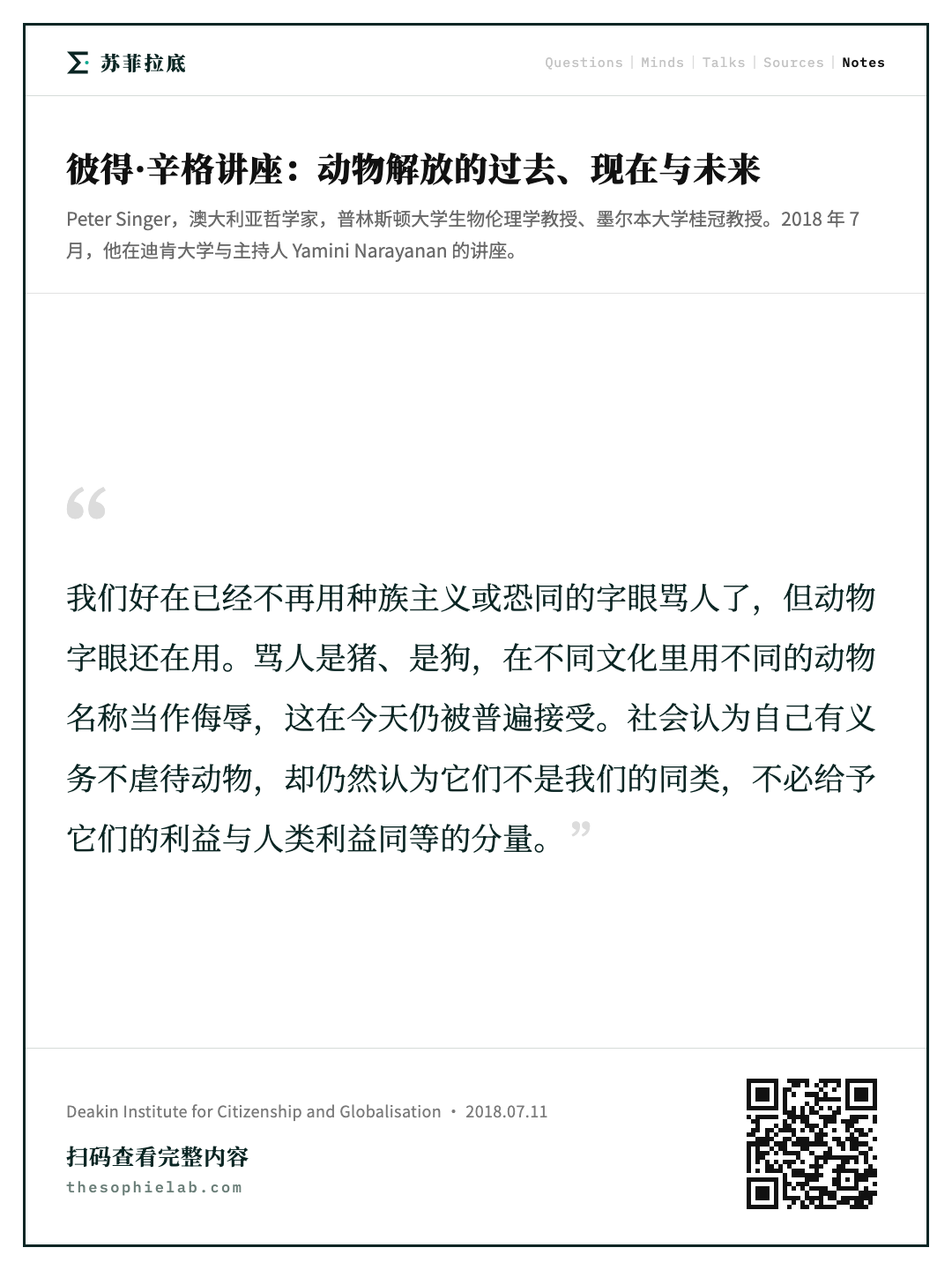
辛格: 先说我所谓的今日主流观点。我认为它仍然是支配性的观点,尽管不是毫无争议。这种观点认为,人类的道德地位高于动物,而且是无可比拟地高。人们认为,为了拯救一个人,可以牺牲几乎任何数量的动物。动物在法律上是财产,野生动物除外,但一旦你合法捕获它们,它们也就成了财产。把人与动物相提并论被视为冒犯:骂人是猪、是狗,在不同文化里用不同的动物名称当作侮辱,这在今天仍被普遍接受。我们好在已经不再用种族主义或恐同的字眼骂人了,但动物字眼还在用。这是主流观点的第一部分。

第二部分则与阿奎那等人不同:我认为我们已经接受,我们有义务善待动物,避免虐待它们,尤其是伴侣动物,狗、猫、马。但更一般地说,如果你看到有人肆意虐待一只动物,你会觉得那是错的,而且确实有法律禁止。几个月前,「澳大利亚动物」组织公布了活羊出口贸易的视频,公众的反应就是一个很好的例子:所有看过的人,包括农业部长,都说那是错的。没有一个人说:「那不过是羊,羊没有自我意识,所以无所谓。」所以,是的,我们认为自己有义务不虐待它们,但社会仍然认为它们不是我们的同类,我们不必给予它们的利益与人类利益同等的分量。这就是我说的主流观点。

这种观点受到了挑战。恕我不太谦虚,我这本书就是挑战它的著作之一。我绝不是说它是唯一的一本,动物运动中有过许多重要著作,而且这本也不是第一本。比如可以追溯到十九世纪末二十世纪初的亨利·索尔特,他写过一本《动物权利与社会进步的关系》,非常超前,可惜当时几乎无人注意。我七十年代做研究的时候,得跑到大英博物馆图书馆才找到一本。不过我想我这本书确实提炼出了几个对主流观点构成挑战的观念。

其中之一是拒斥物种歧视(speciesism)。这个词也不是我发明的,我得归功于理查德·赖德,他当时是牛津的一位心理学家,反对当时在动物身上做的一些实验,印了一份传单,上面是一只被注射了梅毒的黑猩猩的照片,神情极其痛苦,顶端写着「物种歧视」。这个词打动了我。我意识到它说的实质上是:正如种族主义是错的,性别歧视是错的,仅仅因为一个存在者不属于我们的物种、不属于某个特权物种,就认为它的利益不算数,同样是错误的。我在《动物解放》里试着把它阐述得更精确,作为反对我们现行对待动物方式的论证。我把物种歧视界定为一种偏见或偏向态度:偏袒本物种成员的利益,而歧视其他物种成员的利益。后来我认识到,它不一定是针对本物种的。我刚才说过,我们对猪、羊、牛愿意做的事,对狗和猫就不愿意做,这也可以看作一种物种歧视。

为什么说这是错的?一个理由是:如果种族主义和性别歧视是错的,如果一个群体在自己周围画一条生物学边界、然后说「我们才是重要的,边界外的不那么重要」是错的,那么物种歧视做的正是同一件事。这是一种说法。

平等原则与边缘案例论证

辛格: 但还可以从平等原则入手,这是我在《动物解放》里试图阐发的另一件事。我们把平等的观念应用于人类,认为所有人在某种意义上是平等的,拥有平等的道德地位。哲学家会问:为什么?在我思考动物问题之前,他们早就在问这个问题了,有许多著作讨论平等的基础是什么。有一点很明显:你不能说是因为我们在各种道德上重要的特征上都相同,因为我们并不相同。无论你认为哪种特征在道德上重要,自我意识也好,语言能力也好,理性也好,人与人都不一样;身体特征不一样,道德品质也不一样,有的人比别人更利他、更有同情心、更能共情。

于是有一种关于平等基础的观点是:我们应当平等地考虑所有人的利益。我们都有某种利益,也许唯一的例外是那些从来不曾有意识、永远不会有任何感受或体验的人,但除了这些罕见的例外,所有人都有利益,他们的利益都是要紧的,而对相似的利益,我们应当给予相似的分量。在这个基础上,某人有享受生活的利益,有不受苦、不感受疼痛的利益,这些都是重要的利益,你没有理由给予本种族或本性别成员的利益比其他种族或性别成员更多的分量。这是为平等辩护的一种基础。

但如果这是对的,如果我们谈的就是这个,那它为什么不同样适用于非人类动物?因为它们同样有享受生活、不受疼痛之苦的利益。我们说的是相似的利益(similar interests)。动物当然并不拥有全部相同的利益,它们没有来听一场哲学原理讲座的兴趣,这大概是你们爱做的事,否则你们不会坐在这里。但凡是利益相似之处,比如不受疼痛,这是最基本的一条,我们就应当平等考虑。我认为动物研究网络可以做的一件有意思的事,就是与各种以不同方式和动物打交道、研究动物行为的人交流,比如鸟类学家,了解非人类动物在「不受疼痛」之外还有多么广泛的利益。这四十年来我们在这方面学到了很多。凡是它们的利益与某些人类的利益相似或大致可比,我们就应当给予平等的考虑。

有人会说:可是人类的利益要不同得多、高级得多,需要比非人类动物更精密的认知能力,所以人类的利益总是应当压倒非人类动物的利益,主流观点的那一部分就是这样得到辩护的。我认为我们可以回答:如果这个断言是针对所有人类的,那它在事实上就是不成立的。我说过,有些人根本没有意识,也永远不会有,比如生来基本没有大脑皮层。但还有许多人有各种各样的智力障碍,在认知能力上可以与非人类动物相比。我说过,即使在今天,很多人一听到这种说法就觉得受了冒犯,但我认为这种冒犯感只是出于我们的物种歧视态度。我们应当承认,在认知能力、各类问题解决能力上,人类与非人类动物之间确实存在重叠。如果我们理所当然地要平等考虑那些智力障碍者的利益,他们在解决问题、应付世界方面不如某些非人类动物,那我们为什么不把同样的考虑扩展到动物身上?

下一张幻灯片说的基本就是我刚才讲的,不必再花时间了。

杀害动物是否有错的开放问题

辛格: 在离开哲学之前,还有一些开放的问题需要讨论,我希望动物研究网络能关注它们,尝试找到答案。比如,我到现在还没有谈杀害的问题,谈的都是痛苦、施加痛苦以及动物享受生活。我们应当如何看待杀害动物?在什么情况下可以人道地、不带痛苦地杀死动物?动物当然没有能力表示同意。维多利亚州刚通过了医生协助死亡的法律,这意味着我们并不认为杀人总是错的,但那些情形都有本人的同意。动物可能有类似的处境:看那段活羊出口视频的时候,你或许会想,那些羊显然在因口渴和热应激而剧烈受苦,要是有人能让它们解脱、人道地杀死它们,那会是好事。可它们无法同意。这样做是否正当?还有哪些情况下杀死动物是正当的?这与杀人怎么比较?这是一个重要的问题,我稍后再多说几句。

另外,我说过我们对动物的体验已经了解得多得多:它们知道什么、喜欢什么、欣赏什么、会怀念什么。但要把动物的体验与人类的体验作比较,仍然是一件极难的事,对不同物种的非人类动物的快乐与痛苦进行衡量也是如此。好,动物受苦,那是坏事,但与减少人类的痛苦相比,减少非人类动物的痛苦应当放在什么优先级上?两者都重要,而权衡它们的任务极为困难。

现在多说几句杀害的问题。我问的是:无痛地杀死动物是否有错?就我刚才提到的羊而言,我的回答是没有错。如果一只动物正在受苦,只会继续受苦下去,而你无法解除这种痛苦,那么杀死它不仅是允许的,实际上正是应该做的事。我认为处于这种境况的动物,我们应当让它们解脱,绝大多数养狗养猫的人,在动物病痛缠身时都会这样做。

但就为食用而饲养的动物而言,一个更有分量的问题是:如果它们的生活是好的,而且死后会被另一批同样过着好日子的动物取代,那又如何?讨论吃肉是否正当的时候,经常有人提出这一点:有些农民好好地照料动物,让它们在户外、在自然的社群里过着好日子,然后人道地宰杀它们。如果没有人买这种肉,这些动物根本就不会存在。所以摆在面前的选择是:要么给它们好日子过,然后人道地杀死它们;要么它们根本不存在。我认为这在哲学上仍是一个开放的问题:让它们过这样的一生再被杀死,这对它们来说是否是件坏事,其中是否有什么错,还是说这实际上好过另一种选择,也就是它们压根不存在。

这里有一位哲学家的答案。罗杰·斯克鲁顿是一位保守派英国哲学家,他说,其中一个区别在于:在成熟之前、在寿数未尽之前被杀,对动物而言并不是一种悲剧,而对人类却是。因为人类有他们最终会达成的成就,有他们会去做的事情,所以过早死去是悲剧:我们会想到那个死去或被杀的人本可以做到、本想去做、却因早逝而无法做到的一切。但斯克鲁顿说,对一头牛来说不是这样,就朝着任何目标的进展或成就而言,一个月与另一个月没有区别。对动物来说这也许是对的。但我说过,如果我们不搞物种歧视,这对某些人类也同样成立,他们无法把自己看作在时间中延续的存在。于是我们不得不面对这个问题:我们是否准备对处于那种境况的人类持同样的看法?我暂且把它放在这里,或许结束时可以讨论。

食用动物:数量与产业变革

辛格: 现在我想谈谈现在,不是哲学层面,而是实践层面。我将聚焦于食用动物,原因很简单:这是我们影响非人类动物的所有实践中,规模最大的一项,而且大得没有边。用于研究的动物,大概是第二大的实践,全世界每年大约一亿只,我们其实没有很好的统计,也许是两亿,反正是这个量级。但每年为食用而被杀的脊椎动物,这里说的还只是陆生动物,大约是六百亿,我最近看到的最新数字是六百五十亿,这是联合国粮农组织的估计。两相比较,食用动物的数量是研究动物的六百倍。就算把皮毛动物、在收容所里被安乐死的流浪动物、被虐待的动物都加进来,也不会有什么不同,就算不是六百倍,也是五百倍。所以我认为,凡是想减少痛苦的人,都应当特别关注食用动物。

我得加快了,不想超时太多。我说过,许多人问我:我们进展这么小,你不觉得沮丧吗?事实上,就全世界而言,而不特指澳大利亚,这四十年里动物的处境有了很大改善。下面这几种做法,是我在《动物解放》里描述过的、对养殖动物施加痛苦最极端的几种方式,如今基本上正在消失。

第一种是把小牛关在栏里生产所谓「白色小牛肉」或淡粉色小牛肉。这种做法幸好在澳大利亚从未真正扎根,却曾是欧洲和北美生产小牛肉的主流方法。小牛被锁在栏里,转不了身,走不了一两步以上;它们在很小的时候就被从母亲身边带走,肯定是想念母亲的;而且它们只被喂以流质的代乳饲料,为的是让肉保持柔软、颜色浅淡。要是喂了干草或青草,肉就会变红,就卖不出小牛肉的最高价,因为它「应该」是浅色的。这种在1975年还是主流的做法,1990年在英国被禁止,2007年在整个欧盟被禁止,2015年在加利福尼亚被禁止,如今在美国各地也在小牛肉生产商受到的压力下逐步淘汰。所以在这些地区它基本上消失了,尽管未必是全世界。

第二种是养猪的方式,遗憾的是,它在澳大利亚仍相当普遍。这里说的是母猪限位栏,不是所有的猪,而是繁殖用的母猪,也就是那些将变成培根、火腿、猪排的猪的母亲。它们在整个怀孕期间被关在这种栏里,而怀孕几乎占据它们的一生,因为它们不过是不断产出小猪的繁殖机器。它们同样没有活动空间。这种做法据说正在澳大利亚逐步淘汰,在英国和整个欧盟已经被禁止,在美国若干州也是如此,而且在美国正普遍退出,因为麦当劳等大型采购方通知供应商,将不再从使用母猪限位栏(美国叫 sow crates)的生产者那里进货。

第三种是蛋鸡笼。这在澳大利亚是当前的议题,政府刚就此启动调查并征求意见。我们可以希望它在澳大利亚也会消失,但还不知道。同样地,它在整个欧盟已经消失,在加利福尼亚已经消失,我想在美国也正在退出。说到这里再次要归功于麦当劳,我出于种种原因绝不是麦当劳的粉丝,但功劳该归就得归:他们已经通知供应商,将在从2015年起的十年内停止采购笼养鸡蛋。之所以要十年,是因为他们用的鸡蛋数量太庞大了,大约二十亿枚,就算想立刻切换也做不到,非笼养蛋鸡的数量根本不够。这正在推动生产商把母鸡放出笼子。美国的各大超市连锁在动物运动的压力下也在做同样的事。所以这些方面进展不错。

肉鸡:最严重的系统性痛苦

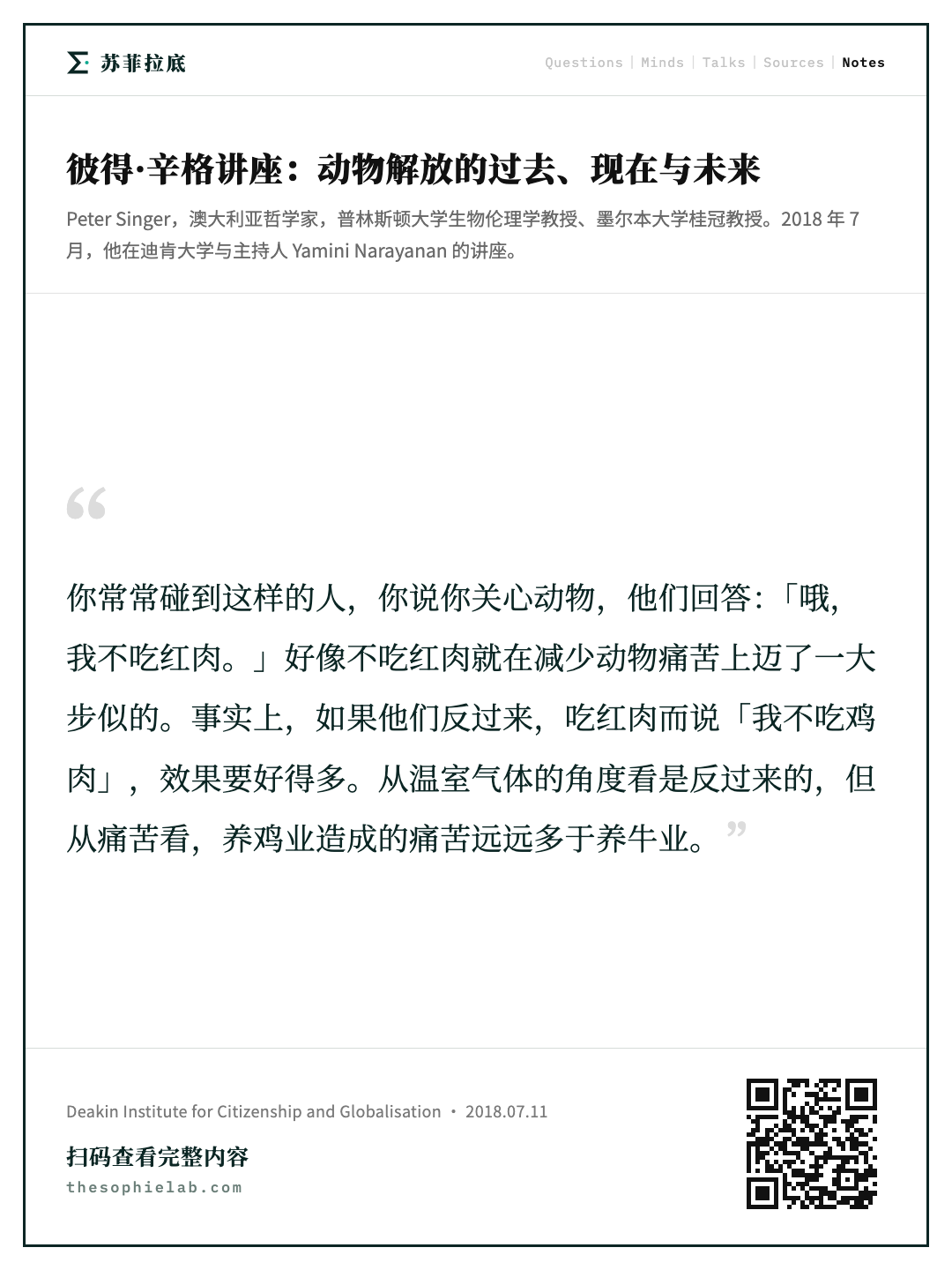
辛格: 进展最少的领域,遗憾的是,恰恰涉及动物数量最多的领域:肉鸡。你常常碰到这样的人,你对他们说你关心动物、你是素食者或纯素者,他们回答:「哦,我不吃红肉。」好像不吃红肉就在减少动物痛苦上迈了一大步似的。事实上,如果他们反过来,吃红肉而对你说「我不吃鸡肉」,效果要好得多。因为从痛苦的角度看,我认为养鸡业造成的痛苦远远多于养牛业。从温室气体的角度看是反过来的,但从痛苦看就是这样。部分原因是,吃鸡肉要吃掉的鸡的数量,远远多于吃牛肉要吃掉的牛,道理显而易见。还因为牛更可能在户外,能走动,而鸡几乎全部在室内生产,散养鸡肉在市场上只占极小的份额。所以它们极其拥挤,就像各位在这张照片上看到的,永远关在棚舍里。

这里引一段约翰·韦伯斯特的话,他是兽医,也是欧洲最大的动物福利研究中心之一(在布里斯托大学)的创建人。他把肉鸡养殖称为「人类对另一种有感知的动物所犯下的、最严重的系统性不人道行为」。为什么?部分是因为数量,部分也因为我们把这些鸡培育得长得极快,增重极快,以至于这些只有六七周大就被送去屠宰的幼鸟,两条腿根本撑不住自己的身体。所以就出现了照片上的情形:这是一只鸡,养过鸡、了解鸡的人都知道,鸡不会自愿这样坐着,它们坐下时腿是在前面的。这只鸡的腿在身体下面垮掉了。因为鸡增重太快,腿骨还没长成熟,承受不了体重,常常就这样垮掉。

而当它们垮掉的时候,在这类棚舍里,没有任何针对个体的照料,这种系统里根本不会有对单只动物的关注,因为不划算。你只有一个人每天或隔天在棚里走一遍,捡走尸体,仅此而已。甚至连这一点也常常做不到,因为进到棚里拍视频的动物解放人士,经常发现生了蛆的尸体,说明已经躺在那里好几天了。既然没有个体照料,一只腿垮掉的鸡,如果碰巧靠近供水供食的管道,或许还能活一阵子;如果不在附近,就直接渴死或饿死。这就是这些鸡的遭遇,也是韦伯斯特说这个系统如此不人道的一个原因。还有一个原因是,这些鸡在痛苦之中。他说,在它们生命的最后一两周,它们感受到的疼痛类似于关节炎,因为腿已经支撑不住体重了。

未来议题:鱼类与野生动物

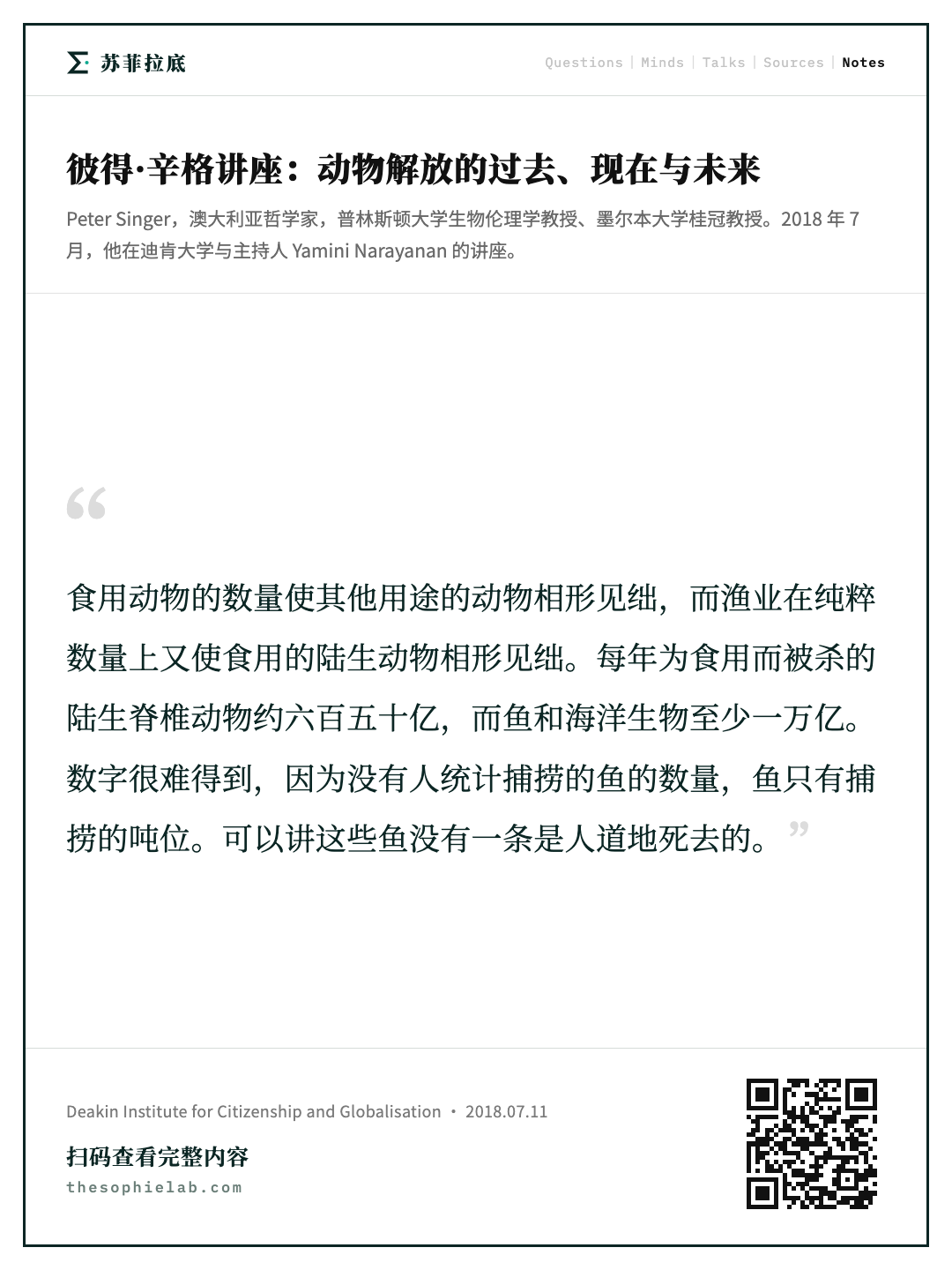
辛格: 接下来我想说说未来的方向,一些我们仍需着手讨论的问题。其中一个大问题是鱼。我自己在《动物解放》里没有多谈鱼,倒不是因为我认为鱼不会受苦,而主要是因为我觉得很难让人对鱼产生任何共情。人们对鸡尚且要费一番功夫才能学会关心,鱼又更远了一层:它们不是温血动物,摸上去又冷又滑,也不会发声。但既然我们谈的是减少大量的痛苦,那就不得不谈鱼,因为数量实在太大。食用动物的数量使其他用途的动物相形见绌,而渔业在纯粹数量上又使食用的陆生动物相形见绌。数字很难得到,因为没有人统计捕捞的鱼的数量。鸡至少还有统计,在美国你能查到饲养和屠宰的鸡的数量,而鱼只有捕捞的吨位。你得先想我们谈的是什么物种,一吨包含多少个体,然后才能对因捕捞而受苦的个体数量有个概念。

然后是它们以什么方式受苦的问题。有些鱼当然只在被捕的时候受苦,它们是自由生活的,在海里游,有时在河里,但主要是海洋,所以它们的痛苦来自被捕获的那一刻。但那也绝不是好事,因为对鱼来说本质上不存在人道屠宰。挪威的一些渔船在做一些试验性的做法,在割喉之前先把鱼击晕,我想荷兰人也在做类似的事,但从实际情况说,可以讲这些鱼没有一条是人道地死去的。数字方面,有一个叫 Fishcount 的网站给出了估计,范围是每年一万亿到二点七万亿条鱼和海洋生物。也就是说,至少一万亿个动物,相比之下,陆生脊椎动物是六百五十亿。数量之巨可想而知。即便是那些一生自由的鱼,死法也很不人道,视捕捞方式而异。深海鱼在被拉到水面的过程中会死于减压,也就是内脏膨胀、在体内爆裂。用延绳钓的话,有些拖网船用的线长达数公里,挂着大量鱼钩,拖着线在海里走,鱼陆续上钩,有的鱼嘴里挂着钩被拖行很久,直到线最终收回,可能是好几天。另一些船用各种网,比如长长的流刺网,留在海里,鱼,当然包括非目标物种,被缠在网里,也要过很长时间才被拉上来。所以光是捕捞本身就有大量痛苦,哪怕这些鱼在被捕之前从未受过人类的影响。

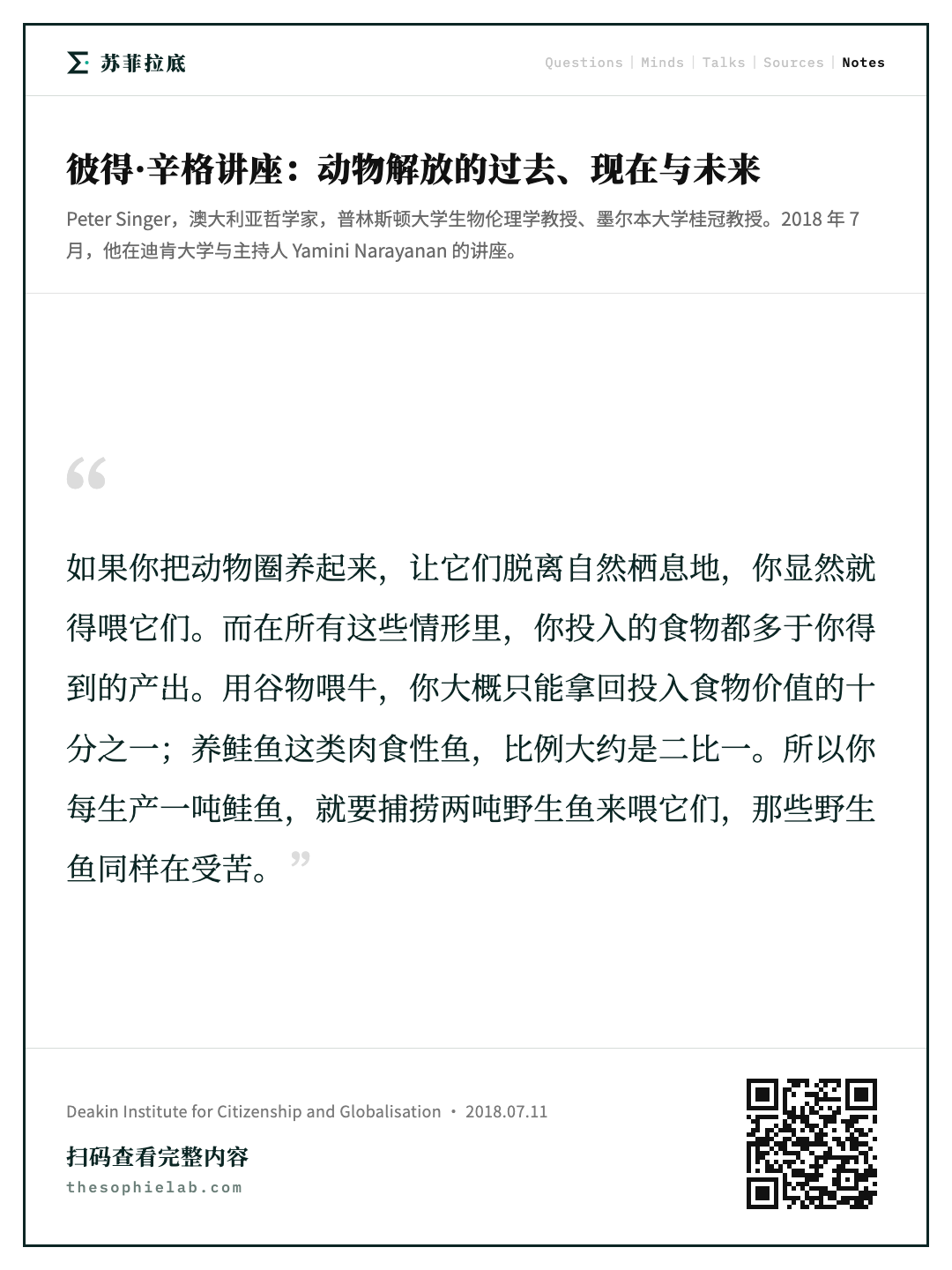
再就是水产养殖,它在人类食用的鱼中所占的比例越来越高。关于水产养殖要记住两点。第一,拥挤对鱼来说很可能压力很大,尤其像鲑鱼这样的物种,正常情况下它们的生命周期包含长距离洄游,而在养殖网箱里只能一圈一圈地打转。第二点,我刚才放鸡和猪的照片时没提,但它是一个普遍规律:如果你把动物圈养起来,让它们脱离自然栖息地,把牛从草地上带走,把猪从森林里带走,把鱼从海洋里带走,你显然就得喂它们。而在所有这些情形里,你投入的食物都多于你得到的产出,因为它们要消耗一部分食物的能量来活动,温血动物还要用来维持体温。差额因情况而异:用谷物喂牛特别低效,你大概只能拿回投入食物价值的十分之一;养鲑鱼这类肉食性鱼,比例大约是二比一。所以水产养殖里受苦的不只是鲑鱼:你每生产一吨鲑鱼,就要捕捞两吨野生鱼来喂它们。那些野生鱼显然没什么商业价值,但从痛苦的角度看,它们同样在受苦。我认为动物运动正开始把这作为一个重大议题,很高兴看到这一点,它需要更多关注。

另一个亟待讨论的问题,我在某种程度上有些犹豫要不要谈,因为我不认为我们已经到了该对此采取多少行动的阶段:我们是否应当努力减少野生动物的痛苦?这个问题我被问了很多年,通常是这样的语境:那捕食者怎么办?我们该不该阻止狮子捕杀羚羊?显然,如果你这么做,狮子就没了,除非你能为它们生产别的食物,而这很难想象怎么做到。而且这会把动物运动推向与环保运动的正面冲突,我认为这两个运动都不需要这种分心,它们各自要面对的问题已经够大了。这也是我认为现在不是时候的另一个原因。但也许在未来某个阶段,我们会思考这个问题,会权衡不同的价值,会考虑有没有办法在不牺牲我们所珍视的其他价值的前提下减少野生动物的痛苦,那也势必涉及对环境价值的讨论。

意识边界与替代肉的前景

辛格: 再一个问题是:在思考动物时,我们把线画在哪里?意识的边界在哪里?到目前为止我谈的只是脊椎动物,我认为有非常充分的理由相信所有脊椎动物都能感受痛苦。用边沁的话说,问题不在于它们能否推理、能否说话,而在于它们能否受苦。就脊椎动物而言,我认为这个问题已经基本解决了。但就无脊椎动物而言,远远没有解决,除了某些无脊椎动物,比如章鱼,我认为它们显然是有意识的、能受苦的。至于其他种类繁多的无脊椎动物,我并不假定它们全都能受苦,但在某些情况下我们就是不知道,而我们必须思考在这种不确定之下该怎么办。关于昆虫可能具有意识的问题,已经开始有一些有意思的论文发表。这也未必是一个全有或全无的问题:说到昆虫,我们谈的是数量和种类都远远超过哺乳动物的一大群物种,有些昆虫彼此之间在进化上的差异,比我们与老鼠之间还大。所以完全有可能,某些昆虫是有意识的,蜜蜂就是一个很好的候选者,它大约有一百万个神经元;而神经元更少的其他昆虫也许没有。我们就是不知道。这是又一个有意思的问题。

最后一张幻灯片,是一个问题,我认为它很可能影响整个讨论的未来:我们能否超越肉,用足够相似的东西来取代它,让那些对肉上瘾、或者干脆不想放弃肉的人,吃到本质上相同的产品?有时它甚至就是字面意义上的肉,因为它是在细胞层面体外培养出来的;有时它是植物基的,但与肉如此相似,味道、口感、烹饪方式完全一样。这会不会改变我们对动物的思考方式?各位在这张幻灯片上看到的是超市的一大片货架,上面有「超越汉堡」(Beyond Burger),一种植物基汉堡,在美国某些市场已经有售,我不知道这里有没有,不过有其他植物基汉堡。超越汉堡走得更远一步,还有各种品牌陆续推出,比如「不可能汉堡」(Impossible Burger)。这些植物基汉堡已经与肉几乎难以区分,价格也相当有竞争力,虽然还没有降到肉汉堡的水平,但正在接近。

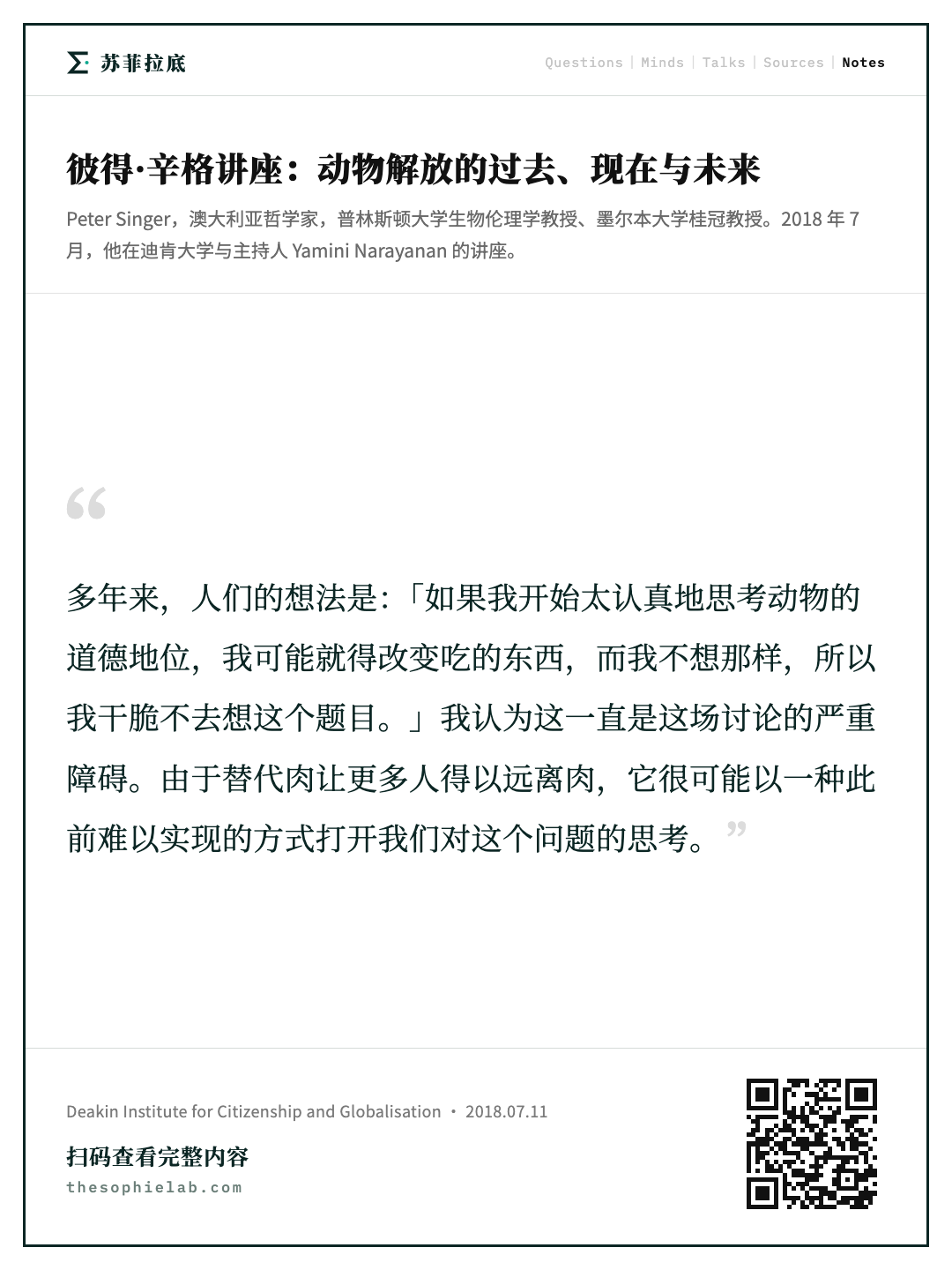
我说过,还有在细胞层面体外培养的可能。那应当更高效,因为你不会浪费动物身上我们不吃的各个部分,当然也不会产生同等数量的温室气体,所以也有环境上的理由。但这些也许还要几年。而且即便汉堡可以做到,一块牛排、一块烤牛肉或猪肉能否做到,又是另一个问题。所以我认为某些形式的肉还会伴随我们相当长的时间,但我们或许能减少必须用活体动物生产的肉的数量。这既有环境上的好处,也能减少动物的痛苦。更重要的是,由于它让更多人得以远离肉,它很可能以一种此前难以实现的方式打开我们对这个问题的思考。多年来,人们的想法是:「如果我开始太认真地思考动物的道德地位,我可能就得改变吃的东西,而我不想那样,所以我干脆不去想这个题目。」我认为这一直是这场讨论的严重障碍,而新产品的开发或许能帮我们跨过这道障碍。谢谢各位。

问答:技术、语言与同情的持久性

提问者: 谢谢您把讨论从人类的痛苦扩展开去。您举的那些例子我都亲身经历过,死去的鸡,还有人的死亡。我最近的经历是人的死亡,以及他们在临终过程中被技术减轻的痛苦。您最后谈到的那种可以让我们不再吃肉的技术,恰恰也是那种把我们从别人、从其他动物的死亡和痛苦中隔离开来的技术。有没有可能把痛苦重新带回前台?不是通过影像,不是通过包装,不是通过我们发明的各种用来劝阻有害行为的现代手段,而是让人真正亲身体验那种痛苦:临终者的痛苦,人经历动物死亡时的痛苦,或者动物自身的痛苦。把这种痛苦带回人们面前,让他们当场作出有意识的选择,被迫作出一个真正支持道德立场的决定。您举鸡的例子举得好,我住在维多利亚州的吉普斯兰,那里有大量养鸡场,我每天开车经过,但这并没有阻止我在超市买鸡肉。倒是有一次我走进一座鸡舍、脚下踢到鸡的时候,我停了一阵子没吃鸡。所以,有没有可能不靠技术,把痛苦带回人们面前?

辛格: 这是个好问题。我认为在个别情形下可以做到,让人真正明白正在发生什么,让他们亲眼看看那些动物。但我看不到在撼动大产业所需的那种规模上做到这一点的可能。如果在电视上放,很多人根本不想看。我觉得「六十分钟」栏目播出活羊贸易那段视频相当勇敢,因为我敢肯定,画面一出来,很多人就去拿遥控器了,而没有哪个电视制作人愿意赶走观众。所以要让人们真正理解并追踪下去,很难。你可以和个人坐下来谈,或者带他们去看网站,那里有大量卧底调查者拍的视频,但人们不会在没有人推动的情况下自己选择去看。所以你可以说,不得不走技术捷径、不真正让人直面自己的所作所为,是件遗憾的事。但现实地说,我是个务实主义者,这一点确实如此,我想找到切实可行的改变办法。现实地看,让人们接受与肉相似的替代品,希望恐怕大于让每一个人都去认真面对、认识并共情他们所吃的动物的痛苦。

提问者: 对动物的使用和虐待遍布我们社会的每个角落。我想问,研究者怎样才能最有效地推动动物解放?我们能做什么?

辛格: 研究者能做的事很多,当然取决于各自的研究背景。这正是建立一个网络、把人们聚到一起的好处之一。关心伦理问题的人需要与理解动物行为的人保持联系,后者能指出痛苦在哪里,甚至回答我说过的那些难题:痛苦的边界在哪里。但我们也需要理解人类行为的人,来告诉我们如何改变那些根深蒂固的习惯,那些对许多人来说意义重大的文化实践。吃肉不只是为了给自己和家人提供营养,或者获得某种味道,在不同时代、不同文化里,它或多或少是一种把家人聚在一起的文化实践,或者具有宗教意义。所以我们需要理解人类行为各个方面的人,与理解动物行为的人协同工作,找出哪里有改变的可能。

提问者: 我经营一家小型咨询公司,做组织伦理方面的工作,目前的一个主要研究方向是组织内的权力动态。我们的一个发现是:一个群体的权力越小,就越无法追究强势者对他们的侵害。这一点在动物解放上的体现是:即便最受压迫的人,至少还能思考、筹划、与他人商议,而动物没有、也永远不会有这种能力。在很多意义上,几乎所有为动物解放所做的工作,都不是动物为自身需求而进行的倡导,而是出于同情。我的担忧是,即便我们真的走到了动物受到良好保护的那一步,这种局面能持久吗?一旦同情消退,我们如何保证这些权利继续得到保护?

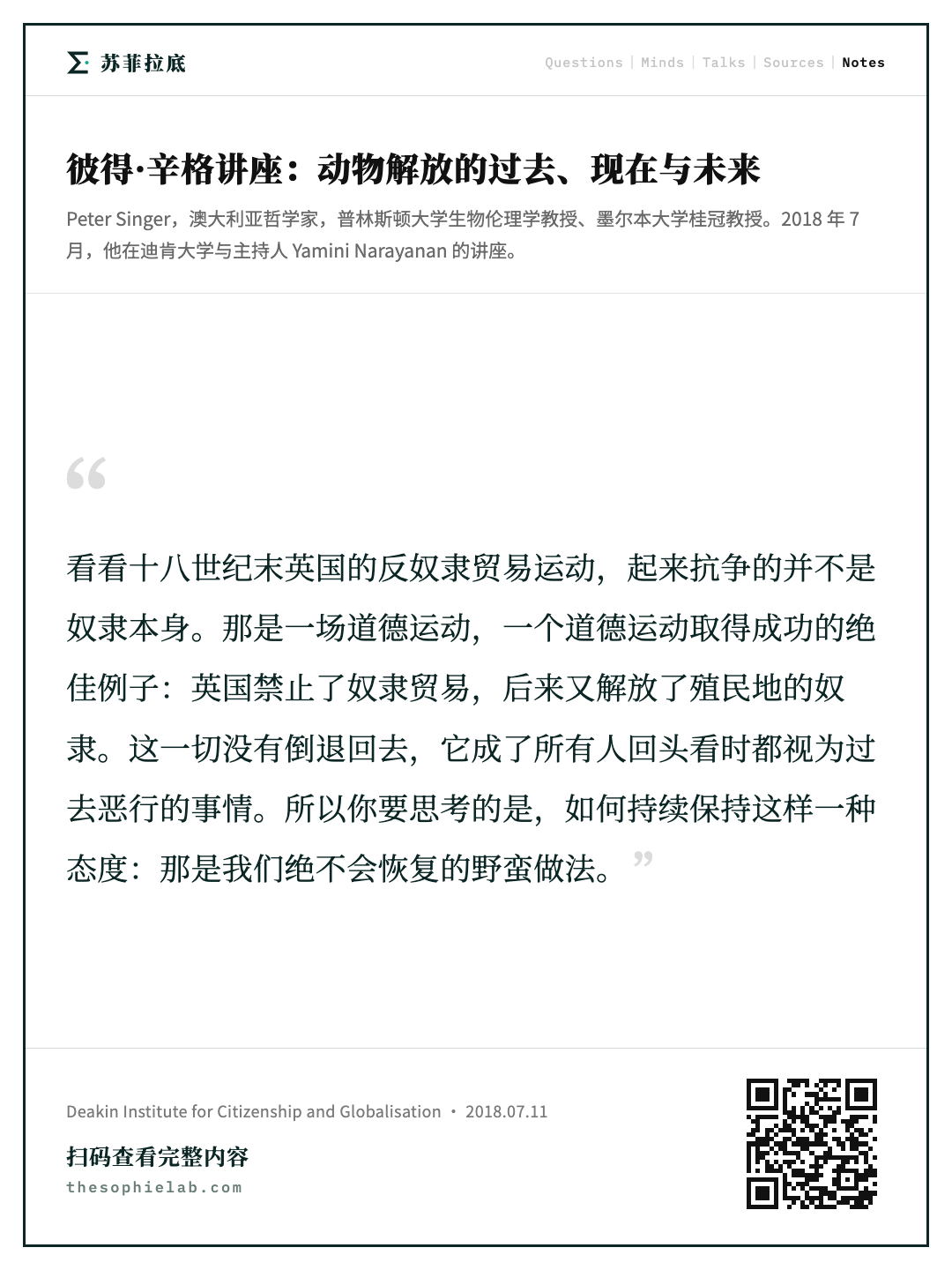
辛格: 我没法预见那么远的未来。我们从未有过一个真正终结了这些做法的世界,你问我的是一个假设的未来,问它能否持久。简短的回答也许是:让我们先走到那一步,再看。如果能走到那里,我会非常高兴。但我知道你想要的不止于此。你得拿它和其他曾被接受的残忍做法作比较。你说得对,如果那是针对人的做法,人可以抗议,但那些做法的终结未必是因为受害者能抗议。看看十八世纪末十九世纪初英国的反奴隶贸易运动,起来抗争的并不是奴隶本身,因为那是在英国,在英国境内当奴隶本来就不合法,但运送奴隶的是英国船只,运往英国殖民地,有时运往美国。那是一场道德运动,一个道德运动取得成功的绝佳例子:英国禁止了奴隶贸易,后来又在西印度群岛等殖民地解放了奴隶,并对奴隶主作了补偿。这一切没有倒退回去,它成了所有人回头看时都视为过去恶行的事情。所以你要思考的是,如何持续保持这样一种态度:那是糟糕的旧时代,那是我们绝不会恢复的野蛮做法。这类例子有不少,问题是我们能否维持同样的可信度。

提问者: 我想问一个关于语言的问题。我们用来描述肉的那些词,猪肉(pork)、牛肉(beef),甚至「肉」(meat)这个词本身,都把肉和它所来自的动物切割开了。您认为这对动物消费有什么影响?如果立法把这些词改回「猪的肉」之类,印在包装上,会对消费产生什么影响?会不会让我们与盘子里的东西建立更多的联系?

辛格: 短期内也许有影响,因为看到这种字眼可能会让人有点震动,但长期我表示怀疑。毕竟,英语里这些词基本上是法语词,而据我所知,可能在座的法语使用者比我清楚,法国人至今仍在用这些词,同样的词根,牛肉也罢,猪肉也罢,那些词与动物本身的名称是更接近的。这里有法语使用者吗?还有德语使用者?德语里就是这样,比如 Schweinefleisch(猪的肉),Rindfleisch(牛的肉)。可见一旦人们习惯了,它并不必然带来什么改变,很遗憾。不过你提出的问题有意思的地方在于,美国的一些州,我想是密苏里州,最近通过立法,禁止植物基产品或细胞培养产品使用「肉」这个词。他们把这看作制止竞争、防止人们被误导去吃那些产品的办法。法国我想也刚刚立法,规定植物奶不能用「奶」这个词。他们的说法是这会混淆消费者。我的猜测是,长远看叫什么名字其实不会有多大区别。

提问者: 我的猫大概还有五年寿命,它们得吃肉。我该怎么办?

辛格: 我不会说得那么绝对,那太苛刻了。我现在没有猫,但孩子小的时候我们收养过一只流浪猫。有人认为可以让猫吃素,我记得当时用过一种从美国进口的产品,它提供牛磺酸,那是猫必需的、从植物性食物里得不到的一种氨基酸,把它拌进猫粮。但猫不太喜欢,得饿到相当程度才肯吃,最后我放弃了。所以我认为你得继续喂它,大概需要考虑的是,喂什么给猫会造成最少的痛苦。

提问者: 那野猫呢?

辛格: 这是个严肃的问题。我认为,如果能以人道的方式做到,控制野猫是可以辩护的,因为每只野猫都会杀死大量动物,而且杀死的方式未必迅速、未必人道。所以即便撇开对濒危本土物种的环境顾虑,从痛苦的角度也有理由这样做。

问答:哲学反驳、伴侣动物与实验

提问者: 您的有效利他主义思想曾受到拉里·特姆金等哲学家的反驳。在动物问题上,您是否也有哲学上的对手?他们提出了哪些问题?

辛格: 当然有。就拿我刚才列出的那些开放问题来说,比如我们究竟怎样比较正常人与动物的体验。我有一条原则,叫对相似利益给予平等考虑,但一个棘手的问题是:什么算相似的利益?一头猪和一个人当然都能感受身体上的疼痛,但有人会争辩说,人对疼痛的记忆方式不同,或者人会对未来的疼痛感到恐惧。我严肃对待这些论点。我认为它们并不能表明猪的痛苦不是严肃而重大的,它们也许只是表明更精确的比较非常困难。但当你比较的是工厂化养殖动物所受的痛苦,与你吃不吃那些动物的肉、改吃非动物性食物之间的差别时,我认为比较的结论相当清楚:你不应该吃那些肉。当然,这不是能一锤定音的事。

另外,就像我说的,你得追问这些人:那么对处于相似心智水平的人类,你们怎么看?这也会招来反驳,有人依然说,不应该拿智力障碍者当作与动物比较的例子。但我认为在这类讨论中这是无法回避的,否则人们就是在回避真正的问题。还有就是杀害的问题,杀害究竟错在哪里,这仍然是一个争论中的议题。我引了罗杰·斯克鲁顿的观点,但也有人不同意我,持更绝对的立场,他们对野猫问题的回答就会与我不同。所以,是的,两边都有反驳。

提问者: 动物解放对伴侣动物意味着什么?

辛格: 我对这个话题谈得不多,因为我确实很受数量、受痛苦总量的影响,而无论从哪个角度看,伴侣动物的数量都小得多,通常经受的痛苦也远少于养殖动物。但人们常问我,拥有伴侣动物是否与动物解放相容。我当然认为相容。这要求你真正把它们看作家庭成员,看作一个有利益的存在者,那些利益需要按其本来面目、以平等的关切来衡量。给伴侣动物好的生活是可能的,但你需要更多地了解具体的动物。比如很多养狗的人,狗大概是最常见的伴侣动物,没有意识到狗是社会性动物,正常情况下它们和其他狗一起生活。所以你要么应该养不止一只狗,要么应该花大量时间陪伴它,成为它的「群」的一部分。如果一个人早上八点出门上班,晚上才回来,狗整天独自在家,我不认为那是一种好的方式。还有刚才角落那位先生提出的问题,你拿什么喂伴侣动物,那又会带来什么影响,也是要考虑的。

提问者: 您的平等论证依赖于把认知障碍者与动物作比较。有没有可能不依赖这种比较来论证?

辛格: 谢谢你的提问。我认为那当然是可能的,问题在于你会失去什么、得到什么。你说的得到,大概是指不做那些可能被视为冒犯、被视为不尊重残障人士的比较。我当然不认为自己不尊重残障人士。当年我作这些比较时,最初的反对确实来自那些认为我是在贬低或不尊重残障人士的人,而事实上我是在把动物提升到平等考虑利益的原则之下。但作为一个哲学家,我觉得自己不应当回避困难的问题。即便我不提出这个问题,别人也会提出类似的东西。如果我指出人们在搞物种歧视,他们会说:我们哪里是物种歧视?人是理性的,有种种高级认知能力,动物没有,所以人有道德权利而动物没有。而要证明人们在搞物种歧视,我想不出比这更清楚的办法:指出我们对那些不具备大多数人(大多数非婴儿的人)所具备的认知能力的人类,绝不会像对待非人类动物那样对待他们。我不知道这个回答是否让你满意。

主持人: 我们还有最后一个问题。

提问者: 鉴于这是一个包含自然科学的批判动物研究网络,我必须提出动物实验的问题。科学家都参与其中,我们刚才谈了伴侣动物,可比格犬正在被用于实验。您对科学家有什么建议,让他们变得更有伦理、停止动物实验?我们需要在这个网络里展示如何停止动物实验。人人都在谈伦理,科学家理应有伦理,我们怎样鼓励他们?

辛格: 我确实认为,动物在研究中的使用仍然存在困难的问题,因为我不认为可以简单地采取一刀切的立场,说所有对动物的研究使用都是错的。我们关于动物行为、动物能力,关于动物情感生活的许多重要知识,都来自研究。其中有些只是观察性的,比如珍·古道尔的工作,并没有干预她观察的动物;但有些可能确实需要实验环境,比如要理解母亲对哺乳动物幼崽意味着什么。还有一些问题涉及仍在影响大量人类的疾病的研究,是否要停下来。这有争议,有些人认为不需要动物也能取得进展,但我不完全相信在所有这些情况下,不使用动物也能以同样的速度取得进展。所以我不会作出一刀切的断言,说所有动物研究都是错的,甚至所有可能伤害动物的研究都是错的。我认为必须逐案审视。就动物研究网络而言,有些人关心动物、想加入这个网络,同时相信某些动物研究是有价值的,能帮助我们更好地理解动物、理解什么导致它们受苦、以及如何避免它们受苦。与其抱着敌对态度,说「你在做动物实验,你该滚出这个网络」,我认为我们应当逐案审视他们在做什么,并判断那是否站得住脚。

纳拉亚南: 非常感谢彼得再一次以一场公开演讲为我们揭幕,也感谢马修对迪肯批判动物研究网络的支持。我们准备了一份小小的谢礼。

这个网络是澳大利亚动物研究版图上最新诞生的一员。有意加入的朋友请联系我或亚当。除了迪肯大学内部的成员,我们也将为校外人士设立附属成员平台,关心动物运动、动物倡导以及广义动物研究的活动人士和学者都非常欢迎联系我们。门外备有茶点,今晚提供的食物全部是纯素的,请大家留下来一起交流。也请订阅阿尔弗雷德·迪肯研究所的电子邮件通讯,关注我们的脸书页面,今后的活动信息都会在那里发布。再次感谢各位今晚的到来。
排版 + 横图 + 来源,粘贴即成稿
章节 · 点击跳转视频
0:07 迪肯批判动物研究网络启动致辞 ▶ 正在看
8:28 辛格生平与著作介绍 ▶ 正在看
10:46 演讲开场:为何回顾历史 ▶ 正在看
13:10 西方传统:圣经与亚里士多德 ▶ 正在看
17:00 阿奎那、康德与边沁的转折 ▶ 正在看
23:18 当今主流观点与物种歧视 ▶ 正在看
28:13 平等原则与边缘案例论证 ▶ 正在看
33:58 杀害动物是否有错的开放问题 ▶ 正在看
38:38 食用动物:数量与产业变革 ▶ 正在看
44:46 肉鸡:最严重的系统性痛苦 ▶ 正在看
49:37 未来议题:鱼类与野生动物 ▶ 正在看
56:56 意识边界与替代肉的前景 ▶ 正在看
62:36 问答:技术、语言与同情的持久性 ▶ 正在看
75:16 问答:哲学反驳、伴侣动物与实验 ▶ 正在看
本期小问 · 档案清单
—— 人的道德地位真的无可比拟地高于动物吗? ▶ 正在看
—— 若某些动物比某些人类更善于解决问题,认知能力还能定道德地位吗? ▶ 正在看
—— 给农场动物好日子再无痛宰杀,比它们不存在更好吗? ▶ 正在看
—— 靠人造肉绕开道德讨论,还是靠直面痛苦改变饮食? ▶ 正在看
本期讲者
彼得·辛格澳大利亚哲学家,普林斯顿大学生物伦理学教授、墨尔本大学桂冠教授。1975年出版《动物解放》,被视为现代动物运动奠基人;提出「物种歧视」与「同等考虑利益」原则,亦是有效利他主义的思想来源之一。
亚米尼·纳拉亚南迪肯大学国际与社区发展领域学者,迪肯批判动物研究网络的发起人与召集人,研究动物在城市发展、宗教与民族主义政治中的处境。
马修·克拉克迪肯大学人文与社会科学学院创院院长,研究国际发展援助与宗教,2017-18年富布赖特学者,出版专著八部、主编十一部。
01迪肯批判动物研究网络启动致辞
0:07
good evening and a warm welcome to you all I'd like to begin by acknowledging the boomer and people of the Kulin nation the traditional owners of the land on which air gathered today we pay our respects to local people for allowing us to have our gathering on their land and to their elders we all respects past present and future I'd also like to just mention that this lecture is being live-streamed by the Alfred Deakin Institute Facebook page and this there's also a photographer who is actually going to be taking a few photographs if you don't want to be photographed please do let him know I'm very proud and honored to welcome you this evening to the launch of the newly cleaned Deakin critical animal studies Network where I come from in India we regard as pretty got nothing as more paramount than having a species beginning and I can think of nothing more spacious than the Deakin critical animal studies Network launching with a public lecture by Professor Peter singer who's often regarded as a father of the
晚上好,热烈欢迎各位。首先我要向库林族(Kulin Nation)的布恩伍伦(Boon Wurrung)人致意,他们是我们今天聚会所在这片土地的传统所有者。我们向当地人民致以敬意,感谢他们允许我们在他们的土地上举行这次聚会,并向他们的长者——过去的、现在的和未来的——致以敬意。我还想提一下,本次讲座正在通过阿尔弗雷德·迪肯研究所(Alfred Deakin Institute)的 Facebook 页面直播,另外现场还有一位摄影师会拍一些照片,如果您不希望被拍到,请务必告诉他。今晚我非常自豪也非常荣幸地欢迎各位来参加新成立的迪肯批判动物研究网络(Deakin Critical Animal Studies Network)的启动仪式。在我的家乡印度,我们认为没有什么比跨越物种的开端更为重要,而我想不出还有什么比迪肯批判动物研究网络以彼得·辛格(Peter Singer)教授的公开讲座作为启动更合适的了。他常被视为现代动物解放运动之父,当代动物权益倡导对他
便签笔记
1:05
modern animal liberation movement and to whom contemporary animal advocacy owes a great intellectual dex with a wide range of philosophical challenges the professor Peter singers work has posed to the field why a critical animal studies network here and now while scholarly interest in animals is not new there is now a growing animal turn across disciplines that is interested in animals as subjects as actors and as stakeholders in our co-produced and caution planetary worlds we are in what is regarded as the Anthropocene the geologic era of a human impact on planetary climatic futures as homo sapiens is unprecedented and regarded to be reversible we have also entered times of intensified ultra-nationalism conservatism Islamophobia racism and xenophobia and non-human animals are enmeshed in all these human political economies and societies from issues of not of climate change religious and cultural traditions livelihoods health and environmental sustainability in this complex context the role and vulnerabilities of
亏欠着巨大的思想债,他的研究工作为这一领域提出了广泛的哲学挑战。那么,为什么此时此地需要一个批判动物研究网络?虽然学界对动物的兴趣并不新鲜,但如今各学科正出现日益兴起的“动物转向”,它把动物视为主体、视为行动者,视为我们共同生产的、岌岌可危的星球世界中的利益相关方。我们身处所谓的“人类世”——在这个地质纪元中,人类对星球气候未来的影响是空前的,而且被认为是不可逆的。我们同时也进入了一个极端民族主义、保守主义、伊斯兰恐惧症、种族主义和排外主义日益加剧的时代,而非人类动物被裹挟进所有这些人类政治经济与社会之中——从气候变化、宗教与文化传统、生计、健康到环境可持续性等诸多议题。在这样复杂的语境下,非人类动物的角色与脆弱性、动物在人类政治
便签笔记
2:08
non-human animals the ways in which animals are mobilized in human politics and societies and the implications therians for human and non-human animals be under theorized and under-researched with membership from disciplines as varied as criminology sociology anthropology religious studies development studies cultural heritage and imaginative Natural Sciences the taken credible studies network is well-positioned to make important contributions to us fairly in animal studies by exploring our material and discursive categories of animal animality and species within complicate projects of racism religious extremism ultra-nationalism environmental politics for both human and non-human animals to dismantle one of my Dennis he's oldest constructed binaries human and animal we called the reflection whisky for humans as not only racialized gendered means but humans also his species and non-human animals as also prisms and political and social actors I'm very proud and very grateful that the deccan
与社会中被动员的方式,以及由此对人类与非人类动物产生的影响,都还缺乏理论化和研究。本网络的成员来自犯罪学、社会学、人类学、宗教研究、发展研究、文化遗产以及自然科学等多个学科,迪肯批判动物研究网络因而处在有利位置,能够为动物研究领域做出重要贡献——通过探讨“动物”“动物性”和“物种”这些物质性与话语性的范畴,如何被卷入种族主义、宗教极端主义、极端民族主义和环境政治的种种进程之中,为人类与非人类动物拆解人类历史上最古老的建构性二元对立之一:人与动物。我们呼吁重新思考:人不仅是被种族化、被性别化的存在,人同时也是一个物种;而非人类动物同样是棱镜,也是政治和社会行动者。我非常自豪、也非常感激,
便签笔记
3:12
critical animal studies network will be affiliated to the School of Humanities and Social Sciences and the Alfred Deakin Institute for citizenship and globalization at Deakin University I offer my gratitude to Professor Matthew Clark head of school to Professor fake impediments or a director of the Alfred Deakin Institute and to Professor Brenda Charlie chenko executive Dean of the Faculty of Arts and Education for their invaluable support of this network thank you to Opoku Mina dr. Adam Cardellini for carrying the flat for the National Sciences and for every member who has expressed enthusiasm in joining this network my very grateful thanks to the administrative team at Adi to Kayla Edwards to Mathew guy and Arlene Pacheco for being so supportive and so positive I'm not allowed to introduce professor Matthew Clark when we launch the network the first electric clock is a foundation head of the School of Humanities and Social Sciences at Deakin University his area of research is international
迪肯批判动物研究网络将挂靠在人文与社会科学学院,以及迪肯大学阿尔弗雷德·迪肯公民与全球化研究所之下。我要感谢学院院长马修·克拉克(Matthew Clark)教授、阿尔弗雷德·迪肯研究所所长费蒂·曼西内利(Fethi Mansouri)教授,以及文学与教育学部执行院长布伦达·切尔琴科(Brenda Cherednichenko)教授,感谢他们对本网络的宝贵支持。感谢奥波库·米娜(Opoku Mina)、亚当·卡德利尼(Adam Cardilini)博士为自然科学领域高举旗帜,也感谢每一位热情表示愿意加入本网络的成员。我也要衷心感谢阿尔弗雷德·迪肯研究所的行政团队——凯拉·爱德华兹(Kayla Edwards)、马修·盖伊(Mathew Guy)和阿琳·帕切科(Arlene Pacheco),感谢他们如此支持、如此积极。首先请允许我介绍 Matthew Clark 教授,我们今天要启动这个网络,第一步是打下基础他是迪肯大学人文与社会科学学院的院长,他的研究领域是国际
便签笔记
4:08
development aid religion and development and a dilemma sleeping mat to have continued invested on seven national category one grams valued at two million in the last ten years he has presented or published over a hundred academic journal papers and malpractice he's a prolific writer who has offered eight books and edited another 11 matthew was a Fulbright Scholar for nonprofit leadership in 2017 and 18 that has spent time at Harvard University Tufts University and Save the Children United States it is due to Professor Matthew Clark mentorship and as head of school that critical animal studies as a discipline that Deakin University has taken a strategic platform as a network the first support of the school was crucial in allowing us to break near disappearing frontiers the confidence we are honored that his formally agreed he had agreed to formally launch the DS network [Applause]
发展援助、宗教与发展等议题,在过去十年里他持续获得七项国家级一类基金资助总额达两百万,他发表或宣读过一百多篇学术期刊论文,并且著述颇丰,他是一位高产的作者,出版了八本专著,另外主编了十一本,Matthew 在2017年和2018年是非营利领导力方向的富布赖特学者,曾在哈佛大学、塔夫茨大学以及美国救助儿童会工作过,正是因为Matthew Clark 教授的指导以及他作为院长的支持,批判性动物研究这一学科才能在迪肯大学作为一个网络获得了战略性的平台,学院最初的支持对于我们打破那些即将消失的边界至关重要,我们非常荣幸他正式同意,他已同意正式启动这个网络(掌声)
便签笔记
5:23
the speech is part of the network's activities when yemeni first approached me not too long ago about her ideas that animal studies will be something that we should be teaching at deakin university who enthusiastically actually was quite clear and evident and very soon she was able to surround herself with other like-minded researchers and teachers who understood the importance of if we're to understand our place in the world that we actually understand it's much wider perspective for us and so we spoke about how animal studies at deep you might look and we spoke about various options and it became quite clear that given the wide interest across the School of Humanities and Social Sciences and in outside of our faculty about in education to other faculties including the hard sciences and another part of the university that it was something that should not in its first stages just be limited to an undergraduate study area that I'm sure that will follow into course but we decided that a network a
这场演讲也是本网络活动的一部分。不久前 Yamini 第一次找到我,谈起她的想法,认为动物研究应该是我们迪肯大学应当讲授的内容,她的热情其实非常清晰而明显,很快她就把其他志同道合的研究者和教师聚集到了身边,他们都明白,如果我们要理解自己在这个世界上的位置,就必须以更广阔的视角去理解,于是我们讨论了迪肯的动物研究可以是什么样子,也讨论了各种方案,结果很清楚,鉴于人文与社会科学学院内部有着广泛的兴趣,而且在我们学院之外,包括教育学院、其他学院乃至自然科学等大学的其他部分也有兴趣,这件事在最初阶段就不应该仅仅局限于一个本科专业方向,我相信本科课程日后一定会跟上,但我们决定,一个网络、一个研究网络才是真正启动并展示我们对这一理念之承诺的最重要方式,
便签笔记
6:23
research network would be the most important way to actually launch and demonstrating is commitment to the idea of element studies and so that's what we're doing tonight we're launching this wonderful network that the Deakin critical animals Bayes network as a place for researchers across Deakin and students across beacon who share that interest an understanding of the importance of understand of looking at the world so much wider lens across disciplines and between disciplines and so we be able to draw together resources and capacities from across the university to do that in a much more powerful way and could have been done as individuals separately so I certainly do commend a Yemeni and Adam Carlini as well for his leadership in this network and this is the staff of something that will no doubt grow we know that animal studies around the world is an emerging area of important study in Australia it's still in its infancy and so it's wonderful that they can may well be other taking me so very pleased to to
也就是动物研究,所以这正是我们今晚要做的事,我们要启动这个了不起的网络,即迪肯批判性动物研究网络,让它成为迪肯全校研究者和学生的共同平台,他们都怀有这份兴趣,都理解用更广阔的视角、跨学科并在学科之间看待世界的重要性,这样我们就能把全校的资源和能力汇聚起来,以远比个人分散行动更有力的方式去做这件事,所以我要特别赞扬 Yamini,也赞扬 Adam Cardilini 在这个网络中的领导作用,这只是一个开端,它无疑会不断成长,我们知道动物研究在世界各地都是一个新兴的重要研究领域,在澳大利亚它还处于起步阶段,所以迪肯能走在前面真是太好了,我非常高兴现在
便签笔记
7:28
now just formally launch the network I congratulate Yemeni and Odin once again and I have a champagne bottle or something there's a smashing declare this thing work open it's a wonderful opportunity to do so and so I'm very pleased that this network is now established house both in the Alpha big Institute which is and they're very pleased to introduce the executive Dean of the Faculty of Arts in education mr. Brender to code [Applause] [Music]
正式宣布这个网络成立,我要再次祝贺 Yamini 和 Adam,我这里有一瓶香槟或者别的什么,可以砸开来宣布它正式启动,这是个很棒的时刻,所以我非常高兴这个网络现在正式落户在 Alfred Deakin 研究院,我也很高兴介绍艺术与教育学院的执行院长Glenn Brander 先生(掌声)(音乐)
便签笔记
02辛格生平与著作介绍
8:28
and I thank them for the way they leave us in both the treatment of animals but the treatment of people we have so much to additional colleagues and I think it's a into our own business it's my very I get between you and Fiedler it's my very great pleasure to introduce Peter I I reminded him he didn't remember I did this once before and about 92 and it was a big conference I was a level beyond in contract and I was running a company I was the secretary for a conference and I've got this speak so and I don't remember what I actually said but I do remember being in throughout the talk it's my very great pleasure to welcome Professor Peter Singer to speak with us tonight he is the iOW dekat professor of bioethics at the University of Center at fisherman's always at Princeton University a position he combines with the position of laureate professor at the University of London he is the author of Animal Liberation sometimes credited with triggering of the modern animal rights movement and never out of
我要感谢他们在对待动物和对待人这两方面为我们所做的引领,我们有太多要向同事们学习的地方,我觉得这也是我们自己的事。我最大的荣幸是……我现在挡在你们和演讲人之间,这是我极大的荣幸来介绍 Peter,我提醒过他,他已经不记得了,我以前做过一次,大约是92年,那是一个大型会议,我当时刚起步,还在做合同工,我在经营一家公司,担任那次会议的秘书,我要致辞,我不记得自己当时说了什么,但我记得整场演讲我都在场。今晚我非常荣幸地欢迎Peter Singer 教授来与我们分享。他是普林斯顿大学人类价值中心的 Ira W. DeCamp 生物伦理学讲席教授,他同时还担任墨尔本大学的桂冠教授。他是《动物解放》一书的作者,这本书常被认为引发了现代动物权利运动,自1970年代出版以来
便签笔记
9:40
print since its publication in 1970 thought I recognized having said that here the other books include practical ethics the ethics of what we eat with Jim Mason the life you can save and most recently the most food you can do is edited in defense of animals and history and its successor in defense of animals the second way together with Paulo Cavallari it can confounded the great eight project and attempt to gain basic rights for great faiths and co-edited an anthology also called the great length project time has named Peter among the world's 100 most influential people as an Australian in 2012 he was made a companion to northern Australia our highest civilian honour it's my very great pleasure to welcome here for you to talk with you and to share with you these thoughts and ideas and I wish you a wonderful session thank you
从未绝版。我认识到这一点。他的其他著作包括《实践伦理学》、与 Jim Mason 合著的《我们该吃什么》、《你能拯救的生命》,以及最近的《你能做的最大善事》。他主编了《为动物辩护》,以及它的续篇《为动物辩护:第二波》。他与 PaolaCavalieri 共同创立了大猿计划,试图为大猿争取基本权利,并共同主编了一本同名文集《大猿计划》。《时代》杂志曾把 Peter 评为全球最具影响力的100人之一。作为一名澳大利亚人,他在2012年被授予澳大利亚勋章同伴勋位,这是我们最高的平民荣誉。我非常荣幸地欢迎他来与大家交流,与大家分享这些思考和观点,祝各位有一场精彩的讲座,谢谢
便签笔记
03演讲开场:为何回顾历史
10:46
thank you very much I thank everybody involved in putting this event together Aoyama lee in particular who I had most to do with in terms of the organizing but everybody else has been a part of it and also all of you have been a part of putting together this became critical animal studies Network I do think this is an interesting and significant development so if this is an auspicious beginning then that's great because I certainly hope that it will thrive and develop an interest a lot of people in what has typically been a somewhat neglected area that is in terms of animals what we do to them the way that they're part of our world all of those questions are really important questions and certainly when I started thinking about ethics doing philosophy first as a undergraduate and then during a masters at the University of Melbourne and going to Oxford it wasn't something that was really anywhere on the radar at all very pleased that it is but it has quite a lot of catching up to do so let's look
非常感谢。我要感谢所有促成这次活动的人,尤其是 Yamini,我在筹备方面和她打交道最多,但其他每一位也都出了力,你们所有人也都参与了这个迪肯批判性动物研究网络的创建。我确实认为这是一个有趣而重要的进展,如果这是一个吉利的开端,那就太好了,因为我当然希望它蓬勃发展,并让很多人开始关注这个通常相当被忽视的领域,也就是关于动物、我们如何对待它们、它们如何构成我们世界的一部分,所有这些问题都是非常重要的问题。当然,当我最初开始思考伦理学、开始学哲学的时候,先是本科,然后在墨尔本大学读硕士,再到牛津,这个话题根本就不在任何人的视野里。我很高兴现在它进入了视野,但它还有很多功课要补。那么我们来看看
便签笔记
12:01
at the topic of what I want to talk to you about an alliteration past present and future this is approaching the issue from perspective of philosophy or more specifically ethics which is my discipline and of course what I'm particularly interested in but it's only one of many ways of approaching questions about animals and [Music] animal studies Network you'll bring a lot of those different ways together and that will be rewarding and fulfilling and I know I've myself had wanted me to change the people in other disciplines which is really a good way of learning things that you don't get from simply talking with your own within your own discipline okay so past present and future logically I'm going to start with the past and look at the question it's a very wide room so I'm going to wander around a little bit then each of you will feel I'm closer to you at some point maybe so we're going to talk about where we've come from and I think that's important because that's the way in which we can really know how much
我今天要讲的主题:动物解放的过去、现在与未来。我是从哲学的角度,更具体地说是从伦理学的角度切入这个问题,这是我的专业,当然也是我特别感兴趣的,但这只是探讨动物问题的众多路径之一。(音乐)动物研究网络会把很多不同的路径汇聚在一起,那会是很有收获、很充实的。我自己就常常受益于与其他学科的人交流,这确实是学到东西的好方法,那些东西是你只在自己学科内部交谈得不到的。好,那么过去、现在和未来,按逻辑我先从过去讲起。这个房间很宽,所以我会走动一下,这样每个人在某个时刻都会觉得我离你们近一些。我们要谈的是我们从哪里走来。我认为这很重要,因为只有这样我们才能真正知道自己取得了多大进步。很多人
便签笔记
04西方传统:圣经与亚里士多德
13:10
progress we've made a lot of people say to me don't you get discouraged having been thinking about it animals and ethics for more than 40 years don't you get discouraged with where we are I often say well I think you have to think where we've come from both in historical terms but also even within those 40 years and that's part of what I'll be talking about so let's look at that past I think there's there's two sort of roots of the Western focus that I am should apologize purpose for this to some of you anyway and I am focusing on the Western tradition mainly because it's the one that I know best but of course it's clear that it has been extremely influential worldwide in the way that some other traditions perhaps to our regret have not been as influential so one root of the Western tradition is the Hebrew writings that became part of the scriptures for the West after becoming of Christianity and I'm sure you'll all be familiar with this verse which righted an ad set in the story of creation if you like
对我说:你思考动物与伦理问题四十多年了,看到现状难道不灰心吗?我常说,我觉得你得想想我们是从哪里走过来的,既是历史意义上的,也包括这四十年之内的变化,这也是我今天要讲的一部分内容。那么我们来看这段过去。我认为西方传统大致有两个根源。要说明的是,对在座某些人我或许该先道个歉,我主要聚焦于西方传统,主要是因为这是我最熟悉的,但显然它在全世界都产生了极大影响,而另一些传统——也许令我们遗憾——却没有这样的影响力。西方传统的一个根源是希伯来经典,在基督教兴起之后它成为西方圣经的一部分。我相信你们都熟悉这段经文,它出现在创世的故事里,可以说为“人类主宰大地、
便签笔记
14:27
provides a justification for the idea that humans are dominant on earth that we over the animals because on this few that says God wandered as God granted it to us that firstly as you see here man is made in God's image the other animals not mentioned as being made in God's image so presumably they're not and then they're given dominion over all of the fish of the sea and the fowl of the air and everything that creepeth upon the earth there are more bottom translations which don't have this nice creepeth but conventionally something is being lost if you if you lose that so so that's one tradition and you can see where that sets up humans at the pinnacle there and then the other tradition of the West comes from ancient Greece and there were a number of philosophers in ancient Greece who had different views about animals Pythagoras reputedly was a vegetarian we're not absolutely sure why we don't have surviving writings directly from Pythagoras we only have much later writings about pythagorean's and but it
凌驾于动物之上”这一观念提供了正当性依据,因为按照这种看法,上帝把这一切赐给了我们。首先,如你们所见,人是照着上帝的形象造的,其他动物并没有被说成是照上帝形象所造,所以大概它们不是。然后人被赐予管辖海里的鱼、空中的鸟以及地上一切爬行之物的权柄。有些更现代的译本没有保留“爬行”这样古雅的说法,但按惯例来说,去掉它总是会损失一些东西。这是一个传统,你可以看到它是如何把人类置于顶端的。西方的另一个传统来自古希腊。古希腊有若干哲学家对动物持不同看法。据说毕达哥拉斯是素食者,我们并不完全确定原因,因为我们没有毕达哥拉斯本人留存下来的著作,只有很晚以后关于毕达哥拉斯学派的记载。但
便签笔记
15:47
was it was Aristotle who ended up being that the dominant influence on the West with Aristotle who came down to the west and his view of animals was certainly very different as I say here but he says plants exist for the sake of animals and brute beasts for the sake of man so the universe exists for his purposes in it and things exist for a purpose and that purpose is to do with the less rational serving the more rational so plants and the plant nature serves the animal nature and the animal nature serves the human nature and indeed even within that Aristotle were affirmed the distinction which no one would today give any credence to and that is that the less rational humans ie the barbarians as anyone who was not a Greek was known exist to serve the more rational Greece and of course that justified slavery in ancient Athens so we don't except that but we asked them influenced by the Aristotelian combined with as I say the ancient Hebrew and then as we'll see the Christian traditions in terms of
最终对西方产生主导影响的是亚里士多德,是亚里士多德的思想流传到了西方,而他对动物的看法当然很不一样。就像这里写的,他说植物为动物而存在,野兽为人而存在。所以宇宙中的一切都是为人的目的而存在的,事物都有其目的,而这个目的就是低理性的服务于高理性的。所以植物、植物性的本性服务于动物性的本性,动物性的本性服务于人的本性。而且在这个框架内部,亚里士多德还确认了一种区分,今天没有人会认可它,那就是理性较低的人——也就是所谓的野蛮人,任何非希腊人都被这样称呼——存在的目的是服务于更有理性的希腊人。这当然为古雅典的奴隶制提供了正当性。我们不接受这一点,但我们仍然深受亚里士多德的影响,再加上我说过的古希伯来传统,以及我们接下来会看到的基督教传统,
便签笔记
05阿奎那、康德与边沁的转折
17:00
the status of animals okay so how do you narrow started getting to the Christian tradition and going into it essentially through Thomas Aquinas because Aristotle was the only one of the Greek philosophers the major Greek philosophers who was known in the timer Aquinas which is prefering century in medieval Europe and Aristotle was preserved because he'd been translated into Arabic and great Arabic enlightenment and was therefore known in Europe through the Arabic influence in through Spain so Aquinas just refers to Aristotle as the philosopher if he's been the only philosopher around and and what he's trying to do is to reconcile Aristotle's philosophy with Christian teachings and as you can imagine from what you've seen already when it comes to the status of animals this is not really hard to do because in both of them you have this idea of humans being at the pinnacle and the animals existing to serve us or us being having dominion over them so Aquinas is very clear and goes even a step further more explicitly
这些共同塑造了动物的地位问题。好,那么它是怎样进入基督教传统的呢?基本上是通过托马斯·阿奎那,因为在阿奎那的时代,亚里士多德是当时人们所知的唯一一位主要的希腊哲学家。那是中世纪欧洲的十三世纪。亚里士多德之所以得以保存,是因为他的著作被译成了阿拉伯文,在阿拉伯世界的文化繁荣中得以流传,因而通过阿拉伯的影响、经由西班牙传入欧洲。所以阿奎那提到亚里士多德时直接称他为“那位哲学家”,好像他是当时唯一的哲学家。阿奎那想做的,是把亚里士多德的哲学与基督教教义调和起来。从你们已经看到的内容可以想象,在动物地位这个问题上,这其实并不难做到,因为两者都有这样一种观念:人类居于顶端,动物存在是为了服务我们,或者说我们对它们拥有管辖权。所以阿奎那说得非常明确,而且比希伯来传统或亚里士多德更进一步、更直白地说:我们
便签笔记
18:16
than either the Hebrew tradition or the Aristotelian actually saying it doesn't matter how we treat animals animals have no value or no work in themselves later on he goes on to say well treating animals cruelly might be bad because you might develop a cruel disposition and then you might be cruel to humans so there's no reason not to be cruel to animals but the very reason to be cruel to animals has to feed back to humans the suffering that you're inflicting on the animals through your cruelty to them doesn't count for Aquinas it's only this idea that you might then be cruel to humans so that's Aquinas was the most influential philosopher a thinker in the Christian tradition certainly in the Catholic tradition right up to the 20th century and you know arguably to the present day so this is something that's gone very deep into Christian and therefore Western thinking and something very similar exists in that in the Protestant nation it didn't break really sharply from the Catholic tradition at
怎样对待动物都无所谓,动物本身没有价值。后来他又说,残忍地对待动物可能是不好的,因为你可能会养成残忍的性情,进而可能对人残忍。所以并不是说没有理由不对动物残忍,而是不要对动物残忍的理由必须回溯到人类身上。你通过残忍施加在动物身上的痛苦,在阿奎那看来根本不算数,唯一算数的只是你可能因此变得对人残忍这一点。阿奎那是基督教传统中最有影响力的哲学家和思想家,在天主教传统中尤其如此,一直到二十世纪,甚至可以说到今天。所以这种观念深深渗入了基督教思想,进而渗入西方思想。而且在新教传统中也存在非常类似的东西,新教在这一点上并没有与天主教传统
便签笔记
19:35
this point and you can look at Immanuel Kant we're going right up to the late 18th century now and in Protestant tradition but he says something pretty similar really that as far as animals are concerned we have no direct duties to them so you don't roam an animal in terms of violating one of your duties duty is very important to cut one of your duties because you know he doesn't give her a religious justification he says because they're not self-conscious and ER they're merely as a means to an end so we're still the ends they're just the means and it's the lack of self-consciousness in college view that means that they don't matter but still it's the same so their interests don't really don't really care he does again say something rather like Aquinas about not developing a cruel disposition but the idea that the animals can't in themselves as ends in themselves in the way humans do no it can't explicitly rejects that idea but it was around that time or very soon afterwards that we do get the first statement I think there's
真正决裂。你可以看看伊曼努尔·康德,现在我们已经来到十八世纪晚期了,他属于新教传统,但他说的其实也差不多:就动物而言,我们对它们没有直接的义务。所以你伤害一只动物并不构成对你某项义务的违背——义务对康德来说非常重要——他并不给出宗教上的理由,他说是因为动物没有自我意识,它们仅仅是达到目的的手段。所以我们仍然是目的,它们只是手段。在康德看来,正是因为缺乏自我意识,才意味着它们无关紧要。但结论还是一样的,所以它们的利益并不真正被在意。他也同样说了一些类似阿奎那的话,关于不要养成残忍的性情。但对于动物本身能像人一样成为“自在目的”这个观念,康德明确地予以否定。不过大约就在那个时期,或者很快之后,我们第一次在西方哲学传统中得到了一个清晰的表述,即
便签笔记
20:51
clear statement in the Western philosophical tradition of the idea that animals do can and come alongside humans in an important respect this is Jeremy Bentham the founder of the utility in tradition riding in England at the end of the 18th century in fact writing this just after the beginning of the French Revolution 1789 so the French revolutionaries had a declaration of the rights of man and citizens and as part of that they actually freed the slaves in the French colonies so Bentham in a footnote in his introduction of the principles of morals and legislation says that the friendship discovered that the color of man's skin is no reason to abandon him to the Caprice of a tormentor so giving rights to people for the color of person's skin isn't relevant Bentham says the friendship put forward this and he then makes somewhat similar remark about animals he says perhaps one day we'll discover that and then he mentions things like whether they have fur or not whether I have a tail these sorts of characteristics are
动物在某个重要方面可以与人类相提并论。这就是杰里米·边沁,功利主义传统的创始人,他在十八世纪末的英国写作。事实上他写下这段话时,正好是在法国大革命开始之后,1789年。法国革命者发表了《人权和公民权宣言》,作为其中的一部分,他们确实在法国殖民地解放了奴隶。于是边沁在《道德与立法原理导论》的一个脚注中说,法国人已经发现,一个人皮肤的颜色不是理由,不足以把他抛弃给折磨者的任意摆布。也就是说,人的肤色与他是否享有权利无关。边沁说法国人提出了这一点,接着他对动物做出了某种类似的论述,他说也许有一天我们会发现然后他提到了一些特征,比如它们有没有毛、我有没有尾巴,这类特征
便签笔记
22:06
also no reason to ignore their suffering no reason not to protect them not to not even if you'd rather than rats maybe one day he says people will realize that and will grind the roads you have to realize that at this time there were no laws predicting animals against cruelty not in not in England not really anywhere in the world at that time but this is pretty advanced thinking for Bedford's day but he does take this point that you could say this might relate to Kant or others the question is not can they reason he could have said it question not are they self conscious or can they talk but can they suffer it's the capacity to suffer that is important and of course Bentham is so animals can suffer and their suffering matters therefore our suffering matters we shouldn't think that they're suffering matters less because they have or because they have a tail or 4 legs or whatever else it might be ok so that's a very quick summary obviously of a couple of thousand years of the past which could be developed much more fully in
也同样没有理由忽视它们的痛苦,没有理由不去保护它们,即便你更看重老鼠也一样,也许有一天他说,人们会认识到这一点,会把道路碾平。你要知道,在那个时代根本没有法律禁止虐待动物,英国没有,当时世界上几乎任何地方都没有,但这在边沁的时代已经是相当超前的思想了。不过他确实提出了这一点,你可以说这可能跟康德或其他人有关:问题不在于它们能否推理——他本可以说,问题不在于它们是否有自我意识,或者能否说话,而在于它们能否感受痛苦。重要的是感受痛苦的能力。当然,边沁认为动物是能感受痛苦的,而它们的痛苦是重要的因此我们的痛苦也是重要的。我们不该认为它们的痛苦不那么重要,只因为它们有尾巴、有四条腿,或者别的什么特征。好,这就是一个非常简略的概述,显然只是把几千年的历史压缩了一下,这些本可以更充分、更有意思地展开,但让我们往前跳,因为我时间不多了,来看看当下,看看
便签笔记
06当今主流观点与物种歧视
23:18
interesting wise but let's move jump ahead because I a lot of time to the present and look at where we might be in changing ideas of the present so of course let me start with what I'm going to refer to as the mainstream view today I think it still is the dominant view although it's not unchallenged of course so we're still saying that humans have a higher moral status than animals in fact incomparably higher people think that you could trade off more or less any number of animals for saving one human being so our humans have a much higher status than animals animals are of course items of property at law and can be indeed unless they're wild animals but even then they become items of property if you legally capture them and comparisons between humans and animals are offensive it's kind of you know calling someone a pig is an offensive term or or a dog or whatever other different cultures different animal terms are used as as terms of abuse so that's considered quite acceptable and why that we've
在观念变化中我们现在处于什么位置。当然,先从我称之为当今主流观点的看法说起。我认为它仍然是占主导地位的观点,尽管当然并非无人挑战。所以我们仍然认为人类的道德地位高于动物,事实上是高得无可比拟。人们认为你可以用任意数量的动物去换取拯救一个人。所以人类的地位远高于动物,而动物在法律上当然是财产,确实如此,除非它们是野生动物,但即便那样,一旦……它们也会变成财产你合法地捕获它们,而把人和动物相提并论是带有侮辱性的,你知道的,就像骂一个人是猪是一种侮辱性的说法,或者骂人是狗之类的,不同文化会用不同的动物词汇来当作骂人的话,所以这被认为是相当可以接受的,而幸运的是我们已经不再使用种族主义或恐同的词汇来
便签笔记
24:36
fortunately got rid of using racist or homophobic terms for example as as terms of abuse but we don't with animals okay that's part one of the mainstream view the second part though this is where it does differ from Aquinas and from the others is I think we accept that we do have duties to be kind to animals and to avoid being cruel to them specifically particularly of course those who are companion animals particularly with dogs and cats or horses but in general if you see someone being what only cruel to an animal you think that's wrong and indeed there are laws that prevent it the reaction to the videos of the live sheep trade that was shown thanks to Animals Australia a couple months back a good example of of that reaction to everybody who watched that including the Minister for agriculture said that was wrong you know none of them said oh well it's a sheep that's not self-conscious so it doesn't matter so yeah we do think we have duties to avoid being cruel to them but society they're
骂人了,但对动物我们却没有。好,这是主流观点的第一部分。不过第二部分,这里就跟阿奎那以及其他人不同了,我认为我们都接受:我们确实有义务善待动物,避免残忍地对待它们,尤其当然是那些伴侣动物,特别是狗、猫或马,但总体来说,如果你看到有人残忍地对待一只动物,你会觉得那是错的,而且确实有法律禁止这种行为。几个月前多亏了澳大利亚动物组织(Animals Australia)而被曝光的活羊贸易视频所引发的反应,就是一个很好的例子。看过那段视频的每一个人,包括农业部长,都说那是错的,你知道,他们没有一个人说:哦,那不过是只羊,它没有自我意识,所以无所谓。所以是的,我们确实认为我们有义务避免残忍地对待它们,但在社会看来,它们跟我们并不平等,我们不必像对待人类那样,给予它们的利益
便签笔记
25:50
not our equals we don't have to give the same weight to their interest that we give to human beings and that's as I say I think still the mainstream you so as I said this has been challenged and a little immodestly this is one of the works that challenge it I don't think that this is why many means they the only work they've been a lot of important works written in the animal movement and you know this wasn't even the first you could go back for example to hand result of the late 19th century and early 20th century wrote a book called animals rights in relation to social progress which was very advanced but unfortunately was barely noticed at the time there was published when I started doing research on this in the 1970s I had to go to the British Museum Library to get a copy of it so but still I think I encapsulated some things some ideas that are relevant challenge to the mainstream view and one of them is the rejection of speciesism also not a quality that I invented I owe it to Richard Ryder who was a psychologist
同等的分量,而这,正如我所说,我认为仍然是主流观点。所以正如我说的,这一观点已经受到了挑战,说得不太谦虚一点,这本书就是挑战它的著作之一。我并不认为这在任何意义上是唯一的一本,动物运动中已经写出了很多重要的著作,而且你知道,这甚至不是第一本,比如你可以往回追溯到19世纪末20世纪初的亨利·索尔特(Henry Salt),他写过一本书,叫《动物权利:与社会进步的关系》社会进步方面其实非常超前,但可惜当时几乎无人注意。它出版的时候——我在1970年代开始研究这个课题时,还得跑到大英博物馆图书馆才能找到一本。不过尽管如此,我觉得我还是提炼出了一些与主流观点形成挑战的相关想法,其中之一就是对物种歧视的否定。这个概念也不是我发明的,我要归功于理查德·莱德(Richard Ryder),他当时是牛津的一位心理学家,
便签笔记
27:05
working in Oxford at the time and who was opposed to some of the experiments that were being done on animals and put out a leaflet with a picture of a chimpanzee that had been infected with syphilis looking very miserable and had the hating speciesism across the top of it and that one struck a chord and I realized that essentially what this was saying was that just as racism is wrong just as sexism is wrong so to think that a beings interested can just because that being is not a member of our species or not a member of some privileged species is also a mistake and I there try to use this in Animal Liberation worked out a more precise account of what it actually amounts to as an argument against the way we treat it or you're treating animals so as I say I regarded as a prejudice or attitude of bias towards the interests of members of one's own species and against those of members of other species subsequently I've come to realize that it doesn't have to be towards one's own species I think we have prejudices as I said a
他反对当时对动物进行的一些实验,还印发了一份传单,上面有一张黑猩猩的照片——那只黑猩猩被感染了梅毒,看上去非常可怜——顶上写着“反对物种歧视”。那张传单打动了我,我意识到它本质上表达的是:正如种族主义是错的,正如性别歧视是错的,那么仅仅因为某个存在者不属于我们这个物种、或者不属于某个享有特权的物种,就认为它的利益无关紧要,同样是个错误。我在《动物解放》中试图运用这一点,更精确地阐述了它作为一个论证究竟意味着什么——用来反对我们对待动物的方式。所以正如我所说,我把它看作是一种偏见,一种偏袒本物种成员的利益、贬低其他物种成员利益的偏颇态度。后来我逐渐意识到,这种偏袒不一定非得是针对自己所属的物种。我觉得我们还有别的偏见,就像我刚才说的,你知道,我们愿意对猪、羊或者
便签笔记
07平等原则与边缘案例论证
28:13
moment ago you know we would be prepared to do things to two pigs or sheep or cows that we're not prepared to do to dogs or cats so you could see that as a kind of speciesism as well and I think the reason that you know this is wrong one reason is to me to say well if if racism and sexism are wrong if it's wrong for groups to to say we're the ones who are important and to draw some kind of biological boundary around your own group and say oh there's a less important than speciesism is doing the same thing that's one thing you could say but I think you can also look at this principle of equality and that was another thing that I tried to work out in animal liberation to use the idea of equality which we apply to human beings where you got all human beings is in some sense equal in some sense having equal moral status and philosophers ask why why should we do that they've been asking why before I started thinking about animals so there are a number of works written discussing equality what's the basis of
牛做的一些事情,是我们不愿意对狗或猫做的。所以你也可以把这看作是某种物种歧视。而我认为这之所以是错的,其中一个理由在我看来是这样:如果种族主义和性别歧视是错的,如果某些群体说“我们才是重要的那一群”,围绕自己的群体划出某种生物学界线,然后说“哦,他们没那么重要”是错的,那么物种歧视做的其实是同一件事。这是你可以提出的一点。不过我认为你也可以从平等原则的角度来看,这也是我在《动物解放》中试图梳理的另一件事——运用我们适用于人类的平等观念:所有人在某种意义上是平等的,在某种意义上具有平等的道德地位。而哲学家们会问:我们为什么应该这样?早在我开始思考动物问题之前,他们就在问这个问题了。所以有不少著作在讨论平等——平等的基础
便签笔记
29:24
equality one thing that's obvious is you can't really say that it's because we're the same in various morally significant characteristics because we're not the same whatever characters do you think of morally significant whether it's self-awareness or self-consciousness why can't when do you think it's the ability to use language whether you think it's rationality you know obviously physical properties we differ in as well moral properties some of us a more altruistic than others more compassionate more empathic so we differ but one view of the basis of equality for us is that we ought to give equal consideration to the interests of humans we all have interests of some sort at least perhaps an exception is those who are never conscious at all can never feel or experiencing anything but with those rare exceptions humans all have interests and their interest matter and we should give similar wait for similar interests so on that basis somebody has an interest in enjoying our life in not being miserable not feeling
是什么。有一点是显而易见的:你不能真的说,那是因为我们在各种道德上重要的特征上都是一样的,因为我们并不一样。无论你认为哪种特征在道德上重要,无论是自我意识还是自觉,还是你认为是使用语言的能力,还是你认为是理性——你知道,显然我们在身体属性上也有差异,在道德属性上也是:我们中有些人更利他、更有同情心、更能共情。所以我们是有差异的。但关于平等基础的一种看法是,我们应当平等地考虑人类的利益。我们所有人都有某种利益,至少——也许有个例外是那些从来没有过意识、永远无法感受或体验任何东西的人。但除了这些罕见的例外,人类都是有利益的,他们的利益是重要的,我们应当对相似的利益给予相似的权重。在这个基础上,如果某个存在者有兴趣享受自己的生命、不愿受苦、不愿感到疼痛,那么这些就是重要的利益。
便签笔记
30:32
pain then those are important interests that they have and there's no reason why you should give more weight to the interests of a member of your race or your sex than you would give to someone ever different race or sex that's one way of one basis on which we can justify equality but then if that's true if that's what we're talking about why wouldn't that apply to non-human animals as well because they too have interests in enjoying their lives in it not suffering pain and when we're talking about similar interests so of course animals don't have the same interests they don't have interest in coming to hear a lecture about philosophical principles as the name of what you do or you wouldn't be here but where we have similar interests and not suffering pain is one and then you know that's very basic and I think one of the interesting things animal studies networks can do is talk to people who work with animals in various ways who study animal behavior ornithologist about the wide range of
他们所拥有的,你没有理由把自己种族成员的利益看得比其他种族或性别的人更重要——这是我们能够为平等辩护的一种方式,一个基础,但如果这是真的,如果我们谈的是这个,那为什么它不同样适用于非人类动物呢?因为它们同样有享受生命、不遭受痛苦的利益。而当我们谈的是相似的利益时——当然,动物没有完全相同的利益,它们没有兴趣来听一场关于哲学原理的讲座,那是你们所做的事,否则你们也不会在这里——但在我们有相似利益的地方,不遭受痛苦就是其中之一,而且你们知道,这是非常基本的。我认为动物研究网络能做的一件有趣的事情,是去和那些以各种方式与动物打交道的人交流,和研究动物行为的人交流,和鸟类学家交流,去了解非人类动物在不遭受痛苦之外还有哪些广泛的利益。我
便签笔记
31:35
further interest beyond not suffering pain the non-human animals have and I think we've learnt a lot about that in the last 40 years say so we're you know where those interests are similar or roughly comparable with those of some humans then we should give them equal consideration and if anybody tries to say oh well but humans all have interests too much very different more advanced require more sophisticated cognitive capacities than non-human animals so that's why the interest should always trump those amonium animals therefore justifying that element of the mainstream view I think we can say well that's simply factually not true if the claim is being made about all humans obviously as I said some humans aren't even conscious never will be conscious born with say basically no cortex but but there are many others who have varying kinds of intellectual disabilities that mean that they can be compared in terms of their cognitive abilities with non-human animals and although as I said a lot of people find
认为在过去大约四十年里,我们对此有了很多了解。所以在这些利益与某些人类的利益相似或大致相当的地方,我们就应该给予它们平等的考虑。如果有人试图说,哦,但人类也有利益,而且非常不同、更高级,需要比非人类动物更复杂的认知能力,所以人类的利益应当永远压倒非人类动物的利益,从而为主流观点的那个部分提供辩护——我想我们可以说,如果这个说法是针对所有人类而言的,那它在事实上根本不成立。显然,正如我所说,有些人类甚至没有意识,也永远不会有意识,比如生来基本上没有大脑皮层;但还有许多其他人有着各种各样的智力障碍,这意味着就认知能力而言,他们可以与非人类动物相比较。虽然正如我所说,即便在今天,当你提出这一点时
便签笔记
32:48
that offensive even today when you suggest that I think it's only offensive because of our species as attitudes and I think we should recognize that in terms of cognitive abilities problem-solving of various sorts there's actually an overlap between humans and non-human animals so if we're going to give that certainly we should consideration the interests of human beings who have those intellectual disabilities that mean they're less good at solving problems or managing their way around the world coping with the world than some non-human animals then why should we not extend that to to animals as well ok so I think the next slide actually is pretty much what I just said so I don't need to take more time on that there are still some questions before I leave the philosophy not living an economy yet but there are still open questions that I think need to be discussed and I would hope as part of animal studies Network you would look at and discuss and try to find answers to for example I haven't talked about
仍有很多人觉得这很冒犯,但我认为它之所以冒犯,只是因为我们的物种主义态度。我认为我们应该认识到,就认知能力、各种问题解决能力而言,人类与非人类动物之间其实是有重叠的。所以如果我们要——当然我们应该——考虑那些有智力障碍、以至于在解决问题、应对周遭世界方面还不如某些非人类动物的人类的利益,那么我们为什么不把这种考虑也延伸到动物身上呢?好的,我想下一张幻灯片基本上就是我刚才说的内容,所以我不需要在这上面多花时间了。在我离开哲学部分之前,还有一些问题——还没进入经济层面——但还有一些开放性的问题,我认为需要讨论,我也希望作为动物研究网络的一部分,你们能去审视、讨论并尝试找到答案。例如,我还没有谈到
便签笔记
08杀害动物是否有错的开放问题
33:58
killing as yet I've been talking about suffering and inflicting suffering and animals enjoying their lives what should we think about whether animals may be killed humanely killed without suffering under what circumstances of course you know with with animals they're not really capable of consenting that we've passed a physician assisted dying law here in Victoria which means that we don't really think that killing humans is always wrong but these are cases where they have consent we might have similar situations you might have thought watching that live sheep export video that when those sheep were suffering so much clearly from thirst and and heat stress it would have been good if somebody had actually put them out of their misery killed them you mainly but they couldn't have consented to that but would that have been justified and what other cases might there be where they're killing animals are justified or how do we compare that with killing humans so that's an important question and I'm going to say
杀死动物的问题。我一直在谈论痛苦、施加痛苦,以及动物享受它们的生命。对于是否可以人道地杀死动物、在不造成痛苦的情况下杀死动物,在什么情况下可以,我们该怎么看?当然,你们知道,动物并不真正有能力表示同意。我们在维多利亚州已经通过了医生协助死亡的法律,这意味着我们并不真的认为杀死人类总是错误的,但那些情况下当事人是同意的。我们可能会遇到类似的情形——你们看那段活羊出口的视频时可能会想,当那些羊显然因为极度口渴和热应激而受着那么大的苦时,那样做也许是如果有人真的把它们从痛苦中解脱出来,无痛地杀死它们,那反而是好事,但它们没法对此表示同意不过那样做是否就是正当的呢?还有哪些情况下杀死动物是正当的?或者我们该如何把这件事与杀人相比较?所以这是个重要的问题,我等一下会多讲一点。然后
便签笔记
35:05
a little more about that the moment then I already said we've learned a lot more about the experiences of animals what they know what they like what they appreciate what they miss but we still try to compare the experiences of animals with humans is still a very difficult task and as I say weighing of pleasures and pains of various non-human animals of different species is important saying you know so okay so animals suffer that's a bad thing but what priority should we give to trying to reduce the suffering of non-human animals as compared to reducing a stock we have given bit and they're both important things to do and the task of weighing them up is an extremely difficult one all right let me say a little bit more about this question actually as I said I'm asking whether painlessly killing is wrong my answer to that the question I raised about the sheep is no I think if if an animal is suffering it is only going to continue suffering and there's nothing you can do to relieve that suffering
我刚才已经说过,我们对动物的体验了解得多了很多——它们知道什么、喜欢什么、在意什么、会想念什么。但我们要把动物的体验和人类的体验做比较,仍然是一件非常困难的事。正如我所说,权衡不同物种的非人类动物的快乐与痛苦,这一点很重要。也就是说,好吧,动物会受苦,这是件坏事,但和减少人类的苦难相比,我们该把多大的优先级放在减少非人类动物的痛苦上呢?我们两方面都投入了一些,这两件事都很重要,而要把它们放在一起权衡,是极其困难的一项任务。好,让我再多谈一点这个问题。正如我说的,我在问无痛地杀死是否是错的。对于我提出的那个关于绵羊的问题,我的答案是否定的。我认为,如果一只动物正在受苦,而且只会继续受苦下去,你又没有任何办法缓解那种痛苦,那么杀死它不仅是被允许的,而且实际上确实是正确的
便签笔记
36:09
then killing is is not only permissible but actually really the right thing to do so I think we should put animals in those circumstances out of our misery as most people who have a companion animal a dog or a cat will do once they're always coming in some distress but the more significant question in terms of animals who are being raised food that gets asked is well what if they have good lives and will be replaced by other animals also living good lives so the situation that you have here is when you discuss whether it's justified to eat me one point that is often raised is the idea that well there are some farmers who look after animals well give them good lives outdoors natural social group and then they kill them you mainly and if there were no customers for that meat comes at the result they wouldn't exist at all so the choice there is to say well okay we'll give them good lives and then we'll kill them you mainly or more they won't exist and that's I think still open philosophical question what
做法。所以我认为,处在那种境况下的动物,我们应该让它们从痛苦中解脱,就像大多数养伴侣动物的人——养狗或养猫的人——在动物长期处于某种痛苦中时会做的那样。但就以食用为目的饲养的动物而言,更重要的问题是这样被提出来的:如果它们过着好日子,而且会被同样过着好日子的其他动物取代呢?所以这里的情形是,当你讨论吃肉是否正当时,常常被提出的一点是这样的想法:有些农场主把动物照顾得很好,让它们过上好日子,在户外,有自然的社会群体,然后无痛地杀死它们。而如果没有人买这些肉,结果就是它们根本不会存在。所以那里的选择是:好吧,我们让它们过上好日子,然后无痛地杀死它们,或者它们压根就不存在。我认为这仍然是个开放的哲学问题——你该怎么看待这件事,那样
便签笔记
37:25
you should think about that whether that is actually a bad thing for them to have those lives and then be killed or whether whether there's something wrong about that or whether in fact it's better than the alternative that is they simply don't exist and here's one philosopher's answer I'll give you Roger Scruton who is a conservative English philosopher who says what one distinction here is that being killed before maturity before your time is not a tragedy for animals in the way that is a tragedy for humans so that's because humans have achievements that they would get to eventually things that they would do and therefore to die prematurely is a tragedy because we think of all the things that the person who died or was killed would have been able to do would have wanted to do and could not do because of that premature death but Scruton says for a cow let's say that's not the case that's one one month is no different from another month in terms of progress or achievements towards any kind of goal so that may be true for
对它们来说究竟是不是坏事:先过那样的一生,然后被杀掉;还是说那里头有什么不对的地方;又或者事实上那比另一种选择更好,也就是它们干脆不存在。这里有一位哲学家的回答,我给你们介绍罗杰·斯克鲁顿(Roger Scruton),一位英国保守派哲学家。他说,这里的一个区别在于,在成熟之前、在你的时候未到之前被杀死,对动物来说不是悲剧,而对人类来说则是悲剧。这是因为人类有一些他们本来终究会达成的成就,有一些他们本来会做的事情,因此过早死去就是一场悲剧,因为我们会想到那个死去或被杀的人本来能够做到、本来想做,却因为那场过早的死亡而做不成的所有事情。但斯克鲁顿说,比方说对一头牛来说,情况并非如此。就朝着某种目标的进展或成就而言,这一个月和另一个月没有
便签笔记
09食用动物:数量与产业变革
38:38
animals as I said if we're not speechless it will also be true for some humans who aren't capable of seeing themselves as existing over time and we therefore have to face the question how we prepared to take the same view about about humans in those situations okay I'll just leave that maybe we'll have some discussion of it when I conclude I want to say a bit about the present in terms not of philosophies but of practices and I'm going to focus on animals used for food simply because that is by far the largest practice that we have that affects non-human animals as I say here if we're talking about animals used in research which is probably you know about the next largest practice that we have that affects non-human animals we're talking about maybe a hundred million animals worldwide we don't really know there aren't very good figures but something in that order maybe it's 200 million but something like that but if we're talking about the number of vertebrate animals and this is land land animals only killed for food
区别。所以这对动物来说也许是成立的。正如我所说,如果我们不含糊其辞,那么它对某些无法把自己看作在时间中持续存在的人类来说,也同样成立。因此我们不得不面对这样一个问题:我们是否准备好对处在那种境况下的人类采取同样的看法。好,这一点我就先放在这儿,也许结束时我们可以讨论一下。我想再讲一点谈谈当下——不是从哲学理念的角度,而是从实际做法的角度,我要重点讲用于食用的动物原因很简单,这是我们所有影响非人类动物的做法中规模最大的一项。就像我这里说的,如果我们谈的是用于研究的动物,那大概是我们影响非人类动物的第二大类做法我们说的大概是全世界一亿只动物,其实我们并不确切知道,没有很好的数据,但大致是这个量级也许是两亿,差不多这样。但如果我们看脊椎动物的数量——这里指的是陆生动物,只算陆生的,每年被杀来吃掉的大约是六百亿。事实上我看到的最新数据
便签笔记
39:47
annually it's around sixty billion in fact the most recent figures I saw it was two hundred a sixty five billion that's a United Nations Food and Agriculture Organization estimate so if we compare those two uses then the food the use of animals for food is 600 times more animals involved than in research and you can add in to the research animals used for fur you can add in stray animals who have put down in patterns or something abused animals and it wouldn't really make any difference would still be you know if not 600 times it would be 500 times so that's why I think we ought to focus on food animals in particular who are interested in reducing suffering anyway I'm going to have to move quickly now so I'd love to run overtime just some of the things as I said that many people thought I say well I do don't you get depressed by the fact that we haven't made so much progress but in fact I'm speaking out for the world rather than particularly for we in Australia a lot of progress has been
是六百五十亿,这是联合国粮农组织的估计。所以如果我们把这两种用途做个比较,食用这一项涉及的动物数量是研究用途的六百倍。而且你还可以把研究之外的其他用途加进去,比如取皮毛的动物、被安乐死的流浪动物、被虐待的动物等等结果其实也没什么差别,就算不是六百倍,也还是五百倍。所以我认为我们应该重点关注食用动物,尤其是那些关心减少痛苦的人。总之我现在得讲快一点了,因为我很容易超时。就像我说的,很多人会问我:难道你不会因为我们进展这么小而感到沮丧吗?但其实我这里讲的是全世界的情况,而不是特指我们澳大利亚。在这四十年里,动物处境确实有了
便签笔记
41:00
made for animals in that 40 years and here are some practices that I described in Animal Liberation as some of the most extreme forms of inflicting suffering on on farmed animals that now basically disappearing so this is the rearing of cows installs to produce so-called white veal or pale pink feel there's something that fortunately never really got strongly established in Australia but was a dominant method of producing veal in Europe and in North America so the cows were essentially locked up in stalls where they couldn't turn around we couldn't walk more than a step or two may be removed from their mothers at our very early age so they were certainly missing their their mothers and they were fed on a purely liquid diet of a kind of milk replacer die in order to keep their flesh soft and pale in color if you given them hay or grass or something the flesh would have got red and then you don't get the top price for veal because it's supposed to be pale in color so I with that method of producing
很大的进步。下面这些做法,是我在《动物解放》里描述过的、给养殖动物造成最极端痛苦的一些方式,而它们现在基本上正在消失。比如这个,把小牛关在狭栏里养,生产所谓的白色小牛肉或淡粉色小牛肉。所幸这种做法从来没有在澳大利亚真正普及,但它曾是欧洲和北美生产小牛肉的主流方式。这些小牛基本上被锁在栏里,转不了身,最多只能走一两步它们很小的时候就被从母亲身边带走,所以它们肯定非常想念母亲。而且它们只喂纯液体的代乳饲料,为的是让肉保持柔嫩、颜色苍白如果给它们干草或青草之类的东西,肉就会变红,那样就卖不到小牛肉的最高价了因为小牛肉按理应该是浅色的。所以这种生产方式,在1975年时还是主流,后来
便签笔记
42:13
bill which was dominant as I said in 1975 got banned in the United Kingdom in 1990 in entire European Union in 2007 in California in 2015 and is now being phased out in across the United States as a result of pressure on the veal producers so that's pretty pretty much gone in those jurisdictions not necessarily worldwide this is a method of keeping peace which is unfortunately still pretty standard here in Australia or keeping the sales not all the pygmies of the breeding size so then the mothers of the piece who get turned into bacon and ham and pork chops and so on and there are pretty similar sort of stalls for the entire time when they're pregnant which is most of their lives because they're really just breeding machines to churn out piglets and they also have no room to move around this is supposed to be being the process of being by his dad in Australia now it also we've got banned in the UK and the entire European Union in a number of states in the US and is being generally phased out in the u.s. because major
1990年在英国被禁,2007年在整个欧盟被禁,2015年在加利福尼亚被禁,现在由于对小牛肉生产者的压力,正在全美国逐步淘汰。所以在这些地区,它基本上已经消失了,虽然全世界不一定如此。这是养猪的一种方式,可惜在澳大利亚仍然相当普遍就是关母猪的栏——不是所有的猪,而是种猪,也就是那些小猪的母亲,小猪最后被做成培根、火腿、猪排等等。母猪在整个怀孕期间都被关在这种差不多的栏里而怀孕几乎占了它们一生的大部分时间,因为它们其实只是不断产小猪的繁殖机器它们同样没有活动的空间。据说澳大利亚现在正在逐步淘汰这种做法它在英国和整个欧盟、以及美国的一些州已经被禁,在美国总体上也正在被淘汰,因为包括麦当劳在内的主要采购方通知供应商,他们
便签笔记
43:31
users of products including McDonald's gave notice to their suppliers that they would stop buying products from producers who used sour straws or sour crates as they're called in the US so that is supposed to be being phased out here in Australia as well cages for learning hens is a current issue that is up for discussion in Australia after a government inquiry call for submissions on this we can hope that it is going to go in Australia but we don't know but again it has gone across the entire European Union it's gone in California and I think it's on their way out in the United States again McDonald's today credit did take a stand on this on my great fan of McDonald's for various reasons but you have to give credit where it's due they have given notice that they will stop buying eggs from cage ends over the next decade decade beginning in 2015 so seven years ago they couldn't if even if they wanted to switch immediately they couldn't because they use such a vast number oh okay I think it is here two billion or
将不再从使用母猪栏(在美国叫 sow crates)的生产者那里采购。所以据说这在澳大利亚也在被淘汰。蛋鸡笼养是澳大利亚当前的一个议题,政府做了一次调查、公开征集意见,我们可以期待澳大利亚也会取缔它,但还不确定不过在整个欧盟它已经被取消了,加州也取消了,我认为在美国它也正在逐渐退出。麦当劳今天在这件事上确实表明了立场——出于种种原因我并不是麦当劳的粉丝,但该给的肯定还是要给他们已经通知,将在未来十年内停止采购笼养鸡蛋从2015年开始,也就是七年前。他们就算想立刻转换也做不到,因为他们的用量太大了——我想大概是二十亿枚吧——当时根本没有足够的非笼养母鸡来供应。所以这
便签笔记
10肉鸡:最严重的系统性痛苦
44:46
something that there weren't enough cage-free hens to produce it so this is leading producers to take their hands out of cages and I want a supermarket chain in America after pressure from the animal movement doing the same thing so this good progress there the area where we sing less progress unfortunately is the area where which actually involves the largest number of animals and that's chickens reared for their meat you often come across people you say you know if you say to them mountain you know I'm concerned about animals around a vegetarian or a vegan they say oh well I don't eat red meat as if they've made great progress towards reducing animal suffering by that in fact it would be a lot better if they did Ygritte meat and they said to you I don't eat chicken because in terms of suffering I think there's much more suffering in the chicken industry than there is in the beef industry in terms of greenhouse gases it's the other way around but in terms of suffering I mean partly because
促使生产者把母鸡从笼子里放出来。美国还有一家超市连锁在动物保护运动的压力下也做了同样的事,所以这方面进展不错。而遗憾的是,进展最小的领域恰恰涉及数量最多的动物,那就是肉鸡。你经常会碰到这样的人:你跟他们说你关心动物、你吃素或者是纯素,他们就说,哦,我不吃红肉,好像这样就在减少动物痛苦上取得了很大进步。其实如果他们照吃红肉、而对你说“我不吃鸡肉”,那要好得多。因为就痛苦而言,我认为鸡肉产业里的痛苦远多于牛肉产业。就温室气体来说恰好相反,但就痛苦来说——一方面是因为吃鸡肉的话,你吃掉的鸡的数量远多于吃牛肉时
便签笔记
45:41
you eat a lot more chickens if you eat chicken then you eat cows if you eat beef obvious reasons but also because cattle are more likely to be outside able to walk around whereas chickens are virtually all produced indoors and can get free-range chicken meat that it's very small proportion of the market so they're incredibly crowded as you can see here in always indoors in sheds and here's a quote from John Webster is a veterinarian and the founder of the I think the largest Center for Animal Welfare studies in Europe it's not Elijah's Second Life University of Bristol and he is described raising chickens as the single most severe systemic example of man's inhumanity to another sentient animal why is that well it's partly because of the numbers and it's also partly because we bred birds to grow very fast and to grow so fast and put on weight so fast that these very young birds there are only seven weeks old six to seven weeks old when they're sent to slaughter that their legs actually don't really support them properly and
吃掉的牛,原因显而易见;另一方面也因为牛更有可能待在户外、能走动,而鸡几乎全都是在室内养的。你确实能买到散养鸡肉,但那在市场上只占很小一部分所以它们极其拥挤,就像你在这里看到的,总是关在棚舍里。这里引用一段约翰·韦伯斯特的话,他是一位兽医,也是欧洲我认为规模最大的动物福利研究中心的创办人,那是在布里斯托大学。他把养鸡描述为人类对另一种有感知能力的动物最严重的系统性残酷行为。为什么?一方面是因为数量,另一方面也是因为我们把鸡培育得长得非常快,长得太快、增重太快,以至于这些非常年幼的鸡——它们被送去屠宰时只有七周大也就是六到七周大——它们的腿其实已经支撑不住身体了
便签笔记
46:54
so this is what happens this is a bird if you ever people have had chickens around no chickens chickens don't sit down like this voluntarily that's they sit with their legs at the front there this this bird's legs have collapsed under em or because the chickens chickens put on white so fast that their legs leg bones are immature and they can't be to the right and quite often collapse and when they do collapse and these birds are in these sorts of sheds as I sorry I'm going to get make the other way there I'll get there I'll get there I'll get there so now I'm going in the right direction thank you okay well I wanted to show you whether yeah there so when when an individual bird collapses there's no individual attention or attention to individual animals in this kind of system it just doesn't pay you you have one person who walks through the shed every day or so and picks up the corpses and that's all and even that quite often doesn't you know it doesn't really happen very much because animal and the
所以就会出现这种情况。这是一只鸡,养过鸡的人都知道,鸡是不会这样自愿趴着的,它们通常是把腿收在前面。这只鸡的腿在身体下面垮掉了,因为鸡增重太快,腿骨还没发育成熟,承受不住,很经常就垮掉。而当它们垮掉时,这些鸡又在这种棚舍里……抱歉,我要把它翻到另一边去,我会弄好的,我会弄好的。好,现在方向对了,谢谢。好的,我想给你们看的是是的,在那儿。所以当一只鸡垮掉时,在这种系统里根本没有针对个体的照料这在经济上不划算。就是有一个人每天左右穿过棚舍一趟,把尸体捡走仅此而已。而且连这个往往也做得不到位,因为动物解放组织的人
便签笔记
48:24
liberation people who have gone into sheds today videos have often found corpses with maggots in them showing about being lying there for days so if there's no individual attention and the bird of a bird who is whose legs collapse if they're near one of these pipes that provides food and water to the birds then they might survive a while but if they're not they simply die of thirst or or starvation so that's what what happens to me the birds that's one reason why John Webster says this such a humane system but also because the birds are in pain he says in the last couple of weeks of their life the similar pain to arthritis he says that because their legs are not really supporting their weight ok you should know I'll be going alright this is not behaving properly
进入棚舍拍视频时,经常发现尸体上已经长了蛆,说明它们躺在那里好几天了。所以根本没有个体照料。而一只腿垮掉的鸡,如果它靠近这些提供食物和水的管道那它也许还能活一阵子,但如果不在旁边,它就会直接渴死或饿死。这就是这些鸡的遭遇。这是约翰·韦伯斯特说它如此不人道的原因之一,另一个原因是这些鸡处在痛苦中。他说在它们生命的最后几周里,那种痛苦类似于关节炎,他说那是因为它们的腿其实撑不住自己的体重。好,我该继续了……嗯,这东西不太听话
便签笔记
49:22
yeah
是的
便签笔记
11未来议题:鱼类与野生动物
49:37
alright let's try this again that's either way alright so now I want to say a little bit about where we might be headed in future some of the questions that we still need to tackle and discuss and one of the big ones is if I didn't say very much about fish in animal liberation myself and that was not because I didn't think fishing tackle or suffering or anything like that but essentially because I thought it would be very hard to get any kind of empathy for fish given that people have well you learn to think forward chickens and fish you're still one further because they're not warm-blooded they're sort of you know cold and slimy to touch and so on and they vocalize but we're talking about large amounts recovering then I think we do have to talk about fish because the numbers are again you know if food animals wine animals dwarf other uses of animals that we have then the fishing industry in terms of sheer numbers Wolf's the land animals were used for food as well it's it's hard to get numbers because nobody keeps
好,我们再试一次,反正都行。好,现在我想稍微讲一下我们未来可能走向何方,以及我们仍然需要处理和讨论的一些问题。其中一个大问题是,我自己在《动物解放》里没怎么谈到鱼。那并不是因为我认为鱼不会感到痛苦之类的,而主要是因为我觉得很难让人对鱼产生共情,毕竟人们……要人们同情鸡就已经不容易,鱼就更进一步了,因为它们不是温血动物,摸上去又冷又滑,而且它们也不会发声。但如果我们谈的是大规模的痛苦,那我认为我们确实必须谈鱼,因为数量的问题又出现了:如果说食用动物的数量让其他用途的动物相形见绌,那么渔业在纯粹的数量上又让食用陆生动物相形见绌。数据很难拿到,因为没有人统计捕捞了多少条鱼。鸡的话,至少
便签笔记
51:08
statistics of the numbers of fish caught I mean we're chickens they do at least in the US you can get reports of the numbers of chickens read and sported but with fish all you get is the tonnage of fish caught so you then have to think what species are we talking about how many individuals does it take to make up a ton and then you have a sense of how many individuals have suffered through being cause of fishing then there are other questions such as well what in what way did they suffer because some vision of course only suffer when they're caught they're free living fish swimming in the oceans or some cases rivers but mostly notions so their suffering is where when they work when they were caught but that can also is not a good gift essentially there isn't really humane slaughter for fish there's some some sort of experimental practice going on with some of the Norwegian fishing trawlers trying to stun fish before they actually cut their throats and I think the Ducks are doing something similar
在美国你能拿到饲养和屠宰数量的报告,但鱼你只能拿到捕捞的吨位所以你还得去想,我们说的是什么鱼种、多少条鱼才凑成一吨,然后你才能大致知道有多少个体因为被捕捞而受苦。此外还有别的问题,比如它们是以什么方式受苦的?因为有些鱼当然只在被捕捞时才受苦它们是自由生活的鱼,在海洋里、有时在河里游动,但主要是海洋,所以它们的痛苦发生在被捕捞的时候但那也不是好的死法。基本上鱼没有真正意义上的人道屠宰。有一些实验性的做法,比如挪威的一些拖网渔船尝试在割开鱼之前先把它们击晕,我想荷兰人也在做类似的事,但从实际情况来说可以认为
便签笔记
52:21
but for practical purposes you could say none of these fish have a humane death I didn't actually I said that the numbers are hard to calculate so there is an estimate on our websites called fish camp that you can look at that estimate is has a range which goes from 1 trillion to two point seven trillion fish and sea creatures who report each year so you know talking about at least a thousand billion animals as compared to as I said 1665 billion land vertebrates so the numbers are really huge and even those who are pre living during their lives as I say don't know if your main method of dying that I'll die in different ways depending on how they're caught if they're deep-sea fish they'll die from the decompression as they're brought up to the surface which essentially means their internal organs expand and explode within them if they put on a long line some trawlers use lines that have kilometers long with lots of hooks on them and they start catch fish progressively as they drag the line around so some fish will be
这些鱼没有一条是人道死亡的。我刚才说数量很难计算,其实有一个估算,在一个叫 fishcount 的网站上,你可以去看看。那个估算给出的区间是从1万亿到2.7万亿条鱼和海洋生物每年被捕捞。所以我们说的至少是一万亿只动物,相比之下如我所说,陆生脊椎动物是六百五十亿。所以数量真的极其庞大。而且即便是那些一生自由生活的鱼,如我所说,也死法各不相同,取决于它们是怎么被捕到的。如果是深海鱼它们会在被拉到水面的过程中因减压而死,这基本上意味着它们的内脏在体内膨胀、爆裂。如果是延绳钓,有些渔船用长达数公里的钓线上面挂着大量鱼钩,随着钓线被拖着走,鱼被陆续钩住,所以有些鱼会
便签笔记
53:32
dragged around with a hook through their mouth for a long time until the lines are eventually called in might be days and then other fish use other trawlers use nets for various kinds again like like long nets that they to be left in the sea and fish including non-target species of course get caught in them and they will be in them for a long time - before they hauled in so there's a lot of suffering just through the the catching of fish even if they have are unaffected by humans before they caught and then there's aquaculture which is increasingly an increasing proportion of the fish that humans eat and there's two things to remember about aquaculture one is that it's probably pretty stressful the crowding for the for the fish and the pecten species like salmon which normally would travel vast distances as part of their life cycle and can only travel round and round in the netted area the second thing and I didn't mention this when I was showing you the shots of the chickens and the pigs and so on but it's a general thing
嘴里挂着钩被拖行很长时间,直到钓线最终被收上来,可能是好几天还有些渔船用各种各样的网,比如很长的网,放在海里,鱼——包括非目标物种——当然也会被缠住,而且在被拉上来之前,它们也会在网里待很久所以光是捕捞这个过程就造成大量痛苦,即便这些鱼在被捕之前完全没有受到人类影响。然后还有水产养殖,它在人类食用的鱼里占的比例越来越高关于水产养殖有两点要记住。第一,拥挤对鱼来说很可能压力很大,尤其是像鲑鱼这样的物种,它们在生命周期中本来要洄游很远的距离现在却只能在网围的区域里绕圈。第二点,我在给你们看鸡和猪那些画面时没有提到,但这是一个普遍现象:如果你把动物圈养起来,把它们从
便签笔记
54:42
that if you confine animals take them in a way away from their natural habitat you take the cows away from the grass the pigs away from the forests and the fish away from the oceans you're going to have to feed them obviously and so you have to feed them something to keep them going and in all these situations you put more food in than you get out because they use some of that food value just believing for energy for moving around and the case of warm-blooded animals for keeping warm and you get back less than you put in and the amount varies if you feed grain to beef it's particularly inefficient you get back maybe one tenth of the food value and you put in but if you feed if you're producing calaveras fish like salmon you still have it's about a two to one ratio so so it's not just the salmon in the the aquaculture but you actually caught two tons of wild fish for every ton of salmon that you produce you're feeding them wild fish that doesn't have much commercial value clearly but in terms of
自然栖息地带走——把牛从草地上带走、把猪从森林里带走、把鱼从海洋里带走——你显然就得喂它们,你得给它们吃东西让它们活下去。而在所有这些情况下,你投入的食物比产出的多,因为它们会把一部分食物的能量用于维持生命、用于活动,温血动物还要用来保持体温,所以你拿回来的比投进去的少具体比例各不相同。如果用谷物喂牛,效率特别低,你大概只能拿回投入食物价值的十分之一。但如果养的是鲑鱼这类肉食性鱼类,比例仍然大约是二比一所以问题不只是养殖场里的鲑鱼——你每生产一吨鲑鱼,实际上还捕捞了两吨野生鱼来喂它们。你喂的是没什么商业价值的野生鱼,但就
便签笔记
55:49
suffering they're suffering so that's a big issue that I think the animal movement is starting to take up now please to see whether it's one that needs more attention okay another issue that just dying to be discussed and you know it's an issue that I in some ways hesitate to talk about because I don't think we've got to the point really where we should be doing much about this but there is some discussion about whether we should try to reduce the suffering of wild animals it's a question that I have been asked for many years are usually in the context of something like what about predators you know should we try to stop lions killing gazelles well obviously if you do you won't have lions around unless you produce something else for them and it's hard to see how you could do that also you would bring the animal movement into direct confrontation with the environmental movement and I don't think either of those movements need the distraction of trying to deal with this issue they both have big problems that they need to face
痛苦而言,它们同样在受苦。所以我认为这是一个大问题,动物保护运动现在开始关注它了,我很高兴看到这一点,但它还需要更多关注。好,还有一个亟待讨论的问题,说实话我在某种程度上有点犹豫要不要谈,因为我不认为我们已经到了该为此做很多事的阶段但确实有人在讨论我们是否应该设法减少野生动物的痛苦。这个问题我被问了很多年了,通常是在这样的语境下:那捕食者怎么办?我们该不该阻止狮子捕杀羚羊?显然,如果你这么做,除非你给狮子提供别的食物,否则就不会有狮子了,而这很难做到。而且你还会让动物保护运动和环保运动直接对立起来,我认为这两个运动都不需要因为处理这个议题而分心,它们都有他们自己必须面对的大问题,所以这也是我认为现在还不是合适
便签笔记
12意识边界与替代肉的前景
56:56
on their own so that's another reason why I don't think this is the right moment to do it but you know maybe at some stage in future we'll think about this and we'll weigh different values and we'll think about whether there are ways we can reduce the suffering of wild animals without really sacrificing other values that we think of as important which will involve discussing those environmental values as well so that's that's one issue and then a further issue is where do we draw lines in thinking about animals what one of the limits of consciousness I've been talking so far only about vertebrates and I think there's very strong reasons for thinking that all vertebrate can suffer but as I says you know do Bentham said in fact the question is not can they reason or talk nor and they talk about can they suffer hello I think that question is pretty settled with vertebrate animals I don't think it's settled at all in the case of invertebrates well except arguably some invertebrates like the octopus
时机去做这件事的另一个原因,不过嘛,也许将来某个阶段我们会考虑这个问题,我们会去权衡不同的价值我们会去思考,有没有办法在不真正牺牲其他我们认为重要的价值的前提下,减少野生动物的痛苦,这也会牵涉到讨论那些环境方面的价值,所以这是这是一个问题。接下来还有一个问题是:在思考动物的时候我们该把界线划在哪里,也就是意识的边界在哪里。到目前为止我谈的都只是脊椎动物,我认为有非常强的理由认为所有脊椎动物都能感受痛苦。但正如我说的,边沁曾说过,问题不在于它们能不能推理、能不能说话,而在于它们能不能感受痛苦。我认为对脊椎动物来说,这个问题基本上已有定论;但在无脊椎动物身上,我觉得完全还没有定论当然,可以说有些无脊椎动物是例外,比如章鱼,我认为它们显然是有意识的存在,能感受痛苦。但就其余数量庞大的
便签笔记
58:04
I think clearly are conscious beings and can suffer but in terms of the vast range of other invertebrates I don't assume that they all can suffer but in some cases we just don't know and we have to think about what we will do about that that that there are starting to be some interesting papers published about the possibilities of insects being conscious and again this would not necessarily be an all-or-nothing thing when we talk about insects we're talking about a number of species and a variety of species that's much greater than the variety of mammals for example so there are insects who are more different in evolutionary terms from each other than we are from a mass so it was quite possible that some of the bees a good candidate we have about a million neurons that the bait would be conscious but other insects with fewer neurons one might not be we simply don't really know it's a further interesting question and I'm going to finish with my last slide here which is a question it was which is
各种无脊椎动物而言,我并不假定它们全都能感受痛苦,但在有些情况下我们就是不知道,我们必须想清楚要怎么处理这个问题。现在开始有一些很有意思的论文发表,探讨昆虫是否可能具有意识。同样,这未必是一个全有或全无的问题。我们说“昆虫”的时候,谈的是一大批物种,其多样性远远超过比如哺乳动物的多样性,所以有些昆虫在演化上彼此之间的差异,比我们和老鼠之间的差异还要大。所以很有可能,比如蜜蜂就是个不错的候选者,它们大约有一百万个神经元,蜜蜂可能是有意识的而另一些神经元更少的昆虫可能就没有意识,我们实在还不清楚。这是另一个有意思的问题我要用最后一张幻灯片来结束,这上面是一个问题,关于一件我认为很可能会
便签笔记
59:08
about something that I think could well affect the future of the entire discussion and that's the question of whether we can move beyond me and replace me with something sufficiently similar to enable those humans who are addicted to meat or just don't want to give up me to have something that is essentially the same product perhaps in some cases literally me because it's me growing in vitro at a cellular level or to have something that is plant-based but it's so similar to me that it has exactly the same taste of mouthfeel and cooks in the same way whether that is going to change the way we think about animals so what you can see in in this slide is a basically a big section of a supermarket but it has here the beyond burger which is a burger plant-based burger that is already available in certain markets in the United States I don't know whether it's here or low though there are other plant-based burgers but the beyond burger is taking sort of a step further and there's various other country brands
影响整个讨论未来走向的事情,那就是:我们能不能超越肉类,用某种足够相似的东西来取代肉,让那些对肉“上瘾”、或者就是不愿意放弃吃肉的人,也能吃到本质上一样的产品——在某些情况下也许字面意义上就是肉,因为那是在体外、在细胞层面培养出来的肉;或者是某种植物基的东西,但和肉如此相似,口味、口感完全一样烹饪方式也一样。这会不会改变我们看待动物的方式呢?大家在这张幻灯片上看到的,基本上是超市的一大片货架,这里放的是 Beyond Burger,一款植物基的汉堡肉饼,它已经在美国某些市场上有售了。我不知道这里有没有,不过还有其他植物基汉堡。但 Beyond Burger 算是又往前迈了一步,还有各种其他品牌
便签笔记
60:17
coming out there's something called the impossible burger so there are burgers that are pretty close to being indistinguishable from me plant-based burgers have reasonably competitive prices not they're not only having that price of that meat based hamburger as yet but they're getting close and as I said there's the possibility of doing this in vitro growing it at the cellular level which ought to be more efficient because you don't waste those various parts of the animal that we have and of course you don't produce nearly the same number of greenhouse gases so they're environmental reasons for doing this as well but they may they may still be a few years away and even if we can do it for burgers it's another question of course whether you can do it for a piece of steak or a piece of roast beef or pork or whatever else it might be so I think some forms are mainly going to be round with us for quite a long time but it may be that we'll be able to reduce the amount of meat that has to be produced through using live animals and
陆续出现,比如有个叫 Impossible Burger 的。所以现在已经有一些汉堡肉饼相当接近于与真肉难以分辨了植物基汉堡的价格也相当有竞争力,虽然还没有低到跟牛肉汉堡一个价,但已经很接近了。而且正如我说的,还有一种可能是体外培养,在细胞层面培养出来,这应该会更高效,因为你不用浪费动物身上那些我们不吃的部位;当然你产生的温室气体也远远少得多,所以这么做也有环境方面的理由。不过这些可能还需要几年时间。而且就算我们能做汉堡肉饼,能不能做出一块牛排、一块烤牛肉或猪肉之类的东西,当然又是另一个问题了。所以我想,某些形式的肉大概还会在我们身边存在相当长一段时间。但也许我们能减少必须通过活体动物来生产的肉量,那既有环境上的好处,也有减少
便签笔记
61:22
then that will have both environmental benefits and benefits for reducing animal suffering but also that because it will enable more people to move away from me it may well open up our thinking about this question in ways that it's difficult to do when people think oh if I start to think too seriously about the moral status of animals I might have to change what I eat and I don't want to do that so therefore I'm going to turn away from that topic I think that's been a serious barrier to this discussion over the years and it may be that we overcome that barrier by the development of new products okay thank you very much appreciate your attention [Applause]
动物痛苦的好处。而且因为这会让更多人有可能不再吃肉,它很可能会打开我们对这个问题的思考空间——现在人们会想:哦,如果我开始太认真地思考动物的道德地位,我可能就得改变自己吃的东西,而我不想那样,所以我干脆不去碰这个话题。这在我看来一直是这场讨论多年来的一个严重障碍,也许我们能靠新产品的发展来跨过这个障碍。好,非常感谢大家的聆听(掌声)
便签笔记
62:27
[Music]
(音乐)
便签笔记
13问答:技术、语言与同情的持久性
62:36
hello they don't thinks that talking for extending the discussion past past a human suffering I've been involved in every one of those examples that you've brought up there the dead chickens are different they've the different people and my most recent experiences with the death of people and the suffering that they prevent when they're taken through that the the technology that you've spoken about there towards the end for the possibility of removing me from from eating is the same technology that's pushed us in a way to be removed from death and suffering of other people of other animals and the species and that we've come upon is there an option to bring the suffering back in to the forefront not through imagery not through not through packaging up through any of those you know modern forms of liars we've found to deter people from harmful activities but to bring the suffering back in a way that is with you that you experience the suffering the people experience at the end of life or
您好,谢谢您把讨论从人类的痛苦延伸出去。您提到的那些例子我几乎每一个都亲身接触过,死掉的鸡当然不一样,那是不同的对象,而我最近的经历更多是关于人的死亡,以及在这个过程中被减轻的痛苦您在最后提到的那种技术,那种有可能让我们不必再吃肉的技术其实和那种在某种程度上把我们和他人、和其他动物的死亡与痛苦隔开的技术是同一种。我们如今走到了这一步,那么有没有可能把痛苦重新带回到人们眼前——不是通过影像,不是通过包装,不是通过那些我们发明出来劝阻人们别做有害之事的现代手段,而是以一种让你切身感受的方式把痛苦带回来让你亲身体验到人们在生命尽头所经历的痛苦,或者人们因动物之死
便签笔记
63:40
the people experience through the death of animals or that the animals experience themselves bring that suffering back to people's forefront so that they make a conscious choice right there and then that they're forced into a decision that actually supports a moral standpoint because you use chicken as an excellent example where I live down there taste ailment Victoria we have a great number of those chicken farms and you draw a bathroom every day but it hasn't stopped me from buying chicken at the supermarket always stopped editing chicken for a while when I was kicking chickens walking through one of those things so bring it back bring it back to the forefront is there that possibility removed knology that bring the suffering back to the people well it's a good question I think you might be able to do that in individual cases of you know getting people to understand really what is going on getting them to look at the animals I mean but I don't I don't really see a possibility of doing that
所经历的痛苦,或者动物自身所经历的痛苦,把那种痛苦重新带到人们眼前,让他们当场做出一个自觉的选择当场被迫做出一个真正符合道德立场的决定。因为您拿鸡作了一个很好的例子我住在维多利亚州的 Tocumwal 一带,我们那儿有很多养鸡场,你每天都能路过但这并没有阻止我在超市买鸡肉。当然,有一阵子我确实不吃鸡了,就是在我走进过那种鸡舍之后。所以,把它带回来,把它重新带到眼前,有没有这种可能,也就是用技术把痛苦重新带回给人们?嗯,这是个好问题。我想在个别情况下你也许能做到,就是让人们真正明白到底发生了什么,让他们去看看那些动物。但我不认为有可能在撼动大产业所需要的那种大规模上做到这一点,因为如果你放到电视上
便签笔记
64:41
on the mass scale that would be needed to little a big industries because if you do do it on television I mean one thing a lot of people don't want to watch it I thought it was quite brave of within 60 minutes or switch out the sheep trade thing because I'm sure a lot of people didn't reach for their remotes once that what did you came on and you know no television producer wants to turn off viewers so it's quite hard to really get them to really understand what's going on and follow it that way so you can do it if you sit down with individuals and or people who can take them to websites where there's plenty of information are your videos from undercover investigators but people are not going to choose to do that unprompted by themselves so that's why I you know you might say it's a pity that you have to make a kind of technological shortcut which doesn't actually confront people with what they're doing but realistically I'm a just said I'm a pragmatic which is certainly true I want to I want to find ways of changing this
首先,很多人根本不想看。我当时觉得《60分钟》做那期活羊出口的节目挺有勇气的,因为我敢肯定,那些画面一出来,很多人立刻就去抓遥控器了而且你知道,没有哪个电视制作人愿意把观众赶跑,所以很难真正让人们了解到底在发生什么并且一直看下去用那种方式。所以如果你和个别的人坐下来谈,或者把他们带到有大量信息的网站上,看卧底调查者拍的视频,是能做到的,但人们不会主动去选择这么做。所以你也许会说,很遗憾我们得走一种技术上的捷径,它其实并没有让人们直面自己在做什么。但现实地讲,我刚才说了我是个实用主义者,这确实没错,我想找到能现实地改变这件事的办法。我认为,让人们接受
便签笔记
65:44
realistically I think there's probably more hope in getting people to accept alternatives they'd like to meet than there is in getting each and every individual to really grapple with and recognize and be empathic with the suffering of the animals that are eating
他们同样喜欢的肉类替代品,希望大概比让每一个人都真正去正视、承认并共情他们所吃的动物的痛苦要大
便签笔记
66:07
so the use and abuse of edibles if our society is everywhere - like all many many things that we do I'm just wondering how researchers can contribute the most effectively to achieving edible digression what can we do well I think there are many things that you that researchers can do and of course it depends on their particular research background but I think you know that's one of the reasons why it's good to have a network to bring people together because I think that people who are interested in the ethical questions need to be in contact with people who understand animal behavior and can pinpoint where suffering is maybe even these questions and I said difficult questions where the boundaries of suffering lives but then we also need people who understand human behavior and can talk to us about how we can change habits that are very deeply ingrained that are significant cultural practices for many people eating of meat isn't just a matter of nourishing yourself and your family or getting a certain taste
那么,动物的利用与虐待在我们社会里到处都是,就像我们做的很多很多事一样。我想问的是,研究者怎样才能最有效地为动物解放做出贡献,我们能做些什么?嗯,我认为研究者能做的事情很多当然这取决于他们各自的研究背景。但我想,这也正是为什么有一个网络把大家聚到一起是好事的原因之一,因为我认为那些关注伦理问题的人,需要和懂动物行为的人保持联系,后者能指出痛苦存在于哪里,甚至能回答我说的那些困难问题,也就是痛苦的边界在哪里。但我们同样需要懂人类行为的人能告诉我们怎样改变那些根深蒂固的习惯,那些对很多人来说意义重大的文化实践对许多人来说,吃肉不只是养活自己和家人、或者获得某种味道
便签笔记
67:16
to greater and less extend in different times and different cultures yeah it's a cultural practice of getting the family around or it has religious significance so we need people who understand all of those aspects of human behavior as well as them or behavior to work together and to try and see where change is possible
在不同时代、不同文化中程度不同,是的,它是一种文化实践,是把一家人聚在一起的方式,或者带有宗教意义。所以我们需要既懂人类行为这些方面又懂动物行为的人一起合作,去看看哪里有可能带来改变
便签笔记
67:42
basically I run a small consultancy you know ethological organizational ethics and one of the major areas of research we're doing at the moment is in organizational power dynamics one thing we've found thus far is that the less power a group of people has the less they're able to hold the powerful accountable for transgressions against them and how this seems to reflect in Animal Liberation in particular is that even the most oppressed human being can at the very least think stret strategize and talk with others whereas animals do not and never will have that capacity in many regards nearly all work that's been done towards Animal Liberation is not being through their own advocacy for their own needs but rather through sympathy essentially my concern is even if we do get into a good position where animals are protected very well will it last how can we ensure that the protection of those rights continues even after say sympathy bundles okay I mean I can't really you know see into the future that
是这样,我经营一家小型咨询公司,做的是组织伦理方面的工作,我们目前主要的研究领域之一是组织中的权力动态。我们目前发现的一点是,一群人拥有的权力越少他们就越无法让强势方为侵害他们的行为负责。而这一点在动物解放上的映射尤其在于:即便是最受压迫的人类,至少还能思考、谋划、和他人交流,而动物在很多方面并不具备、也永远不会具备这种能力。几乎所有为动物解放所做的工作,都不是它们为自身需求进行的倡导,而基本上是出于同情。我的担忧是即使我们真的走到一个动物得到很好保护的好局面,这种局面能持续吗?我们怎样才能确保这些权利的保护在同情心消退之后仍然延续下去?好,我其实没法把未来看得那么
便签笔记
68:45
well we've never had a world in which we have actually got to the point where we've ended these kinds of practices and you're asking me about a hypothetical future failure which we have and you're asking whether it will last I suppose you know the short answer I could give would be to say you know let's get there and then see I'd be really happy if we got there but well I know you would you would have to make comparisons with other practices that were cruel and that were accepted you're right that if their practices growing in humans then of course the humans could practice but they were not necessarily ended because the humans could protest right if you look at say the ante slave trade movement in in England that early late 19th and early 20th century oh sorry like I didn't for the early 19th centuries it wasn't really the slaves who were you know agitating because they went this was in England and they went fight in England you couldn't legally be a slave in England but it was English
清楚。我们从来没有过一个真正终结了这类做法的世界你问我的是一个假设的未来情形,你在问它能不能持续。我想,我能给的简短回答是:咱们先走到那一步,然后再看。要是我们真能走到那一步,我会非常高兴。不过我知道你会说——你得拿其他曾经残酷却被普遍接受的做法来做比较。你说得对,如果这些做法是针对人类的,那当然人类可以抗议,但这些做法未必是因为人类能抗议才终结的。对吧,你看比如英国的反奴隶贸易运动,在19世纪初期到19世纪末、20世纪初——抱歉,我说的是19世纪初期——真正在奔走呼号的其实并不是奴隶们,因为这事发生在英国,在英国你在法律上不可能成为奴隶,但运送奴隶的是英国的船只——有时运往英国殖民地
便签笔记
69:53
ships that were transporting the slaves - in some cases - British colonies and in some cases to the United States but you know yes there was a moral crusade you know great example of a successful moral crusade against the slave trade which Britain did prohibit and commentated slave owners freed slaves in the British colonies like in the West Indies and and compensated slave owners and that didn't return right it was something that everybody then looked back on to something and the bad thing that we've done in the past so you have to think about how you can continue to maintain that attitudes that these were the bad old days these were beric things that we would not restore and think about there's various examples of that and whether we couldn't maintain the same credible I've just got a question around language and these kind of you can be speak words that we have to describe meet that is essentially I guess come from an animal that we're less empathetic towards so glad your animal so you know pork and beef even
有时运往美国。不过是的,那是一场道德十字军运动,一个成功的道德运动的绝佳例子,反对奴隶贸易,英国确实予以禁止,并且解放了西印度群岛等英国殖民地的奴隶,还对奴隶主作了补偿,而且这件事没有再回头。对吧,那成了后来所有人回望时视为过去做过的坏事的东西。所以你得思考,怎样才能持续地维持这样一种态度:那是不堪的旧日,那是野蛮的行径,我们绝不会让它恢复这样的例子有好几个,我们能不能维持同样的信念。我有个问题是关于语言的,就是我们用来描述肉的那些委婉说法,那些肉本质上来自我们共情较少的动物——真高兴你说到动物——比如 pork(猪肉)、beef(牛肉),甚至“肉”这个词本身。我很好奇,您觉得这
便签笔记
71:07
the word meat itself and I'm just curious as to what impact do you think that has on consumption of animals and if there were laws around changing those words back to things like a pig flesh you know a packaging what impact do you think that would have on consumption or would it connect us more to what's on our plate I think it might in the short term because it might shock people a little bit and seeing this but I doubt it in the long term after all that the words that we use in English for these things are basically French words and I think I may be corrected by something a French speaker than I am but I think that it's true that the French are still basically using these words right the same route on you know birth and so on I think that they're still using the animal words which are more closely related though right right and you don't have hook on the menu we got retina now your French speakers around here okay and German so it's fine for example here you just watch my blush right exactly like yeah right
对动物消费有什么影响?如果有法律规定把这些词改回“猪的肉”之类的说法比如印在包装上,您觉得那会对消费产生什么影响,还是会让我们更贴近盘子里到底是什么?我想短期内可能会有影响,因为看到这些字眼会让人有点震动,但长期我怀疑不会。毕竟我们英语里用的这些词基本上是法语词,我想我可能会被比我更懂法语的人纠正,但我认为法国人基本上仍然在用这些词,对吧,同一个词根,比如 bœuf 之类的。我想他们仍然在用那些跟动物关系更紧密的词,对吧对,而且菜单上不会写“钩子”我们现在有 rétine 了?这里有懂法语的吗?好,还有德语,所以没问题,比如在这儿你就看我脸红吧对,正是这样,是的,Rindfleisch(牛肉)。好,所以看来一旦人们习惯了,这并不必然带来什么改变
便签笔记
72:24
Rindfleisch yeah okay so so it does seem that it doesn't make any necessary change once people get used to it unfortunately now the question might make if you raise by the way is interesting because some states in the United States now I think Missouri are those pastores got legislation to prohibit the use of the word meat for plant-based products or for a degausser that cellular growing at the cellular level so they see that is trying to stop you know stop competition and stop people being misled as they thinking into eating these products and I think France actually just legislated that you can't use milk away for oils or other plant-based milks so they're concerned about that but their argument is that this is confusing the consumer my guess is that it's not really gonna make very much difference in the long run what you call them hey um my cats have about five years of wood life left and they have to wait meet my wife sit down no I wouldn't say go so far as to say that that would be a pretty harsh
很遗憾。不过你顺带提出的那个问题很有意思,因为美国现在有些州,我想是密苏里州通过了立法,禁止把“肉”这个词用于植物基产品,或者用于那种在细胞层面培养出来的东西。所以他们把这看作是想阻止竞争、阻止消费者被误导而去吃这些产品。我记得法国最近也立了法,规定不能对植物奶之类的产品使用“奶”这个词,所以他们对此很在意,他们的理由是这会让消费者混淆。我猜长远来看,你怎么称呼它们其实不会有太大差别。嗨,呃,我的猫大概还有五年寿命,它们得吃肉,我妻子——算了,我不问了说甚至到那种程度,那会相当苛刻,我——啊,其实我现在没有养猫,但我孩子还小的时候,我们确实养过一只
便签笔记
73:42
i ah actually I don't have a cat now but when my kids were little we did have a stray cat that we adopted there are some people who think that you can make cats vegetarian and I usually draw a product imported from the United States which provides taurine which is one of the essential amino acids that cats need that you can't get out of plant foods and mixed it up in their cat food but the catechist say didn't really like it very much have to get pretty hungry ah yes eventually I abandon that so now I think you know I think you need to keep feeding your cat probably need to think about what it's going to cause the least suffering in terms of what you're what you're feeding a cat there there are commercials well somewhat all right feral cats which that's a that's a that's a serious question I think and I think I think that the case for saying if you can do that humanely it's a justifiable thing to do because each each cat is going to kill a live number of animals and not kill them necessarily
收养的流浪猫。有些人认为可以让猫吃素,我一般会用一种从美国进口的产品,它能提供牛磺酸,这是猫需要的必需氨基酸之一,而这是植物性食物里没法获得的,我就把它拌进猫粮里,但那只猫其实并不怎么喜欢,得饿得挺厉害才肯吃。啊,是的,最后我放弃了那种做法,所以现在我觉得,你知道,我认为你还是得继续喂你的猫,可能需要想一想,就你喂猫的东西而言,什么才是造成痛苦最少的选择。有些商业产品……嗯,某种程度上还行。至于流浪猫,那是一个、那是一个很严肃的问题,我觉得,我认为,如果你能以人道的方式做到,那么这么做是有理由、可以被辩护的,因为每一只猫都会杀死大量的动物,而且未必是迅速、人道地杀死它们。所以,即使撇开对濒危本土物种的环境关切,
便签笔记
74:59
quickly and humanely either I'm so even apart from the environmental concerns about endangered native species there's also dis concerns in terms of and more suffering mania
也还存在关于痛苦总量增加的伦理关切。
便签笔记
14问答:哲学反驳、伴侣动物与实验
75:16
thanks for it you have been a little bit of put philosophical pushback on effective altruism for people like Larry Timken and I'm just wondering whether you have philosophical adversaries in this area teleporting problems yes certainly yeah there are and you know just something said there on those questions that I put up that are open such as you know how really new we compare the experiences of normal human beings I have this principle it says equal consideration for similar interests but then a tough question is what is a similar interest yes it's true of course that a pig in a human can both feel physical pain but there are arguments about well the human remembers the pain in a different way of - abilities or they fearful of future pain and you know I take those points seriously I think in fact they don't show that the pain of the pig is not you know seriously significant they maybe show that the more precise comparisons are different very difficult but when you're preparing things you know like
谢谢。你在有效利他主义上受到过一些哲学上的反驳,比如来自拉里·蒂姆肯(音)这样的人。我想知道,你在动物伦理这个领域是否也有哲学上的对手?是的,当然有,你知道,就我刚才提到的那些我认为仍然开放的问题而言,比如说,我们究竟要如何比较正常人类的体验。我有一个原则,叫作对相似的利益给予同等考虑,但接下来一个棘手的问题是,什么算是相似的利益。的确,当然,猪和人都能感受到身体上的疼痛,但有人论证说,人类会以不同的方式记住疼痛,或者具备某些能力,或者会对未来的疼痛产生恐惧。你知道,我认真对待这些观点,但我认为它们其实并不能表明猪的痛苦就不重要、不严重,它们也许只是表明更精确的比较是非常困难的。但当你在做比较的时候,比如说工厂化养殖动物所遭受的痛苦,跟你
便签笔记
76:27
the suffering that's inflicted on factory farm animals with the difference it makes whether you eat the meat from those animals or some non animal based all right I think it's pretty clear what the thing comparison says you shouldn't need the meat but but you know yes that's not something that you can conclusively say then as I said you do then have to ask these people or what do you think about humans at a similar kind of mental level that gets pushed back as well from people who still say well I don't think you should be using intellectually disabled humans as a kind of example of something that you compare with animals but I do think that that's pretty unavoidable in this kind of discussion because otherwise people are not having technical conditions and then as I said the question about killing and what's wrong with killing is is still an issue and I put out Roger Scruton views on that but there are other people who disagree with me or more absolutist but I that would have answered the question
究竟是吃这些动物的肉、还是吃某种非动物性食品之间的差别,我认为这个比较说明什么是相当清楚的:你不应该吃那些肉。但你知道,是的,这并不是可以下定论的事情。然后就像我说的,你接下来确实得问问这些人:那你怎么看待处于相似心智水平的人类?这一点也受到了反驳,有人仍然会说,我认为你不应该把智力障碍者当作某种用来跟动物作比较的例子。但我确实认为,在这类讨论中这几乎是无法回避的,因为否则的话,人们就不会面对真正的问题。然后,正如我所说,关于杀死动物、以及杀死为什么是错的,这仍然是一个问题。我提到了罗杰·斯克鲁顿在这方面的看法,但也有其他人不同意我,或者更绝对主义,而他们对于杀死流浪猫这个问题会给出完全不同的答案。所以是的,双方都值得尊重。
便签笔记
77:26
about killing feral cats in a different web browser so yes get respect on both sides Animal Liberation for companion oh yeah I I don't talk very much about that because I really am influenced by numbers and by quantities of suffering and I think that both in both of those terms that companion animals are very much smaller numbers and typically experience much less suffering than the farmed animals do but people often ask me you know whether it's compatible with Animal Liberation to have companion animals at all and I certainly think it is I think it's requires you to really think of them essentially as a member of your family as a being with interest to those interests need to be weighed for what they are as I say with equal concern but it is possible to give companion loss good lives again you need to know more about the particular animal so I think a lot of people for example I have dogs pretty much common khomeini animal don't realize that they're social animals and that normally they would be
关于伴侣动物与《动物解放》——哦对,我谈得不多,因为我真的很受数量、以及痛苦总量的影响,我认为从这两个方面来看,伴侣动物的数量要小得多,而且通常所经历的痛苦也远少于农场动物。但人们常常问我,养伴侣动物是否与动物解放相容,我当然认为是相容的。我认为这要求你真正把它们本质上看作家庭的一员,看作有自身利益的存在,这些利益需要按其本来的分量被衡量,就像我说的,给予同等的关切。给伴侣动物过上好生活是可能的,不过你还是需要更多地了解具体的动物。所以我觉得,很多人,比如说养狗的人——狗大概是最常见的伴侣动物——并没有意识到狗是社会性动物,正常情况下它们会跟其他狗一起生活,所以你要么
便签笔记
78:48
living with other dogs and either you should have more than one dog or you should be spending a lot of time with the dog in you should be the kind of part of the pack but but where people have a dog that they go off to work at 8:00 in the morning and they come back and harvesting the dog is essentially alone at home I don't think that's a and then approach there was a question which was raised by the gentleman the corner about what companion you know heaven what are you gonna feed them on and what impact is that gonna have as well as the cat that is a weird opted when my children we had thank you very much for the question and well you know I think I think it's certainly possible to do that the question is what are you what are you what are you losing what do you gain by doing it okay so I suppose what you say would be gain would be by not making comparisons that might be regarded as offensive or not disrespecting people with disabilities I certainly don't believe that I disrespect people with disabilities and
应该养不止一只狗,要么你应该花大量时间陪伴这只狗,你自己得成为它狗群的一部分。但如果有人养了狗,早上八点出门上班,回来的时候已经是晚上,狗基本上整天独自待在家里,我不认为那是恰当的做法。然后还有一个问题,是角落里那位先生提出的,关于伴侣动物你要拿什么喂它们、这又会带来什么影响,就像我们养的那只猫一样。非常感谢你的提问。嗯,你知道,我认为这当然是可以做到的,问题在于你为此失去了什么、又获得了什么。好,我猜你会说,所获得的是不去做那些可能被视为冒犯性的比较,或者说不去不尊重残障人士。我当然不认为我不尊重残障人士。
便签笔记
80:48
initially the opposition to what I was saying when I did made those comparisons came from people who thought that I was simply lowering or disrespecting people with disabilities whereas in fact I'm trying to raise animals to this principle of equal consideration of interest but as a philosopher I feel that I shouldn't shy away from difficult questions so even if I don't bring up this question people are going to say something like that they're going to say if I say if I point out that people are specious they're gonna say well why are we species you know humans are rational and all the rest of it these high cognitive abilities their animals done so that's why I think that humans have moral rights and animals don't and it's hard to think of a clearer way of showing that people are species than by pointing out that in fact we don't treat humans whose do not have the same cognitive abilities as most humans most non infant demons do that we we would never treat them to a retreat on you mammals I don't
一开始,当我做出那些比较时,反对的声音来自那些认为我只是在贬低或不尊重残障人士的人,而事实上我是在把动物提升到同等考虑利益这一原则之下。但作为一名哲学家,我觉得我不应该回避困难的问题。所以即使我不主动提出这个问题,人们也会说类似的话。他们会说——如果我指出人们是物种主义的,他们就会说:我们凭什么是物种主义?你知道,人类是理性的,等等等等,人类有这些高级的认知能力,而动物没有,所以这就是为什么我认为人类有道德权利而动物没有。而要说明人们其实是物种主义者,很难想出比这更清楚的方式:指出事实上我们并不这样对待那些认知能力不及大多数人类的人——大多数非婴儿的动物所具备的那种能力——我们绝不会那样对待他们,却会那样对待哺乳动物。我不知道这是否回答了你的疑问。如果可以的话,我想我们还有最后一个问题。
便签笔记
82:07
know if that satisfies you for that if I can do I think we have one last question you'll have to make regards to the fact that this is a deepening science base for critical animal studies I have to bring up the question in the dissection question is all the scientists participate in finish and we just talked about companion animals the beagles get tested on what do you propose to the scientists to become more ethical and stop testing on animals because we do need to show in this network how to stop testing on animals and we all talk about ethics and you know all scientists are supposed to have that things so how do we encourage them right so I do think that there are you know there are still difficult questions about the use of animals in research because I don't think that you can simply take a blanket view that all use of animals in research is wrong I think that there are important things that we've learnt about animal behavior and animal capacities and what we heard of what we know about
考虑到这是一个不断深化的、面向批判性动物研究的学术平台,我不得不提出活体解剖的问题。问题是,参与其中的那些科学家——我们刚才谈到伴侣动物,比格犬就被拿去做实验——你对科学家有什么建议,让他们变得更有伦理、停止在动物身上做实验?因为我们确实需要在这个网络中展示如何停止动物实验,我们都在谈伦理,你知道,所有科学家理应具备这些,那我们该如何鼓励他们呢?好的,我确实认为在研究中使用动物这件事上,仍然存在一些困难的问题,因为我不认为你可以简单地采取一种一刀切的看法,说所有在研究中使用动物的做法都是错的。我认为我们关于动物行为和动物能力所学到的一些重要东西,我们所了解的关于
便签笔记
83:16
animals and the emotional lives is due to research some of which may be just observational like jane goodall's which didn't really do fear with the animals she was observing but some of it may actually require experimental settings to understand what animals mothers matter not so somebody relation to mammals and there are questions about whether in fact we're going to stop research on diseases that still affect large numbers of human beings where you could make arguably some progress it's controversial some people think that you don't need animals to make progress but I'm after so I'm not fully convinced that in all of these cases you can make progress in at the same pace anyway without using animals so I'm not I'm not going to say that you know just as a blanket statement all research on animals is wrong or even all research that could harm animals is wrong I think you have to look at it I traced by case basis and in terms of animal studies networks people are interested in animals and want to be part of that
动物及其情感生活的知识,都归功于研究,其中有些可能只是观察性的,比如珍·古道尔的研究,她并没有真正干预她所观察的动物;但有些研究可能确实需要实验性的设置,才能理解动物的某些方面,比如母子关系之类,尤其是在哺乳动物身上。还有一些问题是,我们是否真的要停止对那些仍然影响大量人类的疾病的研究——在这些领域可以说是能取得进展的。这有争议,有些人认为不需要动物也能取得进展,但我并不完全相信在所有这些情形下,不使用动物也能以同样的速度取得进展。所以我不会说,你知道,笼统地断言所有在动物身上的研究都是错的,甚至连所有可能伤害动物的研究都是错的,我也不会这么说。我认为你得逐案来看。就动物研究网络而言,有些人对动物感兴趣、想加入这个网络,但同时认为某些
便签笔记
84:21
network but believe that there is some research on animals the bacon the that is valuable can actually contribute to better understanding animals to understanding what causes them to suffer and what could be done to avoid their suffering I think that you know rather than just have a hostile attitude and say well you're doing experiments on animals and you should read out of this network I think we should look at what they're doing on a case-by-case basis and try to make a judgment as to whether it's a defensible thing to do thank you so much Peter for again you know launching a four for four with a public lecture in Mathematica rate up your support in launching the deccan critical animal studies next month I just wanted to offer a token of thanks - thank you so much [Music]
动物研究是有价值的,能够真正有助于更好地理解动物,理解是什么让它们受苦、以及可以做些什么来避免它们的痛苦。我认为,与其抱着一种敌对的态度,说你在做动物实验、你就该被踢出这个网络,我觉得我们应该看看他们具体在做什么,逐案作出判断,看这件事是否站得住脚。非常感谢你,彼得,再次以一场公开讲座为我们开场,也感谢你支持我们下个月启动迪肯大学的批判性动物研究网络。我只是想献上一点小小的谢意——非常感谢。[音乐]
便签笔记
85:34
this network is the latest infant to be born in Australia animal studies landscape and anyone that is interested in being a member of the network please do contact myself or Adam in addition to having members from within Deakin University we will also be having a platform for affiliated members from outside of the university so activists as well as scholars interested in the animal movement in the animal advocacy movement as well as in the classical studies in general are very welcome to contact us we do have chemicals outside for food outside so please do join us for a little bit of social equity all food offer today is vegan if you have any other genes please do check with the k6 tom has to also please do subscribe to the Alfred Deakin Institute email network I think well will be able to let you know what that is if you email me or Adam also we have presence on the Facebook page where more events so can all animals will be circulated so thank you very much again to all of you for coming and
这个网络是澳大利亚动物研究版图上最新诞生的成员,任何有兴趣加入这个网络的人,请务必联系我或亚当。除了迪肯大学内部的成员之外,我们还将为校外的附属成员提供一个平台,所以活动人士以及对动物运动、动物倡导运动感兴趣的学者,还有对动物研究总体感兴趣的人,都非常欢迎联系我们。外面备有饮品和食物,所以请留下来做一点社交交流。今天提供的所有食物都是纯素的,如果你有其他饮食需求,请与工作人员确认。另外也请订阅阿尔弗雷德·迪肯研究所的邮件通讯,如果你给我或亚当发邮件,我们会告诉你具体怎么做。我们在 Facebook 页面上也有账号,更多活动信息会在那里发布。所以再次非常感谢各位的到来。[音乐][掌声]
便签笔记
86:44
[Music] [Applause]
便签笔记
视频总结 · 一句话概括与核心要点

一句话概括

彼得·辛格在迪肯大学"批判动物研究网络"启动讲座上,梳理了西方动物伦理从《圣经》、亚里士多德、阿奎那、康德到边沁的思想脉络,阐述"物种歧视"与"利益平等考虑"原则,并以工业化养殖(尤其肉鸡和鱼类)为重点,评估40年来的进展与未来议题(野生动物苦难、无脊椎动物意识、人造肉)。

核心要点

  • 西方传统的两个根源共同确立了人类至上论:希伯来经典中"人按神的形象造、拥有对万物的统治权",与亚里士多德"植物为动物而存在、动物为人而存在"的目的论;阿奎那把二者融合,明确主张动物本身无价值,对动物残忍之所以不好仅因可能养成对人残忍的习性;康德虽不诉诸宗教,却以"动物没有自我意识"为由得出同样结论——我们对动物没有直接义务。
  • 边沁是西方哲学史上第一个把动物与人并置的清晰声音:1789年法国大革命刚废除殖民地奴隶制后,边沁在脚注中类比:肤色不是抛弃一个人的理由,皮毛、尾巴、腿的数量同样不是忽视动物痛苦的理由;"问题不在于它们能否推理或说话,而在于它们能否受苦"。当时全世界尚无任何反虐待动物的法律。
  • 当今"主流观点"是矛盾的两部分:一方面认为人类道德地位无可比拟地高于动物、动物是法律上的财产、把人比作动物是侮辱;另一方面又接受不应虐待动物的义务(澳大利亚活羊出口视频引发包括农业部长在内的普遍谴责即为例证)。辛格挑战的正是前半部分。
  • "物种歧视"(术语来自心理学家Richard Ryder)与"利益平等考虑"原则是核心论证:人类平等的基础不可能是能力相同(人在理性、语言、道德品质上都有差异),只能是"对相似利益给予相似权重";既然动物同样有免于痛苦、享受生活的利益,就没有理由排除它们。若有人以"人类认知能力更高"来辩护,辛格指出这一说法对全体人类并不成立——部分智力障碍者的认知能力与某些动物存在重叠,而我们并不因此剥夺其利益,可见差别对待只源于物种偏见。
  • 仍未解决的哲学问题:无痛杀死动物是否错误:对持续痛苦且无法解除的动物(如那些活羊),辛格认为安乐死不仅可允许而且正确;但对"给动物良好生活再人道宰杀,否则它们根本不会存在"的论证,他视为开放问题。他引述保守派哲学家Roger Scruton:对人而言早逝是悲剧因为有未竟的成就,对牛而言一个月与另一个月无异——但辛格提醒,若不做物种歧视,这一逻辑同样适用于无法感知自身跨时间存在的某些人类。
  • 数量决定优先级:食用动物问题比其他所有动物使用加起来重要几百倍:全球每年用于研究的动物约1–2亿,而联合国粮农组织估计每年宰杀的陆生脊椎动物约650亿(辛格口述为600多亿),前者是后者的1/600;加上皮草、流浪动物也不改变量级。因此关注减少苦难的人应聚焦养殖动物。
  • 40年来确有实质进展,三种极端做法正在消失:1975年主流的白色小牛肉犊牛栏(幼牛禁锢无法转身、只喂液态代乳以保持肉色苍白)已在英国1990年、欧盟2007年、加州2015年被禁;母猪妊娠栏已在英国、欧盟及美国多州被禁,麦当劳等大买家通知供应商停止采购使用妊娠栏的产品;蛋鸡笼养已在欧盟、加州消失,麦当劳2015年起承诺十年内改用非笼养蛋(因用量约20亿枚,供应无法即刻切换)。
  • 进展最少的恰是数量最大的领域——肉鸡:辛格直言"不吃红肉"对减少动物苦难帮助有限,"不吃鸡肉"才更有效(单位肉量对应的个体数量更多,且几乎全部室内密集饲养;温室气体则相反)。兽医John Webster称肉鸡养殖是"人类对另一有感知动物最严重的系统性不人道行为":鸡被育种成6–7周即出栏,腿骨发育跟不上体重而塌陷,末期承受类似关节炎的疼痛;棚舍内无个体照料,倒地鸡若远离水食管线就会渴死饿死,调查者常发现已生蛆多日的尸体。
  • 未来议题一:鱼类的数量再次以数量级碾压陆生动物:因统计只记吨位不记个体,fishcount估计每年被捕捞的鱼和海洋生物在1万亿至2.7万亿之间,且实际上不存在人道屠宰(仅挪威、荷兰有试验性电击);深海鱼因减压内脏膨胀爆裂,延绳钓可让鱼被钩住拖行数日。水产养殖方面,鲑鱼等洄游物种被限制在网箱内,且每产1吨鲑鱼需投喂约2吨野生鱼,苦难只是被转移而非消除。
  • 未来议题二与三:野生动物苦难和意识边界:辛格认为干预野生动物(如捕食)目前时机不成熟——既无可行方案,又会使动物运动与环境运动正面冲突。意识边界方面,他认为所有脊椎动物能受苦已基本确定,章鱼等部分无脊椎动物明显有意识,昆虫则不可一概而论——昆虫物种间的演化距离比人与老鼠还大,拥有约百万神经元的蜜蜂可能有意识,神经元更少的昆虫未必。
  • 未来议题四:人造肉可能移除讨论的最大心理障碍:Beyond Burger、Impossible Burger等植物基产品已接近以假乱真且价格逼近,细胞培养肉理论上更高效、温室气体更少(但牛排、烤肉等整块肉短期难以替代)。辛格的关键判断是:许多人拒绝认真思考动物道德地位,是因为害怕"想通了就得改变饮食",替代品让人不必付出代价即可开放思考。

结论与值得注意的细节

  • 辛格自称"务实主义者":面对听众"能否让人直面苦难而非用技术绕过"的提问,他回答个别情况下可行,但大规模上不现实(电视观众会换台),让人接受喜欢的替代品比让每个人共情更有希望。
  • 关于"语言遮蔽"(pork/beef 而非 pig flesh):他认为改名短期有冲击,长期无效——法语、德语(Schweinefleisch、Rindfleisch)直接用动物名,消费并未减少;反而是美国密苏里等州和法国立法禁止植物产品使用"meat""milk"字样,以保护传统产业。
  • 关于历史保障:"动物保护会否随同情消退而倒退"——他以英国废除奴隶贸易为例:并非奴隶自身在英国抗争,而是道德运动推动且从未倒退,关键是维持"那是野蛮旧时代"的社会共识。
  • 关于伴侣动物:可与动物解放相容,但要把其当作有利益的家庭成员;狗是社群动物,主人朝九晚五让狗独处并不合格。曾试图用补充牛磺酸让猫吃素,猫不接受而放弃;对野猫人道扑杀持支持态度,因每只猫会以不人道方式杀死大量动物。
  • 关于动物实验:拒绝一刀切反对,认为对动物行为与情感的许多认识本身来自研究(含实验性研究),且不完全确信所有疾病研究都能在不用动物的情况下同速推进,主张逐案判断,不应把做动物研究的科学家排除在网络之外。
  • 关于智力障碍者类比:他承认引发争议,但坚持哲学家不应回避难题——这是揭示物种歧视最清晰的方式,其意图是把动物"提升"到平等考虑,而非贬低任何人。
  • 讲座场合:迪肯大学批判动物研究网络成立,隶属人文社科学院与Alfred Deakin公民与全球化研究所,跨犯罪学、社会学、人类学、宗教研究等学科,也向校外活动人士开放;当日餐饮全部为纯素。

核心句型 · 9
1. The question is not whether … but whether …
“The question is not can they reason … or can they talk but can they suffer”
否定一个看似关键的标准,再抛出真正的判断标准。用于重新框定争论焦点,适合论证性写作和演讲的转折处。
2. just as X is wrong, so (too) Y is wrong
“Just as racism is wrong just as sexism is wrong so to think that … is also a mistake”
类比论证结构:先列出公认的错误,再把新对象并列进去。仿写时注意前后两项在逻辑上要真正平行。
3. if that's true, why wouldn't that apply to … as well?
“If that's true if that's what we're talking about why wouldn't that apply to non-human animals as well”
一致性追问:先让对方接受一个原则,再问为何不延伸到新领域。反问句比陈述句更有说服力,且把举证责任推给对方。
4. you have to give credit where it's due
“I'm no great fan of McDonald's for various reasons but you have to give credit where it's due”
先声明立场保留,再公正地肯定对方。用于表达「虽不喜欢但要公道」,避免显得偏颇。
5. it would be a lot better if … and said …
“It would be a lot better if they did eat red meat and they said to you I don't eat chicken”
用虚拟语气提出反直觉的替代方案,制造对比冲击。适合指出常见做法的误区。
6. X dwarfs Y in terms of …
“The fishing industry in terms of sheer numbers dwarfs the land animals”
dwarf 作动词表「使相形见绌」,in terms of 限定比较维度。用于强调数量级差异,比 much bigger than 更有画面感。
7. I'm not going to say, as a blanket statement, that all … is wrong
“I'm not going to say that … just as a blanket statement all research on animals is wrong”
拒绝一刀切的表达。blanket statement 指笼统断言,后接 case-by-case 逐案判断,是学术讨论中表明审慎立场的常用套路。
8. there's probably more hope in doing A than in doing B
“There's probably more hope in getting people to accept alternatives … than there is in getting each and every individual to really grapple with …”
比较两种策略的可行性,用 more hope in … than in … 结构表达务实取舍,注意两边动名词短语要平行。
9. it doesn't have to be … I think we have … as well
“It doesn't have to be towards one's own species I think we have prejudices … as well”
先否定狭义理解,再扩展概念范围。适合修正或扩充自己先前的定义。
词汇精讲 · 144 · 按出现顺序
pay our respects phr. 0:07
致以敬意(澳大利亚原住民致意仪式的固定用语)
paramount /ˈpærəˌmaʊnt/ adj. 0:07
至高无上的,最重要的
owes a great intellectual debt phr. 1:05
亏欠巨大的思想债,深受……思想影响
stakeholders /ˈsteɪkˌhoʊldərz/ n. 1:05
利益相关方
Anthropocene /ˈænθrəpəˌsiːn/ n. 1:05
人类世(提议中以人类活动为主导的地质纪元)
unprecedented /ʌnˈprɛsɪˌdɛntɪd/ adj. 1:05
空前的,史无前例的
xenophobia /ˌzɛnəˈfoʊbiə/ n. 1:05
排外情绪,仇外心理
enmeshed /ɪnˈmɛʃt/ adj. 1:05
被卷入、被缠绕其中的(be enmeshed in)
under theorized adj. 2:08
理论化不足的(学术用语)
discursive /dɪsˈkɜːrsɪv/ adj. 2:08
话语的,话语层面的(与 material 物质的相对)
dismantle /dɪsˈmæntəl/ v. 2:08
拆解,瓦解(制度、观念)
binaries /ˈbaɪnəriz/ n. 2:08
二元对立(如人/动物)
affiliated to phr. 3:12
隶属于,挂靠于
invaluable /ɪnˈvæljuəbəl/ adj. 3:12
极其宝贵的(注意不是「无价值」)
prolific /prəˈlɪfɪk/ adj. 4:08
多产的(作者、艺术家)
mentorship /ˈmɛntɔːrʃɪp/ n. 4:08
指导,导师关系
like-minded /ˌlaɪkˈmaɪndɪd/ adj. 5:23
志同道合的
commend /kəˈmɛnd/ v. 6:23
赞扬,称赞
in its infancy phr. 6:23
处于起步阶段
never out of print phr. 9:40
从未绝版
anthology /ænˈθɑːlədʒi/ n. 9:40
文集,选集
auspicious /ɔːˈspɪʃəs/ adj. 10:46
吉利的,预示成功的
on the radar phr. 10:46
受到关注,在视野之内
catching up to do phr. 10:46
有很多要补的功课,需要追赶
rewarding /rɪˈwɔːrdɪŋ/ adj. 12:01
有收获的,值得的
discouraged /dɪsˈkɜːrɪdʒd/ adj. 13:10
灰心的,气馁的
scriptures /ˈskrɪptʃərz/ n. 13:10
经文,圣典
dominion /dəˈmɪnjən/ n. 14:27
统治权,管辖权(《创世记》用语)
creepeth /ˈkriːpəθ/ v. 14:27
爬行(creep 的古英语第三人称单数,钦定本圣经用法)
pinnacle /ˈpɪnəkəl/ n. 14:27
顶峰,顶点
reputedly /rɪˈpjuːtɪdli/ adv. 14:27
据说,据称
brute beasts phr. 15:47
野兽,无理性的动物
give any credence to phr. 15:47
相信,认可(某说法)
reconcile /ˈrɛkənˌsaɪl/ v. 17:00
调和,使一致(reconcile A with B)
cruel disposition phr. 18:16
残忍的性情
feed back to phr. 18:16
回溯到,最终归结于
self-conscious /ˌsɛlfˈkɑːnʃəs/ adj. 19:35
有自我意识的(哲学用法,非「害羞」)
a means to an end phr. 19:35
达到目的的手段
ends in themselves phr. 19:35
自在目的(康德术语:本身即目的,非工具)
utilitarian /juːˌtɪlɪˈtɛriən/ adj. 20:51
功利主义的
footnote /ˈfʊtˌnoʊt/ n. 20:51
脚注
Caprice /kəˈpriːs/ n. 20:51
任性,反复无常(at the caprice of 任由……摆布)
tormentor /tɔːrˈmɛntər/ n. 20:51
折磨者
capacity to suffer phr. 22:06
感受痛苦的能力(动物伦理核心概念)
incomparably /ɪnˈkɑːmpərəbli/ adv. 23:18
无可比拟地
trade off phr. 23:18
权衡取舍,用……换取
items of property phr. 23:18
财产物件(法律地位)
terms of abuse phr. 24:36
骂人的话,侮辱性称呼
companion animals n. 24:36
伴侣动物(宠物的正式说法)
immodestly /ɪˈmɑːdɪstli/ adv. 25:50
不谦虚地
encapsulated /ɪnˈkæpsjəˌleɪtɪd/ v. 25:50
概括,浓缩(encapsulate 的过去式)
speciesism /ˈspiːʃiːˌzɪzəm/ n. 25:50
物种歧视,物种主义
struck a chord phr. 27:05
引起共鸣,打动人心
prejudice /ˈprɛdʒədɪs/ n. 27:05
偏见
altruistic /ˌæltruˈɪstɪk/ adj. 29:24
利他的
empathic /ɛmˈpæθɪk/ adj. 29:24
有共情能力的
equal consideration phr. 29:24
平等考虑(辛格核心原则:equal consideration of interests)
ornithologist /ˌɔːrnɪˈθɑːlədʒɪst/ n. 30:32
鸟类学家
trump /trʌmp/ v. 31:35
压倒,胜过
cognitive capacities phr. 31:35
认知能力
cortex /ˈkɔːrtɛks/ n. 31:35
大脑皮层
overlap /ˈoʊvərˌlæp/ n. 32:48
重叠部分
humanely /hjuːˈmeɪnli/ adv. 33:58
人道地,不造成痛苦地
put them out of their misery phr. 33:58
让它们从痛苦中解脱(委婉指安乐死)
weighing /ˈweɪɪŋ/ n. 35:05
权衡
permissible /pərˈmɪsəbəl/ adj. 36:09
可允许的,不被禁止的
prematurely /ˌpriːməˈtʃʊrli/ adv. 37:25
过早地
vertebrate /ˈvɜːrtəbrət/ n. / adj. 38:38
脊椎动物(的)
rearing /ˈrɪrɪŋ/ n. 41:00
饲养,养育
stalls /stɔːlz/ n. 41:00
畜栏,狭栏
veal /viːl/ n. 41:00
小牛肉
milk replacer n. 41:00
代乳品,代乳饲料
phased out phr. 42:13
逐步淘汰
jurisdictions /ˌdʒʊrɪsˈdɪkʃənz/ n. 42:13
司法管辖区
churn out phr. 42:13
大量生产,粗制滥造地生产
gave notice phr. 43:31
正式通知,预先告知
give credit where it's due phr. 43:31
该肯定的就肯定,功归应得者
cage-free /ˈkeɪdʒˌfriː/ adj. 43:31
非笼养的
free-range /ˌfriːˈreɪndʒ/ adj. 44:46
散养的,放养的
sentient /ˈsɛnʃənt/ adj. 45:41
有感知能力的
inhumanity /ˌɪnhjuːˈmænəti/ n. 45:41
不人道,残忍
slaughter /ˈslɔːtər/ n. / v. 45:41
屠宰
collapsed /kəˈlæpst/ v. 46:54
塌陷,垮掉
corpses /ˈkɔːrpsɪz/ n. 46:54
尸体
maggots /ˈmæɡəts/ n. 48:24
arthritis /ɑːrˈθraɪtɪs/ n. 48:24
关节炎
warm-blooded /ˌwɔːrmˈblʌdɪd/ adj. 49:37
温血的,恒温的
dwarf /dwɔːrf/ v. 49:37
使相形见绌,远远超过
tonnage /ˈtʌnɪdʒ/ n. 51:08
吨位,吨数
stun /stʌn/ v. 51:08
击晕(屠宰前致昏)
trawlers /ˈtrɔːlərz/ n. 51:08
拖网渔船
decompression /ˌdiːkəmˈprɛʃən/ n. 52:21
减压
long line n. 52:21
延绳钓(一种带大量鱼钩的长钓线)
hauled in phr. 53:32
拉上来,收上来
non-target species n. 53:32
非目标物种(误捕的鱼类)
aquaculture /ˈækwəˌkʌltʃər/ n. 53:32
水产养殖
natural habitat n. 54:42
自然栖息地
confine /kənˈfaɪn/ v. 54:42
圈禁,限制
predators /ˈprɛdətərz/ n. 55:49
捕食者
confrontation /ˌkɑːnfrənˈteɪʃən/ n. 55:49
对抗,冲突
draw lines phr. 56:56
划界线
invertebrates /ɪnˈvɜːrtəbrəts/ n. 56:56
无脊椎动物
arguably /ˈɑːrɡjuəbli/ adv. 56:56
可以说,按理说
all-or-nothing adj. 58:04
全有或全无的,非此即彼的
neurons /ˈnʊrɑːnz/ n. 58:04
神经元
in vitro /ɪn ˈviːtroʊ/ adv. / adj. 59:08
体外(培养)的(拉丁语)
mouthfeel /ˈmaʊθˌfiːl/ n. 59:08
口感
plant-based /ˈplæntˌbeɪst/ adj. 59:08
植物基的
indistinguishable from phr. 60:17
与……无法区分
barrier /ˈbæriər/ n. 61:22
障碍
deter /dɪˈtɜːr/ v. 62:36
阻止,劝阻
forefront /ˈfɔːrˌfrʌnt/ n. 62:36
最前沿,最显眼处
conscious choice phr. 63:40
自觉的选择
undercover /ˌʌndərˈkʌvər/ adj. 64:41
卧底的,暗中的
unprompted /ʌnˈprɑːmptɪd/ adj. 64:41
未经提示的,主动的
pragmatic /præɡˈmætɪk/ adj. 64:41
务实的,实用主义的
grapple with phr. 65:44
努力应对,正视(难题)
pinpoint /ˈpɪnˌpɔɪnt/ v. 66:07
精确指出
deeply ingrained phr. 66:07
根深蒂固的
hold the powerful accountable phr. 67:42
让强势方担责
transgressions /trænzˈɡrɛʃənz/ n. 67:42
越界行为,侵害
advocacy /ˈædvəkəsi/ n. 67:42
倡导,代言
hypothetical /ˌhaɪpəˈθɛtɪkəl/ adj. 68:45
假设的
agitating /ˈædʒɪˌteɪtɪŋ/ v. 68:45
鼓动,奔走呼号
moral crusade n. 69:53
道德运动,道德讨伐
compensated /ˈkɑːmpənˌseɪtɪd/ v. 69:53
补偿
in the short term phr. 71:07
短期内
misled /mɪsˈlɛd/ v. 72:24
被误导(mislead 的过去分词)
taurine /ˈtɔːriːn/ n. 73:42
牛磺酸
feral cats n. 73:42
野猫(由家猫野化而来)
justifiable /ˈdʒʌstɪˌfaɪəbəl/ adj. 73:42
可辩护的,有正当理由的
endangered native species n. 74:59
濒危本土物种
pushback /ˈpʊʃˌbæk/ n. 75:16
反对,抵制,反驳
adversaries /ˈædvərˌsɛriz/ n. 75:16
对手,敌手
conclusively /kənˈkluːsɪvli/ adv. 76:27
决定性地,下定论地
absolutist /ˈæbsəˌluːtɪst/ adj. / n. 76:27
绝对主义的(者)
compatible with phr. 77:26
与……相容
shy away from phr. 80:48
回避,躲开
dissection /dɪˈsɛkʃən/ n. 82:07
解剖(此处提问者意指 vivisection 活体解剖)
blanket view phr. 82:07
一刀切的看法
observational /ˌɑːbzərˈveɪʃənəl/ adj. 83:16
观察性的(与 experimental 相对)
case-by-case basis phr. 83:16
逐案处理
defensible /dɪˈfɛnsəbəl/ adj. 84:21
站得住脚的,可辩护的
token of thanks phr. 84:21
一点谢意,小小的感谢礼物
理解自测 · 11 题
1. 辛格说西方对动物的传统有哪两个根源?各自的核心主张是什么?

两个根源是希伯来经典(后成为基督教圣经)和古希腊哲学(主要是亚里士多德)。前者出自《创世记》:人按上帝形象受造,并被赐予对鱼、鸟和地上爬行之物的「管辖权」,动物没有被说成是按上帝形象所造。后者是亚里士多德的目的论层级:植物为动物而存在,动物为人而存在,低理性者服务于高理性者。辛格指出这两个传统在「人居顶端」这一点上高度一致,因此阿奎那把它们调和起来毫不费力(见「西方传统」章节)。

2. 边沁的名言是什么?辛格为什么认为它在当时是超前的?

边沁在1789年《道德与立法原理导论》的脚注中写道:问题不在于它们能否推理,也不在于能否说话,而在于它们能否受苦。辛格强调这句话超前的原因有两点:第一,当时英国乃至全世界都没有任何反虐待动物的法律;第二,边沁把肤色与皮毛、尾巴等特征并列,认为它们同样是道德上无关的属性,这与法国大革命解放殖民地奴隶的逻辑一脉相承。这句话成为辛格以「感受痛苦的能力」作为道德考虑门槛的直接依据(见「阿奎那、康德与边沁」章节)。

3. 辛格给出了哪些具体数据来说明应该优先关注食用动物?

辛格引用联合国粮农组织估计,每年被宰杀食用的陆生脊椎动物约为650亿(他早先记为600亿),而全球实验动物约1亿至2亿。两者相差约500到600倍,即便把皮毛、流浪动物安乐死等其他用途加进去也改变不了这个量级。进一步,他引用 fishcount 网站估计,每年捕捞的野生鱼类和海洋生物在1万亿到2.7万亿之间,又比陆生动物高出一个数量级以上。他的结论是:关心减少痛苦的人应以数量定优先级(见「食用动物」和「鱼类」章节)。

4. 为什么辛格说「不吃红肉」在减少动物痛苦上几乎没有意义?

辛格给出两个理由。第一是数量:一头牛能提供的肉相当于上百只鸡,吃鸡肉意味着吃掉的动物个体远多于吃牛肉。第二是饲养方式:牛通常能在户外活动,而肉鸡几乎全部在室内高密度棚舍里饲养,散养鸡肉只占市场很小比例。他引用兽医约翰·韦伯斯特的话,称肉鸡饲养是「人类对另一种有感知动物最严重的系统性不人道」:肉鸡被选育成六七周就达屠宰体重,腿骨发育跟不上,最后几周承受类似关节炎的疼痛。他同时指出,从温室气体角度看牛肉更糟,两个目标在此并不一致(见「肉鸡」章节)。

5. 辛格如何从「人类平等」推导出「动物也应被平等考虑」?

辛格先问:人类平等的基础是什么?它不能是「人类在道德相关的特征上事实相同」,因为人在理性、语言、共情能力上差异很大。因此平等只能是一条规范性原则:对相似的利益给予相似的考虑,而不因种族、性别等无关特征打折扣。接着他指出,一旦平等的依据是「利益」而非「特征」,就没有理由把它限制在人类范围内,因为动物同样有不受痛苦、享受生命的利益。于是把动物排除在外,就和种族主义、性别歧视一样,是围绕自己的群体划一条生物学界线并宣称「我们更重要」,这正是物种歧视的定义(见「平等原则」章节)。

6. 什么是「边缘案例论证」?辛格用它反驳什么主张?

这一论证针对的主张是:人类拥有理性、语言等高级认知能力,动物没有,所以人类利益应永远压倒动物利益。辛格指出,如果这个说法是针对「所有人类」的,那它在事实上不成立:有些人天生没有大脑皮层、永远不会有意识,还有许多有严重智力障碍的人,其解决问题和应对世界的能力不高于某些动物。但我们不会因此剥夺这些人的道德地位。既然认知能力不能用来排除这些人类,它也不能用来排除动物。辛格承认这一比较令人反感,但认为反感本身正是物种歧视态度的表现,并在问答中坚持哲学家不应回避这种「不可避免」的比较(见「平等原则」章节及问答第72段)。

7. 斯克鲁顿关于「早死对动物不是悲剧」的论证是什么?辛格如何回应?

斯克鲁顿主张,人类有指向未来的计划和终将达成的成就,过早死亡剥夺了这些可能性,因此是悲剧;而对一头牛来说,这一个月和下一个月没有区别,谈不上朝任何目标的进展,所以在成熟前被杀不构成同样意义上的悲剧。辛格没有直接否定这一论证,而是再次使用一致性检验:如果我们不含糊其辞,这个论证对那些无法把自己理解为在时间中持续存在的人类也同样成立,那么我们是否准备对他们采取同样的看法?他把这个问题明确标为「仍然开放」,留给听众讨论,体现了他对杀害问题比对痛苦问题更为谨慎(见「杀害动物」章节)。

8. 辛格为什么认为替代肉可能改变整个讨论的走向,而不只是减少动物数量?

辛格的关键洞察是心理层面的:许多人回避思考动物的道德地位,是因为一旦认真思考,结论可能要求他们改变饮食,而他们不愿意,所以干脆不去碰这个话题。这种「动机性回避」在他看来是多年来阻碍讨论的严重障碍。植物基汉堡和细胞培养肉的意义在于,它们让人可以在不放弃口味和习惯的前提下接受结论,从而拆除了这个障碍,让道德讨论得以展开。在问答中他进一步说,作为实用主义者,他认为让人接受同样喜欢的替代品,比让每个人直面动物痛苦更有希望(见「替代肉」章节及问答第53、57-58段)。

9. 辛格对「减少野生动物痛苦」和「昆虫是否有意识」这两个前沿问题分别持什么态度?为什么?

对野生动物痛苦,辛格态度谨慎:他承认这是一个理论上值得思考的问题,但认为现在不是行动的时机。理由有二:一是阻止狮子捕食羚羊这类干预实际上无法操作;二是这会让动物运动与环保运动直接对立,而两者各自都有更紧迫的问题。对昆虫意识,他区分了脊椎动物(基本定论能受苦)、章鱼等个别无脊椎动物(显然有意识)和大多数无脊椎动物(未知)。他特别指出昆虫内部演化差异极大,有些昆虫之间的差异比人与老鼠还大,所以答案不会是全有或全无,蜜蜂约有一百万个神经元,是有意识的候选者。两处都体现他把「哪些问题该现在争、哪些该留待将来」区分开来的策略(见「鱼类与野生动物」和「意识边界」章节)。

10. 如果有人反驳说「你的整套理论依赖于比较人与动物的痛苦,但这种比较根本无法精确进行」,辛格会如何回应?

根据问答第68-69段,辛格会承认这一批评有道理:人类会记忆疼痛、预期未来疼痛,猪可能不会,这些差异是真实的,他也认真对待。但他会指出,这些差异只表明「更精确的比较很困难」,并不能推出「猪的痛苦不重要」。然后他会把理论不确定性与实践结论分开处理:在工厂化养殖动物所受的巨大痛苦与换一种食物的微小代价之间,差距如此悬殊,即便比较不精确,结论也足够清楚,你不应该吃那些肉。最后他会反问:那你如何看待心智水平相似的人类?把举证责任推回给批评者。这种「承认困难但不让困难瘫痪结论」的方式是他一贯的论辩风格。

11. 提问者担心动物无法自我倡导,保护一旦建立可能随同情消退而倒退。辛格的历史类比能否成立?把这个类比放到其他解放运动上还站得住吗?

辛格的回应是引用英国废奴运动:19世纪初推动废除奴隶贸易的主要是英国本土的道德运动者,而非奴隶本身,因为英国本土不存在合法奴隶;英国不仅立法禁止,还补偿了奴隶主,此后这一做法被定性为「野蛮旧日」,再未恢复。他以此说明「受益者不能自我倡导」的改革也可以持久。但这个类比有明显限度:被解放的奴隶及其后代最终获得了政治权利,能够持续捍卫成果,而动物永远做不到,所以动物保护比废奴更依赖人类道德共识的稳定性。辛格自己也承认「从未有过这样的世界」,他能给的最短回答是「先走到那一步再看」。若把类比放到妇女或残障者权利运动上,情况更不同,因为这些群体从一开始就参与了自己的倡导。因此辛格的类比说明的是「可能持久」,而非「必然持久」(见问答第61-63段)。

精读便签
下载便签 手机:长按图片也可保存
← 上一期 · NO.105Prof. Matthew Liao - Artificial Intelligence and Moral Status 下一期 · NO.107 →What can Mary Shelley's classic, Frankenstein, teach us today?
订阅苏菲周报 每周一封:本周入库的精读、一个值得带走的问题、一条苏菲按。免费,随时退订。
免费 · 每周一封 · 一键退订
苏菲拉底 THE SOPHIE LAB · ASK THE BEST MINDS THE BIG QUESTIONS 内容仅供学习 · thesophielab.com