视频库 / NO.079ASK THE BEST MINDS THE BIG QUESTIONS
视频库 / NO.079
字幕 字幕位置
--:--
点击播放,这里会跟随视频显示当前句的中英字幕。

Learning Screenplay Story Structure - Eric Edson [Full Version - Screenwriting Masterclass]

节目发布 2019-09-26 · Film Courage
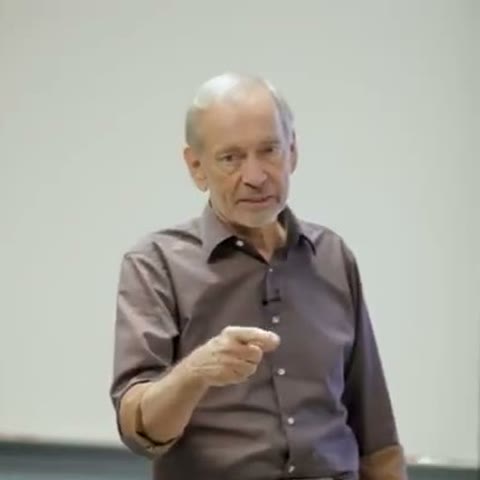
埃里克·埃德森 FFilm Courage
EDITED TRANSCRIPT · 依据现场录音编译整理,可划线生成便签
编者按:本文整理自美国加州州立大学北岭分校(CSUN)编剧方向研究生课程的一堂公开大师课,主讲人为该校教授、编剧方向研究生项目协调人、《The Story Solution》作者埃里克·埃德森。课程由专注影视创作者访谈的 YouTube 频道 Film Courage(由 Karen 与 David 运营,当时订阅数约二十万)现场拍摄并发布。这一晚,埃德森从索福克勒斯讲到《黑客帝国》,把「结构」这件常被新手视为创造力天敌的事,拆成了可以动手搭建的零件。以下依据现场录音编译整理,仅删去口语枝节、寒暄与重复,论证、例证与语气一概保留。

开场:我们的共同底色

埃德森: 今晚能和各位在一起、第一次见到你们,我真的很高兴,也很期待接下来的合作。因为从外表看,我们太不一样了:文化不同,背景不同,这里还有从别的国家来的同学。可是往里看,我们又如此相似,正是这些相似把我们聚到了这个房间里。我们感受得太多,也太深;我们太容易受伤;我们主动寻求大量独处的时间,而且乐在其中,这让别人觉得我们挺古怪。我们所有人都有点强迫症,对不对?否则我们不会被这份工作吸引,不会选择干这一行。总之,我非常期待这门课,也谢谢各位到场,还都准时,我很领情。

埃德森: 先介绍今晚的客人。Karen 和 David 一起在做一个极出色的 YouTube 频道,叫 Film Courage,你们有人去过、看过吗?我刚查了一下,他们现在的订阅数已经超过二十万,正朝着二十五万一路狂奔,这实在了不起。以一个学院中人的眼光看,他们在做的事情是:为我们这个时代建一座图书馆。他们一开始大概只是误打误撞地进来了,但他们正在记录这个星球上此刻的一片生活切面,记录影视行业里的创造力和实打实的苦功。所有这些访谈,加上现在偶尔还有这样的课堂,我有种感觉,它将来会像塞缪尔·佩皮斯的日记一样。有人知道佩皮斯是谁吗?太冷门了,好吧。佩皮斯是十七世纪中叶伦敦的一个人,一个强迫症式的日记作者,天天写,最后写满了整整一书架,十二卷还是多少卷。他热爱戏剧,爱到骨子里,所以他把所有演出的细节、剧情、现场情形、人长什么样,全都记了下来。那些东西如今成了学者的宝藏,我们靠它回头去看、去真正理解当时的生活和当时的戏剧是什么样子。你们正在做的就是这件事,不管你们现在意不意识到。

先把大家拉到同一起点

埃德森: 这门课我的第一项任务,是尽我所能把我们都拉到同一个起点上。这屋子里坐满了有才华的人,但你们对自己才华的使用经验跨度很大,从近乎新手、刚刚起步,到已经在接活的职业编剧,全都在这里。我今晚要带你们走的这趟结构之旅,可以从几个角度来看:对有些人来说全是新东西,对有些人来说是复习。放心,我这里每个人都有点新东西可拿。

埃德森: 但还有另一个看法。你们在读的是编剧方向的艺术硕士(MFA),四十二个学分。艺术硕士是所谓的终结学位(terminal degree),意思是在这个领域里,它上面再没有更高的学位了。这也意味着,编剧 MFA 基本上等于一张在美国乃至全世界高校教书的执照,这东西值得拥有。我年轻时就在念这些,我不想离开学校,我太喜欢它了,外面的世界又挺吓人,所以我早早就一路把这些学位拿到手,然后生活滚滚向前,我把它们塞进抽屉里。后来有一天机会来了,而我恰好合格。所以这个学位对你们可能真的既有力量又重要。

埃德森: 既然你们把「将来可能教书」这件事收进了柜子里,那么接下来两年,你们看你们的授课老师、你们的导师做的每一件事,都可以当成一项研究:某些东西是怎么被教出来的。我们每个人都不同,每个人的路数也不同。我是个喜欢发讲义的人,往后会一路发给你们。请把讲义留好,每个专题给自己备一个本子。因为那一天很可能会到来,我相信对你们中的多数人都会到来:你要去教课了,这些参考材料就摆在手边,你不必从零开始。

埃德森: 另外,先做好心理准备:我要讲的、要拿来分析的,主要(不是全部)是主流商业好莱坞电影,是那些在全球票房上大获成功的片子。至于我们为什么在乎票房、在乎某部电影挣了多少钱,理由只有一个:它告诉我们,这些是有效的情感工程,它们打动了全世界千百万人的心,而那正是我们要的。我们做的事情是情感,我们把情感传递给观众,因为观众就是为这个来的。人走进电影院,是为了深深地感受。所以我们要看的是:你如何促成这件事,如何把它做出来。

从索福克勒斯说起

埃德森: 先讲点历史眼光。很久很久以前有个剧作家叫索福克勒斯,他一生工作极为勤奋。你们想想这个数字:索福克勒斯写了一百多部戏。莎士比亚才写了多少,三十七部?一百部,那是很多戏。而其中只有三四部完整流传到今天,学术上叫「现存的」(extant)。谢天谢地,留下来的其中一部是《俄狄浦斯王》。在索福克勒斯的年代,《俄狄浦斯王》是他生前最卖座的戏,观众爱它,后来一再重排上演,他也因此获得各种荣誉。

埃德森: 这件事告诉了我们一些东西,也是我为什么要从这里讲起。那些在自己的文化和时代里对《俄狄浦斯王》做出如此强烈、如此情绪化反应的观众,跟今天的人是完全一样的人,有同样的思维过程,有同样的故事处理机制。人的身体、人的大脑,两千五百年来并没有变。你要往回推二十万年,那是另一回事。但那些奏效的寓言、那套奏效的结构,我为了钉死它的构造,认真研究过《俄狄浦斯王》,全都在里面,一样不少,而且跟我们今晚要看的东西完全对得上。

埃德森: 所以,很多人,尤其是刚入门的人会以为,结构是从外面强加上去的。它不是。结构说的是人脑如何处理故事。我们来到这个星球上时就渴望意义,我们的大脑是物理装置,是计算机,从基因层面被训练成在万物中搜寻意义。十五万年前,一阵微风里模糊的气味,或者峡谷那一侧回声的回声,你能不能瞬间知道它意味着什么,可能就是生与死的差别。于是经过千万年,这一条被烤进了人脑:我们都在寻求意义。而故事给的正是意义。生活是混乱的,生活是含混的,可我们都爱故事这一场仪式,它把混乱变成意义,这就是结构在做的事。

埃德森: 结论显而易见:结构是你的朋友。它不该被当成危害你创造力的东西而一挥手打发掉。你要是这么觉得,也没关系,我带过很多正是这么想的研究生,说服你是我的活儿,我心甘情愿地接下来。我们会有这些讨论,你要掰手腕也行,我奉陪。但底线是:结构是你的朋友。

埃德森: 至于你想写艺术电影、受不了好莱坞片,我们不介意。这里牵涉到孙子《孙子兵法》里的道理:知己知彼。你先把这些东西弄明白,然后你要跑去写独立电影,太好了,我们全体祝福你,我们也需要这样的电影人和作者。但你要清楚你正在不做什么,清楚你舍弃了什么,这很重要。要有意为之,而不是失手漏掉。

好点子的三个要素

埃德森: 好,我们回到基本功,先把一个具体故事的元素组织起来,这就是结构干的事。当你说「我有个特别棒的电影点子」,或者在鸡尾酒会上有人凑过来跟你讲他的点子,脑子里必须先立起三样东西,一个真正成立的电影点子必须具备它们。它不能只是一个场景,也不能只是一个人物。

埃德森: 第一,你得有一个主角,一个能引发共鸣、并且主动的主角。关于共鸣,书里写了九种基本的共鸣工具,用它们你可以造出任何一种人物。你喜欢写下作的人?没问题,写。但即使那种人,也需要某些让人共情、至少让人同情的品质,好让我们这些观众很快,在第一幕的开头,就能认同这个主角。我们必须在情感上被卷进去,那就是窗口,你必须给观众留出这扇窗。同时,主角必须在身体上是主动的。这是最后的关键所在,我们后面会讲到:你如何有意识地让一个主角在两个小时里始终保持主动。两个小时的视觉叙事,那是很长的时间,里面要发生的事情很多。

埃德森: 插一句题外话。我说「英雄」(hero)这个词,用的是它最初的希腊含义。你们知道它从哪来吗?在希腊神话里,Hero 是阿佛洛狄忒神庙一位女祭司的名字,也就是说,Hero 本来是个女人的名字。Hero 有个情人叫勒安德尔。女祭司们住在一座岛上,中间隔着一道狭窄的海峡,勒安德尔每天夜里游过海峡去和她共度一夜。有一夜他游到一半,大风暴来了,他开始挣扎、下沉。神话里说,Hero 看见了,她跳进海里游过去想救他,可惜两人都淹死了。挺罗密欧与朱丽叶的。重点是:这个词在起源上并不指定性别,后来也许被扭曲了。请允许我用这一个词统称男人、女人,以及被拟人化的角色和动物,就一个词,英雄。

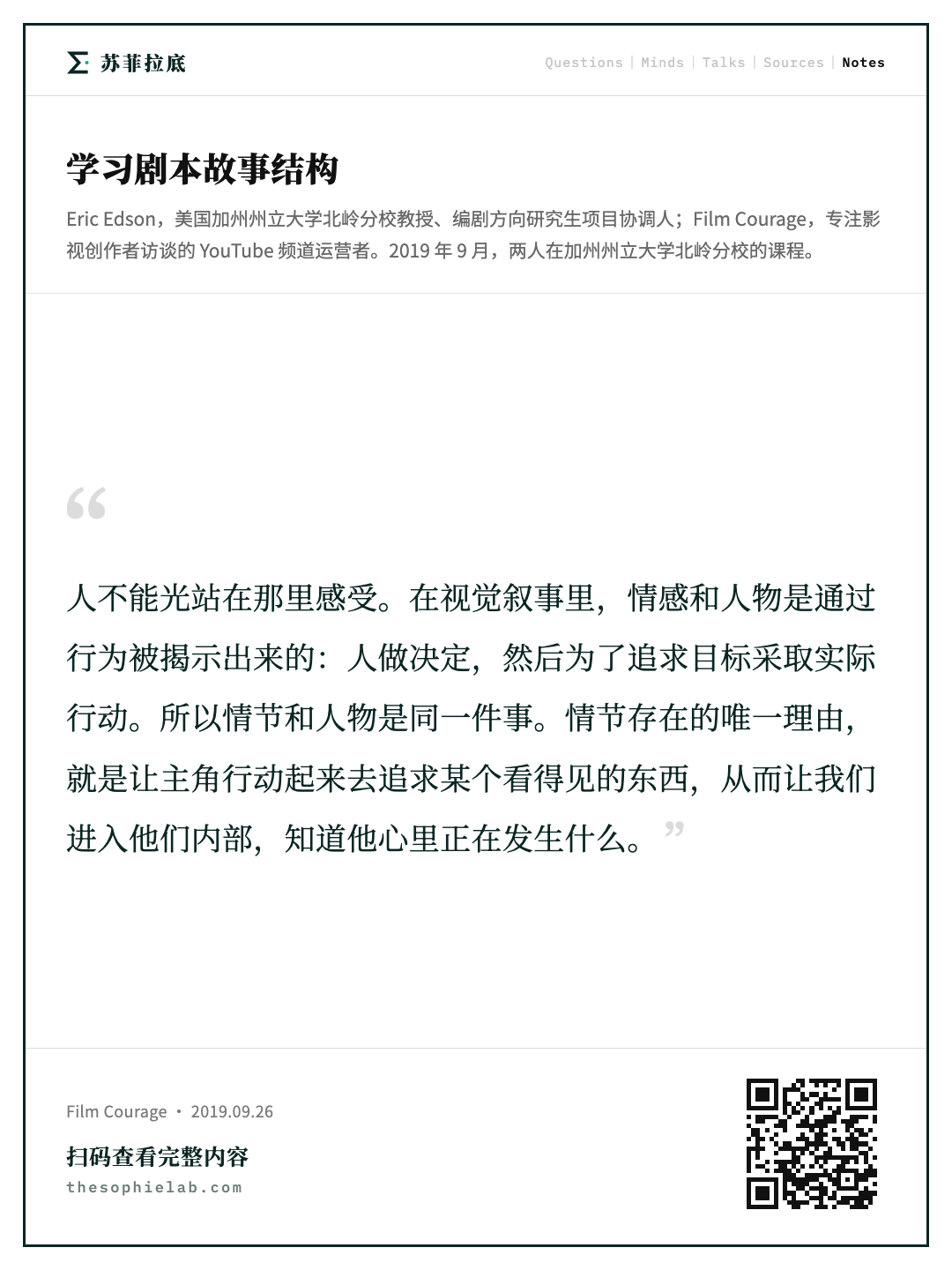
埃德森: 第二样东西,你必须有一个可见的、实体的、高风险的目标。这正是小说和电影的分野,下周我们换个角度再谈这件事。视觉叙事,做的是为内心的情感状态创造视觉隐喻,我们写的就是这个。人不能光站在那里「感受」。在视觉叙事里,情感和人物是通过行为被揭示出来的:人做决定,然后为了追求目标采取实际行动,不管那个决定把他带到哪里。所以从这个意义上说,我稍微跳一点,情节和人物是同一件事。在电影里、在视觉叙事里,情节存在的唯一理由,就是让主角和其他人能以某种方式行动,去追求某个看得见的东西,从而让我们进入他们内部,让我们知道他们心里正在发生什么。电影里没有小说那样的叙述者来告诉我们,我们必须看见。

埃德森: 第三样,一个强大的对手。对手是那个最坚决地要阻止主角得到他所要之物的角色,无论目标是什么、类型是什么。是对手制造了冲突。主角不能说「我想要那把椅子」,然后走过去把椅子拿来,这不叫故事。得有个粗蛮的人,或者某种东西、某种障碍,横在主角和他想要的椅子之间。而且不管什么情况,冲突都要拔到你能拔到的最高处。

十四类人物与副线

埃德森: 刚才是对主角与对手非常快的一个速写。任何故事你都必须有一个主角、一个对手,因为这才产生冲突,这是最基本的。但接下来这一点你们得先信我一段时间:在视觉叙事里能起作用的人物类别只有十四种,只有十四种。这不是坏事,其实它简化了你的情节规划。你要把这些类别弄熟,因为每一类提供的人物,都必须承担一个功能:要么妨碍主角,要么帮助主角。如果一个人物两样都不干,他对故事就没有意义,除非他只是气氛人物,本质上是道具,否则请删掉他。人物不能就那么在那儿闲待着。

埃德森: 这些类别相当宽,下次见面我会把人物类别讲得非常具体。你们真的需要弄懂怎么用它们。我在头几年的学生身上看到的问题之一,就是他们开始写、开始编自己的情节时,副线严重匮乏。而人物类别表正是把副线用银盘端到你面前的东西。副线能把你情节上的压力卸掉一大块。要是永远只有一个主角和一个对手,来来回回、没完没了,你就得不停地更换冲突的性质,而这些其他人物会帮你。今晚先放在这里,你们看一眼就好,不用急着抄下来,我会有讲义,今晚没有,以后会有,书里也全都有。这只是让你先看个大概:要搭一个对观众有效、并且能保持聚焦的情节,需要哪些东西。类别就在那儿。

先定结局,从后往前

埃德森: 好,现在你有了点子,我们开始搭建一个两小时的银幕故事结构,这是很大的一口。首先,你要有一个点子,包含刚才说的三个关键元素,三个都得在,你的点子才具备往下走的冲突潜力。

埃德森: 第二件必须先想出来的,是结局。很多人,尤其是新手会说:别管我,我就带着这些人物往前跑,我开始写场次,他们会告诉我他们想去哪儿。通常,不是永远,但通常这些剧本写到第四十八页左右就被放弃,扔进抽屉,因为作者在杂草丛里迷路了。这也是「先组织好」为什么如此要紧的另一个理由。这里摆着工具,就像木料和电缆,是盖房子的家伙什,我觉得很难有理由把它们一挥手推开。

埃德森: 剧本在很大程度上是从后往前写的,至少是从后往前搭起来的。你想让它在哪里结束?你有了人物的点子,有了冲突的点子,那么你要的是什么情感?最后那场高潮戏的感觉是什么?它发生在什么地方?这些你必须想透,选定一个,写进你的大纲里。那就是目前的结局。请注意,这些东西显然都不把你绑死。你写着写着发现了更好的想法,想往那个方向走,很好,改你的大纲。我说的只是:基本盘要摆好,你得知道自己在往哪里去。因为如果你不知道结局、连一个可能的结局都没有,你就是在邀请写作障碍上门。人们就是这样陷进沼泽的,直到有一天他们受不了那份头疼,把稿子收起来。

惊天逆转一与二

埃德森: 结局之后,是惊天逆转一和惊天逆转二(stunning surprise one & two)。今晚我会花点时间举例讲这两个。这是我给这两个关键时刻起的名字,你们可能更熟悉别的叫法。它们分别发生在第一幕末尾和第二幕末尾,是整个故事里最大的两次逆转,你必须一开始就知道自己要往哪儿逆。而且要尽早知道,因为有时候你得反复打磨,才能把它们做得又饱满又够劲。席德·菲尔德,我记得是他,最早把它们叫作情节点一和情节点二;约瑟夫·坎贝尔说的「跨越第一道门槛」,讲的就是惊天逆转一。这些说法都对,也都很好,但我觉得那些是抽象的术语,我更愿意用不抽象的名字,哪怕有点过头,比如「惊天逆转」,因为那正应该是你为观众制造的那一刻的冲击力:极具冲击力,情感上的,看得见的,而且重重砸在主角身上。

埃德森: 在这些前期部署里,还有一件事你要早早决定,要在动笔写剧本页面之前决定。在剧本页面上要慎重,因为一旦你写出了页面,你就越来越舍不得扔掉它们。你要知道开头放在哪里。你知道它怎么结束,你大致知道几个大时刻是什么,谁对谁做了什么,冲突的性质是什么,那么你从哪里开始?这里同样可以搞砸。起得太早不行;起得太晚,哪怕只晚了几场戏,因为你急着让故事跑起来,你就没给观众足够的时间在情感上和主角接上头,而开场那一段的东西非常重要。当然,如果是动作片就另说,比如詹姆斯·邦德,他一上来就是奔跑、追逐、开枪,那就是他的日常世界,他干的就是这个,你从那儿开始没问题。但一般而言,你必须先给观众一点时间、几场戏,让他们在情感上和主角接上,然后你才能真正跑起来,让他们跟着你上路。

埃德森: 我看过不少欧洲片、英国片,不知为什么尤其是英国片,不是全部,但我见过起得太早的,能拖上二十分钟。有一部叫《夹心蛋糕》(Layer Cake),是部很棒的黑帮片,但我记得那个开头就那么摊在那里,人物聊天、闲晃,没完没了,你一直在等电影开始。所以,挑好你的开头,开头真的很重要。

三幕即三个世界

埃德森: 开头之后你有三幕。我觉得把三幕看成三个世界很有帮助,我就是这么拆的。第一幕传统上叫日常世界(ordinary world),也就是主角「昨天的生活」,是他到目前为止的人生,一直到这件事快要发动、但还没发动的那个点。在第一幕的日常世界里,激励事件之后,主角会有一个笼统的目标。

埃德森: 拿《怪物史莱克》举例。有谁没看过《怪物史莱克》吗?我猜也是。顺便说一句,我提到并当例子用的片子,请把片名记下来,真的值得你花时间去找来看、坐下来好好看。我挑它们是因为它们在某一点上是极好的范例。史莱克是个住在沼泽里的食人魔,他觉得自己很快乐,那是在人物成长之前。然后法克大人把所有童话生物都赶进他的沼泽,他快疯了,他必须把这些童话生物弄走,因为他只想一个人待在自己的沼泽里。这就是他第一幕的笼统目标。他气冲冲地奔向都乐镇,要找法克大人,要求他把这些家伙弄走。这一整段都是第一幕的东西:主角在追一个笼统的目标。

埃德森: 然后第一幕结尾发生了某件事,一把把这幕的幕布拽下来,紧接着拉开第二幕的幕布。现在,目标变得高度具体,非常具体。第二幕常被称作特殊世界(special world),因为由于处境的性质,这是主角从未经历过的世界。有时候是物理上的差异,但很多时候,比如现实题材的当代故事,人还在曼哈顿,可主角此刻面对的东西让这个世界变得截然不同、特殊,而且带着生死攸关的味道。在第二幕里,主角制定一个计划,并在整个第二幕中推进这个计划,一边被撕碎一边重新拼起来。然后到第二幕的高潮,你滚进惊天逆转二,计划被彻底炸掉,一瞬间什么计划都不存在了。这是整部电影里最大的逆转。它把主角甩进第三幕,在那里他只能临场应变,因为已经没有计划了。

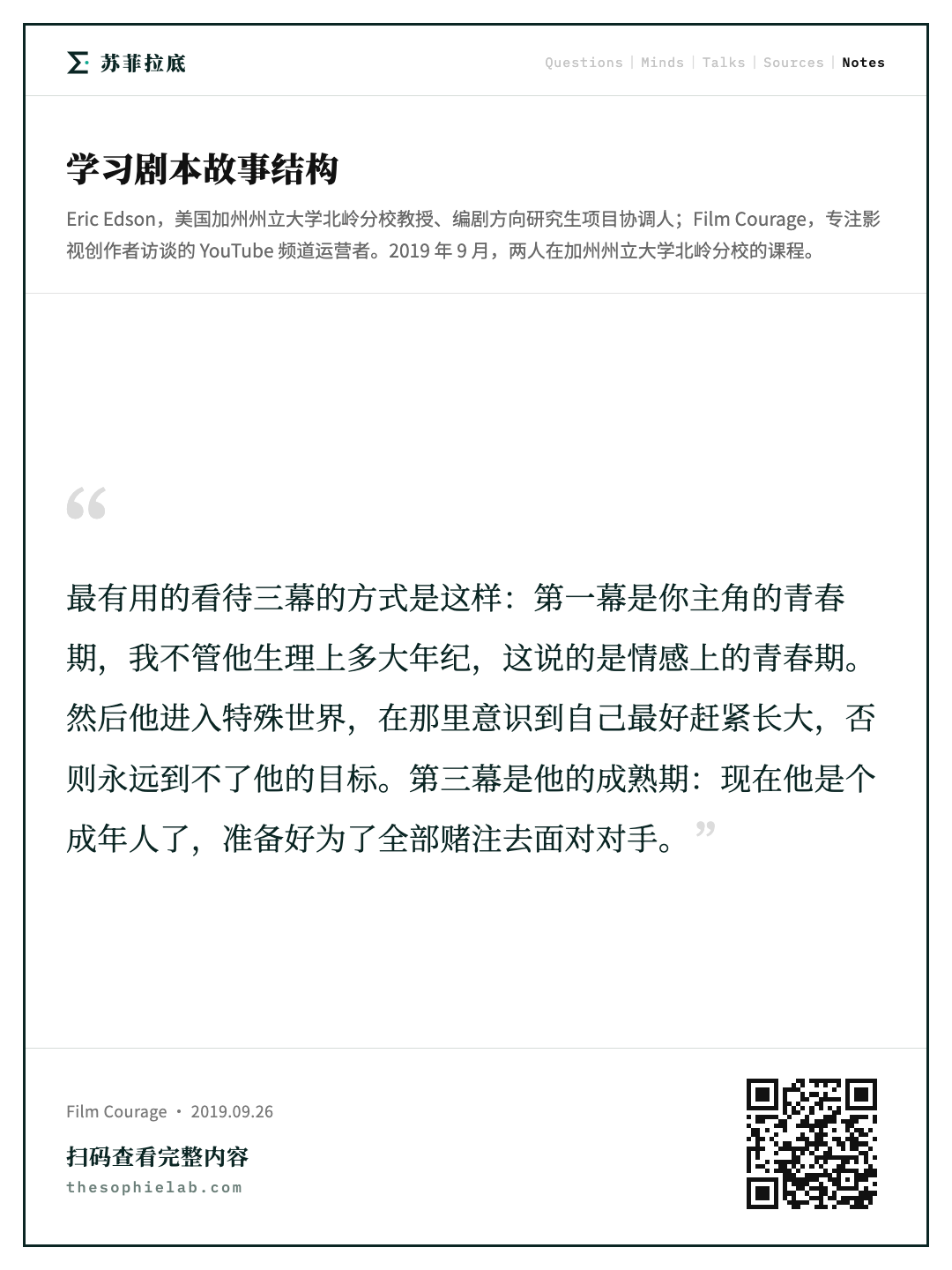
埃德森: 不过我觉得最有用的看待三幕的方式是这样:第一幕是青春期,是你主角的青春期。我不管他生理上多大年纪,这说的是情感上的青春期。然后他进入特殊世界,在那里意识到自己最好赶紧长大,否则他永远做不到他必须做的事,永远到不了他的目标。第三幕是他的成熟期:现在他是个成年人了,现在他懂了,他克服了内心的某些情感上的畏缩,准备好为了全部赌注去面对对手。

埃德森: 我拿一部片子拆开来当例子,《借刀杀人》。不是要点谁的名,有谁没看过《借刀杀人》吗?好,那就记下来。这是一部惊悚片,其实是相对大制作的美国惊悚片,全球都很卖座,还拿了几项学院奖提名。里面可学的东西非常多,这学期我们说不定会一起细看。这是一部单主角电影,主角是麦克斯,出租车司机麦克斯,普通的麦克斯。在第一幕、在他的日常世界里,他计划并梦想着开自己的豪华轿车公司,已经十二年了。他不明白这有多荒唐,他早在多年前就该干起来了,可他害怕冒那个险,计划必须完美才行。所以麦克斯情感上的根本问题是:他没有勇气。

埃德森: 然后惊天逆转一发生,砰,他被掀了个底朝天,翻进第二幕:他被一个杀手劫持,被迫开车载着他跑一整夜,看着他一个个杀人。突然之间,「没有勇气」这件事变成了横在麦克斯和「活到明天早上」之间的巨大障碍。如果他不鼓起胆子做点什么去对抗这个杀手、去冒相应的险,他就活不过今夜。所以他现在有充分的理由必须飞快地长大,而他确实长大了,这一段写得非常漂亮。等他走到第三幕,人物成长弧线美得可信,第三幕里麦克斯可信地成了一个真正的英雄。不是超级英雄,但他去和那个坏人搏斗,因为他要救那个女人。你们自己去看。这是看待基本结构的另一种方式,也是那部片子给出的范例。

激励事件与惊天逆转一

埃德森: 接下来说激励事件。第一幕、第二幕、第三幕,这些是戏剧支柱,关键在于它们必须一路往上升,必须如此,否则你会失去观众,它们不能就那么平着漂。第一幕里主要发生两件事:激励事件,以及结束这一幕的惊天逆转一。今晚有些东西我不展开,但激励事件这件事很多人和惊天逆转一混为一谈,我们往后会反复谈,会看很多例子。

埃德森: 举例,《E.T. 外星人》的激励事件是什么?你们大多数人肯定看过《E.T.》,我喜欢拿几年前的片子举例,就是假定大家都看过。有想法吗?对,说到棚屋了,很接近了,但还差一点。很多人会说,是 E.T. 被落下、飞船起飞的那一刻,是那件事启动了故事。可激励事件的定义是:它开启这个故事,而且只能开启这个故事。那一刻不是。第一个理由是,E.T. 不是主角,你们很多人已经答对了,E.T. 不是主角,E.T. 是所谓的「陷入险境的无辜者」,男孩埃利奥特才是主角。真正启动这一切的激励事件,是他跑到外面高高的野草丛里去找那个奇怪的东西,然后两个人拨开草,第一次面对面,相距几英寸,都吓坏了,尖叫、转身、各自逃开。这是《E.T.》的激励事件,因为从那一刻起,埃利奥特就迷上了找到那个模样奇特又可爱的「小狗」,一心要把它变成自己的宠物。这里还藏着他人物成长弧的核心:他一直把 E.T. 说得像一只小狗。

埃德森: 然后是惊天逆转一。当他问 E.T.「你从哪里来」,那些橡皮泥球突然凭意念升到空中,E.T. 在半空中给他演示,指着不同的星球。就在那一刻,埃利奥特说了什么?在所有他可能说出的话里,他说的是「哦,不」。换句话说,他原来的认知全是错的。这不是一只狗,这是此刻地球表面上最聪明、最先进、能力最强大的生物,这就是他把自己卷进去的东西。这一下把埃利奥特掀了个底朝天,踢进第二幕,聚焦的目标变成:救这个生物的命,送他回家。这是一个例子,这就是激励事件的性质。

埃德森: 再说惊天逆转的基本特征。通常,这里有活动空间,各位,通常在第二十五到三十五分钟之间。具体取决于片长,如果电影是两小时二十分,它可能出现在第四十四分钟,看情况。它必须发生在主角身上。它在一瞬间发生,不是一场慢慢展开、慢慢揭示的戏,就是一瞬间。它震惊主角,也震惊我们观众。它还要呈现出这个故事将要讲什么。就像《E.T.》,埃利奥特被踢进第二幕之后,很快就清楚了,他知道、我们也知道,故事线将是「拯救 E.T.」。

埃德森: 这是《逃出绝命镇》里的一帧,一部了不起的电影,也是一次了不起的职业生涯启动。那正是惊天逆转的时刻:眼睛睁大,嘴巴张开,是真正的震惊。对主角来说,它必须是一记震惊。

埃德森: 再看一个完整的例子。史莱克为童话生物的事怒气冲冲,一路冲去找法克大人。他到了都乐镇,镇上一个人也没有,然后他听见宫殿里的竞技场传出欢呼声,就走进去看看怎么回事。里面正要开始某种比赛,法克大人高高地坐在他的帷幔上头。史莱克就是史莱克,他不怕任何人任何事,直接闯了进去,要向法克大人投诉,要求把童话生物弄走。可法克大人一看见他就说:那个可怕的食人魔,多恐怖,多难看,换个新计划,谁杀死这只食人魔,谁就是冠军。史莱克完全不当回事,还说,我们就不能喝一杯慢慢谈吗?于是骑士们一齐扑上来,史莱克把这一场变成了极为滑稽的段落,非常漂亮,也是收束一幕的完美高潮动作戏。每一幕都要升到一个高潮,第一幕升到一个高潮,第二幕升到一个更大的高潮,每一幕都必须有高潮。观众看得开心极了,为他喝彩,还有女观众递椅子给他,全是对职业摔角的戏仿。他一个一个、三个三个地把卫兵撂倒,人群欢呼,史莱克自己也乐在其中,驴子在旁边也很自豪。

埃德森: 然后突然来了个逆转:一排弩箭上弦,对准他们。局面变了。卫队长问:法克大人,要下令吗?而这位像所有独裁的小人一样精于政客手腕的家伙说:等等,我有个更好的计划。他把观众想要的东西给了观众:都乐的人民,我把你们的冠军交给你们。史莱克愣住了:啊?什么?看那个表情,眼睛,嘴巴,经典的惊天逆转一的表情。这一下做了什么?史莱克那个笼统的目标「把童话生物弄走」,在下一场戏里立刻变了。法克大人告诉他:你去恶龙城堡,把公主带回来给我,我就把你的沼泽还给你。砰,他「摆脱童话生物」的笼统愿望,变成了一件高度具体的事:去恶龙城堡,救出公主,带回来给法克大人。他现在必须做的事高度具体,这就是惊天逆转一的功能。

埃德森: 所有条件在《怪物史莱克》里都成立:二十五到三十五分钟之间,我记得是第二十六分钟;必须发生在主角身上,永远如此,确实如此;在一瞬间发生,「我把你们的冠军交给你们」,啊?就是一瞬间;震惊并出乎主角意料,太出乎了;呈现故事线将是什么,全部做到。惊天逆转一的每一条要求它都满足了。

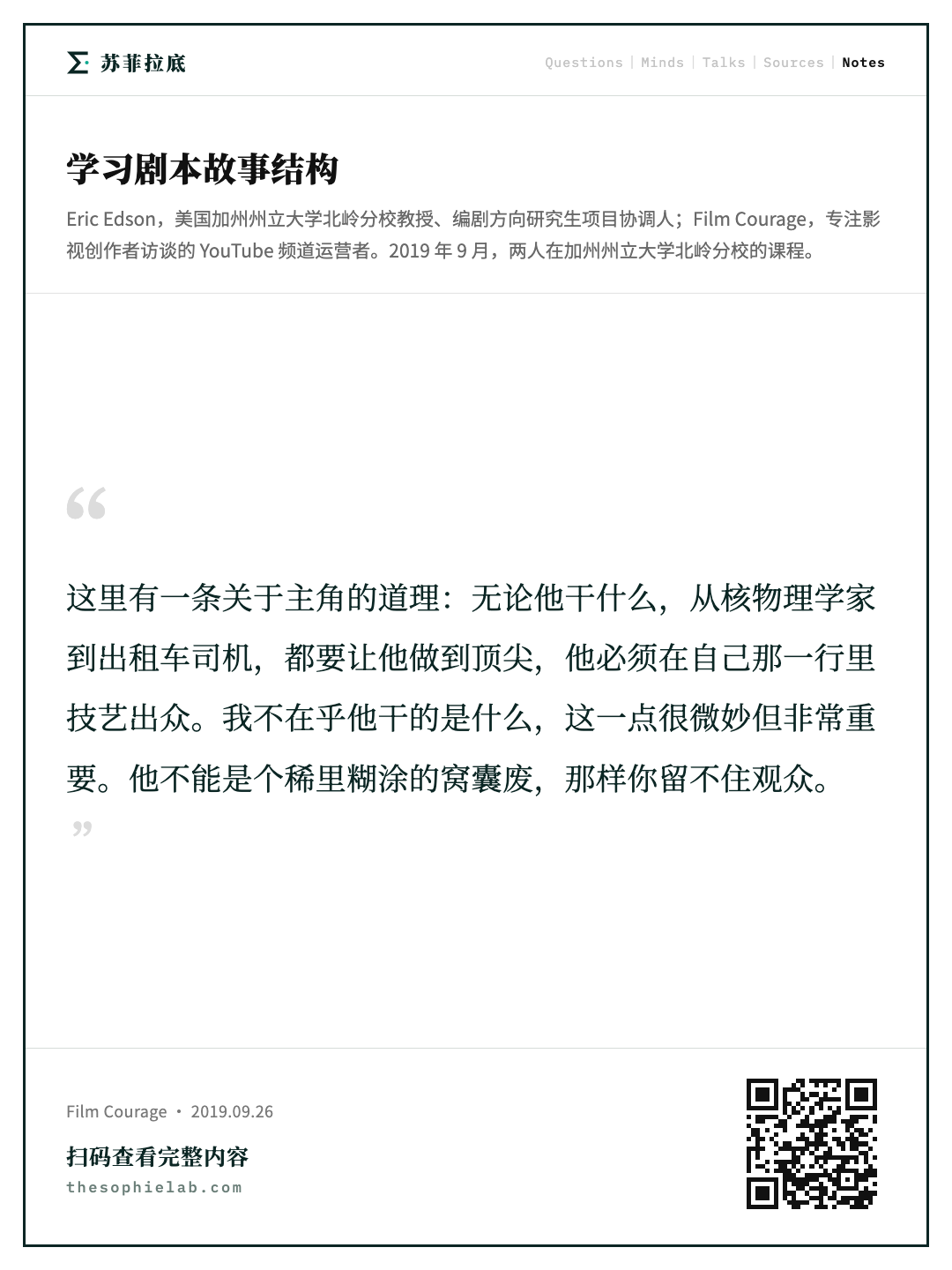
埃德森: 再看一个,也是最后一个惊天逆转一的例子。出租车司机麦克斯是个可爱的人,在很多层面上都讨人喜欢,他是任何人见过的最守时、路线最准的司机之一,他的车擦得一尘不染。这里还有一条关于主角的道理:无论他干什么,从核物理学家到出租车司机,都要让他做到顶尖,他必须在自己那一行里技艺出众。我不在乎他干的是什么,这一点很微妙但非常重要。他不能是个稀里糊涂的窝囊废,那样你留不住观众。

埃德森: 好,另一个男人上了他的车。麦克斯还不知道文森特是个杀手,本来只是拉一趟活儿,把人送到地方。可文森特提出六百美元:你今晚就跟着我,载我跑,我还有几个地方要去,早上准时把我送到机场。麦克斯支支吾吾,说这违反公司规定,但最后他说好吧。对他来说,一个班次六百块很不错,到地方还有额外的一笔,于是他接下了这笔买卖。在这部电影里,这就是激励事件:麦克斯在不知情的状况下接下这单,事后回头看我们才明白,正是它把他和文森特绑在了一起,并且通向后面那件事。

埃德森: 很快,文森特说:绕到后巷去等我。像个好主角一样,麦克斯不浪费时间,主角应该永远在做事,所以他利用等待的时间吃自己的午饭,翻看汽车目录,那是他要租来做豪华轿车生意的车。这事他做了十二年,一直没开张。就在他沉在自己的白日梦里的时候,毫无预兆,轰的一声,一个又大又软的东西砸在车顶上。那是一个人,被砸得稀烂。这对麦克斯的冲击相当强烈,他立刻陷入休克状态,惊恐万分,手忙脚乱地摸索着下车,摔在地上,往外爬,试图弄明白发生了什么。

埃德森: 这还不是惊天逆转一。它不是。理由是:惊天逆转一必须改变一切,必须永远改变主角的人生。回到《怪物史莱克》,他去接一位公主,他以为只是为了把童话生物弄走,可那趟旅程最终会永远改变他的一生,他将平生第一次坠入爱河,一切都会不同。而这里,他是个出租车司机,一具尸体砸在车顶上确实骇人,也挺吓人,可现实地说,这并没有超出一座城市里可能发生的事情的范围。他可以拿这事去讲个精彩的故事,说不定还上报纸,明天晚上换辆新车继续开,他原来的生活会继续下去。这一下是瘆人的、巨大的、戏剧性的、响亮的,但它还没有改变他的人生。

埃德森: 于是文森特嘟嘟囔囔地走出来,非常自控,麦克斯浑身发抖,说:我想他死了。文森特很低调地回一句:猜得不错。就在那一刻,麦克斯脑子里终于闪过一个念头:是你杀了他。文森特说:我是开了枪,杀死他的是子弹加上坠落。对一个杀手来说,他是个相当玩世不恭、爱挖苦人的家伙。可即便到这里,还不是惊天逆转,因为还必须再接上一个因素,才能永远改变他的人生。那个因素是:文森特为了阻止他逃跑,拔出枪,对准了他。这下他全明白了。

埃德森: 这才是惊天逆转一。看那个表情,就是惊天逆转的表情,因为他现在知道了全部真相:他是一个职业杀手的俘虏。他心里清楚,他见过这人的脸,和这人说过话,而杀手是不会让这种人活下去的。所以他被掀了个底朝天,翻进第二幕。他第一次进入了「人质」这个特殊世界,要载着一个以杀人为生的人跑完整夜,而麦克斯能在天亮时全身而退的可能性,实际上几乎是零。现在麦克斯面对的是他从来没面对过的处境,这就叫特殊世界。他要怎么撑过去?温吞的麦克斯要和这个人做一场生死对决。第二幕开始了。

埃德森: 这里不一样的地方在于位置:《借刀杀人》的第一幕我算下来只有十九分钟,对第一幕来说相当短。但想想为什么。这个故事讲的是一个出租车司机,第一幕的日常世界几乎全部发生在车里;而且这是一部惊悚片,你必须让事情动起来,必须尽快把故事发动起来,不能等到二十五分钟,观众不会等你。那十九分钟里铺垫了大量东西,过几周我们会细看这第一幕的构思有多精彩。这同时也说明,范式在某些方面是有弹性的。

惊天逆转二:至暗时刻

埃德森: 惊天逆转一之后是中点。中点今晚不讲,中点很有嚼头,可谈的东西非常多。中点不像惊天逆转那样是一个时刻,它不是一记震惊,它通常,不是永远,但通常是一连串短戏,其中发生若干推进故事的关键事件,包括一个关键的人物成长时刻。这个我们改天再谈。

埃德森: 现在我要跳到另一个关键点,也是最重要的那个:惊天逆转二。它有些特征和惊天逆转一相同,也有些是新的。它是第二幕的高潮,是第二幕落幕的那一下。第二幕承载了电影的绝大部分,它可以有七十页甚至更多,所以它值得你投入大量注意、思考和规划,这个我们以后细讲。惊天逆转二是全片最大的逆转,是你整部电影里最大的戏剧事件。它在一瞬间发生,它震惊并出乎意料,但这里的关键是:主角的计划被摧毁了。

埃德森: 这话怎么讲。第二幕开头,主角把自己从地上捡起来,拍拍身上的灰,现在他面前是一个高度具体而困难的任务、一个目标,于是他开始制定计划,有时开始召集盟友。用坎贝尔的说法,第二幕前段是分辨敌友、站稳脚跟、形成计划并推着计划往前走。到了第二幕接近尾声,动作一路往上升,向着这一幕的高潮爬升,看上去主角说不定真能办成,可能性越来越大,越来越可行。然后砰,惊天逆转二砸下来,计划被彻底抹平,计划不复存在。这通常被称作主角的至暗时刻,此刻看起来主角完了。

埃德森: 我要提醒一句,因为我讲着讲着听起来像是只在说动作片,不是的。这一套在不同程度上适用于所有类型,家庭伦理剧也是这样,只不过在那里,这些较量、这些冲突发生在两个人之间:一个人试图支配另一个,或者说服另一个。所有对观众有效的类型,这套东西都成立。

埃德森: 另外我要加一条,因为待会儿有个例子。大约百分之五到十的成功电影,这里的逆转是往正面翻的。也就是说,到第二幕末尾,主角本来就已经比较低落了,而这必须是最大的一次逆转,如果人已经在低处,你没法再让他超级低,那就往上翻。这样做完全没问题,很多爱情喜剧、剧情片都这样,《伴娘我最大》是这样,《永不妥协》也是这样。但代价是:第三幕必须非常短,因为主角已经赢了。你赶紧上必然场面,赶紧上结局,收拾干净,故事结束。

埃德森: 先看一个例子,《黑客帝国》的惊天逆转二,这是比较传统的那种。有谁没看过《黑客帝国》吗?好,记下来。这是一部改变类型的电影。我们现在看到过各种类似的片子,那些扭转、那些概念都被用滥了,可当年《黑客帝国》出现的时候,它是新鲜的,它有冲击力。这些故事构想、这些概念以及它们被执行的方式,最终永远地改变了科幻这个类型。

埃德森: 这同样是单主角电影,我讲的这些几乎都是,主角是尼奥。他刚刚救了他导师墨菲斯的命,途中得到了爱情线人物崔妮蒂的帮助,他把他们送到一个电话亭,飞船「尼布甲尼撒号」上的技术员坦克靠电话把他们从矩阵里接了出来。墨菲斯和崔妮蒂都回到船上了,可这时反派出现了,对手史密斯特工出现了,两人打了一场大架,基本打成平手,尼奥拔腿就跑。他手里还有那部手机,所以他仍然在跟坦克通话,坦克把他往另一个可以接他出来的电话点指引。机器人也在后头追。史密斯特工,电影史上最好的对手之一,离他比他自己以为的还要近,子弹嗖嗖地射过来。

埃德森: 这里插一个我说的视觉隐喻。影片花了几秒钟切回尼布甲尼撒号,那艘船同时正被那些机械蜘蛛攻击,那些东西从头到脚透着邪恶,它们正在生生撕掉船的外壳,再过几秒就要冲进去,把船上每一个人类都杀掉,而那是这个世界上仅存的少数活着的人类之一。这一下做的事情是:用画面提醒我们观众,这不只是尼奥在救自己的命,尼奥要对这些人负责。这才是他成为英雄、成为真正的英雄的原因:是的,他自己身处险境,但他必须为了保护别人回去。英雄的定义就在这里。

埃德森: 他跑在一条肮脏的走廊里,看过的人还记得,这个高潮在视觉上也相当抢眼。他跑着,被追着,听见一扇门后有电话在响,那正是坦克告诉他的位置,他得赶紧过去。他冲到门口,我一直好奇他们为什么挑 303 号房,导演放上这么一个数字通常是有意味的,也许跟三位一体、跟崔妮蒂有关,我不知道。电话在响,他猛地推开门,史密斯特工端着那把巨大的手炮等着他,枪口正对他的胸口。这个处境下尼奥没有任何逃生的可能。看他的表情,脸比较小,但你看得清:眼睛睁大,嘴巴张开,经典的惊天逆转表情。是的,尼奥,你死定了。这够惊天了。

埃德森: 然后他挺住身子,像个英雄一样承受,中了六枪、七枪、八枪,我记不清了。他们把音效做成大炮轰鸣从枪口炸出来的效果,非常有力。接着又切回尼布甲尼撒号,再一次用画面提醒我们:在矩阵里死去,就是真的死去。我们在电影里、在视觉媒介里就是这样获取信息的,必须让我们看见。这一小段剪辑就是干这个的。这个镜头拍得很讲究,背景里有火花,机械蜘蛛正在逼近,整个地方像要散架,但那些火花又带着某种天堂般的味道。史密斯继续往他身上灌子弹,他倒下去,墙上一道血痕,气息渐渐渐渐消散。可怜的墨菲斯,他是导师人物,他把全部赌注押在尼奥身上,他坚信尼奥就是「那一个」,是预言中会到来、把人类从机器手里拯救出来的人。这条线贯穿全片,非常宗教,整部电影真的就是一个基督隐喻。他无法相信:天哪,我怎么可能会错。尼奥中了那么多枪,他不可能不死,他倒在地上,看上去死透了。史密斯让手下过去检查,那人说,他死了,死得不能再死。再见了,安德森先生。

埃德森: 对照条件:全片最大的逆转?当然是。一瞬间发生?是。震惊并出乎意料?当然。主角的计划被摧毁?我想是的,你都死了,计划自然也就完了。常被称作主角的至暗时刻?那总归是某个人的至暗时刻。当年在影院里非常震撼,我第一次看的时候心想,他们怎么能就这么把主角杀了?可他们就这么干了,然后从那里做出了非常有意思的东西。这就是惊天逆转二。

埃德森: 我的第二个例子,是完全不同的一类电影,《永不妥协》。她和导师人物艾德,她的律师,被告知还需要一百六十四或者一百六十七个签名,这样案子才能交给法官仲裁,而不是走陪审团审判那条要拖很多年的路。他们说好,那就跟法官走仲裁。她终于把需要的签名全都拿到了,可她手上没有的是那个铁证,是能绝对证明太平洋煤气电力公司明知自己在毒害辛克利居民的证据。这是根据真实事件改编的,铁证在这个故事里指的就是这个。而没有任何人接近过它。她拿到了签名,却没有铁证。

埃德森: 于是在漫长的一天结束时,她走进当地一家酒吧兼咖啡馆,心里仍然为没有铁证深深发愁。这时吧台那头坐着那个猥琐的家伙,记得吗,那个角色我记得叫查尔斯·恩布里,从中点开始他就一直在背景里跟着她转悠,一个看着不太对劲的男人。他开始搭话,想聊起来。对艾琳来说,这个时间、这个地点、这个状态,她最不需要的就是这个。可他又挪近一点,往这边滑了两个座位,继续说恭维话,说出「我觉得你是那种我可以聊聊的人」这类话,当然带着双关。这段写得妙的地方就在于,先往一个方向铺,然后反转。她当然是想把他冷下来,表现出没兴趣、反过来推开他,可他不罢休,于是她抓起东西起身要走。就在她真的要离开、不会再跟他说话的那一刻,查尔斯·恩布里突然冒出一句:如果我告诉你,我在辛克利厂里工作的时候销毁过文件,这对你重要吗?

埃德森: 什么?宾果。对她来说,这听上去就是铁证。但请注意接下来怎么演,那才是惊天逆转二被处理的方式。她慌了,她说,查尔斯,你能等等吗?你就在这儿等着,我去趟洗手间,马上回来,我保证。然后她跑出酒吧去打电话,手机当然没电了;她从包里掏零钱,包掉在地上,硬币撒了一地;她紧张、兴奋,终于打通了律师的电话,把他也点燃了。律师说,别逼他,让他自己说,人都愿意讲自己的事。两个人都兴奋得不行。然后她回到店里,去和查尔斯·恩布里平静地谈。

埃德森: 关键在这里:这些多出来的时刻,是苏珊娜·格兰特写的,《永不妥协》的剧本是她写的,写得极其漂亮。她做了很多这样的小动作。这是一个惊天逆转,但它非常安静,它恰恰是主角需要的东西,可它被处理得低调、克制。于是编剧让我们跟着主角的兴奋跑出去,看着她和导师分享这份兴奋,这一刻被搭建起来,是为了让我们感受到他们所做的事情有多深、多广:成了,我们赢了。这一笔是为了给我们那种一路上升的兴奋感,非常聪明,非常非常聪明。

埃德森: 这是 B 型的总结:全片最大的逆转,是;一瞬间发生,是;震惊并出乎意料,是;但这里交到主角手里的是胜利,你赢了。后面还有一场必然场面要来,而且是一场极不寻常、情感上极为满足的必然场面:她回到事务所,用喜剧的方式把那两个装模作样、跟他们合伙的律师收拾了一顿。所以她又赢了一次,一场社交上的胜利叠加在这场胜利之上。但事实是,出现这种情况时,第三幕最好短。两三个主角目标序列,收工。

把变化编码:主角目标序列

埃德森: 大家喘口气。所有奏效的剧本,所有奏效的视觉故事,都由两样东西驱动。第一是冲突,你必须有很多很多很多冲突。冲突弱,或者冲突不够有意思,你就会失去观众。第二样有点抽象,它折磨了我很多年:故事流必须一路在变。它必须始终在变化,始终在往前发展。而这一点我发现没法教。它属于那种「你要么有这个直觉,要么没有」的东西。可这让我非常恼火,我一直觉得那里面有某种可以被教出来的东西。

埃德森: 所以我一头钻进杂草和丛林里待了好几年,一遍一遍又一遍地看电影,想在「变化」里找到一个还没有被编码过的模式。我知道这话说出来挺狂妄,连去找这个东西都挺狂妄。而当我真的意识到自己正看着这样一个模式时,我比任何人都震惊。变化在这些电影里是有模式的,它对应着这些电影跟人的头脑和情感说话、处理故事信息并使之在情感上令人满足的方式。存在一个你可以抓在手里的变化单位。在我看来,如果你能真正把一个变化单位的长度和内容编码下来,你手上就会有一个我在任何地方都没见过的、最有用的长片大纲工具,而我一直努力盯着这个领域的动向。把成功银幕故事里变化单位的大小和内容定义清楚,你就能造出一套更有效的写剧本的方法。这是事实。

埃德森: 我找到的这个变化单位,我给它起名叫主角目标序列(hero goal sequence),仍然是因为这个词指向行动,而不是抽象。定义我要照着念,不想说岔了。一个主角目标序列,就是一个变化单位,由三到七页剧本构成,这里有弹性,我见过两页的,也见过九页的,但一般是三到七页。在这些篇幅里,主角追求一个短期的实体目标,作为达成整个故事总目标的一步。然后,在追求这个短期目标的过程中,主角发现某种我称之为「新消息」(fresh news)的东西,某个信息,或者某个偶然撞见的物件。长片里你必须给观众非常多的惊喜,这就是其中一个小惊喜,让人「嗯,有意思」。这条新消息终结了当下这个短期目标,同时抛出了下一个短期目标,于是下一个主角目标序列开始。

埃德森: 这是它的示意图,我既然做了图就用一下。你从这里进来,你有一个目标,你在追这个目标,然后砰,新消息。它是一个迷你迷你迷你版的惊天逆转,很小,不是那种大家伙。突然之间这个目标结束了,要么不再需要,要么已经完成,随便什么原因,然后砰,你被推到下一层的卷入、兴趣和不断上升的张力里。

埃德森: 举个具体例子,《地心引力》。有谁没看过《地心引力》吗?好。我想我们这门课里会看《地心引力》,那部电影可学的东西太多了。开头是这样的:《地心引力》的第一个主角目标序列,就是主角的日常世界。主角是桑德拉·布洛克演的瑞恩·斯通博士,她在太空里、在空间站上工作。她之所以在那儿,是因为一道极深的创伤:她四岁的女儿从攀爬架上摔下来死了,一场离奇的事故夺走了她的女儿,也夺走了她活着的意义。她陷在悲痛里太深,于是她做的事情是尽可能地远离生命、远离地球,跑到彻底的寂静里去,跑进太空那种深不见底的寂静。她在上面干活,她的目标是:在太空里工作,不思考,不感受。这个序列同时确立了机组的其他成员,也确立了她的导师人物,乔治·克鲁尼演的科瓦尔斯基。

埃德森: 若干分钟后,新消息来了:休斯顿突然呼叫,中止任务,立刻返回,一大片太空垃圾正朝你们冲过来。于是进入第二个主角目标序列:赶紧进舱返回。当时舱外大概有三个人在作业,大家手忙脚乱地往回赶,可她还沉在自己的活儿里,想把重启做完,科瓦尔斯基一遍遍催她马上进去。穿着宇航服你又快不了。于是第二个序列的目标是「进入飞船,立刻返航」,而新消息变成:他们没赶上,碎片风暴击中了他们,他们正好在路径上。接下来就是第三个主角目标序列:拼尽一切在这场碎片风暴里活下来。你们看,这些都是行动,一个叠在另一个上面。

埃德森: 这只是尝个味道。往后这门课里,这套东西大概会多到让你们头晕。但各位,这就是那张入场券,这就是秘密。

卖座片的结构数字

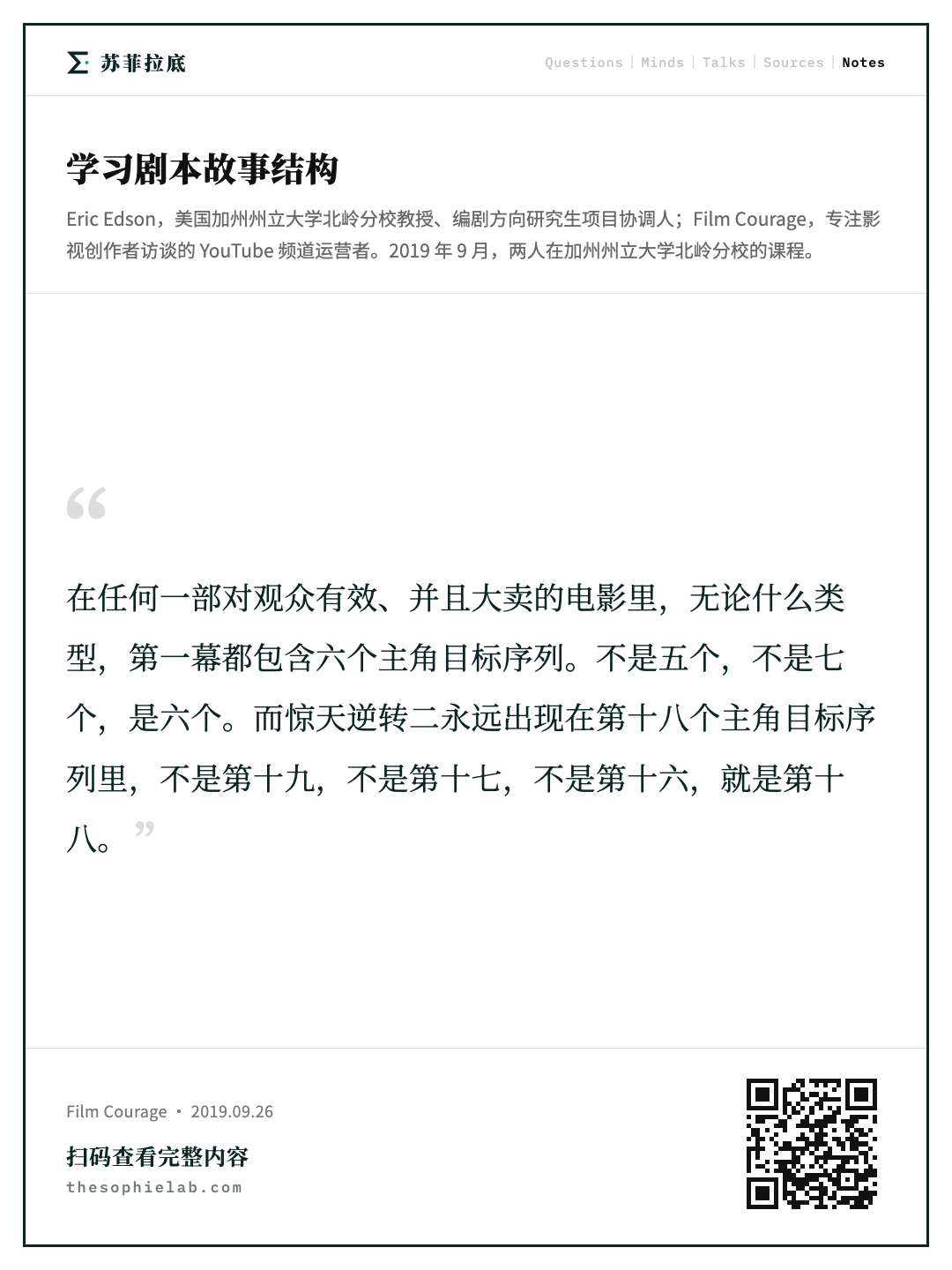
埃德森: 下面是最怪的部分,也是我今晚一定要讲到的地方,谢谢你们熬过技术故障一直听到这里。第一幕长这个样子:我到现在还是很吃惊,但这是真的。在任何一部对观众有效、并且大卖的电影里,无论什么类型,第一幕都包含六个主角目标序列。不是五个,不是七个,是六个。而惊天逆转一永远出现在第六个主角目标序列里,永远,从无例外。如果这部电影不成立,那就另当别论。

埃德森: 顺便说一句,烂片你们也得看。但从今往后,看完烂片我不想只听见「我不喜欢,太烂了」。你得告诉我它烂在哪里,它在把情感传递给你的这项任务上是在哪里失败的,它是怎么砸的。我希望你们能一眼看出来,而你们很快就能准确地指出它为什么不成立。

埃德森: 怪事继续。这是第二幕的图。第二幕被中点序列切成两半。第二幕前半又是六个主角目标序列,而中点序列永远出现在第十二个主角目标序列的位置。每一部好电影都有一个非常出色的中点序列,这话分量不轻,因为中点一点都不好写。第二幕后半呢?又是六个。而惊天逆转二永远出现在第十八个主角目标序列里,不是第十九,不是第十七,不是第十六,就是第十八,在每一部情感上对观众有效的电影里都是如此。

埃德森: 第三幕是唯一可以浮动的地方。第三幕包含二到五个主角目标序列。最少是两个,因为别忘了,必然场面和结局这两件事是必须发生在第三幕里的关键事件,它们各自需要一个自己的目标序列,所以下限是二。上限是五。但请听我说:确实有几部非常好的电影是五个,我心目中最好的爱情喜剧《尽善尽美》就是五个,因为它要收的东西太多,要交代的重要关系太多,那我们放它一马。但我几乎是在恳求你们:不要在你们的第三幕里用五个主角目标序列。那会让第三幕太长,观众坐不住。我们都看过那种电影,感觉它结束了又结束、还在结束,你有制造这种感觉的危险。第三幕要短,它本来就该是短的。

埃德森: 至于总数,一部在全世界被喜爱的成功好莱坞电影,平均是二十一个主角目标序列,也就是说第三幕通常是三个。这是整体的图。

埃德森: 接下来是你们的挑战。我认为这是对你们极大的好消息:你现在事先就精确地知道,你的剧本需要多少故事量,才能被观众接受、才能打动他们、才能在情感上跟他们连上。它就得是这个量。相信我,我打算把它证明给你们看,这个学期我会充分证明它成立,而且跨所有类型都成立。因为这件事回到希腊,它讲的是你的观众如何吸收故事,讲的是故事这场仪式。

埃德森: 但这里也有难处。我觉得这是极其有用、极有价值的知识,可你们看看,你要想出多少个小惊喜。我带过的研究生在写作课上做东西,会来说:老师,第二幕后半我只想得出四个序列,我脑子里就这么多,我能不能就用四个?而这个老古板摇头说,抱歉,不行。如果你只能想出四个,说明你必须回到故事的前面去找原因。它是在告诉你,你前面的故事没有被搭建成能够在往后推进时提供这些东西的样子。你得回到基础上去。所以这确实是一个巨大的挑战,一个值得你和它角力的挑战,咬紧牙关,因为这就是事实。

埃德森: 知道这件事换来的是什么?我认为收获极大。第一,它提前告诉你需要多少情节,需要安排和发明多少次变化序列。这有时候会让你半夜发冷汗,因为那是很多情节。补充一点,书里也写了,我们以后还会细谈:主角目标序列不能重复。你不能有两个基本相同的主角目标序列。如果有一个跟前面某一个大同小异,你必须给它加上某种重大的、使它变得独一无二的东西,然后才能用。

埃德森: 第二,它保证主角永远是主动的那一个。杀死新手剧本的两三样最致命的东西之一,就是被动主角,那种事情不断发生在主角身上、而主角并不去推动故事的写法。故事不是这么运转的。如果你照这套来,主角就永远是主动的:他有二十一次在追求一个实体目标,他不可能被动。有意思的是,那正是那些能与观众连上的电影里发生的事,那些主角从不被动,他们始终在做推动故事往前走的事情。这样一来,故事永远不会松垮,这是内建在结构里的。

埃德森: 而我们知道,这是最好的办法:你是在为观众最大可能的情感投入搭一样东西。我们这里谈的其实是心理学,真的就是心理学,是按在某种吸收方式、某种仪式上的一根手指。这就是给观众带来情感和愉悦的东西,也是你必须去角力的东西。

用范式反查旧剧本

埃德森: 还有一件好事,很多人提起过。很多研究生会回到自己的柜子里,翻出些旧东西:这里半个剧本,那里半个剧本,高中时写的,以为能写成点什么,后来放弃了;或者你翻出旧剧本,你写完过一稿、也许两三稿,可它就是不成,就是没能起飞,几个人读过,他们不感兴趣,你就把它收起来了。把它拿出来,把这个范式盖上去,它会准确地告诉你那个剧本为什么不成立。它会告诉你:第一幕里只发生了两三件有意思的事,不够;第二幕里只发生了三四件有意思的事,不够。这下你们终于解脱了。

埃德森: 好,你们活下来了。谢谢你们在各种技术故障中保持耐心,也谢谢你们让我把这些讲完,我知道这一坐挺不容易的。有问题吗?我们现在休息一下,你们终于可以去洗手间了。回来之后就只有我们自己人,我们可以放松一点,聊聊这里面的东西,你们想扔什么问题过来都行。休息。
排版 + 横图 + 来源,粘贴即成稿
章节 · 点击跳转视频
0:03 开场:创作者的共同底色 ▶ 正在看
4:15 MFA 的价值与课程取样边界 ▶ 正在看
6:58 从索福克勒斯说起:结构不是外加的 ▶ 正在看
12:13 好点子的三要素:主角、目标、对手 ▶ 正在看
18:48 十四类人物与副线的来源 ▶ 正在看
21:35 先定结局:剧本从后往前搭 ▶ 正在看
26:38 三幕即三个世界:日常、特殊、成熟 ▶ 正在看
33:39 激励事件与惊天逆转一的严格分辨 ▶ 正在看
52:21 惊天逆转二:计划被摧毁的至暗时刻 ▶ 正在看
70:44 把「变化」编码:主角目标序列 ▶ 正在看
78:28 6-12-18-21:卖座片的结构数字 ▶ 正在看
83:29 用范式反向诊断你写砸的旧剧本 ▶ 正在看
本期小问 · 档案清单
—— 结构是限制创造力,还是通向观众情感的接口? ▶ 正在看
—— 为什么两千五百年前奏效的故事结构,今天依然奏效? ▶ 正在看
—— 一个故事需要多少「故事量」才够撑起两小时? ▶ 正在看
—— 想法如何被讲清、被记住? ▶ 正在看
本期讲者
埃里克·埃德森美国加州州立大学北岭分校(CSUN)教授、编剧方向研究生项目协调人,编剧结构专著《The Story Solution》作者。他提出「主角目标序列」(hero goal sequence)这一变化单位,主张卖座商业片的结构可被量化。
Film Courage专注影视创作者访谈的 YouTube 频道运营者,本次课程的拍摄与发布方;讲课时频道订阅数约 20 万。
01开场:创作者的共同底色
0:03
Professor, Screenwriting Option, Graduate Program Coordinator, Eric Edson (CSUN - California State University Northridge): I'm just I'm delighted to be here this evening with you guys and meet you for the first time I really am and I'm looking forward to working with you because on the outside we are so different there's so many of us in so many ways are different different cultures different I mean there's people here from other countries right are they're not right yeah right and yet on the inside we are all so similar and it is those similarities that bring us here to this room together right we feel too much and too deeply and we wound too easily we seek out a lot of time alone that we tend to enjoy and that makes other people think we're pretty weird and all of us are obsessive compulsives are we not or we wouldn't have chosen you know be drawn to the work that we do but anyway I am looking very much forward to it and thanks you know for being here and being on time and all that stuff I
教授、编剧方向、研究生项目协调人 Eric Edson(CSUN——加州州立大学北岭分校):今晚能和大家在一起、第一次见到各位,我真的非常高兴,我是真心的,我也很期待和你们一起工作。因为从外表上看,我们太不一样了,我们这么多人在这么多方面都不同——不同的文化,不同的……我是说,这里有来自其他国家的人吧?有没有?有吧,对吧。可是从内在来说,我们又如此相似,正是这些相似之处才把我们带到了这个房间里,对不对?我们感受得太多、太深,我们太容易受伤,我们常常主动寻找独处的时间,而且我们还挺享受那种状态,这让别人觉得我们挺古怪的。而且我们所有人都是强迫症,不是吗?否则我们也不会选择、不会被吸引到我们现在做的这行来。总之,我非常期待接下来的课程,也谢谢大家来到这里、还都准时,我真的很感激。不过我想先介绍一下我们的客人,Karen 和
便签笔记
1:15
really appreciate it but I would like to introduce our guests here Karen and David are collectively an incredibly fine YouTube channel called film courage if any of you ever been there or seen it right film courage I just I just checked guys and they now have over 200,000 subscribers roaring on their way to quarter of a million and that is a bloody remarkable and what they are doing just you know as an academic and all that stuff they are creating a library of our time that you just kind of happened into to here the way you began anyway right they're creating this library of our time here this slice of life on planet Earth in a look into the creativity and just plain hard work of film and TV that's what they're doing there all these interviews and now sometimes you know classes like this one will be its I have a feeling it's gonna be like samuel peeps diary then do you know what anybody know what that is I mean no they're too obscure ok it was a samuel peeps was a guy in the mid 1600s in
David,他们两位共同运营着一个特别棒的 YouTube 频道,叫 Film Courage,你们有没有人去看过?Film Courage,对吧。我刚刚查了一下,各位,他们现在已经有超过 20 万订阅者了,正一路冲向 25 万,这真是相当了不起。而他们正在做的事情,从一个学者的角度来看,他们是在为我们这个时代建立一座资料库——你们当初只是机缘巧合走到这一步的,最初就是那样开始的,对吧。总之他们正在建立这个属于我们时代的资料库,记录地球上这一片生活切面,深入探究影视创作中的创造力,以及那些实实在在的辛苦工作,他们做的就是这件事,所有这些访谈。而现在有时候,像这样的课堂也会被记录下来。我有种感觉,这会有点像塞缪尔·佩皮斯的日记。你们知道那是什么吗?有人知道吗?不知道啊,太冷门了。好吧,塞缪尔·佩皮斯是 17 世纪中期生活在
便签笔记
2:45
london who was a compulsive diarist and every day he wrote until akun entire bookshelf ultimately with you know twelve volumes or however many it is but what he was doing was recording and he loved theater he absolutely loved it and he's got every detail of all the shows and the plots and what went on what people looked like it's all there and it is a treasure trove of for academics now to look back and really see and understand what life was like then and what theatre was like and that's what you guys are doing whether you know it yet or not okay my first task here as a class overall is do what I can to get us all on the same page this is a room full of talent and talented people but the experience of that talent as it ranges it ranges from to the to the end of near novice or just getting started to working professional screenwriters they're all here and what I'm going to show you here the journey we're going to take through through screen story structure is can be looked at several ways for some of you it'll be new stuff for all of you I've got
伦敦的一个人,他是个强迫性写日记的人,他每天都写,最后写满了整整一书架,你知道,十二卷还是多少卷,但他做的事情就是记录。他热爱戏剧,非常非常热爱,他把所有演出的每一个细节、剧情、发生了什么都记了下来观众看起来就像是真的置身其中,它对如今的学者来说简直是一座宝库,让他们能够回望过去,真正看到并理解当时的生活是什么样的,以及当时的戏剧是什么样的——而这正是你们在做的事情,不管你们现在意识到没有。好,我作为这门课的老师,第一个任务,整体来说是尽我所能让大家都在同一个起点上。这个教室里全是有才华的人,但这些才华所对应的经验跨度非常大,从接近新手、刚刚起步的阶段,一直到已经在从业的职业编剧,他们都在这里。而我接下来要带你们走的这段旅程,我们将一起经历的这段关于影视故事结构的旅程,可以从几个角度来看。对你们中的一些人来说,这会是全新的内容;对你们所有人,我都准备了
便签笔记
02MFA 的价值与课程取样边界
4:15
something new don't worry about but for some of you there'll be a lot of new stuff and for some of you it will be review but there is another way of looking at it - you guys are proposing and are pursuing to get your MFA in screenwriting and a master of fine art a 42 unit degree Master of Fine Arts is what is called a terminal degree and that means in that field beyond that degree there is nothing no other degree that's higher than and that means as many of you know the Master of Fine Arts and screenwriting is a kind of a license to teach in every college and every University not only in the United States of America but also generally in the world and that's something worth having I mean I was doing them when I was a kid and I was I didn't want to leave college I just loved it too much and the world was scary and I'd early on I was getting this stuff and I got these degrees and then life rolled on and I've just stuck him in a drawer and then a time came when you know an offer came and I was qualified I had this stuff so these this
一些新东西,这个不用担心;但对其中一些人来说,会有大量的新内容;而对另一些人来说,这更像是复习。不过还有另一种看待它的方式——你们打算并且正在攻读编剧艺术硕士(MFA),而美术硕士学位,一个42学分的美术硕士学位,被称为终端学位(terminal degree),意思是在这个领域里,除了这个学位之外,就没有别的了,没有任何比它更高的学位。这意味着,正如你们很多人知道的,编剧艺术硕士学位相当于一张执教许可证,可以在几乎每一所大学、每一所高校任教,不只是在美国,一般来说全世界都通行。这是很值得拥有的东西。我是说,我年轻的时候也在读这些学位,我不想离开校园,我太喜欢那里了,而外面的世界很吓人。我很早就在做这些事,拿到了这些学位,然后生活继续往前走,我就把它们塞进抽屉里了。后来有一天,机会来了,而我正好符合条件,因为我有这些学位。所以说,这
便签笔记
5:33
is this is a can be a powerful and important degree to you really so and and therefore since you're putting the possibility of teaching in your closet stashing it away somewhere another way to look at everything you see us do your instructors your mentors here for the next two years you it can become a study in how certain things are taught each of us is different and each of us has a certain different approach right but pay attention all the hand I'm going to have I'm a handout person and you'll get them as we go forward save your handouts have these notebooks for yourself for each topic because the day may very well come and I think it will for many if not most of you when you will be teaching and you will have this reference material right there and you won't have to be starting from scratch okay brace yourselves I am going to be pursuing and showing mostly not all but mostly mainstream commercial Hollywood well one hero we'll talk about that later motion pictures that were huge hits at the box office worldwide that is
真的可以是一个对你们很有分量、很重要的学位。也正因如此,既然你们把教书这种可能性放进了自己的柜子里,把它收在某个地方备用,那么另一种看待接下来两年里你们所看到的我们、你们的老师、你们的导师所做的一切的方式,就是把它当成一项研究,研究某些东西是怎么被教出来的。我们每个人都不一样,每个人都有各自不同的方法,对吧?但要留心观察,我接下来要做的所有的……我是个爱发讲义的人,接下来的课上你们会陆续拿到。把讲义都收好,每个主题都给自己准备一个笔记本,因为总有一天——我相信对你们中很多人、甚至大多数人来说,那一天会到来——你们自己也会去教课,到时候这些参考资料就现成放在手边,你就不用从零开始了。好,做好心理准备,我要讲的、要放的,大部分——不是全部,但大部分——是主流的好莱坞商业片。嗯,还有一部《英雄》,这个我们后面再说。都是在全球票房上大卖的电影,这就是
便签笔记
03从索福克勒斯说起:结构不是外加的
6:58
what we're going to be discussing and the only reason that a huge box office in that the the size of the box office at the amount of money any particular movie made the only reason that's important for us is that it tells us these were effective emotional undertakings that touched the hearts of millions of people all over the world and that's what we're going for what we do is emotional what we do is convey emotion to an audience because that's what they have come to experience you go to the movies to feel deeply and so we'll look at how you cause that to be how you bring that about okay first things first historical perspective once upon a time long ago there was a playwright called name Sophocles and he was a very very hardworking playwright in his life contemplate this Sophocles wrote over 100 plays I mean Shakespeare only wrote what thirty seven a hundred plays that's a lot of plays and only three or four of those come to us today what's called extant you know in in its whole form but thank goodness that what are those plays is that abyss Rex
我们要讨论的对象。而巨额票房唯一重要的地方——我是说票房的规模、某部片子赚了多少钱——它对我们唯一的意义在于:它告诉我们,这些是有效的情感创作,打动了全世界千百万人的心。这正是我们追求的。我们做的是情感的活儿,我们做的是把情感传递给观众,因为这就是观众来体验的东西。人们去看电影是为了深深地感受。所以我们要看的是,你怎么让这件事发生,怎么把它做出来。好,先从最基本的说起:历史视角。很久很久以前,有一位剧作家叫索福克勒斯,他是个非常非常勤奋的剧作家。想想看,索福克勒斯一生写了一百多部剧。莎士比亚才写了多少,三十七部?一百部,那可是相当多了。而其中只有三四部流传到今天,就是所谓的“存世”作品,完整保留下来的。不过谢天谢地,那几部是什么呢?《俄狄浦斯王》。
便签笔记
8:34
Oedipus Rex in Sophocles day was his big smash hit it was the biggest hit play in his own lifetime that he had and they loved it and they put on other productions of it going forward kind of stuff and he was honored for it in many ways and that tells us something and here's my point in starting here the audience's that responded to Oedipus Rex so strongly and so emotionally for its own culture and time are exactly the same people with the same thought processes and the same functions of processing story as today human beings the body the month we haven't changed in 2500 years we haven't really you want to go back 200 thousand that's a different story okay but no fables that worked the structure that worked and I've studied Oedipus Rex obviously for that to nail down the structure it is all there it is all there and relative to what we're going to be seeing here tonight so a lot of people think or newcomers anyway think excuse me the structure is somehow superimposed and it's not it's not it speaks to how the human mind processes
《俄狄浦斯王》在索福克勒斯的时代是他最轰动的作品,是他有生之年最卖座的剧,观众爱死了,后来还一再重排上演,诸如此类。他也因此获得了各种各样的荣誉。这说明了一些东西,而我从这里讲起的意思是:那些对《俄狄浦斯王》反应如此强烈、如此动情的观众,在他们自己的文化和时代里,和今天的人其实是同一批人——有着同样的思维过程,处理故事的方式也完全一样。人类的身体、大脑,两千五百年来我们并没有变,真的没有。你要是往回追二十万年,那是另一回事了。好,但那些奏效的寓言、奏效的结构——我当然研究过《俄狄浦斯王》,就是为了把结构给钉死。它全都在那儿,全都在那儿,而且跟我们今晚要看的东西是相通的。所以很多人,或者说新手会觉得——不好意思——结构好像是硬套上去的,其实不是,真不是。它反映的是人的大脑如何处理
便签笔记
10:13
story we arrived on this planet craving meaning that's how our brains our brains our physical things computers and they search a bit well genetically they have been trained to search for meaning in all things 150,000 years ago you know the vague scent on a slight breeze or or the echo of an echo on the other side of a canyon or something knowing instantly what these things meant could be the difference between life and death so through the millennia it get it got baked into the human brain we all seek meaning and that's what stories give us life is chaotic life is ambiguous but we all love the ritual of story turning that into meaning and that's what structure does yeah the point being obviously structure is your friend there's not to be dismissed as dangerous to your creativity or something like that if you feel that way fine because I've worked with a lot of grad students who feel exactly that way and it's up to me to convince you otherwise I know that's part of my task and I take it on you know willingly and we will
故事。我们来到这个星球时就渴求意义,我们的大脑就是这么运作的。大脑是物质性的东西,是计算机,它会去搜寻……嗯,从基因层面上说,它们被训练成在万事万物中寻找意义。十五万年前,微风里一丝模糊的气味,或者峡谷另一头回声的回声,能不能立刻知道这些意味着什么,可能就是生与死的差别。所以经过千万年,这一点被烙进了人的大脑:我们都在寻找意义,而这正是故事给我们的东西。生活是混乱的,生活是含混不清的,但我们都热爱故事这种仪式,它把混乱变成意义。而这正是结构在做的事。所以重点显然是:结构是你的朋友,不该被当成对你创造力的威胁之类的东西而一笔勾销。你要是这么觉得,也没关系,因为我带过很多研究生就是这么想的,而说服你们换个想法就是我的任务。我知道这是我工作的一部分,我也心甘情愿地接下来。我们会
便签笔记
11:44
have those discussions and and arm wrestling's if you like that's fine with me too but the bottom line is structure is your friend and if you want to write art movies and you can't stand Hollywood films we don't care and the and the point here being that
有那些讨论,你要想掰手腕较劲,我也奉陪。但归根结底,结构是你的朋友。如果你想写艺术片,受不了好莱坞电影,我们也不介意。这里的重点是——
便签笔记
04好点子的三要素:主角、目标、对手
12:13
now in the organization of elements and stuff like that I get Sun Tzu The Art of War know your enemy know this stuff and then if you want to go off and write independent cinema and all that's great great God with all of our blessings yes we need filmmakers and writers like that too but know what it is you are not doing it's important to know what you are leaving out do it intentionally and not just you know by mistake okay first let's construct a specific story organizing the elements and that's what structure does alright like I said we're going back to the basics here okay there are three things that need to be established in your head when you say oh I got a great idea for a movie or when you somebody at a cocktail party comes up bend your ear it has to have certain elements to actually be a good idea for a movie it's not just a place where it's not just a particular character you have to have a hero yes a sympathetic active hero sympathy there are there are nine this is all in the book - there are nine
在元素的组织安排这类事情上,我想起孙子的《孙子兵法》:知己知彼。先把这些东西搞明白,然后你要是想跑去写独立电影,那太好了,我们全都祝福你。是的,我们也需要那样的电影人和编剧。但你得知道自己没在做什么。知道自己舍弃了什么,这很重要——要有意识地舍弃,而不是稀里糊涂地弄错。好,首先我们来搭建一个具体的故事,把各种元素组织起来,这就是结构在做的事。好,就像我说的,我们回到基本功。当你说“哦我有个绝妙的电影点子”,或者在鸡尾酒会上有人凑过来跟你叨叨的时候,你脑子里必须先确立三样东西。一个点子要真的算是好的电影点子,它必须包含某些要素。它不只是一个场景地点,也不只是一个特定的人物。你必须要有一个主角,是的,一个能引发共情、主动行动的主角。关于共情——有九种,这些书里都有——有九种
便签笔记
13:37
basic sympathy tools that allow you to create a character any kind of character you mean even if you like writing about sleazy people that's fine do it but they need still even that those folks need certain qualities that make them empathetic at the very least sympathetic so that we the audience very quickly and at the beginning of Act one in the beginning of your movie can identify with this hero we have to become emotionally involved and that's the window that's the window that you have to let your audience in on and a hero must be physically active they must be that's the kicker here at the end but we'll get there how the conscious way that you can build and keep a hero active throughout two hours two hours a visual storytelling that's a lot and there's a lot that needs to be going on in there okay and a little aside a hero the word hero I use the word hero in the original Greek sense I don't know if you guys know where that came from hero was the name in Greek mythology hero was the name of a high priestess of Aphrodite
基本的共情工具,让你能塑造出人物,任何类型的人物都行。哪怕你就爱写下作卑劣的人,也没问题,写吧,但他们仍然需要——就连那种人也需要某些特质,让他们至少能被同理、被同情,这样我们观众才能很快地,在第一幕开头、在你电影的开头,认同这个主角。我们必须在情感上被卷进去,那就是那扇窗——那是你必须为观众打开的窗。另外主角必须是身体力行、行动起来的,必须是。这是最后的关键点,但我们后面会讲到:你可以用什么有意识的方法,让主角在整整两个小时里都保持行动。两个小时的视觉叙事,那可是很长,里面必须有大量的东西在推进。好。顺带说一句,“hero”这个词——我用的是它最初的希腊语含义。不知道你们知不知道它的来历。在希腊神话里,Hero 是阿佛洛狄忒神庙一位女祭司长的名字,
便签笔记
15:08
actually hero was originally the name of a woman and hero had a lover but by the name of what was a Leander and every night you know the High Priestesses lived on this island and every night then there was this little channel of ocean between and every night Leander would swim across the channel so he could spend the night with hero one night when he was swimming across the big storm hit and he started to flail and drown hero saw this so the myth goes and she jumped in and swam out in an attempt to save him unfortunately in this myth the both drowned it was very Romeo and Juliet I guess but the point is it is not gender specific in its origins it got twisted later on perhaps but I'll please let me use the one word collectively it's it's women men and and personify and animated creatures personified animals one word hero okay okay the second thing you got to have is a physical visible high-stakes goal this is the difference between novels we'll talk about this next week in another you know approaching it from a different angle to
其实 Hero 最早是一个女人的名字。Hero 有个情人,叫……叫什么来着,勒安得耳。每天晚上——你知道,女祭司们住在一座岛上,中间隔着一道小小的海峡——每天晚上勒安得耳都会游过海峡,好跟 Hero 共度一夜。有一晚他正游着,一场大风暴袭来,他开始扑腾、快要溺水了。神话里说,Hero 看见了,就跳进海里游出去想救他。可惜在这个神话里,两人都淹死了。挺像罗密欧与朱丽叶的吧。但重点是,这个词在起源上并不分性别,也许是后来被扭曲了。所以请允许我用这一个词来统称:它包括女人、男人,以及拟人化的、动画里的生物,被人格化的动物——统统用一个词,hero(主角)。好。第二样你必须有的,是一个具体可见的、高风险赌注的目标。这就是小说和电影的区别——下周我们会从另一个角度再聊这个——
便签笔记
16:31
the difference between novels and movies visual storytelling is about Cree adding visual metaphors for interior emotional states that's what we write people can't just stand around feeling they've the way emotion and character are revealed in in visual storytelling is through behavior people make decisions and they take physical actions in pursuit of the goal whatever that decision leads to so visually in that sense I'm jumping ahead a little bit here but in that sense plot and character are the same thing a plot in film in visual storytelling only exists so that a hero and other people can behave in a certain way pursuing something visual that allows us inside and allows us to know what emotionally is going on inside of them there's no narrator you know like in a novel telling us what's going on inside of them we have to see it okay all of these and the reason these three are key of course oh and then a powerful adversary sorry powerful adversary and I say powerful adversary you adversary is the character who is most committed to
小说和电影的差别在于,视觉叙事是要为内在的情感状态创造视觉隐喻,这才是我们写的东西。人物不能光站在那儿感受。在视觉叙事里,情感和性格是通过行为揭示出来的:人物做出决定,并为追求目标采取实际行动,不管那决定通向哪里。所以从视觉的角度说——我这有点讲快了、跳到前面去了——但从这个意义上说,情节和人物是一回事。电影里、视觉叙事里的情节之所以存在,就是为了让主角和其他人能以某种方式行动,去追求某个看得见的东西,从而让我们看进他们内心,知道他们内心的情感在发生什么。这里没有旁白,不像小说里有人告诉我们人物内心在想什么,我们必须看见。好,这三样为什么是关键,当然还有——哦对,还有一个强大的对手。抱歉,强大的对手。我说强大的对手,是指最坚决地要
便签笔记
18:04
stopping the hero from getting what they want whatever the goal is or whatever the genre is as and so forth and it is the adversary that creates conflict you know the hero can't just say I think I want that chair I'll walk over there and get that chair no you haven't got a story until there's a big brutish somebody or some thing and obstacle keeping the hero from the chair they want and that and the conflict must be as high as you can jack it up under any circumstances
阻止主角得到他想要的东西的那个角色,不管目标是什么、类型片是什么,等等。是对手制造了冲突。你想想,主角不能光说“我想要那把椅子,我走过去把它拿来”,不行,得有个块头很大、很凶的什么人或什么东西,一个障碍,挡在主角和他想要的那把椅子之间,你才有故事。而且在任何情况下,冲突都必须拉到你能拉到的最高强度。
便签笔记
05十四类人物与副线的来源
18:48
okay that was kind of a quick very quick sketch of hero and adversary they for any story you must have a hero and you must have an adversary that is because that is what creates conflict right that is at its most basic but there are you're going to trust me for a while on this there are 14 character categories that work in visual storytelling only 14 and that's not a bad thing actually it simplifies your plot planning to know and know these categories well because each of these categories prove provide characters that must serve the function of either hindering or helping the hero in the pursuit of their goal if you have a character that doesn't do either they are not meaningful to the story and unless they're just atmosphere people which are props in essence get rid of them they can't just hang out there although these categories get a rather broad and I'm gonna get highly specific next time we meet on the character categories you really need to get your head around how to use these because one
好,刚才那是对主角和对手非常快的一个速写。任何故事你都必须有主角,也必须有对手,因为这才是制造冲突的东西,对吧,这是最基本的。但是——这一点你们先信我一段时间——在视觉叙事里管用的人物类别一共有十四种,只有十四种。这其实不是坏事,反而能简化你的情节规划。把这些类别搞清楚、吃透,因为每一个类别提供的人物,都必须承担起要么阻碍、要么帮助主角追求目标的功能。如果你有一个角色两样都不做,那他对故事就没有意义。除非他们只是气氛人物——那本质上就是道具——否则就把他们删掉,他们不能就那么杵在那儿。不过这些类别的范围挺广的,下次上课我会非常具体地讲人物类别。你们真得把怎么使用这些类别搞明白,因为我在低年级学生里看到的一个问题是,
便签笔记
20:04
of the things I see coming in through the students in the first years and stuff when they start writing and creating their own plots is a paucity of subplot it is the character category list that gives you on a silver platter sub plots and subplots can take so much pressure over off of your plotting when it's just a hero in just the adversary on and on and on and on you have to keep changing the nature of the conflict and these other characters are going to help just for now I threw it in here so if you take a look okay that's them those are the carrot categories you don't have to rush and jot all these down I'll have handouts not tonight but I'll have handouts it's in the book also it's all in the book but just kind of an overview of what it will take to build a plot that works for audiences and stays focused there are the categories all right now you have your idea and now we begin to build a screen story structure two hours worth and and that's biting off a lot let's see first of all you have to have an idea has discussed three key elements
他们开始写作、开始自己编情节的时候,副线极度匮乏。而正是这份人物类别清单,把副线像放在银盘上一样端给你。副线能给你的情节减轻巨大的压力——如果只有主角和对手,一直这样下去,你就得不停地变换冲突的性质,而这些其他角色能帮上忙。现在先放在这儿,你们看一眼就行。好,就是这些,这些就是人物类别。你们不用急着把这些都抄下来,我会发讲义的,今晚不发,但我会发讲义,书里也有,全都在书里。这只是一个概览,让你们看看要搭建一个对观众有效、又能保持聚焦的情节需要些什么。这就是那些类别。好,现在你有了点子,我们开始搭建一个两小时的银幕故事结构。这可是不小的一口。让我们看看。首先,你得有一个点子,包含刚才讨论的三个关键要素,三个都得有,你的点子才有可能撑起冲突,
便签笔记
06先定结局:剧本从后往前搭
21:35
all of them must be in there to make your idea viable for conflict going forward with a story the second thing you have to come up with is an ending a lot of people novices specifically they say leave me alone I'm just gonna take these people and I'm gonna run with it I'm gonna start writing and making scenes and and they'll tell me where they want to go and usually not always but usually those scripts end I mean are abandoned about page 48 and dropped in a drawer because they get lost I mean the writer gets lost in the weeds and that's another reason why getting organized is so darned important there are tools here it's like you know lumber an electrical cable that you're being offered the tools for building a house it's kind of hard to just dismiss them out of hand I would think the ending to law in large measure screenplays are written from the back forward or at least they're constructed from the back forward where do you want it to end you got an idea for a character and a conflict what is the emotion you want to go for what is the feeling of that final
把故事推进下去。第二样你得想出来的,是结局。很多人,尤其是新手会说,别烦我,我就是要把这些人物拿过来一路写下去,我开始写场景,他们会告诉我他们想去哪儿。而通常——不是绝对,但通常——那些剧本会在第四十八页左右被放弃,扔进抽屉里,因为他们迷路了。我是说编剧陷进泥潭里了。这也是为什么把东西组织好如此重要的另一个原因。这里有工具,就好比有人给了你木料和电线,给了你盖房子的工具,我觉得你很难就这么一挥手把它们全推开。至于结局——很大程度上,剧本是从后往前写的,至少是从后往前搭建的。你想让它在哪儿结束?你有了一个人物的点子、一个冲突的点子,那你想追求的情感是什么?最后那场高潮戏的感觉是什么?它发生在什么地方?这些是你必须
便签笔记
22:57
climatic scene and where is it going to take place that is important for you to think through and pick something and write it down in your outline as you build your outline here that's for now the ending and listen all of these things you're not tied to them obviously if you're get into this and you say you suddenly find something that's a better idea for you and you want to go in that direction fine rewrite your outline all I'm saying is you need the basics lined up so that you're going somewhere and you because that's that's if you don't know the ending or and possible ending that you are going for you are inviting writer's block you really are and that's how people get lost in swamps out there and until they just you know they can't face the headache and they yeah and they put it away okay the ending stunning surprised one it's stunning surprised too I'm gonna spend a little time this evening with examples of stunning surprise one and stunning surprise two now these this is my my name my my title for these key moments you probably know them as it
想清楚的。挑一个,把它写进你的大纲里,在你搭建大纲的时候。这就是目前的结局。还有,听着,所有这些你都不是被绑死的。显然,如果你写着写着突然发现了一个对你来说更好的想法,你想往那个方向走,那没问题,重写你的大纲。我只是说,你得先把基本框架排好,这样你才是朝着某个地方走。因为如果你不知道结局,或者不知道自己奔着的那个可能的结局,你就是在自找写作瓶颈。真的是这样。人们就是这么迷失在沼泽里的,直到他们受不了那个头疼,就把它束之高阁了。好,结局。“惊天逆转一”和“惊天逆转二”。今晚我要花一点时间举一些“惊天逆转一”和“惊天逆转二”的例子。这是我给这些关键时刻起的叫法,你们可能更熟悉别的说法。
便签笔记
24:11
they happen at the end of Act one and at the end of Act two they are the biggest reversals in your entire story and you need to know where you're going for them up front you need to know soon planet because sometimes you have to work on them to really get him juicy and big I used the words what is it Syd field I think said it was the first plot points one and two that's it that's what he called it and even Joseph Campbell said it's crossing the first threshold was you know stunning surprised one all of which is true and all of which is great but I think those are abstract terms and I prefer terms that are not abstract even if they're a bit over the top like stunning surprised because that should be the impact of that moment that you are creating for your audience really impactful it should be emotional visible and very impactful on the hero okay we're going to get to that just right away here and of this first or of business and in what you're lining up you also need to decide early on you
它们发生在第一幕结尾和第二幕结尾,是你整个故事里最大的两次翻转,而你需要提前知道自己要往哪儿去。你得尽早知道,因为有时候你得反复打磨它们,才能让它们够劲够大。我用的这个词……那个谁,希德·菲尔德,我记得他把它们叫作情节点一和情节点二,对,他就是这么叫的。连约瑟夫·坎贝尔也说过,“跨越第一道门槛”就是所谓的“惊天逆转一”。这些说法都对,都很好,但我觉得那些是抽象的术语,我更喜欢不抽象的说法,哪怕稍微夸张一点,比如“惊天逆转”——因为那个时刻对你的观众造成的冲击就该是这样的,真正有冲击力。它应该是情感性的、看得见的,并且对主角冲击极大。好,我们马上就会讲到这个。在你排布这些的时候,你还需要早早决定——在你开始写剧本页数之前,先别急着写剧本页,因为
便签笔记
25:27
know before you start writing script pages weight on script pages because once you write script pages it gets harder and harder to throw them away but we'll get on that you need to know where the beginning goes where are you going to start you know where it ends you know approximately what some of the big moments will be who is doing what to whom the nature of the conflict now where do you start because you can still blow it there too you know and then if you start too soon you know if you start too late even by a couple of scenes you push it because you want to get it moving and rolling you haven't given your audience enough time to connect emotionally with your hero that's really important that stuff that happens upfront and unless it's an action movie you know it was a James Bond or something like that which always starts his ordinary world yeah is running and chasing and shooting I mean that's what he does so okay that's his ordinary world and you begin there but you have to give your audience a few moments some scenes for them to connect emotionally
一旦你写了剧本页,就越来越难把它们扔掉了。这个我们后面再说。你需要知道开头放在哪儿,你打算从哪儿开始。你知道结局,你大致知道其中一些大的时刻会是什么,谁对谁做了什么,冲突的性质是什么。那么,你从哪儿开始?因为这里你也照样可能搞砸。如果你开始得太早……如果你开始得太晚,哪怕只晚了几场戏,你就太急了——因为你想让它赶快动起来、跑起来——你就没给观众足够的时间在情感上跟你的主角建立联系。开头的那些东西真的很重要。除非是动作片,比如詹姆斯·邦德那种,那种片子一开场就是他的日常世界:奔跑、追逐、开枪。我是说那就是他干的事,好吧,那就是他的日常世界,你从那儿开始也行。但你必须给观众一些时刻、几场戏,让他们在情感上跟你的主角连上,然后你才能真正跑起来,让他们跟着你一路
便签笔记
07三幕即三个世界:日常、特殊、成熟
26:38
with your hero before you can really get rolling and have them come along for the ride and I've seen a number of European films British films for some reason specifically not all of them but I've seen them start way too early and they can go on for 20 minutes or so there's there was one called the layer cake it was that it's a great gangster movie but I don't know if your ice I remember the beginning it just is it lays there I mean they're just talking and hanging out and it goes on and on and on and you're waiting for the movie to start no picking your your beginning I mean yes your beginning the beginning is really important after that you got three acts and you I think it's helpful to view your three acts or think of them as three worlds and that's why I broke it down this way by way of example act 1 traditionally is called the ordinary world or the hero's life yesterday what the hero's life has been like up to very close to but not past just before this kicks in what you're doing the ordinary world in act 1 after the inciting incident the hero will have a
看下去。我看过不少欧洲片、英国片,不知为什么尤其是英国片——不是全部——但我见过有些片子开始得太早,能拖上二十分钟左右。有一部叫《夹心蛋糕》(Layer Cake),那是部很棒的黑帮片,但我不知道你们记不记得那个开头,它就那么摊在那儿。就是一群人聊天、闲晃,没完没了,你一直在等电影什么时候开始。所以,选好你的开头。是的,开头真的非常重要。之后你有三幕。我觉得把你的三幕看成、或者想成三个世界会很有帮助,这也是我这样划分的原因。举例来说,第一幕传统上被称为“日常世界”,或者说主角昨天的生活,主角一直以来的生活是什么样子,一直到很接近但还没越过这一切被触发的那一刻。你在第一幕里做的就是日常世界。在激励事件之后,主角会有一个
便签笔记
28:03
general goal a general goal in act one of an ordinary world for instance I'm gonna use Shrek here in just a second as an example but the ordinary world of Shrek how many of you have not seen Shrek okay I figured that would be the case what I mention these and I use them as examples please jot down the titles of these movies you really it is well worth your time and effort to get these films and make time to spend time with them and view them they I pick them because they're really good examples of one thing or another but Shrek is an ogre who lives in a swamp and he's happy he thinks before character growth but then Lord Farquaad drives all these fairytale creatures into his swamp and all of a sudden he just is going nuts he's got to get rid of these fairytale creatures because he wants to be left alone in his swamp that is his general goal of act 1 and he marches off to Duloc right to find Lord Farquaad and demand he gets rid of them this is all act 1 stuff it is the hero pursuing a general goal and then something happens at the end of act 1 to drop the curtain
笼统的目标——第一幕、日常世界里的一个笼统目标。举个例子,我马上要拿《怪物史莱克》来举例。史莱克的日常世界是——你们有多少人没看过《史莱克》?好,我猜也是这样。我提到这些片子、拿它们当例子的时候,请你们把片名记下来。你们真的很值得花时间和精力去找来这些片子,抽出时间好好看一看。我挑它们是因为它们是某个方面非常好的范例。史莱克是个住在沼泽里的食人妖,他觉得自己很快乐——那是在人物成长之前。可是后来法克大人把所有这些童话生物都赶进了他的沼泽,他一下子就抓狂了,他必须把这些童话生物弄走,因为他只想一个人清清静静待在沼泽里。这就是他第一幕的笼统目标。于是他一路进军杜洛克,去找法克大人,要求他把这些家伙弄走。这些全是第一幕的内容,是主角在追求一个笼统的目标。然后在第一幕结尾会发生某件事,把那出戏的幕布拉下,
便签笔记
29:26
on that and raise the curtain immediately on act 2 where now the goal has become highly specific highly specific and it's it's often called the special world act 2 because it is a world that the hero has never experienced before by the nature of the circumstances some times it's a physical difference but a lot of the times it's just I mean like if it's a real-life contemporary thing you know it's still in Manhattan but what the hero is now facing makes it incredibly different and special and life-or-death ish in act 2 and then act 2 the hero forms a plan and pursues the plan throughout act 2 cobbling it together as it gets keeps getting torn apart and then as at the climax of act 2 as you roll into stunning surprise to the plan gets totally blown out of the water and destroyed and all of a sudden there is no plan it's the biggest reversal in the entire movie and then that throws the hero in to act 3 where they must improvise there is no longer any plan but the best I think really useful way to see your three acts is
紧接着拉开第二幕的幕布——此时目标变得非常具体,非常具体。第二幕常常被称为“特殊世界”,因为那是一个主角从未经历过的世界,由当时的处境所决定。有时候那是物理空间上的不同,但很多时候只是——我是说,如果是现实的当代题材,人可能还在曼哈顿,但主角此刻面对的东西让一切变得截然不同、非同寻常,甚至生死攸关。这是第二幕。然后在第二幕里,主角制定计划并去追求那个……整个第二幕里,主角一边拼凑计划,一边看着它不断被撕碎,然后到了第二幕的高潮,也就是进入「惊天转折二」的时候计划被彻底炸得粉碎、荡然无存,突然之间就没有计划了,这是整部电影里最大的一次反转,然后这就把主角甩进了第三幕,在那里他必须临场应变,已经没有任何计划了。不过我觉得看待这三幕最有用的方式是这样
便签笔记
30:49
this is adolescence this is your hero's adolescence I don't care how old they are physically but this is emotional adolescence and then you get into the special world where they realize they darn well better grow up are they're never going to be emotionally or they're never going to be able to do what they need to do to get to their goal and then Act three is their maturity now they're an adult now they get it now they have overcome some of the emotional reticence within and they are ready to face the adversary for all the marbles I break one down here as as an example okay this is collateral I don't mean to nail people but how many of you have not seen collateral oh okay good it's okay write it down okay this is a thriller actually a relatively big-budget American thriller that was a hit all over it got some CAD imme Awards - I do yeah there's a lot to study there in fact we may we may be looking at it ourselves later on in the class okay the hero is a one hero movie and the hero is max max the cab driver ordinary max but in act 1 his ordinary world he
第一幕是青春期,是主角的青春期,我不管他生理年龄多大,这说的是情感上的青春期,然后你进入那个特殊世界,在那里他们意识到自己最好赶紧长大,否则永远无法在情感上成熟,或者永远做不到他们必须做的事、达不到自己的目标;而第三幕就是他们的成熟期,现在他们是成年人了,现在他们懂了,现在他们克服了内心某些情感上的退缩他们已经准备好去面对对手,一决胜负。我在这里拆解一个例子给大家看,好,这部是《借刀杀人》,我不是想为难大家,不过你们有多少人没看过《借刀杀人》?哦,好,没关系,记下来。好,这是一部惊悚片,其实算是一部投资相当大的美国惊悚片,到处都很卖座,还拿了一些学院奖提名——我是这么认为的。是的,这部片里有很多值得研究的东西,事实上我们后面可能会在课上一起看。好,主角只有一个,这是单主角电影,主角是麦克斯,出租车司机麦克斯,普通的麦克斯。但在第一幕,他的日常世界里
便签笔记
32:22
has been planning and dreaming of starting his own limo company for 12 years which you know he doesn't get the fact that that's ridiculous that he should have launched it years ago but he's afraid to take that risk the plans got to be perfect so basically the underlying problem emotionally that max has is he has no courage then stunning surprise one happens and all of a sudden boom rear-end over teakettle he flies into act 2 and he's been kidnapped by a hit man being forced to drive him around for the rest of the night as he kills people and all of a sudden the lack of courage thing becomes the month of the monstrosity stumbling block between Max and being alive by tomorrow morning if he doesn't get the guts to do something to confront this killer and take the risk on concomitant and all that he's not gonna live the night so now there are reasons where he's better started growing up fast and he does and it's really great by the time he gets to act 3 believably the arc is so beautiful the character growth arc and believably in
他已经计划和梦想着开自己的豪华轿车公司整整十二年了,你知道,他自己意识不到这有多荒唐,他几年前就该干起来了,可他不敢冒那个险,计划必须完美无缺。所以从根本上说,麦克斯在情感上的深层问题就是——他没有勇气。然后「惊天转折一」发生了,突然砰的一下,他人仰马翻地被抛进第二幕,他被一个杀手挟持,被迫整晚开车载着对方到处跑,看着他一个个杀人。突然之间,缺乏勇气这件事就变成了横在麦克斯和「活到明天早上」之间的巨大障碍——如果他不鼓起胆量做点什么去对抗这个杀手、承担随之而来的所有风险,他就活不过今晚。所以现在他有充分的理由必须开始飞速成长,而他确实做到了,写得非常棒。等他走到第三幕时,那条弧线美得令人信服,人物成长弧线,而且在
便签笔记
08激励事件与惊天逆转一的严格分辨
33:39
act 3 max becomes a genuine hero you know not a super hero but he's fighting the bad guy because he's trying to save the woman you'll see you'll see but that's another way of looking at it and as an example of basic structure that particular film ok inciting incident these are the dramatic tentpoles acts 1 2 3 and that the whole point is they need to keep rising you know they have to or are you gonna lose your audience they can't just float along two main things happen in act 1 the inciting incident and stunning surprise 1 which ends the act there's some of these things I'm not going to go into tonight but the inciting incident a lot of people mix up the inciting incident was a stunning surprise one and you will talk about that going forward and we'll see a lot of examples but for instance the inciting incident for et the extra-terrestrial most of you I'm sure have seen et that's why I'd like to take my examples from a few years ago assuming that most of you have seen these things what is the inciting incident of ET the
第三幕里,麦克斯可信地变成了一个真正的英雄,你懂的,不是超级英雄,但他跟坏人搏斗,因为他要救那个女人。你们会看到的,会看到的,不过这是另一种看待方式,也是那部电影作为基本结构范例的意义。好,激励事件——这些都是戏剧性的支柱第一、二、三幕,关键在于它们必须不断升高,你知道,必须如此,否则你会失去观众,不能就那么飘着。第一幕里主要发生两件事:激励事件,以及结束这一幕的「惊天转折一」。有些内容我今晚不打算展开讲但激励事件——很多人会把激励事件和「惊天转折一」混为一谈,这个我们以后还会谈,我们也会看到很多例子。比如说,《E.T.外星人》的激励事件,我相信你们大多数人都看过《E.T.》,这也是为什么我喜欢拿几十年前的片子举例,假定你们大多数人都看过这些。那么《E.T.外星人》的激励事件是什么?
便签笔记
35:05
extra-terrestrial any thoughts hmm yes yep yes yes it comes to that but first yes oh well we're not in the shed but close real close yeah the thing is a lot of people have said that well it's it's it's when ET is left behind and a spaceship takes off that launches this story the definition for the inciting incident is it begins this story and no other well it's not that's not the moment because number one ET is not the hero as you know many of you have already nailed ET is not the hero ET is what's called the endangered innocent elliot the boy is the hero and the inciting incident that starts all of this is when the thing in the shed and all this and he goes off looking for something strange in in the high grass and the weeds and they open Louise and they see each other face to face for the first time inches apart and they're both terrified and scream and turn and run around run away that's the inciting incident for et because then from that point on Elliot is obsessed with finding that wonderful strange-looking puppy dog and
有什么想法吗?嗯,是的,对,是的,是的,会讲到那个,但首先……是的,哦,不是在棚屋里,不过很接近了,非常接近。是这样的很多人会说,是E.T.被落下、飞船起飞的那一刻启动了这个故事。激励事件的定义是:它开启的是「这个」故事,而且只能是这个故事。那不是那个时刻,原因之一是,E.T.不是主角,你们很多人已经说中了,E.T.不是主角,E.T.是所谓的「濒危的无辜者」,男孩埃利奥特才是主角。而真正开启这一切的激励事件是——棚屋里有动静,诸如此类,他跑出去,到高高的草丛和野草里寻找什么奇怪的东西,然后草丛拨开他们第一次面对面看见彼此,相距只有几英寸,两个人都吓坏了,尖叫着转身逃跑。那就是《E.T.》的激励事件,因为从那一刻起,埃利奥特就一心想找到那只样子古怪又奇妙的「小狗」
便签笔记
36:40
making making that his pet and there's the sole in terms of the character growth arc he keeps talking about et as if it was a puppy dog and then stunning surprise one all of a sudden when he asked CT where do you come from and all the globs of play-doh rise and with power of mind he is showing him things in the air and you know pointing at different planets and stuff like that and at that moment and that's why I think of what he says what Elliot says is of all the things he could possibly say he says oh no in other words what he had was all wrong his assumption about e8e this is not a dog this is the smartest most advanced incredibly powerful creature currently on the face of the earth that's what he's got himself into and that takes Elliot kicks him you know rear end over teakettle into the second act where the focused goal becomes get that creature home save his life and get him home so there's one example okay that's the nature of the inciting incident studying surprise well let's see what's next
想把它变成自己的宠物。这也是人物成长弧线的核心所在——他一直把E.T.当成一只小狗来说。然后是「惊天转折一」:突然之间,他问E.T.「你从哪里来?」,那些橡皮泥团块升了起来,E.T.用意念给他展示悬在空中的东西,你知道,指着不同的行星之类的。就在那一刻——这也是为什么我特别在意他说的那句话,埃利奥特说的在所有他可能说出口的话里,他说的是「哦不」。换句话说,他之前的认知全错了,他对E.T.的假设错了——这不是一条狗,这是当今地球上最聪明、最先进、力量强大得难以置信的生物,这才是他把自己卷进去的东西这就把埃利奥特一脚踢进——你懂的,人仰马翻地踢进第二幕,在那里明确的目标变成了:送这个生物回家,救他的命,把他送回家。这就是一个例子。好,这就是激励事件的本质。惊天转折……我们看看下面是什么
便签笔记
38:01
yeah okay stunning surprise these are the basic factors of the stunning surprise the usual usually there's wiggle room here folks but usually 25 to 35 minutes it usually depends on how long the movie is if the movie is two hours 20 minutes you know it can be 44 minutes into the movie it depends 25 to 35 minutes into the movie it must happen to the hero and it takes place in an instant it's one of those it's not a scene that develops and reveals it takes place in an instant it shocks and surprises the hero and us and the audience and it presents what the storyline is going to be about just like eat Elliott when he gets you know kicked into the second act it very quickly becomes apparent that he knows and we know the storyline is going to be about saving ET alright okay this is from this is from get out that this amazing film an amazing launch of careers here it really was but that is kind of the moment of stunning surprise it is frequently eyes large mouth open it is a true shock it has to be a shock to the hero going in okay here's an
对,好,惊天转折。这些是惊天转折的基本要素。通常——各位,这里是有弹性的——但通常在第25到35分钟,这取决于电影有多长。如果电影是两小时二十分钟,你知道,可能到第44分钟才出现,看情况,25到35分钟之间。它必须发生在主角身上,而且发生在一瞬间。它不是那种慢慢铺陈、逐步揭示的场面,它发生在一瞬间。它震惊并出乎主角、我们以及观众的意料,同时它呈现出这个故事线将要讲什么,就像《E.T.》里的埃利奥特,当他被踢进第二幕时,很快就清楚了:他知道、我们也知道,这条故事线将会围绕拯救E.T.展开。好,这一张来自《逃出绝命镇》,那部了不起的电影,也是好几位主创事业的绝佳起点,真的是。而那就是惊天转折的那个瞬间的样子——常常是眼睛睁大、嘴巴张开,是真真切切的震惊。对进入其中的主角来说,它必须是一次冲击。好,这里有个
便签笔记
39:33
example so shrek has gone off he's really ticked off about the fairytale creatures and he storms off to go find Lord Farquaad he goes to do Locke nobody's in the town and then he hears people cheering in the arena inside the palace so he heads in there to find why is this hmm
例子。史莱克出发了,他对那些童话生物气坏了,气冲冲地去找法夸德领主,他到了都洛克城里空无一人,然后他听到宫殿里的竞技场传来欢呼声,于是他走进去看看这是怎么回事
便签笔记
40:05
there's some sort of contest about to take place and any C's Lord Farquaad up on top of his draperies or whatever and but shrek being shrek he's not afraid of anything or anyone he just goes barging on in there to take his complaint to Lord Farquaad get rid of the fairy tale creatures but remember as soon as Lord Farquaad sees him he says oh that gruesome ogre how horrible how ugly new plan the knight who kills the ogre will be champion of course shrek is completely unfazed because oh can't we discuss this over a pint whatever it was and so all the knights come after Shrek and shrek turns it into a very comical sequence very nice and a perfect climactic action sequence to end an act ax rises even Act one you rise to a climax and then he Act two rises to a bigger climax there has to be a climax to the act and the audience is having a great time they're cheering him on and they're in the ladies that give him the chair the reference is the references to professional wrestling and all that kind
原来有某种比武就要开始了,他看见法夸德领主坐在高高的看台上什么的。不过史莱克就是史莱克,他谁都不怕什么都不怕,他就那么大摇大摆闯进去,要向法夸德领主投诉:把那些童话生物弄走。但记住,法夸德一看见他就说:哦,这只可怕的怪物,多恐怖、多丑陋,改计划——谁杀了这只怪物谁就是冠军。当然,史莱克完全不当回事,还说什么「我们不能喝一杯慢慢谈吗」之类的。于是所有骑士都冲向史莱克,而史莱克把这场戏变成了非常滑稽的一段,非常精彩,是收尾一幕的完美高潮动作段落。每一幕都要升高,哪怕是第一幕,你也要升到一个高潮,然后第二幕升到一个更大的高潮。每一幕都必须有高潮。观众看得非常尽兴,为他欢呼,还有那些给他递椅子的人——这里在致敬职业摔角之类的东西。一个一个地、三个三个地,他把所有卫兵都打翻在地
便签笔记
41:28
of stuff one by one and three by three he dispenses knocks out all the guards and then the people are cheering and shrek is having a great time and not eating it up and so his donkey donkeys proud too but then suddenly a reversal bunch of crossbows get cocked and pointed at them that changes the situation oops and then the captain the guard says the Lord Farquaad you know so I give the order sir hmm being the consummate politician that all schmucky authoritarians are he says wait I got a better plan and he gives the audience what they want people of Duloc I give you your champion what ah say what there's the look it is the reversal eyes mouth the classic stunning surprise one look and what is that done now Shrek's general goal of get rid of the fairy tale creatures has just become the very next scene and he and very quickly he's told by Farquaad that if you go to the dragon's keep and you bring the princess to me i will give you your swamp back boom now his desire to get rid of the fairytale creatures in
然后人们欢呼起来,史莱克玩得很开心,很享受这一切,驴子也为他骄傲。可紧接着,突然来了个反转一堆十字弓上了弦,对准了他们,局面就变了,糟糕。然后卫队长对法夸德领主说「大人,我下令了吗?」嗯,而作为所有猥琐独裁者都会当的那种老练政客,他说:等等,我有个更好的主意。然后他把观众想要的东西给了他们:都洛克的子民们,我把你们的冠军交给你们!啊?什么?就是那个表情,这就是反转,睁大的眼睛、张开的嘴,经典的「惊天转折一」表情。这带来了什么?史莱克原本笼统的目标——把童话生物弄走——就在紧接着的下一场戏里,很快法夸德就告诉他:如果你去恶龙的城堡,把公主带回来给我,我就把你的沼泽还给你。砰!现在他笼统的「弄走童话生物」的愿望变成了一件非常具体的事:去恶龙的城堡,救出
便签笔记
43:09
general has become a specific thing go to the dragon - Dragon's keep save the princess and bring her back to Farquaad highly specific what he now has to do that is the function of a stunning surprise one and all of these apply to Shrek twenty five thirty five minutes into the movie I believe it happens at 26 minutes must happen to the hero always always must and it does takes place in an instant I give you your champion huh yes it takes place in an instant shocks and surprises of the hero heavens and heavens yes and presents what the storyline will be this stunning surprise one does all of it fulfills all the requirements okay here's another one just one more for stunning surprise one OK cab driver Max is a sweet guy and very sympathetic on a number of levels and he's our know he's one of the most time accurate cab drivers anybody has ever met his cab is immaculately cleaned this is something else about your hero whatever they do you know nuclear physicist to a cabdriver make them tops at it they have to be highly skilled in what it is
公主,把她带回来交给法夸德。他现在必须做的事变得高度具体,这就是「惊天转折一」的功能。而所有这些要素都适用于《史莱克》:电影开场后25到35分钟,我记得它发生在第26分钟;必须发生在主角身上,永远永远必须,它确实是;发生在一瞬间——「我把你们的冠军交给你们」,啊?是的,一瞬间;震惊并出乎主角意料,天哪,是的;并且呈现出故事线将会是什么。这个「惊天转折一」全都做到了,满足了所有条件。好,再看一个,关于「惊天转折一」再举最后一例好。出租车司机麦克斯是个好人,在很多层面都很讨喜,他是谁都见过的最守时、最准点的出租车司机之一,他的车擦得一尘不染。这是关于主角的另一个要点:不管他们做什么,你知道,从核物理学家到出租车司机,都要让他们在自己那行里数一数二,他们必须在自己做的事情上技艺高超。至于他们具体做什么我不在乎,是的,在各个层面上都是如此
便签笔记
44:39
they do now I don't care what it is that they do yeah I don't on all levels that's it's a subtle thing but it's really important they can't just be a screw-up schlub you're not gonna hold an audience that way okay so another guy has gotten into his cab he doesn't know yet that Vincent is a killer but if he's just dropping him off took him affair and he's dropping him off but then Vincent comes up with his $600 offer and I said you stick with me for the rest and I drive me around I got a few more places to go and then get me to the airport in time in the morning right and Max kind of hems and Haws it's against regulations but he says okay it's it's for him one shift night you know 600 bucks is pretty good plus a bonus when he gets in there so he takes the deal in this movie that is the inciting incident when max unknowingly though but in retrospect we will see when he takes the deal that binds him to Vincent and that leads to stunning sir pipe not stunning surprise two very quickly I'm one very quickly he says go around and wait for me in the alley and
这是个很微妙的东西,但真的很重要。他们不能只是个一事无成的窝囊废,那样你抓不住观众。好,然后另一个人上了他的车,他还不知道文森特是个杀手,只是要把他送到目的地、收个车费,他正要送他下车,结果文森特开出了六百美元的价码,说:你今晚就跟着我,载我到处跑,我还有几个地方要去,然后早上准时把我送到机场。麦克斯有点犹豫、支支吾吾,说这违反规定,但最后他说好吧,对他来说这是一个班次的活儿,你知道六百块相当不错,到时候还有小费。于是他接下了这笔交易。在这部电影里,这就是激励事件,麦克斯在毫不知情的情况下接下了这笔把他和文森特捆在一起的交易——我们事后回看就明白了——而这直接导向「惊天转折」,不是「惊天转折二」,是很快就来的「惊天转折一」,很快。文森特说:你绕过去,在巷子里等我。像个好主角一样,他一刻也不浪费——主角应该总是在
便签笔记
45:59
like a good hero he doesn't waste any time the hero should always be doing something so he uses the wait time to eat his lunch and look at need to turn this bit and look at his catalogs for the cars he's going to take on lease for his limo service he's been doing this for 12 years he hasn't launched it yet but as he is deep into his revery out of nowhere kaboom something big and squishy hits the top of his cab and it happens to be I keep pointing it at the screen instead of the computer it happens to be a human being who is squished well the effect that has on Max is quite strong and he immediately goes into shock and is he's terrified and he fumbles and stumbles and gets out of the car falls on to the ground crawls away trying to make sense of it this is not stunning surprise one it is not stunning surprise one yet the reason is this stunning surprise one has to change everything change the hero's life forever going back to Shrek he's going off to fetch a princess he thinks just you know to get rid of the fairytale creatures
做点什么。所以他利用等待的时间吃午饭,还翻看那些他打算为自己的豪华轿车公司租赁的车型目录。他这事已经干了十二年,一直没真的开张。但正当他沉浸在幻想里的时候,突然轰的一声,一个又大又软的东西砸在他车顶上,那正好是——我老是指着屏幕而不是电脑——那正好是一个人,摔得稀烂。这对麦克斯的冲击相当强烈,他立刻陷入震惊,吓坏了,手忙脚乱、跌跌撞撞下了车,摔在地上,爬着往外挪,试图搞明白发生了什么。这还不是「惊天转折一」,这还不是「惊天转折一」,原因在于:「惊天转折一」必须改变一切,永远地改变主角的人生。回到《史莱克》,他要动身去救一位公主,他以为自己只是为了赶走那些童话生物,可那趟旅程将永远改变他的一生——他最终会
便签笔记
47:40
that journey will change his life forever ultimately he's gonna fall in love for the first time in his life and that will change everything right here he's a cab driver and that's pretty outrageous to have dead body fall on top of your cab and it's kind of scary but realistically it is not outside of what normally happens in a city he could you know go have a great tale maybe it'll be written up in the newspapers and tomorrow night he'll be driving a new cab his old life would continue yeah it's spooky and it's big and it's dramatic and loud but it does not yet change his life so Vincent comes mumbling out very self-controlled and Max is all rattled and he said it's Ron I think he's dead good guess Vincent plays it low-key and at that moment the thought finally crosses Max's mind you killed him I think Vinson says you know I shot him it was the bullet in the fall that killed him I mean it's a kind of cynical snide guy he is for a killer right and even this is not the stunning surprise yet because he has to get that linked up with one more factor before it
平生第一次坠入爱河,那会改变一切。而在这里,他是个出租车司机,虽然有具尸体砸在你车顶上是挺离谱、挺吓人的,但现实地说,这并没有超出一座城市里可能发生的事。他大可以,你知道,得了个好故事讲,说不定还会上报纸,明天晚上他换辆车继续开,原来的生活照常继续。是的,这很瘆人、很大、很有戏剧性、动静很响,但它还没有改变他的人生。于是文森特嘟囔着走出来,非常自控,而麦克斯整个人都慌了,他说:是罗恩我想他死了。猜得不错。文森特轻描淡写地带过。就在那一刻,那个念头终于闪过麦克斯的脑海:你杀了他。我记得文森特说:我只是开枪打了他,杀死他的是子弹和坠落。你懂的,作为一个杀手,他是那种带点冷嘲热讽、刻薄劲儿的人,对吧。就连这里也还不是那个惊天转折,因为还得再加上一个要素,才会永远改变他的人生。就是这个:
便签笔记
49:12
changes his life forever and it's this Vincent try to stop him from running away point pulls the gun points a gun at him ago and now he gets it
文森特为了阻止他逃跑,掏出枪指着他。这下他全明白了
便签笔记
49:33
this is stunning surprise one and look at the expression it is the stunning surprise expression because now he knows the full story which is he is the captive of an assassin and that mean and he knows I mean he could be seen his face he said conversations with the guy assassins don't let such people live so he now sees that this is called you know ass over teakettle here and into act 2 because now for the first time he is in the special world of being a hostage of a man who kills people for a living that he has to drive around for the rest of the night and the possibilities of max coming out the other side of this you know by morning getting away from this guy are practically no practically impossible so now Max has faced a situation he's never faced before and that is called a special world indeed how is he gonna pull this off mild-mannered and Max is gonna confront this guy with life and death act two begins and the difference here is where is it there it is five minutes in in collateral I think Act one is
这就是「惊天转折一」,看那个表情,就是那个惊天转折的表情。因为现在他知道了全部真相:他是一个职业杀手的俘虏,而且他知道——我是说,他的脸被看到了,他跟这个人说过话,职业杀手是不会让这种人活着的。所以他现在明白了,这就叫,你知道,人仰马翻地被甩进第二幕。因为现在他第一次身处那个特殊世界:他成了一个靠杀人为生的人的人质,还得整晚开车载着他跑。而麦克斯能从这件事里活着出来、天亮前摆脱这个人的可能性,几乎为零,几乎不可能。所以现在麦克斯面对的是他从未面对过的处境,那确实就叫做特殊世界。他要怎么撑过去?温和老实的麦克斯要跟这个人展开一场生死对决。第二幕开始了。而这里的不同之处在于——在哪儿呢,在这儿——它发生在第五分钟。《借刀杀人》里我记得第一幕只有
便签笔记
50:59
nineteen minutes nineteen minutes long pretty shit pretty short for Act one yes but think about why this story is about a cab driver Act one his ordinary world almost fall takes place inside of the cab this is a thriller the movie is a thriller you've got to get something going you've got to get the story pumped up and running quickly not in 25 minutes know people aren't gonna hang around you've got to do it as soon as possible a lot of stuff is set up in act 1 and in that 19 minutes and we're gonna take a close look at this coming up in a few weeks oh the brilliance with which this thing was composed this first act but that's why it has to be shorter and that is another statement of the paradigm being flexible in some ways okay that was stunning surprised one then there's midpoint we're not going into the midpoint tonight the midpoint is juicy and there's a great deal to be discussed about the midpoint the midpoint is not a moment like a stunning surprise it's not just one moment of shock it is it's a series as if not
十九分钟,十九分钟长,作为第一幕相当短。是的,但想想为什么:这个故事讲的是一个出租车司机,第一幕他的日常世界几乎全部发生在车里。这是一部惊悚片,这部电影是惊悚片,你必须让事情动起来,你必须让故事迅速加速运转,而不是等到第25分钟,观众不会一直等下去,你得尽快做到第一幕在那十九分钟里铺垫了大量东西,再过几周我们会仔细分析这一段哦,这第一幕写得实在精彩。但这也是它必须更短的原因,这也再一次说明这套范式在某些方面是灵活的。好,这就是「惊天转折一」。接下来是中点,今晚我们不打算讲中点,中点很有嚼头,关于中点有非常多可以讨论的。中点不是像惊天转折那样的一个瞬间,它不只是一个震惊的时刻,它是一系列——虽然不总是,但一般来说是一系列短场景,其中会发生好几件
便签笔记
09惊天逆转二:计划被摧毁的至暗时刻
52:21
always but as a rule it's a series of short scenes in which several key things that advance the story happen including them one of them is is it's a key character growth moment and we'll talk about that another time but now I want to jump to the other key one most important one which is stunning surprise to some of the same things and some new things in stunning surprise to this this is the climax and and the curtain dropper for the end of act 2 and a lot goes I mean the bulk of your movie I mean act 2 can be 70 pages even more of of your screenplay and that's why it deserves a lot of attention and a lot of thought and planning and we'll get to that it is the biggest reversal in the whole movie this is the biggest dramatic event in your whole movie takes place in an instant yes shocks and surprises yes but here the hero's plan is destroyed that means at the beginning of act 2 the hero kind of picks themselves up dust themselves off and now they have a very highly specific and difficult task ahead
推动故事前进的关键事情,其中之一是一个关键的人物成长时刻,这个我们改天再谈。现在我想跳到另一个关键点,也是最重要的一个,就是「惊天转折二」。它有一些和之前相同的地方,也有一些新的东西。这是第二幕结尾的高潮,也是落幕的那一击。第二幕里承载了大量内容,我是说你电影的主体部分,第二幕可以有七十页,甚至更多占你剧本的很大篇幅,所以它值得大量的关注、思考和规划,这个我们以后会讲到。它是整部电影里最大的反转,这是你整部电影里最大的戏剧性事件;发生在一瞬间,是的;震惊并出乎意料,是的;但在这里,主角的计划被摧毁了这意味着:在第二幕开头,主角把自己从地上爬起来、拍拍身上的灰,现在他们面前有了一个非常具体、非常艰难的任务
便签笔记
53:39
of them a goal so they start formulating a plan and sometimes they start gathering allies as Campbell says sorting out enemies and allies in that first section of act 2 and getting their feet on the ground forming a plan and moving forward with it and toward the end of Act two yeah you know as as the action is rising toward the end of the Act and the climax it just just might be possible for the hero to pull this off it's looking more and more like it's feasible and then BOOM stunning surprise two hits and the plan is totally obliterated the plan no longer exists and it is called the heroes darkest hour now it looks like the hero is finished and let let me remind this it sounds a lot sometimes like I'm only talking about action movies that's not the case this in variable degrees is all genres family dramas this is what they are - it's just that these things these contests these conflicts become between two people one person trying to dominate another or convince them of something all of this is true for all genres that work that
一个目标。于是他们开始制定计划,有时开始召集盟友——用坎贝尔的话说,在第二幕的前段分辨敌人和盟友,站稳脚跟,形成计划,并推进它。而到了第二幕接近尾声时,是的,你知道随着动作朝着这一幕的结尾和高潮不断升高,看起来主角好像真的有可能成功,越来越像是可行的了。然后砰!「惊天转折二」砸下来,计划被彻底粉碎,计划不复存在了。这被称为主角的至暗时刻。现在看起来主角完蛋了。让我提醒一下,有时候听起来好像我只是在讲动作片,其实不是。这一套在不同程度上适用于所有类型,家庭情节剧也是这样,只不过这些较量、这些冲突变成了两个人之间的事:一个人试图支配另一个人,或者说服对方相信某件事。这一切对所有有效的、
便签笔记
55:05
work for audiences okay and it becomes often called the heroes darkest hour but I throw this in because I've got an example coming up to you again to show you a variation about five or ten percent of all the movies that work have a reversal to the positive in other words by the end of Act two the hero is kind of down and then it has to be the biggest reversal you can't go super down your honor if you're already kind of down and it goes up and the big difference is when you do that and that's fine I mean there's a lot of romantic comedies and and and others and dramas and other things like that bridesmaids is like that Erin Brockovich is like that but what that means is Act three has to be very short because the hero is already one C so the obligatory scene and a new mall you get on with those and you wrap it up and your you're out your story is over okay let's take a look at an example ah not yet this is stunning surprise two of the matrix okay this is a more traditional stunning surprise okay how many have not seen the matrix okay
能打动观众的类型片都成立。好,这常被称为主角的至暗时刻。但我要补充一点,因为我接下来有个例子要给你们看一个变体:大约百分之五到十的成功电影,会有一个向正面方向的反转,换句话说,到第二幕结尾时主角处于低谷,然后必须来一个最大的反转——如果你已经处于低谷,就不能再往下走了,所以它得往上走,而最大的区别就在于你这么做的时候,这其实没问题,我是说有很多爱情喜剧、还有其他类型片、正剧之类的都是这样《伴娘我最大》就是这样,《永不妥协》也是这样,但这意味着第三幕必须非常短,因为主角已经赢了,所以那个必备的场面和新的常态,你把这些处理完,收个尾,就结束了,你的故事就完了。好,我们来看个例子,啊还不是这个。这是《黑客帝国》的震撼意外二。好,这是一个更传统的震撼意外。好,有多少人没看过《黑客帝国》?好
便签笔记
56:35
write it down alrighty good Megan oh this this was this was a genre changing movie I mean we've seen all kinds of movies like it now and the you know the twists and the concepts that were used in the matrix but when the matrix came along who it had impact it was fresh these story ideas the concepts in the way they were executed they ultimately affected science fiction forever as a genre so okay this is a one hero movie as all of these are and the hero is neo and he just saved the life of his mentor Morpheus and and he was helped by by the love interest character Trinity and he got them to a phone booth and that's how the the the technician on their ship the Nebuchadnezzar on the the rebels ship that's how tank gets them out of the mat and the matrix back on onboard the ship and he got Morpheus and Trinity back on the ship but then the bad person shows up the adversary Agent Smith shows up and they have a big fight and it's like a fight to the draw and neo is making a run for it but he had the cell phone so he's
记下来。好嘞,很好,Megan。哦,这,这是一部改变类型片的电影,我是说我们现在已经看过各种各样类似的片子了还有那些在《黑客帝国》里用到的转折和概念,但当《黑客帝国》出现的时候,哇,它是有冲击力的,它是新鲜的,这些故事创意、这些概念,以及它们被执行的方式,最终永远地影响了科幻这个类型。好,这是一部单主角电影,跟这些片子都一样,主角是尼奥,他刚刚救了他的导师墨菲斯的命,而且他得到了爱情线角色崔妮蒂的帮助,他把他们送到了一个电话亭,那就是他们飞船上的技术员——尼布甲尼撒号,那艘反抗军飞船——坦克把他们弄出母体的方式把他们从母体里弄出来,回到船上,他把墨菲斯和崔妮蒂弄回船上了,但接着反派出现了对手史密斯特工出现了,他们大打一场,打成了平手,尼奥开始逃命,但他还带着手机,所以他
便签笔记
58:02
still talking to tank and tank is sending him to another place where he can be extracted by telephone okay they're running the robots are running after him too and ha one of the better adversaries in film Agent Smith is also closed on his closer than neo actually realizes their cannons are being shot to zinging and oh yeah this - mm-hmm this is what I mean about visual metaphors we we spend a couple seconds going back to the Nebuchadnezzar which has also been scientist imal taneous Lee attacked by these robotic spiders that are just evil looking through and through and they are literally tearing the seals off of it the siding off of it and they are seconds from storming inside and killing every human being in the Nebuchadnezzar one of the few groups of human beings still alive in this world what this does though what this does is remind us the audience visually that it's not just neo trying to save his own life neo is responsible for all of these people and that's what makes him a hero a true hero he is doing yes he's in danger but he's got to get back for the
还在跟坦克通话,坦克在指引他去另一个地方,他可以从那儿通过电话被接出来。好,他们在跑,那些机器人也在追他,而且哈,影史上最出色的对手之一,史密斯特工也在逼近,比尼奥自己意识到的还要近,他们的炮火正在射过来、嗖嗖地飞,哦对了,这个——嗯哼——这就是我说的视觉隐喻,我们花了几秒钟切回尼布甲尼撒号,它同时也正被这些机械蜘蛛攻击,那些东西看上去邪恶透顶它们真的在把船的密封层、外壳一层层撕开,再过几秒就要冲进去,杀光里面每一个人尼布甲尼撒号上的人,是这个世界上仅存的少数几群人类之一。但这么做的作用是什么呢?它是在用视觉提醒我们观众这不只是尼奥在救他自己的命,尼奥要为所有这些人负责,而这正是让他成为英雄的原因一个真正的英雄,他在做的是——是的他自己有危险,但他必须回去,为了保护其他人,这就是英雄的定义,就是这个。好
便签笔记
59:31
protection of other people and they're the definition of hero there it is okay he's running down a grungy halt remember that those of you who have seen it it's an interesting climaxes visually quite striking - he's running he's running he's being chased and he hears a phone ringing behind the door I guess it's just where tank told him it it would be any better get there fast and he goes up to the door I wonder why they picked room I mean 303 usually when a filmmaker puts a number like that it has significance maybe it's Trinity's you know - Trinity's I don't know but the phone is ringing and he throws the door open oops agents with Smith is waiting for him with this hand cannon pointed at his chest it's over there is no escaping for it for neo under this circumstance so but what what wait a minute go back see he's the small his face is smaller but look at the expression eyes wide mouth open stunning surprise one yes neo you're dead that is pretty stunning surprise II then he braces himself to take it like a hero and he
他跑在一条脏兮兮的走廊上,记得吧,看过的人都知道,这是个很有意思的高潮,视觉上也相当抢眼——他在跑,他在跑他被追赶,然后他听见门后有电话在响,我猜那正是坦克告诉他的地方,他最好快点赶到,然后他冲上那扇门。我很好奇他们为什么选了这个房间号,我是说303,通常导演放这样一个数字,是有含义的也许是崔妮蒂的——你知道——三位一体的,我也不确定,但电话在响,他一把把门推开,糟了,史密斯特工正等着他,那把大手枪直指他的胸口,完了,在这种情况下尼奥无处可逃。但是等等,等一下倒回去看,他人小了,他的脸在画面里更小了,但看那个表情:眼睛睁大,嘴张开——震撼意外一。是的,尼奥,你死定了,这算是相当震撼的意外二。然后他挺住身子,像个英雄那样承受,他中了六枪、七枪、八枪,我记不清了,就是他们做音效的方式
便签笔记
60:57
shot six seven eight times I forget it's just the way they've sound the juice to the sound to make those sound like cannon shots blasting out of that gun it's very powerful and ouch and then there's another cut back to the Nebuchadnezzar to remind us visually we have to be shown physically and visibly that's how we get our information in movies in visual medium we are once again reminded that if you die in the matrix you die for real and that's what this little cut is reminding us and this is shot Sakura he's got sparks going on in the background there was some you know as the the little spidery things are coming it's like the whole place is falling apart but there's heavenly sparks also and Kabang he keeps pumping them in and there he is the blood smear on the wall fading going going and oh yeah poor Morpheus because Morpheus is the mentor character and he had all his bucks you know he was convinced that the neo was going to be the one the prophesied person who would come and save humanity from the machines right that's a thing running running through
那个声音处理得像炮弹从枪里轰出来一样,非常有力量,然后,唉哟。接着又切回尼布甲尼撒号,用视觉提醒我们——我们必须被实实在在地、看得见地展示出来,这就是我们在电影这种视觉媒介里获取信息的方式——我们再一次被提醒:如果你在母体里死了,你就是真的死了,这个小小的切换就是在提醒我们这一点。而这个镜头,樱花……他身上火花四溅背景里有一些,你知道的,那些像蜘蛛一样的小东西正在逼近,整个地方好像都在崩塌,但同时又有天堂般的火花闪现,然后砰的一声,他不停地朝他开枪,然后就是他,墙上那道血痕慢慢淡去,越来越淡,还有,哦对,可怜的墨菲斯,因为墨菲斯是那个导师角色,他把所有的赌注都押上了,你知道,他坚信尼奥就是那个救世主,就是预言中会出现、把人类从机器手中拯救出来的那个人,对吧,这条线贯穿了整部电影,它非常有宗教意味,你知道,就像一个基督的
便签笔记
62:22
the whole film it's this it's very religious you know it's like a Christ metaphor truly the whole film is and he can't believe it my god how can you be wrong if if Mia was dead neo hits the floor dead he's shot so many times he has to be dead he falls to the floor he looks pretty dead and then Agent Smith has one of his guys check him so he goes up he's gone he's as dead as they can make him right we get it he's dead goodbye mr. Anderson okay biggest reversal in the whole film you betcha it takes place in an instant yes shocks and surprises of course heroes plan is destroyed I would say so if you're dead that kind of does in your plan and it's often called the heroes darkest hour it is somebody's darkest hour there I would say so so and it was very shocking in the theaters I don't know if you guys know the first time I saw it what how can they just kill off the hero you know but they did and then did something very interesting from there but that is tiny surprise - here is my second hang on
隐喻,整部电影确实如此,而他不敢相信,我的天,你怎么可能会看错呢,如果尼奥死了的话,尼奥倒在地上,死了,他中了那么多枪,他必死无疑,他倒在地上,看上去确实是死了,然后史密斯探员让他的一个手下去检查他,所以那人上前查看,他没气了,他已经死得不能再死了,对吧,我们都明白了,他死了,再见了,安德森先生,好,这是整部电影里最大的反转,你说对了吧,它在一瞬间发生,是的,有震撼,有意外,当然,主角的计划被彻底摧毁,我得说是的,因为如果你死了,那基本上就毁了你的计划,这通常被称为主角最黑暗的时刻,那确实是某个人最黑暗的时刻,我会这么说,所以,而且在影院里那一幕非常震撼,我不知道你们有没有这种感受,我第一次看的时候心想,他们怎么能就这样把主角写死呢,你知道吗,但他们真这么干了,然后从那里又做了非常有意思的处理,不过那只是个小小的意外,接下来是我的第二个例子,等一下,等一下,我知道这有点难熬,再给我一点点时间,我讲完这
便签笔记
63:43
hang on I know it's it's tough just give me a little longer I go with this one more example and then I'm gonna show you some stuff you're not gonna hear anywhere else so how crazy is that hmm okay a second example in a completely different kind of movie in Erin Brockovich right she's been told she and Edie the the mentor character the her attorney have been told they need a hundred and sixty four or a hundred and sixty seven more signatures they're going to have it decided by a judge rather than a jury which takes years they said okay yeah you're gonna arbitrate with a judge so they find she's finally got all the signatures she needs but what she doesn't have is smoking gun the absolute proof that PG&E you know Pacific Gas and Electric as it was based on a real story that Pacific Gas and Electric knew that they were poisoning the residents of Hinkley that is what the smoking gun is in this particular story and nobody has come anywhere near that she goes you get signatures no smoking gun so end of a very long day
一个例子,然后我会给你们看一些你在别处根本听不到的东西,这有多疯狂啊,嗯,好,第二个例子,来自一部完全不同类型的电影,《永不妥协》,对吧,她被告知,她和艾德,就是那个导师角色、她的律师,被告知他们还需要一百六十四个或者一百六十七个签名,否则案子就要由法官来裁决,而不是陪审团,那会拖上好几年,他们说好吧,你们就跟法官仲裁去吧,所以她终于拿到了所有需要的签名,但她没拿到的是确凿证据,那种绝对的铁证,证明PG&E,你知道,太平洋煤气电力公司,因为这是根据真实故事改编的,证明太平洋煤气电力公司明知他们正在毒害辛克利镇的居民,这就是这个故事里所谓的确凿证据,而没有人能接近这一点,她说你去搞签名,可就是没有铁证,所以在漫长一天的结尾,她拿到了签名,于是她去了当地一家酒吧兼咖啡,你知道,
便签笔记
65:03
she's gotten her signatures so she goes to a local bar and coffee you know coffee shop please but she's still deeply worried about not having any smoking gun and then down the bar there's mr. sleaze remember Charles Embry I think was the character's name he's been kind of stalking her for a little while since the mid point just this kind of sleazy guy in the background just looking funny and Ayyanar funny and he starts to chatter up the guy tries to start a conversation this is not a good time place or circumstance for Erin she needs like this like a hole in the head and then he moves in a little closer whose's down a couple of chairs right slides closer tries more compliments says things like I think you're the kind of person I can talk to you know the intent it's double entendre of course you know but it's nice how they play up to one thing and then reverse it as they are about to and of course she's trying to cool him down show his little interest the reverse interest the lack of it but he doesn't
咖啡馆之类的地方,但她仍然为拿不到任何铁证而深深发愁,然后在吧台那头,有个猥琐男,记得吗,查尔斯·恩布里,我记得那个角色是叫这个名字,从影片中段开始他就一直在跟着她转悠,就是那种在背景里晃悠的猥琐家伙,看起来怪怪的,然后他开始跟她搭话,想跟她聊起来,对艾琳来说,这时间、地点、场合都不合适,她现在最不需要的就是这个,然后他又靠近了一点,隔了几把椅子,对吧,滑过来,再多说几句恭维话,说什么我觉得你是那种我可以聊聊心里话的人,你知道那意思,这是一语双关,当然了,但他们先把你往一个方向引,然后再反转过来,这处理得很妙,正当他们要,当然她一直想把他打发走,表现出她那一点点兴趣,其实是反过来,是没兴趣,可他不肯罢休,于是她抓起自己的东西就要走,就在她真的
便签笔记
66:18
let up so she grabs her stuff and she's taken off and when she's actually leaving she's not gonna be there to talk with him anymore suddenly Charles Embry bursts out with would it be important to you if I told you when I worked at the Hinkley plant I destroyed documents what bingo sounds like a smoking gun to her right and next watch what happens next though that is stunning a surprise too but watch how it is played out she's getting rattled with Charles can you wait with you just wait here wait here I got to go to the bathroom I'll be right back I promise you and she goes running out of the bar and she goes tries to get her phone and of course the phone doesn't have any power and she tries to get change out of her purse and her purse drops and the coins fly and finally she's so nervous and so excited what happened yes okay and she gets that on the phone the attorney you know and she gets him all excited to know well just dah dah don't push him don't let him talk you know people like to tell us and both of them very very excited and then she goes back
要离开、不打算再跟他说话的时候,查尔斯·恩布里突然脱口而出,你会不会觉得这很重要,如果我告诉你我在辛克利工厂工作的时候销毁过文件,什么,中了,对她来说这听起来就是铁证,对吧,接下来看看后面发生了什么,那也是很惊人的,也是个意外,但看看它是怎么呈现的,她慌了神,查尔斯,你能等一下吗,你就在这儿等着,在这儿等着,我得去趟洗手间,我马上回来,我保证,然后她冲出酒吧,她想去打电话,可当然那电话没电了,她想从包里掏零钱,结果包掉了,硬币撒了一地,最后她紧张得不行,非常兴奋起来 发生什么了 对 好的 她在电话里就这么做 对那个律师 你知道的 她把他也说得特别兴奋 就是那种 别逼他 别让他说话 你知道吗人们喜欢跟我们讲 他们俩都特别特别兴奋 然后她又回去 跟查尔斯·恩布里平静地谈话 但关键在于 这些额外的
便签笔记
67:42
in for a calm conversation with Charles Embry but the thing is this these extra moments Susannah grant wrote the screenplay here of Erin Brockovich and it is bloody brilliant she does a number of things little things like this this is a stunning surprise but it is very quiet it is exactly what the hero needs but it's kind of downplayed and quiet so all of a sudden we take her excitement as the hero and she runs off and shares her excitement with the mentor and the moment is built to show us the the depth and breadth of what it means to what they are doing this is it we have won and it's added you know to give us a sense of that rising excitement and very wisely very very wisely so now back to this problem the unexpected has struck wait a minute why does it come back sorry just give me a couple of seconds here because I got finally get to the juicy stuff what wouldn't you know stunning surprise to the plan is blown apart it's the heroes darkest hour as soon as I get this back up again I got to take
时刻 苏珊娜·格兰特写了《永不妥协》的剧本 写得实在是太精彩了 她做了很多事 就像这样的小细节这是一个惊人的转折 但它非常安静 它正是主角所需要的 但它被刻意淡化处理 很安静 所以突然之间 我们接过她作为主角的兴奋然后她跑出去 把这份兴奋分享给导师 这个时刻被构建出来 是为了让我们看到他们所做的事情的深度和广度就是这个 我们赢了 这是加进去的 你知道 为了给我们一种情绪不断攀升的感觉 而且非常明智 非常非常明智 那么现在回到这个问题 意外发生了 等一下 它怎么又回来了 抱歉 给我几秒钟因为我终于要讲到精彩的部分了 谁能想到呢 惊人的转折 计划被彻底打乱这是主角最黑暗的时刻 等我把这个重新弄好 我就要带你们过一遍这些内容 你们一直这么有耐心 坚持得这么好
便签笔记
69:07
you through this stuff you have been so patient and you've hung in so well and yes all of this is going to a destination and it's an important destination and I hope you'll be intrigued by it we shall see getting warmer mmm the wheel of death I don't know okay but did you stretch not much of a stretch no you don't let let you get away with much around here okay this is the summary of type B okay biggest reversal yes takes place in an instant shocks and surprises but here the hero's victory is delivered you win there is still an obligatory scene to come and a highly unusual and extraordinarily emotionally fulfilling one too when she goes back to the office and she lays into that in a comical way lays into the two stuffed-shirt attorneys they've gone into business with and all kind of stuff so she gets another victory she gets a social like victory that is on top of this one but this is the fact act three better be short when this happens you get a short two more hero goal sequences and we'll talk about that right now all
是的 这一切都是有目的地的 而且是一个重要的目的地 我希望你们会对它感兴趣 我们拭目以待越来越热了 嗯 死亡之轮 我不知道 好吧 但你有没有拉伸一下 没怎么拉伸 不 在这儿可没那么容易蒙混过关 好的这是 B 类型的总结 好的 最大的反转 是的 在一瞬间发生 带来震撼和惊喜 但在这里 主角的胜利被交付了 你赢了 后面还有一场必备场景 而且是一场非常不寻常、情感上极其令人满足的场景 当她回到办公室 用一种滑稽的方式痛骂 痛骂那两个跟他们合作的、装模作样的律师 还有各种各样的事所以她又获得了一场胜利 一场社交层面的胜利 叠加在前面这场之上 但事实是 第三幕最好短一点 当这种情况发生时 你会得到一个短的 再来两个主角目标段落 我们现在就来聊这个 好 深呼吸 有两样东西驱动着所有行得通的剧本 所有的
便签笔记
10把「变化」编码:主角目标序列
70:44
right take a breath there are two things that drive all screenplays that work all of them visual stories - one is conflict you got to have lots and lots and lots of it and if you have weak conflict or not very interesting conflict you're going to lose your audience but the second one is a bit of an abstraction that haunted me for years which is you also have to have change the story flow absolutely needs to be changing as you go forward it has to be developing going forward and I found it impossible to teach that you know that wasn't either it's one of those things you use there's an instinct you have or you don't have kind of thing but it infuriated me I've always felt that there was something there that could be teachable so that's when I went into the weeds and the jungles for a few years and started watching movies over and over and over and over trying to find a pattern in change that had not yet been codified I know that's pretty outrageous thing to say and to be looking for and I was
视觉叙事——第一是冲突 你必须要有大量大量大量的冲突 如果你的冲突很弱 或者冲突不够有意思 你就会失去观众 第二个则有点抽象 困扰了我很多年 那就是你还必须要有变化 故事的流动绝对需要随着推进而不断变化 它必须是在发展的、向前走的 而我发现这一点没法教 你知道 那不是那属于那种 你要么有这种直觉 要么就没有的事 但这让我很恼火 我一直觉得那里面有些东西是可以被教会的 所以那时我一头扎进去 花了好几年时间 开始一遍又一遍地看电影一遍又一遍 试图在变化中找到一种尚未被系统化的模式 我知道这话说出来挺狂妄的 而且还去找这个 我
便签笔记
72:17
shocked more than anyone when I actually realized I was looking at one there is a pattern to change in these films in the way they speak to the human mind and emotions and process this information of story to make it emotionally fulfilling there is a unit of change that you can get your hands on and it seemed to me if you could truly codify the length and content of one unit of change you might really have something in terms of the most useful tool for outlining a feature film I've I've ever seen anywhere else and I try to stay on top of these things define the size and content of the units of change in successful screen stories and you can build a more effective way to write screenplays and this is a fact and the unit of change that I found I named hero goal sequences again because it that refers to actions rather than abstraction here are the definitions I'm going to read these I don't want to you know Muffit so I'm gonna read it a hero goal sequence we're talking about a unit of change a hero goal sequence consists of three to seven pages of screenplay
比任何人都更震惊 当我真的意识到我找到了一个 这些电影中的变化是有模式的 在它们与人的心智和情感对话、处理故事信息以达到情感满足的方式中 有一个你可以真正把握住的变化单元而在我看来 如果你真能把一个变化单元的长度和内容系统化 你可能就真的握有了某种东西 就编写长片大纲最有用的工具而言 这是我在别处从没见过的 而我一直努力关注这方面的东西 定义成功银幕故事中变化单元的大小和内容 你就能建立一套更有效的剧本写作方式 这是事实 而我找到的这个变化单元 我把它命名为“主角目标段落” 同样是因为它指向的是行动而不是抽象概念 下面是定义 我要念一下 我不想 你知道 弄砸了 所以我念一下 一个主角目标段落 我们说的是一个变化单元 一个主角目标段落包含三到七页剧本 这里有一定的弹性 我见过两页的 也见过九页的
便签笔记
73:56
there's wiggle room there I've seen them at two pages I've seen them at nine pages generally three to seven pages of screenplay wherein a hero pursues one short-term physical goal as one step toward achieving the overarching goal of the whole story then the hero discovers in pursuit of that one short-term goal some form of what I call fresh news some sort of information or object that they happen into that is one of that you've got to have so many surprises for an audience in a spin in a feature film it is one of the small surprises and you say hmmm that's interesting and that fresh news puts an end to the current short term goal and offers up the next short-term goal and the next hero goal sequence begins this is a schematic of it I mean I started it why not you know okay so you come here you've got a goal you're searching for the goal and then BOOM fresh news it is a mini mini mini stunning surprise you know mini it's not the big thing and all of a sudden this goal comes to an end it's not needed anymore or it's completed or whatever and boom you're up
页,通常是三到七页剧本,其中主角追求一个短期的、具体的目标,作为实现整个故事总目标的一个步骤,然后主角在追求那个短期目标的过程中,发现某种我称之为「新消息」的东西,某种他们偶然遇到的信息或物件,这是你必须为观众准备的众多惊喜之一,在一部长片里,它属于那些小惊喜之一,你会说「嗯,这有意思」,而这条新消息终结了当前的短期目标,并抛出下一个短期目标,于是下一个主角目标序列开始了。这是它的示意图,我是说,既然我都开了头,何不画出来,对吧。好,你从这里开始,你有一个目标,你在追寻这个目标,然后「砰」——新消息出现了,它是一个小小的、微型的震撼惊喜,你懂的,微型的,不是那种大事件,然后突然之间这个目标就结束了,它不再被需要了,或者已经完成了,诸如此类,然后「砰」,你就进入了下一个层次的投入、兴趣,以及故事中不断攀升的
便签笔记
75:31
to the next level of involvement and interest and growing tension in the story here's an example concrete time gravity how many of you have not seen gravity okay well I think we're going to look at gravity in here because there's so much to be learned from that film but here is where it starts hero goal one in gravity is the ordinary world of the hero the hero of that movie is Sandra Bullock who plays dr. Ryan stone who is in space working on Space Station because of a deep deep wound that she received when her four-year-old daughter fell off of a jungle gym and died she lost her daughter and her meaning of life in a freak accident and she is so profoundly in grief what she has done is gone as far away from life and the earth as she can possibly get into total silence the depth of silence of space so she is up there she's doing her work and her goal is to work in space without thinking or feeling fresh news and that that sequence also establishes other members of the crew and it establishes her her mentor
张力。这里有个具体的例子,《地心引力》。你们当中有多少人没看过《地心引力》?好,我想我们会在课上分析《地心引力》,因为那部片子有太多值得学习的地方。它是这样开始的:《地心引力》里的主角目标一,是主角的平凡世界。那部电影的主角是桑德拉·布洛克,她饰演瑞安·斯通博士,她在太空站工作,是因为一道极深极深的创伤——她四岁的女儿从攀爬架上摔下来死了。她在一场离奇的意外中失去了女儿,也失去了生命的意义,而她悲痛得如此彻骨,以至于她所做的就是尽可能地远离生活、远离地球,逃进彻底的寂静,太空那种深沉的寂静。所以她在上面,她在做她的工作,她的目标是在太空中工作而不去思考、不去感受。新消息——那个序列同时也确立了机组的其他成员,也确立了她的导师角色,乔治·克鲁尼演的那个角色,我想他叫科瓦尔斯基,
便签笔记
77:06
character the George Clooney character Kowalski I think was his name and fresh news after X number of minutes is Houston suddenly calls and says abort mission return immediately a wide swath of space junk is heading right at you now they're scrambling and trying to get inside with the other astronauts there I think there's three of them out there working at the time and she's caught up in what she's doing she's trying to finish and reboot you know she's being focused on that and and and Kowalski keeps saying get inside now and you can't move too fast in spacesuits and all that and fresh news so get inside the space spacecraft and return right away and fresh news become becomes that they don't make it the debris storm hits and they're right in its path then that becomes a hero goal sequence 3 which is do everything you can to survive the debris storm you see those are actions that's pile up on each other this is just one taste I mean this is I'm gonna have your head spinning with perhaps you think too much of this stuff going forward in the course but
而在若干分钟之后,新消息是休斯顿突然呼叫,说中止任务,立刻返回,一大片太空垃圾正朝着你们飞来。于是他们手忙脚乱,试图和其他宇航员一起进到里面,我想当时外面有三个人在作业,而她还全神贯注在自己手头的事上,她想完成任务并重启,你知道,她只专注于那件事,而科瓦尔斯基一直在说,立刻进来,而穿着宇航服你没法动得太快,诸如此类。新消息就是:进到航天器里去,马上返回。然后新消息变成了他们没能做到,碎片风暴袭来,而他们正处在它的路径上。接着这就变成了主角目标序列三,也就是竭尽你的所能在碎片风暴中活下来。你看,这些动作是层层叠加的。这只是尝个味道,我是说,接下来的课程里我会让你们的脑袋被这些东西转得晕头转向,也许你们会觉得太多了,但这就是关键所在,各位,这就是秘密。而奇怪的地方在于,这才是我
便签笔记
116-12-18-21:卖座片的结构数字
78:28
this is the ticket guys this is a secret and here's the weird part this is what I wanted to get you finally thank you for hanging in through technical disaster and all okay this is what act 1 looks like act 1 this I'm still astounded but this is true act 1 in any motion picture that works for audiences and was a big hit act one of all of them no matter their genre have six hero goal sequences in it six not five not seven six and stunning surprise one always appears in here ago see six always it never fails if the movie doesn't work then that's not the case I mean I mean Minaya and I've done a lot of it to you you've got to watch bad movies too but from now on when you see bad movies I don't want to hear just I didn't like it it stinks you got to tell me why it stinks where did they fail in in their mission to bring you emotion how did they blow it I want you to be able to spot an you will soon enough be able to spot exactly why it didn't work okay and the weirdness continues here's the graph of act 2 act 2 is broken in half by the midpoint sequence the first
最终想让你们知道的——谢谢你们忍受了技术故障之类的一切。好,这就是第一幕的样子,第一幕,这个,我到现在还很震惊,但这是真的:任何一部对观众奏效、并且大卖的电影,它的第一幕——所有这些片子,不管什么类型,第一幕都有六个主角目标序列,六个,不是五个,不是七个,是六个。而「震撼惊喜一」总是出现在这里,在目标序列六,总是。从无例外。如果这部电影不奏效,那就不是这个情况。我是说,我也看过大量这种片子,你也得看烂片才行,但从现在起,当你看到烂片时,我不想只听到「我不喜欢」「它很烂」,你得告诉我它为什么烂,他们在带给你情感这个使命上,是在哪里失败的?他们是怎么搞砸的?我要你能够看出来,而你很快就能准确地看出它为什么不奏效。好,怪事还在继续。这是第二幕的图表。第二幕被中点序列一分为二,第二幕的前
便签笔记
80:14
half of act 2 contains another 6 hero goal sequences and the midpoint sequence in every good movie has a really good midpoint sequence and that's saying something because these aren't easy at all and the midpoint sequence always appears in here oh goal sequence number 12 always and in the second half second half of act 2 as another guess what another 6 hero goal sequences and stunning surprised too always appears in hero goal sequence 18 not in 19 not in 17 or 16 in 18 in every movie that works emotionally for audiences act 3 is the only place it can very act 3 contains between 2 and 5 hero goal sequences there's a minimum of 2 because remember there is the obligatory scene and the day new ma 2 things are critical and they have to happen in act 3 and they each need their own goal sequence so that's why the minimum is 2 and the maximum is five but hear me please there are a few really good movies I mean my favorite romantic comedy of all time as good as it gets it has five but it has to wrap up so much and there are so many important
半部分包含另外六个主角目标序列,而中点序列——每一部好电影都有一个非常出色的中点序列,这可不是小事,因为这些一点都不容易。而中点序列总是出现在这里,哦,目标序列第十二,总是。然后在后半部分,第二个第二幕的后半部分——又是猜猜看——又是6个主角目标序列,而且令人震撼的意外总是出现在第18个主角目标序列,不是第19个,不是第17个或第16个,而是第18个。在每一部能在情感上打动观众的电影里,第三幕是唯一能容纳它的地方。第三幕包含2到5个主角目标序列最少是2个,因为记住,有必备场景,还有那个新的时刻——这两件事至关重要,而且必须发生在第三幕里,它们各自都需要自己的目标序列,所以最少是2个,最多是5个。但请听我说,确实有几部非常好的电影——我是说我最爱的爱情喜剧《尽善尽美》,它有5个,但它要收尾的东西太多了,有太多重要的
便签笔记
81:54
relationships that have to be wrapped up in act 3 okay we cut it some slack I am asking you short of begging do not go with five hero goal sequences in your act three it makes the act too long and your audience gets Restless it did those stories on movies we go to and we feel that they have repent that keeps ending over and over and it's still ending kind of thing that is the feeling you're in danger of creating keep act three short that is what it's meant to be the average for a successful Hollywood movie that is loved all over the world the average is 21 in other words three hero goal sequences in act 3 here's here's a graph of the entire thing and here is your challenge this I believe is extraordinarily good news for you you now know in advance exactly how much story your screenplay is going to need if it is to be a hit with audiences if it is to affect them and connect with them emotionally this is what it needs to be and I mean believe me I'm setting out to prove it to you and I will prove it to you this semester in spades that
人物关系必须在第三幕里收拢。好吧,我们对它宽容一点。我现在是在请求你,几乎是在求你,不要在你的第三幕里用5个主角目标序列。那会让这一幕太长,观众会坐不住。就像我们看过的某些电影,你会觉得它们好像已经结束了,却一遍又一遍地继续结束,然后还在结束——那就是你有可能制造出来的感觉。让第三幕保持简短它本来就该是那样。一部风靡全世界、深受喜爱的成功好莱坞电影,平均数是21个。换句话说,第三幕里有三个主角目标序列。这里有一张整体的图表,而这就是你的挑战。我认为这对你们来说是极其好的消息:你们现在提前就确切地知道,你的剧本需要多少故事量,才能获得观众的青睐,才能打动他们、在情感上与他们建立连接。这就是它需要达到的程度。相信我,我打算向你们证明这一点,而且这学期我会充分地证明给你们看
便签笔记
12用范式反向诊断你写砸的旧剧本
83:29
it's true and it's true across all genres because this is about you know this takes us back to Greece this is about speaking to how your audience absorbs stoat the ritual of story that's what it's speaking to but here's the problem with it I mean is really I think enormous ly useful and valuable knowledge but take a look at the number of little surprises you have to come up with I've had grad students you know working on you know some of the actual writing courses and working on stuff and I only got four sequences in the second half of Act two that's all I can think of that's all I got can't I just have four in in the second half of Act two and the old taskmaster shakes his head no I'm sorry if you could only come up with four that means you have to go back in your story to find why that is true it's telling you that your earlier story has not been built in such a way that this can be provided as you go forward you have to go back to your basics that kind of thing so in other words this is your challenge this is an incredible
它是真的,而且在所有类型片里都成立。因为这关乎——你知道,这把我们带回古希腊——这关乎的是观众如何吸收故事,是故事的仪式感。这才是它真正在讲的东西。但问题在于——我的意思是,我真的认为这是极其有用而宝贵的知识——可你看看你必须想出来的那些小惊喜的数量。我教过的研究生,你知道,在上一些实际的写作课,在写东西,他们说:我在第二幕后半部分只想出了四个序列,我就只能想到这些,我就只有这些我不能在第二幕后半部分只用四个吗?而这个老监工摇了摇头:不行。很抱歉,如果你只能想出四个,那意味着你得回到你的故事里去找出为什么会这样。它是在告诉你,你前面的故事没有搭建成能让这些东西在往后推进时自然出现的样子。你必须回到你的根基上去,诸如此类。所以换句话说,这就是你的挑战,这是一个了不起的
便签笔记
84:49
challenge to wrestle with so grit your teeth because that's the facts guys and here's what it is accomplished by knowing this which i think is enormous ly useful it shows you in advance exactly how much plot you need exactly how many times you know sequences of change you're going to have to arrange and invent yeah one of the things about it it's in the book and we'll talk about this stuff too later but for instance another thing about the hero goal sequences you cannot repeat you cannot have two hero goal sequences that are basically the same if you have one that is sort of the same of something that has preceded you then have to add to it something major that changes it and makes it unique before you can use it it shows you exactly how much plot you need and sometimes this is cold chills at night because it's a lot of plot it ensures that the hero will always be the active one of the two or three most deadly things that killed so many scripts from neophytes is a passive hero think the kind of story that things happen to the hero and the hero doesn't
挑战,值得你去搏斗。所以咬紧牙关吧,因为这就是事实,各位。而知道这一点能达成什么呢——我认为这非常有用——它提前告诉你,你到底需要多少情节,你到底需要安排和发明多少次变化的序列。是的,关于这一点还有一件事,书里有写,我们之后也会聊到这些内容,比如说,关于主角目标序列的另一件事是:你不能重复。你不能有两个基本相同的主角目标序列。如果你有一个跟前面某个东西差不多的,那你就必须给它加上某种重大的、能改变它、让它变得独一无二的东西,然后才能用。它精确地告诉你,你需要多少情节有时候这会让你夜里发冷,因为那是很多的情节。它确保主角永远是主动的那一个。杀死无数新手剧本的两三件最致命的事情之一,就是被动的主角。想想那种事情发生在主角身上、而主角并不
便签笔记
86:15
happen to the story driving the story forward on their own it doesn't work like that if you do this the hero is always active 21 times they are in pursuit of a physical goal they can never be passive and what's interesting is that's what happens in movies that connect with audiences the heroes are not passive ever they're doing something that moves the story forward the story will never sag that's built in and what we know is that this is the best you are building something for the best possible emotional involvement of your audience this we're talking psychology here really that's truly what it is this is kind of a finger on a certain kind of absorption of other ritual this is what brings the emotion and pleasure to an audience and that's that's what you have to wrestle with oh yeah and this is good too a lot of people talk about this there's a lot of the grad students go back to their closets and pull out old stuff you know you got a half a script here and there you gave up and in high
作用于故事、不靠自己推动故事前进的故事。那样是行不通的。如果你照这么做,主角就永远是主动的:21次,他们都在追求一个具体的目标,他们永远不可能被动。有意思的是,这正是那些能与观众产生连接的电影里发生的事——主角从不被动,他们总在做某件推动故事前进的事。故事永远不会松垮,这是内建的。而我们知道,这是最好的方式,你在为观众最大程度的情感投入而搭建东西。我们这里谈的其实是心理学,真的就是这样。这有点像是精准触碰到某种吸收方式、某种仪式感。这就是给观众带来情感和愉悦的东西,而这就是你必须去搏斗的。哦对了,这一点也很棒,很多人都谈到这个:很多研究生会回到自己的柜子里,翻出旧东西,你知道,你这儿有半个剧本,那儿有半个,你放弃了;高中时写过类似的东西,你以为它会
便签笔记
87:30
school there's something like that add you thought your we're going to go somewhere and or you pull out old scripts you finished a draft maybe a couple of three drafts but just never quite worked didn't never sail you know a couple people read it and you know they weren't in to put it away take it out take this paradigm and imply you know lay it over your older screenplay and it will show you exactly why that script didn't work it'll show you only two or three interesting things happen in act one you know well maybe only three or four interesting things happened in act two no that's not enough I think that's you're finally off the hook you know okay you're right say you survived thank you for your patience through glitches and all and allowing me to get through this I know it was a lot to to sit through questions any questions we're gonna take a break you finally get to go to the bathroom and and when you come back it'll be just us and and and we can relax a bit and talk about some of this stuff and any questions you'll want to throw out have
有点出息;或者你翻出旧剧本,你写完了一稿,也许两三稿,但就是始终不太成,一直没能起飞,你知道有几个人读过,他们不太感兴趣,然后你就把它收起来了。把它拿出来,把这套范式拿来,你知道,覆盖到你那个旧剧本上它会精确地告诉你那个剧本为什么不成。它会告诉你,第一幕里只发生了两三件有意思的事,你知道,也许第二幕里只发生了三四件有意思的事。不行,那不够。我想你们终于可以解脱了,你知道,好吧,你说得对就说你们挺过来了。谢谢你们的耐心,忍受了各种小故障,让我把这些讲完。我知道这一口气坐下来听是很多东西。有问题吗有什么问题吗?我们要休息一下了,你们终于可以去洗手间了,等你们回来,就只剩我们自己人了,我们可以放松一点聊聊这里面的一些东西,还有你们想抛给我的任何问题,尽管冲我来。好,谢谢,休息时间
便签笔记
88:56
at me okay so thanks break time
便签笔记
视频总结 · 一句话概括与核心要点

一句话概括

CSUN 编剧硕士项目教授 Eric Edson 用一堂研究生课系统讲解商业电影的剧本结构:从故事创意的三要素、震撼转折一/二的判定标准,一直讲到他自己提炼的"变化单位"——英雄目标序列(Hero Goal Sequence),并给出一套跨类型通用的数量骨架(一幕6个、二幕12个、三幕2~5个,平均21个)。

核心要点

  • 结构不是外部强加的模板,而是人脑处理故事的方式。 他的论据是索福克勒斯:写了100多部剧(莎士比亚仅37部),传世仅三四部,其中《俄狄浦斯王》是他生前最卖座的戏;Edson 说自己拆解过它的结构,和今天的商业片完全对得上。2500年来人类身体和思维处理故事的方式没变,人脑天生搜寻意义——15万年前分辨一缕气味或一声回响的含义就是生死之别——故事就是把混沌人生仪式化为意义。
  • 他只讲全球高票房主流商业片,而票房唯一的意义是"情绪有效性证明"。 票房数字本身不重要,重要的是它证明这部片在情感上打动了全世界数百万人。观众进影院是来"深深感受"的。他不反对艺术片和独立电影,但要求学生"像孙子兵法那样知己知彼"——你可以选择不这么做,但必须知道自己主动放弃了什么,而不是无意中漏掉。
  • 一个"好电影点子"必须同时具备三件东西,缺一不成立。 ①一个可共情且身体上主动的英雄(书里列了9种建立同情心的工具,哪怕写卑劣角色也必须让观众在一幕开头就进得去);②一个视觉可见、高赌注的目标;③一个强大的对手——定义是"最致力于阻止英雄得到他想要的东西"的角色,冲突由此产生。"英雄想要那把椅子就走过去拿"不是故事,必须有东西挡在中间,且冲突要拉到最高。
  • 视觉叙事的本质是"为内心状态创造视觉隐喻",因此情节与人物是同一件事。 小说有叙述者告诉你人物内心在想什么,电影没有——人不能光站着"感受",情绪只能通过决定和行动来外化。情节存在的唯一理由,就是让人物有可做的事,从而让观众看见他们内心发生了什么。
  • 只有14种在视觉叙事中起作用的人物类别,每个角色必须"帮"或"阻"英雄。 既不帮也不阻、又不是纯氛围道具的角色应该删掉。他特别指出新手最常见的毛病是副线严重不足——只有英雄和对手来回拉扯,就得不断人为翻新冲突性质;人物类别表本身就是副线的现成来源。
  • 三幕 = 三个世界,也是英雄的青春期→成长→成熟。 一幕是"平凡世界",激励事件后英雄追求一个笼统目标;二幕是"特殊世界",目标变得高度具体,英雄制定并不断修补一个计划;二幕高潮时计划被彻底摧毁,把英雄扔进三幕的即兴应对。《怪物史莱克》即例:一幕目标是"把童话生物赶出我的沼泽",二幕变成"去恶龙城堡救公主换回沼泽"。
  • 激励事件≠震撼转折一,这是最常被混淆的一对。 激励事件的定义是"它启动的只能是这个故事、不能是别的故事"。以《E.T.》为例:飞船丢下E.T. 不是——因为E.T.不是主角,他是"陷入险境的天真者",Elliot 才是英雄;真正的激励事件是两人在草丛中面对面、都吓得尖叫逃跑。震撼转折一则是E.T.用橡皮泥演示星球、Elliot 脱口而出"Oh no"——他意识到自己捡到的不是一条聪明的狗,而是地球上最先进的生命,目标随即锁定为"送他回家"。
  • 震撼转折一有五条硬指标,且必须"改变英雄一生"。 通常在片长25~35分钟(片子越长越靠后);必须发生在英雄身上;发生在一瞬间而非一场逐渐展开的戏;同时震惊英雄与观众;并宣告故事将要讲什么。经典表情是"瞪大眼、张大嘴"。《怪物史莱克》在第26分钟(法克大人喊出"I give you your champion")。《借刀杀人》里,尸体砸穿车顶不是转折一——那够吓人却仍在城市生活的可能范围内,麦克斯明天照样开新车;直到文森特把枪口对准他、他意识到自己成了职业杀手的人质,人生才被永久改写。该片一幕仅19分钟,因为惊悚类型必须早点发动,这也说明范式是有弹性的。
  • 震撼转折二是全片最大的反转,有A、B两型。 A型(多数):计划被彻底粉碎,英雄的至暗时刻。《黑客帝国》里 Neo 在303房间被史密斯连开六七枪、当场死亡,还剪回被机械蜘蛛拆解的尼布甲尼撒号提醒观众"在矩阵里死就是真死"——同时也说明 Neo 不只是在救自己,他对一船人负责,这才是英雄的定义。B型约占有效影片的5~10%:反转朝正向走,英雄提前拿到胜利(《永不妥协》里 Charles Embry 突然说出自己销毁过 PG&E 文件——正是缺失的铁证;《伴娘我最大》同类)。代价是三幕必须很短,否则观众会陷入"这片子一直在结束"的疲劳。
  • 他的原创贡献:把"变化"这件此前只能靠直觉的事codify成可量化的单位。 他说冲突可以教、但"故事必须持续变化"教不了,这让他花了几年反复看片找规律。一个英雄目标序列 = 3~7页剧本(浮动2~9页),英雄追求一个短期的、身体性的目标,作为通往全片总目标的一步,途中撞见"fresh news"(一条信息或一个物件,相当于迷你版震撼转折),当前短期目标就此终结并抛出下一个。 《地心引力》示范:序列1"在太空中工作,不去想不去感受"(她因四岁女儿从攀爬架摔落死亡而躲进宇宙的绝对寂静)→ fresh news:休斯顿通报太空垃圾来袭、立即中止任务 → 序列2"赶回航天器"→ fresh news:没赶上,碎片风暴正面命中 → 序列3"想尽办法在风暴中活下来"。
  • 数量骨架是全片最硬的一条主张:一幕永远6个序列,不多不少,震撼转折一永远落在第6个。 二幕被中点切成两半,前半6个(第7~12个),中点序列永远是第12个(中点不是一个瞬间,而是一小串短场景,含一个关键的人物成长时刻);后半再6个,震撼转折二永远落在第18个——不是17、不是19。三幕是唯一可变的,2~5个:下限2是因为"必答场"和"结局收尾"各需一个序列;上限5他强烈劝阻(《尽善尽美》有5个,因为要收的关系太多)。全片平均21个。

结论与值得注意的细节

  • 这套骨架的实际用处是提前告诉你需要多少情节——需要发明多少次"变化"和多少个小惊喜。这既是好消息也是压力:"想不出来"本身就是诊断信号:如果二幕后半只憋得出4个序列,说明前面的故事没搭出能持续供给变化的结构,得回头改地基,而不是通融。
  • 附加规则:两个英雄目标序列不能实质重复;若与前面某个雷同,必须加入足以使其独一无二的重大新元素。
  • 它自动解决新手剧本的头号杀手——被动英雄。 21次主动追逐一个身体性目标,英雄就不可能被动,故事也不会塌陷。
  • 这套模型可以反向用作诊断工具:把它覆盖到抽屉里那些写不下去或卖不掉的旧剧本上,会立刻显示"一幕只发生了三件有意思的事"之类的问题所在。
  • 关于开场的实务提醒:起点太早太晚都会毁掉片子;除非是动作片(詹姆斯·邦德的平凡世界本就是追车和枪战),必须先给观众几场戏与英雄建立情感连接。他点名一些欧洲/英国片开场铺陈二十来分钟"戏还没开始"(举了《夹心蛋糕》)。
  • 一个容易被略过但他很坚持的细节:无论职业是核物理学家还是出租车司机,英雄必须是这行的顶尖(麦克斯是最守时的司机、车擦得一尘不染)。窝囊废撑不起观众两小时的注意力。
  • 关于流程:先定结局再往前搭,"剧本很大程度上是从后往前构建的"。凡是坚持"让人物自己带我走"的新手,剧本通常在第48页左右夭折进抽屉。写剧本页要往后放——一旦写成剧本页,就越来越舍不得扔。
  • 术语上他刻意弃用抽象说法:Syd Field 的"情节点一/二"、坎贝尔的"跨越第一道门槛"他都认可其所指,但选择"震撼转折"这种直白甚至夸张的词,因为名字本身就该提示那一刻应有的冲击力。"Hero"一词他也做了正名:希腊神话中 Hero 原是阿佛洛狄忒的女祭司之名,她的爱人 Leander 每夜泅渡海峡相会,某夜风暴中他溺水,Hero 跳海施救、两人同亡——这个词从起源上就不分性别。
  • 面向课堂的一点语境:他建议学生保存讲义、分主题记笔记,因为 MFA 是终身学位(terminal degree),是全美乃至全球高校的教职资格,学生日后极可能要教这些内容;同时也不妨把每位导师的教法本身当作教学法样本来观察。

核心句型 · 9
1. on the outside … and yet on the inside …
“On the outside we are so different … and yet on the inside we are all so similar”
外在与内在的对照句式,用 and yet 制造转折。适合开场拉近距离或写对比论证;仿写时两侧结构对称、只换核心形容词,效果最好。
2. it is … that …(强调句)
“It is those similarities that bring us here to this room together”
把要强调的成分放进 it is … that 之间。口语与演讲中用来把听众注意力钉在某个原因或主语上;注意强调人用 who 也可以。
3. the only reason that X matters is that …
“The only reason that's important for us is that it tells us these were effective emotional undertakings”
先承认某事重要性有限,再指出唯一有效的解释路径。写论证时可用来「限定一个指标的意义」,比直接肯定更严谨。
4. you haven't got a story until …
“You haven't got a story until there's a big brutish somebody or some thing and obstacle keeping the hero from the chair”
用 not … until 表达「必要条件」。比 you need X 更有力,因为它把缺失状态描述出来。适合下定义或立规矩。
5. not five, not seven — six
“Have six hero goal sequences in it six not five not seven six”
先排除相邻选项再给出答案,制造精确感与不容置疑的语气。演讲中常用于抛出反直觉数据,写作时可用破折号收束。
6. it is well worth your time and effort to …
“It is well worth your time and effort to get these films and make time to spend time with them”
推荐句式,比 you should 委婉且更有分量。worth 后接名词或动名词,此处用 it 作形式主语接 to do,是常见变体。
7. as … as you can (jack it up)
“The conflict must be as high as you can jack it up under any circumstances”
「能多……就多……」的极限表达,后接口语化的短语动词更生动。写作时把 jack it up 换成 push it、crank it up 也成立。
8. if you don't …, you are inviting …
“If you don't know the ending … you are inviting writer's block”
用 invite 表示「自招某种后果」,比 cause 更含责任意味。适合警告类论证:条件句 + you are inviting + 负面名词。
9. what that means is (that) …
“But what that means is Act three has to be very short because the hero is already won”
口语中把前句结论展开的衔接句式,给听者一个缓冲再给出推论。写作中可用来引出「所以必然导致」的一步。
词汇精讲 · 130 · 按出现顺序
obsessive compulsives /əbˈsesɪv kəmˈpʌlsɪvz/ n. 0:03
强迫症者;此处为夸张的自嘲用法,指创作者近乎偏执的反复打磨倾向
wound /wuːnd/ v. 0:03
(使)受伤,多指情感创伤;注意与 wound /waʊnd/(wind 的过去式)同形不同音
remarkable /rɪˈmɑːrkəbl/ adj. 1:15
了不起的,非同寻常的;前面的 bloody 是英式口语强化词
obscure /əbˈskjʊr/ adj. 1:15
鲜为人知的,冷僻的;也可作动词表示「遮蔽、使难懂」
slice of life phr. 1:15
生活切片;文艺批评术语,指对日常生活不加修饰的截取式呈现
diarist /ˈdaɪərɪst/ n. 2:45
写日记的人,日记作者
treasure trove /ˈtreʒər troʊv/ n. 2:45
宝库,珍贵资料的富矿;原义为无主埋藏财宝
novice /ˈnɑːvɪs/ n. 2:45
新手,初学者
on the same page phr. 2:45
(在认识或进度上)取得一致;get sb. on the same page 意为把大家拉到同一起点
terminal degree phr. 4:15
终端学位,指某领域内不再有更高一级的学位
stashing /ˈstæʃɪŋ/ v. 5:33
stash away,把(东西)藏起来备用
brace yourselves /breɪs/ phr. 5:33
做好心理准备,挺住;brace 原义为支撑、绷紧
from scratch phr. 5:33
从零开始,白手起家
undertakings /ˌʌndərˈteɪkɪŋz/ n. 6:58
(承担下来的)事业、工作、项目
playwright /ˈpleɪraɪt/ n. 6:58
剧作家;-wright 为古英语「工匠」,同构词如 shipwright
extant /ˈekstənt/ adj. 6:58
(古籍、文物)现存的、传世的
contemplate /ˈkɑːntəmpleɪt/ v. 6:58
仔细思量,凝神考虑
smash hit phr. 8:34
轰动一时的卖座作品
superimposed /ˌsuːpərɪmˈpoʊzd/ v. 8:34
叠加、外加于其上;此处指「结构是硬套上去的」
nail down phr. v. 8:34
确定下来,把(模糊的东西)钉死、说清
craving /ˈkreɪvɪŋ/ v. / n. 10:13
渴求,强烈想要
millennia /mɪˈleniə/ n. 10:13
千年,millennium 的复数
baked into phr. 10:13
(性质、机制)被内置、烙进其中;固定搭配 be baked into sth.
ambiguous /æmˈbɪɡjuəs/ adj. 10:13
含混不清的,可作多种解释的
ritual /ˈrɪtʃuəl/ n. 10:13
仪式;此处指故事作为一种把混乱转成意义的固定仪式
arm wrestling /ˈɑːrm ˌreslɪŋ/ n. 11:44
掰手腕;引申为正面较劲、争辩
bottom line phr. 11:44
底线,归根结底的结论
bend your ear phr. 12:13
缠着你说个不停,向你唠叨
sympathetic /ˌsɪmpəˈθetɪk/ adj. 12:13
能引发同情/共情的;此处作叙事术语,指观众愿意站在其一边
sleazy /ˈsliːzi/ adj. 13:37
下作的,龌龊的,道德低劣的
empathetic /ˌempəˈθetɪk/ adj. 13:37
能被同理的;empathy 指设身处地感受,sympathy 指同情
kicker /ˈkɪkər/ n. 13:37
出人意料的关键之处,最要命的一点
aside /əˈsaɪd/ n. 13:37
题外话;戏剧中亦指「旁白」
flail /fleɪl/ v. 15:08
(手脚)乱挥乱扑腾
personified /pərˈsɑːnɪfaɪd/ adj. 15:08
被人格化的,被赋予人性的
high-stakes /ˌhaɪ ˈsteɪks/ adj. 15:08
赌注极高的,成败后果重大的
metaphors /ˈmetəfɔːrz/ n. 16:31
隐喻;visual metaphor 指用画面承载抽象内心状态
adversary /ˈædvərseri/ n. 16:31
对手,敌手;叙事术语中指最坚决阻挠主角的角色
brutish /ˈbruːtɪʃ/ adj. 18:04
野蛮的,粗暴如兽的
jack it up phr. v. 18:04
把(强度、价格)抬高;jack up 原指用千斤顶顶起
hindering /ˈhɪndərɪŋ/ v. 18:48
阻碍,妨碍
get your head around phr. 18:48
弄懂、想明白(较难的事)
paucity /ˈpɔːsəti/ n. 20:04
匮乏,稀少;a paucity of sth. 为正式用法
subplot /ˈsʌbplɑːt/ n. 20:04
副线,次要情节线
on a silver platter phr. 20:04
(像放在银盘上)现成奉上,不费力就得到
biting off a lot phr. 20:04
揽下一大摊事;源自 bite off more than one can chew
viable /ˈvaɪəbl/ adj. 21:35
可行的,站得住的
lost in the weeds phr. 21:35
陷进枝节里出不来,迷失方向
out of hand phr. 21:35
不加考虑地(拒绝);dismiss sth. out of hand 一口回绝
lumber /ˈlʌmbər/ n. 21:35
(美)木材,建材
climatic /klaɪˈmæktɪk/ adj. 22:57
高潮的(口误拼法,规范拼写为 climactic;climatic 意为「气候的」)
writer's block phr. 22:57
写作瓶颈,创作停滞
reversals /rɪˈvɜːrslz/ n. 24:11
(情势的)反转、逆转
juicy /ˈdʒuːsi/ adj. 24:11
有料的,够劲的,引人入胜的
over the top phr. 24:11
过火的,夸张的(常缩写为 OTT)
threshold /ˈθreʃhoʊld/ n. 24:11
门槛;坎贝尔术语 crossing the first threshold 指跨越第一道门槛
blow it phr. v. 25:27
搞砸,把机会弄丢
inciting incident /ɪnˈsaɪtɪŋ/ phr. 26:38
激励事件;叙事术语,指开启这个故事(且只能是这个故事)的那一事件
ogre /ˈoʊɡər/ n. 28:03
食人妖,怪物;引申指凶恶可怕的人
jot down phr. v. 28:03
匆匆记下,随手写下
cobbling it together /ˈkɑːblɪŋ/ phr. v. 29:26
cobble together,草草拼凑、勉强凑成
blown out of the water phr. 29:26
被彻底摧毁、完全推翻;源自军舰被炸出水面
improvise /ˈɪmprəvaɪz/ v. 29:26
即兴发挥,临场应变
adolescence /ˌædəˈlesns/ n. 30:49
青春期;此处指情感上的未成熟阶段
reticence /ˈretɪsns/ n. 30:49
缄默,不愿表露;此处指主角内心的情感退缩
for all the marbles phr. 30:49
(美俚)决一胜负,赌上全部
rear-end over teakettle phr. 32:22
人仰马翻地、连滚带爬地(口语变体,另见 ass over teakettle)
stumbling block phr. 32:22
绊脚石,重大障碍
concomitant /kənˈkɑːmɪtənt/ adj. 32:22
随之而来的,伴生的(正式用词)
tentpoles /ˈtentpoʊlz/ n. 33:39
支柱;影业中 tentpole film 指支撑全年业绩的重头大片
endangered innocent phr. 35:05
濒危的无辜者;Edson 人物分类术语,指需要被保护、驱动主角行动的角色
globs /ɡlɑːbz/ n. 36:40
(黏稠物的)团块,一坨
wiggle room phr. 38:01
回旋余地,可变通的空间
ticked off phr. 39:33
(美口)恼火的,被惹毛的
storms off phr. v. 39:33
怒气冲冲地离开
gruesome /ˈɡruːsəm/ adj. 40:05
可怖的,令人毛骨悚然的
unfazed /ʌnˈfeɪzd/ adj. 40:05
不为所动的,毫不慌乱的
barging /ˈbɑːrdʒɪŋ/ v. 40:05
barge in,莽撞地闯入
cocked /kɑːkt/ v. 41:28
(枪)扣起击锤、(弩)张弦待发
consummate /ˈkɑːnsəmət/ adj. 41:28
十足的,登峰造极的(作形容词重音在首音节)
immaculately /ɪˈmækjələtli/ adv. 43:09
一尘不染地,无可挑剔地
schlub /ʃlʌb/ n. 44:39
(源自意第绪语)窝囊废,笨拙无能的人
hems and Haws /hemz ənd hɔːz/ phr. v. 44:39
hem and haw,支支吾吾、犹豫不决
revery /ˈrevəri/ n. 45:59
遐想,出神(reverie 的变体拼法)
squishy /ˈskwɪʃi/ adj. 45:59
软塌塌的,一按就烂的
outrageous /aʊtˈreɪdʒəs/ adj. 47:40
离谱的,骇人的
rattled /ˈrætld/ adj. 47:40
心慌意乱的,被惊到失措的
snide /snaɪd/ adj. 47:40
暗含讥讽的,阴阳怪气的
captive /ˈkæptɪv/ n. / adj. 49:33
俘虏;被囚禁的
mild-mannered /ˌmaɪld ˈmænərd/ adj. 49:33
性情温和的,与世无争的
pull this off phr. v. 49:33
成功办成(难事)
paradigm /ˈpærədaɪm/ n. 50:59
范式,模型;此处指三幕结构模型
the bulk of /bʌlk/ phr. 52:21
……的绝大部分
obliterated /əˈblɪtəreɪtɪd/ v. 53:39
彻底抹除,摧毁殆尽
feasible /ˈfiːzəbl/ adj. 53:39
可行的,做得到的
obligatory /əˈblɪɡətɔːri/ adj. 55:05
必备的,义务性的;obligatory scene 指观众期待必须兑现的对决场面
executed /ˈeksɪkjuːtɪd/ v. 56:35
(把构想)实施、完成;此处指概念被落实到影像上的方式
siding /ˈsaɪdɪŋ/ n. 58:02
(建筑或船体的)外壁板、护面层
grungy /ˈɡrʌndʒi/ adj. 59:31
脏兮兮的,破旧邋遢的
braces himself /ˈbreɪsɪz/ phr. v. 59:31
绷紧身体准备承受(打击)
smear /smɪr/ n. 60:57
污痕,涂抹的一片;亦可指「诽谤」
you betcha /ju ˈbetʃə/ phr. 62:22
(美口)那还用说,没错
smoking gun phr. 63:43
确凿证据,铁证;源自「冒烟的枪」这一现场证据意象
arbitrate /ˈɑːrbɪtreɪt/ v. 63:43
仲裁;此处指不经陪审团、由法官裁断
stalking /ˈstɔːkɪŋ/ v. 65:03
尾随跟踪(含骚扰意味)
like a hole in the head phr. 65:03
(反讽)最不需要的东西;need sth. like a hole in the head
double entendre /ˌduːbl ɑːnˈtɑːndrə/ n. 65:03
一语双关(法语借词),通常一层含性暗示
let up phr. v. 66:18
减弱、罢休、停下来
downplayed /ˌdaʊnˈpleɪd/ v. 67:42
淡化处理,故意不渲染
depth and breadth /depθ ənd bredθ/ phr. 67:42
深度与广度;固定搭配
stuffed-shirt /ˌstʌft ˈʃɜːrt/ adj. / n. 69:07
装模作样的(人),道貌岸然的老古板
lays into phr. v. 69:07
痛斥,猛烈抨击
infuriated /ɪnˈfjʊrieɪtɪd/ v. 70:44
使暴怒,把人惹恼
codified /ˈkoʊdɪfaɪd/ v. 70:44
系统化、编成条例;此处指把创作直觉转成可教的规则
overarching /ˌoʊvərˈɑːrtʃɪŋ/ adj. 73:56
总体的,统摄全局的
schematic /skiːˈmætɪk/ n. / adj. 73:56
示意图;概要式的
freak accident /friːk/ phr. 75:31
离奇意外,极小概率的事故
profoundly /prəˈfaʊndli/ adv. 75:31
深切地,极度地
swath /swɑːθ/ n. 77:06
一长条、一大片;a wide swath of 一大片
scrambling /ˈskræmblɪŋ/ v. 77:06
手忙脚乱地行动,争先恐后地爬行
debris /dəˈbriː/ n. 77:06
碎片,残骸(不可数,词尾 s 不发音)
astounded /əˈstaʊndɪd/ adj. 78:28
大为震惊的
cut it some slack /slæk/ phr. 81:54
放它一马,宽容对待;cut sb. some slack
in spades phr. 81:54
十足地,大量地;源自桥牌中黑桃为最高花色
taskmaster /ˈtæskmæstər/ n. 83:29
严厉的监工、督工者
grit your teeth /ɡrɪt/ phr. 84:49
咬紧牙关,硬着头皮撑住
neophytes /ˈniːəfaɪts/ n. 84:49
新手,初入门者(正式用词)
sag /sæɡ/ v. 86:15
下垂、松垮;叙事中指节奏疲软、故事塌陷
glitches /ˈɡlɪtʃɪz/ n. 87:30
(设备或程序的)小故障
off the hook phr. 87:30
脱身,被放过,不必再受罪
理解自测 · 11 题
1. Edson 说的「好电影点子」必须同时具备哪三个要素?

三要素是:一个能引发共情、且在身体上主动行动的主角;一个具体可见、赌注极高的目标;一个强大的对手。他在课程前段明确指出,一个点子不能只是一个场景地点或一个有趣人物。三者缺一,故事就无法产生持续冲突——因为冲突正是由对手阻挠主角追求目标而生。他还补充,共情不等于道德上讨喜,即使写卑劣人物也必须在第一幕开头就为观众打开情感入口。

2. 「激励事件」与「惊天逆转一」的区别是什么?请用《E.T.》和《借刀杀人》说明。

激励事件是开启「这个」故事、且只能是这个故事的那一事件;惊天逆转一则必须永久改变主角人生,并把笼统目标换成高度具体的目标。《E.T.》中,飞船起飞留下 E.T. 不算,因为 E.T. 不是主角;真正的激励事件是埃利奥特在草丛中与 E.T. 面对面对视。转折一则是 E.T. 用意念展示行星、埃利奥特说出「Oh no」的瞬间——他发现这不是狗,目标随即变成送它回家。《借刀杀人》中,麦克斯接下六百美元的包夜生意是激励事件;尸体砸车顶仍不是转折一,直到文森特举枪对准他,不可逆性才成立。

3. 「主角目标序列」的定义包含哪几个要件?

定义有四个要件:篇幅约三到七页剧本(有弹性,两页到九页都见过);主角追求一个短期的、具体可见的目标;这一短期目标是通向全片总目标的一步;追求过程中主角撞上「新消息」(fresh news)——一条信息或一件物品。新消息终结当前短期目标,同时抛出下一个目标,下一个序列随即开始。Edson 称它是微缩版的惊天逆转,是他找到的「变化」的可编码单位。

4. Edson 给出的完整结构数字是什么?

第一幕含 6 个主角目标序列,惊天逆转一固定落在第 6 个;第二幕被中点一分为二,前半 6 个(中点序列在第 12 个),后半 6 个(惊天逆转二在第 18 个);第三幕含 2 到 5 个,下限为 2 是因为必备场景与新常态各需一个序列。全球卖座片的平均总数是 21 个,即第三幕通常 3 个。他反复强调这些位置「不是 17、不是 19,就是 18」,并把第三幕用满 5 个视为应当避免的做法。

5. 为什么讲者认为结构不是对创造力的压制?他的论证链是怎样的?

论证分三步。第一步是历史证据:《俄狄浦斯王》两千五百年前打动观众的结构,今天依然完整可辨,说明它不是某个时代的风尚。第二步是认知解释:人脑在演化中被塑造成意义搜索器,因为从微弱气味或回声中即刻提取意义关乎生死,这一倾向被固化。第三步是推论:生活本身是混乱含混的,故事是把混乱转成意义的仪式,而结构正是这一仪式的形式。因此结构不是从外部叠加(superimposed)的模具,而是与观众认知机制对接的接口——它是创作者的朋友而非敌人。

6. 为什么《借刀杀人》的第一幕只有十九分钟,这是否推翻了 25–35 分钟的规律?

不推翻,反而说明范式的弹性有结构性理由。Edson 的解释是:该片是惊悚片,观众不会耐心等到第 25 分钟;同时麦克斯的日常世界几乎全部发生在出租车内,铺陈成本极低,十九分钟足以完成大量设定。也就是说,缩短是由类型节奏与场景经济共同决定的,而非随意为之。他在此处特意点明「这是范式在某些方面灵活的又一例证」,提示学生把参数当统计规律而非铁律。

7. 「正向反转」型的惊天逆转二为什么必然要求第三幕极短?

因为转折二的功能是造成全片最大反转。若主角在第二幕末已处低谷,就无法再往下压,只能向上翻转成胜利。但胜利一旦交付,核心悬念即告解除,观众的紧张感失去支点。此时第三幕只剩必备场景与新常态两件事要办,篇幅一长就会产生「一直在结束却结束不了」的观感。他举《伴娘我最大》与《永不妥协》为例,后者转折二是查尔斯·恩布里主动交出铁证,之后只余一场痛快的办公室反击戏。

8. 为什么讲者坚持「情节和人物是一回事」?这一主张的前提是什么?

前提是视觉叙事没有叙述者。小说可以直接陈述内心,电影必须让观众看见。因此情感与性格只能通过行为揭示:人物做决定、为追求可见目标采取实际行动。既然情节存在的唯一理由就是给人物提供暴露内心的行为场合,情节设计与人物塑造便是同一件事的两面。这一主张贯穿全课——《借刀杀人》里「筹划十二年却不敢开张」把懦弱外化为可见行为,正是该原则的示范。

9. 如果学生说「我在第二幕后半只能想出四个序列」,讲者的回应逻辑是什么?为什么这是个方法论上的重要动作?

他不接受降低数量,而是要求回到更早的故事去找原因:只想得出四个,说明前面的结构没有搭建成能持续生成变化的样子。这是把症状与病灶分离的诊断思路——第二幕后半的贫瘠是结果,病因在人物设置、副线布置或目标设计上。这也解释了他为何强调 14 类人物与副线:副线是变化的供给源。同样的逻辑支撑他最后的建议:把范式覆盖到旧剧本上,缺口出现的位置直接指出当年为什么写不下去。

10. 有人反驳说:这套体系只是从卖座商业片里归纳出来的,对艺术片或非西方叙事无效。讲者会怎么回应?他的回应有多大说服力?

他有两处预先回应。一是引《孙子兵法》「知己知彼」:即使要写独立艺术片,也应先掌握主流法则,从而有意识地舍弃而非无知地失手——这不否认艺术片的正当性,只否认「无知的偏离」。二是他把结构的根据放在认知与演化层面(人脑天生搜寻意义、故事是意义仪式),并用《俄狄浦斯王》跨越 2500 年论证其非文化专属。说服力上,认知论证支持「结构存在」,但难以支持「恰好是 6/12/18」这样的精确数字;后者仍属于对特定样本(好莱坞主流卖座片)的归纳,讲者自己也在开场声明了取样边界。

11. 把「6-12-18-21」这套数字放到今天的流媒体剧集或短视频叙事中,还成立吗?

部分成立,部分需要重设参数。可迁移的是底层机制:变化单元、主角必须主动、每个单元由「新消息」翻页、序列不可重复——这些依赖的是观众的注意力与意义搜索方式,不依赖片长。不可直接迁移的是具体计数:21 个序列是为两小时长片、单一放映场次校准的;剧集有集末钩子与跨集弧线,短视频的单元长度可能压缩到秒级,序列总数与转折位置都会重排。按讲者自己的方法论,正确做法是回到有效样本重新统计单元长度与转折位次,而不是套用长片的数字。他在《借刀杀人》十九分钟第一幕处已经示范了「参数随情境调整、但调整须有结构理由」的原则。

精读便签
下载便签 手机:长按图片也可保存
← 上一期 · NO.078Beware the Power of Prediction | Carissa Véliz | TED 下一期 · NO.080 →Lessons on Creativity with Rick Rubin
订阅苏菲周报 每周一封:本周入库的精读、一个值得带走的问题、一条苏菲按。免费,随时退订。
免费 · 每周一封 · 一键退订
苏菲拉底 THE SOPHIE LAB · ASK THE BEST MINDS THE BIG QUESTIONS 内容仅供学习 · thesophielab.com