视频库 / NO.036ASK THE BEST MINDS THE BIG QUESTIONS
视频库 / NO.036
字幕 字幕位置
--:--
点击播放,这里会跟随视频显示当前句的中英字幕。

Daniel Dennett on Tools To Transform Our Thinking

节目发布 2013-05-29 · Intelligence Squared
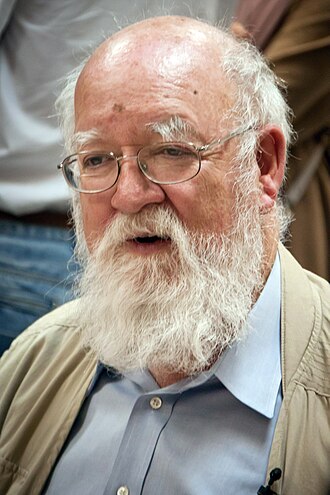
丹尼尔·丹尼特 现场观众
本期追问 · 点击跳到视频对应位置
24:14 人有自由意志吗?33:27 机器会思考吗?42:52 好的判断从哪里来?38:42 身体对智能重要吗?
归入 Ⅱ·10 思考需要工具吗? →
EDITED TRANSCRIPT · 依据现场录音编译整理,可划线生成便签
编者按:本文为哲学家、认知科学家丹尼尔·丹尼特(Daniel Dennett,1942–2024)在《思维的工具》一场公开讲演与问答活动上的现场实录。丹尼特时任塔夫茨大学认知研究中心主任,著有《意识的解释》《达尔文的危险思想》《直觉泵和其他思考工具》。讲演从弗林效应谈起,一路穿过直觉泵、寄存器机、白蚁丘与圣家堂、自由意志与两种彩票,问答环节则涉及中文屋、意识上传、维特根斯坦、色盲、幽默与刑罚改革。全文依据现场录音编译整理,仅删去口语枝节、寒暄与重复,论证与例证一仍其旧。

开场

丹尼特: 很高兴来到这里,也很高兴在这样一个好天气里见到各位,而不是让你们都跑到外面晒太阳去。今天我要讲的是思维的工具(tools for thinking)。我有一位学生说过一句我很喜欢的名言:光靠一双手,做不了多少木工活;光靠一个赤裸的大脑,也想不出多少东西。

对了,能不能把观众席的灯打开?我很想看见你们的脸。这不是一场戏剧演出。谢谢。我会尽量讲得有意思,但它毕竟不是表演。

在座有多少人听说过弗林效应(Flynn effect)?

哦,只有几位。好。这个效应以心理学家詹姆斯·弗林(James Flynn)命名。最初的研究不是他做的,但他让人们看到了它的分量。事情是这样:自从有智商测验以来的这一百年里,分数一直在往上走。智商测验以一百分为平均值做标准化处理,所以计分体系得不断往回调;可是如果你把一九三〇年用的那套题拿给今天的人做,他们的平均分是一百三十,不是一百。而且这不是某一个地区的现象,全世界都如此。至少可以说,我们今天比八九十年前的人更擅长应付智商测验。

不管怎样,这看上去是个真实的模式。什么原因造成的?弗林认为,是那些在科学以及其他学科里被开发、被检验、被打磨出来的思维工具,逐渐渗进了大众文化,成了你不必上学也能吸收的空气般的东西。所以人是真的想得更好了:他们解决问题的能力更强,看出模式的能力更强,如此等等。

无论如何,这个假说至今没有被推翻,很有希望就是这个问题的正确答案。我提它,是因为如果你追问我一句:等等,你是说这些思维工具真的让我们变聪明了?我的回答是:对,就是这样。

什么是思维工具

丹尼特: 那么,思维工具都有哪些?首屈一指的思维工具当然是词语。没有词语,你想不了多少事情。这让我想起歌德的一句名言:思想匮乏之处,词语总能及时补上。

他真是这么说的。你细想一下,就明白这里头的智慧。当思考真正吃力的时候,你常常可以把词语当成一种假肢,一根拐杖,扶着你走过那些难走的路段。

数字当然是思维工具。图表、地图,还有各式各样的方法,从求平均数到长除法再到成本收益分析,能举出一大堆。请注意,这些东西都相当抽象。它们是在你脑子里处理信息的技术,而不是那种需要插电、需要电源的工具。

然后就是直觉泵(intuition pump)。这个词是我在一九八〇年或八一年造出来的,当时是为了谈约翰·塞尔(John Searle)那个著名的,或者说臭名昭著的中文屋思想实验。我说它是一个直觉泵。因为那次我是在做批评,很多人以为「直觉泵」这个词带贬义。其实不是。我后来一再解释:最好的直觉泵是了不起的东西,它们是哲学里最好的思维工具,向来如此。

你翻一翻哲学史:柏拉图的洞穴,苏格拉底教奴隶小童几何,笛卡尔的恶魔,霍布斯的自然状态。这些是哲学的伟大旋律,论证的细节你早忘光了,旋律还留在心里。哲学家一直在用直觉泵,用小故事、小场景、小片段,而它们通常不是形式论证。

它们是小故事。这不像做算术题,算到最后就得出答案了。很少有直觉泵是那样的。它们更像伊索寓言:讲到结尾,出来一个小小的教训,你「唔」一声,觉得这个说法有点意思。如果它真的奏效,你会一拳砸在桌上说:事情必定就是这样。这就是被泵出来的直觉。

换句话说,它们是说服的装置。前几天有人写信给我说:我读了你的新书,我觉得你讲的其实每一次都是社会性的思考,是在讲如何说服别人,这非常人际。我回信说:对,而且我本该更强调这一点。所有真正严肃的思考都是人际的。我认为这恰恰是我们思考方式的关键之一:我们靠着用各自的想法互相挑战来思考。

一个绝妙的例子:几年前安德鲁·怀尔斯(Andrew Wiles)证明了费马大定理,可谁也不能确定,连怀尔斯本人也不能确定他真的做成了,直到他的同行,那些巴不得由自己来享受这份荣誉的数学家,签字认可,说:真该死,是的,他做出来了,恭喜。

人与人之间这种竞争性的对手过程(opponent process),本身就是最关键的直觉泵之一,或者说最关键的思维工具之一。所以这本书讲的很大程度上就是:在困难的问题上,怎么说服别人,怎么说服自己。

它们同时也是发现的工具。你在这些小场景里探来探去,会撞见一些你没料到的麻烦,有时候也会撞见一些你本来注意不到的机会。而且它们能牢牢抓住我们的注意力。你可以随时把话题拉回到它们身上,至少它们给了一个焦点,非常有用。

有些学科有大量的固定点,是搬不动的基岩。哲学,我认为,一个都没有,几乎一个都没有。也许照亚里士多德的说法还有一条矛盾律。我们拥有的只是固定点的候选者。我们实际上是在说:为了论证起见,姑且把这一条、这一条、这一条当作固定点,那么从这三点能推出什么?把它们三角定位,看看能搭出什么样的理论,看看以它们为基准时问题呈现出什么模样。所以直觉泵常常能极漂亮地把一个候选的固定点钉住,这本身就是极有价值的工具。

一万年改写生物圈

丹尼特: 这些工具有多大威力?大到这个地步:地球生命史上最重大的生物学现象之一,就是它们推动的。

保罗·麦克里迪(Paul MacCready)是已故的伟大绿色工程师。如果你不知道他是谁,我提一件事你大概就想起来了:他设计并制造了「薄纱信天翁号」,那架飞越英吉利海峡的人力飞机。他指出,一万年前,在生物学时间里不过一眨眼的工夫,在农业刚刚起步的时候,我们这个物种加上它的家畜和宠物,按重量算,只占陆生脊椎动物生物量的百分之一都不到。

一种不起眼的灵长类。今天呢?一万年之后。有人猜猜看?百分之九十九?八十五?没有别的答案了吗。你们知道百分之九十九不对,林子里毕竟还有几只熊。实际的数字是百分之九十八,其中大部分是牛。

一万年里,我们这个物种加上它驯养的动物,把整个生物圈彻底改造了一遍。就其造成的改变而言,我想不出更早的哪一次全球性事件能与之相比。麦克里迪是这么说的:在几十亿年的时间里,在这颗独一无二的星球上,偶然性涂抹出了一层薄薄的生命。我太喜欢这个意象了。偶然性涂抹出一层薄薄的生命,复杂,不可思议,美妙,脆弱。而突然之间,我们人类在人口、技术和智力上膨胀到了一个握有可怕权力的位置。如今,画笔在我们手里。

这是真的。而我们身上的基因,跟一万年前的祖先、十万年前的祖先,基本是同一套。所以这不是基因造成的,是思维工具让这一切成为可能。

这就引出一个先有鸡还是先有蛋的问题:是演化出来的工具让我们变聪明,还是我们先演化得足够聪明才造得出工具?和所有像样的鸡蛋问题一样,答案是:都是。这是共同演化,是一种自我攀升的过程。我们聪明一点点,聪明到能造几件工具,那些工具又让我们更聪明一些,就这样一层层垒上去。我的下一本书就要写这个过程。

归谬法与反问句

丹尼特: 下面讲几件书里的简单工具。归谬法(reductio ad absurdum)人人都懂,哪怕叫不出它的名字。你可以说它是思想的大撬棍。你就是靠它把人从原有的立场上撬动的:拿过对方的前提来,说「好,姑且假定你的前提是这样这样,你看我能推出什么」,然后从这些前提里合乎逻辑地推出一个矛盾,一个荒唐的结论。

其实我们平时一直在用它,只是形式更随意,自己都没察觉,可性质是一样的。比如你说:「如果那是一头熊,那熊头上就长鹿角。」这就是一种归谬。

我提它,一部分是想指出:除了展开的或者缩略的归谬论证,我们还成天用反问句来暗示归谬。反问句就是那种不打算让你回答的问句。每当你看见一个,请停下来想一想,它其实是一个隐含的归谬。那意思是:哈,这个问题你答不上来吧,答案明摆着,明摆到我连说都不用说。大家都知道。你懂的。

这就意味着,有一个值得养成的好习惯:当你在一份文件里看见那样一个问号,一个反问句,试着去回答它,看看答案是不是其实并没有那么荒唐。我最喜欢的《花生漫画》里有一格,查理·布朗说:「谁能说什么是对什么是错呢?」露西说:「我能。」试试看,你会喜欢的。有时候你只要老老实实回答对方的反问句,就能让他一下子哑住。

「想必」警报

丹尼特: 再说「想必」警报。我告诉我的学生:每次你看到 surely(想必、当然)这个词,脑子里就该响一声铃。叮。听见这声「想必」警报,你就停一下,看看自己是不是刚好撞上了整个论证最薄弱的环节。

为什么?因为跟在「想必」后面的那句话,是作者希望你相信、并且当作真理端出来的。它并不是明显到不言自明。如果真是那样,它就该不言自明地略过去了。可作者偏偏把它写进来了,又懒得为它论证,只想投机取巧,用一个轻轻的「想必」把你推过去。

所以,装一个「想必」警报,让它变成你脑子里的一个习惯,会让你受益无穷。我一直邀请那些已经在脑子里装好这个警报的人给我写信,告诉我他们逮到了哪些标记着薄弱环节的「想必」。我自己也做了点小研究:我上网检索了几十篇哲学论文,其实差不多是七八十篇,找出了二十来处「想必」,一个个查过去,大约三分之一在我看来清清楚楚就是那篇文章立论最弱的地方。

这招不是百发百中,误报不少,你偶尔照样可以用这个词。但只要听到「想必」,就该「叮」一声。来,试一下:因为想必,如果你们……我没听见。想必,如果你们养成习惯,一听见「想必」就响铃。来,练一遍:想必。叮。谢谢。

看我干了什么。我刚刚给你们的「颈上终端」下载了一个应用程序。就像手机上装一个 app,给手机添了一项新功能、新本事,好比谷歌快讯之类。现在你们的工具箱里多了一件小东西,它很可能在你本来颇为佩服的某个论证里,给你报出一处软肋。

计算机与寄存器机

丹尼特: 计算机当然是首屈一指的思维工具。书里有很多关于计算机的内容。多年经验告诉我,很多人自以为懂计算机怎么工作,其实并不懂;而只要多懂一点点,他们就能借助计算机轻松理解更多的事情。所以书里有一段关于计算机的插曲,其中包括一件在大众读物里恐怕算得上前无古人的怪事:里头有一章教你怎么给世界上最简单的计算机,也就是寄存器机(register machine)编程,甚至配了习题,答案在书末。

只要你肯在那一章上花两个小时,你对计算机的理解会到达一个从未有过的层次。当然,你要是实在不感兴趣,跳过去也没关系。

顺带一提,王浩是一位哲学家,寄存器机的构想是他在差不多同一时期提出来的,稍晚于哥德尔那个著名的证明和图灵提出图灵机。王浩的寄存器机能计算一切图灵可计算的东西,所以它是图灵机的一个对用户友好得多的替代品。给图灵机编过程的人都知道那有多难,非常反直觉。寄存器机则很好懂,它是世界上最简单的计算机。书里还配了几道小练习。

手斧、白蚁丘与圣家堂

丹尼特: 下面是几件思维工具。其实我要先说,这张图片本身就是一件思维工具。它把一个相当惊人的对比推到你眼前,逼你去想。

左边是一把阿舍利手斧,右边那个我不用介绍。请注意,阿舍利手斧就以这个形态被使用了一百多万年,形制不变,看不出任何明显的改良。诡异,实在古怪。相比之下,鼠标问世不过几十年,而且大概快要退场了。工具的使用与改良,在生物学的时间尺度上稍稍提速了一点点。

再看另一件本身就是思维工具的东西:这两个对象的对照。左边是澳大利亚的白蚁丘,右边是高迪在巴塞罗那的名作圣家堂。它们的外观惊人地相似,结构上也是,连内部都相似得离奇。这里是两件由动物造出来的作品,样子如此接近,可在设计和建造上却有着深刻的不同。

左边这件是达尔文式过程的设计成果。造它的是毫无头绪、没有心智的小白蚁。全是局部的动作,没有蓝图,没有智能设计者,没有老板,没有等级制。它彻头彻尾是自下而上的建造,这个词的每一层意思上都成立。而高迪则是智能设计者的典范:独断,满脑子宣言和蓝图和命令,指挥着手下人干活。

而这两者都是自然的。真正有意思的问题之一是:在这颗行星上,我们是怎么从白蚁式的设计与建造,走到高迪式的设计与建造的?第二种是怎么从第一种里演化出来的?这是个极深也极有意思的问题。这就是我现在尽可能多地投入时间去做的事情,也是下一本书要攻的题目。希望到时候我能回来跟各位讲。

生命之树上的细枝

丹尼特: 还有一件视觉的思维工具,是我最喜欢的一幅生命之树图,出自伦纳德·艾森伯格之手。你可以买到又大又漂亮的铜版海报,贴在书房或教室墙上,也有 T 恤、徽章之类的周边。

它的好处是,把许多重要而难懂的特征呈现得极为鲜明。这里是地球的诞生,时间是四十亿年前。当下的时刻在最外圈,所以外缘代表今天所有的生物,圆心代表一切的起点。我们看到细菌和古菌最先出现。然后是那桩了不起的事件,真核革命:一次内共生把两个原核细胞,两个简单的细胞,结合成了共生的联盟,那就是第一个真核细胞。此后的一切都是真核生物。粗略地说,凡是大到肉眼能看见的生物都是真核生物,包括你我,包括橡树和鱼和其余一切。

你还能看到一些重要事件。这里是寒武纪大爆发,五亿三千万年前,突然涌现出大量不同的生命形态,新的身体构型,新的谋生方式。古尔德写过那段极其富有创造力的时期。而在很远的这边,那个小小的分叉,从那个岔口到现在,是七百万年。那大致就是我们和黑猩猩共有祖先以来所流逝的时间。

至于语言和文化,就在最外面这一层,就在这儿。也就是说,把世界彻底改变的一切,全都发生在最外那一圈细细的绒毛里,靠的是思维工具。还请注意,在整棵生命之树上,白蚁在上面,筑巢的鸟也在上面。而第一批智能设计者只出现在一根细枝上,出现在极近的年代里,最近十万年左右,而且一路走一路变得更聪明。

邪恶的神经外科医生

丹尼特: 讲了这么久简单工具,现在给几个直觉泵的例子。

先来「歹毒的神经外科医生」。开头是一点科学事实。阿姆斯特丹的达米安·德尼斯(Damiaan Denys)研制出一枚小芯片,可以手术植入你的脑袋,如果你患有强迫症,它能把症状控制得相当好。今天已经有不少人植入了,目前效果不错。虽然还处在试验阶段,但很有希望。这是事实。

下面是虚构。有一天,一位患强迫症的男士去看他的神经外科医生,请她植入德尼斯芯片,她照办了。就在她缝合伤口、跟他握手、送他走出那间锃亮的手术室时,她说:「对了,你的强迫症已成往事,芯片会把它完全控制住。另外,我们这里的工作人员会全天候监控你,从现在起,我们将用电子手段控制你的一切决定。你会有自由意志的错觉,但那只是错觉。谢谢,祝你余生愉快。」然后把他送出门。

他信了。也难怪,锃亮的实验室,白大褂,神经外科医生。既然信了,他的行为就开始有点不负责任:他有些放纵自己,纵容自己最糟糕的念头,变得有点傲慢,有点好斗。没过多久,他跟法律起了冲突。他对法官说:「可是法官大人,我没有自由意志。神经外科医生告诉我我没有自由意志,您不能追究我的责任。」法庭传唤那位医生作证,她宣誓后说:「是的,是的,我是那么跟他说的。我不过是逗他玩,我从没想到他会当真。」

我想我们都会同意,对不对?这就是我要泵出的直觉:她干了一件很坏的事,她对他做了一件真正恶劣的事情。她用言语真的完成了她声称用手术和电子手段完成的事情:她废掉了他作为自由行动者的资格。

如果这个直觉站住了,我就可以接着对那些我本来就是冲他们去的神经科学家说:那么请你精确地告诉我,你们近年来在大量著作和通俗文章里宣称神经科学证明了自由意志不存在、自由意志是幻觉,这和她做的事情究竟差在哪里?我手上有一大批极有声望的人物说过一模一样的话。我要问:这凭什么不算是把她零售的那件事拿去批发?

凭什么这不算是对一个人做的危险而不负责任的事,去暗示他的自由意志只是幻觉?当然,这会引出一些问题:他们说的和她说的到底有什么区别?区别是有的,而且是重要的区别。但在此期间,我们眼看着一大批认知科学家、神经科学家和哲学家到处宣称「神经科学表明谁都没有自由意志」。胡说。它根本没有表明这种事。

而且,我们必须在这股风潮攒起势头之前把它刹住,否则它真会造成实实在在的伤害。顺带说一句,有经验证据表明,被灌输了这套说法的人会变得更不负责任。沃斯(Vohs)和加州大学圣巴巴拉分校的乔纳森·舒勒(Jonathan Schooler)做过一个很巧妙的实验:他们把受试者,照例是本科生,分成两组。一组读弗朗西斯·克里克《惊人的假说》里谈意识的一段。另一组读的是同一位诺贝尔奖得主同一本书里的另一段,那段说自由意志是幻觉。然后两组学生都去做一份测验,其实是解一道谜题,解得好就有钱拿。而实验者故意留了作弊的空子。结果,读到克里克说他们没有自由意志那一段的学生,作弊的比例显著更高。这个研究后来还被重复验证过。所以这是真事,不是哲学家的空想。

两种彩票

丹尼特: 但你也许会想:话虽如此,脑科学不还是告诉我们,大脑或多或少是被决定的,脑子里发生的事情大概也用不上什么量子效应,这难道不就说明我们没有自由意志吗?

我们来看看。我想问问各位,下面两种彩票你们觉得哪种公平。彩票甲是先卖票,票卖完之后再开奖,大多数彩票都是这样:你买一张票,然后他们办个仪式,抽出中奖号码。彩票乙一模一样,只有一点不同:中奖号码在卖票之前就抽好了,那张票根锁进保险柜,等票卖完了再打开。

现在,有多少人认为彩票乙不公平,认为你在彩票乙里根本没有中奖的机会,认为彩票甲也许公平,而彩票乙不过是个骗局?有多少人这么想?

几乎没有人。我觉得诸位是对的。两种彩票一样好,两种都一样。而且毕竟,「读者文摘」那种清仓抽奖公司就是靠这个做生意的,他们寄给你信封,说你可能已经中了一百万。人们看得出这两种都是公平的彩票,两种情况下都有中奖的机会。

可是你看:如果决定论为真,那么你所有的彩票在你出生之前就已经抽好了,装在一个信封里,等你需要掷一次硬币、需要一点运气的时候取用。所以呢?有人会说:那你就是被注定了某些时候走运,某些时候倒霉。是啊,可即便非决定论为真,情况也一样。就你这一生中拥有机会而言,非决定论和决定论之间没有任何差别。

所以我们该收敛一点,别那么笃定地相信那个非常古老的信念:决定论与自由意志、与道德责任之间有着深刻的不相容。那个不相容根本不存在。要让人看清这一点得动用很多直觉泵,而这就是其中之一。

哲学家大卫·威金斯(David Wiggins)许多年前谈这个问题时说过一个词:决定论的宇宙性不公。我猜你们中很多人会说,对,我懂他的意思,决定论的宇宙性不公,是啊。那好,非决定论的宇宙性不公又怎么说?在这一点上两者半斤八两。你总会赢一些,输一些,运气在大多数情况下会被摊平,虽然不会摊得完美。这就是人生,你绕不过去。非决定论不会多给你一分运气,多给你一个机会,多给你一点自由意志,多给你一寸回旋余地,和决定论的世界里能有的一样多。

我敢说我并没有说服在座多少人,不过给我点时间,我还在努力。

好,工具就是这些。这本书有点像一桌小食拼盘,七十七件思维工具,七十七个小章节。用「直觉泵」这个词的用意在于:请把它们当作小机械、小装置来看待。你应该把它们拆开,看看是怎么运转的,做逆向工程,把所有的旋钮都拧一遍,弄清它们为什么会有那样的效果,然后你就可以造自己的了。谢谢各位。

为何拒谈中文屋

提问者: 您前面提到中文屋作为一个直觉泵,算是最基础的那一个。不知道能不能请您展开讲讲?

丹尼特: 我要谢绝这个请求,但我会解释我为什么谢绝。

约翰·塞尔的中文屋作为一件说服工具,三十多年来成功得惊人。而这三十年里,我每年都要花上许多小时,向人解释它为什么不是一个好的直觉泵,它的毛病在哪里。

我从中学到了几件事。其中一件是:如果你不明白计算机究竟是怎么干活的,你就理解不了。塞尔对他所谓的「系统回应」是粗暴打发掉的,可任何懂计算机的人都知道,系统回应显然就是对的。所以你必须读那一章,必须在相当强的意义上具备计算机素养,才能明白塞尔的思想实验错在哪里。事实上,我在塔夫茨给本科生上「语言与心智」这门常规课程时,会教他们给寄存器机编程。我说,这就是一件你该拥有的思维工具。到了课程后期,他们才去读塞尔,然后一个个全都看穿了。可是要把各位领着做完那些练习,时间太长了。所以你们得买书,明白了吧。

不过我还想补充一点。我注意到,当我向许多人解释塞尔到底错在哪里的时候,他们的眼神就开始发直。稍微一逼问,我就明白了原因:他们讨厌人工智能可能实现这个想法。他们喜欢有位伯克利的教授拿出一个论证,其结论正是强人工智能不可能,这正合他们的心意。他们不想听细节,他们喜欢那个结论,别拿细节来烦我。在他们看来那都是吹毛求疵。

我以前对这种态度很不屑,觉得这是最糟糕的反智态度。后来我逮住自己也在这么干。是在另一件事情上,不是同一个问题。

我承认,我觉得量子力学的哥本哈根诠释又丑陋又冒犯,我就是不希望它是真的,也不希望它被接受。我知道很多人和我有同样的态度,不过那不是重点。我一直被哥本哈根诠释压得难受,心想:老天,我只是不希望那玩意儿是对的。后来诺贝尔物理学奖得主默里·盖尔曼在《夸克与美洲豹》里向哥本哈根诠释开火,把它揍得皮开肉绽。我在心里喊:再来一下,默里!书里有一章叫「量子胡扯」,他毫不留情,双管齐下,正中眉心。我一边读一边喊:再来一下,默里,我太喜欢了。

然后我意识到:我根本没有资格评判盖尔曼的论证。也许我只是被修辞和他那个诺贝尔奖唬住了。有一位诺贝尔奖得主站在我这边,我太高兴了。

很多人对塞尔就是这种感觉,所以这是一场艰难的仗。很多人希望塞尔是对的,人工智能这个念头冒犯了他们,他们不想听某个吹毛求疵的人说那个论证不成立。所以我的看法缓和了下来,我意识到,对某个观点可能存在深层的审美上和情感上的反感,而它会妨碍人耐心地考量论证。你看,我变温和了。不过我也用很长的篇幅解释了我为什么不打算谈中文屋。

全脑仿真的前景

提问者: 丹尼特教授,我在上面,二楼,您好。关于系统回应我同意您的看法,所以我大概不用买书了。我想问:我们的思维工具,其逻辑终点是不是有人所说的全脑仿真(whole brain emulation),也就是把人的心智上传到人工系统里,从而拥有远超今天想象的工具?您认为这有可能吗?

丹尼特: 我认为原则上可能,事实上极不可能。

有很多事情原则上可能,技术上却不现实。我最喜欢的例子是:能不能造一只机器鸟,能停在细枝上,能在空中捕捉飞虫,而且只有几百克重?原则上可以。别指望它出现。我这么说,是知道我搞机器人的朋友正在开发装着摄像头的小机器昆虫,某种意义上能当「墙上的苍蝇」。所以我们在接近,但我还是认为,食虫鸟类那种灵巧劲儿,技术大概会永远追不上。而且也没有真正的理由非做不可。

全脑仿真,我认为情况类似。顺带一提,我最近对「大脑是计算机」这个说法多少改了主意。正如我刚才说的「颈上终端」,我确实认为你的大脑是一台计算机。但它一点也不像你的笔记本电脑。当然,它是的,因为它是计算机。可脑这台计算机在组织方式和构造上,与我们迄今用硅造出来的任何装置都有根本差别。

比如说,在计算机里,每一个存储单元、每一个触发器、每一道逻辑门,彼此完全一样,几乎精确到原子层面,而系统的可靠性正是建立在这种极端的均一性之上。它是精密工程的杰作。你的大脑有大约一千亿到两千亿个神经元,没有两个是一样的。而且它们各有各的盘算,不像机器里的触发器那样唯命是从。它们在计算,可它们是一大群略带任性、自私、相互作用的奴仆。它们确实在计算,但计算的方式跟你的笔记本电脑真的不一样。

所以我认为,把这一切在硅上仿真出来,原则上可能,实际上极不可能。何况除了几千亿个神经元,你脑子里还有比神经元多十倍的星形胶质细胞。我们过去把它们看成保护神经元的小垫子,不不不,原来它们也在计算。所以我们现在才明白,大脑比几年前以为的还要复杂好几个数量级。别屏着气等了。

认知缺陷与慢思考

提问者: 考虑到我们心智上天生的和后天习得的缺陷与局限,您认为我们的决策方式中最大的危险在哪里?需要发生什么样的改变?

丹尼特: 这个问题很好,因为它让我可以把我的一条主线讲明白。

我们几百年来发展出来的许多思维工具,本来就是当作假肢来设计的,用以改进我们天生那套很不靠谱的装备。比如说,我们天生极不擅长概率。正如乔治·安斯利(George Ainslie)指出的,我们对未来事件是指数式贴现的,而那是错的,是一种谬误,可自然就把我们造成了这样。我们有一堆怪癖,一堆认知上的小故障。近年来指出这些故障的人很多,卡尼曼和特沃斯基有一系列著名论文,最近卡尼曼又出了《思考,快与慢》。

但要点在于:我们能够慢慢地想。而当我们慢慢地想,动用词语、工具和我们自己设计出来的方法时,我们就能克服大脑的天然局限。说白了,我们就能变得更文明、更理智。

而且,你把问题问成这样一个小小的递归回路,这件事本身就说明:我们可以对自己、对我们目前所做的一切,进行无止境的批判。当我们发现集体非理性的问题时,我们就能着手设计解决方案或者变通办法。我认为我们做得到。我看不出有什么类似音障或者砖墙的东西,会阻止我们继续用新的界限去超越现有的认知界限。我确信总会有一些我们永远无法理解的东西,但这一点打动不了我,因为「永远」远得很。而那些对我们真正重要的事情,我看不出有什么理由我们不能理解。

弗林效应的证据

提问者: 您的演讲让我有点为难。开头那个问题我很感兴趣,就是智商在上升;可我为难的是,接下来我听到的是一长串思维工具,却没有听到任何统计的或者可测量的分析,说明是什么造成了那种变化,或者怎么才能证明它。上周《泰晤士报》有篇文章说,思维的速度从维多利亚时代以来显著下降了。

丹尼特: 是思维的技能吗?

提问者: 是速度。平均的思维速度下降了。就是人们做出某个判断、想明白某件事所花的时间实际上变长了。另外在英国还有一个例子,也许有人不同意我的看法,但很多人认为教育水平,尤其是中学阶段的教育水平,被大幅拉低了,大学对此抱怨得很多。那么在某些发达国家,我们岂不是反而应该看到智商下降?所以您能不能举出一些例子,说明人们是怎么从统计上或者科学上测出究竟是什么让智商上升,或者下降的?

丹尼特: 弗林和许多人做过大量统计研究,检验过各种假说。原因不是饮食,也不是财富,而且这是全球性的。结果看上去相当稳健,与文化无关。我没法在这里逐条引证,只能说:去搜一下吧。既然我们在谈思维工具,那就搜「詹姆斯·弗林」和「弗林效应」,你会找到一大堆网上材料可以慢慢读。

至于《泰晤士报》报道的这项关于思维变慢的研究,我很感兴趣,我想弄清楚里面到底是怎么回事。当然有一种可能是:人们慢下来,恰恰是因为想得更好了,只是多花了一点时间,因为他们用的工具需要多花一点时间。毕竟卡尼曼《思考,快与慢》的信息之一就是:有些事情快思考很在行;另外有些事情你最好慢慢想,否则就想不对。也许我们从维多利亚时代到今天,把这个平衡挪动了。这究竟是普遍「不犯错」的能力提高了,还是能力下降了,我不知道,但这是个有意思的问题。很可能在某些任务上慢下来是划算的,而这正是我们学到的东西。我会去了解一下。

维特根斯坦与四骑士

提问者: 抱歉,这个问题可能离题太远,但我很想听听:您觉得维特根斯坦会怎么看无神论的「四骑士」?

丹尼特: 这我可不知道。我很乐意回答,不过我当学生的时候,跟牛津的同学们不同,我算不上后期维特根斯坦的忠实拥趸,至少我没有像他们那样把他当成思想上的圣人。事实上,我觉得维特根斯坦后期的很多东西神秘得可疑,于是我躲开了。

有意思的是,他受过一些工程训练。我也见过别的工程师,人生走到某个时刻突然一头扎进哲学,通常结局很糟。维特根斯坦显然不属于那一类,我认为他本人就是一位伟大的直觉泵建造者。至于他会怎么看无神论的四骑士,我毫无头绪。我猜他大概会有褒有贬,但我不打算去替他理清。

提问者: 谢谢。

向色盲者解释颜色

提问者: 这个问题有点跳,您不想答也没关系。作为一个非色盲的人,您能想出一种直观的方式,向色盲者解释可见光谱里有一部分信息是他们错过了的吗?

丹尼特: 当然可以。其实按我跟色盲者打交道的经验,他们对颜色理解得很到位。他们通不过石原氏色觉检查,可他们知道通过那种检查是怎么回事,知道得不比别人差。

毕竟,我想我也能向你解释,做一只四色视觉的鸽子而不是三色视觉的人类,是什么样的感受。它们看到的颜色比我们多,那些在你我看来颜色毫无差别的东西,在它们眼里泾渭分明。细节我们可以展开谈。我不认为这是不可能的,只是需要下功夫,去把那种体验的细节想象出来。

直觉与直觉泵

提问者: 您好。我们一直在谈直觉工具,我只是想问,您是否认为女性比男性更有直觉,就像她们常常自认的那样?

丹尼特: 你这是想把我引到我不愿意涉足的水域去。不过我很高兴你问了这个问题,因为我说的「直觉泵」里的「直觉」,并不是日常意义上的那个直觉。我说的是哲学家意义上的直觉:某个念头浮现在你心里,你就是觉得它必定对,可你说不太清为什么。这种事天天都在发生。

我记得我发表的第一篇论文就是关于人工智能的。在塞尔之前很多年,休伯特·德雷福斯写过那篇著名的讨伐人工智能的檄文《炼金术与人工智能》。德雷福斯在里面说,人们永远造不出有直觉的计算机,任何程序都不会有直觉。而我在我的第一篇文章里说:其实要造一台有直觉的计算机,简单得像小孩子的游戏。你拿一个能解决任何你喜欢的问题的程序,长除法也好,天气预报也好,随便什么。你问它一个问题,它给出答案,你再问:你是怎么算出这个答案的?它说:我不知道,就那么想到了。

直觉就是:你有一个确信,却压根不知道自己是怎么得到它的。而当你用一个直觉泵的时候,你知道在用它之前你没有那个想法,用完之后有了,那你就可以相当有把握地说,因果链条是从这个泵里穿过去的。接下来你把泵拆开,看它怎么运转,你就得到了关于自己如何得到那个直觉的洞见。至于那个问题的其余部分,我不碰。

用进废退与概念钢琴

提问者: 我们今天用斧头已经不如祖先在行了。同样地,您认为一代代人在使用思维工具上会有变好变坏之分吗?如果有,您怎么看未来?

丹尼特: 首先,我们先确认一下「人会变差」这件事。在座有多少人会用计算尺?有没有四十岁以下的人会用计算尺?或者,有多少人真的会用算法开平方根?有一些,但不多。用进废退。既然掌上计算器什么都能算,你就懒得再学那套技巧了。你知道,GPS 大概正在严重削弱我们读地图的能力。地图是极好的思维工具,如今却越来越走向淘汰,诸如此类。

所以我想,随着时代变迁,不同的工具在我们所做的事情里扮演的角色,重要性有升有降。这无疑还会继续下去,而「用进废退」这条箴言,我敢说也会继续全力生效。

我一直羡慕并且嫉妒我的英国同行,他们年少时被要求背诵大量诗歌。我很喜欢这件事,喜欢他们能随口引出莎剧或某首诗里恰到好处的一句,我真希望我也能。可我不能。当然,如果我实在想要那一句,我可以上网,通常很快就能找到合适的东西,但那和他们的本事不是一回事。不过话说回来,今天没人费心去背火车时刻表了,而从前人们真把那当作一种智力训练。我想我们总能找到比那更好的方式,去做智力上的运动员,而我们的新工具让我们能够这样做。所以我认为我们会继续走下去。

我觉得爱丁堡那位出色的认知科学哲学家安迪·克拉克(Andy Clark)说得非常好:我们制造聪明的工具,把负担从大脑上卸下来,于是我们可以又笨又聪明,多亏了工具的帮忙。

让我把这一点再展开一些。很多年前在塔夫茨,我和我出色的同事乔治·史密斯创办了一个叫「课程软件工作室」的东西,宗旨是把计算机用到我们所知最难的思考问题上。我们做的是所谓「想象力的假肢」。其中一件作品是在计算机上模拟出来的计算机,一台十二位、二百五十六个寄存器的机器,你可以亲眼看着指令周期一步步发生,可以把运行的过程放慢约一百万倍、放大约一百万倍,把那台正在模拟它的机器箱子内部发生的事情看得清清楚楚。那是一件可爱的思维工具,能扩张人的想象力,给他们一件生动、可靠、结实的工具去想象计算机里的事情。

后来我们又为群体遗传学做了同样的事,那个程序叫「基因赖特」,名字取自休厄尔·赖特(Sewall Wright)。它有一批很棒的群体遗传学模拟,一旦你学会用这件工具,什么是隐性性状、为什么如此,之类的事情一眼就能看明白。而且这件工具好到什么程度呢?帮我们开发它的那位演化生物学家会在自己的研究里用它,在下功夫认真建模之前,先用它检验一下自己的猜想。

我们还做过一些别的,我们管它们叫「概念钢琴」。之所以这么叫,是因为我当时急于寻找别的可以套用这套做法的领域,就去找音乐系一位教和声课的好友,问他:我们能不能做一个软件装置,帮你教学生和声理论?我们坐下来集思广益了两个钟头,然后发现,我们刚刚发明的东西就是钢琴。

钢琴妙极了。你既得到听觉,又得到两种不同的视觉呈现:一边是键盘,一边是眼前的乐谱。它极其友好,一上手就能用起来,可它又可以无限地拓展下去。学和声理论,真的没有比钢琴更好的乐器了,我们没法改进它。但我们要做的,是在别的领域造出概念钢琴。

我们过去向资助人之类的人推销这个想法时会说:技术让你变聪明有两条路,就像技术让你变强壮有两条路一样。一条是推土机的路:你还是个九十八磅的弱鸡,可坐进推土机里,你能移山。另一条是健身器械的路:你用技术真正改善自己的肌肉和协调性。我们说,我们要做的是这一行里的健身器械,让你走开的时候,脑子里真的多了点东西,让你因为拥有了这些想象工具而变得更聪明。

我觉得这一点不能忘掉:我们可以这样使用技术,真正提升思考者的想象力和灵巧度。

有一个例子,我们动手做过,后来因为种种原因不得不放弃,但它至今仍是我的梦想。我们叫它「Tube」,是「塔夫茨大学大脑探索器」的缩写。构想是:为大脑做出伦敦地铁图为地铁做的那件事。用颜色编码,做简化,把线路拉直,把那些其实不重要的地理信息扔掉,好让你看清连接关系。我们打算做出一个漂亮的大型三维彩色编码系统,让学生看清大脑里什么连着什么、为什么这样连,而且随着研究进展不断更新。我至今认为这是个好主意。

而且,就像地铁图那样,你还可以把伦敦地铁图叠到一张地理上精确的地图上,于是你会发现一些在那张规整、简化、理想化的图上看不出来的东西。我们想对大脑做同样的事。当你看理想化的形态时,皮层是完全展开的,是一大张穹顶似的薄片,所有的柱、所有的层都漂亮地铺陈着,你会看出它简直像一台计算机;然后你把整张东西收缩包裹起来,塞进颅腔,于是你就能明白,为什么脑内某些部位彼此紧挨着,尽管它们并没有连接。

所以我认为,用计算机技术来增强我们的想象力,而不只是绕开我们的想象力,是完全做得到的。我很希望看到更多这样的工作。

只上传一个直觉泵

提问者: 我很好奇,如果现在给您一个机会,向全人类上传一个直觉泵,而且只能一个,您会选哪个?为什么?

丹尼特: 麻烦在于,不同的人适用不同的泵。要是为哲学家上传,我会选我在《达尔文的危险思想》里发表的那一个。因为很多哲学家把那本书看成「丹尼特那本关于达尔文主义的通俗读物,算不上哲学书」,他们没读。可书里有「两个黑箱」的思想实验,我认为它一枪刺穿了形而上学家们抓耳挠腮了二十五年的一个,或者说好几个问题的心脏。我们看看吧,也许第二回他们会留意到它。

提问者: 谢谢。

幽默为什么是门艺术

提问者: 您认为能不能教一个毫无幽默感的人拥有幽默感?

丹尼特: 不能,大概不能。

在《意识的解释》里,我有一处等于许诺要提出一套关于幽默与笑的理论。后来我提不出来,很想把那句话抹掉,因为我没能兑现。再后来,几年前,一个学生找上门来,马修·赫尔利(Matthew Hurley),他想跟我一起做一个幽默理论。起初我觉得他的理论没救了,一点也不喜欢。但他一点一点把我说服了,于是我们和雷格·亚当斯(Reg Adams)合作写了那本《内部笑话:用幽默对心智做逆向工程》。我很庆幸做了这件事,因为我学到了太多东西。我也很为这套理论自豪。它是赫尔利模型,最初不是我的,尽管我做了不少调校。

这套理论解释的东西里,有一条是:为什么不可能有一个「制造幽默」的算法。虽然我们主张大脑是计算机,我们这套幽默理论也是演化的、计算的模型,可它并不是一个「搞笑算法」。我们认为并不存在这样的算法,而且我们说明了为什么。

我们做这项研究的方式之一,是不仅读喜剧演员和喜剧编剧的作品,还去跟他们交谈,弄清他们是怎么做这一行的,怎么把自己的脑子当共鸣板来使;而他们的脑子后来会在某种意义上被用变形,他们没法清空自己的味蕾,找不回那个准头,因为某些方面用得太多了。这也是我认为幽默永远会是一门艺术而不是一门科学的原因之一。但这不意味着不存在一门关于「它为何是艺术」的科学。

思考为何是人际的

提问者: 您好。我们经营一家做决策咨询的公司,帮助团队想清楚复杂问题。您那句「所有严肃的思考都是人际的」让我印象非常深,这跟我们每天听到的说法,或者说我们遇到的阻力,正好相反。所以我很想知道,是什么让您得出这个结论?

丹尼特: 有很多东西。其中之一是雨果·梅西耶(Hugo Mercier)和丹·斯珀伯(Dan Sperber)最近发在《行为与脑科学》上的一篇论文,讲我们推理中的缺陷。他们论证说,作为演化遗产的一部分,我们在挑对手的毛病上比在挑自己的毛病上强得多。我们在体质上就不擅长咬紧牙关去搜寻自己所信之事以及所持理由中的错误,可我们非常擅长把对方观点里的毛病一一揪出来。

如果这是真的,而他们的论证相当有力,那么,就像自然界中几乎所有别的地方一样,做这件事的办法就是搞一个对手过程。

我们的眼睛在好几个层面上都是靠对手过程工作的。首先,决定你的眼睛下一步看向哪里的那些肌肉,彼此处在持续的拔河之中,这边拉一下那边拉一下,不过那是很友好的拔河。然后在额叶眼动区,还有另一种对手过程在进行:一小队一小队的神经元针对当前的注视点各持一词。有些说:家真好,不错,我喜欢这里,熟悉。另一些说:无聊,去过了,看过了。它们想挪地方。

于是不同的神经元群之间就有了这种持续的对手过程,一方说「看这边」,另一方说「就看我们现在看的地方」,它们整天不停地较劲,结果是你有了非常好的眼动追踪模式,因为在这些小群体之间的对手过程里,活儿干得很漂亮。

除非你有毛病。如果那里有缺陷,你就会出现异常的扫视。而异常的扫视意味着你没有在该看的时候看向该看的地方,那是一种深刻的缺损。比如有强有力的证据表明,自闭症儿童的扫视不正常。他们不看该看的地方,不擅长追随母亲的目光,也不擅长共同注意。这意味着:普通婴儿等于是在从消防水龙头里痛饮信息,而有些孩子却没有在恰当的时刻注意恰当的位置,这会改变他们整个大脑的运作方式,有时变好,有时变坏。

所以我认为,对手过程是自然界完成任务的常用手法。我们应该承认这一点,加以利用,并且针对我们要做的事情把它打磨得更好。

自由意志、刑罚与道德能力

提问者: 您关于自由意志的路数让我着迷。不知道在座别人怎么样,我记得自己接触到「自由意志是幻觉」这个想法时,觉得它性感、叛逆。它似乎跟我和很多人的直觉合得来,「想必」是一种非宗教的、走向唯物解释的倾向。反对自由意志在政治上很左,而您却非常有力地为自由意志辩护。所以我想知道,您能否说明神经科学的哪些证据表明自由意志在物质层面上发生在哪里、何时出现。另外,如果我们要争论它是否存在,您希望这场辩论往哪里走?您知道,有不少社会学家之所以想让我们讨论自由意志,纯粹是因为他们想说:看,我们的监狱里关着某一类人。在这个国家主要是政客害的。那么,您希望这场辩论走向何方?它有什么有用的应用?

丹尼特: 这里面内容不少,而且说实话我全都很赞赏。我一直在思考和谈论我们可能需要哪些监狱改革,以及惩罚制度是否需要修订。有些人可能看过我上个月在《展望》杂志上写的书评,评的是阿德里安·雷恩(Adrian Raine)那本很出色的书。雷恩是神经科学家兼心理学家,研究过死囚牢里精神病态者的大脑,其中很多是杀人犯。

更叫人吃惊的是他做的另一批实验:他找到了大量「野生的」精神病态者,也就是从未跟法律打过交道的人。可你怎么去找野生的精神病态者?他有个预感,申请到一笔经费,在洛杉矶雇了几十个临时工,结果不出所料:他用监狱里通行的那套精神病态测验,也就是黄金标准的测量工具,对他们全部施测,发现临时工里精神病态者的比例大约是普通人群平均水平的三倍。

于是他手上就有了一群从没坐过牢、从没惹过法律麻烦的精神病态者。在他的研究获得许可的前提下,他让研究生对这些人做了深度访谈。结果他们全都坦白了持械抢劫、强奸,甚至谋杀。所以他们真的是精神病态者,真的就在我们中间,而他有工具去研究他们。

精神病态者是不一样的。但还有另一些人,带着另一些大脑上的差异,我们在法律与惩罚制度中必须区别对待。雷恩的各项建议我并不全都赞同,顺带说一句,我看他自己也不见得全都赞同,但他在那本《暴力的解剖》里把问题提得非常好。

而在我自己的工作里,我想做的是把桌子稍微掉个个儿:与其去追问自由意志的形而上学基础、量子非决定性是否插了一脚,不如倒着做。从「自由的行动者就是道德上有能力的行动者」这个想法开始。先做一个道德上有能力的行动者,然后问自己:一个道德上有能力的行动者,规格说明是什么?它内部必须具备什么?你得能做到什么,才算道德上有能力?我认为这些我们能相当好地推演出来。

而结果是,关于「正常人为什么可能在道德上没有能力」,神经科学几乎什么也说不出来。我认为正常人在道德上是有能力的,因而在这个意义上拥有自由意志。因为他们有自由意志,因为他们道德上有能力,他们就是适格的、应当为自己的行为承担完全责任的主体,这也包括他们在做错事时具备受罚的资格。这是个很长的故事,但我认为这是一条建设性的推进路线。

我们大多数人,我敢说这屋里的每一个人,都相信自己在这个意义上拥有自由意志。如果你相信自己有能力签署一份具有约束力的合同,那么你在这个意义上就拥有自由意志,或者说,你就相信自己拥有。这跟决定论还是非决定论毫无关系。它关乎的是你评估结果、概率、后果、成本收益、名誉价值等等的能力。如果这些你都具备,那么当你签下合同时,你是当真的。所以它算数。

我们与古希腊人

提问者: 谢谢您的演讲。我的问题是关于大脑的物理构造与我们日益网络化、计算机化的沟通之间的关联:随着我们越来越多地转向线上的联结与交流,这会如何影响我们的哲学史往下走?也就是说,我们的思考会不会跟希腊人不一样?这会怎么变化?我们该思考些什么?

丹尼特: 我认为答案是肯定的。非常清楚的一点是,我们今天的思考与古希腊人不同,因为我们还是小孩子的时候,就能掌握雅典最聪明的人也掌握不了的各种概念。不只是关于科学的,但科学方面尤其明显。我认为跟古希腊人相比,我们今天的概念库大得多。这不意味着他们不智慧,但我确实认为这意味着,那些事情他们要想明白要难得多。

以柏拉图的对话录为例,至少在我看来,我在里面常常读到的是一种英雄般的努力:柏拉图和他的对话者们在思考一些他们根本没有相应术语的题目。他们一边走一边发明区分和词汇,有时候按今天的标准犯下相当尴尬的错误。

几年前我重读我在牛津念研究生时最喜欢的那批书,也就是我最初了解大脑、试图把心智当作大脑来思考时读的那些书,感受是一样的。那时候写得好的东西不多。而写得好的那些,就其自身而言堪称杰出,可他们就是没有工具,没有我们今天拥有的思维工具和表达工具。他们才华横溢地、别出心裁地、异想天开地苦苦挣扎,去解释那些今天在我看来一个聪明的十四岁少年用几句简单的网络语言就能说得相当到位的事情。

提问者: 谢谢。

丹尼特: 我想就停在这个地方吧。非常感谢各位。

排版 + 横图 + 来源,粘贴即成稿
章节 · 点击跳转视频
0:11 弗林效应:思维工具让人变聪明 ▶ 正在看
4:11 直觉泵:哲学的旋律与说服 ▶ 正在看
8:31 一万年改写生物圈的是工具 ▶ 正在看
11:45 归谬法、反问句与 surely 警报 ▶ 正在看
16:24 计算机与寄存器机 ▶ 正在看
18:44 白蚁丘到圣家堂:设计的演化 ▶ 正在看
24:14 邪恶神经外科医生与自由意志 ▶ 正在看
29:07 两种彩票:决定论不减少机会 ▶ 正在看
33:27 为何拒谈中文屋:情感对论证的干扰 ▶ 正在看
38:42 全脑仿真与大脑的非均一性 ▶ 正在看
42:52 认知缺陷、慢思考与用进废退 ▶ 正在看
56:29 概念钢琴:推土机与健身器 ▶ 正在看
62:44 幽默、对手过程与道德能力 ▶ 正在看
本期小问 · 档案清单
24:14 人有自由意志吗? ▶ 正在看
33:27 机器会思考吗? ▶ 正在看
42:52 好的判断从哪里来? ▶ 正在看
38:42 身体对智能重要吗? ▶ 正在看
本期讲者
丹尼尔·丹尼特美国哲学家、认知科学家(1942–2024),塔夫茨大学认知研究中心主任。著有《意识的解释》《达尔文的危险思想》《直觉泵和其他思考工具》,以相容论自由意志观和对意识、演化的自然主义解释著称,「新无神论四骑士」之一。
现场观众Q&A 环节多位提问者,涉及中文屋、意识上传、决策缺陷、维特根斯坦、色盲、幽默与自由意志等话题。
01弗林效应:思维工具让人变聪明
0:11
I'm delighted to be here and to see you all on such a beautiful day, not outside in the sunshine. So, I'm going to talk about tools for thinking. Uh one of my students famously said, or I love it, you can't do much carpentry with your bare hands, you can't do much thinking with your bare brain. Oh, by the way, can I have the house lights up? I really like to see faces. This isn't a drama. Thank you. I'll try to make it entertaining, but it's not you know uh Thank you. Um How many of you know about the Flynn effect?
很高兴能来到这里,在这样一个大好晴天见到大家——而不是待在外面晒太阳。那么,我今天要讲的是思考的工具。呃,我有个学生说过一句很有名的话,我特别喜欢:光靠一双手做不了多少木工活,光靠一个脑子也想不出多少东西。光靠一个脑子也思考不了多少。哦,对了,能把场灯打开吗?我很想看到大家的脸。这又不是演戏。谢谢。我会尽量讲得有意思一点,但这毕竟不是那种,你懂的,呃……谢谢。嗯,你们当中有多少人听说过弗林效应(Flynn effect)?
便签笔记
0:56
Oh, only a few. Okay. Named after Jim Flynn, James Flynn, psychologist. He didn't do the original research, but uh he's drawn attention to the importance of it. It turns out that since the in the 100 years that we've had IQ tests, scores have been going up. IQ tests are normalized at 100 being the average, and that so you have to keep tweaking that scoring system, but if you give the test that you gave in 1930 to people today, they'll score on average 130, not 100. At least as the whole world over, too. It's not it's not just in any one area. At least we're a lot better at taking IQ tests than we were 80 and 90 years ago.
哦,只有几个。好吧。以吉姆·弗林(James Flynn)命名,他是一位心理学家。原始研究不是他做的,但他让大家注意到了它的重要性。事实证明,在我们有智商测试的这100年里,分数一直在上升。智商测试是标准化的,平均分定为100,所以你得不断调整这个计分体系,但如果你把1930年用的那套测试拿给今天的人做,他们平均能考到130分,不到100分。至少全世界都是这样,不只是某一个地区。至少我们做智商测试的能力,比八九十年前强多了。
便签笔记
1:57
But it seems to be a a real pattern, and what's what might cause that? Uh Flynn thinks that what's happened is that the tools for thinking that are developed and proven and and refined in in the sciences and in the other academic disciplines have sort of filtered down into popular culture and become part of the ambient culture that you learn independently of school. And that this is why people are actually thinking better. They're actually better problem-solvers, they see patterns better, and so forth.
但这似乎是个真实存在的规律,那可能是什么导致的呢?呃,弗林认为,事情是这样的:那些在科学界和其他学术领域中发展出来、经过检验和打磨的思维工具,逐渐渗透到了大众文化里,成为周遭文化的一部分,这些东西你不用上学也能学到。而这就是人们实际上思考得更好的原因。他们确实更擅长解决问题,更善于发现规律,等等。
便签笔记
2:37
In any case, it's a it's a hypothesis that hasn't been disproven and and has a good chance of being the right uh the right answer to that question. And the reason I mention it is because if you ask me, wait a minute, are you saying that these thinking tools actually make us smarter? I'm saying, yes. Yes, they do. Um So, what are some thinking tools? Well, par excellence, the thinking tools are words. Can't do much thinking without words. And I'm reminded of a famous line of Goethe's, uh when ideas fail, words come in very handy.
不管怎么说,这是一个尚未被推翻的假说,而且很有可能就是这个问题的正确答案。我之所以提到它,是因为如果你问我,等等,你是在说这些思维工具真的让我们变聪明了吗?我会说,是的。是的,它们确实如此。嗯,那么有哪些思维工具呢?首先,最典型的思维工具就是词语。没有词语,你根本没法进行多少思考。
便签笔记
3:22
He really did say that. And uh uh when you think about it, you realize what wisdom is there. When the when the thinking gets really hard, you can often use words as a certain sort of prosthetic device, a crutch, to help you over some difficult stretches. Numbers, obviously, are thinking tools. Diagrams, maps, uh methods of all kinds, from finding the average to long division to cost-benefit analysis, you name it. Notice that these are all quite abstract things. They're they're techniques for handling information in your head rather than tools that you plug in or need a power source for.
他真的说过那句话。而且,当你细想一下,就会明白其中的智慧所在。当思考变得非常艰难时,你常常可以把词语当成某种假肢、某根拐杖,帮你渡过一些难走的路段。数字显然也是思考工具。图表、地图,还有各种各样的方法,从求平均数到长除法再到成本效益分析,应有尽有。请注意,这些都是相当抽象的东西。它们是在你脑子里处理信息的技巧,而不是那种要插电或者需要电源的工具。
便签笔记
02直觉泵:哲学的旋律与说服
4:11
Um then there's intuition pumps. I coined the term way back in 1980 or 81 uh in order to talk about uh John Searle's famous or notorious Chinese room thought experiment. I said it's an intuition pump, and because I was on that occasion criticizing, a lot of people thought that I meant the term intuition pump pejoratively. No, I didn't actually, and I've since explained that I think intuition pumps at their best are wonderful. They are the best philosophical thinking tools there are, and they always have been. If you look at the history of philosophy, Plato's cave, Socrates teaching the slave boy geometry, Descartes' evil demon, Hobbes' state of nature. These are the These are the great melodies of philosophy that you remember long after you've forgotten the details of the arguments. So, philosophers have always used intuition pumps, little stories, uh scenarios, vignettes, and they're not typically formal arguments.
嗯,然后就是「直觉泵」。这个词是我在1980年还是81年造出来的,当时是为了讨论约翰·塞尔那个著名——或者说臭名昭著——的中文屋思想实验。我说它是一个直觉泵,因为我那次是在做批评,很多人就以为我用「直觉泵」这个词是带贬义的。其实不是,我后来也解释过,我认为最好的直觉泵是非常了不起的。它们是现有最好的哲学思考工具,向来如此。你去看哲学史,柏拉图的洞穴、苏格拉底教奴隶男孩几何、笛卡尔的恶魔、霍布斯的自然状态。这些都是哲学中那些伟大的旋律,等你把论证的细节都忘光了很久以后,你还记得它们。所以哲学家们一直在用直觉泵——小故事、场景、片段,它们通常并不是形式化的论证。
便签笔记
5:22
They're little stories. It's not like doing sums. When you get to the end, you've got the answer. Very few intuition pumps are like that. They're much more like Aesop's fables. You get the end, there's a little moral. You hmm. Interesting you'd put it that way. And and if it really works, you pound your fist on the table and say it's got to be that way. That's the intuition that's been pumped. Now, they're persuaders, in other words. As somebody wrote me the other day saying, well, I've I've I've looked at your your book now, and I think what you're really talking about in every case, you're talking about social thinking. You're talking about persuading others. It's it's very much uh interpersonal.
它们是些小故事。这跟做算术不一样。算术做到最后你就得出答案了。很少有直觉泵是那样的。它们更像伊索寓言。你读到结尾,有个小小的寓意。你会「嗯……」。有意思,你居然这么说。而如果它真的奏效,你会一拳砸在桌子上说:只能是这样。这就是被「泵」出来的直觉。换句话说,它们是说服工具。前几天有人写信给我说,我现在看过你的书了,我觉得你真正谈的每一个例子,其实谈的都是社会性思考。你谈的是说服别人。这在很大程度上是人际之间的事。
便签笔记
6:06
Uh and I wrote back said, yes, and in fact, I should have stressed that more. All really serious thinking is interpersonal, I think. I think that's in fact one of the keys to how we think is by challenging each other with our ideas. Lovely case in point, Andrew Wiles proved Fermat's last theorem a few years back, but nobody could be sure, even Wiles himself couldn't be sure he'd done it until his peers, his colleagues in mathematics, who would dearly love to have the honor of having proved Fermat's last theorem themselves, until they had signed off and said, darn it, yes, he's got it. Congratulations.
我回信说:没错,事实上我本该更强调这一点。我认为所有真正严肃的思考都是人际性的。我认为这实际上正是我们思考方式的关键之一——我们用自己的想法互相挑战。有个绝佳的例子:安德鲁·怀尔斯几年前证明了费马大定理,但没人敢确定,连怀尔斯本人也不敢确定他真的做到了,直到他的同行、他数学界的同事们——那些巴不得自己能享有证明费马大定理这份荣誉的人——直到他们签字认可,说:真该死,是的,他做到了。恭喜。
便签笔记
6:56
This competitive opponent process between people is actually one of the key intuition pumps or the key thinking tools all on its own. And so, this is a book very much about how to persuade others and yourself about difficult matters. They're also tools of discovery. By exploring these vignettes, you you encounter either problems that you hadn't anticipated, or sometimes opportunities that you would not otherwise notice. And they hold our attention. You You can just refer back to them, and at least they give you a a a focus on a topic that's very useful.
人与人之间这种竞争性的对抗过程,本身其实就是关键的直觉泵之一,或者说关键的思考工具之一。所以这本书讲的很大程度上就是如何在难题上说服别人和说服你自己。它们同时也是发现的工具。通过探索这些小情境,你会遇到一些你原本没料到的问题,有时也会看到一些你本来不会注意到的机会。而且它们能抓住我们的注意力。你随时可以回过头去引用它们,至少它们能让你在某个话题上有个聚焦点,这非常有用。
便签笔记
7:41
Now, some fields of academic inquiry have lots of fixed points, just immovable bedrock. Philosophy, I think, has none. Hardly a one. Maybe the law of non-contradiction, according to Aristotle. What we have are candidates for fixed points. We say in effect, suppose for the sake of argument we treat this and this and this as fixed points. Now, what follows from those three points? Triangulate those, see what kind of a theory you can make of that. See how the questions look if we take those as fixed points. So, very often an intuition pump is a is a wonderful fixer of a candidate for a fixed point. And that's a very valuable tool in itself.
有些学术研究领域有大量的固定点,就是那种纹丝不动的基岩。而哲学,我觉得一个都没有,几乎一个都没有。也许只有亚里士多德说的不矛盾律算一个。我们有的只是固定点的候选者。我们实际上是在说:为了论证起见,假设我们把这个、这个、还有这个当作固定点。那么,从这三点能推出什么?把它们三角定位一下,看看你能由此构造出什么样的理论。看看如果我们把这些当作固定点,那些问题会呈现出什么样子。所以直觉泵常常能非常出色地把某个固定点候选者给固定下来。这本身就是一件很有价值的工具。
便签笔记
03一万年改写生物圈的是工具
8:31
How powerful are these tools? They're this powerful. They drove what is one of the great biological phenomena in the history of life on this planet. Paul MacCready, the late great green engineer, if you don't know who Paul MacCready is, I'll probably be able to identify him for you by drawing attention to the fact that he's the one who designed and built the Gossamer Albatross, the the human-powered airplane that flew across the British Channel. Um he pointed out that at 10,000 years ago, a twinkling in in in biological time, at the very dawn of agriculture, our species plus its livestock and its pets was a fraction of 1% of the by weight, if you like, of the terrestrial vertebrate biomass.
这些工具有多强大?强大到这种地步:它们推动了这颗星球生命史上最重大的生物学现象之一。保罗·麦克里迪,那位已故的伟大绿色工程师——如果你不知道保罗·麦克里迪是谁,我大概可以这样帮你认出他:他就是那个设计并制造了「蝉翼信天翁号」的人,就是那架飞越英吉利海峡的人力飞机。他指出,在一万年前——在生物学时间尺度上不过一眨眼——就在农业刚刚起步的时候,我们这个物种加上它的牲畜和宠物,只占陆生脊椎动物生物量(按重量算)的不到百分之一。
便签笔记
9:31
A minor primate. What is it today? 10,000 years later. Any guesses? 99%? 85? I don't hear any others. You know that's not true. There are a few bears out in the woods. But, it's actually it's 98%. Most of that's cattle. But, in 10,000 years, our species, plus its domesticated animals, have completely transformed the biosphere in a way that really hardly I don't think any earlier global event can compete with that for the changes that have been wrought in just 10,000 years. And this is what This is what McCready says about it. Over billions of years on a unique sphere, chance has painted a thin covering of life. I love that image. Chance has painted a thin covering of life, complex, improbable, wonderful, and fragile. Suddenly, we humans have grown in population, technology, and intelligence to a position of terrible power. We now wield the paintbrush.
一种不起眼的灵长类。今天呢?一万年之后。有人猜猜吗?99%?85%?我没听到别的数字。你们知道那不对,林子里还有几头熊呢。但实际上是98%。其中大部分是牛。可是在一万年里,我们这个物种加上它驯养的动物,已经彻底改变了生物圈,我觉得那种改变的程度,几乎没有哪一次更早的全球性事件能比得上——就在短短一万年里造成的变化。麦克里迪是这么说的:在数十亿年间,在一颗独一无二的星球上,偶然性涂上了一层薄薄的生命。我很喜欢这个意象。偶然性涂上了一层薄薄的生命,复杂、不可思议、美妙而脆弱。突然之间,我们人类在人口、技术和智力上增长到了一个拥有可怕力量的位置。现在,画笔握在我们手里。
便签笔记
10:55
That's true. And we have the same genes that our ancestors 10,000 years ago had, that our ancestors 100,000 years ago. Pretty much. It's not genetic. It's thinking tools that have made this all possible. Which raises a chicken egg problem. Did evolved tools make us smarter? Or did we evolve to become smart enough to make tools? And the answer as to all good chicken egg problems is yes. It's co-evolutionary. It's a sort of bootstrapping thing where we get a little bit smarter, smart enough to make a few tools, and then those tools make us smarter still, and so it goes, building and building and building.
确实如此。而我们拥有的基因,跟一万年前的祖先、跟十万年前的祖先基本上是一样的。这不是基因的事。是思考工具让这一切成为可能。这就引出一个鸡生蛋蛋生鸡的问题:是演化出来的工具让我们变聪明了,还是我们先演化得足够聪明才造出了工具?跟所有好的鸡蛋问题一样,答案是:都是。这是协同演化。有点像自举:我们变聪明一点点,聪明到能造出几件工具,然后那些工具又让我们更聪明,如此往复,不断累积、累积、再累积。
便签笔记
04归谬法、反问句与 surely 警报
11:45
My next book is going to be about that process. So, some simple tools from the book. Uh Everybody knows reductio ad absurdum, even if you don't know the name. It is that you might say it's the great crowbar of thought. It is the way you budge people from their position by taking their premises, saying, "Well, if we assume for the sake of argument that your premises are such and such, look what I can do." And then you deduce logically from those premises a contradiction, something absurd. In fact, we use this all the time in in more more informally, and don't even notice it, but it's really the same thing. I mean, if you say, um "If that's a bear, then bears have antlers."
我的下一本书就打算写这个过程。好,说几件书里的简单工具。归谬法大家都知道,哪怕你不知道这个名字。可以说它是思想的大撬棍。你就是用它把人从他们的立场上撬动的:拿他们的前提说,「好吧,为了论证起见,假设你的前提是如此这般,看我能推出什么来。」然后你从那些前提合乎逻辑地推出一个矛盾,一个荒谬的东西。其实我们一直都在更非正式地使用它,甚至都没察觉,但本质上是一回事。比如你要是说:「如果那是熊,那熊就长鹿角了。」
便签笔记
12:35
Uh that's really uh a sort of reductio ad absurdum argument. Um I mention it in part because I want to point out that although we use reductio ad absurdum arguments in either expanded or truncated form, we also imply them all the time using rhetorical questions. A rhetorical question, whenever you see one, one of those questions that isn't supposed to be answered, stop and think about it. It's an implied reductio. The idea is ha ha, you can't answer this question. It would be it's it's so obvious that the that that the answer to this question uh uh is so obvious that uh I don't even have to mention what the answer is.
那其实就是一种归谬法论证。我提到它,部分是因为我想指出:我们除了以完整或省略的形式使用归谬论证之外,还一直在用反问句暗示它们。反问句——每当你看到一个,那种并不指望被回答的问句——停下来想一想。它是一个隐含的归谬。它的意思是:哈哈,你答不上这个问题吧。也就是说,这个问题的答案太明显了,明显到我都不必说出答案是什么。
便签笔记
13:21
Everybody knows. Nudge nudge. Well, that means that a good practice, a habit to get into, is when you see one of those question marks in an in a document document, a rhetorical question, try answering the question. And see if maybe it's not so ridiculous after all. Uh in one of my favorite Peanuts cartoon strips, Charlie Brown says something like, "Well, who's to say what is right and what is wrong?" And Lucy says, "I will." And try it, you'll like it. Sometimes you can really bring a person up short by just answering their their rhetorical question.
大家都懂。你懂的。那么这就意味着,一个好做法、一个该养成的习惯是:当你在一份文件里看到那样的问号,看到一个反问句,试着去回答那个问题。看看它是不是其实也没那么荒唐。在我最喜欢的一则《花生漫画》里,查理·布朗说了句大意是「谁有资格说什么是对什么是错?」露西说:「我。」试试看,你会喜欢的。有时候,你只要回答对方的反问句,就真能把人噎住。
便签笔记
14:07
Then there's the surely alarm. I tell my students, "Every time you see the word surely, a little bell should ring. Ding." And you should pause hearing the surely alarm, and you should look to see if you have just found the weak point in the argument. Why? Well, what follows the surely is a sentence that the author wants you to believe, is putting forward as true. It's not so obvious that it goes without saying. If it were, it would go without saying. And here the author is putting it in. But not bothering to argue for it.
接下来是「surely 警报」。我告诉我的学生:每次你看到 surely(想必、当然)这个词,脑子里就该响个铃:叮。你应该在听到这个警报时停一下,看看你是不是刚好找到了论证里的薄弱点。为什么?因为跟在 surely 后面的那句话,是作者想让你相信、当作真理提出来的。它其实并没有明显到不言自明。要真是那样,作者就不必说出来了。可这儿作者偏偏把它写进去了,却懒得为它作论证。
便签笔记
14:53
Instead, trying to get by on the cheap with a little nudge, a little surely. So, if you have a surely alarm, and this becomes just a a habit in your mind, this this will stand you in good stead. I've been inviting people to send me, now that they've installed a surely alarm in their brain, uh to tell send me examples where they catch they catch a surely marking a weak spot. I I did little research on this. I actually went and and string searched for surely in uh several dozen, actually more like 70 or 75 philosophy papers online, and found a couple of dozen surelies, and checked them out, and and about a third of them were were I thought clearly the weakest point in the case being made in that in that article.
我对这个还真做了点小研究。我确实去网上检索了几十篇——其实差不多七十或者七十五篇哲学论文里的 surely(『当然、显然』)这个词,找出了二三十处 surely,逐个查看,其中大约三分之一,我认为明显就是那篇文章所作论证中最薄弱的地方。
便签笔记
15:45
It doesn't work all the time. There are a lot of false alarms. You can go ahead and use the word surely every now and then. But if you hear the word surely, you should ding. So, you just give it a little try, because surely if you I didn't hear it. If sure surely if you get in the habit of of whenever you hear the word surely, a little bell rings, practice surely. Ding. Thank you. Now, look what I've done. I've just downloaded an app to your necktop.
这招不是每次都灵,误报也不少。你偶尔用一下 surely 这个词,完全没问题。但只要听到 surely,你脑子里就该『叮』一声。不妨试试看,因为 surely——我没听见啊。要是你能养成习惯,每次一听到 surely 这个词,脑子里就有个小铃铛响起来。来,练习一下:surely。叮!谢谢。现在,看看我干了什么。我刚刚往你的『颈上电脑』里下载了一个 app。
便签笔记
05计算机与寄存器机
16:24
In the same way that an app on your on your smartphone adds to the functionality of gives gives your smartphone a new talent, a new capacity. It's like Google Alert or something like that. You now have another little tool in your kit that may very well alert you to a weak spot in some argument that you're otherwise impressed with. Okay. Computers are, of course, thinking tools par excellence, and I There's a lot about computers in the book, and I have learned from many years experience that a lot of people think they understand how computers work, and they don't really. And if they just understood a bit more, they would understand a lot more things that can be easily understood with the help of computers. So, there's there's an interlude on computers, including what must be an eccentric first in a trade book.
就像智能手机上的 app 会扩展手机的功能、给你的手机添一项新本事、新能力一样。有点像谷歌快讯之类的东西。你的工具箱里现在多了一件小工具,它很可能会提醒你:某个你本来觉得很有说服力的论证,其实存在薄弱环节。好。当然,计算机是最典型不过的思维工具。书里有很多关于计算机的内容,而我从多年的经验中发现,很多人以为自己明白计算机是怎么运作的,其实并不明白。如果他们能多懂一点,就能借助计算机轻松理解更多的东西。所以书里有一段关于计算机的插曲,其中有样东西在大众读物里恐怕算是个古怪的首创。
便签笔记
17:22
There's actually a chapter which teaches you how to program the world's simplest computer, a register machine. And there are even problem sets with the answers at the back of the book. If you will spend a couple hours with that chapter, you will understand computers the way you never understood them before. But, of course, you're free to pass over that if you really don't care. Um How long, by the way, was a philosopher uh who came up with the idea of a register machine around the same time, a little after Gödel's famous uh uh proof and Turing coming up with the Turing machine.
书里真的有一章,教你如何给世界上最简单的计算机——寄存器机——编程。甚至还配了习题,答案就在书的最后。只要你肯花上两个小时读那一章,你对计算机的理解会达到前所未有的程度。当然,如果你实在不感兴趣,完全可以跳过去。顺便说一句,王浩(Hao Wang)是一位哲学家,他提出寄存器机这个想法大约也在同一时期,稍稍晚于哥德尔那个著名的证明,以及图灵提出图灵机之后。
便签笔记
18:05
And the the Wang register machine is is is computes everything that's Turing computable. So, it's a it's a user-friendly alternative to a Turing machine. If you've ever tried to program a Turing machine, you know it's hard. It's very counterintuitive. But a register machine is very easy to understand. It's It's the world's simplest computer. And there are some little exercises on that. Now, here's some thinking tools. Well, actually, this picture, I want to point out, this is a This picture is all by itself a thinking tool. It draws attention to a rather striking comparison.
而王氏寄存器机能计算一切图灵可计算的东西。所以它是个对用户友好的替代品,可以用来取代图灵机。如果你试过给图灵机编程,就知道那很难,非常反直觉。但寄存器机非常好懂。它是世界上最简单的计算机。书里还配了一些小练习。好,下面来看几个思维工具。其实我想指出,这张图片本身就是一个思维工具。它让人注意到一个相当惊人的对比,
便签笔记
06白蚁丘到圣家堂:设计的演化
18:44
Uh and provokes reflection. The one on the left is an Acheulean hand axe. The one on the right, I don't need to tell you. Notice, the Acheulean hand axe was used in this form, unchanged, without any noticeable improvements for over a million years. Weird. Really strange. The mouse, in comparison, has only been around for a few decades, and is probably on the way out. The speed of tool use and improvement is picked up a little bit over biological time. Here's another thinking tool all on its own, the comparison between these two entities.
并引发思考。左边是一把阿舍利手斧。右边那个,我就不用多说了。请注意,阿舍利手斧就以这个形态一直被使用着,一成不变,没有任何明显的改进,前后超过一百万年。很怪。真的很奇怪。相比之下,鼠标才出现了几十年,而且大概快要被淘汰了。以生物演化的时间尺度看,工具的使用和改进速度确实稍微加快了一点。这里还有一个本身就是思维工具的例子——这两样东西之间的对比。
便签笔记
19:37
On the left, you see an Australian termite castle. On the right, you see Gaudí's famous church in Barcelona, the Sagrada Familia. They're strikingly similar in appearance, and actually in structure. Even internally, they're quite remarkably similar. So, here are two artifacts made by animals looking very similar, and yet profoundly different in both the the design and construction. The one on the left is designed by Darwinian processes. Clueless, mindless little termites. It's all local action. There's no There's no blueprint. There's no intelligent designer. There's no No boss.
左边你看到的是澳大利亚的白蚁巢(白蚁城堡)。右边是高迪在巴塞罗那的那座著名教堂,圣家堂。两者外观惊人地相似,其实结构上也是。连内部都相当相似。所以这是两件由动物造出来的作品,看上去很像,但在设计和建造两方面都有着极其深刻的差别。左边那个是由达尔文式过程设计出来的。出自懵懂无知、没有心智的小白蚁之手。全都是局部的行动。没有蓝图,没有智能设计者,没有老板。
便签笔记
20:24
There's no hierarchy. It's bottom-up construction in sort of every sense of the word. Whereas Gaudi is the very model of an intelligent designer. Autocratic. Full of manifestos and blueprints and orders, ordering the underlings around. Uh Now, they're both natural. And one of the really interesting questions is, how do we get in this on this planet How did we get from termite-style design and construction to Gaudi-style design and construction? How did the second kind evolve from the first? That's a very deep and interesting question. That's the one that I am now devoting as much time as I can to, and will attack in the next book. And I hope I'll be back to talk about that.
没有等级制度。从各种意义上说,它都是自下而上建造起来的。而高迪则是智能设计者的典型代表。独断专行。满是宣言、蓝图和命令,对手下人发号施令。而这两者都是自然的产物。一个非常有意思的问题是:在这颗星球上,我们是怎么从白蚁式的设计与建造,走到高迪式的设计与建造的?第二种是怎么从第一种演化出来的?这是个非常深刻、非常有趣的问题。这也正是我现在尽可能多地投入时间去研究的问题,并且会在下一本书里正面处理。希望我还能再来跟大家聊这个。
便签笔记
21:22
One more visual thinking tool is this, my favorite picture of the tree of life. This is Leonard Eisenberg's, and you can You can get this as a big beautiful glossy poster to put up on your on your wall in your study or in your classroom. Or you can get T-shirts and buttons and all sorts of things. What's really nice about it is that so many features that are important to understand are rendered so vivid. Um uh Here's the birth of the Earth, and time, this is 4 billion years ago. And And here's the present out around the outside edge. So, this represents all living things today.
还有一个视觉化的思维工具,就是这张我最喜欢的生命之树图。这是 Leonard Eisenberg 做的,你可以买到一张又大又漂亮的铜版纸海报,贴在你书房或教室的墙上。也有 T 恤、徽章之类各种周边。它特别好的一点在于,把许多重要而需要理解的特征呈现得非常直观。这里是地球的诞生,时间上是四十亿年前。而当下则在最外圈的边缘。所以这一圈代表今天所有的生物。
便签笔记
22:03
And this represents where it started. And we see that the bacteria and the archaea came first. Then we had this amazing event, the the eukaryotic revolution, when an endosymbiotic event joined two prokaryotes, two simple cells, into a symbiotic union, and that was the first eukaryotic cell. And everything else These are all eukaryotes. To a first approximation, every living thing that's big enough to see with the naked eye is a eukaryote, including you and me and oak trees and fish and all the rest.
而这里代表一切开始的地方。我们看到,细菌和古菌最先出现。然后发生了那个惊人的事件——真核革命:一次内共生事件把两个原核生物、两个简单细胞结合成一个共生体,那就是第一个真核细胞。其余的一切……这些全都是真核生物。粗略地说,凡是大到肉眼能看见的生物都是真核生物,包括你我、橡树、鱼,以及其他所有。
便签笔记
22:45
Um you can see some important events. Here's the Cambrian explosion. 530 million years ago, when there was this sudden influx of many different life forms. New body plans, new ways of making a living. Steve Gould famously wrote about that tremendous creative period. And way over here, that little that little fork right there, that's about 7 billion years just from that crotch right there. 7 million years, excuse me. That's about the length of time that we has passed since we shared a common ancestor with the chimpanzee.
你还能看到一些重要事件。这里是寒武纪大爆发。五亿三千万年前,当时突然涌现出大量不同的生命形式。新的身体构型,新的谋生方式。史蒂夫·古尔德就写过那段极富创造力的时期,非常有名。而在这边,那个小小的分叉,就在那儿,从那个分叉点算起大约七十亿年。抱歉,是七百万年。那大概就是我们与黑猩猩分开、不再共享同一个祖先以来所经过的时间。
便签笔记
23:25
And of course, language and culture is just right out here, right out here. So, in in in just what's happened just in the last fine fringe is everything that's transformed the world, thanks to thinking tools. And notice that on this whole tree of life, the termites are on there, the the birds building their nests are on there. The first intelligent designers show up on one twig in very recent times. In the last 100,000 years or so. And becoming more intelligent as they go. Now, uh give you a few examples of intuition pumps, uh just because of So far, I've just been talking about simple tools.
当然,语言和文化就只在最外面这一点点,就在这儿。所以,仅仅在最外面这一圈细细的边缘里发生的一切,就是改变了整个世界的一切——这都要归功于思维工具。还要注意,在整棵生命之树上,白蚁也在上面,筑巢的鸟也在上面。而最早的智能设计者只出现在很晚近的一根小枝上。大概就在最近十万年左右。而且越往后越聪明。下面我给大家举几个直觉泵的例子,因为到目前为止我讲的都还只是些简单的工具。
便签笔记
07邪恶神经外科医生与自由意志
24:14
Here's the nefarious neurosurgeon. First, a little science fact. Damien Denys in Amsterdam has developed a little microchip that can be surgically implanted in your head if you suffer from obsessive-compulsive disorder. It will control your obsessive-compulsive disorder quite well. It's It's being implanted in a lot of people today, and so far the results are good. It's experimental, but very promising. That's fact. Now, fiction. So, you see, one day this fellow who has OCD goes to see his neurosurgeon and asks her to implant the Denys chip, and she does.
这就是『邪恶的神经外科医生』。先说一点科学事实。阿姆斯特丹的达米安·德尼斯研发了一种小小的微芯片,如果你患有强迫症,可以通过手术把它植入你的脑袋里。它能相当好地控制你的强迫症。如今已经有很多人植入了它,目前结果不错。它还处于实验阶段,但很有前景。这是事实。现在讲虚构的部分。话说有一天,一个患强迫症的人去找他的神经外科医生,请她植入这枚德尼斯芯片,她照做了。
便签笔记
24:58
And as she's sewing him up and shaking his hand and sending him out of her shiny surgery, uh she says, "Oh, yes, your Your OCD is a thing of the past. It'll be completely controlled by the chip. And by the way, our staff here will be monitoring you 24/7, and uh electronically, we will be controlling all your decisions from now on. You will have the illusion of free will, but it's just an illusion. Thank you, have a nice life." Sends him out the door. He believes her. Well, shiny lab, white lab coat, neurosurgeon.
在她给他缝合伤口、跟他握手、送他走出那间锃亮的手术室时,她说:『对了,你的强迫症从此成为过去式了,它会被芯片完全控制住。另外顺便说一句,我们这里的工作人员会全天候二十四小时监控你,而且从现在起,我们会以电子方式控制你的一切决定。你会有自由意志的错觉,但那只是错觉而已。谢谢,祝你生活愉快。』然后把他送出了门。他信了她的话。毕竟是锃亮的实验室、白大褂、神经外科医生嘛。
便签笔记
25:35
And believing her, he begins to act a little bit irresponsibly. He's a little self-indulgent, indulging his worst whims, becomes a little arrogant, a little aggressive. And before long, he gets in trouble with the law. And he says to the judge, "But, Your Honor, I don't have any free will. The neurosurgeon told me I don't have any free will. You can't hold me responsible." They call the neurosurgeon to testify, and she says under oath, "Yeah, yeah, I I told him, all right. I was I was just messing with his head, you know? I never thought he'd believe me."
信了之后,他开始有点不负责任地行事。他有点放纵自己,纵容自己最糟糕的冲动,变得有点傲慢,有点好斗。没过多久,他就跟法律起了冲突。他对法官说:『可是法官大人,我没有自由意志啊。是神经外科医生告诉我,我没有自由意志的。你不能让我负责。』他们传唤那位神经外科医生作证,她在宣誓之后说:『是啊是啊,我是那么跟他说了。我不过是逗他玩儿罢了,你懂吧?我压根没想到他会当真。』
便签笔记
26:15
Now, I think we can all agree, can we not? Here's the intuition I want to pump. She did an awful thing. That was That was a really bad thing she did to him. She actually accomplished with her words what she claimed to accomplish surgically, electronically. She disabled him as a free agent. Now, if I've secured that intuition, then I can go on and say to the neuroscientists that it's designed for, "And so, tell me exactly, how is it that your own recent pronouncements in many books and popular articles that neuroscience shows that there is no free will, that free will is an illusion?" And I've got quotes to exactly that effect from a lot of very eminent people. I say, "Well, why isn't that just doing wholesale what she did retail?"
那么,我想我们都会同意吧?这就是我想泵出的那个直觉:她做了一件很恶劣的事。她对他做的这件事真的很坏。她用言语真正做成了她声称要用手术、用电子手段做成的事:她让他丧失了作为一个自由行动者的能力。那么,如果我把这个直觉稳住了,我就可以接着对这个直觉泵所针对的神经科学家们说:『那么请你确切地告诉我,你们最近在许多书和大众文章里宣称神经科学表明自由意志并不存在、自由意志只是幻觉——这究竟是怎么回事?』而我手上有很多非常
便签笔记
27:08
Why isn't that a really dangerous and irresponsible thing to do to a person, to suggest that their free will is an illusion? Now, this of course raises some questions about, "Well, what's the difference between what they're saying and what she said?" There are differences, and they're important differences. But in the meantime, we have a lot of cognitive scientists and neuroscientists and philosophers going around saying, "Neuroscience shows that nobody has free will." Nonsense. It shows no such thing.
为什么对一个人这么说——暗示他们的自由意志是幻觉——不是一件非常危险、非常不负责任的事呢?当然,这就引出了一些问题:那么,他们说的话和她说的话之间有什么区别?是有区别的,而且是重要的区别。但与此同时,我们有一大批认知科学家、神经科学家和哲学家到处宣称:「神经科学表明没有人拥有自由意志。」胡说八道。它根本没有表明这一点。
便签笔记
27:42
And it's very important that we stop that bandwagon before it builds up a head of steam, or it will start doing some real damage. There is, by the way, empirical evidence that people who have been told this message become more irresponsible. Vohs and Schooler, Jonathan Schooler out at the University of California at Santa Barbara, did a very clever experiment where they had subjects, undergraduate students as usual, put in two groups. One group was given a passage from Francis Crick's book, The Astonishing Hypothesis, all which talked about consciousness.
而且非常重要的一点是,我们得在这股风潮积聚起气势之前把它刹住,否则它会开始造成真正的伤害。顺便说一句,有实证证据表明,被灌输了这种说法的人会变得更不负责任。沃斯和斯库勒——加州大学圣塔芭芭拉分校的乔纳森·斯库勒——做了一个非常巧妙的实验:他们把被试(照例是本科生)分成两组。一组读了弗朗西斯·克里克《惊人的假说》一书中的一段,讲的都是意识。
便签笔记
28:25
The other group was given another passage from the same book by Nobel laureate Francis Crick, which says free will is an illusion. Both groups of students are then given a a test, or it's a a puzzle to solve, and they're going to get paid for how well they do on the puzzle. And deliberately, the experimenters have made it possible to cheat on this test. And the students who saw who read the passage where Crick says that they don't have any free will, they cheated significantly more than the students who read the other passage.
另一组读的是同一位诺贝尔奖得主弗朗西斯·克里克这本书里的另一段,那段说自由意志是幻觉。然后两组学生都要做一个测验,或者说要解一道题,而且做得好坏会拿到相应的报酬。实验者还故意设计得让人有机会在这个测验上作弊。结果,读到克里克说他们没有自由意志那一段的学生,作弊的比例显著高于读另一段的学生。
便签笔记
08两种彩票:决定论不减少机会
29:07
And that study has been replicated. So, this is a This is a real This is not just a fantasy of philosophers. But now you think, "But still, don't we learn from brain science that since brains are more or less determined, and what's going on in them probably doesn't owe anything to quantum effects in the brain, doesn't that show we don't have free will?" Well, let's see. I want to ask you whether um you think the follow Which of the two lotteries are fair? In lottery A, the winning ticket is chosen after the tickets are sold.
而且这项研究已经被重复验证过。所以这是真实存在的,不只是哲学家的幻想。但你现在也许会想:「可话说回来,脑科学不是告诉我们,既然大脑或多或少是被决定的,而且里面发生的事情大概也跟大脑中的量子效应无关,那这不就说明我们没有自由意志吗?」好,我们来看看。我想问问各位,你们觉得下面……这两种彩票哪一个是公平的?在彩票A里,中奖号码是在票卖出去之后才抽出来的。
便签笔记
29:46
As most lotteries are like that. You buy a ticket then they make a have a ceremony where they choose the winning ticket. Lottery B is just the same except the winning ticket is chosen before the tickets are sold and the ticket stub is locked away in a vault until after the tickets are sold. Now, how many of you think that lottery B is unfair that that you don't really have a chance of winning lottery B that lottery A may be fair but lottery B is is just some kind of a hoax. How many of you think that?
大多数彩票都是这样。你买一张票,然后他们搞个仪式抽出中奖号码。彩票B完全一样,只不过中奖号码是在票卖出去之前就抽好的,那张票根被锁在保险柜里,直到票全部卖完之后才拿出来。那么,你们当中有多少人觉得彩票B不公平,觉得你在彩票B里其实根本没有中奖的机会,觉得彩票A也许还算公平,但彩票B就是某种骗局?有多少人这么认为?
便签笔记
30:20
Hardly anybody. I think I think the audience is right. They are There's They're equally good, both of them. Both of them. You have no And after all, Publishers Clearinghouse bets on this. They sent used send out those envelopes, you may already have won, you know, a million dollars or whatever. Uh People see that both of these are fair lotteries. With opportunities to win in both cases. But now look, if determinism is true then your all your lottery tickets were chosen before you were born and put in an envelope for you to use as you needed a coin flip as you needed a a little bit of luck.
几乎没人。我觉得在座各位是对的。它们一样好,两个都一样。你并没有……毕竟,「出版商清算所」就是拿这个来下注的。他们寄出那些信封,「你可能已经中了」一百万美元什么的。人们看得出这两种都是公平的彩票,两种情况下都有中奖机会。但现在你看,如果决定论是真的,那么你所有的彩票在你出生之前就已经抽好了,装在一个信封里,供你在需要抛硬币、需要一点运气的时候使用。
便签笔记
30:59
Right? So what? People say, well, you know, then you're determined to have good luck on some occasions and bad luck on others. Yeah, but that's true even if indeterminism is true. There's no difference between indeterminism and determinism as far as you're having opportunities in this life. So we should temper our conviction, very traditional conviction that there's a deep incompatibility between determinism and free will and moral responsibility. It just isn't there. It takes a lot of intuition pumps to get people to see that but here's one. Okay.
对吧?那又怎样?有人会说,那你不就是被注定了有时候走运、有时候倒霉吗。是啊,可就算非决定论是真的,这一点也照样成立。就你在这一生中是否拥有机会而言,非决定论和决定论并没有区别。所以我们应该收敛一下那个非常传统的信念——认为决定论与自由意志、道德责任之间存在深刻的不相容。其实并不存在。要让人们看清这一点得用上很多直觉泵,不过这就是其中之一。好。
便签笔记
31:48
The philosopher David Wiggins once said many years ago talking about this issue. He talked about the cosmic unfairness of determinism. And I think a lot of you say, yeah, I know what he means. Yeah, cosmic unfairness of determinism. Yeah. Well, what about the cosmic unfairness of indeterminism? They're equal on this score. You're going to win some, you're going to lose some. The luck averages out in most cases, not perfectly. That's life. You can't get around that. Indeterminism doesn't give you any more luck, any more opportunities, any more free will, any more elbow room than you would have in a deterministic world.
哲学家大卫·威金斯多年前谈到这个问题时说过一句话。他说到「决定论的宇宙性不公」。我想你们很多人会说:对,我懂他的意思。是啊,决定论的宇宙性不公。是啊。那么,非决定论的宇宙性不公又怎么说呢?在这一点上两者是等同的。你会赢一些,也会输一些。大多数情况下运气会平均掉,虽然不完全平均。这就是人生。你绕不过去。非决定论并不会给你更多的运气、更多的机会、更多的自由意志,或者比在决定论世界里更多的回旋余地。
便签笔记
32:34
I dare say I haven't persuaded many of you of that but give me time, I'm working on it. Okay, so there they are. The book is sort of like a tapas and then 77 thinking tools, 77 little chapters. And the point of the term intuition pump is that you're encouraged to think of these as gadgets, as devices. You should take them apart, see how they work, reverse engineer them. Turn all the knobs. See why they do what they do and then you can build your own. Thanks for coming.
我敢说我并没有说服在座多少人,不过再给我点时间,我还在努力。好,就是这些。这本书有点像西班牙小吃拼盘,77件思考工具,77个小章节。而「直觉泵」这个说法的要点在于:我鼓励你把它们当成小装置、小机械。你应该把它们拆开,看看它们怎么运作,做逆向工程。把所有旋钮都拧一遍。搞清楚它们为什么会产生那样的效果,然后你就能造出你自己的了。谢谢大家来听。
便签笔记
09为何拒谈中文屋:情感对论证的干扰
33:27
So now, questions. We have microphones. Yes. Um earlier on you mentioned the Chinese room scenario as a thinking pump. As like a sort of base one. I was wondering if you can go into more detail about that. I'm going to decline for but I'm going to explain why I'm going to decline. John Searle's Chinese room has been amazingly successful as a persuader for now over 30 years. And I have spent many hours every year in the last 30 trying to explain to people why it is not a good intuition pump, why it is defective.
那么现在,提问环节。我们有话筒。请讲。您前面提到中文屋这个场景,把它当作一个思考泵,好像是最基础的一个。我想问您能不能更详细地讲讲那个。我要谢绝这个问题,不过我会解释我为什么谢绝。约翰·塞尔的中文屋作为一种说服工具,三十多年来一直取得了惊人的成功。而过去三十年里我每年都花大量时间,试图向人们解释为什么它不是一个好的直觉泵,为什么它是有缺陷的。
便签笔记
34:14
And I've learned several things from this. One of them is that if you don't understand how computers really do their work, you don't get it. Searle is rudely dismissive of what he calls the systems reply but anybody who understands computers knows that the system reply is just obviously right. So you have to you have to take you have to read the chapter, you have to become computer literate in this rather strong way to understand why Searle's thought experiment is defective. In fact, I teach my students at Tufts how to program register machines in my regular undergraduate course on language and mind.
我从中学到了几件事。其中之一是:如果你不了解计算机到底是怎么工作的,你就理解不了。塞尔粗暴地否定了他所谓的「系统回应」,但任何懂计算机的人都知道,系统回应显然是对的。所以你必须去读那一章,你必须在相当强的意义上具备计算机素养,才能明白塞尔的思想实验为什么是有缺陷的。事实上,我在塔夫茨大学给本科生上「语言与心智」这门常规课程时,就教学生怎么给寄存器机编程。
便签笔记
35:03
This is I say this is just a thinking tool that you should have. Later in the course, end of the course, they get to read Searle. And they all see right through it. But it would take me too long to lead you through all those exercises. That's why you have to buy the book, you see. Um but I want to add something to that, too. I notice when I try to explain this to a lot of people, Searle's, what's wrong with Searle? Their eyes glaze over. And I realize that if I prod them a little bit, I know why.
我说,这只是你应该掌握的一件思考工具而已。到了课程后期、课程结束时,他们才去读塞尔。然后他们全都一眼就看穿了。但要带你们把那些练习全都走一遍,会花太长时间。你看,所以你才得买这本书嘛。不过我还想补充一点。我注意到,当我试图向很多人解释这个、解释塞尔错在哪里的时候,他们的眼神就发直了。而我意识到,只要稍微追问他们一下,我就知道原因是什么。
便签笔记
35:42
They hate the idea that artificial intelligence is possible. They love the fact that a Berkeley professor has an argument which has as its conclusion that strong AI is impossible. And that suits them just fine. They don't want to hear the details. They like the conclusion, don't bother me with the details. It looks to them like nitpicking. Well, I used to hold that attitude in contempt. I thought this was this is the worst sort of anti-intellectual attitude. And then I caught myself doing it. On a related issue. Oh no, a different issue.
他们讨厌人工智能有可能实现这个想法。他们特别高兴地看到,有一位伯克利的教授提出了一个论证,其结论是强人工智能不可能实现。这对他们来说正合适。他们不想听细节。他们喜欢那个结论——别拿细节来烦我。在他们看来,那些细节就是吹毛求疵。以前呢,我对这种态度是很鄙视的。我觉得这是最糟糕的一种反智态度。可后来我发现自己也在干同样的事。在一个相关的问题上。哦不,是另一个问题。
便签笔记
36:25
I will confess that I find the Copenhagen interpretation of quantum mechanics ugly, offensive. I just don't want it to be true. And I don't want it to be accepted. And I know a lot of people share that attitude with me but never mind, that's not the point. My What I've always felt oppressed by the Copenhagen interpretation and thought uh gosh, I hope I just don't want that to be right. And then Murray Gell-Mann, Nobel laureate in physics, in his book The Quark and the Jaguar, takes off after the Copenhagen interpretation.
我得承认,我觉得量子力学的哥本哈根诠释很丑陋、很让人反感。我就是不希望它是真的。我也不希望它被接受。我知道很多人跟我有同样的态度,不过这不重要,这不是重点。我一直觉得被哥本哈根诠释压得喘不过气,心想,天哪,我真希望它别是对的。然后默里·盖尔曼,诺贝尔物理学奖得主,在他的《夸克与美洲豹》一书里,开始对哥本哈根诠释发难。
便签笔记
37:13
And he just beats the tar out of it. He is just hit him again, Murray. And there's a chapter called Quantum Flapdoodle. He no holds barred. He just lets the quantum interpretation have it between, right, both barrels, right, between the eyes. And I found myself reading that and sort of hit him again, Murray. I love this. I love this. And then I realized I'm not qualified to judge Murray Gell-Mann's argument. Maybe I'm just being taken in by the rhetoric and the fact that he's got a Nobel Prize. I'm so pleased that there's a Nobel laureate who's on my side.
他把它批得体无完肤。我就在旁边喊:再来一下,默里!书里有一章叫《量子胡言乱语》。他毫不留情。他对着量子诠释就是一顿猛轰,双管齐下,正中眉心。我读的时候发现自己在喊:再来一下,默里!我太喜欢了,太喜欢了。然后我意识到,我根本没有资格评判默里·盖尔曼的论证。也许我只是被他的修辞、还有他拿过诺贝尔奖这件事给唬住了。我特别高兴有个诺贝尔奖得主站在我这边。
便签笔记
37:57
And that's the way people feel, a lot of them, about Searle. That's why it's an uphill battle. A lot of people want Searle to be right. They are offended by the idea of artificial intelligence and they don't want to listen to some nitpicker who says the argument doesn't work. So I've come to temper my view. I realize that there can be deep aesthetic and emotional antipathies to a certain view which can get in the way of a patient consideration of the arguments. So uh you see I've mellowed. But I've also explained to you at great length why I'm not going to talk about the Chinese room.
很多人对塞尔的感觉就是这样。所以这是一场艰难的仗。很多人希望塞尔是对的。他们对人工智能这个想法感到反感,所以他们不想听某个吹毛求疵的人说这个论证站不住脚。所以我后来把自己的看法收敛了一些。我意识到,人对某种观点可能有很深的审美上和情感上的反感,这会妨碍他们耐心地去考量论证。所以,你看,我变温和了。不过我也已经很详细地跟你们解释了,为什么我不打算谈中文屋。
便签笔记
10全脑仿真与大脑的非均一性
38:42
Um uh Professor Dennett, um I I'm up here. I'm up here. Upstairs. Upstairs. Hello. Um I agree with you about the systems reply so I suppose I don't need to buy the book or anything. Um do you think that the the logical end point of our thinking tools is the um what some people call whole brain emulation of the uploading of the human mind to an artificial system where we can have tools far beyond our current imagining? Do you think it's possible? I think it's possible in principle, very unlikely in fact.
呃,丹尼特教授,我在这上面。我在这儿。楼上。楼上。你好。我同意你关于系统回应的说法,所以我大概不用买那本书之类的了。你觉得我们这些思维工具的逻辑终点,会不会就是有些人所说的全脑仿真——把人的心智上传到一个人造系统里,让我们拥有远超今天想象的工具?你觉得这有可能吗?我认为原则上可能,但实际上非常不可能。
便签笔记
39:18
Um there's lots of things that are possible in principle that would be nevertheless technologically unrealistic. My favorite example is um would it be possible to build a robotic bird that could perch on a twig and catch insects on the fly and weigh, uh you know, uh a few hundred grams. Yeah. Possible in principle. Don't expect it. I say that knowing that some of my robotics friends are developing little robotic insects with cameras on them that can sort of be the fly on the wall. So, we're getting closer, but still I think the sort of of adroitness of a of an insectivorous bird will probably evade technology indefinitely.
原则上可能、但技术上并不现实的事情多得很。我最喜欢举的例子是:有没有可能造一个机器鸟,能停在树枝上,能在空中捕捉昆虫,而且只有,比方说,几百克重?原则上可能。但别指望它出现。我这么说的时候,也知道我一些搞机器人的朋友正在开发带摄像头的小型机器昆虫,可以当那种“墙上的苍蝇”。所以我们是在接近,但我还是觉得,食虫鸟的那种灵巧,技术恐怕会长期都追不上。
便签笔记
40:21
And there's no real reason to do it. And I think the same thing is true about sort of whole brain emulation. You've got I recently, by the way, sort of changed my mind about about the brain as a computer. As I told I said in your neck top, I do think your brain is a computer. It's not at all like your laptop. Well, it is it is cuz it's a computer. But the organization and the construction of the cerebral computer has some fundamental differences from any device that we've built so far out of silicon.
而且也没有什么真正的理由去做这件事。我觉得全脑仿真也是同样的情况。顺便说一句,我最近对“大脑是一台计算机”这个看法有了些改变。就像我说过的,我确实认为你的大脑是一台计算机。但它跟你的笔记本电脑完全不一样。当然它也算,因为它是计算机。但这台大脑计算机的组织方式和构造方式,跟我们迄今为止用硅造出来的任何设备都有一些根本性的差别。
便签笔记
41:01
For one thing in a computer every memory place, every flip-flop every logic they're all exactly alike. Right down practically to the atoms. And the reliability of the system depends on that tremendous uniformity. It's a it's a masterpiece of of precision engineering. Your brain has somewhere between say 100 and 200 billion neurons. No two are alike. And they have their own agendas. They're not as slavish as the flip-flops in the machine. They are computing. They're a whole bunch of slightly willful, selfish interacting slaves. And they do compute, but not really the way your laptop computes. So, I think the task of emulating all of that in silicon is possible in principle.
首先,在计算机里,每一个存储单元、每一个触发器、每一个逻辑门,都是一模一样的。几乎精确到原子层面。系统的可靠性就依赖于这种极高的一致性。它是精密工程的杰作。而你的大脑有大约一千亿到两千亿个神经元。没有两个是一样的。而且它们各有各的“小算盘”。它们不像机器里的触发器那么唯命是从。它们确实在计算。它们是一大群多少有点自作主张、自私自利、彼此互动的“奴隶”。它们确实在计算,但并不是你笔记本电脑那种计算方式。所以我觉得,用硅把这一切都仿真出来,原则上是可能的。
便签笔记
42:10
But really unlikely. After all, not only do you have some hundreds of billions of neurons you've got 10 times more astrocytes, glial cells in your brain. And although we used to think of them as sort of little pillows that just protected the neurons, no, no, no. Turns out they're computing, too. So, the brain we now realize is orders of magnitude more complicated than we thought just a few years ago. So, don't hold your breath.
但真的非常不可能。毕竟,你不只有上千亿个神经元,你脑子里还有多出十倍的星形胶质细胞、神经胶质细胞。虽然我们过去以为它们只是些小垫子,用来保护神经元,但不不不。结果发现它们也在计算。所以我们现在意识到,大脑比几年前我们以为的要复杂好几个数量级。所以,别屏着呼吸等了。
便签笔记
42:46
Who's got the mic?
话筒在谁那儿?
便签笔记
11认知缺陷、慢思考与用进废退
42:52
Here and then there. Go ahead. Given the natural and acquired deficiencies and limitations of our minds where do you see the the greatest dangers in the way we make decisions and what is the change or what are the changes that need to happen? Oh, that's very good. Um and because it permits me to to illustrate one of my main themes. Many of the thinking tools that we've developed over the centuries have been designed as prosthetic improvements on our natural equipment, which is really faulty as we've discovered. We're lousy, for instance, at probability.
这边,然后那边。请讲。考虑到我们心智天生的和后天形成的缺陷与局限,你认为我们做决策的方式中最大的危险在哪里?需要发生什么样的改变?哦,这个问题非常好。而且它让我有机会说明我的一个主要主题。我们几个世纪以来发展出的很多思维工具,都是被设计成对我们天生装备的“义肢式”改进——而我们已经发现,这套天生装备其实相当不靠谱。比如说,我们在概率方面很糟糕。
便签笔记
43:40
Naturally. We're as as George Ainslie points out, we're exponential discounters of of future events. And that's just wrong. It's a fallacy, but nature has built us that way. We have lots of foibles, little cognitive glitches. And a lot of people who pointed them out in recent years, Danny Kahneman and Amos Tversky in a famous series of papers. And now more recently, Danny's got the book out on thinking fast and slow. But the point is that we can think slow. And when we think slow, using words, tools, and using the methods that we've devised, we can overcome the natural limitations of our brains.
天生就糟。正如乔治·安斯利指出的,我们对未来事件是做指数折现的。而那就是错的。这是个谬误,但自然就是这么造我们的。我们有很多毛病,一些小的认知故障。近些年很多人指出了这些,比如丹尼·卡尼曼和阿莫斯·特沃斯基那一系列著名论文。最近丹尼还出了那本《思考,快与慢》。但重点在于,我们是能“慢思考”的。而当我们慢下来思考时,借助语言、工具,以及我们发明出来的那些方法,我们就能克服大脑天生的局限。
便签笔记
44:28
And we can become, to put it bluntly, more civilized and more rational. And the mere fact that you ask the question in a little recursive loop shows that we can be indefinitely self-critical and critical of what we're doing so far. As as we discover problems in collective irrationality, we can start devising solutions or workarounds to those problems. I think we can. I don't see any thing like, you know, a sound barrier or a brick wall that will prevent us from continuing to transcend our current cognitive limits with further limits.
说白了,我们能变得更文明、更理性。而且你能以这种带点递归意味的方式提出这个问题,本身就说明我们可以无限地自我批评,也可以批评我们目前的做法。当我们发现集体非理性中的问题时,我们就能开始设计解决方案或者变通办法。我认为我们做得到。我看不出有什么像音障或者砖墙那样的东西,会阻止我们继续超越当前的认知极限、再去逼近新的极限。
便签笔记
45:14
I don't see any any natural stopping point to that. I'm sure there will always be things we'll never understand. But that doesn't impress me because never is a long way away. And the things that matter to us, I see no reason why we can't understand them. Now, where? Somebody? Over here. Yeah, over here. Okay, good. Yeah. I struggled with your talk. I was intrigued by the problem you set at the beginning, which said that IQ has increased. And I struggled because what I heard afterwards was a long list of thinking tools. But what I didn't hear was statistical or measurable analysis of what caused that change or how it could be demonstrated.
我看不出这个过程有什么天然的终点。我确信总会有一些我们永远无法理解的东西。但这并不让我在意,因为“永远”是很遥远的事。而那些对我们真正重要的事情,我看不出有什么理由我们不能理解。好,哪位?有人吗?这边。对,这边。好的,很好。是的。我听你的演讲听得有点吃力。你一开始提出的那个问题我很感兴趣,就是智商在上升。但我听得吃力,是因为我后面听到的是一长串思维工具。而我没有听到的,是关于什么导致了这种变化、以及如何证明这一点的统计分析或可测量的分析。
便签笔记
46:08
Last week there was an article in the Times newspaper that said that thinking speeds have decreased significantly since the Victorian times. Thinking skills? Speeds. Average thinking speeds have decreased. Yeah. The the the speed people take to come to a certain decision or work something out is actually slowed down. Another example in the UK, some people might not agree with me, but many people think that educational standards, particularly at secondary school, have been dumbed down significantly. Universities certainly complain about that a lot.
上周《泰晤士报》上有篇文章说,自维多利亚时代以来,思维速度显著下降了。思维能力?速度。平均思维速度下降了。对。就是人们做出某个决定或者想明白某件事所花的时间,实际上变长了。在英国还有另一个例子,有些人可能不同意我的看法,但很多人认为教育标准,尤其是中学阶段的,已经明显被拉低了。大学对此当然抱怨得很多。
便签笔记
46:46
So, wouldn't one see actually a decrease in IQ in certain advanced countries because of that? So, can you give any examples of how people have statistically or scientifically measured what actually increases IQ? Or decreases it? Jim Flynn and many others have have done a lot of statistical research and have explored various hypotheses. And it's not diet and it's not wealth. And it's worldwide. And the results seem to be quite robust and culture independent. And I mean, I can't I can't cite chapter and verse except to say just just Google it and thinking of talking about thinking tool.
那么,在某些发达国家,是不是反而会因此看到智商下降呢?所以,你能不能举一些例子,说明人们如何从统计上或科学上测量出到底是什么让智商上升?或者下降?吉姆·弗林和很多其他人做了大量统计研究,也检验了各种假说。结果不是饮食,也不是财富。而且这是全球性的。这些结果看起来相当稳健,也不依赖于文化。我的意思是,我没法给你逐章逐句地引证,只能说,去谷歌一下吧——说到思维工具,这倒也应景。
便签笔记
47:32
Google James Flynn and the Flynn effect and you will find a feast of online materials to peruse. Now, I had I'm interested in this Times reported study of slowed down thinking and I I want to see what's involved. One possibility, of course is that by slowing down people are thinking better, just taking a little more time because their tools take a little more time to work. After all, one of the messages of Danny Kahneman's book Thinking Fast and Slow is there are things that thinking fast is good at.
搜“詹姆斯·弗林”和“弗林效应”,你会找到一大堆网上的材料可以慢慢看。至于《泰晤士报》报道的那个关于思维变慢的研究,我很感兴趣,我想看看里面到底是怎么回事。当然,一种可能是,人们慢下来是因为想得更好了,只是多花了一点时间,因为他们用的工具需要多一点时间才能起作用。毕竟,丹尼·卡尼曼《思考,快与慢》的一个要点就是:有些事情,快思考很擅长。
便签笔记
48:07
And then there are things that you better think slow or you won't get it right. And it might be that we've shifted the balance since Victorian days. Whether whether this is part of the increase in general capacity to not make mistakes or whether it's a decrease, I don't know, but it's an interesting question. It might well be that it pays to slow down on some of these tasks and that's something we've learned. I'll look into that. Yes. I'm sorry if this is moving too far away. Yeah, there you are. Okay. Moving too far away from the topic, but I'm I'm really interested to to hear. What do you think Wittgenstein would make of the four horsemen of atheism?
而另一些事情,你最好慢慢想,否则就会想错。有可能自维多利亚时代以来,我们把这个平衡挪了一挪。这究竟是“不犯错的总体能力提升”的一部分,还是一种下降,我不知道,但这是个有意思的问题。很可能在某些任务上放慢速度是划算的,而这正是我们学到的东西。我会去了解一下。请讲。抱歉,如果这个问题跑题太远的话。对,就是你。好的。跑题跑得有点远,但我真的很想听听。你觉得维特根斯坦会怎么看待“无神论四骑士”?
便签笔记
48:59
Well, I don't know. I'm happy to answer the question, although I don't think when I was a a student, I was a a very great appreciator of the later Wittgenstein along with my fellow Oxford students. Although I did not think of him as the sort of intellectual saint that they did. And in fact, I found a lot of Wittgenstein's later work to be suspiciously mysterious. And I I fled that. It's interesting. You know, we had some training as an engineer and I've met other engineers who at a certain point in their life suddenly take a swan dive into philosophy.
这个嘛,我不知道。我很乐意回答这个问题,不过我不觉得——我当学生的时候,不像我那些牛津的同学那样非常推崇后期的维特根斯坦。虽然我确实没有把他当成他们心中那种知识界的圣人。事实上,我觉得维特根斯坦后期的很多作品神秘得可疑。我就避开了。有意思的是,你知道,我们受过一些工程学训练,我也遇到过其他一些工程师,他们在人生的某个节点上突然一头扎进哲学。
便签笔记
49:54
And it's usually disastrous. Um Wittgenstein clearly wasn't that kind of thinker. He was I think himself a great constructor of intuition pumps. What he would make of the of the four horsemen of atheism, I I have no idea. Uh uh I would expect probably he would have a mixed reaction, but I wouldn't try to untangle it. Thank you.
而结果通常是灾难性的。呃,维特根斯坦显然不是那种思想者。我认为他本人就是一位构造直觉泵的大师。至于他会怎么看无神论四骑士,我完全不知道。我估计他大概会有一种复杂的反应,但我不打算去理清它。谢谢。
便签笔记
50:34
Yeah, this is a non sequitur, so feel free not to answer, but I'm Could Could you think of an intuitive way to um explain to a color blind person that uh there's information in the visual spectrum that they're missing out on as as a person who's not color blind? Oh, sure. I think in fact my experience with people who are color blind is that they understand color fully well. They can't pass the Ishihara tests, but they know what it what it's like to pass the test as well as somebody After all, I think I can explain to you what it's like to be a pigeon who's a tetrachrome instead of a a trichromatic vision and and and and they see more colors than we do.
是的,这个问题有点前言不搭后语,你可以选择不回答。但我——你能不能想出一种直观的方式,向一个色盲的人解释:在可见光谱里存在着一些信息,是他们相比不色盲的人所感受不到的?哦,当然可以。事实上,我跟色盲人士打交道的经验是,他们对颜色理解得相当透彻。他们通不过石原氏色盲测试,但他们知道通过测试是什么感觉,跟别人一样清楚。毕竟,我觉得我可以向你解释,做一只鸽子是什么感觉——它是四色视觉,而不是我们这样的三色视觉,它们看到的颜色比我们多。
便签笔记
51:20
And things that you and I would find indistinguishable in color are sharply different to them. And I we can go into the details. Uh uh I don't think there's I don't think it's impossible to do the hard work of imagining what this is like in detail. Hello. Hello. I don't know. There we are. Okay. The lights are down so low I can't really see back there. Okay. Hi. We've been thinking about intuitive tools and I just wondered whether you um uh think that women are more intuitive than men as they often think they are.
有些在你我看来颜色完全无法区分的东西,对它们来说差别非常明显。而且我们可以深入到细节。我不认为——我不认为要下功夫去详细地想象这是什么样子,是不可能做到的。你好。你好。我不知道。好了,可以了。灯光太暗了,我看不清后面。好的。嗨。我们一直在谈直觉工具,我就想问,你是不是认为女性比男性更有直觉——就像她们自己常常认为的那样?
便签笔记
52:05
Oh, you're trying to lead me into the waters where I do not want to go. But actually I'm glad you asked me the question because by intuition pump I sort of don't mean that everyday sense of intuition. I'm talking about intuition in the philosopher's sense of something that occurs to you that you just think it's got to be right and you're not quite sure why. I mean, it happens all the time. I remember actually uh the first pub paper I ever published was about artificial intelligence and Hubert Dreyfus had written his famous Alchemy and Artificial Intelligence diatribe against AI years before Searle.
哦,你这是想把我引到我不想去的水域啊。不过我其实很高兴你问了这个问题,因为我说的“直觉泵”,指的并不是日常意义上的那种直觉。我说的是哲学家意义上的直觉:某个想法出现在你脑子里,你就是觉得它一定对,但又说不太清为什么。我是说,这种事一直在发生。我记得,我发表的第一篇论文其实就是关于人工智能的,而休伯特·德雷福斯在塞尔之前很多年就写过那篇著名的《炼金术与人工智能》,是对人工智能的猛烈抨击。
便签笔记
52:52
And in that piece Dreyfus said that they'd never uh make a computer with intuition. That no computer program would ever have intuition. And in my first publication I said, "Actually, it's child's play to make a computer that has intuition. You take your computer program that solves any problem you like. It might be long division or weather prediction or whatever. And you ask it a question, it gives an answer and you say, "How did you work out that answer?" And it says, "I don't know. It just came to me."
在那篇文章里,德雷福斯说,他们永远造不出有直觉的计算机。说没有任何计算机程序会拥有直觉。而在我的第一篇发表的文章里,我说:其实,造一台有直觉的计算机简直是小菜一碟。你拿一个能解决任何你想解决的问题的程序,可能是长除法,也可能是天气预报,随便什么。你问它一个问题,它给出一个答案,然后你问:“你是怎么算出这个答案的?”它说:“我不知道。它就那么冒出来了。”
便签笔记
53:37
Intuition is when you've got a conviction you haven't the faintest idea how you got it. When you have an intuition pump you and you know that before the intuition pump you didn't have the idea, now you do, you can be pretty sure that the causation runs through that pump somehow. Now you take the pump apart, see how it works and you get insight into how you arrived at that intuition. And I'm not going to touch the rest of that question. Yes. In the same way that we're not quite as good with axes as some of our forebears, do you think that generations get better and worse at using thinking tools? Um and if so, where do you see the future?
直觉就是:你有一个坚信不疑的结论,却完全不知道自己是怎么得到它的。而当你用了一个直觉泵,你知道在用它之前你没有这个想法,用完之后你有了,那你就可以相当肯定,因果链条是以某种方式穿过这个泵的。然后你把这个泵拆开,看看它是怎么运作的,你就能洞察自己是怎么得出那个直觉的。那个问题剩下的部分我就不碰了。请讲。就像我们使用斧头不如我们的一些先辈那么熟练一样,你觉得不同世代在使用思维工具上会有变好和变差的情况吗?如果有的话,你怎么看未来?
便签笔记
54:26
Well, first of all, let let's let's confirm that people get worse. Um how many in this room know how to run a slide rule? Is there anybody under 40 who knows how to run a slide rule? Uh or how many of you can actually do the algorithm for finding a square root? Yeah, but not many. Um use it or lose it. When you can do it all on your hand calculator, you don't bother learning the technique anymore. And you know, GPS probably seriously diminishing our capacity to read maps. Wonderful thinking tool which is you know, becoming more and more sort of obsolete uh and so forth.
首先,我们先确认一下:人确实会退化。这个房间里有多少人会用计算尺?有没有40岁以下的人会用计算尺?或者,你们有多少人真的能手算平方根的那套算法?是啊,没几个人。用进废退。当你在掌上计算器上就能算出来的时候,你就懒得再去学那套技巧了。你知道,GPS 大概正在严重削弱我们看地图的能力。那可是很棒的思考工具,却越来越显得过时了,诸如此类。
便签笔记
55:17
Um So, I think that with the times different tools play roles of greater or lesser importance in what we're doing. Uh that will no doubt continue and the use it or lose it uh maxim will I dare say uh be maintained uh in full force. Um I've always admired and envied my British colleagues who were required in their youth to memorize lots of poetry. And I love it. I love the way they can just find the right line from Shakespeare play or a poem and I wish I could do that. Um I can't. Of course, if I really want to get that line, I can I can get on the web and usually find something appropriate pretty fast, but it's not the same talent they have. But after all, nobody today bothers to memorize train timetables, but people used to do that as a sort of intellectual exercise.
所以我认为,随着时代变化,不同的工具在我们所做的事情里扮演着或轻或重的角色。这种情况无疑还会继续下去,而"用进废退"这条格言,我敢说,还会照样成立。我一直很佩服、也很羡慕我那些英国同行,他们年轻时被要求背诵大量诗歌。我很喜欢这一点,喜欢他们能随口拈来莎士比亚剧作或某首诗里恰到好处的一句,我真希望自己也能这样。可我做不到。当然,如果我真想找到那一句,我可以上网,通常很快就能找到差不多的东西,但这跟他们那种本事不是一回事。不过话说回来,今天没人会费劲去背火车时刻表了,可从前人们真会把这当成一种智力锻炼。
便签笔记
12概念钢琴:推土机与健身器
56:29
I would think we would find better ways of being intellectual athletes than than that. Um and our new tools permit us to do that. So, I think we'll we'll go on. I think Andy Clark, wonderful philosopher uh of cognitive science in Edinburgh, um uh puts it very well when he says that we we uh we make smart tools uh to take the load off our brain so that we can we can be stupid and still be sort of smart uh thanks to the help we get from our tools. Uh and I think that's uh Years ago Actually, let me let me expand on that a little bit more.
我想我们应该能找到比那更好的方式来当"智力运动员"。我们的新工具让我们能做到这一点。所以我认为我们会继续走下去。我觉得爱丁堡那位出色的认知科学哲学家安迪·克拉克说得非常好,他说我们制造聪明的工具来为大脑减负,这样我们就可以既笨着,又因为工具的帮助而显得挺聪明。我觉得这……很多年前……其实,让我再把这一点展开讲讲。
便签笔记
57:13
Years ago at Tufts, George Smith, my wonderful colleague, and I created something called the Curricular Software Studio. And this was to bring computers to bear on the toughest thinking problems we knew. This was creating what what we called prosthetics of the imagination. And one of them was a was a simulated computer on a computer. A uh 12-bit computer with 256 registers and but you could watch the instruction cycle happen. You could You could completely see, slow down about a millionfold and enlarge about a millionfold what was going on inside the very box that it was simulated on. That was a lovely thinking tool for expanding people's imagination, giving them a really vivid and reliable, robust tool for imagining things with computers.
很多年前在塔夫茨大学,我和我出色的同事乔治·史密斯创建了一个叫"课程软件工作室"的东西。它的目的是让计算机来对付我们所知最难的思维问题。我们当时是在创造所谓"想象力的义肢"。其中之一是在计算机上模拟出的一台计算机:一台12位、有256个寄存器的计算机,但你可以亲眼看着指令周期一步步发生。你可以完整地看到——放慢大约一百万倍、放大大约一百万倍——被模拟的那个机器内部到底在发生什么。那是个很棒的思考工具,能拓展人们的想象力,给他们一个真正生动、可靠、扎实的工具去想象计算机相关的事情。
便签笔记
58:13
Then we did the same thing for population genetics and we had a program called Gene Wright after Sewall Wright, which had this these wonderful simulations of population genetics and you could you could sort of see at a glance, once you use how to learned how to use that tool, um um uh what was the recessive characteristic and why and so forth. And it was good enough tool so that the the evolutionary biologist who helped us create it would use it in her own research to test her hunches before she went to the trouble of seriously modeling them.
接着我们对群体遗传学做了同样的事,我们做了一个程序叫 Gene Wright,名字取自休厄尔·赖特。它有一套非常出色的群体遗传学模拟,一旦你学会怎么用那个工具,你几乎一眼就能看出哪个是隐性性状、为什么是这样,等等。这个工具好到什么程度呢?帮我们一起开发它的那位进化生物学家,会在自己的研究里用它来检验自己的直觉,然后才去费劲做正儿八经的建模。
便签笔记
58:48
And we did other uh We called them concept pianos. The reason we called them concept pianos was that in my eagerness to find other fields where we could apply this, I talked to a dear friend of mine in the music department who taught harmony courses and said, "Could we Could we make a software device that would help you teach students harmony theory?" And we sat down and brainstormed it for a couple of hours and realized that what we just invented was the piano. It's wonderful. You get the auditory and you get two different visualizations.
我们还做了其他一些东西,我们管它们叫"概念钢琴"。之所以叫概念钢琴,是因为我当时急切地想找到其他能应用这套思路的领域,就去找音乐系一位教和声课的好朋友,问他:我们能不能做个软件工具,帮你教学生和声理论?我们坐下来头脑风暴了两个小时,然后意识到我们刚发明出来的东西就是钢琴。它太妙了。你能得到听觉反馈,还能得到两种不同的可视化。
便签笔记
59:29
You've got the keyboard and then you've got the music in front of you. It's It's very user-friendly. You can get it running right away, but it's indefinitely expandable. There's really no better instrument for learning harmony theory than a piano. We couldn't really improve on it. So, we were but we were making concept pianos in other areas. And the way we used to um sort of sell the idea to funders and people like that, we'd say, "Look, there's two ways that technology can make you smart." The same way there's two ways that technology can make you strong.
你面前有键盘,还有乐谱。它非常好上手,你马上就能用起来,但它的上限又是无限的。要学和声理论,真的没有比钢琴更好的乐器了。我们没法再改进它。于是我们转而在其他领域做"概念钢琴"。我们过去向资助方之类的人推销这个想法时会说:你看,技术能让你变聪明有两种方式,就像技术能让你变强壮也有两种方式一样。
便签笔记
60:04
There's the bulldozer way. You're still a 98-lb weakling, but in your bulldozer, you can move mountains. And then there's the Nautilus machine way. You use the technology to actually improve your muscles and your coordination and so forth. And we said, "What we're trying to do here is make the Nautilus machines of the technology so that they actually you walk away with something in your head that makes you smarter by expanding by giving you these imagination tools. I think that's We don't want to lose sight of the fact that we can use technology that way and actually increase the imagination powers and the adroitness of thinkers.
一种是推土机的方式。你还是个98磅重的弱鸡,但坐在推土机里,你能移山。另一种是健身器械的方式。你用技术来真正改善自己的肌肉、协调性等等。我们就说:我们在这里想做的,是打造技术领域里的那种健身器械,让你用完之后,脑子里真的留下了某种东西,通过给你这些想象力工具,让你变得更聪明。我觉得这一点很重要——我们不该忘记,技术是可以这样用的,是可以真正提升思考者的想象力和灵活度的。
便签笔记
60:48
An example that we started work on this and then for various reasons had to abandon it, but it's still a dream of mine. And it's the uh we call it the tube, which stands for Tufts University Brain Explorer. But the idea was that it would do for the brain what the wonderful London Tube map does for the underground. Color-coded, simplified, straighten out the lines, throw away extra geographical information that isn't really important so you can see the connectivity. And we were going to have this lovely big three-dimensional color-coded system that would permit students to to see what was fastened to what and why in the brain, and we would update it as we went. I still think that's a great idea. And like the tube map, the idea was you can you can take the London Tube map and you can then you can impose it on a map which is geographically accurate, and you can discover things that you can't see when you're looking at the map in its regularized, simplified, idealized form. And we want to do the
举个例子,我们开了个头,后来因为种种原因不得不放弃,但它仍是我的一个梦想。我们叫它 the Tube(管子),是"塔夫茨大学大脑探索器"的缩写。想法是:让它对大脑做出伦敦地铁图对地下铁路所做的那种事。颜色编码、简化、把线路拉直、扔掉那些其实不重要的额外地理信息,这样你就能看清连通关系。我们打算做一个漂亮的大型三维彩色编码系统,让学生能看到大脑里什么连着什么、为什么这样连,而且我们会一路更新它。我到现在还觉得这是个绝妙的主意。而且就像地铁图一样,我们的想法是:你可以拿伦敦地铁图,把它叠到一张地理上精确的地图上,于是你能发现一些在规整化、简化、理想化的图上看不到的东西。我们想对大脑做
便签笔记
61:57
same thing with the brain. When you when you look at the thing in its idealized form, the cortex is all unfolded, and it's this great dome of a sheet with all this regular all the columns and all the layers beautifully laid out, and you can see it looks like a computer. Then you shrink-wrap the whole thing to fit in the skull, and then you can understand why certain things are right next to each other in the brain even though they're not connected. So, I think that it's possible to use computer technology to enhance our imaginations, not just bypass our imaginations. And I'd like to see more of that done.
同样的事。当你看理想化形态的时候,皮层是完全展开的,是一大张穹顶般的薄片,所有的柱状结构、所有的分层都漂亮地铺陈开来,你会觉得它看起来就像一台计算机。然后你把整个东西收缩包裹起来塞进颅骨,这时你就能理解,为什么大脑里某些区域明明没有连接,却紧挨在一起。所以我认为,我们有可能用计算机技术来增强我们的想象力,而不只是绕开我们的想象力。我希望能看到更多这样的工作。
便签笔记
13幽默、对手过程与道德能力
62:44
Yeah. Do you have a mic? Yep. I I was just curious if you had the opportunity right now to upload uh to the rest of humanity one intuition pump and only one, which one would that be and why? Oh, the trouble is that they're for different different people in some cases. Um the one that I would upload for philosophers is one which I published in Darwin's Dangerous Idea, and because many philosophers view that as you know, Dennett's popular book about Darwinism, not really a philosophy book, they didn't read it.
好的。你有麦克风吗?有。我只是好奇,如果现在给你机会,向全人类上传一个"直觉泵",而且只能上传一个,你会选哪个?为什么?噢,麻烦在于,有些直觉泵是针对不同人群的。如果是给哲学家上传,我会选我在《达尔文的危险观念》里发表的那一个——因为很多哲学家把那本书看作"丹尼特那本关于达尔文主义的通俗读物",不算真正的哲学书,所以他们没读。
便签笔记
63:29
But there's That's the two black boxes thought experiment, which I think just drives a spike through the heart of an issue several issues that metaphysicians have been scratching their heads about for for 25 years. And we'll see maybe second time around they'll pay attention to it. Thanks. Do you think you can teach a humorless person to have a sense of humor?
但书里有那个"两个黑箱"的思想实验,我认为它直接一刀刺穿了形而上学家们苦思了25年的好几个问题的心脏。我们看看吧,也许第二轮他们会开始重视它。谢谢。你觉得能教一个毫无幽默感的人拥有幽默感吗?
便签笔记
64:04
No, probably not. No. Um in Consciousness Explained, at one point I sort of promised to come up with a theory of humor and laughter. And then I couldn't. And I sort of wished I could have erased that sentence cuz I couldn't keep that promise. And then in some a few years ago, a student showed up, Matthew Hurley. He wanted to do a theory of humor with me. And at first I thought his theory was hopeless. Didn't like it at all. But he gradually convinced me of it, and we we did that book together with Reg Adams, Inside Jokes, using humor to reverse engineer the mind. And I'm really glad that I did that cuz I learned a ton. And I I'm really proud of the theory. It's the Hurley model. It's not mine in the first place, although I've tweaked it a good deal.
不,大概不能。不能。在《意识的解释》里,我一度算是许诺过要提出一套关于幽默和笑的理论。后来我没做到。我当时挺希望能把那句话删掉的,因为我兑现不了那个承诺。然后几年前,一个学生出现了,马修·赫尔利。他想跟我一起做一套幽默理论。一开始我觉得他的理论根本没戏,完全不喜欢。但他慢慢说服了我,于是我们和雷格·亚当斯一起写了那本书《笑话内幕:用幽默逆向工程心智》。我真的很庆幸做了这件事,因为我学到了太多东西。我也真的为这套理论感到自豪。它是赫尔利模型,最初不是我的,虽然我做了不少调整。
便签笔记
64:56
Um But uh among other things it explains is sort of why you can't have an algorithm for being humorous. Even though we argue it's the brain is a computer, and and we want it is a computational it's an evolutionary computational model of humor. But it's it's not an algorithm for funny. And we don't think there is one, and we say why. Um The uh One of the ways we did the research on that is actually to uh spend some time not only reading the works of but talking with comedians and comedy writers to find out sort of how they how they go about their trade and how they use their own brains as sounding boards, and then their brains get um sort of distorted in its they can't clear their palate in effect.
它解释的东西之一,是为什么不可能存在一套"制造幽默"的算法。尽管我们主张大脑就是一台计算机,我们要的也确实是一个计算模型——一个关于幽默的进化计算模型。但它不是一套"搞笑算法"。我们认为根本不存在这种算法,而且我们说明了为什么。我们做这项研究的方式之一,不只是读喜剧演员和喜剧编剧的作品,还跟他们交谈,去弄清楚他们是怎么干这一行的,怎么把自己的大脑当作共鸣板来用;然后他们的大脑又会变得有点扭曲,实际上他们没法"清口"。
便签笔记
65:55
They can't They can't uh find the touch because they've uh used it too much in certain ways. It's That's That among other reasons is why I think humor it will always be sort of an art, not a not a science. But that doesn't mean there isn't a science of why it's an art. Somewhere? Here. Huh? Hi. Um we run a decision-making company. We help teams think through complex problems. And I was I was really struck by your comment that uh all serious thinking is interpersonal, which would run counter to what we hear a lot every day or the resistance we face. So, I'm just interesting to know what leads you to that conclusion.
他们找不到那种感觉了,因为他们在某些方面用得太多了。这也是我认为幽默永远会是一门艺术、而不是一门科学的原因之一。但这不意味着不存在一门解释"它为何是艺术"的科学。在哪儿?这边。嗯?你好。我们经营一家做决策的公司,帮团队理清复杂问题。你说"一切严肃的思考都是人际性的",这句话让我很受触动,因为它跟我们每天听到的很多说法、以及我们遇到的阻力都相反。所以我很想知道,是什么让你得出这个结论的。
便签笔记
66:52
Well, many things do. Um one of them is a very recent paper in Behavioral Brain Sciences by Hugo Mercier and Dan Sperber on the flaws in our reasoning. And they argue that as part of our evolutionary heritage, we're better at detecting the flaws in an opponent than in our own case. We're the the we just are constitutionally bad at gritting our teeth and looking for errors in what we believe and our reasons for it. But we're very good at ferreting out the errors in what the other side believes. Well, if that's true, and they make a good case for it, then as just about everywhere else in nature, the way to do this is with an opponent process.
很多东西都指向这一点。其中之一是雨果·梅西耶和丹·斯珀伯最近发在《行为与脑科学》上的一篇论文,讲我们推理中的缺陷。他们论证说,作为进化遗产的一部分,我们更擅长发现对手的漏洞,而不是自己的。我们在天性上就不擅长咬着牙去挑自己所信之事以及自己理由中的错误。但我们非常擅长把对方观点里的错误揪出来。如果这是真的——他们论证得很有说服力——那么就像自然界里几乎所有其他地方一样,做这件事的办法就是用一个"对抗过程"。
便签笔记
67:50
Our eyes work with an opponent process in several ways. First of all, the muscles that determine where your eye looks next, those are sort of in a constant tug-of-war with each other, pulling this way and that, but that's a very sort of friendly tug-of-war. But then in the frontal eye fields, we've got this other opponent process going on where there are little teams of neurons that are saying about wherever fixation is. Some of them are saying, "Home sweet home. Nice. I like this. Familiar." And the others are saying, "Boring. Been there, done that." They want to move.
我们的眼睛在好几个层面上都靠对抗过程工作。首先,决定眼睛下一步看向哪里的那些肌肉,彼此之间处在一种持续的拔河当中,往这边拉、往那边拉,不过那是一种很友好的拔河。然后在额叶眼区,还有另一种对抗过程在进行:那里有一小队一小队的神经元,针对当前注视点表态。有些在说:"家真好,不错,我喜欢这儿,很熟悉。"另一些在说:"没劲,来过了,看腻了。"它们想换地方。
便签笔记
68:25
And there's this constant opponent process between different groups of neurons trying to say, "Look over here." No, "Look where we're looking." And and they they duke it out constantly all day long, and the result is that you have very good patterns of eye tracking because in the opponent processes among the little uh groups, they get the job done very well. Unless you've got a problem, and if you've got a deficiency there, then you get abnormal saccading. And if you have abnormal saccading, that means you're not looking where you should be looking when you should be looking, and that is a profound deficit.
于是不同的神经元群之间一直在进行这种对抗,一边说"看这边",另一边说"不,就看我们现在看的地方"。它们整天不停地较劲,结果是你有了非常好的眼动追踪模式,因为在这些小群体之间的对抗过程里,任务被完成得非常出色。除非你出了问题——如果那里有缺陷,你就会出现异常的扫视。而如果你的扫视异常,就意味着你在该看的时候没看向该看的地方,那是一种非常深刻的缺陷。
便签笔记
69:08
There's strong evidence, for instance, that autistic children do not have normal saccading. They don't look where they should. They're not good at gaze monitoring their mothers. And and they don't They're not good at at uh uh joint attention. And this means that whereas a normal uh infant is just sucking from a firehose of information all the time. Uh some are not sort of attending to the right place at the right time and it changes the way their whole brain works. Sometimes for the better, sometimes for the worst. So, I think opponent processes are nature's way of getting jobs done very often.
比如说,有强有力的证据表明,自闭症儿童的扫视是不正常的。他们不看该看的地方,不擅长追随母亲的目光,也不擅长共同注意。这意味着,正常的婴儿是一直在从消防水管里猛吸信息,而有些孩子却没有在对的时间关注对的地方,这改变了他们整个大脑的运作方式。有时变得更好,有时变得更糟。所以我认为,对抗过程往往是大自然把事情办成的方式。
便签笔记
69:57
And we should just acknowledge that and exploit it and refine it for whatever it is that we're trying to do. I was fascinated by your approach on um free will and I don't know about anybody else here, but I remember coming in into into touch with the idea, the kind of sexy, rebellious idea that that free will is an illusion. Um it seemed to gel with I think what I and a lot of people were intuiting uh surely about um kind of non-religious uh heading towards a more material explanation of things. It's very leftist to think anti-free will, but you argue very powerfully um pro-free will. And so, I just wanted to find out what if you could explain where the neuroscience sources are that explain materially where free will occurs and when it occurred.
我们应该承认这一点,并且加以利用和改进,用在我们想做的任何事情上。我对你关于自由意志的路径非常着迷。我不知道在座其他人怎么样,但我记得自己接触到那个观念时的感受——那个很时髦、很叛逆的观念:自由意志是一种幻觉。它似乎跟我以及很多人当时的直觉很合拍,就是那种朝着非宗教的、更唯物的解释方向走的直觉。反自由意志是很"左"的想法,但你却非常有力地论证支持自由意志。所以我想请你讲讲,有哪些神经科学的依据能从物质层面解释自由意志出现在哪里、何时出现。
便签笔记
70:50
And also and also if we want to debate whether it exists or not, where you want to see the debate moving on. You know, there's a lot of sociologists who want us to be talking about free will purely because they want to they want to say that look, there's a certain class of people who are populating our prisons, um pe- politicians mainly in this country, but you Where Yeah, where would you like to see that debate go? What's its useful application and and and yeah, and the neuroscience. Thank you. There's a lot in that, but let and I and I appreciate all of it actually. And I've been um thinking and talking a lot about what prison reforms we might want to do and what whether the system of punishment needs any revision. Some of you may have seen the review I did of Adrian Raine's wonderful book in Prospect last month. Uh that's Adrian Raine is the neuroscientist, psychologist who's studied the brains of uh uh psychopaths on death row, uh murderers, a lot of them. And even more amazing is the experiments he did
还有,如果我们要争论它到底存不存在,你希望这场争论往哪个方向走。你知道,有很多社会学家之所以想让我们谈自由意志,纯粹是因为他们想说:看,我们的监狱里关着某一类人——在这个国家主要是政客——但你……嗯,你希望那场争论走向何方?它有什么有用的应用?还有神经科学那部分。谢谢。这里头信息量很大,不过其实我很欣赏这些问题的每一部分。我一直在思考和谈论我们或许该做哪些监狱改革,以及惩罚制度是否需要修正。你们有些人可能看过我上个月在《展望》杂志上写的书评,评的是阿德里安·雷恩那本很棒的书。雷恩是神经科学家、心理学家,他研究过死囚区里精神病态者的大脑,很多是杀人犯。更令人惊讶的是他做的那些实验:
便签笔记
71:58
where he got a lot of of psychopaths in the wild. That is, they'd never been in any trouble with the law. Well, how do you how do you find psychopaths in the wild? He had a hunch. He got a grant. He hired dozens of temp workers in Los Angeles and found that sure enough, when he gave them all the tests that are used in the prisons for psychopathy, so it's the sort of gold standard measure. The um there were psychopaths among the temps at a rate about three times the the average in the regular population.
他找来了一大批"野生"的精神病态者。也就是说,这些人从没跟法律有过任何麻烦。那你怎么去找"野生"的精神病态者呢?他有个直觉,申请到了一笔经费,在洛杉矶雇了几十名临时工。结果他发现,当他用监狱里评估精神病态所用的那套测试——也就是所谓的金标准量表——去测他们时,果然,这些临时工里精神病态者的比例大约是普通人群平均水平的三倍。
便签笔记
72:38
So, now we had a group of psychopaths that had never been in prison, had any trouble with the law. And under the uh certificate that his work was done, get his graduate assistants to interview these in depth. And they all confessed to armed robberies, rapes, even murders. So, they really are psychopaths and they're really out there and and he's got the tools to study them. Psychopaths are different, there's but there's other people with other sorts of uh uh brain differences that we have to treat differently in our in our system of of law and punishment. I don't agree with all of Raine's uh proposals. I don't think he does either, by the way, but it's he's raised the issue very well in his what's called the anatomy of violence.
于是我们就有了一组从没坐过牢、从没跟法律有过麻烦的精神病态者。在他的研究获得伦理许可之后,他让研究生助理对这些人做了深度访谈。他们全都坦白了持械抢劫、强奸,甚至谋杀。所以他们真的是精神病态者,真的就在外面,而他有工具去研究他们。精神病态者是不同的,但还有其他一些具有别种大脑差异的人,我们在法律和惩罚制度里也必须区别对待。我并不同意雷恩的全部主张——顺便说一句,我觉得他自己也不全同意——但他在那本叫《暴力解剖》的书里,把问题提得非常好。
便签笔记
73:32
Uh but in my own work, what I want to do is turn the tables a little bit and say, instead of looking at the metaphysical foundations of free will and whether or not quantum indeterminacy plays a role, work backwards. Start with the idea of free agent as being morally competent. Being a morally competent agent and ask yourself, what are the specs for a morally competent agent? What does it have to have in it? What does it What should you be able to do to be morally competent? And we can work that out, I think, quite well. And it turns out that neuroscience has next to nothing to say about about how normal people might not be morally competent. I think normal people are morally competent and hence, in that sense, have free will.
不过在我自己的工作里,我想做的是把问题稍微反过来:不去追问自由意志的形而上学基础、量子非决定性是否在其中起作用,而是倒过来推。从"自由行动者即具备道德胜任力者"这个想法出发:做一个有道德胜任力的行动者,然后问问自己,一个有道德胜任力的行动者的"技术规格"是什么?它内部必须具备什么?你要能做到什么,才算有道德胜任力?我认为这个我们可以理得相当清楚。结果发现,关于"正常人为何可能不具备道德胜任力",神经科学几乎没什么可说的。我认为正常人是有道德胜任力的,因此在这个意义上,他们拥有自由意志。
便签笔记
74:29
And because they have free will, they are proper and because they're morally competent, it they are appropriate bearers of full responsibility for their deeds. And this includes their eligibility for punishment uh when they uh commit misdeeds. That's a long story, but I think that's a a constructive way of proceeding. Um most of us I I I dare say everybody in this room believes they have free will in this sense. If you believe that you are competent enough to sign a contract, a binding contract, then then you have free will in this sense.
而因为他们有自由意志——因为他们具备道德胜任力——所以他们理应、也恰当地为自己的行为承担完全的责任。这也包括他们在做出不当行为时应受惩罚的资格。这说来话长,但我认为这是一条建设性的推进路径。我们大多数人——我敢说这个房间里的每一个人——都相信自己在这个意义上拥有自由意志。如果你相信自己有资格签一份合同、一份有约束力的合同,那么在这个意义上,你就拥有自由意志。
便签笔记
75:12
I mean, then you believe you have free will in this sense. Has nothing to do with determinism or indeterminism. It has to do with your ability to assess outcomes, probabilities, consequences, costs and benefits, the value of reputation and so forth. If you've got all of that, then when you sign a contract, you mean it. And so, it counts.
我的意思是,那样的话,你就相信自己在这个意义上拥有自由意志。这跟决定论或非决定论没有关系。它关乎的是你评估结果、概率、后果、成本收益、名誉价值等等的能力。如果你具备了这一切,那么当你签下一份合同时,你是认真的。所以,它是算数的。
便签笔记
75:46
Anybody else? Yeah. One more up top. Yes, let's go. Um thank you for your presentation. I have a question with regards to the connection between um the physical part of our brain, how this is impacted in our networked and um computerized communication as we move on more and more into online uh networking and communication and how this will impact our history of philosophy going forward. So, you know, what would would would our thinking be different uh let's say compared to the Greeks and how this will be changing and what we need to be thinking about.
还有别人吗?好,上面还有一位。来吧。嗯,谢谢您的演讲。我的问题是关于我们大脑的物理层面与网络化、计算机化的交流之间的联系,随着我们越来越多地进入线上的网络和交流,这会对大脑产生怎样的影响,而这又将如何影响我们今后的哲学史。也就是说,比方说跟古希腊人相比,我们的思维方式会不会不一样,这又会怎样变化,我们需要思考些什么。
便签笔记
76:28
Oh, I think the answer is yes. It's very clear that our thinking today is different from the ancient Greeks because as small children, we can master all sorts of concepts that not the that the smartest people in Athens couldn't master. Um not just about science, but certainly about science. I think uh we have a hugely enlarged conceptual repertory today compared with the ancient Greeks. That doesn't mean that they weren't wise, but it I think it does does mean that it was harder for them to work these things out. And if you look at Plato's dialogues, for instance, at least to my eyes, often what I see there strikes me as heroic heroic attempts to think about topics that Plato and his interlocutors don't have the terms for.
哦,我想答案是肯定的。非常明显,我们今天的思维方式和古希腊人不同,因为我们在很小的时候就能掌握各种概念,而雅典最聪明的人当年却掌握不了。嗯,不只是关于科学的,但科学方面肯定如此。我认为,与古希腊人相比,我们今天拥有的概念库大大扩充了。这并不意味着他们不睿智,但我确实认为,这意味着他们要想明白这些事情更难。比如你去看柏拉图的对话录,至少在我看来,我在里面常常看到的,是一种英勇的尝试——英勇地去思考那些柏拉图和他的对话者还没有词汇可以表述的话题。
便签笔记
77:30
And they're sort of inventing distinctions and terms as they go along and sometimes making rather embarrassing mistakes by today's standards. Um I had the same impression when I went back some years ago and read the books that were my uh favorite books when I was a graduate student in Oxford, first learning about the brain and trying to think about the mind as the brain. And there wasn't very much that was written that was good. What was good was, in its way, brilliant, but they just didn't have the tools. They didn't have the thinking tools, the expression tools that we have today. And they labored brilliantly and eccentrically and ingeniously to explain things that now um I think the uh the average smart 14-year-old could put quite aptly in a few simple sentences of cyberspeak.
他们等于是一边走一边发明各种区分和术语,有时按今天的标准会犯一些相当尴尬的错误。嗯,几年前我回头去重读我读研究生时在牛津最喜欢的那些书时,也有同样的感受,那时我刚开始了解大脑,试着把心灵当作大脑来思考。当时写得好的东西并不多。那些好的,就其本身而言是精彩的,但他们就是没有那些工具。他们没有我们今天拥有的思维工具、表达工具。他们以出色、古怪而又巧妙的方式艰难地去解释一些事情,而现在,嗯,我想一个中等聪明的十四岁孩子就能用几句简单的网络语言相当贴切地把它讲清楚。
便签笔记
78:31
Thanks. I think that's a good point on which to stop. Thank you very much. Thank you.
谢谢。我想就在这儿收尾正合适。非常感谢。谢谢。
便签笔记
视频总结 · 一句话概括与核心要点

一句话概括

丹尼特借新书《直觉泵》阐述"思维工具"如何像人造义肢一样放大人脑能力——从词语、归谬法、"surely 警报"到直觉泵,再到计算机——并以"邪恶神经外科医生"与"彩票"两个直觉泵反驳"神经科学证明自由意志是幻觉"的流行论调。

核心要点

  • 思维工具真的让人更聪明(弗林效应):IQ 测试百年来均值持续上升,用 1930 年的题测今人平均可得 130 分而非 100,且现象全球普遍、与饮食财富无关。Flynn 的解释是科学与学术领域打磨出的思维工具渗入大众文化,使人更善于解题与识别模式;丹尼特明确支持"工具使人更聪明"的立场。
  • 思维工具是抽象的信息处理技术:词语是最基本的工具(引歌德"当思想枯竭时,词语很好用"),其次是数字、图表、地图、求平均、长除法、成本收益分析等方法——它们不需要电源,是脑内处理信息的技巧。
  • 直觉泵是哲学最好的工具,本质是"寓言"而非证明:术语源于 1980 年前后评论塞尔"中文屋",并非贬义。柏拉图洞穴、笛卡尔恶魔、霍布斯自然状态皆属此类:像伊索寓言一样以小故事终结于一个"道理",令人拍案"一定如此"。它们是说服工具,也是发现工具,还能为缺乏"固定点"的哲学提供候选公理供三角定位。
  • 一切严肃思考都是人际的(对手过程):Wiles 证明费马大定理后连他自己都无法确信,直到渴望这一荣誉的同行审核签字。Mercier 与 Sperber 的研究表明人类天生善于挑别人的错、拙于自查,故最优策略是让对手过程运作——正如眼球运动由神经元群"留下/移开"的持续对抗产生优秀的扫视模式,自闭症儿童的异常扫视正说明该机制失效的代价。
  • 工具而非基因改造了生物圈:据 MacCready,一万年前农业初期,人类及其牲畜宠物占陆地脊椎动物生物量不到 1%,今天达 98%(多数是牛);而我们的基因与十万年前几乎相同。"工具使人更聪明还是人先聪明才造工具"是共同演化的自举过程,也是他下一本书的主题(白蚁堡垒式盲目自下而上设计如何演化为高迪式有蓝图的智能设计)。
  • 两个即装即用的"颈顶应用":①反问句是隐含的归谬法,看到反问就试着回答它(如史努比里露西对"谁来判定对错?"回答"我来");②"surely 警报"——作者用"surely"标注的往往是想让你不经论证就接受的薄弱点。他在约 70 余篇哲学论文中检索到两打 surely,约三分之一确为全文最弱之处。
  • 不懂计算机原理就看不穿中文屋:书中罕见地教读者编程王浩寄存器机(图灵等价、比图灵机直观得多,附习题答案)。他在 Tufts 课上先教寄存器机再读塞尔,学生"全都一眼看穿";塞尔粗暴驳斥的"系统回应"在懂计算机者看来显然正确。他还坦承很多人支持塞尔是因为讨厌强 AI 的结论,并自省自己对哥本哈根诠释的厌恶同样使自己无资格地为盖尔曼喝彩——审美与情感反感会阻碍耐心的论证考量。
  • "邪恶神经外科医生"直觉泵反击"自由意志是幻觉"论:真实背景是 Denys 的 OCD 植入芯片;虚构情节中医生谎称将远程控制病人一切决定,病人信以为真而行为堕落犯法。医生只用言语就"解除"了他作为自由主体的能力——这是恶行;那么神经科学家们在大众读物中宣称"没有自由意志",为何不是把同样的事从零售做成批发?Vohs 与 Schooler 的实验(已重复)显示读了克里克"自由意志是幻觉"段落的学生作弊显著更多。
  • 彩票直觉泵:决定论不比非决定论更"不公":中奖号在售票前抽出并锁入保险箱的彩票与售后抽取的一样公平。若决定论为真,你的"运气"只是出生前就装入信封,机会并无减少;非决定论也不会给你更多运气、机会或"回旋余地"。Wiggins 所谓"决定论的宇宙不公"同样适用于非决定论,故决定论与自由意志、道德责任的深层冲突并不存在。
  • 从"道德胜任"倒推自由意志:不问量子不确定性,而问一个道德胜任主体需要什么规格——评估后果、概率、成本收益、名誉价值的能力。正常人具备这些,因而有自由意志并应承担完整责任;相信自己能签订有效合同就等于相信自己有这种意义的自由意志。神经科学对"正常人不具道德胜任"几乎无话可说;Raine 在洛杉矶临时工中发现精神病态者比例约为普通人群三倍,此类脑差异人群才需要法律区别对待。

结论与值得注意的细节

  • 全脑仿真"原则上可能、实际极不可能":脑有 1000–2000 亿个互不相同、各有"私心"的神经元,加上 10 倍数量且同样在计算的胶质细胞,与由完全一致的触发器构成的精密硅片机器根本不同;类比为"能栖枝捕虫的几百克机器鸟"。
  • 认知缺陷可被慢思考的工具修补:人类天生不擅概率、对未来做指数折现(Ainslie);卡尼曼"慢思考"配合词语与方法可超越本性,且自我批评可无限递归,看不到"音障"式的认知上限。回应《泰晤士报》"思维变慢"报道时他提出:变慢可能恰是因为人们学会了在该慢的任务上慢下来。
  • "用进废退":计算尺、开平方算法、GPS 时代的读图能力都在消失;引 Andy Clark——聪明工具卸载脑负荷,让我们"笨着也能聪明"。
  • 两种技术增智方式:推土机式(人仍是弱者但能移山)vs 鹦鹉螺健身机式(真正增强大脑)。他与 George Smith 的"课程软件工作室"做的是后者:"概念钢琴"(可视化 12 位寄存器机、Gene Wright 群体遗传模拟被生物学家用于自己的研究),以及未竟的"Tufts 大脑探索器"——像伦敦地铁图那样简化脑连接,再叠回真实解剖以发现新洞见。
  • 幽默无法教也无算法:与 Hurley、Adams 合著《Inside Jokes》给出演化-计算模型,但解释了为何"有趣"没有算法,喜剧作家会因过度使用自己的脑而"味觉钝化"。
  • "直觉"在哲学意义上指"确信却不知何来";他早年回应德雷福斯时称让计算机有直觉是儿戏——问它怎么得出答案,答"不知道,就是想到了"。直觉泵的价值在于可拆解、逆向工程、旋转旋钮,进而自制。
  • 若只能向全人类上传一个直觉泵,他给哲学家选《达尔文的危险思想》中的"两个黑箱"思想实验。
  • 我们的思维确实不同于古希腊人:今日孩童能掌握雅典最聪明者无法掌握的概念;柏拉图对话是缺乏术语条件下的英勇尝试,如今"聪明的 14 岁孩子用几句网络用语就能说清"。
核心句型 · 9
1. You can't do much X with your bare Y
“You can't do much carpentry with your bare hands, you can't do much thinking with your bare brain.”
平行结构制造类比,前半句常识、后半句引出观点。仿写:You can't do much research with your bare memory.
2. It turns out that …
“It turns out that since the in the 100 years that we've had IQ tests, scores have been going up.”
引出出人意料的事实,语气客观。学术口语高频,可替换 as it happens / as it turns out。
3. suppose for the sake of argument (that) …
“Suppose for the sake of argument we treat this and this and this as fixed points.”
暂且假设某前提,不承诺其为真,用于归谬或推演。辩论、论文写作中标记「假设性推理」的标准句式。
4. Why isn't that just doing wholesale what X did retail?
“Well, why isn't that just doing wholesale what she did retail?”
wholesale/retail 对举,把个案与大规模行为类比,兼具反问的压迫感。可仿写:Isn't that doing in public what he did in private?
5. X shows no such thing.
“Nonsense. It shows no such thing.”
简短有力的否定,紧跟对方主张后使用,比 It doesn't show that 更斩钉截铁。适合驳斥被夸大的结论。
6. possible in principle, (very) unlikely in fact
“I think it's possible in principle, very unlikely in fact.”
区分「原则可能」与「实际可行」,用于回答技术前景类问题,既不否定也不许诺。
7. There's the X way … And then there's the Y way.
“There's the bulldozer way. … And then there's the Nautilus machine way.”
两分法呈现对比框架,先用具体意象命名再解释。适合演讲中提出「两种路径」。
8. Instead of looking at X, work backwards. Start with Y and ask …
“Instead of looking at the metaphysical foundations of free will … work backwards. Start with the idea of free agent as being morally competent”
提出方法论转向的句式:否定旧路径,给出新起点,再抛出问题。适合报告中说明研究思路。
9. That doesn't mean that …, but it does mean that …
“That doesn't mean that they weren't wise, but it I think it does mean that it was harder for them to work these things out.”
先排除误读,再限定真正的含义,避免论断被过度引申。强调助动词 does 加强对比。
词汇精讲 · 166 · 按出现顺序
bare brain phr. 0:11
光秃秃的大脑(无工具辅助),仿自 bare hands
normalized /ˈnɔːrməlaɪzd/ v. 0:56
标准化(使平均值固定为某数)
tweaking /ˈtwiːkɪŋ/ v. 0:56
微调
filtered down into phr. 1:57
逐渐渗透、下沉到
ambient culture phr. 1:57
周遭环境文化(不经正式教育而习得的文化氛围)
disproven /ˌdɪsˈpruːvən/ adj. 2:37
被证伪的
par excellence /ˌpɑːr ˌeksəˈlɑːns/ adv. 2:37
(法语)最典型的、卓越的,置于名词后
come in very handy phr. 2:37
派上大用场
prosthetic device phr. 3:22
假肢装置;此处喻辅助思考的外部工具
crutch /krʌtʃ/ n. 3:22
拐杖;依赖物
long division phr. 3:22
长除法
you name it phr. 3:22
凡是你能说出来的,应有尽有
coined /kɔɪnd/ v. 4:11
创造(新词)
notorious /noʊˈtɔːriəs/ adj. 4:11
声名狼藉的、臭名昭著的
pejoratively /pɪˈdʒɔːrətɪvli/ adv. 4:11
贬义地
vignettes /vɪnˈjets/ n. 4:11
小场景、小故事片段
doing sums phr. 5:22
做算术(英式)
Aesop's fables phr. 5:22
伊索寓言
pound your fist on the table phr. 5:22
拍案(表示强烈确信)
case in point phr. 6:06
恰当的例证
signed off phr. 6:06
签字认可、批准
opponent process phr. 6:56
对手过程(心理学/神经科学:两种相反机制相互制衡)
bedrock /ˈbedrɑːk/ n. 7:41
基岩;根本基础
law of non-contradiction phr. 7:41
不矛盾律(逻辑学)
for the sake of argument phr. 7:41
为论证起见(暂且假设)
Triangulate /traɪˈæŋɡjəleɪt/ v. 7:41
三角定位;从多个基点推定
a twinkling /ˈtwɪŋklɪŋ/ n. 8:31
一瞬间
livestock /ˈlaɪvstɑːk/ n. 8:31
牲畜
terrestrial vertebrate biomass phr. 8:31
陆地脊椎动物生物量
wrought /rɔːt/ v. 9:31
造成、带来(work 的古体过去分词)
wield /wiːld/ v. 9:31
挥舞、掌握(权力、工具)
co-evolutionary /ˌkoʊ ˌevəˈluːʃəneri/ adj. 10:55
协同演化的
bootstrapping /ˈbuːtstræpɪŋ/ n. 10:55
自举、自我拉升
reductio ad absurdum /rɪˌdʌktioʊ æd æbˈsɜːrdəm/ n. 11:45
归谬法
crowbar /ˈkroʊbɑːr/ n. 11:45
撬棍
budge /bʌdʒ/ v. 11:45
使挪动、使改变立场
antlers /ˈæntlərz/ n. 11:45
鹿角
truncated /ˈtrʌŋkeɪtɪd/ adj. 12:35
截短的、简化的
rhetorical questions phr. 12:35
反问句、修辞性问句
Nudge nudge /nʌdʒ/ phr. 13:21
(俚)「你懂的」式暗示
bring a person up short phr. 13:21
让人猛然停住、措手不及
goes without saying phr. 14:07
不言而喻
get by on the cheap phr. 14:53
廉价地蒙混过关
stand you in good stead phr. 14:53
对你大有裨益
false alarms phr. 15:45
误报
interlude /ˈɪntərluːd/ n. 16:24
插曲、间奏
eccentric /ɪkˈsentrɪk/ adj. 16:24
古怪的、不合常规的
trade book phr. 16:24
面向大众市场的图书(非教材/学术书)
problem sets phr. 17:22
习题集
counterintuitive /ˌkaʊntərɪnˈtuːɪtɪv/ adj. 18:05
反直觉的
provokes reflection phr. 18:44
引发思考
on the way out phr. 18:44
即将过时、被淘汰
Clueless /ˈkluːləs/ adj. 19:37
毫无头绪的、懵懂的
blueprint /ˈbluːprɪnt/ n. 19:37
蓝图
Autocratic /ˌɔːtəˈkrætɪk/ adj. 20:24
独裁的、专断的
underlings /ˈʌndərlɪŋz/ n. 20:24
下属、手下
glossy /ˈɡlɔːsi/ adj. 21:22
光面的、有光泽的
endosymbiotic /ˌendoʊˌsɪmbaɪˈɑːtɪk/ adj. 22:03
内共生的
prokaryotes /proʊˈkæriəts/ n. 22:03
原核生物
To a first approximation phr. 22:03
粗略地说、一阶近似地
influx /ˈɪnflʌks/ n. 22:45
涌入
body plans phr. 22:45
(生物学)身体构型
fringe /frɪndʒ/ n. 23:25
边缘、流苏
nefarious /nɪˈferiəs/ adj. 24:14
邪恶的、不法的
obsessive-compulsive disorder phr. 24:14
强迫症(OCD)
sewing him up phr. 24:58
给他缝合伤口
self-indulgent /ˌself ɪnˈdʌldʒənt/ adj. 25:35
放纵自己的
whims /wɪmz/ n. 25:35
一时兴起、突发的念头
under oath phr. 25:35
宣誓之下
messing with his head phr. 25:35
(口)逗他玩、扰乱他的思维
free agent phr. 26:15
自由行动者(哲学)
pronouncements /prəˈnaʊnsmənts/ n. 26:15
(正式的)声明、断言
eminent /ˈemɪnənt/ adj. 26:15
杰出的、著名的
wholesale /ˈhoʊlseɪl/ adv. 26:15
批发地、大规模地(与 retail 对举)
bandwagon /ˈbændwæɡən/ n. 27:42
风潮、跟风的潮流
builds up a head of steam phr. 27:42
蓄足势头
Nobel laureate /ˈlɔːriət/ phr. 28:25
诺贝尔奖得主
replicated /ˈreplɪkeɪtɪd/ v. 29:07
(实验)被重复验证
ticket stub phr. 29:46
票根
hoax /hoʊks/ n. 29:46
骗局
determinism /dɪˈtɜːrmɪnɪzəm/ n. 30:20
决定论
temper /ˈtempər/ v. 30:59
缓和、调和
incompatibility /ˌɪnkəmˌpætəˈbɪləti/ n. 30:59
不相容性
elbow room phr. 31:48
活动空间、回旋余地
I dare say phr. 32:34
我敢说、想必
reverse engineer phr. 32:34
逆向工程、拆解分析
rudely dismissive phr. 34:14
粗暴地不屑一顾
computer literate phr. 34:14
懂计算机的
see right through it phr. 35:03
一眼看穿
eyes glaze over phr. 35:03
眼神呆滞(表示无聊或听不进去)
nitpicking /ˈnɪtpɪkɪŋ/ n. 35:42
吹毛求疵
hold ... in contempt phr. 35:42
鄙视
beats the tar out of it phr. 37:13
(俚)痛打、狠批
Flapdoodle /ˈflæpduːdl/ n. 37:13
胡说八道
no holds barred phr. 37:13
毫无限制、无所顾忌
taken in by phr. 37:13
被……蒙骗
uphill battle phr. 37:57
艰苦的斗争
antipathies /ænˈtɪpəθiz/ n. 37:57
反感、厌恶
mellowed /ˈmeloʊd/ v. 37:57
变得温和、成熟
perch /pɜːrtʃ/ v. 39:18
(鸟)栖息、停歇
adroitness /əˈdrɔɪtnəs/ n. 39:18
灵巧、熟练
insectivorous /ˌɪnsekˈtɪvərəs/ adj. 39:18
食虫的
evade /ɪˈveɪd/ v. 39:18
逃避、躲开
flip-flop /ˈflɪpflɑːp/ n. 41:01
触发器(数字电路基本存储单元)
slavish /ˈsleɪvɪʃ/ adj. 41:01
奴性的、盲从的
willful /ˈwɪlfəl/ adj. 41:01
任性的、固执的
astrocytes /ˈæstrəsaɪts/ n. 42:10
星形胶质细胞
orders of magnitude phr. 42:10
数量级
don't hold your breath phr. 42:10
别抱太大期望
lousy at /ˈlaʊzi/ phr. 42:52
(口)很不擅长
exponential discounters phr. 43:40
指数贴现者(对未来收益按指数衰减估值)
foibles /ˈfɔɪbəlz/ n. 43:40
小缺点、怪癖
to put it bluntly phr. 44:28
直白地说
workarounds /ˈwɜːrkəraʊndz/ n. 44:28
变通办法
transcend /trænˈsend/ v. 44:28
超越
dumbed down phr. 46:08
被简化降级、降低难度
robust /roʊˈbʌst/ adj. 46:46
稳健的、经得起检验的
cite chapter and verse phr. 46:46
逐字引用出处
peruse /pəˈruːz/ v. 47:32
细读、浏览
take a swan dive into phr. 48:59
一头扎进
untangle /ʌnˈtæŋɡəl/ v. 49:54
理清
non sequitur /nɑːn ˈsekwɪtər/ n. 50:34
不合逻辑的推论;离题的话
tetrachrome /ˈtetrəkroʊm/ n. 50:34
四色视觉者
diatribe /ˈdaɪətraɪb/ n. 52:05
抨击性长篇大论
child's play phr. 52:52
轻而易举的事
haven't the faintest idea phr. 53:37
毫无头绪
forebears /ˈfɔːrberz/ n. 53:37
祖先
slide rule phr. 54:26
计算尺
use it or lose it phr. 54:26
用进废退
obsolete /ˌɑːbsəˈliːt/ adj. 54:26
过时的
maxim /ˈmæksɪm/ n. 55:17
格言、准则
in full force phr. 55:17
全面生效、势头不减
bring ... to bear on phr. 57:13
把……用于、施加于
recessive characteristic phr. 58:13
隐性性状
hunches /ˈhʌntʃɪz/ n. 58:13
直觉预感
indefinitely expandable phr. 59:29
可无限扩展的
98-lb weakling phr. 60:04
瘦弱小个子(源自美国健身广告的典故)
color-coded adj. 60:48
用颜色编码的
shrink-wrap /ˈʃrɪŋk ræp/ v. 61:57
热缩包装;此处指紧紧包裹进
drives a spike through the heart of phr. 63:29
一击致命、直击要害
metaphysicians /ˌmetəfɪˈzɪʃənz/ n. 63:29
形而上学家
sounding boards phr. 64:56
试探反应的对象、参谋
clear their palate /ˈpælət/ phr. 64:56
清口、恢复味觉;喻恢复新鲜判断力
run counter to phr. 65:55
与……相悖
constitutionally /ˌkɑːnstɪˈtuːʃənəli/ adv. 66:52
在本性上、体质上
gritting our teeth phr. 66:52
咬紧牙关
ferreting out /ˈferɪtɪŋ/ phr. 66:52
搜寻出、查出
tug-of-war n. 67:50
拔河;拉锯
fixation /fɪkˈseɪʃən/ n. 67:50
(视觉)注视点
duke it out phr. 68:25
(口)打个你死我活、激烈较量
saccading /səˈkɑːdɪŋ/ n. 68:25
眼球扫视运动
joint attention phr. 69:08
共同注意(发展心理学)
sucking from a firehose phr. 69:08
(喻)接收海量信息
gel with /dʒel/ phr. 69:57
与……契合
in the wild phr. 71:58
在自然环境中(非实验室/监狱)
gold standard phr. 71:58
黄金标准、最权威的衡量标准
psychopaths /ˈsaɪkəpæθs/ n. 72:38
精神病态者
turn the tables phr. 73:32
扭转局面、反客为主
specs /speks/ n. 73:32
规格、技术参数(specifications 缩写)
next to nothing phr. 73:32
几乎没有
bearers of full responsibility phr. 74:29
完全责任的承担者
binding contract phr. 74:29
有法律约束力的合同
conceptual repertory /ˈrepərtɔːri/ phr. 76:28
概念库、概念储备
interlocutors /ˌɪntərˈlɑːkjətərz/ n. 76:28
对话者
labored /ˈleɪbərd/ v. 77:30
费力地做
aptly /ˈæptli/ adv. 77:30
恰当地
理解自测 · 11 题
1. 什么是弗林效应?丹尼特引用它想说明什么?

弗林效应指自有智商测试以来一百年间,各国分数持续上升:若用1930年的试卷测今天的人,平均分约130而非100,且这一现象是全球性的、跨文化的。丹尼特在开场引用它,是为了给「思维工具真的让人更聪明」这一主张提供经验支撑。他采用弗林的解释:科学与学术领域打磨出的思维工具渗入大众文化,人们不经学校也能习得,因此更擅长解题和发现规律。

2. 「surely 警报」的原理是什么?丹尼特做了什么小研究来检验它?

原理是:如果一个命题真的不言自明,作者根本不需要写出来;写出「surely」恰恰说明作者想让读者不经论证就接受它,因此这里常是论证最薄弱处。丹尼特在约70–75篇在线哲学论文中检索了这个词,找到二三十处,逐一检查后发现约三分之一确实是该文论证的最弱环节。他也承认误报不少,但仍建议把它作为一种自动触发的思维习惯来「安装」。

3. 丹尼特用「两种彩票」想说明什么?

彩票A售票后抽奖,彩票B先抽出中奖票锁进保险柜再售票,几乎所有人都承认两者同样公平、都有真正的中奖机会。丹尼特由此推论:即使决定论为真,「你的所有彩票在你出生前就已抽好并装进信封」,这并不减少你在人生中的机会。因此决定论与非决定论在「是否拥有机会」这一点上没有差别,传统认为决定论与自由意志、道德责任深刻冲突的信念应当被缓和。这段出现在自由意志章节的后半部分。

4. 白蚁丘与圣家堂的对比揭示了什么问题?

两者外形与内部结构惊人相似,但白蚁丘是由无心智的白蚁通过局部行动、无蓝图无指挥的「达尔文式」过程自下而上造出的,圣家堂则是高迪这位独断的「智能设计者」凭宣言与蓝图自上而下造出的。丹尼特强调两者都是自然产物,由此引出他认为最深刻的问题:地球上如何从白蚁式设计演化出高迪式设计?这也是他下一本书(后来的《从细菌到巴赫再回来》)的主题,并在生命之树图中得到呼应——智能设计者只出现在最近十万年的一根小枝上。

5. 「邪恶的神经外科医生」思想实验的推理结构是怎样的?它针对谁?

先陈述事实(Denys芯片确能治疗强迫症),再进入虚构:医生谎称将电子控制病人的一切决定,「自由意志只是幻觉」;病人信以为真,行为放纵直至犯法,医生却承认只是「逗他玩」。丹尼特要泵出的直觉是:她仅凭言语就使病人丧失了自由行动者的能力,这是很恶劣的行为。一旦听众接受这一直觉,他就转向那些宣称「神经科学证明没有自由意志」的著名科学家,质问他们为何不是在「批发」地做医生「零售」做的事。Vohs与Schooler的作弊实验被引为经验证据:读到克里克「自由意志是幻觉」段落的学生作弊显著更多。

6. 为什么丹尼特说「所有严肃的思考都是人际的」?他给出了哪些论据?

他在演讲中先以怀尔斯证明费马大定理为例:连怀尔斯本人也无法确信,直到那些本想自己拿下这一荣誉的同行审查并签字认可。Q&A中他补充了Mercier与Sperber的论辩理论:人类在演化上擅长发现对手的错误,却天生拙于自省,因此求真的最佳方式是「对手过程」。他又以视觉系统为例——眼肌的拮抗牵拉、额叶眼区两组神经元的竞争产生良好注视模式,说明对手过程是自然界普遍的做事方式。结论:我们应承认并利用这种竞争性审查机制。

7. 丹尼特为什么拒绝在现场讨论中文屋?这一拒绝本身说明了什么?

他给出两层理由。第一,三十年经验表明,不真正理解计算机如何工作的人无法看出塞尔论证的缺陷;塞尔粗暴地否定「系统回应」,但懂计算机的人都知道系统回应显然正确,因此需要先学会给寄存器机编程才能看穿它。第二,许多人喜欢「强AI不可能」这个结论而不想听细节,把批评视为吹毛求疵。丹尼特随即坦承自己对哥本哈根诠释也有同样的情感偏向,读盖尔曼的批判时不加判断就叫好。这说明审美和情感反感会妨碍对论证的耐心审视,也是他「思考需要外部对手」论点的自我印证。

8. 丹尼特如何「反向」处理自由意志问题?他的自由意志标准是什么?

他主张不从形而上学(决定论、量子不确定性)出发,而是先定义「道德上有能力的行动者」需要哪些规格——能评估结果、概率、后果、成本收益与声誉价值——然后看神经科学是否表明普通人不具备这些能力。他的判断是:神经科学对此「几乎无话可说」,普通人是道德上有能力的,因此在这个意义上拥有自由意志,并因此是完全责任的适当承担者,包括接受惩罚的资格。他给出的简明标准是:如果你相信自己有能力签订有约束力的合同,你就相信自己有这种意义上的自由意志。这与决定论毫无关系。

9. 「推土机」与「健身器」两种技术的区分,如何解释丹尼特对「用进废退」问题的态度?

推土机式技术让你「仍是弱者但能移山」,健身器式技术则真正增强你的能力。丹尼特承认计算尺、手算开方、地图阅读等能力确实因新工具而流失(用进废退),并引安迪·克拉克的说法:我们造聪明工具为大脑减负,「即使笨也能显得聪明」——这是推土机路线。但他更看重健身器路线:Curricular Software Studio 的模拟计算机、Gene Wright、概念钢琴、伦敦地铁图式的大脑图,都是为了扩展而非绕过想象力。因此他的态度是:能力流失不可避免,但技术可以被有意设计成增强思维者的灵巧度,关键在于我们选择造哪一种工具。

10. 如果有人反驳说「弗林效应只是人们更会考试,并不意味着更聪明」,丹尼特会如何回应?

丹尼特在演讲中其实预留了这一退路——他说「至少我们比八九十年前更会做智商测试」。但他会指出:弗林效应是全球性、跨文化的,饮食与财富等因素已被统计排除,这使「纯粹应试熟练」难以解释其规模。更重要的是,按他的框架,「更会做抽象分类、假设推理题」本身就是掌握了更多思维工具,而思维工具的定义就是「在头脑中处理信息的技术」;如果这些技术让人更善于解决问题、发现规律,那么区分「会考试」与「更聪明」就没有实质意义。他对《泰晤士报》「思考变慢」报道的回应也体现了同样的思路:速度指标可能恰恰反映了人们在用更花时间但更可靠的工具。

11. 把丹尼特的「邪恶神经外科医生」论证迁移到今天关于大语言模型的讨论:如果有人宣称「AI已证明人类思维只是统计预测」,他的框架会给出什么判断?

丹尼特的框架首先会区分「论证的内容」与「宣告的社会后果」。他并不否认大脑是计算机(他反复说「你的颈上电脑就是计算机」),所以不会因唯物主义立场本身反感该宣称;但他会追问:这个宣称是否像医生那样,用一句权威话语削弱人们作为道德行动者的自我理解?Vohs与Schooler的实验表明,告诉人们「你没有自由意志」会实际增加不负责任行为。其次,他会用「反向工作」的方法:无论思维是否是统计预测,人是否仍具备评估后果、签订合同的能力?若是,则道德能力和责任不受影响。最后,他也会提醒:对AI的强烈情感反感(或热情)都可能妨碍对论证本身的耐心审视,这正是他在中文屋和哥本哈根诠释问题上坦承的教训。

精读便签
下载便签 手机:长按图片也可保存
← 上一期 · NO.035Peter Singer: The why and how of effective altruism 下一期 · NO.037 →Taking Time Seriously: Richard Rorty on Philosophy (1994)
订阅苏菲周报 每周一封:本周入库的精读、一个值得带走的问题、一条苏菲按。免费,随时退订。
免费 · 每周一封 · 一键退订
苏菲拉底 THE SOPHIE LAB · ASK THE BEST MINDS THE BIG QUESTIONS 内容仅供学习 · thesophielab.com