Taking Time Seriously: Richard Rorty on Philosophy (1994) · 苏菲拉底
字幕 字幕位置
--:--
点击播放,这里会跟随视频显示当前句的中英字幕。

Taking Time Seriously: Richard Rorty on Philosophy (1994)

节目发布 2021-10-31 · Philosophy Overdose
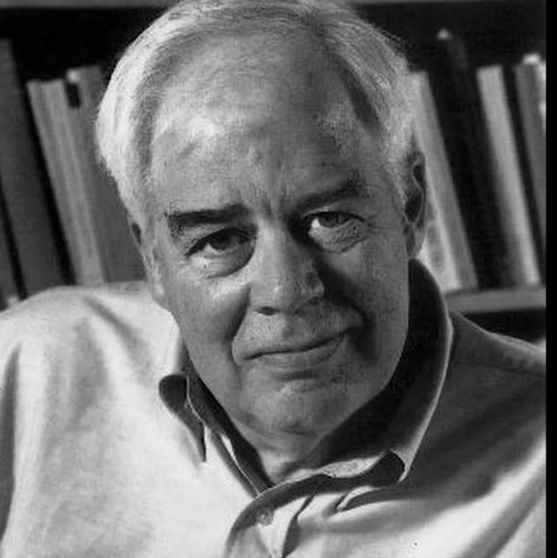
理查德·罗蒂
EDITED TRANSCRIPT · 依据现场录音编译整理,可划线生成便签
编者按:本文是美国哲学家理查德·罗蒂(Richard Rorty,1931–2007)1994年的一场公开演讲,题为《认真对待时间》。罗蒂是新实用主义的代表人物,曾任教于普林斯顿、弗吉尼亚和斯坦福大学,代表作有《哲学与自然之镜》。在这场演讲中,他以黑格尔、达尔文与杜威为线索,重新描述哲学家在现代社会中的角色,并对当代哲学的三种倾向提出批评。本文依据现场录音编译整理。

哲学从逃离时间到认真对待时间

哲学家只是在放弃了认识永恒的希望之后,才开始专注于未来的图景。哲学起初是一种逃离的努力:逃进一个什么都不会改变的世界。最早的哲学家认为,过去的流变与未来的流变之间,差别小到可以忽略。只有当他们开始认真对待时间,他们对此世未来的希望,才逐渐取代了他们对另一个世界的求知欲。

汉斯·布鲁门贝格(Hans Blumenberg)曾提出,欧洲哲学家在中世纪末期开始对永恒失去兴趣,而十六世纪,也就是布鲁诺和培根的世纪,正是哲学家开始尝试认真对待时间的时期。布鲁门贝格大概是对的,不过这种对永恒的冷淡,要到十九世纪才完全自觉。正是在这个世纪,西方哲学在黑格尔的旗帜下,不仅对柏拉图式逃离时间的努力,而且对康德式为时间性现象寻找非历史的可能性条件的方案,都提出了详尽而明确的怀疑。也正是在这个世纪,多亏了达尔文,人类得以把自己看成与自然界其余部分连续的存在,看成彻头彻尾时间性的、偶然的存在,而且并不因此有什么损失。

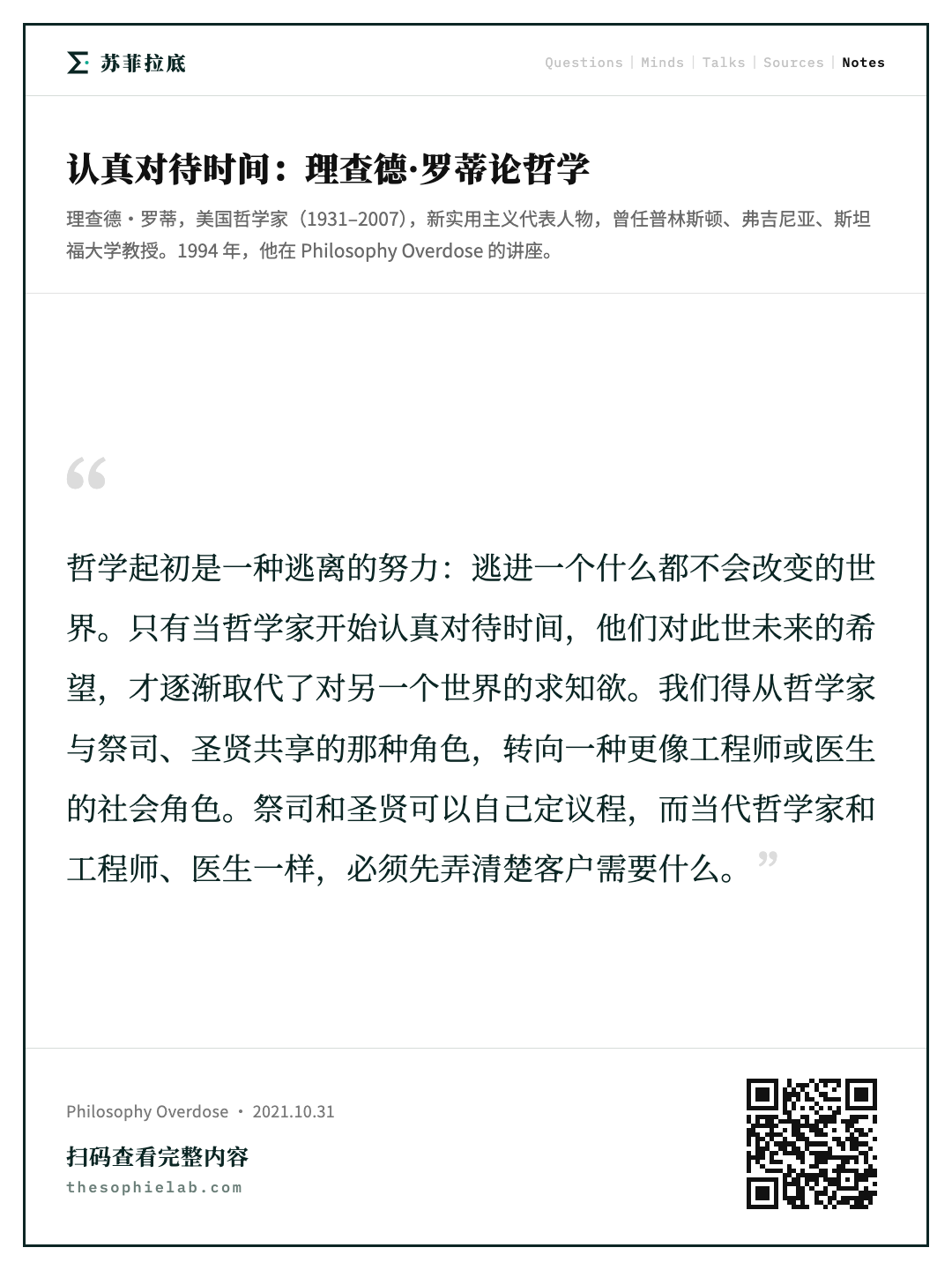
黑格尔与达尔文的合力,把哲学从「我们是什么」这个问题,推向了「我们可以尝试成为什么」这个问题。这一转变改变了哲学家的自我形象。柏拉图,乃至康德,都希望站在一个外部立场上审视自己所处的社会与文化,那是一个必然而不变的真理的立场。后来的哲学家则逐渐放弃了这种希望。只要我们认真对待时间,我们哲学家就得放弃沉思优先于行动的成见。我们得同意马克思的说法:我们的工作是帮助让未来不同于过去,而不是去认识未来必然与过去共有什么。我们得从哲学家与祭司、圣贤共享的那种角色,转向一种更像工程师或医生的社会角色。祭司和圣贤可以自己定议程,而当代哲学家和工程师、医生一样,必须先弄清楚客户需要什么。

从祭司圣贤到工程师医生

柏拉图发明哲学,恰恰是为了逃离一时的需要,超越政治。因此,认真对待时间,认真对待黑格尔和达尔文,常常被说成是放弃哲学,或者终结哲学。但放弃柏拉图和康德,并不等于放弃哲学。因为对于柏拉图和康德在做什么,我们能给出比他们自己更好的描述。我们可以说,他们是在回应一种需要:社会与文化的变迁让一种人类自我形象过时了,需要一种新的、更能适应变迁结果的自我形象来取代它。我们还可以补一句:只要社会与文化的变迁不停止,哲学就不可能终结。因为这些变迁会逐渐让我们对自身及处境的大尺度描述过时,从而催生对新语言的需要,好用它来构造新的描述。

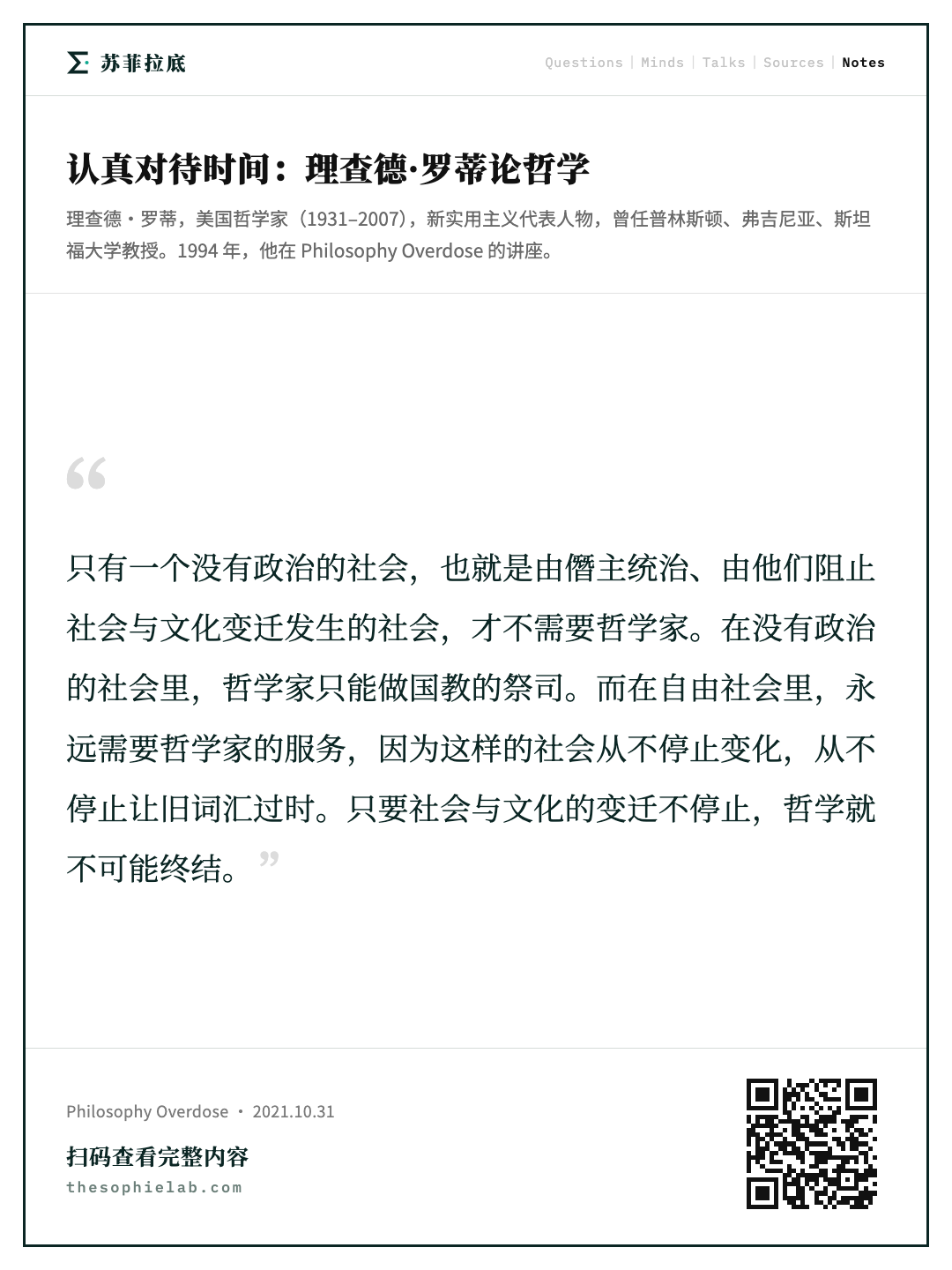
只有一个没有政治的社会,也就是由僭主统治、由他们阻止社会与文化变迁发生的社会,才不需要哲学家。在没有政治的社会里,哲学家只能做国教的祭司。而在自由社会里,永远需要哲学家的服务,因为这样的社会从不停止变化,从不停止让旧词汇过时。

杜威:哲学是新旧信念的中介

约翰·杜威(John Dewey)和马克思一样,对黑格尔和达尔文同等敬重。他提出,在抛弃柏拉图与康德共有的那种自我形象,即认识无条件的、非历史的必然性的认知者形象的过程中,我们应当转而把哲学看成源于他所说的「继承下来的制度与格格不入的当代倾向之间的冲突」。杜威说,某些东西一旦被表述成形而上学的区分,就显得矫饰而空洞;可一旦与社会信念和理想的斗争联系起来,就变得意义重大。

杜威认真看待黑格尔那句名言:哲学只是在一种生活形式衰老之后,才在灰色上涂抹灰色。在杜威看来,这意味着哲学永远寄生于文化与社会其他领域的发展,永远是对这些发展的回应。杜威把黑格尔对历史性的强调,理解为这样一个主张:哲学家不该试图充当社会与文化的先锋,而应甘心在过去与未来之间做中介。哲学家的工作是把旧信念和新信念编织在一起,让它们彼此配合而不是互相干扰。和工程师、医生一样,哲学家的用处在于解决特定情境中出现的特定问题,也就是过去的语言与未来的需要发生冲突的那些情境。

三个冲突:新科学、达尔文、大众民主

让我举三个这类冲突的例子。

第一个例子,是需要把披着基督教神学语言外衣的道德直觉,与十七世纪出现的新科学世界图景调和起来。在那个世纪及其后的一个世纪,欧洲哲学家试图找到一种办法,把道德直觉看成某种不同于神明命令的东西。这位神明超越时间,却又具有人的形象,而这样一位神明的存在,很难与伽利略和牛顿提供的机械化世界图景相容。从这个角度看,莱布尼茨、康德和黑格尔的体系,都是关于如何调和基督教伦理与哥白尼、伽利略科学的种种建议:如何让这两样好东西互不干扰。

第二个例子,是达尔文的提议:把人看成更复杂的动物,而不是多了一种叫做「理智」或「理性灵魂」的额外成分的动物。这个提议不仅动摇了逃离时间的希望,也动摇了「认识实在」与「适应实在」之间的区分。达尔文让哲学家意识到,他们必须重新描述人类活动,而这种描述不得要求生物演化中出现任何突然的断裂。这意味着要以一种模糊自然与精神之分的方式,重新描述生物演化与文化演化的关系。而自然与精神的区分,是西方从柏拉图到黑格尔的所有人(除了霍布斯、休谟这类偶尔出现的怪人)都视为理所当然的。

达尔文关于人类起源的解释给哲学家带来了新的要求,而这些要求,又与第三个哲学之外的新事物所带来的要求交织在一起,这就是大众民主的兴起。和前两个不同,这第三个新事物来自政治经验,而不是科学上的巧思。大众民主,也就是把「凡受政治决定影响的人都应有权影响这些决定」这一提议在实践中成功实现,危及了柏拉图式的区分:一边是智者对真理的理性追求,一边是众人所特有的激情的流变。再加上达尔文对人与动物之分的模糊化,大众民主的实践便让一整串进一步的区分变得可疑:认知与非认知,理性与激情,逻辑与修辞,真理与效用,哲学与诡辩。大众民主的成功交给哲学家的任务之一,就是用「自由共识与强制共识」这一政治差异,而不是用「无条件者与有条件者」这一形而上学区分,来重新表述这些区分。

杜威与罗素:手段之争而非目的之争

杜威、柏格森和怀特海的体系,都是在尝试与达尔文达成和解:保留旧二元论中有用的部分,同时用彻底时间化的语言重新表述它们。罗素和胡塞尔的做法,则是在先天的(a priori)哲学问题与后天的(a posteriori)经验问题之间划一条线,把文化切分开来,这是另一种尝试。罗素和胡塞尔想通过这种切分,让民主文化对先验哲学来说变得安全,从而让达尔文与康德无关。

这样看来,杜威与罗素之间,或者柏格森与胡塞尔之间的对比,不是两种准确再现我们非历史的本性与处境的努力之间的对比,而是两种在历史时代之间做中介、调和新旧真理的努力之间的对比。杜威和罗素同样忠于牛顿力学、达尔文生物学和大众民主。再者,两人都不认为哲学能为这三样东西中的任何一样提供基础。两人都认为,问题在于如何改变熟悉的说话方式,好不再预设一种与这三种文化发展相冲突的形而上学或形而上学心理学。他们的分歧在手段而不在目的:为了保留柏拉图和康德工作中有用的成分,抛弃已经过时的部分,究竟需要多彻底地改变柏拉图和康德对自己的描述。

去专业化与反基础主义的陷阱

不过,如果我们采纳杜威关于哲学家任务的图景,我们就得同时放弃马克思主义关于科学与意识形态的区分,以及罗素和胡塞尔所使用的先天与后天的区分。更一般地说,我们得放弃一切让哲学保持自主的努力,放弃哲学家开始认真对待时间之前人们所设想的那种自主性。杜威可以(罗素则不能)接受洛克的提议:哲学家的角色是打下手的小工,清除过去的垃圾,为未来的建构腾出地方。但我想杜威也会承认,哲学家偶尔可以把这种清洁工的角色与先知的角色结合起来。培根和笛卡尔身上都有这种结合:两人都试图清除亚里士多德式的垃圾,为乌托邦未来的图景腾出空间。同样,杜威让哲学摆脱康德的努力,哈贝马斯让哲学从他所谓「意识哲学」中解脱的努力,德里达把哲学从他所谓「在场形而上学」中解放出来的努力,都与对一个完全民主的社会的预言交织在一起,而这种解脱将加速那个社会的到来。

不再操心哲学的自主性,意味着(除了别的以外)不再想在哲学问题与政治、宗教、审美或经济问题之间划出清晰漂亮的界线。除非我们哲学家能接受某种程度的去专业化,除非我们对「什么时候在做哲学、什么时候不在做」这个问题养成某种漫不经心的态度,否则哲学既无法扮演杜威赋予它的那个谦逊而有益的角色,也无法成功地认真对待时间。我们得停止自我戏剧化,不仅要停止黑格尔和马克思那种宏大的自我戏剧化,连罗素和胡塞尔那种不那么壮观的自我戏剧化也得停止。如果我们不再把自己的职业习惯等同于理性思考或清晰思考,我们就更容易承认杜威的论点:我们这门学科和工程学、医学一样,没有能力自己定议程。承认这一点,会帮助我们摆脱这样一种想法:科学或政治的发展需要哲学基础;对文化新事物的合法性,必须悬置判断,直到我们哲学家宣布它们是真正合乎理性的。

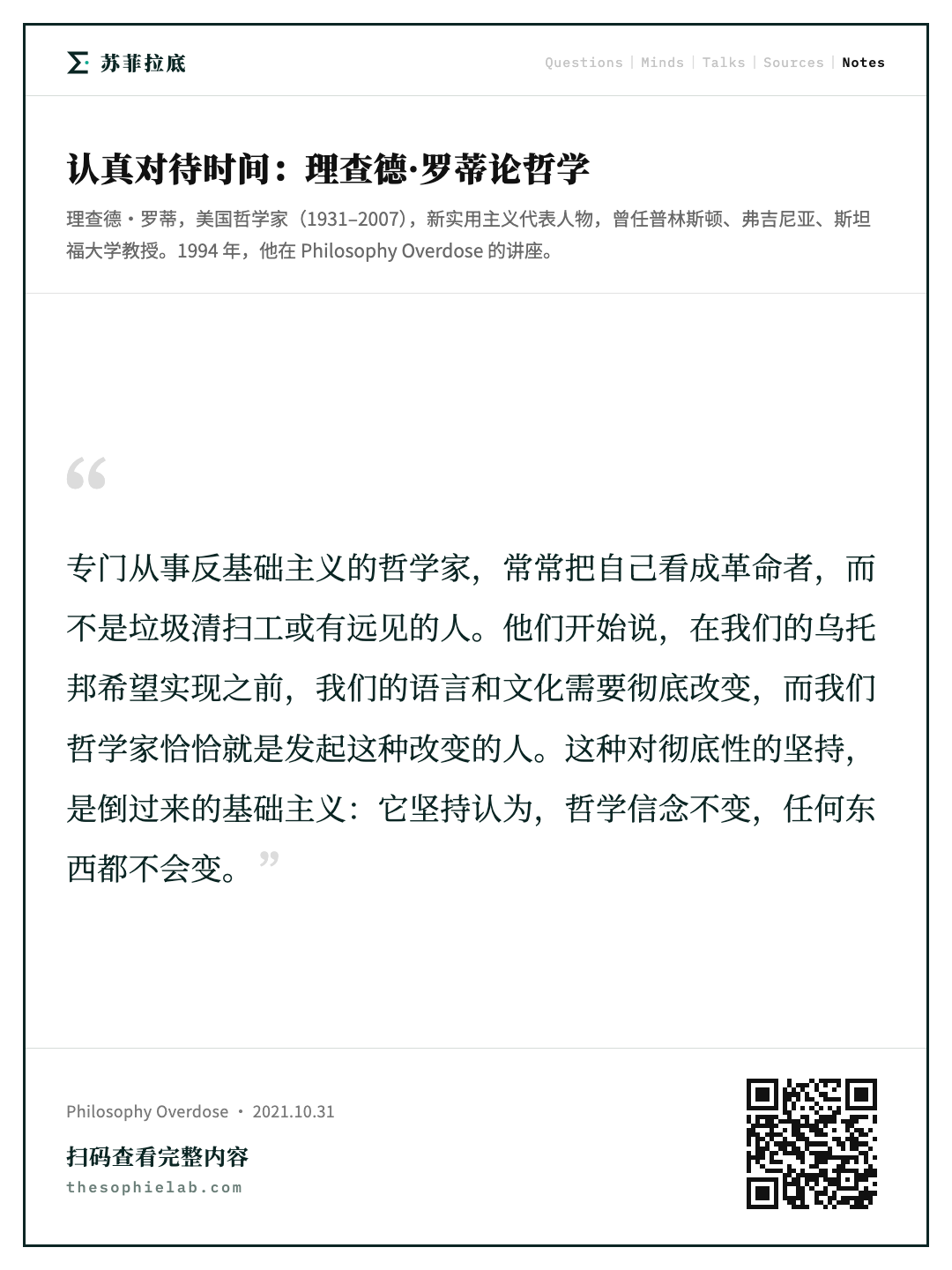
然而,专门从事反基础主义的哲学家,常常把自己看成革命者,而不是垃圾清扫工或有远见的人。于是,不幸的是,他们变成了先锋主义者。他们开始说,在我们的乌托邦希望实现之前,我们的语言和文化需要彻底改变,而我们哲学家恰恰就是发起这种改变的人。这种对彻底性的坚持,是倒过来的基础主义:它坚持认为,哲学信念不变,任何东西都不会变。

三种危险:先锋、经院、沙文

马克思和海德格尔共有的这种哲学先锋主义,这种要让万物更新的冲动,这种坚持除非一切都变否则什么都不能变的态度,在我看来是当代哲学内部应当加以遏制的倾向之一。

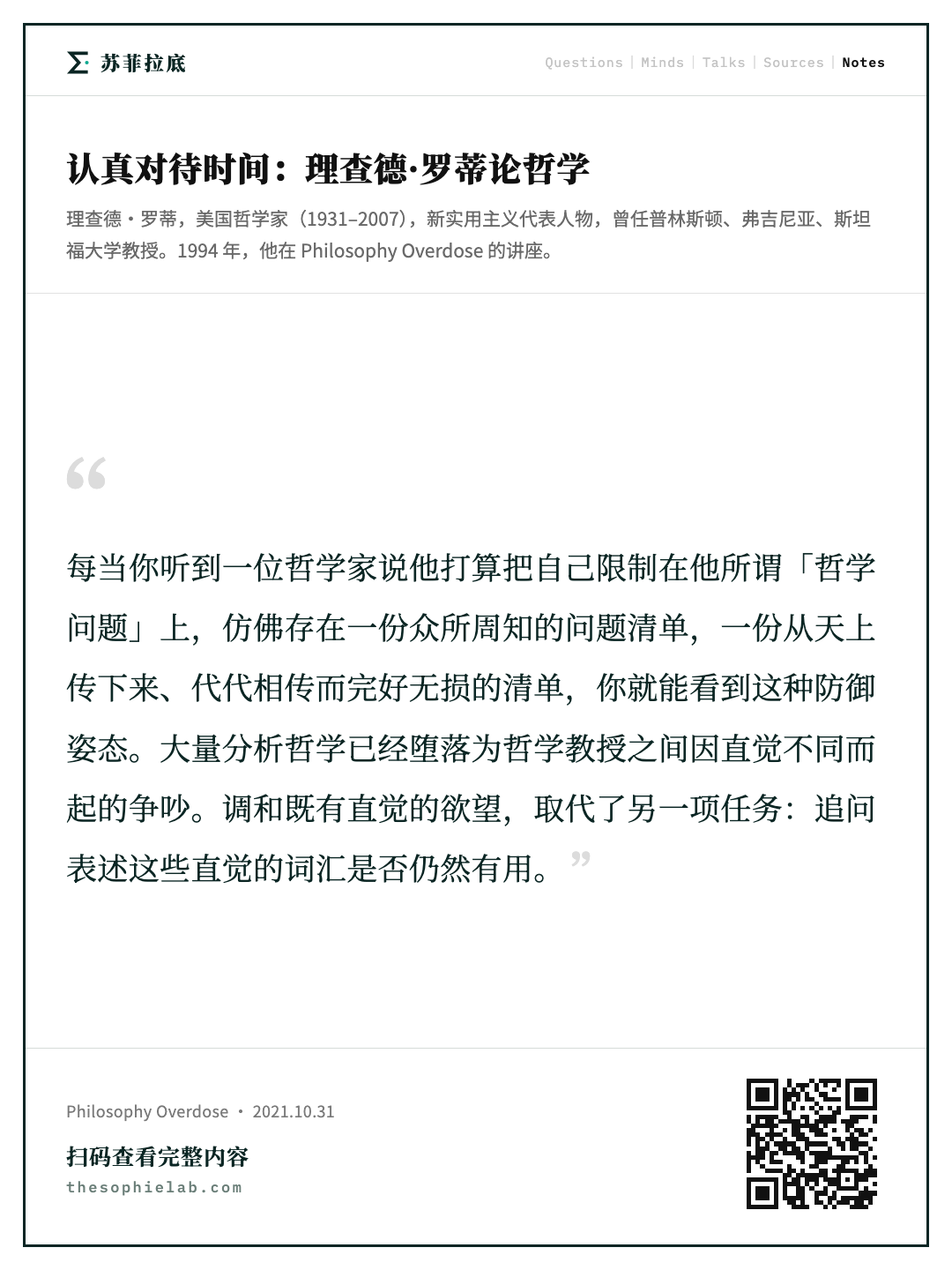
另一种倾向,正如我已经暗示的,是走向专业化的冲动:通过收窄学科范围来保持它的完整与自主。每当你听到一位哲学家说他打算把自己限制在他所谓「哲学问题」上,仿佛存在一份众所周知的问题清单,一份从天上传下来、代代相传而完好无损的清单,你就能看到这种防御姿态。这种逃离时间与变化、忘掉黑格尔、重新归附柏拉图和康德的努力,目前在英语世界的哲学共同体中,也就是自称从事「分析哲学」的那个共同体中,相当普遍。希拉里·普特南(Hilary Putnam)说得对,我认为,大量分析哲学已经堕落为哲学教授之间因直觉不同而起的争吵。普特南说,这些直觉所涉及的问题,既无实践意义,也无精神意义。我认为他说得对。在这个领域里,调和既有直觉的欲望,取代了另一项任务:追问表述这些直觉的词汇是否仍然有用。这种拒绝追问,反过来又强化了一种信念:哲学问题是永恒的,因此适合由一门独立于社会与文化变迁而运作的专业化学科来研究。这样的拒绝和这样的信念,正是哲学史上那个我们如今称为「衰颓的经院哲学」的时期的特征。每当哲学家开始以本学科的自主性自豪,这种经院主义的危险就会重现。

正如英语世界的哲学变得过度专业化,非英语世界的哲学则常常变得野心过大、流于先锋主义。在海德格尔和福柯这样的作者那里,这种哲学提供的是彻底批判,就像马克思对所谓十九世纪资产阶级文化所提供的那种批判。这类批判往往以马克思主义者早已让我们熟悉的那种轻蔑与不屑的口吻发出。

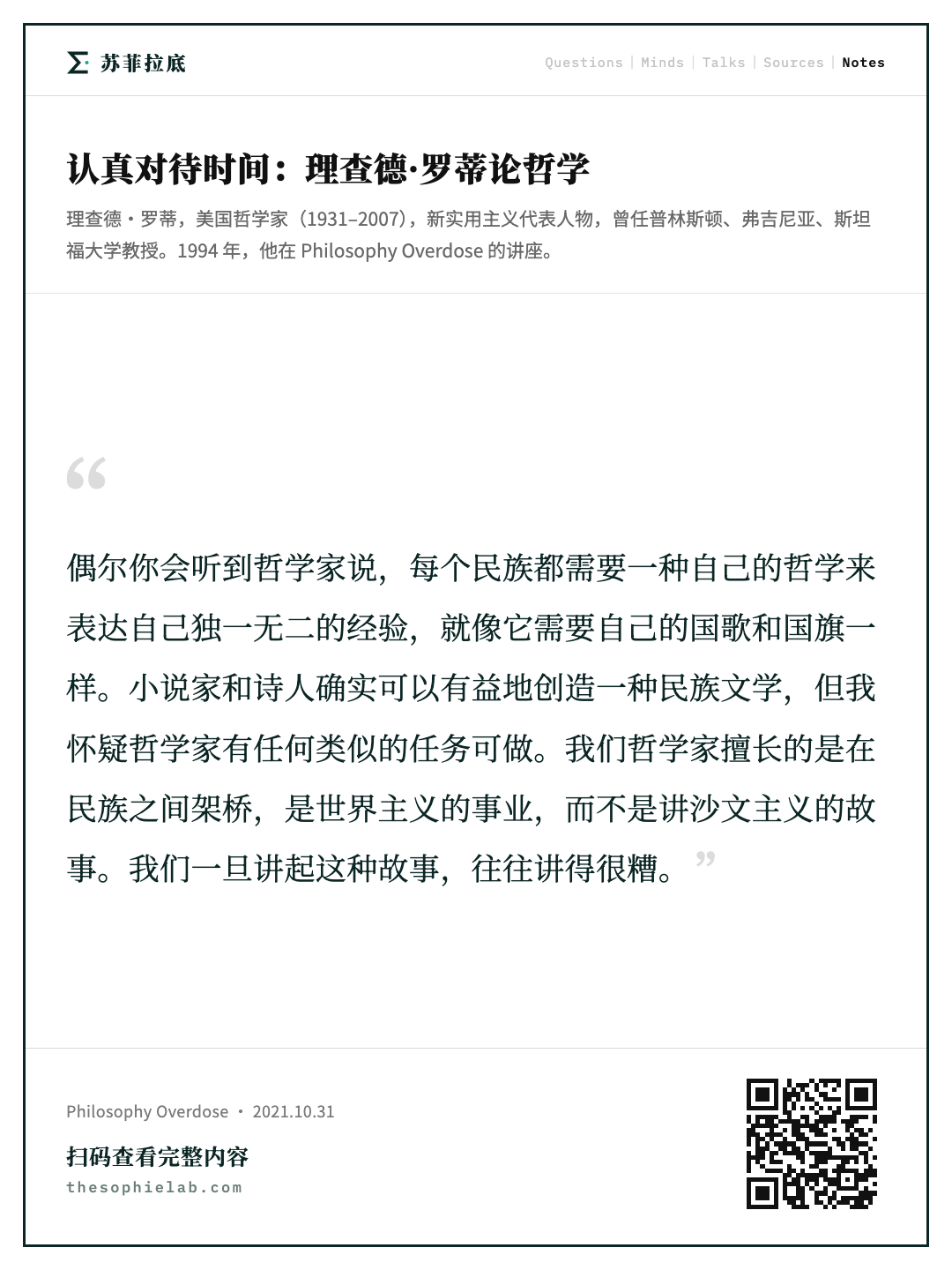
不过,对分析哲学的经院气息和先锋派非分析哲学的不切实际的高调,两者都不信任,却导致了第三种危险,即沙文主义。偶尔你会听到哲学家说,自己的国家需要一种独特的哲学,每个民族都需要一种自己的哲学来表达自己独一无二的经验,就像它需要自己的国歌和国旗一样。小说家和诗人确实可以有益地创造一种民族文学,让一个国家的青年能在其中找到关于自己国家如何诞生、如何发展的叙事。但我怀疑哲学家有任何类似的任务可做。我们哲学家擅长的是在民族之间架桥,是世界主义的事业,而不是讲沙文主义的故事。我们一旦讲起这种故事,往往讲得很糟,就像黑格尔和海德格尔讲给德国人听的那些故事:关于德国与某种超自然力量之间的优越关系的故事。

诚实中间人与非自满的世界主义

我希望我们这些哲学教授能找到办法,避开全部三种诱惑:把哲学看成变革的推动者而不是调解者的革命冲动,退缩到学科边界之内的经院冲动,以及沙文主义的冲动。在我看来,如果我们采纳杜威对我们工作的理解,把它看成调和旧与新,把我们的职业功能看成在代际之间、在文化活动的各个领域之间、在各种传统之间做一个诚实的中间人,我们也许就能做到。

然而,这种调解活动不能以那种自满的世界主义的方式来进行。那种世界主义安于现状,并以文化多样性或多元文化主义的名义为现状辩护。这种自满的世界主义,当年对斯大林主义审慎而恭敬地保持沉默,如今对宗教原教旨主义,对仍然统治着世界大部分地区的双手沾血的独裁者,依然审慎而恭敬地保持沉默。这种世界主义最可鄙的形式是这样解释的:人权对欧洲中心的文化来说固然很好,但对其他文化的需要而言,一支高效的秘密警察,加上唯命是从的法官、教授和记者,再加上高效的刑讯者,才是更合适的安排。

与这种虚伪而自欺的世界主义相对的,是另一种世界主义:它对一种具体的世界主义的人类未来有清晰的图景,那就是一个遍及全球的民主政体,一个全球社会,在其中,世界另一端发生的酷刑,或者一所大学、一家报纸被关闭,和发生在本国一样令人愤慨。这个未来的世界城邦,在非政治事务上可以一如既往地多元、异质。但在这个乌托邦的未来里,文化传统将不再影响政治决定。在政治上只会有一种传统:对富人和强者利用穷人和弱者的可预见的企图保持持续的警惕。文化传统永远不得凌驾于约翰·罗尔斯(John Rawls)的差别原则之上,永远不得用来为机会不平等开脱。

全球民主乌托邦与温和说服

如果这样一个乌托邦真的到来,我们哲学家在创造它的过程中大概会扮演一个边缘的、次要的角色。正如圣托马斯·阿奎那必须在《旧约》与亚里士多德之间做中介,康德必须在《新约》与牛顿之间做中介,柏格森和杜威必须在柏拉图与达尔文之间做中介,甘地和尼赫鲁必须在洛克、密尔的语言与《薄伽梵歌》的语言之间做中介,将来也得有人在这种乌托邦政治的平等主义语言与许多不同文化传统的公然不平等的语言之间做中介。得有人温和而耐心地把平等主义政治编织进那些传统的语言里,而这些传统坚持区分理性的或受神启的智者与混乱迷茫的众人。得有人说服我们放弃一种习惯:把政治决定建立在「像我们这样的人」(典范意义上的人)与「可疑的人类个案」的差别之上,后者比如外国人、异教徒、贱民、女人、同性恋者、混血儿和残疾人。这些区分内嵌于我们的文化传统之中,因而也内嵌于我们的道德审议词汇之中。而乌托邦不会到来,除非世界各民族被说服,相信这些区分无关紧要。

这种说服将是渐进的、温和的、零敲碎打的,而不是革命的、一揽子的。但这种温和而渐进的说服是可能的。因为即使大众民主是一项特属于欧洲的发明,民主的世界城邦这一理念却能在世界各地引起共鸣。在每一种文化传统内部,都有这样的故事:众人比智者看得更远,传统所认可的残酷让位于低微者感受到的不义,高高在上者向底层的正义感屈服。在每一种这样的传统内部,都有与受鄙视群体通婚而美满的故事,都有古老仇恨被耐心与礼让化解的故事。每一种文化,无论多么狭隘,都包含可以被编织进遍及全球的民主政治共同体的乌托邦图景的材料。设想用强力而非说服来推行民主,设想强迫男男女女去自由,是自相矛盾的;但设想说服他们去自由,并不自相矛盾。如果我们哲学家还有什么功能的话,那就是这种说服。

从真理的仆人到民主的仆人

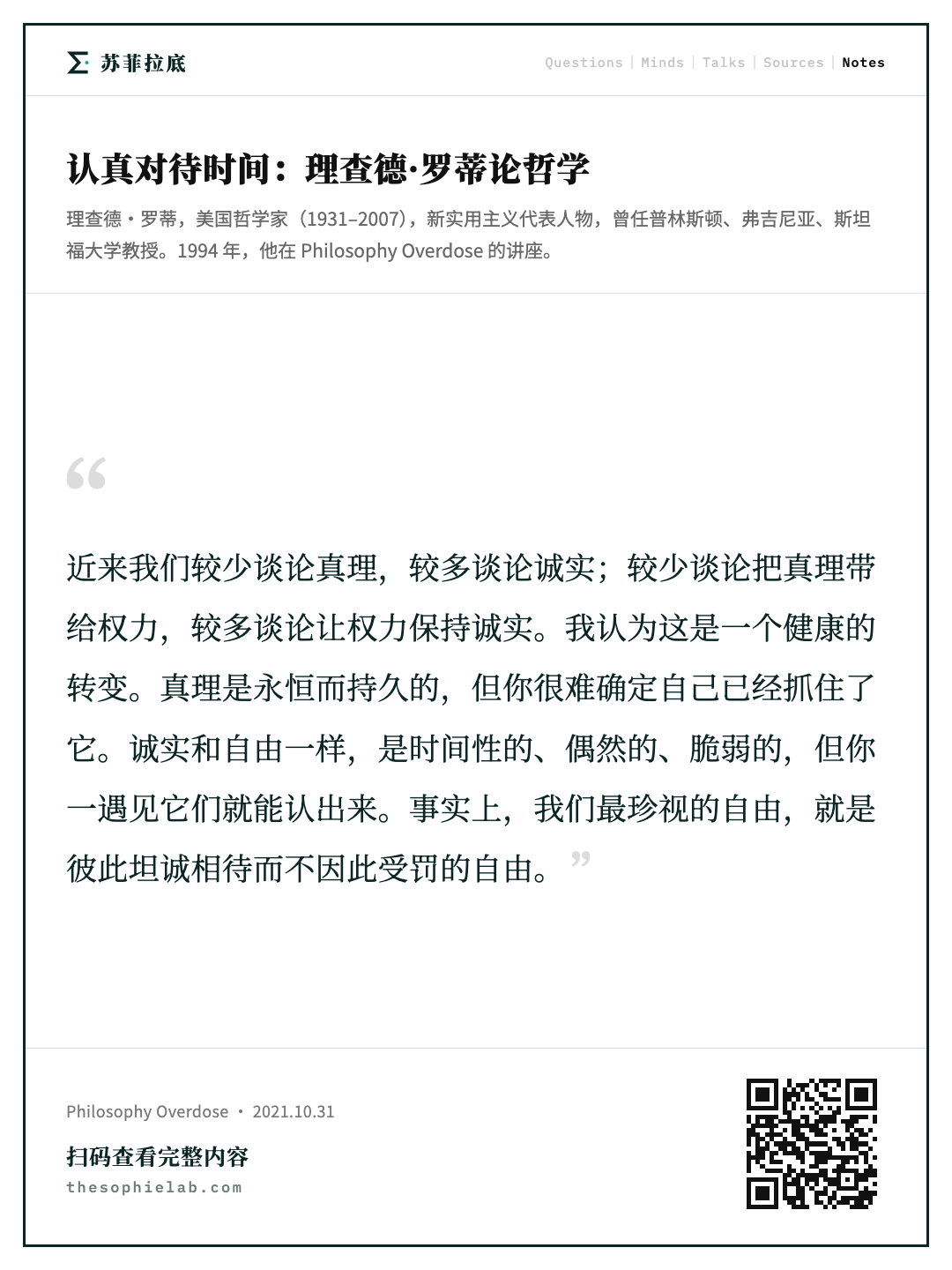
从前,我们比现在更多地思考永恒,更少地思考未来。那时我们把自己定义为真理的仆人。但近来我们较少谈论真理(truth),较多谈论诚实(truthfulness);较少谈论把真理带给权力,较多谈论让权力保持诚实。我认为这是一个健康的转变。真理是永恒而持久的,但你很难确定自己已经抓住了它。诚实和自由一样,是时间性的、偶然的、脆弱的,但你一遇见它们就能认出来。事实上,我们最珍视的自由,就是彼此坦诚相待而不因此受罚的自由。

在一个彻底时间化的思想世界里,一个对确定性和不变性的希望已经完全消失的世界里,我们哲学家会把自己定义为这种自由的仆人,民主的仆人。这样看待自己,有助于我们避开先锋主义、沙文主义和经院主义的危险。这也就是同意杜威的说法:哲学只能提供假说,而这些假说的价值,仅在于它们能让人的心灵对周遭的生活更加敏感。在一个完全时间化的思想世界里,对这种敏感有所贡献,对一门学术学科来说,将是和对知识有所贡献同样体面的目标。
本期讲者
理查德·罗蒂美国哲学家(1931–2007),新实用主义代表人物,曾任普林斯顿、弗吉尼亚、斯坦福大学教授。代表作《哲学与自然之镜》(1979)、《偶然、反讽与团结》(1989),主张放弃「作为自然之镜」的知识论,把哲学理解为文化对话与社会希望的工具。
章节 · 点击跳转视频
0:01 哲学从逃离时间到认真对待时间 ▶ 正在看
3:02 从祭司圣贤到工程师医生 ▶ 正在看
6:07 杜威:哲学是新旧信念的中介 ▶ 正在看
7:35 三个冲突:新科学、达尔文、大众民主 ▶ 正在看
11:59 杜威与罗素:手段之争而非目的之争 ▶ 正在看
14:58 去专业化与反基础主义的陷阱 ▶ 正在看
17:56 三种危险:先锋、经院、沙文 ▶ 正在看
22:15 诚实中间人与非自满的世界主义 ▶ 正在看
25:08 全球民主乌托邦与温和说服 ▶ 正在看
29:33 从真理的仆人到民主的仆人 ▶ 正在看
本期论点
本期回应
2:44
认真对待时间,就必须放弃沉思高于行动的优先地位,转而帮助未来不同于过去 只做澄清哲学应该产出什么?
3:10
哲学家应放弃祭司圣贤式的自定议程,像工程师和医生那样弄清服务对象需要什么 只做澄清哲学应该产出什么?
6:45
哲学永远是寄生性的,只是对文化与社会中别处已发生的变化的反应 只做澄清哲学应该产出什么?
17:39
坚持文化必须先经历激进变革,其实是把基础主义倒过来讲一遍 只做澄清哲学应该产出什么?
19:19
许多分析哲学已退化为教授之间关于各自直觉的争吵,既无实践意义也无精神意义 只做澄清哲学应该产出什么?
26:41
哲学家的职能是把平等主义政治温和耐心地织进区分智者与愚众的传统语言 该给出理论哲学应该产出什么?
30:06
哲学家应把自己定义为自由与民主的仆人,而不是真理的仆人 只做澄清哲学应该产出什么?
30:35
哲学只能提出假设,其价值仅在于让人的心灵对周遭生活更敏感 只做澄清哲学应该产出什么?
1:42
达尔文之后,人可以把自己看作与自然连续一体、彻底时间性而偶然的存在,并不因此更糟 应当归摄人的行为能不能用科学的语言讲?
8:47
人应被看作更复杂的动物,而不是多出了理智或理性灵魂这一成分的动物 应当归摄人的行为能不能用科学的语言讲?
12:50
哲学无法为牛顿力学、达尔文生物学和大众民主中的任何一项提供基础 没有界线哲学和科学之间有没有界线?
25:12
理想的政治秩序中文化传统不应影响政治决定,唯一该留的传统是警惕强者占弱者便宜 人人适用道德规则该对所有人都一样吗?
其他论点
0:10
哲学起初是一种逃避:逃进一个一切永不改变的世界
11:09
认知与非认知、理性与激情的区分,应改用自由共识与强制共识的政治差别来重述
24:28
正当的世界主义要有全球民主的清晰构想:地球另一端的酷刑与封禁应激起同样的义愤
01哲学从逃离时间到认真对待时间
0:01
philosophers became preoccupied with images of the future only after they gave up hope of attaining knowledge of the Eternal philosophy began as an attempt to escape into a world in which nothing would ever change the first philosophers assumed that the difference between the flux of the past and the Flux Of The Future would be negligible only as they began to take time seriously did their hopes for the future of this world gradually replace their desire for knowledge of another world Hans blumenberg has suggested that European philosophers began to lose interest in the Eternal toward the end of the Middle Ages and that the 16th century the century of Bruno and bacon was the period in which philosophers began trying to take time seriously blumenberg is probably right but this loss of SE this loss of interest in the Eternal only became fully self-conscious in the 19th century this was the period in which Western philosophy under the agis of Hegel developed detailed and explicit doubts not only about platonic attempts
哲学家们是在放弃了获得永恒之知识的希望之后,才开始沉迷于关于未来的种种图景哲学最初是一种试图逃入某个一切都永不改变的世界的尝试。最早的哲学家们假定过去之流变与未来之流变的差别是微不足道的。只有当他们开始认真对待时间,他们对这个世界之未来的希望才逐渐取代了他们对另一个世界之知识的渴求汉斯·布鲁门伯格曾提出,欧洲哲学家大约在中世纪末期开始对永恒失去兴趣而16世纪,也就是布鲁诺和培根的那个世纪,正是哲学家们开始试图认真对待时间的时期。布鲁门伯格大概是对的,但这种对永恒的兴趣的丧失,直到19世纪才变得完全自觉。正是在这一时期,西方哲学在黑格尔的旗帜下,发展出了细致而明确的怀疑——不仅怀疑柏拉图式的逃离时间的企图,也怀疑康德式的那种为时间性现象寻找非历史性
便签引用
1:28
to escape from Tom time but about Conan projects of discovering ahistorical conditions for the possibility of temporal phenomena it was also the period in which it became possible thanks to Darwin for human beings to see themselves as continuous with the rest of nature as temporal and contingent through and through but none the worse for that the combined influence of Hegel and Darwin moved philosophy away from the question what are we to the question might what might we try to become this shift has had consequences for the philosophers image of themselves whereas Plato and even Kant hoped to survey the society and the culture within which they lived from an outside standpoint the standpoint of ineluctable and changeless Truth later philosophers have gradually abandoned such hopes just in so far as we take time seriously we philosophers have to give up the priority of contemplation to action we have to agree with Marx that our job is to help make the future different from the p past rather than
可能性条件的方案。也正是在这一时期,多亏了达尔文,人类才有可能把自己看作与自然界的其余部分连续一体的存在,彻头彻尾是时间性的、偶然的,但也并不因此就更糟黑格尔与达尔文的合力,把哲学从“我们是什么”这个问题,推向了“我们可以尝试成为什么”这个问题。这一转变对哲学家的自我形象产生了后果:柏拉图,甚至康德,都曾希望从一个外部的立场——一个不可回避且永不改变的真理的立场——来俯察他们身处其中的社会与文化而后来的哲学家们逐渐放弃了这样的希望。只要我们认真对待时间,我们这些哲学家就不得不放弃把沉思提升到行动的优先地位,我们就必须同意马克思的看法:我们的任务是帮助未来变得不同于过去,而不是
便签引用
02从祭司圣贤到工程师医生
3:02
attempting to know what the future must necessarily have in common with the past we have to shift from the kind of role which philosophers have shared with priests and sages to a social role more like that of the engineer or the doctor whereas priests and sages can set their own agendas contemporary philosophers like engineers and doctors must find out what their clients need since Plato invented philosophy precisely in order to escape from transitory needs and to rise above politics taking time Hegel and Darwin seriously has often been described as giving up on philosophy or ending philosophy but giving up on Plato and Kant is not the same as giving up on Philosophy for we can give better descriptions of what Plato and Kant were doing than they were able to give themselves we can describe them as responding to the need to replace a human self-image which had been made obsolete by social and cultural change with a new self-image a self a self-image better adapted to the results of those
试图去认识未来必然与过去共有哪些东西。我们必须转变——从哲学家一直以来与祭司和圣贤共享的那种角色,转向一种更接近工程师或医生的社会角色。祭司和圣贤可以自己设定议程,而当代哲学家就像工程师和医生一样,必须去弄清楚他们的服务对象需要什么。既然柏拉图发明哲学,恰恰是为了逃离一时的需求、超越政治,那么认真对待黑格尔和达尔文,就常常被描述为放弃哲学或终结哲学。但放弃柏拉图和康德,并不等于放弃哲学,因为对于柏拉图和康德所做的事情,我们能给出比他们自己所能给出的更好的描述。我们可以把他们描述为在回应一种需求:去替换一种人类的自我形象,这种自我形象曾经是因社会和文化变迁而过时,代之以一种新的自我形象——一种更能适应那些变化所带来的结果的自我形象
便签引用
4:37
changes we can add that philosophy cannot possibly end until social and cultural change ends for such changes gradually render large scale descriptions of ourselves and our situation Obsolete and create the need for new language in which to formulate new descriptions only a society without politics that is to say a society run by tyrants who prevent social and cultural change from occurring would not require philosophers in societies where there is no politics philosophers can only be priests in the service of a state religion in free societies there will always be a need for their services for such societ is never stopped changing and hence never stop making old vocabularies obsolete John Dewey a philosopher who like Marx admired Hegel and Darwin equally suggested that in the course of dropping the self-image common to Plato and Kant the image of the knower of unconditional ahistorical Necessities we should shall come to see philosophy as springing from what Dewey called a conflict of inherited
我们可以补充说,只要社会和文化的变迁不停止,哲学就不可能终结,因为这类变迁会逐渐使那些大规模的关于我们自身及我们处境的描述变得过时,并催生出对新语言的需求,以便用它来表述新的描述。只有一个没有政治的社会——也就是由暴君统治、阻止社会和文化变迁发生的社会——才不需要哲学家。在没有政治的社会里,哲学家只能是为国家宗教服务的祭司。而在自由社会中,人们永远都需要哲学家的服务,因为这样的社会从不停止变化,因而也从不停止让旧的语汇变得过时。约翰·杜威,一位这样的哲学家……就像马克思推崇黑格尔一样,达尔文同样暗示:在我们抛弃柏拉图和康德所共有的那种自我形象——即认识无条件的、非历史的必然性者的形象——的过程中,我们将会把哲学看作源自杜威所说的那种冲突:继承下来的制度与互不相容的当代趋势之间的冲突。杜威说,那些
便签引用
03杜威:哲学是新旧信念的中介
6:07
institutions with incompatible contemporary Tendencies dwey said that which may be pretentiously unreal when formulated in metaphysical distinctions becomes intensely significant when connected with the struggle of social beliefs and ideals dwey took serously hegel's famous remark that philosophy paints its gray on Gray only when a form of life has grown old for Dewey that meant that philosophy is always parasitic on is always a reaction to developments elsewhere in culture and Society dwey construed hegel's insistence on historicity as the claim that philosophers should not try to be the onard of society and culture but should be content to mediate between the past and the future their job is to weave together old beliefs and new beliefs so that these beliefs can cooperate rather than interfere with one another like the engineer and the doctor the philosopher is useful in solving particular problems that arise in particulars situations situations in which the language of the past is in conflict with
用形而上学区分表述出来时显得故作高深、不切实际的东西,一旦与社会信念和理想的斗争联系起来,就变得极为重要。杜威认真对待了黑格尔那句名言:哲学只有在一种生活形式已经衰老之后,才把它的灰色画在灰色之上。对杜威来说,这意味着哲学永远是寄生性的,永远是对文化与社会中别处发生的变化的一种反应。杜威把黑格尔对历史性的强调理解为这样一个主张:哲学家不应试图充当社会与文化的先锋队,而应满足于在过去与未来之间做中介。他们的工作是把旧信念与新信念编织在一起,使这些信念能够彼此配合而不是相互干扰。就像工程师和医生一样,哲学家的用处在于解决在特定情境中出现的特定问题——在那些情境里,过去的语言与未来的需要发生了冲突。让我举三个这类冲突的例子。第一个是需要
便签引用
04三个冲突:新科学、达尔文、大众民主
7:35
the needs of the future let me offer three examples of such conflict the first is the need to reconcile the moral intuitions clothed in the language of Christian theology with the new scientific world picture which emerged in the 17th century in that century and and the next European philosophers tried to find a way of seeing moral intuitions as something other than the commands of an atemporal yet anthrop anthropomorphic deity a Divinity whose existence was hard to reconcile with the mechanized world picture offered by Galileo and Newton seen from this angle liet's K and Hegel systems are so many suggestions about how to reconcile Christian ethics and cernic and Galilean science how to keep these two good things from interfering with one another my second example is the darwinian suggestion that we think of human beings as more complex animals rather than as animals with an extra added ingredient called intellect or the rational soul this suggestion cast doubt not only on the hope to escape from time but on the
把披着基督教神学语言外衣的道德直觉,同十七世纪出现的新的科学世界图景调和起来。在那个世纪以及随后的世纪里,欧洲哲学家试图找到一种方式,把道德直觉看作某种不同于一位超时间却又拟人化的神祇之诫命的东西——这样一位神的存在很难与伽利略和牛顿提供的机械化世界图景相调和。从这个角度看,莱布尼茨、康德和黑格尔的体系不过是关于如何调和基督教伦理与哥白尼—伽利略科学的种种建议,是关于如何让这两样好东西不彼此干扰的建议。我的第二个例子是达尔文式的建议:我们应当把人看作更复杂的动物,而不是看作附加了某种叫做理智或理性灵魂的额外成分的动物。这一建议不仅使人怀疑逃离时间的希望,也使人怀疑认识实在与
便签引用
9:06
distinction between knowing reality and adapting to reality Darwin made philosophers realized that they would have to redescribe human activities in a way that required no sudden discontinuity in biological evolution this meant redescribing the relation between biological and cultural evolution in a way which blurred the distinction between nature and spirit the distinction which everyone in the west from Plato to Hegel except for occasional eccentrics like Hobbs and Hume had taken for granted the new demands on philosophers created by Darwin's explanation of the origin of humanity were interwoven with those created by my third example of extra philosophic iCal novelty the emergence of mass democracy unlike the first two this third novelty came from political experience rather than from scientific Ingenuity Mass democracy the successful working out in practice of the suggestion that all those affected by political decision should have the power to influence those decisions in danger es the platonic
适应实在之间的区分。达尔文让哲学家意识到,他们必须以一种不要求生物演化中出现突然断裂的方式,重新描述人类的活动。这意味着要重新描述生物演化与文化演化之间的关系,而这种重新描述模糊了自然与精神之间的区分——那是西方从柏拉图到黑格尔的每个人(除了霍布斯和休谟这样偶尔出现的怪人之外)都视为理所当然的区分。达尔文对人类起源的解释给哲学家提出的新要求,与我要举的第三个哲学之外的新事物所提出的要求交织在一起,那就是大众民主的出现。与前两者不同,这第三个新事物来自政治经验,而不是来自科学上的巧思。大众民主,也就是在实践中成功实现了这样一个主张:所有受政治决定影响的人都应当有权力去影响那些决定。它危及了柏拉图式的区分:智者对真理的理性追求
便签引用
10:30
distinction between the rational Pursuit Of Truth by the wise and the flux of passion characteristic of the many when taken together with Darwin's blurring of the human animal distinction the practice of mass democracy casts doubt on a whole range of further distinctions those between the cognitive and the non-cognitive reason and passion logic and rhetoric truth and utility philosophy and sophistry one of the assignments which the success of mass democracy gave to philosophers was to restate those distinctions in terms of the political difference between free and forced consensus rather than in terms of the metaphysical distinction between the unconditioned and the conditional Dy belon and Whitehead systems were attempts to reach an accommodation with Darwin to keep what was useful in the old dualisms while restating them in Thoroughly temporalized language Russell's and hell's attempts to partition Culture by drawing a line between ariori philosophical questions and aposteriori empirical questions was
与多数人特有的激情之流之间的区分。当它与达尔文对人与动物之区分的模糊化结合在一起时,大众民主的实践就使一整批更进一步的区分变得可疑:认知与非认知、理性与激情、逻辑与修辞、真理与效用、哲学与诡辩之间的区分。大众民主的成功交给哲学家的任务之一,就是用自由共识与强制共识之间的政治差别来重新表述这些区分,而不是用无条件者与有条件者之间的形而上学区分来表述。杜威、柏格森和怀特海的体系都是试图与达尔文达成妥协:保留旧二元论中有用的东西,同时用彻底时间化的语言重新表述它们。罗素和胡塞尔试图通过在先验的哲学问题与后验的经验问题之间划一条线来分割文化,这是另一种同样的尝试。罗素和胡塞尔试图通过这种分割,
便签引用
05杜威与罗素:手段之争而非目的之争
11:59
was another such attempt Russell and Hell attempted to make a democratic culture safe for transcendental Philosophy by partitioning it thus making Darwin irrelevant to Kant seen in this way the contrast between dwey and Russell or between belon and husel is not a contrast between two attempts to represent our ahistorical nature and situation accurately but rather between two attempts to mediate between historical epochs to reconcile old and new truth dwey and Russell were equally devoted to Newtonian mechanics darwinian biology and mass democracy further neither man thought that philosophy could provide foundations for any of these three both thought that the quest question was how to change familiar ways of speaking so as not to presuppose a metaphysics or a metaphysical psychology which conflicted with any of these three cultural developments there are differences were about means rather than ends about how radically one had to change the descriptions which Plato and Kant had given of themselves in order to preserve
让民主文化对超验哲学不构成威胁,从而使达尔文与康德无关。这样看来,杜威与罗素之间、或柏格森与胡塞尔之间的对比,并不是两种准确再现我们非历史的本性与处境的尝试之间的对比,而是两种在历史时代之间做中介、调和新旧真理的尝试之间的对比。杜威和罗素同样信奉牛顿力学、达尔文生物学和大众民主。而且,两人都不认为哲学能为这三者中的任何一个提供基础。两人都认为,问题在于如何改变我们熟悉的说话方式,以免预设某种与这三项文化发展中任何一项相冲突的形而上学或形而上学心理学。他们的分歧在于手段而非目的:在于为了保留柏拉图和康德著作中有用的成分、同时抛弃已经过时的东西,
便签引用
13:28
the useful elements in their work while discarding what had become obsolete if we adopt dy's image of the Philosopher's task however we have to drop both the Marxist distinction between science and ideology and the distinction deployed by Russell and husel between the AR priori and the aposteriori more generally we have to drop every attempt to keep philosophy as autonomous and activity as it had been thought to be before philosophers began taking time seriously Dewey but not Russell can adopt Lock's suggestion that the role of the philosopher is that of an under laborer clearing away the rubbish of the past in order to make room for the constructions of the future but dwey would have conceded I think that the philosopher can occasionally combine this role of janitor with the role of prophet such a combination was found both in bacon and deart both attempted to clear away Aristotelian rubbish to make room for visions of utopian future similarly dwi's attempt to get philosophy out from under Kant Hoss's
必须多么彻底地改变他们对自身所作的描述。然而,如果我们采纳杜威关于哲学家任务的形象,我们就得既抛弃马克思主义关于科学与意识形态的区分,也抛弃罗素和胡塞尔所使用的先验与后验的区分。更一般地说,我们必须放弃一切把哲学维持为一种自主活动的企图——即维持成哲学家开始认真对待时间之前人们所以为的那种自主活动。杜威(而非罗素)可以采纳洛克的建议:哲学家的角色是一名清道夫式的下手,清除过去的垃圾,为未来的建构腾出空间。不过我想,杜威也会承认,哲学家偶尔可以把这种看门人的角色与先知的角色结合起来。培根和笛卡尔身上就有这样的结合,两人都试图清除亚里士多德式的垃圾,为乌托邦式未来的构想腾出空间。同样,杜威试图让哲学摆脱康德的支配,胡塞尔
便签引用
06去专业化与反基础主义的陷阱
14:58
attempt to to untangle Philosophy from what he calls the philosophy of Consciousness and dared do attempt to liberate Philosophy from what he calls the metaphysics of presence are intertwined with Prophecies of the fully Democratic Society whose coming such extrication will hasten ceasing to worry about the autonomy of philosophy means among other things no longer longer wanting to draw nice clear lines between philosophical questions and political religious aesthetic or economic questions philosophy cannot play the modest but a cenal role which do we assigned it and will not succeed in taking time seriously unless we philosophers can accept a certain deprofessionalization unless we acquire a certain insuance about the question of when we are doing philosophy and when not we shall have to stop dramatizing ourselves not only in the grandiose way in which Hegel and Marx dramatized themselves but even in the less spectacular ways in which Russell and Hell dramatized themselves if we stop identifying our
试图把哲学从他所说的意识哲学中解脱出来,德里达试图把哲学从他所说的在场形而上学中解放出来,这些努力都与关于一个完全民主的社会的预言交织在一起——这种解脱将加速那个社会的到来。不再操心哲学的自主性,除别的以外,也意味着不再想在哲学问题与政治的、宗教的、审美的或经济的问题之间划出漂亮清晰的界线。哲学无法扮演杜威赋予它的那种谦逊而辅助性的角色,也不会成功地认真对待时间,除非我们哲学家能够接受某种程度的去专业化,除非我们对“什么时候我们在做哲学、什么时候不是”这个问题获得某种满不在乎的态度。我们必须停止把自己戏剧化——不仅要停止黑格尔和马克思那种宏大的自我戏剧化,甚至也要停止罗素和胡塞尔那种不那么惹眼的自我戏剧化。如果我们不再把自己的
便签引用
16:27
professional habits with rational thought or clear thought we shall be in a better position to Grant Dewey's point that our discipline is no more able to set its own agenda than is engineering or medicine such an admission would help us dispense with the idea that scientific or political developments require philosophical foundations the idea that judgment must remain suspended on the legitimacy of cultural Novelties until we philosophers have pronounced them authentically rational philosophers who specialize in anti-foundationalism however often see themselves as revolutionaries rather than as either rubbish sweepers or Visionaries then unfortunately they become a vangardist they start saying that our language and our culture need radical change before our utopian hopes can be realized and that we philosophers are just the people to initiate such change this insistence on radicality is foundationalism turned on its head it is the insistence that nothing changes until philosophical beliefs
职业习惯等同于理性思考或清晰思考,我们就更有条件承认杜威的观点:我们这门学科并不比工程学或医学更有能力自行设定议程。这样一种承认会帮助我们摆脱这样一种想法:科学或政治的发展需要哲学基础;摆脱这样一种想法:在我们哲学家宣布文化上的新事物确实合乎理性之前,对它们的正当性必须保持悬置判断。然而,专攻反基础主义的哲学家往往把自己看作革命者,而不是清扫垃圾的人或有远见的人。于是,不幸的是,他们变成了先锋派。他们开始说,我们的语言和文化需要激进的变革,我们的乌托邦希望才能实现,而我们哲学家正是发起这种变革的合适人选。这种对激进性的坚持其实是把基础主义倒过来:它坚持在哲学信念改变之前什么都不会改变。马克思和海德格尔共有的那种哲学上的
便签引用
07三种危险:先锋、经院、沙文
17:56
change the philosophical avanguard ism common to Marx and heiger the urge to make all things new to insist that nothing can change unless Everything Changes seems to me one of the Contemporary Tendencies within philosophy which should be discouraged another such tendency is as I've suggested the urge toward professionalization the urge to keep our discipline intact and autonomous by narrow ing its scope this defensive maneuver is apparent whenever one finds a philosopher saying that he intends to confine himself to what he calls the problems of philosophy as if there were a well-known list of such problems a list handed down from heaven and kept intact from generation to generation such an attempt to escape from time and change to forget Hegel and to reaffiliation oneself to Plato and Kant is currently wide spread in the anglophone philosophical Community the community which describes itself as practicing analytic philosophy Hillary putam seems to me right in saying that much analytic philosophy has degenerated into quarrels
先锋派做派——那种要让一切焕然一新、坚持除非一切都改变否则什么都改变不了的冲动——在我看来是哲学内部应当被抑制的当代趋势之一。另一种这样的趋势,正如我已经说过的,是走向专业化的冲动:通过缩小学科范围来保持它的完整与自主。每当有哲学家说他打算把自己限制在他所谓的“哲学问题”上,仿佛存在一份众所周知的问题清单——一份从天上传下来、代代原封不动保存的清单——这种防御性的动作就昭然若揭。这种试图逃离时间与变化、忘掉黑格尔、重新投靠柏拉图与康德的做法,如今在英语世界的哲学共同体中相当普遍,也就是那个自称在从事分析哲学的共同体。在我看来,希拉里·普特南说得对:许多分析哲学已经退化为哲学教授之间关于各自不同直觉的争吵。
便签引用
19:25
between philosophy professors differing intuition itions putam says rightly I think that these intuitions are about questions which have neither practical nor spiritual significance the desire to harmonize pre-existent intuitions has in this sphere replaced the task of asking whether the vocabulary in which these intuitions were stated is still a useful one this refusal reinforces the conviction that philosophical problems are Eternal and there thereby suited to be studied by a professionalized discipline which works independently of Social and cultural changes such a refusal and such a conviction were characteristic of the period in the history of philosophy we now refer to as decadent scholasticism whenever philosophers begin to Pride themselves on the autonomy of their discipline the danger of such scholasticism will recur just as much anglophone philosophy has become over professionalized non-anglophone philosophy has frequently become overambitious and avanguard in authors like heiger and
普特南说——我认为他说得对——这些直觉所涉及的问题既无实践意义也无精神意义。在这个领域里,把既有的直觉调和一致的愿望,取代了这样一项任务:追问表述这些直觉所用的词汇是否仍然有用。这种拒绝强化了这样一种信念:哲学问题是永恒的,因而适合由一门独立于社会与文化变迁运作的专业化学科来研究。这样的拒绝和这样的信念,正是哲学史上我们如今称为“衰颓的经院哲学”的那个时期的特征。每当哲学家开始以自己学科的自主性自豪,这种经院哲学的危险就会重现。正如英语世界的哲学变得过度专业化一样,非英语世界的哲学也常常变得过于雄心勃勃、过于先锋。在海德格尔和福柯这样的作者那里,这类哲学提供的是
便签引用
20:51
Fuko this kind of philosophy offers radical critique the sort of critique which marks our offered of the so-called bis culture of the 19th century such critique tends to be offered in the tones of contempt and disdain which the marxists have made so familiar distrust of both the Scholastic character of analytic philosophy and the impossibly high pretentions of avangard non-analytic philosophy has however led to a third Danger that of chauvinism occasionally one finds philosophers saying that their own country requires a distinctive philosophy that each Nation needs a philosophy of its own to express its own unique experience just as it needs its own national anthem and its own flag but whereas novelists and Poets can usefully create a national literature a literature in which the Youth of a Nation can find embedded A Narrative of the emergence and development of the country of which they are citizens I doubt that there is any analogist task to be performed by philosophers we philosophers are good
激进批判,就是马克思对十九世纪所谓资产阶级文化所作的那种批判。这类批判往往以马克思主义者让我们如此熟悉的那种轻蔑和不屑的口吻发出。然而,既不信任分析哲学的经院气,也不信任先锋的非分析哲学那种高得离谱的自命不凡,这又导致了第三种危险:沙文主义。人们偶尔会发现有哲学家说,他们自己的国家需要一种独特的哲学;说每个民族都需要一种属于自己的哲学来表达自己独特的经验,就像它需要自己的国歌和国旗一样。但是,小说家和诗人可以有益地创造一种民族文学,一种让一个民族的青年从中读到关于自己作为公民的国家如何出现与发展的叙事的文学;而我怀疑哲学家是否有任何类似的任务可做。我们哲学家擅长的
便签引用
08诚实中间人与非自满的世界主义
22:15
rather at Building Bridges between nations at Cosmopolitan initiatives not at telling chauvinist stories when we do tell such stories they tend to be be very bad ones like the stories which Hegel and haiger told the Germans stories about the superior relation in which Germany stood to a supernatural Force I hope that we philosophy professors can find a way to avoid all three Temptations the Revolutionary urge to see philosophy as an Agent of Change rather than a Reconciliation the Scholastic urge to retreat Within disciplinary boundaries and the chauvinist urge it seems to me that we might do so if we adopted Dewey's notion of our job as one of reconciling the old with the new and our professional function as that of an honest broker between the generations between areas of cultural activity and between traditions this sort of reconcil activity however cannot be carried out in the manner of the complacent cosmopolitanism which is content with the status quo and defends it in the name of cultural diversity or
是在民族之间搭桥,是世界主义的倡议,而不是讲沙文主义的故事。当我们真的讲这类故事时,它们往往非常糟糕,比如黑格尔和海德格尔讲给德国人听的那些故事,那些关于德国与某种超自然力量之间有着优越关系的故事。我希望我们这些哲学教授能找到办法避开这三种诱惑:把哲学看作变革的推动者而非调和者的革命冲动;退回到学科边界之内的经院冲动;以及沙文主义的冲动。在我看来,如果我们采纳杜威的看法——我们的工作是调和新旧,我们的职业功能是在代际之间、在各文化活动领域之间、在各种传统之间充当诚实的中间人——我们或许就能做到这一点。然而,这种调和活动不能以那种自满的世界主义方式来进行——那种满足于现状、并以文化多样性或多元文化主义之名
便签引用
23:44
multiculturalism such complacent cosmopolitanism was prudently and respectfully silent about stalinism and nowadays it remains prudently and respectfully silent about religious fundamentalis ISM and about the bloodstained autocrats who still rule much of the world the most contemptible form of this cosmopolitanism is a sort which explains that human rights are all very well for eurocentric cultures but that an efficient secret police with subservient judges professors and journalists at its disposal in addition to efficient torturers is better suited to the needs of other cultures the alternative to this Furious and self-deceptive kind of cosmopolitanism is one with a clear image of a specific Cosmopolitan human future the image of a planet-wide democracy a global society in which torture or the closing down of a university or a newspaper on the other side of the world is as much a cause for outrage as when it happens at home this future Cosmopolis may be in nonpolitical matters as Multicultural
为现状辩护的世界主义。这种自满的世界主义曾经对斯大林主义保持审慎而恭敬的沉默,如今它依然对宗教原教旨主义、对那些至今仍统治着世界大部分地区的血腥独裁者保持审慎而恭敬的沉默。这种世界主义最可鄙的形式,是那种声称人权对欧洲中心的文化来说固然很好,但对别的文化而言,一支高效的秘密警察——手里握着唯命是从的法官、教授和记者,再加上高效的施刑者——才更适合其需要的说法。这种虚假而自欺的世界主义的替代选择,是一种对某个具体的世界主义人类未来有清晰构想的世界主义:一个全球性民主的构想,一个这样的全球社会——在地球另一端发生的酷刑,或一所大学、一份报纸被关闭,同样会引起义愤,就像它发生在本国一样。这个未来的世界城邦,在非政治的事务上也许仍像以往一样多元、异质,但在这个
便签引用
09全球民主乌托邦与温和说服
25:08
and heterogeneous as ever but in this utopian future cultural Traditions will have seized to have an influence on political decisions in politics there will be only one tradition that of constant vigilance against the predictable attempts by the rich and strong to take advantage of the poor and weak cultural tradition will never be permitted to override John rs's difference principle never permitted to excuse inequality of opportunity if such a Utopia should ever come into being we philosophers will probably have had a marginal though minor role in creating it for just as St Thomas aquinus had to mediate between the Old Testament and Aristotle and as Kant had to mediate between the New Testament and Newton and as bergon and dwey had to mediate between Plato and Darwin and as Gandhi and Nero had to mediate between the language of Lo and Mill and that of the Bhagavad Gita so somebody will have had to mediate between the egalitarian language of this utopian politics and the explicitly inegalitarian language of many different
乌托邦式的未来里,文化传统将不再对政治决定产生影响。在政治上只会有一种传统:对富人和强者可预料的、要占穷人和弱者便宜的企图保持持续的警惕。永远不允许文化传统压倒约翰·罗尔斯的差别原则,永远不允许它为机会不平等辩护。如果这样一个乌托邦有朝一日真的到来,我们哲学家在创造它的过程中大概只起了边缘的、次要的作用。因为,正如圣托马斯·阿奎那必须在《旧约》与亚里士多德之间做中介,正如康德必须在《新约》与牛顿之间做中介,正如柏格森和杜威必须在柏拉图与达尔文之间做中介,正如甘地和尼赫鲁必须在洛克与密尔的语言和《薄伽梵歌》的语言之间做中介,总得有人在这种乌托邦政治的平等主义语言与许多不同文化传统中明确的
便签引用
26:34
cultural Traditions somebody will have had to gently and patiently weave egalitarian politics into the language of traditions which insist on a distinction between the rational or inspired wise and the disorderly confused many somebody will have had to persuade us to abandon our habits of basing political decisions on the difference between people like us the Paradigm human beings and dubious cases of humanity for example foreigners infidels Untouchables women homosexuals half breeds and cripples such distinctions are built into our cultural traditions and thus into our vocabularies of moral Liberation but Utopia will not arrive until the peoples of the world become persuaded that such distinctions do not matter this persuasion is going to be gradual and gentle and peacemeal not revolutionary and wholesale but such gentle and gradual persuasion is possible for even though Mass democracy may be a specifically European invention the idea of a democratic Cosmopolis finds resonance everywhere in
不平等主义语言之间做中介。总得有人温和而耐心地把平等主义政治编织进那些坚持要区分理性的或受启示的智者与混乱迷惑的芸芸众生的传统语言之中。总得有人劝说我们放弃这样的习惯:把政治决定建立在“像我们这样的人”——典型的人类——与那些可疑的人类个案之间的差别之上,比如外国人、异教徒、贱民、女人、同性恋者、混血儿和残疾人。这类区分已经嵌入我们的文化传统,因而也嵌入我们道德解放的词汇之中。但乌托邦不会到来,除非世界各民族被说服相信这类区分无关紧要。这种说服将是渐进的、温和的、零敲碎打的,而不是革命性的、全面的,但这种温和渐进的说服是可能的,因为尽管大众民主也许是一项特属于欧洲的发明,民主世界城邦的理念却在世界各地引起共鸣。在每一种文化传统内部,
便签引用
28:04
the world within each cultural tradition there are stories of the many seeing farther than the wise of the tradition sanction cruelty of the high yielding to the sense of Injustice felt by the low within every such tradition there are stories of successful intermarriage with members of despised groups of ancient hatreds overcome by patience and civility every culture no matter how parochial contains material which can be woven into utopian images of a planet-wide democratic political Community it is self-contradictory to think of imposing democracy by force rather than persuasion of forcing men and women to be free but it is not self-contradictory to think of persuading them to be free if we philosophers still have a function it is just that sort of persuasion once upon a time we thought more about eternity and less about the future than we do now then we defined ourselves as Servants of the truth but recently we have spoken less about truth and more about truthfulness less about bringing truth
都有这样的故事:众人比智者看得更远,传统所认可的残酷向底层所感受到的不公正之感让步。在每一种这样的传统中,都有成功通婚的故事,与被鄙视群体的成员通婚,古老的仇恨被耐心和礼让所化解。每一种文化,无论多么狭隘,都包含着可以被编织进全球性民主政治共同体乌托邦图景的素材。想着用武力而非说服来强加民主,这本身就是自相矛盾的——强迫男男女女获得自由。但想着说服他们去获得自由,却并不自相矛盾。如果我们哲学家还有什么职能的话,那正是这样一种说服。曾几何时,我们更多地思考永恒,而较少思考未来,不像现在这样。那时我们把自己定义为真理的仆人,但最近我们谈论真理少了,谈论真诚多了;较少谈把真理带给权力,而更多谈让权力
便签引用
10从真理的仆人到民主的仆人
29:33
to power than about keeping power honest I think this is a healthy shift truth is eternal and enduring but it's hard to be sure you've got it truthfulness like freedom is temporal contingent and fragile but you can recognize both when you meet them indeed the freedom Freedom we prize most is the freedom to be honest with one another and not be punished for it in a thoroughly temporalized intellectual world one in which hopes for certainty and changelessness had disappeared all together we philosophers would Define ourselves as Servants of that sort of Freedom as Servants of democracy to think of ourselves in that way would help us avoid the dangers of avang godism of chauvinism and of scholasticism it would be to agree with John dwey that as he said philosophy can profer only hypotheses and these hypotheses are of value only as they render men's Minds more sensitive to the life about them in a fully temporalized intellectual World contributing to such sensitivity would be as respectable a
说实话,我认为这是一个健康的转变。真理是永恒不变的,但你很难确定自己已经掌握了它;而真诚,就像自由一样,是有时间性的、偶然的、脆弱的。不过当你遇到它们时,你能认出这两者。事实上,我们最珍视的自由,正是彼此坦诚相待而不因此受到惩罚的自由。在一个彻底时间化的思想世界里,一个对确定性和永恒不变的期望已经完全消失的世界里,我们哲学家会把自己定义为这种自由的仆人,定义为民主的仆人。这样看待我们自己,将有助于我们避免先锋主义、沙文主义和经院主义的危险。这也就等于赞同约翰·杜威的说法,他说:哲学只能提出假设,而这些假设的价值仅仅在于,它们能让人们的心灵对周遭的生活更加敏感。在一个彻底时间化的思想世界里,为这种敏感做出贡献,将和
便签引用
30:57
goal for an academic discipline as contributing to knowledge
为知识做出贡献一样,是一门学科同样值得尊敬的目标。
便签引用
视频总结 · 一句话概括与核心要点

一句话概括

罗蒂主张:一旦哲学"认真对待时间"(接受黑格尔的历史性与达尔文的自然连续性),哲学家就应放弃"永恒真理的旁观者"自我形象,转而扮演像工程师、医生那样的"诚实经纪人"——在旧词汇与新需求之间做调和,服务于一个全球性的民主乌托邦,同时警惕先锋主义、经院主义与沙文主义三种诱惑。

核心要点

  • 哲学起源于逃离时间,却在19世纪转向未来:柏拉图创立哲学是为了躲进"永不变化"的世界;布鲁门伯格认为欧洲哲学在中世纪末(16世纪,布鲁诺与培根的时代)开始对永恒失去兴趣,但这一转变到19世纪才充分自觉——黑格尔质疑柏拉图式逃离时间与康德式寻找非历史条件的方案,达尔文则让人类得以把自己看作彻底时间性、偶然性的自然存在。两者合力把哲学的问题从"我们是什么"改为"我们可以尝试成为什么"。
  • 认真对待时间意味着行动优先于沉思,角色从祭司转为工程师:柏拉图和康德希望从"不变真理"的外部立场审视社会,后来的哲学家逐渐放弃了这一希望。罗蒂援引马克思:哲学的任务是让未来不同于过去。祭司与圣贤可以自设议程,而工程师与医生必须"找出客户需要什么"——哲学家亦然。
  • 放弃柏拉图和康德不等于放弃哲学:我们可以比他们自己更好地描述他们在做什么——回应社会文化变迁造成的旧自我形象过时,提供新的自我形象。由此推论:只要社会文化变迁不停止,哲学就不可能终结;只有被暴君阻止一切变化的"无政治社会"才不需要哲学家(那里哲学家只能是国教祭司)。
  • 杜威的定位——哲学寄生于文化变迁,任务是调和新旧:杜威把黑格尔"密涅瓦的猫头鹰黄昏起飞"解读为哲学永远是对文化其他领域发展的反应,哲学家不应做社会先锋,而应做过去与未来的中介,把旧信念和新信念编织起来使之合作而非冲突。
  • 三个历史冲突案例说明这种调和工作:①17世纪需要把披着基督教神学外衣的道德直觉与伽利略—牛顿的机械世界图景调和——莱布尼茨、康德、黑格尔的体系都是此类方案;②达尔文提出人是"更复杂的动物"而非"附加了理性灵魂的动物",模糊了自然与精神的区分(从柏拉图到黑格尔除霍布斯、休谟外都默认此区分);③大众民主的实践(所有受政治决定影响者都应有影响力)动摇了"智者的理性求真 vs 众人的激情之流"这一柏拉图式区分,进而质疑认知/非认知、理性/激情、逻辑/修辞、真理/效用、哲学/诡辩等一整套二分。
  • 杜威与罗素之争是手段之争,非本性之争:柏格森、杜威、怀特海试图用彻底时间化的语言重述旧二元论;罗素、胡塞尔则通过划分先验哲学问题与后验经验问题,"让达尔文与康德无关",为先验哲学在民主文化中保留安全区。两派同样忠于牛顿力学、达尔文生物学和大众民主,也都不认为哲学能为三者奠基,分歧只在于要多彻底地改写柏拉图与康德的自我描述。
  • 采纳杜威立场的代价是放弃哲学的自主性:必须丢掉马克思的科学/意识形态之分与罗素—胡塞尔的先验/后验之分,接受一定程度的"去职业化",对"何时在做哲学"保持无所谓的态度,不再把职业习惯等同于理性思维;由此也就不再认为科学或政治新事物需要哲学"奠基"或等待哲学家宣判其合法性。哲学家可以像洛克说的那样做"清扫地基的下手",偶尔也可像培根、笛卡尔那样兼做先知。
  • 三种当代诱惑应被抵制:①先锋主义(马克思、海德格尔)——"一切都要改变否则什么都不变",实为倒转的奠基主义;②经院主义——英语世界分析哲学把自己限缩在一份"从天而降的问题清单"上,普特南批评其沦为教授间既无实践也无精神意义的直觉之争,罗蒂称之为"颓废经院哲学"的重演;③沙文主义——认为每个民族像需要国歌国旗一样需要自己的哲学,罗蒂认为哲学家擅长的是跨国搭桥,黑格尔、海德格尔讲给德国人的"民族与超自然力量的特殊关系"故事即是坏例子。
  • 反对自满的世界主义,主张有明确图景的世界主义:自满的世界主义曾对斯大林主义沉默,如今对宗教原教旨主义和血腥独裁者沉默,最可鄙的版本是声称"人权适合欧洲中心文化,而高效秘密警察和刑讯者更适合其他文化"。替代方案是一个全球民主的"世界城邦"图景:地球另一端的酷刑或关闭大学、报纸,与在本国发生时同样引发愤慨;文化上尽可多元,但政治上只有一种传统——对强者与富者剥削弱者与穷者的持续警惕,且文化传统永远不得凌驾于罗尔斯的差别原则之上。
  • 通往乌托邦靠渐进温和的说服,每种文化都有可编织的材料:正如阿奎那调和旧约与亚里士多德、康德调和新约与牛顿、柏格森与杜威调和柏拉图与达尔文、甘地与尼赫鲁调和洛克/密尔与《薄伽梵歌》,未来也需要有人在平等主义政治与各文化传统内在的不平等语言之间调解——说服人们放弃把"外国人、异教徒、贱民、女性、同性恋、混血、残疾人"视为"可疑人类"的习惯。每个传统内部都有"众人比智者看得更远""高位者向低位者的不义感让步""与被鄙视群体成功通婚"的故事。用武力强加民主是自相矛盾的,用说服则不然。

结论与值得注意的细节

  • 罗蒂的结语是从"真理的仆人"到"真诚/自由的仆人"的转变:真理永恒但难以确认自己是否已得到;真诚与自由是时间性、偶然、脆弱的,却能在遇见时被辨认出来。我们最珍视的自由是"彼此坦诚而不受惩罚"的自由。在一个彻底时间化的智识世界里,哲学家应把自己定义为民主的仆人。
  • 他引用杜威的说法收尾:哲学只能提供假说,假说的价值只在于使人的心灵对周遭生活更敏感——在时间化的世界里,"促进这种敏感性"与"促进知识"同样是学术学科的体面目标。
  • 值得注意的措辞:他把哲学家在乌托邦形成中的作用称为"边缘的",把哲学定位为"谦逊但不可或缺";把德里达对"在场形而上学"的解构、哈贝马斯对"意识哲学"的清理与杜威摆脱康德的努力并列,视为都与全面民主社会的预言相交织。
  • 演讲时间是1994年,其对"多元文化主义"为独裁辩护的批评和对"全球民主城邦"的设想,带有冷战刚结束时期的语境。

核心句型 · 10
1. only after / only as … did …(倒装强调)
“Only as they began to take time seriously did their hopes for the future of this world gradually replace their desire for knowledge of another world”
only 引导的状语置于句首时主句需部分倒装。用于强调某条件是先决前提。仿写:Only when we stopped arguing did the real work begin.
2. X is probably right, but …
“Blumenberg is probably right but this loss of interest in the Eternal only became fully self-conscious in the 19th century”
学术写作中先部分认可他人观点再作限定或推进,语气克制而有分寸。适合综述、评论。仿写:Smith is probably right, but the effect only becomes visible at scale.
3. shift from A to B / move away from … to …
“Moved philosophy away from the question what are we to the question what might we try to become”
描述观念或重心的转变,A、B 可为名词短语或嵌入问句。仿写:The debate has shifted from whether to regulate to how to regulate.
4. giving up on A is not the same as giving up on B
“Giving up on Plato and Kant is not the same as giving up on Philosophy”
用于澄清误解、区分两个容易混淆的命题,后接 for + 理由。仿写:Rejecting the method is not the same as rejecting the goal.
5. X cannot possibly … until …
“Philosophy cannot possibly end until social and cultural change ends”
cannot possibly 加强否定,until 给出唯一终止条件。适合表达结构性必然。仿写:The problem cannot possibly be solved until the incentives change.
6. seen from this angle / seen in this way, …
“Seen from this angle liet's K and Hegel systems are so many suggestions about how to reconcile”
分词短语引出重新解读框架,后接主句给出新描述。so many 此处意为「不过是一些」。仿写:Seen in this way, the crisis was an opportunity.
7. A is B turned on its head
“This insistence on radicality is foundationalism turned on its head”
指某立场是另一立场的颠倒版本,表面相反实质同构。锋利的批评句式。仿写:This policy is austerity turned on its head.
8. just as A had to …, and as B had to …, so somebody will have had to …
“Just as St Thomas aquinus had to mediate between the Old Testament and Aristotle … so somebody will have had to mediate between”
多重平行类比后用 so 引出结论,将来完成时 will have had to 表示回望未来。仿写:Just as X did, and as Y did, so someone will have to …
9. it is self-contradictory to … but it is not self-contradictory to …
“It is self-contradictory to think of imposing democracy by force rather than persuasion … but it is not self-contradictory to think of persuading them to be free”
正反对举,用同一评价词划出界线。适合概念辨析。仿写:It is naive to expect consensus, but not naive to seek it.
10. less about A and more about B
“We have spoken less about truth and more about truthfulness less about bringing truth to power than about keeping power honest”
对比强调重心转移,可叠加使用形成排比。仿写:Good management is less about control and more about trust.
词汇精讲 · 122 · 按出现顺序
preoccupied /priˈɑːkjəpaɪd/ adj. 0:01
全神贯注的,沉迷于(be preoccupied with)
the Eternal /ɪˈtɜːrnəl/ n. 0:01
永恒者,永恒的事物(哲学用语,指不变的实在)
flux /flʌks/ n. 0:01
流变,不断的变化(源自赫拉克利特「万物皆流」)
negligible /ˈneɡlɪdʒəbəl/ adj. 0:01
微不足道的,可忽略的
self-conscious /ˌselfˈkɑːnʃəs/ adj. 0:01
(此处)自觉的,有明确自我意识的
under the agis of phr. 0:01
在……的庇护/主导下(aegis,原义为宙斯的神盾;此处转写为 agis)
platonic /pləˈtɑːnɪk/ adj. 0:01
柏拉图式的,柏拉图哲学的
ahistorical /ˌeɪhɪˈstɔːrɪkəl/ adj. 1:28
非历史的,脱离历史脉络的
temporal /ˈtempərəl/ adj. 1:28
时间性的,与时间有关的(对立于 eternal)
contingent /kənˈtɪndʒənt/ adj. 1:28
偶然的,非必然的(哲学术语,对立于 necessary)
through and through phr. 1:28
彻头彻尾,完全地
none the worse for that phr. 1:28
并不因此而更糟
survey /sərˈveɪ/ v. 1:28
俯瞰,全面审视
ineluctable /ˌɪnɪˈlʌktəbəl/ adj. 1:28
不可避免的,无法逃避的
in so far as phr. 1:28
在……的范围内,就……而言
contemplation /ˌkɑːntəmˈpleɪʃən/ n. 1:28
沉思,静观(与 action 对举)
sages /seɪdʒɪz/ n. 3:02
圣贤,智者
set their own agendas phr. 3:02
自行设定议程
transitory /ˈtrænsətɔːri/ adj. 3:02
短暂的,一时的
obsolete /ˌɑːbsəˈliːt/ adj. 3:02
过时的,被淘汰的
render /ˈrendər/ v. 4:37
使成为(render sth obsolete 使……过时)
formulate /ˈfɔːrmjəleɪt/ v. 4:37
(用语言)表述,制订
tyrants /ˈtaɪrənts/ n. 4:37
暴君
in the service of phr. 4:37
为……服务,效力于
vocabularies /voʊˈkæbjəleriz/ n. 4:37
(罗蒂术语)词汇系统,描述世界的一整套语言
springing from phr. 4:37
源自,产生于
pretentiously /prɪˈtenʃəsli/ adv. 6:07
故作高深地,矫饰地
metaphysical /ˌmetəˈfɪzɪkəl/ adj. 6:07
形而上学的
parasitic on /ˌpærəˈsɪtɪk/ adj. 6:07
寄生于……的,依赖于……的
construed /kənˈstruːd/ v. 6:07
理解为,解释为(construe A as B)
historicity /hɪˌstɔːrˈɪsəti/ n. 6:07
历史性
mediate between /ˈmiːdieɪt/ phr. 6:07
在……之间做中介、调和
weave together phr. 6:07
把……编织在一起,融合
reconcile /ˈrekənsaɪl/ v. 7:35
调和,使一致(reconcile A with B)
clothed in phr. 7:35
以……为外衣,用……包装
atemporal /eɪˈtempərəl/ adj. 7:35
超时间的,无时间性的
anthropomorphic /ˌænθrəpəˈmɔːrfɪk/ adj. 7:35
拟人化的
deity /ˈdiːəti/ n. 7:35
神,神祇
cast doubt on phr. 7:35
使人怀疑,令……可疑
discontinuity /ˌdɪskɑːntəˈnuːəti/ n. 9:06
断裂,不连续
blurred /blɜːrd/ v. 9:06
模糊(区分)
eccentrics /ɪkˈsentrɪks/ n. 9:06
怪人,行为离经叛道者
interwoven with /ˌɪntərˈwoʊvən/ phr. 9:06
与……交织在一起
Ingenuity /ˌɪndʒəˈnuːəti/ n. 9:06
巧思,独创性
sophistry /ˈsɑːfɪstri/ n. 10:30
诡辩(源自古希腊智者派)
consensus /kənˈsensəs/ n. 10:30
共识
the unconditioned /ˌʌnkənˈdɪʃənd/ n. 10:30
无条件者(康德术语,指不受条件限制的绝对者)
dualisms /ˈduːəlɪzəmz/ n. 10:30
二元论(如心/物、理性/激情)
partition /pɑːrˈtɪʃən/ v. 10:30
分割,划分
aposteriori /ˌeɪ pɒstɪriˈɔːraɪ/ adj. 10:30
后验的(a posteriori,源于经验)
transcendental /ˌtrænsenˈdentəl/ adj. 11:59
先验的(康德术语)
epochs /ˈepəks/ n. 11:59
时代,纪元
presuppose /ˌpriːsəˈpoʊz/ v. 11:59
预设,以……为前提
autonomous /ɔːˈtɑːnəməs/ adj. 13:28
自主的,自律的
under laborer n. 13:28
下手,小工(洛克自喻:为科学清理地基的人)
clearing away the rubbish phr. 13:28
清除垃圾(比喻清扫过时观念)
conceded /kənˈsiːdɪd/ v. 13:28
承认,让步
janitor /ˈdʒænɪtər/ n. 13:28
看门人,清洁工
get philosophy out from under phr. 13:28
让哲学摆脱……的压制
untangle /ʌnˈtæŋɡəl/ v. 14:58
解开,理清
extrication /ˌekstrɪˈkeɪʃən/ n. 14:58
解脱,摆脱
hasten /ˈheɪsən/ v. 14:58
加速,促进
deprofessionalization /diːprəˌfeʃənələˈzeɪʃən/ n. 14:58
去专业化
insuance /ˌɪnsuːˈsiːɑːns/ n. 14:58
(应为 insouciance)漫不经心,无所谓的态度
grandiose /ˈɡrændioʊs/ adj. 14:58
浮夸的,宏大得过分的
dispense with /dɪˈspens/ phr. 16:27
摒弃,省去
suspended /səˈspendɪd/ adj. 16:27
悬置的(judgment remain suspended 暂不作判断)
Novelties /ˈnɑːvəltiz/ n. 16:27
新事物,新奇之物
anti-foundationalism /ˌæntifaʊnˈdeɪʃənəlɪzəm/ n. 16:27
反基础主义(否认知识需要不可怀疑的基础)
turned on its head phr. 16:27
被彻底颠倒
discouraged /dɪsˈkɜːrɪdʒd/ v. 17:56
抑制,劝阻
intact /ɪnˈtækt/ adj. 17:56
完整无损的
defensive maneuver /məˈnuːvər/ n. 17:56
防御性动作,策略性防守
confine himself to /kənˈfaɪn/ phr. 17:56
把自己限制在……
handed down phr. 17:56
传下来的
anglophone /ˈæŋɡləfoʊn/ adj. 17:56
英语世界的,说英语的
degenerated into /dɪˈdʒenəreɪtɪd/ phr. 17:56
退化为,堕落成
harmonize /ˈhɑːrmənaɪz/ v. 19:25
使协调一致
decadent /ˈdekədənt/ adj. 19:25
衰颓的,堕落的
scholasticism /skəˈlæstɪsɪzəm/ n. 19:25
经院哲学;(贬)烦琐哲学
Pride themselves on phr. 19:25
以……自豪
recur /rɪˈkɜːr/ v. 19:25
再度出现,重现
overambitious /ˌoʊvəræmˈbɪʃəs/ adj. 19:25
野心过大的
contempt /kənˈtempt/ n. 20:51
轻蔑
disdain /dɪsˈdeɪn/ n. 20:51
鄙视,不屑
pretentions /prɪˈtenʃənz/ n. 20:51
(pretensions)自命不凡,虚饰的主张
chauvinism /ˈʃoʊvɪnɪzəm/ n. 20:51
沙文主义,狭隘民族主义
embedded /ɪmˈbedɪd/ adj. 20:51
嵌入的,内含的
Cosmopolitan /ˌkɑːzməˈpɑːlɪtən/ adj. 22:15
世界主义的
honest broker n. 22:15
诚实的中间人,公正的调停者
complacent /kəmˈpleɪsənt/ adj. 22:15
自满的,安于现状的
status quo /ˌsteɪtəs ˈkwoʊ/ n. 22:15
现状
prudently /ˈpruːdəntli/ adv. 23:44
审慎地(此处含讽刺)
fundamentalis ISM n. 23:44
(fundamentalism)原教旨主义
bloodstained /ˈblʌdsteɪnd/ adj. 23:44
血迹斑斑的,沾满鲜血的
autocrats /ˈɔːtəkræts/ n. 23:44
独裁者
contemptible /kənˈtemptəbəl/ adj. 23:44
可鄙的
eurocentric /ˌjʊroʊˈsentrɪk/ adj. 23:44
欧洲中心的
subservient /səbˈsɜːrviənt/ adj. 23:44
唯命是从的,屈从的
at its disposal phr. 23:44
供其支配
self-deceptive /ˌselfdɪˈseptɪv/ adj. 23:44
自欺的
outrage /ˈaʊtreɪdʒ/ n. 23:44
义愤,愤慨
heterogeneous /ˌhetərəˈdʒiːniəs/ adj. 25:08
异质的,多元混杂的
vigilance /ˈvɪdʒɪləns/ n. 25:08
警惕
override /ˌoʊvərˈraɪd/ v. 25:08
凌驾于,推翻
egalitarian /ɪˌɡælɪˈteriən/ adj. 25:08
平等主义的
inegalitarian /ˌɪnɪˌɡælɪˈteriən/ adj. 25:08
不平等主义的
Paradigm /ˈpærədaɪm/ n. 26:34
典范,范例(paradigm human beings 典型的人类)
dubious /ˈduːbiəs/ adj. 26:34
可疑的,靠不住的
infidels /ˈɪnfɪdəlz/ n. 26:34
异教徒,不信者
Untouchables /ʌnˈtʌtʃəbəlz/ n. 26:34
贱民(印度种姓制度中的最底层)
peacemeal /ˈpiːsmiːl/ adv. 26:34
(piecemeal)零敲碎打地,逐步地
wholesale /ˈhoʊlseɪl/ adj. 26:34
全面的,大规模的
resonance /ˈrezənəns/ n. 26:34
共鸣
sanction /ˈsæŋkʃən/ v. 28:04
认可,批准
yielding to phr. 28:04
向……让步,屈服于
civility /səˈvɪləti/ n. 28:04
礼让,文明礼貌
parochial /pəˈroʊkiəl/ adj. 28:04
狭隘的,地方性的
self-contradictory /ˌselfˌkɑːntrəˈdɪktəri/ adj. 28:04
自相矛盾的
truthfulness /ˈtruːθfəlnəs/ n. 29:33
真诚,诚实(与 truth 真理相对)
prize /praɪz/ v. 29:33
珍视
profer /ˈprɑːfər/ v. 29:33
(proffer)提出,提供
精读便签
下载便签 手机:长按图片也可保存
← 上一期 · NO.036Daniel Dennett on Tools To Transform Our Thinking 下一期 · NO.038 →Daniel Dennett - Arguments for Atheism?
苏菲周报 · THE WEEKLY 每周一封,
追问一个大问题。
苏菲拉底的每周来信,写这一周在追问的问题和看到的回应。
苏菲拉底
ASK THE BIG QUESTIONS · THINK DEEPLY · SEE THE WORLD DIFFERENTLY
苏菲拉底微信公众号二维码 微信公众号
© 2026 苏菲拉底 · 内容仅供学习 [email protected]