How Apollo Built an $800 Billion Capital Markets Giant | John Zito Interview · 苏菲拉底
字幕 字幕位置
--:--
点击播放,这里会跟随视频显示当前句的中英字幕。

How Apollo Built an $800 Billion Capital Markets Giant | John Zito Interview

节目发布 2025-06-03 · Invest Like The Best
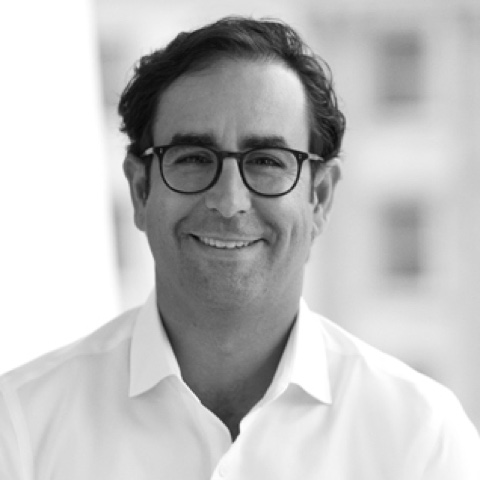
约翰·齐托 PPatrick O'Shaughnessy
EDITED TRANSCRIPT · 依据现场录音编译整理,可划线生成便签
约翰·齐托是阿波罗全球管理公司(Apollo Global Management)的联席总裁,执掌这家近八千亿美元资产管理机构的信贷业务。从大学毕业后在交易台上自学债券收益率怎么算,到今天主导英特尔、BP、法航这样的标普500级别发行人的私募融资,他的职业轨迹几乎与信贷市场本身的重塑同步。在这场长谈中,他谈了阿波罗与退休金保险公司雅典娜(Athene)合并背后的模型转换、美国资本市场那道正在被侵蚀的护城河、常青基金与复利的常识误区,以及卡瓦纳和赫兹两笔交易里那些只有当事人才讲得出的细节。本文依据现场录音编译整理。

开场:为什么是信贷

主持人: 约翰,这期节目我期待很久了。

齐托: 我也是。

主持人: 我期待的主要原因是,这类投资我平时报道得并不多。信贷,还有阿波罗,是当下最重要也最被低估的金融机构之一,我不觉得外界真的understand它是怎么运转的。能有几个小时专门聊这件事,是很难得的机会,我想对所有人都有好处。为了把场子铺好,我特别想请你先谈谈,在你看来,今天的资本市场到底在赌什么。整个资本市场的世界长期以来是单向的、由美国主导的,现在它正在挪动,挪得不快,但确实在变,而且很重要。你坐的这个位置很特殊,不只能看到阿波罗,还能看到全球资本市场的全景。我想请你做一次「国情咨文」,讲讲你认为什么才是要紧的,为什么。

齐托: 先谢谢你这么说。我会回到职业生涯的最开始。那时候贷款根本不是一种可以交易的东西,全都趴在银行的资产负债表上,谁要说贷款可以交易,人们会觉得这是彻头彻尾的疯话。而今天,光CLO一年就发行五千亿美元。

齐托: 我大学毕业后的第一份工作是在一个交易台上,坐我旁边的人正在筹办一只五百万美元的信贷对冲基金。我每天早早到,那会儿我连债券是什么都不知道,就自己一页页地读,反方向通勤去格林尼治。买价、卖价、收益率的区别,债券收益率怎么算,全靠自己摸。我读的是阿默斯特学院,那不是一所金融味很重的学校,更多是通识教育,训练你跳出框框想问题。所以一切都是在工作中学的。后来他把我招过去,我成了那只对冲基金的第二号员工。2002、2003年,他最终募到了十四亿美元。这个人叫吉姆·卡斯珀,此前长期执掌摩根士丹利添惠的高收益业务,也长期负责JH惠特尼的高收益业务。在当时的信贷领域,十四亿是个天文数字,真的是天文数字。

齐托: 那时候,另类投资的整个生态、把产品做成机构化产品这件事,都还非常新鲜。CDS市场的设计很新,指数产品的设计也很新。这并不遥远,不过是二十二三年前。再看今天,我们是一家管理规模接近八千亿美元的资产管理公司,绝大部分资本在信贷。我们每年增长一千五百亿,每周签出十亿到二十亿美元的年金,去年承做了两千六百亿美元的投资级和私募资产产品。这个体量说出来有点疯狂,很多人难以置信,但它本质上是资本市场运转方式的一次彻底重装。

与客户站在同一边

齐托: 我们想建的东西,首先,大概没有人真正尝试过。

齐托: 我们有一家很大的传统资产管理公司。传统资产管理的模式是这样:我们收下你的钱,尽最大努力去投,收一笔费用,但那不是我们的钱,我们投的是你的钱。三年前,我们得出一个判断:资产管理的未来,是以别人做不到的方式与客户的利益绑在一起。于是我们与旗下的保险退休金公司雅典娜合并,这一下带来了接近一半的资产负债表,今天超过三千亿美元是我们自有的资金,每天都在投,其中95%是投资级,5%是另类。

齐托: 我们会以4%或5%的成本签出一份年金,再把这笔钱投到6.5%的收益上。我们向你保证那份收入,中间的差额留给自己。这等于把整个模式翻了个个儿:我们不再只是一家轻资产、轻资本的第三方资产管理公司,同时也是自有资金的投资人。这创造出一种利益一致性,任何时候,别人也许会怀疑我们的投资做得好不好,但他们知道我们是站在同一边的。通过雅典娜,我们实质上在自家退休金业务里持有一个非常大的首损头寸。而且我们自己是绝大多数产品里最大的出资人。

齐托: 所以,这是资产管理思路上的一次技术跃迁。我们建的,本质上是一家更像商人、更看重本金投入、而不是纯代理人的资产管理公司。我们认为这个模式会赢。当然也有人质疑这个模式,这正是我们下的大注之一。

用长久期钱办长久期事

齐托: 第二件事是,我们正在进入一场代际级别的转换。电力、基础设施、国防开支,欧洲长期投入不足,而全球都需要更多算力,这一点我不认为有什么可争论的。真正的问题是,这些东西该怎么融资。是继续走传统渠道,也就是公开上市的债券和股票,还是用期限匹配的长久期资本?

齐托: 年金美妙的地方在于,它是长久期负债。退休金也一样,久期以人的寿命计,十年、二十年、三十年,有时候五十年。这和长久期的基础设施项目匹配得非常好。所以自然的迁移方向,是从历史上那种由银行支撑的、更短久期的产品,无论是一支有CUSIP代码的债券,还是欧洲银行表内的一笔贷款,走向期限更匹配的、与退休保险相关的资本。这件事正在发生。你看我们和英特尔、和百威英博做的那些交易,规模之大,世上从没人想过会由阿波罗来牵头。

齐托: 所以我们正处在一场代际变革的中间,所有东西的资本化方式都在变。投资人与资产管理人、银行与资产管理人、标普500发行人与那些被认为更像私募股权玩家的另类机构之间的传统关系,正在重排。而这些被贴上私募股权标签的机构,真正在做的是更安全的私募信贷出借人。这个过程很好玩。

美国的那道护城河

主持人: 我一会儿想回过头来细讲雅典娜的故事,那是你们这类公司在结构上的一次巨大创新。但我想先问你另一个视角:美国在全球资本市场中的角色,在你整个职业生涯里是怎样的,而在今天这种地缘政治和资本市场似乎都出现裂痕的局面下,你觉得它会怎么变。

齐托: 这当然是眼下的大焦点。现在所有讨论都围着关税转。老实说,关税这件事我担心的程度远低于公共叙事,我真正高度关注的,是我们在资本市场中近乎垄断的位置。

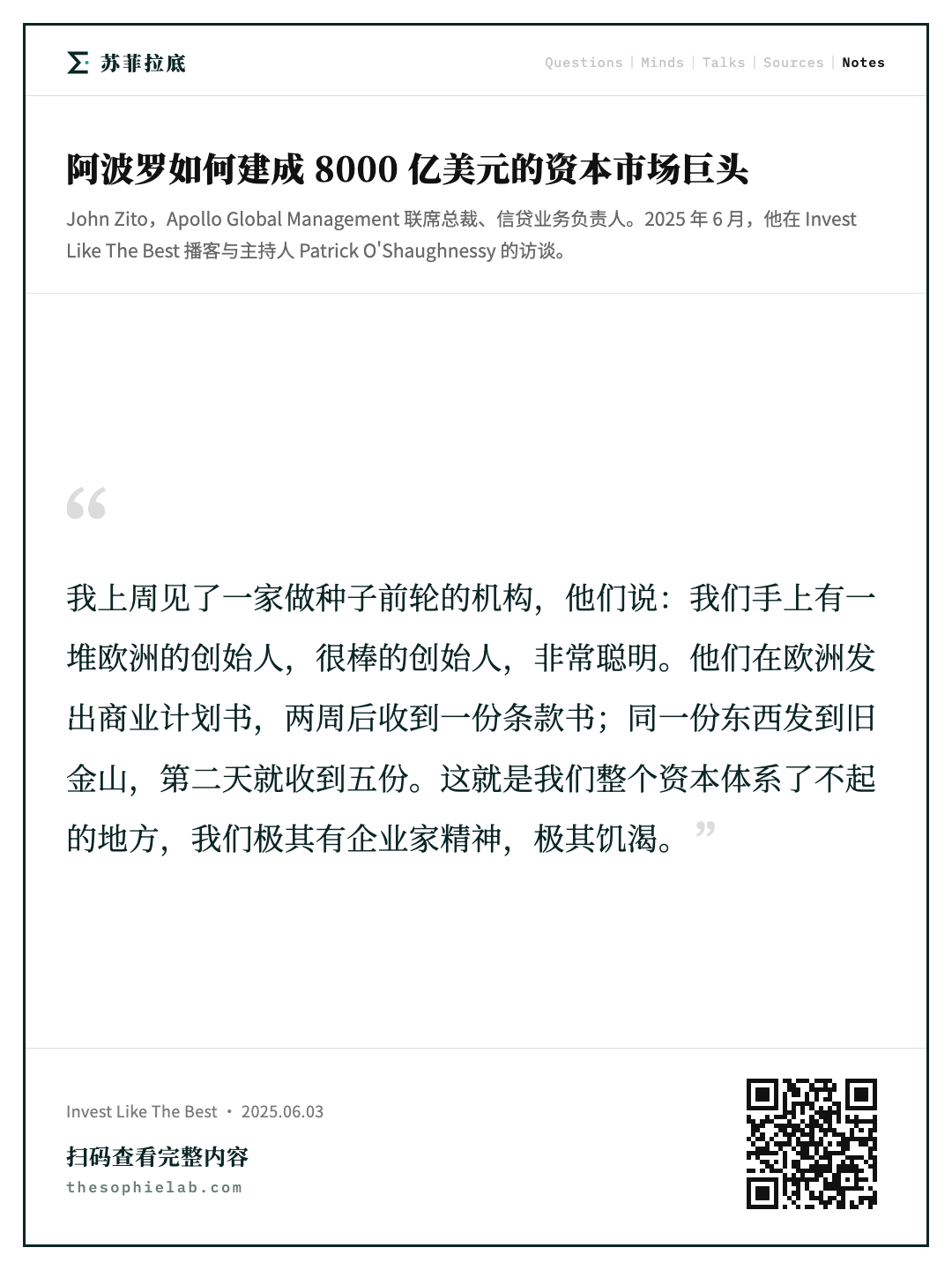
齐托: 我们受益于太多东西了。最大的股票市场,所有人上市的首选地,最好的风险投资市场。你要做一家成长型公司,你会去硅谷,你会来美国拿投资条款书。我上周见了一家做种子前轮的机构,他们说:我们手上有一堆欧洲的创始人,很棒的创始人,非常聪明。他们在欧洲发出商业计划书,两周后收到一份条款书;同一份东西发到旧金山,第二天就收到五份。

齐托: 这就是我们整个资本体系了不起的地方。我们极其有企业家精神,极其饥渴,而这一切的背后,是每年好几千亿美元的资金流动。任何形式流出这个国家的每一块钱,最后都会流回来,因为这里就是配置资本的地方。每一个退休金市场都超配美国,几乎所有人的战略资产配置都对美国超配。这太了不起了。它造出一个比任何其他公司、任何欧洲或亚洲企业都更高的增长向量。我们的增长向量就是更高,因为我们的资本成本更低,我们拿到更好的人才,更好的公司来这里上市,我们有一个五十万亿美元的债券市场。这些顺风叠在一起形成飞轮。

主持人: 这是一份珍贵的资产,不能当成理所当然。

齐托: 我们不想把它视作理所当然。它为什么会形成?法治,来这里做生意非常容易,规则清晰,人才密度高。人才密度,再加上运行规则的高度确定性。

齐托: 让我有点担心的是这样一件事。现在其实没有别的地方可以放这么多钱,没有哪个资本市场大得够格。但在眼下这么多不确定性里,你确实看到欧洲出现了新的变化,证券化规则可能会改。美国有一个十五万亿美元的证券化市场,欧洲只有五千亿。两边经济体量差不了那么多,我们三十万亿,欧洲二十四万亿。把资产从银行表内挪到私募信贷,这里面是数万亿美元的机会,可以释放出大量流动性,去给德国、法国和欧元区其他国家必须做的事情融资,因为他们在基础设施和国防上欠账太多。

齐托: 我们正在给别人创造动机,全球所有资金池现在都想要一个美国之外的选项。所以我们必须对此保持敏感。正因为我们增长更快、公司更好、人才池更大,我们的股票估值比别人高出五到七倍市盈率,那是好几万亿美元的价值差。这才是真正让整个体系受益的东西。我希望我们能确保它完好无损,因为过去二十年我们从中获益太多了。

创新发生在哪里

主持人: 美国体系里另一个漂亮的部分,是融资形式上的创新。我想听听你对历史时间线上那些关键刻度的看法,回溯五十年左右,大概八十年代的垃圾债是第一个值得说的节点。

齐托: 可以从那儿开始。不过我更多是从分销功能去想这件事,比如ETF市场,人们怎么打包、怎么消费产品,哪里出现了产品创新,哪里没有。

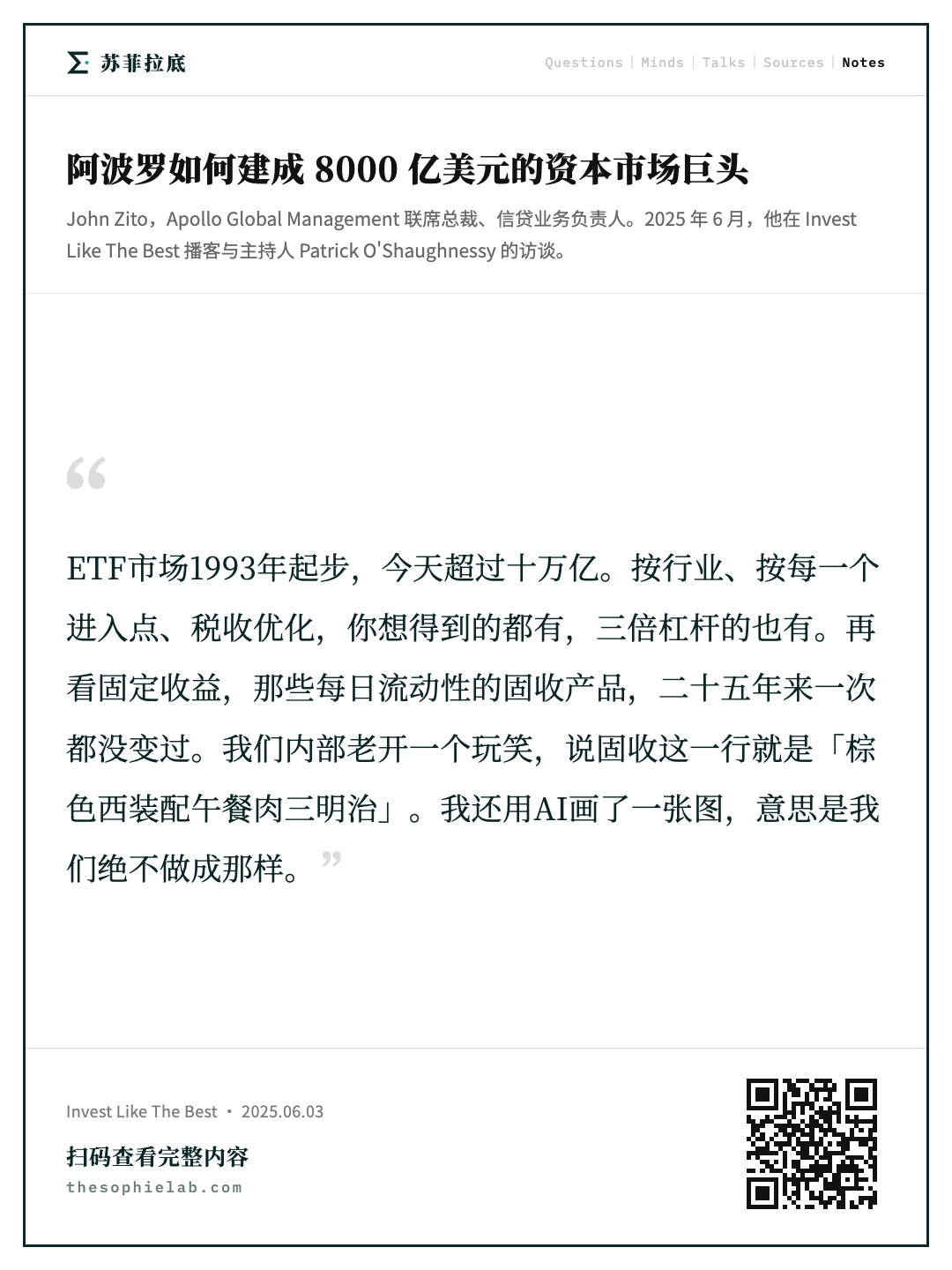
齐托: ETF市场1993年起步,大概到2009年做到一万亿美元,今天超过十万亿。按行业、按每一个进入点、税收优化,你想得到的都有,三倍杠杆的也有。ETF在交付端的每一个环节都相当有创新。

齐托: 再看固定收益市场。我认为那些每日流动性的固收产品,二十五年来一次都没变过。这很刺眼,而对我们来说,这是个相当不错的机会。我们内部老开一个玩笑,说固收这一行就是「棕色西装配午餐肉三明治」,它是真的一点都没变。我还用AI画了一张棕色西装加午餐肉三明治的图,这就是我们内部的梗,意思是我们绝不做成那样。

阿波罗的底色

齐托: 你再看我们信贷业务做成了什么。我当年加入阿波罗,是冲着阿波罗的品牌去的:哪里出现错位,哪里就有阿波罗。我们有一批最聪明的投资人,总能找到赢的办法,在承销、工作强度这些事情上极其死磕。如果你争强好胜,你就想去一个特别拼、而且通常站在正确一边的地方。我进来的时候,面对的就是这个,说实话我当时挺被震住的。

齐托: 时间长了,独特之处在于,我们招了很多这种性格的人,极度好胜,极度聪明,从贷款到债券到优先股到股权,整个资本结构都懂。市场上这样的人不多,大多数人非常窄,不看整个资本结构。而我们把这些原本在机会型、高辛烷值、高回报工具里干活的人,把这些最有创造力的人,放到了投资级业务上。

齐托: 你想想创新是什么。英特尔那笔一百一十亿美元的交易,怎么把它结构成一个三十年以上、实质上是股权性质的资本,但我们又觉得自己受到的是债权一侧的保护?要做到这个,你必须有创造力,因为这不是去银行拿一份现成模板就能办的事。它高度结构化、高度定制,要和公司一起磨出来才能落地。我们之所以能做,是因为我们把最好的人放在了这上面。而且我们是完全开放架构的。

主持人: 这具体意味着什么?你给这些人的指令是什么?是「做出最好的风险回报」吗?

齐托: 大多数机构是按基金来组织的。设定是:去找一家公司、一笔优先股或一个债务工具,能做出15%的回报率。而我们的设定是:先评估这家公司,再评估对这家公司而言最好的资本、最好的解决方案是什么。我们有从5%到20%回报要求的各种资金池。它可以是一笔收购,可以是一个投资级方案,也可以是一笔常规债券发行。关键是理解风险回报,理解每单位风险对应的资本成本。这是完全不同的框架,因为我们内部没有墙。他们不被单一基金的利益绑定。

齐托: 他们被激励去做的事情是:要一年承做两千五百亿美元,你必须有一种文化,让发行人愿意下次还找你。所以我们有大量的回头客。今天我们也许给他们做一笔投资级债券,但两年后他们可能处在完全不同的处境,需要一笔优先股救助,或者赶上疫情那种完全不同的环境。因为我们之前在他们的资本结构里,或者之前做过恰当的事情,他们更有可能之后还和我们合作。

主持人: 我觉得这一点外界理解得不够:别人的窄,是按基金窄、按业务线窄。

齐托: 我们没有墙。我们的私募股权团队当然有各自不同的基金,但在投资团队层面,我们是跨部门讨论的。我会和私募股权团队聊,和信贷团队聊,大家坐在一起说:等等,也许该这么做,也许该那么做,也许对这个资金池来说这样结构更好,因为这才是对发行人合理的方案。这样就不会出现「拿着锤子找钉子」的毛病。有这个,再加上能调动资本结构所有环节的灵活性,彻底改变了我们的业务,是彻底改变。

主持人: 这大概是最近五年的事?你2012年加入阿波罗。

齐托: 对,2012年。

雅典娜是怎么来的

主持人: 那现在正好谈雅典娜。它为什么是一项如此巨大的创新,它是怎么发生的?这个想法从哪儿来,是谁的主意,怎么执行的?以及,为什么别人没有做到同样的程度?

齐托: 我们确实很早。马克在金融危机中间就把吉姆·贝拉迪请了进来。当时的想法是,投资级信贷的利差非常宽,因为刚从金融危机里出来,同时因为利率大幅下行,你可以拿到非常长久期、非常便宜的负债。所以这个利差生意极其赚钱。而那类公司的资产管理一侧,也就是传统的保险资管,在结构化产品之类的领域还很不成熟,除了传统的144A流动债券业务,几乎不碰别的。

齐托: 所以这门生意的核心是:在同样评级下承做出超额利差,用超长久期的负债去支撑它。而当时没有人真把它当成一门成长业务来经营。大家经营它,是因为很多上市股票交易价低于账面价值。你看金融危机以来退休保险业务里募集的股本总额,我们占了一半以上。我们是最大的受益者,因为我们在资产端和负债端都非常积极地扩张。

齐托: 当我们意识到这门生意会长成庞然大物,必须做两件事。我们知道自己会缺承做能力,否则拿什么去服务自己的资产负债表?于是从2014年到2022年,我们花了将近一百亿美元自有资本去买承做能力:PK Air,做航空融资;自建了一家非合规按揭公司NewFi;买下瑞信的证券化仓储业务,也就是Atlas。这些业务里我们建起、招进来四千名员工,专门为我们的资产负债表承做资产,公司名字你们可能都没听说过,但它们都是阿波罗资本。

齐托: 而这一切,我们从来不是为第三方信贷业务建的,因为其中大部分是投资级的、利差很薄的抵押品。在利率为零的年代,没有人会去建这个。从金融危机到2022年,任何管钱的人心里那笔明牌都是:利率到处都是零甚至负的,退出固定收益,退出信贷,进入股权类产品,用最便宜的成本做定期融资。那你该怎么做?去做基础设施,去做房地产,用非常激进的杠杆去融资,去建其他另类产品,就是别建信贷业务。你为什么要建信贷业务?根本不赚钱。

齐托: 所以我常开个玩笑,这比喻不算好:利率涨了五百个基点,我感觉自己就像《阿甘正传》里那个绑在桅杆上的丹中尉,冲着暴风雨喊,来吧。突然之间一切都来了,因为我们那时已经超配了,超配在承做能力上。我们从来没有在这一侧真正建过第三方机构业务,全都是为自己的资产负债表做的。然后我们跨过了卢比孔河:突然之间,我们承做的量超过了自家资产负债表能吃下的量。这就是过去三年的故事。于是我们一下子可以做出创新的固收产品,让它们和我们自己的退休金业务并肩投资。

齐托: 现在你看到所有人都想进这门生意。但你很难凭空长出这门生意,因为这里有一种承做文化,在信贷这一块已经建了十五到二十年。而且要以本金投入的方式与客户对齐。承做也不只是养一群到处找风险的人。承做同时意味着理解什么样的资产适合我们的资产负债表,理解我们怎么看风险和回报。如果你没和这些人共事过,没有清晰的判断和清晰的叙事,说清楚什么行什么不行,你很难做大。很多人都能承做出一大堆坏风险。你真想去买一堆东西,理论上随时可以,但那大概率不是好的长期战略。

齐托: 过去几年我们几乎完全靠内生增长,并购做得极少。今天我们有大量自有承做能力,在整体利差承做上是市场第一,在负债端签单上也是市场第一。净下来,我们觉得这门生意会在很长一段时间里表现很好。

今天的阿波罗版图

主持人: 你能不能把今天的阿波罗摊开讲一遍?八千亿美元,分别配置在什么类型的投资上,通过什么样的载体?

齐托: 会让人意外的是,我们资产负债表现在有65%是投资级。信贷这块接近七千亿美元,其中三千亿出头是我们自己的资产负债表,其余是第三方投资人投进我们产品的钱。

齐托: 投我们产品的投资人,几乎全都在投资级以下、回报较高的信贷策略里:直接贷款、资产支持、以及其他高回报信贷策略。我们正在进入的是那种替代固定收益的投资级解决方案业务,面向第三方。这一块我们过去几乎没有募过钱。另外一半就是我们自己的资产负债表,95%投资级,5%另类,靠赚利差。

齐托: 股权业务主要是私募股权,另外还有二级份额、气候业务,以及一块混合业务,做的是正常还本付息的信贷之外的所有事情。这些业务长期以来表现都很好。我们的私募股权业务三十五年来回报一直位居前列。混合业务本质上是正常信贷和私募股权之间的那一整段空间,是我们增长非常快的板块,现在规模刚过八百亿美元。

费率往哪里去

主持人: 能聊聊费率和资产管理的商业模式吗?像你开头说的,历史上就是你给我钱,我收管理费,再收一部分收益分成,可能有个门槛收益率,很直接。费率很有意思,某些情况下这是毛利极高的生意,尤其是「2%加20%」那种。你怎么看这个模式?它已经存在很久了,哪里需要创新,你觉得它会走向哪里?

齐托: 我觉得这取决于资产类别,非常取决于资产类别,以及你能不能拿出超额回报。你能拿出超额回报,你就能收费。你看那些多策略平台,收的费率相当高,他们能收,是因为他们在低波动下做出了很好的净回报。如果你能在很大的资本体量上长期做到这一点,客户愿意付。人们付费,是因为他们觉得这是别处买不到的东西。

齐托: 一旦进入更商品化的产品,你就看到费率下降。投资级流动信贷就是典型,费率降了很多。所以我们真正做的,是那些别处拿不到的私募承做投资级资产。我们之所以建平台业务,就是为了控制这些抵押品,除非你自己拥有那些承做机器,否则别人根本拿不到。正因为我们有四千个人在不停地承做那些对任何人的信贷组合都构成真正分散化的资产,我们认为自己应该以某种形式获得补偿。

齐托: 费率最终落在哪里,多少取决于整体利率和其他因素。利率为零的时候,感觉费率会被彻底压缩。利率更高之后,费用占总回报的比例就变了。你赚10%,你就收得起费;信贷只赚4%的时候,费率崩了,因为扣费后的超额相对总回报太薄。

齐托: 在另类产品里,你必须交付,你必须交付那份手艺。如果客户不觉得自己拿到了某种机会型的、特别的东西,他们就不会认账。同时共同投资的压力非常大,共同投资实质上就是一种降费机制,不是把标价费率降下来,而是通过另一条路把实际费率压下去。现在你和客户合作的方式,必须和十年十五年前完全不同。他们中很多人已经建起了完全独立、非常能干、非常聪明的团队,愿意也想要和你一起承销风险。所以这更像是一种伙伴关系,程度前所未有。

齐托: 我常开玩笑说,总有标题写银行对另类管理人很不满,说大家在互相抢单子。一方面我们建了自己的承做能力,另一方面我们在很多事情上仍然是他们的伙伴,这依然行得通。LP和GP之间也在发生同样的事,他们建起了自己的投资能力,所以我们也得调整自己的业务。整条链条都在转型,都在寻找彼此合作的那块恰当的交集。

人人都想往上游走

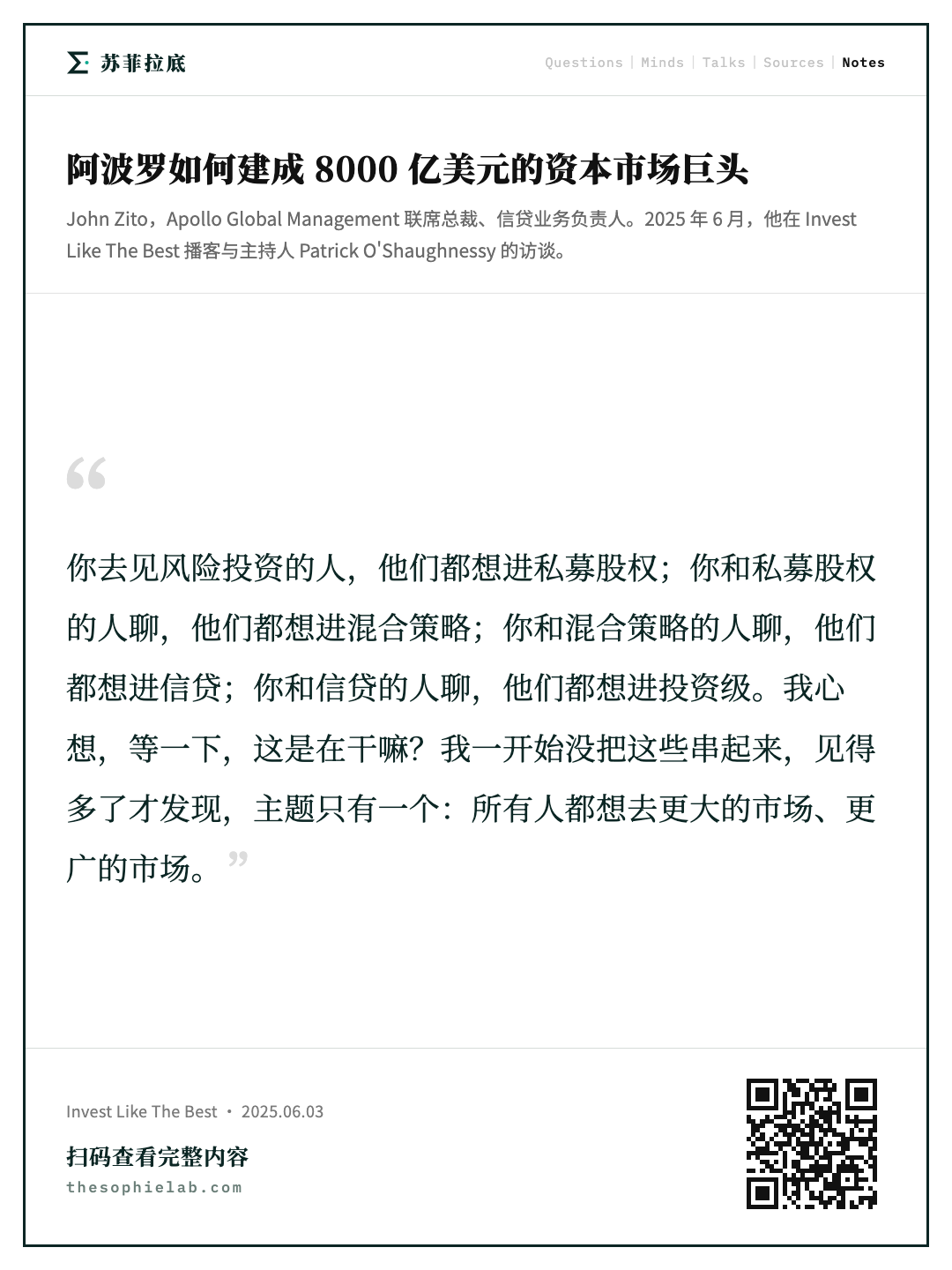
齐托: 我不知道为什么会这样,但我觉得挺好笑:你去见风险投资的人,他们都想进私募股权;你和私募股权的人聊,他们都想进混合策略;你和混合策略的人聊,他们都想进信贷;你和信贷的人聊,他们都想进投资级。我心想,等一下,这是在干嘛?我真的想不明白。

齐托: 我猜是因为市场涨了太久,这些原本很窄的机构都在试图往外扩,进入更大的资产类别,追求更少的二元结果和更宽的可触达市场。我一开始没把这些串起来,见得多了才发现,主题只有一个:所有人都想去更大的市场、更广的市场。

发行人怎么看我们

主持人: 我很想知道,今天有三类人是怎么看阿波罗的,以及五年后你希望他们怎么看。第一类是公司,也就是发行人;第二类,我不想说是散户,但姑且说是那些可能通过ETF配置股票的人,不只是散户,机构也用,总之是想把钱投进去赚一个回报率的人;第三类是阿波罗的股东。先从发行人开始吧?

齐托: 我们有些进展了。2020年我们给百威英博做了一笔交易,我大概接到十通电话,人家跟我说:约翰,恭喜,不过你这辈子别想再给标普500公司做交易了。

主持人: 为什么?先把背景铺一下,这为什么是个变化,相对于此前的历史,它代表了什么?

齐托: 投资级公司过去根本不会以这种方式动用私募信贷。你要是一家投资级公司,你的资本来自银行渠道,世界观非常窄:我要建一座厂,那我去找银行,或者我发债,或者我发股。就这么简单。有点像资产配置就是六四分,六成债四成股,里面没有私募的位置。直到今天,401(k)里也不买私募,这个我们也可以聊。

齐托: 所以,用私募信贷给一家标普500公司做一笔几十亿美元、而且是投资级评级的交易,这对市场来说非常陌生,非常新。而现在你看,我们给BP、法航、Vonovia、英特尔都做过。这条管线很粗,因为大家意识到两件事。

齐托: 第一,如果你是一家投资级公司,负债总量有一千亿美元,那么和阿波罗做一笔五十亿美元的交易只是一种分散,它不再带有任何负面含义,那层阴影没有了。第二,我们的资金能提供更多灵活性。我们可以给更长的久期,可以把它挂钩到某项特定资产上,或者做成某种结构化交易。所以它只是有点不一样。这绝不意味着传统融资渠道会消失,也不意味着一切都会私有化,但它是另一个选项,而且会长期存在。

主持人: 拿英特尔或者BP举例,他们是有选择的,融资可以有很多做法,但他们选了你们,而且是大单子。相对于传统做法,阿波罗这笔融资吸引他们的特征是什么?对他们来说,通常哪些变量重要?

齐托: 通常是表外。

主持人: 他们为什么在意这个?

齐托: 因为它不计入现有的债务总量。所以通常是表外,通常久期更长,通常在票息和爬坡节奏上更灵活。如果是一个正在爬坡的项目,我们可能在头几年给出传统债券市场给不了的安排。所以就是真正和发行人坐下来谈:我们要解决的到底是什么问题。全是定制。我们会和一个发行人磨六个月、九个月、十二个月,把定制细节一点点谈透,而我们有能做这件事的团队,这和传统的银团市场完全不同。

主持人: 所以五年后,公司眼中的阿波罗会是一个高度个性化的出借人?

齐托: 我希望是这样。我们还在路上,但已经好很多了。做的大品牌公司越多,愿意来的就越多;回头客越多,这件事就越自然。过去五年我们进步巨大。但我到某些地区、世界上某些地方去,还是会听到:你们不就是做股权投资的吗?你们不是搞不良资产的吗?这种情况偶尔还是会有。

齐托: 不过说实话,我们确实有一段辉煌的历史,是在更困难的局面里创造出色的回报,有时候是走进别人根本不愿意踏进去的处境。所以尽管业务和十五年前完全不同了,有些人对我们的印象还停留在那里。

未来的回报率

主持人: 能不能谈谈今天各类资产的预期回报?你提到零利率持续太久,预期回报等于没有,所以人们不感兴趣。股票从2009年以来经历了一段极其强劲的回报周期。现在有一批职业生涯已经相当长的人,从来没经历过真正的回撤,看到的只有标普500的漂亮回报。你怎么评估今天的格局,往前看?现在有这么多人、这么多资金池想要回报率,因为有收益率了,他们又对信贷感兴趣了。未来十年二十年,回报可能是什么样,你怎么想?

齐托: 我们是在零利率的基础上造出了一整个另类宇宙。大部分产品设计都基于零利率。而那十五年里,你的回报究竟有多少来自被压得极低的、被补贴的利率,有多少来自运营层面的卓越,这件事至今还在争论。接下来几年,当我们开始尝试变现这些资产的时候,答案会揭晓。

齐托: 用零成本资金去买一个五六个点、无杠杆的资产,比如基础设施类的,这完全说得通,它成立。但用六七个点的成本去买一个五六七个点的资产,就没那么好了。

主持人: 没那么好。

齐托: 所以我认为会更难。会更难,你承担了更多风险,风险特征也不一样了。我认为这类资产更应该和投资级长久期的产品匹配,而不是加杠杆的产品,因为杠杆太贵了。以后会有杠杆便宜的时候,但现在不太说得通。

齐托: 可我们募来的所有这些资金池,当初的构想都是:这些另类产品在任何环境下都该做出15%以上的回报率,而且不靠零利率甚至负利率的补贴。这看起来很难,非常难。

齐托: 私募资产整体,私募股权整体,净回报普遍做到过13%以上。你也看到打包产品和二级份额在增长,进入通道会越来越多。我觉得那是个不错的位置。总体上,对于私募资产,我们有一个高层次的判断:所有资产随着时间推移都会变得更有流动性。那么问题就是,这会对回报做什么,会对回报的波动性做什么,会对这些资产被感知到的风险程度做什么。

常青与复利的算术

主持人: 这个话题能展开讲讲吗?我觉得特别有意思,而且好像正是当下的热点,捐赠基金那边发生的一些事情也指向这里。私募信贷和私募股权里有天量的钱,其中很多已经锁了非常非常久,退出通道和流动性是很有意思的问题。你觉得会发生什么?

齐托: 这要回到市场结构的话题。历史上的市场结构是,机构,实际上大概是二三十家机构,控制或者说主导了私募市场。私募市场我指的是所有资产类别,私募股权、基础设施、房地产,还有真正的企业信贷。

齐托: 现在出现了财富管理业务的演进。91%的私人财富客户手里一个另类资产都没有,而这个比例在飞快上升,人们都在想办法获得私募资产的敞口。因为大多数公司选择保持私有、不上市了,你要覆盖整个经济,大概就必须持有私募资产。

齐托: 这些载体的结构,从传统的承诺出资、逐步召款的封闭式形式,转向常青形式,会带来一个结果:内部收益率口径的标价回报会更低,而常青回报是另一回事。你记得我给你讲过那个漫画吧。

主持人: 记得。

齐托: 我画过一个漫画。两个人在十年同学聚会上碰面,一个人说:我攒了十万美元。另一个女生苏西说:我也攒了十万,咱们得好好投。然后画面跳到二十年聚会。他穿着一身好西装回来,说:我赚翻了,投的全是私募,年化32%。下一格,她一脸难过,说:我投的全是常青策略,只有13%。然后她说:就是好奇问问,你现在有多少钱?他说:十八万。她说:我怎么有三十三万?我不明白。

齐托: 顺便说,我把这个故事讲给我的朋友、我岳父母、那些不在这行的人听,他们到现在也理解不了。他们无法接受一个人说自己一年赚32%,另一个人赚12%,怎么可能后者的钱反而更多。这是复利的作用。我知道你懂,但随着分销渠道越来越偏向常青产品,你会看到一个正常得多的风险回报格局:股权大约做高个位数到低双位数,信贷视利率周期的位置做高个位数到低双位数,无论加不加杠杆。而在高利率环境里,复利效应和收益导向的价值更大。

齐托: 还有一点。国际资产历史上一直是低增长、低估值。如果部分外国直接投资的流向发生变化,德国十年来第一次真正开动印钞机,你会不会看到估值的正常化,看到欧洲进入一个增长稍高的体制?所有人都很难下这个注,但感觉星象是对齐的,欧洲可能十年来第一次进入更高增长的状态。

私募资产的出口

主持人: 那么你觉得,定价、流动性,以及那些把钱投进这些载体、想拿出来却因为基金期限拿不出来的人,会通过什么新方式解决?还是说基金期限这件事本身会变?

齐托: 我的看法和很多人不一样。我认为会出现二级份额的交易市场,二级业务会发生剧变。我认为私募资产交易所会出现,我们显然已经开始做了。

主持人: 谁会来建这些?

齐托: 首先,我认为会出现真实的需求。其次,财富端越是想要股权类和私募股权类产品,就越需要一个流动性阀门,越需要这个私募交易场所。至于怎么设计,那是个问题。你看得到我们在做实验,我特别喜欢我们这个地方的一点,就是我们会尝试很多不同的东西。我们在试私募投资级资产的做市,试过和道富、洛德阿贝特的合作。我们把第一只基金挂到了区块链上,用了五种不同的协议,把基金代币化。我认为基金实际上会变成可交易的,哪怕它名义上是季度流动性,它也会每天交易,一年365天,一周七天,一天24小时。你看Coinbase说要发一个以他们股票为支撑的代币,你能看到这个趋势。

主持人: 这事想起来很奇怪。想象一只普通私募股权基金的LP份额去交易,可这只基金本身的信息披露就有限,更别说底层公司、持仓和那些细节了。

齐托: 可它已经在交易了,而且二级市场的流动性相当不错。每年通过二级业务成交的量非常大,极其有流动性。在大多数市场环境下,你想退出,你就能在离面值不太远的价格退出,九折、九二折、九六折,取决于基金、基金的设计、行业、管理人的规模和品牌,但总体上你是可以成交的。

齐托: 而且像你说的,你把资产池化得越多,越容易获得流动性。越是能称之为分散化的贝塔,越是被视为私募市场的贝塔而不是单一标的的承销判断,你就越有可能把风险转移出去。固定收益市场已经发生过这件事,组合交易出现了:你交易一篮子投资级债券,成本是三个基点;但你要交易单只债券,买卖价差是半个点到一个点。执行成本天差地别。

财富端的窗口期

主持人: 财富管理市场你觉得会怎么样?它似乎已经成了新增资本和创新的巨大推动力。

齐托: 很难说它不增长。人们对私募的配置就是太低了。这和我讲的2003年那个故事没太大区别,那时候十亿美元就是一只很大的信贷基金。顺便说,我当时二十四岁,被派去日内瓦。我去了,心想我根本不该去营销这个产品,我没准备好做这件事。我到了那儿,照着名单念,提前背好一只多空信贷基金的营销说辞。结果一次会就能募到五千万到七千五百万美元。

齐托: 现在我在阿波罗,有将近二十五年经验,有时候募一块钱要花两三年。人们要反复确认,募资的酝酿期已经长到不像话,比过去长太多了。而财富端现在还处在早期,他们需要产品,需要提高配置比例,他们想找大的、高质量的管理人,想找自己认识、信任的人。可是能满足这些条件的品牌就那么几个,而且个个产品不够卖。所以这一块的顺风,很难想象它不继续吹下去。

拇指人与手指人

主持人: 我想问第三类人,阿波罗的股东历来是怎么看这家公司的。你刚才也提到了它的历史印象。

齐托: 如果有股东在听,我希望他们爱我们。说正经的,我们骨子里是一群相当不满足的人,我们会尝试很多不同的东西。我们有市场上最聪明、最具战略眼光的领导者之一,这真正塑造了这个地方的文化。

齐托: 我们的组织还是相当扁平的。投资总监、经理、分析师都不怕来找我或者找任何人说话,我们喜欢这样。你有好想法,就提出来。我们没有那种一家八千亿美元管理人「应该有」的层级感。对我来说,它仍然很扁,我们想保住这种感觉。

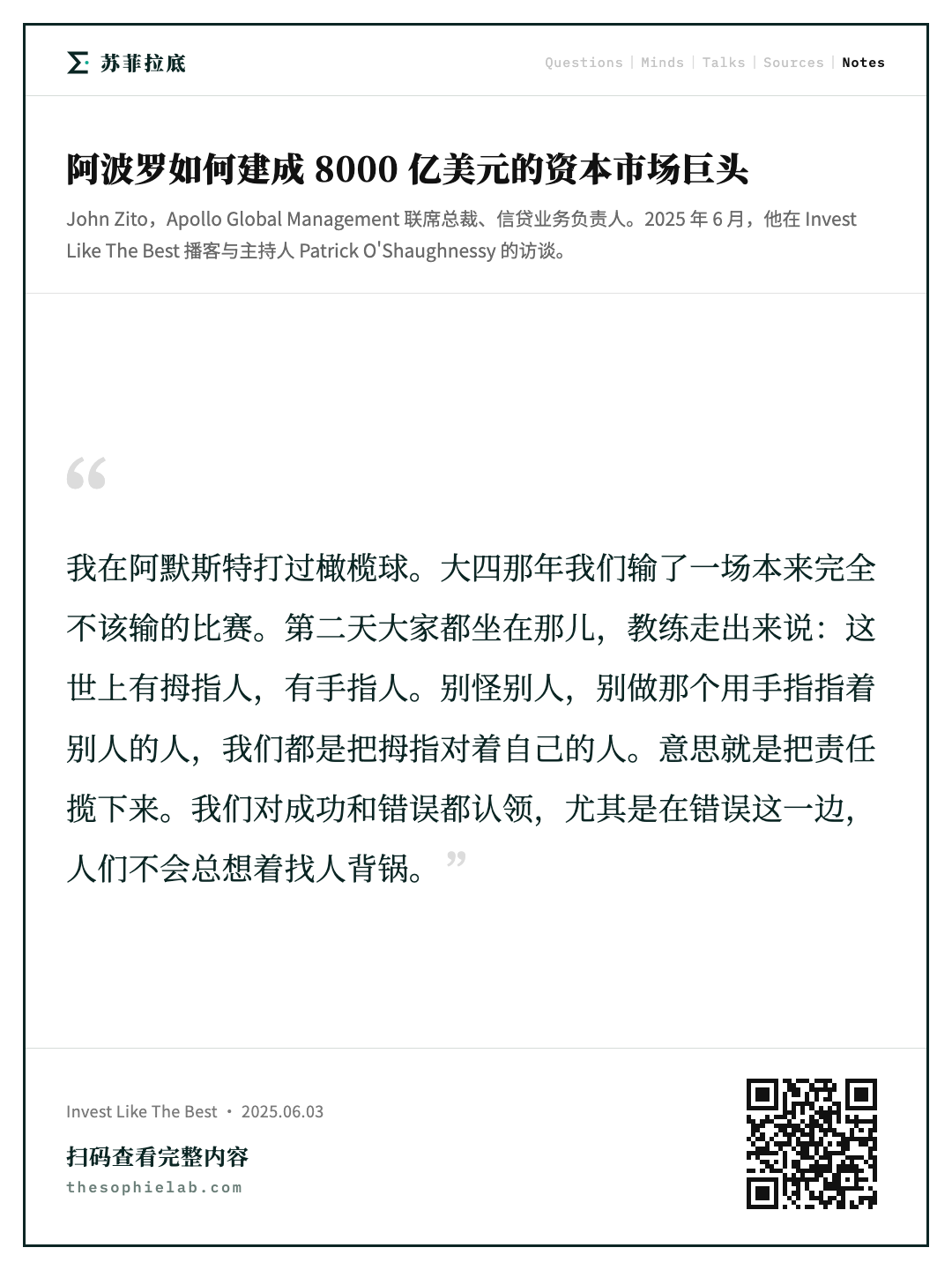
齐托: 我在阿默斯特打过橄榄球。大四那年我们输了一场对卫斯理安的比赛,24比7。我们本来完全不该输,跟卫斯理安打,你不该赢不了。比赛第二天是周日,我们都坐在那儿,教练走出来说:这世上有拇指人,有手指人。别怪别人,别做那个用手指指着别人的人,我们都是把拇指对着自己的人。

齐托: 意思就是,把责任揽下来,别老想着怪罪外部。所以当事情出岔子,或者当我们在创造某个新东西的时候,人们会把它揽到自己身上。我们有这种嵌进骨子里的文化,对成功和错误都认领,尤其是在错误这一边,人们不会总想着找人背锅。而我们也把这样的人聚到了身边。我不太说得清我们是怎么在招人上做到的,但它就这样弥漫在整个公司。

主持人: 这是个了不起的理念。如果人人都这样,很多公司都会好很多。

一个人的上升路径

主持人: 我有个两部分的问题。除了拇指和手指,我想知道你怎么看待这种文化,先是作为身在其中的人,现在越来越多是作为它的守护者。第二部分是,你在阿波罗的上升相当迅猛,从管理一亿三千万美元到今天的位置,你还很年轻。回头看,你觉得这为什么发生了?你做对了什么?

齐托: 你永远得把位置和人分开看。一部分是马克推动了信贷,推动了一个主题:信贷由内部资金池驱动。我们的团队在开创新资产类别、做创新上做得极好。但说实话,当你有那样的顺风,而你又是这门生意的领导者之一,参与了它的架构设计,那当然有帮助。

齐托: 我们有极好的团队、极好的人,还有领导层。从上到下,只要我们有想法,他们就让我们去跑。2018、2019年我们做了一笔十亿美元级别的直接贷款交易,那时候没人做几十亿美元的直贷,而我们的直贷业务当时并不大。2019年我们想去中东,和穆巴达拉合伙组一个一百二十亿美元的资产负债表,当时没人募过大额直贷。没有人真正想过去募一个资产负债表,用来承诺、分销、持有,而且和穆巴达拉五五开。没有人想过做资产支持业务、做平台业务,把这些统统变成产品。

齐托: 只要是好主意,就是纯粹的精英制,纯粹拥抱创业精神。我们变大了,但没有丢掉这一点。这从马克开始,一路到泽尔特、克莱曼,全公司都接受这一套。团队一直棒极了。这部分很有意思。

齐托: 我个人是那种对变化超配的人,我很喜欢变化。这点我得克制,因为有些事本来不该变,我也想变。但这个行业确实变了很多。我一直努力保持市场导向,去想市场在产品设计、费率和资产类别上应该落在什么均衡点,并且真正去追问怎么颠覆我们自己。我对这种讨论是舒服的,而很多人对这种讨论并不舒服。我喜欢这种讨论,因为我会说,好,那我们就动手。如果有人要来颠覆我们,我宁愿自己先来,不等别人动手。我认为,有这种心态,你才能建立起信任。

公开市场的底色

齐托: 还有一点。我管着一块很大的私募信贷业务,外界是这么看的,其实现在是一块很大的私募市场业务。但我是在公开市场的DNA里长大的,我最初那份工作就是:给你一小笔钱,打到什么吃什么,亏了钱就没工作。那是完全不同的东西。你必须时时刻刻盯住所有风险。这种训练很难卸掉。

齐托: 但那种训练里有一部分是,你必须在资本极少的条件下去创造。我先后在五亿、三十亿美元规模的基金里工作过。在那种地方,你必须练出一整套本事:想出点子,去把点子变成现实,说服别人相信这是个好点子,有时候还要说服银行为这个点子提供融资。所以我一直在用很小的资金池、在没有品牌的情况下训练自己和团队。我们当时的招牌很小,Brencourt、Argent,都是小地方,不是阿波罗。

齐托: 我是在那里学会了怎么在没有那张名片、没有那个位置的情况下把事做成,学会了用很少的资源做事。所以当你突然拥有资源,你会觉得自己被极大地赋能,你可以自己把整笔交易做完。我觉得,在一家大型私募管理人体内保有这种公开市场的火种,是我们和外面很多机构真正不同的地方。

从两成到十成

主持人: 我也很喜欢你之前和我讲过的一个想法:历史上阿波罗和同类机构进攻的是别人组合里的另类那一块,可能是那20%的配置;而未来可能是去进攻整个100%的组合。你怎么看这个转变?怎么让它发生,让它成为可能?这是完全不同的路子。

齐托: 首先你得同意私募和公开会合二为一,这背后压倒性的论点还是那个:大多数资产随时间推移会变得更有流动性。那就假设资产会更有流动性。于是过去被认为流动性较差的东西,会变得流动性更好、更容易触及、也更容易被组合接受。

齐托: 今天有些州的做法是,拿一个有评级的私募资产,把它和有评级的投资级私募资产并列比较,然后因为它被归类为私募,就从私募股权的额度里扣。也就是说,我们的线路天然被设定成「私募等于有风险」。可如果那是一张英特尔的债券,附带英特尔二十年的担保,而且你还挂钩到具体资产上,它比英特尔那张有CUSIP代码的公开债券更危险,还是更安全?某种意义上你有双重索偿权。

齐托: 所以我们认为这一层会随时间消失,尤其是从私募投资级开始。我们先从信贷说起:有第三方说这个资产评级是某某,标普说这个是BBB,标普说另一个也是BBB,你有了参照坐标。既然有参照坐标,那么当你审视六四组合里的信贷部分,你难道不该在信贷这一块里单纯优化回报吗?然后这个逻辑会延伸到投资级以下,再延伸到股权,延伸到公开和私募的股权池。标普500是不是也该有分散化的替代品?我认为这些都是真问题。你看市场结构,看资本池的增长方向,它们其实已经在告诉你答案了。

齐托: 所以未来我们和客户谈,我不觉得我们还会谈那20%。我们会谈:什么是最好的风险回报、最合适的目标回报。而且顺便说,我们的业务组织本来就没有墙。这和我前面讲的风险回报是一回事,和发行人谈的时候也一样:你要解决什么?信贷里你能做的所有事情,公开的、私募的,我们全都做,而且我们在自己的资产负债表上也做,我们来对一对。股权呢?你想要什么?公开的、私募的,这些我们也都做,我们完全清楚。好,这是我们能给你的方案,然后我们把它们拼起来。

数据这件事

齐托: 私募资产周边还有一整个生态,关于数据,关于谁拥有什么信息,关于你从自己的数据集里能得到什么,相对于公开市场的数据集又意味着什么。我认为这还很早期,但那些规模更大、可扩展、在经济中触点更多的机构,尤其在经济越来越私有化而非公开化的时候,希望能用这些数据做出更好的投资决策。

主持人: 如果我是一个股票投资人,私募股权投资人,或者多空对冲基金、平台型基金的投资人,理解你这个世界里最重要的部分,对我把工作做得更好有什么价值?

齐托: 一个在资本结构这一侧成长起来的人,必须理解资本结构的所有部分。作为信贷投资人,你需要理解贷款、可转债、债券、优先股在结构上的动力学和灵活性。而纯粹的股票投资人,你和他们聊,通常他们只盯一件事:营收增长。如果你把未来三年的营收增长判断对了,你通常就把股票判断对了。你去加州问债的事,没人愿意聊债。

齐托: 可现在的情况是,风投公司真的在造国防公司,那是极重资产的。超大规模云厂商过去从来没有负债,现在需要大量资金,正在变成资本密集型企业。给这一切供能的东西是资本密集的。

齐托: 而如果你在经营一家企业、以股东权益回报率为目标,你理解资本结构不同层级、表内表外的各种灵活性,你就能优化,长期能给股东更好的回报,因为你给了自己更多回旋余地,而且在某些情况下拿到的成长资本,比你以为的、比单纯发股票便宜得多。所以你必须给这件事定价。如果你懂信贷又是股票投资人,你通常会明白:当你发债的时候,你做多了多少期权价值,你为自己创造了多少可选择性。如果你不懂这个,你大概不会把它计入股价。

怎么建承做平台

主持人: 如果让你在哈佛商学院开一门课,课名叫「如何建一个伟大的承做平台」,你和很多承做平台打交道,历史上也买过不少,这是你们做的一切的关键一环,你必须把资产做出来。这门课的大纲会是什么?

齐托: 第一条,有极其清晰的信用框,极其清晰的规则,写明你买什么、不买什么。这件事不清晰,会生出一堆问题。你越早说清楚,越是明确地告诉对方你愿意买什么、不愿意买什么,边界和参数在哪里,你的承做机器就越有力量。

齐托: 如果你不清晰,如果你的决策链条不清晰、没有明确的问责点,渠道里就会充满噪音,因为你交付不了客户预期的东西。他们以为可以做某件事,结果做不了,这是在损害品牌。

齐托: 所以第一条规则是:花足够多的时间去定义信用框;而且如果你不想做某类东西了,要迅速重新定义这个框,并且清晰地传达给每一个替你承做的人。听起来很简单,但你会惊讶于在规模上执行这件事有多难。

Atlas:一笔典型的阿波罗交易

主持人: 你有没有一个特别喜欢的例子,一个你认为很出色的承做平台?讲讲这种东西长什么样。

齐托: 瑞信当时正在经历一系列变化,最终被瑞银收购。Atlas是瑞信的结构化产品业务。它十年里都是瑞信的头号利润中心,长期贡献瑞信相当大比例的盈利,而且实质上没有亏损。它有四百五十亿美元的资产负债表。它做的事情是:向全世界的资产承做机构提供仓储融资,让这些机构去发放大量小额贷款,累积到一定量之后,把这些贷款证券化,再通过分销机制卖出去。

齐托: 因为瑞信的股价相对账面价值折价很深,如果他们能按账面价值卖掉这块业务,对他们其实是增厚的。而这笔交易是典型的阿波罗式交易:里面有按揭、有太阳能、有商业地产、有消费金融。要把这些东西全部承销下来,市场上除了我们几乎没人做得到,因为你必须有完整的团队班底,还必须把整块业务的运营开支接过来。我们说的是三百个人。2022年利率剧烈波动的时候,他们为追加保证金发出了以百万计的电汇指令。你必须有足够的规模才能真的接得住。你得懂所有这些资产类别,你得有接手一支团队、在文化上整合他们的经验,然后把计划执行下去。

齐托: 最后拖到了最后关头。我记得就在这儿,大概是半夜十二点还是凌晨一点,我和一个分析师、一个负责这笔交易的合伙人在吃中餐,我说,这真有意思,这才是我们,我们回来了,再来一次。那种感觉就是这样,大家都趴在交易台上,玩得很开心。

齐托: 最后我们赢了这笔交易,接过来两百八十亿美元资产,引入了三个合作方在股权层面一起投,包括万通人寿,还有两家主权基金。现在我们正朝五百亿的规模去,长期目标是把它做成一千亿美元的仓储业务。我们为这块业务招了一百八十个人,必须重建整个班子,自己的首席财务官、首席风险官、完整的运营体系,当成一家真正的公司来办。我们把它重新命名为Atlas。现在我们控制着两百八十个独立仓储安排,在这么多不同资产类别上,我们都是首选的提供方之一,而且我们控制着最前端。这就是一笔正中球心的交易,阿波罗所有能起作用的东西都在里面。

卡瓦纳:一通没人接的电话

主持人: 你深度参与过的交易里,哪一笔你觉得最有意思?当然,我要请你讲故事。

齐托: 过去五年里花我最多时间和精力的,大概是卡瓦纳(Carvana)。我知道你认识厄尼。那个局面在大概六个月里,从我们浮亏五亿美元,变成浮盈十亿美元。

齐托: 起点是2022年,我们是摩根大通那笔银团交易的主要认购方。一年后所有债券跌到三十块。我们在下跌过程中又买了七点五亿到十亿美元的债券。那段时间我去每一场投资人会议,都被质问这笔投资。我记得我心想,这种事我再也不做了。每一场会都被问现在什么情况。

齐托: 顺便说,这在我们看来是个很大的头寸,但放在所有基金里,哪怕债券跌到三十,我们当年的基金回报仍然是正8%到9%。按载体口径,我们承受的是一百到一百五十个基点的损失。可因为它天天上新闻,天天是话题,整个事情被放大成了这样。

齐托: 我大概在2022年11月,也就是原始交易之后六个月,就感觉到要出事。那时候我每次去加州的雅典娜办公室,都会给厄尼发邮件说:嗨,我要去凤凰城,我们该聊聊。他会回一句:好。你能感觉到他心里在想:这人是谁?阿波罗的这个人是谁?他想干嘛?现在又没出问题。

齐托: 然后债券继续跌,我一直发短信。昨天晚上我还翻了那些短信,心想,我该怎么讲这个故事。你看最早那些消息,他基本不回,不接话,就只有一句「好的」。你能感觉到他在想这人到底是谁。顺便说,那段时间我大概打了二十通电话,一起吃过两三次晚饭,都没有真正的交流。我想他听见了我说的话,但他担心我在做对他不利的事,这我能理解,完全能理解。

齐托: 后来他们聘了Moelis,我提前得到风声,知道他们要启动一次高度胁迫性的债券交换。这还是在「合作协议」这个概念流行之前。所谓合作协议,就是你和其他债权人结盟,约定无论如何我们只接受同一个条件,这样他们就不能挑出别的出借人,给他们比我们更好的条件。我们等于对他们说:各位,我们是出借人,那边是公司,我们可以一起谈出一个好方案,但不能是靠把我们互相挑拨起来。

齐托: 当时有五十五亿美元的未偿债务。要把五十五亿的债务凝聚成一个阵线,前提是你认识这些人很多年。信贷市场无论你承不承认,它是个作坊式的圈子。

主持人: 就那么些人。

齐托: 市场上大多数人我都是朋友。我可以说,我没有对市场上任何人做过不地道的事。而且我一般都有非常长期、非常真实的私人关系,是有深度的关系。因为信贷不是零和的。股票市场更零和,你赢了这笔交易,我就输了。信贷不一样,你通常和对方持有同一只债券或同一笔贷款,也许某一次我们站在对立面,但我知道下次我们还会站在同一边。所以这是完全不同的动力学。

齐托: 结果我们把90%的债券拢到了一起。他们推出了交换要约,被挡住了。

主持人: 那个交换的内容是什么?

齐托: 大意是:如果你以很深的折价换入这只新债,我们给你担保,但你必须对面值做很大的削减。我们所有人都说不。他们推出来,延长了期限,最后没有成交。

齐托: 这个故事里有一段人们不知道。我当时在度假,大概是一年里第一次休假,在法国南部。我和我太太坐在那儿,你猜谁坐在我旁边?肯·Moelis和他太太。我说,肯,我在度假。而且那种地方规定至少要住几晚,所以肯就在那儿,每一顿饭他都在。我就说,肯,这件事咱们能不能想办法达成一致?他那句名言就是在那时候说的:合作协议就是用来说不的。意思是,你们一旦抱成团,就永远谈不成交易。我说,我们能谈成,一个合理的方案。你把大家召集起来,发一份东西过来。我就那样一直在鼓动他们动手。

齐托: 后来我们一群人飞到凤凰城,来回磨。你最终会意识到两件事。第一,这种交易要谈成极其困难,极少能谈成。第二,这大概是唯一一个所有环节都奏效的合作协议案例。我们谈成了。我们当时还在四块钱买了股票,接下来十二个月里股价从四块涨到两百八以上。债券从三十块,按九十换出,一年后那些债券在一百二十块交易。所有人都赢了。

齐托: 在那么短的时间里,你极少见到一笔交易,它本身是公平的,我们并没有去把股权拿走,然后一年后所有人都赢了。当然我们在十五块就把股票卖了,后来它涨到两百九,所以我们是傻瓜。但那件事看着很过瘾。

齐托: 我还想起一个细节,我昨天翻着就笑了。厄尼和我都喜欢音乐。之前他什么都不回,现在我们是私交很好的朋友。我翻短信,看到我给他发过一首歌,米克·贾格尔的《Evening Gown》。我不知道为什么发这个,大概一年前发的,因为我们都聊音乐。他回我说:如果FBI要根据你的音乐品味给你做侧写,他们会说你是一个来自西得州的六十岁老头,患有乐观型抑郁。

齐托: 所以你顺着这条线看下来,会问:这笔交易到底是怎么做成的?它做成,是因为我一直回去找他,一直保持残酷的坦诚。尽管他一开始不愿意信任,我想部分原因是机构层面的、或者我们当时在做的事情让他不想信。但聪明人能看穿。聪明人能看穿,他们确实能。他是听进了内容的。等他到了那一步,你现在去问他,他会告诉你,如果没有我们前面花的那些时间,没有我一次次去凤凰城、真正和他坐下来、不断给他反馈反馈再反馈的整个过程,这笔交易根本不会有。那才是最后把交易做成的原因。

齐托: 而在大多数情况下,那种局面会走向破产,或者某种激进对抗,老实说,最后大概没有人会赢。所以那一笔对我来说很有意思,因为我和厄尼现在是很好的朋友,我想我们都学到了很多。你会意识到:你必须有灵活的资本,你必须真的愿意和决策者建立起私人的、互相信任的关系。而且不只是和决策者,还要和你的同行,因为在信贷里,你必须能够认同,有时候一加一等于三。这不是零和的。

赫兹:整个平台第一次合奏

主持人: 这故事太精彩了,我每次听都喜欢。这显然是过去二十年最引人入胜的资本市场故事之一。另一个我很喜欢听你讲的是赫兹,主要是因为,它好像特别能说明阿波罗在做什么,以及为什么这件事有意思、有差异。能不能也讲讲那个?

齐托: 好。2016年的年度会议上,我说赫兹会破产。结果我错了三四年。我当时的论点是:有了优步,人们会少租车,定价会崩,二手车价格会跌,这就是2016年的判断。

齐托: 然后疫情来了。大概一个月后我和管理层通话,他们说:哦,我们没有任何计划,公司没问题。我当时被锁在贝德福德的家里,心想,你们在说什么?我们买了几亿美元六月到期的保护,公司在五月就申请破产了,就在他们告诉我一切都好之后一个月。

齐托: 那是赫兹之旅的开始。从那里开始,我们在六十块买了定期贷款。我们判断自己大概能以不到十亿美元的价格拥有这家公司。我们当年讨厌它的时候,它是一家百亿美元的公司;现在我们等于用十亿美元把它买下来。整个过程从2020年中开始,我们以六十块买定期贷款,本质上是「以控制为目的的困境投资」,这历史上并不是我们常做的事,但那是疫情时期,我们想的是:如果在这个价位拥有它,我们并不认为最后会真的走到控制这一步,但如果在这个估值上拥有它,它值这个价。

齐托: 然后是再融资。想想阿波罗这家公司能怎样提供解决方案:从那一刻起,我们成了它最大的有担保债权人。我们提供了破产期融资(DIP)。那年夏天,我们为他们整个二手车车队融资做了四十亿美元的再融资,因为二手车价格在崩,他们必须再融资。我们做了四十亿。然后定期贷款价格上来了。

齐托: 等公司最终要走出破产保护的时候,他们在当年11月把定期贷款还掉了。赫兹内部有一块租赁业务、一块平台业务,做的是车队融资,他们想在退出前把它卖掉,我们买了下来,放进我们的平台业务,和Wheels合并,那是一家专做车队融资的特殊贷款平台。

齐托: 再后来,事实证明这是一家有偿付能力的公司,股权是有价值的,Knighthead最终赢得了竞购。我们提供了二十五亿美元的退出融资,六个月后以一百三十块被赎回。我们前后往这个生态里投了一百亿美元,横跨破产期融资、有担保债务、证券化产品,还从它的平台里买走一块业务。

齐托: 在十二到十八个月里,没有别人能把这整件事走完。你必须有大量的灵活性、创造力和敏捷度。你必须在整个资本结构上下思考。那是我第一次看到整个平台一起运转,从平台团队到优先级债务团队再到混合业务团队,全在同一个生态里协同。那相当特别,希望以后能多做这样的事。

主持人: 要做成这个,你需要对市场的判断力和对单一标的的判断力同时在线。

齐托: 对。而当它发生、而且你执行得好、把所有东西都展示出来的时候,再加上离决策者足够近,你做得越多,就越有可能接到第一个电话。我们提供那四十亿美元的证券化产品,那不是高回报业务,利差就三百个基点,但因为我们做了,结果是那块平台业务我们接到了第一个电话。做完那个,我们又是那个被第一个想到的人。后来Knighthead那笔优先股,我们是在最后关头接到电话的。因为我们对这家公司太熟了,三十分钟之内我就说:好,我们做二十五亿的优先股。

齐托: 我们能在这种规模上反应这么快,又大又快。很少有机构能又大又快地行动。而我们能这么做,是因为我们对这些企业太熟悉,我们长期跟踪它们,我们有足够大的资产负债表可以迅速承诺,而且我们在这些公司里已经投了很多年。高收益公司是不会消失的,它们要么被收购,要么再融资,所以每两三年就会回到市场上,要么就破产。它绝不是「做完这笔贷款,然后祈祷能收到足够现金」那种事。这些公司你会跟很多年。

算力与AI

主持人: 我想聊聊未来你最关注的几个赛道。最明显的一个是美国围绕AI的基础设施建设。AI当然是必须问的,所有人都在说。我知道你花了些时间去见一些年轻公司,这很酷,我们见过其中一些同样的公司,想想世界要去的方向确实相当疯狂。当你想阿波罗在这里面的角色,其中一件正在发生的事是巨额资本要砸进算力基础设施的更新。你怎么想这类事?怎么切入?怎么判断时机对不对?是不是等它先沉淀一下?

齐托: 我太太禁止我在饭桌上谈AI,因为我觉得那会毁掉一场晚宴。

主持人: 你是悲观派?

齐托: 不,我更不是虚无主义者,我是比较兴奋的那种,但我想没完没了地谈它。

齐托: 我们的业务里有三个板块需要考虑。第一是数据聚合,把海量非结构化数据结构化,怎么用它才有吸引力,怎么用它才可能具备预测能力。第二是金融服务公司的全部运营环节,我认为它们都会变好,从托管到资金划转到交易清算,任何一笔交易背后都有一整套工作流,我认为它们都会被优化得更高效。第三是投资流程,对我们来说就是怎么做副驾驶,怎么造出副驾驶让我们的风险决策者更强。

齐托: 我认为这些都会发生。但你必须有非常精通此道的人,去训练这套系统,按你想要的方式构建它。你也完全可以造出一个给你烂建议的系统。所以你要确保它是在你认可的框架下生成结论,这个框架必须契合产品的需要、基金的需要、投资流程的需要。

齐托: 这对我们相当令人兴奋,因为我们很大,这意味着我们有大量信息,有大量还没做的优化空间可以做。我对我们在这方面的未来相当乐观,也很想去做。当然,你和生态里的人聊,他们会对这一切意味着什么感到紧张。我觉得我们只是会把自己的工作做得更好、更高效,能做更多事,这挺让人兴奋的。

主持人: 那从投向上看,你觉得它会影响你们把钱放到哪里吗?也就是说,这么多钱正砸在让这一切成为可能的基础上,你刚才描述的每一件事都要花钱,而这些钱正流经一整套全新的基础设施。你们会参与这一端吗?

齐托: 会。算力是这一切的中心,对算力的需求只会上升。那些巨型数据中心的规模是天文数字。坦白说,全世界只有少数几家投资人能以匹配的负债、在那个体量上给它们融资,我们很幸运是其中之一。我认为我们会成为这个领域的领导者。英特尔只是个开始,最后会有那么几家机构领跑。

齐托: 这件事最重要的一点是,首先,交易对手的信用质量通常很高,因为那些需要算力的超大规模厂商和其他玩家,通常资本极其充裕,盈利增长很快。我们越能和他们一起打造出在久期上最贴合他们需要的、最灵活的资本结构,我们就越可能成为那个服务提供者。我认为,凭借我们的组织设计和负债结构,我们天生就被设计成这类资本最大的提供方之一。

齐托: 所以这一块,加上国防,大概是我们增长最快的两个板块。

给年轻人的建议

主持人: 在我们描述的这整幅正在变化的图景里,如果是对资本市场感兴趣的年轻创业者,你觉得今天创办新的金融公司、新的资本市场公司、新的资产管理公司,最有意思的机会在哪里?

齐托: 我一直认为,核心的信贷、核心的股权业务会走向整合。如果你已经算大,你会变成巨无霸,去做分销、去生产产品。那一块会有整合,你也已经看到了。

齐托: 但永远会有家族办公室、捐赠基金,想要那种小而美的手艺人。

主持人: 手艺人。

齐托: 我在这行起步时管的是一亿三千万美元的基金,至少有五年没人搭理我。人家想,那家伙在那边搞一只多空信贷基金到底在干嘛?我做了十年才来这里。那种生意,你每天醒来就是极致的风险管理,尤其在流动性业务里,极致的风险管理,每一行头寸你都清楚,每一份风险你晚上都盯着,你活在那门生意的手艺里。中端市场的收购,投资中小企业,风险投资,这些都是手艺人的生意。我认为在整体的资产配置里,永远有手艺人的位置。

齐托: 所以我的建议是:找到你真正热爱做的事,找到你极其感兴趣的东西,围绕它做出一个产品,让自己每天都为在做的事情兴奋起来。因为如果你做到这一点,你大概率会设计出一个不错的产品和一套不错的投资流程。而客户是能看穿这些的。他们能感受到你到底在不在乎,对你设计的产品到底有没有兴趣,他���知道。就算第一天不知道,早晚会知道。

体育与赛事

主持人: 你觉得阿波罗在体育领域会有未来吗,给球队融资之类的?

齐托: 在一个AI带来富足、一周七个晚上都在办活动的世界里,我们刚刚投了阿里和他的迈阿密公开赛、马德里公开赛,希望还有其他赛事。他们的论点是:赛事这门生意,原本一周两个晚上,居家办公把它变成了三四个晚上,如果真的走到AI富足,它就是一周七个晚上的生意。人们享受着五到十倍的GDP,一切由机器人伺候,那就往那儿走吧,AI富足。

齐托: 如果真是那样,赛事生意挺有意思的。而某些资产类别价格上涨得非常快,比如球队,涨得很快,但它现金流不多,更多是企业价值,所以并没有多少放贷。这中间有巨大的特殊金融空白。所以我能想到我们会更积极地以球队为标的放贷。不是去买球队,但我能想到我们做更多像阿里那样的事:我们提供融资,持有一小部分权益,通过某种混合工具支持他们。

主持人: 想象你们把这套方法用到每一个逐步成熟的行业上,会很有意思。

什么必须留住

主持人: 在这个过程中,阿波罗文化里有哪些东西你希望保持不变,或者希望它更强、更真?

齐托: 就是那种愿意尝试新东西的劲头,一种开放。我觉得每个人都意识到世界变得很快,就算现在没意识到,也快了。它变化的速度好像比我们任何人能接受的还快,离得最近的人甚至说我们都预测不了这些东西。所以就是愿意尝试新事物,开放,有弹性。我喜欢橡皮人Gumby那种感觉,我们想要愿意去挑战既有规范、跳出框框思考的人。不能因为某件事过去管用,就默认它未来还管用。而且要玩得开心。

齐托: 我们有自己的「奥运会」。我尽量把事情弄得有意思一点。去年奥运会结束的时候,我们本来准备了一场很标准的公司版奥运会,说实话那会挺没劲的,也还行吧,挺好玩的,我们去兰德尔岛。但为了不落俗套,我总要搞点不一样的。所以我让团队凌晨五点在鱼市和我们碰头,我们弄到三条五十磅重的抹了油的鳕鱼。因为我在缅因州长大,每年都有一场抹油鳕鱼接力赛,你得穿上消防员的装备,抱着一条五十磅的油鳕鱼跑个来回。

齐托: 我没告诉任何人决赛是什么。我就说,各位决赛选手,你们要为冠军而战。然后我把那三条五十磅的油鳕鱼拎了出来,接力赛开跑,看谁能赢。我们还在努力让这里好玩。我想我们大多数人,我希望大多数人,都觉得来上班这件事得有点乐趣,得享受它。

意义在哪里

主持人: 你从这一切里找到的意义是什么?我问这个的原因是,我和我太太在看苹果电视上那部约翰·哈姆的新剧,我看了几集,觉得它既好看又极度令人沮丧,我几乎看不下去,它让我难受。里面全是富得不得了的人,而他们的生活看上去空洞到不能更空洞。我想这在金融业是真实存在的:产品本身就是钱,于是世界就是钱,激励就是钱。市场体系极其强大,资本市场是它的中枢,我们开头也聊了这对美国是多大的资产。但这里面有一种风险,你作为一个人,会被这套激励和结构扭曲。所以我很好奇你在其中找到什么意义,以及你为什么选择做这件事。

齐托: 我本来想当橄榄球教练,我拼命不想来纽约。那种抗拒的顶点是在我从阿默斯特开车去纽约、搬进三十八街和第一大道那间三个人合住的一居室的时候。我开进中城隧道,车里塞满了我的全部家当,进隧道的时候轮胎爆了。我当时想,我真不敢相信我在干这个。

齐托: 然后是每天早上四点半、五点赶火车北上,只为赶在老板之前到公司,因为我继父跟我说,你必须第一个到公司。他其实还帮我找到了那份工作。有意思的是,我每天拼命想第一个到,可我的第一任老板吉姆·卡斯珀去得特别早,我怎么都赶不过他。他当时刚要有第四个孩子,结果第四胎是三胞胎,所以他们有六个孩子。

主持人: 天哪。

齐托: 现在我自己有三个孩子,我才明白:他是想在所有人醒来之前先到办公室。

主持人: 所以你是在跟一个六孩家庭比早起。

齐托: 对,我是在和一个六个孩子的家庭较劲,那太难了。

齐托: 但我还是去了。我继父就说,你就试试。我见了那家公司的创始人,他问我:你好胜吗?我说是。数学好吗?我说是。喜欢新东西吗?我说是。他说,那你的血会变成绿的,上来干吧。

齐托: 但对我来说,这件事从来不是关于那个结果。它一直是关于有一个真正好的产品,做出比别人更好的回报。我并不是那么以结果为导向的人。我一直在意的是,真诚地觉得自己有一个想法、一个产品、一个非常原创的、我们真正相信的东西。一只基金本质上可以成为表达这种观点的载体。

齐托: 我还喜欢的一点是,我一直相信,如果你能在很长时间里做出好的业绩,你就会永远有客户,只要他们信任你,只要你说到做到。这是一个相当好的经营框架。如果你能长期、持续地做到,你就永远不会缺客户。

齐托: 而且一开始我完全没意识到自己会有多喜欢这门生意。还有哪里能让你同时置身于算力、油气、软件、医疗,在全球范围内参与所有这些对话?它就是一所永不结业的学校。我觉得我做不了别的事。有人问我,你会不会某天……我不觉得我会,我不知道该怎么停下来。

蓝莓与牛油果

齐托: 来点蓝莓?

主持人: 好啊。

齐托: 我太太特别注重健康,她还有一种本事,总能找到特别的东西。你知道的,任何特别的东西,我都喜欢参与到它被创造的过程里,喜欢分享独特的东西。

齐托: 先说牛油果。在纽约,你每次从Instacart点牛油果或者外送,一半都不怎么样,甚至很差。于是有个人叫「牛油果哥」,他就专门做牛油果。

主持人: 牛油果哥?

齐托: 对,就叫牛油果哥,你们现在就能去买。价格大概比普通牛油果贵五成甚至一倍,但每一颗都是完美的。所以回到你刚才那个关于年轻人创业的问题:任何独特的、特别的、解决了一个问题的东西,都能成为一门生意。牛油果哥就是。

齐托: 蓝莓也是。我太太在佛罗里达找到一个农场,一年只产一次蓝莓,一年只收一次,你可以订五磅,而且必须在开卖当天下单。各位,今年你们已经错过了。我其实不知道农场叫什么名字,就叫「蓝莓哥」吧。

齐托: 我们拿到之后,第一年吃过之后,你就再也吃不下别的蓝莓了,因为它太好了。现在我开始把它寄给别人,寄给楼里的同事。我寄给泽尔特,办公室的人都收到,他们问我为什么给我寄蓝莓。这其实是一种信息,关于某样东西真的独特、真的特别。关系就是这样建立起来的,一切好东西都围绕这个。

齐托: 健康相关的一切功劳当然都归我太太,但还不止于此,这些工作本身是不可能完成的。如果家里没有一个支持你的人,一个全然信任你、总是替你做对的决定、永远在为你着想的人,你撑不下来。我很幸运有这样的人。

最后一问

主持人: 能通过这么多次对话向你学习,对我来说非常过瘾。阿波罗对外界来说像一块整体的巨石,你可能以为它是私募股权公司;就算你知道它在做信贷,也会以为它只是做中端市场的赞助人交易。它显然已经变成了完全不同的东西。我很高兴听众也有机会了解到这些。我做这个节目,每期结尾都会问同一个问题:有人对你做过的最善良的事是什么?

齐托: 我继父,他上的是西点军校,我们前面聊到过他。我人生大部分时间是和我母亲、继父一起过的,他给了我极多的结构和规矩,而且真的始终把我当自己的孩子。现在我有了三个孩子,我明白了,这种事你怎么感谢都不够。

主持人: 太好了,就在这里收尾。谢谢你的时间,约翰。
本期讲者
约翰·齐托Apollo Global Management 联席总裁、信贷业务负责人,2012 年加入 Apollo 时管理规模仅 1.3 亿美元,如今分管的信贷与私募市场业务近 7000 亿美元。入行起点是一只 500 万美元起步的信贷对冲基金,先后在 Brencourt、Argent 等小型机构做多空信贷。
Patrick O'Shaughnessy投资播客《Invest Like the Best》主持人、Positive Sum 创始人,长期访谈投资人与创业者,固定以「别人对你做过最善良的事」作为收尾提问。
章节 · 点击跳转视频
0:00 开场剪辑:三条主线预告 ▶ 正在看
0:23 资本市场的利害与入行起点 ▶ 正在看
5:19 长久期资本推动的代际转变 ▶ 正在看
7:21 美国资本市场的垄断优势 ▶ 正在看
10:33 创新空白:固收二十五年未变 ▶ 正在看
16:01 Athene 与自有资产负债表的由来 ▶ 正在看
22:25 费率模式与回报预期的重估 ▶ 正在看
33:35 私募资产流动化与常青基金 ▶ 正在看
53:03 创设平台第一课与 Atlas 收购 ▶ 正在看
57:15 卡瓦纳与赫兹两场硬仗 ▶ 正在看
1:09:44 AI 算力、国防与未来方向 ▶ 正在看
1:17:38 乐趣、意义与家庭 ▶ 正在看
本期论点
本期回应
其他论点
6:09
基础设施融资正从短久期的银行贷款和公开债券,转向与退休保险挂钩的长久期资本 约翰·齐托
6:42
另类投资机构正从私募股权转型为安全贷款人,重塑与银行和标普500发行人的传统关系 约翰·齐托
7:36
关税的重要性远低于公众叙事,美国真正的关键资产是资本市场的垄断性地位 约翰·齐托
8:55
美国企业的增长向量高于全球其他公司,根源是更低的资本成本、更好的人才和上市能力 约翰·齐托
10:01
把欧洲银行的资产转向私人信贷,是一个数万亿美元级别的机会 约翰·齐托
20:05
资产创设的核心不是找风险的能手,而是理解什么资产适合自己的资产负债表 约翰·齐托
24:49
机构投资者大力推动共同投资,本质上是一种实质性的降费机制 约翰·齐托
32:52
另类产品在各种环境下都能做出15%以上回报的假设,脱离零利率补贴后很难成立 约翰·齐托
34:49
常青基金的名义IRR低于分批出资基金,但持续复利让投资者最终拿到的钱更多 约翰·齐托
37:21
私募资产交易所终将出现,基金即便只在季度开放赎回也会变成24/7每日交易 约翰·齐托
49:13
把私募等同于高风险是一种偏见,有担保的私募债可能比同一发行人的公开债券更安全 约翰·齐托
55:26
当银行股价相对账面价值大幅折价时,按账面价值卖掉业务反而是增厚的 约翰·齐托
1:09:10
接下利差微薄的低回报融资是值得的,它换来的是下一次交易时的第一个电话 约翰·齐托
1:14:32
核心信贷、核心股票这类主流业务会被整合掉,小而精的艺术家型机构则永远有一席之地 约翰·齐托
1:20:13
金融业的产品就是钱,这套激励机制会严重扭曲身处其中的人 Patrick O'Shaughnessy
01开场剪辑:三条主线预告
0:00
What we're trying to build is probably something that first off, no one's really tried before. Why haven't others done it to the same degree? I think I got 10 calls. You'll never do a deal for an S&P 500 company again. Why is that such a massive innovation and how did it happen? There's many people who are not okay with that discussion. I love that discussion.
我们想要建立的东西,首先大概是以前从来没有人真正尝试过的。为什么别人没有做到同样的程度?我记得我接到了10通电话。你再也别想为标普500公司做成一单交易了。为什么这是如此巨大的创新,它又是怎么发生的?有很多人对这种讨论不以为然。我很喜欢那种讨论。
便签引用
02资本市场的利害与入行起点
0:23
[Music] John, I've been really excited to do this with you. Me, too. The main reason I'm excited is I don't cover this style of investing all that much. Credit Apollo is one of the emerging most important financial institutions. I don't think people appreciate how it works. And this is a very cool and rare opportunity to spend hours talking about it. So I think it'll benefit everybody. And to set it up properly, I would love you to talk about the stakes as you see them in capital markets today because just the whole world of capital markets which has been kind of one way very US-d dominated for a very long time is shifting around and it's not going to move fast but it's changing and it's really important and I think you have a very unique seat to see not only through Apollo but just the whole global capital markets picture and I would just love you to give like a like a state of the union on what you think matters and why.
[音乐] John,能和你做这期节目我真的很兴奋。我也是。我兴奋的主要原因是,我平时不太涉及这种投资风格。信贷。Apollo 是新兴的最重要的金融机构之一。我觉得大家并不太理解它是怎么运作的。而这是一个非常棒又难得的机会,可以花几个小时来聊这件事。所以我觉得这对所有人都有好处。为了把话题铺垫好,我很希望你先谈谈你所看到的当今资本市场的利害关系,因为整个资本市场的世界——长期以来一直是单一方向、由美国主导的——正在发生变化,而且这不会发生得很快,但它确实在变,这非常重要,我觉得你有一个非常独特的视角,不仅能透过 Apollo,还能看到整个全球资本市场的全貌,我很想请你做一个类似“国情咨文”的概述,讲讲你认为什么才重要,以及为什么。
便签引用
1:21
First off, thank you for the comments. I think, you know, I I go back to the beginning of my career when when loans were not even going to be something that traded and all of a sudden they were all on bank balance sheets and people thought it was just complete lunacy that you would trade a b a loan. And today, you know, you're issuing 500 billion of CLOS's today. Uh I worked my first job out of college. I sat on a trading desk and the guy next to me was launching a $5 million credit hedge fund. And I used to get in early. I didn't even know what a bond was. And I would read up and down. I was reverse commuting to Greenwich. And you know, I was learning the difference between bid, ask, yield, how to calculate bond yield all on my own. I went to Ammerst College and it wasn't really a finance-heavy education.
首先,谢谢你的这些评价。我想,你知道,我会回到我职业生涯的最开始,那时候贷款甚至都不是一个会被拿来交易的东西,突然之间它们全都躺在银行的资产负债表上,而人们觉得你居然要交易一笔贷款,这完全是疯了。而今天,你知道,今天光是CLO的发行量就有5000亿。呃,我大学毕业后的第一份工作,我坐在一个交易台上,旁边那个人正在创立一只500万美元的信贷对冲基金。我以前总是早到。我当时连什么是债券都不知道。我会把资料翻来覆去地读。我那时是反向通勤去格林威治。你知道,我完全靠自己在学买价、卖价、收益率的区别,以及怎么计算债券收益率。我念的是阿默斯特学院,那并不是一个金融氛围很重的教育。
便签引用
2:07
It was much more about, you know, thinking outside the box and being much more liberal arts education. Um, so it was all learn on the job. And, uh, we ended up, he ended up hiring me as his second employee to start this hedge fund. And in 2002 2003 he ended up raising a billion four. Guy name was Jim Caspber who had run Morgan Stanley Dean Witter's um high yield business for for a long time and JH Whitney's high yield business for a long time but a billion four was massive in credit just massive.
它更多是关于,你知道,跳出框框思考,更偏向文理学院式的教育。嗯,所以全都是在工作中学的。然后,呃,我们最后,他最后雇了我做他的第二号员工,来创办这只对冲基金。到了2002、2003年,他最终募集了14亿。那人叫 Jim Caspber,他曾经在摩根士丹利添惠负责高收益业务很长时间,也在 JH Whitney 负责高收益业务很长时间,但14亿在信贷领域是非常庞大的,非常庞大。
便签引用
2:34
So you know we would you know the the whole ecosystem of alternatives and going into institutional products and it was such a new thing and um the design of the CDS market very new the design of index products very new and this isn't that long ago that was 22 23 years ago um and you look at today we're a 800 billion just under $800 billion asset manager um a vast majority of our capital uh is in credit. We're growing at 150 billion a year. We're writing anywhere between a billion to two billion of annuities per week. We originated 260 billion of investment grade product last year. Investment grade and and private asset product last year. The scale is kind of I think crazy and hard for people to believe, but it's been a a complete retooling of the way that capital markets even function. Um, you know, what we're trying to build is probably something that first off, no one's really tried before. Um, you know, for us, we we have this very large traditional asset manager. Traditional asset manager is okay, we we take your
所以你知道,我们会,你知道,整个另类投资的生态系统,以及进入机构产品领域,这是一件非常新的事情,而且,嗯,CDS市场的设计非常新,指数产品的设计非常新,而这也并不是很久以前的事,那是22、23年前。嗯,你再看今天,我们是一家8000亿,略低于8000亿美元的资产管理公司。嗯,我们绝大部分的资金都在信贷上。我们每年增长1500亿。我们每周承做10亿到20亿美元的年金。去年我们发起了2600亿的投资级产品。去年是投资级和私募资产产品。这个规模我觉得有点疯狂,让人难以置信,但这是对整个方式的一次彻底重构才让资本市场得以运转。嗯,你知道,我们想要打造的东西,首先大概是从来没有人真正尝试过的。嗯,对我们来说,我们有一家非常大的传统资产管理公司。传统资产管理公司就是,我们拿着你的钱,尽我们最大的能力去投资,收取一定的费用,
便签引用
3:48
money, we invest it the best of our ability, we take some sort of fee and but it's not our money. We're investing your money. And three years ago, we really said we think the future of asset management is being aligned with our clients in a way that no one else is. So we merged with our insurance retirement service company called Athe. And with that brought on uh close to half our balance sheet, just over $300 billion today of our own balance sheet, which we're investing every day, 95% investment grade, 5% alternatives.
但那不是我们的钱。我们投的是你的钱。三年前,我们真的说,我们认为资产管理的未来在于以一种别人做不到的方式与客户利益保持一致。所以我们与我们的保险退休服务公司 Athene 合并了。这带来了接近我们一半的资产负债表,今天我们自有资产负债表上有三千多亿美元,我们每天都在投资这些钱,95% 是投资级资产,5% 是另类资产。
便签引用
4:21
We'll write an annuity at four or 5%. We'll invest that money at six and a half. So, we're guaranteeing you that income and we're keeping the balance, but we switch the whole model on its head where we're not only an asset manager as a third party business, asset light, capital light, but we are also a principal investor and we're creating an alignment that I think in all times people will know whether or not they believe we're we're doing a good job making good investments, they'll know we're aligned. we're aligned with effectively um a a a very large first loss position in in in our retirement service business through through through Athen. Uh and we're investing lots we're we're the biggest investor in a vast majority of our products. And so that's kind of one big technology shift in terms of how you think about asset management. what we're building we're building effectively a more merchant focused principal focused not agent focused asset manager and we think that that model is going to win
我们会以 4% 或 5% 的利率签下一份年金。然后我们把这笔钱以 6.5% 的收益投出去。所以我们保证你那份收入,剩下的差额我们留下,但我们把整个模式彻底颠覆了——我们不只是作为第三方业务的资产管理人,那种轻资产、轻资本的模式,我们同时也是本金投资人,我们创造了一种利益一致性,我认为在任何时候人们都会知道,无论他们是否认为我们投资做得好、投得对,他们都会知道我们的利益是一致的。我们的利益一致体现在,我们在退休服务业务里实际上承担了非常大的首损头寸,通过 Athene。而且我们自己投了很多钱,我们是绝大多数产品的最大投资人。所以这算是在资产管理思路上的一次大的技术性转变。我们正在打造的,实际上是一家更以商人思维为本、以本金为本,而不是以代理人为本的资产管理公司,我们认为这个模式会赢。也有人质疑这个模式,我觉得这就是
便签引用
03长久期资本推动的代际转变
5:19
and there's people who question the model I think that's the that's kind of the one of the big bets we're making the second thing is just how does all of this long we're about to go through this generational shift in power infra defense spend uh in Europe it's been completely underspent and is needed globally everybody needs more compute. Um I don't think there's a debate on that. The question is how should it be funded? Should it be funded through more traditional sources which is you know a bond listed bond equity or should that be with matched longer duration capital. So the beautiful thing about annuities is it's long duration liabilities. What beautiful thing about retirement long duration in terms of the life 10 20 30 50 years in some cases uh that matches really well with long duration infrastructure projects. So the natural shift is to go from a more bankf funded shorter duration product that is how things were historically funded whether it was a CQIP bond or a onbalance sheet bank loan in Europe to a
我们下的大赌注之一。第二件事是,这一切会怎么样——我们即将经历一场代际性的转变,在电力、基础设施、国防开支上。在欧洲,这些领域的投入一直严重不足,而且全球都需要,大家都需要更多算力。嗯,我认为这一点没什么争议。问题是,这些该怎么融资?是应该通过更传统的渠道,比如上市债券、股票,还是应该用久期更匹配的长期资本?年金的美妙之处在于,它是长久期负债。退休资金的美妙之处在于,它的久期很长,按人的寿命来算,10 年、20 年、30 年,有时甚至 50 年,这跟长久期的基础设施项目非常匹配。所以自然的转变,就是从更依赖银行融资、久期更短的产品——也就是过去历史上的融资方式,无论是有 CUSIP 编码的公开债券,还是欧洲银行表内的贷款——转向久期更匹配、更多与退休
便签引用
6:22
more duration matched more retirement insurance related product and using that capital in a way and that's what's happening you see what's happened with us with Intel with IMBBEV very large very large transactions that no one in the world ever thought Apollo would be leading and So we're in the middle of this just generational shift in the way everything gets capitalized and the rel the traditional relationship between investor asset manager bank asset manager S&P 500 issuer and private alternative firm that is deemed to be more you know more of a private equity investor really stepping in and being a more private credit safe lender. So it's been it's been really fun. Um I want to come back to Athen and tell that story in detail because that's like a huge innovation and change in how a firm like yours is structured but I want to also ask first about your perspective on the US's the America's role in global capital markets maybe like in your whole career and how you see that might change
保险相关的产品,并以某种方式使用这些资本,而这正在发生。你看看发生在我们身上的事,比如英特尔,比如百威英博,那些非常非常大的交易,全世界没人想过阿波罗会来主导。所以我们正处在这场代际性转变的中间——所有资本化方式都在变,还有传统的关系,投资者与资产管理人、银行与资产管理人、标普 500 发行人与被视为更像私募股权投资者的另类投资机构之间的关系,如今它们真正站出来,扮演更像私人信贷、更安全的贷款人。所以这一直非常有意思。嗯,我想回头详细聊聊 Athene 的故事,因为那是一个巨大的创新,也改变了像你们这样的公司的组织结构。但我想先问问你对美国在全球资本市场中的角色的看法,也许放在你整个职业生涯的尺度上,以及你觉得这可能会怎么改变,
便签引用
04美国资本市场的垄断优势
7:21
perspectively with what seems like more of a schism in capital markets in geopolitics and in all these sort of big you know these big things. Yeah, look, right now it's obviously a big uh a big big focus. I think all the all of the discussion is around tariffs. Uh I worry much much less about around tariffs than the public narrative and I'm hyperfocused on just our position in effectively a monopolistic position in capital markets. We've been the beneficiary of of so many things by having the biggest equity market, the place everybody goes to go public, the best venture capital market. if you want to do a growth company, you're going to you're coming to to the valley. You're coming to the US to get a term sheet. I went and met with a company that that actually does preede rounds. Uh last week and they said, "We have all these Europeans that are founders, be great founders, really smart founders. They send out a a business plan in Europe.
考虑到资本市场、地缘政治以及所有这些大问题上似乎出现了更多的分裂,你知道,这些大事。是啊,你看,现在这显然是个很大很大的焦点。我觉得所有的讨论都围绕着关税。呃,我对关税的担心其实比公众叙事里少得多,我高度关注的是我们的地位,实际上是我们在资本市场里的垄断性地位。我们从太多事情里获益了——我们有最大的股票市场,大家都来这里上市,有最好的风险投资市场。如果你想做一家成长型公司,你会来硅谷。你会来美国拿 term sheet。上周我去见了一家专门做种子前轮的公司,他们说:“我们遇到���多欧洲的创始人,都是很优秀的创始人,非常聪明的创始人。他们在欧洲发出一份商业计划书,
便签引用
8:16
They get a they get a a term sheet back in two weeks and they send a term sheet out in San Francisco. They get five the next day." Okay? And that's the that's the amazing thing about our our our entire capital system. We are super entrepreneurial, very hungry and all of that's a function of several hundred billion dollars a year. Every dollar that left the country in any any form was coming back because this is the place to invest your capital. Every retirement market overindex the US. Everybody is overindexed generally in their strategic asset allocation to the US. It's an amazing thing. It inc it creates a growth vector that's higher than any other company any other any global company or European Asia-based.
两周后收到一份 term sheet;而他们把同一份计划书发到旧金山,第二天就收到五份。”对吧?这就是我们整个资本体系了不起的地方。我们极具创业精神,非常饥渴,而这一切背后是每年几千亿美元的资金。离开这个国家的每一美元,不管以什么形式,最后都会回来,因为这里就是你该投资本的地方。每个退休金市场都超配美国。大家在战略资产配置上普遍超配美国。这是件了不起的事。它创造了一个比任何其他公司、任何全球性公司或欧洲、亚洲公司都更高的增长向量。
便签引用
8:55
Our growth vector is just higher because we have a lower cost of capital. We get better talent. We get better companies to go public. We have a $50 trillion debt market. Just amazing tailwinds that flywheel. We we we want we don't want to take precious asset. Yeah. We don't want to take that for granted. And why does that happen? Rule of law, really easy to come do business here. understanding of the rules and a very clear talent density talent density but also just just very clear rules of the road on how on how things operate and you know this the the thing that worries me a little bit and there's no place really to put money now I there's no real capital market big enough but with all the uncertainty going on you do see a new new changes in Europe potentially changes in securization rules uh you know we have a $15 trillion securitized market here in the US. There's a 500 billion securitized market in Europe. The economies aren't that different in size. You know, we're 30 trillion here. We're 24 trillion in
我们的增长向量就是更高,因为我们的资本成本更低。我们能拿到更好的人才。我们能让更好的公司来上市。我们有 50 万亿美元的债券市场。这些都是惊人的顺风,形成飞轮。我们不想把这些宝贵的东西——是的,我们不想把这些当作理所当然。为什么会这样?法治,在这里做生意非常容易,规则清晰可预期,还有非常明显的人才密度,人才密度,但也就是关于事情如何运作的非常明确的游戏规则。你知道,让我有点担心的是——虽然现在其实也没有别的地方可以放钱,没有哪个资本市场真的足够大——但在这么多不确定性之下,你确实看到欧洲出现了一些新变化,可能包括证券化规则的变化。你知道,我们美国有 15 万亿美元的证券化市场。欧洲的证券化市场只有5000 亿美元。两边经济体量其实差别没那么大。我们这边是 30 万亿,欧洲是
便签引用
10:00
Europe. Multi-trillion dollar opportunity to take assets out of the banks into private credit and create tons of liquidity to fund all these growth projects with Germany and France and and the rest of the Euro zone need to do because they've underspent on lots of infrastructure and defense. They're they're we're creating an incentive and all the global pools want another option other than the US now. And so we just have to be sensitive to that. We trade at because of all the benefits of us growing faster and having better companies, bigger talent pool.
24 万亿。这是一个数万亿美元级别的机会,把资产从银行转到私人信贷,创造大量流动性,去支持所有这些增长项目——德国、法国以及欧元区其他国家必须要做的事,因为他们在很多基础设施和国防上投入不足。他们正在——我们正在制造一种动力,而现在所有的全球资金池都想要一个美国之外的选项。所以我们必须对此保持警觉。因为我们增长更快、拥有更好的公司、更大的人才池,我们的估值——
便签引用
05创新空白:固收二十五年未变
10:33
That that resulted in most of our equities trading at somewhere between five and seven turn multiples higher. Multiple trillions of value. that is what what really benefits our entire system and I'm hopeful that we we make sure we we keep that intact because we've really benefited over the last 20 years. One of the beautiful components of the US system is also innovation in types of financing and I'd love your perspective on like the key hash marks on the historical timeline for these key innovations going back you know 50 years or something like this maybe junk bonds in in the 80s is like the first notable one to talk about. Yeah, we can we can start there. I I think about more distribution function ETF market how do people package and and consume uh products innovation in products where's there been product innovation where there hasn't been product innovation you look at the ETF market started in 93 we got to a trillion dollar ETF market probably 09 and then we're north of 10 trillion
这导致我们大多数股票的交易估值比别人高出大约五到七倍市盈率。那是好几万亿美元的价值。这才是真正让我们整个体系受益的东西,我希望我们能确保把它维持住,因为过去 20 年我们从中获益太多了。美国体系另一个美妙的部分是融资方式上的创新。我很想听听你的看法,比如在历史时间线上,这些关键创新的重要节点有哪些,往回推 50 年之类的,也许 80 年代的垃圾债是第一个值得说的。是的,我们可以从那儿开始。我更多是从分销功能的角度想——ETF 市场,人们怎么打包、怎么消费产品;产品创新在哪里发生了,在哪里没有发生。你看 ETF 市场,1993 年开始,大概到 2009 年做到一万亿美元规模,而今天已经超过 10 万亿,行业主题的、各种接入方式的、
便签引用
11:33
today sector focused every access point tax advantaged you name it you you triple triple sure there's some there's some every delivery function through ETF has gotten pretty innovative you look at the fixed income market I don't think the daily liquid fixed income products have changed once in 25 years which is pretty stark and I think for us a pretty a pretty cool opportunity right I think we look at our business and we we always joke we you know the the fixed income group is the uh brown suits and baloney sandwiches which just literally has not changed at all and Um, that's my internal I I created like a a brown suitsuits and baloney sandwich picture on AI and that's like our joke for like we're not going to be this, you know, and and you look at what we've done in our credit business. We took you like when I joined Apollo, I I was joining Apollo to join Apollo for what you know there Apollo's brand is as the known as just the place when things are dislocated. we have some of the smartest
税收优惠的,应有尽有,三倍杠杆什么的都有。通过 ETF 的每一种交付方式都变得相当有创新性。但你再看固定收益市场,我认为每日流动性的固收产品在 25 年里一次都没变过,这相当惊人,而我觉得对我们来说这是个相当酷的机会,对吧。我觉得看我们自己的业务,我们总开玩笑说,固定收益团队就是那种“棕色西装配腊肠三明治”,真的一点都没变过。嗯,那是我内部的——我还用 AI 做了一张“棕色西装加腊肠三明治”的图,那就是我们内部的梗,意思是我们不要变成那样,你知道的。再看看我们在信贷业务上做的事。我们——就像我刚加入阿波罗的时候,我加入阿波罗是因为,你知道,阿波罗的品牌就是:当市场出现错位时,就该找这家公司。我们有一批最聪明的
便签引用
12:30
investors and we're going to figure out a way to win and just tenacious in terms of of um underwriting, work ethic, all the great things that you know if you're competitive, you want to go work at a place that's going to be, you know, work really hard and and typically be on the right side of things. You know, that's when when when I joined Apollo, that was what I was stepping into. And really, I was pretty intimidated uh about that. And you know over over time what's been unique is we've taken a lot of people that are wired that way that are super competitive, super smart, know the entire capital structure from a loan to a bond to a pre to an equity which there's not many people in the market.
投资人,我们总能想办法赢,而且在承销、职业道德上极其执着,所有那些你知道的好东西——如果你有好胜心,你会想去一个大家会拼命工作、而且通常站在正确一边的地方。你知道,我加入阿波罗时,那就是我踏入的环境。说实话,我当时对此还挺有压力的。你知道,随着时间推移,独特之处在于我们招了很多这样特质的人,他们极具好胜心,极其聪明,从贷款到债券到优先股再到股权,整个资本结构都懂,而市场上这样的人不多。
便签引用
13:10
Typically people are very narrow. They don't look at the whole capital structure. And we've taken those people who typically worked in opportunistic high octane high returning vehicles and we've taken a lot of the most creative people and put them on investment grid which you think about innovation is how do you take a a deal for like an Intel 11 billion deal for Intel and structure it in a way that's north of 30 years really equity type capital but where we feel like it's more debt side protected. You have to have some creativity to do that because it's not something you go to a bank or you go and you just get it off the shelf. It's highly structured, highly creative working with the with the company to actually execute on that and because we put all of our all of our people, we put our best people on that stuff. So, it's and it's and we have full open architecture. What does that mean? So, what is the directive to those people? Is is the directive do the best risk return? Most most firms are set up
通常人们的视野很窄。他们不会看整个资本结构。我们把那些通常在机会型、高强度、高回报产品里工作的人,把很多最有创造力的人,调去做投资级业务。你想想什么是创新——就是你怎么拿下一笔交易,比如英特尔那笔 110 亿美元的交易,把它结构化成一个超过 30 年期限、本质上是股权性质的资本,但又让我们觉得它有更像债权那一侧的保护。要做到这个,你必须有创造力,因为这不是你去找家银行、随手就能从货架上拿下来的东西。它是高度结构化、高度有创意的,需要和公司一起合作才能真正执行。而且因为我们把所有最好的人都放在这类事情上。所以,而且我们是完全开放式架构。这是什么意思?那么给这些人的指令是什么?指令是做出最好的风险回报吗?大多数公司是按
便签引用
14:10
by fund. They're set up by, okay, go buy go find a company or a preferred or a debt instrument that's going to make 15% rates of return. And we're set up, let's assess the company. Let's assess the best capital, the best solution for that company. And we have pools of capital from 5% to 20%. It could be a buyout, it could be an investment grade solution, regular way bond deal, but just understand riskreward or cost of capital structure per unit of risk. to completely different framing because we have no walls. They're they're not incentivized by a single fund. They're they're incentivized, you know, for us to originate 250 billion a year, you have to have a culture of of, you know, wanting the issuer to do business with you again. And so we have lots of repeat issuers that say, "Oh, well, you know, we may give them an investment grade bond today, but in two years it may be in a different situation. and they may need a prep rescue or something or we're in COVID and it's a totally different
基金来设置的。他们的设置是:好,去找一家公司、一只优先股或一个债务工具,能赚 15% 的回报率。而我们的设置是:来评估这家公司。评估对这家公司来说最好的资本、最好的解决方案。我们有从 5% 到 20% 各种收益要求的资本池。可以是一笔杠杆收购,可以是一个投资级方案,常规的债券交易,关键是理解风险回报,或者每单位风险对应的资本成本。这是完全不同的思维框架,因为我们内部没有墙。他们不是被单一基金激励的。他们的激励是——你知道,对我们来说要一年发起 2500 亿美元的资产,你必须有一种文化,就是希望发行人下次还愿意跟你做生意。所以我们有很多回头客发行人,他们会说:“哦,你知道,我们今天也许给他们做一笔投资级债券,但两年后情况可能就不一样了,他们可能需要一笔优先股救助之类的,或者碰上疫情,环境完全不同。但因为我们之前就在
便签引用
15:09
environment but because we were in the capital structure or we did something appropriate before they're more likely to work with us later this point is I don't think as understood that that you know this narrowness by fund narrowness by business we have no walls so our private equity team pool of capital well it's there are funds that are that are different below but the investment teams we have discussions across I'll talk to our private equity team to our our credit team and we're talking we can all talk to each other around okay well wait maybe we should do this and maybe we should do that maybe the company maybe it would be better to structure it this way for this pool of capital because that's what makes sense for the issuer as opposed to the in there's no hammer looking for a nail syndrome yeah and that's really having that and the flexibility to have all parts of that capital changed our business dramatically changed our business dramatically that's five years maybe if you think about the
他们的资本结构里,或者之前做过合适的事情,他们之后更愿意继续和我们合作。”我的意思是,我觉得这一点没被充分理解——那种按基金划分的狭隘、按业务条线划分的狭隘。我们没有墙,所以我们的私募股权团队、资本池——当然下面确实有不同的基金,但投资团队之间是跨部门讨论的。我会去找我们的私募股权团队、我们的信贷团队,我们大家都能互相交流:好吧,等等,也许我们该这么做,也许该那么做,也许这家公司,也许用这种方式、为这个资本池来结构化会更好,因为那才是对发行人最合理的,而不是那种——不会出现“拿着锤子找钉子”的毛病。是的,有了这个,以及能灵活调用资本结构各个部分的能力,彻底改变了我们的业务,彻底改变了我们的业务。这大概是五年的事吧,如果你回顾
便签引用
06Athene 与自有资产负债表的由来
16:01
the history since you joined in 2012 12. Maybe now it's time to talk about Athen. Why is that such a massive innovation and how did it happen? Like where did that come from? Whose idea was it? How did they get executed? Why why haven't others done it to the same degree? Yeah, I mean we were pretty early. Um Mark and uh really brought on Jim Bolard and really in the middle of the financial crisis. Um, and the idea at that point was that you had very wide spreads for investment grade credit because we were coming out of the financial crisis and you had access to very long duration cheaper liabilities because interest rates had gone down a lot. So you could the spread business was extremely profitable and the asset management side of those businesses in traditional asset management for insurance had not been as sophisticated of going into other things like structured products or just other products other than the traditional QIP liquid business. And so the core of the business is originate
你 2012 年加入以来的历史。2012 年。也许现在是时候聊聊 Athene 了。为什么它是如此巨大的创新?它是怎么发生的?它从哪儿来的?是谁的主意?是怎么执行的?为什么其他人没有做到同样的程度?是的,我是说,我们算是相当早的。嗯,Mark 引入了 Jim Belardi,那正是在金融危机中间。嗯,当时的想法是,投资级信贷的利差非常宽,因为我们刚从金融危机里出来;同时你能拿到久期非常长、成本更便宜的负债,因为利率已经大幅下降。所以利差业务极其赚钱,而这些业务的资产管理一侧保险领域传统资产管理的业务,在拓展到其他领域方面一直不够成熟,比如结构化产品,或者说除传统的 QIP 流动性业务之外的其他产品。所以这门生意的核心就是去创设(originate)
便签引用
17:02
excess spread, similar rating and fund the business with super long duration liabilities and that there was no one really running it as a growth business. They were running it because a lot of the public stocks traded at a discount to book. So if you look at how much equity capital's been raised in the last since the GFC, we're over 50% of total equity capital raised in retirement insurance businesses. and we've been the the the the biggest beneficiary of that because we've been very active in growing both our asset side and our liability side. When we started to realize that the business was going to scale, we had to do two things.
超额利差、同等评级的资产,然后用超长久期的负债来给业务提供资金;而当时其实没有人真正把它当成一门成长型生意来经营。他们经营它,是因为很多上市股票的交易价格低于账面价值。所以如果你看看金融危机以来一共募集了多少股本,我们占了退休保险业务全部股本募集额的 50% 以上。而且我们是这件事的最大受益方,因为我们在资产端和负债端都做得非常积极,两边都在扩张。当我们开始意识到这门生意会做大时,我们必须做两件事。
便签引用
17:39
We knew that we were going to be short origination because how are we going to service our own balance sheet? So from 2014 to 2022, we spent just under $10 billion of our own capital buying our own origination uh PK Air, aviation finance. We built our own uh non-qualified mortgage business called NewFi. We bought the CS securit type business called a warehouse business called Atlas. Um we've built and hired in those businesses 4,000 employees that originate assets on behalf of our balance sheet with companies that you don't know or Apollo, but they're Apollo Capital. And with that, we never really were building that on behalf of our third-party credit business because most of that's investment grade tight spread collateral. No one would have built a bit rates were zero. Everybody from from the financial crisis until 22 the clear trade for anybody who was managing money was interest rates are negative or zero everywhere. Get out of fixed income, get out of credit and get into equity products. Finance at the cheapest level
我们知道自己的资产创设能力会不够用,因为我们拿什么去满足自己的资产负债表呢?所以从2014 年到 2022 年,我们花了接近 100 亿美元的自有资本去收购属于我们自己的资产创设平台,比如 PK Air,做航空金融的。我们自建了自己的非合规抵押贷款业务,叫 NewFi。我们买下了原来瑞信(CS)那种证券化、仓储融资类的业务,叫 Atlas。我们在这些业务里自建并招聘了 4000 名员工,专门为我们的资产负债表创设资产,这些公司你可能都没听说过,也不叫阿波罗,但它们就是阿波罗资本的一部分。而做这些的时候,我们其实从来不是为第三方信贷业务而建的,因为那些大多是投资级、利差很薄的抵押资产。在利率为零的时候没人会去建这些。从金融危机一直到 2022 年,对所有做资产管理的人来说,最明确的交易就是:利率到处都是负的或者零。撤出固定收益,撤出信贷,转到权益类产品上去。用尽可能便宜的成本做期限融资。那你该怎么
便签引用
18:44
possible term finance. So what do you do? Go into infrastructure. go into real estate, finance it very aggressively, build other alternative products, but don't build a credit business. Why are you going to build a credit business? You're making no money. Yeah. So, and I joke because I feel like it it's not a great analogy, but rates went up 500 basis points and I felt like Lieutenant Dan on the on the ship, you know, like on the ship, let's go. And and it was it was allin of a sudden because we were now overindexed. We were overindexed to origination. We never had really built out third party institutional business on that side. We had done it all for our own balance sheet and we crossed the Rubicon where all of a sudden we're we're actually originating more than can actually service our own balance sheet. And that's been the last three years. So now all of a sudden we can build fixed income products that are innovative that actually invest side by side with with our own retirement business. I mean that
做?去做基础设施,去做房地产,用非常激进的杠杆去融资,去建其他另类产品,但别去建信贷业务。你为什么要去建一个信贷业务呢?根本不赚钱啊。是的。所以我常开玩笑,虽然这个比喻可能不太好:利率涨了 500 个基点,那一刻我感觉自己像《阿甘正传》里船上的丹中尉,就是在船上喊「来吧」的那种感觉。突然之间就全押上了,因为我们当时已经过度配置了。我们在资产创设这一端配置过重。我们在那一侧其实从来没有真正建立起第三方机构业务。我们所有的事都是为自己的资产负债表做的,然后我们跨过了那条分水岭——突然之间我们创设的资产量超过了自己资产负债表所能消化的规模。这就是过去三年发生的事。所以现在,我们突然可以打造有创新性的固定收益产品,而且是跟我们自己的退休业务并肩投资的产品。我是说这
便签引用
19:38
that and and now you see everybody trying to get in the business. It's very hard to emanate your way into the business because there's a origination culture that's been built here for 15 20 years. I mean just in credit and to align yourself in a principal way and to actually be able to talk the origination isn't just having a bunch of sorcerers finding risk. Origination is also the understanding what fits our balance sheet and how we think about risk and reward. Very hard to scale if you haven't worked with those people and really have a clear understanding and clear narrative about what works and what doesn't work. Uh any a lot of people can originate lots of bad risk, right? Um if you wanted to go buy a bunch of stuff, you theoretically could.
这个,而且现在你看到所有人都想进这门生意。但你很难靠模仿挤进这门生意,因为这里的资产创设文化是花了 15 到 20 年建起来的。我是说光在信贷领域,还要以自有资金(principal)的方式对齐利益,而且真正能对话——资产创设不只是养一帮会变魔术的人去找风险而已。资产创设还意味着理解什么样的资产适合我们的资产负债表,以及我们怎么看待风险与回报。如果你没跟这些人一起共事过,没有非常清晰的理解、没有关于什么行得通、什么行不通的清晰论述,那是很难做大的。很多人都能创设出一大堆坏风险,对吧?如果你想去买一堆资产,理论上你当然可以。
便签引用
20:29
It's probably not a good long-term strategy. We we've really built it organically with very very little M&A in the last several years. Um so I don't know now we have tons of our own origination market leader in overall spread origination market leader in liability writing and net net uh we feel like that business is going to do well for a really long period of time. Can you just lay out what Apollo looks like today? So if you just think about the $800 billion where is that 800 billion allocated in terms of what types of investments and also through what kinds of vehicles I just think it's like an interesting yeah so the the surprising thing people won't like half of our you know 65% of our balance sheets investment grade now when you look at the business in credit take credit as a just under 700 billion you have slightly over 300 billion our own balance sheet the other balance is third party investors investing in our products.
但那大概不是个好的长期策略。我们过去这几年基本上是靠内生增长做起来的,几乎没怎么做并购。所以现在我们有大量自有的资产创设能力,在整体利差资产创设上是市场领先者,在负债端承保上也是市场领先者,综合来看,我们觉得这门生意会在很长一段时间里表现很好。你能不能简单描述一下今天的阿波罗是什么样子?就是说这 8000 亿美元,这 8000 亿都配置在哪些类型的投资上,又是通过什么样的载体来做的,我觉得这挺有意思的。嗯,让人意外的一点是,我们现在有 65% 的资产负债表是投资级的。你看信贷这块业务,信贷差不多接近 7000 亿,其中 3000 亿多一点是我们自己的资产负债表,剩下的部分是第三方投资者投进我们产品里的钱。
便签引用
21:27
Almost all of the investors investing in our products are in subinvestment grade, high returning credit strategies, direct lending, assetbacked and high returning credit strategies. We're going into the more fixed income replacement investment grade solution, business and third party. We've never really raised any money there. The other half is just our own balance sheet which is 95% investment grade 5% alternative where we're making a spread. Our equity business is predominantly our private equity business but we have secondaries we have a climate business we have a hybrid business which does everything outside of performing credit. Those businesses are I mean have done well for a long period of time. Our private equity business has had you know top returns for for over 35 years. Um, and our hybrid business is effectively the the space between, you know, uh, performing credit and private equity, everything in between. And that's been a really fast growing segment for us at at, uh, just
几乎所有投进我们产品的投资者,都是投在低于投资级的、高回报的信贷策略上,比如直接贷款、资产支持类和其他高回报信贷策略。我们现在正在进入更偏固定收益替代品的投资级解决方案业务,包括第三方部分。我们在那块其实从来没怎么募过资。另一半就是我们自己的资产负债表,其中 95% 是投资级,5% 是另类,我们从中赚取利差。我们的权益业务主要是私募股权,但我们也有二手份额业务、气候业务,还有一个混合(hybrid)业务,它做的是正常存续信贷之外的所有事情。这些业务长期以来表现都很好。我们的私募股权业务三十五年来一直保持着顶尖的回报。而我们的混合业务,本质上就是介于存续信贷和私募股权之间的那片空间,中间的所有东西都归它。这对我们来说是增长非常快的一块,规模已经
便签引用
07费率模式与回报预期的重估
22:25
over $80 billion. Can you talk about fees and the business model of asset management, which as you said in the beginning, historically, it's been you give me some money, I charge you some fees, I charge you a percent of the profits, maybe above a hurdle or something very kind of straightforward. Um fees are so interesting because in some cases these are extremely high margin businesses especially like the two and 20 driven ones. What do you think about that model? It's persisted for a long time. Where do we need innovation there? Where do you think it goes? Yeah, I think it depends on asset category. You know, I think it's really specific on asset category and the ability for you to show outsiz returns.
超过 800 亿美元。你能不能谈谈费用,以及资产管理的商业模式?就像你开头说的,历史上它就是:你给我一笔钱,我收你一些费用,再从利润里抽一个百分比,可能还要超过某个门槛收益率,非常直白。费用这件事特别有意思,因为在某些情况下这是毛利极高的生意,尤其是「2 和 20」那类。你怎么看这个模式?它已经存在很久了。哪些地方需要创新?你觉得它会往哪走?我觉得这取决于资产类别。真的非常取决于具体的资产类别,以及你能不能拿出超额的回报。
便签引用
23:02
If you show outsiz returns, you can charge. Yeah. people. You look at some of the multi-managers, I mean, they're charging pretty high fee. They can charge it because they've had great high net returns with low vault. Um, and if you can do that over long periods of time with large swaps of capital, they'll pay the fee. People will pay fee because they feel like it's differentiated. um as you get into products or other things that get more commoditized uh and you've seen that happen in parts of the really investment grade take investment grade liquid credit fees go down a lot and so you know we're really around the more privately originated IG that you can't get elsewhere and the reason that we've created this platform business is to control all that collateral where no one else can really get it other than from unless you own those origination machines. So, we feel like because we have those 4,000 people just originating assets that are completely diversifiers to the rest of the anyone's credit
如果你能拿出超额回报,你就能收费。你看那些多策略平台(multi-manager),他们收的费相当高。他们能收,是因为他们做出了很高的净回报,而且波动很低。如果你能在很长的时间里、用很大体量的资金做到这一点,人们就愿意付这个费。人们愿意付费,是因为他们觉得这是有差异化的东西。而当你进入那些越来越同质化的产品或领域时——你已经在某些地方看到这种情况了,比如投资级,投资级流动性信贷的费率下降了很多。所以我们真正聚焦的,是那种别处拿不到的、私募创设的投资级资产。我们之所以打造这个平台型业务,就是为了掌控那些抵押资产,因为除非你拥有那些资产创设机器,否则别人根本拿不到。所以我们觉得,正因为我们有这 4000 个人在不断创设那些跟任何人现有信贷组合都完全互补、能起到分散作用的资产,我们理应以某种形式
便签引用
24:02
portfolio, we should get compensated in some form. Where the fee settles out, it'll be somewhat dependent on overall rates and everything else. When rates were zero, it felt like fees were going to collect. When rates go higher as a percentage of your aggra return, if you're making 10%, you can charge fee. when when credit was making 4% fees collapsed because the net the net the net excess relative to the total return ended up being a lot um in alternative products you know it's you got to deliver you you got to deliver the the art the artistry you if you don't if the if the client doesn't feel like they're getting something opportunistic or special and uh they don't feel like they're getting either there's been tremendous push on co-invest which effectively has been a a fee fee reducer not from headline fee but effectively a mechanism to fee reduce um you you need to you need to to partner with clients now in a completely different way than 10 15 years ago.
获得相应的报酬。费率最终稳定在什么水平,多少会取决于整体利率环境之类的因素。当利率是零的时候,感觉费率就要被压没了。当利率走高,费用占你总回报的比例就变了——如果你赚 10%,你就能收费;而当信贷只赚 4% 的时候,费率就崩了,因为扣费后的超额收益相对于总回报就被吃掉太多了。而在另类产品里,你必须交付成果,你得拿出那种手艺、那种功夫。如果你做不到,如果客户觉得自己没拿到什么有机会主义色彩的、特别的东西,他们也不觉得自己得到了什么,那么就会出现现在这种对共同投资(co-invest)的巨大推动——它实际上就是一种降费机制,不是降表面费率,而是实质性地把费用降下来。你现在跟客户建立合作关系的方式,必须跟十年、十五年前完全不同。
便签引用
25:09
They've fully built out their own, many of them have built out their own fully capable, you know, very productive, very smart teams that will are willing and want to co-underwrite risk with you. And so, it's much more of a partnership approach uh than it ever has been. I'd say I always I always uh I joke because, you know, there's always headline that the banks are getting upset with the alternative managers. You know, they're stealing deals from each other. You know, on one hand, we've built out our own origination, but we're still partners with them in so many ways that it's still working. The same thing's happening with the LPGP relationship.
他们已经完全建立起自己的团队了,很多人都组建了非常有能力、非常高产、非常聪明的团队,他们愿意也希望跟你一起共同承做风险。所以这更像是一种伙伴关系式的打法,比以往任何时候都更是如此。我常开玩笑说,你总能看到那种标题:银行对另类资产管理机构很不满,说大家在互相抢项目。一方面,我们确实建起了自己的资产创设能力,但我们在很多方面仍然是他们的合作伙伴,这套东西依然运转得很好。同样的事情也发生在 LP 和 GP 的关系上。
便签引用
25:44
They've built out their investment cap capacity, and so we've had to pivot our business as well. So, the whole chain is pivoting their business to be more partner-like and figure out the appropriate ven diagram on how we work together. Um, my I I don't know why this is happening, but I I I laugh that you you go meet with venture guys and they all want to get into private equity. Talk to the private equity guys, they all want to get in hybrid. Talk to the hybrid guys, they all want to get in credit.
他们建起了自己的投资能力,所以我们也不得不调整我们的业务。所以整条链条都在调整自己的业务,变得更像合作伙伴,并且去找到我们如何协作的那个合适的交集。嗯,我不知道为什么会这样,但我觉得挺好笑的:你去见风险投资的人,他们都想做私募股权。去跟私募股权的人聊,他们都想做混合策略。跟混合策略的人聊,他们都想做信贷。
便签引用
26:10
Talk to the credit guys, they all want to get in investment grade. And I'm like, wait, what's going on? I can't actually figure out. I don't know what's happening. I think because markets have been up for so long that these businesses they're just they're trying to de everyone's trying who's who's very narrow in whatever they're doing. They're trying to go into bigger asset categories with less binary outcomes and just broader TAMs. And I'm like but I didn't put it all together till I was like you know you meet these and I'm like I don't know what the theme is of that other than like everyone's trying to go bigger market and and broader market. I'm really curious to understand how you think three different groups think about Apollo today and then how you would like them to think about Apollo say five years from now. So the groups are companies, issuers, um I'll call them uh I don't want to say retail but but people that might think about accessing equities through ETFs. It's not just retail institutions use it too,
跟做信贷的人聊,他们都想做投资级。我就想,等等,这是怎么回事?我真的搞不懂,不知道发生了什么。我想大概是因为市场已经涨了太久,这些机构都在试图——每个在自己那一小块领域里做得很窄的人,都在试图进入更大的资产类别,去那些结果不那么二元、总可寻址市场更广阔的地方。我当时一直没把这些串起来,直到我见了这么多人之后想,我也说不出这背后有什么主题,除了大家都想去更大的市场、更宽的市场。我很想了解你觉得三类不同的群体今天是怎么看阿波罗的,以及你希望他们在比如五年后怎么看阿波罗。这三类群体分别是:公司、发行人;然后是——我不想直接说散户,但就是那些可能考虑通过 ETF 来配置权益的人。不只是散户,机构也会用,
便签引用
27:04
but people that want to put money in and earn a rate of return on the money and then shareholders of Apollo the business. So maybe starting with issuers, how do you We've made some progress. I mean, I think we we did a deal for IMBBEV in 2020 and I think I got 10 calls people telling John, great it's co you'll never do a deal for an S&P 500 company again. Like what is private? Why set the stage for that? Why was that? Like why is that a change? Why does that represent such a change from what the history was prior? Well, well, investment grade companies really never accessed private credit in that way.
总之就是想把钱投进去、赚取回报率的人;再然后是阿波罗这家公司的股东。那我们也许从发行人开始,你怎么……我们已经取得了一些进展。我想我们在 2020 年为百威英博(AB InBev)做了一笔交易,然后我接到了十个电话,人们跟 John 说,太棒了,但你再也别想给标普 500 的公司做交易了。什么私募不私募的。为什么?能不能先交代一下背景?这为什么算是一个转变?为什么它相对于此前的历史代表了这么大的变化?嗯,投资级公司过去其实从来不会以那种方式去用私募信贷。
便签引用
27:39
Yeah. If you were an investment grade company, you accessed your you accessed capital through the bank channel. It was a very narrow view of the world. You know, I got to build a I need to build a plant or I'm going to go to a bank. I'm going to raise bonds. That was kind of the or I'm going to raise equity. It was very simple. U kind of like asset allocation was like, okay, I'm going to do 6040 bond and equity. No privates was involved. And still to this day, you know, 401ks don't buy privates, which we can have a talk about, too. Yeah. But um you know that the the idea that we would be able to do a multi-billion dollar deal for an S&P 500 company through private credit and through that was investment grade rated was something very foreign to the market very new. Um and you look now we've done deals for BP, Air France, Venovia, Intel. The pipeline there is very large because people are realizing that they can get well first off if you have a hundred billion dollars of debt and you're an
是的。如果你是一家投资级公司,你获取资本的渠道就是银行。那是一个非常狭窄的世界观。你会想,我要建一座工厂,那我就去找银行,或者我去发债。差不多就这些,或者我去增发股票。非常简单。有点像资产配置那样,好,我就做 60/40 的债券加股票组合,完全不涉及私募。而且直到今天,401(k) 也不买私募,这个我们也可以聊聊。是的。但你知道,我们能够通过私募信贷为一家标普 500 公司做一笔几十亿美元的交易,而且还是投资级评级的,这在当时对市场来说非常陌生,非常新。而你看现在,我们已经为 BP、法航、Vonovia、英特尔做过交易。这块的项目储备非常大,因为大家意识到他们可以……首先,如果你有一千亿美元的债务,又是投资级公司,那跟阿波罗做一笔 50 亿美元的交易只是一种多元化而已。对,它已经不再
便签引用
28:40
investment grade company doing a $5 billion deal with Apollo is just a diversifier. Yeah. It's not like doesn't mean it's not a negative conotone anymore. So that's gone away. Um and two there's more flexibility we can do with our funding, right? We can give more flexibility. We can go much longer duration. we can do it attached to a certain asset or some sort of structured transaction. Um, so it's just it's just a little different. It's not mean it does not by any means means that the traditional funding sources are going away or that it'll completely change and that it'll all go private, but it's another option and I think it's going to be it's here to stay. So if you take one of those examples, Intel or BP or whatever, they have options, right, for how they're doing their financing. They chose you and you know these are big deals. What are the features of the financing from Apollo that are attractive to them relative to the traditional way of doing things? Like what are the variables that matter to
带有负面含义了。这种看法已经消失了。第二,我们在资金安排上能提供更多灵活性,对吧?我们可以给更大的灵活度,可以做长得多的久期,可以把它挂钩到某项特定资产上,或者做成某种结构化交易。所以就是有点不一样。这绝不意味着传统融资渠道会消失,或者一切都会彻底改变、全都转向私募,但它是另一个选项,而且我认为它会长期存在下去。那么拿其中一个例子来说,英特尔也好、BP 也好,他们在融资方式上是有选择的,对吧。他们选了你们,而且这些都是大交易。相比传统做法,阿波罗提供的融资有哪些特点对他们有吸引力?比如说通常他们最在意哪些变量?通常是表外处理。他们为什么在意这个?
便签引用
29:32
them typically? Typically off balance sheet typically. Why why do they care? It doesn't go against their existing debt quantum. So it's typically off balance sheet. Typically longer duration typically flexibility and some sort of um coupon and when it ramps if it's a project that's ramping we may give them a couple years at the onset that you probably couldn't get through a traditional debt market. So really working with the issuer and saying okay what are we trying to solve for customization it's all customization and so we'll work with an issuer 6 months nine months 12 months to work through exactly the customization and we have the teams that that are capable of doing that which is just very different than the traditional syndicated market. So so the perspective from companies today five years forward would be you've evolved as this like personalized lender. Yeah I I hope I hope that's the case. Look, we're still we're still it it's gotten a lot better. The more big branded companies we do and the, you
因为它不会计入他们现有的债务规模。所以通常是表外的,通常久期更长,通常更灵活,还有票息的安排——比如如果是一个正在爬坡的项目,我们可能在头几年给他们一些在传统债券市场上大概拿不到的安排。所以就是真正跟发行人一起坐下来,问清楚我们到底要解决什么问题。全都是定制化。我们会跟一个发行人花 6 个月、9 个月、12 个月去打磨具体的定制方案,而且我们有能做这件事的团队,这一点就跟以往非常不同。传统的银团市场。那么,从今天的公司角度来看,往后五年,你们会演变成那种个性化的贷款方。是的,我希望是这样。你看,我们还在……还在情况已经好多了。我们做的大品牌公司越多,你知道,他们就会越多地这么做。而且我们
便签引用
30:26
know, the more they'll do it. And the more repeat issuers that we do, the more that it will happen. And we've made a ton of progress in the last 5 years, but I'll go to certain areas or certain parts of the globe and they're like, "Aren't you just a equity investor? Like what? Aren't you a distress there?" And it that that still happens every once in a while problem. It's just by and large. Listen, we we we have we have an incredible history of generating fantastic returns, sometimes in more difficult situations and um sometimes, you know, stepping into situations that no one else would step into. And so, um people have that, you know, still have that perception of us despite the business being in a completely different place um to where it was 15 years ago.
做的重复发行人越多,这种情况就越会发生。过去五年我们取得了巨大的进展,但是我还是会去某些地区或者全球某些地方,他们会说,"你们不就是个股权投资者吗?什么?你们不是做不良资产的吗?"这种事还是时不时会发生。这是个问题。但总体而言。听着,我们有着非凡的历史,创造了极为出色的回报,有时是在更困难的局面下,有时,你知道,是进入那些别人都不愿踏足的局面。所以,嗯,人们还是有那种对我们的印象,尽管这门生意已经完全不同了,和15年前相比完全不同。
便签引用
31:06
Can you comment on just the state of expected rates of return across asset classes today? Like you you mentioned the zero rates for so long. The expected return was nothing and so people weren't interested in it. Equities have come off a period of extremely strong returns since 2009. We now have this like group of people that have had real long careers that didn't experience that draw down and have seen nothing but like awesome returns to the S&P 500. How what's your assessment of the landscape today? Just looking perspectively.
你能谈谈今天各类资产的预期回报率状况吗?就像你提到的零利率持续了那么久。预期回报几乎没有,所以人们对它不感兴趣。股票经历了自2009年以来极其强劲的回报期。现在我们有这么一群人,职业生涯已经很长了,却从未经历过那种回撤,看到的只有标普500那种超棒的回报。你怎么评估今天的格局?就从前瞻的角度看。
便签引用
31:34
There's all these people and I want to talk about like the innovation 401k, annuities, retirement, etc. in a minute, but there's all these people, all these pools of capital that want a rate of return. They're interested in credit again because there's there's a yield. What what's your sort of like state of the union on what what returns could or might be how you're thinking about it for the next 10 or 20 years? So, we created a whole alternative universe based on zero rates. Most of the product design was based on zero rates and it is still yet up for debate on how much of your return during that 15-year period was from just really low subsidized interest rates or actually from operational excellence. And we'll see that over, you know, over the next couple years as we start to try to monetize some of these assets. But buying an unlevered asset at five or 6%.
有这么多人,我过一会儿想聊聊401k的创新、年金、退休金等等,但有这么多人,这么多资金池想要一个回报率。他们又对信贷感兴趣了,因为现在有收益率了。你对回报可能会是什么样、你怎么考虑未来10年或20年,有什么样的"国情咨文"式的看法?所以,我们基于零利率创造了一整个另类投资的宇宙。大部分产品设计都是基于零利率的,而且到现在还有争议:在那15年期间,你的回报有多少仅仅来自被补贴的超低利率,又有多少真正来自运营上的卓越。未来几年,当我们开始尝试把这些资产变现时,我们就会看到答案。但以5%或6%买入一个无杠杆资产,
便签引用
32:20
Which is you know infrastructed activity and funding at zero as I mentioned makes a ton of sense. It works. Funding at six or seven and buying an asset at 5, six or seven less good. Less good. So so you know I think it's going to be harder. I think it's going to be harder. You're taking more risk. It's a different risk profile. I think those assets should be matched more with IG longduration product, not levered product because the leverage is too expensive. There'll be other times where the leverage is cheap, but right now it doesn't make all that much sense.
也就是你知道的基建类的东西,然后像我说的以零成本融资,这非常说得通。这行得通。但以6%或7%融资,去买一个5%、6%或7%回报的资产,就没那么好了。没那么好。所以,你知道,我觉得会更难。我觉得会更难。你承担了更多风险。这是不同的风险画像。我认为那些资产更应该与投资级长久期产品匹配,而不是加杠杆的产品,因为杠杆太贵了。会有其他时候杠杆很便宜,但现在这么做没太大意义。
便签引用
32:52
But we've raised all these pools of capital under a construct that all of these alternative products should make 15% plus rates of return in all different environments without the subsidy of effectively zero to negative rates. That seems hard. Seems really hard. Um, do I think private I mean private assets generally, private equity generally has made net returns 13 plus across the board. You've seen, you know, packaging and secondaries grow, access points are going to grow. I think that's a pretty good place to be. Um, in just generally private assets, I'd say broadly speaking, we have a high level view that all assets are going to get more liquid over time.
但我们募集了所有这些资金池,其基本构想是:所有这些另类产品在各种不同环境下都应该产生15%以上的回报率,而且没有实质上零利率到负利率的补贴。这看起来很难。看起来真的很难。嗯,我觉得私募……我是说私募资产总体上,私募股权总体上,全面来看净回报做到了13%以上。你也看到,你知道,打包产品和二级市场在增长,准入渠道也会增长。我觉得那是个相当不错的位置。嗯,就一般的私募资产而言,广义上说,我们有一个高层次的判断:所有资产随着时间推移都会变得更具流动性。
便签引用
08私募资产流动化与常青基金
33:35
And so the question is what's that going to do to returns and what's that going to do to volatility of those returns and the perceived riskiness of those return of those assets. And can you say a lot more about that? I think that is like such an interesting topic. It's also seems to be like the topic of the moment with some of the stuff going on with endowments. I mean there's all that there's incredible amount of money in private credit and private equity and lots of it has been illquid for a really really long time and off-ramp and liquidity are really interesting questions. So what do you think is going to happen? This is back to the market structure conversation which is you've historically had a market structure where institutions and actually probably 20 or 30 institutions controlled or dominated the private markets and define private markets as private equity and other you know in in all asset categories. Private equity and infro real estate and and true corporate. And now you have the
所以问题是,这会对回报产生什么影响,会对这些回报的波动性产生什么影响,以及对这些资产回报的风险感知产生什么影响。你能多讲讲这个吗?我觉得这是个特别有意思的话题。它似乎也是当下的热门话题,因为大学捐赠基金那边发生了一些事情。我是说,私募信贷和私募股权里有着惊人数量的资金,其中很多已经非流动了非常非常久,退出通道和流动性是很有意思的问题。所以你觉得会发生什么?这要回到市场结构那个话题,就是说历史上你有这样一种市场结构:机构,实际上可能就20或30家机构,控制或主导了私募市场,而私募市场的定义是私募股权以及其他,你知道,所有资产类别。私募股权、基建、房地产,以及真正的企业信贷。而现在你有了财富管理业务的演进,你知道,91%的私人财富客户
便签引用
34:28
evolution of the wealth business and you know 91% of private wealth clients don't have an alt and that's growing at very fast rate where people are trying to get access to private assets because most companies have gone private and don't go public and so to get access to the whole economy you probably need to own private assets. um the structure of those vehicles in evergreen form versus the traditional draw down form where you call capital you're going to have lower headline returns IRRa versus actually evergreen returns. Now remember, I've I I think I told you about this. I I told you about this, which is, you know, I did this comic where you have the two people at their 30 year 10 year reunion and one person says, "I've saved 100 grand." And the other other the girl, Susie, says, "I saved a h 100red grand, you know, let's make sure we invest it well." And then they show the 20-year reunion. They come back and he's got this nice suit on and he says, "I've absolutely killed it. I invested in all
没有配置另类资产,而这个比例正在以非常快的速度增长,人们试图获得私募资产的敞口,因为大多数公司都私有化了,不上市了,所以要获得整个经济的敞口,你可能需要持有私募资产。嗯,这些载体以常青(evergreen)形式而非传统的分批出资形式存在,在传统形式里你去call资本,你的名义回报率IRR会更低,相对于实际的常青回报。记住,我想我跟你讲过这个。我跟你讲过这个,就是,你知道,我画过这么一个漫画:两个人在他们30年……10年同学聚会上,一个人说,"我存了10万块。"另一个,那个女孩,苏西,说,"我也存了10万块,你知道,咱们得把它投好。"然后画面到了20年聚会。他们回来了,他穿着一身漂亮西装,他说,"我简直赚翻了。我投了所有
便签引用
35:28
these private, you know, private and I made 32%." She's she has this next next frame she has this like really sad face and she's like I invested in all these you know evergreen strategies and made 13 and she's like just curious like how much do you have and he says I have 180 grand she goes how do I have she goes I have 330 I don't understand by the way I explained that story to my to my friends my in-laws people who aren't in the business they it's still not understandable it's not understandable to them that somebody could say they made 32% a year and someone made 12 and somehow one of them has more money than the other because of the compounding elements of it, right? And I know that you get it, but like as you go down distribution channel of more evergreen products, you're going to see a much more normal riskreward where equity is making somewhere between high single digits and low double digits and then credit depending on where we are in the rate cycle will make high single digit low double digit whether it's levered or
这些私募的,你知道,私募的东西,赚了32%。"她呢,下一帧里她一脸特别失落的表情,她说,我投了所有那些,你知道,常青策略,赚了13%,然后她说,就是好奇,你现在有多少钱?他说,我有18万,她说,我怎么……她说,我有33万。我不明白。顺便说一句,我把这个故事讲给我的朋友、我的姻亲、那些不在这行的人听,他们还是理解不了。他们没法理解,怎么会有人说自己一年赚32%,另一个人赚12%,结果其中一个人的钱反而更多,这是因为复利的作用,对吧?我知道你明白这个,但是当你沿着分销渠道往下走,做更多常青产品时,你会看到一个正常得多的风险收益结构:股权赚的大概在高个位数到低两位数之间,而信贷取决于我们处在利率周期的什么位置,会赚高个位数低两位数的回报,无论是加杠杆还是不加杠杆。但在利率更高的环境下,复利效应和收益导向
便签引用
36:25
unlevered. But the compounding element and the income orientation in a more high rate regime is more valuable. You know, international assets have traded historically at lower growth and lower multiple. And if some of this foreign direct investment changes, could you see with Germany really powering the printing press for the first time in a decade? Could you see a normalization of multiple and and a bit more higher growth regime in Europe? I I everyone has a hard time betting on that, but it feels like the stars are aligned that potentially you see a higher growth regime in Europe for the first time in a decade. So, how do you think we get pricing, liquidity, interesting new ways for people that have put all this money into these vehicles and want to get it out but can't contractually because the fund lives are whatever they are or you think that changes? I I mean, look, I I have a much different I mean, I think that there's going to be secondaries marketplaces. I think the secondary business is going to change
更有价值。你知道,国际资产历史上一直以更低的增长和更低的估值倍数交易。如果部分外商直接投资的流向发生变化,德国真的开出十年来第一张大规模财政支票,你会不会看到估值倍数正常化、增长环境略微走高的欧洲?我觉得大家都很难押注这一点,但感觉天时地利人和,欧洲有可能迎来十年来第一次更高的增长环境。那么,你觉得我们怎么才能实现定价、流动性,以及为那些把大量资金投进这些工具、想退出却因为合同限制退不出来(因为基金存续期就是那样)的人提供有趣的新方式?还是说你觉得这会改变?我是说,我的看法很不一样——我认为会出现二级市场交易平台。我认为二级市场业务会
便签引用
37:20
dramatically. I think private asset exchanges will happen. Uh we've obviously started do it. Who will build those? I think there's going to be I think there's going to be new I think there's going to be first off I think there's going to be a need. Two I think that the the more that wealth wants equity product and private equity type products, the more that they're going to need a liquidity lever and a need for this private marketplace. And so how how that's designed is a question. I mean, you see us experimenting and and what one of the things I love about our place is we experiment with a lot of different things and we're experimenting with with market making on private IG. We've experimented with doing partnership with State Street and the and and Lord Abbott. Um we're experimenting with you know what we we listed our first fund on blockchain uh with five different protocols and we're tokenizing the fund where I think funds will actually trade and even though they're quarterly liquid
发生巨大变化。我认为私募资产交易所会出现。呃,我们显然已经开始做了。谁会去建这些?我认为会有——我认为会出现新的——首先我认为会有需求。第二,我认为财富客户越想要股权类产品和私募股权类产品,就越需要一个流动性的杠杆,也就越需要这样一个私募市场。所以怎么设计它是个问题。我是说,你能看到我们在做各种试验——我很喜欢我们这个地方的一点就是,我们会尝试很多不同的东西。我们正在试验私募投资级资产的做市。我们试验过和道富(State Street)以及罗博迈(Lord Abbett)合作。嗯,我们还在试验——你知道,我们把第一只基金挂到了区块链上,用了五种不同的协议,我们正在把基金代币化,我认为基金实际上会变成可交易的,哪怕它是季度开放赎回的,也会每天交易,365天、24/7。你看到 Coinbase 说要上线一个代币,背后挂钩
便签引用
38:22
they'll trade every day 365 247 you see Coinbase saying that they're going to list a token that's backed by their doc you can see what's happening which is this evolution of to to this 365 24/7 what does that mean for it's such a strange thing that to imagine I don't know an LP interest in a normal private equity fund trading when the amount of information available on the fund let alone the underlying companies and holdings and all that detail but it trades I mean it trades in secondary pretty liquidly I mean there's a pretty big bit you look at volumes going through the secondary business every year. It's I mean it's extremely liquid.
他们的股票——你能看到正在发生的事,就是向这种365天、24/7的形态演进。这意味着什么?这真是件很奇怪的事,很难想象——比如一只普通私募股权基金的LP份额居然能交易,毕竟关于这只基金可获得的信息量有限,更别提底层公司、持仓和那些细节了——但它就是在交易。我是说,它在二级市场交易得相当有流动性。你看每年通过二级市场业务成交的量,规模相当大。我是说,流动性非常好。
便签引用
39:10
Uh I mean if you want to get out of it in most market conditions, you can get out of it at some price not that far from part you know 90 92 96 depending on the fund depending on the the the design of the fund the sector the size of the manager and the brand of the manager but by and large you can transact in that. the more you pull assets, the more likely you'll get more liquidity to your point. So the more that you can call it diversified beta, the more likely you'll be able to, you know, more that more that it's deemed to be private markets beta as opposed to single name underwrite, the more likely you can actually move the risk. And that's happened in in fixed income market where portfolio trading is happening. You can trade a pool of investment grade bonds at three basis points but if you want to trade a single name bond it's you know half a point to a point wide which is just vastly different in terms of um cost of execution. What do you think happens in the wealth market like that
呃,我是说,如果你想退出,在大多数市场环境下,你都能以某个价格退出,而且离面值不会太远,你知道,90、92、96,取决于是哪只基金,取决于基金的设计、行业、规模、管理人的品牌,但总体上你是能成交的。你越是把资产打包汇集,就越可能获得更多流动性,就像你说的。所以越是能称之为分散化的贝塔,就越有可能——越是被视为私募市场的贝塔,而不是单一标的的判断,你就越有可能真正把风险转移出去。这在固定收益市场已经发生了,组合交易正在兴起。你可以用三个基点交易一篮子投资级债券,但如果你想交易单只债券,买卖价差就是半个点到一个点,在执行成本上完全是天壤之别。你觉得财富管理市场会怎么发展?那似乎已经成为
便签引用
40:06
seems to have be become a huge driver of new capital coming into innovation? It's hard to say it doesn't grow. I mean I people are just underindexed to privates. It's just it's not that dissimilar to the story I said about, you know, 2003. A billion dollars was a really big credit fund. And by the way, I'd was 24 years old going to Geneva. I'd go there, they'd send me, I'm like, I'm not I should not be marketing this product. I'm like not prepared to do this. I'd go over there, I'd, you know, read off my list. I'd prep myself for what the marketing pitch was for a long short credit fund. And we would raise 50 to 75 million on one meeting.
新增资本流入创新领域的一大推动力。很难说它不会增长。我是说,大家在私募上的配置就是不足。这跟我刚才说的2003年那个故事其实挺像的。那时候十亿美元就算是一只很大的信贷基金了。顺便说一句,当时我24岁,要去日内瓦。我去那儿,他们派我去,我心想,我不应该来推销这个产品啊。我根本没准备好做这个。我到了那儿,就照着名单一个个念。我会给自己做功课,准备好一只多空信贷基金的推介说辞。然后我们一次会面就能募到五千万到七千五百万美元。
便签引用
40:41
Now I'm at Apollo with close to 25 years of experience. It takes us two or three years to raise a dollar sometimes, right? People want to know I'm right on repeat the gestation period to raise money. It's completely gotten out of it's so much longer than it ever was in wealth. It's the early days where they need product. They need to get more indexed. They want to go with big highquality managers. They want to go with someone they know, they trust, etc. But there's only a handful of brands that can do that and they're all short product. So the tailwinds there are going to be hard to, you know, hard to see them not not not continue to grow. I want to ask about the third category which is how shareholders of Apollo have historically thought about. You kind of talked about its legacy. For any shareholders listening, I hope they love us. I think we um listen we we are extremely generally at our core we are um pretty unsatisfied generally we we try lots of different things um we have probably one of the the smartest most
现在我在阿波罗(Apollo),有将近25年经验,有时候募一块钱要花我们两三年,对吧?大家想知道——我现在正好说到这儿——募资的周期已经完全变了,比以前长太多了。在财富领域,现在还是早期阶段,他们需要产品。他们需要提高配置比例。他们想找大型高质量的管理人。他们想找自己认识、信任的人,等等。但能做到这一点的品牌就那么几家,而且它们的产品都供不应求。所以那里的顺风因素会很难——你知道,很难想象它们不继续增长。我想问问第三类,也就是阿波罗的股东历来是怎么看的。你刚才多少谈到了它的传承。对于任何在听的股东,我希望他们爱我们。我觉得我们——听着,我们骨子里普遍是相当不满足的,我们会尝试很多不同的东西。我们大概拥有市场上最聪明、最有
便签引用
41:47
strategic leaders in the marketplace uh and you know that that really powers the culture of the place I mean we have a you know we have we have a set of people who are really really it's pretty flat still so like you'll have principles and associates and analysts are not afraid to talk to me or anybody else and um we like it that way. You know, if you have a good idea, bring it up. We don't really have all the hierarchical stuff of a, you know, traditional what you think of as like an $800 billion manager. To me, it still feels, you know, pretty flat. And we want to we want to keep that that feeling. Um, you know, I I always there's the you I played football at Ammerst. Uh, and there was this game that we lost my senior year against Wesian. We lost 247.
战略眼光的领导者之一,你知道,这真的塑造了这个地方的文化。我是说,我们有一群非常非常出色的人,而且组织依然相当扁平,所以像principal、associate、analyst都不怕来找我或者其他任何人聊。我们喜欢这样。你知道,如果你有一个好点子,就提出来。我们没有那种传统上你想象中一家八千亿美元规模的管理机构会有的层级那一套。对我来说,这里感觉仍然相当扁平。我们想要——我们想要保持这种感觉。嗯,你知道,我一直——我在阿默斯特(Amherst)打过橄榄球。呃,我大四那年我们输过一场比赛,对手是卫斯理(Wesleyan)。我们24比7输了。
便签引用
42:37
We were definitely not supposed to lose. Anyone on Wesian, you know, you weren't supposed to win. Um, but uh, you know, and we it was like Sunday the day after the game. We were all sitting there and the coach came out. He was like, "Thumb guys, finger guys, don't blame anyone else. Don't be a finger guy. We're all thumb guys. And the point was like hold it in like take the accountability yourself. Stop trying to blame everything else. And when things go wrong or we're trying to create something, people take it on themselves.
我们本来绝对不该输的。对上卫斯理的任何人,你知道,本来就不该输。嗯,但是,你知道,那是比赛第二天,星期天。我们都坐在那儿,教练走出来。他说:“有的人是大拇指,有的人是食指。别去怪别人。别做那个指着别人的食指。我们都要做大拇指。”意思就是把责任扛下来,自己承担,别老想着把一切都推给别人。所以当事情出问题,或者我们在尝试做成某件事的时候,大家都会自己扛起来。
便签引用
43:07
And we have that just embedded culture of just owning that owning that like ownership of both successes and mistakes. But really on the mistake side, people aren't always looking to blame other people. And we've surrounded ourselves with those people. It's just that's just like I don't know how to we do that with our people, but that just emanates the whole place. It's such a cool I mean amazing concept. If everyone did that, I think a lot of companies would be a lot better. I have sort of like a a two-part question. In addition to the the fingers versus thumbs thing, I'm curious how you think about the culture. First, as a participant in it and now increasingly as a steward of it. And the second part of the question is how you navigated what has been like a you know you're fairly young like a fairly like meteoric rise inside of Apollo from managing 130 million to the position that you're in now. Curious thinking back on that like why do you think that happened? What did you do well to do that? Well that's
我们已经把这种文化刻进了骨子里——不管是成功还是失误,都自己担下来。但真正重要的是在失误这一边,大家不会总想着去怪别人。我们身边聚集的就是这样的人。就是这样就是那种——我不知道我们怎么在自己团队里做到这一点,但那种气质弥漫了整个地方。真的特别酷,我是说这理念太棒了。如果每个人都这么做,我觉得很多公司都会好很多。我有一个大概分两部分的问题。除了"手指还是拇指"那个话题之外,我很好奇你怎么看待公司文化。首先是作为文化的参与者,而现在越来越是作为文化的守护者。问题的第二部分是,你是如何走过来的——你其实相当年轻,在阿波罗内部算是相当迅猛的崛起,从管理1.3亿美元做到今天的位置。回头看,你觉得这是为什么发生的?你做对了什么?嗯,我觉得这是大家共同的功劳。我是说,部分原因在于,你总得区分
便签引用
44:03
everyone I think I mean part of it you know you always have to bifurcate you know seat versus person. I mean, part of it I was like, Mark drove the credit, drove a theme. Credit became powered by an internal pool of capital. Our teams did an incredible job of navigating creating new asset classes, being innovative. But listen, when you have tailwinds like that and you're one of the leaders of those business and and and help architect that business, that obviously helps. Um, but we have an incredible team, incredible people, but also the leadership. I mean, across the board, they've ne they've always let if we have an idea, they've let us run with it. You know, in 2018-19, we did a billionaire a deal, direct lending deal when no one was doing multi-billion dollar deals and we did it with not a very big direct business. When we wanted to go to the Middle East and partner with Mubata to raise a 12 billion balance sheet, no one had raised a large cap direct line. This is 2019. No one had thought of really raising a balance
是位置使然还是人本身。我是说,部分原因是,马克推动了信贷业务,推动了一个主题。信贷开始由内部资金池来驱动。我们的团队在这方面做得非常出色,创造新的资产类别、不断创新。但你听我说,当你有这样的顺风,而你又是这些业务的领导者之一,并且参与设计了这项业务的架构,那显然是有帮助的。呃,但我们有一支了不起的团队、了不起的人,还有领导层。我是说,全方位地,他们从来——他们总是,只要我们有想法,他们就让我们放手去做。你知道,2018到19年,我们做了一笔几十亿的直接贷款交易,当时没人在做数十亿美元级别的交易,而我们当时的直接贷款业务规模并不大。当我们想去中东、和穆巴达拉合作募集120亿美元的资产负债表时,还没有人募集过大盘直接贷款的资金。这是2019年。当时真的没人想过去募集一个
便签引用
45:05
sheet to commit to distribute and hold and have our own balance sheet that were effectively 50/50 with Mubatala. No one thought about those things creating, you know, assetback businesses, our platform business, all of these things into products. If if it was a good idea, pure meritocracy and pure just engagement with the entrepreneurial spirit despite us getting bigger, we haven't lost that. And that starts with Mark and goes down to Zelter and Climman and just an acceptance across the board. And the team has just been amazing, right? And so that that part, you know, has been fun. I I I'm definitely like oddly overindexed to change. So I like it a lot. Um so not and and you know, like I I have to work on that because I even when things aren't supposed to change, I like the change. Um but the industry has changed a lot. I um have tried to be really market oriented around what is the appropriate equilibrium of where the market should sit both in product design, fee and asset category and where
资产负债表,用来承诺、分销并持有,拥有我们自己的资产负债表,实际上和穆巴达拉是五五开。没有人想过这些事——创建资产支持类业务、我们的平台业务,把所有这些做成产品。如果这是个好主意,纯粹的精英制、纯粹地拥抱创业精神,尽管我们越做越大,但我们没有失去这一点。这要从马克开始,一直到泽尔特和克莱曼,是全公司上下的一种接纳。团队真的非常棒,对吧?所以这部分一直很有意思。我确实有点奇怪地过度偏爱变化。所以我非常喜欢变化。呃,所以不是而且你知道,我其实得注意这一点,因为哪怕有些事本不该变,我也喜欢变。呃,但这个行业确实变了很多。我一直努力非常贴近市场地去思考:在产品设计、费率和资产类别上,市场应该处于什么样的合理均衡,以及真正去追问该如何颠覆我们自己。你知道,我对
便签引用
46:14
and really question how to disrupt ourselves. You know, like I'm okay with that discussion. There's many people who are not okay with that discussion. Um I love that discussion because I'm like, okay, well then let's let's do it. you know, like I want to go figure out what if someone's going to disrupt them, I'd rather just do it ourselves um before letting any anything else happen. And and I think you you build trust by having that mentality. The other thing is like we I I oversee a really big, you know, private credit business. That's how it's viewed from the outside. And really now I oversee a big private markets business. Um, but I grew up in a public markets DNA in a job that was literally here's a draw of very small nominal dollars. Eat what you kill. If you lose money, you won't have a job. And that's like a different thing, you know, like it's a different thing.
这种讨论完全没问题。有很多人受不了这种讨论。呃,我特别喜欢这种讨论,因为我会想,好啊,那我们就干吧。你知道,我想弄清楚,如果有人要来颠覆它,我宁愿我们自己先来做,呃,而不是等别的事情发生。我觉得抱有这种心态,能建立起信任。另一件事是,我负责管理一个非常大的,你知道的,私募信贷业务。从外部看是这样的。而现在实际上我负责的是一个大型私募市场业务。呃,但我是在公开市场的基因里成长起来的,那种工作就是:给你一笔很小的名义资金额度。自己打猎自己吃。亏了钱,你就没工作了。那是完全不同的东西,你知道,那是完全不同的东西。
便签引用
47:10
You have to be all over all of the risk all of the time. That's hard to untrain. Part of that training though was create with very little capital. I worked at a 500 billion $3 billion fund. What you what you had to do in that is you had to design the skill of having the idea, going and creating the idea, getting other people to believe it's another good idea, having the banks in some cases finance that idea. And so I was constantly training ourselves and our team with small pools of capital with no brand. You know, we were small brands, Bren Court, Argent, these places were small, not in Apollo, right?
你必须时时刻刻盯住所有的风险。这种训练很难从身上抹掉。不过那种训练的一部分是,用很少的资本去创造。我待过一个5亿美元、30亿美元规模的基金。你在那里必须做的,是要练就一种本事:产生想法,去把这个想法做出来,让别人相信这是个好想法,某些情况下还要让银行为这个想法融资。所以我一直在用很小的资金池、在没有品牌的情况下训练自己和团队。你知道,我们当时是小品牌,布伦考特、Argent,这些地方都很小,不是在阿波罗,对吧?
便签引用
47:48
Where I kind of learned how to do things without that business card, that seat. I learned to do it with very little resources. And so now when you have the resources, all of a sudden you're just like incredibly empowered to do things and you can do the whole deal yourself. Um, and that's been pretty I think you know having that public spark DNA in the context of a big private manager that really differentiates ourselves from a lot of different people out there. I also love this idea you've talked to me about before that historically Apollo and firms like it are are attacking the alternatives sleeve of someone's portfolio. maybe the 20% allocation they have to alternatives and that the future might be much more about attacking all 100% of a portfolio.
我就是在那里学会了在没有那张名片、没有那个位置的情况下把事情做成。我学会了用极少的资源去做事。所以现在当你拥有资源时,突然之间你就觉得自己被极大地赋能了,你甚至可以自己一个人把整笔交易做完。呃,我觉得在一家大型私募管理机构里带着那种公开市场的基因,这一点真的把我们和市场上很多人区分开了。我也很喜欢你之前跟我讲过的一个想法,就是历史上,阿波罗和类似的公司都是在攻占别人投资组合里的另类投资那一块。也许就是他们配置给另类资产的那20%,而未来可能更多是去攻占整个100%的投资组合。
便签引用
48:35
How do you think about that shift making that happen making that possible? It's a very different approach. Yeah, I mean look the first you have to agree that privates and publics become one overwhelming thesis that most assets get more liquid over time. So let's just assume that assets get more liquid over time. So what was seemingly perceived to be less liquid before will be more liquid and more accessible and more acceptable into those portfolios. There are certain states today which will take a rated private asset and comp it like a rated IG private asset and it eats against their private equity bucket because it's deemed private. So by definition we are all wired and we've talked about this a lot. We were wired to think that private is risky. But if it's an Intel bond with a 20-year guarantee from Intel, is it riskier or safer than the Intel CQIP bond and you're attached to the asset?
你怎么看待这个转变,怎么让它发生、让它成为可能?这是一种非常不同的打法。是的,我是说你看,首先你得认同私募和公开市场会合二为一,一个压倒性的论点是:大多数资产随着时间推移会变得更有流动性。所以我们就假设资产会越来越有流动性。那么以前看起来流动性较差的东西,将来会更有流动性、更容易获得,也更容易被纳入那些投资组合。今天有些州还是会把一个有评级的私募资产,拿去跟有评级的投资级私募资产去比,而且它要占用他们的私募股权额度,因为它被认定为"私募"。所以从定义上说,我们所有人都被灌输了——这一点我们聊过很多——我们被灌输去认为私募就是有风险的。但如果那是一只英特尔的债券,带有英特尔20年的担保,它到底是比英特尔那只有CUSIP代码的债券更有风险,还是更安全?而且你还直接挂钩着资产。
便签引用
49:33
So, you actually have a double double claim in some ways, right? So, that that part we think will over time go away, right? Particularly for start with private IG. Let's just start with credit to start which is you have a third party saying that this is rated X and S&P is saying this is rated tripleB. S&P saying this other asset's rated tripleB. So you have guideposts. If you have the guideposts when you look at your credit allocation in a 60/40 shouldn't you just be optimizing for return with your credit allocation? And will that then go into subinvestment grade and that will go into equity? Will that go into equity pools both private and public? Should there be diversifiers to the S&P 500?
所以某种意义上你其实拥有双重索偿权,对吧?所以我们认为这一部分随着时间会消失,对吧?尤其是先从私募投资级开始。我们就先从信贷说起:你有第三方说这个东西评级是X,标普说这个是BBB。标普说另一个资产也是BBB。所以你是有参照标尺的。如果你有这些标尺,那当你审视60/40组合里的信贷配置时,你不就应该用你的信贷配置去优化回报吗?那接下来会不会延伸到投资级以下,再延伸到股权?会不会延伸到股权池,无论私募还是公开?是不是应该有标普500的分散化替代品?
便签引用
50:16
You know, the these are, I think, real questions. If you look at market structure, if you look at how capital pools are growing, they're kind of telling you that's what's happening. Um, so, you know, we we talk to a client in the future, I don't think we're going to be talking about the 20. We're going to be talking about, okay, what's the best riskreward suggested return? And by the way, we're organizing our business with no walls. To the earlier comment on riskreward, it's the same thing when you talk to an issuer. talk to talk to let's okay what's what do you what what are you solving for here are all the things you can do in credit public private we do all those things by the way we do them on our own balance sheet let's compare notes okay equity what what are you looking for public private okay we do all those things we understand exactly that okay here's the solutions we can provide you and by the way let's put it all together um there's a whole other you know ecosystem around private
你知道,我觉得这些都是真实的问题。如果你看市场结构,如果你看资本池在怎么增长,它们其实在告诉你正在发生什么。呃,所以你知道,未来我们和客户交流时,我觉得我们不会再谈那20%。我们会谈,好,什么是最佳的风险回报下的建议收益?顺便说一句,我们在组织业务时是不设墙的。回到刚才关于风险回报的话题,当你和发行人交流时也是一样:跟对方聊,好,你要解决的是什么问题?这是你在信贷里能做的所有事情,公开的、私募的,我们全都做,顺便说一句我们还用自己的资产负债表做,我们来对一下情况。好,股权方面,你想要什么?公开还是私募?好,这些我们也全都做,我们完全理解。好,这是我们能提供的解决方案,而且顺便说,我们把它们打包放在一起。呃,还有一整个围绕私募资产和数据的生态系统,究竟谁拥有你从自己的数据集里
便签引用
51:07
assets and data and exactly who owns you know what what what information you get from your data set versus public markets data sets and um which I think again early days but I think the the broader bigger scal scalable businesses that have more touch points across the economy particularly when the economy is going more private than public hopefully we can use that data to make better investment decisions if I'm an equity investor I'm a private equity investor or a long short hedge fund investor or a pot investor or something um what is the value to me to understand what's the most important parts of your world to do my job better. For someone who grows up on the capital structure side where you have to understand all parts of the capital structure, but as a credit investor, you need to understand the structural dynamics and flexibility of loans and converts and bonds and press. When you're purely equity investor, typically when you talk to them, they're focused predominantly on one thing, which is topline growth.
获得的信息,相对于公开市场的数据集,呃,我觉得这还处在早期,但我认为那些更广泛、规模更大、可扩展的业务,它们在整个经济中有更多触点,尤其当经济越来越偏私募而非公开时,希望我们能用这些数据做出更好的投资决策。如果我是一个股票投资人、私募股权投资人,或者多空对冲基金投资人、多策略基金的投资人之类的,呃,对我来说理解你那个世界里最重要的部分、从而把我的工作做得更好,价值在哪里?对于一个在资本结构那一侧成长起来的人,你必须理解资本结构的每一个部分,而作为信贷投资人,你需要理解贷款、可转债、债券和优先股的结构性动态与灵活性。而当你是纯粹的股票投资人时,通常你跟他们聊,他们主要就盯着一件事,就是营收增长。
便签引用
52:06
Yeah. And if you get the three-year topline growth number right, you typically get the stock right. And when you go to California and you ask about debt, no one wants to talk about debt. But now you have venture companies actually building defense companies that are going to be super asset heavy. And now you have hyperscalers that have never had any debt that need a lot that are becoming now more capital intensive. So the powering of the stuff is more capital intensive. But investing in businesses and optimizing for ROE, you can if you're running a business and you understand all the different flexibility points at different parts of the capital structure on balance sheet and off balance sheet, you're going to optimize and have better shareholder returns over time because you're going to give yourself a lot more flexibility and in some cases have much cheaper growth capital than you think you probably do than just raising equity. Um so you have to value the if you understand credit and you're
是啊。而如果你把三年的营收增长数字判断对了,通常这只股票你也就看对了。可当你去加州,问起债务,没人愿意谈债务。但现在你看到风投支持的公司在真的去建国防企业,这些企业会是超级重资产的。而现在你有那些从来没有过债务的超大规模云厂商,它们需要大量债务,正在变得更加资本密集。所以驱动这些东西是更资本密集的。但投资企业、优化净资产收益率——如果你在经营一家公司,而且你理解资本结构不同层级上、表内表外所有不同的灵活性节点,你就能做优化,并且随着时间推移带来更好的股东回报,因为你会给自己留出多得多的灵活性,而且在某些情况下拿到比你以为的便宜得多的增长资本,比单纯发股票便宜。呃,所以你得给它定价——如果你懂信贷又是个股票投资人,通常你会
便签引用
09创设平台第一课与 Atlas 收购
53:03
an equity investor typically you understand all the option value you are long when you issue debt and you just create lots of optionality for yourself that maybe if you didn't understand that you wouldn't price it in to your stock if you were teaching like a uh gra an HBS class or something on uh the class was called how to build a great origination platform you work with lot a lot of origination platforms. You buy you've bought a lot of them historically. It's like a really key feature of everything that you do. You have to originate these things. What would be the curriculum of or the syllabus of of that class? Number one, have very clear credit box, very clear rules of the road on what you buy and what you don't buy. Uh when you're not clear on that, it can create lots of issues. And so the more clear you can be upfront, if you're clear with someone about what you're willing to buy and what you're not willing to buy, what are the parameters and bookends of what you're willing to buy and not buy, that
理解发债时你其实是做多了所有那些期权价值,你为自己创造了大量的可选性,而如果你不懂这些,你可能就不会把它计入你的股价里。如果你要教一门课,呃,像是哈佛商学院的一门课之类的,呃,课名叫"如何打造一个优秀的资产创设平台",你跟很多、很多资产创设平台打过交道。你还收购过,历史上你们收购了不少。这几乎是你们所做一切事情的一个关键特征。你必须去创设这些资产。这门课的课程设置或者教学大纲会是什么?第一,要有非常清晰的信贷框,非常清晰的行事规则,明确什么买、什么不买。呃,当你在这点上不清晰时,会引发很多问题。所以你在前期越清晰越好,如果你能跟对方讲清楚你愿意买什么、不愿意买什么,愿意买和不买的边界与参数是什么,那就会给你的资产创设机器赋能。如果你不清晰,如果你在
便签引用
53:58
empowers your origination machine. If you're not clear, if you're not clear on on on your decision-m if there's not a clear point of accountability, it creates way too much noise in the channel because you're not delivering to the clients because they think they can do X and that actually is brand degrading. So the number one rule is make sure you spend all the time in the world to define the credit box and be very quick if you don't want to do stuff, be quick to redefine that credit box and and be clear with your communication to anyone who's originating on your behalf. That's the the rule number one. It sounds pretty simple, but you'd be surprised how hard it is to execute at scale. Do you have a favorite example of an origin of of a great what you view to be a great origination platform? Just like tell a little story about what one of these things might look like. So CS was going through some changes and then ultimately uh bought by UBS. Um Atlas was the the structured products business at Credit
决策上不清晰,如果没有一个明确的责任归属点,就会在这条链路里制造太多噪音,因为你交付不了给客户,他们以为可以做X,而那实际上会损害品牌。所以第一条规则就是,一定要花足够多的时间去定义信贷框,而且要非常快——如果你不想做某类东西,要迅速重新定义那个信贷框,并且清晰地传达给任何代表你去创设资产的人。这就是第一条规则。听起来挺简单,但你会惊讶于在大规模下执行起来有多难。你有没有一个特别喜欢的例子,关于一个你认为很棒的资产创设平台?就随便讲个小故事,说说这种东西大概长什么样。当时瑞信正在经历一些变动,最后被瑞银收购了。呃,Atlas就是瑞信的结构化产品
便签引用
54:52
Swiss. It was the number one profit center for a decade generating uh a big percentage of CS's earnings for a long time with effectively no losses. They had a $45 billion balance sheet. And what they do is they provide warehouses to originators all over the world. And they would let those w those those originators write a bunch of small loans and when they get to a certain quantum they would securitize those loans and distribute those loans via through a distribution mechanism. Because CS stock was trading at such a discount to book they needed to if they could sell it at book value was actually accretive. But what was this had every this was the classic Apollo deal. It had mortgages. It had solar. It had commercial real estate. It had consumer.
业务。它连续十年是瑞信的第一大利润中心,长期贡献了瑞信相当大比例的利润,而且实际上几乎没有亏损。他们有450亿美元的资产负债表。他们做的事情是为全世界的资产创设方提供仓储融资。他们会让那些创设方发放一堆小额贷款,等积累到一定量级后,就把这些贷款证券化,通过分销渠道分销出去。因为瑞信的股价相对账面价值折价太多,他们需要——如果他们能按账面价值卖掉,实际上是增厚的。但这笔交易包含了所有东西,这是典型的阿波罗式交易。它有住房抵押贷款。有光伏。有商业地产。有消费贷。
便签引用
55:46
To underwrite all of those things was almost impossible for anyone in the market other than us because you had to have the full suite of the team and you had to bring on the full opex of the business. So, so you're talking about 300 people. In 22 when rates moved they spent they sent two million wires for margining. Okay. So you have to have the scale to actually do it. You have to know all these asset classes and you have to have the experience of being able to take on a team culturally integrate the team all those things and then execute on a plan. So it got down to the wire. I was uh I remember sitting here. We was we were sitting here. It was like midnight or 1:00 a.m. and I was eating Chinese food with one of the analysts and uh the deal partner and I was like this is fun.
要对所有这些东西做承销,对市场上除我们之外的任何人来说几乎是不可能的,因为你必须拥有全套的团队,还得承接这项业务全部的运营开支。所以,我们说的是300个人。22年利率大幅变动时,他们为追保发出了两百万笔电汇。好吧。所以你必须有足够的规模才能真的做成。你必须懂所有这些资产类别,而且你得有经验,能够接手一个团队、在文化上整合这个团队,做好所有这些事,然后执行一个计划。所以一直拖到了最后关头。我,呃,我记得就坐在这里。我们当时就坐在这儿。大概是半夜十二点或者凌晨一点,我和一个分析师还有那位交易合伙人一起吃中餐,我当时想,这真有意思。
便签引用
56:31
Like I love this is we're back, you know, like let's do this again. And um and that's what it's like. I mean, we were all kind of on the floor having fun. Um and we ended up winning that deal. It we ended up taking on 28 billion of assets. We brought in three partners, including Mass Mutual, to partner with us on the equity. Um two sovereigns as well. And now we're, you know, we're on pace to grow that to, I think, 50 billion and and our long-term goal is to grow that to a hundred billion dollar warehouse business. We've hired 180 people into that business completely. We'd have to restaff it with its own CFO, CRO, entire operations as a real company. We rebranded it Atlas. And now we control 280 separate warehouses.
就像我太喜欢了,我们回来了,你知道,再来一次吧。呃,感觉就是那样。我是说,我们当时都在那层楼上玩得挺开心。呃,最后我们赢下了那笔交易。我们最终承接了280亿美元的资产。我们引入了三个合作方,包括万通人寿,在股权上和我们一起合作。呃,还有两家主权基金。而现在我们,你知道,我们正朝着把它做到我想大概500亿的规模前进,我们的长期目标是把它做成一个千亿美元的仓储融资业务。我们为这项业务完整地招了180个人。我们得重新配齐人员,给它配自己的首席财务官、首席风险官、整套运营体系,当成一家真正的公司来做。我们把它重新命名为Atlas。现在我们掌控着280个独立的仓储融资账户。
便签引用
10卡瓦纳与赫兹两场硬仗
57:15
We're one of the go-to places to provide across all these different asset categories. and we control the front end. I mean, it's that's just like right down the middle of the fair where everything about Apollo where it's working. What deal that you have been an intimate part of has been the most fun for you at Apollo. Most fun. And of course, I'm going to ask you to tell the story. So, yeah. I mean, most fun I probably went I'd say the most time and attention the last five years I had to deal with was probably Carvana. Uh, and I know you know Ernie, uh, that that situation went from, you know, us being down half a billion dollars to up a billion dollars probably in a matter of six months. Um, it went from us, you know, being a lead order in a JP Morgan syndicated deal in 22 to all of the bonds a year later trading at 30, having bought another 750 to a billion of bonds on the way down and um, you know, being questioned about the whole investment and I think every single investor, every meeting I went
我们是能在所有这些不同资产类别上提供资金的首选机构之一,而且我们掌控前端。我是说,这正好就是阿波罗(Apollo)整套打法最核心、最见效的地方。你深度参与过的交易里,哪一笔在阿波罗做得最有意思?最有意思的。当然,我肯定要请你讲讲这个故事。那么,嗯。我是说,最有意思的……我大概是,我会说过去五年里我花时间和精力最多、要去处理的一笔,大概就是 Carvana。呃,我知道你认识 Ernie,那个局面从我们浮亏五亿美元,到浮盈十亿美元,大概也就六个月的事。嗯,过程是这样:22年我们在摩根大通牵头的那笔银团交易里是领投单,一年后所有债券都跌到30的价格,而且我们在下跌途中又买了七亿五到十亿的债券,然后呢,整笔投资都受到质疑。我记得每一个投资人、我参加的每一场会,我都在想,我再也不干这事了。
便签引用
58:26
into, I was like, I will never do this again. Every single meeting I went into, I was getting questions like what's current and by the way it was it sounds like I mean it was a big position for us but in the context of all of our funds even with it at 30 we had we were up 8% or 9%. So we took you know 100 or 150 basis point loss by vehicle but just because it was in the news it was so much headline for meme the whole thing. Um and you know I kind of sensed that there was going to be an issue. I mean, I think probably in November of 22, about six months after we did the original deal, every time I started going out to California to go to the Athena offices, I would email Ernie and say, "Hey, you know, I um I'm going to be in Phoenix. We need to catch up." And he'd be like, "Okay." And he I'm sure you could tell he was like, "Who's this guy first off? Who's this guy from Apollo?" And who who like what does he want? Like there's not a problem yet.
每一场会上,我都被追问现在是什么情况。顺便说一句,这听起来确实是我们一笔很大的仓位,但放在我们所有基金的盘子里看,哪怕它跌到30,我们整体还是涨了8%或9%。所以按各只基金算,我们也就承受了100到150个基点的损失,只是因为上了新闻,被做成 meme,满天都是头条。嗯,而且你知道,我当时隐隐感觉会出问题。我是说,大概是22年11月吧,差不多在我们做完最初那笔交易半年后,每次我要去加州Athene 的办公室,我都会给 Ernie 发邮件说:“嘿,我要去凤凰城,咱们得聚一聚。”他会说:“行。”我敢肯定你能看出来,他心里想的是:“首先,这人是谁?这个从阿波罗来的家伙是谁?”他到底想干什么?现在又还没出问题。
便签引用
59:20
And then bonds keep going down. I'm texting him. I I was looking at my text last night and I was like, "Wait, how am I going to tell this story?" And you look at the text from the beginning and he like wouldn't respond. He wouldn't engage, right? Like he just wouldn't. And it was like, "Sure." And you could tell you're just like, "Who who is this person?" Um, and then in November of 20, I think in November, they we caught wind that they were going to try to and and and by the way, I probably did 20 calls and two or three dinners with him. and just no real engage. I mean, I mean, I think he he heard what I was saying, but he didn't he was just worried that I was playing I was trying to do something that was not in his best interest, which I understood. I mean, you can get that.
然后债券一路往下跌。我一直给他发短信。我昨晚翻了翻那些短信,心想:“等等,我该怎么讲这个故事?”你从头看那些短信,他基本不回。他不愿意接茬,对吧?他就是不搭理。回的就是一句“行吧”。你完全能感觉到他在想:“这人到底是谁?”嗯,然后到了那年11月,我想是11月,他们……我们听到风声说他们打算,而且顺便说一句,我大概跟他打了20通电话、吃了两三次饭,但真的没什么实质交流。我是说,我觉得他听懂了我说的话,但他就是担心我在耍花样、在做一些不符合他利益的事,这我理解。我是说,这也能想明白。
便签引用
1:00:04
Um, so they they hire Mullis and I catch wind of it prior to it that they're going to launch a super coercive exchange. And this is before the idea of co-ops. Co-ops are where you actually partner with other creditors and agree that no matter what, we're going to take the same deal. so that they can't take other lenders and give them a better deal versus us. They say, "Listen guys, we're it's us ver it's we're the lenders, there's a company, we're going to figure out a good deal together, but it's not going to be because they pin us against each other." So, at that point, a five billion it was a five and a half billion of outstanding debt, coalescing 5 a half billion of debt requires you to have known these people for a long period of time. And the credit markets, whether or not you accept it or not, it's a cottage industry. Yeah, handful of people. I'm friends with most people in the market. I like I'd like to say I've not done anything wrong to anyone in the market. Um, and generally have
嗯,所以他们请了 Moelis,我提前听到风声,说他们要推出一次极具胁迫性的债务交换。而这还是在co-op(债权人合作协议)这个概念出现之前。co-op 就是你和其他债权人结盟,约定无论如何我们都只接受同一套方案,这样公司就没法把别的债权人拉过去、给他们比我们更好的条件。大家说:“听着,我们是债权人这一边,那边是公司,我们一起谈出一个好方案,但绝不能是因为他们把我们互相挑拨起来。”所以在那个时点,有五十亿——其实是五十五亿的存量债务,要把这五十五亿的债务凝聚起来,前提是你跟这些人已经认识很久了。而信用市场,不管你承不承认,就是个小作坊行业。对,就那么一小撮人。市场里大多数人我都是朋友。我可以说,我在市场上没有对不起过任何人。嗯,而且一般来说都是
便签引用
1:00:56
real personal relationships that have gone for a long period of time. They're not they're they're deep real real relationships that because in credit it's not it's not zero sum. Yeah. You know, the equity markets are more zero sum. You win the deal, I lose the deal. credit. It's like you're going to be on the you typically are in the same bond with them or same loan or maybe we'll be on the other side, but I know I'll be in the same side again. And so it's a very different dynamic. So we were able to get 90% of the bonds on board. They launch this exchange. The exchange gets blocked. What does the exchange just describe? The exchange is effect is effectively like, hey, if you roll into this bond at a steep discount, we'll give you security, but you have to take a big haircut to par. to all of us said no. They launched it, they extended it and no deal.
维持了很多年的真实私人关系。不是泛泛之交,是很深的、真正的关系,因为在信用市场这不是零和的。对。你知道,股票市场更接近零和:你拿下这笔交易,我就丢了这笔交易。信用不一样。你通常会和他们持有同一只债券或同一笔贷款,也可能这次我们站在对立面,但我知道下次我们还会站在一边。所以这是一种很不一样的关系。所以我们能够拉到90%的债券持有人加入。他们推出了那次交换要约,结果被挡下来了。那次交换要约具体是怎么回事?交换要约实质上就是:嘿,如果你以大幅折价换入这只新债券,我们给你抵押担保,但你得对面值做很大的削减。我们所有人都拒绝了。他们推了出来,又延期,最后没成。
便签引用
1:01:47
And people don't know this story part of the story, but I'm sitting in vacation, like my first vacation probably a year in uh the south of France and I'm sitting there with my wife and guess who's sitting next to me? Ken Mullis and his wife. Okay. And I'm like, Ken, I'm on vacation and it's one of these places where you got to stay like a minimum couple nights or whatever. And so Ken's there sitting at every meal he's there. And I'm like, Ken, can can we somehow get to an agreement on this other thing and he's like his his famous quote of the whole thing is co-ops are made to say no. Meaning that like once you guys all get together, you're never going to get to a deal. I'm like, we can get to a deal, reasonable deal. Just get everyone together, send us over something. And I'm like just encouraging them then to do it.
还有一段大家不知道的故事:我当时正在度假,差不多是我一年来第一次休假,在法国南部,我和我太太坐在那儿,你猜旁边坐的是谁?Ken Moelis 和他太太。好吧。我就说,Ken,我在度假啊。而且那种地方你至少得住两三个晚上之类的。所以每顿饭 Ken 都在那儿。我就说,Ken,咱们能不能想办法在另外那件事上谈拢。然后他说了那句在整件事里很出名的话:co-op 天生就是用来说“不”的。意思是,你们一旦抱成团,就永远谈不成交易。我说,我们能谈成,能谈出一个合理的方案。你把大家凑到一起,给我们发个方案过来。我就是这样一直鼓动他们去做。
便签引用
1:02:30
And you know, eventually we ended up flying out to Phoenix as a group and we back and forth. And finally, you know, you realize that first off to get these deal done incredibly hard, very rare to get done. Two, it's probably the only co-op where everything worked. We cut a deal, the stock and we had bought stock at four, you know, the stock went from four to over to 280 in the next 12 months. The bonds went from 30, you exchanged at 90. Those bonds were trading at 120 a year later. Everybody won in this. There's very rarely do you have in that time short of time period do you have a deal that's not that's effectively you know a fair deal not not where we're taking the equity or anything and a year later everybody's won now we sold the stock at like 15 it went to 290 so we're the idiots but but like you know we but it was it was it was fun to see and I think like here I'll pull it up now because I was laughing Ernie and I are both into uh where he wouldn't reply to anything before Now we're like personal friends and I'm
后来我们一群人飞到凤凰城,来回拉锯。最后你会发现,第一,这种交易要谈成极其困难,非常少见能做成。第二,这大概是唯一一个所有环节都奏效的 co-op。我们达成了协议,股票——我们在4块钱买了股票,结果接下来12个月股价从4涨到280以上。债券从30,你以90的价格交换,一年后那些债券的交易价到了120。每个人都赢了。很少有在那么短的时间里,你能做出这样一笔——实质上是公平的交易,不是我们把股权拿走之类的,而一年之后所有人都赢了。当然我们大概在15块就把股票卖了,后来涨到290,所以我们是傻子。但是,你知道,这真的看着很爽。我想想,我现在把它翻出来,因为我当时看着直乐。Ernie 和我都喜欢……之前他什么都不回,现在我们成了私交很好的朋友。我翻着那些短信,我给他发过一首歌,我发了《Evening Gown》,
便签引用
1:03:32
like reading through the text and I sent him this song. I sent him Evening Gown by MC Jagger. I don't know why I sent I sent him this song like a year ago and I sent him like we were saying we're both into music and he goes, "If the FBI had to profile you based on your music, they would say you were a 60-year-old from West Texas with an optimistic form of depression." So you go through the channel and you're like, "Okay, how did this deal get done?" You know how it got done? It got done because I was just kept going back. I kept being super brutally honest. And despite his like lack of he didn't want to trust. I think part of it was like institutionally or what we were doing in the he just didn't want to. Smart people just see through it. You know, smart people just see through and they actually were. He heard me for the content. And once he got there, like if you talk to him now, he'll tell you like there was no deal without without us having spent all that time before and the whole process of me
Mick Jagger 唱的。不知道为什么,我大概一年前给他发了这首歌,当时我们正说到我们俩都喜欢音乐,然后他回我:“要是 FBI 根据你的音乐品味给你做侧写,他们会说你是个来自西得州的60岁老头,带着一种乐观版的抑郁。”所以你把整个对话从头翻一遍,你会问:“好,这笔交易到底是怎么做成的?”你知道是怎么成的吗?就是因为我一次又一次地回去找他,我一直极度坦诚。尽管他一开始不愿意信任——我觉得部分原因是机构层面的,或者是我们当时在做的事,他就是不想信。但聪明人是能看穿的。你知道,聪明人就是能看穿,而他们确实看穿了。他听进去的是内容本身。一旦他走到那一步,你现在去问他,他会告诉你,如果没有我们之前花的那些时间,这笔交易根本不可能成——整个过程,我
便签引用
1:04:25
going to Phoenix all those times and actually engaging with him and just keep giving him just feedback, feedback, feedback. That's what ultimately got our deal done. And in most cases, that situation would have ended up in in in some sort of bankruptcy or some sort of aggressive thing where no one probably would have won, honestly. Um, so I'm that one was fun because I feel like, you know, Ernie and I are great friends now and I think we both learned a lot and you kind of realize that you have to have flexible capital, you have to be willing to actually commit to having a personal trusting relationship with whoever the decision maker is. And if you don't have that trusting personal relationship with the decision maker, not only the decision maker, but also your peers because in credit, you have to be able to agree that sometimes 1 plus one is three. It's not zero sum in that in that amazing story. And I love having heard it from every I mean, it's obviously one of the most fascinating capital market stories of the last like
一次次跑去凤凰城,真正跟他交流,不停地给他反馈、反馈、再反馈。这才是最终把交易做成的原因。而在大多数情况下,这种局面最后会走向某种破产,或者某种激烈对抗,说实话大概谁都赢不了。嗯,所以那一笔很有意思,因为我觉得现在 Ernie 和我是很好的朋友,我们俩都学到了很多。你会意识到,你必须有灵活的资本,你必须真的愿意投入去和决策者建立一种私人的信任关系。如果你和决策者没有这种信任的私人关系——不只是决策者,还有你的同行,因为在信用市场,你得能够认同有时候1加1等于3。这不是零和的。多精彩的故事。我很喜欢从各方听到这件事。我是说,这显然是过去二十年最引人入胜的
便签引用
1:05:23
20 years. Another story that I've loved hearing you talk about is Herz. mostly just because I don't know it seems to see seems to tell the story of what Apollo does and why it's interesting and differentiated. Can you tell that story as well? Yes. So that story was like 2016 annual meeting I said that Herz would file for bankruptcy. I was dead wrong for three four years. It was like because I was of the view that Uber people would rent fewer cars, you know, pricing would collapse, used car prices would go down. That was kind of the thesis in 2016. COVID hits, they I talked to the management team a month later. They're like, "Oh, we don't have any plans for anything. You know, Iba does fine." And I'm like, "Okay, so this literally like locked up in my house in Bedford." I'm like, "What are you guys talking about?" and um we bought several hundred million of June insurance and company filed in May literally a month later after they told me everything was fine. So that was like the start of the Hertz
资本市场故事之一。另一个我很爱听你讲的故事是 Hertz。主要是因为,我说不好,它好像特别能说明阿波罗到底在做什么、为什么有意思、为什么与众不同。你能不能也讲讲那个故事?可以。那个故事是这样:2016年的年会上我说过 Hertz 会申请破产。结果我错得离谱,错了三四年。当时我的看法是,有了 Uber,人们租车会变少,价格会崩,二手车价格会往下走。这差不多就是2016年的逻辑。然后疫情来了,一个月后我跟管理层聊,他们说:“哦,我们没有任何应对计划。你知道,EBITDA 没问题。”我就想:“行吧。”那时我基本被关在贝德福德的家里。我心想:“你们在说什么呢?”然后我们买了几亿美元6月到期的保护(信用保险),结果公司5月就申请破产了,就在他们告诉我一切都好的一个月之后。这就是 Hertz 这段旅程的开始。之后我们以60的价格买入了
便签引用
1:06:28
journey. From there we bought the term loan at 60. We thought that we'd probably own the company at a sub billion dollars. Was very different with their company when we hated it was you know10 billion dollar company. We were buying the company effectively at a billion and you go over the life of the journey from mid20 to when we were buying the term loan at 60 as a distress for control which is again not really what we do historically but it was covid times and we're like if we own it here we don't think it's going to be distress for control but if we own it at this valuation it's worth this we refinanced to think about the story of Apollo and how it can actually provide solutions right from that point forward we became the largest secured lender. We provided the dip. We refinanced $4 billion of in that summer $4 billion of their entire used car vehicle financing because they had to they because the used cars were collap they needed a refi. We refied $4 billion. We then the term loan went up.
定期贷款。我们当时想,我们大概会以不到十亿美元的代价拥有这家公司。这和我们以前不看好它的时候完全不同,那时它是个一百亿美元的公司。而我们实质上是以十亿美元在买下这家公司。你看整个过程,从20年年中我们以60买入定期贷款、做“不良债权换控制权”开始——这其实并不是我们历史上常做的事,但那是疫情时期,我们想的是:如果我们在这个价位持有它,我们并不认为它真会变成不良债权换控制权,但如果我们在这个估值上持有它,它值这么多。然后我们做了再融资。想想阿波罗的故事,以及它是如何真正提供解决方案的:从那一刻起,我们成了最大的有担保债权人。我们提供了DIP融资。那年夏天我们再融资了40亿美元,是他们全部二手车车辆融资的40亿美元,因为他们不得不做——二手车价格在崩,他们需要再融资。我们做了40亿美元的再融资。然后定期贷款的价格涨上来了。
便签引用
1:07:28
Then we provided the when the company ultimately ended up exiting bankruptcy, they took out the term loan in November of that year. They had a lease business, a platform business that actually did, you know, fleet finance inside of Herz that they wanted to sell before they exited. We bought it. We bought it in our platform business and have merged it with wheels, which is a specialty lending fleet finance uh platform business. Then when they actually it ended up being a solvent company where there was value to the equity, Nighthead ends up winning the bid.
接着我们又提供了……等到公司最终走出破产程序时,他们在那年11月把定期贷款还清了。他们有一块租赁业务,一块平台型业务,就是 Hertz 内部做车队融资的那块,他们想在退出破产前把它卖掉。我们买下了它。我们用平台业务把它买了下来,并且和 Wheels 合并了,Wheels 是一家专业放贷的车队融资平台公司。然后当它最终被证明是一家有偿付能力、股权仍有价值的公司时,Knighthead最后赢得了竞标。
便签引用
1:08:03
We provide the $2 half billion dollar exit financing which six months later we get taken out at at 130. We put in $10 billion into the ecosystem across dip secured securitized product buying a business out of the platform there. Nobody could have navigated that whole over a 12 or 18month period. You have to have tons of flexibility, creativity, and agility. You can't you have to think up and down the capital structure. And that was like that was really one of the that was the first time I saw the whole platform at work working together from our platform team to our senior team to our hybrid team all working in the whole ecosystem.
我们提供了25亿美元的退出融资,六个月后我们以130的价格被赎回。我们在这个生态里总共投了100亿美元,覆盖DIP、有担保债务、证券化产品,还从中买下了一块平台业务。在12到18个月里,没有别的机构能把这一整套走通。你必须有极大的灵活性、创造力和敏捷度。你必须能在整个资本结构上下去思考。那真的是我第一次看到整个平台协同运转起来——从我们的平台团队,到高级信贷团队,再到混合资本团队,整个生态里所有人一起做事。
便签引用
1:08:45
You know that's a pretty that was a pretty special thing and um hope to do a lot more like that. Yeah I they don't you you need you need a combination of market ball uh and single name ball for that to happen. Um but when it happens and you can execute on it well and and and showcase everything again being close to the decision maker the more we did the more we would get the first call right by providing the four billion of securitized product not it's not that that's a plus 300 business meaning it's not high returning but because we did that guess what we got the first call on the platform then we did that we were the call and we were we you know we got a call last minute on that prep um from from Nighthead And in 30 minutes, because we knew the company so well, I said, "Okay, we'll do two and a half billion of prep." Because we could react that quickly at scale, big and fast. Very few firms can move big and fast like that. And when we move big and fast like that, because we know the businesses so well, we follow them well.
你知道,那是件挺特别的事,希望以后能多做这样的项目。是啊,这种事不常有——要出现这种机会,你需要市场层面的波动和单一标的的波动同时发生。嗯,但一旦出现,而你能执行到位,把整套能力展示出来,再加上离决策者足够近,我们做得越多,就越能拿到“第一个电话”。对吧,我们提供那40亿证券化产品,那并不是——那是个利差300个基点出头的生意,意思是回报并不高,但因为我们做了那件事,结果呢,我们在那块平台业务上拿到了第一个电话。然后我们做成了,我们就是那个被打电话的人。你知道,那笔优先股我们是在最后关头接到电话的,是 Knighthead 打来的。30分钟之内,因为我们太了解这家公司了,我说:“好,我们做25亿的优先股。”因为我们能在那种规模上这么快做出反应——又大又快。很少有机构能这样又大又快地行动。而当我们又大又快地行动时,是因为我们对这些企业太熟悉了,我们一直在持续跟踪它们。
便签引用
11AI 算力、国防与未来方向
1:09:44
We have a big balance sheet to be able to commit fast. And we do it in a way that it's because we have we've invested in five, we're invested in all these companies for so long. you know, high yield companies don't they never go away. I mean, they either get acquired, they either refinance their debt, so they're back in market every two or three years, or they file. It's never like you do the loan and hope you're going to get paid enough in cash. So, there these are companies that, you know, and and you follow for a long period of time. I'd love to talk about some of the future categories that you think you'll be most focused on. The obvious one is like US infrastructure buildout around AI like and AI is of course like you have to ask about it.
我们有很大的资产负债表,能够快速做出承诺。而且我们之所以能这么做,是因为我们已经投了……我们在这些公司上投了很久。你知道,高收益公司不会消失。我是说,它们要么被收购,要么给债务做再融资,所以每两三年就会再回到市场上,要么就是申请破产。绝不是说你放了这笔贷款,就指望靠现金利息把钱收回来。所以这些公司,你知道,你会跟踪很长时间。我很想聊聊你认为未来最会重点关注的一些领域。最明显的一个就是美国的基础设施围绕 AI 的建设,AI 当然是你不得不问的话题。
便签引用
1:10:24
It's the thing everyone's talking about. I know you've spent some time meeting with some of the young companies which is so so cool. We've met with some of the same companies and it is pretty wild to imagine like where the world's going. But when you think about Apollo's role in all of that, one of the things happening is just a massive outlay of of capital to update in you know compute infrastructure. How do you think about something like that? How do you approach it? When do you know like the right time is? Do you wait and let it settle out a little bit? How do you approach something like that? My wife's banned me from talking about AI at dinner because I think it ruins a dinner party. So, we don't we don't talk about it. You're a doomer about it. No, I'm I'm more I'm less nihilist. I'm more excited about it, but I want to talk about it a lot. I think there's three segments of our business that we have to think about.
这是现在所有人都在谈论的事。我知道你花了些时间去见了一些年轻的公司,这非常非常酷。我们也见过其中一些同样的公司,想象世界正在走向何方,真的挺疯狂的。但当你思考 Apollo 在这一切中的角色时,正在发生的一件事就是大规模的资本投入,用来更新,你懂的,算力基础设施。你怎么看待这类事情?你怎么去切入它?你怎么知道什么时候是合适的时机?你会等等看,让局面先稳定一点吗?你怎么应对这类事情?我太太禁止我在晚餐时谈 AI,因为我觉得那会毁掉一场晚宴。所以我们不会,我们不聊这个。你对它是持悲观态度吗?不,我更多是,我没那么虚无主义。我对它更多是兴奋,但我想大谈特谈。我认为我们的业务里有三个板块是必须要考虑的。
便签引用
1:11:06
One is the aggregate data. Taking tons of unstructured data and structuring it. How do we use that in a way that's attractive? um how do we use that in a way that potentially is predictive two is all the operations of a financial services company which I think will just get better right the way that just everything from custody to transfer cash transfer trade settlement whenever you do a transaction there's lots there's a whole host of workflow that I think will get more optimized and more efficient and three is the investment process and really for us it's how do you co-pilot you know how do you create co-pilots to make our risk decision makers better. Uh I think that's going to happen. But you have to you have to have people who are very proficient at that to actually train the computer and the system and create the system the way you want. You can create a system that gives you bad advice too. So you want to make sure that it's creating it under the framework that you acknowledge to be the
一是数据的聚合。把海量的非结构化数据结构化。我们怎么以一种有吸引力的方式来利用它?嗯,我们怎么以一种可能具备预测性的方式来利用它?第二是一家金融服务公司的全部运营环节,我认为这块只会变得更好,对吧,就是从托管到过户、现金划转、交易结算,每当你做一笔交易,都有大量的,有一整套工作流,我认为会变得更优化、更高效。第三是投资流程,而对我们来说,真正的问题是怎么做副驾驶,你懂的,怎么打造副驾驶工具,让我们的风险决策者变得更强。呃,我认为这一定会发生。但你必须,你必须有非常精通此道的人,才能真正训练好电脑和系统,并按你想要的方式去搭建这套系统。你也可能搭出一个给你糟糕建议的系统。所以你要确保它是在你认可的框架之下生成内容,而这个框架要能契合产品的
便签引用
1:12:00
framework that will suit the product's needs or the funds needs or the investment process needs. So, um, that stuff's that stuff's pretty exciting for us because we're we're very large, which means we have lots of information and lots of optim lots of optimized stuff that we can do that we haven't done yet. So, I'm pretty excited about our future in that in that regard. I'm really excited about doing it. It's it's you know, obviously um you know, you talk to people in the ecosystem, they get a little nervous about what that means for everybody. Um, I think that we're just going to be doing our jobs better and more proficient and be able to do more, which is I think exciting. What do you think it means from from the uh do you think it it affects where you put your dollars? Meaning like so much money is being spent on all this stuff and making it possible like everything you just described, you're going to spend money on that's flowing through a whole new set of infrastructure. Do you think
需求、基金的需求或者投资流程的需求。所以,嗯,那些东西对我们来说挺让人兴奋的,因为我们规模非常大,这意味着我们有海量的信息,还有很多可以优化的、我们还没做过的事情。所以在这一点上,我对我们的���来还是挺兴奋的。我真的很期待去做这件事。这,你懂的,显然,嗯,你跟生态里的人聊,他们会有点紧张,担心这对每个人意味着什么。嗯,我觉得我们只是会把自己的工作做得更好、更专业,也能做更多的事,这我觉得是令人兴奋的。那你觉得这从,呃,你觉得这会影响你把钱投到哪里吗?我的意思是,现在有这么多钱被花在这些东西上,让这一切成为可能,就像你刚才描述的那些,你会把钱花在那上面,而这些钱会流经一整套全新的基础设施。你觉得你们会参与到这个环节
便签引用
1:12:59
you'll be involved in that part of the equation? Yeah. So compute is the the center of uh all of this and the demands for compute will go up. The the sizing of these mega data centers is astronomical. There's not frankly there's only a few investors that can finance them with matched liabilities at the scale and we're fortunate to be one of them. I think we'll be a leader in that. Intel was just the start of that. There'll be a handful of us which will lead that charge. Um, which again the key the most important thing for that is that that we work well first off the counterparty risk typically is high quality because the hyperscalers and others that want that compute are typically very well capitalized and growing their earnings really quickly.
里吗?是的。所以算力是这一切的核心,而对算力的需求只会上升。这些超大型数据中心的体量是天文数字。坦白说,能用期限匹配的负债去为它们融资的投资者只有少数几家规模,我们很幸运能成为其中之一。我认为我们会在这个领域做领先者。英特尔那笔交易只是个开始。会有少数几家机构来引领这波浪潮。嗯,同样地,其中最关键、最重要的一点是我们要合作得好——首先,交易对手风险通常质量很高,因为超大规模云厂商以及其他想要这些算力的公司通常资本非常雄厚,盈利增长也很快。
便签引用
1:13:41
The more that we can partner with them to create the most flexible type of capital structure duration wise that matches with exactly what they need, I think the more likely we're going to be the service provider of that. And I I think we're we are positioned given just the org design of uh and the the liability structure of our business. We're designed to be the provider one of the largest providers of all that capital. Um that's definitely going to be it feels like that and probably defense are probably our largest sectors that are growing really quickly. If you think about young entrepreneurs interested in capital markets amidst this entire shifting changing landscape that we spent a lot of time describing, where do you think are the most interesting opportunities to start new finance firms, new capital markets firms, new asset managers today? I mean, look, I always think there's going to be some level of the the core, let's say core credit, core equity businesses are going to get consolidated. So, if you're
我们越是能和他们合作,打造出在期限结构上最灵活、最贴合他们实际需求的资本结构,我认为我们就越有可能成为这方面的服务提供方。而我认为,凭借我们的组织架构以及业务的负债结构,我们是有优势的。我们的定位就是要成为所有这类资本的提供方之一,而且是最大的提供方之一。嗯,这一点肯定会就是这种感觉,可能国防领域也是我们增长最快的最大板块之一。如果你想想那些对资本市场感兴趣的年轻创业者,在我们花了大量时间描述的这个不断变化的格局中,你觉得今天最有意思的机会在哪里?创办新的金融公司、新的资本市场公司、新的资产管理机构?我是说,你看,我一直觉得,核心业务总会有一定程度的整合,比如说核心信贷、核心股票这些业务会被整合掉。所以如果你本来就挺大,你就会变成超级巨头,然后去做分销、
便签引用
1:14:38
kind of me big, you're going to become mega and you're going to distribute and produce products. And I think there'll be consolidation there and you're kind of seeing that. U but there'll always be the family office, the endowment that wants the the small artist. Yeah. Yeah. You there's I started here with $130 million fund, you know, like I no one paid attention to me for five at least five years. Like what the hell is this guy doing over there with this long short credit fund? Um and I did that for 10 years before coming here. So those businesses are wake up every day super riskmanaged or in the liquid business super riskmanaged and you know every line item you know every risk every night and you're living and breathing the artistry of that business whether it's middle market buying middle small businesses investing in small businesses venture these are just artist businesses and I think there's always room for for for the artist in the aggregate asset allocation um So my my thing is find like find
做产品。我觉得那边会有整合,而且你已经能看到这种趋势了。呃,但永远都会有家族办公室、捐赠基金想要那种小而精的'艺术家型'机构。是啊。是啊。我一开始在这儿是拿着一个 1.3 亿美元的基金,你知道,至少有五年都没人搭理我。就像“这家伙在那边搞的这个多空信用基金到底是个什么玩意儿?”嗯,来这儿之前我做了那个十年。所以那些业务是每天醒来就得把风险管到极致,或者在流动性业务里把风险管到极致,你知道每一个头寸、每天晚上知道每一项风险,你是活在并呼吸着那门生意的艺术性里,不管是中间市场收购中小企业、投资小企业、还是创投,这些都是艺术家型的生意,我觉得在整体的资产配置里,永远都有艺术家的一席之地。嗯,所以我的观点是,找到你真正热爱做的事。找到你特别感兴趣的东西,
便签引用
1:15:41
something that you love doing. Find something you're super interested in, create a product around that and get yourself excited about what you're doing every day because there's not a if you do that, you're going to probably design a pretty good product and a pretty good investment process. And the clients the again the clients see through this stuff. You know, it's they they they either feel the authenticity of whether or not you care or not, or whether or not you're interested in that or not in in the product that you designed, they know. They kind of know. And whether or not they know day one, they'll know. Do you think there's a future for Apollo in sports, financing teams, doing anything like that? in a world where uh let's go AI abundance and let's go uh you know seven night a week the the you know Ari we just backed Ari and his um the Miami Open and Madrid open and you know hopefully the some other events but you know their thesis is like the events business went from two nights a week to
围绕它打造一个产品,让自己每天对正在做的事情充满热情,因为如果你这么做,你大概率会设计出一个相当好的产品和一套相当好的投资流程。而客户,客户是能看穿这些东西的。他们要么能感受到那份真诚——你到底在不在乎,或者你对自己设计的那个产品到底有没有兴趣,他们知道。他们大概能感觉出来。就算第一天不知道,早晚也会知道。你觉得 Apollo 在体育领域会有未来吗?给球队做融资之类的?在一个,我们假设 AI 带来大繁荣的世界里,还有,你知道,一周七个晚上——你知道,Ari,我们刚刚支持了 Ari 和他的迈阿密公开赛、马德里公开赛,你知道,希望还有其他一些赛事,但你知道,他们的逻辑是,赛事这门生意从一周两个晚上变成了
便签引用
1:16:38
work from home turned it into three or four nights a week you go AI abundance it's a seven night a week business right people will be enjoying a GDP that's 5 to 10x and we're all just getting serviced by robots, you know, let's go there. AI abundance. Uh, and if we do that, you know, the events business is pretty cool. Um, what happens in in asset categories that go up in value really quickly, take sports teams for example, when they go up so fast, but it's not so much cash flow, it's more enterprise, there's not a ton of lending. So, there's this huge gap in specialty finance. And so I think you could see us lending against teams more actively. Not so much buying teams, but I could see us doing more things like we did with Ari where we provide financing and own a little bit of of and we back them through some sort of hybrid instrument. Yeah. It'd be really cool to imagine uh you applying this to literally every single sector as it matures over time. Yeah. As you do that, what are the things in the Apollo
居家办公把它变成了一周三四个晚上的生意,等到 AI 带来富足,那就是一周七个晚上的生意了大家享受着 5 到 10 倍的 GDP,我们都由机器人伺候着,你懂的,那就冲吧AI 富足时代。如果真能做到这一点,你知道,活动业务其实挺酷的。嗯,那些价值上涨特别快的资产类别会发生什么呢?拿体育球队举例,它们涨得那么快,但现金流并不多,更多是企业价值,而且没有太多借贷。所以专项金融领域存在一个巨大的缺口。所以我觉得你可能会看到我们更积极地以球队为抵押放贷。不是去买球队,而是我能想象我们做更多类似我们跟 Ari 做过的那种事——我们提供融资,持有一小部分股权,通过某种混合工具去支持他们。是的。想象一下你把这套打法应用到每一个行业上,随着它们逐渐成熟,那会非常酷。是的。在你这么做的过程中,Apollo 的文化里有哪些东西是你希望保持不变、发扬光大,或者变得更加名副其实的?大概就是愿意尝试新事物吧。
便签引用
12乐趣、意义与家庭
1:17:38
culture that you hope either stay the same or grow or become more true? kind of just a willingness to try new things. I mean, an openness. I think the world I mean, look, this isn't some I think everyone realizes the world's changing pretty quick. Um, and if not, I think they're going to realize I just it's just changing fast. It feels like it's changing faster than any of us can even accept. And the people who are closer to it even say we can't even predict this stuff. So, just a willingness to try new things, an openness, a flexibility um around that. like I prefer Gumby.
我是说,一种开放的心态。我觉得这个世界——我是说,你看,这也不是什么——我想每个人都意识到这个世界变化得相当快。嗯,如果还没意识到,我觉得他们也快意识到了。它就是变得很快。感觉它变化的速度快到我们谁都来不及接受。而那些离它最近的人甚至会说,我们连这些东西都预测不了。所以,就是愿意尝试新事物,一种开放性,一种灵活性。我更喜欢那种像橡皮人一样能屈能伸的。
便签引用
1:18:11
Like we want we want people who are willing to to to like test some of those norms and just be outside the box thinkers. Um and not just because something worked in the past necessarily is it going to work in the future and and just have fun doing it. I mean I think we you know we have our Olympics. I I try to keep things pretty fun. Uh we do like an Olympics. We had, you know, um, last year at the end of the Olympics, we had this like kind of standard corporate Olympics, which which going to which is kind of going to suck.
我们想要的是那种愿意去挑战某些惯例、能跳出框框思考的人。嗯,不能因为某件事过去管用,就理所当然地认为将来也管用。而且要在这个过程中找到乐趣。我是说,我觉得,你知道,我们有我们的「奥运会」。我尽量让事情保持有意思。呃,我们会办一个「奥运会」。去年,你知道,嗯,去年奥运会结束的时候,我们办了一场那种标准的企业奥运会,那种——挺没劲的。
便签引用
1:18:41
I mean, it was going to be fine. It was fun. We go out to Randles Island, but to mix it up, I always do something a little different. So, we went to the fish I had the the team meet us at the fish market at 5:00 a.m. We got three 50 lb grease cods because when I was growing up in Maine, we'd we'd have this annual greased cod race where you had to get in a fireman's outfit and a 50 lb grease cod back and forth. And so, no, I didn't tell anyone what the fi finale was for the finalist, the winners, the finalist. You guys get to race for the winning thing. And then I pulled out the the two uh the two three 50 lb grease cods and and it was the relay race for who would win. But that like we're still we still are trying to have fun here. Um and I I think I think most of us are I I'd like to think that most of us, you know, you got to have fun coming to work and and um and enjoy doing it. Where do you find the meaning in all this stuff?
我是说,本来也还行。挺好玩的。我们去了兰德尔岛,但为了换换花样,我总想搞点不一样的。所以我们去了鱼市,我让团队早上五点在鱼市跟我们碰头。我们弄了三条 50磅重的抹了油的鳕鱼,因为我在缅因州长大的时候,每年都有这么一个抹油鳕鱼比赛:你得穿上消防员的装备,抱着一条 50 磅的抹油鳕鱼跑个来回。所以,不,我没告诉任何人决赛是什么。对进入决赛的人、赢家、决赛选手说:你们几个要为冠军奖品比一场。然后我掏出了那两条——那三条 50 磅的抹油鳕鱼,然后就是接力赛,看谁能赢。但这说明我们还在——我们还是想在这儿找点乐子。嗯,我觉得我们大多数人——我愿意相信我们大多数人,你知道,来上班总得有点乐趣,享受这个过程。你从这一切当中找到的意义是什么呢?
便签引用
1:19:29
And the reason I asked this question is my wife and I are watching this new John Ham show on Apple TV. I'm a couple episodes in and I find it to be both uh really fun to watch and also uh maximally depressing. Like I can't watch it like makes makes me like hurt and it's all these guys who are incredibly rich whose lives could not seem like emptier or worse. And and I think this is a true thing that happens in finance where like the product literally is money and therefore like the world is money. The incentives are money and the market system is incredibly powerful and this is capital markets are the centerpiece of it. We talked about that at the beginning how powerful an asset this is for the US.
我问这个问题是因为,我和我太太在看 Apple TV 上 John Hamm 演的那部新剧。我看了几集,我觉得它既很好看,又让人极度压抑。我没法看下去,看了会让我心里难受,剧里全是些极其有钱的人,可他们的生活看上去空虚得不能再空虚、糟糕得不能再糟糕。我觉得这在金融行业是真实存在的:这一行的产品字面意义上就是钱,因此整个世界就是钱。激励是钱,而市场体系极其强大,资本市场正是它的核心。我们开头就聊过这一点,这对美国来说是多么强大的一项资产。
便签引用
1:20:13
But it seems like there's a chance that you get really distorted by the incentives and the structure of the system as a human. And so I'm curious where you find meaning in it and like why you've chosen to do it. I wanted to be a football coach and I was screaming to not come down to New York and I I it it it all hit the peak when I was coming in through the I drove down from Ammeris down to New York to move into my onebedroom with three guys on 38th and first and I'm coming in I'm coming in the Midtown tunnel and my tire pops going into the Midtown tunnel moving all my stuff because I had so much in my so much stuff in my bag and in in the back of the car and I was like, I cannot believe I'm doing this. And then getting on 4:30, 5:00 a.m. trains up, you know, every morning to beat my, you know, boss to work because my stepdad would say, you know, you got to be first in first in work. Actually got me a job. But, um, funny story on that is like when I'd get up there, I try to get there first every
但似乎有一种可能:作为一个人,你会被这套激励机制和体系结构严重扭曲。所以我很好奇你在其中找到的意义是什么,以及你为什么选择做这一行。我当时想当橄榄球教练,我死活不想去纽约。这一切在我来纽约的路上达到了顶点——我从阿默斯特一路开车下来到纽约,搬进我在 38 街和第一大道交口那套和三个人合住的一居室,我开着车,开进中城隧道,进隧道的时候我的轮胎爆了,车上装着我所有的家当,因为我包里塞了太多东西,后备箱里也太多东西,我当时想,我真不敢相信我在干这事儿。然后每天早上四点半、五点坐火车进城,你知道,就为了赶在老板前面到公司,因为我继父会说,你知道,你得第一个到公司。其实是他给我找的这份工作。不过,嗯,有意思的是,我每天早上都想第一个到,可我的第一任老板 Jim Caspber,
便签引用
1:21:13
morning and my first boss, Jim Caspber, he'd get there super early and I couldn't beat him there. And he had just had a fourth kid. He was going to have his fourth kid. The fourth kid was ended up being triplets. So they had six kids. Oh my god. And now that I have three kids, I realized like, okay, he wanted to get there first before anyone woke up. So he So I was competing Yeah. I was competing with the with the six kid household. Yeah. So that was like too hard. But I went up there and I my step like just try it. And I met with the founder uh the founder of the firm and he's like look are you competitive? Yes.
他到得超级早,我怎么都赶不上他。而他刚有了第四个孩子。他当时准备要第四个孩子。结果第四胎是三胞胎。所以他们家有六个孩子。我的天。现在我自己有三个孩子了,我才明白,好吧,他是想在所有人醒来之前先到公司。所以他——所以我是在跟一个六孩家庭较劲。是啊,我是在跟一个六孩家庭较劲。是啊,那太难了。但我还是去了,我继父说,你就试试。我见了那位创始人,公司的创始人,他说,你看,你争强好胜吗?是的。
便签引用
1:21:45
Are you good at math? Yes. Do you like new things? Yes. He's like your blood's going to turn green. Just come come up here and do it. But it wasn't the it wasn't the for me it was always about like having a really good product, making good returns versus other people. But it wasn't the out I wasn't so outcome focused. Um I was just about I've always been about trying to make sure like authentically feeling like I have an idea or a product or something that's just very original and very what what we believe in. you can use a fund as a effectively a a mechanism to actually take that view. And the thing I loved about it too is that if you have good per I've always had the view that if you have good performance over time for long periods of time that you kind of just like you you will have clients forever if you if they trust you and you do what you say you're going to do. It's like a pretty good framework for how to operate. And if you can do that consistently for long periods of time, you'll always have it. Um, and I've I
你数学好吗?好。你喜欢新鲜事物吗?喜欢。他说,你的血都要变绿了(意指你会成为我们的人)。来吧,就干这个。但对我来说,重点从来不是——重点一直是做出一个真正好的产品,做出比别人更好的回报。但我并不是那么以结果为导向。嗯,我一直在意的是,真心觉得自己有一个想法、一个产品,一个非常原创、非常符合我们信念的东西。你可以把一只基金当作一种机制,去真正表达那个观点。而我喜欢这一行的另一点是,如果你有好的业绩——我一直认为,如果你能在很长时间里保持好的业绩,你基本上就会永远有客户,只要他们信任你,而且你说到做到。这是一套相当好的经营框架。如果你能长期、持续地做到这一点,你就永远不缺客户。嗯,我是说,我一开始并没意识到自己会这么喜欢这份工作——还有什么地方能让
便签引用
1:22:51
mean I didn't realize how much I was going to love the business from the beginning, which is like where else can we be in the middle of compute, oil and gas, software, healthc care, being in the middle of all these conversations globally. I mean, it is the eternal learning center. And um I I don't think I could do anything else. And then people ask me, you know, you ever gonna I don't think I'm gonna I don't know how I stop. How about some blueberries? All right. So my my my wife, she's incredibly healthy. She also has a great way of finding just like very special things.
我们身处算力、油气、软件、医疗的中心,同时参与全球范围内所有这些对话呢?我是说,这就是一所永恒的学习中心。嗯,我觉得我做不了别的事。然后有人问我,你知道,你会不会哪天——我不觉得我会——我不知道自己要怎么停下来。来点蓝莓怎么样?好的。所以我太太,她非常注重健康。她还特别擅长发现那些很特别的东西。
便签引用
1:23:28
And as you know, like anything that is special, I love to be a part of the the the building of something special, something unique. And I like sharing things that are unique. First is the every time you order an avocado in New York, you know, like from Instacart or order in, like half of them are not great or bad. So, like there's this guy called the Avocado Guy and he like avocado. Yeah. And he like duh avocado guy. You guys can go get it right now. It's like probably I don't know what it's probably 50 or 100% higher than a regular avocado. Every avocado is perfect. Yeah. So, no matter what, back to your idea on young ideas. Any anything that is unique, special, solves a problem, you can have a business. The avocado guy. Blueberries. My wife My wife found uh this farm down in Florida that makes blueberries once a year.
你知道的,任何特别的东西,我都喜欢参与其中,参与打造那些特别的、独一无二的东西。我也喜欢分享独特的东西。第一件事就是,每次你在纽约订牛油果,你知道的,比如从 Instacart 或者叫外卖订,差不多有一半都不怎么样,甚至很糟。所以呢,有个人叫"牛油果哥",他就是专做牛油果的。对。他就叫那个牛油果哥。你们现在就可以去买。价格大概,我也不知道,可能比普通牛油果贵 50% 或者 100%。但每一个牛油果都是完美的。对。所以说无论如何,回到你刚才说的那些年轻的点子上。任何独特的、特别的、能解决一个问题的东西,你都能把它做成一门生意。牛油果哥就是这样。还有蓝莓。我太太发现了佛罗里达州南部的一家农场,他们一年只产一次蓝莓。
便签引用
1:24:21
Harvests you can order five pounds once a year. You got to order it the day of. You just missed it everybody. I I actually don't know the name of the farm, but it harvests it one once a year. Blueberry Guys. Duh. Blueberry Guys. And um we get them and I had them the first year and literally you can't eat other blueberries because they're so good for the And I'm like, "Okay, you can't." And then now I started sending them to everyone on the to people on the floor. So like you know I sent them to Zelter. The people on the floor are all getting they're like why are you sending me blueberries? And it's like it's just kind of a message around just the like it's really unique really special and it just you that's how you build relationships on stuff. Anything good is around that. And um I uh I give all the credit to my wife obviously on anything health related but also just these jobs are impossible. I mean if you don't have someone at home that's um supportive and you know just full trust all the time
一年收成一次,你可以订五磅。而且你必须在开卖当天就下单。各位,你们刚好错过了。其实我也不知道那家农场叫什么名字,但它一年只收成一次。就叫"蓝莓哥"吧。对,蓝莓哥。然后我们买到了,第一年我吃了之后,说真的,你就再也吃不下别的蓝莓了,因为它们实在太好吃了。我就想,"好吧,别的真的吃不下去了。"然后现在我开始把它们寄给所有人,寄给公司里的同事。比如我寄给了 Zelter。公司里的人都收到了,他们说,你为什么要给我寄蓝莓?其实这就是一种表达方式,就是说,这东西真的很独特、很特别,而且这就是你建立人际关系的方式。所有好的东西都是围绕这个的。还有,关于健康方面的一切,功劳显然都要归我太太,而且说实话,这种工作压根就是不可能完成的。我是说,如果你家里没有一个人支持你,始终完全信任你,总是为你做出正确的决定,总是为你着想,那真的不行。我很
便签引用
1:25:18
and just always making the right decision for you and in your and always looking out for you. I'm I'm pretty lucky to have that. It's been so cool learning from you over many conversations because Apollo is this sort of monolith that you might think was a private equity firm. Maybe if you thought it was in credit, it was doing just, you know, mid-market sponsor back deals and it's obviously turned into something much different. And so, it's been cool for me to learn about. I'm glad that everyone else listening gets to learn about it as well. When I do these, I ask everyone the same traditional closing question. What's the kindest thing that anyone's ever done for you? my stepdad who went to West Point, we were talking about him earlier, he he he I I was with my mom and stepdad for most of my life, but he set a ton of structure and um really always treated me like I always like my own, like his own. And like now that I have three kids, you know, it's, you know, it's hard to hard to thank someone enough for that, you know.
幸运能拥有这些。在这么多次对话中向你学习真的很棒,因为 Apollo 就像一个庞然大物,你可能会以为它是一家私募股权公司。或者如果你觉得它是做信贷的,那可能就是在做中端市场的赞助商支持的交易,但它显然已经变成了完全不同的东西。所以对我来说,了解这些真的很有意思。我很高兴其他听众也能一起了解这些。每次做这个节目,我都会问每个人同一个固定的结尾问题:别人对你做过的最善良的一件事是什么?我的继父,他上过西点军校,我们之前聊到过他,他——我大部分时间是和我妈妈还有继父一起生活的,他建立了非常多的规矩和秩序,而且真的一直把我当成自己的孩子一样对待。现在我自己也有三个孩子了,你知道,这种恩情,真的很难用言语表达感谢,你懂吧。
便签引用
1:26:14
Amazing. Great place to close. Thanks for your time, John.
太棒了。这是个很好的结尾。谢谢你的时间,John。
便签引用
视频总结 · 一句话概括与核心要点

一句话概括

Apollo 联席总裁 John Zito 讲述了 Apollo 如何通过合并年金保险公司 Athene、把"自有资产负债表"与资产管理业务绑定、并自建 4000 人规模的资产创设(origination)机器,把自己从"困境债/私募股权玩家"变成一家管理近 8000 亿美元、每年新增 1500 亿、去年创设 2600 亿投资级私募资产的资本市场基础设施型机构——本质上是在用长久期退休金负债替代银行,为 AI 算力、电网、国防等新一轮重资本建设提供定制化融资。

核心要点

  • Athene 合并是模式颠覆,不是业务扩张。 Apollo 把约 3000 亿美元自有资产负债表放进公司(占总 AUM 近一半),95% 投资级 + 5% 另类:以 4–5% 写年金负债,以 6.5% 投资出去,赚中间利差并自留。由此从"代理人"(拿别人的钱收管理费)变成"商人/本金投资人",在几乎所有自家产品里都是最大出资人,形成"第一损失"式的利益绑定。每周新写 10–20 亿美元年金。
  • 护城河是 origination,不是资本。 2014–2022 年 Apollo 花了近 100 亿自有资金买下并自建资产创设平台:航空金融 PK Air、非合规按揭 NewFi、以及从瑞信买来的仓储融资业务 Atlas,累计 4000 名员工专门为自家资产负债表创设资产。关键在于零利率年代无人愿意建信贷业务("利率是零,你建信贷业务干嘛"),Apollo 反而超配;2022 年利率跳升 500bp 后,其创设量首次超过自身负债所需,才开始向第三方输出投资级固收产品。他强调这无法靠并购速成:会创设"坏风险"的人很多,难的是知道什么风险匹配自己的资产负债表。
  • 投资级私募信贷正在撬开标普 500 的融资习惯。 2020 年百威(AB InBev)交易后他接到十通电话说"你再也别想做标普 500 公司的生意了";如今 BP、法航、Vonovia、英特尔(110 亿、超 30 年期、类股权但有债性保护的结构)都已成交。对发行人的卖点是:表外、不占用现有债务额度、久期更长、票息可按项目爬坡期定制,通常要谈 6–12 个月。对一家有 1000 亿债务的公司,50 亿私募只是多元化,污名已消失。
  • 组织设计上"没有墙"是定价能力的来源。 多数机构按基金组织团队("去找能赚 15% 的东西"),Apollo 按公司组织:先评估企业,再从 5%–20% 的资本池里选最适合的方案,私募股权与信贷团队可自由互通。结果是没有"拿着锤子找钉子"的错配,并能培养回头客——要做到一年创设 2500 亿,必须让发行人愿意再来第二次。
  • 零利率时代的另类产品设计正面临清算。 大量产品是按"无论环境如何都赚 15%+"的假设募集的,而过去 15 年的回报里究竟多少来自被补贴的零利率、多少来自运营改善,还没有答案,"未来几年退出资产时就会揭晓"。以 5–6% 买无杠杆基建、用零成本融资是好生意;用 6–7% 融资去买 5–7% 的资产则"明显更差"。他的结论是这类资产应与投资级长久期负债匹配,而非加杠杆。
  • 财富渠道的增长逻辑是"复利 vs. IRR"的认知差。 91% 的私人财富客户零另类配置;转向常青(evergreen)结构后,账面 IRR 会低于传统 drawdown 基金,但实际终值更高——他用一个漫画比喻:同学会上号称年化 32% 的人只有 18 万,做 13% 常青策略的人有 33 万。他坦言连自己的家人和圈外朋友都理解不了这一点。预期未来股权类回报落在高个位数到低双位数,信贷视利率周期同样在高个位数到低双位数。
  • "所有资产终将变得更流动"是贯穿性判断。 二级市场、私募资产交易所、代币化都会推进——Apollo 已在私募投资级做市、与 State Street 和 Lord Abbett 合作、并把首只基金在五条协议上链(季度赎回但可 24/7 交易)。他指出私募基金 LP 权益其实已相当流动,多数市况下可在 90–96 区间出手;而组合化程度越高流动性越好(投资级债组合交易 3bp,单券买卖价差半点到一点)。
  • 真正的目标是整个组合,不是那 20% 的另类额度。 当前痛点是很多机构会把一笔有评级的私募投资级资产塞进"私募股权桶",仅因为它是"私募的"——但有英特尔 20 年担保、还附着具体资产的私募债,未必比英特尔的公开 CUSIP 债更危险。既然标普给了同样的评级作为路标,信贷配置就该单纯按风险收益优化,这一逻辑会从私募投资级逐步扩散到次投资级乃至股权。
  • 美国资本市场的垄断地位是可能被侵蚀的资产。 他更担心这个而非关税:法治、清晰规则、人才密度带来更低资本成本,让美股比海外高出约 5–7 倍估值、对应数万亿美元价值(欧洲创业者在欧洲两周拿一份 term sheet,在旧金山第二天拿五份)。风险信号是欧洲证券化规则可能改革——美国 15 万亿证券化市场 vs. 欧洲 5000 亿,而经济体量 30 万亿 vs. 24 万亿,这是把资产从银行搬到私募信贷的数万亿机会,加上德国财政转向,全球资金正在主动寻找美国以外的第二选项。
  • AI 与国防是最快增长的两个方向,核心壁垒仍是久期匹配。 超大规模数据中心的融资规模"天文数字",能以匹配负债在该量级出资的机构屈指可数,且交易对手(超大规模厂商)资本金雄厚、盈利高速增长,信用质量好——英特尔只是开始。内部 AI 应用则聚焦三块:非结构化数据结构化、金融运营流程(托管、清算、交割)自动化、以及给风险决策者做 copilot(并警告训练框架不当会产出坏建议)。

结论与值得注意的细节

两笔交易最能说明"全资本结构 + 速度"的价值。 赫兹案中 Apollo 先在 2016 年看空(因 Uber、二手车价格)并错了三四年,COVID 后管理层称"一切正常",一个月后公司破产;Apollo 60 元买入定期贷款做 distress-for-control,随后提供 DIP、为二手车队再融资 40 亿证券化、买下其车队租赁平台并入 Wheels、最后在 Knighthead 竞得时提供 25 亿退出融资(六个月后以 130 被赎回),总计投入约 100 亿。关键细节是那笔 40 亿证券化只有约 +300bp 的低回报,但正因为做了它,后续每一步都拿到"第一通电话";而那 25 亿优先股是在 30 分钟内决定的。

Carvana 展示的是信贷市场的非零和本质。 债券跌到 30 时他在每次投资者会议都被质问(尽管按基金口径只是 100–150bp 的损失,基金整体仍涨 8–9%,但媒体热度放大了一切)。他用 20 通电话和几次晚餐死磕创始人 Ernie Garcia——对方最初完全不回消息——最终组织起持有 90% 债券的 co-op,挡下强制性折价交换;重组后股票从 4 涨到 280+,债券从 30 以 90 换券、一年后交易在 120,各方皆赢(Apollo 在 15 元卖掉了股票,他自嘲"我们是傻子")。顾问 Ken Moelis 的判断"co-op 是用来说不的"被推翻,而巧合是双方在法国南部度假时同住一家酒店、每顿饭都碰面。

费率的可持续性取决于稀缺性与利率水平。 他直言公开投资级信贷费率已大幅压缩;能收费的是无法在别处获得的私募创设资产——这正是控制 4000 人创设平台的意义。且费率是回报的函数:赚 10% 时可以收费,信贷只赚 4% 时费率就崩塌。同时 LP 已建起自己的投资团队、共同投资(co-invest)成为事实上的隐性降费机制,GP-LP 关系正从"卖方-买方"变成"共同承销"。

Atlas 收购是 origination 课程的范本。 瑞信这块业务曾十年是其第一利润中心、几乎零损失,为全球贷款发起方提供仓储额度、攒够规模再证券化分销;450 亿资产负债表横跨按揭、太阳能、商业地产、消费贷,几乎没人能同时承销这四类并接手 300 人团队(2022 年利率剧变时他们发出了 200 万笔追保电汇)。Apollo 接下 280 亿资产、引入 Mass Mutual 等三家股权伙伴和两家主权基金、再招 180 人重建 CFO/CRO 与运营体系,现控制 280 个独立仓库,目标做到 1000 亿。他给的第一课是:把"信用箱"(credit box)定义得极其清楚,不想做的事要果断快速地重新划线——否则渠道噪音会侵蚀品牌。

关于新创业者的建议与文化细节。 他认为核心信贷、核心股权业务会走向巨头化和分销化,但家族办公室和捐赠基金永远需要"艺术家型"小机构(他自己从 1.3 亿美元多空信贷基金起步,头五年没人理)。文化上他反复提到大学橄榄球教练的"拇指人 vs. 手指人"(别指责别人,自己扛责),公司层级扁平、鼓励自我颠覆("与其被别人颠覆,不如自己来,很多人受不了这种讨论,我很喜欢"),以及他把公司年度"奥运会"的决赛项目换成了缅因州老家的 50 磅涂油鳕鱼接力赛。

一个值得注意的行业观察:他发现风投想做私募股权、私募股权想做混合策略、混合策略想做信贷、信贷想做投资级——所有人都在往更大 TAM、更少二元结果的资产类别迁移,而他本人也承认说不清这个趋势的终局是什么。

核心句型 · 9
1. not only … but (we are) also …
“We're not only an asset manager as a third party business, asset light, capital light, but we are also a principal investor”
递进并列,强调"不止于 A,还是 B"。商业陈述中用来定义自身定位的变化,后半句往往是真正的重点。仿写时把旧身份放前、新身份放后。
2. the more …, the more …
“The more we did the more we would get the first call”
双重比较结构,表达正反馈。两个分句都用 the + 比较级开头,主谓可省略。适合描述飞轮效应、积累优势。
3. switch … on its head
“We switch the whole model on its head”
意为"把某事彻底颠倒过来",常见变体 turn something on its head。比 change 更有画面感,适合形容模式的根本反转。
4. It does not by any means mean that …
“It does not by any means that the traditional funding sources are going away”
强调式否定,比 doesn't mean 语气更重。用于给自己的主张划边界:先承认新趋势,再明确否认过度推论。口语中语序略乱不影响理解。
5. you'd be surprised how hard it is to …
“It sounds pretty simple, but you'd be surprised how hard it is to execute at scale.”
先说"听起来简单"再反转,突出执行难度。前半句常用 It sounds simple / obvious 铺垫,是讲授经验时的高频句式。
6. whether or not …, …
“The credit markets, whether or not you accept it or not, it's a cottage industry”
插入让步从句,意为"不管你接不接受"。用于抢先化解听众的潜在异议,再抛出判断,常插在主语与谓语之间。
7. It's hard to say it doesn't …
“It's hard to say it doesn't grow.”
双重否定表肯定,语气比 It will definitely grow 更审慎。适合在不想把话说满时表达强信心,是英语里典型的"低调断言"。
8. That's what ultimately got … done.
“That's what ultimately got our deal done.”
强调句 + get something done 的组合,用来给一段叙述收尾点题。把真正起作用的因素放在 That 所指代的位置,回指前文。
9. take … for granted
“We don't want to take that for granted.”
意为"把……当成理所当然"。常用否定式提醒优势并非天然存在,后面通常接"为什么会有这种优势"的解释。
词汇精讲 · 142 · 按出现顺序
lunacy /ˈluːnəsi/ n. 1:21
疯狂之举;极端愚蠢的行为
reverse commuting phr. 1:21
反向通勤(从市中心往郊区上班)
yield /jiːld/ n. 1:21
收益率(债券按买价折算的年化回报)
thinking outside the box phr. 2:07
跳出固有框架思考
liberal arts phr. 2:07
文理教育(非职业导向的通识教育)
high yield phr. 2:07
高收益(债),即评级低于投资级的债券
annuities /əˈnuːətiz/ n. 2:34
年金(保险公司承诺按期支付的产品)
originated /əˈrɪdʒɪneɪtɪd/ v. 2:34
(金融)发起、创设资产;名词 origination
retooling /ˌriːˈtuːlɪŋ/ n. 2:34
彻底改造、重新装备
alternatives /ɔːlˈtɜːrnətɪvz/ n. 2:34
另类投资(股债之外的资产类别)
first loss position phr. 4:21
首损头寸,最先承担亏损的一层资本
asset light adj. / phr. 4:21
轻资产的(不占用自有资本)
merchant /ˈmɜːrtʃənt/ n. 4:21
商人;此处指自担风险的"商人式"资本
duration /dʊˈreɪʃn/ n. 5:19
久期(现金流的加权平均期限)
liabilities /ˌlaɪəˈbɪlətiz/ n. 5:19
负债;保险业中指对保单持有人的给付义务
underspent /ˌʌndərˈspent/ v. 5:19
投入不足、支出低于应有水平
capitalized /ˈkæpɪtəlaɪzd/ v. 6:22
获得资本、以资本支持
deemed /diːmd/ v. 6:22
被认定为、被视为
schism /ˈskɪzəm/ n. 7:21
(组织或体系的)分裂、裂痕
monopolistic /məˌnɑːpəˈlɪstɪk/ adj. 7:21
垄断性的
term sheet phr. 7:21
投资条款清单,正式合同前的要点约定
overindexed /ˌoʊvərˈɪndekst/ v. / adj. 8:16
超配(对某类资产配置高于基准)
entrepreneurial /ˌɑːntrəprəˈnɜːriəl/ adj. 8:16
有创业精神的
tailwinds /ˈteɪlwɪndz/ n. 8:55
顺风因素(反义 headwinds 逆风)
flywheel /ˈflaɪwiːl/ n. 8:55
飞轮;指自我强化的正循环
take that for granted phr. 8:55
把某事视为理所当然
rule of law phr. 8:55
法治
talent density phr. 8:55
人才密度
securitized /sɪˈkjʊrətaɪzd/ adj. 8:55
证券化的(把贷款打包成可交易证券)
hash marks phr. 10:33
刻度标记;原指橄榄球场标线,引申为时间线节点
junk bonds phr. 10:33
垃圾债,投资级以下的高收益债
stark /stɑːrk/ adj. 11:33
鲜明的、赤裸而刺眼的
dislocated /ˈdɪsloʊkeɪtɪd/ adj. 11:33
(市场)错位的、定价失灵的
tenacious /təˈneɪʃəs/ adj. 12:30
执着不放的、韧劲十足的
underwriting /ˈʌndərraɪtɪŋ/ n. 12:30
承销;对风险的审核与定价
intimidated /ɪnˈtɪmɪdeɪtɪd/ adj. 12:30
心生怯意的、被震慑住的
high octane adj. / phr. 13:10
高强度、高刺激的(原指高辛烷值汽油)
off the shelf phr. 13:10
现成的、无需定制的
open architecture phr. 13:10
开放式架构,不设内部壁垒的组织设计
incentivized /ɪnˈsentɪvaɪzd/ v. 14:10
以激励机制驱动
issuer /ˈɪʃuːər/ n. 14:10
(证券的)发行人
hammer looking for a nail phr. 15:09
手里只有锤子就满眼是钉子,指工具单一导致的思维偏差
spreads /spredz/ n. 16:01
利差(相对无风险利率的额外收益)
discount to book phr. 17:02
低于账面价值(交易价低于净资产)
GFC abbr. 17:02
全球金融危机(Global Financial Crisis)
warehouse /ˈwerhaʊs/ n. 17:39
仓储融资额度,在贷款打包证券化前提供的过桥资金
collateral /kəˈlætərəl/ n. 17:39
抵押品、担保资产
basis points phr. 18:44
基点,万分之一,100 个基点等于 1%
crossed the Rubicon phr. 18:44
越过卢比孔河,指跨过不可回头的分界线
emanate /ˈeməneɪt/ v. 19:38
(自某处)散发、产生;此处口语化地指"生硬挤进"
organically /ɔːrˈɡænɪkli/ adv. 20:29
内生地(靠自身增长而非并购)
predominantly /prɪˈdɑːmɪnəntli/ adv. 21:27
主要地、绝大部分
secondaries /ˈsekənderiz/ n. 21:27
二手份额交易(私募基金 LP 权益的转让市场)
hurdle /ˈhɜːrdl/ n. 22:25
门槛收益率,超过后管理人才能提取业绩报酬
commoditized /kəˈmɑːdətaɪzd/ adj. 23:02
同质化的、沦为大路货的
diversifiers /daɪˈvɜːrsɪfaɪərz/ n. 23:02
分散化资产,与现有组合相关性低的标的
artistry /ˈɑːrtɪstri/ n. 24:02
匠艺、技艺功夫
co-invest n. / v. 24:02
共同投资,LP 与 GP 并肩出资,通常低费或免费
co-underwrite v. 25:09
共同承做、共同审核并承担风险
pivot /ˈpɪvət/ v. 25:44
转向、调整业务重心
binary /ˈbaɪnəri/ adj. 26:10
二元的,结果非成即败
TAMs abbr. 26:10
总可寻址市场(Total Addressable Market)
foreign /ˈfɔːrən/ adj. 27:39
陌生的、不熟悉的(此处非"外国的")
here to stay phr. 28:40
会长期存在下去,不是一时风潮
quantum /ˈkwɑːntəm/ n. 29:32
总量、额度(debt quantum 指债务总额)
ramps /ræmps/ v. 29:32
爬坡、逐步放量(项目产能或现金流)
syndicated /ˈsɪndɪkeɪtɪd/ adj. 29:32
银团的(由多家机构分销的标准化融资)
by and large phr. 30:26
总体而言、大体上
draw down n. / phr. 31:06
回撤,资产从高点到低点的跌幅
monetize /ˈmɑːnətaɪz/ v. 31:34
变现、套现
subsidized /ˈsʌbsɪdaɪzd/ adj. 31:34
被补贴的(此处指人为压低的利率)
unlevered /ʌnˈlevərd/ adj. 32:20
无杠杆的、不使用借贷的
risk profile phr. 32:20
风险画像、风险特征组合
construct /ˈkɑːnstrʌkt/ n. 32:52
(人为设定的)构想、框架
across the board phr. 32:52
全面地、各个方面都是
off-ramp /ˈɔːf ræmp/ n. 33:35
退出通道(原指高速公路出口匝道)
evergreen /ˈevərɡriːn/ adj. 34:28
常青的,指无固定存续期、持续开放申赎的基金
compounding /kəmˈpaʊndɪŋ/ n. 35:28
复利、利滚利效应
normalization /ˌnɔːrmələˈzeɪʃn/ n. 36:25
正常化、回归常态水平
the stars are aligned phr. 36:25
各方条件恰好齐备、天时地利人和
market making phr. 37:20
做市,持续报出买卖双边价格以提供流动性
tokenizing /ˈtoʊkənaɪzɪŋ/ v. 37:20
代币化,把资产权益上链登记为可转让代币
par /pɑːr/ n. 39:10
面值(债券到期偿付的票面金额)
beta /ˈbeɪtə/ n. 39:10
贝塔,随市场整体波动获得的收益
underindexed adj. 40:06
配置不足,低于应有比重
gestation period phr. 40:41
孕育期;此处指从接触到资金到账的漫长周期
hierarchical /ˌhaɪəˈrɑːrkɪkl/ adj. 41:47
层级森严的、讲究上下级的
accountability /əˌkaʊntəˈbɪləti/ n. 42:37
担责、对结果负责
steward /ˈstuːərd/ n. 43:07
守护者、受托管理者
meteoric /ˌmiːtiˈɔːrɪk/ adj. 43:07
迅猛的(常搭配 rise,形容急速上升)
bifurcate /ˈbaɪfərkeɪt/ v. 44:03
一分为二地区分、分叉处理
meritocracy /ˌmerɪˈtɑːkrəsi/ n. 45:05
任人唯贤的体制
equilibrium /ˌiːkwɪˈlɪbriəm/ n. 46:14
均衡、平衡状态
Eat what you kill phr. 46:14
自负盈亏,收入完全取决于自己的战绩
empowered /ɪmˈpaʊərd/ adj. 47:48
被赋能的、有能力放手去做的
sleeve /sliːv/ n. 47:48
(投资组合中的)一块专门配置
comp /kɑːmp/ v. 48:35
比照、对标定价(compare 的业内缩略用法)
guideposts /ˈɡaɪdpoʊsts/ n. 49:33
路标;此处指可依据的参照标尺
touch points phr. 51:07
接触点,与经济各环节发生联系的节点
converts /ˈkɑːnvɜːrts/ n. 51:07
可转换债券(convertible bonds 的简称)
topline /ˈtɑːplaɪn/ n. / adj. 52:06
营业收入(利润表最上面一行)
hyperscalers /ˈhaɪpərskeɪlərz/ n. 52:06
超大规模云服务商(如亚马逊、微软、谷歌)
capital intensive adj. / phr. 52:06
资本密集的,需要大量前期投入
optionality /ˌɑːpʃəˈnæləti/ n. 53:03
可选性,未来可自由选择的价值
syllabus /ˈsɪləbəs/ n. 53:03
课程大纲
bookends /ˈbʊkendz/ n. 53:03
两端边界(原指书立,引申为上下限)
profit center phr. 54:52
利润中心,独立核算盈亏的业务单元
accretive /əˈkriːtɪv/ adj. 54:52
增厚的(对每股收益或账面价值有正贡献)
opex /ˈɑːpeks/ n. 55:46
运营开支(operating expenses 的缩写)
margining /ˈmɑːrdʒɪnɪŋ/ n. 55:46
追加保证金的操作
down to the wire phr. 55:46
一直拖到最后一刻才见分晓
sovereigns /ˈsɑːvrɪnz/ n. 56:31
主权(财富)基金;也可指主权债
go-to /ˈɡoʊ tuː/ adj. 57:15
首选的、遇事必找的
meme /miːm/ n. 58:26
网络热梗;meme stock 指被散户情绪炒作的股票
caught wind phr. 59:20
听到风声、察觉到苗头
coercive /koʊˈɜːrsɪv/ adj. 1:00:04
胁迫性的(交换要约以不参与者受损相威胁)
coalescing /ˌkoʊəˈlesɪŋ/ v. 1:00:04
聚合、凝聚成一体
cottage industry phr. 1:00:04
小作坊行业;此处形容参与者少、彼此熟识
zero sum adj. / phr. 1:00:56
零和的,一方所得即另一方所失
haircut /ˈherkʌt/ n. 1:00:56
折价、本金削减
cut a deal phr. 1:02:30
谈成一笔交易、达成协议
see through phr. v. 1:03:32
看穿、识破
intimate /ˈɪntɪmət/ adj. 1:04:25
深度介入的、极为熟悉的
distress for control phr. 1:06:28
以折价买入困境债务、最终取得公司控制权的策略
refinanced /ˌriːfaɪˈnænst/ v. 1:06:28
再融资,用新债置换旧债
solvent /ˈsɑːlvənt/ adj. 1:07:28
有偿付能力的(资产足以覆盖负债)
agility /əˈdʒɪləti/ n. 1:08:03
敏捷、快速应变的能力
doomer /ˈduːmər/ n. 1:10:24
末日论者,认定前景注定糟糕的人
nihilist /ˈnaɪəlɪst/ n. 1:10:24
虚无主义者
custody /ˈkʌstədi/ n. 1:11:06
托管(代客保管证券资产的业务)
trade settlement phr. 1:11:06
交易结算,钱货两清的交收环节
proficient /prəˈfɪʃnt/ adj. 1:12:00
熟练精通的
astronomical /ˌæstrəˈnɑːmɪkl/ adj. 1:12:59
天文数字般巨大的
counterparty risk phr. 1:12:59
交易对手风险,对方违约无法履约的风险
consolidated /kənˈsɑːlɪdeɪtɪd/ v. 1:13:41
整合、集中化
endowment /ɪnˈdaʊmənt/ n. 1:14:38
(大学等机构的)捐赠基金
authenticity /ˌɔːθenˈtɪsəti/ n. 1:15:41
真诚、本真
abundance /əˈbʌndəns/ n. 1:16:38
富足、极大丰裕
specialty finance phr. 1:16:38
专项金融,针对特定资产或行业的非银放贷
Gumby /ˈɡʌmbi/ n. 1:17:38
橡皮泥动画角色,喻可任意弯折、极度灵活的人
monolith /ˈmɑːnəlɪθ/ n. 1:25:18
庞然大物,看似铁板一块的庞大机构
mid-market adj. / phr. 1:25:18
中端市场的(规模中等的企业客户)
精读便签
下载便签 手机:长按图片也可保存
← 上一期 · NO.182Jordan Peterson: Life, Death, Power, Fame, and Meaning | Lex Fridman Podcast #313 下一期 · NO.184 →How Graham Weaver Turns Recent Grads Into CEOs
苏菲周报 · THE WEEKLY 每周一封,
追问一个大问题。
苏菲拉底的每周来信,写这一周在追问的问题和看到的回应。
苏菲拉底
ASK THE BIG QUESTIONS · THINK DEEPLY · SEE THE WORLD DIFFERENTLY
苏菲拉底微信公众号二维码 微信公众号
© 2026 苏菲拉底 · 内容仅供学习 [email protected]