
Martin Nowak: 'The Evolution of Cooperation' | 2015 ISNIE Annual Meeting · 苏菲拉底
字幕 字幕位置
--:--
点击播放,这里会跟随视频显示当前句的中英字幕。

Martin Nowak: 'The Evolution of Cooperation' | 2015 ISNIE Annual Meeting

节目发布 2015-07-16 · Harvard Law School
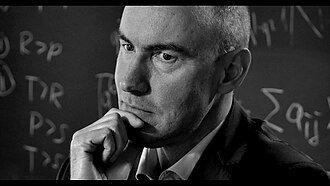
马丁·诺瓦克 主主持人
EDITED TRANSCRIPT · 依据现场录音编译整理,可划线生成便签
编者按:2015 年,国际新制度经济学学会(ISNIE)年会邀请哈佛大学演化动力学项目主任、数学生物学家马丁·诺瓦克发表主题演讲。诺瓦克以演化博弈论研究合作的起源著称,著有《超级合作者》一书。演讲从三十亿年前的细菌讲到纽约地铁英雄,梳理了合作演化的五种机制,并以一项关于「与未来世代合作」的实验收尾,随后与在场的制度经济学家进行了问答。本文依据现场录音编译整理。

开场介绍

主持人: 下午好,严格说来也许该道一声晚上好了。希望各位在这届年会上过得和我一样愉快。本学会(不久之后就要更名了)有一个很好的传统:为了给制度分析引入新的视角,每年都邀请一位杰出学者来做主题演讲,这位学者的工作要能给我们的会员,以及所有研究制度的人,带来惊人、新颖而富有创造性的洞见。我接手筹办这届年会时,得到的指示之一,就是为主题演讲找一位「才华横溢、引人入胜」,而且,引用原话,「跳出框框」的人。「跳出框框」这几个字一入耳,我脑子里立刻蹦出了马丁·诺瓦克的名字。非常幸运,他答应了。下面我做一个简短的介绍,然后把时间交给他。

主持人: 马丁·诺瓦克是哈佛大学生物学与数学教授,演化动力学项目主任。此前他在普林斯顿高等研究院创建了第一个理论生物学项目。他在数学与生物学交汇处的科学成就多得数不清,我们可以用整个晚上来谈。他在演化过程的数学描述上做过开创性的工作,包括合作的演化、人类语言的演化,以及病毒感染与人类癌症的动力学。他在演化博弈论领域著述丰富,在利他行为的机制上,也就是今天的题目上,做过极富创造性的研究。他获奖无数,包括牛津大学韦尔登纪念奖、斯坦福大学戴维·斯塔尔·乔丹奖、数学生物学学会的大久保明奖。他发表了三百五十多篇论文,出版了四本书,其中一本各位可能刚读过,叫《超级合作者:利他、演化,以及我们为何需要彼此才能成功》。没读过的应该去读,不过请等演讲结束之后再读。有请马丁。

数羊的笑话

诺瓦克: 非常感谢。能来这里我深感荣幸。这份邀请实在无法拒绝,因为主办方答应替我出路费。

诺瓦克: 我是一名数学生物学家。我想先告诉各位什么叫数学生物学家。有一个牧羊人带着一群羊,一个人走过来说:「要是我能猜中你这群羊的数目,能送我一只吗?」牧羊人说:「行,你试试。」那人四下看了看,说:「一百一十二只。」牧羊人大吃一惊,数目分毫不差。那人就抱起一只羊要走。牧羊人说:「等等,要是我能猜出你的职业,能把羊还给我吗?」「请说。」「你一定是数学生物学家。」「你怎么知道?」「因为你抱走的是我的狗。」所以在我这个行当里,关键是把数字算对。希望今晚我们能把合作演化的数字算对。

舍己为人的谜题

诺瓦克: 合作是一种现象。第一张幻灯片上我举了三个例子。从左到右:三十亿年前,细菌就已经在合作了。它们结成丝状体,每隔一段就有一个细胞死去,用来供养其他细胞。这个细胞放弃了自己的繁殖,去帮助别的细胞繁殖。如果世界只是达尔文式的竞争和自然选择,为什么会这样?自然选择怎么可能造出一个不繁殖、反而去提高别人繁殖率的个体?幻灯片中间是社会性昆虫,蚂蚁,大约在一亿两千五百万年前出现。同样,工蚁不繁殖,却帮助蚁后繁殖。自然选择为什么要造出这样的个体?达尔文在他的书里就已经提出了这个问题。最后一个例子来自我们自己的时代,当然是演化意义上的「我们的时代」,两千年前。这是一幅好撒玛利亚人的画,其实是梵高的作品,画的是好撒玛利亚人。好撒玛利亚人在帮助别人。如果我们都处在竞争之中,像在法学院那样,为什么还要去帮任何人?

诺瓦克: 可人就是会互相帮助。再举一个例子。福岛核电站熔毁的时候,一位二十多岁的工人自愿加入了重返厂区的队伍。他知道这个选择可能让他此后无法结婚生子,因为他怕把健康后果转嫁给家人。他在采访中说:「能干这份活的只有我们这些人。我单身,年轻,觉得帮忙解决这个问题是我的责任。」还是那个问题:他为什么要这么做?

诺瓦克: 再一个例子。这位先生在纽约地铁站台上等车,带着两个女儿去上学。他看见另一个人癫痫发作,身体不受控制地抽动,然后跌下了站台,摔在轨道上。他看到了这一幕,而列车的车头灯已经出现,列车正在进站。他跳下站台想把那人拉上来,却发现来不及了,车已经太近。于是他扑在那人身上,列车从两人上方驶过,两人都毫发无伤。他叫韦斯利·奥特里,后来成了「纽约地铁英雄」,受到布隆伯格市长的表彰,大家都在赞颂他的勇敢。

诺瓦克: 我们当中很少有人能做到这一点,很少有人生来就是英雄的料。但我们所有人都会有那种感觉:天哪,太危险了,我能做点什么帮帮这个人?如果有人陷入危险、命悬一线,我们会本能地想去帮。可我们为什么会有这种本能?如果一切只是竞争,只是适者生存,演化为什么要给我们装上这样的本能?动物也有这种本能吗?有些动物有吗?所有动物都有吗?还是说,同类被吃掉了,它们根本不在乎?这就是生物学里的合作问题。

宇宙与生命的时间表

诺瓦克: 我想从最开始的开始讲起。这是我每次讲课都放的第一张幻灯片。每年秋天开课,我都告诉学生:真正重要的日期没有几个,这几个就是最重要的。你可以问,一切是什么时候开始的?去问物理学家,他们会告诉你:一百三十七亿年前。你还可以问,太阳系是什么时候形成的?物理学家又会给你一个非常精确的答案:四十六亿年前,准确说是四十五亿六千七百万年前,太阳点燃。此后很快,地球形成。地球诞生两千五百万年的时候,被一颗大约火星大小的行星撞击,由此产生了月球,也产生了板块构造。板块构造对碳循环至关重要,碳循环使生命起源成为可能。这次撞击大概也造就了地球的磁场,磁场对我们所知的这种生命同样极为重要。这颗行星上发生了一连串惊人的巧合,才有了我们所知的生命起源和演化。

诺瓦克: 不过我觉得在某种意义上,事情也可以反过来看:演化和生命对环境的适应如此彻底,不管我们身在何处,都会觉得那里正好适合我们。这些巧合全都发生了,简直是奇迹。我们在这里,是因为我们对这些条件适应得太好了。所以每当你在一片宁静祥和中仰望月亮,请记住,每次我看到月亮,想到的都是那场暴烈的起源。我们是怎么知道这些的?我们知道,是因为月球是由地球的地幔构成的。如果月球像地球一样是单独形成的,它也会有一个核。它没有地球那样的核。而且相对于地球来说,它也太大了。

诺瓦克: 接下来到生物学,日期就不像物理学那样清楚了。大多数人认为,生命起源于地球,每一位科学家都这么想。还有另一种可能:我们是被细菌孢子「授精」的。我认为这并非完全不合理,因为那些孢子可能藏在行星碎块里,而那些碎块本来就在引力坍缩形成太阳系的那个盘里。但多数人认为生命起源于地球,如果是这样,那大约是四十亿年前。我们确知的是,三十五亿年前已经有细菌生命的化学证据,这一点在那个领域是公认的。所以三十五亿年前,这颗行星肯定已经布满了细菌。有人想把时间再往前推一点,到三十八亿年,但三十五亿是确定的。三十亿年前,这是一颗只有细菌的行星。你知道吗,到今天也没变多少。惊人的是,如果你问地球上有多少个细胞,你只需要数细菌细胞就行了,估计一下就够。答案大约是十的三十次方。十的三十次方个细胞,全是细菌,其余的不过是零头。细胞总数里,细菌压倒一切。就连人体内,细菌细胞也比人的细胞多。如果把一个人身上所有的人类细胞都拿掉,那里还坐着一个「人」。

诺瓦克: 然后,过了大约十七亿年,高等细胞才出现,也就是有细胞核和细胞器的细胞。高等细胞构成了植物、动物和其他一切。从细菌的世界走到高等细胞,花了十七亿年。我们其实不知道它们是怎么立足的:在一个每个生态位都被细菌占满的世界里,它们凭什么能冒出来?它们利用了什么细菌尚未充分利用的东西?总之它们出现了。然后,大约六亿年前,出现了复杂的多细胞生物。氧气骤然增加,允许更大的生物体存在。所谓复杂多细胞,是指生物体大到有了内部和外部,你得操心怎么把氧气送到里面去。六亿年前的这些复杂生命形式,随后分化出植物、动物和真菌这几个主要的界。

诺瓦克: 我和爱德华·威尔逊共事,出于礼貌,我在这份大事年表里也加上了社会性昆虫的出现,大约一亿两千万年前,因为那是一种新的形式:社会性昆虫的超级生物(superorganism)是生物适应的一种特殊形态。

语言与文化演化

诺瓦克: 但如果你问,过去六亿年里最有意思的事情是什么?只说一件,过去六亿年里真正改变了一切、扭转全局的事情,只有一件,那就是人类语言的演化。为什么?因为突然之间,我们有了一种新的演化方式。没有人类语言,只有基因演化;有了人类语言,就有了文化演化。人类语言是文化演化的载体。信息不再只靠基因传播,还靠交流传播。一群人彼此交谈、互相学习,这就是一个演化过程,它具有的规律性,和我们用来描述基因演化过程的数学是同一种,二者非常相似。

诺瓦克: 在这幅大图景里,我觉得最迷人的一点是:合作才是演化过程真正的总建筑师。是合作把你从简单的组织形式带向更高级的形式,从单细胞到多细胞生物,从单个动物到动物社会,再到人类社会。

演化的第三支柱

诺瓦克: 那么什么是演化?演化的究竟是什么?提出这个问题的是哈佛的一位教授,恩斯特·迈尔,他活了一百多岁。他写了一本很美的书,《演化是什么》,我向每一个人推荐。他在书里解释了演化是什么,还解释说,在他出现并向人们说明物种如何形成之前,没有人真正理解达尔文主义。这个看法是对的。那么演化的究竟是什么?他说,我们平常笼统地讲基因的演化、大脑的演化、神经系统的演化,但那都只是打比方。真正在演化的只有一样东西:种群,由繁殖个体组成的种群。演化过程的载体是种群,一个通过基因或者通过文化进行繁殖的种群。突变意味着出现了新的类型;选择意味着随着时间推移,类型的构成发生改变,因为有些类型比别的增长得快。这是达尔文演化的两个基本要素:突变产生变异,选择作用于变异。选择就是一种竞争,某个东西增长得比别的快,更擅长占据那个生态位。

诺瓦克: 过去十年里,我提议在这份清单上加上第三条原则:合作。合作的意思是,各个单元开始互相协作,协作得越来越紧密,直到它们变成一个新的单元。多细胞生物就是这样出现的。反过来,癌症就是人体细胞之间合作的崩溃:细胞发生突变,退回到只管复制的原始程序。

诺瓦克: 什么是合作?意思是个体互相帮助,这些个体可以是病毒、细胞、动物或人。有一个施惠者,施惠者付出代价,受惠者得到收益。这不是最完整的合作定义,但它简单直观,足够支撑今晚这场演讲。要更精确的定义,可以深入博弈论。

囚徒困境与现场投票

诺瓦克: 现在有两个个体,一个可能合作,另一个接受帮助,这就构成了一个博弈。如果双方都可以在合作与背叛之间选择,这个博弈就叫囚徒困境(Prisoner's Dilemma)。这里写的是囚徒困境的支付矩阵,用收益 B 和代价 C 两个符号表示。等一下我要请各位和我玩这个游戏,这就是你们会得到的报酬。如果你合作,我也合作,你的收益是 B 减 C:你从我的合作里得到收益 B,但要为自己的合作付出代价 C。如果你合作而我背叛,你的收益就是负 C:你只付出代价,没有收益,因为我选择了不帮你。如果我合作而你背叛,你的收益是 B,没有代价,只有收益。如果我们都背叛,没有代价,没有收益,就是零。只要收益大于代价,代价大于零,这个博弈就是囚徒困境。这就是支付矩阵。现在你们必须做出选择:合作还是背叛?想合作的请举手。想背叛的请举手。

诺瓦克: 我在北京对两千人的听众玩过这个游戏。两千个北京人里有多少背叛者?零,绝对的零。这里大致是一半对一半,很有意思。常见的情况是三分之二合作,或者三分之一合作。总之这是一个合作的群体。

诺瓦克: 按照博弈论的思路,作为经济学家(各位都是经济学家,都知道约翰·纳什),你们本可以、或者说本应该这样分析这个博弈。你不知道我会怎么做。假设我合作,你要在 B 减 C 和 B 之间选,B 比 B 减 C 好。所以如果你认为我会合作,你会选择背叛。如果我背叛,你要在负 C 和零之间选,零比负 C 好。所以如果你认为我会背叛,你也还是背叛更好。不管你假设我做什么,背叛对你都更有利。如果我用同样的方式分析,我们两人最后都背叛。这时我们都不开心,因为我们的收益是零。要是我们没有选择纳什均衡,本来可以得到大于零的 B 减 C。这就是困境所在:理性的玩家背叛,最后收益很低;两个非理性的玩家可能合作,反而收益更高。这差不多就是博弈论对理性的定义。有时我的学生听我管这叫「理性」会很不高兴,但这确实是博弈论中严格的数学定义:分析支付矩阵,然后选择纳什均衡。我们这里用的这套数学,是冯·诺伊曼和摩根斯坦战后在普林斯顿合作发明的。

自然选择不利于合作

诺瓦克: 刚才我用理性来分析这个博弈,但在生物学里我们不用理性。谈到细胞或者蚂蚁,我们不会设想它们坐在支付矩阵前面,问自己纳什均衡在哪里。有意思的是,自然选择替它们做了这件事。如果有一群合作者和背叛者随机相遇,背叛者的平均收益总是高于合作者的平均收益,因此背叛者繁殖得更好。这就是演化博弈论的思想:收益意味着繁殖成功。过一段时间,自然选择偏袒背叛者,直到合作者被消灭殆尽。所以自然选择是反对合作的。这正是我们的直觉:如果一切都是竞争,我们为什么要帮别人?

诺瓦克: 因此自然选择需要帮助,才能让合作者压过背叛者。因为合作就在那里,大量存在,非常重要。我们怎样才能让自然选择「明白」合作的好处?关于这个问题,大概已经写了三千篇论文。在我看来,这些论文全部可以归纳为五大类,五种机制。这就是我今晚要讨论的合作演化的机制:直接互惠、间接互惠、空间选择、群体选择、亲缘选择。它们可以看作五种互动结构,在这些结构之下,自然选择能够看见合作的好处。

直接互惠:以牙还牙

诺瓦克: 直接互惠(direct reciprocity)的思想是:我帮你,你帮我。博弈现在是重复进行的,我们玩的是重复囚徒困境。人们不是只玩一次,而是玩很多次。刚才和我合作的那些人,按我们的分析,他们的直觉大概是:我们大多数重要的互动都是重复的,而在重复互动中,合作确实是有道理的。还有另一种直觉,我们讲到第二个机制时再说。总之,一旦博弈重复进行,背叛就不再是唯一的最优选择。经济学家非常清楚,有一个民间定理(folk theorem):在重复博弈中,只要重复得足够久,就可以得到其他均衡。

诺瓦克: 但密歇根大学安娜堡分校的政治学家罗伯特·阿克塞尔罗德在七十年代末提出了另一个问题:玩这个博弈,什么才是好策略?他说,把你们的计算机程序寄给我,我让这些程序互相对战,看谁赢。出人意料的是,提交上来的最简单的程序赢了。它是加拿大籍的俄裔博弈论学者阿纳托尔·拉波波特提交的,只有三行:我先合作;如果你合作,我下一轮合作;如果你背叛,我下一轮背叛。我先合作,然后你上一轮做什么,我就做什么。想想这个策略,你实际上是在和错后一步的自己对战。就好像我举起一面镜子,你在和自己下棋:你现在怎么做,我下一轮就怎么做。阿克塞尔罗德办了两届锦标赛,以牙还牙(Tit-for-Tat)两届都赢了。第一届它赢就已经出人意料,第二届人们专门设计了要胜过以牙还牙的策略,它还是赢了。那时候,以牙还牙成了这个博弈的世界冠军。人们写了很多论文和书来解释这种以牙还牙式的行为,在动物身上、在学生身上,到处都能找到它。它的道理就是:以眼还眼,以牙还牙。

宽容、和平与战争的循环

诺瓦克: 这位世界冠军有一个阿喀琉斯之踵:它太不宽容了。两个以牙还牙的玩家对局,只要一方开始背叛,另一方就会报复,然后双方就再也走不出这种互相报复。我在维也纳跟随卡尔·西格蒙德开始做博士论文的时候,领域的状况就是这样,我们想往前再走一步。和阿克塞尔罗德不同,我们不想让人来提交任意的策略,而是让自然选择来设计策略:由突变和选择来设计,由选择在策略之间做取舍。于是我们做了一场计算机锦标赛,策略是随机生成的,同时配合对这些互动的数学分析。

诺瓦克: 让自然选择来设计策略,起点是一个随机的策略集合。如果大家随机地玩这个博弈,第一个赢家总是「永远背叛」。如果人们玩的策略毫无章法,我一直背叛就能赢。妙就妙在,事情没有到此为止,这对我的博士论文来说是好事。接下来发生的是,突然冒出了一小群以牙还牙的玩家。如果这里所有人都永远背叛,而少数几个人开始玩以牙还牙,他们彼此之间就能得到不错的收益,自然选择就可以开始偏袒他们。而且他们不太会被永远背叛者剥削,因为一遇到永远背叛者,他们立刻转为报复。

诺瓦克: 但事情还没完。以牙还牙没能持久,在这个环境里它立刻被另一个策略取代了,那就是宽容的以牙还牙(Generous Tit-for-Tat)。什么是宽容的以牙还牙?我先合作;如果你合作,我合作;如果你背叛,我以某个概率仍然合作。这是一个关于宽恕的概率配方:只要你合作,我就合作;但如果你背叛,我仍有一定概率继续合作,试图重建这段关系。关键在于,这是一个随机决定,你无法预测我会不会这么做、什么时候这么做。但它能通过宽恕挽救这段关系。这个策略在我们的分析中表现好得多,原因是我们的分析里天然允许出错。策略不是确定无疑地严格照章执行,而是像在自然环境里那样会犯错,而这些错误必须靠宽恕来弥补。所以,在一个可能出错的世界里,自然选择发明了宽恕。

诺瓦克: 现在假如每个人都玩宽容的以牙还牙,接下来的意外是:我们突然滑向了「永远合作」。如果这里所有人都是宽容的以牙还牙,我玩无条件合作,我没有任何劣势,我是一个中性突变体。这是中性演化,就像鸟类到了一个没有捕食者的岛上,就失去了飞翔的能力。我们从宽容的以牙还牙走向无条件合作。到了这一步,你能预见接下来会发生什么:我们招来了永远背叛者的入侵。于是我们得到了一个关于战争与和平交替的数学模型,关于人类历史,关于经济周期的繁荣与崩溃。我在这个领域的全部工作,讲的始终是循环。经济学家热爱均衡,他们喜欢问:均衡在哪里?可在大多数演化分析中,我们看到的从来不是均衡,而永远是一种动态局面:合作建立起来,被摧毁,又必须重建。这是第一个机制。

间接互惠与语言起源

诺瓦克: 第二个机制是间接互惠(indirect reciprocity)。间接互惠的思想是:我帮你,别人帮我。不管纽约地铁英雄的动机是什么,他想的肯定不是「这是重复囚徒困境的第一轮,我先合作」。这里的思路是,你和别人互动,而互动被旁人观察到。你和某人合作,你的声誉就提升;你背叛某人,你的声誉就受损。这是一个完全直观的想法。我敢说,我们和他人的所有重要互动,要么是重复的,要么发生在一个声誉有分量的场合里。实验上的证实是:人们会帮助那些帮助过别人的人,乐于助人的人最终收益更高。这些实验可以让学生坐在电脑屏幕前完成,现在我们也在亚马逊的众包平台 Mechanical Turk 上做。

诺瓦克: 这里的想法是,八卦传播声誉。我们互相谈论别人。eBay 和亚马逊上的评价,根本的思路也是这个:如果卖家声誉好,我们愿意付更高的价钱。我们对八卦着迷,茶歇时的闲聊,我们通常就是在互相谈论别人,打听别人的事。英国做过一项定量研究,研究者在往返的火车上听乘客的谈话,其中六成被归为八卦,也就是和间接互惠相关的内容。

诺瓦克: 这些间接互惠的博弈推动了社会智能和人类语言的演化,因为它们在认知上要求很高。你必须分析周围的局面,问自己:谁对谁做了什么?你还必须能够和别人谈论第三者,叫得出名字。在人类语言之外,我们不知道任何这样的例子,但事实就是如此。我在哈佛的朋友戴维·黑格说过:直接互惠需要一张脸,间接互惠需要一个名字。要同时和各种各样的人玩重复博弈,我必须认得出他们,面孔识别是生物体非常重要的一种能力。而间接互惠要求我们能够互相谈论别人,这正是催生人类语言的那股推力。

空间、群体与亲缘

诺瓦克: 第三个机制是空间选择(spatial selection)。空间选择的思想是:邻居互相帮助。合作的社区吸引新来者,合作者在稳定的环境中结成集群,而这些集群能够存活下来。周围可能是一片背叛者的海洋,但合作者主要和彼此互动,这样自然选择就能在这些空间结构中看见合作的好处。这是在空间博弈或者社交网络的框架下分析的。同样的思路适用于社交网络:你主要和朋友互动,你和朋友们合作,就算周围有背叛者,你也在某种程度上保护了自己,因为你的互动大多发生在朋友之间。还有一种我们称为演化集合论(evolutionary set theory)的东西:人们归属于不同的集合,比如某个系、某个街区、某个网球俱乐部。人们和同一集合里的人互动,并且模仿成功者的策略和集合归属。如果他们发现某个群体里合作运转得很好,可能就会想加入进去。

诺瓦克: 第四个机制是群体选择(group selection)。群体选择可以追溯到达尔文,他在 1871 年的《人类的由来》里写道:「毫无疑问,一个部落如果有许多成员随时准备互相援助,并为共同的利益牺牲自己,它就会战胜其他部落,而这就是自然选择。」他毫不犹豫地把自然选择的思想从个体扩展出去,去思考群体之间的竞争:一个群体里的人互相帮助,另一个群体里的人不帮,乐于助人的群体战胜不乐于助人的群体。

诺瓦克: 第五个机制是亲缘选择(kin selection)。霍尔丹有一句妙语:「我愿意跳进河里,去救两个兄弟或者八个堂表兄弟。」意思是,如果我有一个基因让我这么做,这个基因也在我兄弟身上的概率是二分之一。那么,要让自然选择偏袒这个基因,我这样做的死亡风险必须小于二分之一,或者我必须救上两个兄弟。这在某种意义上就是裙带关系的逻辑:我们帮助近亲。与这个现象相伴的还有一套数学分析,叫广义适合度理论(inclusive fitness theory),我对它批评得很厉害。这是一种不严格的处理演化数学的方式,流行了很长时间,也有相当数量的追随者,但在演化的数学分析中它说不通。这场争论仍在进行,争的主要不是现象本身,而是究竟该怎么分析它,是否应该信任演化过程的数学语言。我非常信任,而喜欢广义适合度那套数学的人信任得少一些。

诺瓦克: 我讲的合作演化的五种机制是:直接互惠,我帮你,你帮我;间接互惠,我帮你,别人帮我;空间选择,邻居互相帮助;群体选择,合作者群体在竞争中胜过其他群体;亲缘选择,与基因上的亲属合作。结论是:演化不只是竞争,也是合作。哲学家有时也喜欢这个结论,我们甚至因此和哈佛神学院合办过一个项目。如果基本原则里也有合作,那这个世界毕竟没那么糟。合作是演化的第三支柱,是生物复杂性的建筑师。

与未来世代合作

诺瓦克: 现在有一个非常大的问题。我们已经差不多征服了整个星球,主宰了几乎每一个生态系统。这很危险,因为我们在榨取它。为了可持续,我们必须学会全球合作。过去我们只需要在本地学会合作:和朋友、和家人、和村子里的人。可突然之间,这些互动变成了全球性的,我们必须和别的国家合作,尽管它们的处境可能和我们截然不同。这要怎么做?如果你认真想想怎样让气候可持续,问题还要复杂得多,因为现在实际上要求你付出代价,让未来世代得到收益。我们怎样才能找到机制,让人们学会与未来合作?我认为这就是制度发挥作用的地方,也是这个会议也许能帮上忙的地方。

诺瓦克: 我在剑桥参加过一个会议,英国科学大臣戴维·威利茨也在。他在演讲里提到一个简单的例子,启发我做了接下来要展示的实验。他说的是:英格兰有一片森林,有人想把它砍掉,也有人想保住它。保护的一方先说:现在别砍,木材价格在涨,现在砍从财务上说是个坏决定。对方听了,但没有被说服,这个理由不够有力。第二次尝试是:请别砍,本地人拿它当休闲场所。对方还是没有被说服。最后他们说:你们没有权利砍掉这片森林,因为它是前人留给你们的,现在你们有义务把它留给后人。出人意料,这个理由赢了。

诺瓦克: 从那个会议回来,在机场我就开始想,怎么把这件事做成实验。我们花了些时间才设计出来。接下来给各位看的视频是《自然》杂志做的。我们的实验发表在《自然》上,他们做了一段视频来解释它。这个实验并没有真正解决威利茨描述的那个现象,但它引出了一个问题:与未来合作究竟是什么,我们怎样才能做到?令人惊喜的是,他们做的视频非常直观,看起来很有意思。

视频旁白: 我们该给未来世代留下什么?多数人都同意,我们应该为未来保存环境这样的资源,可我们并不擅长这么做。为什么?我们怎样才能更好地与后来的世代合作?传统上,经济学家在模型里假设人大体上既理性又自私。多数公共政策都是想让自私的人做出有利于整体的行为,比如重复使用塑料袋有奖励,想要新袋子就得付钱。但有证据表明,只要别人也合作,我们愿意为更大的利益而合作。哈佛的一个团队对此做了检验。他们为一个在线游戏招募了好几「代」玩家。每一代有五名成员,共享一百个单位的资源。如果剩下的超过一半,资源就能传到下一代,并重新补足到一百。团队试了几种做法。如果让人们自己决定从资源池里拿多少,资源撑不到下一代,通常只是一两个大拿者造成的。研究者随后换了一个版本:五名成员投票决定拿多少,每人拿走的是投票的平均数。这样投票不符合自私的利益,却有利于投票者永远不会遇到的未来世代。顺便说一句,玩家之间互不相识。这样一来资源就可持续了,在有些局里资源延续了十四代。但它只有在人人都投票时才奏效。在另一个变体里,只有少数人投票,其余人自由选择,资源池就被掏空了。作者说,投票之所以有效,一是因为占多数的合作型玩家可以约束抢夺者,二是因为合作者可以放心,自己的努力不会白费。没有人想当冤大头。那么政府怎样利用我们对未来世代的温情与合作意愿?只有在投票具有约束力时,我们的合作天性才能被利用起来。这就是为什么《京都议定书》这类关于碳排放的非约束性协议没什么力量。国际政治永远不会容易。团队接下来打算研究不同国家的居民怎样玩这个游戏,看看文化是否影响合作。在此期间,这个思路也许在更本地的层面最管用。比如,如果某个海域的每一位渔民都对每日最大捕捞量投票,而且人人都要负责,这个社区就更有希望为未来保住鱼群。这项研究表明,人类确实具备许多人期盼已久的一种能力。爱因斯坦说过:一切真正有价值的东西,都只能通过许多人无私的合作来实现。

投票保住资源池

诺瓦克: 实验是这样的:五个人一组,可以从一个资源池里收割。我们告诉他们,只要池子里留下五十个单位,我们就会为后面的人把它补满。我们说,你们是第一组五个人,你们之后还有十组、每组五人在等着。最初的版本不在网上做,被试比如是哈佛学生。结果第一轮就有九成的资源池被毁掉了。他们基本上什么也没给后面的人留下,让后来者无法获得收入。在线实验也证实了这一点。

诺瓦克: 后来奏效的办法是投票,而不是让每个人拿走自己觉得合适的数量。投票的规则是,中位数分给每一个人。它奏效,是因为大多数人投出了利他的票。这正是令人惊讶的地方。他们投利他的票没有任何理性上的理由,但他们就是这么投了。只要能向他们保证每个人拿到的都是中位数,也就是说,我采取利他行动,不会因为别人拿得更多而被剥削,那么绝大多数人就会投利他的票。所以,只要有一个制度能实施有约束力的投票,这套系统就能运转。而令人惊讶的观察结果是,一个庞大的利他多数投票反对了自身利益。通常人们对制度设计的想法是,要设计得让人们自私地投票也能得到好结果,但在这里,人们是无私地投票得到了好结果。在全球尺度上,在真正要紧的地方,怎么做到这一点,我很难想象。但我认为,方向就在这里。非常感谢。

问答:有限回合与倒推法

提问者: 我有两个问题。第一个,对经济学家来说,末期问题非常重要。在重复博弈中谈合作,我们知道,如果博弈无限进行,合作可以维持;但如果有最后一期,一切就会瓦解。我想请你就此谈谈。你描述的那些情形,听起来像是无限期的。谈基因的时候,这也许是对的假设,因为基因产生基因,一代代下去。但我不太清楚。第二个问题,这个会议上的人非常关心合约和组织之类的东西。你最后那个例子有点触及这一点,虽然它更复杂,是关于未来世代的。但我们感兴趣的基本上是那些没法指望合作的情形,合作是有限度的。你的囚徒困境例子有 B 和 C,我想这里多数人会说,如果背叛的收益足够大,那套机制就不能指望了,你需要某种由法院执行的有约束力的合约。在我看来,你的故事漏掉了这一块:人们彼此友善能带来的好处是有上限的,它固然重要,但有它的限度。

诺瓦克: 很好,两点意见都非常重要。第一点,如果重复博弈有一个最后一期,比如我告诉大家玩五次,我在课上就和学生这么玩。你们玩五轮,到了最后一轮,之后没有未来了,所以最后一轮应该背叛。但如果我们都知道第五轮会背叛,那么第四轮也显然应该背叛。如果我们知道第四轮和第五轮都会背叛,第三轮就该背叛,以此类推。这叫倒推法(backward induction)。按照倒推法,如果我告诉你博弈恰好五轮,理性的做法就是一路背叛。对此我有两点回应。

诺瓦克: 一是我们在分析中通常怎么绕开它:我们用开放式的博弈,也就是每一轮之后都有一定概率再来一轮。我们不告诉你恰好玩五次,而是说,每一轮都有百分之九十的可能还有下一轮。这样你就不知道终点在哪里。这个「再来一轮的概率」也可以解释成对未来的贴现:现在到手的收益,比未来的承诺更值钱。我们经常把它归入这一个参数:再来一轮的概率,或者对未来的贴现。所以博弈不一定是无限重复的,但也不具备「恰好有最后一轮」这个特征。

诺瓦克: 不过,即便博弈确有最后一轮,也会发生一件很有意思的事:如果我告诉学生你们玩五次,他们照样合作。第一轮合作,第二轮合作,一直到他们开始担心为止。人们其实不太做倒推。理性的博弈论分析,也就是只玩纳什均衡,在这种情况下就是背叛。但我们的演化分析给出的结果,和人们的实际行为要接近得多,也就是他们会试着合作。因为在我们的演化分析里有一个量,叫选择强度(intensity of selection)。选择强度弱,意味着人们的困惑程度高,这时你恰恰可以演化出这样一种行为:即使有末期效应,他们仍然合作。而且我们用来分析这种局面的博弈,比重复囚徒困境还要强,因为它带有收益递增的乘数效应。所以末期效应非常重要。

诺瓦克: 第二点,如果代价与收益之比变得不利,这些机制中的许多都会失灵。所有这些理论都伴随着精确的数学计算,我总是想搞清楚的正是:在什么样的代价收益比之下它仍然有效。我们给出的是精确的条件:背叛的诱惑可以大到什么程度,机制仍然成功。以重复囚徒困境为例,最关键的条件是,再来一轮的概率必须大于代价收益比。满足这个条件,自然选择就有机会偏袒合作;不满足,就没有任何机会。所以,如果你说现实世界中可能存在这样的情形:背叛的诱惑太大,在给定的延续概率下,这个机制根本不运转,那这和我们的分析是一致的。你需要别的东西,可以说你需要的就是制度。

问答:惩罚与制度

诺瓦克: 在我们这个领域,我们也开始分析制度的效果,这非常迷人。我们是分两步走进这个问题的。第一步是一个提议:可以用惩罚来稳定合作。引入的是同伴惩罚(peer punishment):人们在公共品博弈中可以选择合作或不合作,公共品博弈就是多于两人的囚徒困境。之后他们可以付出一点代价,去扣掉别人的收益,我们称之为同伴惩罚。同伴惩罚可以让人们在公共品博弈中合作,但它有个问题:它会引发报复。如果我被惩罚了,我可能去报复惩罚我的人,而不是提高自己的合作水平。所以同伴惩罚在某些情况下有效,但我发现,只要这种互动方式可行,它更可能被用来做坏事,而不是用来维护公共合作,因为它被用来强化某些人对另一些人的支配。大多数制度实际上都想确保同伴惩罚不会发生,因为那会毁掉群体的生产力。

诺瓦克: 所以,与其让个人在这些情形下惩罚,下一步是说:让我们建立一个制度,由制度来惩罚公共品博弈中的背叛者。在我们的分析中,通常是这样做的:先问人们,你们愿不愿意出钱建立这样一个制度?如果出钱的人足够多,制度就生效,此后凡是在公共品博弈中背叛的人,都会自动受到这个制度的惩罚。这似乎比同伴惩罚有效得多。这就是支持制度的论证。

问答:不确定性与选择强度

提问者: 我的问题和上一个密切相关。在估计合作的收益或者不合作的代价时存在不确定性,这种不确定性怎样影响合作的动机,以及同意建立一个惩罚不合作的制度的动机?在我看来,建立制度这件事本身,会遇到和当初达成合作时一样的囚徒困境,因为制度本身就可以强制合作。

诺瓦克: 各位是制度方面的专家,我是来向各位学习的。但我的直觉是,许多制度并不是由一群用心良苦的人建立的,那些人想把事情做对,想让所有人受益。那是建立一个伟大的理想主义制度的方式。但还有另一种建立制度的方式:我现在拥有的比别人多得多,我得确保有一支警察力量来保卫我已有的东西。这样的制度,是由那些需要保护现状的人建立的。

诺瓦克: 你问题的另一部分是关于不确定性。不确定性以两种方式进入我们的分析,我们觉得这非常有意思。设想一个社会情境,策略是通过人们互相学习来「繁殖」的。我们通常这样描述:人们观察彼此的收入、彼此的收益,然后试图采纳某个在博弈中表现好的人的策略。这里有两个层次的困惑。一是关于策略的困惑:我看出你干得很好,但我没有完全弄懂你的策略,我向你学,却学错了。这就是我们所说的突变,突变是关于策略的困惑。另一个层次的不确定性是:我看着周围的人,想模仿收益最高的那一位,但我对收益的评估是模糊的,这是关于收益的不确定性。有趣的是,在我们的语言里,这就是选择强度。人们并不真正理解不同策略之间的差别,他们近乎随机地行动,只是略微偏向好的策略。正是这种选择强度上的不确定性,使得我们关于人类行为的生物学模型和实验室里实际观察到的非常接近,而完全理性的、只玩纳什均衡的分析,往往和实验室里观察到的不符。如果演化过程中对收益没有任何不确定性,也就是选择强度无穷大,我们就回到了纳什均衡的理性分析那个世界,二者完全一样。

问答:能否容纳制度设计

提问者: 演化博弈论试图预测制度的演化。那么这套分析工具能否刻画一个有智慧的规划者,一个通过某种零敲碎打的社会工程来有意创建制度的人?这套分析装置能捕捉到这一点吗?这会加速演化吗?也就是说,能否设想用这套装置建立一个演化过程的模型,让某条特定的法律规则作为这个演化过程的均衡结果出现?

诺瓦克: 我认为这会给我们这个领域带来一个迷人的新方向,而它目前要么根本不存在,要么至少不是主流。这正是我们此刻所缺少的。演化过程几乎是盲目的,没有一位工程师坐在上面设计它,只有一些对全局所知甚少的个体,因为做了某件事而被选择,最后产生了有益的结果。所以我认为,我们缺的正是你描述的东西,而追问它如何纳入演化的框架,会极其有趣。哈佛的生物学教授安德鲁·默里举过一个很有意思的例子:演化会怎样修一条从纽约到波士顿的铁路?它会从纽约朝各个方向铺铁轨,然后留下那条恰好通到波士顿的。它也能修出一条纽约到波士顿的铁路,但用的是这种办法。这就是生物学做事的典型方式。

问答:文化突变是否随机

提问者: 我想问方法论的问题。你的演讲从自然演化讲起,最后落到社会演化,并且强调有约束力的制度的作用。作为一个外行,我想知道这两者是怎么联系起来的。比如,在社会性动物的社会里,比如蚂蚁,有惩罚吗?

诺瓦克: 基因演化和文化演化是相关的现象,但我要说,它们不一定是同一个现象。有人为文化演化建立了精确的数学模型,通常就是直接拿基因演化的模型来用,说它们是一回事。但可能存在关键的差别,还没有人研究过。其中一个就是:突变的本质究竟是什么?在基因世界里,突变是 DNA 碱基结构的改变,非常接近一个随机过程。但在文化情境里,突变是一个新想法,而这个想法未必是完全随机产生的:可能有一个大脑在思考当前的局面,然后提出了一个新的见解。那么文化情境中的突变真的是随机的吗?还是背后另有东西?这是一个很深的问题,我不知道怎么回答。你可以说,好吧,这个人确实分析了周围的局面,但那一下突然引出见解的火花,仍然是大脑里的一个随机过程。不过我认为,突变的本质在文化情境和基因情境中可能有实质的不同。

问答:协调博弈

提问者: 据我理解,你的合作模型,或者说合作的基础案例,是囚徒困境。你认为这个框架能否表示另一种基础博弈?比如协调博弈:对角线上的结果虽然对称,却只有一个真正好,双方要做的是避开对角线之外的结果。这种合作能在你的框架里表示吗?

诺瓦克: 为了这场演讲的简洁和直接,我只给了收益和代价两个参数,它们实际上只是一个参数,收益代价比。我想把事情尽量简化。但我们实际的数学分析,从来都是对任意博弈进行的:对任意支付矩阵,囚徒困境也好,协调博弈也好。更一般地,我们会问:在所有博弈构成的世界里,什么才算合作困境?有些协调博弈我会算作合作困境,另一些则不算。这个数学框架是非常一般的。

主持人: 非常感谢。

本期讲者
马丁·诺瓦克哈佛大学生物学与数学教授、演化动力学项目主任,曾在普林斯顿高等研究院创立理论生物学项目。提出合作演化的五种机制,著有《超级合作者》,发表论文 350 余篇。
主持人2015 年 ISNIE(国际新制度经济学学会)年会的组织者,负责邀请主旨演讲人并做开场介绍。
章节 · 点击跳转视频
0:00 主持人介绍:跳出框框的数学生物学家 ▶ 正在看
2:18 细菌、蚂蚁与地铁英雄:达尔文的疑问 ▶ 正在看
7:04 宇宙、地球与生命的几个大日期 ▶ 正在看
11:18 人类语言:六亿年来唯一的转折点 ▶ 正在看
14:35 囚徒困境与纳什均衡的困局 ▶ 正在看
19:18 自然选择反对合作,五种机制登场 ▶ 正在看
20:20 直接互惠:一报还一报与宽恕的演化 ▶ 正在看
25:40 间接互惠:声誉、闲话与语言起源 ▶ 正在看
29:01 空间选择、群体选择与亲缘选择 ▶ 正在看
32:13 全球合作与「与未来合作」实验 ▶ 正在看
42:48 问答:终局效应、制度与惩罚 ▶ 正在看
53:45 问答:设计者、文化突变与协调博弈 ▶ 正在看
本期论点
本期回应
20:08
关于合作演化的全部研究可归纳为五种机制:直接互惠、间接互惠、空间选择、群体选择、亲缘选择 不止亲缘亲缘关系是合作的根本原因吗?
25:22
在一个会出错的世界里,自然选择会演化出宽恕 宽容更管用该怎么对待背叛者?
27:11
人与他人所有重要的互动,要么是重复的,要么发生在声誉起作用的情境里 重复与声誉信任建立在什么之上?
27:24
人们会帮助那些帮助别人的人,乐于助人的人最终收益更高 重复与声誉信任建立在什么之上?
31:32
广义适合度理论不是严格的演化数学,在演化的数学分析中讲不通 亲缘理论不成立亲缘关系是合作的根本原因吗?
32:26
演化不只是竞争也是合作,合作是演化的第三根支柱与生物复杂性的建筑师 不止亲缘亲缘关系是合作的根本原因吗?
32:58
人类已主宰几乎所有生态系统并过度攫取资源,要可持续就必须学会全球尺度的合作 全球合作缺失气候问题真正卡在哪里?
49:23
同伴惩罚更常被用来强化支配、造成破坏,而不是维系公共合作 惩罚有害该怎么对待背叛者?
19:09
生物不需要理性推理,自然选择已替它们完成了博弈矩阵的分析 简单模型够用简单的博弈模型能解释真实行为吗?
46:27
在有确定终局的重复博弈里,人们并不真的执行逆向归纳,仍会持续合作 模型解释不了简单的博弈模型能解释真实行为吗?
其他论点
11:55
过去六亿年里唯一真正改变一切的转折点是人类语言的出现
19:36
没有额外机制时,自然选择反对合作、偏袒背叛者,直到合作者被淘汰
28:18
间接互惠对认知要求极高,正是它催生了社会智能与人类语言的演化
41:23
只要能确信自己不被占便宜,多数人会投下违背自身私利的利他票 观察
57:43
文化演化中的突变与遗传突变有实质差别,新想法未必是随机产生的
01主持人介绍:跳出框框的数学生物学家
0:00
so good afternoon uh or maybe actually technically good evening um I hope that uh you're all enjoying isy as much as I am uh and so in keeping with the aspiration uh of the society to open up institutional analysis to uh New Perspectives uh isne soon to be co uh has a wonderful tradition of uh inviting each year uh an outstanding scholar whose work uh provides a startling creative and fresh set of insights of direct interest to our members uh and anybody working on institutions so when I heard that I was going to organize this conference I was told among other things to find for this keynote address somebody brilliant engaging and this is a quote outside the box uh and literally the moment I heard the words outside the box uh the name Martin Novak came into my mind so uh and very luckily he agreed uh to be our uh keynote speaker tonight uh and so I will give a very brief introduction and then uh hand it over to him so Martin Novak is a professor of biology and Mathematics at Harvard University and
那么,下午好——或者严格来说该说晚上好了。我希望大家都和我一样享受这次 ISNIE 会议。为了呼应本学会的宗旨——把制度分析向新的视角敞开——ISNIE,也就是即将更名的这个学会,有一个很好的传统:每年邀请一位杰出学者,他的研究能带来一组令人惊喜、富有创造力又新鲜的洞见,与我们的会员以及所有研究制度的人直接相关。所以当我听说要由我来筹办这次会议时,别人交代我的事情之一,就是为这场主旨演讲找一位聪明、有感染力,而且——我引用原话——「跳出框框」的人。而就在我听到「跳出框框」这几个字的那一刻,马丁·诺瓦克这个名字就浮现在我脑海里。非常幸运,他答应了今晚来做我们的主旨演讲人。下面我做一个非常简短的介绍,然后就交给他。马丁·诺瓦克是哈佛大学生物学与数学教授,演化动力学项目主任。
便签引用
1:03
director of the program for evolutionary Dynamics and he's previously established the first program in theoretical biology at uh Princeton's Institute for advanced study his scientific achievements at the very active intersection of mathematics and biology our Legion uh and we could spend the rest of the evening talking about that uh he's done pioneering work on the mathematical description of evolutionary processes including the evolutionary of uh evolution of cooperation and human language as well as the Dynamics of virus infections and human cancer he is also a prolific scholar uh in evolutionary Game Theory and has done highly creative work on the mechanisms of altruism uh his topic today he is the winner of numerous prizes and awards uh including the Wen Memorial prize of Oxford University uh the David star Jordan prize of Stanford University uh and the Akira auba prize of the society for mathematical biology he has authored over 350 papers and four books and among these is one you may
他此前还在普林斯顿高等研究院创建了那里第一个理论生物学项目。他在数学与生物学这个非常活跃的交叉领域成就斐然,我们完全可以用一整个晚上来谈这些。他在演化过程的数学刻画方面做了开创性的工作,包括合作的演化、人类语言的演化,以及病毒感染和人类癌症的动力学。他在演化博弈论方面也著述丰富,并且在利他行为的机制上做出了极具创造性的工作——这也是他今天的主题。他获得过众多奖项和荣誉,包括牛津大学的韦德-马丁纪念奖、斯坦福大学的大卫·斯塔尔·乔丹奖,以及数学生物学会的赤池-大久保奖。他发表过 350 多篇论文和四本书,其中有一本你们最近也许读过,叫《超级合作者:
便签引用
2:01
have read recently uh called super Cooperators altruism Evolution and why we need each other to succeed uh and if you haven't read this book you should but wait until after the lecture because I welcome Martin
利他、演化,以及为什么我们需要彼此才能成功》。如果你还没读过这本书,你应该读一读,不过等讲座结束之后再读,因为——欢迎马丁。
便签引用
02细菌、蚂蚁与地铁英雄:达尔文的疑问
2:18
back thank you very much it's a great honor for me to be here the invitation was absolutely irresistible because the organizers offered to pay for my transportation um so I'm a mathematical biologist uh and I would like to tell you what a mathematical biologist is uh there's a shepherd and the flock of sheep and the man comes by and says if I guess the correct number of sheep in your flock can I have one the shepherd says okay try so the man looks around and he says like 112 the the shepherd is amazed because the right number so the man picks up a sheep and wants to walk away the shepherd says hang on if I guess your profession can I have my sheep back yeah please try you must be medical biologist how did you know because you picked up my dog so in my field it's about getting the numbers right and I hope today tonight we will get the numbers right on evolution of cooperation cooperation is a phenomenon as I've Illustrated here on the first slide three instances um from left to right bacteria already
非常感谢,能来到这里我深感荣幸。这个邀请实在让人无法拒绝,因为主办方提出为我报销路费。我是一名数学生物学家,我想先告诉大家数学生物学家是什么。有一个牧羊人和一群羊,一个人走过来说:如果我猜中你羊群里羊的数目,我能带走一只吗?牧羊人说,行啊,你试试。那人四下看了看,说112 只。牧羊人很吃惊,因为这正是准确的数字。于是那人抱起一只羊要走,牧羊人说,等一下,如果我猜中你的职业,能把我的羊还给我吗?那人说,好啊,你试试。你一定是数学生物学家。你怎么知道的?因为你抱走的是我的狗。所以在我这个领域,关键是把数字弄对。我希望今天晚上我们能在合作的演化这件事上把数字弄对。合作是一种现象,我在第一张幻灯片上举了三个例子。从左到右:细菌在三十亿年前就已经在合作了。它们会形成丝状体,时不时会有一个
便签引用
3:24
cooperated three billion years ago they formed filaments and ever so often a cell dies in order to feed the others so the cell gives up its reproduction in order to help others reproduce why would that be if it was just a Darian setting of competition and natural selection how could natural selection lead to an individual who does not reproduce but even increase the reproduction rate of others in the in the middle of the slide you see social insects ands as they came into existence approximately 125 million years ago again workers do not reproduce but they help the queen reproduce why would natural selection build such individuals it's a question that was already asked by Darwin actually in his book and finally an example from our own time you know own time evolutionary speaking 2,000 years ago it's a painting of the Good Samaritan so there a painting of Vincent Van actually but it shows the Good Samaritan so the Good Samaritan helps somebody if we are all in competition like in the law school
细胞死掉,用来喂养其他细胞。也就是说,这个细胞放弃了自己的繁殖,去帮助别的细胞繁殖。如果这只是一个达尔文式的竞争与自然选择的场景,为什么会出现这种情况?自然选择怎么可能导致一个不繁殖、反而提高别人繁殖率的个体?在幻灯片中间,你们看到的是社会性昆虫,蚂蚁,它们出现在……大约在 1.25 亿年前出现的,同样,工蜂工蚁并不繁殖,但它们帮助蜂后蚁后繁殖。为什么自然选择会造就这样的个体?这个问题其实达尔文在他的书里就已经提出过了。最后再举一个来自我们自己这个时代的例子——从演化的尺度上说,两千年前算是我们自己的时代。这是一幅描绘好撒玛利亚人的画,实际上是梵高画的,但它画的是好撒玛利亚人。好撒玛利亚人帮助了别人。如果我们都在相互竞争,就像在法学院里那样,
便签引用
4:28
you know why would we help help anybody else people help each other here's another example as the Fukushima power plant was melting down a worker in his 20s was among those who volunteered to re-enter he knew the choice might prevent him from marrying or having children for fear of burdening them with health consequences in an interview he said there are only some of us who can do this job I'm single and young and feel it's my duty to help settle this problem again why why would he do that another example so this man was waiting in New York on the subway with his daughters on their way to school when he saw another person have a seizure and that other person with the seizure made some uncontrolled movements and then fell down in front of the tracks on the track so this man saw this person and the headlines of the train were already coming up as the train was pulling into the station and the man jumped down in order to get that other one up who had this seizure but realized it was too late as the train was already too close
那我们为什么会去帮别人?可人们确实会互相帮助。再举个例子:福岛核电站发生熔毁时,一位二十多岁的工人是自愿返回厂内的人之一。他知道这个选择可能让他今后无法结婚生子,因为他怕把健康后果带给家人。在一次采访中他说:能干这份活的只有我们几个人。我单身,又年轻,我觉得帮忙解决这个问题是我的责任。同样,为什么?他为什么要这么做?再举一个例子。这个人当时在纽约的地铁站里等车,带着两个女儿去上学,他看到另一个人突发癫痫,那个人抽搐着做出一些无法控制的动作,然后就摔了下去,摔在他前面的轨道上。这个人看见了,而列车的前灯已经出现了,车正驶进站台。他跳了下去,想把那个癫痫发作的人拉上来,但发现已经太迟了,列车已经太近。于是他把自己压在那个人身上,列车从他们两人上方开过,两个人都毫发无伤。他叫韦斯利·
便签引用
5:46
so he put himself over it and the train passed over both of them unharmed and he um his name is Wesley orrey and he then became the New York Subway Hero he was congratulated by Major Bloomberg and uh Mayor Bloomberg and uh celebrated for his bra bra bravery but so very few of us would be able to do this very few of us would sort of be carved out to be heroes but all of us would actually feel oh my God something very dangerous is happening here what can I do to help this person we have this instinctive reaction if somebody is in need in danger of life we would want to help but why do we have this why did Evolution equip us with such an instinct if it is just competition just survival of the fittest do animals have these instincts also do some animals have these instincts do all animals have these instincts or do they not care if another one of the same kind you know gets eaten that is the question of cooperation in biology and I want to start at the very very beginning uh this is the first slide that I put up
奥特里,后来成了“纽约地铁英雄”。他受到了布隆伯格市长的祝贺,被表彰为勇敢的典范。但我们当中很少有人能做到这一点,很少有人天生就是当英雄的料。可我们所有人都会有那种感觉:天哪,这里正在发生非常危险的事,我能做点什么去帮他?如果有人有需要、有生命危险,我们会有一种本能的反应,我们会想去帮忙。可我们为什么会有这种反应?如果一切只是竞争、只是适者生存,演化为什么要给我们装上这样一种本能?动物有没有这种本能?有些动物有吗?是不是所有动物都有这种本能?还是说它们根本不在乎同类被吃掉?这就是生物学中的合作问题。我想从最开始的地方讲起。这是我每次讲课时放的第一张幻灯片,每年秋天开课时
便签引用
03宇宙、地球与生命的几个大日期
7:04
at every lecture whenever I start my lecture here in the fall I tell the students there are very few dates that are really important these are the big dates and so you can say when did it all begin and you can ask the physicists you know and they give you the answer 13.7 billion years ago you can also ask when did our solar system come into existence and again the physicists give you a very precise answer 4.6 billion years actually 4.56 7 billion years ago go was when the sun lit up very soon afterwards the Earth came into existence when the earth came into existence when Earth was 25 million years old it was hit by another planet approximately the size of Mars and that gave rise to the moon and that gave rise to plate tectonics which is totally important for the carbon cycle which allowed An Origin of life and that presumably Li gave rise also to the magnetic field that the Earth has which is also very important for the kind of life that we know so amazing coincidences on this planet such that
我都告诉学生:真正重要的日期没几个,这些就是那几个大日期。你可以问:这一切是什么时候开始的?你可以去问物理学家,他们会给你一个答案:137亿年前。你也可以问:我们的太阳系是什么时候形成的?物理学家同样会给你一个非常精确的答案:46 亿年前,准确说是 45.67 亿年前,那时太阳点亮了。紧接着地球就形成了。地球形成之后,在它 2500 万岁的时候,被另一颗大约火星大小的行星撞击,由此产生了月球,也由此产生了板块构造。板块构造对碳循环极其重要,而碳循环使生命的起源成为可能。这次撞击大概也造就了地球拥有的磁场,而磁场对我们所知的这种生命同样非常重要。所以这颗行星上有一连串惊人的巧合,才
便签引用
8:11
there was an evolution An Origin of Life as we know it I think in some way it's almost the other way around um Evolution and life is so but it is so particularly adapted to whatever the environment is that wherever we would be we would find it it's completely miraculous that all these coincidences happened so we are here because we are so well adapted to the circumstances so whenever you look at the Moon in this amazingly peaceful sort of setting every time when I see the moon I think of this Violet origin how do we even know this you know we know this because the moon is made from the mantle of the earth if the moon was a separate formation like the Earth it would also have a core it doesn't have the core that the Earth has it's also too big for the Earth so then we want to go to biology and now the dates are no longer so Crystal Clear like in physics so most people think yes there was an origin of life on Earth every scientist thinks this there's another possibility another possibility
使得生命得以起源、得以演化。不过我觉得,某种意义上事情几乎是反过来的。演化和生命太……它就是会特别贴合所处的环境,无论我们身处何地,我们都会发现这种贴合。说“所有这些巧合都发生了”简直像奇迹,其实是因为我们之所以在这里,正是因为我们如此适应这些条件。所以每当你看到月亮,在那样安宁的景象里——每次我看到月亮,我都会想到它暴烈的起源。我们怎么会知道这些?我们知道,是因为月球是由地球的地幔构成的。如果月球像地球一样是独立形成的,它也会有一个核。它没有地球那样的核。相对于地球来说它也太大了。接下来我们转到生物学。到了这里,日期就不再像物理学里那样一清二楚了。多数人认为,是的,地球上曾发生过生命的起源,每一位科学家都这么认为。还有另一种可能,另一种可能是我们是被细菌孢子“播种”的。我并不觉得这完全
便签引用
9:14
would be that we were fertilized by bacterial Spore which I consider not completely unreasonable because those spores could have been in chunks of planets that were there in the dis that gave rise to the gravitational collapse that led to the solar system but most people think there was an origin of life on Earth and if that is the case it was approximately four billion years ago what we know for sure by 3.5 billion years ago there's chemical evidence for bacteria life and that is sort of accepted by everybody in that field so 3.5 billion years ago certainly it was a planet full of bacteria some people want to push it a little bit further back 3.8 but 3.5 is certain so 3 billion years ago it was a planet covered with just bacteria and you know what not much has changed so the amazing thing is if you say how many cells are there on Earth you know all you have to count all you have to estimate is the number of bacterial cells the answer is approximately 10 to the 30 10 to the 30 cells they are
不合理,因为那些孢子可能藏在行星碎块里,而这些碎块存在于那个引发引力坍缩、形成太阳系的星盘中。不过多数人认为,生命起源发生在地球上。如果是这样,那大约是在 40 亿年前。我们能确定的是,到 35 亿年前,已有细菌生命的化学证据,这一点在该领域基本被所有人接受。所以35 亿年前,这肯定已经是一颗遍布细菌的行星。有人想把这个时间再往前推一点,推到 38 亿年,但 35 亿年是确定的。所以 30 亿年前,这是一颗只被细菌覆盖的行星。而且你知道吗,情况并没有多大改变。惊人的是,如果你问地球上一共有多少个细胞,你要数的、要估算的其实只是细菌细胞的数量。答案大约是 10 的 30 次方,10 的 30 次方个细胞,都是
便签引用
10:17
bacterial cells the rest is kind of pocket change so the total number of cells is trumed by bacteria even like in a human body there are more bacterial cells than actually human cells if you would remove every human cell from a human body there would still be a person sitting there um then it took approximately 1.7 billion years for the higher cells to emerge the higher cells are those that have a nucleus and organel the higher cells make up plants animals and everything it took 1.7 billion years to go from this world of bacteria to actually this higher cells we don't really know how they made their income you know in this world where every Niche was sort of occupied by bacteria why were they allowed to come up what did they utilize that bacteria hadn't already fully utilized but in any case so they came into existence and then approximately 600 million years ago we have complex multicellularity so there was a sudden rise in oxygen and that allowed bigger organisms and complex multicellularity
细菌细胞,其余的不过是零头。所以细胞总数完全被细菌压倒。哪怕在人体内,细菌细胞也比人类细胞多。如果你把一个人身体里的每一个人类细胞都拿走,那里还是会“坐着一个人”。然后又花了大约 17 亿年,更高等的细胞才出现。所谓高等细胞就是那些有细胞核和细胞器的细胞。高等细胞构成了植物、动物和一切。从这个细菌的世界走到真正的高等细胞,用了 17 亿年。我们其实并不太清楚它们是怎么“养活自己”的,在那样一个每一个生态位似乎都被细菌占据的世界里,它们为什么能冒出来?它们利用了什么细菌还没有完全利用的资源?总之,它们出现了。然后大约在 6 亿年前,我们有了复杂的多细胞性。当时氧气含量突然上升,这使得更大的生物成为可能。复杂多细胞性意味着生物体
便签引用
04人类语言:六亿年来唯一的转折点
11:18
means that you have organisms that are so big that they have an inside and an outside and you have to worry how to get oxygen inside so 600 million years ago it was this complex life forms which then led to plants animals and fungi the major kingdoms ever since I work with Ed Wilson you know out of courtesy I put in this list of really important events also the emergence of social insects approximately 120 million years ago because that's a new form so the super organisms of the social insects are particular special form of biological adaptation but if you ask what is the most interesting thing that happened in the last 600 million years just name one thing that happened in the last 600 million years that was really that changed everything was a game changer there's only one thing and that's the evolution of human language and why because suddenly we have a new way of evolution without human language you have genetic Evolution this human language you have cultural Evolution human language is a
大到有了内部和外部之分,你得操心怎么把氧气送到里面去。所以 6 亿年前出现了这些复杂生命形式,此后便有了植物、动物和真菌这几大界。因为我和爱德华·威尔逊一起工作,出于敬意,我在这份重大事件清单里也放进了社会性昆虫的出现,大约 1.2 亿年前,因为那是一种新的形式。社会性昆虫的超个体是一种非常特殊的生物适应形式。但如果你问,过去 6 亿年里最有意思的事情是什么,只说一件——过去 6 亿年里真正改变了一切、堪称转折点的事——那只有一件,那就是人类语言的演化。为什么?因为我们突然有了一种新的演化方式。没有人类语言,你只有基因演化;有了人类语言,你就有了文化演化。人类语言是文化演化的载体,信息不再只通过
便签引用
12:18
vehicle for cultural Evolution information does not spread only by genes but it spreads by communication so a group of people talking to each other learning from each other that's an evolutionary process that has the same kind of regularity as the mathematics that we describe for the genetic evolutionary process were very similar and what I find so fascinating in this big sort of overview is that cooperation is really the master architect of the evolutionary process cooperation is that which leads you from simple organizational forms to higher ones from single cells to multicell or low organisms from Individual animals to animal societies to Human Society so what is evolution what is it that evolves that question was asked by a Harvard Professor who actually lived to be more than 100 years of age uh Yan Maya um and he wrote this beautiful book that I can recommend to everybody what evolution is and here he explains what evolution is he also explained that nobody really understood Darwinism
基因传播,它还通过交流传播。所以一群人互相交谈、互相学习,这就是一个演化过程,它遵循的规律和我们用来描述基因演化过程的数学是同一类的,非常相似。而在这样一个宏观俯瞰中,我觉得最迷人的一点是,合作才是演化过程真正的总建筑师。是合作把你从简单的组织形式带到更高级的形式,从单细胞带到多细胞生物,从个体动物带到动物社会、带到人类社会。那么什么是演化?到底是什么在演化?这个问题是一位哈佛教授提出的,他活到了一百多岁,恩斯特·迈尔。他写了一本非常漂亮的书,我向所有人推荐,《进化是什么》。他在书里解释了什么是演化,他还说,在他之前没有人真正正确理解达尔文主义,直到他迈尔出现,
便签引用
13:28
correctly and until he y Meer came along and explained to people how species came into existence which is it's a correct view but so what is it that evolves and he says Loosely speaking we talk about the evolution of genes the evolution of the brain the evolution of the nervous system but that's just figuratively speaking the only thing that really evolves are populations populations of reproducing individuals the carrier of The evolutionary process is a population a population that reproduces either genetically or culturally then mutation means there's a new type and selection means over time types change because some grow faster than others so these are the two fundamental ingredients of Daran Evolution mutation that generates the variation and selection that acts on the variation selection is the kind of competition something grows faster than others is better at occupying that Niche and as this third principle have proposed in the last 10 years we should actually put in this list cooperation and cooperation
向人们解释物种是怎么形成的。这个说法是对的。那么到底是什么在演化?他说,我们松散地谈论基因的演化、大脑的演化、神经系统的演化,但那都只是打比方。真正在演化的只有种群,由能够繁殖的个体组成的种群。演化过程的载体是种群,一个能够繁殖的种群,繁殖可以是遗传上的,也可以是文化上的。突变意味着出现了新的类型,选择意味着随着时间推移类型的构成会改变,因为有些类型增长得比别的快。所以这就是达尔文演化的两个基本要素:产生变异的突变,以及作用于变异的选择。选择就是一种竞争,某种东西比别的增长得快,更擅长占据那个生态位。而作为第三条原理,我在过去十年里一直主张,我们其实应该把合作加进这份清单。合作的意思是,各个单元开始彼此
便签引用
05囚徒困境与纳什均衡的困局
14:35
is now the idea that units start to work with each other until they are so closely working with each other that they become a new unit and this is the emergence of multicell low organisms cancer for example is a breakdown of cooperation among cells in the human body where they get mutations that revert them back to the Primitive program of just replication so what is cooperation uh the idea is that individuals and they can be viruses cells animal people help each other so there's a donor the donor pays a cost and the recipient gets a benefit this is not the most complete definition of cooperation but it's a simple one it's a simple and intuitive one that sort of gets us through this talk here one can go deeper into the game theory to give a more precise definition um so if we have this idea now of two individuals a cooperator uh who who might cooperate and then somebody else who receives it it gives rise to a game if both people can have the choice between cooporation and defection and that game is called the
协作,直到它们协作得如此紧密,以至于成为一个新的单元,这就是多细胞生物的出现。比如癌症,就是人体内细胞间合作的崩溃,它们发生了突变,让它们退回到只顾复制的原始程序。那么什么是合作?这个想法是:个体之间——可以是病毒、细胞、动物、人——互相帮助。有一个施予者,施予者付出成本,接受者获得收益。这不是关于合作最完整的定义,但它简单,简单又直观,足以支撑我们走完今天这场演讲。要更精确的定义,可以深入到博弈论里去。那么现在有了这个想法:两个个体,一个是合作者,他可能会合作,另一个是接受方。这就形成了一个博弈。如果双方都可以在合作与背叛之间做选择,这个博弈就叫囚徒困境。这里写的是囚徒困境的收益矩阵,用
便签引用
15:42
prisoners dilemma and what is written here is the payoff Matrix of the prisoners dilemma in terms of the symbols benefit and cost so in a moment I want you to play this game with me this is the payoff that you will get and so if you cooperate and I operate your payoff is B minus C because you have the benefit from my cooperation but you have the cost for your cooperation if you cooperate in I defect your payoff is just minus C because you only pay a cost but you have no benefit because I've chosen not to help but if I cooperate and you defect your payoff is B because you have no cost just the benefit and if you post defect there's no cost no benefit it's just zero so the game is a prisoners dilemma if benefit is greater than cost is greater than zero so that's the Bay of Matrix and now you have to make a choice uh what would you do cooperate or defect so who wants to cooperate please raise your hands who wants to defect you know I played this game in ping with an audience of 2,000 people
收益 B 和成本 C 这两个符号表示。等一下我想请你们和我一起玩这个游戏。这是你会得到的收益:如果你合作、我也合作,你的收益是 B 减 C,因为你从我的合作中得到了收益,但你为自己的合作付出了成本。如果你合作而我背叛,你的收益就是负 C,因为你只付出了成本,却没有收益,因为我选择了不帮你。但如果我合作而你背叛,你的收益就是 B,因为你没有成本,只有收益。如果双方都背叛,没有成本也没有收益,就是零。所以当收益大于成本、成本大于零时,这个博弈就是囚徒困境。这就是收益矩阵。现在你得做个选择,你会怎么做?合作还是背叛?谁想合作,请举手。谁想背叛?我在北京给两千人的听众玩过这个游戏。两千人里有多少个背叛者?零,一个都没有。而这里大概是一半
便签引用
16:57
how many defectors in ,000 people in Beijing zero absolute zero um so that was more or less half half is of interesting very often it is two3 Cooper it's one third cooperation or so so it is a Cooperative uh group here this is how you could have or maybe should have analyzed the game uh in the in the in the idea of Game Theory as economists and you are economists you know know joh NES um so you don't know what I will do if you assume that I cooperate you have a choice between B minus c and b b is better than B minus C so if you don't know what I will do you will choose to defect if if you think I cooperate you will choose to defect if I defect you have a choose choice between minus C and Z so Zer is better than minus C so if you think that I will defect it's also better for you to defect so no matter what you assume I will be doing it's better for you to defect and if I analyze the game in the same way we both end up defecting and now we are unhappy because we have a zero payoff we could have had a B minus
一半,挺有意思的。很多时候是三分之二合作、三分之一背叛,或者差不多这样。所以这是一个比较合作的群体。而按照博弈论的思路,你本来可以、也许本来应该这样分析这个博弈,作为经济学家——你们都是经济学家,你们知道约翰·纳什。你不知道我会怎么做。如果你假设我会合作,你就是在 B 减 C 和 B 之间做选择,B 好过 B 减 C。所以如果你不知道我会怎么做,你会选择背叛;如果你认为我会合作,你会选择背叛。如果我背叛,你就是在负 C 和零之间做选择,零好过负 C。所以如果你认为我会背叛,对你来说背叛也更好。所以不管你怎么假设我的行为,对你来说背叛都更好。如果我用同样的方式分析,我们俩最后都会背叛。这下我们都不高兴了,因为我们的收益是零。本来我们可以拿到 B 减 C 的收益,那是大于零的,只要
便签引用
18:13
C payoff which is greater than zero had we not chosen to play the N equilibrium so that's the Dilemma do rational players defect and end up with a low payoff and two irrational players might cooperate and receive a higher payoff that's sort of a definition in game theoretic terms of rationality this sometimes offends my students you know when I call that rational but it is the very much the try mathematical game theoretic definition um that you analyze the pay of Matrix and then choose to play the N equilibrium so we used the the type of mathematics here that was invented by John for nyman and Oscar Moran collaborating in Brinston after the war um I have used rationality to analyze this game but in biology we don't use rationality so when we talk about sales or ants or we don't have this idea that they would sit in front of the payoff Matrix and ask themselves where's the N equilibrium but the interesting thing is natural selection Ted for you so if you have a group of Cooperators and defectors they randomly
我们没有选择去玩纳什均衡。这就是那个困境:理性的玩家会背叛,最后拿到低收益;两个不理性的玩家反而可能合作,拿到更高的收益。这在某种意义上就是博弈论对“理性”的定义。这有时会冒犯到我的学生,因为我把那叫做理性。但这确实就是严格的数学博弈论定义:你分析收益矩阵,然后选择去玩纳什均衡。我们这里用的这套数学,是冯·诺依曼和奥斯卡·摩根斯特恩战后在普林斯顿合作发明的。我刚才用理性来分析这个博弈,但在生物学里我们不用理性。所以当我们谈细胞或蚂蚁的时候,我们不会认为它们会坐在收益矩阵前面问自己纳什均衡在哪里。但有意思的是,自然选择替你做了这件事。如果你有一群合作者和背叛者,他们随机
便签引用
06自然选择反对合作,五种机制登场
19:18
meet each other the average payoff of a Defector is always higher than the average pay of a corporator therefore it reproduces better that's the idea of evolutionary Game Theory payoff means repr productive success so after some time natural selection will have favored the factors to a point where all the Cooperators are wiped out so natural selection opposes cooperation that's precisely the intuition that we ask if it's all about competition why should we help somebody else so natural selection needs help to favor Cooperators over defectors because cooperation is out there it's abundant it's important how can we get natural selection to understand that you know to see the advantage of cooperation and maybe 3,000 papers have been written on that question and in my opinion all of those papers can be summarized into those five categories into those five mechanisms and these are the mechanisms for the evolution of cooperation that I want to discuss in my talk and they are direct reciprocity
相遇,背叛者的平均收益总是高于合作者的平均收益,因此背叛者繁殖得更好。这就是演化博弈论的思路:收益意味着繁殖成功。所以过一段时间之后,自然选择就会偏袒背叛者,直到所有的合作者都被淘汰。所以自然选择是反对合作的。这正是我们一开始的那个直觉:如果一切都是竞争,我们为什么要去帮别人?所以自然选择需要帮助,才会让合作者胜过背叛者。因为合作确实存在,它很普遍,它很重要。我们怎样才能让自然选择明白、让它看到合作的好处?大概有三千篇论文就这个问题写过。在我看来,所有这些论文都可以归纳为五类,归纳为五种机制。这就是合作演化的机制,我想在演讲中讨论的正是它们。它们是:直接互惠、间接互惠、空间选择、群体选择、亲缘选择。它们是
便签引用
07直接互惠:一报还一报与宽恕的演化
20:20
indirect reciprocity spatial selection group selection kin selection they are kind of interaction structures if you like such that natural sele ction sees the advantage of cooperation so what is the idea of direct reciprocity I help you you help me the game is now repeated we played the repeated prisoners dilemma people play the game not once but they play the game several times so the in intuition of the people here who cooperated with me would have been in in our analysis that most of our important interactions are repeated and in repeated interactions it really makes sense to go operate there will be another intuition that we will come to in the second mechanism but so if the game is repeated it is no longer the case that defection is just the best thing and economists know very well there's the folk theorem that in the repeated game if it's repeated long enough you can get other equilibrium but Robert axero the political scientist at an arbor University in Michigan in the late 70s asked the question what is a good
某种互动结构,让自然选择能够看到合作的好处。那么第一种的想法是什么呢直接互惠——我帮你,你帮我。现在这个博弈是重复进行的,我们玩的是重复囚徒困境。人们不是只玩一次,而是要玩很多次。所以刚才在场那些选择与我合作的人,他们的直觉在我们的分析里其实是:我们大多数重要的互动都是重复发生的,而在重复的互动中,合作确实是划算的。还有另一种直觉,我们讲到第二种机制时会提到。总之,如果博弈是重复的,那么背叛就不再是唯一最优的选择了。经济学家对此非常清楚,有所谓的无名氏定理,即在重复博弈中,只要重复得足够久,就可以出现其他均衡。但密歇根州安娜堡密歇根大学的政治学家罗伯特·阿克塞尔罗德在七十年代末提出了一个问题:玩这个博弈什么才是好策略?于是他说,把计算机程序寄给我,我
便签引用
21:23
strategy for playing this game so he said send me computer programs and I will have the computer programs play against each other and we will see who wins and surprisingly the simplest program that was submitted wanted to an amend it was submitted by a Canadian Russian game theorist anatol rero it was a three line computer program I start with cooperation and then if you cooperate I will cooperate in the next round if you defect I will defect in the next round I will start with cooperation and then I just do whatever you did last round if you think of that strategy you are in some playing against yourself once removed it's almost as if I hold up a mirror and you're playing against yourself whatever you do now I will do in the next round so um Axel Ro made two tournaments actually and and did for that one in both tournaments it was a big surprise that it won in the second tournament where people design strategies Superior to D um at that moment did for that was sort of the world champion for playing
让这些程序彼此对战,看看谁能赢。令人惊讶的是,提交上来的最简单的那个程序赢了,它是由加拿大裔俄国博弈论学者阿纳托尔·拉波波特提交的,是一段三行的计算机程序:我以合作开局,然后如果你合作,我下一轮就合作;如果你背叛,我下一轮就背叛。我先合作,之后就照搬你上一轮的做法。如果你仔细想想这个策略,你某种意义上是在跟延迟一步的自己对弈,就好像我举起一面镜子,你是在跟自己较量:你现在怎么做,我下一轮就怎么做。阿克塞尔罗德其实办了两届锦标赛,而“一报还一报”在两届里都赢了。第二届里人们特意设计了自认为优于“一报还一报”的策略,可它还是赢了。那时候“一报还一报”算是玩这个博弈的世界冠军,人们写了大量论文和著作
便签引用
22:25
this game and many papers and books were written to explain did for dead likee Behavior which was found everywhere in animals in students uh so the idea is an eye for an eye Adu for [Music] Adu there is one ailles heel of the world champion and the ailles heal is that did for that is too unforgiving if two did foret players play against each other and one starts to defect the other one will retaliate and we will never did foret never finds out of that Mutual sort of retaliation this is when I started to do my PhD thesis with car Sigma in Vienna that was the State of Affairs and we wanted to move Beyond this so we also wanted as opposed to Axel Ro we wanted to say let's not have people submit arbitrary strategies let us have natural selection design strategies mutation and selection design strategies and selection choose among strategies so we performed a computer to where strategies where generated but also together with a mathematical analysis of these interactions so let natural the selection designer strategy it starts
来解释这种“一报还一报”式的行为——这种行为在动物身上、在学生身上到处都能看到。所以核心思想就是以眼还眼、以牙[音乐]还牙。但这位世界冠军有一个阿喀琉斯之踵,就是“一报还一报”太不宽容了。如果两个“一报还一报”的玩家对弈,其中一个开始背叛,另一个就会报复,然后就再也走不出这种相互报复的循环。我在维也纳跟卡尔·西格蒙德读博士时,局面就是这样的,而我们想往前推进一步。所以跟阿克塞尔罗德不同,我们想说:不要让人们提交任意的策略,让自然选择来设计策略——由突变和选择来设计策略,再由选择在这些策略中做取舍。于是我们做了计算机模拟,让策略自己生成出来,同时也对这些互动做数学分析。让自然选择来设计策略,一开始
便签引用
23:30
with a random assemble if people play the game randomly the first winner is always defect so if people just play strategies that don't make any sense I win by defecting all the time and now the amazing thing that this was good for my PhD thesis it didn't end here what happened next was that suddenly there was a cluster of did fad players if everybody here plays always defect and a few people start to play did foret they actually among themselves get a good payoff and natural selection can start to favor them and they don't really get exploited by always defect because they immediately switch to retaliation if they meet an all defect person but again it wasn't over here did for that didn't last it was immediately replaced by another strategy in this setting and this other strategy was generous did foret and what is generous did foret generous did for that is I start with cooperation if you cooperate I will cooperate if you defect will cooperate with some probability so it's a probabilistic
是随机的一堆策略。如果大家都随机地玩,第一个赢家总是“永远背叛”。也就是说,如果大家玩的都是些毫无章法的策略,我只要一直背叛就能赢。而接下来奇妙的地方——这对我的博士论文来说很走运——是事情并没有到此为止。接下来发生的是,突然冒出了一小簇“一报还一报”的玩家。如果所有人都在玩“永远背叛”,而少数人开始玩“一报还一报”,他们彼此之间其实能拿到不错的收益,自然选择就会开始偏爱他们;而且他们也不会真被“永远背叛”者剥削,因为他们一碰到永远背叛的人就立刻转为报复。但故事还是没完,“一报还一报”并没有长久,在这个环境里它很快被另一个策略取代了,那就是“慷慨的一报还一报”。什么是“慷慨的一报还一报”呢?就是:我以合作开局,你合作我就合作;你背叛,我仍然会以一定的概率合作。所以这是一套概率化的宽恕规则:你合作,我就合作;但你
便签引用
24:33
recipe for forgiveness whenever you cooperate I will cooperate but if you defect there's still some probability that I will move continue with cooperation in order to try to reestablish this relationship and so the important thing is it's a random decision so you cannot really predict if I will do it and when I will do it um but it would save this relationship um by Leading back to forgiveness and the reason why that strategy performed much much better in our analysis was that in our analysis errors were inherently possible so this was not an interaction where the strategies deterministically played exactly what their rule was but they made mistakes as in a natural setting and these mistakes had to be uh compensated for with forgiveness so in a world where errors are possible natural selection comes up with forgiveness now if everybody plays generous did for de the next thing is the the following surprise suddenly we move to always cooperate everybody here has generous for that I play unconditional
背叛时,我仍有一定概率继续合作,以此试着重新修复这段关系。关键在于这是一个随机决定,所以你无法真正预测我会不会这么做、什么时候这么做。但它能通过重新走向宽恕而挽救这段关系。这个策略在我们的分析里表现好得多的原因在于,我们的分析中天然允许出错。也就是说,这些互动不是策略严格按规则确定性地执行的,它们会像在自然环境里那样犯错,而这些错误必须靠宽恕来弥补。所以在一个会出错的世界里,自然选择会演化出宽恕。那么当所有人都玩“慷慨的一报还一报”时,下一个惊喜是:我们突然滑向“永远合作”。因为在一群“慷慨的一报还一报”里,我玩无条件合作并不吃亏,我是一个中性突变体,这是中性演化,就像鸟飞到一座
便签引用
08间接互惠:声誉、闲话与语言起源
25:40
cooperation I have no disadvantage I'm a neutral mutant it's neutral Evolution it's like birds that go to an island without Predators lose the ability to fly we move from generous did for dead to unconditional cooporation and if you're there you can predict what will happen next we invite the invasion of all def F and we have a mathematical model of oscillations of War and Peace of human history of economic Cycles flourishing and breaking down in all my work in this field it is always about Cycles economists love equilibria they love to ask the question what is the equilibrium in most of those evolutionary analysis what we see is never the equilibrium it's always a dynamic situation where coroporation gets established is destroyed has to be rebuilt that was the first mechanism um the second mechanism is indirect reciprocity and um the idea of indirect reciprocity is I help you somebody helps me so whatever the motivation of the New York Subway Hero was it wasn't this is the first round of a repeated prisoners
没有捕食者的岛上就失去了飞行能力。我们从“慷慨的一报还一报”滑到无条件合作;而到了那一步,你就能预料接下来会发生什么——我们招来了“永远背叛”的入侵。于是我们得到了一个数学模型,描述战争与和平的振荡、人类历史的振荡、经济周期的繁荣与崩溃。在这个领域我所有的工作里,讲的始终是周期。经济学家喜欢均衡,他们喜欢问:均衡是什么?但在大多数这类演化分析中,我们看到的从来不是均衡,而永远是一种动态状态:合作被建立、被摧毁、又不得不重建。这是第一种机制。第二种机制是间接互惠。间接互惠的思路是:我帮你,别人帮我。所以不管纽约地铁那位英雄的动机是什么,都不是“这是一场重复囚徒困境的第一轮,我在第一轮选择合作”。这里的想法是,你
便签引用
26:51
dilemma and I cooperate in the first problem so the idea here is that you interact with others and the interaction is observed and when you cooperate with somebody that helps your reputation when you defect with somebody that harms your reputation and it's a totally intuitive idea I would argue all of our important interactions with other people are either repeated or they occur in a context where reputation matters the experimental confirmation is that people help those who help others and helpful people have a higher of in the end these are experiments that can be done with students sitting in front of computer screen and now we're doing it with Amazon Mechanical DK for example the idea is that gossip spreads reputation we talk to each other about others this is also the fundamental idea that the evaluations on eBay on Amazon and so on uh we we are willing to pay a higher price if the seller has a good reputation we are obsessed with gossip in like coffee time con ations we typically talk to each other about
和别人互动,而这些互动会被观察到:你与某人合作,就提升了你的声誉;你背叛某人,就损害了你的声誉。这是一个完全符合直觉的想法。我认为我们与他人所有重要的互动,要么是重复的,要么发生在声誉起作用的情境里。实验上的验证是:人们会帮助那些帮助别人的人,而乐于助人的人最终收益更高。这些实验可以让学生坐在电脑屏幕前来做,现在我们也用亚马逊 Mechanical Turk 来做。核心思想是,闲话会传播声誉——我们彼此谈论别人。这也是 eBay、亚马逊等平台上评价体系的根本思路:如果卖家声誉好,我们愿意付更高的价钱。我们对闲话有种痴迷,比如喝咖啡聊天时,我们通常都在谈论别人,以此了解别人。英国做过一项量化研究,
便签引用
28:01
others to find out about others there was a quantitative study done in the UK where they listen to conversations that people had in the trains in the UK going up and down and 60% of them were classified as kind of Gossip related to indirect reciprocity so these games of indirect reciprocity lead to the evolution of social intelligence and human language because they're cognitively demanding you have to analyze the situation around you and ask yourself who does what do to whom and you have to be able to talk to each other about others with names and we don't know any example outside the human language but this is actually the case so my friend David H at Harvard he said for direct reciprocity you need a face for indirect reciprocity you need a name so in order to play repeated games with simultaneously with all sorts of people I have to recognize them facial recognition is a very important property of biological organisms but the indirect reciprocity we have to be able to talk to each other about others and that is
他们去听人们在英国往返列车上的谈话,结果其中 60% 被归类为某种与间接互惠有关的闲话。所以这些间接互惠的博弈催生了社会智能和人类语言的演化,因为它们在认知上要求很高:你得分析你周围的情形,问自己谁对谁做了什么,而且你得能彼此谈论别人、还要用到名字。在人类语言之外我们不知道任何这样的例子,但人类确实做到了。我在哈佛的朋友大卫·黑格说过:直接互惠你需要一张脸,间接互惠你需要一个名字。也就是说,为了同时跟各种各样的人玩重复博弈,我必须能认出他们,人脸识别是生物体非常重要的一项能力;但对间接互惠来说,我们必须能彼此谈论别人,而这
便签引用
09空间选择、群体选择与亲缘选择
29:01
kind of the right impulse for human language the third mechanism is spal selection and spal selection is really the idea that neighbors help each other so Cooperative neighborhoods attract newcomers Cooperators form clusters in stable situations and those clusters Prevail sort of there could be a sea of the factors around them but the Cooperators interact mostly with each other and that is how natural selection can see the advantage of cooperation in these spatial structures that is analyzed in the in the world of spal games or on social networks so the same idea would apply to social networks where you could say you interact mostly with your friends and you and your friends cooperate and if there others around you that are defectors you kind of protect yourself because most of your interaction are with with others with friends also something that we call evolutionary set theory where people be belong to sets you know for example to a particular Department to a particular neighborhood tennis club or so people
大概正是人类语言的推动力。第三种机制是空间选择,空间选择说的其实就是邻居互相帮助:合作型的邻里会吸引新来者,合作者会在稳定的情形下形成聚簇,而这些聚簇能够存续下来。他们周围可能是一片背叛者的汪洋,但合作者之间的互动主要发生在彼此之间,自然选择就是这样能够看到合作的优势。这一点在空间博弈的世界里、或者在社交网络上都有分析。同样的思路也适用于社交网络:你可以说,你主要跟朋友互动,你和你的朋友互相合作;哪怕你周围还有一些背叛者,你也在某种程度上保护了自己,因为你大部分的互动都是跟朋友进行的。还有一种我们称之为演化集合论的东西:人们隶属于某些集合,比如某个特定的院系、某个特定的街区、网球俱乐部等等。人们与同一集合中的其他人互动,
便签引用
30:03
interact with others in the same set and people adopt strategy and set membership of successful individuals so if they find a group where cooperation works well they might want to join there the fourth mechanism is group selection and group selection goes back to Charles Darin in his book The desent of man 1871 there can be no doubt that the tribe including many members who are always ready to to give Aid to each other and to sacrifice themselves for the common good would be victorious over other tribes and this would be natural selection so he has no problem to extend the idea of natural selection beyond the individual to take to think of competition between groups of individuals and in one group they help each other in the other group they don't and the helpful group wins over the unhelpful group The Fifth mechanism is kin selection and there's a beautiful quote by GBS holdan I will jump into the river to save two brothers or eight cousins so the idea here is that if I have a gene that makes me do that you know the
并且会采用成功者的策略和集合归属。所以如果他们发现某个群体里合作运转得很好,他们可能就想加入。第四种机制是群体选择,群体选择可以追溯到查尔斯·达尔文 1871 年的《人类的由来》:毫无疑问,一个部落如果拥有许多始终乐于互相援助、并愿意为共同利益牺牲自己的成员,就会战胜其他部落,而这就是自然选择。所以他毫无障碍地把自然选择的思路从个体推广出去,去思考个体群体之间的竞争:一个群体里大家互相帮助,另一个群体里不帮,于是互助的群体战胜了不互助的群体。第五种机制是亲缘选择,霍尔丹有一句很漂亮的话:我愿意跳进河里去救两个兄弟,或者八个表亲。这里的思路是,如果我身上有一个让我这么做的基因,那么
便签引用
31:07
chance that that Gene is also in my brother is one half so if that Gene should be favored by natural selection my risk of dying sort of in doing that has to be either less than one half or I have to save two brothers uh and that is the idea of nepotism in some sense so we help close relatives there also is a kind of mathematical anal is associated with this phenomenon which is called Inclusive fitness Theory which I'm very much um criticizing because this is a nonrigorous way to deal with the mathematics of evolution that has prevailed for a very long time and has actually a fairly sizable group of followers but doesn't make sense in the mathematical analysis of evolution so this is a controversy that is going on not so much about the phenomenon itself but on how to analyze it exactly on how to trust the mathematical language of The evolutionary process which I do very very much but people who like this Inclusive fitness mathematics to a lesser degree so the five mechanisms that I have um presented for the
这个基因也在我兄弟身上的概率是二分之一。所以如果这个基因要被自然选择偏爱,那我这么做时的死亡风险就必须小于二分之一,或者我得救下两个兄弟。这在某种意义上就是裙带偏好的思路——我们帮助近亲。围绕这一现象还有一套数学分析,叫做广义适合度理论,我对它有很多批评,因为这是一种不严格地处理演化数学的方式,它盛行了很长时间,而且确实有相当一批追随者,但在演化的数学分析中它是讲不通的。所以目前存在一场争论,争的不太是现象本身,而是究竟该如何分析它、该在多大程度上信赖演化过程的数学语言。我非常非常信赖它,而喜欢广义适合度那套数学的人则没那么信赖。以上就是我介绍的五种促成合作演化的机制:直接
便签引用
10全球合作与「与未来合作」实验
32:13
evolution of Corporation of direct reciprocity I help you you help me indirect reciprocity I help you somebody helps me spatial selection neighbors help each other group selection groups of Cooperators out compete other groups kin selection cooperate with genetic relatives so the message would be evolution is not just competition but also cooperation this is a message which is liked um sometimes also by philosophers and even had a program here together with the Harvard Divinity School because of it just the world is not such a bad place after all if the fundamental principle is also cooperation so cooperation is the third pillar of evolution and it's the architect of biological complexity and here's a very very big question question now uh we have sort of conquered the whole planet dominating almost every ecosystem and that is very dangerous because we exploit it so in order to be sustainable um we have to learn Global cooperation so in the old days we had to learn locally with our friends with our
互惠——我帮你,你帮我;间接互惠——我帮你,别人帮我;空间选择——邻居互相帮助;群体选择——合作者组成的群体胜过其他群体;亲缘选择——与遗传上的亲属合作。所以要传达的信息是:演化不只是竞争,也是合作。这个说法也很受欢迎,有时哲学家也喜欢,我们甚至还和哈佛神学院一起办过一个项目,因为如果最根本的原则里也包含合作,那这个世界其实也没那么糟。所以合作是演化的第三根支柱,是生物复杂性的建筑师。而这里有一个非常非常大的问题:如今我们差不多征服了整个星球,主宰了几乎每一个生态系统,这非常危险,因为我们在过度攫取。所以要做到可持续,我们必须学会全球性的合作。过去我们只需要在本地学会合作——跟朋友、跟
便签引用
33:19
family with the people in the village but suddenly these interactions are so Global that we have to interact cooperatively with other countries even though they might have very different situations how do we do this if you really think of how to make the climate sustainable the problem is even more complicated because now in some sense you are required to pay a cost such that future Generations have a benefit how can we find mechanisms such that people learn to cooperate with the future this is where institutions I think play a role this is I think where this conference might be able to help I was the conference in Cambridge and the British Science Minister was there David Willet and he gave a talk and that talk he mentioned one simple example there that inspired me to the experiment that I will show you I will very soon show you a short video that explains this experiment he said the following thing there was a forest in England and people wanted to cut it down there were people who wanted to rescue the forest and they
家人、跟村子里的人;可突然之间,这些互动变得如此全球化,我们必须与其他国家合作地互动,哪怕它们的处境非常不同。我们该怎么做?如果你认真思考如何让气候变得可持续,问题就更复杂了,因为现在在某种意义上你被要求付出代价,好让未来世代获益。我们怎样才能找到一些机制,让人们学会与未来合作?我认为制度在这里能起作用,我也认为这正是这次会议可能有所帮助的地方。我参加过剑桥的一次会议,英国科学大臣戴维·威利茨也在场,他做了一场演讲,在演讲里他提到了一个很简单的例子,正是那个例子启发我做了接下来要给大家看的实验。我马上会放一段短视频来解释这个实验。他讲了这样一件事:英格兰有一片森林,有人想把它砍掉,也有人想把这片森林保下来。保林的人说,现在别砍,因为木材价格还在涨,
便签引用
34:20
said don't cut down the forest now because the price of wood is going up it's a financially it's a bad decision to do it now and they they listened to it you know but that they were not persuaded it wasn't persuasive so second attempt was please don't cut down the forest it's used by local people as a recreational area again they were not persuaded by the argument finally they said you have no right to cut down the forest because it was left to you from previous generations now it is your obligation to leave it for future Generations and surprisingly that argument carried the day so then traveling back from that conference at his airport I started to think how can I make an experiment about this and it took us some time to come up with an experiment and the the video that I will show you um was done by the by the magazine nature our experiment was published in the journal Nature and they made a video to explain it it didn't really settle that phenomenon that was described there but it led to a
从财务上讲现在动手是个糟糕的决定。对方听了,但并没有被说服,这个理由没有说服力。第二次尝试是:请不要砍掉这片森林,当地人把它当作休闲场所。这个理由同样没能说服他们。最后他们说:你们没有权利砍掉这片森林,因为它是前几代人留给你们的,现在你们有义务把它留给后代。令人惊讶的是,这个理由奏效了。于是从那次会议返程、在机场的时候,我开始想,我该怎么就这件事做一个实验,我们花了些时间才设计出这个实验。我要给大家看的这段视频是由《自然》杂志制作的——我们的实验发表在《自然》上,他们做了一段视频来解释它。这段视频其实并没有把那里描述的现象讲透,但它引出了对这个问题的探讨:与未来合作
便签引用
35:26
an engagement with the question of what exactly is cooperation with the future and how can we achieve that um so the surprising thing is that the the video that they made is so intuitive that it is it's kind of fun to watch it what should we leave for future Generations most people agree we ought to preserve resources like the environment for the future but we're not very good at it why is that how can we better cooperate with Generations that follow us traditionally economists have assumed in their models that we're mostly rational and selfish most public policies try to get selfish people to behave for the overall good for example being rewarded for reusing your plastic bags or having to pay if you want a new one but there's evidence that we're willing to cooperate for the greater good if others do too a team from Harvard put this to the test they recruited several generations of players for an online game each generation had five members and 100 units to share if more than half were left the
究竟意味着什么,我们又该如何做到。让人意外的是,他们做的这段视频非常直观,看起来还挺有意思的。我们应该给未来世代留下什么?大多数人都同意,我们应当为未来保存像环境这样的资源,但我们做得并不好。这是为什么?我们怎样才能更好地与后来的世代合作?传统上,经济学家在模型里假定我们大体上是理性且自私的。大多数公共政策都试图让自私的人做出有利于整体利益的行为,比如重复使用塑料袋会得到奖励,想要一个新袋子就得付钱。但有证据表明,我们如果别人也愿意合作,人们就愿意为了更大的利益而合作。哈佛的一个团队对此做了实验。他们招募了好几代玩家来玩一个在线游戏。每一代有五名成员,共享 100 个单位的资源。如果剩下的超过一半,这个
便签引用
36:54
resource made it through to the Next Generation and was renewed to to 100 the team tried a couple of different things if people were allowed to make their own decisions about how much to take from the pool the resource didn't last to the Next Generation usually it was just one or two big takers who were responsible then the researchers tried a different version of the game this time the five members voted on how much to take and each member got to take home the average voting like this goes against selfish interests and in favor of future Generations who the voters will never meet by the way no players were related the resource was sustainable in some games the resource lasted for 14 Generations but it only works if everyone votes in another variation of the game when only a few people voted and the others chose freely the pool was depleted voting works the authors say because the majority of Cooperative types can restrain the Grabbers and also because the Cooperators are reassured that their
资源就能传到下一代,并被补充回 100。团队尝试了几种不同的设定。如果允许人们自己决定从池子里拿多少,资源通常撑不到下一代。往往就是一两个拿得特别多的人造成的。接着研究者试了游戏的另一个版本。这一次五名成员投票决定该拿多少,每个人拿走的是投票的平均数。这样投票是违背自私利益的,而有利于投票者永远不会见到的后代。顺便说一句,玩家之间没有亲缘关系。资源变得可持续了。在有些游戏里,资源延续了 14 代。但这只有在所有人都投票时才管用。在游戏的另一个变体里,只有少数人投票,其他人自由选择,池子就被耗尽了。作者说,投票之所以有效,是因为占多数的合作型的人可以制约那些掠夺者,也因为合作者能够确信自己的付出不会白费。没有人想
便签引用
38:14
efforts are not in vain nobody wants to be the sucker so how can governments take advantage of our warm and Cooperative feelings towards future Generations well our Cooperative nature can only be harnessed if the vote is binding which is why non-binding agreements like the Kyoto Protocol on carbon emissions have little power international politics is never going to be easy so next the team planned to explore how residents of different countries play the game to see if culture influences cooperation in the meantime the idea might work best on a more local level for instance if every fisherman in a given area votes on a maximum catch per day and everyone is held to account the community has a better shot at preserving fish stocks for the future the study provides evidence for a capacity that many have hoped humans are capable of it was Albert Einstein who said Nothing truly valuable can be achieved except by the unselfish cooperation of many individuals [Music] so the
当那个冤大头。那么政府该如何利用我们对后代的这种温暖而合作的情感呢?我们的合作天性只有在投票具有约束力时才能被调动起来,这也是为什么像《京都议定书》这类关于碳排放的非约束性协议没什么力量。国际政治永远不会容易。所以团队接下来打算研究不同国家的居民怎么玩这个游戏,看看文化是否会影响合作。与此同时,这个思路也许在更local的层面效果最好。比如,如果某个区域的每个渔民都投票决定每天的最大捕捞量,而且人人都要为此负责,这个社区就更有机会为未来保住鱼类资源。这项研究为一种许多人都寄望于人类具备的能力提供了证据。爱因斯坦曾说过:真正有价值的东西,只有通过许多个体的无私合作才能实现。[音乐] 那么,
便签引用
39:36
um so the the experiment was that there were groups of five people who could harvest the resource and they were told that afterwards after them other people
嗯,实验是这样的:有五个人一组,他们可以采集这个资源,同时被告知在他们之后还会有别的人
便签引用
39:53
who I hope it doesn't start again we told them [Music]
——但愿别又开始了——我们告诉他们……[音乐]
便签引用
40:18
that so there were groups of five people who could Harvest this resource and if they left 50 units in the resource we would refill it for the people who come after them and we told them you know you are now the first five and after after you there are 10 groups of five people waiting they were like Harvard students for example in that first setting that was not on the web 90% of pools were destroyed in the first round so they basically made they didn't leave anything for the people afterwards to make an income and that was also confirmed in the online experiment and what worked then was that if the people would vote as opposed to just take whatever they felt was the right amount and the vote was conducted such that the median would be given to everybody and that works because there was a majority of people who voted altruistic H and this was the surprising thing so there was no rational justification why they would vote altruistic H but they did so a large majority of people voted altruistically if the could be reassured
是这样的:有五个人一组,他们可以采集这个资源,如果他们在资源里留下 50 个单位,我们就会为后来的人把它补满。我们告诉他们:你们现在是第一组五个人,在你们之后还有 10 组、每组五个人在等着。他们是比如哈佛的学生。在第一种设定里,也就是不在网上做的那次,90% 的资源池在第一轮就被毁掉了。也就是说他们基本上什么都没给后面的人留下,后面的人没法有任何收益。这一点在网络实验里也得到了印证。而真正起作用的是,如果人们通过投票来决定,而不是各自拿自己觉得合适的数量,并且投票的方式是把中位数分给每一个人,这就管用了。它之所以管用,是因为有多数人投了利他的票。这才是让人意外的地方:他们并没有理性上的理由去投利他的票,但他们还是这么做了。绝大多数人都投了利他的票,只要他们能被确信
便签引用
41:28
essentially that everybody gets the median that by taking the altruistic action I am not exploited because somebody else takes actually more so the system works if an institution is in place that leads that can enforce a binding vote and the surprising observation is the large altruistic majority that voted against their self-interest so normally you would think of institutional design that you have to make it in such a way that people vote selfish for the good outcome to happen but in here they voted unselfishly for the good outcome to happen and how to do that on a global scale I it's sort of hard to imagine where it would really matter you know but I think this is where you would have to where you would have to move thank you very much
——本质上就是每个人都拿到中位数——确信我采取利他行动时不会被占便宜,不会有别人拿得更多。所以制度到位、能够牵头并强制执行有约束力的投票时,这个系统就能运转。而令人惊讶的观察结果是,有一大批利他的多数派投票反对自己的私利。通常你会认为,制度设计必须做到这样一种程度:让人们出于自私去投票,从而促成好的结果。但在这里,他们是无私地投票,促成了好的结果。而如何在全球尺度上做到这一点,我其实很难想象在哪里它会真正起作用,你知道,但我认为这正是你必须去努力的方向。非常感谢。
便签引用
42:34
question
提问
便签引用
11问答:终局效应、制度与惩罚
42:48
yes yeah I have two questions uh one is concerns you know for economists uh and period problems are very important so when we do uh cooperation in repeated games you know we know that if the game is infinite um then you know you can sustain cooperation but if there's a last period Then you it all breaks down um so I I wonder whether you could comment a little bit about that what that uh so in the the game the situations you were describing sounded as if they were infinite Horizon and maybe when you're talking about genes that's sort of because genes produce other genes and so on maybe that's the right assumption but I wasn't very clear about that the the second thing is that you know the people at this conference uh concerned a lot with contracts and organizations and that kind of thing um and you sort of got to that your last example was a very interesting example of that although that was complicated was about the future Generations but I mean basically we are interested in situations where
好,我有两个问题。一个是关于——你知道,对经济学家来说,期数的问题非常重要。所以当我们研究重复博弈中的合作时,我们知道,如果博弈是无限的,那么你可以维持合作;但如果存在一个最后期,那整个结构就崩溃了。所以我想请你稍微评论一下这个问题。在你描述的那些博弈情境里,听起来它们像是无限期的;也许当你谈到基因的时候,那是因为基因会产生别的基因,等等,也许那个假设是对的。但我不太清楚这一点。第二件事是,你知道,参加这次会议的人们非常关心契约和组织之类的东西,嗯,你差不多讲到了这一点,你最后那个例子是个非常有意思的例子虽然那个例子比较复杂,是关于后代子孙的,但我的意思是,基本上我们感兴趣的是这样一些情形:嗯,你没法指望合作,总有个限度,所以你知道,你有你那些囚徒困境的例子
便签引用
43:57
um you can't rely on coroporation somehow there's a limit so you know you you have your prisoner dilemma examples with the B and the sea but um I suppose most people at this conference would say that if you know the the gains from defecting get large enough then you can't rely on that mechanism anymore and you need something like a binding contract which will be enforced by the court and so um it seems to me your story kind of Misses that bit out that there has there has to be a limit to how much we can get from all these people being nice to each other important though it is it has its limits yes that's good so two remarks both of them are very important the first one if you play the repeated game in such a way that there is a last period where so I tell people you play five times um so I do this with the students in my class actually you play the game now five times times in the last round you know there is no future after that so the last round you should defect but if we know that we will
关于 B 和 C 的,但是,我想这个会议上大多数人会说,如果你知道背叛带来的收益足够大,那你就不能再指望那个机制了,你需要类似有约束力的合同,由法院来强制执行,所以,嗯,在我看来你的讲法好像把这一块给漏掉了,就是说,必须得有一个限度,我们能从所有这些人彼此友善当中得到多少,这固然重要,但它是有限度的。是的,问得好,那我说两点这两点都很重要。第一点,如果你玩重复博弈的时候是这样设定的:有一个最后一期,比如我告诉大家,你们玩五次,嗯,我在课堂上真的会跟学生这么做,你们现在玩这个博弈,玩五次,在最后一轮,你知道这之后就没有未来了,所以最后一轮你应该背叛。但如果我们都知道我们在最后一轮、也就是第五轮
便签引用
45:06
defect in the last round in the fifth round then it is also clear that in the fourth round you should defect and if we know that we will defect in round four and five we should defect in round so this is called backward induction so backward induction would be if I tell you the game is exactly five rounds the rational thing to do is just to defect and the two remarks with respect to this the one way um how we get around this how we normally do it in our analysis is that we have an openmed game in the sense that there's a probability of another round so we don't tell you you will play exactly five times you will say there's a 90% chance that there will be another round every round there a 90% chance so you don't really know when the end is and this probability of another round is also interpreted as a discounting of the future so the payoff that I have now is worth more in my hand you know than the future promise and we Factor this very often in this parameter of a probability of another round or
会背叛,那么很清楚,在第四轮你也应该背叛。而如果我们知道我们在第四轮会背叛在第五轮我们就该背叛,所以这叫做逆向归纳。逆向归纳就是说,如果我告诉你这个博弈恰好是五轮,那么理性的做法就是直接背叛。关于这一点有两条评论,第一条是,我们通常怎么绕开这个问题、在分析里一般怎么处理,就是我们采用开放式博弈,也就是说存在继续下一轮的概率。所以我们不会告诉你你恰好会玩五次,我们会说有 90% 的概率还会有下一轮,每一轮都有 90% 的概率,所以你并不真的知道终点在哪里。而这个「还有下一轮」的概率也可以理解为对未来的贴现,也就是说我现在拿到手的收益,比起未来的承诺,价值要更高。我们常常就是用这个参数来刻画这一点,也就是继续下一轮的概率,或者对未来的贴现。所以这个博弈并不一定是无限重复的,
便签引用
46:05
discounting of the future so the game is not necessarily infinitely repeated but it also does not have the feature that there is exactly a final round however even if you have a game with a final round there's something very interesting happening and this is that people if I tell my students you're playing for five times they still cooperate they still cooperate in the first round they cooperate in the second round and until they get worried so people don't really do this backward induction very very much so the rational game theoretic analysis if would just the N equilibrium in such a situation is to defect um but the evolutionary analysis that we have also gives a situation that is much closer to what the people actually do namely they try to cooperate because in our evolutionary analysis there's something which is the intensity of selection and the intensity of selection if that is weak it means the level of confusion of the people is high and then you can get exactly an evolution of a behavior where they still
但它同时也没有「恰好存在最后一轮」这个特征。不过,即使你的博弈真的有最后一轮,也会出现一件非常有意思的事情:如果我告诉我的学生你们要玩五次,他们还是会合作,第一轮他们合作,第二轮他们也合作,一直到他们开始担心了才变。所以人们并不怎么真的去做这种逆向归纳。所以理性的博弈论分析,在这种情形下的纳什均衡就是背叛。但我们做的演化分析给出的情形,反而更接近人们实际的行为,也就是他们会尝试合作。因为在我们的演化分析里,有一个东西叫选择强度。如果选择强度很弱,那就意味着人们的混乱程度(犯错程度)很高,这时候你恰好可以得到这样一种行为的演化:他们仍然
便签引用
47:03
cooperate even if sort of there is this end effect and the game that we use precisely to analy analyze this situation is actually even stronger than the repeated pron dilemma because it has this multiplicative effects of sort of increasing the payoff so the end effect is very important um the second remark is that many of these um mechanisms won't work if the cost benefit ratio becomes unfavorable so all of those theories come together with precise mathematical calculations that exactly what I always want to analyze is for which cost to benefit ratio does it still work so we give exactly conditions how big can the incentive be for defection such that such a mechanism is still successful so in the repeated pron dilemma for example the most crucial condition is that the probability of another round has to be greater than the cost to benefit ratio if that is the case there is a chance that natural selection favors cooperation if that is not the case there is no chance so if you say there could be situations in the real world
合作,即使存在这种终局效应。而我们用来分析这种情形的博弈,其实比重复囚徒困境还要更强,因为它带有那种放大收益的乘性效应,所以终局效应非常重要。第二条评论是,如果成本收益比变得不利,这里很多机制就不再起作用。所以所有这些理论都配有精确的数学计算,我一直想分析的正是:在什么样的成本收益比之下它仍然有效。所以我们会给出明确的条件,说明背叛的诱惑可以有多大,而这样一种机制仍然是成功的。比如在重复囚徒困境里,最关键的条件是,再来一轮的概率必须大于成本收益比如果满足这个条件,自然选择就有可能偏向合作;如果不满足,就完全没有机会。所以如果你说,现实世界中可能存在这样的情形:背叛的诱惑高到即便有那样的延续概率,这个机制也
便签引用
48:09
where that temptation to defect is so high that with that probability of continuation it just this mechanism is not operating then um this is in agreement with our analysis you need something else and what you could say what you need then are institutions and in our field we have also begun to analyze the effect of Institutions which is a fascinating one and we came into that sort of in two steps the one was The Proposal that you can stabilize cooperation with punishment and the punishment that was introduced was a peer punishment where people can sort of cooperate in a public goods game a public goods game is a prisoner dilemma with more than two people or not and afterwards they can actually pay something to take away from somebody else and we call this peer punishment and this peer punishment can lead to people cooperating in the public goods game but it has the problem that actually it would lead to retaliation in situations where I'm if I get punished you know I could try to retaliate
不起作用了,那么这跟我们的分析是一致的——你需要别的东西。而你可以说,这时你所需要的就是制度。在我们这个领域,我们也开始分析制度的作用,这是个非常迷人的课题。我们大致分两步进入这个问题:第一步是有人提出,可以用惩罚来稳定合作,而当时引入的惩罚是同伴惩罚——人们在公共品博弈中可以选择合作,公共品博弈就是两人以上版本的囚徒困境,之后他们还可以付出一定代价去削减别人的收益,我们称之为同伴惩罚。这种同伴惩罚可以促使人们在公共品博弈中合作,但它有个问题:它实际上会引发报复。比如我要是被惩罚了,你知道,我可能会试图对惩罚者进行报复,而不是提高自己的合作水平。所以同伴惩罚
便签引用
49:10
against the punishment instead of increasing my cooperation so peer punishment is something that works in some circumstances but actually whenever that mechanism of interaction is possible I find it's more likely being used to detrimental effect rather than upholding public cooperation because it is in order to reinforce dominance of some individuals over others and most institutions want actually to make sure that this peer punishment is not what is happening because that would destroy the productivity in the group so instead of letting individual people punish in those situations the next step is to say let's have an institution and the institution could then give punishment to people who defect in the public goods game and in our analysis this is usually done in such a way that first the people are asked are you willing to pay money in order to establish such a institution if enough people pay for that institution that institution comes into effect and then whoever defs in the public good game is automatically
在某些情况下是有效的,但实际上只要这种互动机制存在,我发现它更可能被用来造成破坏,而不是维系公共合作,因为它往往是用来强化某些人对另一些人的支配地位。而大多数制度其实希望确保这种同伴惩罚不会发生,因为那会摧毁群体的生产力。所以在这些情形下,与其让个人去实施惩罚,下一步的做法是说:我们来设立一个制度,由这个制度去惩罚在公共品博弈中背叛的人。在我们的分析里,通常是这样操作的:先问人们,你愿不愿意出钱来建立这样一个制度;如果有足够多的人为这个制度付费,制度就生效,然后凡是在公共品博弈中背叛的人都会被这个制度自动惩罚。这看起来比同伴惩罚有效得多,这
便签引用
50:14
punished by that institution and that seems to work much better than peer punishment and that would be the argument in favor of institutions
也就是支持制度的论据
便签引用
50:30
so I have a question that's really related I think to the last one so H how does uncertainty with regards to uh estimating the gains from cooperation um or the costs of non-cooperation affect U not only the incentive to cooperate but also the incentive to agree on an institution to punish non-cooperation it seemed like you would have the same kind of prisoners dilemma in setting up a an institution as you would to agree on the cooperation in the first place because the institution itself could force the cooperation so uh I I think I mean you are the the experts and I'm here to learn uh from you about institutions but my my intuition would be that many institutions are not set up by a group of people who are kind of very well meaning and they want to get it right and they want to benefit everybody that would be a a way to set up a great idealistic institution but there's another way to set up an institution this would be I have now much much more than those others I have to make sure that there's now a police force there to
我有个问题,我觉得跟上一个问题密切相关:在估计合作收益、或者不合作的代价时,不确定性会如何影响——不只是影响合作的激励,也影响人们同意建立一个制度去惩罚不合作的激励?因为看起来,你在建立制度这件事上会遇到跟一开始达成合作时同样的囚徒困境,因为制度本身可以强制合作。所以,我想,我是说,你们才是专家,我是来向你们请教制度问题的,但我的直觉是,很多制度并不是由一群心怀善意、想把事情做对、想让所有人受益的人建立起来的——那会是建立一个理想主义的伟大制度的方式,但还有另一种建立制度的方式,那就是:我现在拥有的比其他人多得多,我得确保现在有一支警察力量来保卫我已经拥有的东西。所以制度在某种意义上是由那些
便签引用
51:43
defend what I already have so the institution is somehow formed by those who have to protect that status um the the other part of your question was about uncertainty and certainty comes into our analysis in two ways and we we find that actually very interesting if we think of a social situation then strategies reproduced by people learning from each other what we normally describe is that people look at each other's income at each other's payoff and then they try to adopt a strategy of somebody who does well in the game two levels of confusion one is a confusion about strategy so I realize you're doing very well but I don't fully understand your strategy so I learn from you but I get it wrong and that is what we call mutation so mutation is confusion about strategy another level of uncertainty is I look at the people here and I want to imitate the person who has the best payoff but my evaluation of payoff is confused uncertainty about payoff and this interestingly our language is intensity of selection so people don't
需要保护自身地位的人塑造的。嗯,你问题的另一部分是关于不确定性的。不确定性以两种方式进入我们的分析,我们觉得这一点非常有意思。如果我们考虑一个社会情境,那么策略是通过人们相互学习而复制的。我们通常的描述是,人们观察彼此的收入、彼此的收益,然后试图采用在博弈中表现好的人的策略。这里有两个层面的混淆:一个是对策略的混淆——我看出你做得很好,但我没完全理解你的策略,所以我向你学习,却学错了,这就是我们所说的突变。所以突变是对策略的混淆。另一个层面的不确定性是:我看着这里的人,我想模仿收益最高的那个人,但我对收益的评估是混乱的——这是对收益的不确定性。有意思的是,我们把它叫作选择强度。也就是说,人们并不真正理解这些不同策略之间
便签引用
52:49
really understand what the difference is between these different strategies they play almost randomly with a little bit of bias to our good strategies and this intensity of selection uncertainty leads us to have biological models of human behavior that are very close to what is really observed in the lab whereas the fully rational analysis of just playing the N equilibrium is often not what is observed in the LA if we have an evolutionary process where there's no uncertainty about payoff so the intensity of selection is infinitely large we are exactly the same world as the rational analysis of n equilibrium
的差别,他们几乎是随机地博弈,只是稍微偏向好的策略。而这种选择强度上的不确定性,使我们得到的人类行为的生物学模型非常接近实验室里真正观察到的情况;而完全理性的分析、也就是直接采用纳什均衡,往往并不是实验室里观察到的情形。如果我们的演化过程中对收益没有任何不确定性,也就是选择强度无限大,那我们就完全回到了纳什均衡那种理性分析的世界
便签引用
12问答:设计者、文化突变与协调博弈
53:45
so to the extent that um evolutionary Game Theory tries to predict the evolution of Institutions um is the kind of analytical apparatus capable of uh modeling the existence of an intelligent um you know planner who tries to deliberately create institutions by some sort of peal social engineering is that something that the apparatus the analytical apparatus captures and is that accelerating um uh Evolution um so is it conceivable that this apparatus allows us to May U model and evolutionary process where a particular legal rule would come out as the equilibrium of this um of this evolutionary process I think this would lead to a fascinating new approach and a new direction for our field which is not either not there at all or not there not there as the dominant one so it is this is exactly what we do not have at the moment you know so the evolutionary process is almost blind in the sense of not having an engineer sitting over it designing it rather having um uh individuals who are fairly uninformed
那么,就演化博弈论试图预测制度的演化而言,这套分析工具能不能刻画这样一种存在:一个有智能的、你懂的、试图通过某种社会工程有意去创造制度的规划者?这是不是这套分析工具捕捉到的,是那种在加速的演化,那么有没有可能,这套装置能让我们去建模一个演化过程,在其中某个特定的法律规则会作为这个演化过程的均衡而涌现出来,我觉得这会为我们这个领域带来一个非常迷人的新思路、新方向,而这个方向要么完全不存在,要么还没有成为主流。所以这正是我们目前所缺的,你知道,演化过程几乎是盲目的,意思是没有一个工程师坐在上面设计它,而是有一群对全局其实相当无知的个体被选择出来去做某些事,而这些事最终带来了有益的
便签引用
55:07
about the whole picture being selected in order to do something which is then a beneficial outcome so I think we are exactly missing what you're describing and it would be hugely fascinating to ask how would that fit into the evolutionary approach so Andrew Murray a biology Professor here at Harvard said he he gave a very interesting um example how would Evolution build a train from New York to Boston it would start to send out rail tracks from New York in every direction and then keep the one that links up with Boston so it would also build a rail track from from New York to Boston but it would do it in that way this is sort of a typical way how biology would do things
结果。所以我觉得我们缺的恰恰就是你描述的这个东西,去追问它如何嵌入演化方法,会非常有意思。哈佛这里有位生物学教授 Andrew Murray 说过——他举了一个很有意思的例子——演化会怎么修一条从纽约到波士顿的铁路呢?它会先从纽约向各个方向铺出铁轨,然后留下那条接上波士顿的。所以它最终也修出了一条从纽约到波士顿的铁轨,但它是用那种方式做到的。这大概就是生物学做事的典型方式。
便签引用
55:59
so I'm wondering about the methodology so your lecture uh began with uh discussing on Natural Evolution but end up with discussing on social Evolution and emphasize the uh the use of banding institutions so just as an outside I'm wondering how it linked with each other for example it's there punishment uh in the Society of social uh for example ants right or you know other things mhm yes uh so genetic Evolution and cultural Evolution are related phenomena I would say they are not necessarily identical phenomena so there are people who have made precise mathematical models or mathematical models for cultural Evolution usually taking exactly models for genetic Evolution and just saying that's the same but there could be crucial differences that have not yet been studied and one would be what exactly is the nature of a mutation so in the genetic World a mutation is like a change in the base structure of the DNA very much like a random process if you like but in the cultural setting a mutation would be a new
我想请教一下方法论的问题。您的演讲是从讨论自然演化开始的,最后却落到了讨论社会演化,并且强调了制度约束的作用。作为一个外行,我想知道这两者是怎么联系起来的。比如说,在社会性的群体里存在惩罚吗?比如蚂蚁,对吧,或者其他类似的东西。嗯,是的。遗传演化和文化演化是相关的现象,我会说它们未必是同一种现象。有人为文化演化建立了精确的数学模型,这些文化演化的数学模型通常就是直接照搬遗传演化的模型,然后说两者是一回事。但其中可能存在一些关键差别,而这些差别还没有被研究过。其中之一就是:突变到底是什么性质?在遗传的世界里,突变就像是 DNA 碱基结构上的一个变化,如果你愿意这么说,它非常像一个随机过程。但在文化的情境下,突变就是一个新想法,而这个想法未必是完全随机产生的,
便签引用
57:13
idea but that idea may not have been generated completely randomly there could have been a brain thinking about the current situation and then proposing a new inside so is mutation in the culture Al setting really random or is there something else behind it and that's a deep question I don't really know how to answer the question you could say all right that person really analyzed the situation around here but this spark that suddenly led to the inside was also a random process in the brain um but I think the nature of mutation could be substantially different in a cultural setting and in the genetic setting um from what I understand uh your model of cooperation or your base case of cooperation was a prisonera and do you do you think it's possible that this framework represents another base game I mean for example coordination games where well the diagonal is symmetric but it's only good for one of the two and what they try to do do or is to avoid the of the diagonals outcomes is can you represent
有可能是有一个大脑在思考当下的处境,然后提出了一个新的洞见。所以在文化情境下,突变真的是随机的吗,还是背后另有别的东西?这是个很深的问题,我其实不太知道该怎么回答。你可以说,好吧,那个人确实分析了周围的情况,但那个突然引出洞见的火花,在大脑里同样是个随机过程。不过我认为,突变的性质在文化情境和遗传情境中可能有实质性的差别。就我的理解,您的合作模型,或者说您的基准案例,是囚徒困境。您觉得这个框架有没有可能刻画另一种基础博弈?比如说协调博弈——对角线上是对称的,但只对两方中的一方有利,而他们想做的是避开对角线上的那些结果。您能不能在
便签引用
58:32
in your framework this kind of cooperation mhm so the like for the Simplicity of this presentation and the directness you know I gave this two parameters benefit and cost they are in fact just one parameter the benefit to cost ratio I wanted to keep things as as simple as possible but all of our actual mathematical analysis is always performed for any game so for any pay of Matrix prisoners dilemma coordination game also and more generally we ask ourselves in the world of all games what would be a Cooperative dilemma so some coordination games I would consider cooperative dilemas and other coordination games are not cooperative dilemas and the mathematical framework is is very
您的框架里表示这类合作?嗯,为了这次演讲的简洁和直观,你知道,我给出了两个参数:收益和成本。它们其实只是一个参数,即收益成本比。我想把事情尽可能简化。但我们真正的数学分析始终是针对任意博弈做的,也就是针对任意收益矩阵:囚徒困境、协调博弈都包括在内。更一般地说,我们会问自己:在所有博弈构成的世界里,什么才算是一个合作困境。所以有些协调博弈我会认为是合作困境,另一些协调博弈则不是合作困境。这个数学框架是非常
便签引用
59:22
general thank you very much than
一般的。非常感谢。
便签引用
视频总结 · 一句话概括与核心要点

一句话概括

哈佛数学生物学家马丁·诺瓦克论证:自然选择本身反对合作,但五种机制(直接互惠、间接互惠、空间选择、群体选择、亲缘选择)能让合作演化出来,合作因此是继突变与选择之后的"演化第三支柱";而在跨代、全球尺度的合作难题上,实验显示具有约束力的投票制度能让多数人自愿放弃私利。

核心要点

  • 合作是演化史上的"总建筑师",而非例外现象。 三十亿年前的细菌已在丝状体中牺牲个体细胞供养他者;约 1.25 亿年前社会性昆虫的工蚁放弃繁殖以辅佐蚁后;人类则有福岛志愿返回的年轻工人与纽约地铁救人的 Wesley Autrey。每一次从单细胞到多细胞、从个体到社会的层级跃迁,都是合作把旧单元整合为新单元的结果。癌症则是反例:体细胞突变后退回"只复制"的原始程序,即身体内部合作的崩溃。
  • 过去六亿年最大的"游戏规则改变者"是人类语言。 语言开启了文化演化这一新通道:信息不再只靠基因传递,而是靠交流传播,其数学规律与遗传演化高度相似。诺瓦克主张在达尔文的"突变 + 选择"之外,把"合作"列为演化的第三个基本原理。
  • 囚徒困境下自然选择必然淘汰合作者。 用收益 B 与成本 C 表述:双方合作得 B−C,我合作你背叛我得 −C,我背叛你合作我得 B,双双背叛得 0。无论对方怎么做,背叛都更优,故纳什均衡是双输的 0 而非双赢的 B−C。在生物学里无需理性假设:随机混合的群体中,背叛者平均收益总高于合作者,繁殖更快,最终合作者被清空。现场投票约半数选合作;诺瓦克在北京面对 2000 人时,选背叛者为零。
  • 约 3000 篇文献可归结为五种机制。 直接互惠(我帮你、你帮我)、间接互惠(我帮你、别人帮我)、空间选择(邻居互助)、群体选择(合作的群体击败不合作的群体,源自达尔文 1871 年《人类的由来》)、亲缘选择(霍尔丹名言:为救两个兄弟或八个表亲跳河)。每种机制都有精确的成本收益阈值,例如重复博弈中,"再来一轮的概率"必须大于成本收益比 C/B,否则自然选择不可能偏向合作。
  • 直接互惠的演化史是"战争与和平"的循环,而非均衡。 阿克塞尔罗德 1970 年代末锦标赛中,三行代码的"一报还一报"意外夺冠,但其致命弱点是一旦误判便陷入无休止的相互报复。诺瓦克与 Sigmund 在维也纳用带错误的模拟让自然选择自行设计策略,结果依次出现:全背叛 → 一报还一报 → 宽容版一报还一报(对方背叛后仍以一定概率合作,即随机化的宽恕)→ 无条件合作(中性漂变,如无天敌岛上的鸟失去飞行能力)→ 再次被全背叛入侵。经济学家爱找均衡,但演化分析看到的永远是合作建立、崩溃、重建的动态过程。
  • 间接互惠依赖声誉与八卦,并推动了社会智力与语言的演化。 实验证实人们会帮助那些帮助过别人的人,且乐于助人者收益更高;eBay、亚马逊的评价体系同理。英国一项对火车上对话的定量研究发现,约 60% 属于与声誉相关的八卦。诺瓦克引用同事 David Haig 的话:直接互惠需要一张脸(面部识别),间接互惠需要一个名字(能谈论不在场的第三者),后者是人类语言的关键推力。
  • 对亲缘选择的"广义适合度理论"提出数学批评。 诺瓦克接受"帮助近亲"这一现象本身,但认为流行已久的广义适合度数学是不严谨的演化分析方式,争议焦点在方法而非事实。
  • "与未来合作"实验:自由取用几乎必然毁掉资源,有约束力的投票则能维持。 灵感来自英国科学大臣转述的一个案例:保护一片森林时,"木价将涨"和"居民休闲地"两个理由均无效,"这是前人留给你的、你有义务留给后代"才奏效。实验中五人一组分享 100 单位资源,剩余过半才为下一代补满。自由决定时,哈佛学生首轮 90% 的资源池被毁,通常只因一两个大额索取者;改为投票、所有人领取中位数后,资源可延续 14 代。只要少数人不投票而自由取用,池子仍被耗尽。
  • 投票有效的原因是"多数人本来就想利他,只怕当冤大头"。 令人意外的是,多数人在没有任何理性理由的情况下投出利他票;制度的作用不是让自私者被迫向善,而是向合作者保证自己的克制不会被他人的多拿所抵消。由此推论:《京都议定书》这类无约束力的协议缺乏效力;在地方层面(如渔民对每日最大捕捞量的强制投票)更易见效。

结论与值得注意的细节

  • 诺瓦克对制度的立场:机制有极限,制度补位。 回应有关"背叛收益足够大时互惠机制失效"的提问,他承认这与自己的数学条件完全一致,此时确需制度。研究路径分两步:先是"同伴惩罚"(公共品博弈后付费扣减他人收益),但它容易引发报复并被用来巩固支配地位,多数制度反而要压制它;进而是"集中惩罚",即人们先付费建立机构,机构自动惩罚背叛者,效果明显更好。
  • 关于有限轮次与逆向归纳。 他承认告知固定轮数时理论上应从第一轮起背叛,但学生实际仍会合作直至"开始担心"。演化模型用"再来一轮的概率"(等价于未来贴现)替代固定终点,并引入"选择强度"参数:选择强度弱意味着人们对收益的判断混乱、近乎随机带偏好,此时模型预测与实验室行为高度吻合;选择强度无穷大时则退化为纯纳什均衡分析。
  • 对制度起源的怀疑。 他直言许多制度并非善意者共同设计,而是"已占有很多的人"为保护既得利益而组建的警察力量。
  • 演化框架目前缺少"有意图的设计者"。 面对能否建模一位有意设计法律规则的立法者的提问,他承认这正是该领域的空白,并引用哈佛生物学家 Andrew Murray 的比喻:演化修纽约到波士顿的铁路,会先向四面八方铺轨,再保留恰好连到波士顿的那一条。
  • 文化演化中的"突变"可能与遗传突变本质不同。 基因突变是随机的,而新想法可能出自对局势的思考,这一区别尚未被研究清楚。
  • 框架的通用性。 报告中只用了 B 与 C 这一个比值以求简明,但实际数学分析适用于任何收益矩阵,包括协调博弈;部分协调博弈也属于"合作困境"。
  • 开场自嘲:数学生物学家的工作是"把数字算对"(牧羊人笑话里,猜对羊数却抱走了狗的,就是数学生物学家)。

核心句型 · 8
1. why would X do Y (if it was just Z)?
“Why would natural selection build such individuals”
用 would 提出反事实式质疑,暗示「按常理不该如此」。适合在演讲中抛出待解之谜,先制造困惑再给答案。
2. it's not A, it's B / it is never A, it's always B
“What we see is never the equilibrium it's always a dynamic situation”
否定加对比的强调结构,先否定听众预期,再给出自己的判断。学术和商业演讲中常用来立论。
3. the only thing that really X is Y
“The only thing that really evolves are populations”
「唯一真正……的是」用于纠正流行误解,把概念收窄到严格定义。适合澄清术语。
4. if you ask X, the answer is Y
“If you say how many cells are there on Earth. the answer is approximately 10 to the 30”
自问自答式引出数据,让数字有落点。讲解数据时可先设问,再报数,最后解释意义。
5. no matter what you assume …, it's better for you to …
“No matter what you assume I will be doing it's better for you to defect”
穷举各种情形后得出统一结论,是讲占优策略或做严密论证的标准句式。
6. the surprising thing is / and now the amazing thing
“The surprising thing is that the video that they made is so intuitive”
用「令人惊讶的是」引出反直觉结论,提前为听众标记重点。演讲转折处很实用。
7. in a world where X, Y comes up with Z
“In a world where errors are possible natural selection comes up with forgiveness”
条件前置,把机制的适用前提说清楚,再给结论。适合概括研究发现。
8. X won't work if Y becomes unfavorable
“Many of these mechanisms won't work if the cost benefit ratio becomes unfavorable”
回应质疑时先承认理论边界,再给出精确条件。体现学术上的严谨与坦诚。
词汇精讲 · 105 · 按出现顺序
in keeping with phr. 0:00
与……一致,符合(宗旨、传统等)
aspiration /ˌæspəˈreɪʃən/ n. 0:00
抱负,志向,追求的目标
startling /ˈstɑːrtlɪŋ/ adj. 0:00
令人惊讶的,出人意料的
outside the box phr. 0:00
跳出框框(思考),不落俗套
Legion /ˈliːdʒən/ adj. 1:03
(用于 be legion)众多的,不计其数的
prolific /prəˈlɪfɪk/ adj. 1:03
多产的,著述丰富的
altruism /ˈæltruɪzəm/ n. 1:03
利他主义,利他行为
irresistible /ˌɪrɪˈzɪstəbəl/ adj. 2:18
无法抗拒的,不可拒绝的
filaments /ˈfɪləmənts/ n. 3:24
丝状体,细丝(此处指细菌链状结构)
melting down phr. 4:28
(核反应堆)熔毁;名词形式 meltdown
seizure /ˈsiːʒər/ n. 4:28
癫痫发作;(疾病的)突然发作
burdening /ˈbɜːrdənɪŋ/ v. 4:28
使背负重担,给……增加负担
carved out phr. 5:46
(be carved out to be)天生就是……的料
instinctive /ɪnˈstɪŋktɪv/ adj. 5:46
本能的,直觉的
equip /ɪˈkwɪp/ v. 5:46
使具备(能力、本能);equip sb with sth
plate tectonics n. 7:04
板块构造(学说)
lit up phr. 7:04
点亮,(恒星)开始发光
mantle /ˈmæntəl/ n. 8:11
地幔(地壳与地核之间的层)
miraculous /mɪˈrækjələs/ adj. 8:11
奇迹般的,不可思议的
fertilized /ˈfɜːrtəlaɪzd/ v. 9:14
使受精;此处喻指「被播种生命」
gravitational collapse n. 9:14
引力坍缩(恒星系统形成的物理过程)
chunks /tʃʌŋks/ n. 9:14
大块,碎块
pocket change n. 10:17
零钱;喻指微不足道的数量
nucleus /ˈnuːkliəs/ n. 10:17
细胞核;核心
Niche /nɪtʃ/ n. 10:17
生态位;(市场等的)特定位置
multicellularity /ˌmʌltiˌseljəˈlærəti/ n. 10:17
多细胞性
out of courtesy phr. 11:18
出于礼貌,出于敬意
game changer n. 11:18
改变格局的事物,转折点
fungi /ˈfʌndʒaɪ/ n. 11:18
真菌(fungus 的复数)
vehicle for phr. 12:18
……的载体、媒介
regularity /ˌreɡjəˈlærəti/ n. 12:18
规律性,规则性
Loosely speaking phr. 13:28
宽泛地说,不严格地讲
figuratively /ˈfɪɡjərətɪvli/ adv. 13:28
比喻地,象征性地
revert /rɪˈvɜːrt/ v. 14:35
恢复原状,退回(revert to)
donor /ˈdoʊnər/ n. 14:35
施予者,捐赠者
recipient /rɪˈsɪpiənt/ n. 14:35
接受者,受益方
defection /dɪˈfekʃən/ n. 14:35
背叛(博弈论术语,与 cooperation 相对)
payoff Matrix n. 15:42
收益矩阵(博弈论)
defect /dɪˈfekt/ v. 15:42
背叛,不合作(博弈论);注意动词重音在第二音节
N equilibrium n. 16:57
纳什均衡(Nash equilibrium 的听写误拼)
offends /əˈfendz/ v. 18:13
冒犯,触怒
wiped out phr. 19:18
被彻底消灭,被淘汰
abundant /əˈbʌndənt/ adj. 19:18
大量的,普遍存在的
reciprocity /ˌresɪˈprɑːsəti/ n. 19:18
互惠,互利
folk theorem n. 20:20
无名氏定理(重复博弈中的核心定理)
once removed phr. 21:23
隔了一层的;此处指延迟一步的自己
ailles heel n. 22:25
阿喀琉斯之踵,致命弱点(Achilles' heel 的听写误拼)
unforgiving /ˌʌnfərˈɡɪvɪŋ/ adj. 22:25
不宽容的,不饶人的
retaliate /rɪˈtælieɪt/ v. 22:25
报复,反击
State of Affairs n. 22:25
局面,现状
cluster /ˈklʌstər/ n. 23:30
簇,群,聚集
exploited /ɪkˈsplɔɪtɪd/ v. 23:30
被剥削,被占便宜
probabilistic /ˌprɑːbəbəˈlɪstɪk/ adj. 23:30
概率性的,基于概率的
compensated for phr. 24:33
弥补,补偿
deterministically /dɪˌtɜːrmɪˈnɪstɪkli/ adv. 24:33
确定性地,非随机地
neutral mutant n. 25:40
中性突变体(既无优势也无劣势的变异)
oscillations /ˌɑːsəˈleɪʃənz/ n. 25:40
振荡,周期性波动
flourishing /ˈflɜːrɪʃɪŋ/ n. 25:40
繁荣,兴盛
gossip /ˈɡɑːsɪp/ n. 26:51
闲话,流言
obsessed with phr. 26:51
对……着迷,痴迷于
cognitively demanding phr. 28:01
认知负荷高的,对认知要求高的
impulse /ˈɪmpʌls/ n. 28:01
推动力,冲动
Prevail /prɪˈveɪl/ v. 29:01
占上风,存续,获胜
common good n. 30:03
公共利益,共同福祉
victorious /vɪkˈtɔːriəs/ adj. 30:03
获胜的,胜利的
nepotism /ˈnepətɪzəm/ n. 31:07
裙带关系,任人唯亲
Inclusive fitness n. 31:07
广义适合度(亲缘选择的数学理论)
nonrigorous /ˌnɑːnˈrɪɡərəs/ adj. 31:07
不严格的,不严谨的
sizable /ˈsaɪzəbəl/ adj. 31:07
相当大的,可观的
pillar /ˈpɪlər/ n. 32:13
支柱,栋梁
carried the day phr. 34:20
获胜,占上风(论点奏效)
put this to the test phr. 35:26
对此加以检验
depleted /dɪˈpliːtɪd/ v. 36:54
耗尽,用光
restrain /rɪˈstreɪn/ v. 36:54
约束,制止
Grabbers /ˈɡræbərz/ n. 36:54
抢夺者,贪多者
in vain phr. 38:14
徒劳,白费
sucker /ˈsʌkər/ n. 38:14
冤大头,容易上当的人
harnessed /ˈhɑːrnɪst/ v. 38:14
利用,驾驭(能量、天性等)
binding /ˈbaɪndɪŋ/ adj. 38:14
有约束力的(协议、投票)
held to account phr. 38:14
被问责,被要求负责
better shot at phr. 38:14
更有机会做到……
fish stocks n. 38:14
鱼类资源,鱼群存量
median /ˈmiːdiən/ n. 40:18
中位数
enforce /ɪnˈfɔːrs/ v. 41:28
强制执行
infinite Horizon n. 42:48
无限视野,无限期(重复博弈术语)
backward induction n. 45:06
逆向归纳(从最后一期倒推的博弈分析)
discounting /ˈdɪskaʊntɪŋ/ n. 45:06
贴现(对未来收益打折)
intensity of selection n. 46:05
选择强度(演化模型参数)
multiplicative /ˈmʌltɪplɪkeɪtɪv/ adj. 47:03
乘法的,倍增的
temptation /tempˈteɪʃən/ n. 48:09
诱惑
public goods game n. 48:09
公共品博弈(多人囚徒困境)
peer punishment n. 48:09
同伴惩罚(参与者自费惩罚他人)
detrimental /ˌdetrɪˈmentəl/ adj. 49:10
有害的,不利的
upholding /ʌpˈhoʊldɪŋ/ v. 49:10
维护,支持
dominance /ˈdɑːmɪnəns/ n. 49:10
支配地位,优势
well meaning adj. 50:30
善意的,出于好心的
idealistic /aɪˌdiəˈlɪstɪk/ adj. 50:30
理想主义的
imitate /ˈɪmɪteɪt/ v. 51:43
模仿
bias /ˈbaɪəs/ n. 52:49
偏向,偏差
analytical apparatus n. 53:45
分析工具,分析框架
social engineering n. 53:45
社会工程(有意设计社会制度)
conceivable /kənˈsiːvəbəl/ adj. 53:45
可以想象的,可能的
spark /spɑːrk/ n. 57:13
火花;灵感的闪现
coordination games n. 57:13
协调博弈(双方需选同一策略才获益)
diagonal /daɪˈæɡənəl/ n. 57:13
对角线(此处指矩阵对角线上的结果)
精读便签
下载便签 手机:长按图片也可保存
← 上一期 · NO.148Men of Ideas: Philosophy & Politics - Ronald Dworkin & Bryan Magee (1978) 下一期 · NO.150 →The Philosophy of Science - Hilary Putnam & Bryan Magee (1977)
苏菲周报 · THE WEEKLY 每周一封,
追问一个大问题。
苏菲拉底的每周来信,写这一周在追问的问题和看到的回应。
苏菲拉底
ASK THE BIG QUESTIONS · THINK DEEPLY · SEE THE WORLD DIFFERENTLY
苏菲拉底微信公众号二维码 微信公众号
© 2026 苏菲拉底 · 内容仅供学习 [email protected]