Melanie Mitchell - Abstraction and Analogy: The Keys to Robust Artificial Intelligence · 苏菲拉底
字幕 字幕位置
--:--
点击播放,这里会跟随视频显示当前句的中英字幕。

Melanie Mitchell - Abstraction and Analogy: The Keys to Robust Artificial Intelligence

节目发布 2023-10-04 · Future of Intelligence
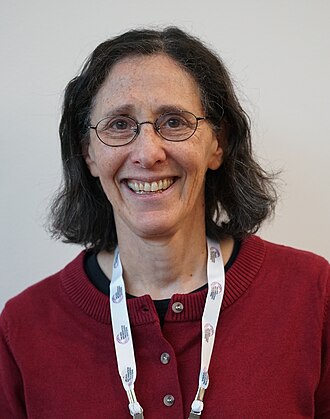
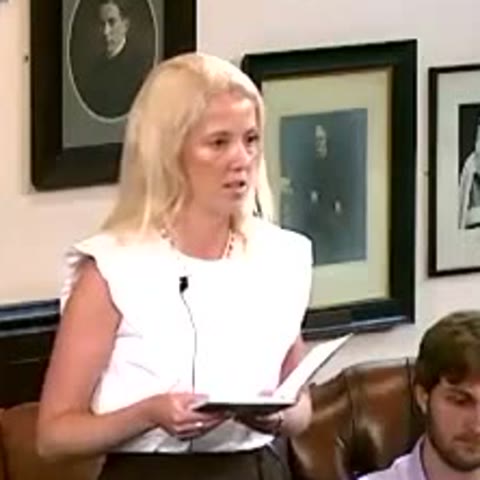
梅拉妮·米切尔 温妮·斯特里特 瑞安·伯内尔
EDITED TRANSCRIPT · 依据现场录音编译整理,可划线生成便签
编者按:2023 年夏,剑桥大学利弗休姆未来智能研究中心(CFI)举办第三届玛格丽特·博登讲座,由圣塔菲研究所教授、《AI 3.0》作者梅兰妮·米切尔主讲,题为「抽象与类比:稳健人工智能的钥匙」。中心主任史蒂芬·凯夫致开场辞,中心 AI 未来与责任项目负责人担任主持;谷歌研究院高级研究负责人温妮·斯特里特,以及参与 CFI 人工智能评估项目、现任职于图灵研究所的研究员瑞安,先后作回应,随后开放现场与线上提问。本文依据现场录音编译整理。

博登讲座与主讲人

凯夫: 感谢各位的耐心,也感谢大家在这样一个美好的傍晚前来。欢迎来到第三届玛格丽特·博登讲座。我是史蒂芬·凯夫,利弗休姆未来智能研究中心的主任,我们简称 CFI。CFI 是剑桥大学一个高度跨学科的中心,致力于研究和教授一件事:怎样让人工智能这整件事走上正轨。

玛格丽特·博登是我们的精神源泉之一。在座许多人想必熟悉她的工作。她毕业于本校,先读医学,再读自然科学,再读哲学,门门出色,此后又教授心理学,并开创了认知科学这门学科。她对「思考的机器」是什么、不是什么,能做什么、不能做什么,该做什么、不该做什么,做出了极其重要的贡献。她是我们中心的挚友,今天因健康原因不能到场,但她慷慨地允许我们以她的名字命名这个讲座系列。

事实上,第一届博登讲座就是玛姬本人在这个房间里讲的。她当时的论点是:机器人不会接管世界,因为坦率地说,它们根本不感兴趣。她并不是说它们对别的事情感兴趣,比如超觉静坐或者槌球;她是说它们对任何事情都不感兴趣,而这正是机器与我们之间的根本分野。第二届的主讲人是伟大的丹尼尔·丹尼特,也许是在世最有名的哲学家,他对认知科学和 AI 的理解同样贡献巨大。他的论点是:人与机器之间不仅存在根本差异,而且我们必须让这种差异保持下去。在这段关系里,谁是工具、谁是用工具的人,必须绝对清楚;必要时应该立法,动用我们手中的一切力量来维持这一点。

之后因为新冠疫情,讲座中断了一段时间。现在我们回来了,我非常高兴今天的第三届主讲人是梅兰妮·米切尔。能请到她是我们的幸运。关于她的更多介绍,我交给今晚的主持人,CFI 的 AI 未来与责任项目负责人。

主持人: 谢谢史蒂芬。正如他所说,玛格丽特·博登几十年来一直是横跨认知科学、人工智能、心理学与哲学的开拓性学者。今天的主讲人同样是一位开拓者,她在 AI、认知科学和复杂性科学领域都做出了卓越贡献,并且常常把这些领域的洞见融会到一起。米切尔教授任教于圣塔菲研究所,著有多部获奖作品,其中《复杂》获 2010 年斐陶斐荣誉学会科学图书奖,另有《AI 3.0》一书。她目前的研究聚焦于 AI 系统中的概念抽象与类比生成,我相信这也是今天的主题。

眼下即便在专家之间,对于大语言模型这类现有 AI 系统究竟能做什么,也充满困惑,尤其是在抽象和高阶表征这类问题上,以及我们对这项技术的后续几代可以有什么期待。搞清这些架构能做什么、不能做什么,对于预判未来、判断要让这些系统真正稳健可靠需要付出什么、以及它们对社会的价值,都至关重要。这是 CFI 的核心议题之一。今天的回应人之一瑞安多年来参与我们的 AI 评估项目,另一位回应人是谷歌研究院的高级研究负责人温妮·斯特里特。两位回应之后,我们会留出时间给现场和线上观众提问。为了把尽量多的时间留给演讲、回应和问答,我现在把话筒交给米切尔教授。

一片激进的不确定

米切尔: 能受邀主讲玛格丽特·博登讲座,我深感荣幸。从我职业生涯起步时起,博登就是我的榜样,我最早就是读她的认知科学入门书才认识这个领域的。

和你们一样,我如今对 AI 能做什么、不能做什么也非常没有把握。所以我打算把大家拉进我这种不确定里,一起看看人们是怎样思考这个问题的。这场讲座的宣传语写的是「梅兰妮·米切尔追问:什么是抽象思维,AI 为什么做不到」。我想修正一下:应该是「AI 为什么还做不到人类这么好」。因为 AI 系统究竟能在多大程度上抽象思考,至今仍有争论。

先看几个关于 AI 的大问题,都是人们说过的话。AI 会不会大幅提高人类生产率?会不会彻底改变医学、法律和科学发现?会不会很快在所有认知任务上比人类更聪明,不管这句话到底是什么意思?会不会在许多岗位上取代人类?会不会摧毁民主,这是很多人忧心的事?最后,会不会导致人类灭绝,也就是说,AI 是不是对人类的生存威胁?这些都是极其重要的问题,而人们的看法天差地别。《大西洋月刊》最近有篇文章,作者采访了大量 AI 从业者,得出的结论是:这些大问题显然没有好答案。他说,最能概括这种感受的一句话来自一位 AI 创业者:「眼下,我们在整个 AI 领域面对的是一种激进的不确定(radical uncertainty)。」

深度学习与生成式 AI

米切尔: 这一波 AI 浪潮和进展,起点是所谓的「深度学习革命」。深度神经网络里的「深」,指的只是它有很多层处理,灵感来自人脑的结构:神经元分层组织,信息逐层处理。幻灯片上这张示意图就是一个多层的深度神经网络,任务是描述图像里有什么,最后给出几个候选类别,狗、猫、船、鸟,其中「船」的概率最高。

这条路线的要点是:用模仿人脑结构的超大规模神经网络,配上从万维网上抓取的海量训练数据,也就是你我发在社交媒体和各种网站上的图片和文字。这类网络取得了极大的成功。这张幻灯片本来是段视频,放不出来,不过内容是一辆自动驾驶汽车在路上看到的画面:它把图像里的各种东西分类标出,行人、其他车辆、红绿灯等等。这种计算机视觉能力在深度网络出现之前是不可能的。这些网络在人脸识别上也很出色,比如你在脸书上会被提示在照片里标记自己,因为系统认出了你的脸。我们还看到 AI 被用于医学诊断、机器翻译,以及覆盖一千多种语言的语音识别。这条路线带来了各式各样惊人的进展。

不知道各位有没有玩过更新的生成式 AI 工具,比如 DALL·E。你给一段文字描述,「大学方庭里玩飞盘的学生,印象派风格」,它几乎立刻就能生成符合要求的图片。这让不少艺术家相当紧张。这些系统的工作方式,是用艺术家和其他人创作的照片、绘画和各类媒体,配上说明文字来训练,然后当你提出要求时,它能从训练数据里以某种抽象的方式提取、重组,产出你想要的东西。

但问题是:这些 AI 系统真的理解它们处理的数据吗?它们理解「大学方庭里玩飞盘的学生」究竟意味着什么吗?理解随之而来的那一整套东西吗?比如这大概发生在一个暖和的日子,学生们这么做是因为喜欢玩游戏,而不是被强迫的。你我拥有的这类关于世界的知识,这些系统未必能从训练数据里学到。这是否意味着,它们不像你我这样稳健,也不像你我这样智能?

看背景判断有没有动物

米切尔: 下面是一些 AI 系统「理解失败」的例子。第一个例子非常直白,说明了深度学习加大数据会遇到的一类问题。任务是训练一个神经网络,把有动物的图片和没有动物的图片区分开。我的一个研究生用《国家地理》提供的一大批自然摄影训练了一个深度神经网络,有些图片里有动物,有些没有。训练之后,在同一数据集里它没见过的新图片上,它判断得非常准。

我这位学生的研究是要精确找出系统做判断时到底用了图像里的哪些特征。他钻到网络的「引擎盖」底下一看,发现它主要盯着的是背景。这很奇怪。但结果是,背景确实提供了线索:有动物的时候,摄影师会对焦在前景的动物上,背景就是虚的;没有动物的时候,图片多半是风景照,背景是清晰的。于是计算机学会了只看背景虚不虚,就能预测有没有动物。

机器学习里管这叫「捷径」(shortcut):机器确实学会了正确预测「有动物」或「没动物」的标签,但理由是错的。它没有解决人给它设定的任务,也就是识别动物,而是用了别的线索。这种事在机器学习里相当常见,并且会带来麻烦。

校车、停车标志与自动驾驶

米切尔: 另一项研究里,研究者拿了一批神经网络已经能正确分类的照片,比如这张校车,网络说「我百分之百确定这是校车」,很好。然后研究者用 Photoshop 把物体摆成不同的朝向,这时网络就有 99% 的把握说它是垃圾车、沙袋,或者扫雪车。最后那张其实是真实照片。这个故事的寓意是:这些神经网络在与训练数据相似的图片上似乎表现不错,可一旦走出训练数据的范围,它们有时会以非常不像人的方式失败。因为它们并没有学到一个像我们那样的「校车」的抽象概念,那种能让我们稳健地认出校车的概念。它们靠的是像素与「校车」这个名字之间的统计关联,做的事和我们不一样。

自动驾驶汽车出过各种问题,比如特斯拉撞上高速公路上停着的急救车辆,这种事发生过很多次,我数不清有多少,原因是它没把那认成一辆车。还有一整个领域叫「对抗性机器学习」,专门研究怎么骗过机器。一种办法是在停车标志上贴几张小贴纸,自动驾驶汽车的视觉系统就会把它认成「限速 80」。从不同角度和距离拍摄,这招都很成功。这同样是理解的失败。

再看一个有意思的例子,另一个自动驾驶视觉系统。我前面给大家看过它能正确框出行人、车辆、红绿灯,可在这里,它分不清真人和画上的人。它把一辆货车车尾广告上的小人和自行车认成了真的行人和自行车。它没有我们那种认知:某些东西是广告,某些东西是现实。还有一条推文,来自一位坐在自动驾驶特斯拉里的人:「我的车在这一带老是急刹车,明明没有停车标志。开了几趟之后我注意到了那块广告牌。」广告牌上是一位警长举着停车标志,车把它当成了真的。这就是自动驾驶汽车会陷入的困境,因为它的训练数据里从没出现过这种情形。

DALL·E 本身也是如此。人们发现这些文本生成图像的系统在某些提问上问题很大。它画得出玩飞盘的学生,可如果你要求涉及空间配置的东西,比如「一个黄盒子在绿盒子上面,绿盒子在蓝盒子上面」,它完全做不到。我自己试了一个:「一台电视机在一只猫上面」。我们能想象猫在电视机上,也能想象电视机在猫身上,因为我们理解这些概念。可 DALL·E 只会画猫在电视机上,因为它的训练数据里从没出现过电视机压在猫身上。它无法泛化,无法抽象。

皮肤癌里的尺子与翻译歧义

米切尔: 再举一个捷径的例子。有一组研究者想用神经网络从图像诊断皮肤癌,他们报告说用大量数据训练了系统,效果很好,可它无法泛化,因为它学到的是:图里有尺子,那多半是皮肤癌。他们不得不重新处理训练数据。这就是机器学习的问题所在:系统在学东西,学的是关联,但它们真的在学习像我们人类那样的更抽象的概念吗?

这是谷歌翻译最近的一个例子。我让它翻译这句话:「这位议员不小心把他正在起草的重要法案的副本落在了出租车里。」英文里 bill 是个多义词,意思很多。它把这句话翻成法语时,用的是「账单」那种 bill,而不是立法意义上的「法案」。

从达特茅斯到「桥」

米切尔: AI 这个领域的创始人,这几位大名鼎鼎的人物,当年为达特茅斯人工智能研讨会写的提案里,「人工智能」这个名字正是在那时被创造出来的,许多想法也是在那时汇集的。他们为那个夏季研讨会定下的目标是:「设法让机器使用语言、形成抽象与概念、解决目前只有人类才能解决的问题,并能自我改进。」他们以为一个夏天十周就能完成其中一部分。结果花的时间更像是十个年代,差不多快一百年。而其中「形成抽象与概念」这一条,看来比别的目标更难。我认为,至少到最近为止,AI 面临的困境在于它依赖的是统计关联,而不是像创始人们期望的那样形成概念。

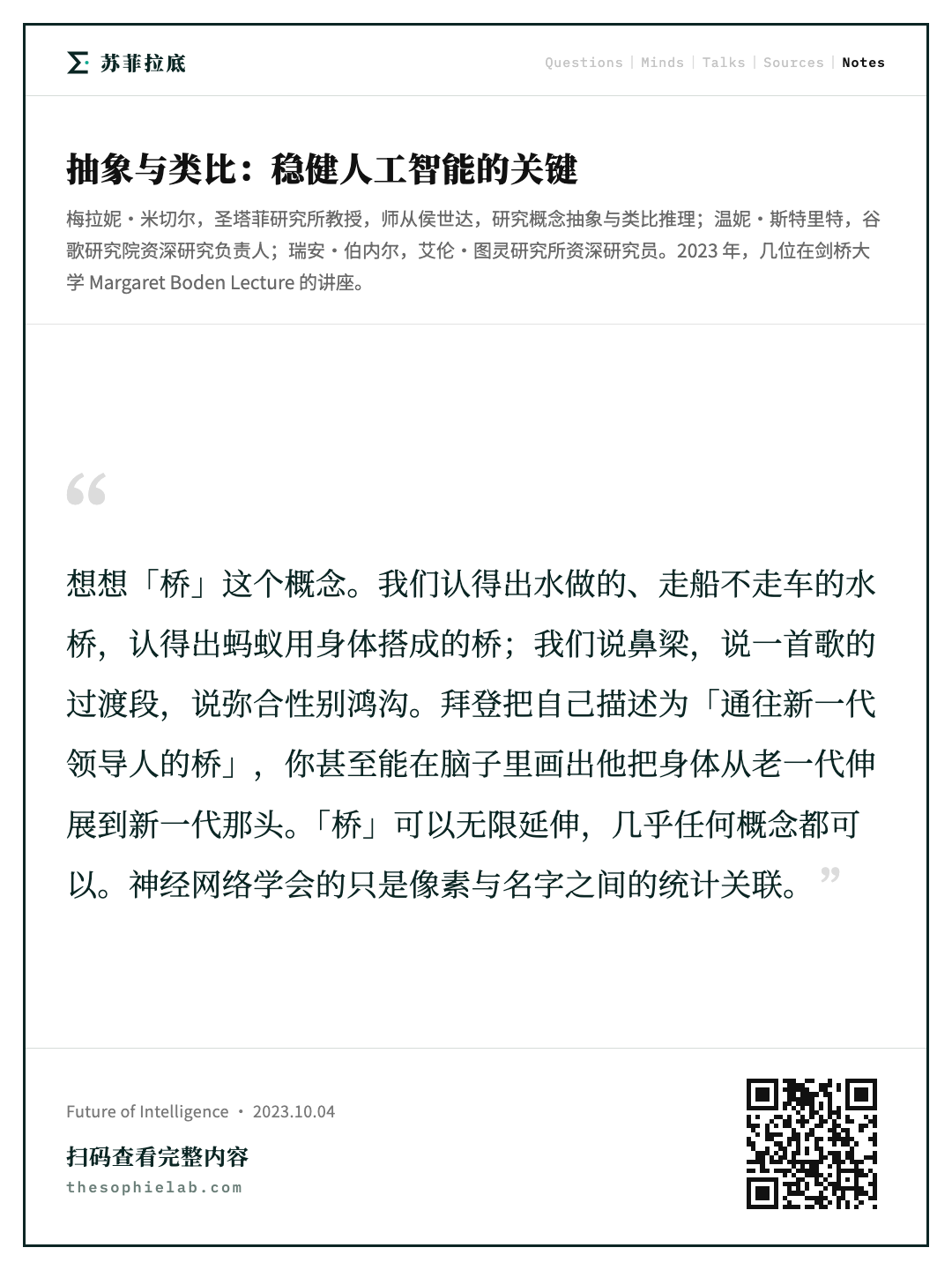
举个例子说明什么叫概念。想想「桥」这个概念。这里是一堆桥的照片,你可以把这类数据喂给神经网络,它大概能学会在照片里认出桥。但人类的「桥」概念远比这丰富。比如我们能理解这种桥:水桥,桥本身是水做的,走的不是车而是船,从公路上方跨过去,像一座倒过来的桥。我们轻而易举就能理解它,认出它是桥。我们认得出蚂蚁用身体搭成的桥,蚂蚁会这样跨越缝隙。我们说「把手搭成桥」,说鼻梁(bridge of the nose),说一首歌的过渡段(bridge)。这时我们已经开始进入隐喻了。「桥」这个概念极其丰富,可以无限延伸。我们说「弥合性别鸿沟」(bridging the gender gap)。乔·拜登在竞选时把自己描述为「通往新一代领导人的桥」,你甚至能在脑子里画出他把身体从老一代领导人伸展到新一代那头,我们正从他身上走过去。这可以无穷无尽地说下去,而且几乎任何概念都可以这样。

我再举一个我喜欢的例子。这是一种情境,你先看着;这是另一个同类情境;这是第三个。不知道大家看不看得清,最后那张是一张著名的照片,奥巴马趁助手称体重时把脚踩在秤上。这些截然不同的场面,共同点是什么?「恶作剧。」对,人类一眼就看出来了,因为我们能在抽象层面理解不同情境是什么。这对机器来说是真正的挑战。

概念即类比包

米切尔: 认知心理学家劳伦斯·巴萨卢给概念下的定义是:「一种能力或倾向,能生成一个范畴的无限多种概念化。」这话拗口,但结合桥和恶作剧的例子就能明白:我们拥有概念,就能生成或识别这个概念的任何变体、任何实例。另一位认知科学家和 AI 研究者侯世达则把概念描述为「一包类比」(a package of analogies)。我们把某件事抽象为「恶作剧」时,其实是在几乎无意识地在这些情境之间做类比:一个人扮演捉弄者的角色,一个人扮演受害者的角色,然后是恶作剧本身,奥巴马踩秤这件事,对应到把「踢我」的纸条贴在别人后背上。我们在抽象时,实际上是在无意识地做类比。

所以我的主张是:AI 的理解失败,根源在于缺乏类似人类的概念与抽象。问题就变成了:怎样让机器学会这样的概念,做出类比,而不是只学统计关联?我认为这仍是一个悬而未决的挑战。

ChatGPT 之后:真的理解了吗

米切尔: 但我们现在身处 ChatGPT 的时代。一切都变了吗?这是我用同一道法语翻译题考 ChatGPT 的结果。我说:请把下面这句译成法语,「议员不小心把他正在起草的重要法案副本落在了出租车里」。顺便说一句,谷歌翻译犯那个错误是几周前的事,不是四五年前。ChatGPT 正确地把 bill 译成了 projet de loi,也就是法案。我又问它:你怎么知道该怎么译 bill 这个词?它有好几个意思。它回答说「作为一个 AI 语言模型」等等,啰嗦冗长,但确实说了:因为句子里有议员和法案,这里的 bill 指的是一份法律文件。看起来它是理解的。

于是问题来了:大语言模型是否已经获得了比以往 AI 系统更丰富、更接近人类的理解,以及概念和抽象能力?我认为这是一个非常重要、尚无定论的问题。有些人会说:当然是。谷歌高管布莱斯·阿圭拉·阿尔卡斯在《经济学人》上写道,他认为人工神经网络正在朝着意识大步前进。机器学习研究者亚历克斯·迪马基斯在推特上说:「也许规模就是你需要的全部」,意思是把神经网络扩大到 ChatGPT 的规模,也就是几千亿个权重参数,我们也许就在逼近通用智能。斯坦福大学研究自然语言处理的教授克里斯·曼宁说,人们有一种乐观情绪,觉得正在看到「注入了知识的系统」出现,ChatGPT 具备某种程度的通用智能。很多人都在说,我们真的快到了。

可另一边,同样受人尊敬的人说的恰恰相反。雅各布·布朗宁和扬·勒昆,后者是图灵奖得主,深度神经网络的核心人物之一,写道:一个只用语言训练的系统永远无法逼近人类智能,「哪怕从现在一直训练到宇宙热寂」。世界上最著名的发展心理学家之一艾莉森·高普尼克说:这些模型「既不是真正智能的,也不是假装愚蠢的,智能和能动性对于理解它们来说根本就是错误的范畴」。如果你说它们智能、有意识、正逼近人类水平的通用智能,那你就是用错了范畴,想错了方向。

有意思的是,一两年前有一项调查问自然语言处理领域的研究者是否同意这句话:「某些只用文本训练的生成模型,给足数据和算力,可以在某种非平凡的意义上理解自然语言。」结果恰好一半说同意,一半说不同意。这很惊人。答案是,我们就是不知道。我们不知道这些只用语言训练的系统能做什么。

伊莱扎效应与拟人化陷阱

米切尔: 我给《科学》杂志写过一篇短文,问:我们怎么知道 AI 系统有多聪明?我的结论是,这相当棘手。我们该怎样评估 AI 系统的理解?我想在这里多花一点时间。

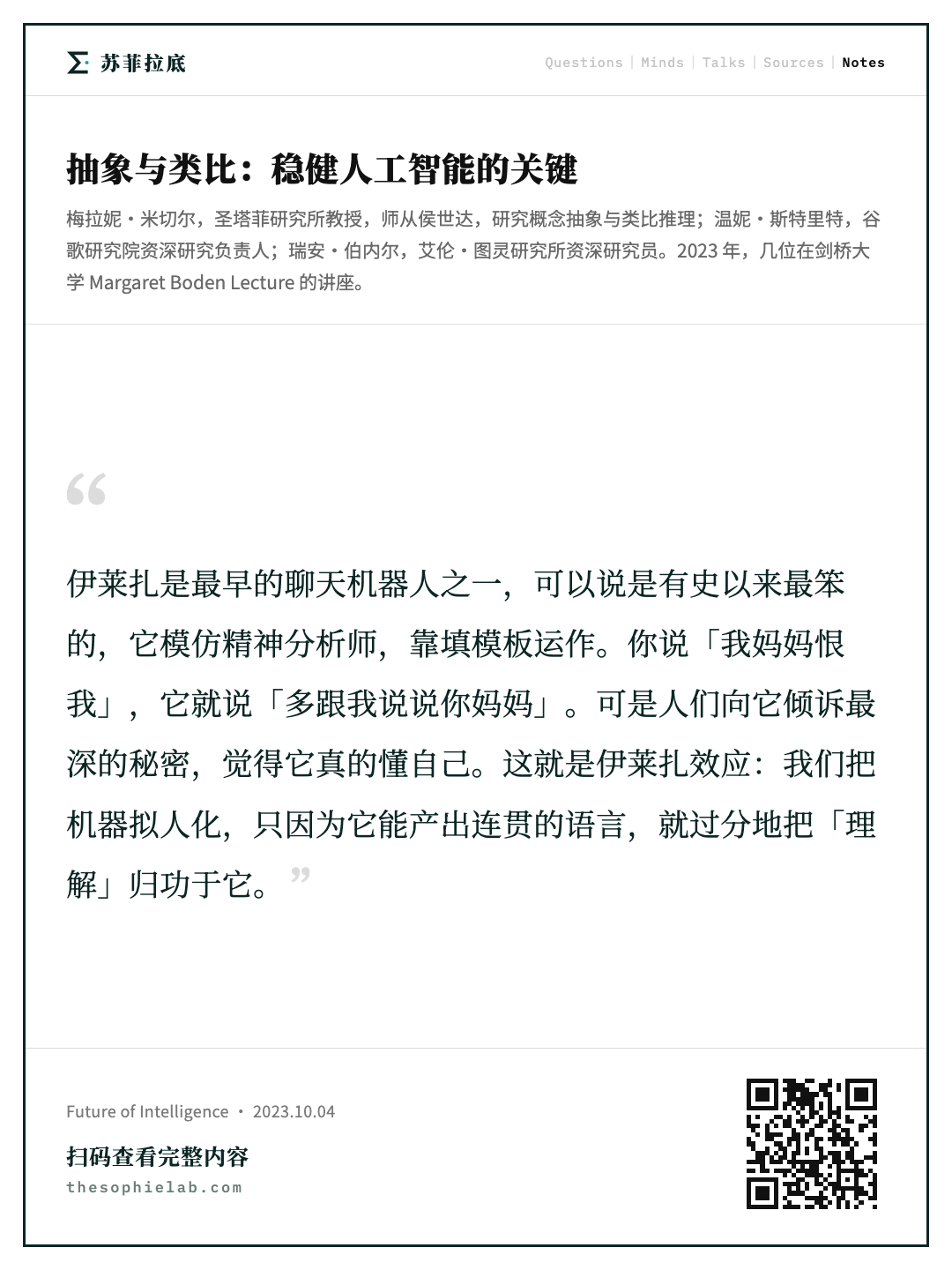
一种办法是直接看它的行为,跟它聊天。我相信各位多少都跟 ChatGPT 聊过。这有点像图灵测试:它看起来像人吗?但这里有个问题,叫「伊莱扎效应」(Eliza effect)。伊莱扎是最早的聊天机器人之一,可以说是有史以来最笨的聊天机器人,它模仿一位精神分析师,靠填模板运作。你进来说「我妈妈恨我」,它就说「多跟我说说你妈妈」。它只是把你的话里的词填进几个小模板里,反过来问你问题。可是人们向它倾诉最深的秘密,觉得它真的懂自己,尽管它原始至极。它的发明者约瑟夫·魏岑鲍姆为此专门写了一本书,说 AI 太危险了,我们不该搞这个。那是 1970 年代的事,原因就是人们会有这种反应。这就是伊莱扎效应:我们把机器拟人化,只因为它能产出连贯的语言,就过分地把「理解」归功于它。

GLUE、聪明的汉斯与数据污染

米切尔: 更客观一点的办法,是用自然语言理解的基准测试。这个领域有一些基准,其中一个叫「通用语言理解评估」(GLUE),由一批自然语言理解任务组成;还有一个更难的新版本叫 SuperGLUE。这是目前的排行榜,显示不同 AI 系统的成绩。第一到第七名全是不同的大语言模型,和 ChatGPT 类似,人类排在第八。这是不是说明,在通用语言理解上,人类比机器差?

问题在于,很多这类基准都有我前面展示过的那种毛病:可能存在捷径,机器可以利用词语组合之间某种微妙的关联,不需要真正理解就把任务做对。许多人研究过这种捷径学习,这几篇论文都指出,数据里存在「标注痕迹」(annotation artifacts),系统学会了它们就能拿高分,却没有真正的理解。有人甚至把这叫做「聪明的汉斯现象」,其中一篇论文的题目就是《揭开聪明汉斯式预测器的面纱》。

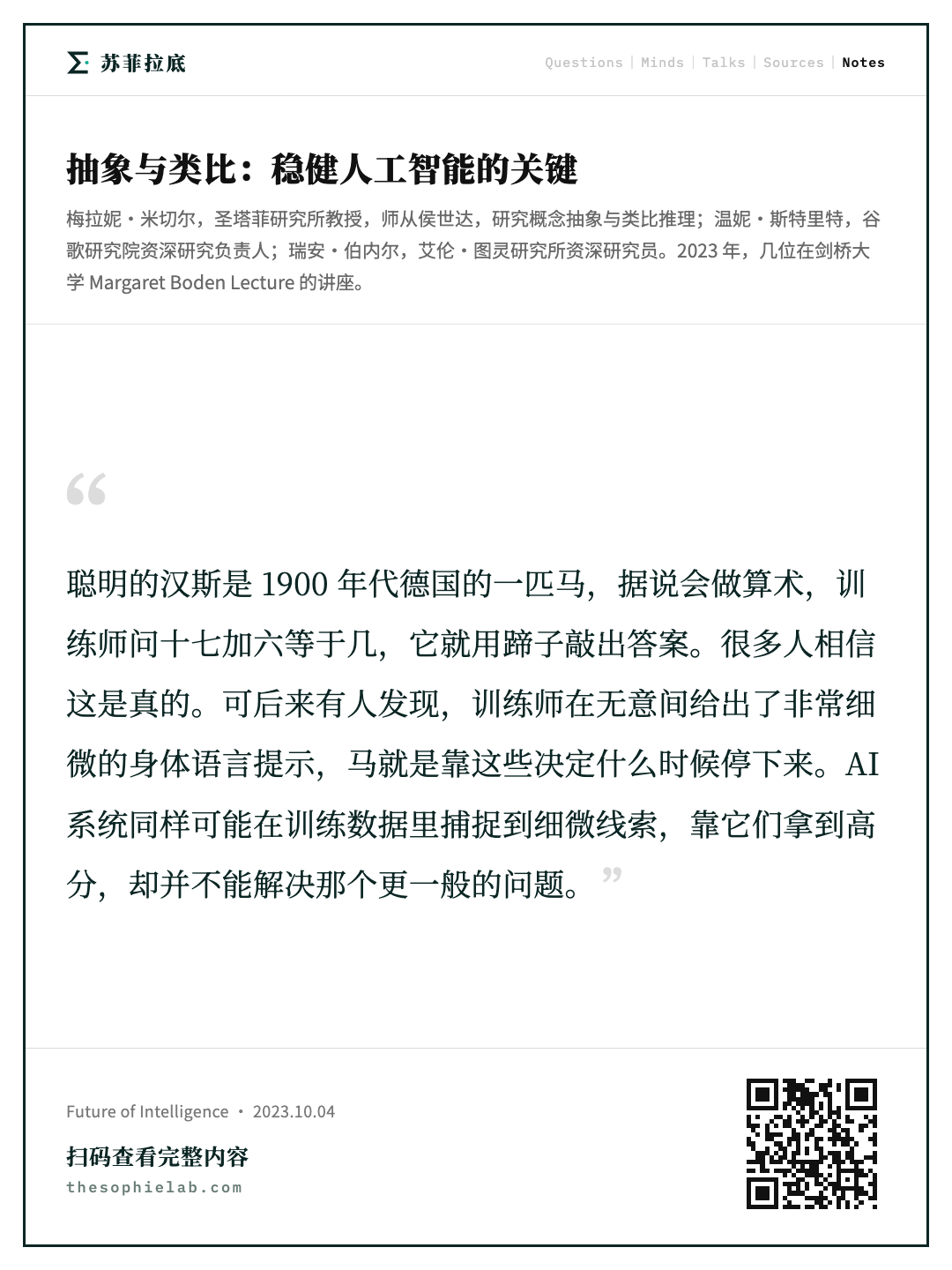
不知道的人我介绍一下:聪明的汉斯是世纪之交的德国,大约 1900 年代的一匹马,据说会做算术。训练师问它「十七加六等于几」,它就用蹄子敲出答案。很多人相信这是真的,看上去也很真。可经过长期观察,终于有人发现,训练师在无意间给出了非常细微的身体语言提示,马就是靠这些提示决定什么时候停下来。所以这匹马根本不会算术,它只是在响应训练师无意识的细微线索。这和机器学习的类比是:AI 系统可能在训练数据里捕捉到了非常细微的线索,靠它们拿到高分,却并不能解决那个更一般的问题。这类基准常常留有捷径。

到了 ChatGPT 时代,很多人开始说:那就干脆用我们考人的标准化考试去考它。你们见过这种标题:「ChatGPT 拿到了 MBA」,因为它在商学院的考试里成绩不错;「ChatGPT 通过了律师资格考试」;「ChatGPT 通过了医学考试」。不过这里有几个问题。第一,这些考题可能已经在训练数据里了。我们不知道 ChatGPT 的训练数据里有什么,它包含大量网上的文本,所以拿来测试它的题目很可能它早就见过。有些考试已经被证实确实如此。这样的测试并不公平。第二,正如这几位研究者指出的,人类的考试基准对 AI 系统未必有意义,他们的说法是「对机器人来说没有意义」。对人类而言,律师资格考试这样的测试能预测一个人更一般的推理能力和从事法律工作的能力;可 AI 系统能记住难以计数的训练数据,然后把考题和它见过的东西做比对,在这种考试里考得好,未必能预测那些能力。数据污染是可能的,考试成绩也未必与真实世界的表现相关。

ARC 网格谜题

米切尔: 还有一种办法,是直接考它们抽象和类比推理。最近有一篇论文声称大语言模型出现了「涌现的类比推理」,他们给模型做了几种类比题的变体,就是你们大概见过的那种。这篇论文很有意思,但有意思的往往不是成功,而是失败。抱歉这张图看不清,这是另一项研究,他们说:我们试一批需要抽象推理的任务,算术、执行代码、写代码、画图,然后把任务稍微改一改。比如画图任务,让它画一杯珍珠奶茶,ChatGPT 能写出画珍珠奶茶的代码;接着要求它画一杯旋转 180 度的。如果你真的拥有「珍珠奶茶」这个抽象概念,大概也能画出倒过来的那杯。可他们发现 GPT-4 在改动过的任务上差得多。由此他们得出结论:这个系统并没有形成真正一般性的抽象,它做的是从训练数据里提取某些东西来帮助完成任务,而当任务变体与训练数据里的东西差别很大时,它就做不到了。这是他们的论断。

那么问题是:它们建立的抽象究竟有多真实、多稳健?这是我一直在做的工作。谷歌研究员弗朗索瓦·肖莱设计了一组任务,叫「抽象与推理挑战」或「抽象与推理语料库」(ARC),我的团队在此基础上做了扩展。我们问的是:AI 系统是否理解基本的空间和语义概念,比如「上」和「下」,我刚才说过 DALL·E 不会把盒子叠起来;比如「里」和「外」,「相同」和「不同」。这些问题被理想化成非常简单的谜题。谜题是这样的:我给你三个示范,每个示范把一个彩色网格变换成另一个网格,一、二、三,然后我说:请对第四个网格做同样的变换。在座的大多数人会说:好,去掉底部的那个物体。这是另一个变体,大多数人会说:把顶行涂成红色。你们在灵活地运用「上」和「下」这两个概念。再一个变体:去掉最上面和最下面的物体。这些都是在测试概念的变体,而这一点非常重要,AI 领域的很多基准都不做这件事,它们不系统地测试概念理解的变体。

再看一个例子,「相同」与「不同」这个概念。这道题是:保留形状相同的那些。这是稍有不同的版本:保留内部形状相同的那些。最后一道:去掉外层颜色相同的形状。所有这些都在测试你对这些概念的灵活理解。

AI 系统做得怎么样?我们测了几个系统。GPT-4 是纯语言系统,它其实有一个用图像训练的多模态版本,但当时还没发布。我们给它的是文本版的题目,这有点不公平,但和前面那篇声称类比成功的论文给出的视觉题文本版非常相似:颜色编码成数字,网格的每一行放在方括号里。我们把大约五百道题分成不同的概念组,给几个 AI 系统和人类做。这是准确率:人类;ARC 竞赛 Kaggle 第一名的程序,专门为这类题设计;第二名的程序也是;还有 GPT-4,它不是专门设计的,但据说具备类比和抽象能力。你们可以看到,人类做得相当好,而这些程序还没有达到理解的程度。有意思的是,它们确实能做对一些题,但我们不能只看一个例子就说「好,现在我知道它能做这类任务了」,必须看很多不同的例子。

两极化的头条与结论

米切尔: 我希望我已经传达了这一点:AI 社区正在进行一场大辩论,而且高度两极化。我们有这样的标题,「GPT-4 是一台推理引擎」,也有「GPT-4 不会推理」;有「如何用 ChatGPT 做旅行规划」,也有「大语言模型仍然不会规划」;有论文说「GPT-4 闪现出通用人工智能的火花」,也有标题说「有人在 ChatGPT 里瞥见了 AGI,有人称之为海市蜃楼」。谁对?我认为我们不知道。这是这个社区必须共同面对的问题:怎样理解这些系统的能力,它们距离人类那样的推理能力还有多远,以及我们怎样才能分辨。

总结一下。要拥有稳健的理解,AI 系统需要学会概念,并能形成抽象和类比。有人认为今天的模型已经具备这些品质,但它们的行为和「理解」,如果你愿意这么叫的话,还不稳健。而对这些系统的理解与抽象能力的评估,非常棘手。我和同事戴维·克拉考尔写过一篇论文,梳理这场辩论,尝试厘清「理解」在人类和 AI 系统中可能意味着什么。

我想引用特伦斯·谢诺夫斯基的一段话作结。他几十年来一直在神经科学、认知科学和 AI 领域工作,是最早研究神经网络的人之一。他最近写了一篇关于大语言模型的论文,其中说:某种几年前还无人预料的事情正在发生,我们跨过了一道门槛,就好像突然出现了一个外星来客,能以一种令人不安的、酷似人类的方式和我们交流。有一点很清楚:大语言模型不是人类,但它们从全世界的文本数据库里提取信息的能力超越人类。它们的某些行为看起来是智能的,可如果那不是人类的智能,那么它们的智能究竟是什么性质?这正是我们所有人都在苦苦思索的问题。谢谢大家。

主持人: 非常感谢这场精彩的演讲。谢诺夫斯基几年前也来我们这里讲过,那时这轮进展的爆发还没开始,很想请他回来谈谈那篇论文。今天我们很幸运,有两位专门研究 AI 系统评估的专家来回应。温妮,请你先来。温妮·斯特里特是谷歌研究院的研究负责人,专注于评估大语言模型的认知能力,尤其是社会智能。

回应一:人类智能不该是唯一目标

斯特里特: 首先感谢梅兰妮这场极其精彩的演讲,能和她同台是我的荣幸。也感谢 CFI 的邀请,特别是亨利·谢夫林的邀请。梅兰妮出色地刻画了这场辩论中的激进不确定,并把我们引向一个观点:AI 大概需要发展出概念,而且是类人的概念,才能在智能测试上达到人类的水平。

我的回应有三点。第一,我基本认同梅兰妮对 AI 研究者所面临困境的刻画,即我们很难确定这些系统到底在做什么。第二,我想质疑当下许多 AI 辩论背后的一个预设:类人智能应当是目标。第三,我想回过头来说明,为什么类人的概念理解在某些情形下确实重要,并借价值对齐问题来说明这一点。

先说第一点。梅兰妮给一场常常缺乏细腻的辩论加入了细腻,尤其是她强调了「在测试上的表现」与「测试想要探测的那种能力是否真的存在」之间的区别。这在很多领域都是真正的难题,在 AI 领域尤其如此,因为来自不同学科背景的人带着各自的理论框架进入这场辩论,用不同的方式定义智能。要审视所有证据,包括彼此冲突的证据,并得出结论,非常困难。但梅兰妮的号召是对的:我们应当更严格地思考针对概念的测试,用更全面的方式去测,这值得在整个领域推广。

第二点,我想质疑 AI 讨论背后的某些预设,并呼应梅兰妮结尾引用谢诺夫斯基的那个问题:AI 系统到底是哪一种智能?我想请大家思考:人类智能是否应当是目标?我认为有两个理由值得怀疑。

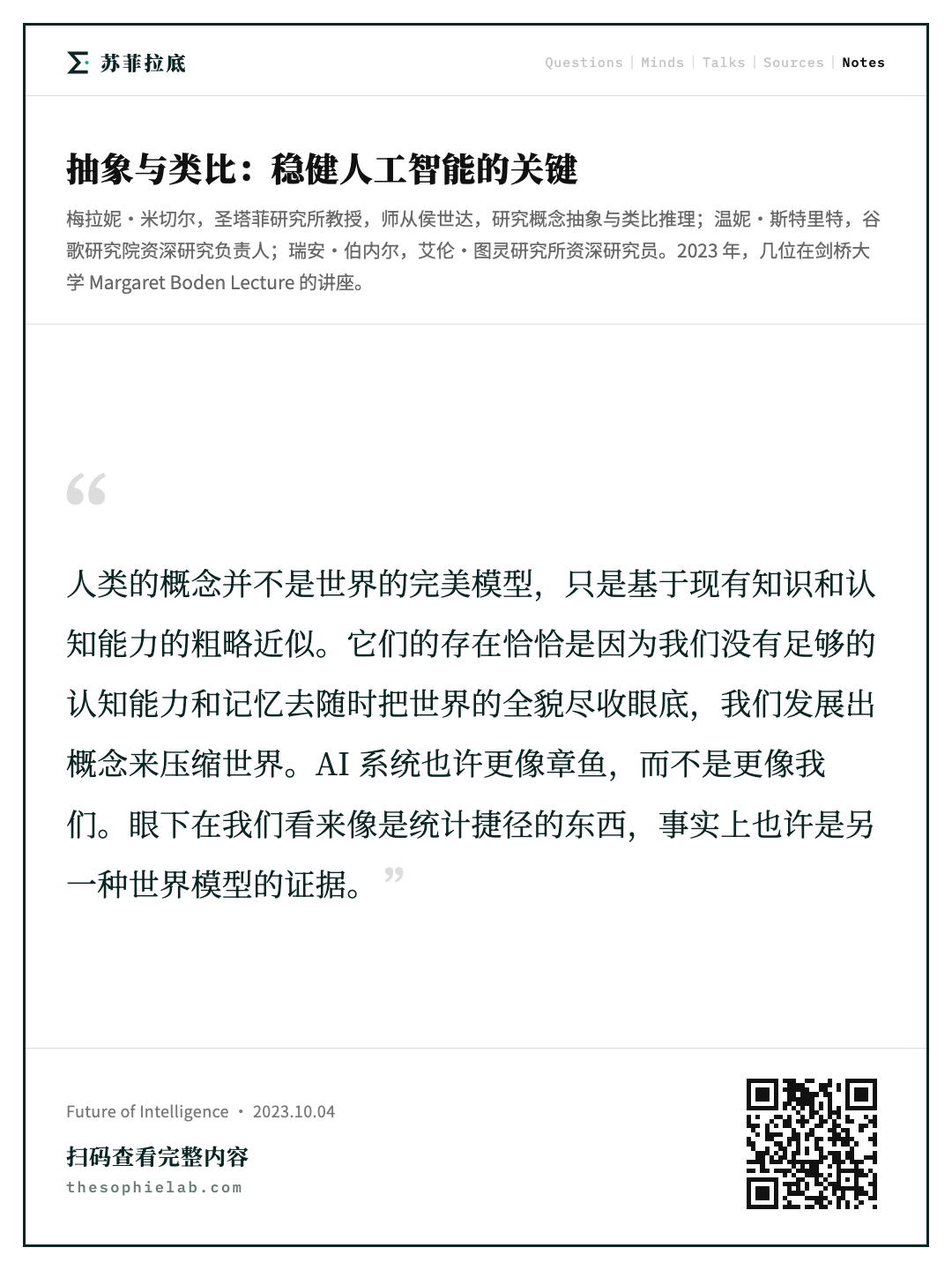
首先,人类的概念并不是世界的完美模型。它们只是基于我们现有知识和认知能力的粗略近似。我们对世界的解释和认知模型,解释力和预测力有强有弱,这在个体发展的过程中、在历史进程中、在不同文化、不同领域、不同个体之间都有所不同。比如在成长过程中,我们随着知识和理解的增长,把较差的抽象换成较好的:孩子学数数是从死记硬背一到十开始的,可到某个时刻会有一个「啊哈」的瞬间,他们认出了十进制,意识到可以无限地数下去。另一个例子来自民间心理学(folk psychology):我们对彼此的民间心理学模型在解释和预测他人行为上相当好用;可反过来,尽管我们对自己的导航系统有相当不错的理解,一旦要从鼹鼠的地洞里找路出来,我们会束手无策。所以,人类的概念天生有限。它们的存在恰恰是因为我们没有足够的认知能力和记忆去随时把世界的全貌尽收眼底,我们发展出概念来压缩世界。这些概念催生了我们日常用来在世界里行走的启发式,而启发式也会带来失误和偏见。我们未必希望 AI 系统也带着这些偏见。

其次,退一步,用更整体的眼光看什么是智能。看看来自非人类动物的证据就很清楚,许多物种都具备重要而有趣的认知能力,从鸟类到黑猩猩到章鱼,但我们对它们智能的性质仍然存在激进的不确定,因为解读它们的行为极其困难,聪明的汉斯的例子就说明了这一点。动物到底是在展示某种习得的还是天生的能力,它们是否真的在使用和我们相同的认知机制,往往并不清楚。到了章鱼这样在系统发育上与我们相距遥远的物种,情况就更复杂。而 AI 系统也许更像章鱼,而不是更像我们。至少有一种可能:当前的 AI 已经在发展,或者未来的 AI 某天会发展出人类无法企及的高阶逻辑形式,这是梅兰妮那篇关于 AI 理解的论文里的话;或者至少,它们可能拥有另一种与我们不同的理解。所以,眼下在我们看来像是伪相关或者统计捷径的东西,事实上也许是另一种世界模型的证据,有其自身的价值。采取这种视角对我们可能有用:它可能让我们对智能有更好的理解,可能让我们更好地解读 AI 系统的行为,也可能让我们更有效地利用 AI 系统独有的技能。

价值对齐为何需要相似的概念

斯特里特: 最后回到第三点。尽管我们也许愿意接受 AI 系统拥有与我们不同的概念框架,但在某些情形下,它们的抽象与我们相似仍然很重要。比如在某些科学研究里,我们可能不在乎 AI 系统是怎么得出结论的:如果一个 AI 系统能找到一种室温半导体,我们大概不在乎它是怎么做到的。可在另一些情形下,比如 AI 的社会应用,或者任何面向用户的应用,自动驾驶汽车、社交聊天机器人、人力资源工具、医疗,AI 系统拥有与我们相似的概念就可能至关重要。因为我们大概希望让这些 AI 系统与我们的价值观对齐,希望给它们灌输道德原则,让它们的行为与我们的行为一致。比如我们想教一个 AI 系统不要伤害人,不要因为种族或性别歧视人。可要做到这一点,我们也许认为它们必须先拥有「疼痛」、「性别」、「种族」这些概念。

幸运的是,与梅兰妮展示的部分证据相反,我认为我们有理由乐观:这些系统正在发展出这些能力。扬·勒昆声称只用语言训练的系统永远无法逼近人类水平的智能。我想举普林斯顿大学心理学系拉贾·马尔詹及其同事最近的一项研究。他们想知道 AI 系统能否仅凭语言发展出知觉概念。他们选取颜色、音色、音高、响度、味道这些概念,让人类和大语言模型分别比较同一范畴下的两个实例,并评价二者有多相似。颜色的情形下,他们让人类并排看两种颜色评价相似度;给大语言模型的则是这两种颜色的十六进制代码,一种数字编码。音色的情形下,他们让人类听大提琴和小提琴,或者其他乐器组合,比较音色有多相似;给大语言模型的只是乐器的名字。结果发现,在所有这些范畴上,大语言模型和人类的评分高度相关。尽管大语言模型没有耳朵去听乐器,没有眼睛去看颜色,它们仍能从预训练时消化的语言内容里构造出这些概念。我认为这非常了不起,而且它与认知科学和心理学在人类身上的其他证据相互印证:缺少某些知觉感官通道的人,比如先天失明者,同样能发展出对世界丰富的知觉体验。

所以我想以此作结:这给了我们一些令人鼓舞的迹象,说明让 AI 系统与我们的需求和目标对齐是有希望的。总之,此刻从事这项工作令人无比兴奋。显然,对这个话题感兴趣的不只是哲学家、认知科学家、心理学家和神经科学家,任何关心「思考、感受、理解意味着什么」的人,都能从中有所收获。谢谢。

主持人: 非常感谢温妮,也谢谢你严格守时。瑞安,现在是图灵研究所的高级研究员,但仍然是 CFI 大家庭的一员,请。

回应二:架构缺陷还是数据不足

瑞安: 谢谢。也和温妮一样,先感谢梅兰妮这场发人深省的演讲。它提出了太多有趣的问题,我很想都谈一谈,但为了时间,我只挑几点。

你展示的数据里有一件事特别有意思:这些模型在那么多情形下都没能掌握复杂的抽象概念。这就引出一个很有意思的问题:它们为什么掌握不了?具体说,这是不是模型结构上的问题,是不是架构本身限制了它们理解复杂概念的潜力,以至于不管给 DALL·E 2 或 GPT-4 什么样的数据,它们都不可能理解「在上面」这个概念?还是说,问题更多出在我们给它们的训练数据上,这些模型或许有潜力建立对这些概念的理解,只是我们还没给它们合适的数据?

我认为有些理由让人相信,这些模型不只是在记忆和复述,它们确实在抽象某种东西。拿叠盒子或者猫和电视的例子来说,这些模型通常都能领会「一个东西应该在另一个东西上面」这个意思,也就是说它抓住了这个概念的某些部分,只是没把顺序弄对。一个可能的原因是:如果训练数据里两个物体的组合永远是一个在上一个在下,永远是猫在电视上,从来没有电视在猫上,那模型就很难学会二者的区别,很难学到顺序是重要的。也许给模型更好的训练数据,多一些这种翻转的情形,它们就能学到这类抽象概念。所以这项工作有很多有意思的方向可以走:有多少是架构问题,有多少可以靠改进训练数据来解决?

评测危机:模型迭代太快

瑞安: 这场演讲凸显的另一件事是,作为一个领域,我们在如何评估这些系统上正经历一场危机。我们过去评估 AI 的许多办法突然都不太管用了。在过去,AI 系统非常狭窄,往往很脆弱,会以各种方式失败,所以搭建评估基准其实很容易:它们容易被弄坏,你只要汇集一个大数据集,找出模型失败的情形,然后就能随着模型在基准上的进步来追踪进展。可现在系统的能力强得多,又出现了梅兰妮说的那种问题,基准被吸收进训练数据,要建立能稳健评估这些系统的数据集变得困难得多。这对这个领域的很多人来说是个大难题。再加上进展太快,有时每个月都有新模型问世,每出一个新模型,你几乎得从头再来,重新搞清楚它能做什么、局限在哪。这越来越难,因为这些系统的能力太宽泛,评估耗时又昂贵。所以试图评估和理解这些系统的人几乎永远处于被动,在追赶最前沿的系统。我认为这是领域里很多人都在挣扎面对的一个大挑战,也包括梅兰妮在演讲里大量讨论的抽象问题。

人类也会犯错:家族相似

瑞安: 最后,接着温妮刚才的话说,我认为很重要的一点是思考我们应该怎样把这些系统与人类比较,怎样比较才是对的,判断一个模型是否智能、是否有能力的基准应该是什么。看到 AI 系统的某些失败时,很容易觉得「这些系统真的不智能,它们错得太明显了」。可是,尽管我们把人类视为相当智能的存在,其实也很容易构造出让人类失败的情境:人类同样会抽不出抽象概念,做不出类比,推理不当。也许程度不像某些 AI 系统那么严重,但人类确实犯很多错误。所以,我们该怎样设定这个基准,就成了很有意思的问题:这些错误是不是说明缺乏智能?还是说,就像人类一样,它们只是表明这是另一种智能,或者它们捕捉到的东西与我们想让它们捕捉的不一样?

更广地说,这就进入了相当哲学的领域:概念是什么,概念为什么有用。梅兰妮举的各种桥的例子里,在这些不同类型的桥之间,往往不存在某一个决定「什么算桥」的本质属性。维特根斯坦有「家族相似」(family resemblances)的说法:对任何一个概念,其中并没有一个本质的东西,你有的只是一组实例,它们的特征彼此交叠。听梅兰妮讲的时候我在想,这些系统形成这类模糊概念的能力差异,会不会正是问题的一部分:也许它们能形成概念,但在那些没有单一本质的模糊概念上会遇到困难,也许这就是它们不够灵活的原因。我就说到这里,进入提问。

提问:智能不是一种东西

主持人: 现在开始接受现场和线上观众的提问。达里安会帮忙传递话筒。我先看现场,后面穿蓝衬衫的先生,我最先看到你举手。

观众: 谢谢。梅兰妮的讲座非常精彩,两位的回应也很好。听两位回应的时候,尤其让我想起大约十二年前和玛姬·博登的一次谈话。她当时颇为神秘地对我说:关于智能,要紧的是,它不是一种东西,不是动物和人类拥有得或多或少的一样东西。我禁不住担心,大语言模型只是一种智能。不知道你是否同意。

米切尔: 我同意玛姬·博登的说法,智能不是一样我们拥有得多或少的东西。任何一种生物智能都是为了它必须解决的某一组特定问题演化出来的,我们解决的问题和章鱼不同。大语言模型也可能是被「演化」或训练来解决某一类特定问题的。我们知道它们训练的基本任务是预测下一个词,这催生了某些能力。我们完全不是这样被训练的,我们不是这样学习的。所以它也许催生了某些能力和某些解决问题的方式,与我们的工作方式相当不同。我认为这仍是一个开放的问题。杰夫·辛顿,一位非常有影响的 AI 研究者,说过:要在预测下一个词上成功,唯一的办法就是建立丰富的概念和世界模型。我对此没那么有把握,但这仍在争论之中。

具身、演化与目标函数

主持人: 后面这一侧,抱歉让你跑一趟,我想让两边机会均等。

观众: 听今天的演讲,读你那篇总结这个领域的论文,有一点让我印象很深:人类智能的发展方式和这些 AI 系统的训练方式之间,没有多少相似或可类比之处。我们演化出来是为了顺畅地应对这样的物理环境,比如我能走到那张长凳旁坐下而不摔倒;我们也发展出社会能力,知道在这样的社交场合什么得体、什么不得体。我们并没有演化出做抽象推理小题和类比测试的能力,就像你演讲和论文里展示的那种。所以我在想,一个有意思的尝试是:拿一个为应对物理环境而优化的 AI 系统,比如波士顿动力那些著名 YouTube 视频里的机器人,看看要怎样才能让这样一个有身体、要应付物理环境的系统去做这些抽象推理和类比测试。那会更接近人类做到的事。而目前 ChatGPT 之类的 AI 系统根本不是这么做的。

米切尔: 这个问题牵出了很多 AI 领域的人经常思考的东西。你说我们不是演化来做抽象小谜题的,完全正确,那不在我们的演化史里。但我们确实演化出了概念,从某种意义上说,这就是人类与世界打交道的方式,我们在现实生活里做抽象。有很多智力测试试图充当这种能力的代理,有的好一些,有的差一些,但它们确实与我们在现实世界里的抽象能力有某种相关。

再说说机器人学。机器人学作为一个领域,进展远不如语言理解。事实上,波士顿动力那些看起来惊人的演示,机器人的很多行为其实是由人远程操控的,或者是预先编好的脚本,并不是机器人在各方面都自主行动。所以那些东西有点误导。机器人学仍然在与许多非常基础的问题搏斗,这些问题解决得远不如 AI 的其他领域好。我认为我们还没有一个系统能拥有与人类相当的物理能力。这是 AI 领域另一场大辩论,叫「具身智能」(embodied intelligence):要像人类那样智能,是否需要一个身体?这也触及温妮的评论,也许目标不应该是类人智能,而应该是别的东西。可如果我们希望机器人、自动驾驶汽车和嵌入社会的机器人参与人类社会,我们确实需要它们做出一些与我们相同的抽象。这就是挑战所在。

主持人: 温妮想补充,请。顺便说一句,两位回应人随时可以加入讨论。

斯特里特: 我想补充一点,和你问题的开头有关:如果用演化的眼光看大语言模型在做什么,它们是否承受了任何类似人类曾经承受的演化压力,那种让我们有了抽象之类东西的压力?大卫·查默斯最近做了一场演讲,讨论大语言模型能否有意识,他在人类演化与大语言模型之间做了一个有意思的类比,与此相关。他说,如果人类有一个目标函数,那就是在环境中最大化适应度。你不会预期最大化适应度必然带来视觉、飞行、驾驭复杂社交情境这些不可思议的能力,可它们确实出现了,因为那恰好是我们得以生存的方式之一。同样,一个 AI 系统的目标函数只是最小化下一个词的预测误差,可为了把这件事做得更好,各种其他有意思的能力也可能由此而生。

规划、人格与循环定义

主持人: 线上有排队的问题吗?

线上主持: 有,很多问题其实和现场的讨论是呼应的。这是 TJ 的线上提问,问米切尔:是否可以说,并非所有认知能力都需要形成抽象?比如浅层规划可以在不形成新概念的情况下完成,而科学发现也许必然需要认知上的新颖性。这是否符合你的框架?这是否意味着近期的 AI 系统可以做大规模规划,却不需要做复杂推理?因为做规划时,你在意的是能否调用中等尺度的概念,而不太在意这些概念是怎么获得的。抱歉,问题很长。

米切尔: 我认为,我们做的有些事显然几乎不涉及抽象,很多事我们是以非常机械的方式完成的,根本不依赖复杂的抽象,这一点我同意。但规划我就没那么确定了。我认为规划的一部分是识别你处在什么样的情境里,并想象未来的情境,想象你采取某些行动后事情会怎样变化。而对情境的识别,本质上就是概念和抽象。所以我认为抽象是规划的关键,这也许正是大语言模型在规划上仍然吃力的原因之一。

主持人: 回到现场。中间靠后,穿粉色上衣的那位。

观众: 我的问题是,你认为 AI,尤其是机器人,有一天能获得人格(personhood)吗?如果能,会有什么影响?

米切尔: 好问题。我想回到玛姬·博登的那句话:机器人和任何 AI 系统大概都不会接管世界,因为它们不在乎。它们就是不在乎,没有欲望,没有自己的动机。对我来说,人格恰恰要求这些。我不知道一个东西怎么能在没有那种程度的自我意识、自我感,没有「有些事对我自己很重要」的感受、没有在乎之物的情况下成为一个人,也许还得作为一个人嵌入社会环境。所以我对此存疑。但我不知道,这确实是一个开放的问题。我很想听听瑞安的看法。

瑞安: 我同意。这是一个很哲学的问题。你可以对动物问类似的问题:它们有意识吗?相对于人类,我们该怎样考虑它们的权利?取决于我们造出什么样的系统,我们最终可能造出确实拥有目标、某种能动性和复杂推理的系统。如果有了那样的系统,那么是否该把它们视为人,就真的有得辩了。

主持人: 穿红色上衣的先生从一开始就在等。

观众: 首先感谢这场精彩的演讲。我的问题针对演讲里的一个具体说法:AI 的理解失败是因为缺乏类人的概念与抽象。为了说明这一点,演讲引入了一个概念的定义:「一种能力或倾向,能生成一个范畴的无限多种概念化」,作为思考「拥有一个概念」意味着什么的一种方式。那么,要理解为什么 AI 会因为缺乏类人概念而失败,我们就得先理解什么是能力、什么是倾向、什么是概念化、什么构成一个范畴。也许我的语气已经暴露了,我很快就担心这会变成循环。这就意味着两个人读同一句话可能理解成两样东西。如果是这样,我们怎么可能在这些问题上取得进展?这是不是意味着这些问题从根本上就可能没有答案?因为如果人们对细节的理解不同,他们可能永远无法就它的含义达成一致。我这么问不是要挑战这个观点,而是我自己承认这些问题至关重要,却因为这类困难而不知道该怎么把它们想明白。很想听听你的看法。

米切尔: 这是非常公允的评论。心理学家几十年来一直在为「概念是什么」争论不休,关于概念有各式各样的理论,对这些东西的含义和该怎样思考它们,分歧很多。神经科学里也没有关于「概念在大脑里是什么」的观念:概念在哪里?我们怎么找到它们?这是一个科学问题。这些术语,也许「概念」这个术语本身,就是我们人类造出来的一种构念(construct),而它可能是思考智能的错误构念,我们得另想一个新的。这些是认知科学关心的事,但它们是开放的问题。我认为这正是问题之一:我们使用的这些术语,概念,乃至「智能」本身,都没有良好的定义。所以当我们谈论通用人工智能(AGI)以及我们离它有多近时,我们甚至不清楚靶子究竟是什么。这是在 AI 领域工作的兴奋和挫败的一部分:我们不太确定自己在找什么。

有意思的是,纵观 AI 的历史,「智能是什么」这个观念一再被 AI 本身挑战。比如过去人们认为,要下到特级大师水平的国际象棋,需要完整的人类智能,那是人类智能的顶峰。可我们有了「深蓝」这样的暴力搜索程序,下得比加里·卡斯帕罗夫还好。于是大家说:等等,我们对智能的看法错了。最近的大语言模型也在挑战我们。过去我们认为语言是智能的顶峰,可现在有了能产出特别流畅语言的系统,我们该把它们视为智能吗?AI 领域的人常说,每当有人说「等等,我们说的智能不是这个意思」,就有人反驳「你在移动球门,这不公平,你说过那就是你认为的智能,现在又改口了」。可我认为科学就是这样运作的:我们有一些观念,它们被挑战,我们就得不断修正。这正是 AI 在迫使认知科学家做的事。绕了这么大一圈,其实是想说:你是对的。

观众: 那你是否同意,在某种意义上,我提出的问题正说明了这些问题为什么难?

米切尔: 当然,是的。

主持人: 两位回应人有补充吗?

斯特里特: 只补充一点。你问题里指出的循环性,还有另一层循环:我们必须用一个自己想出来的抽象概念,也就是「智能」,去测试其他系统的智能,可我们自己关于智能的抽象概念,未必是对宇宙中实际发生之事的良好近似。这是个难题。如果有一个第三方观察者就好了,可我们是在研究自己的心智。

瑞安: 我认为这也正是 AI 带来的真正令人兴奋的机会之一。正如梅兰妮所说,在大脑里,要钻进去弄清楚发生了什么、事物是怎样表征的,非常困难。而在 AI 系统里,至少理论上我们能访问整个网络,所以也许能钻进这些系统,进一步弄清楚概念在计算系统里是怎样表征的。AI 也带来了这样的机会。

以正确的方式失败

主持人: 现场的问题稍等一下,我想再看看线上。

线上主持: 筛选之后,我们觉得这个问题有意思:一个好的基准测试,能否要求系统「以正确的方式失败」?也就是说,在人类会因为同样原因失败的地方失败。

米切尔: 是的,我确实这么认为。这又回到了那个问题:我们是否希望 AI 像人类?如果希望,那我们确实希望它以同样的方式失败,以此表明它在像人一样推理。我们也可能希望 AI 系统优于人类。但我认为一个问题是:这里有没有取舍?你提到人类有偏见,有推理上的失误,绝不完美。那么,有没有可能既像我们这样通用而灵活,又没有某些偏见和失误?我不知道答案。AI 领域有些人认为可以,认为你可以同时拥有人类智能的全部和计算机的全部优势。我对此没那么信服。

瑞安: 还有一种思考概念的方式,是把它看作一种捷径,帮助我们理解世界,而不必随时对一切做全部计算。所以从某种意义上说,我们自己也一直在为各种目的使用这些捷径。

该停下,还是该向前

主持人: 问题很多。史蒂芬等了很久,你也是,还有你。我们先史蒂芬,再你,再这位先生。

凯夫: 谢谢梅兰妮。我很欣赏你把我们留在激进的不确定里,抵挡住了给出简单答案的诱惑。我认为这正是我们所处的这个非同寻常时刻的症候,温妮也提到了。我想请你退后一步,反思这一点。我们谈论这些系统的方式,在我看来不像我们谈论过的任何人类发明。我们习惯于测试东西:给车改了个零件,它跑得更快了没有?我们得测试,得找出答案,有指标可依。我们通常不会陷入这种激进的不确定,不知道自己造出来的东西到底有没有深刻的智力能力,只能说「我们就是不知道」。我们谈论它的方式,更像是在谈一个已经降临人间的外星来客,它已经遍布全球,成千上万的人在用它,而我们还在试图弄清它能做什么、不能做什么、它怎么思考。这确实非同寻常。很多人为此担忧,很多人为此兴奋。所以我想把你钉在这个问题上:你站在哪一边?有人呼吁暂停,因为你说的这种激进的不确定,我们应该停止开发这些系统;另一些人无比兴奋,认为这是人类历史上最了不起的成就,当然要继续往前冲。我想问你和两位回应人:你们站在哪里?

米切尔: 我认为 AI 有很大的潜力真正帮助人类。我们已经看到了惊人的进展,比如分子生物学里用 AI 系统预测蛋白质结构,这非常深远,我认为它会给药物设计和其他医学应用带来巨大改进。所以有很多积极的方面。但显然也有很多潜在的负面。我提到过摧毁民主:我们看到 AI 系统被用来制造虚假信息,制作深度伪造和各种假媒体,情况越来越糟。现在有系统能把一个人的声音模仿得如此精确,能在电话里骗过他的家人,让对方相信电话那头是自家亲人,要求把钱以比特币的形式打到某个暗网地址。所以我确实认为有很多危险。

但我有时也担心,危险和好处一样被过度炒作了。于是我们看到埃利泽·尤德科夫斯基这样的人在《时代》杂志上写文章说我们应该轰炸所有数据中心,这本身就可能非常危险。我觉得我们处在一个危险的时期,我不知道确切的解决办法是什么。但我确实觉得,当所有的权力、金钱和资源都集中在少数几家大公司手里,由它们真正掌控这项技术怎么被使用时,这是一个糟糕的局面。

主持人: 温妮,在这个略带针对性的时刻,请你回应。

斯特里特: 我不觉得这是针对我个人。我认为梅兰妮把问题说得很清楚了。我唯一想补充的是:真正改变我们对 AI 系统感受的,是语言。AI 的发展本身并不特别新鲜。如果我们没有发现 Transformer 能在语言上做出这么惊人的事,如果这一切只发生在图像模态上,只是看到了不可思议的识别和生成能力,我们会有这样的反应吗?我认为原因就在于语言与「作为人」的意义联系得如此紧密。当大语言模型产出的语言如此自然时,我们不可能不为之所动。我认为这大概是这一切背后的原因,不管那些语言在引擎盖底下是否真的代表了什么更有意义的东西。

瑞安: 我同意温妮和梅兰妮的说法。作为一个做系统评估的人,正如我在回应里说的,我担心的是这些系统推出得太快,我们没有时间充分理解它们的能力和潜在风险。这是让我担忧的事。我认为这些公司能做的任何放慢脚步的事,确保在发布之前真正理解这些系统,都非常重要。

概念、语言与价值对齐

主持人: 这位女士等了很久,请。

观众: 在我看来,概念本身是依赖于具体语言的,所以正确的抽象或泛化方式取决于你所处的文化和社会。比如我们说的「罐」或「壶」,在相邻的语言里挑出来的可能是不同的物件。我想问,反思这一点,你认为大语言模型是根本没有概念,还是只是没有我们的语言里的我们的概念?它们是否可能拥有概念,只是挑出的是不同种类的东西?它们是在做抽象,只是方式和我们不同?还是根本没在做?

米切尔: 有可能,但我不知道我们怎么才能分辨。它们主要是用英语和英文文本训练的,当然也有其他语言在里面,它能把英语译成法语。可如果存在某种不属于人类的抽象,我不知道我们怎么才能设想它。这是个大问题。正如两位回应人指出的,这些系统的东西,我们也许叫它捷径,但它实际上是某种统计关联的集合,也许揭示了一种新的、不同于人类理解的理解。我甚至没法在脑子里想象那意味着什么,但这是可能的,也许这正是我们将来要设法弄明白的事。

观众: 感谢梅兰妮和两位回应人发人深省的演讲。尤其是结尾处,我喜欢「多种智能」这个想法。甚至你展示的那匹马也可以说有某种情绪智能,因为它学会了对它所联想到的某种需求作出反应,那大概会给它带来某种满足。如今的政客发展出一种政治智能,如果民调需要,他们会告诉你二加二等于五。温妮说这种「多种智能」的想法意味着 AI 会帮助满足人类的需求,你结尾的话也有这个意思。我想问的是,怎样理解 AI 的需求是由什么驱动的?因为 AI 是由组织和人开发的,我们得理解这些组织和这些人的需求,才能理解他们会造出哪种智能。如果我们不理解这一点,怎么能确定它未来会与我们的价值观和需求对齐?这个问题给你。

斯特里特: 你的问题是不是:如果我们不确定人类的目标是什么,就无法开发出有帮助的 AI?

观众: 我们有许多不同的目标。我们知道像谷歌这样的组织,每家开发 AI 的公司,都有目标,我们也知道这些目标是什么。但我们不知道这些目标会造出哪种智能。以那匹马为例,我们知道它发展出了某种情绪智能,因为它算对了主人大概会给它一块糖。我们也知道开发 AI 系统的逻辑,知道是什么在为 AI 的开发买单。可我们理解这些目标会产出哪种智能吗?它们与我们想要的人类价值观一致吗?所以我的问题是关于最后那个对齐,AI 与人类价值观的对齐,在我看来相当不确定,尤其是我们甚至不理解自己正在创造的是哪种智能。

斯特里特: 这是个很好的问题,也是个巨大的问题。价值对齐问题横跨 AI 研究的许多领域。你点出的一个核心问题是:我们究竟想让系统对齐哪些价值观?是谁的价值观?是某个组织的,是用户的,是某种特定文化的,还是我们有某种可以应用于这些系统的普遍价值观?显然,我们不希望它是某一家组织的价值观自上而下强加给整个社会,这绝不是我们想做的。但要设计一个真正反映如此多样的个体需求的价值对齐流程,尤其是用户遍布全球时,确实是个挑战。

最近让我颇受启发的一件事是 Anthropic 的「宪法式 AI」(Constitutional AI)。它的思路是借用宪法的概念,在他们的例子里是一组十条法则,是世界上大多数人都认同的关于什么是好行为、什么是坏行为的一般原则,然后以此为准绳去微调大语言模型,让它的行为尊重我们,不延续偏见、歧视和仇恨言论。我认为这种模式将来可能行得通。当然,哪怕只是拟出十条宪法原则也很难,我认为我们还没有解决方案。理想情况下,这需要产业界、公众、政府以及学术界等各类组织的协作。

米切尔: 我也回应一下。价值观这个概念,正是需要丰富概念的一个显而易见的例子,因为价值观本身就是概念。艾萨克·阿西莫夫写过《我,机器人》那一系列故事,讲的都是机器人被赋予「不得伤害人类」之类的法则,然后误读了这些法则,因为它们没有丰富的概念。「不得伤害人类」是条好法则,可它也许意味着,汽车冲过来时我不该把人推开,因为推人会弄疼他。这里有各种各样的例外,因为你必须知道法则周围的那些概念。我认为这是价值对齐的一大挑战:价值观就是概念。

斯特里特: 说得好。

三年前与三年后

主持人: 我要滥用一下主持人的特权,自己问一个问题,问在座任何一位。两部分。第一,能否举一个认知任务的例子,三年前你会自信地预言现有 AI 系统做不到,而现在它做到了?第二,能否举一个三年后你相当有把握 AI 系统仍然做不到的、最不起眼的事?

瑞安: 这个难。三年前……你也可以调整这个问题的参数。梅兰妮刚才谈到机器人学遇到的困难,我认为任何涉及操控复杂真实世界情境的事,大概在相当长一段时间里都是这些系统的难题。因为一旦进入真实世界,你必须处理的数据的复杂程度远远超过我们喂给大语言模型之类系统的东西,而我们还没弄清楚怎么解决这些问题。所以我认为那些事还很遥远。

米切尔: 我稍微改一下参数。对我来说,大语言模型出现之前,AI 领域最让我意外的一件事是:系统不需要理解语言就能做语音识别,也就是把语音转成文字,比如对着手机口述。我可以很有把握地说,在大语言模型之前,那些语音识别系统用的是不理解语言的统计模型,可它们仍然能完成那项任务。这让我非常意外。

主持人: 好例子。

斯特里特: 我可以举一个相当个人化的例子,关于大语言模型,也许两年前我不会相信它能做到。它来自梅兰妮幻灯片里提到的那篇《通用人工智能的火花》论文。那篇论文整体上相当依赖个案,但里面的例子很有意思。最让我惊叹的一个是:让 GPT-4 设想,如果它是感恩节晚宴上的一位客人,周围全是反疫苗的人,它会怎么说服他们去接种疫苗。那个回答在社交上的细腻程度,我觉得简直不可思议,比你能从任何一位社会动态与说服领域的真正专家那里得到的都要好。那太了不起了。

主持人: 谢谢。恐怕已经七点了。抱歉没能回答每个人的问题,但有这么多精彩的提问和丰富的讨论话题,本身就证明了演讲、回应和讨论的精彩。希望几位讲者在晚餐前能留几分钟和观众继续交流。正式结束之前,请大家和我一起,把掌声送给梅兰妮·米切尔、温妮·斯特里特和瑞安。
本期讲者
梅拉妮·米切尔圣塔菲研究所教授,师从侯世达,研究概念抽象与类比推理。著有《复杂》(获 2010 年 Phi Beta Kappa 科学图书奖)与《AI 3.0》,2023 年发布 ConceptARC 基准。
温妮·斯特里特谷歌研究院资深研究负责人,研究如何评估大语言模型的认知与社会智能能力。
瑞安·伯内尔艾伦·图灵研究所资深研究员,曾参与 CFI 的 ReCog AI 项目,2023 年在《科学》撰文呼吁改革 AI 评估结果的报告方式。
章节 · 点击跳转视频
0:00 讲座缘起:博登与前两讲 ▶ 正在看
5:23 关于 AI 的大问题与深度学习 ▶ 正在看
10:50 理解的失败:捷径与对抗样本 ▶ 正在看
19:28 达特茅斯目标与「概念」是什么 ▶ 正在看
24:31 ChatGPT 时代:两极对立的判断 ▶ 正在看
29:24 评估之难:伊莱扎效应与聪明汉斯 ▶ 正在看
35:28 抽象测试:ConceptARC 的结果 ▶ 正在看
42:28 小结:谢诺夫斯基的外星人比喻 ▶ 正在看
45:09 回应一:类人智能该是目标吗 ▶ 正在看
56:02 回应二:数据、评估危机与模糊概念 ▶ 正在看
1:02:03 问答:多种智能、身体与规划 ▶ 正在看
1:14:39 问答:概念的循环、风险与对齐 ▶ 正在看
本期论点
本期回应
15:12
神经网络识别物体靠的是像素与名称的统计关联,而非人类那样稳健的抽象概念 原则不能机器能真的理解吗?梅拉妮·米切尔
21:46
人类的「桥」概念远丰富于神经网络从桥的照片中学到的东西,可无限延伸到隐喻用法 原则不能机器能真的理解吗?梅拉妮·米切尔
30:39
机器只要能产生连贯回应,人们就会过度认定它具有理解力 人在补全机器能真的理解吗?梅拉妮·米切尔
57:07
生成模型不只是记忆并复述训练内容,而是确实抽象出了某些东西 正在长出机器能真的理解吗?瑞安·伯内尔
1:12:18
抽象对规划至关重要,这也是语言模型至今在规划上仍有困难的原因之一 还差得远机器能真的理解吗?梅拉妮·米切尔
1:17:27
「概念」与「智能」都没有明确定义,因此谈论距离 AGI 还有多远时并不知道目标是什么 问法错了机器能真的理解吗?梅拉妮·米切尔
1:26:20
真正改变人们对 AI 系统观感的是语言能力,而不是 AI 技术本身的进展 人在补全机器能真的理解吗?温妮·斯特里特
48:19
人类的概念并不是对世界的完美模型,只是基于现有知识与认知能力的粗略近似 不必照人造机器该不该照着人来?温妮·斯特里特
51:27
AI 身上看似虚假相关或统计捷径的东西,可能是一种自有价值的新世界模型 不必照人造机器该不该照着人来?温妮·斯特里特
52:50
要把 AI 对齐到人类价值观,它需要具备痛苦、性别、种族这类与人类相似的概念 该照着人造机器该不该照着人来?温妮·斯特里特
1:03:19
每一种生物智能都是为解决某一组特定问题而演化出来的,并非同一种东西的多寡之别 不能比较今天的机器智能到了动物的水平吗?梅拉妮·米切尔
14:53
神经网络在训练数据分布内表现不错,一旦超出分布就会以非常不像人的方式失败 看它怎么错怎么判断机器是不是真会一件事?梅拉妮·米切尔
37:17
任务稍作改动就大幅掉分,说明模型套用的是训练数据里的现成模式,而非一般性抽象 看它怎么错怎么判断机器是不是真会一件事?梅拉妮·米切尔
1:19:03
被批评为「移动智能球门柱」的做法恰恰是科学的运作方式:观念受挑战后就该修正 看它怎么错怎么判断机器是不是真会一件事?梅拉妮·米切尔
其他论点
57:28
模型学不会「在上面」这类关系,主因是训练数据里物体组合的顺序几乎从不颠倒 瑞安·伯内尔
01讲座缘起:博登与前两讲
0:00
thank you very much uh for your patience so far thank you for coming on this beautiful evening um welcome to this wonderful venue and Welcome to our third Margaret Bowden lecture my name is stepen cave I'm the director of the lever home center for the future of intelligence or CFI for short for those of you who don't know uh CFI is a very interdisciplinary Center here at the University of Cambridge dedicated to teaching and researching how we make the whole AI thing go well and one of our inspiring figures has been Margaret Bowden uh many of you will know of her work I'm sure um she is a graduate of this University where she studied first medicine then Natural Sciences then philosophy excelling at all of them and then going on to teach also psychology and pioneering the discipline of cognitive science and really making immense contributions to understanding what uh thinking machines are and what they aren't what they can do what they can't what they should do and what they shouldn't and so she's been a great
非常感谢大家一直以来的耐心,也感谢各位在这个美好的夜晚前来,欢迎来到这场精彩的场地,欢迎参加我们的第三届玛格丽特·博登讲座,我叫斯蒂芬·凯夫,我是利弗休姆未来智能研究中心的主任,简称 CFI,对于不了解的各位来说,CFI 是剑桥大学的一个跨学科研究中心,致力于教学和研究我们如何让整个 AI 项目进展顺利,而对我们最有启发的人物之一就是玛格丽特·博登,我想在座很多人都了解她的工作。她是本校的毕业生,先是学医,然后转向自然科学,接着又转向哲学,每一门都学得非常出色,之后还教过心理学,并开创了认知科学这门学科,为理解思维机器究竟是什么、以及它们不是什么、它们能做什么、不能做什么、应该做什么、不应该做什么。所以她一直是我们非常大的
便签引用
1:05
inspiration for us and a great friend of our Center unfortunately can't be here today because of health reasons but a great friend of ours so we're very grateful that she's allowed us to uh use her name for this lecture series and in fact Maggie herself gave the very first Margaret Bowden lecture here in this room where she argued that robots aren't going to take over the world because frankly they're just not interested now she wasn't arguing that they're interested in something else like you know Transcendental Meditation or croquet or she was arguing they're not interested in anything and that's the fundamental divide between machines and us and our second Margaret Bowden lecturer was uh the Great Dan dennit Daniel dennit perhaps the most famous living philosopher someone who also contributed immensely to cognitive science to our understanding of AI and he argued that not only that is a fundamental difference between humans and machines but that we need to keep it that way we need to be completely clear
灵感来源,也是我们中心的好朋友。很遗憾她今天因为健康原因不能到场,但她是我们非常好的朋友,所以我们非常感激她允许我们用她的名字来命名这个讲座系列。事实上,玛吉本人就在这个房间里做了第一场玛格丽特·博登讲座,她在讲座里主张,机器人不会接管世界,因为坦白讲,它们根本没兴趣。她并不是说它们对别的什么感兴趣,比如超觉静坐或者槌球之类的,她是在说它们对任何东西都不感兴趣,而这正是机器与我们之间的根本分野。我们第二位玛格丽特·博登讲座的主讲人是伟大的丹·丹尼特丹尼尔·丹尼特,也许是当今在世最著名的哲学家,同时也为认知科学、为我们理解人工智能做出了巨大贡献,他主张,人和机器之间不仅存在根本性的差异,而且我们需要保持这种差异。我们必须非常清楚地界定这层关系里谁是工具、谁是使用工具的人,而且我们应该
便签引用
2:05
in this relationship who's the tool and who's the tool user and we ought to legislate if necessary and use all of the powers that we have to keep it that way well then we unfortunately had a bit of a break because of coid but now we're back and I'm really excited at today's third Margaret Bowden uh lecturer Melanie Mitchell were very lucky to have her but to tell you more about her I'm now going to hand over to our MC for this evening um the director of cfi's AI Futures and Responsibility program Dr sha a hagy Shan over to you thanks Stephen as Stephen said Margaret Bowden has for many decades been a pioneering research um leader contributing across cognitive science artificial intelligence psychology and philosophy and so it's fitting that today we have a similarly pioneering research scientist who's made incredible contributions across AI cognitive science complexity science and often combined insights from across these fields um Professor Mitchell is a professor at the prestigious Santa Fe Institute and
在必要时立法,动用我们手上一切的力量来维持这一点。后来很不幸,我们中断了一段时间,因为新冠疫情,不过现在我们回来了。我非常期待今天第三届玛格丽特·博登讲座的主讲人——梅拉妮·米切尔。能请到她我们非常幸运。要更详细地介绍她,我现在把话筒交给今晚的主持人,也就是 CFI 人工智能未来与责任项目的主任,沙赫尔·阿文博士。沙赫尔,交给你了。谢谢你,斯蒂芬。正如斯蒂芬所说,几十年来,玛格丽特·博登一直是一位开拓性的研究领军人物,她的贡献横跨认知科学、人工智能、心理学和哲学。所以很合适的是,今天我们请到的同样是一位开拓性的研究科学家,她在人工智能、认知科学、复杂性科学等领域都做出了了不起的贡献,并且常常把这些领域的洞见结合起来。米切尔教授是著名的圣塔菲研究所的教授,也是多本获奖著作的作者,包括
便签引用
3:09
author of prize-winning books including complexity a guided tour which won the F Kappa science um book award in 2010 and also author of artificial intelligence a guide for thinking humans uh her work um currently focuses on conceptual abstraction and analogy making in AI systems which I believe will be topic for today's talk there's a lot of confusion even amongst experts at the moment about what present AI systems like um large language models can actually do particularly when it comes to issues like abstractions and high order representation and what we might be able to expect with successive generations of this technology getting a clear understanding of what these architectures are capable of and what they aren't is going to be critical for understanding what we might expect in the future what it will take to make these systems properly robust and resilient and what their utility to society will be um it's a core topic for us here um at CFI Ryan who will be one of the respondents has been for a number
《复杂》(Complexity: A Guided Tour),这本书获得了 2010 年的 Phi Beta Kappa 科学图书奖;她还著有《AI 3.0》(Artificial Intelligence: A Guide for Thinking Humans)。她目前的研究聚焦于人工智能系统中的概念抽象与类比推理,我相信这也会是今天演讲的主题。眼下有很多困惑,连专家之间也有,关于当前的人工智能系统,比如大语言模型,究竟能做什么,尤其是在抽象、高阶表征这类问题上,以及我们可能随着这项技术一代代演进,我们能对它抱有什么样的期待——清楚地理解这些架构能做什么、又不能做什么,将至关重要:它关系到我们对未来的预期,也关系到要让这些系统真正稳健、有韧性需要付出什么,以及它们对社会的效用究竟在哪里。嗯,这是我们在 CFI 这里的一个核心议题。Ryan 是今天的两位回应人之一,他多年来一直参与我们的 ReCog AI 项目,这个项目关注的其中
便签引用
4:10
of years and part of our recog AI project which has focused among other things on evaluation of these types of systems and we'll also have um a response from um Winnie Street um a research senior research leader at Google research that's correct yes um we'll have um some time after the two responses um for questions both from the audience in the room and to those of you who are joining us online but in order to give as much time as possible to the talk and the responses and the Q&A I will at this point hand over to Professor Melanie Mitchell thank you so much for joining us today thank you thank you well I'm very honored to have been invited to give give the Margaret Bowden lecture Margaret Bowden has been an inspiration for me since I started my career uh I learned about cognitive science by reading her introductory books on cognitive science and it's just fantastic to be here thank you so much so I'm you know I've like you am very uncertain these days about what AI can and can't accomplish so I'm going to try
一项内容就是对这类系统的评估。此外我们还会听到 Winnie Street 的回应,她是谷歌研究院的资深研究主管,是谷歌研究院没错吧,对。嗯,在两段回应之后我们会留出一些时间提问,既包括现场的听众,也包括线上参与的各位。不过为了尽可能把时间留给演讲、回应和问答环节,我现在就把时间交给 Melanie Mitchell 教授。非常感谢您今天来到这里,谢谢。谢谢。嗯,能受邀来做这场 Margaret Boden 讲座,我深感荣幸。从我职业生涯开始,Margaret Boden 就一直是我的启发者。我最早是通过读她那些认知科学入门著作了解这个领域的,所以能站在这里真是太好了,非常感谢。那么,其实我跟各位一样,这些日子对 AI 到底能做什么、不能做什么,都非常不确定。所以我打算带着大家跟我一起,待在这份共同的不确定里,聊一聊
便签引用
02关于 AI 的大问题与深度学习
5:23
and bring you uh together with me in our joint uncertainty and talk about some of the ways that people have been thinking about what AI can and can't do and uh on the slides um this is the this was the sort of advert for the uh talk and it said Melanie Mitchell asks what what is abstract thinking and why can't AI do it but I'll amend that and say why can't it do it as well as humans yet because there's still you know there's some debate about the extent to which AI systems can do abstract thinking so so some big questions about AI um so will AI here are some of the things that people have said AI uh will do will it hugely increase human productivity um will it revolutionize medicine law scientific discovery will it soon become smarter than humans at all cognitive tasks whatever that means exactly uh will it replace humans at many jobs will it destroy democracy that's something that a lot of people have been worried about and finally uh will it cause human extinction so this is another thing is AI an existential
人们是怎么思考 AI 能做什么、不能做什么的。嗯,在幻灯片上——这个是,这是当时这场讲座的宣传语,上面写着:Melanie Mitchell 追问,什么是抽象思维,以及 AI 为什么做不到。但我想稍微改一下,改成:为什么它还做不到人类那么好。因为你知道,关于AI 系统在多大程度上能进行抽象思维,目前仍然存在争论。那么,关于 AI 的一些大问题。嗯,AI 会——这里列的是人们说 AI 将会做到的一些事:它会大幅提升人类生产力吗?它会彻底改变医学、法律、科学发现吗?它会很快在所有认知任务上都比人类更聪明吗——不管这到底具体是什么意思?嗯,它会在很多岗位上取代人类吗?它会摧毁民主吗?这是很多人一直担心的事。最后,它会导致人类灭绝吗?这是另一个问题:AI 是人类的生存性威胁吗?这也是
便签引用
6:46
threat to humans this is something that people have been writing about and um you know these these are all really important questions that people have very different opinions on uh there was an interesting article in the Atlantic magazine recently that asks what if humans just Unleashed um and the author uh interviewed a lot of people in Ai and said it's become clear that there aren't great answers to these big questions and he said the best phrase I've heard to capture this feeling uh comes from one uh AI entrepreneur who said right now we're facing pretty radical un certainty about the whole field of AI so this all started really this new wave of AI and progress with the What's called the Deep learning Revolution there are these um new neural networks that are called Deep neural networks and deep just means that they have many different layers of processing that's inspired by the way the human brain is structured where neurons are organized in layers and processing goes through different layers
人们一直在写的话题。嗯,你知道,这些都是非常重要的问题,而人们对它们的看法差异极大。嗯,《大西洋月刊》最近有一篇很有意思的文章,问的是:如果人类就这么把它放出来会怎样。嗯,作者采访了很多 AI 圈的人,然后说,很明显,这些大问题都没有什么好答案。他说,他听过的最能概括这种感受的一句话,来自一位 AI 创业者,那人说:眼下我们面对的,是关于整个 AI 领域的相当彻底的不确定性。那么,这一切——这波新的 AI 浪潮和进展——真正的起点,是所谓的深度学习革命。出现了一批新的神经网络,叫做深度神经网络,而“深度”的意思无非就是它们有很多层处理结构,这个灵感来自人脑的组织方式:神经元是分层排列的,信息处理会经过不同的层次。嗯,这里这张小图给我们展示了深度神经网络的一个示意结构,
便签引用
8:04
um so here this little picture shows us kind of schematic of a deep neural network with uh many different uh layers in which the goal is to uh describe what's in an image and you can see at the end it has some possible categories dog cat boat bird and boat has the highest probability so this this approach to AI which focused on very large neural networks sort of structured after the human brain and very large amounts of training data that was scraped from the worldwide web uh from the kinds of images and texts that you and I posted on social media on other websites and so on these networks have been extremely successful so let's see if I can get this this slide to work uh this is supposed to be a video but oh well um the this um in this slide it's sort of what a self-driving car might see on the road and um you can see that it's classifying different things in the in the image as people other cars traffic lights and so on this kind of computer vision Advance was never uh possible before the Advent of deep networks these
它有很多层,目标是描述一张图片里有什么。你可以看到最后它给出了几个可能的类别:狗、猫、船、鸟,其中“船”的概率最高。所以这种 AI 路径,重点就在于超大规模的神经网络——大致仿照人脑结构——以及海量的训练数据,这些数据是从互联网上抓取来的,来自你我发在社交媒体和其他网站上的各种图片和文字等等。这些网络已经取得了极大的成功。那我看看这张幻灯片能不能放出来,嗯,这本来应该是个视频,唉,算了。嗯,这张幻灯片上大概是一辆自动驾驶汽车在路上看到的画面,嗯,你可以看到它正在把图像里的不同东西分类为行人、其他车辆、交通信号灯等等。这类计算机视觉上的进展,在深度网络出现之前是根本不可能的。这些
便签引用
9:28
Networks have also excelled at facial recognition you know when you're on Facebook for example you might be asked to uh tag yourself in an image because this the system recognizes your face um we've seen AI applied to medical diagnosis to um machine translation to uh speech recognition uh in now more than a thousand languages as you can see so there's been all kinds of incredible advances that have come from this approach and now I I don't know if any of you have played with some of these more um newer generative AI tools like DOL uh you can do something like uh give a text description like students playing frisbee in a university quad impressionist style and it will almost instantly produce pictures that capture what you are you know what you asked for and um this has made a lot of artists quite nervous because you know and the way that these systems work is that they're trained on com uh on pictures that either photographs or paintings or other kinds of media that artists and other people
网络在人脸识别上也表现出色。你知道,比如你在 Facebook 上,可能会被提示在一张照片里标注你自己,因为系统认出了你的脸。嗯,我们还看到 AI 被用在医学诊断上、机器翻译上、语音识别上——如你所见,现在已经覆盖一千多种语言。所以这条路径带来了各种各样令人惊叹的进展。那么现在,我不知道你们当中有没有人玩过这些更新一些的生成式 AI 工具,比如 DALL·E。嗯,你可以做这样的事:给一段文字描述,比如“学生们在大学四方庭院里玩飞盘,印象派风格”,它几乎立刻就能生成出符合你要求的画面。嗯,这让很多艺术家相当紧张,因为,你知道,这些系统的工作方式是:它们是在——嗯,在一堆图片上训练出来的,这些图片可能是照片、绘画,或者艺术家和其他人
便签引用
03理解的失败:捷径与对抗样本
10:50
have produced C uh paired with captions of what's in those images and then is able to once you ask for something it's able to produce something that looks that you know is perhaps taken in some abstract way from the training data and recombined to produce what you want but the question is do these AI systems actually understand the data that they process do they understand what students playing frisbee in a university quad actually means do they understand sort of uh all the kinds of things that go along with it that that probably would happen on a warm day that the students are doing this because they they like playing games they're not being forced to do this there's all kinds of kind of knowledge about the world that you and I have that these systems may not be able to have picked up from their training data and this does this mean that perhaps that they are not as sort of robust or as intelligent as you and I might be so here's some examples of failures of understanding in AI systems um so this is a really
创作的其他媒介作品,并且配有描述图中内容的说明文字。然后,一旦你提出要求,它就能生成某种东西,那东西看起来,你知道,大概是以某种抽象的方式从训练数据中提取出来,再重新组合,变成你想要的样子。但问题是:这些 AI 系统真的理解它们处理的数据吗?它们真的理解“学生们在大学四方庭院里玩飞盘”到底意味着什么吗?它们理解伴随这句话的那一整套东西吗——比如这多半发生在一个暖和的日子,学生们这么做是因为他们喜欢玩游戏,而不是被逼着这么做。有各种各样关于世界的知识,是你我都有的,而这些系统可能没法从训练数据里学到。那这是不是意味着,它们也许并不像你我这样稳健、这样有智能?下面是一些 AI 系统在“理解”上失败的例子。嗯,这是一个非常直白的例子,展示了我们在深度学习加大数据这条路上会遇到的一些问题。这个
便签引用
12:06
straightforward example of some of the problems we get with uh deep learning and um going with big data so this this was a task to train a neural network to distinguish pictures that had animals in them from pictures that are have no animals in them and one of my uh graduate students trained a deep neural network on a large set of images that was provided by National Geographic magazine of nature photos and some of them had animals and some of them didn't and it was very good at deciding whether an image had an animal or not afterwards on new images that it hadn't been trained on from this same data set and my students uh research was to sort of pinpoint exactly what features in the image it was the the the system was using to make its decisions and when he dug into sort of under the hood if you will of this neural network he found that it was mostly focusing on the background which seemed very weird and it turned out that the background actually gave a clue to to to whether there was an animal or not because when
任务是训练一个神经网络,把有动物的图片和没有动物的图片区分开。嗯,我的一位研究生用《国家地理》杂志提供的一大批自然摄影图片训练了一个深度神经网络,其中有些有动物,有些没有。之后在同一数据集中它没见过的新图片上,它判断一张图里有没有动物的表现非常好。而我这位学生的研究,是要精确地找出系统究竟是在用图像中的哪些特征来做判断的。当他钻进这个神经网络的“引擎盖底下”去看时,他发现它主要关注的是背景,这看起来非常奇怪。而结果表明,背景确实提供了一条线索,能判断是不是有动物。因为画面里有动物时,摄影师的焦点会落在
便签引用
13:20
there's an animal in the picture the photo the photographers is focusing on the animal in the foreground and so the background is blurry but when there's no animal the pictures were mostly landscape photos and so the background's clear so the computer had figured out that by just looking at the background see it blurry or not it could figure out and predict whether there's an animal or not so in machine learning this is called a shortcut which says that the machine has actually learned to correctly predict the labels animal or no animal but it's doing it for the wrong reason it's doing it in a way that hasn't solved the task that the human set for it that is to recognize animals but using some other clue and this is something that happens quite a bit in machine learning and um it causes some problems this is from another study where a group took photos that um a neural network had learned to classify correctly for instance this picture of a school bus the the neural network said I'm 100% sure this is school bus very
前景的动物身上,所以背景是虚的;而没有动物时,照片大多是风景照,背景就很清晰。所以计算机想明白了:只要看背景是虚的还是实的,它就能判断、预测画面里有没有动物。在机器学习里,这叫做「捷径」(shortcut),意思是机器确实学会了正确预测「有动物 / 没动物」这个标签,但它是出于错误的理由做到的。它并没有真正解决人类给它设定的任务,也就是识别动物,而是用了别的线索。这种事在机器学习里发生得相当频繁,而且会带来一些问题。这是另一项研究,有一组人拿了一些神经网络已经能正确分类的照片,比如这张校车的图片。神经网络说:我百分之百确定这是校车。很好。但接着研究者用
便签引用
14:26
good but then the researchers used uh Photoshop to uh put the put the object in different orientations and now the neural network was 99% certain it was a garbage truck or a punching bag and a snow plow that one's actually a real image okay so the the the the the moral of the story is that these neural networks even though they seem to to be performing quite well on um images that might be similar to what's in the training data when you go outside the training data sometimes they can fail in very unhuman likee ways because they actually have not learned an abstract concept like of a school bus that we might have that would allow us to recognize it very robustly they're using some kind of statistical associations between the pixels and the the the name school bus to recognize this thing but it's not they're not doing what we do and you know we've seen all kinds of problems with uh for instance self-driving cars like Tesla's crashing into um stopped emergency vehicles on freeways this has happened I don't know
Photoshop 把物体换成不同的朝向,这时神经网络又 99% 确定它是一辆垃圾车、一个沙袋、一台扫雪机——那张其实是真实照片。好,所以这个故事的寓意是:这些神经网络,尽管在与训练数据相似的图像上似乎表现得相当不错,可一旦走出训练数据的范围,有时就会以非常不像人的方式失败。因为它们其实并没有学到像「校车」这样的抽象概念——而我们有这样的概念,它让我们能非常稳健地识别校车。它们用的是像素与「校车」这个名称之间的某种统计关联来识别这个东西,但那不是——它们做的并不是我们做的事。你知道,我们也见过各种各样的问题,比如自动驾驶汽车,像特斯拉在高速公路上撞上停着的应急车辆,这种事发生过,我不知道
便签引用
15:47
how many times many many um be because they didn't recognize it as a car there's also um this whole area of U machine learning called adversarial machine learning where uh people try to find ways to uh fool machines and one way was to put little stickers on stop signs to fool a self-driving car camera inv vision system into thinking it was a speed limit 80 sign okay and this is sort of what the at different angles and uh distances that the camera was from the stop sign it was very successful in to fooling it that was a speed limit 80 sign so you know this is also a failure of understanding and here's a fun example another self-driving car Vision system uh is you know I showed you that thing where earlier where it's correctly uh putting boxes around people and cars and traffic lights and so on well here it's unable to tell the difference between a real person and a p and a person and a bike I don't know if you can see that very well but um it's it's what it's doing is it's um recognizing the little pictures on
有多少次了,很多很多次。因为它没把那认成是车。另外还有机器学习里的一整个领域,叫对抗性机器学习,就是有人想办法去愚弄机器。其中一种办法是在停车标志上贴几张小贴纸,骗过自动驾驶汽车的摄像头视觉系统,让它以为那是「限速 80」的标志。好,这大概就是在摄像头与停车标志之间的不同角度和距离下的情况,它非常成功地把系统骗成认为那是限速 80 的标志。所以这也是一种理解上的失败。这里还有个有意思的例子,另一套自动驾驶汽车视觉系统——你们前面看到过那个东西,它能正确地给行人、汽车、红绿灯等等框出方框。好,可在这里它分不清什么是真人,什么是——一个人和一辆自行车。我不知道你们看不看得清,但它做的事情是,它把货车车尾上那些属于广告的小图片,认成了真实的人和
便签引用
17:05
the back of the the van that are that's part of an ad as actual people and bicycles and so on so it's not you know it doesn't have the kind of recognition that we do of things certain things being advertisements versus real life here and this was a tweet from uh somebody in a self-driving Tesla that said my car kept slamming on the brakes in this area with no stop sign after a few drives I noticed the billboard and here's the picture of the billboard that with a sheriff that has a stop sign holding up and so it thought that was a real stop sign and slammed on the brakes so this is these are some of the problems that that self-driving cars get into you know that's so sort of they it had never been trained on this in its train this situation in its training data and Dolly itself people have shown that these text to image systems have a lot of problems with certain kinds of queries you know I showed you it it was able to do students playing frisbee but if you ask it to do things that involve spatial
自行车等等。所以它并没有我们那种识别能力,分不清某些东西是广告还是现实生活。这是一条推文,来自一个坐在自动驾驶特斯拉里的人,他说:我的车在这一带老是猛踩刹车,可这儿没有停车标志。开过几次之后我注意到那块广告牌——这就是那块广告牌的照片,上面有个警长举着一个停车标志。所以车以为那是真的停车标志,就猛踩了刹车。这些就是自动驾驶汽车会遇到的一部分问题,就是说,它的训练数据里从来没有训练过这种情况。而 DALL·E 本身,人们也已经指出,这类文生图系统在某些类型的提示上有很多问题。你们看到它能画出学生玩飞盘,但如果你让它画涉及空间关系的东西,比如一个黄盒子放在一个绿盒子上面、绿盒子又放在一个蓝盒子上面,它就是做不到,它
便签引用
18:11
configurations like a yellow box on top of a green box which is on top of a blue box um it just can't it can't do that it can't get that right at all and um I tried another one a television on top of a cat okay so you know we can imagine a cat on top of a television and we can also Imagine a television on top of a cat that's something that you know because we understand these Concepts but Dolly could only draw cats on top of televisions because its training data had never seen a television on top of a cat it couldn't generalize it couldn't abstract um here's another example of a shortcut uh which is um it was found that so the these folks uh who did this paper were were trying to use neural networks to diagnose skin cancer from images and they reported about how they they trained their system on a lot of data and it was doing uh very well but it didn't generalize because what it had learned is that if there's a ruler in the image it's probably skin cancer so um they had to you know re redo some of the the data that they were
完全画不对。我还试了另一个:一台电视放在一只猫上面。好,我们可以想象一只猫趴在电视上面,我们也能想象一台电视压在一只猫上面——这是因为我们理解这些概念。但DALL·E 只会画猫趴在电视上面,因为它的训练数据里从来没见过电视压在猫上面。它没法泛化,没法做抽象。这里还有一个「捷径」的例子。有人发现,做这篇论文的那些人本来是想用神经网络从图像里诊断皮肤癌,他们报告说自己用大量数据训练了系统,效果非常好。但它没法泛化,因为它学到的是:如果图像里有一把尺子,那多半就是皮肤癌。所以他们不得不重做训练用的部分数据。所以这是机器学习里的一个问题:这些
便签引用
04达特茅斯目标与「概念」是什么
19:28
they trained on so these is this is a problem in machine learning that these systems are learning something they're learning uh associations but are they actually learning more abstract Concepts like we humans do and um here's here's a recent example from Google translate so I asked it to translate this sentence the legislator act accidentally left a copy of the important bill he was writing in the taxi and you know Bill here you know bills an ambiguous word it can mean many things and it translated this I don't know if anyone here speaks French but it translated it as the kind of Bill that's like um an invoice not a legislative Bill okay so the original founders of the field of AI uh these these uh illustrious people um this was from their proposal for the original Dartmouth AI Workshop which was a lot of the sort of the name a artificial intelligence was coined and a lot of ideas were put put together and here's what they put put as their goals for their summer workshop an attempt will be made to find how to make
系统学到的是某种东西,它们学到的是关联,但它们真的学到了像我们人类那样更抽象的概念吗?这里还有个来自谷歌翻译的近期例子。我让它翻译这个句子:那位立法者不小心把他正在起草的那份重要 bill 的副本落在了出租车上。你知道,bill 在这里是个歧义词,它可以有很多意思。它翻出来的——我不知道这儿有没有人懂法语——它把它翻成了那种「账单」意义上的 bill,而不是立法意义上的法案。好,那么 AI 这个领域最初的创立者,这些赫赫有名的人,这段来自他们为最初那次达特茅斯人工智能研讨会写的提案。那次会议很大程度上——「人工智能」这个名字就是在那儿被提出来的,很多想法也是在那儿汇聚起来的。这是他们为暑期研讨会定下的目标:将尝试探索如何让机器使用语言、形成抽象
便签引用
20:42
machines use language form abstractions and Concepts solve kinds of problems now reserved for humans and improve themselves they thought they could accomplish some of that in you know 10 weeks of a summer but but um uh it turned out that it took more like you know 10 decades or almost uh but this particular goal forming abstractions and Concepts seems to be a goal that's harder than some of the other goals so you know we I think the the problem that AI has faced at least up till recently is that it has relied on statistical associations rather than forming Concepts as the um founders of AI had hoped okay so so just as an example of what a concept means so think of the concept of a bridge so here's a bunch of pictures of bridges you know you could give those that kind of data to a neural network and it would learn maybe to recognize a bridge in a photo but humans their concept of bridge is much richer so for example we can understand this kind of bridge which is a water Bridge where the bridge is made of water and
和概念、解决目前只有人类才能解决的各类问题,并实现自我改进。他们以为这些能在一个夏天的十周里完成一部分,但结果证明,需要的时间更像是十个十年,或者说差不多。而其中「形成抽象和概念」这一项目标,似乎比其他一些目标都要难。所以我认为,至少直到最近,AI 面对的问题在于,它依赖的是统计关联,而不是像 AI 的创立者们所希望的那样去形成概念。好,那么举个例子说明「概念」意味着什么。想想「桥」这个概念。这儿有一堆桥的照片,你可以把这类数据喂给一个神经网络,它大概能学会在照片里识别出桥。但人类关于「桥」的概念要丰富得多。比如说,我们能理解这种桥——这是一座水桥,桥本身是由水构成的,它不是给汽车走的,是给船
便签引用
22:01
it's not for cars it's for boats to cross over a highway sort of an inverted Bridge we can understand that quite easily and recognize that as a bridge we can we can recognize a bridge made of ants bodies so ants form Bridges to cross gaps um we talk about bridging our hands uh the bridge of your nose the bridge of a song we start getting metaphorical here right but this notion of bridge is just very rich we can extend it indefinitely we talk about Bridging the gender gap uh Joe Biden in his campaign described himself as a bridge to a new generation of leaders and you you can picture you know Joe Biden stretching out his body from you know the old leaders to the new leaders right and he's the bridge that you know we're crossing over now uh and it just goes on and on so you can really do this really with any concept Bridges and special um oh here's another here's an example I like so so this is a this is a situation so figure out what that you know you think of that here's another situation of the
从公路上方跨过去的,算是一种倒过来的桥。我们能很轻松地理解它,并把它认作一座桥。我们还能认出由蚂蚁身体搭成的桥——蚂蚁会搭成桥来跨越缝隙。我们会说「架起沟通的桥梁」……手 呃 鼻梁 一首歌的过渡段 我们在这里开始变得有隐喻性了 对吧 但"桥"这个概念内涵非常丰富 我们可以把它无限延伸 我们会说弥合性别鸿沟 呃 乔·拜登在竞选时把自己描述为通往新一代领导人的桥梁 你可以想象出 你知道 乔·拜登把身体伸展开 从你知道 老一代领导人一直连到新一代领导人 对吧 他就是那座桥 你知道 我们现在正跨过去 呃 这样的例子层出不穷 所以你真的可以对任何概念都这么做 桥是特别的 嗯 哦 这儿还有一个 这是另一个我喜欢的例子 那么 这是一个情境 想想看 你知道 你想一下 这是同一类的另一个
便签引用
23:11
same kind and here's another situation of the same kind I don't I don't know if you can all see that but um it's a famous picture of Obama putting his foot on a scale when his his Aid weighing himself so what what's the common situation that that's going on with all those very different things it's like a prank yeah humans just see that instantly because we understand abstractly what what different situations are so this is a real challenge for machines so Lawrence Barcelo a cognitive psychologist defined a concept as a competence or disposition for generating cting infinite conceptualizations of a category it's kind of a mouthful but you can see it with the bridge example and the prank example we have Concepts we can generate or recognize any variation on these uh this concept any instantiation of it and hoffstead said uh another cognitive psych cognitive scientist and AI researcher described a concept as a package of analogies so you know the idea of abstracting like a prank we're sort of making an analogy almost
情境 这又是同一类的另一个情境 我不知道你们是不是都能看清 但嗯 这是一张著名的照片 奥巴马趁助手称体重时把脚踩在秤上 那么这些非常不同的事情里 共同的情境是什么呢 就像是恶作剧 对 人类一下子就看出来了 因为我们从抽象层面理解不同的情境是什么 所以这对机器来说是个真正的挑战 因此认知心理学家劳伦斯·巴萨卢把概念定义为 一种为某个范畴生成无限多种概念化的能力或倾向这话有点绕口 但你能从桥的例子和恶作剧的例子里看出来 我们拥有概念 我们能够生成或识别出这个概念的任何变体 呃 它的任何一种具体实例 而侯世达 另一位认知心理 认知科学家兼人工智能研究者 把概念描述为一组类比的集合 所以 你知道 像抽象出"恶作剧"这样的想法我们几乎是无意识地在这些情境之间做类比 你知道 就像其中一个人在玩
便签引用
05ChatGPT 时代:两极对立的判断
24:31
unconsciously between these situations you know like one person's playing the role of the prankster one person's playing the role of victim and there is the actual prank which is you know maybe obamus stepping on the scale is mapping on to the P putting the sign kick me on the back of the person's uh back and so on so we were actually unconsciously making analogies between these situations when we abstract so my assertion is that AI failures of understanding are really due to a lack of humanlike Concepts and abstractions okay so the question is how do we get machines to learn such Concepts and to rather than only statistical associations and make analogies and that's still I think an open challenge but here we are in the the the the in the in in the era of chat GPT so has has everything changed so here's chat GPT with my French translation challenge I say please translate the following into French legislator actually left a copy of the important bill he was writing in the taxi and by the way I when I got the
恶作剧者的角色,一个人扮演受害者的角色,然后还有实际的恶作剧本身,也就是说,可能是奥巴马踩在体重秤上,这对应到把'踢我'的牌子贴在别人背上,诸如此类所以我们其实是在无意识地在这些情境之间做类比,当我们做抽象的时候。所以我的论断是,AI在理解上的失败,真正的原因是缺乏类人的概念和抽象能力。好,那么问题是,我们怎么让机器学到这样的概念,而不只是统计上的关联,并且能够做类比,我认为这仍然是一个悬而未决的挑战。但现在我们身处 ChatGPT 的时代,所以是不是一切都变了呢?这是 ChatGPT 面对我那个法语翻译挑战的表现。我说,请把下面这句话翻译成法语:议员其实把他正在起草的那份重要法案的副本落在了出租车里。顺便说一句,我用谷歌翻译得到那个错误的时候,是几周前的事,不是
便签引用
25:49
Google translate made that error that was like a few weeks ago it wasn't like five year four years ago okay so chat GPT uh correctly translates it pro which is legislative bill and I can ask it how did you know how to translate the word bill it has several possible meanings and it says as an AI language model Etc and it it's very wordy in verbose and stuff but it does say it's clear because there's a legislator and a bill the bill refers to a legal document etc etc etc okay and so it seems to understand right so the question is have large language models achieved a richer human-like understanding these con con uh Concepts and abstraction abilities than previous AI systems so that's you know I think a very important open question uh so some people would say absolutely yes so the econ writing in The Economist uh bla aguer Arcus who's an uh executive at Google said that he thought artificial neural Nets are making strides towards Consciousness uh Alex uh dakus machine learning researcher said on Twitter
五年、四年前的事。好,ChatGPT 正确地把它翻译成了 projet de loi,也就是立法法案。我还可以问它,你怎么知道 bill 这个词该怎么翻?它有好几种可能的含义。它说,作为一个 AI 语言模型等等等等,它非常啰嗦、废话很多,但它确实说了,这里很清楚,因为句子里有议员,也有法案,所以这个 bill 指的是一份法律文件,等等等等。好,所以它看起来是理解了,对吧。那么问题就是,大语言模型是否已经获得了比以往 AI 系统更丰富、更接近人类的理解,也就是这些概念和抽象能力?我认为这是一个非常重要的开放问题。有些人会说,绝对是的。比如在《经济学人》上撰文的,谷歌的一位高管 Blaise Agüera y Arcas 就说,他认为人工神经网络已经正在朝着意识迈进——呃,机器学习研究员 Alex Dimakis 在推特上说,也许规模就是你所需要的全部,也就是说
便签引用
27:07
maybe scale is all you need that is scaling up these neural networks to like chat GPT size which is you know hundreds of billions of parameters of of of Weights in the neural network and he said maybe we're getting towards general intelligence and Chris Manning who's um uh uh a professor at Stanford who studies natural language processing said there's a sense of optimism that we're starting to see the emergence of knowledge imbued systems chat GPT that have a degree of general intelligence so there's a lot of people who who are saying we we're really getting there but on the other side there's people respectable people who are saying the exact opposite so uh Jake Browning and yan laon yan lon's a a winner of the Turing award one of the centers of deep neural networks um said wrote that a system trained on language alone will never approximate human intelligence even if trained from now until the heat death of the universe and Allison gnik one of the world's most prominent developmental psychologists said these models are
把这些神经网络扩大到像 ChatGPT 那样的规模,也就是几千亿个参数,也就是神经网络里的权重,他说也许我们正在接近通用智能。还有 Chris Manning,他是呃,斯坦福研究自然语言处理的教授,他说现在有一种乐观情绪,觉得我们开始看到蕴含知识的系统正在涌现,比如 ChatGPT,它们具备一定程度的通用智能。所以有很多人在说,我们真的快做到了。但另一边,也有一些很受尊敬的人在说完全相反的话。比如 Jake Browning 和 Yann LeCun,Yann LeCun 是图灵奖得主,也是深度神经网络的核心人物之一,他们写道:一个只靠语言训练出来的系统永远无法逼近人类智能,哪怕从现在一直训练到宇宙热寂为止。还有 Alison Gopnik,世界上最著名的发展心理学家之一,她说这些模型
便签引用
28:18
neither truly intelligent nor deceptively dumb intelligence and agency are just the wrong categories for understanding them so if you're saying they're intelligent if you're saying they're conscious if you're saying they're you know approaching human like uh abilities of of of general intelligence that's just the wrong category you're thinking about it wrong uh interestingly um if you ask natural language processing researchers which this group did in a study uh like La uh I think a year or two ago they said they asked people in the natural language processing Community you agree or disagree some generative models trained only on text given enough data and computational resources could understand natural language in some non-trivial sense and exactly half of them said yes and half of them said no you know it's quite striking so people the answer is we just don't know we don't know what these systems can do trained on language alone so I wrote this little uh column for Science magazine asking how do we know how smart
既不是真正有智能,也不是笨得可笑;智能和能动性根本就是理解它们的错误范畴。所以如果你说它们有智能,如果你说它们有意识,如果你说它们正在接近人类那样的呃,通用智能能力,那就是用错了范畴,你的思路本身就错了。呃,有意思的是,如果你去问自然语言处理的研究者——这个团队就做过这样一项研究,呃,大概是一两年前——他们在自然语言处理圈子里问大家:你同意还是不同意,某些只用文本训练的生成式模型在数据和算力足够的情况下,能够在某种非平凡的意义上理解自然语言。结果正好一半人说是,一半人说不是,这挺让人吃惊的。所以答案就是我们其实不知道我们不知道这些只靠语言训练出来的系统到底能做什么。所以我给《科学》杂志写了一篇小专栏,问的是:我们怎么知道
便签引用
06评估之难:伊莱扎效应与聪明汉斯
29:24
AI systems are and you know my conclusion is it's quite tricky you know how do we evaluate understanding in AI systems so I want to kind of spend a little bit of time asking that so one thing you could do is just look at their behavior talk to them chat with chat GPT I'm sure you've all done that to some extent so that's sort of like a Turing test you know does it seem humanlike but the problem there is um there's something called the Eliza effect which maybe some of you have heard of Eliza was one of the earliest chat Bots the dumbest chatbot ever it it was imitating a psychoanalyst and it sort of filled in little templates so if you come in and you say you know uh my mother hates me it would say tell me more about your mother and it would like take the word you know fill in these little templates and it would ask you questions and but people told it their deepest Secrets they they thought that it really understood them even though it was really primitive and the inventor um Jacob weisen Bal wrote a whole book
AI 系统到底有多聪明。我的结论是,这件事相当棘手——我们该怎么评估 AI 系统的理解能力?所以我想花一点时间来讨论这个问题。你可以做的一件事就是看它们的行为,跟它们聊天,跟 ChatGPT 对话,我相信你们多多少少都试过。这有点像图灵测试,看它像不像人。但问题在于,有一种东西叫伊莱扎效应,你们可能有人听说过。伊莱扎是最早的聊天机器人之一,也是史上最笨的聊天机器人,它模仿一位精神分析师,靠往一些小模板里填词来运作。所以你进来说「我妈妈讨厌我」,它就会说「多跟我讲讲你妈妈的事」,它就是把词抓出来,填进这些小模板里,然后不断问你问题。但人们会把自己最深的秘密告诉它,他们真的觉得它理解自己,尽管它其实非常原始。它的发明者 Joseph Weizenbaum 还写了一整本书,说 AI 太危险了,我们不该
便签引用
30:31
saying AI is too dangerous we shouldn't be doing this this was back in the 1970s because people have this reaction so that's called the Eliza effect when we anthropomorphize we we give too much uh credit to a a machine for understanding because it seems to produce coherent language so what we can do is something more objective we can test them on natural language understanding benchmarks okay so there's the the natural language understanding Community has some benchmarks um one is called the general language understanding evaluation or glue um and um it consists of a bunch of different tasks in natural language understanding and there's a there's a new version of it called superglue which is even harder so this is the current What's called the leaderboard which is sort of who's how good different AI systems are on it and all of the ones 1 through seven are all different large language models like chat GPT humans are at number eight so does that mean that large language models are better at General
做这件事。这是七十年代的事了,因为人们会有这种反应。所以这就叫伊莱扎效应:当我们把机器拟人化时,我们会过度地认为机器有理解力,只因为它看起来能产生连贯的语言。所以我们可以做点更客观的事,我们可以用自然语言理解的基准测试来考它们。好,自然语言理解这个圈子有一些基准测试,其中一个叫通用语言理解评估,简称 GLUE。它由一系列不同的自然语言理解任务组成,而且还有一个它有个新版本叫 SuperGLUE,难度更高。这是目前所谓的排行榜,上面显示的是不同 AI 系统在这项测试上的表现有多好,排名第一到第七的全都是各种大型语言模型,比如 ChatGPT,而人类排在第八位。那这是不是意味着大型语言模型在通用
便签引用
31:44
language understanding the Glu than machines I mean that humans are worse than machines well the problem is that a lot of these benchmarks have the same kind of problems that I showed you before with the possibility of these shortcuts where a machine can actually use certain kinds of subtle associations between sort of configurations of words that will allow them to solve the task without really understanding so a lot of people have looked at this kind of shortcut learning these are different papers where people have said there's annotation artifacts that that that the system can learn that aren't really that allow it to do well without really real understanding and even calling this a clever Hans phenomenon so um this this paper said unmasking clever Hans predictors well clever Hans was this if you don't know already there was this horse in um TR of the century Germany um 1900s who supposedly could do arithmetic so his trainer would give him uh the horse uh a question like you know what
语言理解(GLUE)上比机器更强——我是说,人类比机器更差?问题在于,很多这类基准测试都存在我前面给你们看过的那类问题,也就是可能存在这些捷径,机器实际上可以利用词语组合之间某些微妙的关联,从而在并不真正理解的情况下完成任务。所以很多人研究过这种捷径学习,这些是不同的论文,人们指出存在“标注伪迹”,系统可以学到这些其实并不算真正理解、却能让它表现良好的东西,甚至有人把这称为“聪明的汉斯”现象。所以这篇论文叫《揭开聪明汉斯预测器的面具》。如果你还不知道的话,聪明的汉斯是二十世纪初德国的一匹马,那是 1900 年代,据说它会做算术。它的训练员会给它——给这匹马——出一道题,比如说
便签引用
32:56
is uh 17 plus six and the horse would tap out its hoofs but it turned out in many people you know believed this it seemed real but finally after a lot of observation somebody figured out that the trainer was giving very subtle unconscious body language cues that the horse was picking up on it was you know they were going like you know until the horse and then you know some some some cue that the horse so course couldn't really do arithmetic it was only responding to the subtle unconscious cues of its trainer so the analogy with machine learning is that this these AI systems might be sort of picking up on very subtle cues in the data the training data that's allowing them to do well without actually being able to solve the more General problem being addressed okay so such benchmarks often allow shortcuts um so nowadays with chat GPT lots of people have started saying well let's just give them these standardized tests that we test humans on so you know you've seen headlines like chat gbt gets
17 加 6 等于几,然后马就用蹄子敲出答案。结果呢,很多人都相信这是真的,看起来也确实像真的,但最后经过大量观察,有人发现是训练员在无意识中给出了非常微妙的肢体语言暗示,而马捕捉到了这些暗示。就是他们会一直这样,直到马敲到某个数,然后有某种暗示让马停下。所以这匹马其实并不会做算术,它只是在回应训练员那些微妙的、无意识的暗示。那么和机器学习的类比就是,这些 AI 系统可能是在捕捉数据中——训练数据中——非常微妙的线索,这让它们表现良好,但实际上并不能解决所要解决的那个更一般的问题。好,所以这类基准测试常常允许走捷径。那么现在有了 ChatGPT,很多人开始说,那我们就把用来考人类的标准化考试拿给它做吧。所以你们应该看到过这样的标题:ChatGPT 拿到了 MBA,它在商学院考试中表现很好,或者——哎呀,出了点问题,
便签引用
34:09
an MBA it did well on a business school test or um oops something's wrong here something b h bad happened to my slides there's also chat GPT passes the bar exam for law chat PPT passes medical exams but the problem is that it's not clear that these there's a couple problems one is that these benchmarks are things that might have been included in the training data because we don't know what the training data of chat GPT includes includes a lot of text that's been online so it's possible that the the data it's being tested on the test it's being tested on was actually in the training data that's actually been shown known for some tests and so that's not a really fair test uh but also as these people pointed out human benchmarks aren't always meaningful for for AI systems they say meaningless for Bots because we know for humans that a test like the bar exam might predict a person's sort of more General reasoning abilities and general ability to do law but for an AI system which is able to memorize untold amounts
我的幻灯片出了点毛病。还有 ChatGPT 通过了法律的律师资格考试,ChatGPT 通过了医学考试。但问题是,并不清楚这些——这里有几个问题,一个是这些基准测试可能已经被包含在训练数据里了,因为我们并不知道 ChatGPT 的训练数据包含什么,它包含大量网上的文本。所以有可能它被测试所用的数据、它所做的那份考试,其实就在训练数据里。这一点在某些测试上确实已经被证实了,所以这并不是一个真正公平的测试。而且正如这些人指出的,人类的基准测试对 AI 系统来说未必有意义。他们说这对机器人来说是没有意义的,因为我们知道,对人类而言,像律师资格考试这样的测试可能预示着一个人更一般的推理能力,以及从事法律工作的总体能力。但对于一个 AI 系统来说,它能够记住数量惊人的训练数据,然后也许
便签引用
07抽象测试:ConceptARC 的结果
35:28
of its training data and then comp maybe compare a question to something that it's seen in its training data Maybe these abilities aren't tested aren't predicted by doing well on this test um the possibility of data contamination and performance on the tests might uh not correlate with performance in the real world so another thing we can do is give them you know actual tests of abstraction and analy anical reasoning so there was a recent paper that came out that said that claimed that there was emergent analogical reasoning in large language models and they gave some variations of tests on sort of analogy problems like the ones you know you've probably seen but the problem is that um and it was really interesting paper but you know what's interesting are often not the um successes but the failures and um sorry this is impossible to see but this is uh another study that said okay let's try a bunch of tasks that require abstract reasoning like doing arithmetic executing code writing code um
把一个问题和它在训练数据中见过的东西作比较,也许这些能力并没有被测到、并不能靠在这项测试上考得好来预测。存在数据污染的可能性,而且在这些测试上的表现可能与在真实世界中的表现并不相关。所以我们还可以做的另一件事,是给它们真正的抽象和类比推理测试。最近有一篇论文出来,声称大型语言模型中涌现出了类比推理能力,他们给出了一些类比问题测试的变体,就是你们大概见过的那种。但问题是——那确实是篇很有意思的论文,不过你知道,有意思的往往不是那些成功,而是那些失败。这个——抱歉,这个根本看不清——这是另一项研究,他们说好,我们来试一批需要抽象推理的任务,比如做算术、执行代码、写代码、画图,然后我们把任务稍微改一改。比如说,对于那个
便签引用
36:48
drawing and let's change the task a little bit so that if you for instance with the drawing task you can't really see it but it's says draw a bubble te so um chat GPT was able to write code to draw a bubble te but then it says uh they said how about if you draw one that's rotated 180 degrees so if you actually have this abstract concept of a bubble T you probably could draw one 180 degrees but they showed that GPT 4 was actually much worse at the modified task which see they concluded as saying that the system is not actually forming abstractions sort of General abstractions but it's doing something that it's much it's able to to take something from its training data and I use that to help it do the task and it's not able to do a variation of the task that's very different from what is seen in its training data that's the claim okay so question is how real or robust are the abstractions they create so this is um something that I've been working on there's a set of tasks that are were um
画图任务,你可能看不太清,上面写的是画一只泡泡茶。ChatGPT 能够写出代码画出一杯泡泡茶,但接着他们问,那你画一个旋转 180 度的怎么样?所以如果你真的有泡泡茶这个抽象概念,你大概是能画出旋转 180 度的那个的。但他们发现 GPT-4 在这个修改后的任务上表现要差得多,由此他们得出结论说,这个系统实际上并没有形成抽象,不是那种一般性的抽象,而是在做别的事情,它能够从训练数据中取出某些东西,用它来帮助自己完成任务,但它没法完成一个与它在训练数据中所见非常不同的任务变体。这是他们的说法。好,所以问题是,它们所形成的抽象有多真实、多稳健?这就是我一直在做的事情。有一组任务是由一位叫 François Chollet 的谷歌研究员
便签引用
38:01
created by a Google uh researcher named franois Shay called the abstraction and reasoning challenge or Corpus um and my group did some extensions of it so what we did was we said does do AI systems um understand basic spatial and semantic Concepts like top and bottom you know I showed you that like Dolly wasn't able to put a you know boxes on top of each other do they understand things like inside and outside or same and different and these problems uh are now going to be idealized into very simple puzzles so the puzzle is uh I give give you three demonstrations of uh taking one grid of colors and transforming it into another grid so you know one two three and then I say do the analogous transformation to the fourth grid okay so most people here would say Okay remove the bottom object okay and here's another variation of it most people here would say color the top um row red so you know we're you're sort of flexibly using these concepts of top and bottom okay here um here's another variation
创建的,叫做抽象与推理挑战(ARC,或者说语料库),我的团队对它做了一些扩展。我们做的是,我们问:AI 系统是否理解基本的空间概念和语义概念,比如上和下?你知道,我前面给你们看过 DALL·E 没法把盒子一个叠一个地摆上去。它们理不理解里面和外面、相同和不同这样的东西?现在这些问题被理想化成了非常简单的谜题。这个谜题是:我给你三个示范,把一个彩色格子图转换成另一个格子图,一、二、三,然后我说,请对第四个格子图做类似的转换。好,这里大多数人会说:好,把下面那个物体去掉。好,这是它的另一个变体,这里大多数人会说:把最上面那一行涂成红色。所以你是在灵活地运用上和下这些概念。好,这里是另一个变体,这个是:把最上面和最下面的物体都去掉。好,所以这些是在测试概念的各种变体,这一点非常
便签引用
39:32
uh this one is remove the top and bottom object okay so these are testing variations of Concepts this is very important thing that a lot of these benchmarks on AI systems don't do they don't test these sort of systematic variations of concept understanding here here's another example how much time do I have Sean 10 minutes okay so here um this is the same and different concept so here it's you probably can see it's sort of uh keep the things that are have this sort of the same shape here's a slightly different version keep the um the center shapes the inside shapes that are the same finally one more um remove the shapes that have the same outer color okay so all of these things sort of test your sort of flexible understanding of these Concepts so how do AI systems do well we tested several AI systems on these gp4 is a language only system so it it actually there is a multimodal version of it that's trained on images as well but that hasn't been released yet but we gave it this is a we gave it a text
重��,很多针对 AI 系统的基准测试并没有做这件事,它们不测试这种对概念理解的系统性变体。这里是另一个例子。Sean,我还有多少时间?十分钟,好。那么这里是相同与不同这个概念。这里你大概能看出来,就是把那些形状相同的东西保留下来。这里是稍微不同的一个版本:保留中间的形状,也就是里面那些相同的形状。最后再来一个,把外圈颜色相同的形状去掉。好,所有这些都在测试你对这些概念的灵活理解。那么 AI 系统表现如何呢?我们在这些题目上测试了好几个 AI 系统。GPT-4 是一个纯语言系统,所以它其实——确实有一个多模态版本,也在图像上训练过,但那个版本还没发布。所以我们给它的是——我们给它的是一个文本
便签引用
41:10
version of this which is a little bit unfair but it was very similar to the text versions of visual problems that that other paper on analogy that where succeeded had given so we're saying like we're encoding colors as numbers and we're encoding rows of the um grid each grid as um between brackets here so that so we give this to several AI systems and to humans we we we had something like uh 500 such tasks that we showed you in different groups of Concepts and here's sort of the the the score the accuracy of humans um a program The Arc kaggle first place is a program that was designed designed to do these problems and so was the second place one and gp4 was not designed but supposedly has AB abilities for analogy and abstraction and you can see that humans you know are quite good at these and these uh programs still haven't achieved understanding and what was interesting is you know they get some of them right but we can't just look at one example and say okay now it I know it can do this kind of task we have to look
这个版本稍微有点不公平,但它和那些视觉问题的文本版本非常相似,就是另一篇讲类比、取得成功的论文所给出的那种形式。也就是说,我们把颜色编码成数字,然后把网格的每一行、每个网格用方括号括起来编码。我们把这个交给好几个 AI 系统,也交给人类。我们大概有 500 个这样的任务,按不同的概念分组展示给你们看,这里大致就是分数、人类的准确率。有一个程序,ARC Kaggle 比赛第一名,那是专门为解这些题设计的程序,第二名也是。而 GPT-4 并不是为此设计的,但据说具备类比和抽象的能力。你们可以看到,人类在这些题上表现相当好,而这些程序还没有达到理解的程度。有意思的是,它们有些题是能做对的,但我们不能只看一个例子就说:好了,我知道它能做这类任务了。我们必须看很多不同的例子。所以,我希望我已经
便签引用
08小结:谢诺夫斯基的外星人比喻
42:28
at many different examples so you know I hope I've communicated to you that there is a big debate going on in the AI Community it's very polarized you know we have headlines like gp4 is a reasoning engine and headlines like gp4 can't reason okay we have headlines like how to use GP chat GP for travel planning and headlines like large language models still can't plan we have uh papers like that Sparks gp4 has Sparks of artificial general intelligence and then headlines like some Glimpse AGI and chat TBT others call it a mirage so who's right I think we don't know and this is something that that I think we all have to Grapple with in this community how do we understand what these systems capabilities are how far they are from sort of human-like reasoning abilities and um how do we tell so in summary I would say to have a robust understanding AI systems need to learn Concepts and be able to form abstractions and analogies some argue that today's models have these qualities but their behavior
向各位传达了:AI 圈子里正在进行一场很大的争论,而且非常两极分化。我们会看到这样的标题:GPT-4 是一个推理引擎;也会看到:GPT-4 不会推理。我们会看到:如何用ChatGPT 做旅行规划;也会看到:大语言模型仍然不会做规划。我们有那样的论文,说“火花”,GPT-4 具有通用人工智能的火花;然后又有标题说有人瞥见了 AGI,而另一些人说 ChatGPT 不过是海市蜃楼。那么谁是对的?我认为我们并不知道。我想这是我们这个圈子里所有人都必须面对的问题:我们要怎么理解这些系统的能力究竟是什么,它们离类人的推理能力还有多远,以及我们要怎么判断。所以总结一下,我会说:要具备稳健的理解,AI 系统需要学会概念,需要能够形成抽象和类比。有人认为今天的模型已经具备这些特质,但它们的行为,以及它们的“理解”——如果你要这么叫的话——
便签引用
43:41
and understanding if you want to call it that is not yet robust and evaluation of these systems understanding and abstraction capabilities is very tricky so um I and my colleagu Dave David Kau wrote a paper about sort of summarizing this debate and um trying to uh make sense of what understanding might mean in um in humans and in AI systems but I like this particular quote from uh teren Terry sinowski who's a has for for many decades been working in Neuroscience cognitive science and AI one of the early people to work on neural networks and he recently wrote a paper about large language models and he said you know something's beginning to happen that was not expected even a few years ago a threshold was reached as if a space alien suddenly appeared that could communicate with us in an eerily human way one thing's clear large language models are not humans but they are superum in their ability to extract information from the world's database of text some aspects of their behavior appear to be intelligent but if it's not
还不够稳健。而且,评估这些系统的理解与抽象能力是非常棘手的。所以我和我的同事戴夫,戴维·鲍(David Bau)写了一篇论文,算是对这场争论做个梳理,并试图厘清“理解”在人类身上、在 AI 系统身上可能意味着什么。不过我特别喜欢特里·谢诺夫斯基(Terry Sejnowski)的这段话,他几十年来一直在做神经科学、认知科学和人工智能的研究,是最早研究神经网络的人之一。他最近写了一篇关于大语言模型的论文,他说:有些事情开始发生了,这在几年前都还是没人预料到的;某个临界点被跨过了,就好像突然出现了一个外星人,能以一种诡异的、近乎人类的方式和我们交流。有一点是清楚的:大语言模型不是人类,但它们在从全世界的文本数据库中提取信息这件事上是超人的。它们行为的某些方面看起来是智能的,但如果那不是人类智能,它们的智能究竟是什么性质?这就是
便签引用
44:52
human intelligence what is the nature of their intelligence that's the question that we're all struggling with all right oops thank
我们所有人都在苦苦思索的问题。好,哎呀,谢谢
便签引用
09回应一:类人智能该是目标吗
45:09
[Music] you thank you so much thank you so much for a wonderful talk we actually had teresi come to speak to us a couple of years ago before the recent explosion in progress and great to have him back and get Reflections on that paper but today we're really lucky to have two leading experts who are focused quite specifically on how we evaluate these um AI systems um Winnie would you mind going first um Winnie Street is um a research leader at um Google research and focused specifically on evaluating um the cognitive capabilities of large language models with I think a particular focus on um social intelligence so um the response is yours thank you so much um firstly I'd just like to thank Melanie for absolutely fascinating talk really amazing and I'm really honored to be here on the stage with Melanie such a renowned expert I'd also like to thank the CFI for having me and for uh Henry Henry chevin in particular for inviting me to do this um yeah Melanie did an amazing job of characterizing the radical uncertainty
[音乐] 大家。非常感谢,非常感谢你带来这么精彩的演讲。其实几年前特里也来我们这里做过讲座,那还是在最近这一波进展爆发之前,所以很高兴他又回来,也很高兴能听到对那篇论文的反思。不过今天我们非常幸运,请到了两位顶尖专家,他们的研究正好聚焦在我们该如何评估这些 AI 系统。温妮,要不要请你先来?温妮·斯特里特(Winnie Street)是谷歌研究院的一位研究负责人,专门研究如何评估大语言模型的认知能力,我想她尤其关注社会智能这一块。那么,请你来回应。非常感谢。首先我想感谢梅拉妮带来这场无比精彩的演讲,真的太棒了。我也非常荣幸能和梅拉妮这样一位知名专家同台。我还要感谢 CFI 邀请我,特别是亨利,亨利·谢文(Henry Shevlin)邀请我来做这件事。梅拉妮出色地刻画了这场争论中
便签引用
46:12
in this debate and also bringing us around to the idea that AI probably needs to develop Concepts and humanlike Concepts in order to reach humanlike performance on tests of intelligence in my talk in my response I'd like to make three main points firstly I'd like to respond to Melanie and uh show some broad agreement for her characterization of some of the issues that AI researchers face in determining what these systems are doing my second point will be to question somewhat an underlying Assumption of many debates about AI at the moment and that is that humanik intelligence should be the goal and finally I'd like to come back to some reasons why humanlike understanding of Concepts might indeed be important and characterize that through the value alignment question so firstly I'd like to thank Melanie for adding some Nuance to a debate that is so often lacking it in particular Melanie highlights the difference between performance on a test and the existence of the competence that that test is designed to detect and this
那种根本性的不确定性,也把我们引向了这样一个想法:AI 大概需要发展出概念、发展出类人的概念,才能在智能测验上达到类人的表现。在我的回应里,我想讲三个要点。首先,我想回应梅拉妮,并对她所刻画的那些问题表示大体上的赞同——那些AI 研究者在判断这些系统究竟在做什么时所面临的问题。第二点,我想在某种程度上质疑当下许多 AI 争论背后的一个预设,那就是:类人智能应当是我们的目标。最后,我想回过头来谈谈,为什么对概念的类人式理解可能确实很重要,并通过价值对齐这个问题来刻画它。那么首先,我想感谢梅拉妮为这场常常缺乏细致分辨的争论增添了一些层次。特别是,梅拉妮点出了在一项测验上的表现与这项测验本想探测的那种能力之实际存在,这两者之间的区别。这在很多领域都是个真正的挑战,但
便签引用
47:17
is a real challenge in many fields but in particular in the field of artificial intelligence where there are so many people coming from different disciplinary backgrounds and bringing different theoretical Frameworks to the debate and therefore characterizing intelligence in different ways it's very hard to look at all of the evidence and all of the conflicting evidence and come to a conclusion but I think melan's call to action for us to be more rigorous in the way we think about our testing con our tests for Concepts and to test them in a more holistic fashion is a great one and one that we should try to replicate more W widely in the field so second to my second point I'd like to question some of the underlying assumptions around the the discussion on artificial intelligence and to Echo the point that Melanie made at the end about tent Snow's uh question of what kind of intelligence are AI systems really I'd like us to think about whether or not human intelligence should be the goal and I think there are a
在人工智能领域尤其如此,因为这里有太多来自不同学科背景的人,他们把不同的理论框架带进这场争论,因而以不同的方式刻画智能。要把所有证据、包括所有相互矛盾的证据都看一遍并得出结论,是非常困难的。但我认为梅拉妮的这个呼吁很好:我们应当在思考自己的测验、思考我们针对概念的测验时更加严谨,并且以一种更整体的方式去测试。这个呼吁很棒,也是我们应当在这个领域里更广泛地效仿的。第二点,我想质疑围绕人工智能讨论的一些底层预设,同时也呼应梅拉妮最后提到的、特里·谢诺夫斯基的那个问题:AI 系统究竟是哪一种智能。我希望我们思考一下,人类智能是否应当成为目标。我认为主要有几个理由。首先,人类的概念并不是对世界的完美
便签引用
48:19
couple of main reasons for this firstly human Concepts are not a perfect model of the world in fact they're a rough approximation based on our best knowledge and our cognitive capabilities our explanations for the world and our cognitive models for them offer greater or lesser explanatory and predictive power and we can see this vary over the course of our development over the course of history across cultures across domains and between individuals for example in over the course of our development we swap in worse abstractions for the world for better ones as we gain new knowledge and understanding children start off learning to count by memorizing the numbers 1 to 10 but eventually they have some sort of aha moment where they recognize the the decimal system and realize they can count infinitely another example comes from folk psychology where our folk psychological models of one another offer pretty good explanatory and predictive power of one another's Behavior but on the other hand if we
模型;事实上,它们只是基于我们现有的最好知识和认知能力所做的粗略近似。我们对世界的解释,以及我们为世界建立的认知模型,其解释力和预测力有强有弱。而且我们可以看到,这种强弱会随着我们的发育过程、随着历史进程、跨文化、跨领域、以及在个体之间而变化。举个例子,在我们发育成长的过程中,随着获得新的知识与理解,我们会把关于世界的较差的抽象换成更好的。孩子一开始学数数是靠背下 1 到 10 这些数字,但最终他们会有某种恍然大悟的时刻,意识到十进制系统,明白自己可以无限地数下去。另一个例子来自民间心理学:我们对彼此的民间心理学模型,对彼此行为提供了相当不错的解释力和预测力;但另一方面,如果我们
便签引用
49:23
tried to find our way out of a mole of a mole Warren despite the fact that we have a pretty good understanding of our own navigation systems we'd really struggle so in some human concepts are inherently limited and they're actually the result of the fact that we don't have the cognitive capacity or the memory to take in the world in all of its fullness all of the time we develop Concepts to compress it and these Concepts lead to heuristics that we use on a day-to-day basis to get around the world but these heuristics also result in failures and biases and we might not want our AI systems to have those biases too and the second reason to perhaps challenge humanlike intelligence as the goal for artificial intelligence research it's by St taking a step back and taking a more holistic view of what intelligence is when we look at the evidence from non-human animals it's clear that lots of species have important and interesting cogn capabilities from birds to chimpanzees to octopuses but there is still a radical
想从鼹鼠洞穴、从一个鼹鼠的地道网络里找到出路,那么尽管我们对自己有相当不错的理解,自己的导航系统,我们会非常吃力。所以某些人类概念本质上是有局限的,它们其实是这样一个事实的产物:我们没有足够的认知能力或记忆力,去随时把世界的全部丰富性都装进脑子里。于是我们发展出概念来压缩它,而这些概念又催生出我们日常用来应对世界的启发式方法。但这些启发式方法也会带来失误和偏见,而我们可能并不希望我们的 AI 系统也带上这些偏见。第二个理由,让我们或许该质疑把"类人智能"当作人工智能研究的目标,就是退一步用更整体的视角来看智能究竟是什么。当我们审视来自非人类动物的证据时,很清楚有很多物种都具备重要而有趣的认知能力,从鸟类到黑猩猩再到章鱼。但对于它们智能的本质,仍然存在极大的
便签引用
50:31
uncertainty about the nature of their intelligence and this is because of the great difficulties we have in interpreting their behavior as the clever hands example provided us it's not always clear whether or not animals are performing some kind of learnt or innate capability whether or not they're actually doing the same kind of cognitive mechanism that we do that picture gets even more complicated when we try to study phog gentically distant species like octopus octopuses but maybe AI systems are a little more like octopuses than they are like us it's at least plausible that current AIS are already developing or future AIS might at one point develop higher order forms of logic that are inaccessible to humans to quote melan paper on understanding in AI systems or at least it's possible that they have other forms of understanding that just aren't like ours so it might be the case that what looks to right now like SP spurious correlations or statistical shortcuts May in fact be evidence of new models of
不确定性。这是因为我们在解读它们的行为时面临巨大困难,正如"聪明的汉斯"这个例子所显示的,我们并不总能弄清楚动物表现出来的究竟是某种习得的能力还是天生的能力,也不清楚它们是否真的在运用和我们一样的认知机制。当我们试图研究亲缘关系更远的物种——比如章鱼——时,情况就更复杂了。但也许 AI 系统更像章鱼,而不是更像我们。至少有理由认为,当前的 AI 可能已经在发展,或者未来的 AI 可能在某一刻发展出人类无法企及的高阶逻辑形式。引用梅兰妮关于AI 系统理解力的那篇论文,或者至少有可能它们具有另一种理解形式,只是和我们的不一样。所以有可能,眼下在我们看来像是虚假相关或统计捷径的东西,其实可能是新的世界模型的证据,而这些模型自有其价值。采取这种视角对我们可能是有用的,因为它可能让
便签引用
51:32
the world that have their own value and it might be useful for us to take this approach because it might lead us to have better conceptions of what intelligence is it might allow us to interpret AI system Behavior better and it might also allow us to Leverage The Unique skills that AI systems have in a more in a more effective way do I how much time do I have five minutes you're okay okay great um so finally I'm going to turn back to my last point which is that although we might want to accept that AI systems have different versions of conceptual Frameworks to us there are still cases in which it might be important that their abstractions are like ours for example in some cases such as certain instances of scientific research we might not care how an AI system got to its conclusion if an AI system is able to come up with a room temperature semiconductor we might not care how it did it but in other cases for example in Social applications of AI or any kind of user facing application of AI like
我们对智能是什么有更好的构想,可能让我们更好地解读 AI 系统的行为,也可能让我们以更有效的方式利用 AI 系统所独有的能力。我还有多少时间?五分钟?好的,太好了。那么最后,我要回到我的最后一点:虽然我们可能愿意接受 AI 系统拥有与我们不同版本的概念框架,但仍有一些情况下它们的抽象与我们相似是很重要的。比如在某些情况下,像是某类科学研究中,我们可能并不在乎 AI 系统是怎么得出结论的。如果一个 AI 系统能造出室温半导体,我们可能不在乎它是怎么做到的。但在另一些情况下,比如 AI 的社会应用,或者任何面向用户的 AI 应用,像自动驾驶汽车、社交聊天机器人、人力资源工具或医疗健康,AI 系统是否拥有
便签引用
52:37
self-driving cars social chat Bots HR tools or Healthcare it might matter a great deal to us that AI systems have Concepts like our own and that's because we probably want to align these AI systems to our values we want to instill moral principles in AI systems systems so that they behave in ways that align with ours so for example we might want to teach an AI system not to hurt people or not to discriminate against people based on their race or gender but in order to do that we might think that they need to have concepts of pain gender or race but fortunately contrary to some of the evidence that melan has shown us I think we have reason to be optimistic that these systems are developing these capabilities so Yan Lun claimed that a system trained only on language could never approximate human level intelligence but I'd just like to give an example from a recent study by Raja merer and colleagues at the Princeton Department of psychology and in this study they wanted to find out whether or
和我们一样的概念,对我们来说可能就至关重要了。这是因为我们大概希望把这些 AI 系统对齐到我们的价值观上,我们希望向 AI系统灌输道德原则,让它们的行为方式与我们的价值观一致。比如说,我们可能想教一个 AI 系统不要伤害他人,或者不要基于种族或性别歧视他人。但要做到这一点,我们可能会认为它们需要具备痛苦、性别或种族的概念。不过幸运的是,与梅兰妮向我们展示的一些证据相反,我认为我们有理由乐观地相信,这些系统正在发展出这些能力。杨立昆曾主张,仅用语言训练的系统永远无法逼近人类水平的智能。但我想举一个例子,来自普林斯顿大学心理学系的拉贾·梅雷尔(音)及其同事最近的一项研究。在这项研究中,他们想弄清楚 AI 系统能否仅凭语言就发展出知觉概念。他们
便签引用
53:44
not AI systems could develop perceptual Concepts based only on language so what they did was they took Concepts like color tombra pitch loudness and taste and asked AI systems and large language models to compare two cases of that category and tell the tell them how similar those two cases were so in the color case they showed humans two colors side by side and asked them to rate how similar those colors were and for the llms they gave the llms the hex code of those colors which is a digital code and asked them to rate how similar they were in the tomra case they asked humans to listen to a cello and a violin or any other combination of instruments and asked them to compare how similar those the tomra was of the instruments and for the llms they just gave them the names of the instruments and what they found was that across all of these categories llms and humans were remarkably well correlated despite the fact that LMS do not have ears to hear instruments or eyes to see colors they were able to make those
的做法是,选取颜色、音色、音高、响度和味道这些概念,让 AI 系统和大语言模型比较该类别下的两个案例,并告诉他们这两个案例有多相似。在颜色这一项里,他们把两种颜色并排展示给人类,请他们评估这两种颜色有多相似;而对大语言模型,他们给出这些颜色的十六进制代码——一种数字编码——请模型评估它们有多相似。在音色这一项里,他们请人类去听大提琴和小提琴,或者其他任意乐器组合,再请他们比较这些乐器的音色有多相似;而对大语言模型,他们只给出乐器的名称。他们发现的是,在所有这些类别上,大语言模型和人类的相关性都高得惊人,尽管大语言模型并没有耳朵去听乐器,也没有眼睛去看颜色。它们能够仅凭预训练中吸收的语言内容
便签引用
54:46
Concepts out of the linguistic content that they had consumed in pre-training and I think this is really remarkable and evidence that supports other evidence from cognitive science and psychology and humans to show that humans who lack certain perceptual sensory modalities like the congenitally the congenitally blind can also develop Rich perceptual experiences of the world so I'd like to finish by saying that I think this gives us some encouraging signs towards aligning AI systems to our needs and our goals and essentially just to sum up I think it's an incredibly exciting time to be working on this and it's clear that this is a topic that not only philosophers cognitive scientists and psychologists and neuroscientists can be interested in but it's a topic that anyone who's interested in what it means to think to feel or to understand can get something out of so thank [Applause] you thank you so much Winnie and thank you for um sticking so strictly to time um Ryan um the floor is yours um now a
构建出这些概念。我认为这非常了不起,也印证了来自认知科学、心理学以及人类研究的其他证据——那些缺乏某些知觉感官通道的人,比如先天失明者,同样能够发展出丰富的对世界的知觉经验。所以我想在结尾说,我认为这给了我们一些令人鼓舞的迹象,说明我们能把 AI 系统对齐到我们的需求和目标上。总结一下,我觉得现在从事这项工作是一个极其令人兴奋的时刻。很显然,这个话题不只是哲学家、认知科学家、心理学家和神经科学家会感兴趣,任何对"思考、感受或理解意味着什么"感兴趣的人,都能从中有所收获。谢谢大家。(掌声)非常感谢你,温妮,也感谢你这么严格地把控时间。瑞安,接下来交给你。你现在是艾伦·图灵
便签引用
10回应二:数据、评估危机与模糊概念
56:02
senior research associate with the Alan touring Institute but um still a member of the CFI family we like to thank yeah thanks so much Sean and just like Deco any by saying thanks for the really thought-provoking talk Melanie I think it raised so many interesting questions and and issues that I'd love to talk about but in the interest of time I'll try and keep it short and and just touch on a couple I think that one of the really interesting things that from the DAT you presented that there so many instances in which these models fail to grasp these kind of complex abstract Concepts and I think it raises a really interesting question around why they're failing to grasp those Concepts and in particular whether it's something about the structure of the models whether there's something in their architecture or the the kind of potential of these models to understand these concept complex complex Concepts and that no matter what kind of data you gave Dar 2 or gp4 they just wouldn't be able to
研究所的资深研究员,但仍然是 CFI 大家庭的一员,我们要感谢——是的,非常感谢,肖恩。跟迪科一样,我先说一句,感谢梅兰妮这场非常发人深省的演讲,我觉得它提出了太多有意思的问题和议题,我都很想聊,但为了时间,我尽量说得简短些,只谈其中几点。我觉得,从你展示的数据里,一个很有意思的地方是,有那么多例子表明这些模型没能把握住这类复杂的抽象概念。我认为这引出了一个非常有意思的问题:它们为什么没能把握住这些概念?尤其是,这究竟是模型结构上的问题,是它们架构里的某种东西,还是这些模型本身理解这类复杂概念的潜力问题——也就是说,不管你给 DALL·E 2还是 GPT-4 什么样的数据,它们就是无法理解"在……上面"这个概念;还是说,这其实更多关乎我们给它们的训练数据,
便签引用
56:52
understand the concept of on top or whether it's actually more about the kind of training data we give them and that these models maybe do have the potential to to build these kinds of understanding this understanding of these Concepts but maybe we just haven't given them the right kinds of data uh to do that and I think there are some reasons to think that certainly these me these models are not only memorizing things and and spitting them back and they're they're abstracting something uh so if you take the example of the the boxes stacked or the the cat on the TV usually these models get the idea that one thing should be on top of another thing so it's kind of getting something there about this concept but maybe it doesn't get the order right and one possible reason for that might be that in the training data if you're only ever getting a combination of two objects where one is on top and the other one is on the bottom so a cat on a TV and you never see a TV on a cat then it's going to be very hard for that model to learn
这些模型或许确实有潜力建立起对这些概念的理解,只是我们还没有给它们合适的数据来做到这一点。我认为有一些理由让人相信,这些模型确实不只是在记忆内容然后原样吐出来,它们是在抽象出某些东西的。所以如果你拿堆叠的盒子、或者电视上的猫这些例子来说,这些模型通常能理解一个东西应该在另一个东西上面,所以它多少抓到了这个概念的一点意思,但可能它没搞对顺序。一个可能的原因是,在训练数据里,如果你看到的永远只是两个物体的一种组合,一个在上、另一个在下,比如电视上的猫,而你从来没见过猫上面的电视,那模型就很难学会这两者之间的区别,
便签引用
57:44
the difference between those two things and learn that that distinction and order is important and maybe if we gave the models better training data where there were these more kind of flipped cases they would be able to learn these sorts of abstra concept so I think there's a lot of really interesting directions for this work to go and and thinking about okay how much of this is a is an architectural thing and how much of it can we actually improve if we if we improve the training data so I think that's really interesting um I think another really interesting thing that the talk highlights is that as a field we're really going through this moment of crisis in terms of how we evaluate these systems and a lot of the ways we used to evaluate AI are suddenly not really working very well so in the olden days when you had these very very narrow AI systems and they tended to be quite brittle and fail in a lot of different ways it was actually really easy to build evaluation benchmarks because they're easy to break and so it
也很难学到这种区分和顺序是重要的。也许如果我们给模型更好的训练数据,里面有更多这类颠倒过来的情况,它们就能学会这类抽象概念。所以我觉得这项工作有很多非常有意思的方向可以走,比如去思考:这里面有多少是架构层面的问题,又有多少是我们改进训练数据之后真的能改善的。所以我觉得这非常有意思。嗯,我觉得这个演讲点出的另一件很有意思的事情是,作为一个领域,我们正处在评估这些系统方式上的危机时刻,很多我们过去用来评估 AI 的方法突然之间就不太管用了。在过去,当你面对的是那些非常非常狭窄的 AI 系统,它们往往相当脆弱,会以各种各样的方式失败,那时候构建评估基准其实很容易,因为它们很容易被攻破,所以
便签引用
58:38
was easy to kind of pull together a big data set and find situations in which the models fail and then you could kind of track progress as the as the models get better on those benchmarks but I think now that the systems are getting so much more capable and you you're having these issues like Melanie was talking about where the d The Benchmark of being incorporated into the training data it's becoming a lot harder to actually build data sets to evaluate these systems robustly and I think that's a really big challenge for for a lot of people in the field um and and it's kind of combined with the fact that progress is moving so fast that you have a new model coming out every month in some cases and every time there's a new model now you need to almost start again and figure out okay what is this model capable of and what are its limitations and it's getting harder and harder to do because the the capabilities are so Broad that evaluations are taking a long time they're very expensive and so the
很容易凑出一个大数据集,找到模型失败的情形,然后你就可以随着模型变好,在这些基准上追踪进展。但我觉得现在系统的能力强了太多,而且你还会遇到梅拉妮(Melanie)刚才说的那些问题,比如基准被纳入了训练数据,要真正构建数据集来稳健地评估这些系统就变得难多了。我觉得这对领域里的很多人来说是个非常大的挑战。嗯,而且这还叠加上另一个事实:进展快到有时候每个月就有一个新模型出来,而每次出新模型,你几乎都得重新开始,去搞清楚:这个模型能做什么、它的局限在哪里。而这件事越来越难做,因为能力面太广,评估要花很长时间、非常昂贵,所以那些试图评估和理解
便签引用
59:29
people trying to evaluate and understand these systems are sort of almost behind the eightball all the time and and trying trying to play catch up on The Cutting Edge systems and I think that's a really big challenge that a lot of people in the field are struggling to reckon with and including the kinds of issues around abstraction that that Melanie was talking about a lot in the talk uh and then finally just building on what what Winnie was saying before I think it's really important to think about how we should comp compare these systems to humans and what the right ways of making those comparisons are what the kind of Benchmark should be for think for deciding whether a model is intelligent or or capable and I think you know when you look at some of these failures of of the AI systems it's really easy to look at them and think oh these systems really are are not intelligent they're really failing in really kind of obvious ways but although we think of humans as pretty intelligent it's actually also quite easy to
这些系统的人,几乎一直处在被动挨打的位置,一直在追赶最前沿的系统。我觉得这是个非常大的挑战,领域里很多人都在艰难地应对,其中也包括梅拉妮在演讲中大量谈到的那些关于抽象的问题。呃,最后,接着温妮(Winnie)刚才说的,我觉得很重要的一点是去思考我们该如何把这些系统和人类作比较,什么才是做这种比较的正确方式,以及判断一个模型是否智能、是否有能力,基准应该是什么。我觉得你知道,当你看到 AI 系统的某些失败时,你很容易看着它们就想:哦,这些系统真的不智能,它们失败的方式真的挺明显的。但是尽管如此我们通常认为人类相当聪明,但其实也很容易构造出人类在这类情境下同样会失败的例子,
便签引用
1:00:20
construct situations in which humans fail in these sorts of situations uh fail to extract abstract Concepts fail to make analogies fail to reason properly and maybe not to the same extent as some of these AI systems but they certainly make a lot of errors and I think that makes it really interesting to think about how we should kind of be setting this Benchmark and thinking about whether these errors are indicative of a lack of intelligence or maybe they're in the similar way to humans are just indicative of a different kind of intelligence or they're they're picking up on different things than what we're intending uh them to pick up on and I think all of this more broadly comes into quite philosophical territory about what concepts are and and why they're useful um you know in the examples of the different kinds of bridges that Melanie talked about across those different types of bridges there's not often one specific essential property that makes up what we think of as a bridge and V vonstein had this idea
没法提取抽象概念、没法做类比、没法正确推理,也许程度上不像某些 AI 系统那么严重,但人类确实会犯很多错误。我觉得这一点很有意思,值得我们去思考应该怎么设定这个基准,思考这些错误究竟意味着缺乏智能,还是说跟人类的情况类似,只是意味着一种不同类型的智能,或者它们捕捉到的是跟我们想让它们捕捉的不一样的东西。我觉得这些问题往更大处说,会进入相当哲学的领域——概念到底是什么,为什么概念是有用的。比如 Melanie 讲到的各种不同的桥,在那些不同类型的桥之间,往往并没有某一个特定的本质属性构成我们所说的“桥”。维特根斯坦提出过“家族相似性”的想法,
便签引用
1:01:18
of family resemblances where for any given concept there's not really an essential thing there in that concept you just have kind of a set of instances that have these overlapping features and uh and I'm just sort of thinking about this as as you were talking Melanie that I'm wondering whether some differences in the ability of these systems to form these kinds of fuzzy Concepts might be at play in some of this maybe they can form Concepts but they struggle with these more fuzzy Concepts where there's not really one com essence of of that concept U and maybe that's why they're not as flexible so I think I'll leave it there and and we can move to questions [Applause]
也就是对任何一个概念来说,其中并不真的存在某种本质的东西,你有的只是一组实例,它们之间有相互重叠的特征。Melanie,你刚才讲的时候我一直在想,我在想,这些系统在形成这类模糊概念上的能力差异,会不会正是问题的一部分。也许它们能形成概念,但在这类更模糊、并不真的存在单一本质的概念上就比较吃力,也许这就是它们不那么灵活的原因。我就先讲到这里,我们可以进入提问环节了。[掌声]
便签引用
11问答:多种智能、身体与规划
1:02:03
thank you so much so we'll now be taking questions both from the iners audience and from the online audience and Darian you'll be helping with a roving mic so could I get some hands from the room in the first instance um I think I saw your hand first sir uh in the what back blue shirt yes you sir oh y thank you Sean um wonderful lecture Melanie and and great responses thank you very much indeed um I was reminded listening uh to in in particular to the responses as much as your lecture Melanie um of a conversation I had with Maggie Bowden perhaps about 12 years ago and she said to me rather enigmatically she said you know the thing about intelligence is that it's not one thing that animals and humans have more or less of and I can't help worrying that llms are only one kind of intelligence I wonder if you might agree or disagree with that um well I agree with Maggie Bowden that there's it's not like a thing that we have more or less of right we we each any biological intelligence is has been
非常感谢。接下来我们会同时接受现场观众和线上观众的提问,Darian 会帮忙递话筒。先请现场的朋友举手,我想我先看到的是这位先生,后面那位穿蓝衬衫的,对,就是您。哦,谢谢你,Sean。Melanie,非常精彩的演讲,回应也很棒,非常感谢。我在听的时候——尤其是听那些回应,不只是你的演讲,Melanie——想起了大概十二年前我和 Maggie Boden 的一次谈话。她跟我说了一句相当耐人寻味的话,她说,关于智能,它并不是一种动物和人类拥有多少程度之别的单一事物。我总是忍不住担心,大语言模型只是某一种智能。不知道你是否同意这个说法?嗯,我同意 Maggie Boden 的看法,它不是那种我们拥有多与少的东西。我们每一种生物智能,都是为了
便签引用
1:03:22
involved for a particular set of problems that they have to solve you know we solve different problems than octopuses and uh it may be that uh large language models have been evolved or trained to solve a particular kind of problem you know we know the the the basic thing that they're trained on is to predict what is the next word um and that gives rise to certain abilities you know that's not how we're trained at all that's not how we learned learn so maybe it gives rise to certain abilities and certain ways of doing problems that is quite different than the way that we that we um work and I think that's still an open question yeah I mean you know uh I think Jeff Jeff Hinton who's a very prominent AI researcher said uh the the only way to succeed at predicting the next word is to build Rich Concepts and models of the world I not so sure about that but it's still a debate okay we've got um at the back on this side sorry to make you run no trying to give both sides of the room equal [Music]
解决某一组特定问题而演化出来的。我们要解决的问题和章鱼要解决的不一样。也有可能,大语言模型是被演化或训练来解决某一类特定问题的。我们知道,它们训练的最基本任务就是预测下一个词,而这会催生出某些能力。我们根本不是这样被训练的,我们也不是这样学习的。所以也许这会催生出某些能力,以及某些解决问题的方式,跟我们的运作方式相当不同。我觉得这仍然是一个开放的问题。当然,我是说,Jeff Hinton——一位非常著名的 AI 研究者——曾说过,要在预测下一个词上取得成功,唯一的办法就是建立丰富的概念和世界模型。我对这个说法不太确定,但这仍然有争议。好,我们请后面这一侧的,抱歉让你跑一趟,不好意思,我想照顾到两边的观众。嗯 [音乐] 好 哦 开了 好 太好了 嗯 今天听你的演讲、还有读你那篇
便签引用
1:04:42
play um oh yes it's on okay great um one of the things that struck me um uh hearing your talk today reading um your paper summarizing um the past um field as well um was that there's not a lot of uh similarity or analogy um between how human intelligence um developed and uh how um some of these um AI systems are being trained um we developed to be able to smoothly cope with physical environments like this one so I can walk around to this uh bench and sit without falling over or anything like that um we also um uh developed some social abilities to know what's appropriate in a social situation like this what's inappropriate uh or whatever um what we didn't do is evolve to do little abstract reasoning and tests of analogy like were Illustrated in in your talk and in your papers um so what I wonder um might be interesting to try is take a um an AI system um that's been optimized for say coping with a physical environment you take a robot say from those famous YouTube videos from Boston Dynamics for example take that and try
总结这个领域过往发展的论文 嗯 有一点让我印象很深 就是这两者之间并没有太多相似或者可类比的地方 也就是人类智能是怎么发展起来的 和 嗯 现在这些 AI 系统是怎么被训练出来的 我们发展出来的能力是能够顺畅地应对像这样的物理环境 所以我可以走到这张 呃 长椅这儿坐下 而不会摔倒或者出什么状况 嗯 我们还 嗯 呃 发展出了一些社交能力 知道在像这样的社交场合里什么是得体的 什么是不得体的 呃 诸如此类 嗯 而我们没有做的 是演化出去做那些小小的抽象推理和类比测验 就像你演讲里和论文里展示的那种 嗯 所以我在想 嗯 也许值得一试的是拿一个 嗯 一个 AI 系统 嗯 一个专门为了应对物理环境而优化过的系统 比如你拿一个机器人 就说波士顿动力那些著名的 YouTube 视频里的机器人 拿它来 然后试着搞清楚你得做些什么
便签引用
1:06:15
and work out what would you have to do to get a system like that that's got a body that's got to cope with a physical environment and get it to do these little tests of abstract reasoning analogical tests and so on um because then that that's a bit closer to what we're trying to what humans have been able to do and uh yes and what so far um the AI systems you chat GPT and so on um they're just not doing that yeah that that question brings up a lot of really interesting uh things uh that you know people in AI think about quite a lot you know you said we don't evolve to do little abstraction puzzles and that's absolutely true that wasn't something that was sort of in our evolutionary history but we do evolve to have Concepts I mean that's how humans in some sense interact with the world and we make abstractions in real life and I think the you know there's a lot of intelligence tests which are trying to be proxies for testing that kind of thing some of them are better than others but they they do seem to
才能让这样一个系统 一个有身体、必须应对物理环境的系统 去做这些小小的抽象推理测验、类比测验之类的 嗯 因为那样才更接近我们想要的 更接近人类已经能做到的事 呃 是的 而目前为止 嗯 那些 AI 系统 你说的 ChatGPT 之类的 嗯 它们根本没在做这件事 是的 这个问题牵出了很多非常有意思的 呃 东西 呃 都是 AI 圈里的人经常思考的 你知道 你说我们没有演化出去做那些小的抽象谜题 这完全没错 那并不是我们演化史里的一部分 但我们确实演化出了拥有概念的能力 我是说 某种意义上人类就是这样跟世界打交道的 而且我们在真实生活中会做抽象 我想 你知道 有很多智力测验就是想充当检验这类能力的代理指标 有些比另一些做得好 但它们看起来确实和我们在现实世界中
便签引用
1:07:28
correlate with some of our abilities to abstract in the real world um so I'll I'll mention that like robotics you know it's interesting to think about robotics because robotics as a field has not progressed as much as say language understanding and in fact the Boston Dynamics demos that look so impressive um a lot of the robot's behavior is actually uh teleoperated by a human or or scripted it's not like the robot is being just autonomous in every way so I think those things are a little misleading and it we're still you know robotics is still struggling with a lot of really basic problems that that hasn't haven't been solved as well as you know other areas of AI and I don't think we yet have a system that you know kind of can address the same kind of physical capabilities that a human has it's a huge another huge debate uh in AI goes under the term sort of embodied intelligence and the question is you know do you need a body to be intelligent in the way that humans are and this kind of gets at at Winnie's um
做抽象的某些能力相关 嗯 所以我 我提一下 比如机器人学 你知道 想想机器人学挺有意思的因为机器人学这个领域的进展 并不像比如语言理解那样快 而且事实上 波士顿动力那些看起来特别惊艳的演示嗯 机器人的很多行为其实是 呃 由人远程操控的 或者是脚本设定好的 并不是说那个机器人在各方面都是完全自主的 所以我觉得那些东西有点误导人 而且我们仍然 你知道 机器人学仍然在很多非常基础的问题上挣扎 这些问题不像 你知道 AI 的其他领域那样已经解决得比较好 而且我不认为我们现在已经有一个系统 你知道 能够达到人类那种物理能力这是另一个巨大的 呃 AI 领域里的争论 通常叫做具身智能 问题就是 你知道 你是否需要一个身体 才能拥有人类那样的智能 这也某种程度上呼应了 Winnie 嗯 刚才的意见 也就是也许目标不该是
便签引用
1:08:45
comment that maybe the goal shouldn't be human like intelligence it should be something else but if we want robots and self-drive driving cars and social socially uh uh embedded robots to kind of participate with human society we do need them to make some of the same abstractions that we do so that's you know that's the challenge could I add one thing to that yes please do oh I should say if the respondents would like to come in with points on these um I'd absolutely welcome that so please do come in Winnie I just had um one thing that I think is quite relevant to the beginning of your question around what what if we put an evolutionary lens on what LMS are doing and do they have any of the kind of evolutionary pressures that humans had that have resulted in us having things like abstractions and um David Charmers recently gave a talk on whether or not llms could ever be conscious and he made an interesting analogy between human evolution and llms in that talk which is relevant here and that he basically
类人的智能 而应该是别的东西 但如果我们想让机器人、自动 自动驾驶汽车 以及社社会性嵌入的机器人 呃 呃 能参与到人类社会中 我们确实需要它们做出一些和我们相同的抽象 所以这 你知道 这就是挑战所在 我能就这一点补充一句吗 当然 请说 哦 我得说一下 如果各位回应人想就这些问题发言 嗯 我非常欢迎 所以请随时插话 Winnie我只是 嗯 有一点 我觉得跟你问题的开头那部分很相关 就是关于 如果我们放一个用演化的视角看大语言模型在做什么,以及它们是否面临过人类曾经历的那种演化压力——正是那些压力让我们拥有了抽象之类的能力。嗯,大卫·查默斯最近做了个讲座,讲的是大语言模型有没有可能具备意识,他在那场讲座里做了个有意思的类比,把人类演化和大语言模型放在一起,这跟我们这里讨论的很相关。他大致是这么说的:如果人类有一个目标函数,那就是在环境中最大化适应度(Fitness)
便签引用
1:09:46
describes how humans if we had an objective function it would be maximizing Fitness in our environment and you wouldn't expect that maximizing Fitness would necessarily result in all these incredible capabilities like seeing and flying and navigating really complex social situations but they did because that kind of turned out to be one of the ways in which we managed to survive and in the same way you know what what are the outcomes of an AI system whose objective function is just to minimize prediction error in next word prediction it's possible that all sorts of other kinds of interesting capabilities might be born out of trying to do that job better Maya may I ask if we have questions queued up from the online audience we do have questions many of them are actually mirroring the conversation that's happening in the room um so but you could take you say Marco yeah TJ TJ's question okay this is a question from TJ online question to Melanie is it meaningful to say that not all cognitive capacities
而你不会预期最大化适应度就必然带来这么多不可思议的能力,比如视觉、飞行、还有应对极其复杂的社会情境,但这些能力确实出现了,因为它们恰好成了我们得以生存下来的方式之一。同样地,你想想,一个 AI 系统的目标函数只是最小化下一个词预测的误差,那它会产生什么结果呢?完全有可能,各种其他有意思的能力,就是在努力把这件事做得更好的过程中诞生的。玛雅,我能问一下线上观众那边有没有排队的问题吗?我们确实收到了不少问题,其中很多其实跟现场正在进行的讨论是呼应的。嗯,不过你可以挑一个,你说吧,马可。好,TJ,TJ 的问题。好的,这是 TJ 从线上提的问题,问梅兰妮:这样说是否有意义——并不是所有认知能力都需要形成抽象?比如说,浅层的规划可以在
便签引用
1:10:50
require abstraction formation for for example shallow planning can be done without forming new Concepts while scientific discoveries might necessarily require cognitive novelty is that something that fits with our framework would that allow for near-term AI systems to be capable for large Lang large scale planning without being able to do sophisticated reasoning as when doing planning you care about whether you have access to misos scale Concepts or not but less so how you gained access to those misoc scale Concepts sorry that's that's a long big question wow I can show it to if that's easier yeah I think um there are clearly some things we do that don't involve much abstraction at all and you know there's a lot of things that we do kind of very very kind of in a rote kind of way uh that we're not really relying on complex abstractions at all so I would agree with that planning I'm you know I'm not so sure I think part of planning is kind of recognizing what kind of situation you are in and
不形成新概念的情况下完成,而科学发现则可能必然需要认知上的新颖性。这跟我们的框架契合吗?这是否意味着近期的 AI 系统可以进行大规模规划,却不具备复杂推理的能力?因为做规划时,你在意的是自己能不能调用中观尺度(meso-scale)的概念,而不太在意你是怎么获得这些中观尺度概念的。抱歉,这问题又长又大。哇。要不我把它显示出来,如果那样更方便的话。好,我觉得,嗯,我们确实有些行为显然几乎不涉及抽象,你知道,我们有很多事情是以非常非常机械、按部就班的方式做的,完全谈不上依赖复杂的抽象。所以我同意这一点。但规划嘛,我,你知道,我就不太确定了。我觉得规划的一部分,是要认识到自己处在什么样的情境中,并且想象未来的情境——当你采取某些行动时,事情会怎么变化。而这种对情境的识别,
便签引用
1:12:05
imagining future situations how how things would change as you do certain actions and that kind of recognition of a situation is um it's really about a concept and an abstraction so I think abstraction is really key to planning and perhaps one of the reasons that L language models still have trouble with planning um I'll return to the room for a sec could I take um you in the back middle um pink [Music] top yes so um my question is do you think um AI in particular robots do you think they'll ever be able to achieve personhood um and if so do you think there are any impc ation of this well uh yeah that's a great question I you know I I want to go back to Maggie bowden's comment which is that robots and any AI system probably won't take over the world because they don't care they just don't care they don't have any desires they don't have any motivations of their own uh so I to me personhood sort of requires that and I don't really know how you could be a person without sort of that level of of of
嗯,本质上就关乎概念和抽象。所以我认为抽象对规划来说非常关键,这可能也是语言模型至今在规划上仍有困难的原因之一。嗯,我回到现场来一会儿。我能请,嗯,后排中间那位,嗯,粉色[音乐] 上衣的那位吗?对,嗯,我的问题是,你觉得,嗯,AI,特别是机器人,你觉得它们有没有可能获得人格(personhood)?如果可以,你觉得这会带来什么影响?嗯,这个问题很好。我,你知道,我想回到玛格丽特·博登的那句话:机器人和任何 AI 系统大概都不会统治世界,因为它们并不在乎,它们就是不在乎。它们没有任何欲望,没有属于自己的动机。所以对我来说,人格某种程度上需要这些东西。我也真想不出,一个存在如果没有那种程度的自我意识、自我感、感受,
便签引用
1:13:33
of self selfawareness selfhood feeling that you know feeling that there's something important to yourself and and and that you care about things uh perhaps even being embedded in a social environment as a person so I I'm dubious about that but I don't know you know I think that's a really open question and I'd love to hear from Ryan for example yeah that yeah I agree I mean I think I think it's a really philosophical question and you know s you could ask similar kinds of questions around you know animals and things like that should we consider are they conscious how should we consider their rights relative to people things like that uh and I think depending on the kinds of systems that we create we might end up creating systems that do have goals and some sense of agency and complex reasoning and if we have those kinds of systems then I think there's yeah a real debate to be had around whether we should consider those systems people and the gentleman in the red top has been waiting from the beginning
要怎么成为一个人——那种觉得自己有某种重要之处的感受,那种在乎某些事情的感受。或许甚至还需要嵌入在某个社会环境中,作为一个人存在。所以我对此是存疑的,但我不知道,你知道,我觉得这是个非常开放的问题,而且比如我很想听听 Ryan 的看法。是啊,我同意,我觉得这确实是一个非常哲学性的问题。你知道,你也可以问类似的问题,比如关于动物之类的,我们该不该认为它们是有意识的?相对于人类,我们该如何看待它们的权利?诸如此类。我觉得,取决于我们创造出什么样的系统,我们最终可能会造出确实有目标、有某种意义上的能动性和复杂推理能力的系统。如果我们有了这类系统,那我认为确实值得认真辩论一下:我们是否应该把这些系统当作人来看待。那位穿红色上衣的先生从一开始就一直在等着提问
便签引用
12问答:概念的循环、风险与对齐
1:14:39
[Music] so hi so first of all I want to say thank you very much for the very lovely talk um so uh my question actually involves some specific from the talk in particular uh one of the claims uh that was made was that AI failures of understanding are due to a lack of human-like Concepts and abstractions and so to then make sense of that a concept was introduced as a competence or disposition for generating infinite conceptualizations of a category for at least one example of how one might think of what what it is to have a concept um so then to make sense of why AI fails due to a lack of humanlike Concepts we need to understand what is a competence what is a disposition what is a conceptualization and what constitutes a category and uh I mean maybe my voice betrays it but I quickly become very worried that this becomes circular which would then mean that two different people read the sentence and understand it in potentially two different ways and then in that's if that's the case how can we
【音乐】你好。首先我想说,非常感谢这场精彩的演讲。呃,我的问题其实涉及演讲中的一些具体内容,尤其是其中一个说法:AI 在理解上的失败是因为缺乏类人的概念和抽象。为了理解这一点,你把「概念」引入为一种能力或倾向——即针对一个范畴生成无限多种概念化的能力,至少这是一种理解「拥有概念意味着什么」的思路。那么,为了搞清楚为什么 AI 会因为缺乏类人概念而失败,我们就得先弄明白什么是能力,什么是倾向,什么是概念化,以及什么构成一个范畴。呃,我是说,也许我的语气已经暴露了这一点——我很快就开始担心这会变成循环定义,那就意味着两个不同的人读同一句话,可能会有两种完全不同的理解。如果真是这样,我们又怎么能
便签引用
1:15:54
hope to make any progress on these questions I mean wouldn't that mean that these questions just fundamentally potentially don't have answers uh and uh because people you know if they understand the details in a different way they may never agree on on what that means and and again I ask this kind of not because I'm trying to challenge the the the idea but because I myself you know I I recognize these these questions are of fundamental importance and I I really struggle with how to make sense of them because of things like that yeah so that's that's that's what I I I just would love to know your thoughts on that yeah that's that's a very fair comment and I think you know psychologists have been struggling and arguing for many decades about what concepts are and there's all kinds of theories of Concepts and disagreements about what these things actually mean and how we should think about them and there's no notion in Neuroscience of what a concept is in the brain you know where is where are Concepts how do we find
指望在这些问题上取得任何进展呢?我是说,那岂不是意味着这些问题从根本上可能就没有答案?呃,因为,你知道,如果人们对细节的理解不同,他们可能永远无法就这些说法的含义达成一致。我这样问,并不是想挑战这个观点,而是因为我自己——你知道,我承认这些问题至关重要,而我确实很难想清楚该怎么理解它们,正是因为诸如此类的原因。是的,这就是我想说的。我很想听听你对此的想法。是的,这是个非常中肯的意见。我想,你知道,心理学家已经为此挣扎和争论了几十年——概念到底是什么?有各种各样的概念理论,也有各种分歧,关于这些东西究竟意味着什么,我们该如何看待它们。而在神经科学里,也没有关于大脑中概念是什么的说法。你知道,概念在哪里?我们怎么找到它们?而这,你知道,这是一个科学问题,而这些
便签引用
1:16:57
them uh and that this is you know a this is a scientific question and and these terms you know maybe the the term concept itself is you know a kind of construct that we humans have made that is the wrong construct to think about intelligence possibly and we have to come up with a new construct these are things that cognitive science concerns itself with but they're open questions and and I think this is one of the problems is that these terms that we use Concepts uh even even even intelligence itself are not well defined and therefore when we talk about something like AGI artificial general intelligence and how close we are well we don't even know exactly what the target is and this this is something that I think is part of the excitement and frustration of working in AI is that we we have you know we're not quite sure what we're looking for and it's interesting over the course of AI over the history of AI the notion of what intelligence is has been challenged many times by AI itself because for instance it used to be
术语——你知道,也许「概念」这个词本身就是我们人类造出来的某种构念,而它可能是思考智能时用错了的构念,我们也许得提出一个新的构念。这些正是认知科学所关心的东西,但它们都还是开放问题。我觉得问题之一就在于,我们使用的这些术语——概念,呃,甚至连「智能」本身——都没有明确的定义。因此当我们谈论 AGI(通用人工智能)以及我们离它还有多远时,我们其实连目标到底是什么都不知道。而这正是我认为做 AI 工作既令人兴奋又令人沮丧的地方:我们,你知道,我们并不太确定自己在找什么。而有意思的是,纵观 AI 的历程、AI 的整个历史,人们对「智能是什么」的理解一直在已经被 AI 本身挑战过很多次了。比如说,过去人们认为,要在大师级水平上下国际象棋,就必须具备完整的
便签引用
1:18:09
thought that plain chests at a Grandmaster level would require full human intelligence it was the Pinnacle of human intelligence and yet we can get something like deep blue uh Brute Force search program that plays chess better than Gary caspero and that so we was like wait a minute we were wrong about intelligence and I think more recently you know with with large language models that's been challenging us as well we used to think well language that's like the Pinnacle of intelligence but now we have systems that can produce particulate fluent language so should we consider them to be intelligent and often people in AI keep keep say you know if people say no wait a minute that's not what we meant by intelligence they say wait you're moving the goalpost that's not fair you said that would be what you considered intelligent now you're changing your mind but I think it really is it's the way science works it's the way that you know we we have these Notions and then they get challenged and we have to refine them
人类智能,那是人类智能的顶峰;可结果我们却造出了像深蓝这样的东西,呃,一个暴力搜索程序,下棋比加里·卡斯帕罗夫还厉害。于是我们就想,等一下,原来我们对智能的理解是错的,而我觉得最近,你知道,大语言模型也同样在挑战我们。我们过去认为,语言才是智能的顶峰;可现在我们有了能生成相当流利语言的系统,那我们是不是该把它们看作是有智能的?而 AI 圈里的人常常会说——如果有人讲,等等,这不是我们所说的智能——他们就会说,你这是在移动球门柱,这不公平,你之前说过那样就算智能,现在你又改口了。但我觉得,这其实正是科学运作的方式,就是说,我们先有这些观念,然后它们受到挑战,我们就得不断地去修正它们。我觉得这正是 AI
便签引用
1:19:09
constantly and I think that's what AI is forcing cognitive scientists to do so that's kind of a long-winded answer to say you're right so I was going to say would you then agree that in some sense the question I've asked identifi like why these are hard yeah for sure yes you guys want to comment at all would either the respondents like to come in on this one just a just a tiny comment that I think there's as you as the point you make in your question around there being a circularity is also kind of the circularity around the initial idea that um we have to use an abstract concept that we came up with ourselves which is intelligence to test the intelligence of other systems but our own abstract concept of intelligence may not be a very good approximation of what is going on in the universe um so that's a challenge if we had a third party Observer that would be great but we're like studying our own minds and I think I think that's one of the really exciting opportunities of of AI is that as Melanie was saying in the
在逼着认知科学家去做的事。所以这算是一个很啰嗦的回答,意思就是你说得对。我本来想说的是,那你会不会同意,从某种意义上说,我提的那个问题恰恰点出了这些为什么这么难?当然,是的。你们要不要评论一下?两位回应人有谁想就这一点说两句吗?只想说一点点,我觉得,就像你在问题里指出的那种循环性一样,其实还存在另一种循环:我们最初就得用一个我们自己想出来的抽象概念——也就是智能——去检验别的系统的智能。可我们自己关于智能的这个抽象概念,未必是对宇宙中实际情况的一个很好的近似。所以这是个难题。要是我们有个第三方观察者就好了,但我们其实是在研究自己的心智。而我觉得,这正是 AI 带来的一个特别令人兴奋的机会:就像 Melanie 说的,在大脑里,你很难深入进去搞清楚大脑中到底发生了什么、
便签引用
1:20:07
brain it's really hard to go in and figure out what is going on in the brain to understand how things are represented there but in AI systems because we have access to the entire network at least in theory we might be able to go into these systems and and figure out more about how concepts are represented in in comp systems uh and so I think there are opportunities that AI brings about as well if only we could ask the op um hold your questions in the room for a minute because I'd like to check in on the online conversation Maya U Marco are there any questions that we could take from there yes uh We've filtered and we find that funa odori has an interesting question do you think a good benchmark test could ever involve failing in the right way I.E when humans would fail for the same reasons yes I I do think that you know this is um this gets again to this question is do we want AI to be like humans do we and and um yes if we do we we we do want it to fail in the same way um to show that it it's reasoning like a
事物是怎样被表征的;但在 AI 系统里,因为我们能接触到整个网络,至少在理论上,我们也许可以深入这些系统,去弄清楚概念在计算系统里是怎么被表征的。所以我觉得 AI 也带来了机会。要是我们能问问那个……呃,先把在场各位的问题按一按,因为我想看看线上的讨论。Maya、Marco,那边有没有我们可以拿来讨论的问题?有的,我们筛选了一下,发现 funa odori 提了个很有意思的问题:你觉得一个好的基准测试,有没有可能包含'以正确的方式失败'?也就是说,在人类也会因为同样原因而失败的地方失败。是的,我确实觉得,嗯,这又回到那个问题:我们究竟想不想让 AI 像人?我们是不是……嗯,如果我们想,那我们确实希望它以同样的方式犯错,来表明它在像人一样推理。但我们也可能希望 AI 系统
便签引用
1:21:14
human we might want AI systems to be superior to humans and um that but I think you know one one question is are there tradeoffs so so when you mentioned that you know humans have biases they have uh kind of fail failings of reasoning they're they're not perfect by any means um but is it possible to be sort of as general and flexible as we are and to to to not have some biases or failings I don't know I don't know the answer I think some people in AI think it is that you can have sort of have all of human intelligence plus all of the advantages of of computers together and I'm not so convinced by that yeah and I think another way of thinking about Concepts is as kind of a shortcut to help us make sense of the world and not have to do all the calculations about everything all the time so in some ways we're always using these shortcuts for all sorts of different purposes yeah okay there are a lot of questions I know that Steven's been waiting a while you've been waiting a while and you've
胜过人类。不过我觉得,一个问题是:这中间有没有取舍?就像你提到的,人类是有偏见的,人类的推理也会出错,人绝对谈不上完美,可是有没有可能,既像我们这样通用又灵活,同时又不带任何偏见或缺陷呢?我不知道,我不知道答案。我想 AI 界有些人认为可以,认为你可以把人类智能的全部,加上计算机的全部优势,合在一起。我对这一点不太信服。是的,我觉得还有一种理解概念的方式,就是把它看成一种捷径,帮我们理解这个世界,让我们不必时时刻刻对所有事情都做完整的计算。所以在某种意义上,我们一直在为各种各样的目的使用这些捷径。是的。好,问题很多,我知道 Steven 已经等了一会儿了,你也等了一会儿,你也等了一会儿。那我们先请 Steven,然后是你,然后是这位先生。谢谢
便签引用
1:22:26
been waiting a while so if we could go Steven then you and then you sir thank you thank you Melanie I really appreciated how you left us with radical uncertainty you didn't give us resisted the temptation to give us any easy answers and I think it really is symptomatic of the extraordinary moment we're in as as Winnie mentioned and I'd like to ask you to take a step back for a moment to reflect on that because the way we're talking about these systems doesn't seem to me like the way we've ever talked about any human invention ever before now we're used to testing things you know if we change something on our car does it go FAS or not we have to test we have to find out there are metrics but we're not usually left with this kind of radical uncertainty about whether what we've created has you know these profound intellectual abilities or not this position of just saying we just don't know we're talking about it less like it's a human invention and more like it's an alien that has landed Among
你。谢谢你,Melanie。我很欣赏你把我们留在一种彻底的不确定里,你没有给我们、你抵住了那种给我们简单答案的诱惑。我觉得这确实是我们所处这个非凡时刻的一个症候,就像 Winnie 提到的。我想请你退一步来反思一下这件事,因为我们谈论这些系统的方式,在我看来,跟我们以往谈论任何人类发明的方式都不一样。我们习惯了做测试,你知道,如果我们改动了汽车上的某个东西,它会不会跑得更快?我们得测,我们得弄清楚,我们有各种指标。可我们通常不会陷入这种彻底的不确定——不知道我们造出来的东西究竟有没有这些深刻的智力能力,只能说'我们就是不知道'。我们谈论它的方式,越来越不像在谈一项人类发明,而更像在谈一个降临到我们中间的外星生命,它已经传遍全世界,
便签引用
1:23:17
Us already spread around the world hundreds of thousands of people are using it and we're trying to understand what can and can't do how it thinks and so on and that really does feel extraordinary now lots of people are worried about that and lots of people are excited about that so I want to pin you down as to where you are and uh where you fall between those two camps some people are calling of course for a moratorium so we ought to stop developing these systems because of the radical uncertainty you mentioned others of course are incredibly excited this is most fantastic achievement in human history of course we have to keep plowing on so my question to you and and the respondents is where you stand yeah I mean I I I think there's a lot of potential for AI to to to Really help humans we've already seen incredible progress for instance in uh molecular biology in protein structure prediction with AI systems um and that's that that's just very profound and that's going to be a huge uh a huge I think that's going to
成千上万的人在用它,而我们还在试图搞清楚它能做什么、不能做什么、它是怎么思考的,诸如此类。这确实让人觉得非同寻常。现在很多人为此担忧,也有很多人为此兴奋。所以我想请你明确表个态,说说你站在这两个阵营的哪一边。当然,有些人在呼吁暂停,说因为你提到的这种彻底的不确定,我们应该停止开发这些系统;另一些人当然是极其兴奋,觉得这是人类历史上最了不起的成就,我们当然要一路推进下去。所以我的问题是,对你、以及两位回应人来说,你们站在哪儿?是的,我是说,我觉得 AI 有很大潜力真正帮到人类。我们已经看到了惊人的进展,比如在分子生物学里,用 AI 系统做蛋白质结构预测,嗯,这真的非常深刻,而且会带来巨大的——我觉得这会在诸如
便签引用
1:24:22
caused huge uh improvements in things like drug design and other um other medical applications so there are a lot of pos positive things but there's also a lot of potential negatives clearly you know I mentioned you know destroying democracy so we were seeing AI systems being used to create disinformation to do you know to create deep fakes and and all the other fake media and it's it's just getting worse and worse there's you know systems that now can imitate somebody's voice so precisely that it would could fool their family on a phone call and you know convince the the per that that that's the their family member on the phone you know asking for money to be sent to in Bitcoin to some some dark web address but um so I I do think that there are a lot of dangers uh I I I worry sometimes that the dangers are getting overhyped along with the positives um so that people are you know we get PE people like um elizar owski writing in Time Magazine saying we should bomb all the data centers and
药物设计以及其他医学应用方面带来巨大的进步。所以有很多正面的东西,但同时也有很多潜在的负面。显然,我前面提到过摧毁民主——我们已经看到 AI 系统被用来制造虚假信息,制造深度伪造以及其他各种假媒体内容,而且这越来越严重。现在已经有系统能把某个人的声音模仿得如此逼真,在电话里可以骗过他的家人,让对方相信电话那头就是自己的家人,开口要钱,让人把比特币打到某个暗网地址。所以,嗯,我确实认为存在很多危险。呃,我有时也担心,这些危险和那些好处一样被过度炒作了。嗯,结果就是,我们会看到像 Eliezer Yudkowsky 那样的人在《时代》杂志上写文章,说我们应该把所有数据中心都炸掉。这就变得,你知道,这可能
便签引用
1:25:37
this is getting you know this can be very dangerous so I feel like we're in a dangerous time and I you know I don't know exactly what the solution is but I do feel like you know it's kind of a bad situation when all of the power and money and resources are invested in a small number of big companies that are really controlling how this technology is being used again come in that slightly pointed moment I didn't nothing personal no no I know um I mean I think Melanie uh described the issues pretty well um the only thing that I would maybe add to that is I think it's interesting that um it's language that has really changed the way we feel about AI systems know the AI development is nothing particularly new and if we and if we hadn't realized that Transformers could do this amazing thing with language but but it was just in the image modality that we saw incredible recognition and production would we have had this reaction and I think it's just that language is so intimately tied to what it is to be human
非常危险。所以我觉得我们正处在一个危险的时期,我也不知道解决办法到底是什么,但我确实觉得,当所有的权力、金钱和资源都集中投在少数几家大公司手里、由它们真正掌控这项技术如何被使用时,这是一种相当糟糕的局面。又一次在这个略带针对性的时刻插话,我不是……没有针对个人的意思。不不,我知道。嗯,我觉得 Melanie 把问题描述得挺到位的。我可能唯一想补充的是,我觉得很有意思的一点是,真正改变我们对 AI 系统感受的,是语言。你知道,AI 的发展本身并不算特别新鲜;如果我们当初没有意识到 Transformer能在语言上做出这么惊人的事,而只是在图像这个模态上看到了了不起的识别和生成能力,我们还会有这样的反应吗?我想,这就是因为语言和'作为人'这件事联系得太紧密了。嗯,我们很难在听到
便签引用
1:26:49
and um we can't really see language that is so natural as it is when it comes from llms and not be kind of moved by it uh and so I think that's probably behind a lot of this whether or not that language actually repes represents anything more meaningful under the hood uh yeah I agree with with both of what wnie and Melanie were saying I think as someone working on evaluating systems as I said in my response what I'm worried about is that these systems are coming out so fast that we're not having the time to fully understand both their capabilities and the potential risks of the system so that is something that worries me and I think that anything that these companies can do to kind of slow down and make sure that they are really making sure they understand these systems before releasing them is really important and we had a question um you ma'am you had a question yes I know you've been waiting a while sorry hi thank you um so it seems to me that uh Concepts themselves are going to be language specific and so to the right
来自大语言模型的、如此自然的语言时,不被它触动。所以我觉得,这大概是很多反应背后的原因,无论那些语言在底层是否真的代表了什么更有意义的东西。呃,是的,我同意Winnie 和 Melanie 两位说的。作为一个做系统评估工作的人,就像我在回应里说的,我担心的是,这些系统推出得太快,我们没有时间去充分理解它们的能力和潜在风险。这是让我担心的地方。我觉得,这些公司若能做点什么,稍微放慢一点,在发布之前确保自己真的理解了这些系统,那是非常重要的。我们这边有位提问者,嗯,这位女士,你有个问题。对,我知道你等了挺久了,抱歉。你好,谢谢。嗯,在我看来,概念本身是和语言相关的,因此
便签引用
1:27:51
way to abstract or to generalize will be dependent on the the culture and society that you live in and so you know what what um we mean by a a jar or a jug say is going to pick out different objects in a nearby language and so I was wondering whether you you think reflecting on that with LMS that is the case that they they simply don't have Concepts at all or maybe they just don't have our Concepts in our language um whether you think they might have Concepts but but they're picking out different kinds of things or they are making abstractions but not in the way that we would whether you think they're just not doing that at all yeah I mean it's possible but I don't know how we would tell um they you know they've been trained on primarily English and English text there are other languages obviously in there it can translate from English to French um but um I don't know if you know if if there was something that was like a abstraction that wasn't a human abstraction how we would even conceive
正确的抽象方式或概括方式,会取决于你所处的文化和社会。所以,你知道,我们说的'罐子'或'壶',在另一种相近的语言里指的可能是不同的一类东西。所以我想问,考虑到这一点,你觉得对大语言模型来说,情况是它们根本就没有概念,还是说它们只是没有我们这门语言里的概念?嗯,你觉得它们可能是有概念的,只是这些概念指向的是不同种类的东西?或者它们确实在做抽象,只是方式和我们不同?还是说你认为它们压根就没在做这件事?是的,我是说,这有可能,但我不知道我们要怎么判断。嗯,你知道,它们主要是在英语和英语文本上训练的,里面当然也有其他语言,它能把英语翻成法语。嗯,但,嗯,我不知道,如果真有某种不属于人类的抽象,我们要怎么去设想它?这,你知道,这是个
便签引用
1:28:56
of it and that you know that's that's a big question so as as I think the other um the respondents have have noted these systems you know maybe we we might call it a shortcut but it's actually um it's you know it's some statistical set of statistical associations that actually reveals a new kind of understanding that isn't human understanding I I can't even wrap my head around what that means but it's possible and maybe that's something that we'll we'll try and figure out you know [Music] so thank you Melanie and the respondents for really thought-provoking talk um particularly at the end I like the concept of having different intelligences and I can see that even that horse you show could be said to have a sort of emotional intelligence because he's learning uh to respond to what he Associates to a need that will probably give him some satisfaction um politicians nowadays develop a sort of political intelligence and they will tell you that 2 plus 2 is five if they think the polls will want
大问题。所以,就像两位回应人指出的,这些系统,你知道,我们也许可以称之为捷径,但它实际上,嗯,它就是某一组统计关联,而这组关联可能真的揭示了一种新的理解方式,一种不属于人类的理解。我甚至没法想明白那意味着什么,但这是有可能的,也许这正是我们要努力去搞清楚的东西。[音乐] 谢谢 Melanie 和两位回应人,这场讲座真的很发人深省,尤其是结尾部分。我喜欢'存在多种智能'这个想法。我觉得,就连你展示的那匹马,也可以说具备某种情绪智能,因为它在学着去回应某个它与某种需求联系起来的东西,而那大概会给它带来某种满足。嗯,如今的政客也发展出了一种政治智能,如果他们觉得民调想听,他们会告诉你二加二等于五。所以我觉得挺有意思的,Winnie
便签引用
1:30:17
that so I was interesting when Winnie was saying that this ideaa of um intelligences means um that the AI will contribute to our fulfillment of um human needs your statement at the end was a little bit in in those lines and I wonder how understanding what drives the needs of the AI because the AI is really being developed by organizations and people Etc so we need to understand the needs of those organizations and those people to understand the the type of intelligence that they're going to create no so I wanted to see how if we don't understand that how can we be sure that it will align with our values and our needs in the future that's for you um so is is the question around if we're not sure what human goals are we can't develop AIS that that are helpful well we have many different goals we know organizations uh like Google and every company developing that has goals and we know what those goals are but we don't know what sort of intelligence those goals will create like in the case of
刚才说,这种'多种智能'的想法意味着 AI 会帮助我们满足人类的需求。你在结尾的说法也有点类似。我想问的是,我们要怎么理解那些驱动AI 之需求的东西?因为 AI 其实是由各种组织和个人等等开发出来的,所以我们需要理解那些组织和那些人的需求,才能理解他们将要创造出什么类型的智能。所以我想问,如果我们不理解这一点,怎么能确定它未来会与我们的价值观和需求保持一致?这个问题是给你的。嗯,你的问题是不是说:如果我们自己都不确定人类的目标是什么,我们就没法开发出真正有益的 AI?我们有很多不同的目标。我们知道,像谷歌这样的组织、每一家做开发的公司都有自己的目标,我们也知道那些目标是什么,但我们不知道那些目标会造出什么样的智能。就像
便签引用
1:31:51
the horse we know that the horse developed some sort of emotional intelligence because probably the the owner will give him a candy if he did the right arithmetic and we know what the logic is of building AI systems we know what pays the bills for the development of AI system so but do we understand what kind of intelligence those goals will produce do they even align with the human values that that we want so I guess my question is with the alignment at the end know the alignment between the AI and the human values to me it's a little bit uncertain particularly that we don't even understand what the intelligence we are creating is yeah um I think it's a great question and a huge one definitely the value alignment problem spans a lot of different fields in AI research and um I think one of the central problems which you pull out there is what are the values that we'd actually want to align a system to whose values are they are they an organization's values are they the users's values are they a particular
那匹马的例子,我们知道它发展出了某种情绪智能,因为它算对了,主人大概就会给它一块糖。同样,我们知道构建 AI 系统的逻辑是什么,我们知道是什么在为AI 系统的开发买单。但我们理解那些目标会产出什么样的智能吗?它们和我们想要的人类价值观真的一致吗?所以我想我的问题落在最后的'对齐'上,AI 与人类价值观之间的对齐。在我看来这有点不确定,尤其是我们连自己正在创造的智能是什么都还不明白。是的,嗯,我觉得这是个很好的问题,也是个很大的问题。价值对齐问题确实横跨了AI 研究中的许多不同领域。嗯,我认为你点出的核心问题之一是:我们究竟想让系统对齐到哪些价值观上?那是谁的价值观?是某个组织的价值观,是用户的价值观,是某种特定文化的价值观,还是说我们有某种普适的价值观念,可以
便签引用
1:32:54
culture's values or do we have some sort of universal sense of values which we could apply to these systems and I think that's clearly we wouldn't want it to be a single organization's values just doing some kind of top- down um imposition on the on the rest of society and that's definitely not what we're trying to do um but working out how to do a value alignment process that actually reflects the needs of such a diverse set of individuals especially when you have um users across the world is definitely a challenge one of the things that I found quite inspiring recently is um anthropics constitutional AI um which is essentially taking the idea of a constitution a set of 10 laws in their case of kind of general principles that most of the world agrees upon about what is good and bad behavior and using those as a rubric to fine-tune a large language model uh to behave in ways that actually um are respectful towards us and don't perpetuate bias and and discrimination and hate speech and so I think that kind of model is
应用到这些系统上?我觉得,显然我们不希望它是某一家组织的价值观,以某种自上而下的方式强加给整个社会——那绝对不是我们想做的事。嗯,但要设计出一套真正能反映如此多元的个体需求的价值对齐流程,尤其是当你的用户遍布全世界时,这确实是个挑战。最近让我觉得挺受启发的一件事,是 Anthropic 的宪法式AI。嗯,它本质上是借用了'宪法'的想法——在他们那里是一组条款,是一些世界上大多数人都认同的、关于什么是好行为、什么是坏行为的一般性原则——并把它们当作一套评判标准,去微调一个大语言模型,让它以真正尊重我们的方式行事,不去延续偏见、歧视和仇恨言论。所以我觉得这类模式在未来是可能行得通的。当然,光是要拟出那十条宪法性原则就很
便签引用
1:34:02
something that could work in the future clearly even coming up with 10 constitutional principles is is difficult and I think we don't have the solution to that yet um ideally it will involve collaboration between industry and the general public and governments and uh and other types of organization including Academia yeah let me me respond to that so so I think this this idea of values you know it it's a obvious example of needing to have Rich kinds of Concepts because a value is a concept and you know Isaac azimov wrote this set of stories I I Robot and so on and it it was um all about robots that were given laws like don't harm people and then misinterpreted those laws because they did not have the rich concept you know don't harm people is is a good law but maybe you know that means I shouldn't you know push someone out of the way when a car is coming because that would hurt them um there's all kinds of exceptions because you have to know the the concepts around the laws and I think that's one of the big challenges with
困难,我觉得我们目前还没有答案。嗯,理想情况下,这需要产业界、公众、政府,呃,以及包括学术界在内的其他各类组织共同协作。是的,我也回应一下这个问题。我觉得价值观这个话题,你知道,正是一个说明我们需要拥有丰富概念的明显例子,因为价值本身就是一个概念。你知道,艾萨克·阿西莫夫写过《我,机器人》那一系列故事,嗯,讲的全都是机器人被赋予了像'不得伤害人类'这样的法则,然后却误解了这些法则,因为它们并不具备那种丰富的概念。「不要伤害他人」是条好规则,但也许你知道,这意味着我不该把某个人推开——可如果有辆车正开过来呢?因为那样做会伤到他们。嗯,这里有各种各样的例外情况,因为你必须理解法律背后的那些概念。我认为这正是价值对齐的一大挑战——价值观是由
便签引用
1:35:10
value alignment is that values are Concepts yeah great point I wonder if I might abuse chairs and prerogative and ask a question of my own to any members of the panel actually can I borrow this CU I'm not sure my own is on so to any of the panelists uh a two-part question part one can you give an example of any cognitive task that three years ago you would have confidently predicted present AI systems wouldn't achieve but that has been achieved part two can you give an example of the least impressive thing that three years from now you're pretty confident an AI system won't be able to do that's a hard one um three years ago okay or you can you can play with the parameters of this question um I think when Melanie was talking earlier about the difficulties that robotics is having I think any any things involving manipulation of real complex real world situations are probably going to be things that systems will struggle with for quite a while longer because I think as soon as you get into the real world the complexity
概念构成的。是的,说得太好了。我想我可以滥用一下主持人的特权,向在座任何一位嘉宾提个我自己的问题。我能借用一下这个吗?我不确定我自己的话筒开了没有。那么,请各位嘉宾回答一个两部分的问题:第一部分,你们能否举出一个认知任务的例子——三年前你会很有把握地预测当下的 AI 系统做不到,但如今已经做到了?第二部分,你们能否举出一个最不起眼的例子——三年之后你相当有信心 AI 系统仍然做不到?这个问题不好答。嗯,三年前……好吧,你们也可以自由发挥这个问题的设定。嗯,我觉得,刚才 Melanie 谈到机器人技术面临的困难时,我认为任何涉及在复杂真实世界情境中进行操作的事情,很可能都会是系统在相当长一段时间里继续吃力的领域。因为我觉得,一旦进入真实世界,你要处理的数据
便签引用
1:36:28
of the data you have to deal with is just so much greater than what we're feeding to llms and things like that that we haven't figured out how to how to solve those problems so I see those as something that are still a ways away I mean I'll play with the parameters a little bit and tell you that one of the most surprising thing for me sort of pre llm in AI was that uh systems could do uh Speech recognition that is like Text uh Speech to Text like you dictate to your phone without understanding language I think it's very confident to say you know pre- llms these things these speech recognition systems were using um statistical models that did not understand language but yet they could still do that task and that was just very surprising to me good example um I can give quite an anecdotal example from um large language models that I wouldn't have thought would have been possible maybe two years ago um and that's actually from the Sparks of intelligence paper that Mel Melanie included in her slides um which
的复杂程度,远远超过我们喂给大语言模型之类系统的东西,而我们还没搞清楚怎么解决那些问题。所以我认为那些还离得挺远。我想我也稍微发挥一下这个问题的设定,告诉你们,对我来说,在大语言模型出现之前,AI 领域最让我意外的事情之一是,系统能够做语音识别,也就是像语音转文字那样——比如你对着手机口述——却并不理解语言。我觉得可以很有把握地说,你要知道,在大语言模型出现之前,这些语音识别系统用的是统计模型,它们并不理解语言,但却照样能完成那个任务,这一点让我非常吃惊。好例子。嗯,我可以举一个挺轶事性的例子,关于大语言模型的——两年前我大概不会觉得这有可能。嗯,这其实来自那篇《智能的火花》论文,梅拉妮在她的幻灯片里也引用了。作为一篇论文,它基本上都相当
便签引用
1:37:33
as a paper is pretty much all quite anecdotal but the examples are interesting and the one that I found the most amazing was um GPT for uh depicting what it would say if it were to be a guest at a Thanksgiving dinner um amongst all antivaxers trying to convince them all to get vaccinated and the level of social Nuance to that answer I just I just thought it was absolutely remarkable it was better than I think you could have got from any um real expert in in social dynamics and persuasion it was it was extraordinary [Music] so thank you I'm afraid we now have hit 7 o I'm sorry that I haven't gotten to everyone's question but I think it's a testament to the wonderful presentation responses and to the rich discussion we've been having that there have been so many fascinating questions so many Rich topics of discussion I hope maybe the speakers will have a few minutes um before we go to dinner to um stay and and discuss with people in the audience but before we break up formally I hope you will join me in giving a round of
偏轶事,但那些例子很有意思。而我觉得最惊人的那个是,嗯,GPT-4 描述如果它作为客人出席一场感恩节晚宴,席间全是反疫苗人士,它要怎么说服大家都去打疫苗,那个回答里的社交分寸感之细腻,我就是——我就是觉得实在太了不起了,比我觉得这些内容你从任何一位真正的社会动力学和说服力专家那里都能听到,这真的非常了不起[音乐] 那么,谢谢大家。很遗憾我们现在已经到七点了,抱歉我没能顾及到每个人的提问,但我想这恰恰说明了今晚精彩的演讲、回应以及我们所进行的丰富讨论有多成功——才会有这么多引人入胜的问题,这么多值得深入探讨的话题。我希望几位讲者也许能在我们去吃晚饭之前留几分钟,留下来和现场的观众交流一下。不过在我们正式散场之前,希望大家和我一起,把掌声送给梅拉妮·米切尔、温妮·斯特里特和兰·B
便签引用
1:38:41
applause to Melanie Mitchell Winnie Street and ran B
便签引用
1:39:01
[Music] that was fun sorry to made you run back and forth so [Music] much
[音乐] 挺有意思的,抱歉让你们来回跑了这么多趟 [音乐]
便签引用
视频总结 · 一句话概括与核心要点

一句话概括

Melanie Mitchell 在剑桥第三届 Margaret Boden 讲座中提出:当前 AI 的失败源于缺乏人类式的概念、抽象与类比能力,而大语言模型是否已跨过这道门槛,学界正处于"radical uncertainty"的对半分裂状态,评估本身就是最棘手的难题。

核心要点

  • 深度学习的成功建立在统计关联而非概念之上。 学生训练的"有无动物"分类器实际靠背景虚化判断(有动物时摄影师聚焦前景导致背景模糊);皮肤癌诊断模型学到"有尺子=癌症";校车图片旋转后被 99% 判为垃圾车、沙袋、扫雪车。这类"shortcut learning"在训练分布内表现良好,分布外以极不像人的方式崩溃。
  • 自动驾驶与文生图暴露同一根源。 Tesla 多次撞上停靠的应急车辆;停车标志贴小贴纸后被识别为限速 80;车辆把货车广告上的人像识别为真人;广告牌上警长举的停车牌让车反复急刹。DALL·E 画不出"黄盒子在绿盒子上在蓝盒子上"的空间配置,也画不出"电视在猫上面",因为训练数据里只有猫在电视上,无法反向泛化。
  • 人类概念是"生成无限实例的能力",本质是一包类比。 Mitchell 引用 Barsalou 和 Hofstadter 的定义,以"桥"为例:水桥、蚂蚁搭桥、鼻梁、歌曲的 bridge、拜登自称"通向新一代领导人的桥",人类可无限延展。再以三张毫不相关的"恶作剧"图片(含奥巴马踩助手体重秤)为例,人类瞬间识别出共同的角色结构(捉弄者、受害者、恶作剧行为),机器做不到。
  • 1956 年达特茅斯提案的目标之一至今未完成。 原始提案列出的四个目标中,"形成抽象与概念"被证明比其他目标更难,AI 七十年来主要依赖统计关联绕过了它。
  • ChatGPT 似乎改变了局面,但专家意见精确对半分。 Google Translate 几周前仍把"legislator 写的 bill"译成法语的"发票",而 ChatGPT 译对并能解释理由。Agüera y Arcas 称神经网络"迈向意识",Manning 称看到"一定程度的通用智能";LeCun 与 Browning 却说"仅靠语言训练到宇宙热寂也无法逼近人类智能",Gopnik 说"智能与能动性是理解它们的错误范畴"。一项针对 NLP 研究者的调查显示,认为纯文本模型能"非平凡地理解语言"的比例恰好 50% 对 50%。
  • 现有评估方法全部存在漏洞。 行为观察受 ELIZA 效应干扰(1970 年代最简陋的模板聊天机器人已让人倾吐秘密);SuperGLUE 排行榜前七名全是 LLM、人类排第八,但基准中的标注伪影允许"聪明汉斯"式作弊(那匹马靠训练师无意识的身体线索"算数");律师资格考、MBA、医学考试可能已在训练数据里(数据污染已被证实),且这类考试对能记忆海量文本的系统缺乏预测效力。
  • 抽象任务上 GPT-4 远逊人类。 Mitchell 团队扩展 Chollet 的 ARC 语料,构建约 500 道测试"上/下、内/外、同/异"等基本概念系统性变体的网格谜题,同一概念要求多种变体(如"移除底部物体""把顶行染红""移除顶部和底部物体")。人类准确率很高,Kaggle 冠亚军专用程序和 GPT-4 均远低于人类。另一研究让 GPT-4 画珍珠奶茶成功,但要求旋转 180° 后表现大幅下降,说明未形成真正的抽象。
  • 回应人 Winnie Street(Google)质疑"人类智能应是目标"这一前设。 人类概念是有损压缩、带偏见的启发式;AI 或许更像章鱼而非人类,看似"捷径"的东西可能是另一种世界模型。但在价值对齐场景(自动驾驶、医疗、HR 工具)中,AI 必须拥有与人类相近的痛苦、性别、种族等概念。她引用普林斯顿 Marjieh 等人的研究:LLM 仅凭十六进制色码、乐器名称判断颜色和音色的相似度,结果与人类高度相关,类比先天盲人也能形成丰富的知觉概念。
  • 回应人 Ryan Burnell(图灵研究所)指出评估领域正处于危机。 旧式窄 AI 容易被打破,因此容易建基准;如今模型能力宽泛、每月更新、基准被吸入训练数据,评估者永远在追赶。他还提出维特根斯坦"家族相似性"视角:LLM 或许能形成有明确本质的概念,却在没有单一本质的模糊概念上失灵。

结论与值得注意的细节

  • Mitchell 的最终立场是承认不确定:GPT-4 同时收获"是推理引擎"与"不会推理"两种头条,"谁对?我认为我们不知道。"她引用 Sejnowski 的比喻:LLM 像一个突然出现、能以怪异人类方式交流的外星人,它们不是人类,却在从文本库提取信息上超越人类,"那它们的智能到底是什么性质"才是真问题。
  • Q&A 中 Mitchell 明确表示 Hinton 的"预测下一词的唯一成功路径是建立丰富世界模型"这一论断她"不太确定";对波士顿动力演示提醒许多动作为遥控或脚本,机器人学远落后于语言理解。
  • 关于"规划"能否绕过抽象:她认为识别当前处于何种情境本身就是概念活动,这可能正是 LLM 规划能力薄弱的原因。
  • 关于人格:她回到 Boden 首讲的论点,AI 不会接管世界因为"它们根本不在乎",没有欲望和动机就谈不上人格。
  • 价值对齐上她提出关键论证:价值本身就是概念。阿西莫夫机器人误读"不伤害人"的故事说明,缺乏丰富周边概念的规则必然被曲解。Street 提到 Anthropic 的 Constitutional AI 作为一种可能的路径,但承认连十条原则也难以达成共识。
  • 对"三年前预测不到"的问题,Mitchell 举出语音识别:不理解语言的统计模型竟能把语音转成文字,这最令她意外。Street 举出 GPT-4 在《Sparks of AGI》论文中扮演感恩节晚餐宾客劝说反疫苗者的社交细腻度。Burnell 认为三年后现实世界物理操控仍是 AI 难以攻克的领域。
  • 主持人 Stephen Cave 追问立场时,Mitchell 表示既看到蛋白质结构预测等巨大收益,也警惕深伪、语音克隆诈骗等危害,但认为危险和收益都在被过度炒作(如 Yudkowsky 呼吁轰炸数据中心),真正的问题在于权力、资金与资源集中在少数大公司手中。Burnell 补充:模型发布速度过快,评估者没有时间充分理解其能力与风险。

核心句型 · 10
1. it turned out that …
“It turned out that the background actually gave a clue to whether there was an animal or not”
用于交代调查后发现的真相,与预期形成反差。学术与口语都常用,可替代 we found that,语气更像揭晓谜底。
2. X is doing it for the wrong reason
“The machine has actually learned to correctly predict the labels … but it's doing it for the wrong reason”
先承认结果正确,再否定过程。「结果对、理由错」是批评捷径学习的标准句式,可用于评审、复盘。
3. the moral of the story is that …
“The moral of the story is that these neural networks … when you go outside the training data sometimes they can fail”
讲完案例后收束要点,口语色彩强。仿写时前面必须有具体故事,否则显得空。
4. even if … until the heat death of the universe
“A system trained on language alone will never approximate human intelligence even if trained from now until the heat death of the universe”
用极端时间尺度做夸张让步,强调「永远不可能」。适合表达坚定立场,正式写作中慎用。
5. some argue that …, but …
“Some argue that today's models have these qualities but their behavior and understanding … is not yet robust”
呈现对立观点再给自己判断的经典结构。仿写时 but 后要给出可检验的理由,而不是简单否定。
6. it's not clear that …
“The problem is that it's not clear that these … benchmarks are things that might have been included in the training data”
表达审慎质疑而不直接否定。学术辩论中用来指出证据不足,比 it's wrong 更留余地。
7. what looks … like X may in fact be evidence of Y
“What looks to right now like spurious correlations or statistical shortcuts May in fact be evidence of new models of the world”
重新解读同一证据的句式:表面是 X,实际可能是 Y。适合反驳、翻转论证。
8. in the interest of time, I'll …
“In the interest of time I'll try and keep it short and just touch on a couple”
发言前说明自己将压缩内容,礼貌且专业。会议、答辩场合的常用开场。
9. I can't help worrying that …
“I can't help worrying that llms are only one kind of intelligence”
委婉表达担忧,比 I worry 更有情感重量。提问时先引述再说担忧,是学术提问的得体格式。
10. whether it's something about A or whether it's actually more about B
“Whether it's something about the structure of the models … or whether it's actually more about the kind of training data we give them”
并列两种可能原因,暗示第二种更可信。适合提出待检验的假设分歧。
词汇精讲 · 145 · 按出现顺序
interdisciplinary /ˌɪntərˈdɪsəplɪˌneri/ adj. 0:00
跨学科的
excelling /ɪkˈselɪŋ/ v. 0:00
表现出色(excel at 擅长)
pioneering /ˌpaɪəˈnɪrɪŋ/ adj. 0:00
开创性的
Transcendental Meditation n. 1:05
超觉静坐(一种冥想法)
croquet /kroʊˈkeɪ/ n. 1:05
槌球
legislate /ˈledʒɪsleɪt/ v. 2:05
立法
fitting /ˈfɪtɪŋ/ adj. 2:05
恰当的、合适的
high order representation phr. 3:09
高阶表征
resilient /rɪˈzɪliənt/ adj. 3:09
有韧性的、抗扰的
utility /juːˈtɪləti/ n. 3:09
效用
amend /əˈmend/ v. 5:23
修改、修正
existential /ˌeɡzɪˈstenʃl/ adj. 5:23
生存性的(existential threat 生存威胁)
Unleashed /ʌnˈliːʃt/ v. 6:46
释放、放出
schematic /skiːˈmætɪk/ n./adj. 6:46
示意图;示意性的
scraped /skreɪpt/ v. 8:04
(从网络)抓取
excelled /ɪkˈseld/ v. 9:28
擅长、表现突出
impressionist /ɪmˈpreʃənɪst/ adj. 9:28
印象派的
recombined /ˌriːkəmˈbaɪnd/ v. 10:50
重新组合
pinpoint /ˈpɪnpɔɪnt/ v. 12:06
精确指出
under the hood phr. 12:06
在引擎盖下;喻指内部机制
blurry /ˈblɜːri/ adj. 12:06
模糊的、虚焦的
foreground /ˈfɔːrɡraʊnd/ n. 13:20
前景
shortcut /ˈʃɔːrtkʌt/ n. 13:20
捷径(机器学习术语:靠伪相关特征作答)
orientations /ˌɔːriənˈteɪʃnz/ n. 14:26
朝向、方位
the moral of the story phr. 14:26
故事的寓意、教训
statistical associations phr. 14:26
统计关联
adversarial /ˌædvərˈseriəl/ adj. 15:47
对抗性的
slamming on the brakes phr. 17:05
猛踩刹车
billboard /ˈbɪlbɔːrd/ n. 17:05
广告牌
configurations /kənˌfɪɡjəˈreɪʃnz/ n. 18:11
构型、布局
generalize /ˈdʒenrəlaɪz/ v. 18:11
泛化、推广
diagnose /ˌdaɪəɡˈnoʊs/ v. 18:11
诊断
ambiguous /æmˈbɪɡjuəs/ adj. 19:28
有歧义的
illustrious /ɪˈlʌstriəs/ adj. 19:28
声名显赫的
coined /kɔɪnd/ v. 19:28
创造(新词)
reserved for phr. 20:42
专属于、留给
inverted /ɪnˈvɜːrtɪd/ adj. 22:01
倒置的
metaphorical /ˌmetəˈfɔːrɪkl/ adj. 22:01
隐喻的
indefinitely /ɪnˈdefɪnətli/ adv. 22:01
无限地、无限期地
Bridging the gender gap phr. 22:01
弥合性别差距
prank /præŋk/ n. 23:11
恶作剧
disposition /ˌdɪspəˈzɪʃn/ n. 23:11
倾向、性向
mouthful /ˈmaʊθfʊl/ n. 23:11
拗口的长句
instantiation /ɪnˌstænʃiˈeɪʃn/ n. 23:11
实例化、具体实例
prankster /ˈpræŋkstər/ n. 24:31
恶作剧者
assertion /əˈsɜːrʃn/ n. 24:31
论断、断言
verbose /vɜːrˈboʊs/ adj. 25:49
冗长的、啰嗦的
making strides phr. 25:49
取得长足进展
parameters /pəˈræmɪtərz/ n. 27:07
参数
imbued /ɪmˈbjuːd/ adj. 27:07
充满……的、浸透的
heat death of the universe phr. 27:07
宇宙热寂(此处作夸张时间表达)
approximate /əˈprɑːksɪmeɪt/ v. 27:07
逼近、近似于
deceptively /dɪˈseptɪvli/ adv. 28:18
看似……实则不然地
agency /ˈeɪdʒənsi/ n. 28:18
能动性、主体性
non-trivial /ˌnɑːnˈtrɪviəl/ adj. 28:18
非平凡的、有实质意义的
psychoanalyst /ˌsaɪkoʊˈænəlɪst/ n. 29:24
精神分析师
anthropomorphize /ˌænθrəpəˈmɔːrfaɪz/ v. 30:31
拟人化
benchmarks /ˈbentʃmɑːrks/ n. 30:31
基准测试
leaderboard /ˈliːdərbɔːrd/ n. 30:31
排行榜
annotation artifacts phr. 31:44
标注伪迹(标注过程留下的可利用线索)
unmasking /ʌnˈmæskɪŋ/ v. 31:44
揭露、揭开面具
hoofs /hʊfs/ n. 32:56
蹄
cues /kjuːz/ n. 32:56
暗示、线索
bar exam phr. 34:09
律师资格考试
untold /ʌnˈtoʊld/ adj. 34:09
数不清的
data contamination phr. 35:28
数据污染(测试题混入训练集)
correlate with phr. 35:28
与……相关
emergent /iˈmɜːrdʒənt/ adj. 35:28
涌现的
idealized /aɪˈdiːəlaɪzd/ adj. 38:01
理想化的
analogous /əˈnæləɡəs/ adj. 38:01
类似的、可类比的
multimodal /ˌmʌltiˈmoʊdl/ adj. 39:32
多模态的
polarized /ˈpoʊləraɪzd/ adj. 42:28
两极分化的
mirage /məˈrɑːʒ/ n. 42:28
海市蜃楼、幻象
Grapple with phr. 42:28
努力应对、苦苦思索
eerily /ˈɪrəli/ adv. 43:41
诡异地
threshold /ˈθreʃhoʊld/ n. 43:41
临界点、门槛
Nuance /ˈnuːɑːns/ n. 46:12
细微差别、层次
competence /ˈkɑːmpɪtəns/ n. 46:12
能力(与 performance 表现相对)
rigorous /ˈrɪɡərəs/ adj. 47:17
严谨的
holistic /hoʊˈlɪstɪk/ adj. 47:17
整体的
approximation /əˌprɑːksɪˈmeɪʃn/ n. 48:19
近似
aha moment phr. 48:19
恍然大悟的时刻
folk psychology phr. 48:19
民间心理学(日常对他人心理的推测)
Warren /ˈwɔːrən/ n. 49:23
兽穴、地道网
heuristics /hjuˈrɪstɪks/ n. 49:23
启发式方法、经验法则
innate /ɪˈneɪt/ adj. 50:31
天生的
plausible /ˈplɔːzəbl/ adj. 50:31
有道理的、说得通的
spurious correlations phr. 50:31
虚假相关
conceptions /kənˈsepʃnz/ n. 51:32
构想、观念
Leverage /ˈlevərɪdʒ/ v. 51:32
利用、发挥
instill /ɪnˈstɪl/ v. 52:37
灌输
hex code phr. 53:44
十六进制颜色码
congenitally /kənˈdʒenɪtəli/ adv. 54:46
先天地
thought-provoking /ˈθɔːt prəˌvoʊkɪŋ/ adj. 56:02
发人深省的
in the interest of time phr. 56:02
为节省时间
grasp /ɡræsp/ v. 56:02
领会、把握
spitting them back phr. 56:52
原样吐出(指机械复述)
brittle /ˈbrɪtl/ adj. 57:44
脆弱的、易崩溃的
behind the eightball phr. 59:29
处于不利境地(源自台球)
play catch up phr. 59:29
追赶
reckon with phr. 59:29
正视、应对
indicative of phr. 1:00:20
表明、标志着
family resemblances phr. 1:01:18
家族相似性(维特根斯坦术语)
fuzzy /ˈfʌzi/ adj. 1:01:18
模糊的、边界不清的
at play phr. 1:01:18
在起作用
roving mic phr. 1:02:03
流动话筒
enigmatically /ˌenɪɡˈmætɪkli/ adv. 1:02:03
耐人寻味地、神秘地
gives rise to phr. 1:03:22
引起、催生
proxies /ˈprɑːksiz/ n. 1:06:15
代理指标
teleoperated /ˌteliˈɑːpəreɪtɪd/ adj. 1:07:28
远程操控的
embodied intelligence phr. 1:07:28
具身智能
evolutionary pressures phr. 1:08:45
演化压力
objective function phr. 1:09:46
目标函数
Fitness /ˈfɪtnəs/ n. 1:09:46
适应度(演化生物学术语)
rote /roʊt/ n. 1:10:50
机械重复(in a rote way 按部就班地)
personhood /ˈpɜːrsnhʊd/ n. 1:12:05
人格地位
dubious /ˈduːbiəs/ adj. 1:13:33
怀疑的
selfhood /ˈselfhʊd/ n. 1:13:33
自我、自我性
circular /ˈsɜːrkjələr/ adj. 1:14:39
循环论证的
betrays /bɪˈtreɪz/ v. 1:14:39
暴露、流露
construct /ˈkɑːnstrʌkt/ n. 1:16:57
构念(人为建构的概念)
Pinnacle /ˈpɪnəkl/ n. 1:18:09
顶峰
Brute Force phr. 1:18:09
暴力(穷举)搜索
moving the goalpost phr. 1:18:09
移动球门柱、事后改标准
long-winded /ˌlɔːŋ ˈwɪndɪd/ adj. 1:19:09
冗长的
resisted the temptation phr. 1:22:26
抵住诱惑
symptomatic /ˌsɪmptəˈmætɪk/ adj. 1:22:26
作为症候的、反映……的
pin you down phr. 1:23:17
逼你明确表态
moratorium /ˌmɔːrəˈtɔːriəm/ n. 1:23:17
暂停令
plowing on phr. 1:23:17
埋头继续推进
disinformation /ˌdɪsɪnfərˈmeɪʃn/ n. 1:24:22
虚假信息
overhyped /ˌoʊvərˈhaɪpt/ adj. 1:24:22
被过度炒作的
modality /moʊˈdæləti/ n. 1:25:37
模态(文本、图像等信息形式)
intimately tied phr. 1:25:37
紧密相连
wrap my head around phr. 1:28:56
想明白、理解
pays the bills phr. 1:31:51
出钱、买单
imposition /ˌɪmpəˈzɪʃn/ n. 1:32:54
强加
rubric /ˈruːbrɪk/ n. 1:32:54
评分标准
perpetuate /pərˈpetʃueɪt/ v. 1:32:54
使延续、使固化
prerogative /prɪˈrɑːɡətɪv/ n. 1:35:10
特权
manipulation /məˌnɪpjuˈleɪʃn/ n. 1:35:10
(机器人)操作、抓取
dictate /ˈdɪkteɪt/ v. 1:36:28
口述
anecdotal /ˌænɪkˈdoʊtl/ adj. 1:36:28
轶事性的、非系统的
antivaxers /ˌæntiˈvæksərz/ n. 1:37:33
反疫苗者
testament to phr. 1:37:33
……的证明
精读便签
下载便签 手机:长按图片也可保存
← 上一期 · NO.140Herbert Simon : September 19, 1979 : Complete Talk 下一期 · NO.142 →"Knowledge Creation and its Risks" - David Deutsch on AGI - Centre for the Future of Intelligence
苏菲周报 · THE WEEKLY 每周一封,
追问一个大问题。
苏菲拉底的每周来信,写这一周在追问的问题和看到的回应。
苏菲拉底
ASK THE BIG QUESTIONS · THINK DEEPLY · SEE THE WORLD DIFFERENTLY
苏菲拉底微信公众号二维码 微信公众号
© 2026 苏菲拉底 · 内容仅供学习 [email protected]