Michael Patrick Lynch: The Internet of Us · 苏菲拉底
字幕 字幕位置
--:--
点击播放,这里会跟随视频显示当前句的中英字幕。

Michael Patrick Lynch: The Internet of Us

节目发布 2016-01-26 · Philosophy at the University of Edinburgh
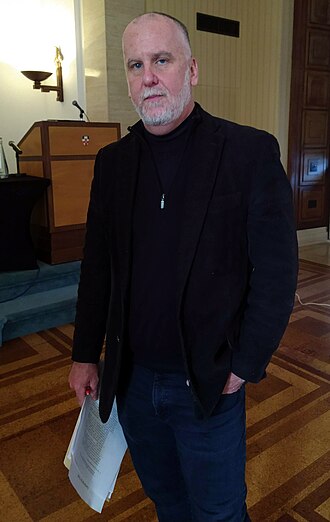
迈克尔·帕特里克·林奇
EDITED TRANSCRIPT · 依据现场录音编译整理,可划线生成便签
编者按:本文整理自康涅狄格大学哲学教授迈克尔·帕特里克·林奇在爱丁堡大学哲学系的一场公开讲座,题为《我们的互联网》(The Internet of Us),与他同名著作的主题一脉相承。讲座由爱丁堡大学哲学系主持人开场引介,随后由林奇独自主讲。林奇从一个关于「神经媒介」的思想实验出发,追问信息技术如何扩展、又如何未能扩展我们认识世界的能力,以及我们为什么应当在意这件事。本文依据现场录音编译整理。

开场

主持人: 感谢各位今天到场。先说一句题外话,本周还有两场规模很大的会议同时举行,能在这样的日子里坐满这个房间,很不容易,谢谢大家。今天的主讲人是康涅狄格大学的哲学教授迈克尔·帕特里克·林奇,他的新书《我们的互联网》讨论的正是今天的题目:在一个知识越来越多地来自屏幕的时代,「知道」这件事究竟发生了什么变化。下面把时间交给林奇教授。

一个思想实验

林奇: 谢谢,谢谢主办方的盛情。我想从一个想象开始。请设想这样一个社会:在那里,智能手机已经不再是随身携带的东西,而是被缩小之后直接接入人的神经系统。说得更准确一点,手机的全部功能被微型化,整合进了每个人的神经网络。于是这个社会的成员,可以说把整个世界的信息都放在了自己神经元的末梢上。信息就在那里,像空气一样触手可及。你不必再记住聚会上认识的那个人叫什么名字,因为神经媒介(neuromedia)会替你记着。我姑且把这个小装置叫作「神经媒介」。

林奇: 在这个神经媒介社会里,当然会有几个爱操心的老古板站出来问:这样得到的东西真的算知识吗?隐私怎么办?他们还会有一大堆类似的顾虑。但社会上绝大多数人会觉得这东西妙极了。知识变得如此轻松,就在你身边,随手可得。更重要的是,我们会拥有全新的表达方式。想一想,你可以用思维的速度下载、上传,比发推特还快,再也不用靠两根笨拙的拇指在屏幕上戳来戳去。凡是我们本来就擅长、也乐于去做的事情,从医疗到军事,都会因此突飞猛进。

灾难

林奇: 现在请把这个想象往前推几代人。神经媒介早已普及,人们乐在其中。也许不是每一个人都装了它,但绝大多数人都装了。这时候,一场环境灾难降临,摧毁了支撑神经媒介运转的服务器。请注意,灾难毁掉的并不是信息本身。信息可能存在别的服务器上,可能还躺在博物馆和图书馆的库房里。信息还在,只是那一种获取信息的方式不复存在了。神经媒介失灵,什么都传不进你的脑子。

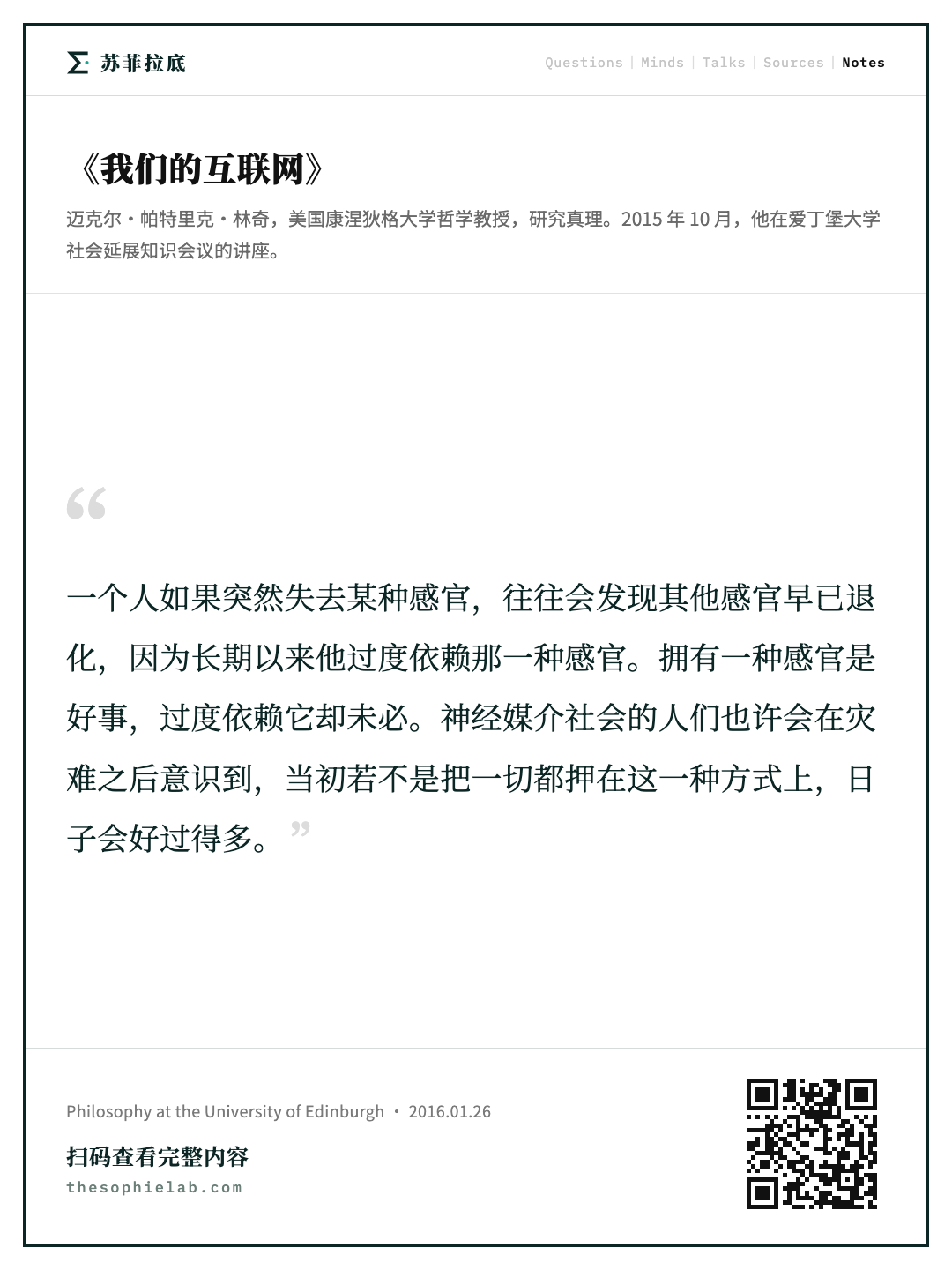
林奇: 对这个社会里的每一个人来说,这将是一场切身的灾难。想一想,几代人都是靠这种方式获取信息的,他们从来不需要别的办法。当然你可以说,信息还在,去找就是了,就像你今天还可以打开笔记本电脑一样。可是这些人已经失去了接收信息的能力。这让我想到一件事:一个人如果突然失去某种感官,往往会发现其他感官早已退化,因为长期以来他过度依赖那一种感官。拥有一种感官是好事,过度依赖它却未必。神经媒介社会的人们也许会在灾难之后意识到,当初若不是把一切都押在这一种方式上,日子会好过得多。你们大概已经看出我要往哪里去了,我稍后会回到这个神经媒介社会。

比想象中更近

林奇: 我们离这个故事的距离,其实比想象中近得多。做脑机接口研究的机构不止一家,大家都知道有人在花大力气把人脑和计算机以各种方式连在一起。往光谱的另一端看,可穿戴设备已经越来越常见。改良的空间还很大,但对大多数人来说,这已经是正在发生的事。有意思的是,那些有能力把这些可能性变成现实的人,从来没有忽视过它们。谷歌创始人拉里·佩奇就说过,他对未来的设想是:你想获取信息时,根本不必去查,只要脑子里想到某个事实,植入物就会直接把答案告诉你。

互联网的三波浪潮

林奇: 谈到这些可能性,我们会渐渐意识到,技术、产业和信息都在朝一个特定方向移动。人们常把互联网的发展说成几波浪潮。第一波是所谓「网络一点零」(Web 1.0),核心体验是:「哇,你该试试电子邮件这玩意儿!」我还记得当年在电视上看到这类广告。第二波是「网络二点零」(Web 2.0):「哇,你该看看这个叫脸书的东西!」社交媒体的兴起就属于这一波。第三波是「物联网」(the Internet of Things),也就是我们现在所处的位置:智能手表、智能冰箱、智能袜子,甚至智能内裤。好吧,最后一个是我编的。

第四波:我们的互联网

林奇: 但我们正在走向第四波,我称之为「我们的互联网」(the Internet of Us)。它的核心,是从「使用」走向「整合」,也就是神经媒介故事里设想的那种数字整合(digital integration)。这里我想澄清一点:我说的整合,不只是指技术在物理意义上进入我们的身体,虽然那也是一部分。我更想说的是,技术已经整合进了我们的生活形式(form of life)本身。哲学家会告诉你,技术从来都在某种程度上与我们的生活形式融为一体,这没错。但我这场讲座有一条暗线,稍后会回到它:我们现在经历的这种整合,有一个鲜明的特征,那就是它发生的时候我们察觉不到。整合越深,它最深远的影响就越是在我们不注意的情况下悄然发生。

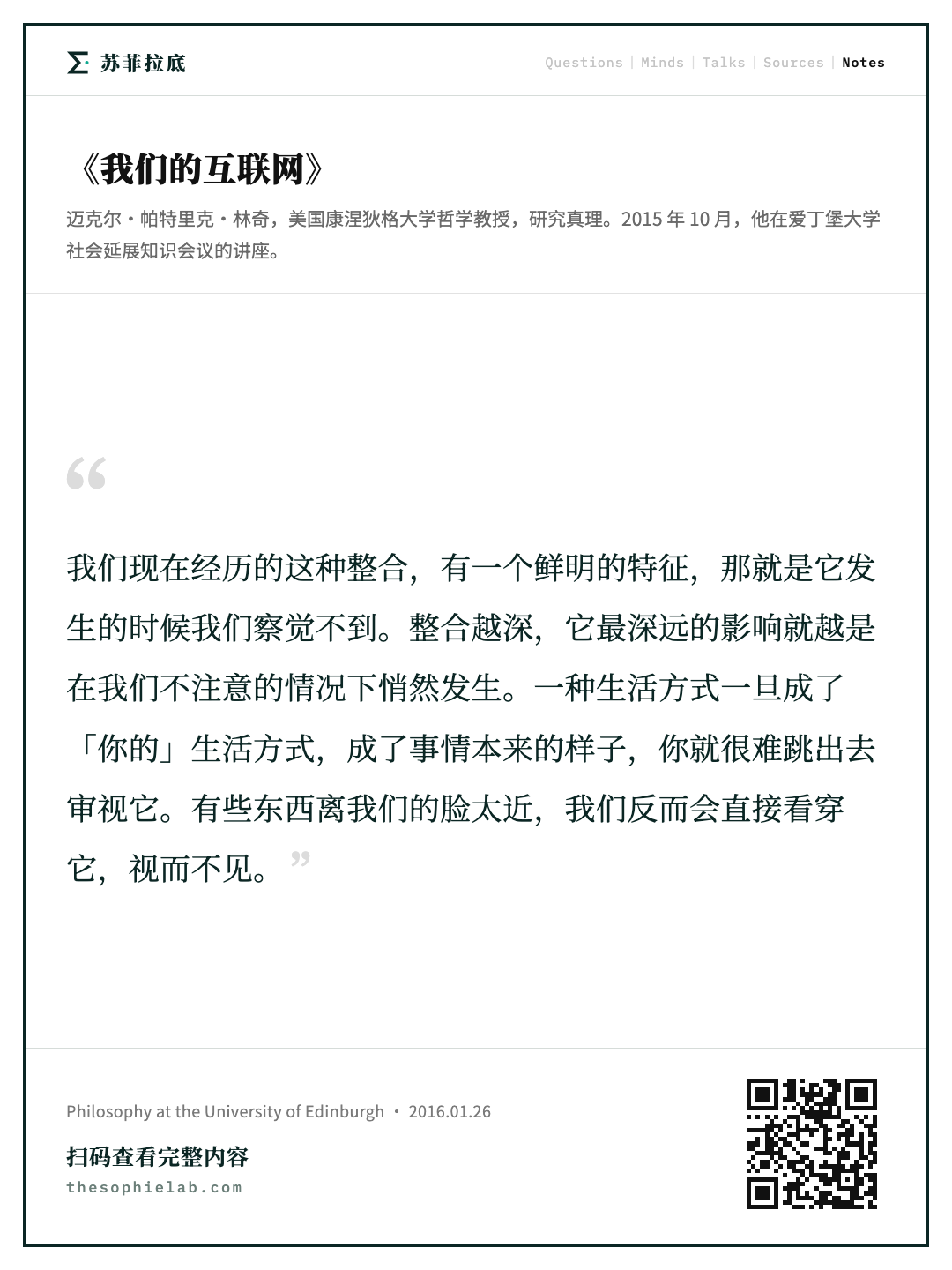
林奇: 这正是维特根斯坦谈过的东西。一种生活方式一旦成了「你的」生活方式,成了事情本来的样子,你就很难跳出去审视它。有些东西离我们的脸太近,我们反而会直接看穿它,视而不见。

哲学家会盯上什么

林奇: 那么,当哲学家看到神经媒介和「我们的互联网」这些东西时,什么会抓住他的眼睛?显而易见,关于心灵和同一性的问题会跳出来:我的心灵在哪里终止,你的又从哪里开始?我们的心灵在多大程度上是延展的?一个人和另一个人的边界到底在哪里?这是一类问题。你也可能想到隐私。我本人就是那种为隐私操心的老古板,尤其是在监控和情报机构的问题上。但今天我想谈的是知识。我认为信息技术影响最大的概念就是知识,这并不奇怪,因为我们生活在所谓的知识经济里,知识是这一切的核心。所以我的目光被这个概念抓住了。

三个问题

林奇: 关于知识,我想问三个问题。第一,信息技术如何扩展了我们认识世界的能力?注意,我问的不只是我们知道的东西变多了,而是我们认识世界的方式发生了什么变化。第二,信息技术在哪些方面没有做到这一点,甚至在某些方面与其他认知方式形成了竞争?第三,也是你们此刻大概正在心里嘀咕的问题:我为什么要在意?神经媒介也好,互联网也罢,关我什么事?我前面已经悄悄埋下了一些理由,稍后会把它们摊开来讲。

断网求知

林奇: 先说第一个问题。我想给大家讲一个小实验,我也鼓励在座各位回去试一试。二零一四年夏天,我决定回答四个问题,条件是不用互联网,也不用手机。这四个问题我特意选得各不相同。第一个:保加利亚的首都是哪里?第二个:四冲程舷外发动机和二冲程舷外发动机在机械原理上有什么区别?第三个:我所在选区的国会众议员的电话号码是多少?第四个:奥斯汀(德克萨斯州)眼下评价最好的餐馆是哪一家?

林奇: 保加利亚那个问题很容易,因为我家里有一本年鉴,翻开就查到了:索非亚。当然我有点担心它准不准,那本年鉴有些年头了,但总的来说没什么问题。舷外发动机的问题,我手头正好有一台坏掉的发动机和一本说明书,可是说明书根本没回答我想问的东西。于是我跑到码头,找了一位修船的机械师聊。他非常热心,把发动机拆开,一个零件一个零件指给我看。等我回到家才发现,我忘了做笔记,因为我不能拿手机拍照,只能靠脑子记,结果记住的没多少。

林奇: 众议员电话那个问题,我以为会很容易。我去了图书馆,跟馆员说:我想找我们选区众议员的办公地址和电话。他说,好啊,你上网查一下就行。我说我不能上网。他说,那用图书馆的电脑吧。我说电脑也不行,我什么网都不能上。他说,那你为什么不查一下……说到这里,你能看出他心里在想:这个疯疯癫癫的老头。最后他总算在书架深处翻出一本政府电话簿,我才拿到了号码。

林奇: 第四个问题我完全没答上来。奥斯汀眼下评价最好的餐馆是哪一家?我之所以选这个问题,是因为几周后我正要去奥斯汀。可仔细想想,这个问题本身就有毛病:「评价最好」是谁评的?「眼下」是指什么时候?这个问题只在某一种认知方式下才成立,离开那种方式,它甚至不是一个像样的问题。

林奇: 做完这个实验,我觉得自己像个历史重演爱好者,就是那些穿上古装、拿着刀剑演练古代战役的人。我做的算是认识论版的历史重演。这件事让我感兴趣的地方在于:我们现在的认知方式,不只是比过去快,它用的是完全不同的工具。而我们往往不会注意到工具变了,直到有一天发现自己已经站在了一个截然不同的地方。

谷歌式认知算不算知道

林奇: 我把这种新的认知方式叫作「谷歌式认知」(Google-knowing)。我指的不只是靠搜索引擎获得的东西,而是泛指通过数字界面获取信息,最典型的就是在智能手机上查东西。有一幅漫画:丈夫趴在水槽底下修管子,妻子站在旁边问他:「你是真的知道自己在干什么,还是刚在谷歌上搜的?」这是个好问题。谷歌式认知真的算「知道」吗?还是说它只是获取了信息?

林奇: 我们当然知道信息可以是好的,也可以是坏的,可以是真的,也可以是假的。但我认为,谷歌式认知显然可以构成知识。曾经有那么一个时期,学者们不信任维基百科,那个时期早就过去了,过去很久了。要算作知识,信息必须准确,还必须来自一个可靠的信息处理系统,也就是一个总体上产出准确结果多于错误结果的系统。谷歌式认知在很多情况下满足这两个条件。所以我的立场是:谷歌式认知可以是知识。

谷歌式认知的特征

林奇: 那我为什么还要讲断网的故事?因为它提醒我们,我们现在做的事和过去做的事不一样。谷歌式认知有一些特征值得注意。第一,它越来越深地嵌入了我们的认知过程(cognitively integrated)。我们理所当然地依赖它。那次实验让我真切地意识到,我不是偶尔上网查东西,而是本能地、条件反射地伸手去拿手机。这已经是第二天性。

林奇: 第二,它压倒了其他的信念形成方式。想一想,有多少次你和一个你信任的人,配偶或者好朋友,为某件事争论不休,结果有人掏出手机,一查,争论就结束了。也许是关于俄国政治,也许是别的什么,反正手机一出,事情就定了。第三,它是无缝的。多亏了工程师们出色的设计,我们几乎察觉不到自己在使用它。第四,我们对它抱有默认的信任。我在谷歌上查到的东西,我默认它是对的。这不等于我从不怀疑,但我的出发点是信任,就像你在街上向路人问路,问「大学在哪儿」,对方说了,你默认他知道,不会先去核实。

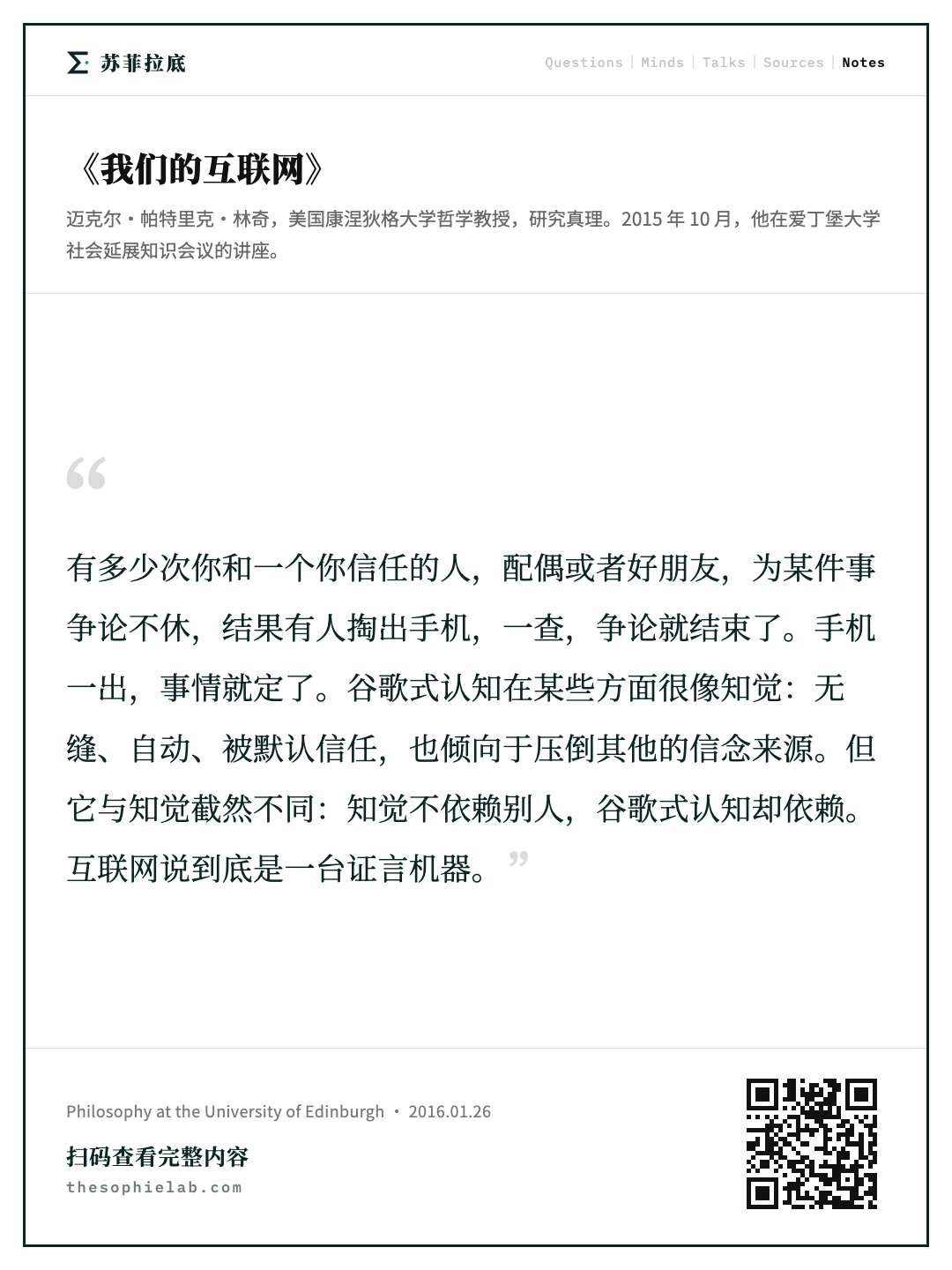
林奇: 把这四个特征放在一起看,谷歌式认知在某些方面很像知觉。知觉也是无缝的、自动的、被默认信任的,也倾向于压倒其他的信念来源。但有意思的是,谷歌式认知还有另外一些特征,与知觉截然不同。第一,它依赖他人。互联网说到底是一台证言机器(testimony machine)。你在网上查到的很多东西,是别人贴的评论、别人写的内容,或者是专门为此设计的机制生成的信息。知觉不依赖别人,谷歌式认知却依赖。

外包还是延展

林奇: 第二个不同之处,用这次会议的语言来说,谷歌式认知是外包的(outsourced),或者说是延展的(extended)。我说「或者」,其实两者都可以。知觉是发生在你身体里的事,是你的大脑和感官在工作。谷歌式认知不是这样,相关的信息处理大部分发生在你的头脑之外。说它是外包的,意思是你的手机替你储存信息,你由此获得的知识是派生的。你可能会问:那知识到底在哪里?

知识在哪里

林奇: 一种回答是,知识是分布式的(distributed),它散布在一个由人和机器组成的网络里。更激进的回答来自安迪·克拉克和大卫·查默斯的延展心灵论:他们主张,我们的心理状态本身,比如信念和记忆,可以延展到头脑之外,延展到我们的数字设备里。如果记忆可以延展,那么知识也不必只待在脑袋里,它可以摊开在整个系统之中。「延展」和「分布」听起来相似,其实是两种不同的主张:一种说心理状态本身在头脑之外,另一种只说处理过程是分散的。两种说法都很有意思,我今天不打算在两者之间站队。

林奇: 但我要说一点。即便你拒绝延展心灵论,认为心灵本身并没有延展,你仍然可以承认,为我们的信念提供根据和辩护的那些过程是共享的。换句话说,知识可以是延展的,哪怕心灵不是。理由是这样的:当我借助某个嵌入认知过程的信息技术,比如神经媒介,或者更平常的东西,得知某个命题为真时,我之所以算得上「知道」,部分原因在于所涉及的过程是可靠的。而这种可靠性,一部分来自我自己的认知能力,另一部分来自我所使用的机器的设计和运作。如果整个过程在相关领域里稳定地产出准确结果,我们就有理由说我知道。在这个意义上,知识是延展的,它是共同创造的。

再谈神经媒介

林奇: 回到神经媒介社会,那里的情形再清楚不过:人们的确在认识世界,只是这种认识是通过延展的过程实现的。其实不必等到神经媒介,看看教育已经变成什么样。几年前,谷歌眼镜刚刚问世,智能手表还没普及,我在课堂上让学生把当天要读的文本在设备上调出来,一起讨论。有个学生说:等谷歌眼镜普及了,你得给课堂立新规矩了。他说得对。谷歌式认知确实在扩展我们认识世界的能力,但它装不进原有的任何一个盒子:它既深度嵌入我们的认知过程,又是外包的、延展的。

这是好事,但是

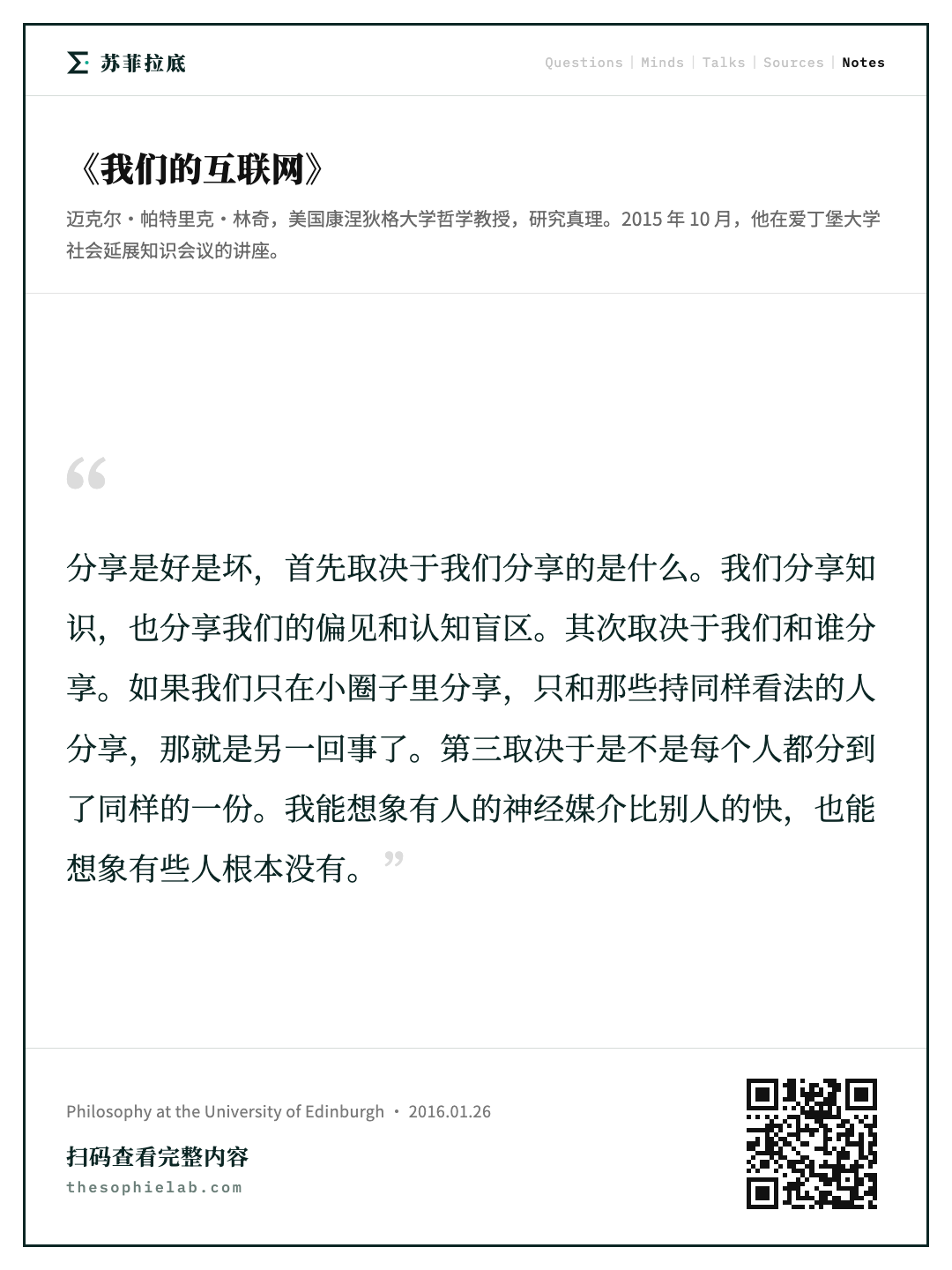
林奇: 这是好事。通过外包和延展,我们知道得更多了,这一点显而易见。而且以这种方式外包知识,意味着分享知识。我母亲常说,分享是好事,分享就是关爱。但我不认为这全是好事,理由有好几条,我只提几点。分享是好是坏,首先取决于我们分享的是什么。我们分享知识,也分享我们的偏见和认知盲区。其次取决于我们和谁分享。如果我们只在小圈子里分享,只和那些持同样看法的人分享,那就是另一回事了。第三取决于是不是每个人都分到了同样的一份。回到神经媒介社会:我能想象有人的神经媒介比别人的快,也能想象有些人根本没有。这些都是谷歌式认知的特征,我想请大家注意,它们好坏参半。以上是对第一个问题的回答。

第二个问题

林奇: 现在来看第二个问题:信息技术在哪些方面没有扩展我们的认知?细心的听众会发现,有两种能力我到现在还没有谈到:反思的能力,以及给出理由的能力。这两种能力对应着另一类知识,我们可以称之为反思性知识,也就是那种我们能够为之提供理由、能够彼此论证的知识。谷歌式认知能否扩展这一类知识?在某种程度上或许可以,但我并不确定。不过今天我想集中谈的是另一种知识,人们通常称之为理解(understanding)。

把点连起来

林奇: 我再讲一个故事。据传说,法国哲学家笛卡尔喜欢躺在床上思考,一直躺到中午。我也常这么干,我把它叫作思考,不叫睡懒觉。传说有一天,他躺在床上看着一只苍蝇在天花板上爬,忽然意识到,只要计算苍蝇与天花板边缘、与墙壁的相对位置,就能精确描述它在任何时刻的位置。笛卡尔坐标系就这样诞生了。这故事多半是编的,但它对我们的讨论有用,因为它描绘了一种认知活动:把点连起来,让原本零散的东西忽然聚拢成一个整体。

林奇: 这正是理解的特点,它和「知道某事为真」(knowing that)不一样。知道某事为真,是识别出事情是怎样的。理解则不同,无论是理解某事为什么如此,还是理解某物是什么。我和斯蒂芬·格里姆等人的看法一致:理解建立在对依赖关系的把握之上,也就是把握一个整体的各部分如何相互勾连、如何彼此依赖。我们常用比喻说「看到全局」,指的就是这个。它不只是注意到两件事总是一起出现,而是看出其中一件依赖于另一件。

林奇: 我想强调依赖关系,因为它能说明理解到底是什么。仅仅知道两件事总是同时出现,并不等于理解。相关性不足以构成理解,这是基础科学课上就教过的道理,相关性不等于因果性。但我要说的比这更强:即便相关性是完美的,也不足以构成理解。举个在这个场合再合适不过的例子。在柏拉图的《欧绪弗洛篇》里,苏格拉底站在法庭外面,等着为「不敬神」的指控受审。这时欧绪弗洛走过来,他正要以谋杀罪起诉自己的父亲,理由是这才合乎虔敬。苏格拉底,用我的话说是个了不起的刺头,就说:你既然连自己的父亲都敢告,一定很清楚什么是虔敬,那么告诉我,虔敬是什么?欧绪弗洛说,这容易,虔敬就是众神所爱的东西。

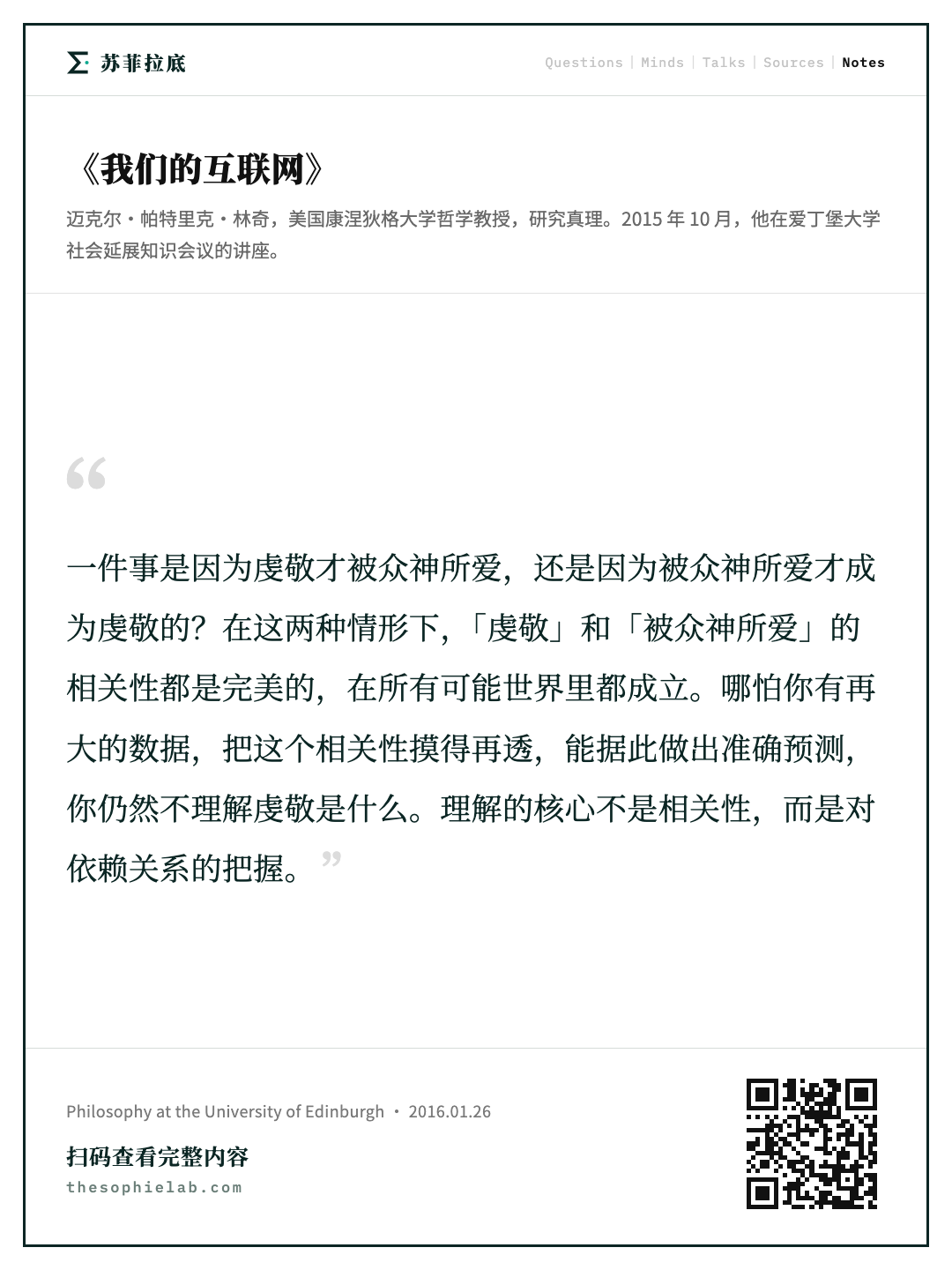
林奇: 苏格拉底接着问:一件事是因为虔敬才被众神所爱,还是因为被众神所爱才成为虔敬的?换句话说,众神只是虔敬的完美探测器,还是说虔敬本身就是由众神的偏爱造出来的?依赖关系朝哪个方向走,区别大得很。如果只要众神喜欢,什么都可以是虔敬的,那是一种宇宙观;如果众神是因为看出了虔敬才去爱,那是另一种宇宙观。你怎么看神、怎么看神与世界的关系,全取决于这个方向。而请注意,在这两种情形下,「虔敬」和「被众神所爱」的相关性都是完美的,在所有可能世界里都成立。哪怕你有再大的数据,把这个相关性摸得再透,能据此做出准确预测,你仍然不理解虔敬是什么。理解的核心不是相关性,而是对依赖关系的把握。

理解是一种创造

林奇: 那么「把握」(grasp)又是什么?我认为把握有一些很有意思的特征。这里要先区分两件事。理解作为一种状态,不是行动。你可以在睡梦中处于理解某事的状态。但「达至理解」(coming to understand),也就是第一次弄明白某事为什么如此,那是另一回事,我认为它是一种创造性的行动。

林奇: 什么叫创造性的行动?这里的故事很长,但粗略地说,一个行动对某个人而言是创造性的,如果它为这个人生成了一些在当时的情境下新颖的想法,这些想法对这个人来说是有价值的,而且带着某种意外性。请注意,新颖是相对于这个人而言的。你不必是世界上第一个想到某事的人,也可以做出创造性的行动。想想孩子:他们的创造并不比大人的更少,尽管他们想到的东西大多早就有人想到过。有价值和有意外性,也都是相对于这个人而言的。

林奇: 达至理解正好符合这三条。你第一次弄明白某事为什么如此,那一刻的想法对你而言是新的。它对你有价值,你会觉得有所收获。而且它往往来得出乎意料,那个「啊哈」的时刻,即便是在与别人合作讨论的过程中降临的,也仍然是一个意外的、新颖的时刻。回想一下上几何课的时候,你忽然明白了某个定理为什么成立;或者你对着一台发动不起来的汽车琢磨半天,忽然明白了它为什么不动。那一刻的感觉就是创造的感觉。

理解为什么可贵

林奇: 我认为这正是理解如此可贵的原因。创造本身就有价值,它是主动的,不是被动的。说到这里,你大概能看出我为什么要谈这个了。谷歌式认知,在很多情况下,说白了就是下载。它是被动的。而达至理解,作为一种知识,作为一种认识世界的方式,要求认知主体去行动,去创造。这种东西我们没法通过下载得到。

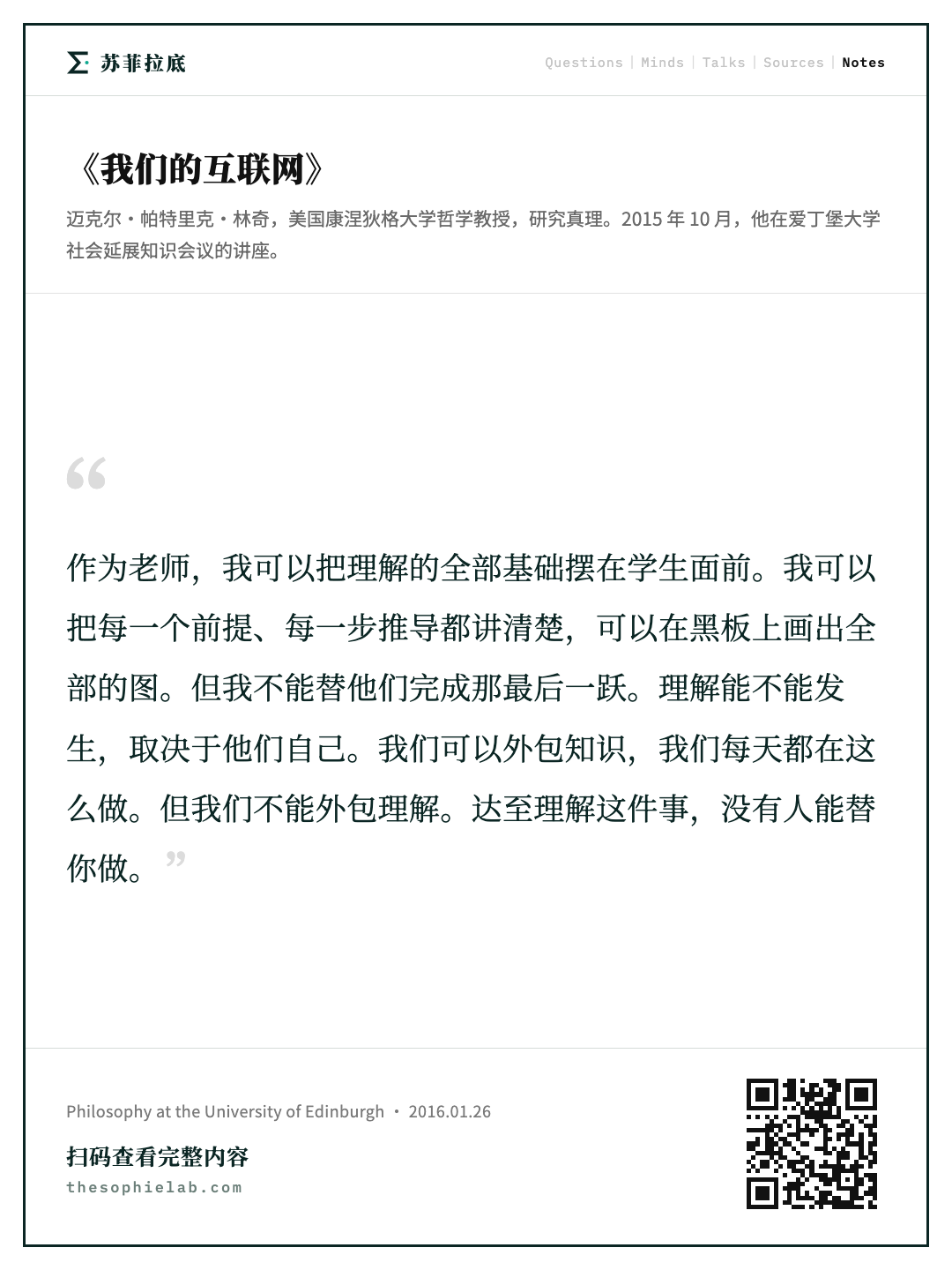
林奇: 理解还有一个奇怪的特点:它是个体性的。知识可以分布在一个群体里,可以在网络中共享,这我前面已经承认了。但达至理解这件事,每一次都只发生在一个头脑里。教过书的人都知道这一点。作为老师,我可以把理解的全部基础摆在学生面前。我可以把每一个前提、每一步推导都讲清楚,可以在黑板上画出全部的图。但我不能替他们完成那最后一跃。理解能不能发生,取决于他们自己。教过逻辑课的人对这种无力感再熟悉不过了。

林奇: 这就使理解和知识在一个重要的方面截然不同:我们可以外包知识,我们每天都在这么做,此刻也在这么做。但我们不能外包理解。你可以让学生分组,把查资料的活分给不同的组,那是外包知识。但无论理解的对象是什么,达至理解这件事,没有人能替你做。

我们还需要理解吗

林奇: 当然,你可能会问:我们还需要理解吗?这里我要引用《连线》杂志前主编克里斯·安德森一段很有名的话。他在多年前的一篇文章里描绘当时的世界,说:海量的数据和应用数学取代了我们原有的每一种工具,取代了每一种关于人类行为的理论,从语言学到社会学。忘掉分类学、本体论和心理学吧。谁知道人为什么做他们做的事?关键是他们确实做了,而我们可以以空前的精度追踪和测量。数据足够多的时候,数字自己会说话。相关性就够了。

林奇: 我引这段话,是想指出,科技界的一些领军人物,还有其他一些人,确实在暗示:只要有足够多的数据,找到足够多的相关性,旧的科学方法,那种建模、解释、追问为什么的方法,就过时了。相关性就够了,为什么不再重要。我不这么想。我猜你们也不这么想,你们大概已经从我前面说的话里猜到了。理解,尤其是理解当中那个创造性的部分,是我们看重的东西,是我们不愿意放弃的东西。至于科学本身是否也离不开理解,那又是一个很有意思的问题,今天没有时间展开,但我的答案是肯定的。

睁大眼睛

林奇: 最后总结一下。我们问了三个问题。第一,谷歌式认知在扩展我们认识世界的能力,这是真的,但它扩展的方式很特别,既深度嵌入,又外包出去。第二,有一些认知方式,尤其是理解,它可能扩展不了,甚至可能被挤压。第三,我们为什么要在意?

林奇: 一个理由是,认知过程的深度整合意味着我们与技术之间建立了一种亲密关系,这一点显而易见。亲密关系带来好处,但亲密也意味着脆弱,意味着我们更容易受伤害。我们在这方面的脆弱,也许还没有充分暴露出来,但它就在那里。

林奇: 我最近和一位朋友聊天,他问我:你写这本书,到底是支持技术还是反对技术?我听到这类问题总觉得好笑。这就像问一个人:你支持还是反对汽车?汽车问世的时候是一场革命,它对经济的贡献巨大,切实改善了无数人的生活。在我的国家,它打开了原本闭塞的乡村,让人们可以把生意做到远处,改变了社会关系,改变了人们交往的方式。这些都是好事。但我们同样知道,汽车带来了谁也没有预见到的后果,交通拥堵,环境污染,以及其他种种。

林奇: 我想说的是,当我们身处一种生活形式之中,就很难记得,它可能带来我们尚未准备好去面对的后果。其中一些后果是物理性的,另一些则关乎我们认识世界的能力。我没有答案,只有一个提醒:睁大眼睛。请允许我用伯特兰·罗素在上世纪五十年代写下的一句话作结。他说,在过去,人所能做的事情十分有限;而知识每增加一分,人所能成就的事,包括人所能造成的愚行,也随之增加一分。科学的世界带来的危险,并不属于遥远的未来。谢谢大家。
本期讲者
迈克尔·帕特里克·林奇美国康涅狄格大学哲学教授,研究真理、知识与民主。著有《The Internet of Us: Knowing More and Understanding Less in the Age of Big Data》(2016)、《True to Life》《In Praise of Reason》等。
章节 · 点击跳转视频
0:00 神经媒介思想实验:知识唾手可得 ▶ 正在看
2:54 灾难来临:失去一种感官的社会 ▶ 正在看
5:48 脑机接口与「我们的互联网」 ▶ 正在看
9:06 融入生活形式:越贴近越看不见 ▶ 正在看
11:47 三个问题与一场无网实验 ▶ 正在看
18:54 「谷歌式知道」算不算知道 ▶ 正在看
21:36 认知整合:默认信任如同知觉 ▶ 正在看
24:26 依赖他人与外包:延展的知识 ▶ 正在看
30:14 外包即分享:分享什么、与谁分享 ▶ 正在看
33:03 理解是什么:把握依赖关系 ▶ 正在看
39:12 理解是创造性行为,无法外包 ▶ 正在看
45:30 大数据的「理论终结」与为何要在意 ▶ 正在看
本期论点
本期回应
5:02
过度依赖网络获取信息,会让网络反过来成为心智的控制者 人会变弱把事情交给机器,人会变弱吗?
12:34
信息技术在某些方面并非扩展了人的认知能力,反而与真正的认知能力相竞争 人会变弱把事情交给机器,人会变弱吗?
26:42
知识不只存在于头脑之内,可以铺展到大脑之外的设备与网络上 人能做到更多把事情交给机器,人会变弱吗?
27:11
即便心灵并未延展,知识仍然可能是延展的 人能做到更多把事情交给机器,人会变弱吗?
32:48
谷歌式的知识获取无法让人知道彼此在反思什么、能相互给出什么理由 人会变弱把事情交给机器,人会变弱吗?
45:59
知识可以外包给他人或工具,理解无法外包 换来另一种能力把事情交给机器,人会变弱吗?
35:14
理解建立在把握各部分如何相互关联和依赖,而不只是认出某事为真 不算理解预测得准就等于理解了吗?
36:06
相关性不足以构成理解,哪怕相关是完美的 不算理解预测得准就等于理解了吗?
39:57
理解某件事为什么如此是一种创造性行为,而非被动的状态 不算理解预测得准就等于理解了吗?
48:16
算法从海量数据中找出模式,并不能取代科学建模和解释 不算理解预测得准就等于理解了吗?
20:40
谷歌大体上满足了可靠信息来源的条件 大体可信网上的信息能信吗?
23:01
人们几乎看不见获取信息的技术媒介,并对搜索结果抱有默认的信任 默认信任有问题网上的信息能信吗?
18:31
互联网带来的不只是更快获取知识,还有一套不同的认知工具和新的「知道」方式 改到根上媒介更替会改变人本身吗?
其他论点
20:19
要算作知道,信息必须准确,且来自能大量产出准确信息的可靠系统
01神经媒介思想实验:知识唾手可得
0:00
really physical crimes beautiful too bad get a taxi we're just cooking of us I want to thank w that was extremely kind Rusty's spade in this convo there's one more conference two really big fantastic and for those of us who have a big conference off and everyone else to give dem I am alright work so imagine a society that ad as a word or smartphones Minister always decide agreed that they will hook dumped directly into the brain all right so if you like a little bit more more accurately the capabilities of their smartphone miniaturize than an integrated into their neural net go the members of the society would of course the world of information right at the tip of their neurons so to speak whats kappa will hear it right there like the lots of the atmosphere right there you
……真是些实打实的罪过。太美了,可惜。打个车吧,我们不过是在随便聊聊。我想谢谢 W,他刚才实在太客气了。这场对谈之外还有一场会议,两场都非常精彩;对我们当中那些还要赶另一场大会的人来说……好,那就开始吧。请设想这样一个社会:他们没有把智能手机当成随身携带的东西,而是一致同意,干脆把它直接接进大脑里。说得更准确一点,就是把智能手机的全部功能微型化,然后整合进人的神经系统。这个社会的成员当然就等于把整个信息世界放在了自己的神经末梢上,可以这么说。想知道什么,它就在那儿,像空气一样就在那儿。你
便签引用
1:27
have all this information knowledge would be this is it easy there's no need to remember the name of that person that you met it an interplay lost me neuro media doesn't for you call that little device neuro meeting now Matthew MS Society you know sure there might be so cranky old fusspot sue the society might be like what about fly the CER the great worry about oh you know what it is just really knowledge this you're getting from this narrow media and have a bunch of other concerns like that but most of us what do you like that this is all this is all again knowledge is something easy it's right there beside in all seriousness we be able have the swim you know we have new forms of expression if we because if you have a capability serious Mike I'm gonna just downloading your upload your out loading at the speed of tweets faster even this week a phone there's no bungee you clumsy little thumbs so quickly decades so much easier be able to all these things new forms of expression which ones apart
……手边就有全部这些信息,知识会变成一件极其容易的事。你不需要再记住某个刚认识的人叫什么名字,神经媒介(neuro media)替你记好了——我们就把那个小装置叫神经媒介吧。在这样一个社会里,当然啦,可能还是会有几个爱唠叨的老顽固,说:那深度思考怎么办?他们会担心这种从神经媒介里直接拿到的东西算不算真知识,诸如此类的一堆顾虑。但我们大多数人多半会觉得:这不挺好吗?知识变得轻而易举,就在手边。说正经的,我们确实能因此得到新的表达形式,因为一旦你有了这种能力,你可以用发一条推文的速度上传、下载你的想法,甚至比这更快,不用再靠笨拙的手指去戳屏幕。几十年间,一切都会变得容易得多,我们会拥有各种新的表达方式,
便签引用
02灾难来临:失去一种感官的社会
2:54
we're dating things like healthcare warfare so much well the things in other words that we're good at that we like to do so ever but you to imagine that let's narrow media connect the design a minute I don't know happen the disaster strikes herself several generations were gone simple generating people enjoying this maybe not everyone this is odd because you're not my concept like you're not coolies seven generations go by generations and there's an environmental disaster and that disaster strikes the servers that allowed for no me hooker that is they don't we can either destroy the information % to information might be stored on a variety of service it might actually be still in box you know museum libraries so there'll be this information but a certain way of accessing but it would no longer be and then I'm gonna not going
……而像医疗、战争这类事情,我们也会做得好得多——换句话说,那些我们本来就擅长、也乐意去做的事。但现在请你设想:这个神经媒介的社会运转了一段时间,我不知道过了多久,然后灾难降临。好几代人过去了,人们享受着这一切,也许不是每个人都享受,因为这种设想本来就有点古怪。总之七八代人过去了,接着发生了一场环境灾难,而这场灾难恰好摧毁了支撑神经媒介运转的服务器。也就是说,信息本身不一定被销毁了——它可能还存放在别的服务器上,甚至还留在书里、博物馆里、图书馆里。信息还在,但那种获取信息的方式,就再也不
便签引用
4:22
to your brand equity this would be it should be a terrible disaster for you personally if you have some generation people happens so do not being able to access even having make you go get right still get the exact you know maybe a mini sees its go either your laptop you don't have the receiving ability that I well it seems to be like it might be like the fact that when people lose the sense that they have and lose it suddenly they might find that the other other senses happen well they sort of with another harm they've been over-reliant on this one sense having a sense might be good for lying on it to the web shows were mine controls so you can see where I'm going perhaps by that story i'll return to their media society in a little bit obviously I would now know that it's pretty clear isn't it
……向你敞开了。对你个人来说,如果你正好生在那一代,这会是一场可怕的灾难:明明信息还在那儿,你却拿不到;也许你还能找到一台笔记本电脑,但你已经没有了接收的能力。这有点像一个人突然失去某一种感官——他们会发现自己其他的感官已经退化了,因为他们过度依赖了这一种感官。有一种感官当然是好事,但过分依赖它就是另一回事了。所以你大概能看出我讲这个故事想说什么。我待会儿还会回到这个神经媒介社会。不过现在,这一点已经很清楚了,不是吗:
便签引用
03脑机接口与「我们的互联网」
5:48
that we're closer to this done to my day the slider I should work actually a infographic associated with a very great open-faced flap where before courts are working as many of you know where the lead working on brain-computer I said Frank tryna bring future at allowed range in pewter stay together in a variety of ways because we go down to the side burning of the humanism were showing examples is a wearable tech is now becoming more familiar this let me would improve does this closer than you might think or actually probably for most people it's and one of the things that's interesting about this is that it's not been lost of course the possibilities here not been lost on those who have the ability to bring or the leads to bring some of those hospitals flat so here's Larry Page voted in his book saying is the google we do you think about coming to nola knowledge about it it says speculating about future you want to get information of sno having to plug up we're really about active just tell you the answer
……我们离这种情形,比自己以为的要近得多。我这里其实有一张相关的信息图。正如很多人知道的,已经有不少团队在做脑机接口,试图用各种方式把大脑和计算机连到一起。而且沿着这条线往下走,可穿戴设备如今已经越来越常见了——所以这件事比你想的更近,对多数人来说甚至已经在发生。有意思的一点是,这里面的可能性当然也没有被那些有能力、有资源去推动它的人错过。比如拉里·佩奇在一本书里被引述说,我们在谷歌思考的就是这件事:你想要信息,却不想为此专门去查、去接一堆东西;理想状态是它直接把答案告诉你。
便签引用
7:25
now I we talk about these possibilities I think we're starting to appreciate that things in technology industry and information and all our moving in a particular way sometimes people with background of you sometimes we talk about the various days of IT that is the various waves internet first half with one point 0 which is you know basically the idea that wow you should check out this email I remember I remember some of your TV and I remember holy factor Alice even trying to finish my life example it's a real thing that you should get any birthday hi web two point oh wow you should check out this facebook thing so what you point out is something solid rising social media with a three-point the internet of things that sort of look where we are now can say for the so-called smart bed Wow did you check out my smart watch my smart brain I prayed my smart refrigerator I spun out my sport socks I smarter underwear actually those black your dumb jokes okay all right but now we're actually moving something sort of wait for the internet to type all the internet applause and this is the idea that we're
……我们谈论这些可能性时,我想我们开始意识到,技术产业、信息产业,乃至我们所有人,都在朝某个特定方向移动。有些人喜欢讲互联网的几个阶段、几波浪潮:先是 Web 1.0,基本就是「哇,你得看看这封电子邮件」。我还记得那种感觉,那真的是件大事。然后是 Web 2.0,「哇,你得试试 Facebook 这东西」,也就是社交媒体的兴起。再然后是 Web 3.0,万物互联,差不多就是我们现在所处的位置,所谓的「智能」一切:你看看我的智能手表、我的智能手机、我的智能冰箱、我的智能袜子、我的智能内衣——好吧,最后那个是玩笑。但现在我们其实正在走向另一样东西,某种「我们的互联网」,而这个想法是,我们正在
便签引用
04融入生活形式:越贴近越看不见
9:06
moving from where r 2 integral as we might say in the way the rural media speculates we might be digital integration this digital integration I would say is really when I pop up here and allow some not actually just talking about the fact that technology might be more moving into our bodies that were the sort of social side will be in the unit also talking about the way in which technology now has become integrated into what we can start a 12-hour form of life ah various philosophers will tell you the technology is always integrated into our forms of life in some extent that's true would be my integration normal life but one of the things I'm going to be sort of the subtext of this talk to return to this point the subtext is that the type of integration experience we now faculty and in some sense my my pocket severe one of it one of the wigs which is rather form integration and her is that what ways it manifest itself is that it says not noticing that it happens it's a fast of this integration and its deepest effects you go by about are noticing this is the
……从「外接」走向「内化」,可以这么说。就像神经媒介那个设想所指向的,我们也许正在走向一种数字整合。我要在这里强调一下,我说的数字整合不只是指技术可能更多地进入我们的身体,也是指技术如今已经被整合进了我们的整个生活形式。当然,会有哲学家告诉你,技术从来都在某种程度上被整合进我们的生活形式,这话没错。但我今天这场演讲有一条潜台词,我还会回到这一点:我们如今经历的这种整合,在某种意义上是一种更彻底的整合,而它表现出来的一个方式恰恰是——我们几乎注意不到它正在发生。这种整合最深的影响,往往就在我们没有察觉的情况下发生了。这正是
便签引用
10:33
thing that Victor sign off instead about when will supply and one of the reasons that made before understanding them so difficult is that once you have a certain way of living and it becomes you know just your way of life it's just how things are good you very difficult to sort of step outside and to notice office some things can be so close to in front of our face you look right past all right so when i get about neuro media and the internet about all these things beyond so far what catches your eye off you look about their army the obviously questions about mine and identity start driving goin two iron as it or think each other he is out of this right ah my guess is like that any of our way to our and so forth and so on you might begin to wonder about know to what extent a lot of arguing this our minds are talking about this again i extended might want to think about where that boundary is one person another that's one but you might think about piracy that's not a question I'm actually I'm one of those
……维特根斯坦说过的那种事:事物中最重要的方面,恰恰因为太简单、太熟悉而被隐藏起来了。理解它们之所以这么难,原因之一就是,一旦某种生活方式成了你的生活方式,它就只是「事情本来的样子」,你很难跳出来看见它。有些东西离我们的脸太近,我们反而直接看穿了过去。好,那么当我讲神经媒介、讲互联网、讲这一切时,什么最先抓住你的注意力?显然,关于心灵和身份的问题会立刻冒出来——我们彼此之间还有边界吗?你可能会开始琢磨:我们所说的「我们的心灵」到底延伸到哪里,那条界线在哪一个人和另一个人之间。这是一类问题。你也可能会想到隐私——虽然那不是我今天要谈的问题,尽管我也是那种
便签引用
05三个问题与一场无网实验
11:47
bus pops worries about that particularly with regard to the national community and ah but today I want to talk about knowledge I think the greatest impact and this is not surprised any we live in the knowledge economy information technology is the concept of knowledge is the contact center of I think about them and so I think it this will all start anyways eyes are caught by that concept so can ask three questions about that first question is how is IP information economy of there is provides how is it expanding our ability to know not just our knowledge like the things did not stop but are emitted the ways in which we know how am I goes changing how does information technology will say not doing that in fact in certain ways might be competing with actual either that's open it up we're talking about and the finally question is might be asking yourself now which is why should I care right because after all just be that the internet media thing and shut up giving it why should I well I'm already starting to suggest you might have
……会为隐私忧心的人,尤其是在国家安全这类议题上。但今天我想谈的是知识。我认为最大的影响在这里,这其实也不奇怪:我们生活在知识经济里,信息技术的核心概念就是知识。所以我想围绕这个概念问三个问题。第一个问题是:信息经济、信息技术,是如何扩展我们「认知」的能力的?不只是扩展我们知道的内容,而是扩展我们「知道」的方式。第二个问题是:信息技术在哪些方面其实并没有做到这一点,甚至在某些方面可能与真正的认知相竞争?第三个问题,也是你现在心里可能正在问的:我为什么要在乎这些?毕竟这不过是互联网和媒体那点事。为什么要在乎?其实我已经开始暗示一些理由了,你可能已经
便签引用
13:04
noticed some reasons dropping remarks that the true but are you just a little bit ok so I'm going to talk about something on it first thing I want to do those telling you about a little experiment ah so last of the summer 2014 that puts myself channel and I actually encourage you to try this in cumbria I wanted to know the answer I decided to try to answer for different questions without using the internet and without a drop even in director at least one questions that I in some cases I think I hand on the other to put one way and then I forgot another cases like Justine young and they were very different order but later I get up on forward mr.
……从我刚才顺口提到的几句话里听出来了。好,那我先讲点别的。我想先跟你们说一个我自己做的小实验。2014 年夏天,我给自己设了一个挑战——我其实也鼓励你们试一试,因为我真的想知道答案。我决定不借助互联网,也不借助任何数字设备,去回答四个不同的问题。有些问题我先用一种方式试,然后又换另一种;有些则完全是临时起意,顺序也很不一样。不过后来我把它写出来了,
便签引用
14:16
tomorrow so what she was what does the Capital Area another question was how does a four stroke out where this is all strong like understated sailor as well motor aza 4-stroke outboard on gyffer mechanically that a two-stroke none of us was is recommended what's his phone number and and widely the last question was what is the best review a restaurant in Austin Texas white nap so that was a talented but I would dude now so I set off try to learn to cope with the whole thing but the Bulgarian the mushroom out here it was very easy to answer if I effect I had a natural in a Makana and I competed my house for me though Sofia of course I worry about his accuracy a little bit i think john the bedroom okay so that was you no problem ok the question about the awkward girl i had a non-functioning version of that i had manual but mainly ask a question I wanted and the dip work anyway so doing so I went down marina and actually talk to mechanic and he was really helpful he took me in shouting
……第二天。那么问题是什么呢?第一个问题是:保加利亚的首都是哪里?另一个问题是:四冲程舷外机是怎么工作的?更具体地说,四冲程舷外机在机械原理上和二冲程有什么区别,为什么现在推荐用四冲程?第三个问题是:我的选区众议员是谁,他的办公电话是多少?最后一个问题是:奥斯汀评价最好的餐厅是哪一家?这就是那四个问题。于是我出发了,试着在完全不上网的情况下把它们弄清楚。保加利亚那个问题其实非常容易回答,因为我家里正好有一本地图册,我在家里查了一下——索非亚。当然,我对它的准确性还是有点担心,那本书有点旧了。好,这个没问题。舷外机那个问题,我家里有一台坏掉的那种机型,还有说明书,但说明书并没有回答我真正想问的问题,也没什么用。所以我跑到码头,直接找了个机械师聊。他非常热心,把我领进
便签引用
15:41
stop at everything he took a fire engine and lots of stuff sorta I thought until I got back I realized I forgot to take notes because I didn't have my I couldn't throw my phone and just report it so I forgot to take knocks and the limit of my life turned out to be a while it was going to be easy so it'll be library today you know I said the candy coat I want to know representative for peezy you know office address phone number and he was like yeah okay well where could i buy that affection he's like I mean the first thing says yeah so why are you talking to the kid just like my school look it up and as I hell yeah I need to find a mission he's like well the computers are written with it and yeah well I can't actually find it out without beginning right so it's just like more information I said oh I can't do that because they might music so at this point you can see Easter like okay this crazy old guy so stay farm um so where's the dependable thumb book that had the place in the library with my back so we didn't identify the first
……修理间,把发动机拆开给我看,给我讲了一大堆东西。我当时觉得挺好——直到我回到家才发现,我忘了记笔记,因为我不能用手机,也不能录音。所以我什么都没记下来。至于我的众议员那个问题,本来我以为会很容易:去图书馆嘛。我说我想知道本选区众议员的名字、办公地址和电话。对方说,行啊,那你上哪儿查呢?他第一反应就是:上网查啊。我说,所以你为什么不直接跟孩子说「自己去查」呢?他说,图书馆的电脑就在那边。我说,可是我不能用电脑。他说,那就查不到了。我说,我需要别的办法。到这个时候你就能看出来,他心想:好吧,这个老疯子。总之,最后我们在图书馆一个角落里找到了那种老式的电话号码簿,用它查到了。所以第一个
便签引用
17:20
question perfect couldn't answer that at all no it was my question was what's the best roughs best reviewed restaurant in Austin Texas right now that's why i put it because i was really want to win enough because i was going to austin texas shoot couple weeks I wasn't married that's not a good question would close to yourself we need right now like view by who like what but now it's even notice it's of your question so I have it through this night you don't resist music I feel dirty but dress-up is for like explorable costume Ian actors and reenact things and they live in Canton fight other swords or what having I've never done but this is sort of like the epistemological I mean I live why do you know I but when felt sort of my heads so I've heard named roy thomson XO as we so interested in the fact that now awaits become of knowing our ways that allow us to do these things so it's not just so quick but actually answer different tools of mine and you use all
……问题算是解决了。但最后一个问题我完全答不上来:现在奥斯汀评价最好的餐厅是哪一家?我之所以出这道题,是因为我确实想知道——过几周我要去奥斯汀。可这其实不是个好问题,你稍微一想就会发现:「现在」是什么时候?「评价最好」是谁评的?按什么标准?这本身就是个问题重重的问题。所以那几天我过得挺不好受,我感觉自己像个脏兮兮的怪人。这有点像那种穿着中世纪服装、拿着剑互相打斗的历史重演爱好者——我从没干过那种事,但我当时干的,可以说是认识论版本的历史重演。我把这叫作「谷歌式认知」(Google-knowing),我对这件事非常感兴趣:如今我们「知道」的方式发生了变化,出现了让我们能做到这些事的新方式。它不只是更快,而是动用了不同的认知工具,而且我们使用它的方式
便签引用
06「谷歌式知道」算不算知道
18:54
the way that we might not notice eventually started to a radically different currencies so by Google knowing I mean not just know me by search acquiring information via digital interface and get into the no importance for a minimum it means all the required information via digital HD on your smart oh I have said yet what knowing is detected my worry so this is a your crushing last year through the great do you really know so you can see this is you know behind Mitch fix the sink and she says do you really know what you're doing it or you're just google search a good question is is working on the phone so you might ask well as Google now we've really done right is it really going well just acquired information of course we know that is information can be good or bad but it can't be coming it is wrong or it can mean i think that the ohlone bargain information egos vehicles are clearly can be about anybody here with seems to me I me there was at a time when believe it or not academics or were
……可能自己都没注意到,久而久之却带来了根本性的差别。我说的「谷歌式认知」,并不只是指用搜索引擎,而是指通过数字界面获取信息进而知道某件事。最低限度地说,它意味着:通过数字设备、通过你的智能手机获取信息。当然我还没说清「知道」到底是什么意思,这正是我关心的地方。去年有一幅漫画特别打动我:画面里一个人正在修水槽,旁边的人说,你是真的懂你在干什么,还是刚在手机上谷歌了一下?这是个好问题。你可能会问:谷歌式认知真的算「知道」吗?还是只是获取了信息?我们当然知道,信息可以是好的也可以是坏的,可以是对的也可以是错的。我认为网上获取的信息显然可以是可靠的——在座各位大概都会同意。信不信由你,曾经有一段时间,学者们是
便签引用
20:19
distrustful of here at that time is long gone long gone distant like I really long time and so obviously absolutely knowing the informations got a fire Scotty accurate and it's gonna be also the results of reliable information processing system copy well produced by a system that has more mass produce accurate dramatic than in anger those are a little further panel condition on google so i'm going to point you is that way we have an eye now suppose with the waist again why did i do that story to come fast certain always remind doctor now about what we used to but now we're doing something different is a certain features this google no it's increasingly cognitively integrated explain what I mean by one thing we rely on it as a matter of course and then that experiment that I did so it really doesn't run out at least it did to me
……不信任网络的,但那个时代早就过去了,过去很久很久了。所以显然,靠信息去「知道」当然是可能的,只要那信息足够准确,并且是由一个可靠的信息处理系统产生的——一个产生准确结果多于错误结果的系统。这些条件在谷歌这里大体是成立的。我想指出的是,我们现在的处境跟以前不同了。我刚才为什么讲那个实验的故事?因为它提醒我们,我们和过去做的事情已经不一样了。这种谷歌式认知有几个特征。第一,它越来越具有「认知整合性」。我说的是什么意思呢?就是我们理所当然地依赖它。我做的那个实验之所以对我冲击很大,
便签引用
07认知整合:默认信任如同知觉
21:36
because it brings out the fact that you just go go not just as a whole to digital information just I mean brick that's the second nature what over it swamps it r attends to swap other forms of belief formation now easy googliness believe how many times effective might be embarrassed to admit it how many times are you in a discussion with the trusted person trusted friend or spouse and you know you're arguing about something do you trust somebody comes out yeah that's okay I mean there might be something you know depending Russian politics or so it's seamless this is the comedy integration alex is becoming to my seagulls by that I think there's a lot to say about it I'm going to just read it by that I mean that the way to which have access to this information as now thanks to incredible design the part of Engineers incredible they've got a point
……正是因为它暴露出:谷歌式认知已经成了我们获取数字信息的默认方式,几乎是第二天性。它压过、或者说倾向于压过其他形成信念的方式。谷歌式认知太容易了。有多少次——你可能都不好意思承认——你在跟一个你信任的人争论,跟朋友或伴侣争论某件事,比如俄罗斯政治之类的,然后大家不约而同地掏出手机?它是无缝的。这就是认知整合。这里面有很多可以细说的东西,我只强调一点:由于工程师们做出的那些了不起的设计,我们获取这类信息的方式已经到了一个地步——
便签引用
23:01
where we sort of look proved Ian we have discuss also often treated with automatically default trust we tend to you know I tend to the vault trust what i get when i look on google apps written by default trusted it doesn't mean items I no no okay it's the whole just in much the same way I was when I for example ask him you default trust the person you asked for this treatment if you say no where for his where's the University and they seem to know what the him up so you know festival now features are really interest because in some ways missed the doctor of integration of ipv sort of like perception seamless automatic know what perception we know all right trumpet seamless intended to swamp other relief formation she is believing but rely on it had of course and we integrated it's actually quite low one of the things that's really interesting however is that there are other features as well and these teachers are interestingly to venture they're very different from the other game what is it Google no he is not
……我们几乎是「看一眼就有」,而且我们往往会自动地、默认地信任它。我承认,我在谷歌上查到的东西,我基本是默认信任的。这并不意味着我永远不会怀疑,而是说,那就像我开口问一个人时一样:如果你问路,问大学在哪儿,对方看起来知道,你就默认信任他。所以这些特征很有意思,因为在某些方面,这种整合看起来很像知觉——无缝、自动。知觉是什么?无缝、自动、倾向于压过其他形成信念的方式,我们理所当然地依赖它,而且它是深度整合的。但真正有趣的是,谷歌式认知还有另外一些特征,而这些特征恰恰与知觉非常不同。谷歌式认知不
便签引用
08依赖他人与外包:延展的知识
24:26
dependent on others indeed it to be seeing the family definitely a product as a woman crystal for my safety internet machine is the internet rather is one because of them machine machine for getting tested on Augie a lot of looking a lot would you know via google lemon sorry test accident testimony other people posting the reviews or information that's been generated by types of mechanisms designed for that farm so it's rather than others at least we do the cleanup Pittsburgh happen to this conference before the connection comments is that it's also in a certain sense of outsourced or extended and I need that as either or I guess both so in other ways it's not like we're here interception sir we get reception is something that's happening the not able to go but it think of yourself or something this that's having inside brain or body Google knowing seems like
……依赖于他人——至少表面上看是这样。它看起来像是一台机器的产物,就是那台上网的机器,或者说互联网本身。但实际上,你在网上查到的很多东西,恰恰依赖于他人的证言:写评论的人、发布信息的人,或者由专门为此设计的机制生成的内容。所以它其实仍然依赖他人,至少在这个意义上——这一点在这次会议之前的讨论里也有人提到。另一个特征是,谷歌式认知在某种意义上是「外包的」,或者说是「延展的」——我觉得两者兼有。跟知觉不同:知觉是发生在我们体内的事,是发生在你的大脑或身体里的过程。而谷歌式认知似乎
便签引用
25:49
a processing involved is generally not short for extended my outsource I need the idea that your phone tourist information and the knowledge that accounts that you have a result of that story derivative is outsourced student you might say where is the knowledge well in a sense you have to have it but it's the dissenters a distributed process or crime or more radically any corpus Martin suggested that our medicines themselves might but believes her memories themselves be extended to things outside results include digital buys us so that our line I actually you know our network where is it our state's of our memory might themselves be extravagant it or not just to my brain and if you'll find acknowledge my exciter knowledge in just in the head items spread could be spread out of 10 nah there are actually differences it's my sound similar but there are differences about whether you really want to say other states are extended or whether you think they're just distributed in a certain sense both of these are interest and words I'm not going to make a stand here on which is
……所涉及的处理过程,大多并不发生在体内,而是延展出去或者外包出去的。所谓外包,意思是:你的手机替你调取信息,你因此获得的知识,在某种意义上是派生的。那么知识在哪里?某种意义上你确实拥有它,但它是一个分布式的过程。更激进一点,安迪·克拉克和查尔默斯提出过,我们的心灵状态本身——我们的信念、记忆本身——可能就延展到了身体之外的东西上,包括数字设备。也就是说,我们的记忆状态本身可能是延展的,不只在大脑里;如果知识也这样,那知识就不只在头脑里,而是可以分散在外部。当然,「心灵状态真的是延展的」和「它们只是以某种方式分布的」,这两种说法听起来相似,其实是有区别的。两种说法都很有意思,而我今天不打算在这里表态哪一种才是
便签引用
27:11
the right way of thinking about Google but I will say this even if we've done literally even if what's wrong with our share mines mr. Sam's that mentality itself is not extending you might still say that in a way that we do share processes the ground or justify what are you going to want to leave in thin that is you might say that knowledge could be extended of cynical girls just even if the mind is not and you might think about that it's something like this when I come to know that some proposition is true based on some cognitively integrated piece of IT my Camaro media perhaps or something more familiar I do so in part because of the reliability of the processes involved we're trying no something syp it seems like them is partly because of my athletes but also other teams cardinal capacities and the capacity should not say that are associated designed to operate on machines that i'm using if those processes are all producing more accurately sonata them not with the new domain we might think about communist so in that sense we might say that knowledge is extended release records created and one way of thinking about as just as I've been saying think about neuro media can add that or if you loot in our society could be a clear sense in
……理解谷歌式认知的正确方式。但我要说的是:即使我们的心灵本身并没有字面意义上延展出去,你仍然可以说,我们所参与的那些共享过程,构成或支撑了我们的信念。也就是说,你可以说知识是延展的,即便心灵不是。可以这样理解:当我基于某个已经与我深度整合的信息技术——也许是神经媒介,也许是更熟悉的东西——而知道某个命题为真时,我之所以知道,部分是因为其中所涉过程的可靠性。我知道某件事,一部分靠我自己的认知能力,一部分靠那些与之协同设计、运行在我所使用的机器上的能力。如果这些过程整体上产生的是准确的结果,我们就有理由说这构成了知识。在这个意义上,我们可以说知识是延展的。而理解这一点的一种方式,正如我一直在说的,就是想想神经媒介:在那样的社会里,会有一种非常清晰的意义上,
便签引用
28:40
which which are not with either right way of thing or now do you know we did I mean just think about as we move to resistance don't have actually work on this for a living you think about the fact that how education is already being just a few years ago to a long time on my scanner I remember Google Apps was just starting to come you know is via on you talk about it and smart smart watches were quite happen we're talking about an utter you know asking my students to class before cash asking them bring up their dad leader comes up properly so they didn't wrap so text right and we were talking we do around right one so he says well you're going to really have to have something new idea or for when you know Google glass the divorce of prior I mean there is a sense in which if you get your media you know we know so over to the global / not foolish instead work it's increasing expanding our ability to know but it doesn't really fit in the normal boxes both cognitively integrated
……知识既是认知整合的,也是延展的、外包的。你不必真的接受某一种形而上学立场也能看到这点。想想现在的教育就知道了——这方面有人专门研究。几年前,其实也没多久,我记得谷歌眼镜刚出来的时候,智能手表还没普及,我在课上跟学生讨论,让他们把设备拿出来查资料。我们当时聊到,有个学生说:那你以后得想出新的考试办法了,因为等到谷歌眼镜普及……我的意思是,某种意义上,如果你有了神经媒介,我们就把认知这件事整个交给了全球网络。所以它确实在扩展我们「知道」的能力,但它并不能被塞进原来那些格子里:它既是认知整合的,
便签引用
09外包即分享:分享什么、与谁分享
30:14
in the end extended it out force in and out and that's good we can no more by outsourcing now extending or now that's obvious moreover outsourcing in this way means sharing and sharing it my mom says it said there's good here is good love good to share the common sharing is love it but it's not or and the reason I'm not going to go to do this what awful lot of talk but i'll just mention some things look it depends on whether it's good or bad whether you're sharing knowledge depends on what you share we share this knowledge trap and we share our eyes are pleasant and cognitive biases we really good chin depends on who we share we share our in group only it's what we share only with those the viola this project about all the other stomach another was whether everyone is getting an equal chair let's get back to the point I made a Sonam
……又是延展的、外包的。这本身没什么不好,我们可以通过外包、通过延展知道更多,这很明显。而且这样的外包意味着分享,分享听起来是好事——我妈说过,分享是爱。但事情没那么简单,原因我今天不展开,只提几点:这取决于你分享的是好东西还是坏东西。我们分享知识,也分享偏见和认知偏差,我们在这方面同样很擅长。它还取决于你跟谁分享:如果我们只在自己的圈子里分享,只跟观点一致的人分享,那就是另一回事了。还有一点是,是不是每个人都能分到同等的一份?这就回到我刚才提到的那一点——
便签引用
31:46
Nair media after vision society everybody come on I can imagine I can imagine there being your video faster that I can imagine saw you where everyone can get so I think these are features of google knowing that I wanted to call your attention to you and I wanted to just show you that that through our good bad things my first question was buffing about how expanding our building though I was trying to answer that important now I go on the second part how is it not generally known if you pay attention laughing cited protein that I've already did does what way saying that now one thing I haven't talked about is capacity for reflection or the capacities for giving reasons these are the next two types of military there's no way of knowing which we reflect which we can offer reasons to each other so far I resent anything not whether google owns
……在那个神经媒介社会里,是不是人人都有份?我完全可以想象一个人人都接入的版本,也完全可以想象一个并非人人都能接入的版本。所以这些就是我想请你们注意的、谷歌式认知的几个特征,我也想说明,其中有好的一面也有坏的一面。我的第一个问题是:它如何扩展了我们认知的能力?我刚才试着回答了。现在进入第二部分:它在哪些方面并没有真正带来「知道」?如果你留心的话,我其实已经暗示过了。有一件事我还没谈:反思的能力,以及给出理由的能力。这是另外两种认知方式——我们通过反思来知道,我们通过彼此给出理由来知道。到目前为止,我还没有真正处理谷歌式认知是否
便签引用
10理解是什么:把握依赖关系
33:03
me stuff to some extent a clue but another extensive i'm not so sure but i'm on your time i talk about another type of known or I think kind of known that people call understand and now i'm going to tell another story so I Rene Descartes the French philosopher so they court according to legend anybody a Kennedy said get a lot of thinking and so it's a i say i'm getting thinking good i'm not sleepy just think I work ah people I did invented Cartesian coordinates family that's 42 whether he was walking along love him and he noticed that he thought I could in this in some okay says the contract is smooth by calculating the relationship between the ceiling and the walls and so forth and so this was the jerk probably a better story our he quit he literally a sense connected the dots start with you things start came
……在这方面也能给我们东西。某种程度上大概可以,但更进一步就不好说了。不过时间关系,我想谈另一种「知道」,一种我认为人们通常称之为「理解」的东西。这里我要再讲一个故事。笛卡尔,那位法国哲学家——传说他很懒,据说他喜欢躺着想问题,说:我在思考,我不是在睡觉,我在工作。顺便一提,笛卡尔坐标系就是他发明的。传说他躺在床上,看着天花板上的一只苍蝇,忽然想到:我可以用这只苍蝇与天花板和墙壁之间的关系,把它的位置精确地计算出来。这大概就是那个故事更好的版本:他真的是把点连了起来,把原本分散的东西联系
便签引用
34:37
together with regard that I did I think that's relevant because it's a way of thinking about understanding which I think of a complex will be no that's different than so call new balls with something done for understanding balls recognizing my house something is the case so they understand something the type of retaining either line is understanding why zombies taste or understanding counties and I think it's like office Graham and others think I think it's grounded on a grasp of chemistry between the parts of old how things hang together so I think part of what it is understand why house i think is is to grasp the ways in which some of this connect to the other and dependent if there's a relationship of dependence so sometimes we describe this metaphoric they had seen the big picture it's not just noticing the two things go together that they're growing its notice you know the one thing depends on the other it's more them as well see i think it's a cheap aim this thing that i have one struck yet but I'm hoping at zero in on
……到了一起。我觉得这跟今天的主题有关,因为它提示了一种理解「理解」的方式。我认为理解是一种更复杂的认知,它不同于单纯知道某件事是这样。理解某件事,比如理解为什么某样东西是那个味道,或者理解某个领域,我和其他一些人(比如格里姆)认为,它建立在把握各部分之间关系的基础上——把握事物是如何彼此关联、如何组合成一个整体的。所以我认为,理解为什么某件事会如此,一部分就在于把握这一部分如何与另一部分相连、如何依赖于另一部分——如果它们之间存在依赖关系的话。我们有时会用一个比喻来描述它:看见了整幅图景。这不只是注意到两件事同时出现,而是注意到其中一件依赖于另一件。它还不止于此,我觉得这是个很难讲清楚的东西,但我希望能把它讲得更聚焦一些。
便签引用
36:06
any no sign commonest ish to illustrate what I mean here let's just think about the pendency talk about you have to say that what were understands i as i said i'm standing the two things just go together correlation is not sufficient you know this from from basic science courses for the correlation but this applies if you come you're not talking about college it applies even when we had perfect world then example this bizarre can perhaps in this context but last one completo so in the dialogue of the youth pro soccer piece the main character but if Alice Socrates is 68 outside a courthouse waiting to be tried for recommended and so forth and so on and he froze oo was this lawyer is is it's on the way out and in and he's guilty proposed going to try his own father for murder and honor edition it's all about you three so Socrates in my opinion great smartass those life you've broken it is like I yeah you trying to you know figure this thing out you know this is exactly how I guess you have your what is do so much
随便举个最常见的例子来说明我的意思,我们就想想这个依赖关系。你得把话说清楚——就像我刚才说的,这两件事只是凑在一起出现而已,相关性是不够的,这一点你们在基础科学课上就学过:相关不等于因果。而且这不只在大学课堂上成立,就算我们身处一个完美的世界,它照样成立。举个例子——放在这个语境里可能有点怪,但我还是说完——在《欧绪弗洛篇》这篇对话里,主角……苏格拉底六十八岁,站在法庭外面等着受审,罪名是不敬神之类的,等等等等。他碰上了欧绪弗洛这个打官司的人,一个正要进去、一个正要出来;欧绪弗洛要去告自己的父亲杀人,说是为了荣誉,整篇讲的其实都是虔敬。所以在我看来,苏格拉底是个了不起的抬杠高手,他那种活法,你已经把话挑明了,就像——是啊,你想把这件事弄明白,这正是我猜你会问的那句:什么是……
便签引用
37:40
about holiness and what is holiness right wow that's easy it's whatever is loved by the gods okay society's the type of things I asked previously all right but the gods loved one is holy because it's wholly are they really just perfect detectors on with holy or is it rather than that what's holy is holy because you know is what my god the dependency really matters which way you think it goes you think is in other words anything to be holy as long as we gotta like yeah or is it God's big stuff that's hopefully because you know they cat only does the text how do you see the God and our godly relationship to the universe's you know it really sort of i was going to ask for your religious views which way the dependency God's notice though it couldn't drew that actually holy when and only when text as well by the gods that would be true across all of the world's it's a perfect for you can have where big data could be really big as far as are the exhales so correlation that allows you to even protect look this despite the strong on the top what about it's a pretty you can
……什么是虔敬?虔敬到底是什么?哇,这还不简单,凡是神所喜爱的就是虔敬。好,这跟我前面问的那类问题是一路的。可是——神喜爱虔敬之事,是因为它本身虔敬吗?神真的只是虔敬的完美探测器?还是反过来,虔敬之所以虔敬,是因为它是我的神所喜爱的?这个依赖关系的方向真的很要紧,你觉得它朝哪边走。换句话说,只要神喜欢,任何东西都能算虔敬?还是说神挑中的正是那些本来就虔敬的东西?文本里怎么讲?你怎么看神、以及我们与宇宙之间那种敬神的关系?我本来想问问你们的宗教观,看你们觉得依赖关系朝哪边。但请注意,就算说某件事当且仅当被神所爱时才是虔敬的,这在所有可能世界里都成立,那是一个完美的相关。就好比大数据可以大到不能再大——相关性甚至能让你做出预测,可即便相关性再强,那又如何?你可以……
便签引用
11理解是创造性行为,无法外包
39:12
definitely / get some stuff as long as you're done that brainiacs if you know let us Holly you know what the godly per ticket again I'm using these Greek terms so i think that the unexplained of understanding is its grasp of the ventilation but what is this grassman well i think there are some features of grasping that are really interesting here and I think understanding why or something is the case understanding what holiness is differently Rajesh understanding between Earth and is everything how to track through the supply to be in a sense of creative act and here's to be enough when understanding is the state is just stayed being it's not it's not it's not an act at all you can understand things in passionately in your sleep what you kind of content understand for the first time isn't that and coming to understand
……当然,只要你肯下功夫,总能捞到些东西,那些聪明脑袋,只要你告诉我们什么是虔敬、什么是敬神的——我又用上这些希腊词了。所以我认为,理解之所以特别,在于它把握住了那个依赖关系。可这个把握到底是什么?我觉得把握有几个特征在这里特别有意思:理解某件事为什么会如此,理解虔敬是什么,理解大地与万物之间的关系,理解怎么顺着这条线索一路追下去——在某种意义上,这是一种创造性的行为。理由是:理解作为一种状态,就只是一种状态、一种存在,它根本不是行为,你可以毫无激情地理解,甚至在睡梦中理解。但你第一次真正弄懂某件事的那一刻,那难道不是……那就是恍然领悟。
便签引用
40:42
why not coming understand sentence or what means but I understand why house coming on today having that insight to be a great effect and impact hurting madison is now wouldn't quit back well that's long story but roughly speaking i thinka creative act is for some of these creative person to the extent that it generates for that person ideas that are contextually not they're leaving for that person they don't have a new jacket on we're also all screws are you condense right it's just said of time but something is great to do if you can't understand why something in this case no and you have a common understanding do it for you the creation is like that in general we can somebody be creative even if everybody else in the world or done now that is often opinion is valuable God and money is surprising source s creative acts aren't just novel they actually when to come and I was Rebecca kidding come to understand why something is the case for the first time there is a sense of mission you wouldn't have had that realization were it not for the
……为什么会这样——不是弄懂一个句子、弄懂某个词是什么意思,而是我明白了它为什么如此。获得那个洞见,可以产生巨大的效果和冲击。这话说来很长,但粗略地讲,我认为一个创造性的行为之所以对某个人是创造性的,就在于它为这个人生成了在他所处情境中新颖的想法。这些想法不必是全世界的新东西,那只是时间早晚的问题。可如果你原先怎么也想不通某件事,后来你自己弄懂了,对你而言,那次领悟就是一种创造。一般来说,一个人能不能算有创造性,即便世上其他人早就做过同样的事?在我看来这往往是有价值的,而且惊喜常常来自意想不到的地方。所以创造性行为不只是新颖而已,它真的算数。当你第一次弄懂某件事为什么如此,那里面有一种归属感——要不是因为……那些,你根本不会有那个领悟。
便签引用
42:30
various things that can happen redditor sort of collaborative bohat like 45 yeah you did so let's see it coming I mean come to understand when it comes on you meet me aha but it is a moment surprising novelty phenomenal so you think about that when you come understand why if you remember back in the days of Duty gianna do you think about telling them understand why particular theorems with your hands or figuring out you know realize something you can for me where you know you're thinking about something canticle them start to understand why that's the case why this then why my car isn't going the first time you have a system can have it i thinkin speakers and this ability but i think that's what makes understanding so cool part creativity is valuable for itself and its athlete but not passive and now you can start to see why i am talking about because one of
……可能发生的各种事情,有点像协作式的那种,是吧,你做到了。那我们来看,所谓恍然领悟——当它降临到你身上,你遇到那个啊哈时刻,那确实是一个瞬间:出人意料、新鲜、震撼。想想你弄懂为什么的那种时刻。如果你还记得当年学几何的日子,想想你终于明白某条定理为什么成立,或者你自己推出来、突然意识到了什么;你在琢磨某件事,然后开始明白它为什么是这样,为什么是这个,为什么我的车发动不了。第一次有那种体验的时候……我想很多人都有这种能力,而我认为这正是理解之所以了不起的地方:它带着几分创造性,它本身就有价值,而且它是主动的,不是被动的。到这里你也就开始看出我为什么要讲这些了,因为其中一点是……
便签引用
44:00
the things you might know is google not aware that I it up la mafia many people has a certain sense in which it's not now that by downloading has a sense of them where the action coming to understand which is itself a type of knowledge or no way of knowing involves an activity of an agent way creatively that we might not get senses it's also in a sense weirdly individually I look in this crowd I suspected my house was just distribute it out with our groups to another state and the sense of its ghosts maybe the game but there's a certain times in which its individual still at one time less conferences i can give you the basis for understanding as a teacher knows and Achon to be a teacher request if you have like a loophole or a cyst or something your tryouts on any anybody think you know that you can give them the basis for using but where does the coming on today you can lay it all out for them I those who teach right know this is pretty rough right think about for those who are lost first think about teaching module you lay it all out
……你可能会注意到的一点是,谷歌并不知道这一点。很多人在某种意义上并不具备这个。靠下载得到的东西,跟真正的行动是两回事:恍然领悟本身就是一种知识、一种认知方式,它牵涉到一个主体带着创造性的活动,而这是我们从别处得不到的。它在某种意义上还奇怪地是个体性的。我看着台下这群人,我猜就算把大家打散分到各个小组、送到另一个州去,那种感觉大概还是一样,但总有某种意义上它是属于个人的。就算这样,在一次讲座里,作为老师我可以把理解的基础交给你,当过老师的人都知道——你有一堂课、一套材料,你可以把基础讲给任何人听,可那个恍然领悟从哪儿来?你可以把一切都摊开摆在他们面前。教过书的人都知道这有多难。想想第一次教课的人,想想教一个模块,你把所有东西都摊开……
便签引用
12大数据的「理论终结」与为何要在意
45:30
okay and that makes opportunity interestingly aesthetically different options can't outsource minors now this is summer on the web freshman weather rules for them so maybe they group split up but they can outsource that coming to understand to the other groups that's a different problem but if whatever object of understanding there is it seems to me that that understand ur ur caches they can outsource knowledge we do that every number for doing the right now of course you might wonder whether we need others game now this is again the time mr. Theodore Swift long boo it's from chris anderson who was interred at toronto a wire action famous quote 2007 a long time ago and he speculated in this prevents peace says talking about our world of the world as it was then this
……好,这就带来一些在审美上很不一样的选择,但有些东西是外包不出去的。比如现在网上有暑期课程,新生按规则分组,他们也许会拆成小组,然后把恍然领悟这件事外包给别的组——那是另一个问题。但不管理解的对象是什么,在我看来,理解是没法外包的;知识倒是可以外包,我们每天都在这么干,此刻就在这么干。当然你也许会问,我们还需要别人吗?说到这里又得提那句话了,出自克里斯·安德森,他当年到过多伦多。这句名言是二〇〇七年说的,很久以前了,他在那篇颇有先见之明的文章里做了一个推测,他谈的是当时那个世界。那是一个……
便签引用
47:04
is a little were massive amounts of data and applied mathematics replaced every tool that we might talk to Barry out with every theory of human behavior he suggested from linguistics to says jollity forget taxonomy intelligence I Colin even knows why people why the point is they do it and we can track it measured now with data analytics actually good matter to tell said I mean now it really and we do it with unprecedented fidelity that's definitely true with enough data the numbers he says speak for themselves correlation is enough because we can get so much really some of you next a beautiful day I'm just pointing the fact that some of our leaders as people thought crystal beads other person are suggesting that about making correlation is written sighs so now that the old way of thinking about sign modeling is a rello I'm not getting explain why I'm ready much fun it's ISA so we can travel numbers of the base because it's both I've seen algorithm to find patterns for science knees under state well I don't think I've Angela
……那是一个海量数据加上应用数学,取代了我们原本使用的一切工具的世界。他说,人类行为的一切理论,从语言学到社会学,都可以丢掉;分类学、智力理论统统不要。我们甚至不需要知道人为什么这么做,重点是他们就是这么做了,而我们现在可以用数据分析追踪它、测量它。真的还需要解释吗?我是说,现在我们确实做到了,而且精确度前所未有,这一点毫无疑问。他说,只要数据足够多,数字就会自己说话,相关性就够了,因为我们能拿到的实在太多。你们中有些人——我只是想指出一个事实:我们的一些意见领袖,像他这样的人,还有别的人,都在提出这样的主张,说相关性就够了。于是过去那套关于科学、关于建模的思路就过时了,我不用解释为什么,我们只要把数字倒进算法里,让算法替科学找出模式就行。而我并不这么认为。
便签引用
48:44
want you to think i'm asking you thinking I think you put up a gas already do I think we do think actually understanding that understanding of the creative aspect might be something clue what I also lots of stuff say look this really interesting but the number of signs alright so think about that so in conclusion we had our three questions and talk about expanding a pop-out sense in which may be there are different types of known understanding the expanding maybe about lavender stronger time the final question of shouldn't kid well I mean one reason we should care it because cognitive integration means a relationship with ideas for engine and that's really obvious and models but intimacy guy brings come but it also rings Bell our ability to shatter the bodies maybe not so sad it's just what it is so it take to me I mean when I get
我可不想让你们觉得我在替他提问——我猜你们已经有答案了。我确实认为,理解,尤其是理解中那个创造性的层面,可能正是关键所在。很多材料都会说这个话题很有意思,但科学的数量……好,就想想这个吧。总结一下,我们有三个问题,谈到了拓展——在某种意义上,也许存在不同类型的知与理解,而这种拓展也许意味着更强的……最后一个问题是:我们为什么该在乎?我是说,我们该在乎的一个理由是,认知整合意味着我们与观念之间的关系,这在模型里非常明显,那种亲密感也随之而来;但它同时也关乎我们打破隔阂的能力,也许没那么让人难过,事情本来就是这样。所以在我看来,当我想到……
便签引用
50:32
sort of thought sometimes people like you know so recently Dave Thomas out of mine or for his bomber I understand we were talking and he was asking me about the book of mine and he said so so are you for technology area against but I mean you're probably doing that there what's this lift I gotta get this month I never get it or not or anybody's ever what I what you think about is autumn the autumn oh so cool so great when it came out sir revolution so important so economically one each sheep was life for the better in my country open up parts of the the country that did not be a really sentence that because people could get their businesses in a minute not just those are the Longborough Waldo enter the Dhamma unavailable but had incredible people expected it change social relations for the bed crease the phone all sorts of of this how they also pushes a lot of thumb if they're all that well as you can see by the picture we all know that there were unforeseen consequences look at all you know this Kendall behind you we were stuck in a
……那种想法时——有时候有人会问,比如最近我的一位朋友戴夫·托马斯,我们聊天,他问起我的那本书,他说,那你到底是支持技术还是反对技术?我是说,你八成也会这么问。就拿汽车来说吧:汽车刚出来的时候多酷、多了不起,先生,那是一场革命,那么重要,从经济上说,它让我们国家的生活变好了,它打开了那些原本到不了的地区,因为人们可以很快把生意做过去,而不只是靠……大家都觉得难以置信,人们期待它能改善社会关系、增加流动,诸如此类,同时也推动了很多东西。可正如这张照片所显示的,我们都知道后来出现了没人预料到的后果——看看你身后这一片,我们被堵在了……
便签引用
52:14
certain room life is hard to remember that there are comedic consequences that we may not be preparing and some of those consequences are physical let's although are hungry and they have to do with our ability to know for the nice thing or not so we'll leave you with this quote from ursa muscle in the 1950s since in the past the things are going to do with very limited but with every increase of knowledge there's been an increase in one minute of achieve our scientific polls presumably still the scientific world of the not-so-distant bad man
……某个地方动弹不得。生活中我们很难记住:总有一些我们没准备好的后果会出现,其中有些后果是物理层面的,另一些则关乎我们能不能认识事物、判断好坏。所以我用罗素在上世纪五十年代说过的一句话作结:过去人们能做的事情非常有限,而随着知识的每一次增长,人所能成就的事情也随之增长。我们今天的科学世界,大概仍然是那个并不遥远的世界。
便签引用
视频总结 · 一句话概括与核心要点

一句话概括

迈克尔·帕特里克·林奇借"神经媒体"思想实验指出:互联网把"知道"变成了无缝、默认信任、外包出去的"谷歌式知晓",它极大扩张了我们获取信息的能力,却可能挤压那种必须由个体亲自完成的、具有创造性的"理解",因此我们对技术的依赖同时带来了亲密与脆弱。

核心要点

  • "神经媒体"思想实验揭示依赖的双面性。 设想一个社会把智能手机的能力微型化并直接接入神经网络,人人在"神经元尖端"就拥有全部信息,无需记住任何东西,表达速度快过推文。几代人之后,一场环境灾难摧毁服务器,信息本身仍存放在图书馆和博物馆里,但人们已失去获取信息的"感官"。就像突然失去某种感觉的人会发现其他感官早已萎缩,过度依赖单一认知通道使整个社会陷入认知瘫痪。
  • 这个未来比想象中近得多。 林奇引用脑机接口研究、可穿戴设备的普及,以及拉里·佩奇关于"谷歌应该不用你提问就直接告诉你答案"的表述,说明技术正沿着 Web 1.0(电子邮件)、Web 2.0(社交媒体)、物联网(智能手表、智能冰箱)走向第四波:数字整合。这不只是技术进入身体,更是技术已经成为一种"生活形式"。
  • 整合最深的效应恰恰在于它不被察觉。 呼应维特根斯坦,一旦某种生活方式变成"事情本来就是这样",就极难站到外面去审视它。技术离脸太近,反而被看穿而不被看见。这是整场讲演的潜台词。
  • 一个亲身实验:不用互联网回答四个问题。 2014 年夏天,林奇尝试不借助网络甚至手机回答:保加利亚首都是什么、四冲程舷外机如何工作、某位国会议员的电话、奥斯汀评分最高的餐厅。第一题查家中地图集解决;第二题去码头找机修工当面讲解,回来才发现因为没有手机而忘了记笔记;第三题图书馆员反复建议"上网查",最后翻出被塞在书架后的旧电话簿;第四题完全无法回答。他发现这个问题本身就是网络时代的产物——"最佳评价""此刻"这类概念预设了聚合式的评分系统。
  • "谷歌式知晓"具备四个鲜明特征。 林奇定义它为"通过数字界面获取信息",并指出它:(1)认知上被整合,我们像依赖感知一样理所当然地依赖它,甚至在与信任的朋友争论时也会立即掏手机查证,它"淹没"了其他信念形成方式;(2)默认信任,如同问路时默认信任对方;(3)依赖他人的证言,评论、评分都是他人生成的信息;(4)外包或延展,处理过程发生在头脑之外,知识变成分布式的。他不对"心灵是否真的延展"表态,但主张即使心灵不延展,知识的"辩护基础"也已延展到机器上。
  • 外包知识意味着共享,而共享本身无所谓好坏。 好坏取决于三个变量:共享什么(我们同样共享认知偏见和偏好)、和谁共享(只在圈内共享等于排斥他者)、是否人人平等地获得份额。他提醒,即便在神经媒体社会也完全可以想象存在"更快的通道"和不平等接入。
  • "理解"是一种与"知晓事实"根本不同的知识类型。 借笛卡尔躺在床上看天花板苍蝇、通过墙与天花板的关系发明坐标系的传说,林奇把理解定义为"把握各部分之间的依赖关系",即看到大局。用柏拉图《游叙弗伦》说明:即使"神所爱的"与"神圣的"在所有可能世界里完全相关,"神圣是因为神爱它"与"神爱它是因为它神圣"仍然是完全不同的世界观。相关性哪怕再完美,也不等于理解。
  • 理解是一种创造性的、无法外包的个人行为。 对个人而言"第一次明白为什么"具有新颖性和惊喜感("啊哈"时刻),且对该主体是新的即可,不需要对全世界是新的。老师可以把一切前提摆在学生面前,但"想通"这一步只能由学生自己完成。知识可以外包给小组或搜索引擎,"想通"这一动作却不能。
  • "数据洪流让理论过时"的说法正是这种威胁的体现。 林奇引用克里斯·安德森 2008 年在《连线》的论断:海量数据加应用数学可以取代所有理论,"相关性就够了",我们不必再知道人为什么这么做。他认为这恰恰把"知道"降格为模式匹配,而放弃了科学本应追求的创造性理解。

结论与值得注意的细节

  • 核心结论: 认知整合意味着我们与技术建立了一种亲密关系。亲密带来亲近,也带来脆弱。技术极大扩展了"知道什么"的能力,但对"理解为什么"这种主动、创造性、个体性的能力,谷歌式知晓帮不上忙,甚至可能因为"直接下载答案"而让人跳过那个必须自己走完的步骤。
  • 他拒绝"支持还是反对技术"的二分。 用汽车作类比:汽车在经济、社会层面都是革命性的,让边远地区得以做生意、改变了社会关系,但也带来了当时无人预料的后果(交通、环境)。他的立场是:不是反对,而是要在整合发生之前注意到它,因为有些后果关乎我们的认知能力本身。
  • 值得注意的方法论细节: 他坦言自己在讲演中刻意不对"延展心灵"与"分布式认知"之争选边,只取两者的共同点——知识的辩护过程已经跨越了大脑与机器的边界。
  • 课堂观察: 他曾要求学生上课带"数字设备",结果学生带来的东西五花八门,且当谷歌眼镜出现时,学生指出"考试规则得重新想了"。这说明教育已经被这种整合方式重新定义。
  • 收尾引用罗素(1950 年代): 过去,人类能做的坏事有限;而知识每一次增长,人类造成伤害的能力也随之增长。这一提醒指向科学与技术进步本身的道德重量。
  • 转录质量提示: 原字幕为自动生成且错误极多(如"柏拉图"被转为"Alice","维特根斯坦"完全缺失只余"Victor sign"),以上总结基于对语境的重构,人名与引文表述以林奇同名著作《The Internet of Us》(2016) 的已知论点为校准。

核心句型 · 9
1. Imagine a society that … / So imagine …
“So imagine a society that … agreed that they will hook … directly into the brain”
哲学式思想实验的开场句:先请听众想象一个设定,再逐步加条件。适合在演讲或写作开头引入假设情境,后文用 now suppose … 追加转折。
2. X has not been lost on those who …
“The possibilities here not been lost on those who have the ability to bring …”
「某事没有逃过某些人的注意」。用否定说肯定,语气克制却暗示对方已在行动。仿写:The irony was not lost on the audience.
3. You can see where I'm going (with this)
“So you can see where I'm going perhaps by that story”
演讲过渡句,讲完故事或例子后提示听众自己推出结论,兼具互动和悬念。适合在类比之后、正式论点之前使用。
4. We rely on it as a matter of course; it becomes second nature
“We rely on it as a matter of course … that's the second nature”
两个搭配都表示「习以为常」:as a matter of course 偏「按惯例、理所当然」,second nature 偏「已成本能」。描述习惯性行为时可连用。
5. It depends on what … / on who … / on whether …
“It depends on what you share … depends on who we share … whether everyone is getting an equal share”
用排比的 depends on 拆解一个笼统判断(分享是好事)为若干条件。论述「视情况而定」时,列出三个维度比一句 it depends 有力得多。
6. Is X Y because it's Y, or is it rather that X is Y because …?
“Is it holy because it's holy … or is it rather than that what's holy is holy because …”
游叙弗伦式的方向追问:两种解释相关性相同,只有依赖方向不同。or is it rather that 是引入另一解释的书面句式,可用于讨论因果方向。
7. Correlation is not sufficient; the numbers (don't) speak for themselves
“Correlation is not sufficient … the numbers he says speak for themselves”
一对可互相反驳的固定表达。speak for themselves 指「不言自明」,常被引用也常被质疑。写议论文时可先引后驳。
8. I'm not going to make a stand here on which is the right way …
“I'm not going to make a stand here on which is the right way of thinking about …”
学术演讲中搁置争议的礼貌说法:承认分歧,声明不表态,转向对自己论证真正重要的部分。make a stand on 为「就…表明立场」。
9. Let me leave you with this quote from …
“We'll leave you with this quote from …”
演讲收尾的固定句式,引出一句他人名言作为结语。leave you with 意为「留给你们(去思考)」,比 finally 更有余味。
词汇精讲 · 96 · 按出现顺序
miniaturize /ˈmɪniətʃəˌraɪz/ v. 0:00
使微型化、缩小尺寸
neural net phr. 0:00
神经网络;此处指人脑神经系统
so to speak phr. 0:00
可以这么说、打个比方(用于提示前面是比喻说法)
cranky /ˈkræŋki/ adj. 1:27
暴躁的、爱发牢骚的
fusspot /ˈfʌspɑːt/ n. 1:27
大惊小怪、爱挑剔的人(口语)
in all seriousness phr. 1:27
说正经的、认真地讲
clumsy /ˈklʌmzi/ adj. 1:27
笨拙的
warfare /ˈwɔːrfer/ n. 2:54
战争、作战方式
disaster strikes phr. 2:54
灾难降临(strike 表突然发生)
over-reliant /ˌoʊvərrɪˈlaɪənt/ adj. 4:22
过度依赖的(over-reliant on sth)
infographic /ˌɪnfoʊˈɡræfɪk/ n. 5:48
信息图表
brain-computer adj. 5:48
脑机(接口)的,brain-computer interface 即脑机接口
wearable /ˈwerəbl/ adj. 5:48
可穿戴的(wearable tech 可穿戴技术)
not been lost on phr. 5:48
没有被…忽视;…也早已注意到(sth is not lost on sb)
speculating /ˈspekjəleɪtɪŋ/ v. 5:48
推测、思索(speculate about)
so-called /ˌsoʊˈkɔːld/ adj. 7:25
所谓的(常带保留或讽刺)
integral /ˈɪntɪɡrəl/ adj. 9:06
不可或缺的、构成整体一部分的
subtext /ˈsʌbtekst/ n. 9:06
潜台词、隐含主题
manifest /ˈmænɪfest/ v. 9:06
显现、表现出(manifest itself 表现为)
form of life phr. 9:06
生活形式(维特根斯坦哲学术语)
step outside phr. 10:33
跳出(惯常视角或处境)来看
boundary /ˈbaʊndri/ n. 10:33
边界、分界线
knowledge economy phr. 11:47
知识经济
outboard /ˈaʊtbɔːrd/ n. 14:16
舷外发动机(挂在船尾的马达)
two-stroke /ˈtuːstroʊk/ adj. 14:16
二冲程的(发动机)
mechanically /məˈkænɪkli/ adv. 14:16
在机械构造上
non-functioning /ˌnɑːnˈfʌŋkʃənɪŋ/ adj. 14:16
无法运作的、坏掉的
marina /məˈriːnə/ n. 14:16
游艇码头、小船停泊港
representative /ˌreprɪˈzentətɪv/ n. 15:41
代表;美国州或联邦众议员
dependable /dɪˈpendəbl/ adj. 15:41
可靠的、靠得住的
reenact /ˌriːɪˈnækt/ v. 17:20
重演(历史事件)
epistemological /ɪˌpɪstəməˈlɑːdʒɪkl/ adj. 17:20
认识论的
interface /ˈɪntərfeɪs/ n. 18:54
界面、接口
distrustful /dɪsˈtrʌstfl/ adj. 20:19
不信任的、多疑的
as a matter of course phr. 20:19
理所当然地、作为常规
cognitively /ˈkɑːɡnətɪvli/ adv. 20:19
在认知上
second nature phr. 21:36
第二天性、习惯成自然
swamps /swɑːmps/ v. 21:36
淹没、压倒(swamp 作动词)
belief formation phr. 21:36
信念形成(认识论术语)
seamless /ˈsiːmləs/ adj. 21:36
无缝的、不着痕迹的
default /dɪˈfɔːlt/ n. / adj. 23:01
默认(的);default trust 默认信任
perception /pərˈsepʃn/ n. 23:01
知觉、感知(哲学意义上的感官认知)
much the same way phr. 23:01
以大致相同的方式
testimony /ˈtestɪmoʊni/ n. 24:26
证言;认识论中指来自他人告知的知识来源
mechanisms /ˈmekənɪzəmz/ n. 24:26
机制
outsourced /ˈaʊtsɔːrst/ adj. / v. 24:26
外包的;被交由外部完成
derivative /dɪˈrɪvətɪv/ adj. 25:49
派生的、衍生的
distributed /dɪˈstrɪbjuːtɪd/ adj. 25:49
分布式的、分散在多处的
radically /ˈrædɪkli/ adv. 25:49
根本地、彻底地
proposition /ˌprɑːpəˈzɪʃn/ n. 27:11
命题
justify /ˈdʒʌstɪfaɪ/ v. 27:11
证成、为…提供理据
reliability /rɪˌlaɪəˈbɪləti/ n. 27:11
可靠性
capacities /kəˈpæsətiz/ n. 27:11
能力(此处指认知能力)
domain /doʊˈmeɪn/ n. 27:11
领域、范围
cognitive biases phr. 30:14
认知偏差
in group phr. 30:14
内群体(通常写作 in-group,与 out-group 相对)
reflection /rɪˈflekʃn/ n. 31:46
反思
Cartesian coordinates phr. 33:03
笛卡尔坐标系
connected the dots phr. 33:03
把点连起来,看出零散事物间的关联
grasp /ɡræsp/ n. / v. 34:37
把握、领会
hang together phr. 34:37
相互连贯、自洽
dependence /dɪˈpendəns/ n. 34:37
依赖关系
zero in on phr. 34:37
聚焦于、瞄准
correlation is not sufficient phr. 36:06
相关性并不充分(不足以说明因果或依赖)
courthouse /ˈkɔːrthaʊs/ n. 36:06
法院大楼
smartass /ˈsmɑːrtæs/ n. 36:06
自作聪明、爱抬杠的人(俚语,略粗俗)
holiness /ˈhoʊlinəs/ n. 37:40
神圣、虔敬
detectors /dɪˈtektərz/ n. 37:40
探测器;此处指仅能识别而不决定的「检测者」
dependency /dɪˈpendənsi/ n. 37:40
依赖关系、依存性
big data phr. 37:40
大数据
creative act phr. 39:12
创造性行为
insight /ˈɪnsaɪt/ n. 40:42
洞见、顿悟
novel /ˈnɑːvl/ adj. 40:42
新颖的
contextually /kənˈtekstʃuəli/ adv. 40:42
就语境而言、相对于所处情境
realization /ˌriːələˈzeɪʃn/ n. 40:42
领悟、意识到
collaborative /kəˈlæbərətɪv/ adj. 42:30
协作的
theorems /ˈθiːərəmz/ n. 42:30
定理
phenomenal /fəˈnɑːmɪnl/ adj. 42:30
现象层面的(此处指体验上的);另义为非凡的
passive /ˈpæsɪv/ adj. 42:30
被动的
agent /ˈeɪdʒənt/ n. 44:00
行动者、主体(哲学用法)
lay it all out phr. 44:00
把一切摊开讲清楚
aesthetically /esˈθetɪkli/ adv. 45:30
审美上
outsource /ˈaʊtsɔːrs/ v. 45:30
外包
applied mathematics phr. 47:04
应用数学
linguistics /lɪŋˈɡwɪstɪks/ n. 47:04
语言学
taxonomy /tækˈsɑːnəmi/ n. 47:04
分类学、分类法
data analytics phr. 47:04
数据分析
unprecedented /ʌnˈpresɪdentɪd/ adj. 47:04
空前的、史无前例的
fidelity /fɪˈdeləti/ n. 47:04
保真度、精确程度
speak for themselves phr. 47:04
不言自明、无需解释
algorithm /ˈælɡərɪðəm/ n. 47:04
算法
cognitive integration phr. 48:44
认知整合(技术成为认知过程的默认组成部分)
intimacy /ˈɪntɪməsi/ n. 48:44
亲密(关系)
unforeseen /ˌʌnfɔːrˈsiːn/ adj. 50:32
未预见到的
social relations phr. 50:32
社会关系
presumably /prɪˈzuːməbli/ adv. 52:14
据推测、大概
精读便签
下载便签 手机:长按图片也可保存
← 上一期 · NO.150The Philosophy of Science - Hilary Putnam & Bryan Magee (1977) 下一期 · NO.152 →Dr Joseph Henrich | WEIRD Minds-Why the West is psychologically peculiar and particularly prosperous
苏菲周报 · THE WEEKLY 每周一封,
追问一个大问题。
苏菲拉底的每周来信,写这一周在追问的问题和看到的回应。
苏菲拉底
ASK THE BIG QUESTIONS · THINK DEEPLY · SEE THE WORLD DIFFERENTLY
苏菲拉底微信公众号二维码 微信公众号
© 2026 苏菲拉底 · 内容仅供学习 [email protected]