视频库 / NO.117ASK THE BEST MINDS THE BIG QUESTIONS
视频库 / NO.117
字幕 字幕位置
--:--
点击播放,这里会跟随视频显示当前句的中英字幕。

Margaret Boden - Creativity and AGI - AGI12 - Oxford Winter Intelligence

节目发布 2013-05-25
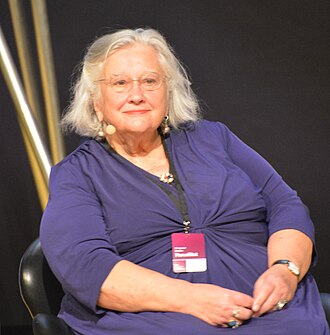
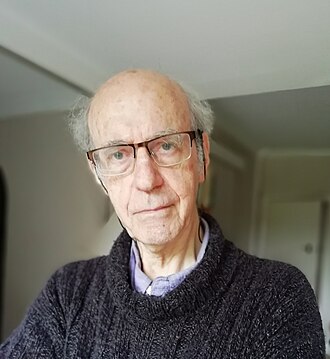
MMargaret Boden AAaron Sloman BBen Goertzel
本期追问 · 点击跳到视频对应位置
计算机只能执行程序,真的就做不出「不可能式」的变革创造吗?对 AI 来说,最难模拟的为什么是看似最简单的组合式创造力?遗传算法能产生激进转变,但为什么算不上风格的变革?如果承认机器真有创造力,我们是否就得给它道德权利?
章节 · 点击跳转视频
0:10 创造力的定义:新颖、惊讶、有价值 ▶ 正在看
2:55 三种创造力与三种惊讶 ▶ 正在看
8:27 变革式创造力:苯环与立体主义 ▶ 正在看
14:42 组合式创造力为何对 AI 最难 ▶ 正在看
21:56 探索式创造力的建模需求 ▶ 正在看
24:41 遗传算法能否实现变革 ▶ 正在看
28:29 结构转变不等于风格转变 ▶ 正在看
34:45 问答:出题本身算创造吗 ▶ 正在看
37:59 问答:本体论创造力之争 ▶ 正在看
41:35 问答:情绪、共情与创造者人格 ▶ 正在看
45:59 问答:价值标准与动物创造力 ▶ 正在看
48:30 问答:Kurzweil 时间表与脑扫描批评 ▶ 正在看
55:26 问答:AGI 与道德共同体 ▶ 正在看
本期小问 · 档案清单
—— 计算机只能执行程序,真的就做不出「不可能式」的变革创造吗? ▶ 正在看
—— 对 AI 来说,最难模拟的为什么是看似最简单的组合式创造力? ▶ 正在看
—— 遗传算法能产生激进转变,但为什么算不上风格的变革? ▶ 正在看
—— 如果承认机器真有创造力,我们是否就得给它道德权利? ▶ 正在看
本期讲者
Margaret Boden英国萨塞克斯大学认知科学研究教授,人工智能哲学与创造力研究的奠基人物,著有《The Creative Mind》《Mind as Machine》,提出组合式、探索式、变革式创造力三分法。
Aaron Sloman伯明翰大学计算机科学与人工智能荣休教授,英国认知科学先驱,长期研究心智的计算架构,在问答环节提出「本体论创造力」的反驳。
Ben GoertzelAGI 大会系列的创办者与主席,「通用人工智能」一词的推广者,在问答中就 Kurzweil 的 AGI 时间表向 Boden 提问。
01创造力的定义:新颖、惊讶、有价值
0:10
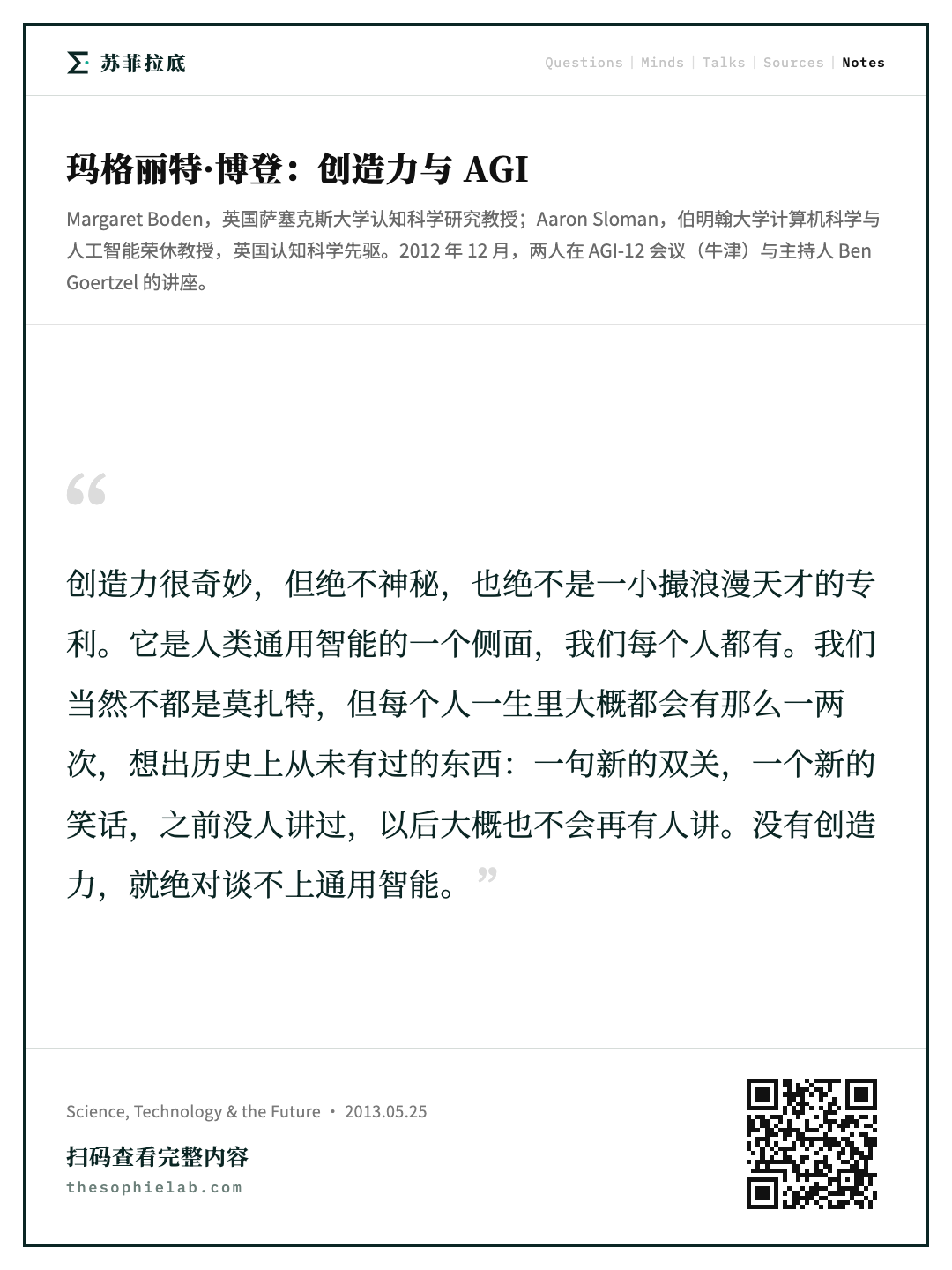
creativity and agi well creativity is wonderful but it's certainly not magical and nor is it confined to a tiny romantic elite it's an aspect of general human intelligence we all have it we're not on the moves but we all have creativity and what i mean by creativity is the ability to come up with ideas that are new surprising and valuable and before i say anything else i have to say something about knew what that means new in this context means new to the person or the computer system new to the person who has come up with that idea it doesn't matter how many times that idea has been thought of before as long as it's new in a relevant sense to the person concerned and it's surprisingly valuable um then i've counted it now it may be the subset of those ideas are going to be surprisingly no new to the whole of human history and those are the ones that tend to get into the history books but um as i said we are not on those though actually i do think probably all of us come up a couple of times in our lives
创造力与通用人工智能(AGI)。创造力是很美妙的东西,但它绝对不是什么魔法,也不是少数浪漫主义精英的专属。它是人类一般智能的一个方面,我们每个人都有,我们不是莫扎特,但我们都有创造力。我所说的创造力,是指提出新颖、令人惊讶且有价值的想法的能力。在我说别的之前,我必须先说明一下“新”是什么意思。这里的“新”指的是对这个人或这个计算机系统而言是新的,对提出这个想法的人来说是新的。这个想法在此之前被人想到过多少次都无所谓,只要在相关意义上对当事人来说是新的,而且令人惊讶、有价值,我就把它算进去。当然,这些想法中会有一小部分,是对整个人类历史来说都新颖、令人惊讶的,那些往往会被写进史书。但正如我说的,我们不是莫扎特——不过我确实认为,我们每个人一生中大概都会有那么几次,
便签笔记
1:31
maybe more with historically new ideas your new pun a new joke um which nobody has come up before and perhaps never will again um but mostly we come up with stuff that's new to us but not necessarily historically new but that is the sort of creativity i'm talking about because it's a subset of that which is historically new creativity and it follows from what i've said that if our official general intelligence would have to have creativity because it's an aspect of ordinary human intelligence okay um so if you haven't got creativity you most certainly have not got a general intelligence so if you like that's the justification to me that's the justification for having a talk from creativity in a conference like this um so the question is how one go about it well there are three different sorts of creativity by which i mean uh three different sorts of computational process psychological process which can lead to new ideas um and actually they each have their own sort of surprise and i call them combinational
甚至更多次,想出历史上全新的东西:一个新的双关语、一个新笑话,此前没人想到过,也许以后也不会再有。但大多数时候,我们想出的东西只是对我们自己来说是新的,未必是历史上全新的。可这也正是我要谈的那种创造力,因为历史意义上的新创造力,只是它的一个子集。而根据我刚才说的,可以推出:真正的通用智能必须具备创造力,因为创造力是普通人类智能的一个方面。好的,所以,如果你没有创造力,那你肯定就没有通用智能。所以,如果你愿意这么说,这就是在我看来,这就是在这样一个会议上做一场关于创造力的演讲的正当理由。那么问题是,该怎么着手呢?创造力有三种不同的类型,我指的是三种不同的计算过程、心理过程,它们都能带来新的想法。而且实际上,它们各自带来的惊讶感也不同。我把它们称为组合式、
便签笔记
02三种创造力与三种惊讶
2:55
exploratory and transformational and combination of creativity is the one the only one actually but you will normally hear people talk about people who define creativity and even people who spend their entire professional life studying creativity psychologists professional psychologists you know who do experimental work and creativity and so forth uh they normally define it uh in terms of coming up with unfamiliar combinations of familiar ideas and of course a huge amount of creativity is just that think of the wonderful imagery in poetry for example think of analogy whether in in art or in science think of collage there are lots and lots of examples of combination of creativity um so it's certainly an important example so that's one thing which you would have to be able to model in an agi and the sort of surprise that you get there is what i would call a statistical surprise um it's a surprise that something happening which is unusual you didn't expect it and which even once it's happened
探索式和转化式。组合式创造力是唯一一种——实际上,你通常听到人们谈论创造力时,那些给创造力下定义的人,甚至那些毕生研究创造力的人,那些心理学家、专业心理学家,你知道,做实验研究、研究创造力等等的人,他们通常都是这样定义的:把熟悉的想法以不熟悉的方式组合起来。当然,大量的创造力确实就是这样。比如想想诗歌中那些美妙的意象;想想类比,无论是艺术中的还是科学中的;想想拼贴。组合式创造力的例子多得数不清,所以它当然是一个重要的例子。这就是你在 AGI 中必须能够建模的一件事。而你在这里得到的那种惊讶,是我称之为统计意义上的惊讶。它是对某件不寻常的事情发生的惊讶,你没料到它会发生,甚至在它发生之后,你还是有点惊讶它居然发生了,你仍然为它的发生感到惊讶。我想,一个类比就是
便签笔记
4:18
you're sort of surprised that it happened you're still surprised that it happened and uh i think an analogy would be an outsider winning the derby you don't expect it it's surprising when it happens even after it's happened there's a sensing which is still surprising uh but you know fair enough uh not particularly earth-shaking sort of surprise nor there is nor is there an earth-shaking sort of surprise for exploratory creativity and what i mean by exploratory creativity is coming up with a new idea by the way i'm using idea here in a casual sense it may be an idea uh or it may be a statue or it may be an engineering design okay so it may be an artifact it may be a concept i'm using in the very general service in exploration creativity the person comes up with a new idea a new structure which fits into a previously accepted cultural style usually uh the culture that the staff has come out of is the person's own culture right as usual occasionally um all or part of it is borrowed from another culture
一匹冷门赛马赢了德比大赛:你没料到,它发生时令人惊讶,甚至发生之后,某种意义上仍然令人惊讶。但你知道,这也就够了,算不上什么惊天动地的惊讶。探索式创造力带来的也不是那种惊天动地的惊讶。我所说的探索式创造力,是指想出一个新的想法。顺便说一句,我这里用“想法”这个词是很随意的,它可以是一个想法,也可以是一尊雕像,或者一个工程设计,好吧,所以它可以是一件人工制品,也可以是一个概念,我是在非常宽泛的意义上使用它的。在探索式创造力中,这个人想出一个新点子、一种新结构,而它能纳入此前已被接受的文化风格——通常呢,这个人所出自的文化就是他自己的文化,一般是这样。偶尔呢,其中的全部或一部分是从另一种文化借来的
便签笔记
5:42
as picasso for example when he uh painted the demo zelda one of the things that was going on there was that he had been impressed by african masks and if you think of the faces of the women in that picture um you can see the influence there which is one of the reasons why it wasn't accepted at the time and by the way that was not exploratory creativity it was transformational truth we'll come to that in a moment the point is in exposure creativity and also in transformational community you start out with a previously accepted style of thinking in painting in chemistry and mathematics whatever it is you do not originate that style okay um and you accept that style and you you accept the rules the constraints of that style and you come up with a new shot a novel structure certainly novel to you and in many cases novel to human history um which fit in so for example um if you analyze a new chemical molecule in a family of molecules which is already reasonably familiar um you're doing exposure creativity
比如毕加索,他画《亚维农的少女》时,其中一个因素就是他曾被非洲面具所打动如果你回想那幅画里那些女子的面孔,就能看出那种影响,而这也正是它当时不被接受的原因之一。顺带一提,那并不是探索式创造力,那是变革式创造力,我们一会儿就会讲到。要点在于在探索式创造力中,也在变革式创造力中,你的起点都是一种此前已被接受的思维风格无论是在绘画、化学还是数学里,反正你做的那件事——那种风格不是你首创的,对吧。你接受那种风格,你接受那种风格的规则和约束,然后你想出一个新东西、一个新颖的结构,对你而言当然是新颖的很多情况下对整个人类历史也是新颖的,而它能纳入其中。所以举例来说,如果你分析一种新的化学分子它属于某个已经相当熟悉的分子家族,那你做的就是探索式创造力。如果你画一幅印象派的画
便签笔记
7:02
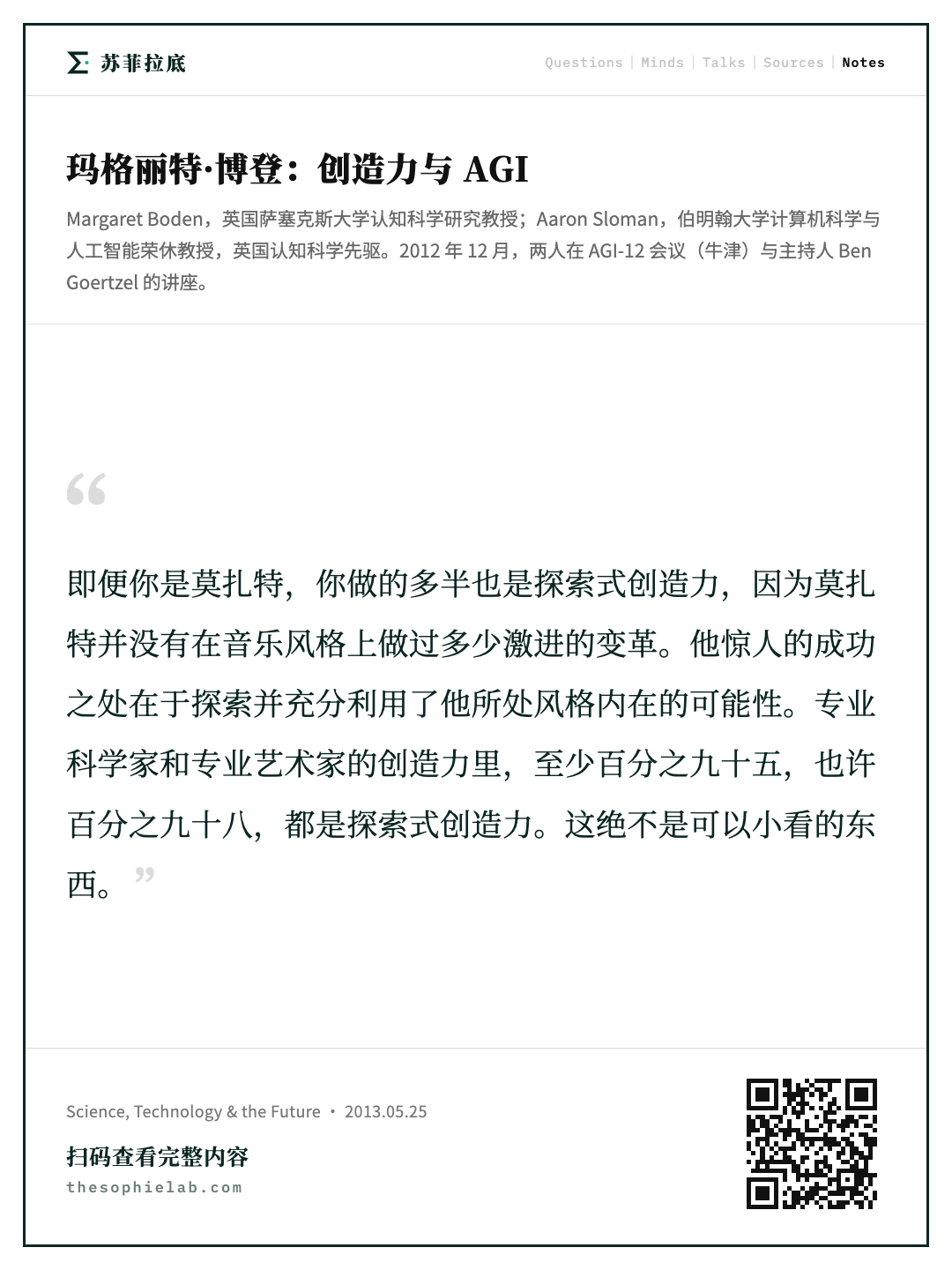
if you paint an impressionist picture um and you're not in the very very early days you're not one of the pioneers of impressionism you're doing explorative creativity um and actually even if you're mozart you're probably doing exploratory creativity um because mozart was not hugely adventurous in the sense of making radical musical transformations um in musical style he was amazingly successful in exploring and exploiting the possibilities inherent in the style um that he was working with at the time um so the sort of surprise that attends it's logically um is the surprise of seeing something new you've never seen it before perhaps seeing something which is not just new but actually when you first see it you may think oh i wouldn't have thought that would have been possible but when you look at it when you think about it more you realize that yes indeed it does fit into the previous style um and indeed you can understand it in terms of the previous style you can accept it in terms of the previous love
而你并不处在最最早期,你不是印象主义的先驱之一,那你做的就是探索式创造力而实际上,就算你是莫扎特,你多半也是在做探索式创造力,因为莫扎特并不是那种极其大胆的人——在音乐风格上做出激进变革的意义上说。他极其成功地探索和挖掘了他当时所处的那种风格里内在的种种可能性。所以,随之而来的那种惊讶从逻辑上讲,是看到某种新事物的惊讶:你从未见过它,也许你看到的东西不只是新的,而是当你第一次看到它时,你可能会想,哦,我本来不会觉得这是可能的。但当你细看它、多想一想,你就会意识到,是的,它确实纳入了此前的那种风格,而且你确实能用此前风格的框架去理解它,能用此前风格的框架去接受它。我要说的是,至少95%,也许98%——当然我们无法真正度量这些
便签笔记
03变革式创造力:苯环与立体主义
8:27
and i would say that at least 95 maybe 98 you know we measure these things percent of creativity of professional scientists and professional artists never mind all of us every day having conversations in railway challenges is explorative creativity it is not to be sneezed at but there is a third sort of creativity which i call transformation of creativity and that if you like writes piggyback on exploratory creativity because in transformational creativity what happens is that the previous accepted style okay in which the person can concern will uh be working um as i said that has a number of rules a number of constraints a number of conventions one or more of those rules is changed in some way it may be denied deleted it may be dropped it may be negated which is about the same thing um it may be weakened it may be strengthened it may be modified in some way just one very very famous example think of the very famous story about kekolei and you know looking at the flames in the fire and seeing the flames
东西——的创造力,来自专业科学家和专业艺术家的创造力,更别提我们所有人每天在聊天中在火车上的那些交流中的创造力,都是探索式创造力。这绝不是可以小看的事。但还有第三种创造力我称之为变革式创造力。如果你愿意这么说,它是骑在探索式创造力的肩上的,因为在变革式创造力里,发生的事情是:此前被接受的那种风格——当事人所处的那种风格——如我所说,它有若干规则、若干约束、若干惯例,而其中一条或多条规则以某种方式被改变了。它可能被否定、被删除,可能被丢弃,可能被取反,这大致是同一回事。它可能被削弱,可能被加强,可能以某种方式被修改。举一个非常非常有名的例子,想想关于凯库勒的那个著名故事:他望着炉火里的火焰,看见火焰
便签笔记
9:55
um doing some of this and doing that he was reminded of a snake biting its own tail and another way of saying that and he said oh what was that then he had a hunch that this was perhaps relevant when he was puzzling about the structure of the benzene molecule and went off and did some chemical sums which actually didn't quite come out right but never mind that i haven't got time to go into that went off and did some chemical sums and said yes that is what the benzene molecule is in other words it isn't an open string like all organic molecules have been thought about before actually largely due to peculiar himself he said a molecule is a long string of atoms mixed together it's a closed stream not
这样那样地动,让他联想到一条咬着自己尾巴的蛇。换个说法,他说,哦,那是什么?然后他有一种直觉,觉得这也许是相关的——当时他正为苯分子的结构而困惑于是他去做了一些化学上的推算,其实那些推算并不完全对,不过没关系,我没时间细讲了。他去做了一些化学推算,然后说,是的,苯分子就是这样。换句话说,它不是一条开放的链,而此前人们一直认为所有有机分子都是开链的——实际上这在很大程度上还得归功于凯库勒本人,他说过分子是一长串原子连在一起。它是一条闭合的链,不是
便签笔记
10:59
it available neighbor relations and of course kepler and every other competent chemist at the time middle of the in the 19th century knew that what's important to how a molecule behaves is not just what atoms are in it but which atoms are next to which are but next door to each other atoms okay so if you have a molecule like this and you make it into a molecule like that neighborhood relations have changed and so you can expect that there may be a change in chemical behavior and indeed there was and what there was uh from that idea was a whole new branch of military aromatic chemistry in which a whole host of questions arose which just could not have been posed before um and similarly in um i mentioned picasso denmark and so forth in the um cubist movement in our beginning of the last century what happened was there was a transformation from our painters thinking we have got to be work working from a single viewpoint and we all go around all there unless we cross our eyes and we're all seeing
它可用的邻接关系。当然,凯库勒以及当时其他每一位称职的化学家,在19世纪中叶就知道,对一个分子如何表现起决定作用的,不只是它含有哪些原子,还有哪些原子挨着哪些原子彼此相邻的原子,对吧。所以如果你有一个这样的分子,你把它变成那样的一个分子邻接关系就改变了,因而你可以预期化学行为可能会发生变化。事实上确实变了,而由此产生的从那个想法里产生的,是一整个新的分支——芳香族化学,在其中冒出了一大堆问题而这些问题在此之前根本无法提出。类似地,我提到过毕加索、《亚维农的少女》等等,在上个世纪初的立体主义运动中,所发生的事情是:画家们发生了一次变革,从认为我们必须从单一视点出发进行创作——我们大家四处走动,除非我们把眼睛斗成对眼,否则我们都是
便签笔记
12:19
things from a single viewpoint and if i hold this up you can you can't see the face if i hold it like that of this watch but hold it like that you can and um that was just taken for granted well one of the things the pubis did was to say don't let's take that for granted uh we all know that if we walk around the thing we will see other sides of it it's a three-dimensional object let's put that into our paintings and i suggest that was a fundamental transformation it wasn't just tweaking the style the conceptual space if you like of painting which had existed before it was a fundamental transformation so those are just two examples i'm sure you can all think of lots and lots of others and the sort of surprise which attains transformational creativity is what i call an impossibleist surprise in other words when you when this new idea arises whether it's in your mind or somebody else's um your initial reaction is but that's impossible and not just your initial reaction either you look at it for one
从单一视点看东西。如果我把这个举起来,你看不到这块表的表盘;如果我这样拿着但这样拿着,你就能看到。这一点从前是被视为理所当然的。而立体主义者做的一件事就是说我们别把那当成理所当然。我们都知道,如果我们围着一个东西走一圈,我们就会看到它的其他侧面,它是个三维物体,那就让我们把这一点放进我们的画里。我认为那是一次根本性的变革,它不只是在微调此前已存在的绘画风格——如果你愿意,可以叫它概念空间——那是一次根本性的变革。所以这只是两个例子,我相信你们都能想到许许多多其他的例子。而伴随变革式创造力而来的那种惊讶我称之为“不可能式的惊讶”。换句话说,当这个新想法出现时,无论是在你自己脑中还是在别人脑中,你最初的反应是:可是那不可能。而且也不只是你最初的反应而已——你盯着它看了半天,可能仍然理解不了它。看上去是这样,而我要论证的是,它确实
便签笔记
13:33
that you may not be able to understand him it seems and it is indeed i i will argue something which could not have origin hermorism before that transformation in the style concerned okay um so it's not just like the outside winning the darling is surprising and remains surprising but it's not impossible i never even thought it was impossible she thought it was very very very unlikely um transformational creativity gives you things which at least initially and sometimes for many years appear to be impossible and that's why transformation of creativity typically has such a hard time being accepted certainly by the general public uh and in many cases by the persons uh you know fellow artists or fellow scientists okay i'm sure you can all think of lots of historical examples some of them are very sad too so those are the three sorts of creativity and if an agency is ever going to exist actually i'm not as optimistic about it as many people in this room but anyway i'll come to that if an agi
是某种在相关风格发生那次变革之前不可能产生的东西,对吧。所以它不像局外人赢得德比大赛那样——那令人惊讶,而且一直令人惊讶,但那不是不可能的,我从来也不觉得那不可能只是觉得非常非常非常不太可能。而变革式创造力给你的东西,至少在最初有时甚至在许多年里,看起来都是不可能的。这就是为什么变革式创造力通常极难被接受——当然是被公众,而且很多情况下也被这个人的同行艺术家或同行科学家所排斥,对吧我相信你们都能想到许多历史上的例子,其中有些还相当令人唏嘘。所以那就是三种创造力。如果通用人工智能有朝一日真的会出现——其实我对此不像在座许多人那么乐观不过反正我一会儿会讲到这点——如果AGI有朝一日真的会出现,它必定得具备所有这些类型的创造力
便签笔记
04组合式创造力为何对 AI 最难
14:42
is ever going to exist it's certainly going to have to feature all of those types of creativity and if you look at modeling and creativity in ai you will find that each of them has been up to a point um and you might think that uh combinational creativity from the ai point of view a model's point of view must be a doddle must be you know much easier than the other two i mean after all you know what could be simpler than um feeding a lot of uh data or examples whether it's graphic examples or whether it's mathematical examples or verbal concepts whatever it is feeding a lot of stuff into the computer and getting it to pick things out at random and put them together so we're talking about unfamiliar you'll get lots of unfamiliar combinations of familiar ideas well yes true but don't forget the third part of the definition which was valuable now i can't tell you what's what meaning here valuable has because it has an indefinitely large number of meanings even in science it's very difficult to
而如果你去看人工智能里对创造力的建模,你会发现每一种都已经被做到一定程度了。你可能会以为从AI的角度、从建模的角度看,组合式创造力一定是小菜一碟,一定比另外两种容易得多。我是说,毕竟,还有什么比把大量数据或范例喂进去更简单呢——不管是图形范例或者不管是数学的例子还是文字的概念,无论是什么,把大量东西喂给计算机,让它去挑随机挑出一些东西再把它们组合起来,所以我们说的是不熟悉的,你会得到大量不熟悉的组合由熟悉的想法构成的组合,是的没错,但别忘了定义里的第三部分,也就是「有价值的」,我现在没法告诉你这里的「有价值」到底是什么意思,因为它有着数不清的含义,即便在科学里也很难
便签笔记
15:59
actually express just what uh the value of new ideas as opposed to the lack of value in certain other new ideas comes down to and you know science spending spend much of that time trying to do that in the arts it's even more difficult of course because you haven't got the um those sorts of art you haven't got the discipline of trying to fit the world in any way um and if you like anything goes but of course not anything goes even in the most radical types of art there are conventions there are rules but those rules change and not only do they change and not only are they different in different cultures and at different times in one of the state culture but they uh they can change overnight in our um in today's world they can literally change overnight if some enormously famous celebrity um wears a new sort of uh jewelry or clothing at a party and the paparazzi are there and this picture is scratched all over the front pages next day it may very well uh you know be in your local um next uh the following week
真正说清楚,呃,新想法的价值究竟在哪里,而另外某些新想法为什么就没有价值科学界花了很多时间试图弄清这一点,而在艺术里就更困难了当然,因为在那类艺术里,你没有那种必须去契合世界的约束,可以说怎么都行,但当然并不是怎么都行,即便在最激进的艺术类型里,也有惯例,也有规则只不过这些规则会变,而且不仅会变,不仅在不同文化、不同时代里各不相同,甚至在同一个文化内部也是如此,而且它们,呃,可以一夜之间就变,在我们今天这个世界里,它们真的可以一夜之间就变,如果某个极其有名的明星,呃,在派对上戴了一种新的首饰或穿了新款的衣服,而狗仔队正好在场第二天这张照片铺满各大头版,那么很可能,呃,你知道,下周它就出现在你家附近的店里了
便签笔记
17:15
so valuable is usually important and the problem with combination of creativity from the agi point of view is um you want to have uh valuable unfamiliar combinations and this means i mean you spend days talking about what this means but in a very tiny nutshell what this means is um combinations that are somehow relevant that we regard as relevant not just new and exciting that's already assumed but relevant for example um when shapes they think of macbeth and shakespeare is imagining um macbeth after his murdered banquet and he can't sleep he's so guilty he just cannot sleep and there's a wonderful speed i just mentioned the first line the wonderful queen from where he says he's just desperately he says sleep that knits up the gravel sleeve of care and basically what he's saying is your sleep makes you feel better sleep cures you of your worries and i wish i could get some but who but shakespeare would have thought of describing sleep as a knitter probably you know an old lady sitting in a fireplace and
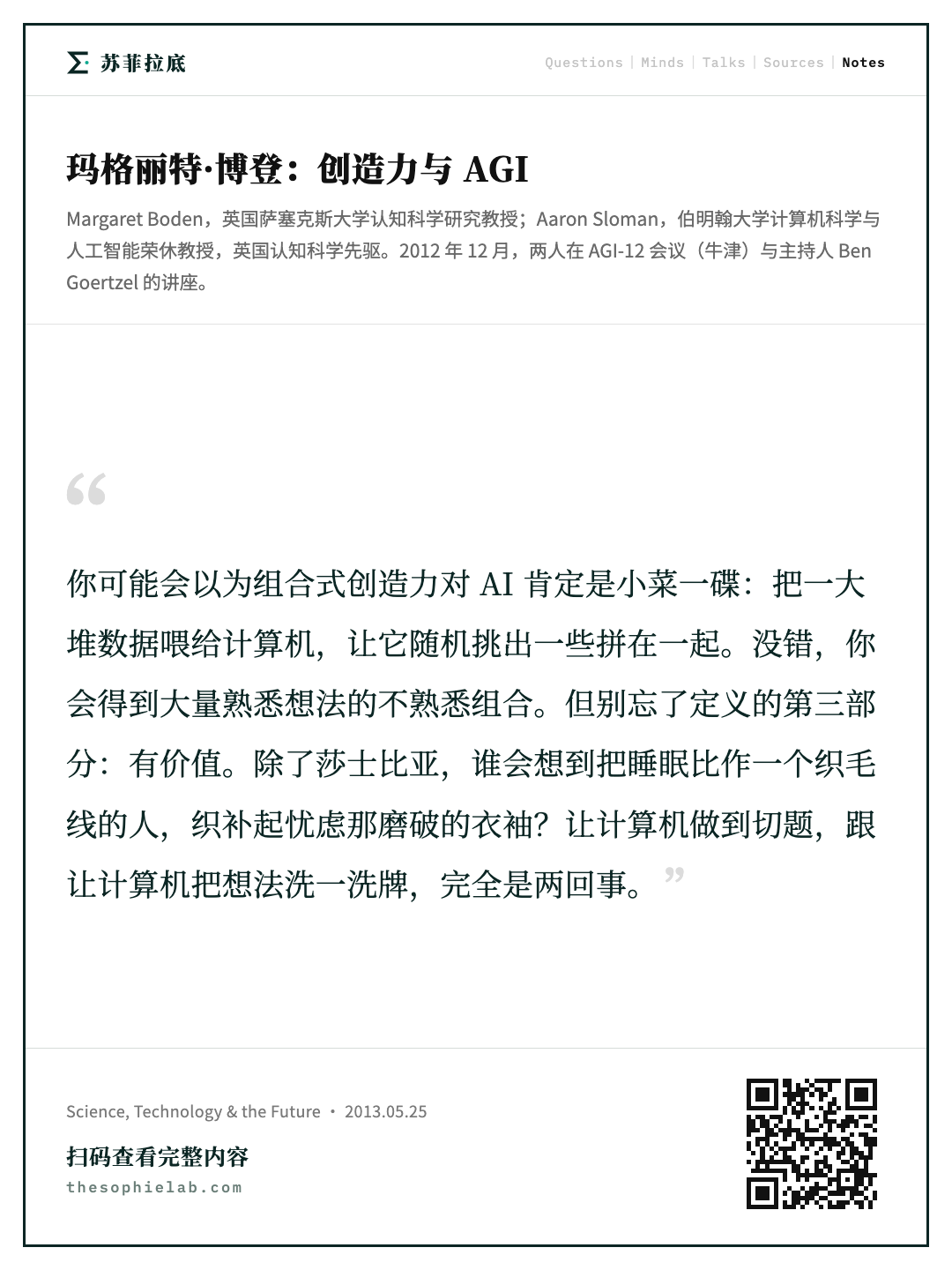
所以「有价值」通常是很关键的,而从通用人工智能的角度看,组合型创造力的问题在于,呃,你想要的是呃,有价值的、不熟悉的组合,而这意味着——我是说这个能讲好几天——但极简地概括一下它的意思是,呃,那些在某种意义上相关的组合,是我们认为相关的组合,不只是新奇和令人兴奋,那已经是默认前提了,而是要相关。举个例子,呃,想想《麦克白》,莎士比亚在想象,呃,麦克白在谋杀之后睡不着,他的罪恶感太重,就是睡不着,有一段非常精彩的台词,我只提第一句那段精彩的独白里他说,他绝望地说:睡眠,它织补起忧虑那件磨破的衣袖他基本上是在说,睡眠让你感觉好受些,睡眠治愈你的烦恼,而我多希望自己也能睡上一点。但除了莎士比亚,谁会想到把睡眠描述成一个织毛线的人呢?大概就是坐在壁炉边的老太太
便签笔记
18:46
not just a knitter who is knitting something new like a new scarf you know her grandson she is knitting up the rattled sleeve of care in other words something has been damaged in this case macbeth's peace of mind it's been damaged it's now being repaired right by the litter in the uh image by sleep in the actual reality what is what he's talking about so we see the relevance of this we understand that it's a very imaginative and unusual way of thinking about sleep it's absolutely spot-on in terms of relevance and if you actually look at the next few lines you get that sort of relevance is is what you want it doesn't have to be you know as as marvelous as an image as that but it has to be it has to make sense and it has to be non-obvious and hopefully witty and or insightful as this one is and getting a computer to do that is a very different matter from just getting a computer to shuffle ideas and put them together with new as well in new ways which is very very simple and one of the problems here what the main problem here
而且不只是一个在织新东西的人,比如给孙子织条新围巾,她织补的是忧虑那件磨破的衣袖,换句话说,有什么东西被损坏了,在这里就是麦克白内心的安宁,它被损坏了,现在正被修补,在这个意象里是被织毛线的人修补,在现实中则是被睡眠修补,这才是他真正说的东西所以我们看到了这里的相关性,我们明白这是一种非常富有想象力、非常不寻常的看待睡眠的方式,而且它精准无比就相关性而言是这样,如果你再往下看几行,你会发现那种相关性正是你想要的当然不一定非得像这个意象那么精彩,但它必须说得通,而且必须不落俗套,最好还机智或有洞见,就像这一句一样。让计算机做到这一点,和只是让计算机把各种想法洗牌、以新的方式拼在一起,完全是两回事,后者非常非常简单,而这里的一个问题——主要的问题——是要让机器获得人类那种「相关性」的感觉,而这是一个非常深刻、非常困难的
便签笔记
20:16
is to get a sense of the human notion of relevance which is a very deep and very difficult notion i don't know if anyone i'm sure some of you know a very interesting book by dan sperber and
概念。我不知道有没有人——我相信你们中有些人知道——丹·斯珀伯(Dan Sperber)等人写的一本很有意思的书
便签笔记
20:40
where they are trying to define relevance in computational information processing terms and they say some very interesting things but um they don't say anything for the very specifics that you could take away and use to go and write a model of combination of creativity uh because even they um can't they can't specify relevance um sufficiently clearly to get that done although we give some interesting pointers now what i'm saying here is that in order to get combination of primitive any interesting type in there you need to be able to do that do not hold your breath i'm not saying it's impossible because we don't do it by magic i'm not saying it's impossible in principle i'm not even saying that it's impossible in practice but if you want my pet do not hold your breath it's certainly as i say is not going to be within the foreseeable future it's a big it's a big one okay so that's combination of creativities exploratory creativity is much less difficult although not easy but much less difficult
他们试图用计算的信息处理术语来定义相关性,他们说了一些很有意思的东西,但是,呃,他们并没有给出足够具体的东西,让你可以直接拿走去写一个组合型创造力的模型,因为连他们,呃,也没法把相关性说清楚到足以做成这件事,尽管他们给出了一些有意思的线索。我在这里想说的是,要想得到任何有意思的组合型创造力你必须能做到这一点。别屏住呼吸干等着。我不是说这不可能,因为我们人类也不是靠魔法做到的,我不是说它原则上不可能,我甚至不是说它实践上不可能,但如果你要我打赌,别指望很快它肯定,就像我说的,不会在可预见的未来实现,这是个大难题,真的是个大难题。好,这就是组合型创造力。探索型创造力要容易得多,虽然也不轻松,但要容易得多,因为探索型创造力
便签笔记
05探索式创造力的建模需求
21:56
because what explorative creativity requires is a a definition of the style of thinking concerned whether it's impressionist painting or whether it's a certain branch of mathematics which of course is clear enough to be able to put into the computer and so forth so you need a definition of the style and you need a definition of ways of exploring the style and way the generative system if you like i think it will start as a generative system so you need um the rules of the genital system you need uh ways of um cranking them so that you get to new structures uh over there as well as over there you also need a sense you don't need it for exploratory creativity but for an agi you would need this you would need um a sense of what the limitations of that style are what it what sort of structures it couldn't uh produce which you might like to have produced but you know it won't do it and it would be lovely if you also had an idea what sorts of tweaking or indeed transformation you could do to enable it to come up
所需要的是,对相关思维风格的一个定义,不管是印象派绘画,还是数学的某个分支,当然这个定义要足够清晰,才能放进计算机里等等,所以你需要一个关于风格的定义你还需要一个关于如何探索这个风格的定义,也就是那个生成系统,可以说,我认为它会以一个生成系统开始,所以你需要,呃,这个生成系统的规则,你需要,呃,一些驱动它们的方式,好让你能得到新的结构,这边也好那边也好。你还需要一种感觉——探索型创造力本身不需要它但对通用人工智能来说你会需要——你需要,呃,对这个风格的局限有所感知,知道它做不出哪些结构,那些你可能希望它做出来、但它就是做不出来的东西。而且如果你还能知道可以做哪些微调、甚至哪些变换,才能让它生成那些结构,那就太好了
便签笔记
23:18
with those structures that at the moment it cannot come up with okay now as i said that's not easy um again if you i mean for instance take musicologists or historians of ours and if there are people around us who spend their whole entire professional lives trying to define uh what the ex explicitly and not of course the simplicities you need for a computer system try to say explicitly what a certain style of painting for instance is what a certain style in music is people spend their whole lives trying to do this um so it's not easy but it can be done and there are quite a number already of computer programs which can do exploratory creativity and which can come up with stuff which is not only historically legal but also to many people um seems to be very valuable okay um so that i would say is the least difficult of the three sorts of creativity for an agi transformational creativity is more difficult to gain um and somebody might say what people very often do say you couldn't possibly have
那些它目前还生成不出来的结构。好,正如我说的,这并不容易,呃,再比如说,你看看音乐学家或者艺术史学家,我们周围就有些人,一辈子的职业生涯都在试图明确地定义——当然还达不到计算机系统所需的那种明确程度——试图说清楚比如某种绘画风格究竟是什么,某种音乐风格究竟是什么,有人一辈子都在做这件事,呃,所以这不容易,但可以做到,而且现在已经有相当多的计算机程序能够做探索型创造力,能做出一些东西,不仅在历史意义上是新的,而且在很多人看来,呃似乎很有价值。好,所以我认为这是三种创造力中,对通用人工智能来说最不难的一种。变换型创造力要更难获得,呃,可能有人会说——人们也确实经常这么说——你不可能在计算机系统里实现变换型创造力
便签笔记
06遗传算法能否实现变革
24:41
transformational creativity in a computer system you couldn't possibly have a computer system that comes up with something radically new um i mean by definition computer system does what its program tells it to do and that's that it may do some very amazing things it may do some things which you had knew the programmer had never imagined and never thought of and you the programmer can be very surprised and not just by the pubs either you could be very surprised by what the program comes up with um but it's never going to come up with something which immediately after you've seen this new thing and had a moment of surprise there you remain surprised because you think it couldn't possibly have happened okay um so people have that belief well of course it isn't actually true i mean for example evolutionary programming using genetic algorithms gives you a way provided you choose the types of mutations you're going to allow appropriately gives you a way of coming up with radical transformations
你不可能有一个计算机系统能提出某种根本上全新的东西,呃,我是说,按定义计算机系统就是照着程序告诉它的去做,仅此而已。它可能做出一些非常惊人的事,可能做出一些你作为程序员从未想象过、从未想到过的事,你这个程序员会非常吃惊,而且不只是你会对程序做出的东西非常吃惊,呃,但它永远不会做出这样一种东西就是在你看到这个新东西、有过一瞬间的惊讶之后,你仍然保持惊讶,因为你觉得这根本不可能发生。好,人们有这种信念。当然这其实并不成立,我是说,比如演化式编程使用遗传算法可以给你一条路——前提是你恰当地选择允许哪些类型的变异——它能让你得出激进的转变;你也可以选择不这么做,但那是另一个问题了。呃,我相信在座很多人都见过
便签笔记
25:55
you may not choose to do that but that's another issue uh i'm sure many of you have seen the um images that carl sims produced by evolution many many years ago now they've been showing art galleries as well as talked about in the ai press where he allowed very radical mutations for example he allowed we talked about programs for producing visual images colored images and for instance he allowed the thing at random uh to pick a line of uh um sorry to pick out a little mini program which it had already possessed either because it was in there in the beginning or because it had already evolved and pick it up and put it into the middle of another one okay for example or to concatenate two of these things and to kind of remain long story short the point about this is if you allow that sort of mutation you can get and in carl simpson's work you often do get a situation in which even the some of the images in the next generation don't show any family resemblance with the previous images and for sure if you go down by the
卡尔·西姆斯(Carl Sims)很多年前用演化生成的那些图像,现在它们已经在艺术画廊里展出,也被AI 媒体讨论过。他允许非常激进的变异,比如说,他允许——我们刚才谈到过用来生成视觉图像、彩色图像的程序——比如他允许系统随机地去挑一行……呃,抱歉,是去挑出一小段迷你程序,这段程序系统本来就有,要么是一开始就在那里,要么是之前演化出来的,然后把它拿起来放到另一段程序的中间,好吧,比如说;或者把两段这样的东西拼接起来,大致是这样。长话短说,关键在于:如果你允许这种变异,你就可能得到——在卡尔·西姆斯的作品里,你确实经常会得到这样一种情况:下一代里有些图像跟上一代的图像之间完全看不出任何“家族相似性”。而且可以肯定,如果你往下走很多代,某些情况下会完全没有任何家族相似性,
便签笔记
27:18
number of um generations in some cases there will be no family resemblance whatsoever and if that isn't a a radical transformation in the visual structure i don't know what is so that is certainly possible and if absolutely happened and of course um people working in evolutionary art um often they're not always trying to do this sort of thing why do they not always try to do it why did i say people may not choose to use that sort of mutation well the reason is that if this sort of transformation has happened on the previous mutation because the mutations are random sure as hell somewhere down here there's going to be another one so let's suppose let's just be very simple and crew let's for instance we're talking about colors right and you'll you want to to get this thing to come up with blue and purple images not uh brown and orange images and boy a mutation happens you know purple lovely well you're going to stop smiling soon it goes very shortly it'll go back to the other one again or to a different
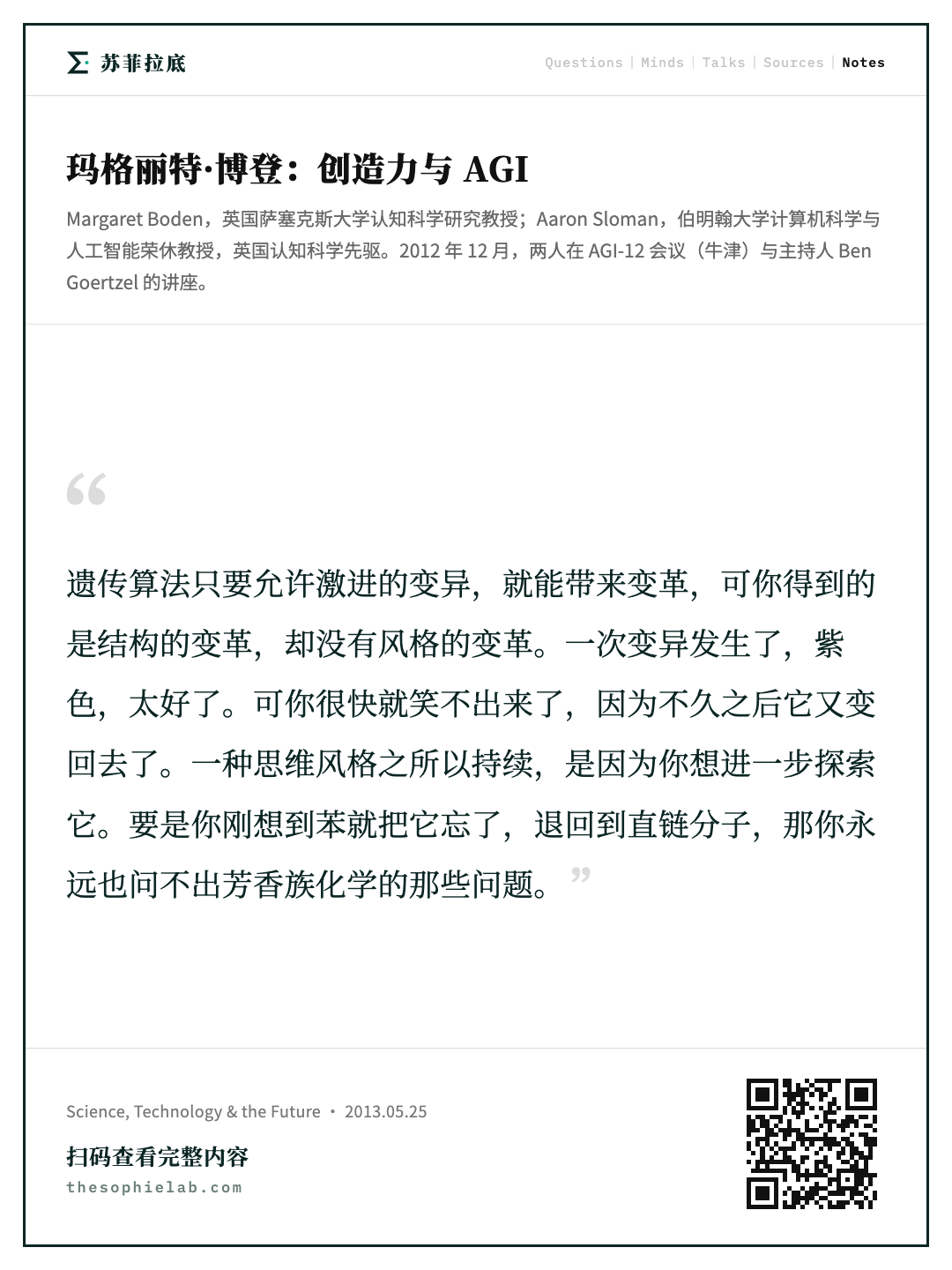
如果这都不算视觉结构上的激进转变,那我真不知道什么算了。所以这当然是可能的,而且确实已经发生过。当然,做演化艺术的人,呃,他们并不总是想做这种事。为什么他们不总是这么尝试?我为什么说人们可能选择不用那种变异呢?原因在于,如果这种转变在上一次变异中发生了,由于变异是随机的,那么几乎可以肯定在后面某个地方还会再来一次。所以我们假设——让我们说得非常简单粗暴——比如说我们在谈颜色,对吧,你希望这个东西生成蓝色和紫色的图像,而不是棕色和橙色的图像。哇,一次变异发生了,紫色,太美了!可你很快就笑不出来了,因为很快它又会变回原来那种,或者变成另一种你同样不喜欢的。换句话说,你有了结构上的转变,
便签笔记
07结构转变不等于风格转变
28:29
one which you don't like either in other words you've got transformation of structure do not have transformation of style a style of thinking again whether in art or in science is a sustained way um of thinking um and not just sustained from its own state because you like it you don't want it to go away but sustain because you want to explore it further you want to see what its potential is you want to see what's included in this kind of thing what sort of things are aromatic molecules right starting with benzene yes but lots and lots of others you can get out of benzene you know what about all that if you just forget benzene and go back to what you were the orcs straight in the line um organic molecules people were thinking about before and will you never get to ask those questions so even transformational creativity is a big problem for agi the problem is not in coming up with transformations although uh of course it's possible to cover transformations which we don't find valuable that's another issue
却没有风格上的转变。而一种思维风格,不管是在艺术还是科学里,都是一种可持续的思考方式;而且不只是因为你喜欢它、不想让它消失才维持它,而是因为你想进一步探索它,你想看看它的潜力是什么,你想看看这类东西里都包含了什么。芳香族分子都有哪些?对,从苯开始,但从苯还能衍生出许许多多其他的东西,你知道,那些怎么办?如果你干脆忘掉苯,回到你之前那些直链的有机分子、人们以前在思考的那些东西,那你就永远不会去问这些问题了。所以,即便是转变式创造力,对 AGI 来说也是一个大难题。难点不在于产生转变——当然,呃,产生一些我们并不觉得有价值的转变是完全可能的,那是另一个问题——但难点不在于产生转变,难点在于
便签笔记
29:44
um but the problem is not in coming up with transformations the problem is coming up with transformations which can be seen to be valuable and can be sustained while further exploration takes place okay and that of course implies that the system uh if it really is a stand-alone agr and not an interactive system uh that implies that the system is capable of making these valuations so it's another example of relevance okay and it's a big ask uh so the common objection that you couldn't possibly have transformational creativity in a computer system because it's all run by programs is as i said absolutely without question false because you can get transformations we've already had transformations and indeed we've had some valuable transformations but in all the um examples uh at least in in art that i know of here um you've needed at each generation where you may find that work at each generation you needed either a human being to pick the parents for the next generation or a fitness function chosen by a human
产生那些能被看出是有价值的、并且在进一步探索的过程中能够被持续维持下去的转变。好吧,而这当然意味着,这个系统——如果它真是一个独立自主的 AGI,而不是一个交互式系统——这意味着它必须有能力自己做出这些价值评估。所以这又是一个关于“相关性”的例子。好吧,这个要求非常高。呃,所以那个常见的反驳,说你不可能在计算机系统里得到转变式创造力,因为一切都是程序在跑——正如我说的,这绝对毫无疑问是错的,因为你确实能得到转变,我们已经得到过转变,而且确实得到过一些有价值的转变。但是在所有这些例子里,呃,至少在我所知道的艺术领域里,你在每一代都需要——在每一代,你都需要一个人来挑选下一代的“父母”,或者需要一个由人选定的适应度函数,
便签笔记
31:03
being and may be adjusted from time to time by the human being to do this now admittedly um in some sort of scientific mathematical problems designing aeroplane engines for example you can give a problem to the thing and the to the evolutionary program and it will work out for itself you can go down to the public get on with this thing because you've been able to give it a fitness function which uh which defines exactly what what is relevant and what is not for this particular task okay so if it's the sort of problem where you can do that then fine uh the computer can do it by itself but if it's the sort of pro sort of problem where you can't do that um then it cannot be put into a standalone non-interactive agi and if you want an ngi which is absolutely isolated standalone not interactive you're going to be able to cope with that problem and that's why i said right at the start of my talk that i'm not as optimistic about agi as in many people in this room are because i think these issues
而且这个函数可能还要由人时不时地调整。当然,得承认,呃,在某些科学或数学问题上,比如设计飞机发动机,你可以把一个问题交给它、交给演化程序,它就能自己算出结果,你可以去酒吧喝一杯,让它自己搞下去,因为你已经能够给它一个适应度函数,这个函数精确地定义了对这个特定任务来说什么是相关的、什么是不相关的。好吧,所以如果是那种你能这么做的问题,那很好,呃,计算机可以自己完成。但如果是那种你没法这么做的问题,呃,那它就没法被放进一个独立的、非交互式的 AGI 里。如果你想要一个完全孤立、独立、不交互的 AGI,你是没办法应付这个问题的。这也就是为什么我在演讲一开始就说,我对 AGI 没有在座很多人那么乐观,因为我认为这些问题
便签笔记
32:24
are very deep very very difficult i think they're even more difficult if excuse me if one's dealing with um literature verbal texts um then if one's dealing with with graphics um less difficult in the case of science and mathematics still difficult but less less difficult in those cases and i certainly wouldn't bet a great deal of money or even a very small amount of money actually on this being done in our lifetimes but it's certainly possible in principle we've certainly started along the road as i said all three types of creativity have already been modeled to some extent the problem is it's a very small step so far so the challenge for agr part of the challenge for agi is to solve these problems and of course that will mean uh among other things uh that will mean making advances in other sorts of ai too knowledge representation natural language processing uh computer graphics a huge number of very deep an analogical thinking a huge number of very deep problems uh which you might initially think of as
非常深刻、非常非常困难。我觉得,恕我直言,如果处理的是文学、语言文本,那就更困难;而如果处理的是图形,呃,就没那么难;在科学和数学的情况下,仍然困难,但要稍微、稍微容易一些。在那些情况下也是如此。而我肯定不会拿一大笔钱去赌,其实连很小一笔钱都不会赌,赌这件事能在我们有生之年做到。但它在原则上当然是可能的,我们也确实已经踏上了这条路,正如我说的,三种创造力都已经在一定程度上被建模过了。问题在于,到目前为止这还只是很小的一步。所以对 AGI 来说,挑战的一部分就是解决这些问题,而这当然意味着,呃,除别的之外,还意味着要在其他类型的 AI 上取得进展:知识表示、自然语言处理、呃,计算机图形学,还有类比思维,一大堆非常深刻的问题,呃,这些问题你一开始可能会觉得跟创造力没多大关系,但在人类思维的所有领域里,
便签笔记
33:50
not having a great deal to do with creativity but all those problems are going to uh crop up in coming up with uh these three sorts of creativity um in all domains of human thought so it's a very very big challenge but i think there's an exciting one because even if we never get to an agi we'll certainly get further than we've got already and even that is interesting enough i think when we look at what creativity is and how it works
要实现这三种创造力,所有这些问题都会冒出来。所以这是一个非常非常大的挑战,但我觉得它令人兴奋,因为即使我们永远做不出 AGI,我们也一定会比现在走得更远,而光是这一点,我觉得,在我们审视创造力是什么、它如何运作的时候,就已经足够有意思了。
便签笔记
08问答:出题本身算创造吗
34:45
great so
很好,那么——
便签笔记
34:53
all right so we have we have a few minutes uh if anyone has questions uh enders
好的,我们还有几分钟时间,呃,如果有人有问题的话,呃,请讲。
便签笔记
35:08
thank you for an excellent lecture so i was thinking about the problem that typically poses problems to our machines or creative thinkers we want them to solve something in a creative way but this is the problems itself is a kind of style for example when you have a multiple uses task how many ways can use a brick you're supposed to list uses of a brick not saying this is a stupid problem i'm going to do this uses of a box or do something else truly creative people of course you know new problems would you say this is a case of transformation or creativity applied to a problem it's the problem space itself um i think in the this is an example of combination of creativity not just in the sense that you may expect to get an answer uh which is a combination principle but the initial question itself i would say was an example a combination of creativity in the sense that it's looking at a particular concept this category and um and asking well you know what are the what sorts of intelligent intelligible
感谢您带来这么精彩的讲座。我在想一个问题:我们通常给机器或者创造性思考者出题,希望他们用有创意的方式解决,但这些题目本身就是一种风格。比如说,做“多用途任务”时,一块砖有多少种用法——你被要求列举砖的用法,而不是说“这是个愚蠢的问题,我要改成列举盒子的用法”,或者做点别的。真正有创造力的人当然会提出新的问题。您会说这是一种转变,或者说是作用于问题本身的创造力吗?也就是问题空间本身。呃,我想这个……这是组合式创造力的一个例子,不只是在“你可能期待得到一个组合性的答案”这个意义上;我会说,最初那个问题本身就是组合式创造力的一个例子,因为它是在看一个特定的概念、这个类别,然后问:你知道,关于砖,你能做出哪些有智慧、可理解的联想?好吧,一个联想是把它砌进墙里,砌成
便签笔记
36:21
associations can you make with a brick okay one association is putting it in a wall a house like a building but there are other ones so i would say that that is an example of a combination of creativity but you're right i mean very often a large part of the creativity is thinking of the question but that's partly why i said that in exploratory creativity um if you're really a master of the space concerned and if you have got any reasonable chance of with a um valuable transformation of it you've got to have a good sense a of what the limits are of the space and b um of the ways in which you might be able to tweak or modify certain aspects of it certain defining dimensions of it in order to come up with structures which previously were just impossible and of course not everybody has that and if you ask me well you know what's the computational approach to psychological mechanisms that underlie that sort of insight um i don't know but that is one of the questions that needs to be asked by
房子、建筑物,但还有别的联想。所以我会说,那就是组合式创造力的一个例子。不过你说得对,我的意思是,很多时候创造力的很大一部分在于想出那个问题。但这也部分解释了我为什么说,在探索式创造力里,呃,如果你真的是某个空间的大师,如果你想要有任何合理的机会对它做出有价值的转变,你就必须很好地把握:一,这个空间的边界在哪里;二,呃,你可能通过哪些方式去微调或修改它的某些方面、某些定义性的维度,从而得出以前根本不可能出现的结构。当然,并不是每个人都具备这种能力。如果你问我,那么,你知道,支撑这种洞见的心理机制,其计算式的解释是什么?呃,我不知道。但这正是做创造力计算建模的人需要提出的问题之一,在这里就是探索式
便签笔记
37:42
people working in the computer modeling of creativity or in this case of exploratory creativity you know in order to get to the transformational examples
创造力的建模,你知道,这样才能走向转变式的那些例子。
便签笔记
09问答:本体论创造力之争
37:59
thanks maggie uh there's something you didn't mention that i thought would come up um i would spend a lot of time on it as you may or may not recall obviously it's uh ontological creativity where a new concept is produced which is not definable in terms of anything any combination of previous concepts this has happened over and over again in the history of science it enables new questions to be asked for instance content gene cannot be defined i think in terms of things that were there before a nuisance concept of mass was not uh definable in terms of people's concepts of tourism well it came as part of a theory and this is generally what happens when there are major advances in science is a theory which includes new concepts that are not were not previously defined well but are partly defined by their role in the theory and as the theory changes their leading changes too and that seems to be an important aspect from human creation i guess kids are doing it far in far more ways than anybody's nurses
谢谢,玛姬。呃,有一点你没有提到,我本以为会提到,呃,我自己在这上面花过很多时间,你或许还记得、或许不记得,显然就是本体论式的创造力:产生一个新概念,而这个概念无法用任何已有的东西、任何先前概念的组合来定义。这在科学史上一再发生,它使人们能够提出新的问题,比如“基因”这个概念,我认为就无法用它之前已有的东西来定义;牛顿的质量概念也无法用人们已有的概念来定义——它是作为一个理论的一部分出现的。而这正是科学出现重大进展时通常发生的情况:一个理论包含了先前并没有被良好定义的新概念,但这些概念部分地由它们在理论中的角色来定义;随着理论的变化,它们的含义也随之变化。这似乎是人类创造中的一个重要方面。我猜孩子们做这种事的方式,比任何人想到的都要多得多。是的,我认为这,呃,是对的,但
便签笔记
39:04
yes well i think that's uh true but it's not i wasn't arguing that they would have to be defined in terms of previous ideas no i'm saying i didn't mention this at all there's a notion of ontological things but i'm not i'm not now i'm not convinced that it's that it's a separate example i mean for example would you say that kefir was doing ontological creativity i thought it was the way you just described it you didn't use a concept that was not previously in the language well
我并没有主张它们必须用先前的观念来定义。不,我是说我完全没有提到这一点,存在一个本体论创造的概念。但我不……我现在并不确信它是一个独立的类别。我是说,比如你会说立体主义是本体论式的创造力吗?我以为按你刚才的描述就是,你没有使用一个先前语言中不存在的概念。嗯——
便签笔记
39:52
give me another example well i think we're einstein give me another i don't want an example for you physics no i don't want it in conflict with it give me another result um
再给我举一个例子。嗯,我想爱因斯坦——再给我举一个,我不想要物理学的例子。不,我不想要跟它冲突的。再给我举一个结果,呃——
便签笔记
40:16
well i talked about cubism and i i told you how it's arising out of the previous um conventions of representational painting which were a single viewpoint painting simple signal people representation even if you were banned off and painting very very different pictures from vanite for example it was still single viewpoint stuff what cubism did was to say uh let's um you know forget this single viewpoint constraint okay and at first it was forgotten to a relatively small degree incessant by the time you get to picasso's violins you know those pictures and rather those people it was so much forgotten that actually unless you know you were told this is a painting of a violin you would not be able to recognize what it was and even if you were told as a painting of a violin it might be very very difficult maybe even impossible for many people to see it you know because the uh the conventions now of cubism had gone so far that it was so far away from the familiar ways of painting that it was unintelligible to the viewer
好,我讲过立体主义,我告诉过你们它是如何从先前那些具象绘画的惯例中生发出来的,那些惯例就是单一视点的绘画、单一视点的再现;即便你画的画跟比如说凡·艾克非常非常不同,那也仍然是单一视点的东西。立体主义所做的是说,呃,我们把这个单一视点的约束忘掉吧。好吧,起初被忘掉的程度还相对较小,但等你走到毕加索的那些小提琴,你知道那些画,被忘掉的程度已经大到——除非有人告诉你“这是一幅小提琴的画”,否则你根本认不出画的是什么;而且即便有人告诉你这是一幅小提琴的画,对很多人来说要在画里看出它可能还是非常非常困难,甚至不可能,你知道,因为呃,立体主义的那套惯例已经走得太远,离人们熟悉的绘画方式太远,以至于对观看者来说变得无法理解。正如我说的,转变式创造力通常就是这种情况。我认为,呃,
便签笔记
10问答:情绪、共情与创造者人格
41:35
and as i said i mean with transformational creativity that is typically the case and i think that the examples that um aaron is asking us to think about and i are like that they are so different from what was previously there they're not totally new they don't come out of nowhere but they're so different um that their value their import at first can't be understood even by the person to very often you know by the person's peers nevermind by you know the man on the capitol on the bus may take many years for them to explain thank you thanks very much that was lovely margaret i'm very interested in the role of everything creativity i wonder if you've got anything to say about the relationship of empathy to the three different types of creativity um i haven't said anything about motivation and emotion at all in my talk i was just talking about how cognitive issues how a new idea can arise now it is actually of course the fact that motivation and emotion um are hugely important more importantly
亚伦请我们思考的那些例子跟这个是一样的:它们跟先前存在的东西如此不同,但它们并不是完全全新的,它们不是凭空冒出来的,只是太不一样了,呃,以至于它们的价值、它们的意义起初连创作者本人都不能理解,而且很多时候,你知道,连他的同行都理解不了,更别说街上的普通人了;可能要很多年才能被解释清楚。谢谢。非常感谢,玛格丽特,讲得太好了。我对情感在创造力中的作用很感兴趣,不知道您对共情与这三种创造力之间的关系有没有什么看法。呃,我在演讲里完全没有谈动机和情绪,我只是在谈认知方面的问题,谈一个新想法如何产生。而事实上,当然,动机和情绪,呃,是极其重要的,在某些情况下比在另一些情况下更重要,但它们始终重要,尤其是对
便签笔记
42:51
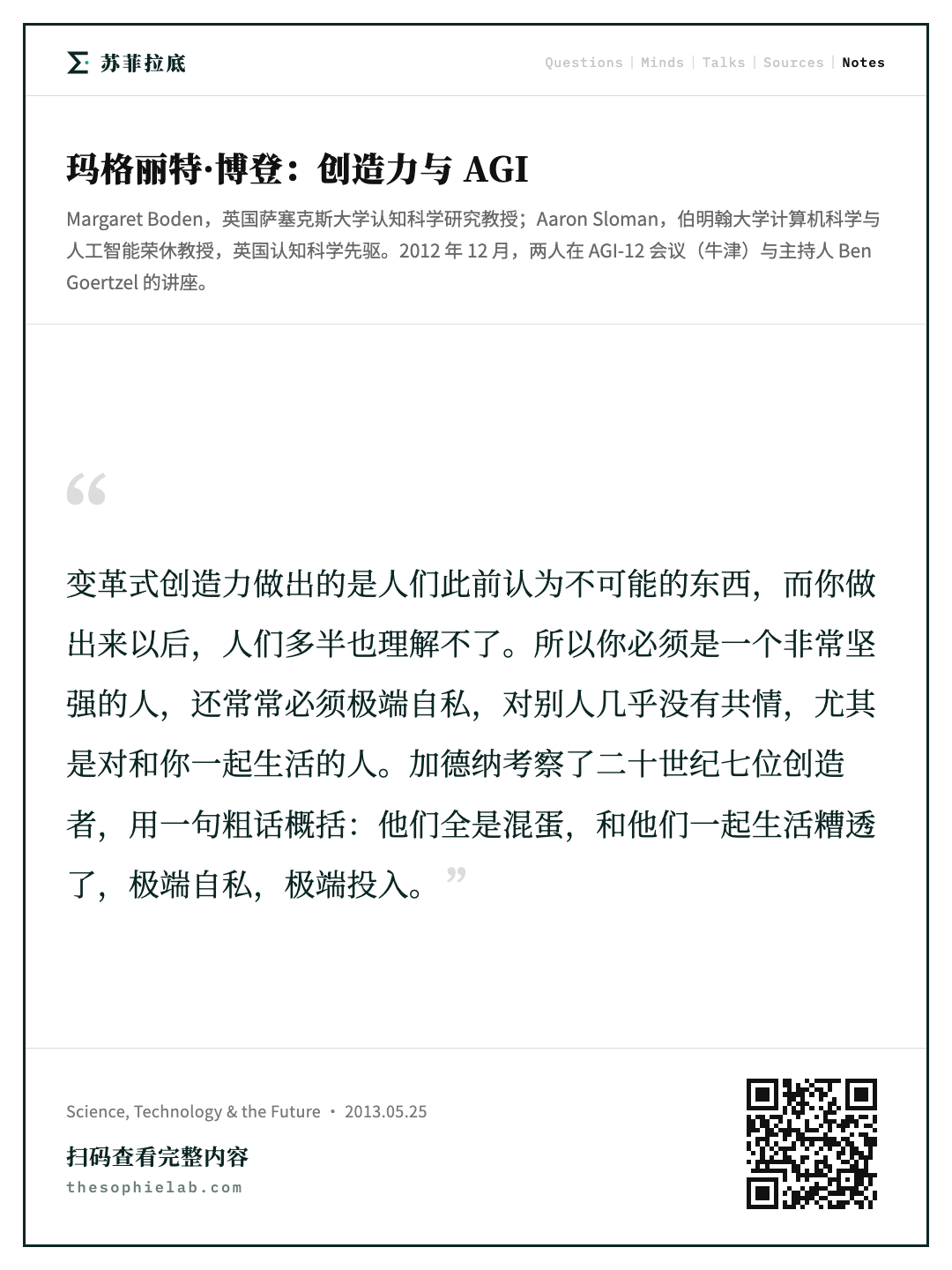
certain cases of others but they're always important not least for transformational creativity because by definition transformation of creativity comes up with something which people previously thought was impossible and once you've done it they probably aren't going to be able to understand it anyway um so you have got to be a very strong character we've got to be not only you know committed to your work as many of us are many people in this role absolutely committed their work whatever it is you've also got to be very often extremely selfish right very little empathy for other people especially the people you're living with because you are so committed to what you're doing you know that nobody else understands it you know that nobody else is going to value it at least at first so you've got to have the self-confidence the arrogance if you like you've got to have the self-confidence the motivation uh to do it and to get on with it um and it's a fascinating book by howard gardner called
转变式创造力而言,因为按定义,转变式创造力produces 出来的东西,是人们先前认为不可能的;而一旦你做出来了,他们大概也还是理解不了。呃,所以你必须是一个非常坚强的人,不仅要像我们许多人、在座许多人一样全身心投入自己的工作——不管那是什么工作——你往往还必须极其自我中心,对吧,对别人几乎没有共情,尤其是对跟你一起生活的人,因为你如此投入于自己在做的事,你知道没有别人懂它,你知道至少一开始没有别人会看重它。所以你必须有那种自信,甚至可以说是傲慢,你必须有那种自信、那种动力去做它、去把它推进下去。呃,霍华德·加德纳有一本很精彩的书,叫《创造的大师》,讲二十世纪的七位创造者,他考察了七个处在非常非常不同的
便签笔记
43:50
some of the seven creators of the 20th century where he looks at seven people in very very different forms of creativity areas i mean choreography and politics and poetry and so forth music and he isn't asking my question because you know how do these ideas arise he's asking what sorts of personality structure do these people have and to put put it in a uh very proven they were all swine dreadful people to live with utterly selfish and committed now for extraordinary creativity and combination precepts of course that doesn't apply so i'm just talking about transformation gives you there and empathy um i would say the exploration creativity you're concerned with is um exploring the human psyche which of course is what novelists many poets practice do um then yes you are going to need uh empathy to do it well and um and i think there's some very very interesting issues there which we can't say very much about with any clarity because um we only have a very little vague intuitive sense of what
创造领域的人,我是说舞蹈编导、政治、诗歌等等,还有音乐。他问的不是我的问题——你知道,这些想法是如何产生的——他问的是:这些人具有什么样的人格结构?直白点说,说得非常直接:他们都是混蛋,是极其难以相处的人,彻底自私而且一心扑在自己的事上。当然,对于日常的创造力和组合式创造力,这些并不适用,所以我这里说的只是转变式的情况。至于共情,呃,我会说,如果你关注的探索式创造力是在探索人类心灵——当然,这正是小说家、许多诗人和剧作家在做的事——那么是的,要做好这件事你就需要共情。而且,呃,我认为这里有一些非常非常有意思的问题,但我们对它们没法说得很清楚,因为,呃,我们对“共情”究竟是什么
便签笔记
45:13
a what even what we mean by empathy and certain would be how everything works you know what the computational mechanisms are but i mean if you're implying there's an agi that was going to would need empathy you're absolutely right because without empathy there are all sorts of relationships both in real life and in sort of creative fiction with other human beings that you couldn't you couldn't have so it's an important question but i don't know beyond that i don't have anything constructed to say okay hey
只有非常模糊、非常直觉性的一点感觉,更不用说它是如何运作的、其中的计算机制是什么。不过我是说,如果你的意思是一个 AGI 会需要共情,那你完全说对了,因为如果没有它——共情——在现实生活中,也在某种创作性的虚构里,人与人之间存在着各种各样的关系,而这些关系是你不可能拥有的,所以这是个重要的问题,但除此之外我不知道,我没有什么成形的看法可以说,好的嘿
便签笔记
11问答:价值标准与动物创造力
45:59
you said um creativity was a construction of something that was surprising and valuable um and you also said that creativity was a subset of general intelligence so as i was wondering um new and surprising they don't really seem to have any ties with intel with human intelligence but you define value in terms of human of in terms of humans i was wondering if it was possible to uncouple that if you could have a notion of the processes behind creativity um in such a way that they could need some other value measure um well it's striking that like solving the human question of value like what is valuable to a human might be a different question than trying to solve the notion of the problem of creativity okay i think you're raising the power bone problem i call the power problem and i have been taught from just about human creativity creativity in human beings i haven't been talking about uh creativity in non-human animals is there any creativity in non-human animals well of course there's novel certain animals you'll
你说过,创造力是构造出某种令人惊讶且有价值的东西,你还说过创造力是通用智能的一个子集。所以我在想,新颖和令人惊讶,它们似乎跟智能没有太大关联,跟人类智能没什么必然联系,但你是用人来定义价值的。我在想有没有可能把这两者解耦,能不能用某种方式来理解创造力背后的那些过程,使它们可以采用另一种价值标准嗯,很有意思的是,解决人类的价值问题——也就是什么对人类是有价值的——可能是一个跟解决创造力问题完全不同的问题。好的,我想你提出的是我称之为“权力问题”的那个问题。而我一直讲的差不多都是人类的创造力,人类身上的创造力,我没有谈非人类动物的创造力。非人类动物有创造力吗?当然,某些动物确实会做出新颖的、令人惊讶的东西,至少对我们来说是令人惊讶的,
便签笔记
47:11
come up with um new things surprising things that are surprising certainly to us and in some cases like the barber you know things that are even valued by us but um i wouldn't want to say and i'm not sure about some of the non-human primates that's another issue uh certainly below the primate i don't know that i'd want to say um that there was anything one would want to call creative any sort of strong sense over and above adaptive and intelligent and and so on because uh i don't think you can um usefully make these distinctions between the three sorts of creative creativity that i've been talking about um in with the animals because i don't think you've got the same um sort of background if you like of on the one hand a rich store of different concepts or cultural styles now of course tool making in certain species you know um the tools that a chimpanzee makes if it lives in this part of africa will be different from the ones that they're using in this part so but they're not so i would say they're habits which are
而且在某些情况下,比如园丁鸟,它们做的东西甚至是我们所看重的。但是我不太愿意说——我也不太确定某些非人类灵长类的情况,那是另一个议题——但在灵长类以下,我不觉得我愿意说存在什么东西是可以在强意义上称为“创造性”的,超出适应性、智能之类的范畴因为我不认为你能够有效地把我讲过的那三种创造力的区分用到动物身上,因为我不认为它们具备同样的背景条件——一方面是丰富的各种概念或文化风格的储备。当然,某些物种确实会制造工具,你知道,黑猩猩制造的工具,如果它生活在非洲的这个地区,就会跟另一个地区的黑猩猩用的工具不一样。但它们不是——我会说那是习惯,
便签笔记
12问答:Kurzweil 时间表与脑扫描批评
48:30
um originated in some cases and then learnt about agents in different places so if you want to call them cultural fine but they're not explored they're not self-consciously thought about they're very very different thing personally i wouldn't want quality creativity if you want to call it creativity it will find quality creativity but notice the huge differences largely due to language of course the huge differences between surprising novelties in non-human animals and the sorts of surprising novelties which you get in human animals and as i say the root i think of that ultimately is language so i had a question for you myself which is of a different story we've got a bunch of deep interesting uh deep questions about creativity and so forth so actually i wanted to ask a little more about your views on the difficulty of agi and the timing of achieving ati i think your perspective is interesting if you look at say ray kurzweil for example he looks at the exponential rate of growth of various kinds of technology of
是在某些情况下被创出来,然后在不同地方被同类学去的。所以如果你想把它们叫做文化,那也行,但它们不是被探索的,不是被自觉思考过的,那是非常非常不同的东西。就我个人而言,我不愿意把它称作创造力——如果你想叫它创造力,那也可以叫它创造力,但要注意其中巨大的差异,这在很大程度上要归因于语言——非人类动物身上那些令人惊讶的新奇之物,跟人类身上出现的那类令人惊讶的新奇之物之间的巨大差异,我认为归根到底其根源就在于语言。那我自己也有个问题想问你,是另一个方向的。我们已经谈了一堆关于创造力等等的深刻有趣的问题,所以我其实想再多问一点你对通用人工智能之难度以及实现时间的看法。我觉得你的视角很有意思。比如说你看雷·库兹韦尔,他关注各类技术的指数增长速度,
便签笔记
49:47
you know brain scanning computer hardware computer software and so forth and he says due to these exponential growth curves the achieving of human level agi is almost sure to occur in the middle of the century which i tend to agree with his view although not perhaps with the same narrow confidence bars that he puts around his his his time estimate now your view as i roughly understand it seems to be that achieving human level agi requires the solution of a bunch of difficult conceptual problems and you may think that the rate of solution of these difficult conceptual problems is not going to increase exponentially but that's that's sort of my paraphrasing of your view and i'm i'm curious for your actual response on this so you're paraphrased exactly right and i think that kurtzwell's certainly his time is sort of seemed to me he's absolutely absurd and it's interesting that you mentioned brain scan most brain scanning i mean there are a few exceptions and the biggest exception to this and
你知道的,脑扫描、计算机硬件、计算机软件等等,然后他说,由于这些指数增长曲线,实现人类水平的通用人工智能几乎肯定会发生在本世纪中叶,这一点我大体上是同意的,我同意他的看法,虽然可能不会像他那样给出那么窄的置信区间。而你的观点,据我大致理解,似乎是:实现人类水平的通用人工智能需要解决一堆困难的概念性问题,而你可能认为这些困难概念性问题被解决的速度并不会呈指数增长。不过这只是我对你观点的转述,我很想听听你本人的回应。你的转述完全正确,而且我认为库兹韦尔的时间表在我看来绝对是荒谬的。而且很有意思的是你提到了脑扫描——大多数脑扫描,我是说也有少数例外,其中最大的例外就是克里斯那些出色的工作,
便签笔记
51:00
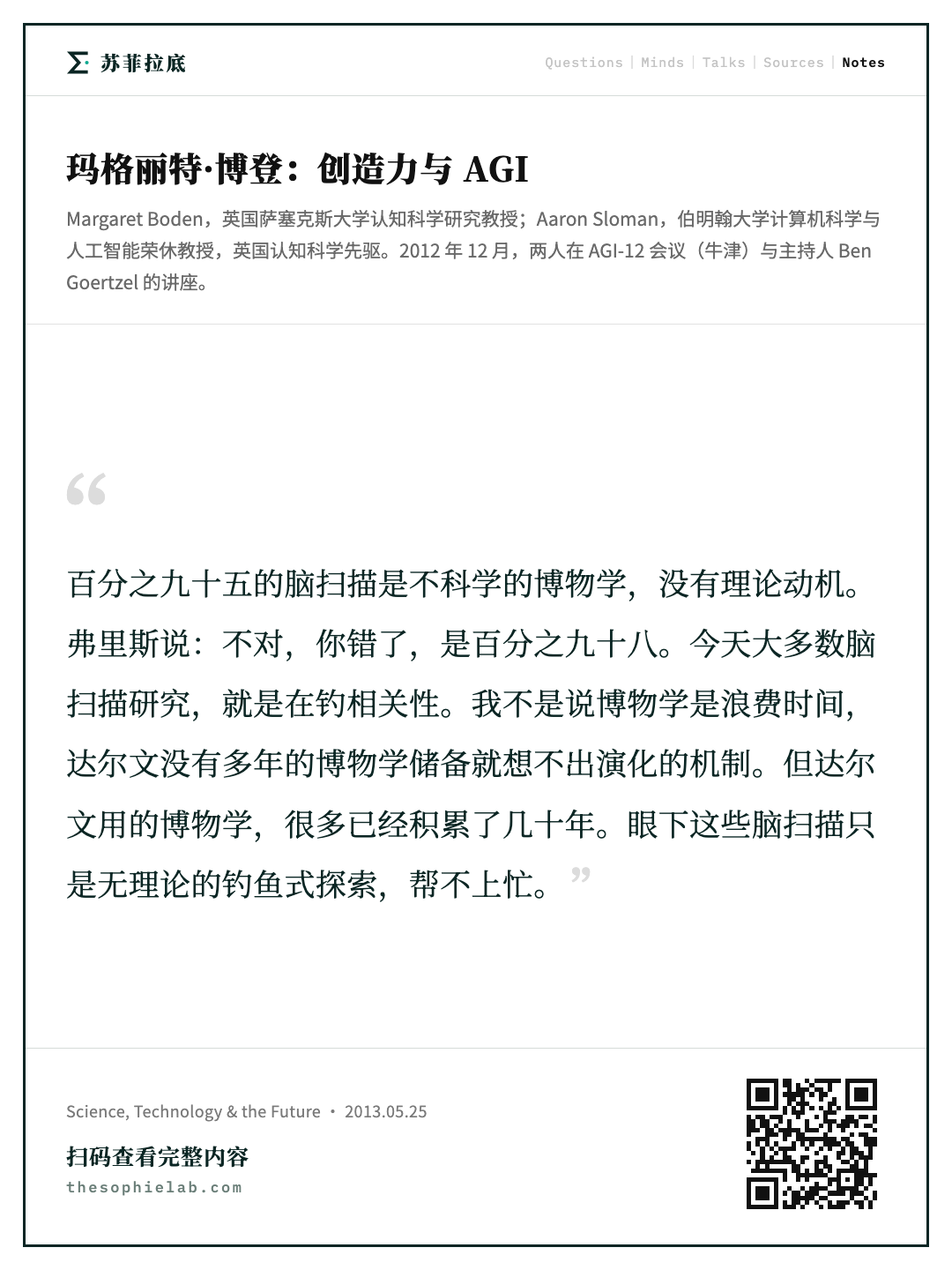
this wonderful work with chris but and i am the way i put my skeptical view which i'm about to express i put this view to him once and i sort of said basically i said 95 of uh brain scanning is unscientific um natural history at the moment sort of pretty useless and unmotivated and he said no no no you're wrong 98 right so that's true and most brain scanning today in people just fishing for correlations okay they are not guided by any uh decent psychological theory what i mean by decent psychological theory is something which is well i mean ideally can be expressed in computational terms but even if it can't be expressed in computational terms in the sense of writing a computer model of it right that it is expressed in terms of the source of broad types of computation that are going on so for example if you've got um a satellite of the theory of autism which involves reference to the theory of mind of certain sorts of deficiencies in theory of mind then you can start asking interesting questions of the brain
而我要表达的这个怀疑论看法,我曾经当面对他说过,我大致是这么说的:我基本上说,95% 的脑扫描研究目前都是不科学的博物学,相当没用,也没有理论动机,他说,不不不,你说错了,是 98%。对吧,所以确实如此,今天大多数在人身上做的脑扫描只是在捞相关性而已,它们并没有任何像样的心理学理论作指导。我说的“像样的心理学理论”,指的是理想情况下能用计算的术语表述出来的东西,但即使它没法用计算术语表述出来——我指的是没法为它写出一个计算机模型——那也至少要用大类计算过程的方式表述出来,说明正在发生的是什么。举个例子,如果你有一套关于自闭症的理论,涉及心理理论,涉及某些类型的心理理论缺陷,那你就可以开始向做脑扫描的人
便签笔记
52:26
scanners to look for certain things and not others and if you find them that is theoretically interesting that is just one example of the work that chris fitz has done but most brain scanning is not like that and at best its natural history now i'm not saying natural history is a waste of time if darwin hadn't done lots of natural history for the previous years of his life if he hadn't had correspondence with pigeon fanciers and and you know all sorts of people all over the world he hadn't had a hugely rich thought of natural history he could not have come up with the theory of evolution but he couldn't come up with a concept because people already have he couldn't have come up with the mechanism of the evolution and the the evidence that he gave for that mechanism so natural history is crucial but the point is that natural history much of it has been around for decades and some of it for more you know many many many decades so so when we get a neuroscientific understanding even where if and when we get a neuroscientific
提出有意思的问题,让他们去找特定的东西而不是别的东西,而如果你找到了,那在理论上就是有意义的。这只是克里斯·弗里斯所做工作的一个例子,但大多数脑扫描研究不是这样的,充其量只是博物学。当然我并不是说博物学是浪费时间——如果达尔文在他前半生没有做大量的博物学工作,如果他没有跟养鸽爱好者以及世界各地形形色色的人通信,如果他没有极其丰富的博物学积累,他就不可能提出进化论。不过他并不是提出了“进化”这个概念,因为这个概念别人已经有了,他不可能提出的是进化的机制,以及他为那个机制提供的证据。所以博物学是至关重要的,但问题在于,博物学其中很多已经积累了几十年,有些甚至更久,你知道,很多很多个几十年。所以,当我们获得对创造力的神经科学理解时——如果以及当我们真的获得对创造力或其他任何有意思的东西的神经科学理解时——
便签笔记
53:30
understanding of creativity um or anything else interesting uh it will require it will have to sit on the base of a huge amount of of natural history and so the sort of brain scanning stuff that's being done now will be of use then but at the moment it isn't it's you know any theoretical fishing expeditions which just don't help and um and in order to get um a neuroscience of creativity you need never mind agi a neuroscience of creativity you need to be able to answer all those questions i've been talking about and the only ones that they can get in even the beginnings of a handle on at the moment is combination of creativity and they can't get a handle on the relevance there but at least they can get a good handle on how in general terms is possible for combinations to happen in the brain but the exploration creativity transformation of creativity the neuroscientists don't have the beginnings of the way of understanding you've almost answered my follow-up question which was to elicit a little creativity from you
那它必然要建立在大量博物学积累的基础之上。所以现在做的这类脑扫描工作到那时会有用,但眼下它还没用,你知道,那些没有理论指导的“捞数据”式研究就是帮不上忙。而且,要想得到一门创造力的神经科学——先别提通用人工智能,光是创造力的神经科学——你就必须能够回答我一直在讲的所有那些问题。而目前他们唯一能沾到一点边的,只有组合式创造力,而且他们连其中的相关性问题都还搞不定,但至少他们能够比较好地把握,在一般意义上,组合是如何可能在大脑中发生的。但探索式创造力、变革式创造力,神经科学家连理解它们的门径都还没摸到。你几乎已经回答了我的追问,我本来是想在下面这个话题上从你身上激发一点创造力:假设
便签笔记
54:34
on the following topic now suppose it turns out that kurzweil was right when we get human level agi by 2030 or 2040. if that were gonna happen how do you think it would happen what would be the lies the most likely path for that outcome to come about i mean all i can say is we would have to have answered all of those questions anymore that i raised this morning and uh for the third time i think i'll say it do not hold your breath all right one more question
结果证明库兹韦尔是对的,我们在 2030 年或 2040 年就有了人类水平的通用人工智能。如果那真的会发生,你觉得它会怎么发生?最有可能通向那个结果的路径是什么?我只能说,我们必须已经回答了我今天上午提出的所有那些问题。另外,第三次了,我还是要说:别屏着呼吸等。好,再来一个问题
便签笔记
13问答:AGI 与道德共同体
55:26
i wondered about the cultural aspects of this because in a sense you're talking about value or relevance you need to value our relevance to something and the examples that you gave of human creativity were very much based in human culture really need to have a culture of atis for artificial intelligence machines themselves in order to be able to assess the creativity of these kinds of machines well they would need to be able to um to assess it in order to come up with things which we value that's why i made the point about the fitness function and the interactivity or non-interactivity in the case of evolutionary programming um so so yes if you're asked so that is my answer to the if you like the question of practice here the practical question whether or not you could get a system which looked as though it had hdi if you're asking the deeper philosophical question of supposing you had a system that looked as though it had agi would it actually be an agi would it be genuinely intelligent genuinely creative
我在想这里面的文化层面,因为在某种意义上你谈的是价值或相关性——你需要把价值或相关性归到某个东西上,而你举的人类创造力的例子非常植根于人类文化。是不是真的需要有一种通用人工智能的文化,人工智能机器自己的文化,才能够评估这类机器的创造力?嗯,它们确实需要能够去评估,才能造出我们所看重的东西,这就是我为什么要强调适应度函数那一点,以及在演化式编程中交互与非交互的区别。所以,是的,如果你问的是——那就是我对所谓实践层面问题的回答,也就是实际的问题:你能不能造出一个看上去具备通用人工智能的系统。如果你问的是更深层的哲学问题,即假设你有一个系统看上去具备通用人工智能,它是不是真的就是通用人工智能?它是不是真正有智能、真正有创造力?
便签笔记
56:45
i can't give you a quick answer to that because to answer that question would require um a full-on a very very good understanding of a number of issues which are hugely um controversial in philosophy for example the nature of consciousness as well as the self-criticism uh the nature of intentionality uh and the uh nature of membership of a moral community because unless we were prepared to accept uh these systems as members of our own moral community um we wouldn't i think be well put the way around if we were to accept these systems as being genuinely intelligent genuinely creative as a sort of human level which is you know what the hypothesis is then i think we would have to uh we will be committed then to accept them into our moral community which would mean among other things a but they had responsibilities and right and b that we would be uh we would be bound in certain situations to put their interests above our own now if i make a if i make a date for somebody and um or when i was 18 years old and made a
这个我没法给你一个快速的答案,因为要回答那个问题,需要对一系列在哲学上极具争议的议题有非常非常好的理解,比如意识的本质,还有自我批评、意向性的本质,以及成为道德共同体成员意味着什么,因为除非我们准备好接受这些系统成为我们自己道德共同体的成员,否则我们就不会——嗯,反过来说吧,如果我们要接受这些系统是真正有智能、真正有创造力的,达到某种人类水平——而这正是那个假设所设定的——那我认为我们就不得不、我们就有义务接纳它们进入我们的道德共同体,这意味着,除了别的以外,第一,它们拥有责任和权利,第二,在某些情况下我们有义务把它们的利益置于我们自己的利益之上。那么,如果我跟某人约会——嗯,比如我十八岁的时候跟某人约了见面,我到了,
便签笔记
58:18
date with somebody and i could turn and he's not there right he doesn't turn us till halfway but i'm absolutely you know furious just about to leave actually and he says to me tell me sorry i told you sorry sorry i'm so sorry you know my dog i got home from work and you know to feed my dog and i found there was no dog food in the house so i had to go around to the corner shop and buy dog food and that's why i'm late well i will forgive him of course i forgive him suppose he said to me oh i'm terribly sorry i'm terribly sorry i got home from work and my computer which was doing the times crossword um um asked me to go and look in a reference book which i have in the shell but it wasn't actually on and it took me half an hour i'm terribly sorry well i think even though i'm johnny well but if it was a member of our moral community i would have to accept that in some cases you know its interests should always be respecting and in some cases should even be put above our own as we put animals interest about our own
而他不在,对吧,他一直到过了一半时间才出现,而我当然是气得要命,其实都快要走了,然后他对我说,对不起,实在对不起,非常抱歉,你知道,我下班回到家要喂我的狗,结果发现家里没有狗粮了,所以我得跑到街角的小店去买狗粮,所以我才迟到了。那我当然会原谅他,我当然原谅他。可假设他对我说,哦,我实在太抱歉了,太抱歉了,我下班回到家,我的电脑正在做《泰晤士报》的填字游戏,它让我去查我书架上的一本参考书,但那本书其实不在那儿,结果花了我半个小时,实在太抱歉了。那我想,即使我脾气再好——可如果它是我们道德共同体的一员,我就不得不接受,在某些情况下它的利益是应该被尊重的,在某些情况下甚至应该被置于我们自己的利益之上,就像我们有时候把动物的利益放在自己之上一样。而我看不出这种事会发生。抱歉,我们没有更多时间
便签笔记
59:24
sometimes and i don't see that happening i'm sorry we're gonna have no more time for questions to keep on schedule i just want to add that all these talks we're planning to put online so if anyone who speaks from the audience has any issues with that please find us afterwards and we're happy to cut out that section of video great
提问了,为了不耽误日程。我只想补充一句,所有这些讲座我们都打算放到网上,所以如果有从观众席发言的人对此有顾虑,请会后来找我们,我们很乐意把那段视频剪掉。太好了
便签笔记
60:08
you
谢谢
便签笔记
视频总结 · 一句话概括与核心要点

一句话概括

Margaret Boden 在 AGI-12 会议上论证:创造力是普通人类智能的一部分,可分为组合型、探索型、转换型三类;三类都已被 AI 部分建模,但真正的瓶颈在于"价值/相关性"判断,因此她对本世纪中叶实现 AGI 的预测持强烈怀疑态度。

核心要点

  • 创造力不神秘也不精英化,是 AGI 的必要条件。 Boden 定义创造力为产生"新颖、令人惊讶、有价值"的想法的能力;"新"指对当事人(或系统)而言是新的,不要求历史首创。既然创造力是普通人类智能的一个方面,没有创造力就谈不上通用智能。
  • 组合型创造力:熟悉概念的陌生组合,对应"统计式惊讶"。 这是心理学界的标准定义,涵盖诗歌意象、类比、拼贴等。其惊讶类似"冷门马赢得德比赛马"——意外但不违反可能性。
  • 探索型创造力:在既定风格的规则内产生新结构,占专业创作的 95%~98%。 创作者接受一种已有文化风格(印象派、某数学分支),在其约束内探索新结构。莫扎特也属此类——他并未激进改变音乐风格,而是极致挖掘既有风格的潜能。
  • 转换型创造力:修改风格的一条或多条规则,引发"不可能式惊讶"。 规则可被删除、否定、削弱、强化或修改。例证:凯库勒把"开链"改为"闭环"解决苯结构,因邻接关系改变而催生整个芳香化学;立体主义放弃"单一视点"约束,是对绘画概念空间的根本转换。此类成果初看"不可能",常多年不被同行和公众接受。
  • 组合型看似最简单,实际最难——难在"价值"和"相关性"。 让计算机随机拼接概念很容易,但要产出像莎士比亚把睡眠比作"织补忧虑破袖"那样切题、非显然、有洞察的组合,需要人类的"相关性"概念。Sperber 与 Wilson 的相关性理论也未给出可直接编码的规范。她的结论:"不要屏住呼吸等待。"
  • 探索型是三者中最不难的,已有多个程序产出被认为有价值的作品。 需要形式化定义风格及其生成规则和探索方式;音乐学家、艺术史家穷尽一生做类似工作,困难但可行。AGI 还额外需要感知风格的局限及可能的调整方向。
  • "程序只能做程序员规定的事,不可能有转换型创造力"这一常见反驳是错的。 遗传算法(如 Karl Sims 的进化图像)允许激进变异,几代之后可产生与祖先毫无家族相似性的图像——这已经是结构转换。
  • 真正难点是结构转换 ≠ 风格转换:转换必须被评估为有价值并被持续探索。 随机变异带来的紫色图像很快会被下一次变异抹掉;而风格是一种持续的思维方式,要留下来继续挖掘(如从苯延伸到整个芳香族分子)。现有进化艺术每一代都依赖人类挑选亲本或人为设定/调整适应度函数;只有能明确写出适应度函数的领域(如飞机发动机设计)才能独立运行。文本领域最难,图形其次,科学数学相对容易。
  • 对 Kurzweil "本世纪中叶实现人类级 AGI"的预测:荒谬。 Boden 认为 AGI 要求解决一批深层概念问题(知识表示、自然语言、类比推理等),其解决速度不会指数增长。她"连很小一笔钱也不会押"在有生之年实现上,但承认原则上可能。
  • 对脑扫描研究的尖锐批评:95%(Chris Frith 说 98%)是无理论指导的"博物学"。 多数研究只是在钓相关性,缺少可用计算术语表达的心理学理论。博物学不是无用(达尔文的理论建立在几十年博物学积累之上),但当下脑科学连探索型和转换型创造力的门都没摸到。

结论与值得注意的细节

  • 结论:三类创造力都已被 AI 初步建模,但都只是"很小的一步";核心障碍是让系统自主进行价值/相关性评估。她三次重复"不要屏住呼吸",但强调这是实践难度而非原则不可能——"我们自己也不是靠魔法做到的"。
  • Sloman 提出的"本体论创造力"(新概念不可由旧概念定义,如基因、牛顿的质量,其意义由理论角色赋予):Boden 不认为这是独立的第四类,而是转换型创造力的典型特征——成果与旧事物差异极大,以至于初期连创作者的同行都无法理解其价值。
  • 人格与共情:转换型创造者因作品初期不被理解,必须极度自信甚至"傲慢自私";引用 Howard Gardner《创造心灵》研究七位 20 世纪创造者,结论是他们"都是难以相处的人"。但探索人类心灵的小说家和诗人则需要共情,AGI 若要处理人际关系也必需共情。
  • 动物创造力:Boden 不愿把灵长类以下动物的新奇行为称作强意义上的创造力,因为缺乏丰富的概念库和自觉探索的文化风格;人与动物的根本差异源于语言。
  • 道德共同体的思想实验:若真接受某系统具有人类级智能与创造力,就必须承认它有权利和责任,某些情况下甚至把其利益置于人类之上——她用"约会迟到因为要喂狗(可原谅)vs. 因为电脑做填字游戏要查资料(不可原谅)"的例子说明,她看不到这种情况会发生。

核心句型 · 9
1. X is wonderful, but it's certainly not Y, and nor is it Z
“Creativity is wonderful but it's certainly not magical and nor is it confined to a tiny romantic elite”
先肯定再连续双重否定澄清误解。nor 引导倒装句,语气正式。仿写:Learning is hard, but it's not mysterious, and nor is it reserved for the gifted.
2. It follows from what I've said that …
“It follows from what i've said that if our official general intelligence would have to have creativity”
推出结论的学术套语,表示「由前述可推出」。适合论证段落的承接,仿写时后接完整的 that 从句。
3. the sort of surprise that attends X is …
“The sort of surprise that attends it's logically is the surprise of seeing something new”
attend 在此意为「伴随」,是正式书面用法。用于描述某类事物附带的特征或效果,可替换 accompany。
4. X is not to be sneezed at
“It is not to be sneezed at”
习语,意为「不可小看」。用于为看似平凡的事物正名,语气略带口语幽默,适合演讲。
5. I'm not saying it's impossible … but if you want my bet, do not hold your breath
“I'm not saying it's impossible in principle i'm not even saying that it's impossible in practice but if you want my pet do not hold your breath”
层层排除后落到判断,既表明立场又留有余地。排比的 I'm not saying 递进,最后用习语收束,是表达审慎怀疑的经典结构。
6. if that isn't X, I don't know what is
“If that isn't a radical transformation in the visual structure i don't know what is”
口语强调句式,表示「这要不算 X,那就没什么算了」。用于对某例子的典型性做强调,语气笃定。
7. The problem is not in doing A; the problem is doing B
“The problem is not in coming up with transformations the problem is coming up with transformations which can be seen to be valuable”
先否定表面难点,再指出真正难点,重复主语结构形成对照。是重新定位问题的有效句式。
8. never mind X, (even) Y
“You need never mind agi a neuroscience of creativity”
never mind 在此作插入语,意为「先别提 X,光是 Y 就……」,用于强调 Y 已经足够困难。口语化但精准。
9. at best it's X
“At best its natural history”
「充其量不过是」,用于对某事物作保守评价。可配合 at worst 形成对比。
词汇精讲 · 101 · 按出现顺序
confined to phr. 0:10
局限于、仅限于
elite /ɪˈliːt/ n. 0:10
精英阶层、少数上层人物
pun /pʌn/ n. 1:31
双关语
justification /ˌdʒʌstɪfɪˈkeɪʃən/ n. 1:31
正当理由、依据
exploratory /ɪkˈsplɔːrətɔːri/ adj. 2:55
探索性的(Boden 术语:在既有风格内探索)
transformational /ˌtrænsfərˈmeɪʃənəl/ adj. 2:55
变革性的(Boden 术语:改变风格规则本身)
imagery /ˈɪmɪdʒəri/ n. 2:55
(文学中的)意象
collage /kəˈlɑːʒ/ n. 2:55
拼贴画
an outsider winning the derby phr. 4:18
冷门赛马赢得德比大赛;outsider 指不被看好的参赛者
earth-shaking /ˈɜːrθ ˌʃeɪkɪŋ/ adj. 4:18
惊天动地的、震撼性的
artifact /ˈɑːrtɪfækt/ n. 4:18
人工制品、人造物
constraints /kənˈstreɪnts/ n. 5:42
约束、限制条件
pioneers /ˌpaɪəˈnɪrz/ n. 7:02
先驱、开拓者
adventurous /ədˈventʃərəs/ adj. 7:02
敢于冒险的、大胆创新的
inherent in phr. 7:02
内在于、固有于
not to be sneezed at idiom 8:27
不可小觑、值得重视(常用否定形式)
piggyback on phr. v. 8:27
依附于、借力于、建立在……之上
conventions /kənˈvenʃənz/ n. 8:27
惯例、约定俗成的规则
negated /nɪˈɡeɪtɪd/ v. 8:27
被取反、被否定
hunch /hʌntʃ/ n. 9:55
直觉、预感
benzene /ˈbenziːn/ n. 9:55
苯(化学)
competent /ˈkɑːmpɪtənt/ adj. 10:59
称职的、能胜任的
aromatic chemistry n. phr. 10:59
芳香族化学
posed /poʊzd/ v. 10:59
提出(问题)
taken for granted phr. 12:19
视为理所当然
tweaking /ˈtwiːkɪŋ/ v. 12:19
微调
conceptual space n. phr. 12:19
概念空间(Boden 术语:一种风格允许的所有可能结构)
fellow /ˈfeloʊ/ adj. 13:33
同行的、同伴的(fellow artists 同行艺术家)
a doddle /ˈdɑːdl/ n. 14:42
(英式口语)轻而易举的事
at random phr. 14:42
随机地
indefinitely /ɪnˈdefɪnətli/ adv. 14:42
无限地、不确定地
comes down to phr. v. 15:59
归结为
anything goes idiom 15:59
怎么都行、百无禁忌
paparazzi /ˌpɑːpəˈrɑːtsi/ n. 15:59
狗仔队
in a very tiny nutshell phr. 17:15
极简地概括;in a nutshell 的强调变体
knits up phr. v. 17:15
织补、织合
peace of mind n. phr. 18:46
内心的安宁
spot-on /ˌspɑːt ˈɑːn/ adj. 18:46
完全准确的、恰到好处的
non-obvious /ˌnɑːn ˈɑːbviəs/ adj. 18:46
不显而易见的
witty /ˈwɪti/ adj. 18:46
机智风趣的
shuffle /ˈʃʌfl/ v. 18:46
洗牌;随意重排
do not hold your breath idiom 20:40
别指望很快实现、别屏息以待
pointers /ˈpɔɪntərz/ n. 20:40
提示、线索
generative system n. phr. 21:56
生成系统(按规则产生结构的系统)
cranking /ˈkræŋkɪŋ/ v. 21:56
转动、驱动(机器);引申为运转规则
musicologists /ˌmjuːzɪˈkɑːlədʒɪsts/ n. 23:18
音乐学家
radically /ˈrædɪkli/ adv. 24:41
根本地、彻底地
genetic algorithms n. phr. 24:41
遗传算法
mutations /mjuːˈteɪʃənz/ n. 24:41
变异、突变
concatenate /kənˈkætəneɪt/ v. 25:55
串联、拼接
long story short idiom 25:55
长话短说
family resemblance n. phr. 25:55
家族相似性(源自维特根斯坦)
sure as hell idiom 27:18
(口语)肯定、毫无疑问
crude /kruːd/ adj. 27:18
粗糙的、简单粗暴的
sustained /səˈsteɪnd/ adj. 28:29
持续的、被维持的
valuations /ˌvæljuˈeɪʃənz/ n. 29:44
价值评估
a big ask n. phr. 29:44
(口语)很高的要求、难以满足的请求
fitness function n. phr. 29:44
适应度函数(演化算法中衡量个体优劣的函数)
admittedly /ədˈmɪtɪdli/ adv. 31:03
诚然、必须承认
standalone /ˈstændəloʊn/ adj. 31:03
独立运行的、不依赖外部的
knowledge representation n. phr. 32:24
知识表示(AI 子领域)
analogical /ˌænəˈlɑːdʒɪkl/ adj. 32:24
类比的
crop up phr. v. 33:50
突然出现、冒出来
intelligible /ɪnˈtelɪdʒəbl/ adj. 35:08
可理解的、明白易懂的
defining dimensions n. phr. 36:21
定义性的维度
underlie /ˌʌndərˈlaɪ/ v. 36:21
构成……的基础、潜在于
ontological /ˌɑːntəˈlɑːdʒɪkl/ adj. 37:59
本体论的
definable /dɪˈfaɪnəbl/ adj. 37:59
可定义的
representational /ˌreprɪzenˈteɪʃənəl/ adj. 40:16
具象的、再现性的(绘画)
unintelligible /ˌʌnɪnˈtelɪdʒəbl/ adj. 40:16
无法理解的
import /ˈɪmpɔːrt/ n. 41:35
重要意义、含义(此处非「进口」)
peers /pɪrz/ n. 41:35
同行、同辈
empathy /ˈempəθi/ n. 41:35
共情、同理心
not least phr. 42:51
尤其、特别是
arrogance /ˈærəɡəns/ n. 42:51
傲慢、自大
get on with it phr. 42:51
继续干下去、着手推进
choreography /ˌkɔːriˈɑːɡrəfi/ n. 43:50
舞蹈编导
swine /swaɪn/ n. 43:50
(贬义)猪猡、混蛋
psyche /ˈsaɪki/ n. 43:50
心灵、精神
uncouple /ʌnˈkʌpl/ v. 45:59
解耦、使分离
primates /ˈpraɪmeɪts/ n. 47:11
灵长类动物
over and above phr. 47:11
除……之外、超出
self-consciously /ˌself ˈkɑːnʃəsli/ adv. 48:30
自觉地、有意识地
exponential /ˌekspəˈnenʃl/ adj. 48:30
指数级的
confidence bars n. phr. 49:47
置信区间(统计学)
paraphrasing /ˈperəfreɪzɪŋ/ v. 49:47
转述、改述
absurd /əbˈsɜːrd/ adj. 49:47
荒谬的
natural history n. phr. 51:00
博物学;此处贬指无理论的观察记录
fishing for correlations phr. 51:00
盲目捞取相关性(无假设的数据挖掘)
theory of mind n. phr. 51:00
心理理论(推断他人心理状态的能力)
deficiencies /dɪˈfɪʃənsiz/ n. 51:00
缺陷、不足
pigeon fanciers n. phr. 52:26
养鸽爱好者
get a handle on idiom 53:30
把握、掌握(某事)
elicit /ɪˈlɪsɪt/ v. 53:30
引出、诱发
interactivity /ˌɪntərækˈtɪvɪti/ n. 55:26
交互性
full-on /ˌfʊl ˈɑːn/ adj. 56:45
全面的、彻底的
intentionality /ɪnˌtenʃəˈnæləti/ n. 56:45
意向性(哲学:心智指向对象的属性)
moral community n. phr. 56:45
道德共同体
be bound to phr. 56:45
有义务、必须
furious /ˈfjʊriəs/ adj. 58:18
暴怒的
keep on schedule phr. 59:24
按时间表进行、不耽误日程
理解自测 · 11 题
1. Boden 对创造力的定义包含哪三个要素?她如何界定其中的「新」?

三个要素是新颖(new)、令人惊讶(surprising)、有价值(valuable)。关于「新」,她在开场即说明:这里的「新」指对提出者本人或该计算机系统而言是新的,无论这个想法此前被别人想过多少次。她把这称为对个人而言的创造力,而对整个人类历史而言新的创造力只是它的一个子集,往往会进入史书。她研究前者是因为后者的机制包含在前者之中,且我们每个人一生中也能有几次历史意义上的新想法,如新的双关语。

2. 三种创造力各自对应什么样的「惊讶」?

组合式对应「统计意义上的惊讶」:事情不寻常、概率低,如冷门赛马赢德比,但从不被认为不可能。探索式对应「看到新东西的惊讶」:初看以为不可能,细想后发现它确实符合既有风格,可以用旧框架理解。变革式对应「不可能式惊讶」:按原来的规则这东西根本不能产生,而且盯着看很久仍可能无法理解。她在第 2 至 10 段依次给出这三种惊讶,并把它们作为区分三类创造力的判据。

3. Boden 用凯库勒的苯环故事说明了什么?

说明变革式创造力是改变既有风格中的某条规则。凯库勒望着炉火联想到衔尾蛇,进而猜想苯分子是闭合环而非开链,而「有机分子是开链」这条规则很大程度上正是他自己确立的。改变链的开闭改变了原子的邻接关系,从而改变化学行为,由此诞生了芳香族化学这一分支,产生了一大堆此前根本无法提出的问题。她还顺带指出他的推算并不完全正确,但不影响这一变革的意义。

4. 为什么她说莫扎特多数时候做的也是探索式创造力?

因为她的分类依据是创造过程的类型而非成就的高低。莫扎特并未对音乐风格做出激进的变革,而是极其成功地探索和挖掘了他所处古典风格中内在的可能性,这正是探索式的定义:在已被接受的风格内产生新结构。她随后估计,专业科学家和艺术家 95% 到 98% 的创造力都是探索式,并强调这绝非可以小看。这一点反直觉之处在于天才与变革并不等同。

5. Boden 为什么认为组合式创造力对 AI 反而最难?

因为随机重组本身极其简单,把大量素材喂给计算机让它随机拼接就能得到大量不熟悉的组合,但这只满足了定义中的「新」和「惊讶」,没有满足「有价值」。价值依赖于人类的「相关性」概念,即组合必须说得通、不落俗套、最好还机智或有洞见。她用《麦克白》「睡眠织补忧虑的破袖」为例:睡眠与织补的组合之所以精准,是因为它对应「受损被修复」的语义结构。她引用 Sperber 的关联理论,指出连专门研究相关性的人也无法把它说清楚到能写成模型,因此她三次说「别屏息以待」。

6. 她如何反驳「计算机只能做程序规定的事,所以不可能有变革式创造力」?

她承认这是常见信念,但断言它「毫无疑问是错的」。证据是遗传算法:Karl Sims 的演化图像允许激进变异,如把一段子程序嵌入另一段或拼接两段,结果下一代图像与上一代之间可能完全没有「家族相似性」。她说「这要不算视觉结构的激进转变,我不知道什么算」。所以程序确实能产生变革性的结构。但她随即指出真正的难点在别处:变异是随机的,好的转变很快会被再次随机掉。

7. 「结构的转变」与「风格的转变」有何区别?为什么这一区别对 AGI 至关重要?

结构的转变是单次产出的新东西;风格的转变是一种被持续维持并进一步探索的思维方式。苯环之所以是风格变革,在于人们留在这个新空间里追问「还有哪些芳香族分子」;而随机变异得到的紫色图像若下一代又变回棕色,就只有结构转变。对 AGI 的意义在于:难点不在产生转变,而在识别哪些转变有价值并守住它继续探索。这需要系统自己做价值评估,而这又回到了「相关性」难题。现有演化艺术都靠人每代挑选父母或提供适应度函数,独立 AGI 必须自己承担这一角色。

8. Boden 为什么认为 Kurzweil 的 AGI 时间表「荒谬」?她对脑扫描的批评在论证中起什么作用?

Goertzel 转述并得到她确认:Kurzweil 押注硬件、软件、脑扫描的指数增长,而她认为瓶颈是一堆概念性难题,其解决速度不会指数增长。脑扫描批评是对「指数增长证据」的直接拆解:她引 Chris Frith 的话说 98% 的脑扫描是无理论指导的「博物学」,只是在捞相关性。她用达尔文类比承认博物学有用,但它需要几十年才能支撑理论。神经科学目前只对组合式创造力有初步把握,对探索式和变革式毫无门径。因此技术曲线的增长并不能转化为概念难题的解决。

9. Sloman 提出的「本体论创造力」与 Boden 的三分法冲突吗?她如何回应?

Sloman 认为存在第四类:产生无法用任何先前概念组合定义的新概念,如「基因」「质量」,它们的意义由其在理论中的角色决定。Boden 回应说她并未主张新概念必须用旧概念定义,因此这不构成冲突,但她不认为这是独立的一类。她反问立体主义是否算本体论创造力,并说明立体主义同样引入了先前语言中没有的东西,其结果起初连同行都无法理解。她的立场是:本体论创造力可以纳入变革式,两者的差别是分类粒度而非机制。

10. 若有人主张「现在的大型生成模型已经能产生新颖有价值的组合,Boden 的悲观已被证伪」,她可能如何回应?

她可能首先追问「有价值」由谁判断:她在第 23 到 24 段反复强调,现有系统的价值评估要么靠人在回路中挑选,要么靠人写的适应度函数,若生成模型的产出仍靠人类筛选和奖励信号来定义价值,那么系统本身并未获得「相关性」感,她的论点没有被推翻。其次她会区分结构转变与风格转变:模型能产出大量新组合,但能否识别出某个转变有价值并在其上持续探索?第三,她一贯说「原则上可能」,所以进展本身不与她冲突,她只是拒绝把技术曲线当作概念难题已解的证据。她大概会第四次说「别屏息以待」。

11. Boden 把「机器是否真的有创造力」与道德共同体绑在一起,这一推理链成立吗?把它放到今天的动物权利讨论中是否同样适用?

她的推理是:若承认系统真正具有人类水平的智能与创造力,就必须承认它有权利和责任,甚至在某些情况下把它的利益置于人类之上;而我们目前显然不这样对待机器,如「为电脑迟到」不被接受。她由此得出「我看不出这会发生」。这一链条的薄弱环节在于它把认识判断(它是否有智能)与规范承诺(我们是否接纳它)绑定,反对者可以说两者可以分离。但她自己已经用动物做了类比:我们有时把动物利益置于自身之上,正因为承认它们有感受。放到动物权利讨论中,这一推理是成立的,甚至是动物权利运动的核心论证,这反而说明她的标准是一致的:她要求对机器的接纳达到我们对动物的程度,而目前远未达到。

精读便签
下载便签 手机:长按图片也可保存
← 上一期 · NO.116Justice: What's The Right Thing To Do? Episode 02: "PUTTING A PRICE TAG ON LIFE" 下一期 · NO.118 →Amartya Sen: The Idea of Justice
订阅苏菲周报 每周一封:本周入库的精读、一个值得带走的问题、一条苏菲按。免费,随时退订。
免费 · 每周一封 · 一键退订
苏菲拉底 THE SOPHIE LAB · ASK THE BEST MINDS THE BIG QUESTIONS 内容仅供学习 · thesophielab.com