Robert Greene: On Mastery, Power & The Sublime | Ep. 32 · 苏菲拉底
字幕 字幕位置
--:--
点击播放,这里会跟随视频显示当前句的中英字幕。

Robert Greene: On Mastery, Power & The Sublime | Ep. 32

节目发布 2026-05-19 · The Mastry Experience
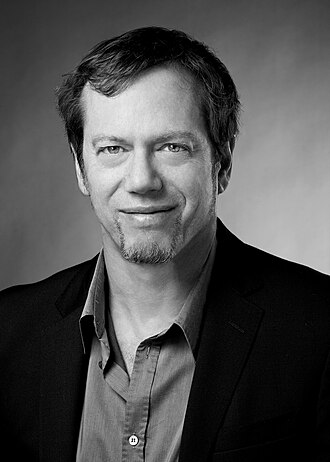
罗伯特·格林 弗弗朗切斯卡
EDITED TRANSCRIPT · 依据现场录音编译整理,可划线生成便签
本文是播客《精通体验》(The Mastery Experience)第三十二期的对谈实录,主持人弗朗西斯卡是该播客创办人,也是贝丝·费舍尔教练公司(Beth Fisher Coaching)的巅峰表现教练;对谈嘉宾罗伯特·格林著有《权力的48条法则》《精通》《人性的法则》等书。录制时格林刚完成七年写作、耗时最长的新书《崇高法则》(The Law of the Sublime),也是他中风后独力完成的第一部作品。全文依据现场录音编译整理,仅删去口语枝节、寒暄与节目中的广告插播,谈话内容与顺序一仍其旧。

一个流传已久的误解

主持人: 传奇人物,史上最强,《纽约时报》畅销书作家。能请到你是我的荣幸。罗伯特·格林,欢迎来到《精通体验》。

格林: 谢谢你请我来,弗朗西斯卡,我很感激。

主持人: 每期节目我们都以一张「精通」卡牌开场,今天抽到的问题是:人们对你最常见的误解是什么?

格林: 我想起第一次见到 50 Cent 的情形,后来我们合写了一本书。其实初次见面时我们根本没想过写书,只是他想见我,因为他是《权力的48条法则》的忠实读者。那是 2006 年,我心里有点发怵:他是 50 Cent,我算什么?何况他还有那样的名声。我们约在曼哈顿一家牛排馆的包间,他带着一帮随从,我孤身一人,场面挺滑稽的。我坐下来,我们开始聊,聊得非常投机。他很聪明,也很温和,有一种沉静的气质。

聊着聊着,我们都发现,对方完全不是自己预想的样子。他以为我会是一个阴险的马基雅维利式人物,像亨利·基辛格那种,会在他身上玩各种心理把戏,所以他也很紧张。而我以为他会是个凶神恶煞的江湖人物,结果他温柔又亲切。所以,人们对我的误解,尤其是在我开始上播客之前,就是把我当成一个不可信任的马基雅维利式人物。假如我采访迟到五分钟,那一定是权力游戏的一部分,而不是因为堵车。我说的每一句话、做的每一个动作,都被看成策略。

这六七年,也许八年了,我上了很多播客,情况有所改变,因为大家能看出来我不是那样的人。当然,如果我真是那种人,现在这副温和、友善、无辜的样子倒是绝佳的伪装。但这并不是伪装,这就是我本来的样子。那是最大的误解。

主持人: 我想很大程度是因为《权力的48条法则》太出名了。我也很喜欢那本书,但今天我想把谈话集中在你另外两本塑造了我人生的杰作上。

格林: 我大概猜得到其中一本。

主持人: 你猜到了哪本?

格林: 《精通》。

主持人: 我整个公司、整个平台都以这本书命名。我还给每一位投资人都寄了一本,好让他们理解这个品牌的精神,以及我们想在世界上做成什么。所以这本书对我意义重大,我想深入聊聊它,也想聊聊《人性的法则》。我认为《人性的法则》让我成了一个好教练。

格林: 你现在做教练?

主持人: 是的,在贝丝·费舍尔教练公司,做巅峰表现教练。因为研读了那本书,我能很快看懂一个人的行为模式,穿透表层往下看。

看清自己的非理性

主持人: 在《人性的法则》里你说,我们大多数人被无意识的情绪力量驱使,对自己的动机视而不见。你说我们身上有自恋、否认死亡这些自己意识不到的特质。但真正让我睁开眼睛的,是第一条法则,非理性法则(the law of irrationality)。它让我看到了自己情绪化、反复无常的一面,也学会了在别人处于那种状态时不把它当成针对我。所以我的第一个问题是:怎样才能更清楚地觉察自己的非理性行为?以及,能不能在不引起对方防御的前提下,让别人意识到他们的非理性?

格林: 先回答第二部分:不能,你不应该去做这件事。这就回到《权力的48条法则》了。你会触碰到对方的不安全感。他们嘴上也许会说:「谢谢你,弗朗西斯卡,你真是点醒了我。」但在心底,他们会记恨你。到某个时候,这份怨恨会变成暗中破坏,或者冷淡疏远。最终受伤的是你。这种游戏你赢不了。

所以,让人们待在自己的非理性里吧。事实上,你周围的人越不理性,而你越能自控,你的权力就越大。我写那本书是想帮人们走出非理性,但那些是我的读者,不是我私下认识的人。如果换成我母亲、我姐姐,或者任何我爱的人、亲近的人,我绝不会去碰这个话题。那等于把脑袋伸进老虎嘴里。让人们保有他们的幻觉吧,让他们觉得自己聪明、自控、理性。

那本书里有一章专门讲人的自我认知,我想是第七章。你不能去违背人的自我信念。我说过,人有三条普遍的自我认定,其中一条是「我掌控着自己的人生,靠的是我自己的意志力」,另一条是「我很聪明」。如果你说一个人不理性,就等于在侮辱他的智力,你会为此付出代价。至于问题的第一部分,你刚才问的是什么来着?

主持人: 怎样觉察自己的非理性行为。

格林: 整本书的前提就是让你觉察到自己身上的这些倾向,所以你必须做一些内省,必须回头看自己的人生。我认为一个很好的起点,是你人生中最大的失败,你犯过的最大的错误。通常,当一个大错误发生,一次失败发生,比如一桩没做成的生意,一本不成功的书,你的第一反应是怪别人:「是他坑了我」「他们不理解我」「都是她的错」。你在找借口,不去看自己那一面。而你的非理性,通常就藏在这些失败和错误里。

举个例子,又要说到 50 Cent 了。我保证不是所有例子都跟他有关,就这两个。我们当时合写一本书,我提这件事是因为它是我最大的失败之一,一次很少有人知道的失败。我们签了合同,一切就绪。但我被他和他的名气吓住了,把整本书写成了只关于他、关于他的生意的书。书写得很平,效果不好。出版社取消了这个项目,对我是沉重的打击。在整个过程里,在这段关系里,我的表现很难看。我必须面对自己。后来另一个人加入进来,他说:「罗伯特,这本书的问题在于太围着他转了,你得把你自己更多地放进去。」

如果我是非理性的,我会去怪流程,怪一开始没人告诉我这些,没人给我指引。但我必须看着自己说:「我被他吓住了,我脑子不清醒,我没有规划,我没有看到全局。」理性,就是能够跳出自己的情绪,从一个相对客观的角度看事情。我说「相对」,因为人永远做不到纯粹的客观。审视这次失败,我看到自己当时很情绪化,不客观,没有看到全局。而所谓全局是:这本书如果注入更多我自己的东西,我的精神、我的风格、我的想法,而不只是写他,会成功得多。

这样看下来,我就看清了自己的局限:我会被人吓住,我会害怕,而那不是正确的态度。审视你的失败,审视你做错的地方,不一定非得是生意上的事,也可以是感情。你和某个伴侣分开了,结局很糟,你的本能是怪对方。整本书的要义就是:永远先看自己。不要总盯着别人对你做了什么,世界对你做了什么,政治对你做了什么。看你自己。你人生里发生的坏事,责任在你。

通过审视自己,你才能一点点变得更理性。你永远不可能完全理性,因为我们是动物,我们有情绪,我们被情绪支配。但永远要看清,在那些出了岔子的事情里,你自己扮演了什么角色。

主持人: 这本书之所以那么打动我,正是因为我对自我觉察这件事近乎着迷。读自恋那一章时,我脑子里一个接一个亮起灯泡。这件事还得感谢你:大约六年前,我刚开始做教练,发了一封邮件,标题是「天哪,我是个自恋者」。我把你书里列的那些特质写了下来,说我正在读罗伯特·格林的书,它让我看清了自己,我们要把这种倾向转化成同理心。我的第一个一万美元的客户,就是那封邮件带来的。

格林: 真的?你在邮件里引用了我?

主持人: 是的,罗伯特。我对你的作品是真的着迷。经我认证的教练,都被要求读《人性的法则》。

格林: 你还给其他教练做认证?

主持人: 全球有一百五十位催眠呼吸法(HypnoBreathwork)教练。

格林: 哇,你有一个帝国了。

主持人: 正在建。他们要想成为好教练,就得读《人性的法则》。在我的二级培训里,有一整套幻灯片讲你书中的人格原型,我拿它来教学,再转化成催眠呼吸课程。

格林: 我什么时候得看看。

主持人: 我很乐意展示给你。这些内容大都关乎自我觉察,也关乎学会驾驭自己的情绪、驾驭自己、驾驭自己的头脑,进而驾驭自己的技艺。这就说到《精通》了。

格林: 我想给刚才第一个问题再补充一点,因为想法会时不时冒出来,你得体谅我今天有点累。那就是:能够分析自己的情绪。你感到愤怒,愤怒指向某个人或某群人。你得能退后一步分析这份愤怒:真的是因为他们吗?还是因为我自己?是不是童年的什么东西、我自己的什么不安全感被触发了?能够分析自己的情绪而不是直接做出反应,能够问「我为什么生气?为什么不耐烦?为什么难受?为什么消沉?」,这会给你的生活带来更多的客观、更多的掌控、更多的精通和理性。好了,接着问你的问题吧。

主持人: 这和我通过呼吸法教的东西是一回事。我在人进入潜意识状态时引导他们观照这些问题,因为那时防御最弱。当你在呼吸中放下自我,放下对别人的指责,放下那种从不担责的姿态,我在那个状态下问你这些问题,你就真的能追溯到非理性行为的根源。也许是我从小目睹了家里的混乱,也许是我母亲从来不设界限。人会因此变得更有自知之明。我们在用不同的方法做同一件事。

卓越者的两种品质

主持人: 关于今天这个时代的「精通」,我觉得很有意思的一点是:在社交媒体上,我们只看到精彩集锦,看到人们的成功,却看不到到达那里要走的路。人们对做成大事有多容易,存在很多误解。我很好奇,在你见过的人、一起做过节目的人当中,那些追求卓越并真正达到卓越的人,身上有什么共同特质?

格林: 首先,我们说的是真正的成功,真正的精通与真正的权力,而不是社交媒体上那种赝品。第一点,他们不是为了引人注目而做事。这是非常大的区别,是两类人的区别:外向导向(outer-directed)的人和内在导向(inner-directed)的人。就我自己的工作来说,我必须热爱我做的事。我不能为了钱写书,不能为了被人关注写书。当然,我不是圣雄甘地,不是圣人。我显然也想要钱,也想要关注,这一点我得承认。但那不是驱动我工作的主导力量。我工作是因为我热爱它,我热爱创造,热爱触及读者,热爱传递思想。真正成功的人,不被外在的东西驱动,他们的动力来自内部。

这样做的好处是,你早上醒来就知道:这是我今天要完成的事,这些是我要做的,这才是要紧的。你不需要别人告诉你,不需要老板,不需要伴侣或任何人来告诉你该怎么安排生活。你自己就能做到,因为你知道自己该做什么,你爱这件事,里面有大量的渴望、热情和情感。我认为这是第一位的品质。

另一种品质是高度的自律。在这个世界上,要做成任何事都很难。这个世界竞争极其激烈,而且越来越激烈,这其实是好事,因为全球有越来越多的人在争抢同一块饼。五六十年前,权力游戏基本被白人男性垄断。现在是女性,是世界各地各个族裔的人,我说的是全球范围。所以竞争是残酷的,是极端的。要做成一桩能持久的生意,或者任何能真正引起共鸣、能留下来的工作,非常困难。

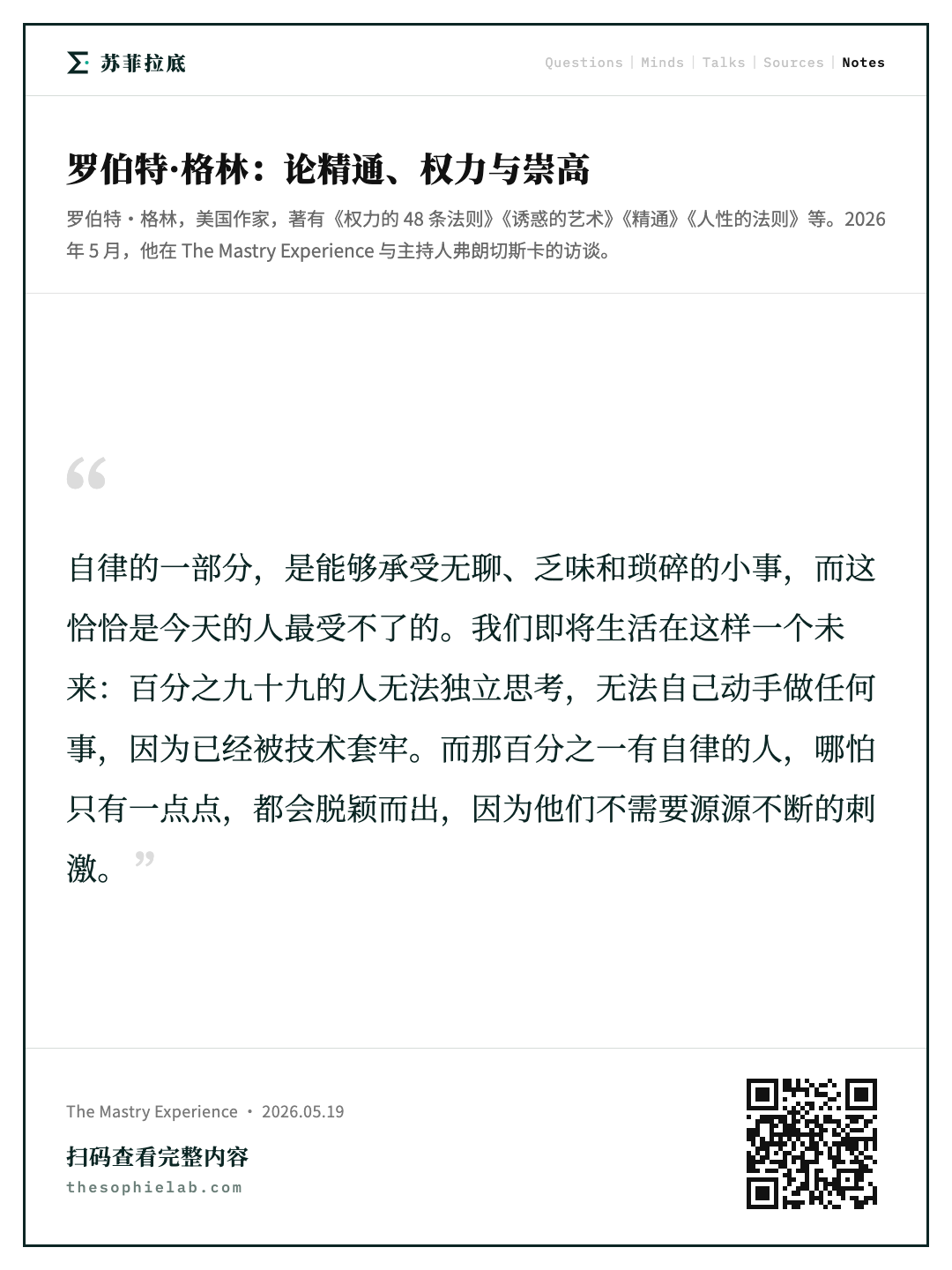
要做到这一点,你必须极其自律。而自律的一部分,是能够承受无聊、乏味和琐碎的小事,而这些恰恰是很多人,尤其是今天的人,最受不了的。我们即将生活在这样一个未来:百分之九十九的人无法独立思考,无法自己动手做任何事,因为他们已经被技术套牢。而那百分之一有自律的人,哪怕只有一点点自律,都会脱颖而出,凌驾于所有人之上,因为他们不需要源源不断的刺激。

写《精通》时我采访了保罗·格雷厄姆(Paul Graham),他是书里的人物之一,非常了不起,Y Combinator 就是他创办的。他没有智能手机。那是 2014 年、2015 年,现在他也许有了。不被分心,不被社交媒体、不被别人的想法完全吞没,而是沉浸在自己身上、沉浸在自己要完成的事情上,这些是任何想在这个世界上成功的人都必须具备的品质。

主持人: 昨晚我翻看关于《精通》的笔记,翻到了 2019 年发的一条帖子,就是这本书的照片,配上我最喜欢的几句话。我想念几句,没有追问,你什么也不用做。

格林: 好,那我可以放松了。

主持人: 你尽管放松,我想借这个机会让大家真正听到这些智慧,你就坐着听一会儿自己的天才之语吧。未来属于那些磨练心智、学习更多技能并把它们创造性地组合起来的人。人在一生中的所作所为,决定了他们配得上怎样的头脑。对确定性的渴求,是心智面临的最大疾病。在追求精通的路上,最大的障碍往往来自应付周围人的抵制与操控时耗去的情感精力。成功的创业者靠的是品格:愿意调整自己的想法,灵活,以及极强的韧性。精通需要自律、高度专注、跨领域拓展知识,以及增强记忆力,以此催生新的联结,驾驭复杂性,抵达更深层的智慧。

格林: 这些都是我写的?

主持人: 听到自己的话,你会不会想:「该死,我太厉害了」?

格林: 不会,我想的是:「天哪,这里本可以写得更好。」有几句可以再润色一下。有些话我很熟悉,有些我已经记不太清了,不过没关系。

退一步,为了跳得更远

主持人: 组合不同技能这个想法,说实话给了我极大的安慰。读这本书时,我刚离开做了十年的广告业。我在纽约最顶尖的广告公司工作,一路做上去,和世界上最好的策略师、创意总监共事。然后我迷上了呼吸疗法,花了整整一年环游世界,印度、秘鲁、泰国。

格林: 是什么触发了你对呼吸疗法的兴趣?某次特别的经历吗?

主持人: 简单说,我住在西村,过着梦寐以求的纽约生活,有派对,有事业上的成功,却发现自己并不满足,需要某种更深的东西。于是我去了巴厘岛,参加了一个七天的呼吸疗法静修营。

格林: 你常去巴厘岛。

主持人: 去过十二次了,我爱那里。呼吸疗法让我着迷,因为我原以为自己很有自知之明,读过书,做过心理治疗,也明白自己的父亲情结。但呼吸把我带进潜意识深处,那种宣泄感太强了,我后来到世界各地去学它,也尝试了植物药,做过内观禅修,各种各样的东西。

格林: 太好了,我不知道你的故事,真让人兴奋。

主持人: 你是我故事里很重要的一部分。那时候,我有一套被社会规训出来的「成功」,又发现了这个让我如此热爱的方法,同时我也真心喜欢商业。读到这本书时我正处在迷茫中,然后我想:「天哪,这就是我的交汇点,我注定要把这两样融合起来,这就是我的使命,我往前走的路。」

格林: 你的广告经验肯定也帮了大忙。没有一样是白费的。

主持人: 是的,我知道怎么做营销、怎么打造个人品牌。那一年我埋头苦学,而你让我明白这样做是可以的。我本来想,我得回去工作,得赚钱。但我对自己说:「不,我要先把手艺练好。」

格林: 这是个再完美不过的例子。很多人对收入、对钱过分执着,而你的处境是一个经典案例:你有一份收入不错的工作,有权力,有成功,但你不快乐。你困在一个陷阱里,因为要抽身去做别的事,而你习惯了这份收入,习惯了西村的漂亮公寓,你会想「哇,我做不到」,你会慌。但你必须去做。退后一步,少赚钱,甚至不赚钱,靠积蓄生活,退回去思考自己的未来,学习别的技能,然后再往前走。法语里有一句话,我一时想不起怎么说了。真该死。大意就是:你得先退一步,才能往前走。

主持人: 嗯。

格林: 想起来了,Reculer pour mieux sauter。你会法语吗?

主持人: 会一点。

格林: Reculer 是后退,pour mieux sauter 是为了跳得更好。你退一步,说「好,我要去做呼吸疗法,我会没有收入」。等你做到了,再把技能组合起来,你就蓄势待发,能跳得比以往任何时候都远。你现在赚的钱、取得的成功,都超过了你的广告生涯。是不是这样?

主持人: 正是这样。就像我说的,读这本书时我想,好,学徒期,导师,让新的创意联结自己形成。我稍后还想聊直觉,那是我工作的重要部分。当我允许这些新的创意联结形成之后,做呼吸疗法教练的第一年,我就赚回了当营销总监时的年薪,第二年翻了一倍。

格林: 你是一个很好的例子,我非常高兴。

主持人: 这是你的功劳。

中风之后,用手写完一本书

主持人: 说到精通,你显然是自己领域的大师。而我知道中风之后,这件事对你来说难了很多。我想请你为我们掀开一点帷幕,让大家看到幕后,看到真正成为《纽约时报》畅销书作家要经历怎样的过程。

格林: 你是指最开始写《权力的48条法则》时,还是现在?

主持人: 现在,因为现在需要的自律和专注更多。

格林: 那是一个非常艰难的过程。坦白说,我不得不直面自己的许多弱点和问题。我修禅宗的坐禅,也读了不少相关的书,尽管读书根本不是修行的方式。禅宗有一个观念:你就是你的处境。人类的通病是把自己和自己的处境分开,总觉得事情本可以更好。我必须接受:这就是我的身体,这就是我。别再跟它对抗,接受它,和它一起工作。可一开始我做不到。

我太沮丧了,对自己太失望了。为什么我不能走路?我到底怎么了?为什么我还在踉踉跄跄?为什么我的手还蜷成一只爪子?为什么我打不了字?我对自己太苛刻,把自己的日子弄得很悲惨。每一天都是挣扎,每一天都在对自己说:你不能这样。你在写一本关于某种宏大之物的书,可你必须去感受它。我写的每一样东西,都必须是我亲身感受到的。

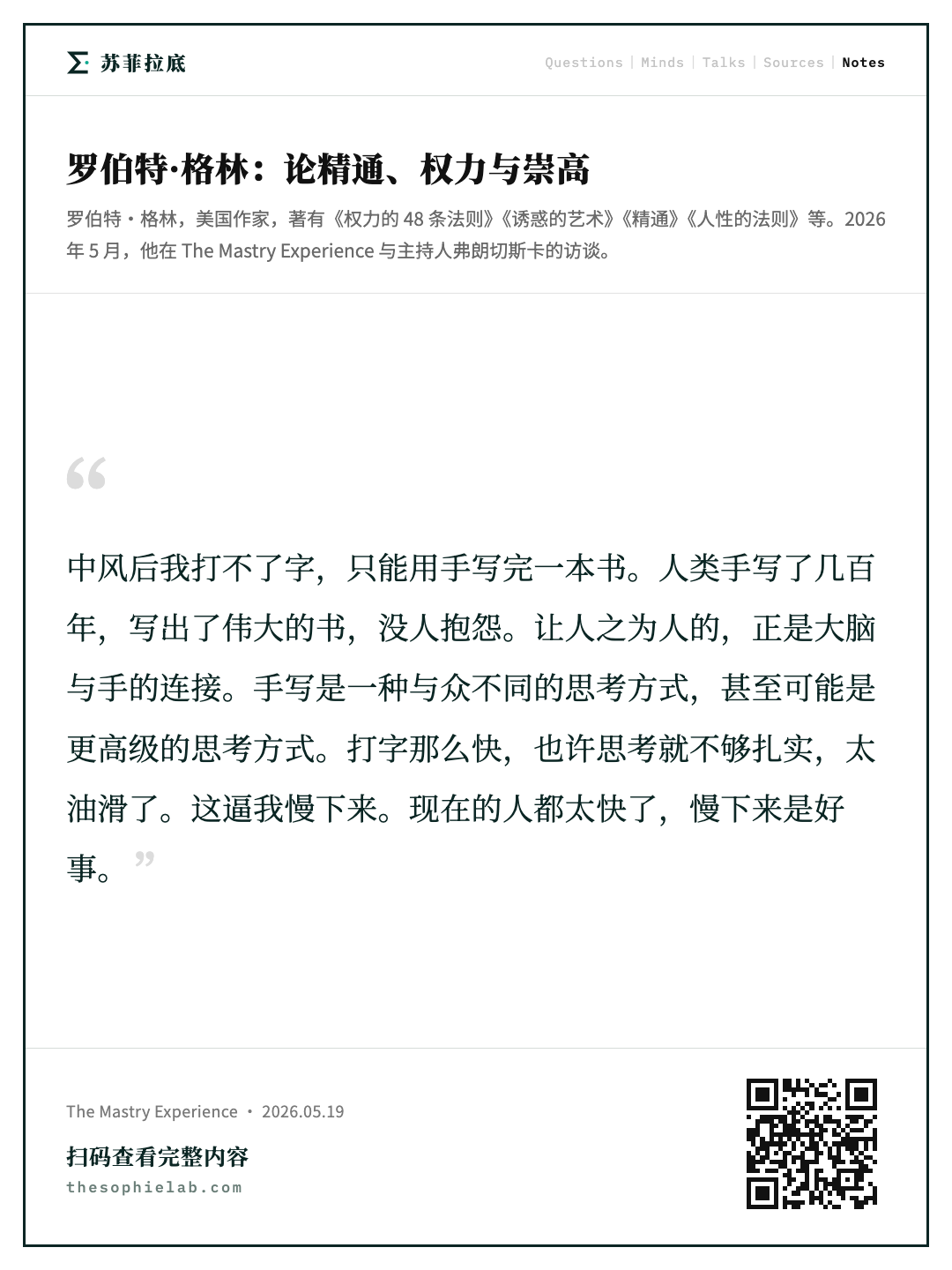
所以我必须和自己搏斗,必须看清自己弱在哪里:我的急躁,我对自己的苛刻。这些从哪里来?当然,我不可能变成一个温柔慈爱、什么都接受的生物,那不是我的天性。我对自己苛刻,这推动了我,也成就了我。只是它走过头了。至于具体的过程,我必须把所有东西都手写出来,在这个年代。但我有一个概念,不是我的,是尼采的「热爱命运」(amor fati)。一切发生皆有缘由。手写,好吧,很麻烦,很痛苦,但它其实是一种很有意思的思考方式。人类手写了几百年,写出了伟大的书,没人抱怨,他们不知道电脑是什么。他们用手写出了自己的杰作。

大脑和手之间有一种奇妙的联系。几百万年前,几十万年前,大脑就是这样进化出来的。让人之为人的,正是大脑与手的连接:制造工具,用手做东西。我们的天才就来自那里。要不是发展出这种脑手协同的能力,我们现在还是非洲稀树草原上的黑猩猩。研究大脑,你会看到二者之间惊人的联系。手写是一种与众不同的思考方式,甚至可能是一种更高级的思考方式。它很烦,耗时无穷,但在某种意义上让我想得很深。

我手头有所有的笔记和研究资料,我要写一章,就得用手把它写出来。那怎么修改呢?以前我打字很快,改起来很快,快到我思考的速度和打字一样快。现在怎么改?我得拿两个笔记本,一本放这边,一本放那边,看着那一本,把整章连同修改重抄一遍。有时还得拿一大张便利贴贴上去,在上面写改动。你要是看到我的笔记本,会说:「天哪,这简直是疯了。」但这种费力的劳作让我平静下来,让我想得更深,让我更努力地工作。打字那么快,也许思考就不够扎实,也许太油滑了。这逼我慢下来。现在的人都太快了,慢下来是好事。

等稿子改到差不多了,我再用听写软件把它口述进电脑。那些软件真是糟糕透顶。你会以为,有这么多不可思议的技术,总有人能做出一个好用的转写听写工具吧。我用的是最好的 Whisper 转写,还是很糟。口述完之后,我还得用一只手在电脑上修改。单手打字。我告诉你,写完第一章时我想:「天哪,我怎么可能熬完这本书?」写完第二章:「天哪,我怎么可能熬完?」写完第三章:「好,看起来行得通。」写完第四章:「哇,罗伯特,你还真有点了不起。」我不太愿意这么说,但回头看我不得不做的这一切,我几乎要哭出来。就用我刚才描述的这套办法,我写完了整整十二章,外加序言。

主持人: 谢谢你分享这些。我做这档节目的一大使命,就是让人们真正理解,伟大需要付出什么。这种程度的投入,这种琐碎的劳作,尤其是在你经历了这一切之后,是对你这个人最好的证明。我一直好奇,你其实已经不必再做这些了。

格林: 是的,不必了。

主持人: 你已经到了顶峰,多次登上《纽约时报》畅销榜第一。那么对你来说,现在最让你满足的是什么?是完成创作本身,还是对读者产生的影响?

格林: 有好几个时刻。当我进入状态,写得顺畅,享受其中,那非常非常令人满足。当然,大多数时候不是这样,那只占很小的比例。但那些时刻一旦发生,比如我把一个想法想透了,并且用一种有创造性的方式表达出来,那感觉太满足了。

主持人: 就像心流状态。

格林: 对,因为想法会自己来,你都不知道从哪儿来的。然后写完一章,哇,它成形了。而现在整本书完成了,那种感觉我根本无法形容。我对它仍然没有安全感,我仍然希望人们给我正面的反馈,我有点需要这个。因为七年来这是我做的唯一一件事,我没做别的。我在里面投入太深,所以如果有人说些挑刺的话,我往往会往心里去。不过我会克服的。那种感觉是:我爬上了那座山。我以前也爬过别的山,《人性的法则》是一次不错的攀登,但没有一次像这次这样。我可以带着「我做到了」的念头去死。这非常令人满足。

主持人: 你应该为此骄傲。我等不及要读了,也一定会给你正面的反馈。

格林: 你也可以给我负面的反馈,只不过我再也不会跟你说话了。

直觉与理性的融合

主持人: 顺着心流状态往下说。《精通》的第五部分讲直觉,你说我们必须把直觉融合起来。

格林: 那是第六章,不是第五章。第五章讲创造力。

主持人: 你说得对,是第六章,我记错了。你说要把直觉与理性头脑融合起来,我非常同意。我认为我们的潜意识必须先装满信息、知识和智慧,模式识别和创造力才有东西可以连接。那么直觉在你的工作中扮演什么角色?

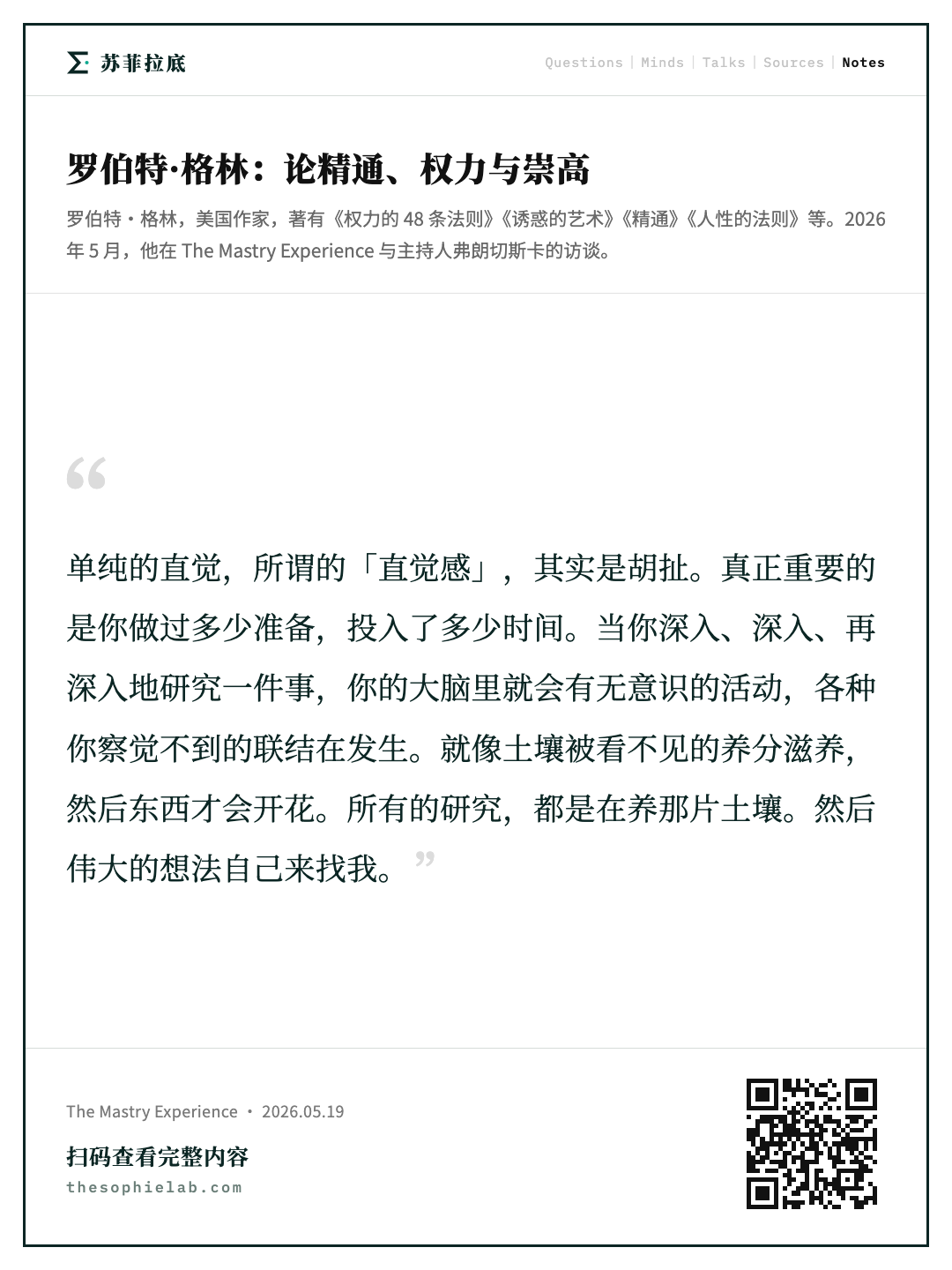
格林: 它一直扮演着极大的角色。我年轻时,比如写《权力的48条法则》那会儿,脑子比现在快,东西会凭空冒出来,我不知道那个联结是怎么建立的。最好的东西都是那样来的。不过我在那一章里指出,单纯的直觉,所谓的「直觉感」,其实是胡扯。真正重要的是你做过多少准备,投入了多少时间。有了这些,你的直觉才在一个高水平上运作。它是理性的,它融合了,融合了什么来着?

主持人: 理性头脑。

格林: 对,谢谢你。所以,先有那些准备的时间,工作的时间,然后你的大脑里才会发生精彩的事情,各种联结才会出现。虽然我不是神经科学家,但《精通》某种意义上是一堂课,讲人脑实际上如何运作,而不是我们对它的误解。有意思的是,我很喜欢的另一档播客的主持人安德鲁·休伯曼(Andrew Huberman)就是神经科学家,他说《精通》改变了他的人生,促使他做起了播客。这算是印证了我说的一些东西。

当你深入、深入、再深入地研究一件事,花上大量时间阅读、思考,你的大脑里就会有无意识的活动,各种你察觉不到的联结在发生。你必须深入到那个过程里,这一切才会发生。就像土壤被各种看不见的养分滋养,然后东西才会开花。如果不深入进去,什么都不会凝结成形,什么都不会发生。对我来说,所有的准备,所有的研究,都是在养那片土壤。然后伟大的想法自己来找我,我根本不用去想。而且那绝对是最好的想法。这就是直觉在我身上的运作方式。

我一直是个非常凭直觉的人,我妻子可以作证。我的脑子可以很散漫,我讲故事,喜欢完全即兴,让思绪四处漫游。对任何搞创作的人来说,这在创作过程中都很重要:抵达那个你彻底放手、让头脑发狂的地步。最好的想法,就是在你让头脑发一点疯的时候来的。

主持人: 那如果你面对一个商业决定,你的理性头脑,或者说分析性头脑、行业惯例、通行做法说的是一回事,而你身体深处、你的直觉说的是另一回事,比如「不该写这个主题」「章节标题应该是这个」,你听哪一个?

格林: 你把我问糊涂了。商业世界是商业世界,我的工作不太一样。我知道在商业里,动辄几百万美元押在上面,你不能像我刚才说的那么自由,那可能有点危险。

主持人: 但即使作为作者,如果你的团队说「罗伯特,你得就这个题目再写一本」,而我知道你不喜欢被人预料到。那么,选择那些真正让你有感觉的题目,是不是就是你在运用直觉?

格林: 我不确定能不能正好回答你的问题。假设我在写书,在构思章节,在想点子。最有趣的部分就在最初的阶段,那时我可以很自由、很松弛。必须有什么东西「咔哒」一声对上,必须有什么东西让我兴奋。要有戏剧性,要有某种古怪的东西,让它不陈腐、不可预料,让我兴奋起来。然后我就跟着它走,那是纯粹的直觉。我知道,只要我心里想着别的书,或者想着赚大钱去做事,我就会走偏。所以我必须开心,必须兴奋,必须感到有什么奇怪的事正在发生。

《崇高法则》的第二章标题就很奇怪,但我爱它的奇怪。它叫「觉醒于活着的怪异」(Awaken to the strangeness of being alive)。它的意思是,活着是你能想到的最怪异的事:你竟然真的活着,有意识,置身于一个被这一切环绕的世界里。这是你能想到的最怪的事情,你必须去想它。当这个标题凭直觉冒出来时,我说:「哇,太棒了,就用它。」我在回答你的问题吗?

主持人: 你在回答,只是和我想的稍有不同。我想把它对应到我怎么经营自己的公司。

格林: 我再倒点茶。

主持人: 请便。我了解营销和广告的通行做法:你得上 TikTok,得上 YouTube,得做社交媒体。但我的身体说,这让我不舒服。于是我就去打磨一场主题演讲,而不去做那些「正确」的、「理性」的、能让公司增长的事。

格林: 我明白了,我刚才确实没回答到点上。

主持人: 其实回答到了,因为我好奇的是直觉在你写作中的作用,而你的过程是流动的、创造性的,因为你的头脑里装得很满。

别迷信「最佳实践」

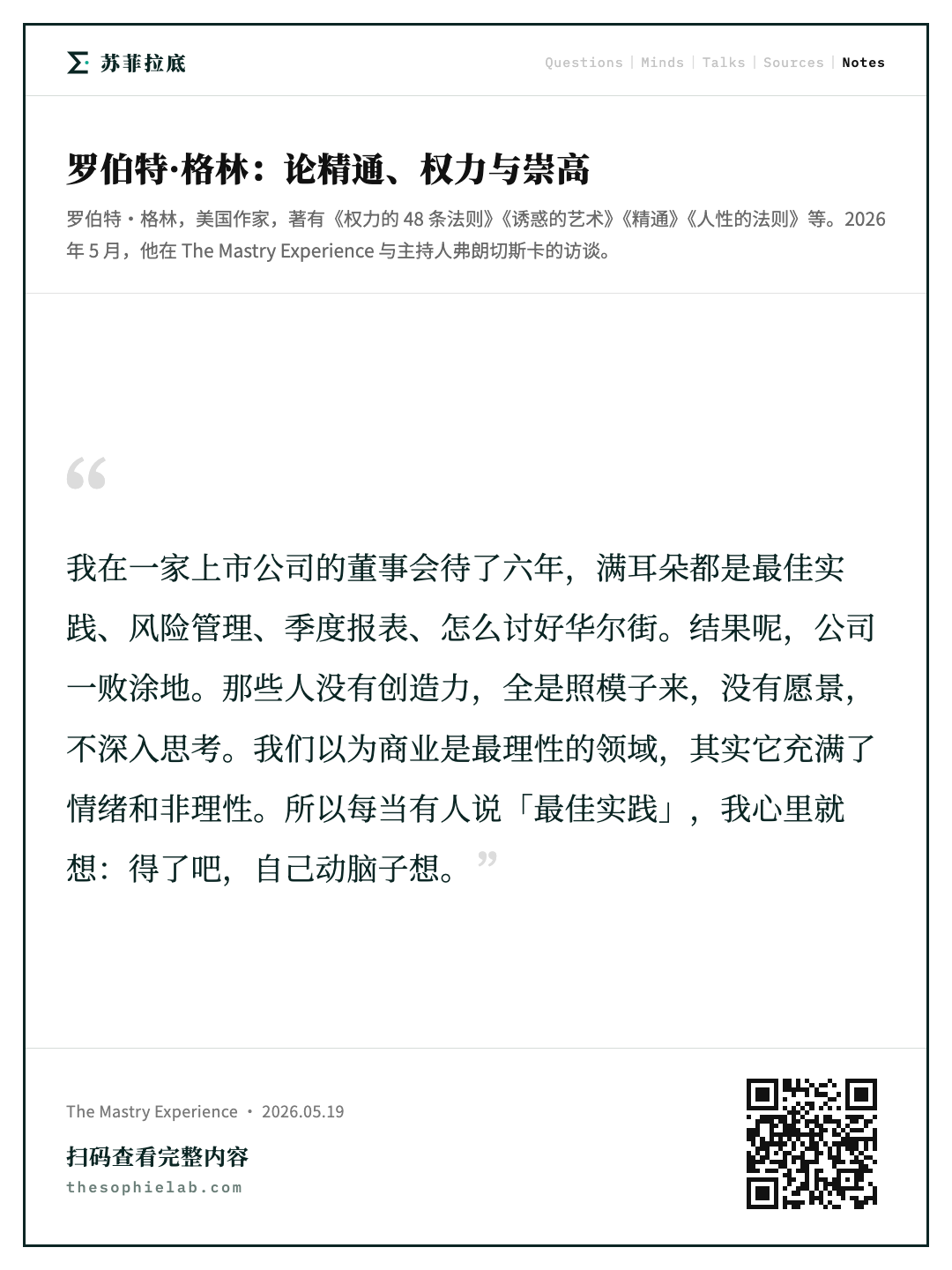
格林: 说到底,什么是最佳实践?谁知道呢。我在 American Apparel 的董事会待了至少六年,那是家上市公司。我没有任何商业背景,连 EBITDA(税息折旧摊销前利润)是什么都不知道。我坐在那里,满耳朵都是最佳实践,都是以前是怎么做的,都是风险管理,各种严肃的东西。结果呢,公司一败涂地,彻底失败。那些人没有创造力。商界有太多人毫无创造力,全是照模子来,全是季度报表,全是怎么讨好华尔街。他们没有愿景,不松弛,不深入思考,做出来的品牌很快就陈腐。我们以为商业是最理性的领域,其实它充满了情绪和非理性。看到这一点,让我大开眼界。所以每当有人说「最佳实践」,我心里就想:「得了吧,自己动脑子想。」

主持人: 这就是我需要的全部许可。对我来说这是完美的回答。

禅坐:放开思想的手

主持人: 说说你的冥想练习吧。我知道你每天都冥想,坚持了十多年。它是通向你直觉的线,通向创意的线,还是只是为了安抚你那过度分析的头脑?

格林: 开始冥想之前我就已经在写书了,所以不能把功劳归给它。主要是因为我知道自己身体紧绷,头脑过于活跃,健康早晚要为此付出代价。我一直想冥想,但始终没能坐下来,没有那份每天坚持的自律,直到大约十五年前。我是出于健康原因转向冥想的,当时觉得自己快要心脏病发作了,太紧张了。

也许是我自己的某种势利,我没有选那些更常见、更容易的冥想形式。不是我不尊重它们,内观是很美的东西,正念也是很美的东西,我认识不少人练得很好。但我被最难、最古老、最艰深的那种吸引了,也就是禅。因为它完全没有指向性。没人告诉你怎么做,不给你公式,不给你咒语,连指引都很少。你就是在清空头脑。你可以参一则公案,那是一小段悖论式的智慧,完全说不通,你得一直参它,直到抵达某种开悟的瞬间。或者你做所谓「只管打坐」(shikantaza),我大部分时候做的就是这个:四十分钟什么都不做,不思考,一片空白,虚空,没有念头。我也有参公案的冥想,但最近我的头脑太散乱了,所以我在练习那种真正试图什么都不想的功夫。你就盯着墙。

主持人: 睁着眼睛?

格林: 睁着,但不完全睁开,半垂着。你盯着一面空白的墙,那面墙就是你在想的东西。坐在那里,你会意识到,要做到一片空白是不可能的,头脑里总有东西在动。你试着让它停下来,真的去停它,试着让那片白成为你唯一在想的东西。然后画面进来了,词语进来了,焦虑进来了。它们一冒头,再见,adiós,放手。有一本讲禅坐的好书说:「放开思想的手。」每来一个念头,你就像用手攥住它,被它缠住。在禅宗看来,这正是人类的心病:我们攥着东西不放,放不下自己的执念。所以每来一个念头,就松手。又来一个,再松手。然后你会抵达一种叫「三摩地」(samadhi)的状态,梵语的意思是「专注入定」。你完全沉浸在那面白墙里,一切都消失了,那是极乐的。不是每次都能到,但那是美妙的感觉。这就是我每天要经历的。

主持人: 所以,从来不会有那种情况:你正在冥想,忽然想到「这就是第八章的故事,字句应该这样排」?

格林: 会发生,但不该发生。另外还有一件事。中风之前我经常锻炼、远足,现在只有一辆傻乎乎的自行车,骑着上山。我在自行车上也冥想。做法是,我只留意周围的声音,让那成为我思考的全部:寂静,鸟鸣,驶过的汽车。那是另一种形式的空与白。你应该在日常生活里练习这个,做饭的时候,吃饭的时候。我还做得不够好,但那是你该追求的目标。

主持人: 值得努力的方向。

面具与直率

主持人: 这正好引出我的下一个问题,因为我有时会在这份工作里感到一种张力。我极其尊敬你教给我们的一切:让我们更好,更有自知之明,学会管理别人对我们的看法,理解权力关系和诱惑的手法。但是……

格林: 我就知道有个「但是」。说吧。

主持人: 但是我也会接入某种更高的意识,在那里我只想更脆弱、更真实,有时甚至有点失控。我想知道,你有没有感到这两种取向之间的冲突?因为即使在禅修里,讲的也是不执着、不强求。

格林: 禅修本身就有一个悖论。它有不同的流派,我不想在这里讲得太玄。有一派主张什么都不追求,只是打坐,理念是你本来就是开悟的,不必去求开悟。还有一派更硬、更严苛,就是后来演变成武士修禅的那一派,十八世纪伟大的禅师白隐是我的偶像之一。那一派不一样,讲纪律,讲刚硬,讲年复一年的苦修与清空,然后开悟才降临。所以你不可能一上来就完全自发。那种光彩来自多年的练习,练到那时,自发才有意义。这里面有个悖论,我不想拿它烦你的听众。

不过我明白你说的「真实」与「总得戴着面具」之间的矛盾。我告诉人们的是:你可以同时做两件事。生活里不是什么都非黑即白。在社交领域,人人都是演员,人人都戴着面具,都在扮演一个角色。你不可能完全真实。你以为你在做真实的自己,其实不是。如果你真去分析,你只是有一点点即兴,但你同时也在按某种模板行事。你对我的样子,和你对别人的样子不一样。你对父亲、对母亲、对其他人,各不相同。你总在扮演不同的角色,从来不是完全同一个人。你看上去不太信服。

主持人: 我听懂了,但我确实觉得自己是个非常直接的人,我们第一次见面时你就说我直接。那是我身上荷兰人的一面。我觉得自己在这一点上相当一致。哪怕在跟你发短信的时候,我会想:这是罗伯特,要得体、专业、尊重,别占用他的时间。可下一秒我又想:不,我要发四个感叹号加表情,因为我想让你知道我真的很兴奋。我在这种平衡里挣扎。

格林: 但在你的生意里,在商业场合里,你也总是这样吗?对我你可以这样,因为我无所谓。但对所有客户,对所有人,你都这样?

主持人: 我唯一可能不这样的场合,大概是面对投资人。但我觉得自己总体上很诚实,表里如一。当然,我更阴暗、更混乱的那一面,只有我的伴侣看得到,但即便如此,我也远没有我本可以做到的那么算计。

格林: 那很好,我对此没有意见,也不打算批评你。这很好。我只是认为,人们比自己以为的更会算计。

主持人: 这倒是真的。

格林: 总有一种无意识的东西在运作:在这里我得表现得不太一样,我得斟酌措辞,我得举止收敛一点。那是防御机制,因为社交生活可能非常危险,你会得罪人。我以前有几个荷兰朋友,非常直接,得罪了很多人。一旦离开荷兰文化,比如到了纽约,或者面对不是荷兰人的人,他们的直率就会冒犯别人,给自己惹麻烦。

主持人: 可为什么这是直率者的问题?为什么不是对方太敏感?

格林: 石头为什么是石头?我为什么会被人行道上那道裂缝绊一跤?那道该死的裂缝凭什么在那儿?生活就是这样,事情就是这样。如果你得罪了某个人,触发了他们的不安全感,最后害你自己受了苦,你不能坐在那儿说「他们怎么这样」。你得说:「下次我得小心点。有些话也许不该说。我得斟酌一下措辞。我得少说为妙。」第四条法则。

伟大与善良能否并存

主持人: 好,那这要变成一场辩论了。八个月前,我有了做这档播客的念头。那天早上醒来做了一场呼吸练习,脑子里冒出一个想问你的问题。你又一次成了灵感来源,我就是想和你聊这个。问题是这样的:我读商业书,研究我最敬佩的那些人,史蒂夫·乔布斯、科比·布莱恩特、埃隆·马斯克。他们出了名地苛刻,鄙视平庸,极难共事,冷酷,不知疲倦,有远见。然后我读灵性方面的书,讲的却是慈悲、耐心、同理心。在我看来这两样合不到一起。我想知道,你认为一个人能不能既达到那种程度的伟大,又是善良的?

格林: 能。我不认为二者互相抵消。拿史蒂夫·乔布斯来说,这是个有意思的例子。首先我们得说清楚一件事:人是复杂的。从来不存在某人「只是」有驱动力,或者「只是」善良。我们每个人都是各种品质的混合。我看上去也许温和友善,但我也可能相当严厉、难相处。我们是复杂的生物。

再看乔布斯。他很有灵性方面的倾向,对东方宗教很感兴趣。他在湾区的嗑药文化里长大,吸过毒,对禅感兴趣,练过冥想。但他对人非常苛刻。他第一次执掌苹果,也就是他自己创立的公司时,他霸凌员工,对人呼来喝去,大家恨他。他不成功,最终不得不离开,因为他把自己烧干了。八十年代末,他基本上是被赶走的,尽管形式上是他同意的。然后是他的下一个阶段,九十年代的 NeXT 电脑。那是一台很有意思的电脑,但他还是把人逼得太紧,还是运转不良。

后来他获得了第二次机会,九十年代末回到苹果。他做了一番清算,对自己说:「这套行不通,我得改变我的方式。」第二次执掌苹果时,他依然把人逼得很紧,但没那么过分了。他学到了教训:他能做的事有限度。他得给人一些肯定,得看到别人不可能像他逼自己那样被逼。我这是在概括,但他确实经历了一次清算,意识到自己做的事有边界,于是变得善良了一些。他从来不是一个善良的人,但他没那么严厉了,没那么刻薄了,不再那样呼来喝去。他学到了教训。

科比·布莱恩特,「黑曼巴」,也可能非常难相处。但在职业生涯后期他变得平和了,成了一个真正的团队球员。他也学到了教训。埃隆·马斯克常常还没学到这一课,也许以后会。随着年龄增长,你会看到自己攻击性的极限,会看到也许你还有别的东西。人往往会随着变老而不那么自恋,尽管不一定如此,但那可以是一个过程。我知道我二十多岁时更自恋、更以自我为中心,因为那时我更没有安全感。

但人是复杂的。没有人是百分之百的圣人,也没有人是纯粹的恶人和暴君。那是好莱坞版本的人生。

主持人: 我看着这些成就非凡的开拓者,我知道要管理那么多人,要守住愿景,要不知疲倦地执行,还要管理自己的心理,压力是巨大的。然后你还得有耐心。在我看来这就是代价。如果他们要具备那些能创造出改变世界的产品的品质,那就放他们一马吧,他们在工作中肯定会很苛刻。

格林: 我同意你。这就是为什么我对这些人不那么苛评。我理解,我理解人为什么会变成那样。尤其是经营苹果这样的公司,或者做一个科比·布莱恩特,压力是巨大的。要扛住这一切,你的一些缺陷在过程中就会暴露出来。

主持人: 我觉得,要求这些人在那些领域做到那么伟大,同时还要符合社会的规范,这本身就是不合理的期待。

格林: 但这件事还有另一面。写书之前,我在好莱坞干了整整十年,那是我人生中最糟的一段。我看到那些被所有人认为开明、美好、温暖、有爱的人,关起门来是刻薄的。他们咆哮,他们欺压别人,他们调戏秘书,他们搞婚外情。那些看上去甜美温和的人,你不知道他们背后的私生活。有些最后会曝光,有些你永远看不到。所以我才说,人是复杂的。

主持人: 我对那些特质怀有一种宽容。因为我认为,一个人既要那样不知疲倦地专注、那样强悍、那样精于自己的技艺,还要对周围的人善良、有耐心,这太难了。有时在我看来这两样就是不相容的。而世界另一边那些过着普通或者中上生活的人,不必承受这种审视,不必被要求更好、更有野心、更有动力、为社会做出贡献。所以我觉得这有点不公平。

格林: 是不公平,但正如我说的,如果你太有攻击性,太不顾及别人,你会撞上一个极限,我刚才提到的那两个人就是这样,你的权力会因此缩水。疏远别人、不善待人,你只能走到那么远。这就是为什么《精通》里有一章专门讲把社交这门功课做好。这世上有很多人才华横溢、聪明绝顶,精通电脑或别的什么,却完全不会与人相处。那是一个极限,一堵他们永远翻不过去的墙。所以精通也是一种社交技能。

主持人: 我得回头重读那一章。

伴侣安娜与放下面具

主持人: 我从没听你谈过这个,但我注意到,你好几本书都题献给你的长期伴侣安娜。我相信她也参与了你的研究和编辑,是这样吗?

格林: 《权力的48条法则》《诱惑的艺术》,还有一点《战争的33条策略》,她做过研究。她是电影人,有自己的事业。随着她的事业起飞,她已经没时间做研究了,但她仍然编辑我所有的稿子。

主持人: 也就是说,你们两人对权力、诱惑、人性都有相当深的了解。这在你们的亲密关系里是怎么体现的?有什么影响?

格林: 正如我说的,没有人是完美的,我们俩都可能是不好相处的人。但我们应付过来了,学到了很多,在一起的时间也足够长,长到我们清楚什么会触怒对方。我们非常体贴彼此。经过这个过程,我们之间的爱一直在生长。它不像初识时那样炽烈,因为在长期关系里,那种情感、那种爱会转化成某种更深、更接近灵性的东西。让我们走到今天的一个原因是,我们有相近的价值观,为同样的事发笑,喜欢看同一类电影,还有我们之间的谈话。如果一段关系纯粹是身体的,它不会长久,因为你会厌倦,谈话会变得无趣,你们没有多少共同点。所以我们的关系已经走到比起初深得多的地方。

至于那些书,我写《诱惑的艺术》时她就在身边。她清楚地知道,我在她身上用过书里的一个策略:让自己显得是众人渴望的对象。有些女性对「诱惑」非常抵触,会说「天哪,太邪恶了,太可怕了,这些可恶的男人」。安娜从来不是那样。她一笑置之。她知道我对她用过这种手法,我们现在还拿这个开玩笑,她甚至会拿它取笑我。这帮了大忙。我永远没法和一个对我的书说教的人在一起。这也是一件好事。

主持人: 不能和轻易说教的人在一起。那她是不是一个你可以放心摘下面具的地方?

格林: 当然是,但总有限度。总有限度,因为搞创作的人,她是电影人,有自己的不安全感。我也有我的不安全感。你必须留意这一点。我从小就得小心翼翼,说话小心,举止小心,所以我对人变得非常敏感,总在读人,总在揣摩别人心里在想什么。

主持人: 是因为你母亲还是父亲?

格林: 这个我不打算谈,原因以后再解释。总之,为了保护自己,我必须对别人的想法高度敏感。所以很多时候,你以为是自己的优点的东西,比如我很有同理心,能读到人的内心,这是我练了几十年的技能,其实很可能源于某种负面的东西。世界就是这样运作的。它是对我童年早期很多痛苦的一种补偿。所以在关系里,我也带着这个,我控制不了。

崇高:身体与精神本是一体

主持人: 说说《崇高法则》吧。它像是你整个写作的一次演进,也和你中风后的处境有关。我很好奇,自那之后,你是否感到与灵性、与某种超越自身的东西有了更深的联结?

格林: 我最早打算写这本书是二十年前。这个主题一直让我着迷。我始终对另类的思维方式感兴趣。人们以为世界就是这个样子。你刚才提到「确定性」,我对它深恶痛绝。世界完全可能与你想象的截然不同。以前有一张车尾贴写着:「别相信你想的每一件事。」就是这个意思。我一直对看世界的奇特角度、奇特的思考方式感兴趣,对我而言,那就是「崇高」。

2006 年我准备动笔了,甚至雇了一个研究员,做了研究,经纪人也在筹备。然后我被 50 Cent 的项目岔开了。在那个项目里,有一章基本上是关于「精通」的,后来它演变成了《精通》。《精通》里有一章讲社交与人性,就是我们刚才提到的第四章,后来又长成了《人性的法则》。这本书就这样一次次被推后。然后我中风了。而崇高的极致,就是死亡。直面死亡,以及它对你的意识的作用。我当时离死真的只有一线之隔,有过一次很浅的濒死体验,还有一些类似的事。于是我想:「好,是时候写这本书了。」就像诸神在给我传信。

我一直是个很「土地」的人,我是金牛座。感官对我非常重要,声音、气味,一切。但这不必是灵性的对立面。灵性可以包含你的感官,这正是这本书讲的。崇高是一种非常身体性的体验,同时又是灵性的。这正是它独特而美妙的地方。我们把精神和肉体分开,但在现实中没有这种分割,二者是同一回事。没有身体,没有大脑,没有在你体内流动的东西,没有循环的血液,你不可能有灵性。所以身体的、感官的、灵性的,全都是同一个包裹。当你有一次崇高体验时,你会感到这一点,你的身体全然参与。你抬头仰望星空,这是老生常谈,但那就是崇高的经典画面,你浑身起鸡皮疙瘩,充满敬畏,你的身体在回应天空无边无际、宇宙无限这个事实。然后它触发了一个灵性的念头。我们太偏左脑了,太活在脑袋里,以至于不明白万物相连,万物是一个整体。身体、心智和精神,都是同一样东西的一部分。这本书讲的大致就是这个。而我一直就是这样的人,一直都是。

主持人: 书里的内容或章节,有没有一部分来自你早年的佩奥特仙人掌之旅?

格林: 绝对有。我的迷幻药经历在塑造我的意识上起了很大作用,因为它们让我意识到:这个世界美得发狂,奇妙而不可思议,只是你在沉睡,你看不见。而在那些时刻,它们只持续一天,你忽然看到了世界本来的样子。我还记得那种感觉:看着树叶、植物、树木、鸟,仅仅因为它们存在就惊叹不已。我知道这听起来像陈词滥调,但它不是智性上的,它在我的身体里。有时我还能回到那种感觉。我刚才提到的那些骑行,当世界在我眼前显得有意思时,我会想:「哇,这有点像当年在湾区、在伯克利嗑药时的那种体验。」

所以那起了很大作用。此外,高中时我读了一套书,现在大概没人听说过了,卡洛斯·卡斯塔尼达(Carlos Castaneda)的《唐望的教诲》。它在六十年代末七十年代初非常流行。卡斯塔尼达是加州大学洛杉矶分校的人类学学生,他去了墨西哥,找到一位巫医(curandero),一位吸食大量致幻植物的精神导师唐望,唐望有点像他的教练。那些书太棒了,我爱极了,它们对我意义重大。现在回头看,我会说,是的,有点像写给十六岁孩子看的,但它们依然精彩,依然美妙。它们对我影响巨大,甚至影响了《权力的48条法则》。

那套书大概有十本,你读一读第二本,就能看出罗伯特的《48条法则》是从哪儿来的。我在《崇高法则》的开篇引用了那本书里的一句话,以此致敬它对我的意义。那些经历深深嵌在我的头脑里,嵌在我这个人里。没有它们,我不会坐在这里,甚至不会写出《权力的48条法则》。它们实实在在地拓宽了我的头脑,让我学会从不同的角度看世界。

走出被程式化的头脑

主持人: 我觉得这正是你所有的书给我们的礼物:拓宽我们的头脑,让我们有更多的视角,理解这个世界,并且更有效地在其中行走。这是你最希望我们从《崇高法则》里带走的东西吗?活着的奇迹?

格林: 那是其中之一。这本书有一部分源于我的忧虑:社交媒体正在伤害我们。我这么说有点虚伪,因为我显然还在用 Instagram。但它在伤害我们。它让我们过度关注别人在做什么、别人在想什么,把我们最坏的品质引了出来。它在窄化我们的头脑、我们的精神、我们的一切。它也在物理上、在感官上窄化我们,因为我们是动物。我们感知,我们嗅闻,我们需要面对面地看见彼此。屏幕上不是一回事。这在伤害我们,非常危险。

这本书就是想把你从中拉出来。它想告诉你的不只是「世界很美妙」,而是:你被锁在一种特定的思维方式里,一种特定的与世界相处的方式里,而你对此毫无察觉。你没有意识到自己被编程了,只会以某种方式看世界。我们看十七世纪的人怎么穿衣、怎么说话,会觉得好笑:天哪,太傻了,男人衬衫上那些褶边,说话那么拘谨。我们好多了。我们没有意识到,三百年后的人会笑得前仰后合,笑我们的模样,我们的穿着,我们的想法,我们的行为。我们看不见自己活在成规里,看不见自己的头脑被文化和社会编好了程序。这本书讲的是跳出这个框架,忽然看到真正发生着什么。每一章都是一条出路,让你走出自己的成规和局限去看世界:哇,动物。哇,我的童年。哇,历史。哇,爱,人。

主持人: 太美了。我的伴侣来自新西兰,他就是那样看世界的,一切在他眼里都那么美、那么迷人。

格林: 他有毛利血统吗?

主持人: 没有,但他会跳哈卡(haka)。

格林: 哈卡是什么?

主持人: 就是橄榄球运动员上场前跳的那种舞,新西兰的传统。我们院子里有一棵薰衣草橄榄树,一天到晚吸引蜂鸟来。

格林: 什么是薰衣草橄榄树?

主持人: 就是一棵橄榄树,他在树根周围种了薰衣草。他有点像个植物医生。

格林: 我已经喜欢他了。

主持人: 每天我们都听到小蜂鸟飞来。这些事我以前是完全没有知觉的,但因为他对自然如此在场,如此珍视这些小小的东西和它们的美,我也变得更敏锐,对周围的事物更着迷了。

格林: 蜂鸟简直不可思议。我有一章讲进化,讲万物如何在几百万年里演化成技术奇迹。蜂鸟是一个例子,但我重点写的是蜻蜓。蜻蜓是地球上现存最古老的物种之一,能追溯到大约三亿年前,很可能是第一种会飞的动物,昆虫也好,别的也好,它们是最初的飞行者。它们演化出好几片翅膀,每一片都能独立运作,所以能前进、悬停、后退。蜂鸟也有这个本事。它们的翅膀能做出各种不可思议的动作。科学家和美国海军的人研究过它们,想造出能这样飞的飞机,没有人能破解它们的技术。它们还是这个星球上有史以来最了不起的猎手,凭飞行本领猎杀。想一想这些在几亿年前就被设计出来的东西,想一想一只蜻蜓、一只蜂鸟这样简单的生灵的完美。

主持人: 这些才是我们该好奇、该琢磨、该敬畏的东西。我采访过一位叫库特·布莱克森(Kute Blackson)的先生,他是一位灵性导师。

格林: 名字怎么拼?

主持人: Kute,K、U、T、E。他父亲来自加纳,母亲是日本人。

格林: 哦,有意思的血统。

主持人: 非常深刻的一个人。他说我们错过了那些日常的奇迹。他说:「你望进一个人的眼睛,感到爱。那就是奇迹,你明白吗?」我当时想,这些才是我们该更清醒、更在场地去体会的东西。我现在很努力在做的一件事,就是更珍惜人与人的联结。趁父母还在、身体还算健康,尽可能多陪他们,别因为一心扑在事业上,错过了本可以和他们共度的美好时刻。

格林: 是的。

主持人: 所以我很喜欢聊蜻蜓和蜂鸟。

不怕被误解:找到你的独特

主持人: 我还有一个问题,是我最私人的一个问题,需要一点铺垫。我觉得自己的人生算是相当丰富了:在纽约有过成功的事业,环游过世界,享受过奢华的体验,有能力为家人做慷慨的事,也留下过自己的创意印记。但没有什么能比得上和你交谈时的那种感觉。

格林: 哦。

主持人: 那是一种不一样的东西,近乎一种满足,一种意义感。每次和你有交流,我都会有这种充实感,这让我的伴侣有点不爽。他说:「你收到我的短信时可从来不是这个反应。」我认真琢磨过这件事,我们还为此讨论过。我问他:「是因为他是我们这个时代最杰出的批判性思考者吗?是因为他的文字如此犀利又如此诗意吗?」他说:「我觉得是因为他让你感到被看见。」

格林: 让你感到被看见。

主持人: 被看见。他说我是个很浓烈的人,这总让我觉得自己「太过了」,或者被误解。我想这是原因之一。但我真正反思之后意识到,那是你的信念感。是你把大胆的想法抛向世界的能力,是你想推动我们变得更好、更有效、不随波逐流的那份渴望。我觉得那太勇敢、太有胆量、太鼓舞人了。所以我想问你:在今天这个世界,我们怎样才能表达自己,而不害怕被误解?

格林: 这正是《精通》的全部要义。我一直试图把这个观念敲进你的脑子:你身上有一种与生俱来的天才,它就在你的独特之处,在你与众不同的地方。你自己发现了这一点,我不知道你是几岁发现的,我也不打算打探。但在某个时刻,你发现了自己的不同。你离开了广告业。你也有两面:你有务实的一面,广告工作里大概有你喜欢的东西;但又缺了点什么,那是更灵性的东西,是与人打交道、指导他们。你把自己的各个面向拼到了一起。世上只有一个你。你找到了它。而一旦找到,你就不必那么害怕了。你现在可以比当年在纽约广告公司时更直接一些。你有自己的公司,你挣得了这份权利。

当你不知道自己是谁,不知道什么让你独特,不理解自己内核的本质,你就会一直东张西望地看别人。你总在担心别人怎么看你。你总在害怕。你的决定基于别人告诉你该做什么:该走什么职业路线,该在生意里遵循什么最佳实践。你在这些事上永远没有安全感。你从来没有在发展你自己。于是你的内心深处就有了恐惧。作为一种社会动物,一旦有了这种恐惧,你会做的就是从众,变得和别人一样,因为那安全、容易、舒服,你可以把自己藏进人群里。哪怕有那么几个瞬间你想冲出来、想与众不同,那份恐惧还在,你会一溜烟逃回自己安全的角落,因为你没有建立起那份稳固。你不知道自己是谁,不知道什么让你独特。

有一次,斯坦福大学的一位教授请我去,跟他那群教授同事讲这些东西。他们对我很不以为然。他们说:「罗伯特,这对你来说没问题,可我祖父是个卡车司机,他怎么去发现自己的独特之处?不是每个人都非得做这些事。」我的反应是:我不认为人们在内心深处会满足于只做一个卡车司机。也许他满足,但他的人生里大概还是缺了点什么。而且,开卡车也可以是一种精通,如果他真的和自己的车贴得很近,自己动手修理它。给我院子铺瓷砖的那个人,他就是一位大师,他有他的精通。

认为只有少数精英才能发现这一点,那才是精英主义。每个人都有独一无二的 DNA。当你发现了什么让你独特,发现了你内心的那颗种子,你就不必那么害怕了。你可以表达自己。你知道,你身上那些古怪的、与众不同的东西,正是你的力量之源。这世上有很多人事业成功,赚了很多钱,却没有这个。他们走的是从众的路线,遵循最佳实践,做一个「好商人」。但我不认为他们在内心深处真正满足,因为他们错过了自己的某一部分。他们童年里有些东西从来没机会表达出来,那里有一种挫败感。

我之所以被允许有点尖刻、有点大胆,这一切都要追溯到 1998 年。我写完了《权力的48条法则》,当时有一位合作者尤斯特·埃尔弗斯(Joost Elffers),是他做的整体包装,我们把书卖给了企鹅出版社。你知道,那是一本很怪的书,它的结构,它的样子。距离出版还有八九个月的时候,我们和编辑开了个会。她说:「罗伯特,我们很喜欢你的书,也付了钱,但我们希望你稍微改一下结构。你把它切成了太多小块,跟任何一本书都不像。为什么不把它做成一个浑然一体的整体呢?」我和合作者离开那个会,我心想:「我押了很多东西在上面,我从没写过书,我算老几,敢跟这么大的公司争?」但我心里另一个声音说:「不行。我就是怪,我就是不一样。这本书是我做过的一切的映照。」尤斯特站在我这边。我说:「去他们的。他们不要这本书,我就把钱退回去,我们另找一家。也许钱少一点,但这本书就是它现在的样子。」

结果它奠定了我整个职业生涯的基础。我之所以能那么大胆,是因为我相信自己,信任自己,因为我知道我不一样,而正是这种不一样让这本书成功了。如果我把它写得像市面上其他自助书,我今天就不会坐在这里跟你说话。是我的个性成就了这本书。这句话对任何名人、任何说唱明星、任何歌手、任何演员都成立,对商人也成立。你提到史蒂夫·乔布斯、埃隆·马斯克,还有科比·布莱恩特,世上没有第二个像他们的人。所以,别那么害怕。找到你是谁,找到你注定要完成的事,哪怕你已经四十多岁。别那么害怕。拼命去迎合别人、变得和别人一样,你损失的反而更多。在人生这场游戏里,那才是你真正会输的地方。

养生圈里的拼命者

主持人: 我太羡慕你的表达方式了,我爱你谈论事情的样子,背后有那样一股力量和能量。你讲的话题里我最喜欢的是「愚蠢」。

格林: 哦,天哪。当今世界的例子太多了,简直是一场愚蠢的流行病,正在把我们淹没。

主持人: 确实如此。但我觉得,也许因为我所在的行业,我做的是健康养生和灵性,我是呼吸疗法教练,而且我走了很长的路才到这里。我以前是个彻头彻尾的派对女孩。

格林: 真的?在纽约?是九十年代、两千年代,还是二零一零年代?

主持人: 二零一零年代。我玩得很开心。当然,我也拼了命地工作,而且我到现在还是个非常浓烈的人。但这似乎和养生这个圈子格格不入,那里人人都在谈自我关怀、谈休息。

格林: 我对那些没耐心。

主持人: 但我就是这么觉得的。我坚信要有极强的职业操守,要不知疲倦地朝着梦想和目标努力,要有毅力、韧性、恢复力和心理上的坚强。这才是我真正相信的东西。可当我在呼吸疗法教练的圈子里说这些,得到的反应是:「天哪,这是失衡,是奋斗文化,是有毒的。」而我讨厌「平衡」这个词。所以,听你带着那样的自信讲话时,我才那么嫉妒:你在说那些我想说却觉得不能说的话。

格林: 我明白了。你与众不同的部分,你应该去靠拢、去用力推的部分,恰恰就是你刚才说的这些。这是另一种形式的养生,一种把完整的人放进来的养生。我在《权力的48条法则》的引言里说过,那些对权力游戏、对奋斗文化大喊大叫、哭天抢地的人,恰恰是最被动攻击的一群人。你以为那些创办了自己公司的养生网红从没操纵过任何人,从没玩过权力游戏,对权力一无所知?那一切只是在幕后发生,就像我在好莱坞看到的那样。而你是真实的,是本色的,是直接的,你不像他们那样玩游戏。这就是你的位置,你为自己划出的领地:一个相信奋斗文化、靠拼命干到顶端的养生人。这两样你可以兼得:你可以做呼吸疗法,保有灵性,同时拼命工作,因为生活是艰难的。养生行业里那些成功的人,可不是从床上一滚下来就平衡、灵性、有爱地走到今天的。他们过去很可能坑过不少人。有那么一个人,那是另一个故事了,总之,很多养生网红的柜子里都有骷髅。

主持人: 我刚出道做呼吸疗法教练时,和一位做这行很久的女士合作。她说:「弗朗西斯卡,我们得给你改个名字,因为一搜你的名字,全是你参加派对的照片。」我心想:「太棒了。」

格林: 我得去搜一搜。就算删了,我也去网页存档里把它们翻出来。

主持人: 应该已经搜不到了。我那时一周出去玩五天。但我跟她说,重点恰恰在于我在进化,我在成为一个更好的人。但我有了呼吸疗法,有了更多的自知之明和更好的习惯,并不意味着我不再相信:要得到你想要的东西,就必须拼命工作。

格林: 没错。

主持人: 现在我得到了偶像和榜样的许可,我要往另一个方向走了。

格林: 也许当年参加派对对你来说就是对的。不是你现在变得更好了,只是你处在人生的另一个阶段。

主持人: 直到我回到纽约,一切又冒出来了。纽约的能量还是会把那个我勾出来,我心里那���派对女孩每个季度还是想出来一次。

格林: 纽约就是这样。我在那里住过。

主持人: 我依然爱它。

理想的一天

主持人: 最后一个问题。我知道《崇高法则》基本完成了,还剩一周左右的密集修改。等你走出这段日子,对你来说理想的一天是什么样的?

格林: 接下来几个月,我要照顾我的身体,因为我感觉自己正朝着下一个健康问题走去。我会做很多高压氧舱,已经开始了。还有一些对身体有帮助的点滴,比如 NAD 静脉输注。我要照顾身体,放松,过一些可以纯粹为了乐趣读一本书的日子。我人生最大的乐趣之一是学语言。我会好几种语言,而且热爱学语言,说不清为什么,就是那么令人兴奋。我在西班牙住过一段时间,现在想把西班牙语找回到当年的水平,正在读西班牙语小说,兴奋极了。我要把时间花在这上面。然后,慢慢地进入下一个项目。

我不会再做七年的项目了,我太老了,扛不住,真的扛不住。我要做一些小一点的项目,已经有些想法了。我甚至可能写点小说,或者写个剧本之类的。但不管是什么,我必须对它感到兴奋。我期待着有那么一天,我不觉得自己非得做点什么。对一个太久没有过这种日子的人来说,你不知道那会是什么滋味。那一定会太美妙了。

主持人: 我为你高兴。不过我想给你种下一颗种子。你职业生涯的起点,是想当小说家,后来显然拐了一个大弯。我觉得也许值得重新回头看。如果你现在回顾自己的故事,我想读到你在希腊、伦敦、西班牙的日子,然后你去了好莱坞当编剧,然后你写了这本书,它最先在嘻哈圈子里火了起来。我觉得 WME 或者 CAA 这样的经纪公司会抢着要。

格林: 你是说自传?这我说不好。

主持人: 我想也许是小说,或者像你说的,剧本,某种虚构作品。

格林: 对,我正在往那个方向想。很多年前,我还想过写一本马基雅维利式的寓言集,不是给孩子看的,是写给成年人的。我留着笔记,也许会翻出来看看。我想让头脑松弛下来,别把一切绷得那么紧。而且我现在已经挣得了这份自由,可以做任何我想做的事。我可以对出版商说,我要写一本讲云和岩石之间关系的书。「太好了,罗伯特,这是一百万美元。」

主持人: 太喜欢了。这就是精通,太了不起了。我还有一份礼物要送你,一份基因检测套件。用棉签在口腔里刮一下,寄回去,他们会针对你的健康恢复给出定制建议。

格林: 真的?容易操作吗?

主持人: 非常简单。棉签在脸颊内侧刮一下,寄回去,结果会显示在他们的应用里。

格林: 万一结果是「罗伯特,你快死了」呢?那就全完了。

主持人: 是优化方面的:补剂、生活方式、饮食、营养。

格林: 那很令人期待,你知道我对这些感兴趣。非常感谢。

主持人: 这是我人生的巅峰体验之一。

格林: 请转告你的伴侣,他和植物打交道的方式,他的知识,他那种与自然同在的当下感,是非常强大的力量。我很羡慕。

主持人: 我会告诉他的,我还会把我们那棵薰衣草橄榄树的照片发给你。非常感谢你来做节目,这真的是我人生的巅峰体验,是莫大的荣幸。谢谢你。

格林: 我们改天再来一次。

主持人: 天哪,我可以退休了。从这里还能往哪儿走呢?
本期讲者
罗伯特·格林美国作家,著有《权力的 48 条法则》《诱惑的艺术》《精通》《人性的法则》等,多次登上《纽约时报》畅销榜。2018 年中风后以手写方式完成新书《崇高法则》。
弗朗切斯卡播客 Mastery experience 主持人,呼吸疗法与巅峰表现教练。曾在纽约顶级广告公司工作十年,后创办以《精通》命名的平台,并为全球催眠分娩教练提供认证。
章节 · 点击跳转视频
0:00 开场:被误读的马基雅维利式作者 ▶ 正在看
4:01 非理性:从自己的失败里找起 ▶ 正在看
12:56 真正的精通者:内驱与自律 ▶ 正在看
17:04 退一步为跳更远:转行呼吸疗法 ▶ 正在看
22:31 中风后手写成书:七年的流程 ▶ 正在看
28:58 满足感与直觉:准备滋养土壤 ▶ 正在看
36:26 最佳实践之疑与禅修的空白 ▶ 正在看
45:23 真实还是面具:社交里的演员 ▶ 正在看
51:33 伟大与善良能否兼得 ▶ 正在看
1:02:31 崇高:肉身、致幻与蜻蜓 ▶ 正在看
1:15:01 独特性即力量:1998 年的抗争 ▶ 正在看
1:28:17 中风后的理想一天与下一步 ▶ 正在看
本期论点
本期回应
4:55
周围人越非理性而自己越自控,拥有的权力就越大 取决于自己一个人做得好不好,由什么决定?罗伯特·格林
9:40
人生中发生的坏事,责任在自己身上 取决于自己一个人做得好不好,由什么决定?罗伯特·格林
16:16
当多数人被科技分心时,少数保有自律的人会因此脱颖而出 取决于自己一个人做得好不好,由什么决定?罗伯特·格林
33:55
纯粹的直觉靠不住,直觉只有建立在大量准备与投入的小时数之上才在高水平运作 要有规律可学的积累直觉可以当作判断的依据吗?罗伯特·格林
1:05:17
崇高是一种肉身性的体验,同时又是灵性的,身体与精神并非两回事 心身分不开心灵和身体是两回事吗?罗伯特·格林
其他论点
3:45
大多数人被无意识的情绪力量驱动,对自己的真实动机毫无察觉 罗伯特·格林
4:24
试图让身边亲近的人意识到自己的非理性,只会招来怨恨和暗中报复 罗伯特·格林
13:38
真正的精通者做事不是为了获得关注度,而是被内在动力驱动 罗伯特·格林
20:22
转行前积累的职业经验没有一点是白费的,都会在新路上派上用场 罗伯特·格林
20:48
过分执着于收入和金钱,会把人困在赚钱、有权力却并不快乐的工作里 罗伯特·格林
25:34
手写是与打字不同且可能更优越的思考方式,费劲会让人慢下来、想得更深 罗伯特·格林
36:12
创作者必须能进入彻底放手、让思绪漫游的状态,最好的点子来自脑子稍微疯一点的时候 做法罗伯特·格林
47:55
身处社会场域时每个人都在扮演角色,没有人可能完全真实 罗伯特·格林
55:54
指望一个人在专业上做到极致,同时对身边人和善有耐心并满足社会要求,是不切实际的期待 听众
1:20:12
认为只有少数被挑中的人才能发现自己的独特性,这种想法本身就是精英主义 罗伯特·格林
01开场:被误读的马基雅维利式作者
0:00
Legend, goat, New York Times best-selling author. It is an honor and a privilege. Robert Greene, welcome to the Mastery experience. >> Thank you for having me, Francesca. I really appreciate it. My pleasure. >> every show off with a card from our Mastery card deck, and your question today is >> Uh-oh. >> What is a misconception people often have about you? >> Well, I remember uh when I first met 50 Cent to write the book I did with him. We actually when I first met him we weren't thinking about a book. It was just he wanted to meet me, right? Cuz he was a big fan of the 48 Laws.
传奇,GOAT,《纽约时报》畅销书作者。能请到你是我的荣幸。罗伯特·格林,欢迎来到 Mastery 访谈。>> 谢谢你邀请我,弗朗西斯卡。真的很感谢。是我的荣幸。>> 每期节目都从我们的 Mastery 卡牌里抽一张卡开始,你今天的问题是—— >> 哦不。>> 人们对你常有的误解是什么?>> 嗯,我记得我第一次见到 50 Cent,就是后来跟他合写那本书的时候。其实我们第一次见面时并没有在想写书这回事。只是他想见见我,对吧?因为他是《权力的48条法则》的忠实读者。
便签引用
0:39
And um you know, I was a little bit intimidated because this was 2006, you know, 50 Cent and who am I? And you know, he's got that reputation and everything. And so uh we met in the back room of this steakhouse in Manhattan. He was with his entourage and I was by myself. It was kind of funny scene, you know, in this back room. >> [gasps] >> And uh you know, I was as I said I was a little bit intimidated and I sat down and we started talking. We had a really nice rapport. He's really smart and he's he's gentle. He's got a calm spirit. He's got a gentle spirit.
还有,你知道,我当时有点紧张,因为那是 2006 年,你想想,50 Cent,我算老几啊?而且他有那样的名声,还有各种传闻。于是我们在曼哈顿一家牛排馆的包间里见了面。他带着一大帮随行的人,我是一个人去的。那画面还挺有意思的,你懂的,就在那个包间里。>> [倒吸一口气] >> 然后,就像我说的,我当时有点紧张,我坐下来,我们开始聊。我们聊得特别投缘。很合拍。他非常聪明,而且他很温和。他身上有种很平静的气质,很温和的气质。
便签引用
1:18
And then we both realized that neither of us were what the other person expected. We both had misconceptions about each other. He thought, to answer your question, he thought I was going to be this kind of evil Machiavellian Henry Kissinger type, you know, like right? He was going to be playing all these mind games on him and he was very much intimidated. And I thought he was going to be this menacing thuggish person. He was very gentle and sweet. So, the misconception people have or have had about me, but especially before my podcasting years, was that I was this kind of Machiavellian character who you just couldn't trust. Like if I was 5 minutes late for the interview, it was part of a power play instead of traffic, right?
然后我们俩都意识到,对方都不是自己预想中的样子。我们对彼此都有误解。回答你的问题,他本来以为我会是那种邪恶的、马基雅维利式的、亨利·基辛格那一类的人物,你知道吧?以为我会对他玩各种心理游戏,所以他其实也很紧张。而我本来以为他会是那种凶神恶煞、street 混混气很重的人。结果他非常温和、非常友善。所以人们对我有的、或者曾经有的误解,尤其是在我开始做播客之前,就是觉得我是那种马基雅维利式的角色,根本不能信任的人。比如我采访迟到了 5 分钟,那不是因为堵车,而是某种权力博弈的一部分,对吧?
便签引用
2:04
So, that was the misconception that everything coming out of my mouth, every action, was strategic, you know? And since I've been podcasting or been on other people's podcast for I don't know, 6, 7 years now, 8 years, that's changed a bit because you generally can see that I'm not like that. Although, if I really were like that, this would be the perfect front for that, to be all kind of sweet and nice and innocent. But in fact, it isn't a front, it is sort of the reality, but that's the major misconception.
这就是那个误解——我嘴里说出的每一句话、我做的每一个动作,都是有战略意图的,你懂吧?而自从我开始做播客,或者上别人的播客,到现在大概六七年了,八年了吧,这个印象就有点改变了,因为大家大体上能看出我不是那样的人。不过话说回来,如果我真是那种人,这倒是个完美的伪装——表现得温和、友善、人畜无害。但事实上这不是伪装,这多少就是真实的我。不过那就是最主要的误解。
便签引用
2:40
>> Well, I think a lot of it comes because you're so famously known for the 48 Laws of Power, which I also love that book, but I think it's interesting cuz I wanted to focus the conversation today on two of your other masterpieces that have really shaped my life. >> I think I know which one. One of them. >> You know one of them, go ahead. >> Well, Mastery. >> I named my entire company after this book, my whole platform, and I sent a copy of this book to every single one of my investors so that they could >> [laughter] >> Well, they needed to understand the ethos of the brand and what we were trying to accomplish in the world. So, this book means a lot to me and I want to dive into it, but also The Laws of Human Nature.
>> 嗯,我觉得很大一部分原因是你最出名的是《权力的48条法则》,那本书我也很喜欢,但我觉得有意思的是,我今天想把话题聚焦在你另外两部代表作上,那两本书真的改变了我的人生。>> 我大概猜到是哪一本了。至少其中一本。>> 你知道其中一本,说说看。>> 嗯,《Mastery》(《精通》)。>> 我整个公司、整个平台都是以这本书命名的,我还把这本书寄给了我的每一位>> 投资人,好让他们能够 >> [笑] >> 嗯,他们需要理解这个品牌的精神内核,理解我们想在>> 这个世界上做成什么。所以这本书对我意义重大,我很想深入聊聊它,还有《人性的法则》。
便签引用
3:21
I believe that The Laws of Human Nature made me a good coach. >> Oh. >> I was able to just dive so much deeper into >> now? >> I do, with Beth Fisher Coaching. Yeah, it's a peak performance coaching, mhm. >> Oh, fantastic. >> But I can just understand and read people's patterns and go beneath the layers so quickly because I studied that book. >> Uh-huh. >> And so, I want to dig into that one a little bit because >> Okay. >> in The Laws of Human Nature, you [clears throat] say that most of us are driven by unconscious emotional forces and that we are blind to our own motivations. You say that we have these traits of narcissism and B, death denial, that we're not aware of.
>> 我觉得是《人性的法则》让我成为了一个好教练。>> 哦。>> 我能够深入挖掘得多得多 >> 现在?>> 是的,我在做 Beth Fisher Coaching。对,是巅峰表现教练,嗯。>> 哦,太棒了。>> 但我能非常快地理解和读懂别人的行为模式,看穿一层层的表象,就是因为我研究过那本书。>> 嗯哼。>> 所以我想稍微深入聊聊那一本,因为 >> 好的。>> 在《人性的法则》里,你 [清嗓子] 说我们大多数人都被无意识的情绪力量驱动着,而且对自己的动机毫无察觉。你说我们身上有自恋这种特质,还有第二点,对死亡的否认,而我们自己意识不到。
便签引用
02非理性:从自己的失败里找起
4:01
But, it was the number one law, the law of irrationality, that really opened my eyes to my own sort of emotional and erratic behavior, and not to personalize other people when they're in that state. >> Yeah. >> So, my first question is, how do you become more aware of your own irrational behavior, and can you make other people aware of theirs without triggering defensiveness? >> Well, to answer the second part, no, you don't want to make people aware of that. That's goes to into the 48 Laws of Power. You're going to trigger their insecurities, and although they might say, "Thank you, Francesca. That really opens my eyes. I really appreciate that." Deep down, they're going to resent you. And at some point, that resentment will turn into sabotage or coldness. It's going to hurt you. It's going to damage you in the end. You You can't win that kind of game.
>> 但真正让我看清自己那种情绪化、>> 反复无常的行为的,是第一条法则——非理性法则;也让我明白别人处在那种状态时,不要把它当成针对自己。>> 对。>> 所以我的第一个问题是,你怎样才能更清楚地觉察到自己的非理性行为?以及,你能不能让别人>> 意识到他们的非理性,而不触发他们的防御心理?>> 嗯,先回答第二部分:不,你不会想让别人意识到这一点。这就回到《权力的48条法则》了。你会触发他们的不安全感,虽然他们嘴上可能会说:“谢谢你,Francesca。这真的让我大开眼界,我很感激。”但在内心深处,他们会怨恨你。到了某个时候,那种怨恨就会变成暗中使绊子或者冷淡。它会伤害你,最终会毁了你。这种游戏你是赢不了的。
便签引用
4:51
So, leave people alone in their own irrationality. In fact, the more irrational people are around you, and the more in control you are, the more power you have. I mean, if I could, I wrote the book to help people get out of their irrationality. But, these aren't people I personally know. They're my readers. >> Yeah. >> But, if I were dealing like with my mother or my sister or somebody that I love or someone close to me, I wouldn't go near that. That's like putting your head in the mouth of a tiger. Just let people have their illusions. Let them think that they're smart and in control and rational.
所以,就让人们待在他们自己的非理性里吧。事实上,你周围的人越非理性,而你越能自控,你的权力就越大。我的意思是,如果可以,我写这本书就是为了帮人们走出他们的非理性。但那些不是我个人认识的人,他们是我的读者。>> 对。>> 但如果我面对的是我妈妈、我姐姐,或者我爱的人、我身边亲近的人,我绝对不会去碰这个。那就像把头伸进老虎嘴里。就让人们保留他们的幻觉吧。让他们以为自己聪明、自控、理性。
便签引用
5:30
I have a chapter in that book about people's self-belief. >> Mhm. >> Right, I think it's seven, number seven. You don't want to violate their belief, and I say there are three universals people have. One of them is that I'm in control of my life. It's my own willpower. Another one is that they're intelligent, right? And so if you insult people's intelligence, if you say that they're irrational, you're basically insulting their intelligence, right? So and you're going to pay a price for that. Now, the first part of the question, what was the first part again?
我在那本书里有一章讲人的自我信念。>> 嗯。>> 对,我想是第七章,第七条。你不会想去冒犯他们的信念。我说人有三种普遍的自我认知。其中一个是“我掌控着我自己的人生,靠的是我自己的意志力”。另一个是他们觉得自己很聪明,对吧?所以如果你侮辱了别人的智力——如果你说他们不理性,你基本上就是在侮辱他们的智力,对吧?那你就要为此付出代价。那么,问题的第一部分,第一部分是什么来着?
便签引用
6:02
>> How do you become aware of your own irrational behavior? >> Well, the whole book is centered on the premise of just becoming aware of these tendencies in you and so you have to do some introspecting. You have to look at your own life. I think a good place to start is the largest failures in your life, the biggest mistakes you have made, okay? And normally when you a mistake is made, um a large one or a failure, business that didn't work out, a book that didn't wasn't successful, whatever, you have your first tendency is to blame other people, right? Is to say, "Oh, that household he screwed me or they didn't understand me or it was their fault or her whatever." You're looking for excuses, right? You're not looking at side of yourself and normally you'll find your irrationality in these failures, in these mistakes that you made.
>> 你怎么才能觉察到自己的非理性行为?>> 嗯,整本书的核心前提就是让你觉察到自己身上的这些倾向,所以你必须做一些内省。你得审视你自己的人生。我觉得一个好的切入点是你人生中最大的那些失败,你犯过的最大的那些错误,好吗?通常当一个错误发生时——一个大错,或者一次失败,一门没做起来的生意,一本不成功的书,随便什么——你的第一反应就是去责怪别人,对吧?就是说:“哦,那家伙坑了我”“他们不懂我”“那是他们的错”“是她的问题”之类的。你是在找借口,对吧?你没有在审视自己那一面。而通常你会在这些失败里、在你犯过的这些错误里,找到你的非理性。
便签引用
7:01
So uh to give you an example, for instance, um going back to 50 Cent again. I promise you not all of the examples are going to be about 50. It's just going to be these two, all right? We had a book that we were writing together. I'm I'm bringing this up because it was like one of my big failures, a failure that people don't know about. I've talked about it before, but I I was we were doing a book together. We had a contract and everything. And I was so intimidated by him and by his celebrity that I made the book just about him and his business and and everything and it was flat, it didn't work well.
那么,举个例子,比如说,又要说回 50 Cent 了。我保证不是所有例子都是关于 50 的。就只有这两个例子,好吧?我们当时在合写一本书。我提这件事,是因为那算是我的一次大失败,一次别人并不知道的失败。我以前讲过,但当时我们在一起做一本书。合同什么的都签好了。可我被他、被他的名气震慑住了,结果我把那本书写得全是关于他、他的生意、方方面面的事,写得很平,效果不好。
便签引用
7:39
And [clears throat] the publisher of the book canceled the project, which was a major blow. You know, and you know, I didn't look very good at in this in this process, in this relationship. And so, I had to face myself. And then another person came in and he said, "Robert, the problem with this book is that it's too much about him. You need more of yourself in it." >> Oh. >> Okay. Now, if I were irrational, the irrational thing would be to blame the process, to blame nobody told me that in the beginning, nobody told me nobody gave me any direction. I had to look at myself and I had to go, "I was intimidated by him. I wasn't thinking straight. I wasn't planning. I wasn't seeing the larger picture."
然后 [清嗓子] 这本书的出版方取消了这个项目,这是个不小的打击。你知道,在整个过程中、在这段关系里,我的表现并不好看。所以我不得不面对自己。后来另一个人介入了,他说:“Robert,这本书的问题在于写他写得太多了。你需要在里面放进更多你自己。”>> 哦。>> 好。那么,如果我是非理性的,非理性的做法就是去怪流程,去怪一开始没人告诉我这一点,没人告诉我、没人给我任何方向。可我必须审视自己,我必须承认:“我被他震慑住了。我脑子不清醒。我没有做规划。我没有看到更大的格局。”
便签引用
8:25
Rationality is being able to get outside of your own emotions, right? It's being able to see something from a reasonably objective point of view. And that's reasonable because you can never be purely objective. So, looking at my failure, I could see that I was emotional, that I wasn't being objective, that I wasn't seeing the larger picture. With the larger picture being that this book with 50 would be more successful if I brought more of myself, my own spirit, my own style, my own ideas into it and not just be about him.
理性就是能够跳出你自己的情绪,对吧?就是能够从一个相对客观的角度去看事情。说“相对”,是因为你永远不可能纯粹客观。所以,回头看我那次失败,我能看到我当时是情绪化的,我没有保持客观,我没有看到更大的格局。而更大的格局是:如果我把更多的自己、我自己的精神、我自己的风格、我自己的想法带进去,而不只是写他,这本和 50 合作的书会更成功。
便签引用
9:00
So, looking at that, I could see my limitations. You know, I could see that I can be intimidated by people. I could be afraid and that wasn't the right attitude. So, looking at your failures, what you've done wrong, at the And it doesn't have to be in business, it could be relationships. Could be a partner that you were with and you it it ended up badly. And your natural thing would be to blame the other person. The point of the whole book is to always look at yourself. Instead of always looking at other people, what they did to you, what the world is doing to you, what politics is doing to you, what etc. what the globe is doing to you. Look at yourself. You are to blame for the bad things happening in your life, right?
所以,通过审视那件事,我看到了自己的局限。你知道,我看到自己是会被人震慑住的,我会害怕,而那不是正确的心态。所以,去审视你的失败,审视你做错了什么。而且这不一定要发生在事业上,也可以是感情关系。可能是你曾经的伴侣,最后结局很糟。你的本能反应会是去怪对方。整本书的要点就是:永远先看自己。不要总是盯着别人——他们对你做了什么,这个世界对你做了什么,政治对你做了什么,等等,整个地球对你做了什么。看你自己。你人生中发生的坏事,责任在你,对吧?
便签引用
9:45
By looking at yourself, you can start to become more rational. You're never going to be completely rational because we're animals. We have emotions. We're governed by them, right? >> Yeah. >> But always looking at the part you played in the things that go wrong in your life. >> I think that's why it resonated with me so much is because I'm sort of obsessed with this concept of self-awareness. And even when I was reading the narcissism chapter, it was just like all of these lightbulb moments kind of going off in my mind. And I have you to thank for this because I sent an email. I just started coaching. It was about 6 years ago. And I sent an email with the subject line, "Oh my god, I'm a narcissist." And I wrote down the traits that you had put in the book. And I said, "I'm reading Robert Greene's book right now. This really resonated with me. And it made me very aware and how we need to shift this into empathy." And I got my first 10K client from that email.
通过审视自己,你才能开始变得更理性。你永远不可能完全理性,因为我们是动物。我们有情绪,我们被情绪支配,对吧?>> 对。>> 但要永远去看,在你人生里出错的那些事情当中,你自己扮演了什么角色。>> 我觉得这就是它让我特别有共鸣的原因,因为我算是痴迷于“自我觉察”这个概念。甚至在我读自恋那一章的时候,脑子里就不断地冒出一个个“啊,原来如此”的时刻。而这件事我要谢谢你,因为我发过一封邮件。当时我刚开始做教练,大概是六年前。我发了一封邮件,标题是“我的天,我是个自恋者”。我把你在书里写的那些特质列了出来。我说:“我现在正在读 Robert Greene 的书。这真的让我特别有共鸣。它让我非常清醒地意识到,我们需要把这些转化成同理心。”然后我就从那封邮件里签到了我的第一个一万美金客户。
便签引用
10:35
>> Really? >> Multiple people resonated with >> You actually quoted me in that email? >> Robert, yes. I First of all, >> [laughter] >> I I am so obsessed with your work. My coaches, who get certified through me, are told to read The Laws of Human Nature. >> You certify other coaches? >> 150 hypnobirth coaches around the globe. Mhm. >> Wow. You have an empire. >> [laughter] >> I'm building one, starting to. But they I'm They're told to read The Laws of Human Nature if they want to be a great coach. And in my level two training, I have an entire PowerPoint deck of your archetypes that I coach, teach on, and flip into hypnobirth sessions.
>> 真的吗?>> 好多人都被打动了 >> 你真的在那封邮件里引用了我?>> Robert,是的。我 首先, >> [笑] >> 我 我太痴迷于你的作品了。所有在我这里拿认证的教练,都被要求去读《人性的法则》。>> 你还给别的教练做认证?>> 全球有 150 位催眠分娩教练。嗯。>> 哇,你有一个帝国啊。>> [笑] >> 我在建,才刚开始。但他们 我 如果他们想成为出色的教练,就被要求去读《人性的法则》。而且在我的二级培训里,我有一整套关于你那些原型的 PPT,我会用它来做教练、去讲授,再把它转化进催眠分娩的课程里。
便签引用
11:14
>> Well, I I should see that at some point. >> I would love to show you. >> Okay. >> But a lot of it is about self-awareness and then also just learning how to master your emotions, master yourself, master your mind, master your skills, master your craft, which brings me into mastery. Because Yeah, go ahead. >> I could add one thing to the uh first question you asked. You know, cuz things come up to me. I'm You have to understand I'm a little bit tired. Um is being able to analyze your own emotions, right?
>> 嗯,我什么时候真该看看那个。>> 我很乐意拿给你看。>> 好的。>> 但很多内容都是关于自我觉察,以及学会如何驾驭自己的情绪、驾驭自己、驾驭自己的头脑、驾驭自己的技能、驾驭自己的手艺——这就把我带到了“精通”这个话题。因为 好,你说。>> 我想给你问的第一个问题再补充一点。你知道,有些东西是慢慢冒出来的。我 你得理解,我有点累了。嗯,那就是要能够分析你自己的情绪,对吧?
便签引用
11:43
So, um you feel anger, right? And the anger is directed at another person or a group. All right? You have to be able to step back and analyze your anger and go, "Is it really because of them? Or is it because of me that I'm angry? Is something that is triggering me from my childhood, from my own insecurities?" The ability to analyze your own emotions, to not react, and to go, "Why am I angry? Why am I impatient? Why am I upset? Why am I depressed?" That will really help bring [clears throat] more kind of objectivity and more control and more mastery and more rationality into your life. Anyway, go on with your other question.
比如说,你感到愤怒,对吧?而这份愤怒是指向另一个人或者某个群体的。对吧?你得能够退后一步,分析你的愤怒,然后问:“这真的是因为他们吗?还是因为我自己才愤怒?是不是有什么东西触发了我童年的、或者我自己不安全感的东西?”这种分析自己情绪、不做出即时反应、并且去问“我为什么生气?我为什么不耐烦?我为什么心烦?我为什么抑郁?”的能力,会真正帮你 [清嗓子] 把更多的客观性、更多的自控、更多的掌控和更多的理性带进你的生活。好了,继续问你的下一个问题吧。
便签引用
12:23
>> No, but it's it's the same thing of what I'm trying to teach through the breath is to observe these questions when you're in a subconscious state because you're less defensive. And when you're breathing and you let go of your ego and you let go of blaming the other person and never taking accountability, and I ask you those questions when you're in a subconscious state, then you actually start to trace back to the roots of where the irrational behavior came from. Maybe I witnessed chaos in my household growing up. Maybe this is the way my mom never set boundaries before. And people become more self-aware. So, we're we're trying to do the same things through different methods.
>> 不,其实这跟我想通过呼吸去教的是同一件事:在你处于潜意识状态时去观察这些问题,因为那时你的防御更少。当你在呼吸、放下你的自我意识时——你放下了责备对方、从不承担责任的模式,而当你处在潜意识状态时我再问你那些问题,你就真的开始追溯那些非理性行为的根源了。也许是我小时候目睹家里一片混乱。也许是因为我妈从来不设边界。人们会变得更有自我觉察。所以我们其实是在用不同的方法做同样的事。
便签引用
03真正的精通者:内驱与自律
12:56
I think one of the things that is really interesting to me about mastery in today's day and age because I feel like with social media, we just see the highlight reel. We see people's successes now, but we don't really see the journey that it takes to get there. And I feel like there's misconceptions about how easy it is to achieve great things. And I've been curious from the people that you've met and people you've been on podcasts with, when you see people who are pursuing excellence and they're achieving greatness, what are the traits that these people have?
关于「精通」这件事,在今天这个时代让我特别感兴趣的一点是,我觉得在社交媒体上,我们只看到高光集锦。我们看到别人的成功,却看不到他们走到那一步的整个历程。我觉得大家对「做成大事有多容易」存在误解。我一直很好奇,在你见过的人、和你一起录过播客的人当中,当你看到那些追求卓越、真正做出成就的人,他们身上有哪些特质?
便签引用
13:28
>> Well, um one thing is, I mean, true success, we talk about true mastery and true power as opposed to the fake version that you can get on social media. One thing is, they don't do it for the attention. That's a very big difference. It's the difference between two types of people, people who are outer-directed and people who are inner-directed. Right? So, I know with my own work, I have to love what I'm doing. I can't be writing books for money. I can't be writing books for attention. Now, I'm not I'm not Mahatma Gandhi, I'm not a saint. Obviously, I do want money and I do want attention. I have to admit that. But, it's not the guiding impetus behind me doing my work. It's because I love my work. I love creating. I love reaching readers. I love communicating ideas. Right? So, very successful people are not motivated by external things.
>> 嗯,首先一点是,我是说真正的成功——我们谈的是真正的精通和真正的力量,而不是你在社交媒体上能得到的那种假的版本。第一点是,他们做这件事不是为了关注度。这是非常大的区别。这是两类人的区别:一类是向外驱动的人,一类是向内驱动的人。对吧?就拿我自己的工作来说,我必须热爱我在做的事。我不能为了钱去写书。我也不能为了关注度去写书。当然,我不是圣雄甘地,我不是圣人。我当然也想要钱,也想要关注度,这我得承认。但那不是我做这份工作背后的核心驱动力。我做它是因为我热爱我的工作。我热爱创造。我热爱触达读者。我热爱传达观念。对吧?所以非常成功的人不是被外部事物驱动的。
便签引用
14:27
They're internally motivated. >> Yeah. >> what's great about that is you can get up in the morning and you go, "This is what I need to accomplish. These are the things I need to do. This is what matters. This is what's important." You don't need somebody telling you. You don't need a boss. You don't need a a partner or anybody else telling you, "This is how you have to structure your life." You're able to do it yourself because you know what you need to do and you're in love with it and there's a lot of desire and passion and emotion going into it. So, that is the number one quality, I think.
他们是内在驱动的。>> 是的。>> 这样的好处在于,你早上醒来会想:「这是我要完成的事。这些是我必须做的事。这才是要紧的,这才是重要的。」你不需要别人来告诉你。你不需要老板。你不需要伴侣或任何人来告诉你:「你的人生该这样安排。」你能够自己做到,因为你知道自己该做什么,而且你爱它,里面有大量的渴望、热情和情感投入。所以我认为这是第一位的特质。
便签引用
15:00
The other quality is is a high amount of discipline. >> Yeah. >> Right? So, to accomplish anything is difficult in this world. This world is incredibly competitive. It's getting worse and worse because this is a good thing, more and more people around the globe are competing for the same slices of the pie, right? In the past, 50, 60 years ago, it was mostly white men who dominated, you know, the power game. Now it's women, now it's people of all ethnicities all around the world, right? And I mean globally, right? So the competition is harsh, it's extreme. It is very difficult to do make a successful business or any kind of work that lasts, that truly resonates.
另一个特质是极高的自律。>> 是的。>> 对吧?在这个世界上做成任何事都很难。这个世界竞争激烈得可怕,而且越来越激烈——这其实是好事——全球越来越多的人在争夺同一块蛋糕,对吧?过去,五六十年前,主导权力游戏的基本上是白人男性。现在有女性,有全世界各种族裔的人,对吧?我说的是全球范围。所以竞争非常残酷、非常极端。要做出一门成功的生意,或者任何一种能长久留存、真正打动人的工作,都非常难。
便签引用
15:49
And to do that you have to be incredibly disciplined, right? >> Mhm. >> And part of that discipline is the ability to deal with boredom and tedium and the small tasks that a lot of people get turned off, particularly today. You know, we're going to live in a future where 99% of the people can't think for themselves, can't do anything for themselves cuz they're so hooked on technology, but those 1% of people that have discipline, who have even the small amount of discipline, will shine, will rise above everybody else because they can handle, they don't need constant distractions.
而要做到这一点,你必须极度自律,对吧?>> 嗯。>> 而自律的一部分,就是有能力应对无聊、枯燥,以及那些让很多人倒胃口的琐碎小事,尤其是在今天。你知道,我们将生活在这样一个未来:99% 的人无法自己思考,无法自己做任何事,因为他们被科技牢牢钩住了。但那 1% 有自律的人,哪怕只有一点点自律的人,都会发光,都会脱颖而出,因为他们扛得住,他们不需要持续不断的分心刺激。
便签引用
16:30
For mastery, I interviewed Paul Graham, he's one of the people in that book and he's he's brilliant person, right? Started Y Combinator among other things. He doesn't have a smartphone. I mean, this was 2014, 2015, he might have one now. But he didn't have a smartphone. So the ability to not be distracted, to not be completely absorbed in social media, what other people are thinking, and to be absorbed in yourself and what you need to accomplish, these are these are very important qualities for anybody who's going to be successful in this world.
为了写《精通》,我采访过 Paul Graham,他是书里的人物之一,是个非常聪明的人,对吧?他创办了 Y Combinator等等。他没有智能手机。当然那是 2014、2015 年,他现在可能有了。但当时他没有智能手机。所以这种不被分心、不被社交媒体完全吞噬、不被别人怎么想所左右,而是专注于自己、专注于自己要完成什么的能力,这些都是任何想在这个世界上成功的人非常重要的品质。
便签引用
04退一步为跳更远:转行呼吸疗法
17:04
>> So last night when I was going through my notes on mastery, I went back to this social media post that I had put up in 2019. It was just a picture of the book and it had my favorite quotes. >> Uh-huh. >> I want [clears throat] to read a few of these quotes that you have from the book. There's no follow-up questions. There's nothing for you to do here. >> Okay, I can relax. >> You can just absolutely relax because I want to take this opportunity for people to really hear this wisdom. So, you can just sit back and listen to your genius for a moment.
>> 昨晚我在翻我读《精通》时做的笔记,我又翻回到我 2019 年发的一条社交媒体帖子。就是一张书的照片,配上我最喜欢的几句话。>> 嗯哼。>> 我想(清嗓)念几句你书里的话。后面没有追问,你什么都不用做。>> 好,那我可以放松了。>> 你完全可以放松,因为我想借这个机会让大家真正听到这些智慧。所以你就靠着,听一会儿你自己的才华。
便签引用
17:34
The future belongs to those who discipline their minds and learn more skills to combine them in creative ways. People get the mind and quality of brain they deserve through their actions in life. >> Yeah. >> The need for certainty is the greatest disease the mind faces. Often the greatest obstacle to our pursuit of mastery comes with the emotional drain we experience in dealing with the resistance and manipulations of people around us. What makes a successful entrepreneur is their character, willingness to adapt their idea, fluidity, and supreme tenacity.
未来属于那些训练自己的心智、学习更多技能并以创造性方式把它们组合起来的人。人们通过自己在生活中的行动,得到他们应得的心智和大脑品质。>> 是的。>> 对确定性的需求,是心智面对的最大疾病。我们追求精通路上最大的障碍,往往来自应对周围人的阻力和操纵时所经历的情绪消耗。让一个创业者成功的,是他的性格、调整自己想法的意愿、流动性,以及极致的韧性。
便签引用
18:15
Mastery requires discipline, intense focus, expanding knowledge across categories, and strengthening memory capacity to fuel new connections, handle complexity, and reach deeper levels of intelligence. >> I wrote all that? >> When you hear your own words, are you just like, "Damn, I'm amazing." >> No, I think, "God, I could have done this better." >> No way. >> Yes, and totally. >> No way. >> Like some of that was could have used a little bit of editing or something like that. >> No way. >> Well, some of it is very familiar to me.
精通需要自律、高度专注、跨领域拓展知识,以及强化记忆容量,以此激发新的连接、应对复杂性,并抵达更深层次的智力。>> 这些都是我写的?>> 听到自己写的话,你会不会想:「靠,我真厉害。」>> 不会,我会想:「天啊,我本可以写得更好。」>> 不可能吧。>> 真的,完全会。>> 不可能吧。>> 就是有些地方本来可以再润色一下之类的。>> 不可能吧。>> 嗯,有些确实对我来说很熟悉。
便签引用
18:50
Some of the quotes I don't quite remember, but that's all right. >> The idea of combining different skills >> Yeah. >> I think was the one that it honestly gave me so much solace cuz when I read the book, I had just left a 10-year advertising career. I was working at the top agencies in New York. >> that. >> Mhm. I had worked my way up to the best agencies in New York City. I was working with the best strategists and creative directors in the world, and then I became so obsessed with breath work, and I actually traveled the world for an entire year, India, Peru, Thailand.
有些句子我不太记得了,不过没关系。>> 关于把不同技能组合起来的那个想法—— >> 是的。>> 老实说那句话给了我巨大的安慰,因为我读这本书的时候,刚刚结束了十年的广告生涯。我在纽约最顶尖的广告公司工作过。>> 是这样。>> 嗯。我一路做到了纽约市最好的广告公司,跟世界上最好的策略师和创意总监共事,然后我变得极度痴迷于呼吸疗法,我真的花了整整一年环游世界:印度、秘鲁、泰国。
便签引用
19:18
>> What triggered this interest in breath work? Was it a particular encounter experience? >> It was basically living my dream New York life in the West Village and having the parties and the career success and then finding myself not fulfilled and needing something deeper. >> Yeah. >> So, I went to Bali and I did a 7-day breath work retreat, which I thought was going to be like >> You go to Bali a lot. >> 12 times I've been. >> Wow. >> I love it there. >> [snorts] >> But, the breath work was so fascinating to me because I thought I was very self-aware, I'd read books, I'd been in therapy, I understood my daddy issues, but the breath was taking me so much deeper into my subconscious, and it was so cathartic that I ended up studying it around the globe and I tried plant medicine and vipassanas and all of these different things.
>> 是什么触发了你对呼吸疗法的兴趣?是某一次特别的经历吗?>> 基本上就是,我在西村过着梦想中的纽约生活,有派对,有事业上的成功,然后发现自己并不满足,需要更深的东西。>> 是的。>> 于是我去了巴厘岛,参加了一个七天的呼吸疗法静修,我本以为会是—— >> 你经常去巴厘岛。>> 我去过十二次。>> 哇。>> 我很爱那里。>> (笑)>> 但呼吸疗法让我着迷,因为我本以为自己很有自我觉察,我读过书,做过心理治疗,我了解自己的「父亲议题」,可是呼吸把我带进了更深的潜意识,而且极其疗愈,最后我到世界各地去学它,我还尝试了植物药、内观禅修等等各种东西。
便签引用
19:58
>> Fantastic. I didn't know your story. That really very exciting. >> Well, you're a huge part of my story because at that point when you have this sort of socially conditioned version of success, and then you discover this modality that you're so passionate about, and I also really loved business. When I read this, I was so lost and then I thought, "Oh my gosh, this is my convergence. I'm meant to blend this. This is my purpose. This is my path forward." >> of your advertising experience probably helps a lot as well. Not Not None of it's wasted.
>> 太棒了。我以前不知道你的故事。真的非常精彩。>> 其实你是我故事里非常重要的一部分。因为在那个时候,当你拥有那种被社会规训出来的成功,然后你发现了一种你无比热爱的方法,而我同时也真的很喜欢做生意。读到这本书时我特别迷茫,然后我想:「天啊,这就是我的交汇点。我就是该把这两者融合起来。这是我的使命,这是我往前走的路。」>> 你的广告经验大概也帮了很大的忙。没有一点是白费的。
便签引用
20:27
>> Yeah, I knew how to market and brand myself, and then through reading your book, I was like I was in this year of just intense study, and you made it you made me realize that that was okay because I thought I had need to go back to work. I need to monetize. I need And I was like, "No, I'm going to hone my craft. I'm going to >> It's a perfect perfect example. You know? >> So, now you understand the meaning. >> who get so obsessed with like their income and their money, especially in the position like you, is a classic example, where you're in a job where you're making good money and you have power and you have success, but you're not happy.
>> 是的,我懂怎么做营销、怎么做个人品牌。而读你的书时,我正处在那一年高强度的学习里,你让我意识到那样是可以的——因为我当时觉得我得回去上班,我得赚钱,我得—— 结果我想:「不,我要打磨我的手艺,我要——」 >> 这是个非常完美的例子,你知道吗?>> 所以现在你懂那句话的意思了。>> 那些过分执着于收入和金钱的人,尤其是处在你那种位置上的人,是个典型的例子:你在一份工作里赚着不错的钱,有权力,有成功,但你并不快乐。
便签引用
21:02
You're in a trap because to step out and try and do something else, and you're used to making this money, you're used to your nice apartment in the West Village, etc., etc. Wow, I can't do this. I You're going to freak out, but you have to do it. Stepping back and making less money, making no money, just living off your savings, and going back and retreating and thinking about your future, and learning other skills, and then moving forward. In French, they say, what's kind of I'm not going to remember the words.
你被困住了,因为要跳出来去尝试别的,而你已经习惯了赚这些钱,习惯了你在西村的漂亮公寓,等等等等。「哇,我做不到。」你会慌,但你必须去做。退一步,赚更少的钱,甚至不赚钱,就靠存款生活,退回去闭关,思考你的未来,学习别的技能,然后再往前走。法语里有句话,那个词怎么说来着,我想不起来了。
便签引用
21:36
God damn it. But the the gist of it is, you need to step back in order to move forward. Yeah. >> Mhm. >> Reculer pour mieux sauter. Voilà. Tu parles français? >> Un peu. >> Un peu. Reculer, step back, or mieux sauter to leap forward in a better way. Yeah. So, you step back, and you go, okay, I need to do breath work, I'm not going to have any money. And now, when you do that, and you combine your skills, you're poised to leap much further than you ever You're going to making more money, more successful now than you ever were in your advertising career. N'est-ce pas?
真该死。但大意就是:你需要后退,才能前进。是的。>> 嗯。>> Reculer pour mieux sauter。就是这句。你会说法语?>> 会一点。>> 会一点。Reculer 是后退,mieux sauter 是以更好的方式向前跃进。是的。所以你退一步,然后想:好,我要去做呼吸疗法,我会没有收入。而现在,当你这么做,把你的各项技能结合起来,你就有条件比以往跳得更远。你现在赚的钱会更多,比你当年做广告时更成功。对吧?
便签引用
22:09
>> That's exactly what happened, because, like I said, when I was reading the book, I was like, okay, apprenticeship, mentorship, and like let these new creative ideas form. And I want to get into intuition, cuz it's a big part of my work. And when I started allowing these new creative connections to form, I made back my marketing director's salary my first year as a breath work coach, and I doubled it my second year, so. >> You're a great example. I'm very I'm very >> This is your work. >> Okay.
>> 事情正是这样,因为像我说的,我读那本书的时候就想,好,学徒期、师徒关系,然后让这些新的创造性想法成形。我还想聊聊直觉,因为它在我的工作里占了很大一部分。当我开始允许这些新的创造性连接形成时,我做呼吸法教练的第一年就把原来市场总监的薪水赚回来了,第二年翻了一倍,就是这样。>> 你是个很好的例子。我非常……我非常—— >> 这是你的功劳。>> 好的。
便签引用
05中风后手写成书:七年的流程
22:31
>> Speaking of mastery, you've obviously you're a master of your own fields, of your own industry, and I know that it's been significantly more difficult for you post-stroke. >> Yeah. >> And I want to see if you will peel back the curtain for us a little bit, so we can understand behind the scenes what the process is to truly become a New York Times best-selling author. >> From the very beginning, when I was 48 Laws, or you mean now, or what? >> Now, because it's taking even more discipline and focus now.
>> 说到精通,你显然是自己领域、自己行业里的大师,而我知道中风之后这对你来说困难了很多。>> 是的。>> 我想看看你愿不愿意为我们掀开一点帘子,让我们了解幕后真正成为《纽约时报》畅销书作者的过程是什么样的。>> 是从最一开始,我写《权力的48条法则》那会儿,还是说现在?>> 现在,因为现在需要更多的自律和专注。
便签引用
23:02
>> Well, um it was a a very difficult process. To to be honest and to confess the truth, I had to come I had to confront a lot of my own weaknesses and a lot of my own problems. Um so uh you know, in in my meditation practice, I do Zen meditation. I read a lot of books on although reading is not the way to practice it at [clears throat] all. But one of the concepts is that you are your circumstances, right? And the and and the human disease is to separate yourself from your circumstances and to feel like there's there's a something could be better.
>> 嗯……这是一个非常艰难的过程。老实说,坦白讲,我不得不去直面自己的很多弱点和很多问题。嗯,所以,你知道,在我的冥想练习里,我做的是禅修。我读了很多相关的书,尽管读书完全不是练习它的方式。但其中一个概念是:你就是你的处境,对吧?而人类的病症就是把自己和自己的处境分开,总觉得有什么本可以更好。
便签引用
23:44
>> Yeah. >> I had to come to terms with this is my body. This is who I am. Stop struggling against it. >> Mhm. >> Accept it and work with it, but I couldn't in the beginning. >> Yeah. >> I was so frustrated. I was so upset with myself. Why can't I walk? What's wrong with me? Why am I still stumbling around? Why is my hand still a claw? Why can't I type? I was so hard on myself that I was making my life miserable. It was very difficult. So every day was a struggle. Every day was you can't be like that. You're writing a book that's about something immense and yet you have to feel it. You I have to feel everything that I write about.
>> 是的。>> 我必须接受:这就是我的身体,这就是我这个人。别再跟它较劲了。>> 嗯。>> 接受它,跟它一起工作,但一开始我做不到。>> 是的。>> 我特别沮丧,特别气自己。我为什么不能走路?我到底怎么了?为什么我还是踉踉跄跄?为什么我的手还像个爪子?为什么我不能打字?我对自己太苛刻了,把自己的生活弄得很痛苦。非常艰难。所以每一天都是煎熬。每一天都在告诉自己:你不能这样。你正在写一本关于宏大主题的书,而你必须真切地体会到它。我必须真切感受我写的每一样东西。
便签引用
24:25
And so I had to struggle with myself. I had to see what was weak about me, my impatience, the fact that I'm so hard on myself, you know? And where does that come from? Now, I can't turn into the sweet loving creature that just accepts everything, right? It's not my nature. I am hard on myself and that pushes me and it and it and it has made me successful. But it went too far. So my process was I mean, literally um I had to [clears throat] hand write everything, you know, and you know, with this day and age. But then, I have this concept. It's not my concept. It's Nietzsche's amor fati, right? Love your fate.
所以我得跟自己较劲。我得看清自己身上的弱点,我的不耐烦,我对自己太苛刻这件事,你懂吗?那这又是从哪儿来的?现在,我没法变成那种什么都能接受的、甜美温柔的人,对吧?那不是我的天性。我对自己苛刻,这推着我往前,也让我成功了。但它过头了。太过头了。所以我的过程是——我是说,字面意义上的,我必须手写所有东西,你知道,在这个时代。但接着,我有这么一个概念。不是我的概念,是尼采的“amor fati”,对吧?热爱你的命运。
便签引用
25:14
Everything happens for a reason. Handwriting, okay, it's a drag, it's a pain, but it actually is a very interesting way to think. Right? People hand wrote for centuries. They wrote great books. They didn't complain. They didn't know about computers. They hand wrote their masterpieces, right? The the brain and the hand have a incredible connection. That's how the brain evolved millions of years ago, hundreds of thousands of years ago, because what makes humans humans is that brain connection between that brain and the hand, making tools, making things with the hands. That's where our genius came from. We would still be chimpanzees in the jungles of savannas of Africa if we didn't develop that brain-hand power, right? And if you study the brain, you see incredible connections between the two.
一切发生皆有其理由。手写,好吧,是件苦差事,很痛苦,但它其实是一种非常有意思的思考方式。对吧?人们手写了好几个世纪。他们写出了伟大的书。他们不抱怨。他们不知道电脑是什么。他们是手写出自己的杰作的,对吧?大脑和手之间有着不可思议的连接。大脑就是这样在几百万年前、几十万年前进化出来的,因为让人之所以为人的,正是大脑和手之间的那种连接——制作工具,用双手造东西。我们的天才就是从那儿来的。如果我们没有发展出那种脑—手的能力,我们现在还会是非洲丛林和草原上的黑猩猩,对吧?如果你研究大脑,会看到两者之间惊人的连接。
便签引用
26:08
Handwriting is a different way of thinking than all that. >> Yeah. >> And it's a superior It could be a superior way of thinking, right? So, it was a drag. It It took forever, but in some ways it made me think very deeply. So, I have all my notes and research, and I'm writing a chapter, right? And I have to hand write it out. Then how do I edit it, right? Before, I was a very fast typist. I could edit really quickly. My My speed was so fast, I could think as fast as I could type. How do I edit this?
手写是一种与那一切不同的思考方式。>> 是的。>> 而且它是更优越的——它可能是一种更优越的思考方式,对吧?所以,虽然是苦差事,虽然慢得要命,但在某些方面它让我思考得非常深入。所以,我手上有所有的笔记和资料,我在写某一章,对吧?而我必须手写出来。那我怎么修改呢?以前我打字非常快,改稿也很快。我的速度快到想的和打的一样快。现在这个怎么改?
便签引用
26:46
Well, I had to take two notebooks, one notebook here, one notebook there, and look at that notebook, and rewrite the whole thing with my editing. Right? Okay? And sometimes I'd have to take a giant sticky pad and put it on there and write over it my edits. If you saw my notebooks, you would go, "My god, that's like insanity." Okay? But that laboriousness calmed me down, it made me think more deeply, it made me work harder. Being able to type so fast, maybe it's not as solid, maybe the thinking process is too glib. It really made me slow down. People are too fast now.
我得拿两个本子,一个放这边,一个放那边,看着那个本子,把整篇内容带着我的修改重新抄一遍。对吧?好吧?有时候我还得拿一张巨大的便利贴,贴在上面,在上面写我的修改。如果你看到我的笔记本,你会说:“天哪,这简直是疯了。”对吧?但那种费劲让我平静下来,让我想得更深,让我更用力地工作。能打字打得那么快,也许反而不那么扎实,也许思考过程太滑溜了。它真的让我慢了下来。现在的人太快了。
便签引用
27:26
Slowing down is a good thing. And then finally when it got into good enough shape, I would dictate it into the computer with a dictating software, which they I they really suck. I mean >> Yeah. >> you would think with all of the incredible technology we have, somebody would create a great transcription dictation. I have the best whisper transcription, but it still sucked. Then I I dictated it, then I had to edit it with one hand. Typing with one hand, you know? I tell you, when I finished a the first chapter, I was like, "Oh my god, how am I ever going to get through this?"
慢下来是件好事。最后,等它成型得差不多了,我会用语音听写软件把它口述进电脑,那些软件真的很烂。我是说—— >> 是啊。>> 你会以为,有了我们现在这么惊人的技术,总该有人做出一个很棒的转录听写工具吧。我用的是最好的 Whisper 转录,但它还是很烂。然后我口述完,还得用一只手来改。用一只手打字,你懂吗?我告诉你,当我写完第一章时,我心想:“天哪,我到底要怎么熬过去?”
便签引用
28:06
Then I finished the second chapter and go, "Oh god, how am I ever going to get through this?" Then the third chapter and go, "All right, I can I can see it's working." The fourth chapter, "Wow, Robert, you're actually you I I don't like to say it this way, but I was kind of a maze. >> Yeah. >> look back at all that I had to do, I could almost cry. It was it was so difficult that I got through all 12 chapters plus the preface with that kind of process that I just mentioned to you. >> Thank you for sharing that, because I think that's a really big part of my mission for this show is for people to really understand what it takes to be great. And that level of commitment and the tediousness and especially now with everything that you've been through is just such a testament to who you are. And I've been curious about this because you don't have to do this anymore.
然后写完第二章,又想:“天哪,我到底要怎么熬过去?”然后第三章,想:“好吧,我能看出来这行得通。”到了第四章,“哇,罗伯特,你还真——”我不太喜欢这么说,但我当时挺惊叹的。>> 是的。>> 回头看我必须做的这一切,我几乎想哭。太难了,我居然就靠刚才跟你讲的那套流程,写完了全部十二章外加序言。>> 谢谢你分享这些,因为我觉得这正是这档节目使命里很重要的一部分:让人们真正明白成为卓越之人要付出什么。那种投入程度、那种繁琐,尤其是在你经历了这么多之后,更是对你这个人的最好证明。我一直很好奇这一点,因为你其实已经不必再做这些了。
便签引用
06满足感与直觉:准备滋养土壤
28:58
>> No, I don't. >> You've already reached the top. Number one New York Times best-selling author. You've done it multiple times. And so I've been curious, what's the most fulfilling part for you still? Is it the accomplishment of the creative task or is it the impact for the readers? >> Well, there there are uh there's several moments. Um so, when I'm in the groove and I'm writing and it's going well and I'm enjoying it, that's very, very satisfying. Now, that's not most of the time. That's a small percentage of the time. But when those moments happen and it's like I thought through an idea and I'm being kind of creative with it, it's very, very satisfying.
>> 是的,我不必。>> 你已经站在顶峰了。《纽约时报》第一名畅销书作者。而且不止一次。所以我一直好奇,对你来说,如今最有成就感的部分是什么?是完成创作任务本身,还是对读者产生的影响?>> 嗯,其实有好几个时刻。比如说,当我进入状态,写得顺,而且享受其中的时候,那非常非常满足。当然,那不是大多数时候。那只占很小的比例。但当那些时刻出现,就像我把一个想法彻底想透了,还带点创造性地处理它,那非常非常满足。
便签引用
29:37
>> It's like flow state. >> Yeah. Yeah. Yeah, cuz ideas come to you, you don't even know where. >> Yeah. >> And then when I finish the chapter, wow, you know, and it kind of came together. Okay. And now, you know, having finished all the whole book, I can't even begin to describe what that feels like. >> Yeah. >> Um it, you know, uh I'm still insecure about it. I still want uh people to give me positive feedback. I kind of need it. >> Yeah. >> Because it was so for 7 years it's all I did. >> Mhm.
>> 就像心流状态。>> 对。对。对,因为想法会自己冒出来,你都不知道从哪儿来的。>> 是的。>> 然后当我写完一章,哇,你知道的,它就这么合拢了。好。而现在,整本书都写完了,那种感觉我根本没法开始形容。>> 是的。>> 嗯,你知道,我对它还是有点没底。我还是希望人们给我正面的反馈。我有点需要它。>> 是的。>> 因为整整七年,我做的就只有这一件事。>> 嗯。
便签引用
30:14
>> Right? I didn't do anything else. So, I'm invested so deeply in it that if people have like niggling comments, I tend to take it personally. >> Mhm. >> But um I I'll get over that. But the feeling of that I climbed that mountain, >> Yeah. >> um and I've had to climb other mountains. Human Nature was a good climb. But nothing like this. >> I'll be able to die knowing that I did that. And it's it's very satisfying, you know. >> Yeah. Yeah, you should be so proud of that. I can't I can't wait to read it and I'll give you all the positive feedback too.
>> 对吧?我什么别的都没做。所以我投入得太深了,如果有人提些吹毛求疵的意见,我往往会往心里去。>> 嗯。>> 但是,我会克服的。不过那种“我爬上了那座山”的感觉——>> 是的。>> 嗯,我也爬过别的山。《人性的法则》是一次不错的攀登。但都比不上这一次。>> 我以后可以带着“我做到了”这件事离开人世。这非常令人满足,你懂的。>> 是的。是的,你应该为此非常自豪。我等不及要读它了,我也会给你所有正面的反馈的。
便签引用
30:46
>> Well, you can give me negative [laughter] feedback. I mean, I talk to you ever again, but you can give me if any negative comments. >> [laughter] [gasps] >> Okay, sort of on the lines of flow state. In the last part of mastery in part five, you talk about intuition, but you say that we have to fuse our intuition. >> That's the sixth chapter, not the fifth. >> Sixth chapter, you're right. >> Fifth is creativity. >> You're right, my bad. >> It's all right. >> My bad. But you talk about fusing intuition with the rational mind and I really agree with that cuz I think we our subconscious has to be filled with information, with knowledge, with wisdom in order for those patterns that pattern recognition and the the creativity like to connect, right?
>> 你也可以给我负面的(笑)反馈。我是说,我可能再也不跟你说话了,但如果有任何负面意见,你都可以说。>> (笑)(倒吸一口气) >> 好,接着心流状态这个话题说。在《精通》第五部分的最后,你谈到直觉,但你说我们必须融合我们的直觉。>> 那是第六章,不是第五章。>> 第六章,你说得对。>> 第五章是创造力。>> 你说得对,是我错了。>> 没关系。>> 我的错。但你谈到把直觉和理性头脑融合起来,我非常认同,因为我觉得我们的潜意识必须先被填满信息、知识和智慧结合起来,才能让那些模式识别和创造力……把它们连接起来,对吧?
便签引用
31:24
>> Yeah. >> So what is the role that intuition plays in your work? >> I start every morning with breath work and meditation. I'm immediately in a creative flow state and I get on my computer and I start banging out work. The next thing I know, it's already lunch and I haven't even eaten breakfast. Shout out to Huel for making sure that I'm still hitting my protein goals because they have these delicious ready-to-drink meals packed with 35 grams of protein, 7 grams of fiber. We have 27 different vitamins and minerals.
>> 是的。>> 那么直觉在你的工作中扮演什么角色?>> 我每天早上都从呼吸练习和冥想开始。我立刻就进入创作的心流状态,然后坐到电脑前,开始疯狂输出。等我回过神来,已经到午饭时间了,我连早饭都还没吃。感谢 Huel,让我依然能达成我的蛋白质目标,因为他们有这些美味的即饮代餐,每份含 35 克蛋白质、7 克膳食纤维,还有 27 种不同的维生素和矿物质。
便签引用
31:55
>> [music] >> My favorite part, you guys, no artificial sweeteners and it comes in so many delicious flavors including this chocolate, peanut butter and my personal favorite, the iced [music] coffee. And if you're looking for something where you can add your own fruits and veggies to it, then check out the Huel protein. All the same nutrients, but you can make it a little bit creamier, a little bit thicker. Shout out to Huel for sponsoring the Mastery experience and you can use our exclusive 15% off code.
>> [音乐] >> 各位,我最喜欢的一点是,它不含人工甜味剂,而且有很多好喝的口味,包括这款巧克力花生酱,以及我个人的最爱——冰[音乐]咖啡味。如果你想要一款可以自己加水果和蔬菜的产品,那就看看 Huel 蛋白粉。营养成分完全一样,但你可以把它调得更绵密一点、更浓稠一点。感谢 Huel 赞助 Mastery 节目,你可以使用我们的专属 15% 折扣码。
便签引用
32:25
That's huel.com/mastery and Huel is actually now in Targets near you. So check them out. Shout out to Huel for supporting the Mastery experience. [music] I want to tell you guys about something that has completely shifted the way I think about optimizing my health, and that is 3x4 Genetics. You know how on this show we talk about mastering your mindset, mastering your performance, mastering your emotions? Well, what if you could master your physiology on the deepest level? They will analyze your unique blueprint. I'm talking about weight balance, muscle and skeletal, hormone health, brain, heart and vascular, blood sugar regulation, sensitivities, nutrients, cellular. It's a simple cheek swab that you can do at home, and results come back on their app in 3 to 4 weeks with actionable insights across nutrition, stress management, hitting your weight goals. If you are serious about performing at your highest level, this is the kind of intel that actually changes the game. Check out 3x4 Genetics and use code mastery. Now,
网址是 huel.com/mastery,而且 Huel 现在在你附近的 Target 超市也能买到了。去看看吧。感谢 Huel 支持 Mastery节目。[音乐] 我想跟大家聊聊一件彻底改变了我对健康优化看法的事情,那就是 3x4 Genetics。你知道我们这档节目一直在讲掌控你的心态、掌控你的表现、掌控你的情绪,对吧?那如果你能在最深的层面掌控自己的生理机能呢?他们会分析你独一无二的基因蓝图。我说的是体重平衡、肌肉与骨骼、激素健康、大脑、心脏与血管、血糖调节、敏感性、营养素、细胞层面。只需在家��一个简单的口腔拭子采样,3 到 4 周后结果就会在他们的 App 上呈现,并给出可执行的建议,涵盖营养、压力管理、实现体重目标等等。如果你认真想让自己发挥最高水平,这就是那种真正改变局面的情报。去看看 3x4 Genetics,使用折扣码 mastery。好,
便签引用
33:29
let's get back to the show. >> Well, um it's always played played a huge role. Um when I was younger, and I mean like when I wrote the 48 Laws of Power, and my mind was quicker than it is today, things would come to me out of nowhere. >> Yeah. >> I don't know where I made that connection, right? Um and the best things happen that way. >> Mhm. >> Now, I make the point in that chapter that just plain old intuition is is is kind of nonsense, you know, a gut feeling. What matters is the level of preparation you've done, the hours you put in, and now your intuition is operating on a high level.
我们回到节目内容。>> 嗯,它一直扮演着非常重要的角色。我年轻的时候——我是说我写《权力的 48 条法则》那会儿,我的脑子比现在转得快,很多东西会凭空冒出来。>> 是的。>> 我也不知道那个连接是从哪儿来的,对吧?而最好的东西往往就是这么产生的。>> 嗯。>> 不过我在那一章里强调,纯粹的、老套的所谓直觉其实有点扯淡,你知道的,就是一种直觉感受。真正重要的是你做了多少准备,你投入了多少小时,到那时你的直觉才是在高水平上运作的。
便签引用
34:13
It's rational. It's fusing the whatever whatever I >> Rational mind. >> Yeah. >> Mhm. >> Um fusing I think intuition with what >> The rational mind. >> Oh, do you? Okay, thank you. Um So, you know, the hours of preparation, the hours of work behind it, then brilliant things will happen in your brain. All kinds of connections will happen. So, mastery is kind of a lesson, even though I'm not a neuroscientist, about how the human brain actually works as opposed to our misconceptions about it. And it's interesting cuz one of my also another podcast that I loved was Andrew Huberman, who is a neuroscientist.
它是理性的。它融合了那个……那个什么来着 >> 理性思维。>> 对。>> 嗯。>> 嗯,我觉得是把直觉和那个什么融合起来 >> 理性思维。>> 哦,是吗?好,谢谢。那么,你知道的,正是背后那些准备的时间、工作的时间,才会让你的大脑里产生精彩的东西。各种各样的连接会自动发生。所以《Mastery》某种程度上是一堂课,尽管我不是神经科学家,讲的是人脑实际上是怎么运作的,而不是我们对它的那些误解。有意思的是,我也很喜欢的另一档播客是 Andrew Huberman 的节目,他是位神经科学家。
便签引用
34:59
And he credits mastery for changing his life for becoming a podcaster. >> There you go. >> Right. So, he kind of confirmed some of the things I'm saying. But, when you study something deeply, deeply, deeply, you spend hours, you're reading about it, you're thinking about it, things are happening unconsciously in your brain. Connections are going on that you're not even aware of, right? And so, you have to go deep into that process for this to happen. It's like the soil is being enriched with all of these things that you can't see, and then things will blossom. But, if you don't go deep into that process, nothing will ever cohere, nothing will ever happen. Okay? So, for me, all that preparation, all the research is feeding that soil, and then great ideas come to me without ever having to think.
他说是《Mastery》改变了他的人生,让他成为了一名播客主持人。>> 你看吧。>> 对。所以他某种程度上印证了我说的一些东西。>> 但是,当你极其深入、极其深入地研究一样东西,投入大量时间,不断阅读,不断思考,你大脑里就会有些无意识的活动在发生。各种连接在进行,而你自己甚至都察觉不到,对吧?所以你必须深入到那个过程里,这一切才会发生。就像土壤被各种你看不见的东西滋养着,然后就会开花。但如果你不深入那个过程,什么都不会凝聚起来,什么都不会发生。明白吗?所以对我来说,所有那些准备、所有那些研究都是在给土壤施肥,然后好点子就会自己来找我,根本不用去想。
便签引用
35:49
>> Yeah. >> And they're the best ideas by far. So, that's how it kind of operates with me. I've always been very, very intuitive. Um you know, my wife can attest to this. I can be very loose with my mind, and I tell stories, and I just like to to completely be spontaneous, and let my mind roam like that. And it's important in the creative process, anybody who's creative, to reach that point where you just let go, >> Yeah. >> and you let the mind go crazy, and the best ideas come to you when you let the mind go a little bit crazy.
>> 是的。>> 而且那些是迄今为止最好的点子。所以在我这儿大概就是这样运作的。我一直都非常非常凭直觉。嗯,我太太可以为此作证。我可以让思绪非常松弛,我会讲故事,我就喜欢彻底地即兴发挥,让自己的思绪那样漫游。而在创作过程中,对任何有创造力的人来说,能到达那种彻底放手的状态是很重要的,>> 是的。>> 你让脑子疯跑起来,而最好的点子恰恰是在你让脑子稍微疯一点的时候来的。
便签引用
07最佳实践之疑与禅修的空白
36:26
>> What happens when you're faced with say a business decision that your rational mind or your more analytical mind or the best practices or how it's usually done in the world is says one thing that you deeply know in your body or your intuition, like maybe it shouldn't be that topic or this should be the chapter title. Which one do you go with? >> Well, you confused me there because the business world is the business world and I I I I my work isn't really um so I know like in business where things are like millions of dollars are at stake, you can't be as free as I just spoke, right?
>> 那如果你面对的是一个商业决策,你的理性思维、或者说更偏分析的那部分,或者所谓的最佳实践、这世界上通行的做法,告诉你一件事,而你身体里或者直觉里深深知道的是另一件事,比如也许不该选那个主题、或者这一章该叫这个名字。你会听哪一个?>> 嗯,你把我说糊涂了,因为商业世界是商业世界,而我的工作其实并不……我知道在商业里,动辄几百万美元的赌注,你没法像我刚才说的那样自由,对吧?
便签引用
37:02
It's a little bit dangerous can be a little bit dangerous. >> But even as an author, if your team is like Robert, you need to write a secondary book on this and I know you don't like to be predictable. So is that you using your intuition on topics that genuinely feel good? >> Well, um I don't know. So I don't know if I'm going to exactly answering your question, but let's say I'm in the process of writing my book and I'm coming up with chapters and I'm coming up with ideas. Some of the most fun is in the initial part stages where I'm kind of being free and loose with it.
那有点危险,可能会有点危险。>> 但即便作为作者,如果你的团队说,罗伯特,你得就这个题目再写一本衍生的书,而我知道你不喜欢被人预测。那算不算是你在用直觉去挑那些真正让你感觉对的题目?>> 嗯,我也说不好。我不确定我能不能准确回答你的问题,但比方说我正在写我的书,我在构思章节,在冒出各种想法。最有意思的部分往往是最初的阶段,那时候我比较自由松弛。
便签引用
37:39
Something has to click. Something has to excite me. There has to be drama. There has to be something weird going on that feels not stale, not predictable and it excites me and then I go with it and that's pure intuition, right? >> Wow. >> So um I know that if I if I try and do things with other books in mind or with making a lot of money, I go astray. >> Yeah. >> So I like to I have to be happy. I have to be excited. I have to feel something strange is going on. So chapter two in the sublime book has a very strange title.
必须有什么东西对上了,必须有什么东西让我兴奋。得有戏剧张力,得有点古怪的东西,感觉不陈腐、不可预测,而它让我兴奋,然后我就顺着它走,那就是纯粹的直觉,对吧?>> 哇。>> 所以,嗯,我知道如果我做事的时候心里想着别的书,或者想着赚大钱,我就会走偏。>> 是的。>> 所以我必须是快乐的。我必须是兴奋的。我必须感觉到有某种奇怪的东西在发生。比如新书的第二章标题就很奇怪。
便签引用
38:23
But I love the title because of its strangeness. It's called Awaken to the strangeness of being alive. Right? And the idea is that being alive is the weirdest thing you could ever think about. >> Yeah. >> That you are actually alive and conscious in a world with all this other around you >> Mhm. >> is like the weirdest thing you could ever think about. You have to think about that. >> Yeah. >> And when I had that intuitive intuitive chapter title, I go, "Wow, that's that's great. You have to go with that."
但我喜欢这个标题,正因为它的怪。它叫《觉察活着这件事的奇异》。对吧?这个想法是说,活着是你所能想到的最怪的一件事。>> 是的。>> 你居然真的活着,还有意识,身处一个周围有这一切的世界里 >> 嗯。>> 这是你所能想到的最怪的事。你必须去想这件事。>> 是的。>> 当我凭直觉想到那个章节标题时,我心想:“哇,这太棒了。你必须用它。”
便签引用
38:53
Kind of thing. >> Yeah. >> Am I answering your question? >> You are answering it. I think it's a little bit different. I guess I'm trying to relate it to how I operate my business. >> I'm just going to pour more tea here. >> Yeah, go ahead, please. Um you know, I'm I sort of know best practices in marketing and advertising where it's like, you need to be on TikTok. You need to be on YouTube. You need to be on social media. >> you're saying. >> But my body is like, that doesn't feel good to me. I'm just going to work on this keynote instead of doing the things that are right and rational to grow a business.
大概就是这样。>> 是的。>> 我有回答到你的问题吗?>> 你回答了。我觉得可能稍微有点不一样。我大概是想把它和我经营自己生意的方式联系起来。>> 我先再倒点茶。>> 好的,请便。嗯,你知道的,我大致知道市场营销和广告里的最佳实践,就是你得上 TikTok,你得上 YouTube,你得做社交媒体。>> 你说得对。>> 但我的身体在说,这让我感觉不对。我宁可去打磨这场主题演讲,也不去做那些对生意增长来说正确又理性的事。
便签引用
39:20
>> I see. So, I didn't really answer your question. >> did though because I was curious about how your intuition played a role in your writing and it's a very fluid and creative process for you because your mind is so full. >> Yeah, I mean, um you know, what are best practices? Who knows? I was on the board of directors for 6 years, at least, of American Apparel, publicly traded company. I have no business background. I didn't even know what EBITDA was. Okay? I'm there and it's all about best practices. It's all about what's gone on before. It's all about risk management, all these serious things.
>> 我明白了。那我其实并没有真正回答你的问题。>> 你回答了,因为我好奇的是直觉在你写作中扮演的角色,而对你来说那是一个非常流动、非常有创造性的过程,因为你的脑子里装了那么多东西。>> 是啊,我是说,嗯,你知道,什么叫最佳实践?谁知道呢。我在 American Apparel 的董事会待了至少六年,那是一家上市公司。我没有任何商业背景。我当时连 EBITDA 是什么都不知道。好吧?我坐在那儿,一切都围着最佳实践转,一切都围着以前是怎么做的转,一切都围着风险管理,围着这些一本正经的东西。
便签引用
40:00
And yet, the company went down the tubes and was a massive failure. Right? These people aren't creative. A lot of people in business are incredibly uncreative. They're all about cookie-cutter. They're all about the quarterly report and what's going to appeal to them to Wall Street. They have no vision. They're not loose. They don't think deeply. They create brands that become stale very quickly. Business for all the thing thing we think that it's so rational is actually full of emotions and irrationality.
然而,这家公司还是垮了,是一场巨大的失败。对吧?这些人没有创造力。商业圈里很多人极其缺乏创造力。他们只会照模板做事。他们只关心季度财报,只关心什么能取悦华尔街。他们没有愿景。他们不松弛。他们不深入思考。他们创造出的品牌很快就变得陈腐。我们以为商业是如此理性的东西,实际上却充满了情绪和非理性。
便签引用
40:33
>> Yeah. >> That was a real eye-opener to me to see that. So, it made me think see when people say best practices like, "Oh, come on. >> [laughter] >> Think for yourself." >> Yeah. That's all the permission I needed. Um that's that's the perfect answer for me. So, tell me about your meditation practice. I know that you meditate every day. You've been doing it for over a decade. >> Yeah. >> Is that the line to your intuition? Is that a line to your creative ideas? Or is it just more to calm your overly analytical mind?
>> 是的。>> 亲眼看到这一点对我来说是真正的大开眼界。所以现在别人一说“最佳实践”,我就想:“哦,拜托。>> [笑声] >> 自己动脑子想吧。”>> 是的。这就是我需要的全部许可了。嗯,这对我来说是完美的回答。那么,跟我讲讲你的冥想练习吧。我知道你每天都冥想,已经坚持了十多年。>> 是的。>> 那是通往你直觉的路吗?是通往你创意灵感的路吗?还是更多只是为了让你那颗过度分析的大脑安静下来?
便签引用
41:01
>> Um true. Um well, I haven't been I was writing books before I started the meditation, so I can't credit it for that. Um it was mostly because I know the tenseness in my body and how my mind is is too active. And my health was going to suffer for that. So, I turned to this meditate I'd always been wanting to meditate, but I never was able to sit down and actually get the discipline to do it every day until literally 15 years ago. So, um And uh I so I turned to it for health reasons because I felt like I was going to have a heart attack or something. I was too tense.
>> 嗯,是这样。嗯,其实我在开始冥想之前就已经在写书了,所以这一点不能归功于冥想。嗯,主要是因为我知道自己身体里的那种紧绷,还有我的大脑太活跃了。我的健康会因此受损。所以我转向了冥想——我一直都想冥想,但一直没能坐下来,真正有纪律地每天去做,直到十五年前才做到。所以,嗯,我是出于健康的原因才开始的,因为我觉得自己快要心脏病发作之类的了。我太紧绷了。
便签引用
41:45
And uh I mean, there are a lot part of it is maybe my own snobbery or something that I didn't go for the more common easier forms of meditation. Not that I don't respect them. Like Vipassanā is a beautiful thing. And even mindfulness is a beautiful thing. And I know people who do very well with that. I was attracted to the hardest kind of most archaic or arcane form of meditation, which is Zen in a way because it's not about it's very non-directed. You're not told how to You're not given a formula, you're not given a mantra, you're not given even much direction, right?
还有,嗯,我是说,其中一部分原因可能是我自己的清高吧,我没有选择那些更常见、更容易的冥想形式。倒不是我不尊重它们。比如内观(Vipassanā)就很美。正念也很美。我也认识一些人用那种方式效果非常好。我被那种最难的、最古老或最玄奥的冥想形式吸引,某种意义上就是禅,因为它不是那种……它非常没有指引性。没人告诉你该怎么做,没有公式,没有咒语,甚至连太多方向都不给你,对吧?
便签引用
42:31
You're emptying your mind. And you could be meditating on a koan, which is like a little kind of paradoxical bit of wisdom that makes no sense that you have to meditate on and then will lead to some kind of enlightened moment. Or you're doing what's called shikantaza, which is a lot of what I do, which is basically uh 40 minutes of nothing, no thinking, nothing, blankness, emptiness, no thoughts. And so um and then I do have a meditation where I do work on a koan, but lately my mind has been so scattered that I try and do this thing where you literally try and not think about anything. So you're staring at the wall, right?
你要清空自己的头脑。你可以参一个公案,就是那种小小的、看似矛盾的智慧片段,听上去毫无道理,你必须去参,然后它会引向某种开悟的瞬间。或者你做的是所谓的「只管打坐」(shikantaza),我大部分时候做的就是这个,基本上就是嗯四十分钟什么都没有,不思考,什么都没有,空白,虚空,没有念头。所以,嗯,然后我确实也有一种冥想是去参公案,但最近我的思绪太散乱了,所以我尽量做那种练习——你真的努力什么都不去想。你就那样盯着墙,对吧?
便签引用
43:21
>> Your eyes are open? >> Your eyes are open. They're not completely open, they're kind of like that. You're staring at a blank wall, okay? And that wall is what you're thinking of, right? And then as you're thinking as you're there, you realize that it's impossible to be blank. The things are always happening in that mind. And you try and stop it. You try and literally stop it. You try and make the whiteness what you're thinking of. Then these images come in, then these words come in, these anxieties come in. The moment they pop up, goodbye.
>> 你的眼睛是睁着的吗?>> 眼睛是睁着的。但不是完全睁开,大概就是这样半睁。你盯着一面空白的墙,好吧?那面墙就是你所想的东西,对吧?然后当你坐在那里想的时候,你会意识到根本不可能一片空白。那个脑子里总是有事情在发生。你努力去阻止它。你真的努力去阻止它。你努力让那片白成为你所想的东西。然后这些画面进来了,这些词句进来了,这些焦虑进来了。它们一冒出来,就说再见。
便签引用
43:54
Adios, let go. So there's a great book on on Zen meditation saying, "Let go of the hand of thought." So every time you have a thought, you're like holding on to it, you become obsessed, which is in Zen that's the form of humans mental disease and illness that we hold on to things that we can't let go of our obsessions, right? Each time a thought comes in it's like it's with your hand, let go. You have another thought? You let go. Then you reach a state um called samadhi which literally means in in Sanskrit means absorption where you're so absorbed in that white wall that everything disappears and it's blissful. And that doesn't happen So it doesn't happen every time, but it's a wonderful feeling.
拜拜,放手。有一本讲禅修的好书说:「放开思想之手。」所以每次你有一个念头,你就像是抓住了它,你变得执迷——在禅里,这就是人类心理疾病的形式:我们抓着东西不放,我们无法放下自己的执念,对吧?每次有念头进来,就像它抓在你手里,放开。又有一个念头?再放开。然后你会到达一种状态,嗯,叫作三昧(samadhi),在梵文里字面意思是「专注入定」,你完全沉浸在那面白墙里,一切都消失了,那是极乐的。而这不会……不是每次都会发生,但那种感觉美妙极了。
便签引用
44:45
And that's sort of what I go through every day. >> Wow. So it's never that you're in this meditation and then you're like, this is the story for chapter eight and then this is how the words are going >> It happens, but it's not supposed to. >> Yeah. >> The other thing that happens is um So before my stroke I did a lot of exercise and hiking and stuff. Now I just have this silly bike that I go up into the hills with. I meditate when I'm on my bike. And what I do is um I just have the sounds that are going on and that becomes all all that I think about. The silence, the birds chirping, the cars passing.
这差不多就是我每天所经历的。>> 哇。所以从来不会出现你正在冥想,然后突然想:这就是第八章的故事,然后这些文字应该这样写……>> 会发生,但本来不该发生。>> 是啊。>> 另一件会发生的事是,嗯……在我中风之前,我做很多运动、徒步之类的。现在我只有一辆傻乎乎的自行车,我骑着它上山里去。我在骑车的时候冥想。我做的就是,嗯,我就让周围的声音存在,那成为我所想的全部。寂静,鸟叫,车子经过。
便签引用
08真实还是面具:社交里的演员
45:23
It's another form of emptiness or blankness. So you you should be practicing this in your day-to-day life when you're cooking or eating. I'm not I'm not good enough at that, but that's that's the goal that you want. >> Something to strive for. It's interesting because that brings me to my next question because I feel tension sometimes in this work. I have so so much tremendous respect for everything that you're teaching us. You make us better, you make us more self-aware, we have to manage perception, and understand power dynamics, and seductive tactics, but then there's >> I knew there was a butt coming.
这是另一种形式的虚空或空白。所以你应该在日常生活里练习这个——做饭的时候、吃饭的时候。我还没有那么厉害,但那才是你想要达到的目标。>> 一个值得去追求的东西。这很有意思,因为这引出了我的下一个问题——我在这份工作里有时会感到一种张力。我对你教给我们的一切怀有极大的敬意。你让我们变得更好,让我们更有自我觉察,我们必须管理别人的观感,理解权力动态和诱惑的策略,但是然后……>> 我就知道后面有个「但是」。
便签引用
46:05
Go on. >> There's this higher consciousness that I tap into where I just want to be more vulnerable and authentic and sometimes unhinged and I just wonder if you ever feeling conflict with those two orientations because even in Zen meditation I believe it's about practicing non-attachment and non-striving. >> Well, um there's a there's a paradox even in Zen meditation. There are two there are different schools of it. There's a school I don't want to get esoteric here, but there's a school where you you don't strive for anything.
你说吧。>> 我身上还有一种更高的意识,在那里我只想更脆弱、更真实,有时候甚至有点失控。我就在想,你有没有觉得这两种取向之间有冲突?因为即便在禅修里,我理解它讲的也是练习不执著、不强求。>> 嗯,其实禅修本身就有一个悖论。它有两个……有不同的流派。有一派——我不想在这里说得太玄——但有一派认为你什么都不必去追求。
便签引用
46:42
Right? Just the practice of sitting. The idea is you are already enlightened. You don't need to strive for enlightenment. Then there is a tougher harder school of Zen meditation, the kind that turned into samurai warriors practicing Zen meditation and the 18th century great uh Zen practitioner Hakuin who was one of my idols. It was different. It's about discipline. It's about hardness. It's about years and years of straining and practicing and emptying the mind and then enlightenment happens. Right? And so you can't just suddenly start and be completely spontaneous.
对吧?只是打坐这个行为本身。它的想法是:你本来就已经开悟了。你不需要去追求开悟。然后还有一派更硬、更难的禅修,就是后来演变成武士们修禅的那种,还有十八世纪伟大的禅师白隐,他是我的偶像之一。那就不一样了。那讲的是纪律。那讲的是严苛。那是年复一年的苦练、修行、清空头脑,然后开悟才会发生。对吧?所以你不可能突然就开始,然后完全自发。
便签引用
47:24
That kind of brilliance comes from years of practice and then and then the spontaneity will mean something. I mean, there's a paradox there. I could I don't want to bore your your your listeners with that, but I know what you mean about the authenticity versus always having to wear a mask. Strive for that. And the thing that I tell people is you can do two things at once. It doesn't Everything in life doesn't have to be black and white. So when you're in the social realm, everyone's an actor. Everyone's wearing a mask. You're playing a part.
那种光彩来自多年的练习,然后,然后那种自发才有意义。我是说,这里面有个悖论。我不想拿这些让你的听众觉得无聊,但我明白你说的那个意思——真实与总得戴着面具之间的矛盾。要去追求那个。我常跟人说的是:你可以同时做两件事。生活里的一切并不是非黑即白的。所以当你身处社会场域时,每个人都是演员。每个人都戴着面具。你在扮演一个角色。
便签引用
48:05
You can't be completely authentic. You think you're being authentic, but you're not. If you really analyzed it, you're kind of being a little bit spontaneous, but you're also modeling it on your You're not being the same with me as you are with other people, right? You're different with your father, your mother, other people. You're always wearing a different You're playing a different role. You're never exactly the same person. No, you you look skeptical. >> Yeah, I hear I hear that and I but I do feel like I'm a very Well, you actually called me direct the first time that we met. I'm a very direct person. That's the Dutch in me.
你不可能完全真实。你以为自己在做真实的自己,但其实不是。如果你真的去分析,你是有点自发,但你同时也在依着某种模式来演——你面对我的样子,和面对别人的样子是不一样的,对吧?你对你父亲、你母亲、别人,都是不同的。你总是戴着不同的……你在扮演不同的角色。你从来不是完全同一个人。不对,你看起来有点怀疑。>> 是的,我听到了,我明白你的意思,但我确实觉得我是一个很……嗯,我们第一次见面的时候你就说我很直接。我是一个很直接的人。这是我身上荷兰人的部分。
便签引用
48:45
And I feel like I'm pretty consistent about that. Like even in our text message exchanges, I'm like, it's Robert, be polished, be professional, be respectful, don't take his time. But then I'm like, no, I'm going to send like four exclamation points and emojis cuz I want you to know I'm really excited about this. You know, and it's like I struggle with that balance of knowing that you have to >> But in your business, when you're in a business sense, are you always like that? You could be that with me because I I I'm all But are you with that with all your clients and everybody?
而且我觉得我在这方面挺一致的。比如就连我们发短信的时候,我心里会想:这是罗伯特,要得体、要专业、要尊重,别占用他的时间。但接着我又想:不,我就是要发四个感叹号加表情符号,因为我想让你知道我真的很兴奋。你懂吧,所以我很纠结那个平衡——一方面知道你必须……>> 但在你的生意上,在商业场合里,你也一直是这样吗?你可以对我这样,因为我我我完全没问题。但你对所有客户、对所有人都是这样吗?
便签引用
49:20
>> I would say the only place I'm probably not is with my investors. >> Okay. >> But I think yeah, I'm pretty I feel like I'm a very honest and it's what you see is what you get. I mean, obviously it's darker and it's more chaotic. Like my my partner gets to see that that part, but it's still not as calculated as I could be. >> Well, that's good. I have no problem with that. I'm not going to criticize you for that. That's great. You know, I just think people are more calculating than they they are.
>> 我觉得唯一可能不是这样的地方,是面对我的投资人。>> 好。>> 但我想,是的,我觉得我是一个非常诚实的人,你看到的就是我全部的样子。当然,实际上还有更阴暗、更混乱的一面。比如我的伴侣能看到那一部分,但那也还是没有到我本可以做到的那种算计程度。>> 嗯,这挺好的。我完全没意见。我不会因此批评你。这很好。你知道,我只是觉得人们比他们自以为的要更会算计。
便签引用
49:53
>> Yeah, [clears throat] that's true. >> There's always an unconscious thing going on where I have to be a little bit different here. I have to mold what I say. I have to say. I have to act a little differently. Defense mechanisms, you know, because social life can be very dangerous. >> Yeah. >> And you can offend people. So, I've noticed I've had Dutch friends before who are very direct. And they've offended a lot of people. Because it when they're outside of Dutch culture, like they're in New York or they're dealing with people who are not Dutch, they offend people with their directness and it causes them problems.
>> 是啊,[清嗓子] 这倒是真的。>> 总有一些无意识的东西在运作:我在这里得表现得稍微不一样一点。我得调整我说的话。我得说……我得表现得稍微不同一点。防御机制,你懂的,因为社交生活可能非常危险。>> 是的。>> 而且你可能会冒犯到别人。所以我注意到,我以前有一些荷兰朋友,他们非常直接。他们冒犯了很多人。因为当他们离开荷兰文化的环境,比如身在纽约,或者跟不是荷兰人的人打交道时,他们的直接会冒犯到别人,也给他们自己带来了麻烦。
便签引用
50:28
>> But why is that a an issue of the direct person? Why is the other person not maybe just too sensitive? >> Why is a rock a rock? >> [laughter] >> You know? Why why did I stumble on that little crack in the sidewalk? Why should that damn crack be there? That's just life. That's just how things are. If you've offended somebody and it's their insecurities that they've triggered and it causes you pain in the end because of that, then you can't sit there and just go, "Oh, why are they like that?" You have to go, "I have to be more careful next time.
>> 但为什么这是那个直接的人的问题呢?为什么不能说是对方太敏感了?>> 石头为什么是石头?>> [笑] >> 你懂吧?我为什么会被人行道上那道小裂缝绊到?那该死的裂缝凭什么在那儿?这就是生活。事情就是这样。如果你冒犯了某个人,触发的是他们自己的不安全感,而最后因此让你自己吃了苦头,那你就不能坐在那儿说:「哦,他们怎么这样?」你得说:「我下次得更小心一点。
便签引用
51:03
I have to not say things maybe. I have to mold what I say a little bit. I have to say a less than necessary." Law number four. >> Okay, this is going to be a this is going to be a discussion then because eight months ago when I had the idea of creating the podcast, I woke up and did a breathwork session and I had a question for you. >> Okay. >> Again, you were the inspiration. I wanted to have this conversation. And the conversation was around when I read business books or when I study the people that I respect most in the world.
也许有些话我不该说。我得稍微调整一下我说的话。我得少说必要的话。」这就是第四条法则。>> 好,那这就要变成一场讨论了,因为八个月前,当我有了做这档播客的想法时,我早上醒来做了一次呼吸练习,那时我心里有一个想问你的问题。>> 好。>> 再说一次,你就是那个灵感来源。我一直想进行这场对话。这场对话的核心是:当我读商业书籍,或者研究世界上我最尊敬的那些人时——
便签引用
09伟大与善良能否兼得
51:33
That's a Steve Jobs, a Kobe Bryant, and Elon Musk. They are notoriously known for being demanding, having disdain for mediocrity, really difficult to work with, you know, ruthless, relentless, had this vision. But then I read spirituality books and it's like compassion, patience, empathy, and those things do not go together to me. And I want to know, do you think that you can achieve that level of greatness and be kind? >> Yes. I mean, um I don't think that they cancel each other out. I mean, let you know, let's let's take Steve Jobs for instance, an interesting example. You know, first of all, let's let's get thing one thing clear.
比如史蒂夫·乔布斯、科比·布莱恩特、埃隆·马斯克。他们出了名的苛刻,鄙视平庸,非常难共事,你懂的,冷酷,不留情面,心里有一个愿景。但接着我读灵性类的书,里面讲的是慈悲、耐心、共情,在我看来这两者根本合不到一起。我想知道,你觉得一个人能达到那种伟大的高度,同时又保持善良吗?>> 是的。我是说,呃,我不认为它们会互相抵消。我是说,你知道,咱们就拿史蒂夫·乔布斯来说吧,一个挺有意思的例子。你知道,首先,咱们先把一件事说清楚。
便签引用
52:10
People are complex. People are complicated. It's never like somebody is just driven, somebody's just an or somebody's just kind. We're all a mix of qualities, right? >> Right. Right. >> I might seem kind and gentle, but I could be quite harsh and difficult, too. Right? So, we're complicated creatures. But, you take someone like Steve Jobs who had very spiritual inclinations. He was very much interested in Eastern religions, right? He grew up in the drug culture and in in in in the Bay Area, right? He was doing drugs. He was interested in Zen. He practiced meditation. Okay?
人是复杂的。人是很复杂的。绝不会是说某个人就只是有干劲,某个人就只是个混蛋,或者某个人就只是善良。我们都是各种特质混合在一起的,对吧?>> 对。对。>> 我看上去可能挺和善、挺温和的,但我也可以相当严厉、相当难搞。对吧?所以我们是复杂的生物。但是,拿史蒂夫·乔布斯这样的人来说,他有很强的灵性倾向。他对东方宗教非常感兴趣,对吧?他是在湾区的嗑药文化里长大的,对吧?他嗑药。他对禅感兴趣。他练习冥想。好吧?
便签引用
52:46
But, he was really hard on people. In his first iteration with Apple, his own company that he starts, he was bullying people. He was pushing them around, and they hated him. And he was unsuccessful, and he had to leave because he burnt himself out. In the late '80s, he had to leave. He was essentially forced out, but it was pretty much he agreed to do it. And then he went into his next iteration, which was that next computer in the '90s. It was a very interesting computer, but he was still pushing people too hard. He was still not functioning well.
但是,他对人真的很苛刻。在他跟苹果的第一段经历里,那可是他自己创办的公司,他霸凌别人。他把人呼来喝去,大家都恨他。而且他并不成功,他不得不离开,因为他把自己耗干了。80 年代末,他不得不离开。他基本上是被赶出去的,但差不多也算是他自己同意走的。然后他进入了下一段经历,就是 90 年代的 NeXT 电脑。那是一台非常有意思的电脑,但他还是把人逼得太紧。他还是没能把状态调整好。
便签引用
53:19
Then he was given a second chance with Apple, brought back in the late '90s, right? And he did some reckoning, and he went, "This isn't working for me. I have to change my style." Now, when he was at Apple in the the second go, he was still pushing people pretty hard, but he was less He had learned a lesson that he had There were limits to what he he do. Right? He had to give people some credit. He had to see that they couldn't be pushed as hard as he pushed himself. I'm kind of generalizing here, but he had like a reckoning. He realized that there were limits to to what he was doing, and he became kinder. He was never a kind person, but he was less harsh, less mean, less pushing people around, right? He learned a lesson.
后来他得到了第二次机会,90 年代末被请回苹果,对吧?然后他做了一番反思,他想:“这样下去对我行不通。我必须改变我的风格。”那么,他第二次在苹果的时候,他还是把人逼得挺紧的,但他没那么……他学到了一个教训,就是他自己能做的事是有限度的。对吧?他得给别人一些肯定。他得看到,别人没法像他逼自己那样被逼。我这么说有点笼统,但他算是有了一次清算。他意识到他所做的事情是有限度的,于是他变得更和善了。他从来都不是个善良的人,但他没那么严厉了,没那么刻薄了,没那么把人呼来喝去了,对吧?他学到了教训。
便签引用
54:07
Kobe Bryant was somebody who was who was you know, the Black Mamba. He was he he was incredibly could be very difficult to be with. But then he mellowed out later in his career. He became a true team player. He learned lessons. Often, Elon Musk has not learned that lesson, and then maybe he will. >> Yeah. >> But you learn as you get older and you see the limits of your aggression, that maybe you have something else and you and we often become a little less narcissistic as we get older, although that's not necessarily true, but that can be a process. I know I was more narcissistic and self-absorbed in my 20s because I was more insecure.
科比·布莱恩特也是这样一个人,你知道,“黑曼巴”。他曾经,他……跟他相处可能非常难。但后来在职业生涯后期他变得平和了。他成了一个真正的团队球员。他学到了教训。很多时候,埃隆·马斯克还没学到那个教训,也许以后他会学到吧。>> 是的。>> 但随着年纪变大,你会学到东西,你会看到自己攻击性的局限,也许你身上还有别的东西。而且我们随着年龄增长,往往会变得没那么自恋,虽然这也不一定,但那可以是一个过程。我知道我二十多岁的时候更自恋、更自我中心,因为那时我更没有安全感。
便签引用
54:51
>> Yeah. >> But people are complicated. No one is wonderfully kind, 100% a saint, and nobody is purely evil and harsh. That's that's like the Hollywood version of our lives. >> I guess I just look at these things and I look at these people who are achieving such extraordinary things and they're such trailblazers, and I know that that's just an enormous pressure to manage all these people and have this vision and have relentless execution and have to manage your own psychology. And then you have to be patient, too.
>> 是的。>> 但人是复杂的。没有谁是那种美好善良、百分之百的圣人,也没有谁是纯粹的邪恶和苛刻。那那是好莱坞版本的人生。>> 我想我只是这样看这些事:我看着这些做出如此非凡成就的人,他们是开路先锋,我知道那是巨大的压力——要管理这么多人,要有这样的愿景,要不懈地执行,还得管理自己的心理状态。然后你还得有耐心。
便签引用
55:21
Like that just feels like that's the trade-off. Like if they're going to have these qualities that create products in the world that change the world, like give them a break. They he's going to be really demanding to work with. >> with you. I agree with you. So, you know, that's why I'm not so judgmental about these people, you know? I understand that. I understand how can be like that. And the pressures are immense on on particularly running a company like Apple or even being a Kobe Bryant, the pressures are immense.
这感觉就是那个取舍。如果他们要具备这些品质,做出改变世界的产品,那就宽容一点吧。他会是个非常难搞的共事对象。>> 跟你一样,我同意你的看法。所以,你知道,这就是为什么我对这些人没那么爱评判。我理解这一点。我理解怎么会变成那样。而且压力是巨大的,尤其是经营像苹果这样的公司,或者哪怕是当科比·布莱恩特,压力都是巨大的。
便签引用
55:48
And to manage all of that, yeah, you're going to some of your flaws are going to come out in the process. >> I think it's having unreasonable expectations for people to be that great at in those areas of their life and then they have to also abide by what society >> Well, the the flip side of this is I worked in Hollywood for for a good 10 years before I wrote books like the worst part of my life. And um I saw these people that everyone thought was so liberal and so wonderful and so loving and warm. I saw that behind closed doors they were mean-spirited.
要兼顾所有这些,是的,你的一些缺点会在这个过程中暴露出来。>> 我觉得,指望一个人在生活的那些方面都做到那么出色,同时还要>> 遵守社会的种种要求,这本身就是不切实际的期待 >> 其实反过来说,我在写书之前在好莱坞干了整整十年,那是我人生中最糟糕的一段。嗯,我看到那些所有人都以为特别开明、特别美好、特别有爱、特别温暖的人。我看到他们关起门来其实刻薄得很。
便签引用
56:24
They were yelling. They were pushing people around. They were flirting with their secretaries. They were having affairs. You don't know the personal lives behind all these people that seem so sweet and gentle. >> Yeah. >> They come out in the end or maybe you never see them. >> Yeah. >> That's why I'm saying people are complicated. >> I just have I guess grace for those traits because I think that it's difficult to be somebody who's that relentlessly focused and intense and great at your craft and then to also be kind and patient to the people around you. Sometimes to me those don't go together. And for the other people on the other side of the world who, you know, live more average or above average lives, they don't have to deal with the scrutiny of not being better and being more ambitious and being more driven and wanting to contribute to society in a way. So, I just feel like it's a little unfair.
他们大吼大叫,他们对人颐指气使,他们跟自己的秘书调情,他们搞婚外情。这些看上去那么亲切温和的人,他们私底下的生活你根本不知道。>> 是啊。>> 这些事最后总会被人知道,也可能你永远都看不到。>> 是啊。>> 所以我才说,人是复杂的。>> 我想我对这些特质是抱着某种体谅的,因为我觉得,一个人要做到那么执着、那么强烈、在自己的专业上那么出色,同时还要对身边的人和善又有耐心,这很难。对我来说这两者有时候就是没法兼得。而世界另一头那些过着比较普通或者中等偏上生活的人,他们不用面对那种被拿着放大镜挑剔的压力——挑剔你不够优秀、不够有野心、不够拼命。想要以某种方式为社会做贡献。所以我就是觉得这有点不公平。
便签引用
57:18
>> It's unfair, but as I said if you're so aggressive, if you're so inconsiderate of people, you're going to reach a limit, which is what happened to these people two people I mentioned to you, and your power is going to be diminished. It only goes so far if you're alienating people, if you're not good with them. That's why in mastery I have a chapter on just being good at the social game. Because there are a lot of people in this world who are very talented, very smart, who are great at computers or whatever it is, but they're horrible with people.
>> 是不公平,但正如我说的,如果你太咄咄逼人,太不顾及别人的感受,你迟早会碰到一个上限,就像我刚才提到的那两个人一样,你的权力会被削弱。如果你在疏远别人,如果你跟人相处不好,那你能走的路是有限的。所以在《权力》——不对,在《掌控》里我专门有一章讲怎么把社交这门游戏玩好。因为这世上有很多人非常有才华、非常聪明,计算机玩得很溜,或者别的什么本事,但他们跟人打交道糟糕透顶。
便签引用
57:52
And it's a limit, it's a wall that they can never get past. So mastery is also a social skill, right? >> I I need to go back to that chapter. >> [laughter] >> Um I've never heard you really talk about this before, but I noticed that you dedicated a lot of your books to your long-time partner, Anna. And I believe that she's also helped you in research and editing. Is that true? >> For power and and seduction and a little bit for war, she did she did research. She's a filmmaker, she has her own career.
这就是一个上限,一堵他们永远翻不过去的墙。所以掌控本身也是一种社交能力,对吧?>> 我得回去重读那一章了。>> [笑] >> 嗯,我之前从没听你聊过这个,但我注意到你有好几本书都献给了你相伴多年的伴侣 Anna。我记得她也帮你做过研究和编辑工作。是这样吗?>> 《权力》和《诱惑》,还有《战争》的一部分,她确实做过研究。她是位电影人,有自己的事业。
便签引用
58:28
And as her career has been taking off, she doesn't really have time for research, but she edits all of my work. >> So that means that you guys both have pretty extensive knowledge on power, seduction, human nature. How does that play out in your romantic relationship? How does it impact it? >> You know, we both as I said nobody's perfect and I'm we're both could be difficult people to live with, but we've managed and we've we've learned a lot and we've been together for for long enough that that it's it's become very very we know um what what triggers the other person.
随着她的事业越来越好,她其实没什么时间做研究了,但我所有的作品都是她编辑的。>> 那就是说,你们俩对权力、诱惑、人性都有相当深入的了解。这在你们的恋爱关系里是怎么体现的?会有什么影响?>> 你知道,我们俩——就像我说的,没有人是完美的——我们俩可能都不算好相处的人,但我们撑过来了,我们学到了很多,而且我们在一起的时间足够长了,长到已经变得非常、非常……我们知道什么会触到对方的痛处。
便签引用
59:07
We're very considerate. And you know, the love that we feel is is just grown in in in in through that process. It's not like as intense as it was when you first meet somebody. >> Yeah. >> Uh cuz then it's long-term [clears throat] relationships, the sentiment and the love that you feel kind of transforms into something deeper and more spiritual. Um, but uh, you know, we one thing that has kept us together for so long is um, we share similar values and we laugh at the same things and we like watching the same kind of movies and our conversation.
我们非常体谅对方。然后你知道,我们之间的那份爱,就是在这个过程中一点点长出来的。它不像你刚认识一个人时那么强烈了。>> 是啊。>> 呃,因为到了长期关系里,[清嗓子] 你感受到的那份情感和爱会慢慢变成某种更深的东西,更接近精神层面的东西。嗯,不过呢,让我们能在一起这么久的一件事是,我们有相近的价值观,我们会为同样的事情发笑,我们喜欢看同一类电影,还有我们的对话。
便签引用
59:53
So, you know, if if if the uh, relationship is purely physical, it's not going to last very long because you're going to get bored and the conversations are going to get boring and you're not going to have so much in common, right? So, it's reached a point where, you know, it's it's it's it's gone deeper than than initially was and the books, I mean, she was there when I wrote The Art of Seduction, right? And she knows for a fact that I used one of the strategies in The Art of Seduction on her. Um, appear to be an object of desire.
所以你知道,如果一段关系纯粹是肉体上的,它不会持续太久,因为你会腻,对话也会变得无聊而且你们的共同点也不会那么多了,对吧?所以它已经到了一个地步,你知道,它已经比最初的时候更深入了,还有那些书,我是说,我写《诱惑的艺术》的时候她就在我身边,对吧?而且她非常清楚,我把《诱惑的艺术》里的一个策略用在了她身上。嗯,看起来像是一个欲望的对象。
便签引用
1:00:33
Now, some women are very defensive about seduction. They they just like, "Oh my god, how evil, how awful, all these awful men and everything." Anna's never been like that. She laughs about it. She understands that she understood that I used one of these tactics on her. We laugh about it now, you know, even makes she can even make fun of me for it. Kind of thing. So, that that helped a lot. I could never be with somebody who moralized about my books and felt like that. So, that's another positive thing.
有些女性对「诱惑」这件事非常有防备心。她们就会说:「天哪,太邪恶了,太糟糕了,这些糟糕的男人什么的。」安娜从来不是那样。她会一笑置之。她理解——她当时就明白我对她用了其中一种手段。我们现在还拿这事开玩笑,你知道吗,她甚至可以拿这件事来打趣我。诸如此类。所以这帮了大忙。我绝对没法跟一个对我的书说教、并且觉得——就是那种感觉的人在一起。所以这也是件好事。
便签引用
1:01:06
>> Can't be with an easy moralizer. Is that a place where you can feel safe to let the masks down? >> Definitely, but there are always limits. There are always limits because creative people, uh, she's a filmmaker uh have insecurities. >> Mhm. >> You know, I have insecurities. And you have to be aware of that. Um you know, I grew up um having to be kind of careful when I was a child. And careful with what I said. Careful about my behavior. And so uh I became very sensitive to people. Always having to read them and and see what's going on in their mind.
» 不能跟一个动不动就说教的人在一起。那是一个你能感到安全、可以卸下面具的地方吗?» 当然是,但总还是有限度的。总还是有限度的,因为搞创作的人——呃,她是个电影导演——呃,都有自己的不安全感。>> 嗯。>> 你知道,我也有不安全感。你得意识到这一点。嗯,我小时候是那种必须处处小心的孩子。说话得小心。行为举止也得小心。所以呢,我对人变得非常敏感。总是要去读懂他们,看看他们脑子里在想什么。
便签引用
1:01:54
>> Was that because of your mom or your dad? >> Well, I'm not going to get into that. Uh because for various reasons I'll explain later. But um I had to be very attuned to what other people were thinking to protect myself. >> Mhm. >> So a lot of times things that you think are positive about you, like my ability to be very empathetic and to read inside of people, which is a skill I've been practicing for many decades now. >> Yeah. >> Probably stemmed from something negative. Which is how world the world works. It's a compensation for a lot of pain in my early childhood.
>> 那是因为你妈妈还是你爸爸?>> 嗯,这个我就不细说了。呃,出于一些原因,我后面会解释。不过,我当时必须非常留意别人在想什么,好保护自己。>> 嗯。>> 所以很多时候,那些你觉得是你身上优点的东西,比如我很能共情、能读懂别人内心——这是我练了几十年的一项本事。>> 是啊。>> 大概是从某种负面的东西里长出来的。这就是这世界运转的方式。它是在补偿我童年早期的很多痛苦。
便签引用
10崇高:肉身、致幻与蜻蜓
1:02:31
>> Mhm. >> And so we I have that in in relationships. I can't help it. >> Yeah. Tell us about the sublime. Cuz it feels like an evolution of your work and also your post-stroke situation. And I was curious if since that situation you feel a greater connection to spirituality or something greater than yourself. >> Well, um I originally was going to write the book The Law of the Sublime 20 years ago. >> Oh. >> Um I it's a subject that it fascinated me. I've always been interested in alternative ways of thinking. Of people think the world is this way. You know, they you mentioned the thing about certainty, which I can't stand.
>> 嗯。>> 所以我在关系里也带着这个。我控制不住。>> 是啊。跟我们聊聊「崇高」吧。因为这感觉像是你作品的一次演进,也和你中风之后的处境有关。我很好奇,自从那件事之后,你是不是感到和灵性、或者和某种比你自身更宏大的东西有了更深的连接。>> 嗯,其实我本来 20 年前就打算写《崇高法则》这本书了。>> 哦。>> 嗯,这是一个让我着迷的主题。我一直对各种另类的思考方式感兴趣。人们觉得世界就是这个样子。你知道,你刚才提到了「确定性」,那是我最受不了的东西。
便签引用
1:03:23
Um, you know, the world could be something completely different than what you imagined it is. There used to be a bumper sticker that said, "Don't believe everything that you think." It's kind of the idea, right? So, I was always interested in strange ways of looking at the world and thinking. And that was what the sublime meant to me. And I was tending to write it in 20 06. I even hired a research with it. I even did research. My agent was gearing up for it. And then I got uh derailed by the 50 Cent project.
嗯,你知道,世界完全可能和你想象中的样子截然不同。以前有一种保险杠贴纸上写着:「别相信你脑子里想的每一件事。」大概就是这个意思,对吧?所以我一直对那些奇特的看世界和思考的方式感兴趣。这就是「崇高」对我的意义。我本来打算 2006 年就写它,我甚至还雇了人做研究,我自己也做了研究。我的经纪人都已经在准备了。然后我被 50 Cent 那个项目岔开了。
便签引用
1:03:54
And in the 50 Cent project, I had a chapter that was basically about mastery. And that was then evolved into mastery. And mastery had a chapter on social human nature, kind of chapter four that we mentioned. It got got pushed away, pushed away, pushed away. And then I had my stroke. And the sublime, the ultimate in sublime is is death. And confronting death and what that does to your consciousness. And I literally was, you know, I was this close to dying. Um, and I had a s- a very thin near-death experience.
而在 50 Cent 那个项目里,我有一章基本上是讲精通的。那一章后来发展成了《精通》。《精通》里又有一章讲社会性的人性,就是我们提到的大概第四章。它一直被往后推、往后推、往后推。然后我中风了。而崇高,崇高的极致,就是死亡。以及直面死亡,以及那件事对你的意识做了什么。我真的是,你知道,我离死亡就差这么一点点。嗯,我有过一次很轻微的濒死体验。
便签引用
1:04:34
But there were some things like that. And um so that I go, "Okay, this is the time to write the book." You know, it's like the gods were sending me a message. Right? Um but I've always had uh I'm kind of a an earthy person. >> Yeah. >> You know, I'm a Taurus. And uh I've always been into like things with the senses. Senses are very important to me. Sounds and smells and and everything. And so, um but that doesn't have to be the opposite of spirituality. Spirituality can involve your senses, which is what this book is about.
但确实有一些那样的东西。然后我就想:「好吧,是时候写这本书了。」你知道,就像是众神在给我发信号,对吧?嗯,不过我一直都是——我算是个很接地气、很偏向感官的人。>> 是啊。>> 你知道,我是金牛座。而且我一直很喜欢跟感官有关的东西。感官对我非常重要。声音、气味,还有一切。所以,嗯,但这并不一定和灵性对立。灵性是可以包含你的感官的,这本书讲的正是这个。
便签引用
1:05:17
The sublime is a very physical experience, but it's also spiritual at the same time. And that's what makes it so a unique wonderful experience because we divide the spiritual from the physical, but there is no division in reality. They're both the same. You're not going to be spiritual unless you have a body, unless you have a brain, unless you have things flowing through you, have blood circulating, you know, so the physical and the sensual and the spiritual are all part of the same package. And when you have a sublime experience, you feel that. Your body is fully engaged.
崇高是一种非常肉身性的体验,但它同时又是灵性的。这正是它之所以如此独特、如此美妙的原因,因为我们习惯把灵性和肉体分开,但在现实里根本没有这种分割。它们是同一件事。你不可能在没有身体的情况下拥有灵性,除非你有大脑,除非有东西在你体内流动,有血液在循环,你知道的,所以肉体的、感官的和灵性的,都是同一整体的一部分。而当你有一次崇高的体验时,你会感受到这一点。你的身体是完全投入的。
便签引用
1:05:53
You see you're looking up at the stars in the sky. I mean, it's a cliche, but that's the cliche of sublime. And you're feeling chills and awe, and your body is responding to the fact of that the sky is limitless, that the universe is infinite. And then that triggers a spiritual thought. >> Yeah. >> Right? You can't divorce We are so left brain oriented. We are so in our heads that we don't understand that everything is connected, everything is a whole. The body and the mind and the spirit, they're all part of one thing.
你看,你抬头望着天上的星星。我是说,这很老套,但这就是关于崇高的那个经典画面。你感到战栗和敬畏,你的身体在回应这样一个事实:天空是无边的,宇宙是无限的。然后那会触发一个灵性的念头。>> 是啊。>> 对吧?你没法把它切开。我们太左脑导向了。我们太活在自己脑子里,以至于不明白万物是相连的,一切是一个整体。身体、心智和精神,都是同一件事的一部分。
便签引用
1:06:27
And that's sort of what this book is about. And I've always been that way. Always. >> Were Was any of the context or the chapters, the content inspired from some of your earlier peyote journeys? >> Oh, most definitely. Um So, my drug experiences uh had a >> [clears throat] >> big role in shaping my my consciousness because they made me aware that the world is is is absolutely insanely beautiful, marvelous, and incredible, but you're asleep, you're not seeing that. And in these moments, it only lasts a day, these moments you're suddenly seeing the world as it actually is.
这大致就是这本书要讲的。而我一直都是这样的。一直都是。>> 那书里有没有哪些背景、哪些章节或内容,是受你早年那些佩奥特仙人掌之旅启发的?>> 哦,绝对有。嗯,我的用药体验 >> [清嗓子] >> 在塑造我的意识上起了很大作用,因为它们让我意识到,这个世界是绝对疯狂地美丽、奇妙、不可思议,但你在沉睡,你看不见这些。而在那些时刻——只持续一天——在那些时刻,你突然看见世界本来的样子。
便签引用
1:07:09
You know, um and I can remember just like the feeling of that. The The The see looking at at like leaves and plants and trees and birds and just being astounded by the fact that they are that they exist. I mean it's I know it sounds clichéd, but it's not an intellectual thing. It's in my body. I can can return to that feeling sometimes. And when I'm on those bike rides that I mentioned and the world is appearing interesting to me, I go, "Wow, that was kind of like that experience back in in in the Bay Area when I was at Berkeley, you know, doing those drugs."
你知道,嗯,我还能记得那种感觉。就是看着树叶、植物、树木和鸟儿,单纯地为它们的存在感到震撼。我是说,我知道这听起来很老套,但那不是一种理智上的东西,它在我的身体里。有时候我还能回到那种感觉。当我去骑我提到的那些自行车、世界在我眼里显得有意思的时候,我就想:「哇,这有点像当年在湾区、我在伯克利嗑那些东西时的体验。」
便签引用
1:07:48
So, that played a lot a huge role and then um I read a book a series of books when I was in high school that probably no one's ever heard of anymore by Carlos Castaneda. Um The Teachings of Don Juan. It's very popular in the late '60s and early '70s. He was a Carlos Castaneda was a UCLA anthropology student who went to Mexico and he um found a a uh a a kind of a a curandero uh a sort of a spiritual teacher who did a lot of drugs, Don Juan, who was kind of like his coach in a way. These books were fantastic. I loved them so much.
所以那起了非常大的作用。然后,嗯,我高中时读过一本书、一套书,现在大概没人听说过了,作者是卡洛斯·卡斯塔尼达。嗯,《巫士唐望的教诲》。在 60 年代末到 70 年代初非常流行。卡洛斯·卡斯塔尼达是加州大学洛杉矶分校的一个人类学学生,他去了墨西哥,在那里遇到了一位 curandero(民间治疗师),一位用了很多致幻植物的灵性导师,唐望,某种意义上算是他的教练。这些书太棒了。我特别喜欢它们。
便签引用
1:08:32
They mean so much to me. I look at them nowadays and I go, "Yeah, it's a little bit something for a 16-year-old, but I still [laughter] they're they're fantastic. They're wonderful. They had such an impact on me. They even impacted the 48 Laws of Power." >> Wow. >> If you read Journey to on the second book in the series, there're like 10 of them, you'd see the raw I see where Robert got the 48 Laws of Power from. And um it's And I use a quote from that book to open the law of the sublime as a tribute to what that book meant to me. And so, um those experiences are very much embedded in my mind and in and who I am and and I wouldn't be here I wouldn't have even written the 48 Laws of Power without that. They literally expanded my mind and opened me up to looking at the world from different angles.
它们对我意义重大。我现在再看,会想:「嗯,这有点像是给 16 岁的人看的,但我还是[笑] 它们太棒了,非常美妙。它们对我影响极深。它们甚至影响了《权力的 48 条法则》。」>> 哇。>> 如果你读那个系列的第二本《前往伊斯特兰的旅程》——那系列大概有十本——你就会看到最原始的东西,我明白罗伯特的《权力的 48 条法则》是从哪儿来的了。而且,我在《崇高法则》的开篇引用了那本书里的一句话,算是向那本书对我的意义致敬。所以,嗯,那些体验非常深地嵌在我的脑子里、嵌在我这个人里。要是没有它们,我根本不会写出《权力的 48 条法则》。它们真的扩展了我的心智,让我学会从不同的角度看世界。
便签引用
1:09:24
>> I mean, I think that's the gift of all of your books and what they give us is expanding our minds and making us have more perspective and understand the world and and how to navigate it more effectively. Is that what you want us to take most from the sublime? Is just the miraculousness of being alive? >> Well, that's one of them. I Uh part of the book comes from my concern that social media is damaging us. It's I I'm being a hypocrite cuz I still, you know, obviously I use Instagram, etc., but it's damaging us. It's making us so attuned to people to what other people are doing to what other people are thinking that it's bringing out the worst qualities in us, right? It's narrowing our minds, our spirits, everything about us, right? It's narrowing our us physically and our senses because we are animals.
>> 我是说,我觉得这正是你所有书的馈赠,它们给我们的就是拓宽心智,让我们拥有更多视角,去理解这个世界,以及如何更有效地在其中行走。这也是你最希望我们从《崇高》里带走的东西吗?就是活着这件事的奇迹感?>> 嗯,那是其中之一。这本书有一部分源于我的担忧:社交媒体正在损害我们。我这么说有点虚伪,因为我显然自己也还在用 Instagram 之类的,但它确实在损害我们。它让我们过度关注别人在做什么、别人在想什么,以至于把我们身上最糟糕的品质引了出来,对吧?它在窄化我们的心智、我们的精神,我们的一切,对吧?它在肉体上、在感官上窄化我们,因为我们是动物。
便签引用
1:10:21
We sense things, we smell things. We need to be seeing each other one-on-one. It's not the same on a screen. It's damaging us. It's very dangerous. And this is a book that's trying to get you out of that and is trying to show you that it's not that just the world is wonderful, but it's just that you're locked into a certain way of thinking about the world, a certain way of relating it and you're not aware of that. You're not aware that you're programmed to look at the world a certain way. So, if we look at the world in the 17th century, and we look at how people dressed and how they talk, we kind of laugh. My god, that's that's so silly. All those frills on men's shirts and the way they talk, it was so formal. Oh, we're so much better.
我们要去感觉、去嗅闻。我们需要面对面地看见彼此。在屏幕上是不一样的。它在损害我们。这非常危险。这本书想把你从那种状态里拉出来,想让你看到,重点不只是世界很美妙,而是你被锁死在某一种思考世界的方式里、某一种与世界建立关系的方式里,而你意识不到这一点。你意识不到,你是被编程去以某种方式看世界的。所以,如果我们回头看 17 世纪的世界,看那时候人们怎么穿衣、怎么说话,我们大概会笑。天哪,太蠢了。男人衬衫上那些褶边花边,还有他们说话的方式,那么正式。哦,我们可比他们强多了。
便签引用
1:11:11
>> Mhm. >> We don't realize in 300 years people are going to be laughing the hell out of us and how silly we look and how our dress and how we think and how we act. We can't see how we live in conventions and how our minds are programmed culturally and socially. It's a book about getting out of that. Getting out of that framework and suddenly seeing what really is going on. You know, and each chapter is a way of getting out of your conventions and your limits and looking at the world. Whoa, animals. Whoa, my childhood. Whoa, history. Whoa, you know.
>> 嗯。>> 我们没意识到,300 年后的人也会笑掉大牙,笑我们看起来多蠢、我们的穿着、我们的思考方式、我们的行为方式。我们看不见自己是活在种种成规里,看不见我们的心智是如何被文化和社会编程的。这是一本关于逃出那个的书。逃出那个框架,然后突然看见真正在发生的是什么。你知道,每一章都是一条走出你的成规、你的局限去看世界的路径。哇,动物。哇,我的童年。哇,历史。哇,你知道的。
便签引用
1:11:46
Love, people, you know. >> Yeah, that's so beautiful. My partner's from New Zealand and he looks at the world like that. Like everything is so beautiful and fascinating to him. >> any Maori in him or something or >> No, he doesn't, but he can do um the haka. >> Uh-huh. [laughter] >> The dance. >> What's the haka? >> Oh, it's um it's like a the what the rugby players would do when they go out to play. Um it's like a tradition in New Zealand, but when we have a lavender olive tree in our on our patio and it attracts hummingbirds all day, every day.
爱、人,等等。>> 是啊,这太美了。我伴侣是新西兰人,他就是这样看世界的。对他来说一切都那么美、那么迷人。>> 他有毛利血统之类的吗?还是 >> 没有,但他会跳哈卡舞。>> 哦。[笑] >> 那种舞。>> 哈卡是什么?>> 哦,就是橄榄球运动员上场前会跳的那个。嗯,那在新西兰算是一种传统。不过,我们院子里有一棵薰衣草橄榄树,它每天都会吸引蜂鸟来,天天如此。
便签引用
1:12:20
>> What's a lavender olive tree? >> Well, it's an olive tree, but he planted lavender on the bottom of it. >> Oh, oh. >> Cuz he's a bit of a plant doctor. And it attracts >> I like him already. >> know. But every day we just hear the the little hummingbird come and these are things I would be so unconscious to and now because he's so present with nature and he's so appreciative of these little things and the beauty, it it makes me be more aware and more fascinated by the things around. >> are insane.
>> 什么是薰衣草橄榄树?>> 就是一棵橄榄树,但他在树下种了薰衣草。>> 哦,哦。>> 因为他有点像个植物医生。它会吸引—— >> 我已经开始喜欢他了。>> 我懂。但每天我们就能听见那只小蜂鸟飞过来,这些东西以前我是完全没有意识的,而现在因为他对自然如此在场、对这些小事和美如此心怀感激,这让我也变得更觉察、对周围的事物更着迷。>> 太不可思议了。
便签引用
1:12:47
>> I know. I know. >> So, I have a chapter on on on um evolution and how things evolved over millions of years and how they become these technological wonders. A hummingbird is one, but the one I focus on are dragonflies. >> Oh, yeah. Mhm. >> Dragonflies, I mean, I don't know if I'm boring your audience, Jess. Okay. Dragonflies are one of the oldest uh species that are still on our planet. They go back 300 million years ago, something like that. Um and they're probably the first animal or creature that could fly.
>> 我知道。我知道。>> 所以我有一章讲演化,讲事物如何经过数百万年演化,如何变成这些技术上的奇迹。蜂鸟是其中之一,但我重点写的是蜻蜓。>> 哦,是啊。嗯。>> 蜻蜓,我是说,我不知道我是不是在让你的听众犯困,Jess。好吧。蜻蜓是地球上现存最古老的物种之一。它们可以追溯到三亿年前,差不多是这个数。嗯,而且它们大概是最早能飞的动物或者生物。
便签引用
1:13:24
They're the original flyers, insect or anything, right? >> Mhm. >> And they evolved uh they have like 10 wings and each wing can operate independently of the other, which allows them to go forward, to hover without and go backwards. A hummingbird has that, too. To go backwards or to hover, right? Their wings are doing all these incredible things. Scientists, people in the United States Navy were trying studying them to see how they could create a plane that could do this. Nobody could figure out their technology.
它们是最早的飞行者,不管是昆虫还是别的什么,对吧?>> 嗯。>> 它们进化出了,呃,差不多十片翅膀,每一片翅膀都能独立于其他翅膀运作,这让它们可以向前飞、悬停、还能往后飞。蜂鸟也有这个本事,也一样。能倒着飞,能悬停,对吧?它们的翅膀在做各种不可思议的事。科学家、美国海军的人一直在研究它们,想看看怎么造出一架能做到这些的飞机。没人能弄明白它们的技术。
便签引用
1:13:57
>> Wow. >> They're also the most amazing hunters that have ever existed on the planet. But they can kill with all of their flying skills. And just to think about things >> Yeah. >> that were designed over a hundreds of millions of years ago and the perfection of a simple thing like a dragonfly or a hummingbird, you know? >> Yeah. Those are the things we should be wondering about and pondering on and in awe of. I interviewed a gentleman named Kute Blackson and he was he's His name is Kute Blackson. He's a spiritual teacher.
>> 哇。>> 它们还是这个星球上出现过的最厉害的猎手。它们靠那一身飞行本领就能捕杀猎物。想想这些东西 >> 是啊。>> 都是一亿多年前就被设计出来的,而像蜻蜓或者蜂鸟这么简单的东西却已经如此完美,你懂吗?>> 是啊。这些才是我们应该好奇、应该细想、应该心存敬畏的东西。我采访过一位先生,叫Kute Blackson,他是……他叫 Kute Blackson。他是一位灵性导师。
便签引用
1:14:30
>> What's his first name? >> Kute. K U T E. Mhm. >> Okay. >> He's um from His dad is from Ghana. His mom is Japanese. >> Oh, wow. >> Really interesting roots. >> Wow. >> Absolutely just profound human. And he was talking about how we just miss these everyday miracles. He's like, "You're looking into someone's eyes and you're feeling love. That's a miracle. Do you understand?" And I was like, "These are the things we need to be more aware of and present of." And something I'm really actively trying to do in my life right now is appreciate the connection more.
>> 他名字叫什么来着?>> Kute。K-U-T-E。嗯。>> 好。>> 他是,嗯,来自……他爸爸是加纳人,妈妈是日本人。>> 哦,哇。>> 血统特别有意思。>> 哇。>> 一个非常深刻的人。他讲到我们是怎样错过这些日常的奇迹的。他说:“你看着某个人的眼睛,你感受到爱。这就是奇迹。你明白吗?”我当时就想:“这些才是我们需要更觉察、更在场地去感受的东西。”我现在生活里特别努力在做的一件事,就是更珍惜人与人之间的连接。
便签引用
11独特性即力量:1998 年的抗争
1:15:01
>> Yeah. >> Really spend time with my parents as much as I can and not be so focused on my business that I miss all of these beautiful moments that I could be having with them while they're here and relatively healthy. >> Yeah. >> So, I like talking about the the dragonflies and hummingbirds. >> Yeah. >> But, I have one more question for you, my most personal question for you, and it requires a bit of context. So, I feel like I've lived a pretty full life. I had my successful career in New York. I've traveled all around the world, luxury experiences. I've been able to do generous things for my family. I've had my own creative impact. But, nothing has compared for me to the feeling that I get when I'm in conversation with you.
>> 是啊。>> 尽可能多地陪陪我父母,不要那么一头扎进事业里,以至于错过了趁他们还在、身体还相对健康的时候,本可以和他们一起度过的所有美好时刻。>> 是啊。>> 所以我很喜欢聊蜻蜓和蜂鸟这些。>> 是啊。>> 不过我还有最后一个问题想问你,是我最私人的一个问题,需要先铺垫一点背景。是这样,我觉得自己已经过了相当充实的一生。我在纽约有过成功的事业。我环游了世界,体验过各种奢华。我有能力为家人做很慷慨的事。我也有过属于自己的创作影响力。但这一切,都比不上我和你对话时的那种感受。
便签引用
1:15:44
>> Ooh. >> [gasps] >> There's something different, and it's almost like a contentment or just this feeling of meaning. And every time I have an interaction with you, I have this fulfillment, and it's a little annoying to my partner. He's like, "You don't act like that when you get a text from me." >> [laughter] >> But, I was I was really trying to sit with it, and I was like, "You know," and we had this discussion about it, and I was like, "Do you think it's because he's the most brilliant critical thinker of our time? Do you think it's because his writing is just so provocative and poetic?" He goes, "I think it's because he makes you feel seen."
>> 哦~>> [倒吸一口气] >> 那种感觉不一样,几乎像是一种满足,或者说就是一种意义感。每次和你交流之后,我都有一种被充盈的感觉,这让我伴侣有点无奈。他说:“我给你发消息的时候,你可没这样。”>> [笑] >> 但我真的很认真地在体会这件事,我就想:“你知道吗,”我们还专门聊过这个,我就说:“你觉得是因为他是我们这个时代最出色的批判性思考者吗?还是因为他的文字既尖锐又有诗意?”他说:“我觉得是因为他让你觉得自己被看见了。”
便签引用
1:16:21
>> Makes you feel seen. >> Seen. Seen. He says that I'm a very intense person, you know, and that's always made me feel like a bit too much or misunderstood. And I think that's part of it. But, I really reflected on this, and what I came to realize is that it's your conviction. >> Uh-huh. >> And it's your ability to bold thoughts into the world and your desire to push us to be better and to be more effective and to not conform and I find it to be so courageous and so brave and so inspiring. >> Yeah.
>> 让你觉得被看见。>> 被看见。被看见。他说我是个非常强烈的人,你知道吧,这一直让我觉得自己有点过头,或者总被人误解。我觉得这是原因的一部分。但我真的反复琢磨过,最后我意识到,是你的那份信念。>> 嗯哼。>> 是你敢把大胆的想法抛到世界上来的那种能力,是你想推动我们变得更好、更有效,不去随波逐流的那份心意。我觉得这太有胆识、太勇敢、太鼓舞人了。>> 是啊。
便签引用
1:16:55
>> So, my question to you is how do we express ourselves in today's world without the fear of being misunderstood? >> Well, you know, it's it's the whole point of mastery. Uh I I try and drum it into your brain that you have a a native genius to you in your uniqueness and what is different about you, right? You discovered that yourself. I don't know at what age. I'm not going to uh pry into that, but at some point you discovered that what makes you different. You left your advertising thing. You have like you have two sides to you, too. You have the practical side. You probably had something you enjoyed in the advertising. Then there was something missing and it was more spiritual and then it was dealing with people and coaching them. You're able to bring all sides of yourself together.
>> 所以我的问题是:在今天这个世界上,我们要怎样表达自己,才能不害怕被误解?>> 嗯,你知道,这正是“精通”这件事的全部意义所在。呃,我一直想把这一点灌进你的脑子里:你身上有一种天生的天赋,它就在你的独特性里,在你与众不同的地方,对吧?就是你不一样的那些地方。这一点你自己发现了。我不知道是在什么年纪,我也不打算追问,但在某个时刻,你发现了让你与众不同的东西。你离开了广告行业。你身上其实有两面。你有务实的那一面,广告里大概也有你享受的东西。但后来有什么东西缺失了,你想要的是更精神层面的东西,是跟人打交道、指导他们。你有能力把自己身上所有的面向整合到一起。
便签引用
1:17:50
There's only one of you, right? And you found it, okay? And once you find it, you don't have to be so afraid, right? You you can be a little bit more direct now than you were maybe when you were in New York working for the advertising company. You have your own company. You you've you've earned that right, right? So, um when you don't know who you are, when you don't know what makes you unique, when you don't understand what your essence is at your core, you're always looking around at other people. You're always worried about what other people are thinking about you. You're always afraid. You're fearful. You're making decisions based on what other people tell you you should be doing, on the career moves you should be making, on the best practices you should be practicing in your business. You're all continually insecure about these things, right?
世上只有一个你,对吧?而你找到了它,好吗?一旦你找到了它,你就不必那么害怕了,对吧?你现在可以比当年在纽约那家广告公司上班的时候更直接一些。你有自己的公司了,这个权利是你挣来的,对吧?所以,嗯,当你不知道自己是谁,当你不知道什么让你独一无二,当你不明白自己内核里的本质是什么,你就会一直东张西望地看别人。你会一直担心别人怎么看你。你会一直害怕,一直恐惧。你会根据别人告诉你该做什么来做决定,根据别人说你该走什么样的职业路径,根据别人说你在生意里该遵循什么“最佳实践”。你对这些事情会一直没有安全感,对吧?
便签引用
1:18:40
You're never developing yourself. And so, you you have some deep levels of fear in you. And when you have that, you're only as a social animal, what you're going to do is you're going to conform. You're going to be like other people because it's safe, it's easy, it's comfortable, and you can kind of hide yourself in in the crowd. And even if at moments you try to break out and be different, that fear is still there, and you go scampering back to your safe corner because, you know, you you haven't built that that solidness. You don't know who you are. You don't know what makes you unique. And people I once went was invited to Stanford University by this professor to talk about these things to his group of professors.
你永远没有在发展自己。于是你心里就积着很深的恐惧。而一旦有了这种恐惧,作为一种社会性动物,你会做的事就是随大流。你会变得跟别人一样,因为那样安全、容易、舒服,而且你可以把自己藏在人群里。哪怕偶尔你试着突破一下、做点不一样的事,那份恐惧还在,你又会飞快地缩回自己那个安全的角落,因为你知道,你还没有建立起那种扎实的东西。你不知道自己是谁。你不知道什么让你独一无二。有一次斯坦福大学的一位教授邀请我去,跟他那群教授同事聊这些事。
便签引用
1:19:26
And they were so negative about me. They're going, "Well, Robert, that's fine for you, but what my father my grandfather was a truck driver. And how's he ever going to find what's unique about him? Not everybody has to do these things, blah blah blah." And my reaction to that is, you know, like why should everybody study mastery is I don't think people are necessarily satisfied deep down being a truck driver. Maybe he was, but there was probably something missing in his life. And maybe being a truck driver could be a form of mastery if he definitely felt, you know, really close to his truck, and he repaired it himself. The guy who fixed the tiles on my patio, he was a master. He had a form of mastery, right?
他们对我的说法特别负面。他们说:“罗伯特,这对你来说没问题,可我父亲——我爷爷是个卡车司机。他到底怎么才能找到自己独特的地方?不是每个人都得做这些事,等等等等。”我的反应是,你知道,比如说为什么每个人都该研究“精通”这件事——我不认为一个人在内心深处真的会满足于只当一个卡车司机。也许他是满足的,但他的人生里大概仍然缺了点什么。而且当卡车司机也可以是一种精通的形式,如果他真的觉得自己跟那辆卡车特别亲,还自己动手修它。给我家院子铺瓷砖的那个人,他就是个大师。他有他的一种精通,对吧?
便签引用
1:20:12
So, it's elitist to think that only a select few can discover this. Everybody has unique DNA. When you discover what makes you unique, when you discover that that seed inside of you, then you don't need to be so fearful, right? You can express yourself. You know that what makes you weird, what makes you different is your source of power. Right? And you know, there are a lot of people who are successful in life, they make a lot of money, who don't have that. They follow that route of being conformist, of doing the best practices, of being, you know, a good business person.
所以,认为只有少数被挑中的人才能发现这个,这种想法本身就是精英主义。每个人的DNA都是独特的。当你发现了什么让你独一无二,当你发现了自己内在的那颗种子,你就不需要那么恐惧了,对吧?你可以表达自己。你会明白,让你显得古怪、让你与众不同的地方,正是你力量的源头。对吧?而且你知道,有很多人在人生里很成功,赚了很多钱,却没有这个。他们走的是随大流那条路,照着“最佳实践”做,做一个还不错的生意人。
便签引用
1:20:54
But I don't think deep down they're truly, truly satisfied because they're not they're missing something about themselves. There was something in their childhood they never got to express. And there's a level of frustration there, right? So, I am allowed to be kind of nasty and bold because it all stems from the year 1998, right? I'd written the 48 Laws of Power. I had a partner then, Joost Elffers, who had packaged it. We sold it to Penguin. And it's And as you know, it's a very weird book, the the structure, the look of it.
但我不认为他们内心深处是真正、真正满足的,因为他们身上缺了关于自己的某样东西。他们童年里有些东西从来没能表达出来。那里就积着一层挫败感,对吧?所以,我之所以敢有点刻薄、有点大胆,全都源自1998年那件事,对吧?当时我写了《权力的48条法则》。我那时有个合伙人,尤斯特·埃尔弗斯,是他做的整体包装。我们把书卖给了企鹅出版社。而且如你所知,那是一本很奇怪的书——它的结构,它的样子。
便签引用
1:21:38
And we had a meeting with the editor just eight months nine months before it was to come out. She goes, "Robert, we love your book, we paid for it, but we'd like you to change the structure a little bit. It's too You broken it up into too many different sections. It's not like any other book. Why don't you make it more like a seamless whole?" And then I went away from that meeting and my partner as well, and I go, "I have a lot at stake. I've never written a book before. Who am I to argue with this huge corporation?"
书要出版的八九个月前,我们跟编辑开了个会。她说:“罗伯特,我们很喜欢你的书,钱也付了,但我们希望你把结构稍微改一改。你把它拆成了太多不同的部分,跟别的书都不一样。要不你把它写得更像一个浑然一体的整体?”我从那个会上离开,我的合伙人也一样,我心想:“我押上的东西可不少。我以前从没写过书。我算老几,敢跟这么大一个集团争?”
便签引用
1:22:14
But then a part of me goes, "Uh-uh. I'm weird, I'm different. The book is a reflection of everything I've ever done." Uh Joost stood by me, and I go, "Fuck them. If they don't want the the the book, I'll give them back the money. We'll find somebody else. Maybe less money, but the book is what it is. And it turned into, you know, this huge laid the the foundation for my career. I was able to be bold because I believed in myself, because I trusted myself, because I knew I'm different, and being different is what made the book successful. If I had made the book like other self-help books out there, I wouldn't be here talking to you.
可我心里另一部分说:“不行。我就是怪,我就是不一样。这本书是我做过的一切的映照。”呃,尤斯特站在我这边,我就说:“去他们的。如果他们不要这本书,我把钱退给他们。我们再找别人。也许钱少一点,但这本书就该是这个样子。”结果它变成了那样一本大书,为我的整个事业打下了基础。我之所以敢那么大胆,是因为我相信自己,因为我信任自己,因为我知道我不一样,而正是这份不一样让这本书成功了。如果我把这本书写得跟市面上其他自助书一样,我今天就不会坐在这儿跟你聊天了。
便签引用
1:22:55
Right? It was what is my individuality was what made the book, and you can say the same for any celebrity, any rap star, any singer, any actor, and even business people. You mentioned Steve Jobs or Elon Musk. They're not people There's no one else out there like them, or Kobe Bryant. So, don't be so afraid. Find out who you are. Find out what you were meant to accomplish even at an when you're 40s or whatever. And and don't be so afraid, and you have more to lose by trying to fit in with other people and being like other people. That's what's That's where you're really going to lose in in the game of life.
对吧?正是我的个体性成就了这本书,你可以对任何名人、任何说唱歌手说同样的话明星、任何歌手、任何演员,甚至商界人士。你提到史蒂夫·乔布斯或埃隆·马斯克,他们不是那种世上再没有第二个像他们的人,或者说科比·布莱恩特。所以,别那么害怕。搞清楚你是谁,搞清楚你这辈子该完成什么,哪怕你已经四十多岁或者随便多大。别那么害怕,你想融入别人、变得跟别人一样,那才损失更大。那才是你在人生这场游戏里真正会输掉的地方。
便签引用
1:23:34
>> I feel so envious of your delivery. Like I love the way you speak about things. There's just such a force and so much energy behind it. My favorite topic that you talk about is stupidity. >> Oh. >> When you get going on that >> Oh God, [clears throat] we have so many examples in the world right now. It's like a >> [laughter] >> It's like an epidemic of stupidity. It's flooding us. >> Literally. Yes. But I feel like maybe cuz of the industry, like I'm in wellness, I'm in spirituality, I'm a breath work coach, and you know, I've come such a long way. I was a massive party girl. I mean, I was really?
>> 我太羡慕你的表达方式了。我特别喜欢你谈事情的那种感觉。背后就是有一股力量、一股能量。你聊过的话题里我最喜欢的是「愚蠢」。>> 哦。>> 你一说到那个 >> 天哪,[清嗓子] 现在这世界上例子实在太多了。简直像>> [笑] >> 简直像一场愚蠢的流行病,正在把我们淹没。>> 真的是。没错。但我觉得可能是因为我所在的行业吧,我做的是身心健康、灵性这一块,我是呼吸训练教练,你知道吗,我走过了很长一段路。我以前是个超级爱蹦迪的女孩。我是说,我真的——
便签引用
1:24:13
>> Really? >> Robert, in New York? Are you kidding me? I was >> about the 90s, the 2000s, the 2010s? >> 2010s. >> Okay. >> Yeah, I was having a great time. Um I mean, I worked my ass off, but I was just extremely and I still am really intense, but it feels like in conflict with this world of wellness where everyone's talking about self-care and rest and >> No patience for that. >> But that's how I feel. Like I feel like I I believe so strongly in having a really really strong work ethic about working relentlessly towards your dreams and your goals and having perseverance and tenacity and resilience and mental fortitude and that's really what I believe in. But when I speak to that in the breathwork coach community, it feels like, "Oh my gosh, like off-balance hustle culture, toxic." You know what I mean? And I hate the word balance.
>> 真的吗?>> 罗伯特,在纽约啊?你开什么玩笑。我 >> 是九十年代、两千年代,还是二〇一几年?>> 二〇一几年。>> 好的。>> 是啊,我玩得可开心了。嗯,我是说,我也拼命工作,但我那时特别——现在也还是特别生猛,可这好像跟这个身心健康的世界有冲突,那边人人都在讲自我关怀、休息什么的 >> 我对那些没耐心。>> 但我就是这种感觉。我特别坚信要有非常非常强的职业操守,要不停歇地朝着梦想和目标努力,要有毅力、韧劲、复原力和心理强度,这才是我真正相信的东西。可我在呼吸训练教练圈子里这么说的时候,感觉大家会觉得「天哪,这太失衡了、这是内卷文化、有毒。」你懂我意思吧?而且我讨厌「平衡」这个词。
便签引用
1:25:09
And and so when I that's why I think I feel so jealous when I hear you speak about with such confidence. You're saying the things that I want to say that I don't feel like I can say. >> Oh, I see. Well, um part of what makes you different, part of what you you want to uh lean into, push into is exactly what you're saying. It's a different form of wellness. >> Yeah. >> You know, um wellness where you bring the the full person into in into play. I mean a lot of these wellness people about all of that.
所以每次听你那么自信地讲这些,我就特别嫉妒。你说的正是那些我想说、却觉得自己不能说的话。>> 哦,我明白了。嗯,让你与众不同的一部分,正是你应该去倚重、去用力推进的那部分,就是你刚才说的这些。这是另一种形式的身心健康。>> 是的。>> 你知道吗,这种身心健康是把一个完整的人都调动起来。我是说,很多搞身心健康的人对这些全都避而不谈。
便签引用
1:25:45
You know, I I I say in the in the introduction to the 48 Laws of Power that people who who yell and cry against the game and power and hustle culture are the most passive-aggressive people around. You think that these people who are wellness influencers who started their own company never manipulated anybody, never played power games, know nothing about power? >> Mhm. >> What Right? It just happens behind the curtain, behind the scenes, just like I saw in Hollywood. So you're being authentic, you're being real, you're being direct, you're not playing the game like they are. So, that's your niche. That's your carving out what you are. You're the wellness person who believes in hustle culture, who hustles her way to the top. And you can do the two. You can you can have the the breath work and be spiritual while also, you know, hustling because life is hard, you know? People who who are successful in the wellness industry didn't get there just falling out of bed and being all balanced and spiritual and
你知道,我在《权力的48条法则》的序言里说过,那些对权力游戏、对内卷文化大喊大叫、痛哭流涕的人,才是身边最被动攻击的一群人。你以为那些自己开公司的身心健康博主,从来没操控过任何人、从来没玩过权力游戏、对权力一无所知?>> 嗯哼。>> 对吧?只不过都发生在幕布后面、台面下,就像我在好莱坞看到的那样。所以你是真诚的、真实的、直接的,你没有像他们那样玩这套。所以那就是你的定位,那就是你为自己开辟出来的东西。你就是那个相信奋斗文化的身心健康导师,是靠拼搏一路走到顶端的人。这两件事你都能做到。你可以做呼吸训练、可以很灵性,同时也去拼,因为生活本来就难,对吧?那些在身心健康行业成功的人,可不是从床上一翻身、靠着平衡、灵性和爱就走到今天的。
便签引用
1:26:49
loving. Right? They probably screwed a lot of people in their past. There was some guy who the guy who uh you know, that's another story, but a lot of these wellness influencers have some skeletons in the closet. >> Yeah, I when I was coming out as a breath work coach, I was partnering with this woman who had a business for a very long time and she said, "Francesca, we're going to have to um change your name because when you Google you, there's a lot of pictures of you partying." And I thought, "That's amazing."
对吧?他们过去大概坑过不少人。有个家伙——那个人,嗯,那是另一个故事了,但很多身心健康博主柜子里都藏着骷髅。>> 是啊,我刚以呼吸训练教练身份出道的时候,跟一个做这行做了很久的女士合作,她说:「弗朗西斯卡,我们得给你改个名字,因为一搜你的名字,出来一大堆你派对的照片。」我心想:「那太棒了。」
便签引用
1:27:20
>> me do that. I'll have to Google you. >> [laughter] >> I don't think they're up anymore, but I thought to her, you know, I >> I'll go into that archive thing [laughter] and I'll find them. >> in the past Instagram. I mean, I went out five days a week, but I said to her, I'm like, "That's the whole point is that I'm evolving. I'm becoming a better human, but just because I have breath work and I can become more self-aware and and have better habits, doesn't mean that I still don't believe that you have to work insanely hard to get what it is that you want."
>> 我得去搜搜你。>> [笑] >> 我觉得那些照片应该都下架了,不过我当时跟她说,你知道,我 >> 我会去翻网页存档[笑],我会把它们找出来。>> 以前的 Instagram 上。我是说,我一周出去玩五天,但我跟她说,我说:「重点就在于我在成长啊。我在变成一个更好的人,但我做呼吸训练、变得更有自我觉察、养成更好的习惯,并不代表我不再相信你必须拼命努力才能得到你想要的东西。」
便签引用
1:27:50
>> Right. >> But yeah, I have permission now from my idol and role model, so I'm going to take it in a different direction. >> maybe partying was the right thing for you. It's not like you're better now. It's just you're at a different stage in life. >> Until I go back to New York and then it all comes back out, but >> What do you mean? >> The energy of New York still brings it out of me. There's like an inner party girl that still likes to to come out once a quarter. >> thing about New York. I know I I lived there.
>> 没错。>> 不过是啊,我现在得到了偶像和榜样的许可,所以我要往另一个方向走了。>> 也许当年爱玩派对对你来说就是对的。并不是说你现在更好了,只是你处在人生的另一个阶段而已。>> 直到我回纽约,那一切就又冒出来了,不过 >> 你什么意思?>> 纽约的那股能量还是会把它勾出来。我心里那个爱玩的女孩还是想每个季度出来放风一次。>> 纽约就是这样。我知道,我在那儿住过。
便签引用
12中风后的理想一天与下一步
1:28:17
>> I still love it. >> Yeah. >> My final question to you, I'm curious now because you have I know that you're pretty much done with the sublime. I know you still have a a week of a lot of editing and things to do, but once you sort of get out of this little period, what does an ideal day look like for you? >> Well, um the for the next few months, I'm going to be taking care of my body cuz I feel like I'm I'm heading towards another >> Mhm. >> you know, health issue. So, I'm going to be doing a lot of hyperbaric chambers.
>> 我还是爱它。>> 是啊。>> 我最后一个问题,我现在挺好奇的,因为我知道你的《崇高》基本上已经完成了。我知道你还有一周的大量编辑之类的活儿要做,但等你从这段时间里出来之后,你理想中的一天是什么样的?>> 嗯,接下来这几个月,我要好好照顾身体,因为我感觉自己又在往另一个 >> 嗯哼。>> 你知道的,健康问题上走。所以我要多做高压氧舱。
便签引用
1:28:47
>> Yes, great. >> I already started doing. >> Good. >> And um and some drips that are going to help me some NAD drips and things like that. So, I'm going to be taking care of my body. I'm going to relax. I'm going to have days where I just get to read a book for fun. >> I love that. >> I uh one of my greatest pleasures in life is learning languages. That was >> Oh. >> You know, I speak several languages and I love learning languages. It just I I can't explain why. It's just such a thrill. >> Mhm.
>> 好,太棒了。>> 我已经开始做了。>> 很好。>> 还有一些对我有帮助的输液,比如 NAD 输液之类的。所以我要好好照顾身体。我要放松。我要过上那种可以纯粹为了乐趣读一本书的日子。>> 我太喜欢这个了。>> 我这辈子最大的乐趣之一就是学语言。那是 >> 哦。>> 你知道,我会好几门语言,我很喜欢学语言。就是——我说不清为什么,就是特别让人兴奋。>> 嗯哼。
便签引用
1:29:17
>> So, I I I lived in Spain for a while and trying to get my Spanish back up to where it was. And I'm reading novels in Spanish. I just I'm so excited about that. I love >> Yeah. >> learning languages. So, I'm going to just do time with that. And then I'm going to slowly ease my way into another project. >> Mhm. >> I'm not going to do a seven-year thing anymore cuz I'm too old. I can't handle it. I really literally can't handle it. I'm going to do smaller projects. I have some ideas on that. And I might even do like some fiction or or a screenplay or something like that.
>> 我在西班牙住过一阵,现在想把西班牙语找回到当年的水平。我在读西班牙语小说。我对这件事特别兴奋。我爱 >> 是啊。>> 学语言。所以我打算就花点时间在这上面。然后我会慢慢地过渡到下一个项目。>> 嗯哼。>> 我不会再搞那种耗时七年的东西了,我太老了,扛不住。我是真的字面意义上扛不住。我要做一些小一点的项目。我已经有一些想法了。我甚至可能会写点小说,或者剧本之类的东西。
便签引用
1:29:55
But whatever it is, I've I've got to feel excited about it. So, I'm just looking forward to a day where I don't feel like I have to do something. >> Mhm. >> You don't know how that could feel to somebody who hasn't been there for so long. It's just going to be so wonderful. >> Yeah. I'm excited for that, for you to have that. I did want to plant a seed though for you. >> [laughter] >> Well, you know in the beginning of your career how you wanted to be a novelist and then it obviously took a totally different turn.
但不管是什么,我必须对它感到兴奋才行。所以我特别期待有一天,我不觉得自己非做点什么不可。>> 嗯哼。>> 你无法想象,这对一个太久没体会过这种感觉的人来说是什么滋味。那会非常美好。>> 是啊。我为你能拥有这个而高兴。不过我确实想给你埋颗种子。>> [笑] >> 你知道你职业生涯刚开始的时候想当小说家,后来显然完全拐了个弯。
便签引用
1:30:26
>> Yeah. >> But I feel like it might be interesting to revisit that because if you look back on your story now, I want to read about the days in Greece and London and Spain and then you go to Hollywood and you become a screenwriter and then you write this book and it gets taken off in the hip-hop community first. >> Yeah. >> [gasps] >> I just feel like that's something that a WME or a CAA would love to pick up. >> Well, well, well, like an autobiography? Oh, I don't know. >> I think maybe a novel might be interesting or uh or as I said um a screenplay or something fiction.
>> 是啊。>> 但我觉得回头再碰一碰这件事可能会很有意思,因为回看你的故事,我很想读到你在希腊、伦敦、西班牙的那些日子,然后你去了好莱坞、成了编剧,然后你写了这本书,而它最先在嘻哈圈子里火起来。>> 是啊。>> [倒吸气] >> 我就是觉得,这种东西 WME 或者 CAA 肯定会抢着要。>> 嗯,嗯,你是说自传那种?哦,我不知道。>> 我觉得也许写小说会更有意思,或者像我说的,写个剧本,或者虚构类的东西。
便签引用
1:31:03
Oh, yeah. I'm I'm looking towards that way. I also years ago thought of writing a um a book of Machiavellian fables for you for not for for children but for really for adults. >> Oh. >> And I have notes on that. I might look back on that. I want to loosen up my mind and not be have things so tight. >> Yeah. >> So uh and I've earned it now where I can do whatever I want I want. >> Yeah. >> You know? My publisher I I could say I'm going to write a book about the relationship between clouds and rocks. Oh, wonderful. Here's a million dollars, Robert. [laughter] >> Love that. That's mastery. That's amazing. Um I do have a gift for you because >> No, no, no.
哦,对,我确实在往那个方向想。很多年前我还想过写一本马基雅维利式的寓言集,不是给儿童的,而是真正写给成年人的。>> 哦。>> 我还有那方面的笔记,可能会回头看看。我想让自己的脑子松弛下来,不要什么都绷得那么紧。>> 是啊。>> 所以,而且我现在也算挣来了这份资格,可以想做什么就做什么。>> 是啊。>> 你懂吧?我的出版商——我可以说我要写一本关于云和岩石之间关系的书。哦,太棒了。这是一百万美元,罗伯特。[笑声] >> 太喜欢了。这就是精通。太厉害了。嗯,我确实有个礼物要送你,因为>> 不不不。
便签引用
1:31:52
>> When our sponsors at 3X4 Genetics heard that you were going to be on the show, they fan girled as hard as I did. This is actually a DNA kit where you just take a quick cotton swab right here in your cheek and then they actually will provide customized recommendations for you for your health recovery. >> Really? >> If you want to check it out, I wanted to give that to you. >> Really? That's very cool. Is it easy to do? >> So simple. You literally take the cotton swab, you put it in your cheek, you mail it back in and then you get all of your health results on their health app.
>> 我们的赞助商 3X4 Genetics 听说你要上节目的时候,他们跟我一样激动得像迷妹一样。这其实是一个 DNA 检测盒,你只需要在这里用棉签快速地在脸颊里刮一下,然后他们就会为你的健康恢复提供定制化的建议。>> 真的吗?>> 如果你想试试的话,我想把这个送给你。>> 真的吗?那太酷了。操作容易吗?>> 特别简单。你就是拿棉签,放进脸颊里刮一下,寄回去,然后就能在他们的健康 App 上拿到你全部的健康检测结果。
便签引用
1:32:22
>> if it's like, Robert, you're on the verge of dying? >> [laughter] >> You know, it's all over. >> It's optimization, supplements, lifestyle, diet, nutrition. >> Okay, well, that's very exciting. You know I'm into that. >> I know. So, I'm glad that you get to >> Oh, well, thank you very much. I appreciate it. >> Of course. This has been a peak life experience for me. >> Well, please tell your partner that uh I think his his thing with plants and his knowledge and being in the moment with nature is incredibly powerful. I'm very envious of that.
>> 会不会写着,罗伯特,你快要死了?>> [笑声] >> 你懂的,一切都完了。>> 是关于优化、补剂、生活方式、饮食、营养的。>> 好的,那太让人期待了。你知道我很喜欢这些。>> 我知道。所以我很高兴你能 >> 哦,那太感谢你了。我很感激。>> 不客气。这对我来说是一次人生巅峰体验。>> 请一定告诉你的伴侣,我觉得他和植物打交道的那些事、他的知识,还有和大自然待在当下的那种状态,真的非常有力量。我特别羡慕。
便签引用
1:32:52
>> I'm going to tell him. I'm going to send you pictures of our olive tree lavender. >> [laughter] >> Okay. >> Thank you so much for being on the show. Truly a peak life experience for me. Such an honor. Thank you. >> We'll do it again sometime. Okay. >> Oh my god. I quit. >> [laughter] >> Where do I go from here? >> Stop it. >> To experience a hypnobirthing session on Mastery app this week, we would recommend embracing obstacles inspired by Ryan Holiday. >> Shout out to Huel for sponsoring and partnering with the Mastery experience.
>> 我会告诉他的。我会把我们橄榄树和薰衣草的照片发给你。>> [笑声] >> 好的。>> 非常感谢你来上节目。对我来说真的是一次人生巅峰体验。太荣幸了。谢谢你。>> 我们下次再聊。好的。>> 我的天啊。我不干了。>> [笑声] >> 我接下来还能怎么办啊?>> 别这样。>> 想在 Mastery App 上体验一次催眠分娩课程的话,本周我们推荐由瑞安·霍利迪启发的《拥抱障碍》。>> 感谢 Huel 赞助并参与 Mastery 体验的合作。
便签引用
视频总结 · 一句话概括与核心要点

一句话概括

Robert Greene 在这期访谈中以自己中风后手写完成《The Law of the Sublime》的七年经历为轴,串起《人性法则》的"非理性"自省法、《精通》的内驱与纪律观、禅修中的"放手"训练,以及"独特性即权力"的核心信念:真正的成功来自向内看、忍受枯燥、不惧被误解。

核心要点

  • 别去点破他人的非理性,只反省自己的。 Greene 明确回答主持人:让别人意识到自己非理性会触发其不安全感,表面感谢、深层怨恨,最终变成冷淡或破坏。人有三条不可侵犯的自我信念,其中包括"我掌控自己的人生"和"我很聪明",指出对方非理性等于侮辱其智力。反过来,周围人越非理性、你越冷静,你的权力越大。
  • 自省的入口是人生最大的失败。 失败后的第一反应是怪别人,而非理性恰恰藏在这些时刻。他举了与 50 Cent 合作写书被出版社取消的例子:他因被对方的名气震慑,把书写得全是 50 Cent 而没有自己,成品平淡。事后有人点出问题,他没有怪"没人给方向",而是承认自己被吓住、没有全局思考。理性的定义是"能相对客观地跳出自己的情绪",永远做不到纯客观,因为人是有情绪的动物。
  • 真正的大师是内驱型,且能忍受枯燥。 他区分"外部导向"与"内部导向"两类人:前者为关注和金钱工作,后者因热爱工作而不需要老板告诉自己该做什么。第二个特质是纪律,尤其是处理琐碎和无聊的能力。他预言未来 99% 的人因依赖技术而无法独立思考,仅有一点点纪律的 1% 会脱颖而出。他提到 Paul Graham 在 2014、2015 年左右仍不用智能手机。
  • "后退是为了更好地跳跃"(Reculer pour mieux sauter)。 针对主持人从广告公司辞职、花一年环球学习呼吸法的经历,Greene 指出高薪高位却不快乐是一种陷阱,人们因为习惯了收入和住所而不敢退出。退一步、少赚或不赚钱、靠积蓄学新技能,然后把旧技能与新技能结合,能跳得比原来远得多。主持人证实第一年就赚回了营销总监薪资,第二年翻倍。
  • 中风后写书:手写、双笔记本对照重抄、口述、单手编辑。 他坦承最初每天都在与自己斗争,"为什么还走不了路、手还是爪状、打不了字",对自己苛刻到让生活痛苦。转折是接受禅宗"你就是你的处境"以及尼采的 amor fati(热爱命运)。整本书 12 章加序言全靠这套流程完成:先手写,编辑时用两本笔记本对照重写整章,或贴大便利贴覆盖修改,成型后用听写软件录入(他说即使最好的 Whisper 转写也"很烂"),再单手打字修改。他认为手写迫使人慢下来、想得更深,快速打字反而可能让思考"油滑","现在的人太快了"。
  • 直觉必须建立在大量准备之上,否则只是空谈。 他明确说"纯粹的直觉、所谓的第一感觉是胡说",真正起作用的是投入的小时数:深度研究时大脑在无意识地建立连接,像土壤被养分充实,然后想法自然开花。写作中最好的点子都是这样"不经思考就来了"。选章节标题靠的是"有没有什么怪异的东西让我兴奋",例如新书第二章标题"觉醒于活着的怪异",一旦为了钱或参照其他书来写就会走偏。
  • "最佳实践"值得怀疑:American Apparel 董事会的教训。 他在这家上市公司董事会待了至少六年,不懂 EBITDA,看着一群满口最佳实践、风控和季度报表的人把公司做垮。他的结论是商业世界远比想象中充满情绪和非理性,多数商业人士不创造、只复制模板,品牌很快陈旧。所以听到"最佳实践"时他的反应是"自己想"。
  • 禅修的核心是"放开思想之手"。 他 15 年前因身体紧绷、担心心脏病而开始每日禅修,选的是最难、最不给方法的流派:只管打坐(shikantaza),睁眼盯白墙 40 分钟,每有念头浮现就放手。偶尔达到"三昧"(samadhi,意为吸收)的极乐状态,但不是每次。关于"非争取"与"努力"的矛盾,他指出禅宗本身有两派,他崇拜的 18 世纪白隐禅师那一派强调多年苦练后才有开悟,即兴的光彩来自年复一年的练习。
  • 伟大与善良不互斥,但攻击性有上限。 面对"乔布斯、科比、马斯克都以苛刻著称,能否既伟大又善良"的问题,他的答案是可以,因为人是复杂的混合体,没有百分之百的圣人或恶人。乔布斯第一次在 Apple 因霸凌被迫离开,在 NeXT 仍在过度逼人,第二次回 Apple 才"清算"自己、变得没那么刻薄;科比后期成为真正的团队球员;马斯克还没学到这一课。若一味疏远他人,权力会到达一堵穿不过的墙,所以《精通》专门有一章讲社交能力也是精通的一部分。他还提到在好莱坞十年目睹许多公开形象温和的人私下咆哮、推搡、搞外遇。
  • 独特性是力量之源,恐惧来自不知道自己是谁。 回答"如何不怕被误解地表达自己"时,他说不了解自己核心的人会一直看别人脸色、按别人的建议决策、躲进人群求安全。1998 年《权力的 48 法则》出版前八九个月,Penguin 的编辑要求改掉分段结构使其更像普通书,他和合伙人 Joost Elffers 决定宁可退钱换出版社也不改,正是这种"怪异"造就了他的职业生涯。他反驳斯坦福教授"卡车司机怎么找独特性"的质疑:修补他家露台瓷砖的人也是大师,认为只有少数人能精通才是精英主义。

结论与值得注意的细节

  • 新书《The Law of the Sublime》的缘起。 这个题目他 2006 年就想写,已请研究员、经纪人也在准备,后被 50 Cent 项目打断;那本书里关于精通的一章演化成《精通》,《精通》里关于人性的第四章又演化成《人性法则》。中风后他有过"很浅的濒死体验",认为崇高的极致就是死亡,"诸神在传信",才终于动笔。全书 12 章,每章是一种跳出文化程序、重新看世界的方式:动物、童年、历史、爱、人。
  • 书的物质与精神观。 他自称"土象的金牛座",重视感官,认为身体与精神没有分界:仰望星空时的战栗是身体反应,随后才触发精神思考。书中有一章讲进化,以蜻蜓为例:存在约三亿年,可能是最早会飞的生物,翅膀可独立运动实现悬停和后退,美国海军研究其飞行机制也未能复制。
  • 早年药物体验与 Castaneda 的影响。 他坦言伯克利时期的 peyote 经历让他体会到"世界美得疯狂,只是你睡着了",这种感受至今在骑车时能重返。高中读的 Carlos Castaneda《唐望的教诲》系列直接影响了《权力的 48 法则》,新书开篇引用该书致敬。
  • 对社交媒体的批判。 他承认自己仍用 Instagram,但认为社交媒体让人过度关注他人在做什么、想什么,激发人性最坏的一面,并从身体和感官层面把人变窄。他还说"以为人们不那么算计"是错的,社交生活中每个人都在戴面具,只是多数是无意识的防御机制;对荷兰式直率的建议是"少说,法则四"。
  • 关于伴侣 Anna。 她是电影人,为《权力》《诱惑》做过研究,至今编辑他所有作品。他承认曾对她使用《诱惑的艺术》中"成为欲望对象"的策略,她一笑置之甚至拿来取笑他。他说自己无法与"对他的书说教"的人在一起。他还透露自己童年需要非常谨慎、时刻读人以自保,如今的共情和洞察力其实是早年痛苦的补偿。
  • 他对"wellness 圈反对 hustle 文化"的看法。 他重申《权力的 48 法则》导言里的观点:高声反对权力游戏的人往往最被动攻击;成功的 wellness 网红没有一个是"靠平衡和爱躺着成功的",很多人衣柜里有骷髅。他鼓励主持人把"相信拼命工作的呼吸法教练"当作自己的细分定位。
  • 接下来的计划。 他感到身体正走向下一次健康危机,未来几个月做高压氧舱和 NAD 点滴,读西班牙语小说恢复西语。不再做七年周期的大项目,"太老了扛不住",考虑小项目、小说、剧本,或多年前构思的一本写给成人的"马基雅维利寓言"。他说现在出版社会为"云与石头的关系"这种题目预付一百万美元。
  • 访谈中的小误差。 主持人说直觉在《精通》第五部分,Greene 纠正是第六章,第五章是创造力。他也纠正主持人把"配合理性思维"的措辞忘了,反被主持人提醒。

核心句型 · 10
1. the more …, (and the more …,) the more …
“The more irrational people are around you, and the more in control you are, the more power you have.”
双重比较结构表达正相关关系,可叠加多个条件从句。适合概括规律或反直觉的判断。仿写:The more you prepare, the more your intuition can be trusted.
2. I'm not X. Obviously, I do …, I have to admit that. But it's not …
“I'm not Mahatma Gandhi, I'm not a saint. Obviously, I do want money and I do want attention. I have to admit that. But, it's not the guiding impetus behind me doing my work.”
先否定极端形象,再用强调式 do 承认部分事实,最后用 But 转回主张。这是让观点显得诚实可信的让步结构,适合回应质疑。
3. You're not going to be X unless …, unless …, unless …
“You're not going to be spiritual unless you have a body, unless you have a brain, unless you have things flowing through you”
否定主句加连续 unless 排比,列出缺一不可的前提。节奏递进,适合强调某事依赖多重条件。仿写时保持每个 unless 后结构平行。
4. it's not that …, but it's just that …
“It's not that just the world is wonderful, but it's just that you're locked into a certain way of thinking about the world”
纠正对方可能的误解,把重点从表面结论转到真正原因。前半句否定简单解释,后半句给出更深一层的说法,适合精确表达立场。
5. That's like V-ing …
“That's like putting your head in the mouth of a tiger.”
用动名词短语打比方,把抽象风险变成具体画面。口语中极常用,比 It is dangerous 更有力。仿写:That's like arguing with the weather.
6. If I had …, I wouldn't be here …
“If I had made the book like other self-help books out there, I wouldn't be here talking to you.”
与过去事实相反的虚拟条件句,用来强调某个过去决定的决定性作用。主句用 wouldn't be 连接现在结果,属于混合虚拟。
7. Who am I to …?
“Who am I to argue with this huge corporation?”
反问句表达「我有什么资格」,可以是真诚的自我怀疑,也可以是反讽。此处格林先自我否定,再推翻这种心态,形成叙事转折。
8. Something has to …. There has to be ….
“Something has to click. Something has to excite me. There has to be drama.”
短句排比,用 has to 连续列出不可缺少的条件,语气斩钉截铁。适合陈述自己的标准或底线。注意句子越短,力度越强。
9. you have more to lose by V-ing … than …
“You have more to lose by trying to fit in with other people and being like other people.”
have more to lose by 表示「做某事的代价更大」,把抽象的价值比较落到行为上。仿写:You have more to lose by staying silent than by speaking up.
10. What matters is …
“What matters is the level of preparation you've done, the hours you put in”
主语从句把「真正重要的东西」放到句首,常用于先否定一种常见看法再给出替代答案。前文 just plain old intuition is nonsense 是它的铺垫。
词汇精讲 · 142 · 按出现顺序
entourage /ˈɑːntʊrɑːʒ/ n. 0:39
随行人员,随从(名人身边的一群人)
rapport /ræˈpɔːr/ n. 0:39
融洽关系,默契(have a nice rapport 聊得投缘)
Machiavellian /ˌmækiəˈvɛliən/ adj. 1:18
马基雅维利式的,不择手段、玩弄权谋的
menacing /ˈmɛnəsɪŋ/ adj. 1:18
有威胁性的,凶恶的
thuggish /ˈθʌɡɪʃ/ adj. 1:18
暴徒般的,流氓气的
power play phr. 1:18
权力博弈,借势逼对方让步的手段
front /frʌnt/ n. 2:04
幌子,掩饰(此处指温和是伪装)
ethos /ˈiːθɑːs/ n. 2:40
精神特质,价值观内核
erratic /ɪˈrætɪk/ adj. 4:01
反复无常的,不稳定的
defensiveness /dɪˈfɛnsɪvnəs/ n. 4:01
防御心理,戒备
resent /rɪˈzɛnt/ v. 4:01
怨恨,对……心怀不满
sabotage /ˈsæbətɑːʒ/ n. 4:01
蓄意破坏,暗中使绊
insult people's intelligence phr. 5:30
侮辱别人的智商(把人当傻子)
premise /ˈprɛmɪs/ n. 6:02
前提,基本假设
introspecting /ˌɪntrəˈspɛktɪŋ/ v. 6:02
内省,自我审视
screwed me phr. 6:02
坑了我,把我搞惨了(俚语 screw sb)
flat /flæt/ adj. 7:01
平淡乏味的,没有起伏的(形容作品)
a major blow phr. 7:39
沉重打击
thinking straight phr. 7:39
头脑清醒地思考(常用否定式 not thinking straight)
governed by phr. 9:45
被……支配、主导
lightbulb moments phr. 9:45
灵光一现、恍然大悟的时刻
accountability /əˌkaʊntəˈbɪləti/ n. 12:23
责任担当,问责(take accountability 承担责任)
trace back to the roots phr. 12:23
追溯到根源
highlight reel phr. 12:56
高光集锦(引申为社交媒体上只展示的光鲜片段)
outer-directed /ˌaʊtər dəˈrɛktɪd/ adj. 13:28
他人导向的,受外界评价驱动的(与 inner-directed 相对)
impetus /ˈɪmpətəs/ n. 13:28
推动力,动因
slices of the pie phr. 15:00
蛋糕的份额,利益分成
tedium /ˈtiːdiəm/ n. 15:49
单调乏味,枯燥
turned off phr. 15:49
使反感、失去兴趣(be turned off by)
hooked on phr. 15:49
沉迷于,上瘾
rise above phr. 15:49
超越,凌驾于
absorbed in phr. 16:30
全神贯注于,沉浸在
emotional drain phr. 17:34
情绪消耗,精力被耗尽
fluidity /fluˈɪdəti/ n. 17:34
流动性,灵活应变
tenacity /təˈnæsəti/ n. 17:34
韧性,不屈不挠
solace /ˈsɑːləs/ n. 18:50
慰藉,安慰
cathartic /kəˈθɑːrtɪk/ adj. 19:18
宣泄的,净化情绪的
daddy issues phr. 19:18
父亲议题(因父女关系留下的心理问题,口语)
socially conditioned phr. 19:58
被社会规训的,社会塑造的
modality /moʊˈdæləti/ n. 19:58
疗法,方法模式(医疗、疗愈领域术语)
convergence /kənˈvɜːrdʒəns/ n. 19:58
汇合,交汇点
monetize /ˈmɑːnətaɪz/ v. 20:27
变现,货币化
hone my craft phr. 20:27
打磨手艺、精进技艺
freak out phr. 21:02
惊慌失措,抓狂
living off your savings phr. 21:02
靠积蓄生活
gist /dʒɪst/ n. 21:36
要旨,大意
poised to leap phr. 21:36
蓄势待发、准备好跃升(be poised to do)
apprenticeship /əˈprɛntɪʃɪp/ n. 22:09
学徒期,见习阶段
peel back the curtain phr. 22:31
掀开帘幕,揭示幕后
come to terms with phr. 23:44
接受、与……和解(多指不愉快的事实)
a drag phr. 25:14
苦差事,令人厌烦的事(口语)
laboriousness /ləˈbɔːriəsnəs/ n. 26:46
费力,艰辛
glib /ɡlɪb/ adj. 26:46
油滑的,流畅却肤浅的
testament /ˈtɛstəmənt/ n. 28:06
证明,明证(a testament to)
in the groove phr. 28:58
进入状态,得心应手
niggling /ˈnɪɡlɪŋ/ adj. 30:14
琐碎恼人的,吹毛求疵的
take it personally phr. 30:14
往心里去,当成针对自己
fusing /ˈfjuːzɪŋ/ v. 30:46
融合(fuse A with B)
banging out phr. 31:24
快速大量地产出(工作、文字)
out of nowhere phr. 33:29
凭空出现,毫无预兆地
gut feeling phr. 33:29
直觉,本能的感觉
cohere /koʊˈhɪr/ v. 34:59
凝聚成形,连贯一致
attest /əˈtɛst/ v. 35:49
证实(attest to)
roam /roʊm/ v. 35:49
漫游,游荡(此处指思绪漫游)
at stake phr. 36:26
利害攸关,有风险
stale /steɪl/ adj. 37:39
陈腐的,老套的
go astray phr. 37:39
走偏,误入歧途
EBITDA /ˈiːbɪtdɑː/ n. 39:20
息税折旧摊销前利润(财务术语)
went down the tubes phr. 40:00
垮掉,完蛋(口语)
cookie-cutter /ˈkʊki ˌkʌtər/ adj. 40:00
千篇一律的,照模板做的
eye-opener /ˈaɪˌoʊpənər/ n. 40:33
令人大开眼界的事
snobbery /ˈsnɑːbəri/ n. 41:45
势利,清高
arcane /ɑːrˈkeɪn/ adj. 41:45
玄奥的,鲜为人知的
mantra /ˈmæntrə/ n. 41:45
咒语,反复念诵的词句
koan /ˈkoʊɑːn/ n. 42:31
公案(禅宗用以参悟的悖论式问题)
blissful /ˈblɪsfəl/ adj. 43:54
极乐的,幸福至极的
unhinged /ʌnˈhɪndʒd/ adj. 46:05
失控的,精神错乱的(口语常指放飞自我)
non-attachment /ˌnɑːn əˈtætʃmənt/ n. 46:05
不执著(佛教概念)
esoteric /ˌɛsəˈtɛrɪk/ adj. 46:05
深奥的,只有少数人懂的
straining /ˈstreɪnɪŋ/ v. 46:42
竭力,苦撑
polished /ˈpɑːlɪʃt/ adj. 48:45
得体的,老练优雅的
what you see is what you get phr. 49:20
表里如一,看到的就是全部
calculated /ˈkælkjəleɪtɪd/ adj. 49:20
精心算计的
mold /moʊld/ v. 49:53
塑造,调整(此处指调整说话方式)
Defense mechanisms phr. 49:53
防御机制(心理学术语)
notoriously /noʊˈtɔːriəsli/ adv. 51:33
出了名地(多含贬义)
disdain for mediocrity phr. 51:33
对平庸的鄙视
ruthless /ˈruːθləs/ adj. 51:33
冷酷无情的
inclinations /ˌɪnklɪˈneɪʃənz/ n. 52:10
倾向,偏好
iteration /ˌɪtəˈreɪʃən/ n. 52:46
迭代,某一阶段的版本
burnt himself out phr. 52:46
把自己耗竭,倦怠
reckoning /ˈrɛkənɪŋ/ n. 53:19
清算,深刻反思
mellowed out phr. 54:07
变得平和、圆融
self-absorbed /ˌsɛlf əbˈzɔːrbd/ adj. 54:07
自我中心的,只顾自己的
trailblazers /ˈtreɪlˌbleɪzərz/ n. 54:51
开路先锋,开拓者
trade-off /ˈtreɪd ɔːf/ n. 55:21
取舍,权衡
judgmental /dʒʌdʒˈmɛntəl/ adj. 55:21
爱评判的,动辄论断的
abide by phr. 55:48
遵守
flip side phr. 55:48
另一面,反面
mean-spirited /ˌmiːn ˈspɪrɪtɪd/ adj. 55:48
刻薄的,心胸狭窄的
scrutiny /ˈskruːtəni/ n. 56:24
审视,严格的审查
inconsiderate /ˌɪnkənˈsɪdərət/ adj. 57:18
不体谅他人的
alienating /ˈeɪliəneɪtɪŋ/ v. 57:18
疏远,使离心
moralized /ˈmɔːrəlaɪzd/ v. 1:00:33
说教,从道德上评判
attuned /əˈtuːnd/ adj. 1:01:54
敏锐感知的,能体察的(attuned to)
stemmed from phr. 1:01:54
源于
the sublime /səˈblaɪm/ n. 1:02:31
崇高(美学概念,令人敬畏的宏大体验)
gearing up phr. 1:03:23
做好准备,进入备战状态
derailed /diˈreɪld/ v. 1:03:23
使脱轨,打乱计划
earthy /ˈɜːrθi/ adj. 1:04:34
接地气的,感官的
awe /ɔː/ n. 1:05:53
敬畏
divorce /dɪˈvɔːrs/ v. 1:05:53
割裂,分离(此处非「离婚」)
astounded /əˈstaʊndɪd/ adj. 1:07:09
震惊的
tribute /ˈtrɪbjuːt/ n. 1:08:32
致敬
hypocrite /ˈhɪpəkrɪt/ n. 1:09:24
伪君子,言行不一的人
frills /frɪlz/ n. 1:10:21
褶边,花边
locked into phr. 1:10:21
被锁定在,困于
conventions /kənˈvɛnʃənz/ n. 1:11:11
成规,惯例
hover /ˈhʌvər/ v. 1:13:24
悬停
in awe of phr. 1:13:57
对……心存敬畏
contentment /kənˈtɛntmənt/ n. 1:15:44
知足,满足感
provocative /prəˈvɑːkətɪv/ adj. 1:15:44
引人深思的,有挑衅性的
conviction /kənˈvɪkʃən/ n. 1:16:21
坚定的信念
conform /kənˈfɔːrm/ v. 1:16:21
随大流,顺从
drum it into phr. 1:16:55
反复灌输
pry into phr. 1:16:55
刺探,打听
scampering /ˈskæmpərɪŋ/ v. 1:18:40
蹦跳着跑(此处指仓皇缩回)
elitist /ɪˈliːtɪst/ adj. 1:20:12
精英主义的
stood by phr. 1:22:14
支持,站在……一边
worked my ass off phr. 1:24:13
拼命干活(粗俗口语)
perseverance /ˌpɜːrsəˈvɪrəns/ n. 1:24:13
毅力,坚持不懈
fortitude /ˈfɔːrtətuːd/ n. 1:24:13
坚毅,刚毅
hustle culture phr. 1:24:13
奋斗文化(推崇不停工作的风气,常含贬义)
lean into phr. 1:25:09
主动拥抱、顺势投入
passive-aggressive /ˌpæsɪv əˈɡrɛsɪv/ adj. 1:25:45
被动攻击型的(以消极方式表达敌意)
niche /nɪtʃ/ n. 1:25:45
细分定位,利基
carving out phr. 1:25:45
开辟出(自己的位置)
skeletons in the closet phr. 1:26:49
不可告人的秘密
hyperbaric chambers /ˌhaɪpərˈbærɪk ˈtʃeɪmbərz/ phr. 1:28:17
高压氧舱
ease my way into phr. 1:29:17
慢慢过渡到、循序渐进地进入
plant a seed phr. 1:29:55
埋下种子,先提个念头
on the verge of phr. 1:32:22
濒临,即将
精读便签
下载便签 手机:长按图片也可保存
← 上一期 · NO.162Neil Postman: Talk in Los Angeles, 1993-07-28 下一期 · NO.164 →68 Bits of Unsolicited Advice
苏菲周报 · THE WEEKLY 每周一封,
追问一个大问题。
苏菲拉底的每周来信,写这一周在追问的问题和看到的回应。
苏菲拉底
ASK THE BIG QUESTIONS · THINK DEEPLY · SEE THE WORLD DIFFERENTLY
苏菲拉底微信公众号二维码 微信公众号
© 2026 苏菲拉底 · 内容仅供学习 [email protected]