Socrates & Plato's Philosophy - Myles Burnyeat & Bryan Magee (1987) · 苏菲拉底
字幕 字幕位置
--:--
点击播放,这里会跟随视频显示当前句的中英字幕。

Socrates & Plato's Philosophy - Myles Burnyeat & Bryan Magee (1987)

节目发布 2023-08-22 · Philosophy Overdose
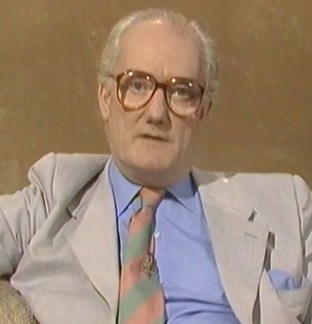
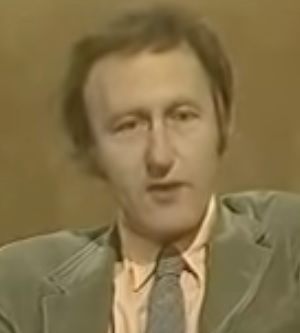
布莱恩·马基 迈尔斯·伯恩耶特
EDITED TRANSCRIPT · 依据现场录音编译整理,可划线生成便签
编者按:一九八七年,英国广播公司推出布莱恩·马基主持的哲学对谈系列,本篇是其中论苏格拉底与柏拉图的一集。对谈另一方是迈尔斯·伯尼特,时任剑桥大学劳伦斯古代哲学讲席教授,后为牛津万灵学院高级研究员,以研究《泰阿泰德篇》著称。两位谈话人从前苏格拉底哲人一路谈到柏拉图晚年的自我批判,涉及诘问法、学习即回忆、型相论、《理想国》的结构、《蒂迈欧》的科学纲领,以及柏拉图主义何以在亚里士多德主义衰亡之后仍然存活。本文依据现场录音编译整理。

从前苏格拉底说起

马基: 任何想要讲述西方哲学史的尝试,都必须从古希腊人讲起。西方最早的哲学家出自他们,最伟大的一批哲学家也出自他们。其中名字最为人熟知的,大概是死于公元前三九九年的苏格拉底。但在他之前,希腊已经有好几位出类拔萃的哲学家,有些人的名字同样广为流传,比如毕达哥拉斯,比如赫拉克利特。还有另一些人,分量与他们不相上下。最早的一位是泰勒斯,活跃在公元前六世纪。

马基: 如果说这些前苏格拉底哲学家有一个共同的关切,那就是想找到某些普遍的原理,用来解释整个自然界。用今天的话说,他们所做的事情,一半是我们所谓的科学,一半是我们所谓的哲学。苏格拉底则是自觉地反叛这一传统。他主张,我们最需要弄明白的不是自然如何运作,而是我们自己应当如何生活,因此首先要考虑的是道德问题。

马基: 苏格拉底本人不曾写下任何东西,他的全部教学都靠口头进行。而前苏格拉底哲学家的著作,也没有一部直接传到我们手里。所以,凡是我到此为止提到的哲学家,我们对他们的了解都是二手的,来自别人的记述,尽管这些记述里也包括一些相当长的概述和大量直接引文。第一位留下了我们今天仍能完整拥有的著作的哲学家,是柏拉图。他是苏格拉底的学生,事实上,我们关于苏格拉底的知识,大部分正来自柏拉图的作品。

马基: 不过就其自身而言,柏拉图无疑是有史以来最伟大的哲学家之一,有人干脆认为他就是最伟大的那一位。所以,如果我们必须在这个本来连绵不断的故事里挑一个多少带点任意性的起点,那么从许多方面看,公元前三九九年都是个好起点:苏格拉底之死,以及随之而来的柏拉图的写作。苏格拉底死时,柏拉图约三十一岁,他一直活到八十一岁。在这半个世纪里,他在雅典创办了著名的学园(Academy),那是我们今天所谓大学的雏形;他也写下了自己的全部作品,其中几乎每一部都采取对话的形式,不同的论点由不同的人物说出,而其中总有一位是苏格拉底。

马基: 这些对话录大多(虽非全部)以对话中某位与苏格拉底交谈者的名字命名。于是我们有了《斐多篇》《拉凯斯篇》《游叙弗伦篇》《泰阿泰德篇》《巴门尼德篇》《蒂迈欧篇》等等。这样的作品有二十多部,有的二十页,有的八十页,还有两三部长达三百页。其中最有名的大概是《理想国》和《会饮篇》。今天,它们大多都能买到平装本译本。最出色的几部,不只被看作哲学著作,也被看作文学作品,而且是伟大的文学作品。柏拉图既是思想家,也是艺术家,很多人认为他的散文是有史以来最好的希腊文散文。

马基: 今天与我对谈的,是英语世界公认的柏拉图专家之一,剑桥大学古代哲学教授迈尔斯·伯尼特。伯尼特教授,我知道您认为,柏拉图作为一位有创造力的哲学家,其生涯是被苏格拉底之死推动起来的。这是怎么回事?

苏格拉底之死的余波

伯尼特: 我想,公元前三九九年苏格拉底之死,对许多人来说必定是一次创伤。多年来,苏格拉底一直是雅典城里一个令人着迷、无法忽视的人物,有人极爱他,也有人极恨他,他甚至被搬上喜剧舞台,被人挖苦。然后,这个熟悉的身影忽然就不在了。而且他之所以不在,是因为他被以不敬神和败坏青年的罪名判处了死刑。这一点想必最令人难以承受。他有过许多追随者,其中一些人,包括柏拉图,开始写作苏格拉底对话,也就是以苏格拉底为主角的哲学谈话。那情形想必像是一片声音的合唱,在对雅典人说:看,他并没有走,他还在这里,还在追问那些叫人难堪的问题,还在用论证把人绊倒。当然,他们同时也是在为他的名誉辩护,要证明他是被冤枉的:他是青年的伟大教育者,不是伟大的败坏者。

马基: 但苏格拉底之死对柏拉图而言,不只是一个起跳板,对吗?在某种意义上,柏拉图的整个思想面貌都可以参照苏格拉底来解释,是不是?

伯尼特: 我想是可以的。对柏拉图来说,让苏格拉底的精神活下去,意味着继续按苏格拉底的方式做哲学。于是我们看到一组早期对话,其中他基本上是在呈现苏格拉底讨论他所关心的那类问题,主要是道德问题。但既然按苏格拉底的方式做哲学,就意味着真正地进行哲学思考,这个过程便一步一步、不可避免地把柏拉图带向他自己的想法,带向许许多多别的领域。于是苏格拉底这个形象也在演变:从早期对话里那个像牛虻一样叮人的提问者,渐渐变成中期对话(《美诺篇》《会饮篇》《斐多篇》《理想国》)里那个阐述政治理论、形而上学理论的人。

马basi:

马基: 我想也可以这么说:在早期对话里,柏拉图处理的是苏格拉底感兴趣的题目,而且用苏格拉底的方式处理;随着岁月推移,他被自己的思想惯性带着走,开始处理他柏拉图自己感兴趣的题目,并且用一种不同的方式来处理。

伯尼特: 我想这是对的。只要他还能有几分道理地把某个想法呈现为苏格拉底思想的自然生长,他就把它放进苏格拉底口中。而且我认为极其重要的一点是,他所呈现的苏格拉底、他就苏格拉底提出的那个历史断言,是这样的:这是一个自己思考、并且教别人自己思考的人。所以,如果你要做苏格拉底的追随者,那就意味着你要自己思考,必要时甚至要偏离苏格拉底划定的观点和领域。

诘问法与无定论

马基: 这些早期对话里,苏格拉底处理的是道德问题,它们都有一个共同的模式,对吗?几乎每一篇里发生的事情都是:苏格拉底与某位对话者交谈,那人自以为知道某个常用词的意思,比如友爱、勇敢、虔敬之类;而苏格拉底仅仅通过盘问他、质询他,通过后来被称为苏格拉底式提问的那套办法,就让这个人(顺带也让旁观者)明白,他们对这个自以为烂熟于心的概念,其实根本没有清楚的把握。这个过程本身,在此后的哲学里一直有着极大的重要性,是不是?

伯尼特: 不只是有过重要性,这些作品至今仍被广泛用来教哲学,用来把哲学介绍给想要了解它的人。你从一个熟悉而重要的概念入手,那总是一个在我们生活中举足轻重的概念。你让人们意识到,这个概念里其实有问题。他们开始思考,给出一个答案。苏格拉底指出这个答案的不足。最后你并没有得到一个确定的答案,但你对问题的把握比先前好得多。而你,无论是二十世纪的读者还是古代的读者,都会被卷进这个问题里,既想得到答案,又觉得自己或许能出一份力。

马基: 我忍不住想,两千多年过去了,我们仍然在为美、勇敢、友爱这类词的含义发愁,仍然在琢磨这些东西究竟由什么构成。这么长时间过去,我们究竟有没有前进?答案恐怕只能是既有又没有吧。

伯尼特: 我想柏拉图会非常坚决地说,即便他知道答案,他告诉了我们,对我们也没有好处。这类问题的性质就是如此:你必须自己去想;一个答案若不是经由你自己的思考得来,就一文不值。这也正是这些对话作为把人引入哲学的工具,为什么如此成功。

两组潜藏的学说

马基: 在我们暂时还限定讨论的这些早期对话里,苏格拉底反复说,他自己没有任何正面的学说可教,他所做的不过是向人提问。我总觉得他这个说法有点言不由衷。在我看来,这些对话的表层之下,其实躺着一些没有明说的学说。您同意吗?

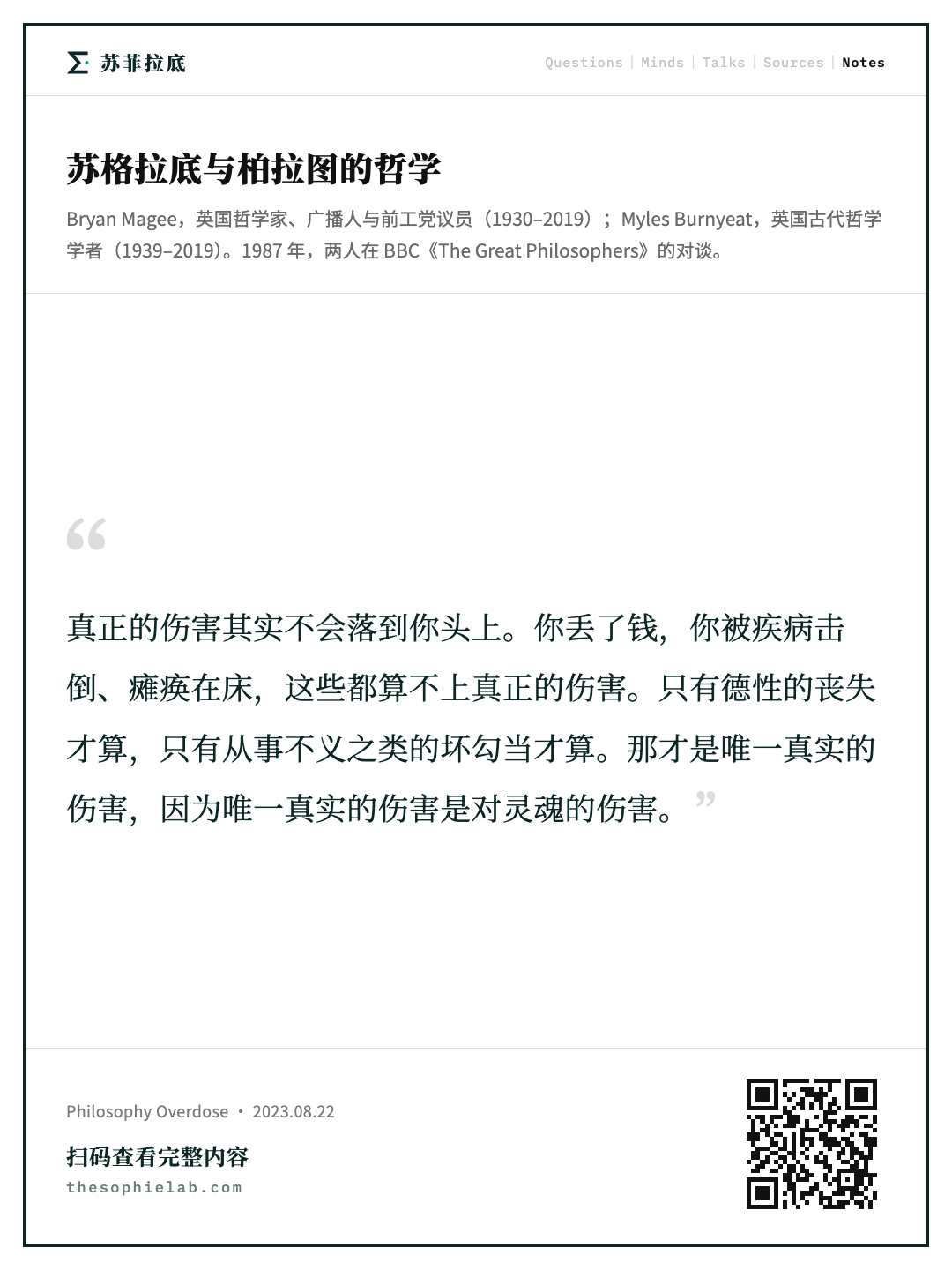
伯尼特: 确实有一些学说浮现出来,虽然不算多。有一组想法出现在《申辩篇》里,比如他说,对一个好人来说,无论生前还是死后,都不会有恶降临;它也出现在《高尔吉亚篇》里,他在那里长篇论证,说不义伤害的是作恶者自己,而正义使行义者获益。这个想法是:真正的伤害其实不会落到你头上。你丢了钱,你被疾病击倒、瘫痪在床,这些都算不上真正的伤害。只有德性的丧失才算,只有从事不义之类的坏勾当才算。那才是唯一真实的伤害,因为唯一真实的伤害是对灵魂的伤害。这一组想法,苏格拉底说得非常斩截,有时甚至声称自己对此有知识;这也是柏拉图从未背弃苏格拉底的一组想法。他始终确信,不义伤害作恶者、正义使行义者获益,这个命题是真的。

马基: 也就是说,只要你的灵魂完好无损,世俗的不幸就不会给你造成任何真正深刻的伤害。

伯尼特: 正是如此。另外还有一组想法,苏格拉底并不宣称对之有知识,而柏拉图最终要背弃它。那就是概括为一句话的那一组:德性即知识。在这些对话里,当有人被问到什么是勇敢、什么是友爱、什么是正义,讨论进行到某个地步,总会浮现出一个念头:这种德性,勇敢也好虔敬也好,应当被看作某种知识。

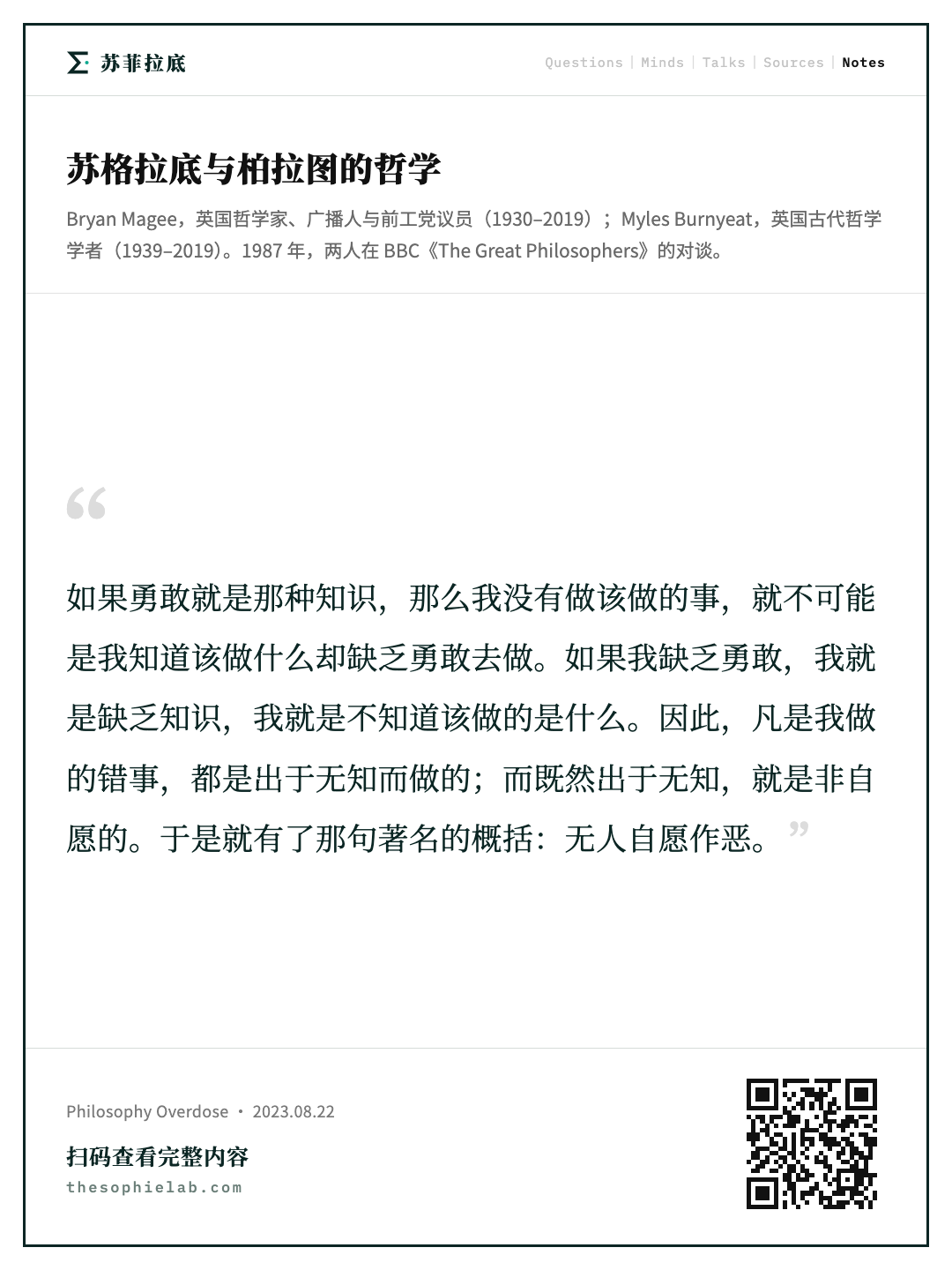
伯尼特: 这个说法和前一组想法一样强硬,一样违反常理。因为常识(当时的常识和今天的常识一样)通常会说:有智慧、知道在特定处境下什么是最该做的事,是一回事;而你还需要另一样东西,即在事情艰难时把它做出来的勇敢,或者在有更轻松的选择时抵御诱惑的节制,这是另一回事。智慧是一种德性,是我们在一个人身上欣赏的一种品质,勇敢是另一种;一个人可能有其一而无其二,或者两者各具不同程度。可是,如果勇敢就是那种知识,这种对照就根本无从谈起。如果我没有做该做的事,那就不可能是我知道该做什么却缺乏勇敢去做。如果我缺乏勇敢,我就是缺乏知识,我就是不知道该做的是什么。因此,凡是我做的错事,都是出于无知而做的,因为我并不知道那不是最好的选择;而既然出于无知,就是非自愿的。于是就有了那句著名的概括:无人自愿作恶。

作者的立场之谜

马基: 柏拉图始终采用的这种对话体,是不是引出了两个相当重要、其实又本可以避免的问题?第一,摆在我们面前的这些观点,有多少属于历史上的苏格拉底,又有多少属于柏拉图创造出来的一个虚构人物?毕竟所有这些对话都写于苏格拉底死后。第二个问题也许与此相关:作者本人的观点是什么?既然全是对话,一切意见都由别的人物说出,我们有时便不免觉得,不太拿得准柏拉图自己究竟怎么想。

伯尼特: 我认为,这个问题在一种意义上值得我们操心,在另一种意义上则不必。不必操心的那一面在于:柏拉图笔下的苏格拉底形象本身就提出了一个主张,即这是一个自己思考的人,一旦他认为某个长期珍视的结论是错的,就会把它推翻;而且他也教别人这样做。所以,如果柏拉图后来认为德性不止于知识(尽管知识仍是其中最重要的因素),而他确实变成了这样想,那么抛弃德性即知识的学说、提出一个自己的更好看法,恰恰是合乎苏格拉底精神的。

伯尼特: 硬币的另一面当然是:当《理想国》里的苏格拉底说出与《普罗塔戈拉篇》里的苏格拉底不相容的话时,我们注意到这一点极其重要。要看出我们得到的是一种什么样的看法,它如何与《理想国》其余的关切相连,如何造就一幅复杂得多的道德教育图景,又如何使一种全新的政治理想国构想成为可能。重要的是探究和求索,但那必须是带着理解的探究:明白我们从哪里出发、走到了哪里。

马基: 换句话说,既然我们的假定、信念等等永远向质疑敞开,那么加了引号的所谓「结论」就没有什么特殊地位。它们本身不过是通往进一步探究的驿站。

伯尼特: 我想这正是柏拉图深信不疑的。

马基: 而他也是在用自己的写作实践向我们演示这一点。

伯尼特: 正是。而且我想他会说,这就是让苏格拉底的精神活下去的方式:永无止境的追问。

学习即回忆

马基: 人们习惯把柏拉图的作品分成三个时期,早期、中期、晚期。这在作家甚至艺术家身上是常有的事。到目前为止,我们的讨论一直限于早期对话。当我们转到中期对话,就会看到柏拉图第一次开始提出他自己的正面主张,不是苏格拉底的,而是柏拉图自己的想法,并且为这些想法辩护。您认为柏拉图最重要的正面学说是哪几条?

伯尼特: 我想必须首先挑出两条:型相论(theory of forms),以及学习即回忆的学说,也就是认为学会一件事,其实是从你心灵的深处重新取回你出生之前就已拥有的知识。

马基: 我们先谈后面这一条。我想很多人初次听到会觉得,说我们生下来就知道一些东西,未免有点离奇。但与此非常接近的想法,在西方文化里一直存在。观念论哲学家相信有天赋知识或天赋观念。我想大多数宗教也都相信类似的东西。甚至像乔姆斯基这样杰出的当代思想家,也认为人生来就有一整套语法编入心中。那么柏拉图这一信念的版本是什么?

伯尼特: 柏拉图的版本是:这种知识属于灵魂的本质,是灵魂在你出生之前就已具有的,因为他在这一时期相信灵魂在肉身化之前就已存在。我认为,要理解这个理论,必须回到早期那些苏格拉底式的讨论去。你看其中任何一篇:有人被要求给出一个定义,比方说勇敢的定义。被问的那位拉凯斯说:勇敢就是坚忍。

伯尼特: 苏格拉底于是又问了他几个问题,每次别人给他一个定义,他都这么做。他问:勇敢是不是无一例外都是高尚可敬的品质?拉凯斯说:是。接着苏格拉底带他看了一连串坚忍的例子,在那些例子里坚忍一点也不可敬,也许只是有勇无谋,只是自负逞强;也可能在道德上是中性的,比如一个投机商不断投钱进去,忍受着亏损,因为他知道最后能赚一笔。既然坚忍可以是道德中性的,甚至是坏的,而勇敢不是,勇敢永远是好的,那么勇敢就不可能是坚忍。

伯尼特: 这是苏格拉底式讨论的典型模式。从逻辑上说,实际发生的事情只是:拉凯斯被证明他的诸信念彼此不一致。把他所有的回答放在一起,它们不可能都对,因为它们互相矛盾。可是苏格拉底总是把局面呈现为:那个定义,即勇敢是坚忍,已经被驳倒了。也就是说,他在实际操作中把拉凯斯后来给出的那些次要回答当成真的,或者至少当成比那个定义更接近真理的,因而可以拿来当作驳倒定义的依据,并且宣布该被舍弃的是那个定义。

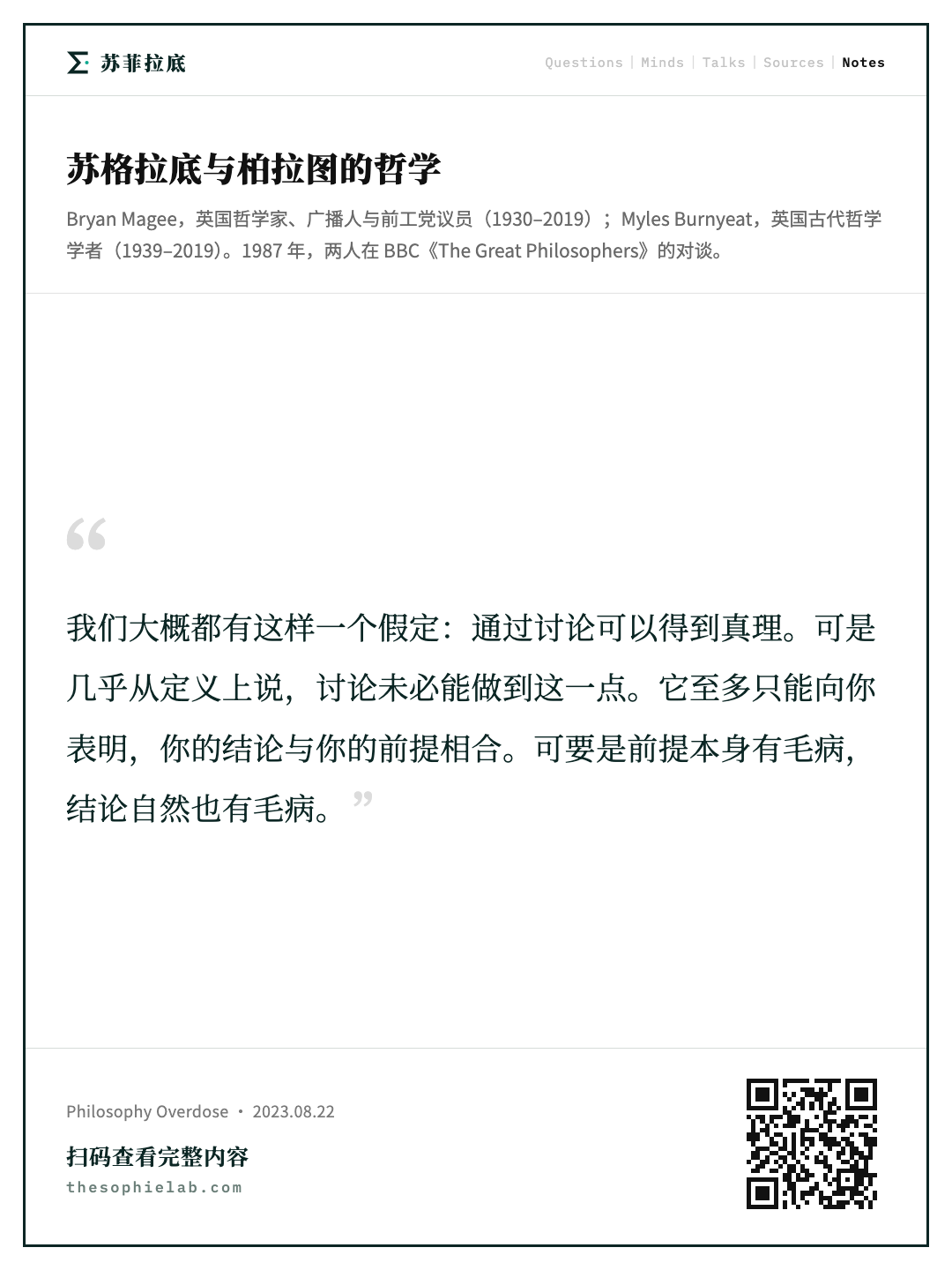
马基: 我想在这里打断一下,因为我觉得您说到了一件对我们今天所有人都极重要的事。我们大概都有这样一个假定:通过讨论可以得到真理。可是几乎从定义上说,讨论未必能做到这一点。它至多只能向你表明,你的结论与你的前提相合。可要是前提本身有毛病,结论自然也有毛病。

伯尼特: 我们对这个想法非常执着。可你若细想,它其实很难辩护。苏格拉底并不试图为它辩护,他只是这么做,然后说:我们现在把这个定义驳倒了。但如果非要为他所做的事给出一套理论,那就得说出我刚才说的、您刚才也已暗示的那种话:我们每个人心里都已具备使真战胜假的手段。而这恰恰就是柏拉图在《美诺篇》里所做的。他提出了一套关于苏格拉底式讨论、或者说哲学讨论的理论,主张我们心中潜藏着对这些问题的正确答案:什么是勇敢,什么是正义,如此等等。

马基: 而那种埋在深处、不能直接取用的知识,正是使我们能够击倒一切错误答案、并证明它们错了的东西。

伯尼特: 那种知识在讨论的过程中一点一点地浮现出来,比如拉凯斯说的这一句,被用来表明他说的另一句必定是假的。

型相论:普遍与特殊

马基: 我知道在您看来,您刚才展开的这个学说,与柏拉图最有名的学说(型相论)的根据直接相关。这个学说在整部哲学史上恐怕是他的哲学中影响最大的部分。事实上,「柏拉图主义」这个词在历史上几乎就是指它。您能给我们讲讲吗?

伯尼特: 请记住,苏格拉底的这些讨论全都围绕一个定义问题:勇敢的定义是什么,美的定义是什么,正义的定义是什么。如果我们心中潜藏着这些问题的答案的知识,而且我们拥有这种知识是独立于、并且先于我们对所居世界的经验的,独立于我们使用感官、四处走动的经验,我们的知识先于它、独立于它,那么我们所知道的东西,也就是正义、美、勇敢本身,就必定同样独立于并且先于我们此刻置身其中的这个经验世界。

伯尼特: 这个论点正是型相论的根本主张:正义、美之类的东西,独立于并且先于一切正义的行为、正义的人,先于一切美的事物、雕像、器物,凡你能找到的都算。美和正义自己存在着,与它们分离。这就是型相论。

马基: 这个理论说另有一个世界不同于此世,一个理想的世界,它不是这个世界,可是赋予这个世界价值与意义的一切都在其中存在。它对我们整个文化的影响之大,简直无法估量,是不是?

伯尼特: 是的。比如它对基督教的影响就极其巨大。

马基: 我现在不想岔到那上面去,我想我们该守住哲学。但那只是它巨大影响的一例。

伯尼特: 不过我想,使用「型相的世界」或者「另一个世界」这类说法时,应当小心。柏拉图确实这样说,但他心里的对照并不是人们可能以为的那种对照,即一堆个别事物与另一堆完全相似、只是更完美更抽象、位于别处某个天国的个别事物之间的对照。他的对照是普遍与特殊之间的对照。什么是正义、什么是美,这些是普遍的问题,不是关于此时此地的问题,对照就在这里。

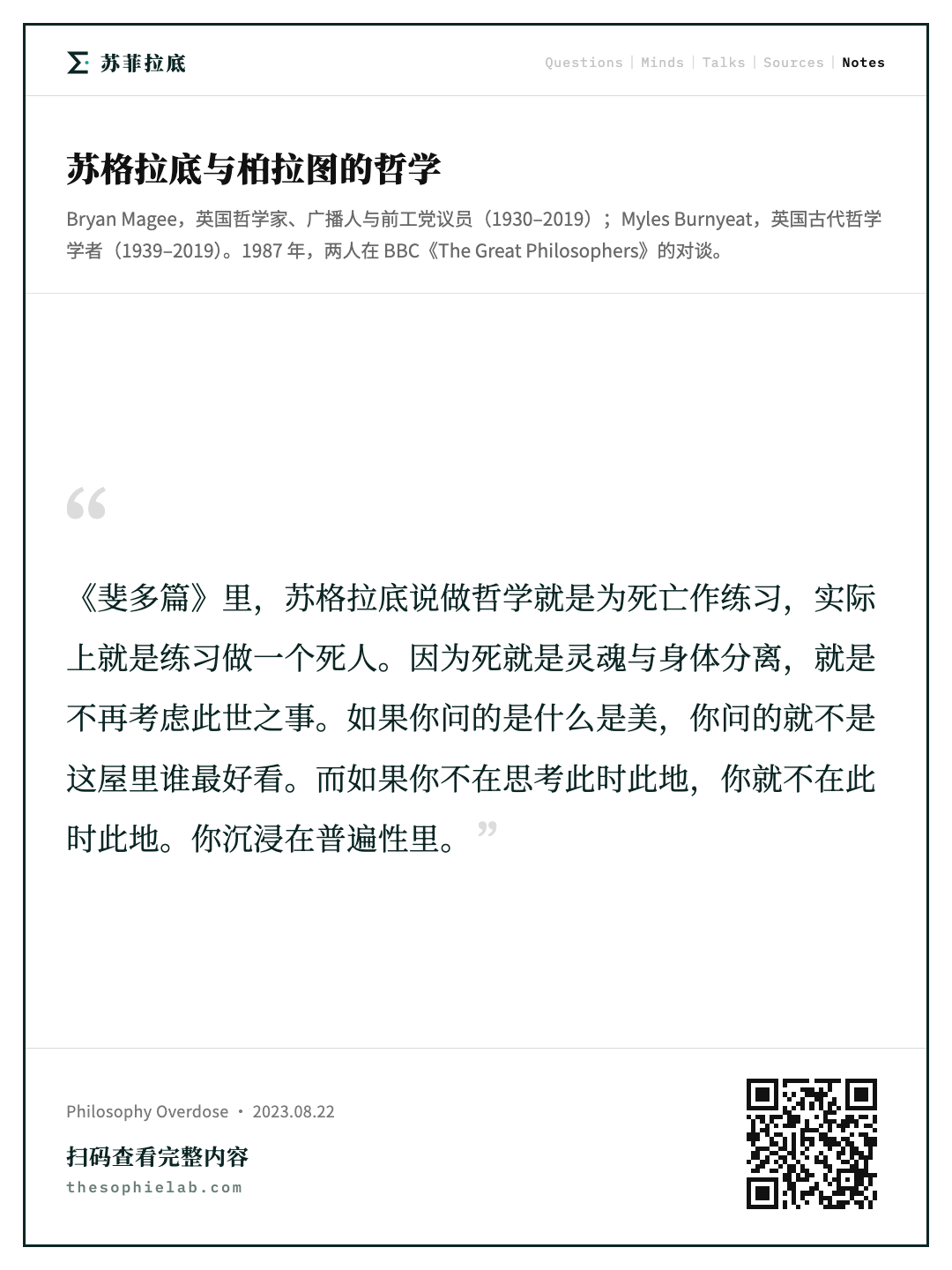
伯尼特: 《斐多篇》里有一处,苏格拉底说做哲学就是为死亡作练习,实际上就是练习做一个死人。为什么呢?因为死就是灵魂与身体分离,就是不再考虑此世之事。而当你做哲学时,你正在尽你所能地把灵魂从身体分离出来,因为你思考的不是此时此地。如果你问的是什么是正义,任何地方、任何时候的正义,正义自身,你问的就不是谁在昨天、在此刻亏待了我。如果你问的是什么是美,你问的就不是这屋里谁最好看。而如果你不在思考此时此地,那么在柏拉图所关心的那个意义上,你就不在此时此地。你在你心思所在之处,这并不是因为你身处别的某个更好的地点,而是因为你根本就不在那种意义上的地点之中。你沉浸在普遍性里。

马基: 所以「型相的世界」这个说法可以用,前提是要限定它的意思,即那是不变的普遍者所在的领域。

伯尼特: 是的。

马基: 这么说来,「世界」这个词其实是误导人的。我们不能把它想成一个地方,某些精神性的东西在那里存续。

伯尼特: 正是如此。

对话录的文学成就

马基: 我们现在谈的这些中期对话,我特别想到《美诺篇》《斐多篇》《理想国》《会饮篇》《斐德罗篇》,都是柏拉图在能力的巅峰期写下的,对吗?我想这里正好可以停一停,谈谈它们的文学与审美品质。为什么这些对话被视为,而且一向被视为最高级的文学艺术作品?

伯尼特: 因为它们太有生气了。有不少哲学家尝试过写对话,古人和今人都有,色诺芬、西塞罗、奥古斯丁、贝克莱、休谟。可我刚才提到的这些人里,唯一勉强接近柏拉图的是休谟。我想这是因为,对休谟来说和对柏拉图一样,哲学思考的过程至少与答案同样重要。读色诺芬或贝克莱时,你太清楚了:你面对的是一个在意答案的人,而不是在意通往答案那段旅程的人。

伯尼特: 至于柏拉图,还得加上他对语言惊人的驾驭力,无论是高远瑰丽的描写,还是机锋往来的对答、玩笑、意象。他极其擅长把最艰难的思想说得澄澈见底。这样的话可以一直说下去。归根到底,他既是哲学天才,也是艺术天才。

《理想国》的整体

马基: 您是否同意传统的看法,认为他的代表作是《理想国》?

伯尼特: 我同意。

马基: 为什么?

伯尼特: 我想是因为,柏拉图相信每一个问题都与其他一切问题相连,而这个信念在《理想国》里比在别处都兑现得更充分。探究实在不可能停下来,即便是眼下的一个结论,也会引出下一个问题。你从一个直截了当的问题开始:什么是正义?很典型的苏格拉底式问题。它随即变成另一个问题:正义对拥有它的人有益吗?苏格拉底着手要证明的,也就是整部《理想国》真正的任务,就是正义对拥有它的人有益,而且如果你想幸福,它是你最需要的东西;反之,不义之人是一切生灵中最悲惨的。

伯尼特: 但为了做到这一点,结果他不得不给出一套人性理论。他把灵魂分成三个部分,而正是在这里,他背弃了苏格拉底德性即知识的论点。德性原来牵涉的不止是知识,而是知识必须处于支配地位。有了知识可以、并且应当支配非理性因素这个想法,另一个此前无从设想的想法也就随之出现:一个由知识支配的社会。于是我们得到了一整套政治理论,一种关于社会生活的更好的新方式。

伯尼特: 而所有这些对知识之支配地位的强调,又引出一个问题:什么知识?知识究竟是什么?它为什么比意见更好?于是你有了一套知识论。哲学家为了统治我们其余的人所需要的是什么知识,这个问题又变成对各门科学的探究。书中有大量关于数学的内容,还展开了一整套关于如实理解我们所居世界的构想,其用意是支撑这样一个主张:对世界如其所是的这种理解,才应当在个人和社会两个层面上掌管我们。这一切,都是从「什么是正义」这一个问题里长出来的。

伯尼特: 而探究直到死亡也没有终止,全书结尾的厄尔神话给出了一幅来世的图景。

马基: 这本书太丰富了,我想我们没法再深入追索其中的某一条线索。我只能希望,听了这场讨论的人里,会有一些人因此动念,自己去把它找来读一读。

晚期与自我批判

马基: 我想我们现在该转到柏拉图的晚期对话了。从中期到晚期,作品的性格又一次发生了变化。这些对话忽然变得不那么富于文学性、戏剧性和色彩,而更像我们所谓的学院式或分析式的东西。这是为什么?

伯尼特: 依我看,它们其实并没有变得不那么有戏剧性。发生的事情是:从前用在刻画讨论者其人身上的那些反讽与意象的功夫,现在全都转到了思想和论证本身上面。而且这些思想和论证,往往正是我们从柏拉图自己早先的作品,比如《理想国》或《斐多篇》里熟悉的东西。

伯尼特: 柏拉图有一点非常了不起,他也许是历史上第一位能做到这件事的作者:他与读者建立起一种关系,以至于在写一部作品时,他可以理所当然地假定读者读过他从前的作品。他可以出其不意,可以用典,可以借此制造回响。而他用这种关系所做的最主要的事情,就是对自己早先的思想进行一场公开的自我审查。他倚赖我们这些读者知道那些思想是什么,同时又仿佛在说:别对《斐多篇》和《理想国》太热心了。那些当然是很漂亮的东西,我知道。但这些所谓的真理,如果我们无法在批评面前守住它们,对你对我都没有用处。何况它们也许根本不是真理,也许全都错了。那么,我们就挑几条出来,让它们经受真正严厉的分析性批评。

马基: 如果非要从这些晚期对话里挑出一篇特别加以提及,您会选哪一篇?

伯尼特: 首要的例子是《巴门尼德篇》,在那里局面翻转,轮到苏格拉底挨问了。苏格拉底提出型相论,而且是他在《斐多篇》里陈述过的那个版本,明白无误就是《斐多篇》的版本,还有若干措辞上的呼应,柏拉图显然指望读者接住这些线索,对自己说:天哪,《斐多篇》里的那个苏格拉底,现在自己成了被提问的一方。而在这篇对话里与苏格拉底交谈的老巴门尼德,提出了一连串针对型相论的反驳与批评,自亚里士多德以下,许多哲学家都认为这些批评相当致命。柏拉图不告诉我们答案。他把批评摆出来,让你自己去判断它们是否公道;如果公道,你又该拿型相论怎么办。

《蒂迈欧》的数学秩序

马基: 还有一篇对话,有人认为属于晚期,有人认为属于中期,这一点并不要紧。它与其余诸篇都不同,那就是《蒂迈欧篇》。一半是因为它所含的宇宙论和科学多过哲学,但我想主要还是因为它包含一个极富诗意的创世神话,其实与我们都熟悉的《创世记》里的那一个并非全不相似。柏拉图为什么要这样写?我这样问,心里想的是这个问题:您认为他是不是照字面相信这个故事,就像我们大概只能假定古代希伯来人照字面相信《创世记》那样?

伯尼特: 我本人认为他并不照字面相信。这个问题在古代就有争议。但柏拉图最亲近的一批同侪持这样的看法:柏拉图讲述神圣工匠把秩序加于混沌之上的故事,意在用一种生动的方式呈现他对整个宇宙之基本构成的分析。他要把整个宇宙看作秩序加于无序之上的产物,尤其是数学秩序加于无序之上的产物。这当然与《创世记》大不相同。这位神圣工匠所体现的,首先是把数学的理智安置在广大世界之中。

马基: 所以这是用诗的方式解释世界的可理解性(intelligibility),而这从最早的年代直到今天,一直是个谜。

伯尼特: 正是。当然,像「整个宇宙是把秩序加于无序之上的产物」这样一个笼统的命题,无论就其总体还是就其庞杂无边的细节而言,都是没法证明的。柏拉图对此非常清楚,我想这是他把它作为神话提出来的又一个理由。但这是一个神话,同时也是他极其认真对待的一项事业的指导性灵感。

伯尼特: 那是一项研究计划,他把当时所有第一流的数学家都招进了学园来参与。数理天文学、数理和声学上的每一项推进,甚至一种把疾病与健康说成是身体各构成元素之间比例问题的医学理论,每一步这样的进展,都进一步印证了柏拉图深切在意的东西:数学的规则性、和谐与比例,才是解释事物的东西;而这些数学的和谐与比例,在柏拉图看来正是善与美的首要范例。所以说到底,这是一项科学研究计划的构想,它要表明:善与美是广大世界中最根本的解释因素。

马基: 您现在说的这些,让我想问它和《理想国》如何衔接。因为您刚才谈《理想国》时强调的一点是,那本书在某种意义上已经是一套完整的哲学。那么柏拉图在《蒂迈欧篇》里所说的,如何嵌进这套看似已经完整的哲学?

伯尼特: 我想它们是严丝合缝的。《理想国》里给出的是一份纲要,一份关于如何以科学的方式、首先是以数学化的科学方式理解自然的纲领;而柏拉图在《蒂迈欧篇》里开始着手实行它,或者说完成他自己的那一份。而且事实上,在很长的时间里,人们要看柏拉图哲学的陈述,去读的正是《蒂迈欧篇》。把《理想国》当作柏拉图的必读之作,其实是比较晚近的事。长久以来是《蒂迈欧篇》。

马基: 也就是说,《蒂迈欧篇》里那些宇宙论和科学,是把《理想国》里提出的种种可能性付诸实行。

伯尼特: 是的。而且《蒂迈欧篇》在开篇的戏剧安排上,就把自己呈现为《理想国》那场讨论在某种意义上的延续。更要紧的是,我所说的这项研究计划,即《理想国》里宣告的天文学该怎么做、数理和声学该怎么做,后来真的被做出来了。而在那个学园里的研究计划背后,正是希腊数理科学许多最伟大成就的起点,一直延伸到托勒密的天文学。托勒密的天文学,就是柏拉图召集到学园里的那批第一流数学家所做的天文学的最终后裔。它要向我们展示一个以数学秩序为主宰原则的世界,而这一原则必须在你的科学中占据最重要的位置。既然数学秩序对柏拉图而言是善与美的表达,那么这些向我们展示世界之客观实情的科学,就同时是关于价值的科学。

伯尼特: 而这也就说明了,《理想国》中那些形而上学的方面,即哲学家们要学的那种知识,何以能同时成为一种全新的激进政治的基础。因为哲学家在出来统治我们其余的人之前所学的东西,既是关于事实的科学,也是关于价值的科学。

《泰阿泰德》论知识

马基: 晚期对话里还有一篇,是您本人在学界以精研著称的,那就是《泰阿泰德篇》。您为什么专攻这一篇?

伯尼特: 因为我觉得它令人兴奋不尽,而且我从未探到它的底。每次回到它那里,似乎总还有更多东西可以发现。我想许多哲学家都有这种感受。莱布尼茨翻译过它,贝克莱写过不少关于它的文字,维特根斯坦引用过它。这是一篇历来让别的哲学家受到激发的对话。

马基: 它讲什么?

伯尼特: 问题是:什么是知识。它是早期对话里那种苏格拉底式讨论的一次大规模演练,只是规模更大,气象更宏。书中给出了三个答案:知识是感知;知识是真判断;知识是真判断加上一个说明。每一个答案都以真正苏格拉底的方式被击倒。到最后,我们并没有被告知柏拉图认为知识是什么,可是我们对这个问题、对这个问题的种种牵连,学到了如此之多,以至于我们离开时觉得自己更富有了,而不是更贫乏。

马基: 知识的确切性质究竟为何,至今仍无定论。但我猜,我们目前最接近公认的看法,其实与您刚才所说的相去不远,即知识是感知,是建立在直接经验之上的东西,再加上我们为之提供辩护的能力。

伯尼特: 啊,您现在为这篇对话留给我们的难题提出了一个有意思的解法。那三个答案是分开来逐一被击倒的:苏格拉底驳倒了知识是感知,驳倒了知识是真判断,也驳倒了知识是真判断加说明。而您现在的提议是,也许可以把这三个分立定义中的各种成分以某种方式合到一起,从而得到一个关于知识的定义,并围绕这个定义建立一套知识论。对于这类对话,这正是极其合宜的回应:根据自己从对话里学到的东西,提出一个属于自己的定义。

柏拉图主义为何长存

马基: 我想我们该收束这场讨论了。不过在此之前,我想请教一个关于影响的问题。柏拉图必定是有史以来影响最大的哲学家,至少是最大的两三位之一。您能不能简要说说,这种影响的主要脉络是什么?

伯尼特: 我想重要的是记住,古代世界里有两种与唯物论相对立的哲学。唯物论一方是德谟克利特和伊壁鸠鲁所持的原子学说;反唯物论一方则是柏拉图和亚里士多德,他们都反对这样一种主张,即一切事物,生命、秩序、心灵、文明、艺术、自然,全都可以解释为物质微粒依循运动定律和自身本性而运动的结果。

伯尼特: 亚里士多德主义确实反对这种唯物论,但它把战线推进敌营太深,以至于亚里士多德哲学很难与近代科学事业相调和,而近代科学讲的正是原子、物质微粒的运动之类的东西。事实上我想这并非偶然:近代科学事业启动的方式,恰恰是把统治了整个中世纪的亚里士多德主义扔掉。

伯尼特: 柏拉图主义则容易与近代科学事业相容得多。所以我认为,实际上从文艺复兴以来,柏拉图主义在亚里士多德主义死后仍然活着。因为如果你想说明科学价值与精神价值如何能够调和,如果你想对事物的复杂性有个交代,而唯物论给出的说法又实在太简单、太粗陋,那么这就是一种你可以利用、可以从中汲取影响的哲学。

马基: 而且柏拉图的宇宙论、柏拉图的科学建立在一种本质上是数学的物理学之上,这一点对我们来说带着很强的当代意味,是不是?

伯尼特: 是的。

马基: 非常感谢您,伯尼特教授。

伯尼特: 谢谢。
本期讲者
布莱恩·马基英国哲学家、广播人与前工党议员(1930–2019),以 BBC 哲学访谈系列《Men of Ideas》《The Great Philosophers》闻名,著有《哲学的故事》《一个哲学家的自白》。
迈尔斯·伯恩耶特英国古代哲学学者(1939–2019),时任剑桥大学劳伦斯古代哲学讲席教授,后任牛津万灵学院高级研究员;以《泰阿泰德篇》研究和对苏格拉底方法、古代怀疑论的论著著称。
章节 · 点击跳转视频
0:37 从前苏格拉底到柏拉图的开场 ▶ 正在看
3:57 苏格拉底之死如何催生柏拉图 ▶ 正在看
7:10 早期对话:诘问法与无定论 ▶ 正在看
9:55 苏格拉底的两组隐含学说 ▶ 正在看
13:35 历史苏格拉底与作者立场之谜 ▶ 正在看
16:23 学习即回忆:诘问法的元理论 ▶ 正在看
20:55 型相论:普遍与特殊之别 ▶ 正在看
25:42 文学成就与《理想国》的整体性 ▶ 正在看
29:23 晚期对话:自我批判与《巴门尼德》 ▶ 正在看
32:21 《蒂迈欧》:数学秩序与价值科学 ▶ 正在看
38:29 《泰阿泰德》:知识的三个定义 ▶ 正在看
41:18 柏拉图主义为何延续至今 ▶ 正在看
本期论点
本期回应
1:32
人最需要学习的不是自然如何运作,而是自己应当如何生活 只做澄清哲学应该产出什么?布莱恩·马基
8:49
苏格拉底式盘问的真正收获不是确定的答案,而是对问题更好的把握 只做澄清哲学应该产出什么?迈尔斯·伯恩耶特
9:40
一个答案若不是经由自己思考得来的,对得到它的人就毫无价值 只得到更好的问题不断追问,能问出答案吗?迈尔斯·伯恩耶特
10:11
苏格拉底自称没有正面学说、只负责提问并不坦诚,对话录表面之下潜藏着未曾言明的学说 答案藏在人心里不断追问,能问出答案吗?布莱恩·马基
19:08
苏格拉底式反驳在逻辑上只表明对话者的诸信念彼此不相容,并未证明被驳倒的定义为假 只证明信念不相容不断追问,能问出答案吗?布莱恩·马基
20:27
每个人心中都潜藏着哲学问题的正确答案,因而自身就拥有让真理战胜谬误的手段 答案藏在人心里不断追问,能问出答案吗?迈尔斯·伯恩耶特
31:23
无法为之辩护、抵挡批评的真理,对持有它的人毫无用处 只得到更好的问题不断追问,能问出答案吗?迈尔斯·伯恩耶特
11:58
勇敢、虔敬这类美德都是某种知识,人的一切错事都出于无知,因而没有人自愿作恶 有答案道德问题有没有正确答案?迈尔斯·伯恩耶特
38:14
揭示世界客观本来面目的科学,同时就是关于价值的科学 有答案道德问题有没有正确答案?迈尔斯·伯恩耶特
11:17
唯一真正的伤害是对灵魂的伤害,失去钱财、遭受疾病都算不上真正的伤害 灵魂受损什么才算真正的伤害?迈尔斯·伯恩耶特
22:39
正义、美这些东西独立存在,且先于一切正义的行为与美的事物 真实存在抽象的东西算不算真实存在?迈尔斯·伯恩耶特
24:33
从事哲学就是在练习死亡,因为思考普遍者就是让灵魂脱离此时此地 有不可还原的部分人身上有超出自然的成分吗?迈尔斯·伯恩耶特
其他论点
23:34
把理型说成「另一个世界」是误导的,柏拉图真正要立的是个别与普遍之别 迈尔斯·伯恩耶特
28:05
柏拉图把灵魂分为三部分,就等于背弃了「美德即知识」,因为美德要求知识居主导地位 迈尔斯·伯恩耶特
43:06
柏拉图主义比亚里士多德主义更容易与现代科学事业调和 迈尔斯·伯恩耶特
01从前苏格拉底到柏拉图的开场
0:37
Any attempt to tell the story of Western philosophy must begin with the ancient Greeks, who produced not only the first, but some of the greatest Western philosophers. The one whose name is probably most familiar is Socrates, who died in the year 399 BC. But there were several outstanding Greek philosophers before him, some of whose names are also widely known. For example, Pythagoras and Heraclitus. And there were others, too, of comparable caliber. The first one of all being Thales, who flourished in the 6th century BC.
任何讲述西方哲学史的尝试,都必须从古希腊人开始。他们不仅产生了最早的西方哲学家,也产生了其中最伟大的一些。名字最为人熟知的大概是苏格拉底,他死于公元前399年。但在他之前还有好几位杰出的希腊哲学家,其中一些人的名字也广为人知,比如毕达哥拉斯和赫拉克利特。还有另一些人,水平也不相上下。最早的一位是泰勒斯,他活跃于公元前6世纪。
便签引用
1:10
If all these pre-Socratic philosophers can be said to have had one common concern, it was an attempt to find universal principles which would explain the whole of nature. In today's terms, they were as much concerned with what we would call science as with what we would call philosophy. Now, Socrates was in conscious rebellion against their tradition. He maintained that what we most need to learn is not how nature works, but how we ourselves ought to live, and therefore that we need first and foremost to consider moral questions.
如果说这些前苏格拉底哲学家有一个共同的关切,那就是试图找到能解释整个自然界的普遍原理。用今天的话说,他们既关心我们所谓的科学,也关心我们所谓的哲学。而苏格拉底则是自觉地反叛他们的传统。他主张,我们最需要了解的不是自然如何运作,而是我们自己应当如何生活,因此我们首先要考虑的是道德问题。
便签引用
1:45
Socrates didn't write anything. He did all his teaching by word of mouth, and none of the writings of any of the pre-Socratic philosophers have come down to us directly. So, all that we know of any of the philosophers whose names I've mentioned so far is what has come down to a second hand through the writings of others, though this does include some pretty long summaries and a good many direct quotations. The first philosopher who wrote works which we actually now possess complete was Plato. He was a pupil of Socrates and in fact it's from Plato's writings that most of our knowledge of Socrates derives.
苏格拉底什么都没写。他的全部教学都是口头进行的;而前苏格拉底哲学家的著作也没有一部直接流传到我们手中。所以,我们对前面提到的这些哲学家的了解,全都是通过别人的著作间接得来的——尽管其中确实包含相当长的概述和不少直接引文。第一位留下我们今天能完整拥有的著作的哲学家是柏拉图。他是苏格拉底的学生,事实上,我们关于苏格拉底的大部分知识正是来自柏拉图的著作。
便签引用
2:22
In his own right, however, Plato was beyond any question one of the greatest philosophers of all time, some think the greatest. So, if we have to choose an arbitrary starting point in what is after all a continuous story, then in many ways a good one is the year 399 BC with the death of Socrates and then the subsequent writings of Plato. Plato was about 31 when Socrates died and lived to be 81. During that half century he founded his famous school in Athens, the Academy, which was the prototype of what we call a university, and he produced his writings, nearly all of which take the form of dialogues with different arguments being put in the mouths of different characters, one of whom nearly always is Socrates.
不过,就其自身而言,柏拉图无疑是有史以来最伟大的哲学家之一,有人认为他就是最伟大的那一位。所以,如果我们必须在这个本质上连续的故事里挑一个多少有些任意的起点,那么从很多方面看,一个不错的起点就是公元前399年——苏格拉底之死,以及随后柏拉图的写作。苏格拉底去世时柏拉图大约31岁,而他活到了81岁。在那半个世纪里,他在雅典创办了著名的学园(Academy),那是我们所说的大学的雏形;他也写下了自己的著作,其中几乎全部采用对话的形式,不同的论点由不同的人物说出,而其中一个角色几乎总是苏格拉底。
便签引用
3:11
Most, though not all, of these dialogues are called by the name of one of the people Socrates is talking to in them. Thus, we have the Phaedo, the Laches, the Euthyphro, the Theaetetus, the Parmenides, the Timaeus, and so on. There are more than two dozen of them, some of them 20, some 80, a couple of them 300 pages long. The most famous of all are probably the Republic and the Symposium. But most of them are easily available nowadays in paperback translations. The best are regarded as works of literature, great works of literature, as well as of philosophy. Plato was an artist as well as a thinker, and many people regard his prose as the finest Greek prose ever to have been written by anyone.
这些对话大多数(虽非全部)是以苏格拉底在其中的某位对话者的名字命名的。于是我们有《斐多篇》《拉凯斯篇》《欧绪弗洛篇》《泰阿泰德篇》《巴门尼德篇》《蒂迈欧篇》等等。这样的作品有二十多篇,有的二十页,有的八十页,还有两三篇长达三百页。其中最著名的大概是《理想国》和《会饮篇》。不过如今大多数篇目都很容易买到平装译本。最好的那几篇不仅被视为哲学著作,也被视为文学作品,而且是伟大的文学作品。柏拉图既是思想家也是艺术家,很多人认为他的散文是有史以来最优美的希腊散文。
便签引用
02苏格拉底之死如何催生柏拉图
3:57
With me now is one of the acknowledged experts on Plato in the English-speaking world, the Professor of Ancient Philosophy in the University of Cambridge, Myles Burnyeat. Professor Burnyeat, I know that you regard Plato's career as a creative philosopher as having been somehow launched by Socrates' death. How was that? Well, I think Socrates' death in 399 must have been a traumatic event for a lot of people. Socrates had been this spellbinding presence around in Athens for many, many years, much loved, much hated. He'd been on caricatured on the comic stage.
现在与我一同在座的,是英语世界公认的柏拉图专家之一——剑桥大学古代哲学教授迈尔斯·伯恩耶特。伯恩耶特教授,我知道您认为柏拉图作为一位有创造力的哲学家,其生涯在某种意义上是由苏格拉底之死开启的。这是怎么回事呢?我想,公元前399年苏格拉底之死对很多人来说一定是个创伤性的事件。多年来,苏格拉底一直是雅典城里那个令人着迷的存在,有人极爱他,也有人极恨他。他还被搬上喜剧舞台,遭到讽刺性的丑化。
便签引用
4:37
Then suddenly this familiar figure's not there anymore. And he's not there because I mean, this is the must have been the most traumatic thing. He's been condemned to death on a charge of impiety and corrupting the young. Well, he'd had a lot of followers, and some of them, amongst them Plato, began writing Socratic dialogues. Conversations, philosophical conversations in which Socrates takes the lead. Must have been like a chorus of voices saying to the Athenians, "Look, he's not gone after all. He's still here, still asking those awkward questions, still tripping up with his arguments." And of course, they were also defending his reputation and showing he'd been unjustly condemned. He was the great educator of the young, not the great corrupter.
然后突然之间,这个熟悉的身影不在了。而他之所以不在了——我是说,这一定是最令人震动的地方——是因为他被以不敬神和败坏青年的罪名判处了死刑。他有很多追随者,其中一些人,包括柏拉图,开始写作苏格拉底式的对话:以苏格拉底为主导的哲学对话。这一定像是一片众声合唱,在对雅典人说:“看,他终究没有离开。他还在这儿,还在问那些让人难堪的问题,还在用他的论证把人绊倒。”当然,他们也是在为他的名声辩护,说明他是被不公正地定罪的。他是青年的伟大教育者,而不是伟大的败坏者。
便签引用
5:29
But the death of Socrates wasn't just, so to speak, a launching pad for Plato, was it? It The whole of Plato's outlook can, in one sense, be explained with reference to Socrates, can it not? I think it can. Um the to keep alive the Socratic spirit for Plato meant to go on doing philosophy in the way Socrates had done. To So, what you get is a group of early dialogues in which he is basically showing Socrates discussing the sorts of questions he was interested in, very largely moral questions. But, since to do philosophy in the Socratic way means to do it by thinking philosophically, the process bit by bit and inevitably leads Plato to develop his own ideas in a host of other areas so that Socrates There's a sort of evolution in the picture of Socrates from the gadfly questioner of the early dialogues. He gradually turns into the man who's expounding political theories, metaphysical theories, and so on in the middle period dialogues, Meno, Symposium, Phaedo, and Republic.
但苏格拉底之死对柏拉图来说,不只是所谓的一个起跳板,对吧?柏拉图的整个思想面貌,在某种意义上都可以参照苏格拉底来解释,不是吗?我想是可以的。对柏拉图而言,要让苏格拉底的精神继续活着,就意味着要按苏格拉底的方式继续做哲学。于是你就看到了一组早期对话,他在其中基本上是呈现苏格拉底在讨论他所关心的那类问题,绝大部分是道德问题。但既然以苏格拉底的方式做哲学就意味着要用哲学的方式去思考,这个过程便一点一点地、也不可避免地把柏拉图带向在许多其他领域发展出他自己的思想。于是苏格拉底的形象也发生了某种演变:从早期对话中那个牛虻式的提问者,逐渐变成中期对话——《美诺篇》《会饮篇》《斐多篇》和《理想国》——中阐述政治理论、形而上学理论的人。
便签引用
6:40
And I suppose also one can say that in the early dialogues Plato is dealing with subjects that interested Socrates and dealing with them with with them in Socrates's way and is then carried, so to speak, by his own momentum as the years go by into dealing with subjects that interest him, Plato, and beginning to deal with them in a different way. I think that's right. Wherever he can plausibly present the ideas as the outgrowth of thinking about Socrates's ideas, they get put in the mouth of Socrates.
我想还可以这样说:在早期对话中,柏拉图处理的是苏格拉底感兴趣的主题,而且是用苏格拉底的方式来处理;随着岁月推移,他可以说是被自己的思想惯性带着,去处理他柏拉图自己感兴趣的主题,并开始用一种不同的方式来处理。我想这是对的。凡是能够合理地把某些想法呈现为对苏格拉底思想加以思考的产物之处,这些想法就被安排从苏格拉底口中说出来。
便签引用
03早期对话:诘问法与无定论
7:10
And I think it's very important to that what he the way he presents Socrates the historical claim he makes about him is this is a man who thought for himself and taught others to think for themselves. So, if you want to be a follower of Socrates, that means thinking for yourself and if necessary departing from ideas and areas that Socrates had marked out. Now, these early dialogues, where Socrates is dealing with moral questions, all have a certain common pattern, don't they? I mean, what happens in nearly all of them is that Socrates is talking to some interlocutor uh thinks he knows the meaning of some very familiar term like friendship or courage or piety or something of that kind. And by simply quizzing him, by interrogating him, by submitting him to what's become known as Socratic questioning, Socrates shows this person, and incidentally the onlookers as well, that they don't at all have a clear grasp of this concept that they thought they understood so well. Now, this process has itself been of enormous
而且我认为很重要的一点是,他对苏格拉底的呈现——他关于苏格拉底提出的历史性主张——是:这是一个独立思考、并教别人独立思考的人。所以,如果你想做苏格拉底的追随者,那就意味着独立思考,必要时甚至背离苏格拉底所划定的观点和领域。那么,在这些苏格拉底处理道德问题的早期对话里,都有某种共同的模式,对吧?我是说,几乎所有对话里发生的事情都是:苏格拉底在和某个对话者交谈,那人自以为知道某个非常熟悉的词的含义,比如友谊、勇敢、虔敬之类。而苏格拉底只是通过盘问他、追问他,通过施以后来被称为“苏格拉底式提问”的方式,向这个人——顺带也向旁观者——表明:他们对这个自以为理解得很透彻的概念,其实根本没有清晰的把握。而这个过程本身,此后在哲学中一直
便签引用
8:14
importance in philosophy ever since, hasn't it? Not only has it been, but these very works are still very widely used to teach philosophy and to introduce philosophy to people who want to know something about it. You start with a familiar and important concept. It's always a concept that's important in our life. And you get people to realize that there are problems in that concept. They try to think about it. They produce an answer. Socrates shows the inadequacy of the answer. You end up not with a firm answer, but with a much better grasp of the problem than you had before.
有着巨大的重要性,不是吗?不仅一直如此,而且这些作品至今仍被广泛用来教哲学,用来把哲学引介给想了解一点哲学的人。你从一个熟悉而重要的概念入手——那总是一个在我们生活中很重要的概念。你让人们意识到这个概念里存在问题。他们试着去思考,给出一个答案。苏格拉底则揭示这个答案的不足。最后你得到的不是一个确定的答案,而是对问题远比先前更好的把握。
便签引用
8:57
And you, the reader, 20th century reader or an ancient reader, are left both drawn into the problem and wanting to get the answer and feeling that perhaps you can contribute to it. help reflecting that even after more than 2,000 years, we are still puzzling about the meaning of terms like beauty or courage or friendship. We are still wondering precisely what these things consist of. Have we got any further after all this time? Yes and no must be the answer, mustn't it? Um I think Plato would very be very firmly insistent that even if he did know the answer, if he told us, it wouldn't do us any good. I mean, it's the nature of these questions that they are ones that you have to think about for yourself, and an answer is worth nothing unless it's come through your own thinking. And that's why these dialogues are so successful as instruments for drawing you into philosophy.
而你,作为读者——不管是20世纪的读者还是古代的读者——既被卷入这个问题、渴望得到答案,又觉得也许自己也能为它作出贡献。我不禁想到,即便过了两千多年,我们仍然在为“美”“勇敢”“友谊”这类词的含义而困惑。我们仍在追问这些东西究竟由什么构成。这么久过去了,我们有没有取得进展呢?答案恐怕只能是:既有也没有,对吧?我想柏拉图会非常坚决地强调:即便他知道答案,就算他告诉了我们,对我们也没有好处。我是说,这类问题的本性就在于,它们是你必须自己去思考的问题;一个答案除非出自你自己的思考,否则毫无价值。这也正是这些对话作为把人引入哲学的工具如此成功的原因。
便签引用
04苏格拉底的两组隐含学说
9:55
In those early dialogues that we're still for the moment confining ourselves to, um one thing that Socrates keeps saying is that he has no positive doctrines of his own to teach, that all he's doing is asking people questions. There seems to me something disingenuous about this claim on Socrates's part. I think that in fact there are so to speak unacknowledged doctrines lying under the surface of these dialogues. Would you agree with that? Well, there are some doctrines that emerge, not very many.
在我们眼下仍限于讨论的这些早期对话里,苏格拉底反复说的一件事是:他自己没有任何正面的学说可教,他所做的只是向人提问。在我看来,苏格拉底这个说法有点言不由衷。我认为事实上有一些可以说是未经承认的学说潜伏在这些对话的表层之下。您同意吗?嗯,确实有一些学说浮现出来,虽然不算多。
便签引用
10:30
Um there is a group of ideas which comes out in the Apology, for instance, when he says that to a good man no harm can come either during his life or after his death, and which comes out in the Gorgias, when he argues at great length that injustice harms the doer, and justice benefits the doer. It's the idea that there is no real harm that can come to you. You lose your money, stricken by paralyzed by disease. None of that really counts as harm. Only the loss of your virtue would count it. Only going in for bad practices like injustice. They would be the only real harm, cuz the only real harm is harm to the soul. There's a group of ideas which he's Socrates is very emphatic about, where he sometimes even claims to have knowledge, and it's also a group of ideas where Plato never renegues on Socrates. He remains convinced of the truth of the proposition that injustice harms the doer and justice benefits him.
比如,有一组观念出现在《申辩篇》里——他在那里说,对一个好人来说,无论生前还是死后都不会有任何伤害降临;这组观念也出现在《高尔吉亚篇》里,他在那里长篇论证:不义伤害的是作恶者本人,而正义则有益于行义者本人。这个想法是:没有什么真正的伤害能落到你身上。你失去钱财,你被疾病击倒、瘫痪——这些都算不上真正的伤害。只有德性的丧失才算,只有从事像不义这样的坏行为才算。那才是唯一真正的伤害,因为唯一真正的伤害是对灵魂的伤害。这是苏格拉底非常强调的一组观念,他有时甚至声称对此拥有知识;而且在这组观念上,柏拉图从未背离苏格拉底。他始终确信这个命题是真的:不义伤害作恶者,正义有益于行义者。
便签引用
11:39
And that's provided your soul remains untouched, worldly misfortunes don't do you any harm of any really deep significance. That's right. Yes. There's another group of ideas which Socrates where Socrates does not claim knowledge and where Plato eventually is going to renegue on Socrates. And that's the group of ideas summed up in the statement that virtue is knowledge. In these dialogues, when somebody's asked what's courage, what's friendship, what's justice, sooner or later, as the discussion proceeds, the idea emerges that this virtue, courage or piety, should be regarded as a kind of knowledge.
也就是说,只要你的灵魂未受损害,世俗的不幸就不会对你造成任何真正深刻的伤害。是的,正是如此。还有另一组观念,苏格拉底并不声称对之拥有知识,而柏拉图最终会背离苏格拉底。那就是可以概括为“德性即知识”这句话的那组观念。在这些对话里,当有人被问到什么是勇敢、什么是友谊、什么是正义时,随着讨论推进,迟早会浮现出这样的想法:这种德性——勇敢也好、虔敬也好——应当被看作某种知识。
便签引用
12:20
And that's just as strong and paradoxical a statement as the first group of ideas, because common sense, and I mean common sense then as now, ordinarily says that it's one thing to have the wisdom to know what the best thing to do in a given situation is, but another thing which you also need, the courage to carry it out if it's difficult, or the temperance to resist an easier option instead. Wisdom's one virtue, one quality to admire in a person, courage is another, and a man may have one and not the other or diff- each of them to different degrees.
而这个说法和前一组观念一样强硬、一样悖理。因为常识——我指的是当时和如今同样的常识——通常会说:拥有智慧、知道在特定情境下最该做什么是一回事,但你还需要另一样东西:在事情困难时把它付诸实行的勇敢,或者在有更轻松的选项时加以抵制的节制。智慧是一种德性,是一个人身上值得钦佩的一种品质,勇敢是另一种;一个人可能有其中之一而无另一种,或者两者各自程度不同。
便签引用
12:58
But if courage just is this knowledge, then that kind of contrast can't arise. If I don't do the right thing, it can't be that I knew what I should do, but lacked the courage to carry it out. I just If I lacked the courage, I lacked the knowledge, and I didn't know what the right thing to do was. So, any wrongdoing that I do is done in ignorance because I didn't know it wasn't the best thing to do. And if done in ignorance, done involuntarily. So, no one does wrong willingly is the famous way it's summed up.
但如果勇敢就是这种知识,那么这种对比就不可能出现了。如果我没有做正确的事,那就不可能是我明知该怎么做、却缺乏勇敢去执行。如果我缺乏勇敢,我就是缺乏知识,就是不知道正确的做法是什么。所以,我所做的任何错事都是出于无知,因为我并不知道那不是最好的做法。而既然是出于无知而做,那就是非自愿地做。于是就有了那句著名的概括:没有人自愿作恶。
便签引用
05历史苏格拉底与作者立场之谜
13:35
Doesn't the unvarying dialogue form that Plato writes in give rise to two rather important and also really unnecessary problems? First, to what extent is this the historical Socrates whose views have been put before us? And to what extent is he a kind of fictional character created by Plato because after all all these dialogues were written after Socrates' death. And the other question, perhaps related to that, is what are the author's own views? Because again, since these are all dialogues, it means that all opinions are put into the mouth of other characters. And that sometimes at least leaves us feeling that we're not quite sure what Plato himself actually thinks.
柏拉图始终采用对话体写作,这难道不是引出了两个相当重要、其实也本可避免的问题吗?第一,摆在我们面前的这些观点,在多大程度上属于历史上的苏格拉底?他又在多大程度上是柏拉图创造出来的一个虚构人物?毕竟所有这些对话都写于苏格拉底死后。另一个问题,也许与此相关:作者自己的观点是什么?因为同样地,既然全都是对话,所有意见都是由别的人物说出来的。这至少有时会让我们觉得,不太确定柏拉图本人到底是怎么想的。
便签引用
14:22
Well, I think there's a sense in which we need to worry about this question and in a sense in which we don't. The sense in which we don't is that Plato's portrait of Socrates makes the claim here is a man who thought for himself and would overthrow long-cherished conclusions if it turned out that he thought they were wrong. Uh and he taught others to do the same. So, if Plato comes to think that there is more to virtue than knowledge, though knowledge remains the most important factor, and he does come to think this, then it's only in keeping with the Socratic spirit to throw over the doctrine that virtue is knowledge and produce a better view of his own.
嗯,我认为在某种意义上我们需要为这个问题操心,而在另一种意义上则不必。不必操心的意义在于:柏拉图对苏格拉底的刻画所提出的主张是——这是一个独立思考的人,一旦他认为长期珍视的结论是错的,就会把它们推翻;而且他教别人也这样做。所以,如果柏拉图后来认为德性不止是知识(尽管知识仍是最重要的因素),而他确实后来是这么认为的,那么推翻“德性即知识”的学说、提出他自己更好的看法,恰恰是符合苏格拉底精神的。
便签引用
15:08
The other side of the coin is, of course, it's most important that we notice what's happening when Socrates in the Republic says something incompatible with what Socrates said in the Protagoras, notice that we're getting a a view and how it connects with all the other concerns of the Republic, how it makes a much more complicated picture of moral education, and how it makes possible a new vision of a political ideal society. The important thing is the search and the inquiry, but it's got to be inquiry, search with understanding of where we've got to from where.
硬币的另一面当然是:当《理想国》里的苏格拉底说出与《普罗塔戈拉篇》里的苏格拉底不相容的话时,我们注意到这一点非常重要——要注意我们得到的是一种新的看法,注意它如何与《理想国》的其他所有关切相连,如何构成一幅关于道德教育的复杂得多的图景,又如何使一种关于理想政治社会的新构想成为可能。重要的是探索和追问,但它必须是带着理解的追问和探索:明白我们从哪里出发、走到了哪里。
便签引用
15:41
Yes. In other words, because our assumptions and in beliefs and so on are open to perpetual questioning, conclusions in quotation marks don't have any special status. They're They are themselves staging posts on the road to further inquiries. That's I think what Plato believed very strongly. Yes. And and so he's in a way demonstrating this to us by his practice. Exactly. And I think he would claim that that was what it was to keep the Socratic spirit alive. Yeah. Perpetual question. Mhm. It's usual, isn't it, to divide Plato's output into three periods. Happens so often with writers and even creative artists. It's the early, the middle, and the later.
是的。换句话说,因为我们的假设、信念等等都始终可以被质疑,所以加引号的“结论”并不具有什么特殊地位。它们本身只是通往进一步探究之路上的驿站。我想这正是柏拉图非常坚定地相信的。是的。而且他在某种意义上是用自己的写作实践向我们展示这一点。正是如此。我想他会说,这就是让苏格拉底精神保持活力的方式。是的,永不停止的追问。嗯。人们通常会把柏拉图的著作分为三个时期,对吧?这在作家甚至艺术创作者身上经常发生:早期、中期和晚期。
便签引用
06学习即回忆:诘问法的元理论
16:23
And so far in this discussion, we've been confining ourselves to consideration of the early dialogues. When you move to the middle period Plato dialogues, you find Plato for the first time beginning to put forward positive ideas of his own, not Socrates's, but Plato's own ideas, and to argue for those ideas. Which would you say are the most important of Plato's positive doctrines? I think one has to single out two above all, the theory of forms and the doctrine that learning is recollection. The idea that to learn something is to recover from within your mind's recesses uh knowledge that you had before you were born.
在这场讨论中,我们到目前为止一直把自己限定在早期对话上。当你转向柏拉图中期的对话时,你会发现柏拉图第一次开始提出属于他自己的正面主张——不是苏格拉底的,而是柏拉图自己的观点——并为这些观点论证。您认为柏拉图的正面学说中最重要的是哪些?我想必须首先挑出两个:型相论(理念论)和“学习即回忆”的学说,即认为学习某样东西,就是从你心灵深处重新找回你出生之前就已拥有的知识。
便签引用
17:06
Let me take that one first of the two. I think a lot of people will think when they first hear this that uh we're born knowing things. That might sound a bit bizarre. But at least very closely related ideas to that have been permanent in our Western culture. I mean, idealist philosophers have thought that there was innate knowledge or innate ideas. Most of the religions, I think, believe something of the sort. And we even have eminent contemporary thinkers like Chomsky believing that you're born with a whole grammar programmed into your mind. Now, what was Plato's version of this belief?
让我先谈两者中的这一个。我想很多人第一次听到这个说法时会觉得,说我们生来就知道些东西,听起来有点离奇。但至少与之非常接近的观念在西方文化中一直存在。我是说,唯心论哲学家们认为存在天赋知识或天赋观念。我想大多数宗教也相信某种类似的东西。我们甚至还有像乔姆斯基这样杰出的当代思想家,认为你天生就有一整套语法编入了心智之中。那么,柏拉图版本的这一信念是什么样的?
便签引用
17:41
Plato's version was that this knowledge was part of the essential nature of the soul, which the soul possessed before you were born, because he believes at this period in the soul existing before it's embodied in this world. And I think to understand this theory, um one's got to go back to those early Socratic discussions. Uh if you look at one of these early discussions, somebody is asked for a definition of, let's say, courage. And Laches, who's the person who was asked that, says at one point, "Courage is endurance."
柏拉图的版本是:这种知识是灵魂本质本性的一部分,是灵魂在你出生之前就已拥有的,因为在这一时期他相信灵魂在肉身化于此世之前就已存在。我认为要理解这个理论,得回到那些早期的苏格拉底式讨论。如果你看其中一场早期讨论,有人被要求给出一个定义,比方说“勇敢”的定义。被问到的那个人是拉凯斯,他在某一处说:“勇敢就是坚忍。”
便签引用
18:21
Socrates then asks him some further questions, and he always does this when he's being given a definition. He says, "Is courage invariably a fine and admirable quality?" "Yes," says Laches. And then Socrates takes him through a number of examples of endurance where endurance is not admirable at all, maybe very foolhardy, big-headedness big-headedness, or it could just be morally neutral, as when some a financier keeps on spending money, enduring the losses, because he knows he's going to get a profit at the end. So, if endurance is morally neutral or bad, courage isn't. Courage is always good, then courage can't be endurance.
接着苏格拉底又问了他一些问题——每当有人给他一个定义时,他总是这么做。他问:“勇敢是不是无一例外都是一种美好而可敬的品质?”拉凯斯说:“是的。”然后苏格拉底带他考察了一系列坚忍的例子,在这些例子里坚忍一点也不可敬,也许只是鲁莽逞强、自负自大;也可能在道德上是中性的,比如某个金融家不断投钱、忍受亏损,因为他知道自己最后能赚到利润。所以,如果坚忍在道德上是中性的或是坏的,而勇敢不是——勇敢总是好的——那么勇敢就不可能是坚忍。
便签引用
19:03
That's a typical pattern of Socratic discussion. Logically, all that's actually happened is Laches has been shown that his beliefs are inconsistent. If we take all the answers together, they can't all be right because they contradict each other. But Socrates always presents the situation as one in which that definition, courage is endurance, has been refuted. So that he is in practice taking Laches' secondary answers as either true or somehow nearer the truth than the definition and hence available as a basis for refuting the definition and saying that's the one that's got to go.
这就是苏格拉底式讨论的典型套路。从逻辑上讲,实际发生的只是拉刻斯被证明他的各种信念前后不一致。如果把所有回答放在一起看,它们不可能全都对,因为彼此矛盾。但苏格拉底总是把局面呈现为:那个定义——勇敢就是坚忍——已经被驳倒了。所以他在实践中是把拉刻斯后来那些次要的回答当作真的,或者至少比那个定义更接近真理,因而可以拿它们作为基础来反驳那个定义,说该被抛弃的是它。
便签引用
19:43
Can I just uh stop you there cuz I think you've said something that's of great importance to us all today. I think we all tend to have this assumption that by discussion you can get at the truth. Whereas almost by definition discussion can't necessarily do that. All it can show The most it can show you is that your conclusions are consonant with your premises. But of course if there's something wrong with the premises, then there'll be something wrong with the conclusion. Well, we are very attached to this idea.
我能不能在这里打断你一下?因为我觉得你说到了一件对今天我们所有人都极其重要的事。我想我们都倾向于有这么一个假定:通过讨论就能获得真理。可几乎按定义来说,讨论未必能做到这一点。它所能显示的——最多所能显示的——是你的结论与你的前提相吻合。但当然,如果前提有问题,结论也就会有问题。而我们对这个想法是很依恋的。
便签引用
20:10
And if you think about it, it's actually quite hard to justify. Socrates doesn't try to justify it. He just does this and says we've now refuted the definition. But if one had to give a theory of what he's doing, uh then one would have to say something like what I've just said and you've just implied that we all have within us the means for making the truth vanquish the false. And that's exactly what Plato does in the Meno. He produces as it were a theory of Socratic or philosophical discussion which puts forward the suggestion that we all have latent within our minds the correct answers to these questions, what is courage, what is justice, and so on.
仔细想想,这其实相当难以辩护。苏格拉底并不试图去辩护它。他就是这么做,然后说我们现在已经驳倒了这个定义。但如果非要给他的做法一套理论说明,那就得说点像我刚才说的、你刚才暗示的东西:我们每个人心里都具备让真战胜假的手段。而这正是柏拉图在《美诺篇》里做的事。他可以说提出了一套关于苏格拉底式或哲学式讨论的理论,其中的主张是:什么是勇敢、什么是正义这类问题的正确答案,都潜藏在我们心里。
便签引用
07型相论:普遍与特殊之别
20:55
And is that knowledge deep back within, not immediately accessible, that knowledge is what enables us to knock down all the wrong answers and show they're wrong. And that knowledge is gradually emerging bit by bit in the course of that bit of discussion where, for instance, one thing that Leakey's says is used to show that some other thing that Leakey says must be false. Now, I know that in your view, the doctrine you just expanded for us ties up directly with what the basis is for Plato's most famous doctrine of all, the theory of forms. That doctrine must have been the most influential part of his philosophy in the whole history of philosophy. In fact, it's what the word Platonism has historically almost come to mean. Now, can you explain that to us?
那种深藏在内心、不能立刻取用的知识,正是使我们能够击倒一切错误答案、显示它们错在哪里的东西。而在那段讨论过程中,这种知识一点一点地逐渐浮现出来——比如用拉刻斯说过的一件事,去表明他说的另一件事必定为假。我知道在你看来,你刚才为我们展开的这套学说,直接关联到柏拉图最著名的学说——理念论——的根据所在。在整个哲学史上,这套学说想必是他哲学中影响最大的部分。事实上,“柏拉图主义”这个词在历史上几乎就成了它的代名词。你能给我们解释一下吗?
便签引用
21:47
Well, remember that these discussions which Socrates has are all centered on a definitional question. What is the definition of courage, of beauty, of justice? If now we have latent within ourselves the knowledge of the answers to those questions, and we have that knowledge independently of and prior to our experience of the world we live in, our using our senses, our going around from place to place, we our knowledge is prior to that, independent of that, then surely what we know, justice, beauty, courage, must itself be independent of and prior to this empirical world we're now existing in.
首先要记住,苏格拉底进行的这些讨论都围绕着一个下定义的问题:勇敢的定义是什么?美的定义是什么?正义的定义是什么?如果我们心里潜藏着这些问题答案的知识,而且这种知识独立于、并且先于我们对所生活世界的经验,先于我们运用感官、四处走动的经历,那么我们所知道的东西——正义、美、勇敢——本身就必定独立于、并且先于我们此刻置身其中的这个经验世界。
便签引用
22:39
And that thesis is the fundamental assertion of the theory of forms, that justice, beauty, and the like exist independently of and prior to all the just actions, just people, all the beautiful things, statues, objects, any you can find. Um beauty and justice exist on their own and apart. That's the theory of forms. This theory that there is another world than this, uh, an ideal world which is not this world, but in which everything exists that actually gives value and meaning to this world has had incalculable influence on the whole of our culture, hasn't it?
而这个论点正是理念论的根本主张:正义、美之类的东西,独立于并先于一切正义的行为、正义的人,先于一切美的事物、雕像、器物——你能找到的任何东西而存在。美和正义是自身独立存在的。这就是理念论。这套理论说存在着另一个不同于此世的世界,一个理念的世界,它不是这个世界,但一切赋予这个世界价值和意义的东西都在其中存在——它对我们整个文化的影响是无法估量的,对吧?
便签引用
23:21
Yes. It's had immense influence on Christianity, for example. I don't want to go into that now because I think we ought to stick to the philosophy, but that's just one example of the enormous influence that it's had. Yes. Yes. And But I think one should be careful of using phrases like the the world of forms or another world. Plato uses them, but the contrast he has in mind is not as one might have thought a contrast between one set of particular things and then another one completely like it except more perfect, more abstract, somewhere else, some heaven somewhere.
是的。比如它对基督教的影响就极其巨大。我现在不想展开讲这个,因为我觉得我们应该守住哲学本身,但这只是它巨大影响的一个例子。是的,是的。不过我认为,使用“理念世界”或“另一个世界”这类说法要格外小心。柏拉图确实用了这些词,但他心里想的对比,并不像人们可能以为的那样,是一组个别事物与另一组完全类似、只是更完美、更抽象、位于别处、位于某个天国的事物之间的对比。
便签引用
23:59
His contrast is between the particular and the general. Those questions, what is justice, what is beauty, are general questions. They're not questions about the here and now and that's the contrast. There's a point in the Phaedo where Socrates is saying that to do philosophy is to rehearse for death. It is in fact to practice being dead. Why? Well, because being dead is having one's soul separate from the body. And not considering the things of this world. And in doing philosophy, you are so far as you can separating the soul from the body because you're not thinking about the here and now. If you're asking what's justice anywhere, anytime, justice in itself, you're not asking who did me wrong now, yesterday. If you're asking what's beauty, you're not asking who is the most beautiful person in this room. And if you're not thinking about the here and now, then in the sense Plato is interested in, you are not here and now. You are where your mind is, not because you're in some other particular place, but a better
他的对比是个别与普遍之间的对比。什么是正义、什么是美,这些是普遍性的问题,不是关于此时此地的问题,这才是对比所在。《斐多篇》里有一处,苏格拉底说做哲学就是为死亡作预演,实际上就是在演练死亡。为什么呢?因为死亡就是灵魂与身体分离,不再关注这个世界上的事物。而在做哲学的时候,你是在尽你所能地把灵魂从身体中分离出来,因为你并不在思考此时此地。如果你问的是任何地点、任何时候的正义是什么,正义本身是什么,你问的就不是谁昨天、此刻对我不公。如果你问的是美是什么,你问的就不是这屋里谁最美。而如果你不在思考此时此地,那么在柏拉图关心的那个意义上,你就不在此时此地。你在你心思所在之处——不是因为你身处别的某个特定地点、某个更好的地点,
便签引用
25:06
one, but because you're not in that in place in that sense at all. You're immersed in generalities. So, it's all right to use the phrase the world of forms subject to the qualification that that means the realm of invariable generalities. Yeah, so the word world here is actually misleading. We mustn't think of it a place Right. where certain spiritual things subsist. Right. Yes. Yeah. Now, these middle period dialogues that we're talking about now, I'm thinking particularly of the the Meno, the Phaedo, the Republic, the Symposium, the Phaedrus.
而是因为你根本就不在那种意义上的“地点”里。你沉浸在普遍性之中。所以,只要加上这样的限定——“理念世界”指的是不变的普遍性的领域——用这个说法也没问题。是的,所以“世界”这个词其实容易让人误解。我们不能把它想成某个地方——对——某些精神性的东西栖居在那儿。对,是的。那么,我们现在谈的这些中期对话,我特别想到的是《美诺篇》《斐多篇》《理想国》《会饮篇》《斐德罗篇》。
便签引用
08文学成就与《理想国》的整体性
25:42
These were written by Plato when he was absolutely at the height of his powers, weren't they? And I think this is actually a good point for us to pause for a moment and think of their literary and aesthetic qualities. Why are these dialogues regarded and always have been regarded as supreme works of literary art? Why is that so? They're so alive. I mean, a lot of other philosophers have tried writing dialogues, both ancient and modern. Xenophon, Cicero, Augustine, Berkeley and Hume. But the only one of those ones I've just named who comes anywhere near Plato is Hume. And I think this is because for Hume, like Plato, it's the process of philosophical thinking that counts at least as much as the answers. With Xenophon or Berkeley, it's all too clear you're reading somebody who cares about the answers, not the process of journeying towards them.
这些都是柏拉图在能力巅峰时期写的,对吧?我觉得这里正好值得我们停一下,想想它们的文学价值和美学价值。为什么这些对话历来都被视为文学艺术的杰作?为什么会这样?因为它们太鲜活了。我是说,古今有不少哲学家都试过写对话体——色诺芬、西塞罗、奥古斯丁、贝克莱、休谟。但我刚才提到的这些人当中,唯一称得上接近柏拉图的是休谟。我想这是因为,对休谟和柏拉图来说,哲学思考的过程至少和答案同样重要。而读色诺芬或贝克莱,你会太清楚地感觉到,作者在意的是答案,而不是走向答案的旅程。
便签引用
26:39
Where Plato is concerned, we have to add his fantastic mastery of language, whether it's high-flown and imaginative descriptions or witty repartee, jokes, images. He's terribly good at making crystal clear the most difficult thoughts. You can go on adding. I mean, cuz in the end it just that he's a artistic genius as well as a philosophical one. Do you share the traditional view that his masterpiece is the Republic? Yes, I do. Why? I think because it's in the Republic more than anywhere else that he makes good his belief that every question is connected with every other.
就柏拉图而言,还要加上他对语言的惊人驾驭力——无论是高远而富于想象的描写,还是机智的对答、玩笑、意象。他极其擅长把最艰深的思想讲得清澈透明。可以一直列下去。说到底,他既是哲学天才,也是艺术天才。你认同传统看法,认为他的代表作是《理想国》吗?是的,我认同。为什么?我想是因为,正是在《理想国》里,他比在其他任何地方都更充分地兑现了他的信念:每一个问题都与其他所有问题相连。
便签引用
27:21
And that the inquiry really can't stop, that even a conclusion for now leads on to the next problem. I mean, you you begin with a straightforward question, what is justice? Familiar Socratic kind of question. That becomes the question is justice a benefit to its possessor? And Socrates sets out, and this is really the task of the whole Republic to show that justice is a benefit to its possessor, indeed the thing you need most of all if you're to be happy, whereas the unjust man is the most miserable of all creatures.
而探究其实是停不下来的,即便是眼下得出的结论,也会引出下一个问题。你看,一开始是个直截了当的问题:什么是正义?典型的苏格拉底式提问。接着它变成了:正义对拥有它的人是否有益?苏格拉底动手要证明的——这其实是整部《理想国》的任务——就是正义对拥有它的人有益,甚至是你若想幸福就最需要的东西;而不义的人则是一切生灵中最悲惨的。
便签引用
27:59
But to do that, it turns out he has to give a theory of human nature. He divides the soul into three parts, and this is where he reneges on Socrates' thesis that virtue is knowledge. Virtue turns out to involve more than knowledge, that knowledge must be in control. And with the idea that knowledge is something that can and should be in control of the non-rational factors, you also get the idea, which that but now becomes possible of a of a society in which knowledge was in control. Um so, we get a whole political theory of a new, better way of life in society.
但要做到这一点,结果他不得不给出一套人性理论。他把灵魂分为三个部分,而正是在这里,他背离了苏格拉底“德性即知识”的主张。德性原来还不止于知识——知识必须处于主宰地位。而一旦有了“知识能够并且应当主宰那些非理性因素”这个想法,你也就得到了另一个此时才成为可能的想法:一个由知识来主宰的社会。于是我们就得到了一整套政治理论,一种关于社会生活的全新的、更好的方式。
便签引用
28:39
All this emphasis on knowledge being in control raises the question, what knowledge? And what is knowledge anyway, and why is it better than an opinion? So, you've got a theory of knowledge. The question, what knowledge the philosophers need in order to rule the rest of us, becomes an inquiry into the sciences. There's a lot about mathematics, a whole vision of understanding the world as it is that we live in is produced in order to support the claim that this understanding of the world as it is is what should be in charge of ourselves both individually and in society. And so, all of that growing out of this one question, what is justice?
所有这些对'由知识来主导'的强调,引出了一个问题:什么样的知识?知识究竟是什么,它又为什么比意见更可靠?于是你就有了一套知识论。哲学家要统治我们其余的人,究竟需要什么知识——这个问题就变成了对各门科学的探究。书中有大量关于数学的内容,为了支持'如其所是地理解世界'这种理解应当主宰我们个人和社会的主张,柏拉图构建了一整套关于世界本来面目的understanding的图景。而这一切,都是从'什么是正义?'这一个问题中生长出来的。
便签引用
09晚期对话:自我批判与《巴门尼德》
29:23
The inquiry really doesn't cease until death with the vision of the afterlife in the myth of Er at the end of the book. It's such a rich book that I think we can't go any further in pursuing individual strands within it. I think one must just hope that some of the people listening to the discussion will be prompted by it to go off and and have a look at it for themselves. I think we must move on now to the later dialogues of Plato. And when we do, when the move from the middle to the late period of Plato's output shows us another change of character again.
这种探究其实直到死亡都不曾停止——书末'厄尔神话'中还给出了来世的图景。这本书太丰富了,我想我们没法再逐条追索其中的各个线索。我只能希望,听我们讨论的人里,有些会因此受到触动,自己去找来读一读。我想我们现在该转向柏拉图后期的对话录了。而当我们这么做时,从柏拉图创作的中期转到晚期,又会看到风格上的另一次变化。
便签引用
29:56
Uh suddenly the dialogues become less literary, dramatic, colorful, etc. And rather more what we might call academic or analytic. Why is that? In my view, they're not actually less dramatic. What happens is that all the effort of irony and imagery that in previous works went into depicting the people undertaking the discussion, that's all now going to the ideas and arguments themselves. And very often, it's ideas and arguments that are familiar to us from Plato's own earlier works like the Republic or the Phaedo.
呃,对话录突然变得不那么有文学性、戏剧性和色彩感了,而更像我们所说的学院派或分析式的写作。这是为什么呢?在我看来,它们其实并没有变得不那么戏剧化。所发生的是:以前用在刻画参与讨论的人物身上的那些反讽和意象的功夫,如今全都转移到了观念和论证本身上面。而且这些观念和论证,我们往往在柏拉图自己早前的作品——比如《理想国》或《斐多》——中就已经很熟悉了。
便签引用
30:36
Um Plato I mean, one of these extraordinary things about Plato, and he may be in the first writer in history to be able to do this, is he built up a relationship with his readers such that when writing one work, he can take it for granted that his readers have read his previous works. He can surprise them. He can make allusions. He can build up resonances through that. And what he most of all does with that is conduct a sort of public self-scrutiny of his own earlier ideas, relying on us the readers to know what they are, but saying, so to speak, "Don't get too enthused by the Phaedo and the Republic.
嗯,柏拉图有一点非常了不起,他可能是历史上第一个能做到这一点的作家:他和读者建立起了一种关系,以至于他在写一部作品时,可以理所当然地假定读者已经读过他之前的作品。他可以给读者惊喜,可以做出暗指,可以借此层层积累出回响。而他用这种手法做得最多的,就是对自己早期思想进行某种公开的自我审视——他依赖我们这些读者知道那些思想是什么,同时又仿佛在说:'别对《斐多》和《理想国》太过着迷。'
便签引用
31:18
It was all very fine stuff, I know, but these truths, if they were, are no good to you or to me if we can't defend them against criticism. And maybe they weren't truths anyway. Maybe they were all wrong. So, let's take a few of them and subject them to really hard analytical criticism." Now, if you had to single out one of these later dialogues for particular mention, which would you choose? Well, the prime example is the Parmenides, where the tables are turned on Socrates. Socrates puts forward the theory of forms as he stated it in the Phaedo, and it's unmistakably the Phaedo. And there are various verbal connections with the Phaedo that Plato clearly expects his reader to pick up and say to himself, "Gosh, the Socrates of the Phaedo is now on the receiving end of the questions." And in fact, old Parmenides, who is talking to Socrates in this dialogue, produces a series of objections and criticisms of the theory of forms, which many philosophers from Aristotle onwards have thought were
'我知道,那些都是很精彩的东西,但这些所谓的真理,如果我们无法在批评面前为它们辩护,那它们对你我都毫无用处。而且说不定它们本来就不是真理,说不定全都错了。所以,让我们挑出其中几条,对它们做真正严苛的分析性批判。'那么,如果一定要在这些后期对话录中挑出一篇特别谈谈,你会选哪一篇?最典型的例子是《巴门尼德篇》,那里局面反过来了,被追问的成了苏格拉底。苏格拉底提出的型相论,正是他在《斐多》中所陈述的那一套,而且明白无误就是《斐多》的说法。文中还有若干字句上的呼应,柏拉图显然期待读者能捕捉到,并对自己说:'天哪,《斐多》里的那个苏格拉底,现在轮到他来挨问了。'事实上,在这篇对话里与苏格拉底交谈的老巴门尼德,提出了一连串针对型相论的反驳和批评,从亚里士多德以降的许多哲学家都认为这些批评
便签引用
10《蒂迈欧》:数学秩序与价值科学
32:21
quite devastating. And Plato doesn't tell us the answer. He produces the criticisms, and you're left to decide for yourself whether they're fair, unfair, and if they're fair, what you're to do about the theory of forms. One of the uh dialogues which some people think is late, others think is one of the middle period ones. That doesn't matter. Which stands aside from the rest is the Timaeus, isn't it? Partly because it actually contains more cosmology and science than it does philosophy. But mostly I think because it also contains a wonderfully poetic creation myth. Not Not Not dissimilar actually to the one in uh the Book of Genesis that I think we're all familiar with. Now, why did Plato do that? I mean, what I have in mind in asking the question is this. Do you think, for example, he believed it literally in the way one must assume, I suppose, that the ancient Hebrews literally believed in the Book of Genesis?
相当致命。而柏拉图并没有告诉我们答案。他抛出这些批评,然后让你自己去判断它们公不公道;如果公道,你又该拿型相论怎么办。有一篇对话,有人认为属于晚期,也有人认为属于中期作品之一——这倒无关紧要——它与其余各篇都不太一样,那就是《蒂迈欧篇》,对吧?一部分原因是它包含的宇宙论和科学内容其实多过哲学内容。但我想主要还是因为,它还包含了一个极富诗意的创世神话。其实跟我们大家都熟悉的《创世记》里的那个并非全无相似之处。那么,柏拉图为什么要这么写?我问这个问题时心里想的是:比如说,你认为他是按字面意思相信这个故事的吗?就像我们大概必须假定古代希伯来人按字面意思相信《创世记》那样?
便签引用
33:20
I myself think he did not believe it literally. The The question was controversial in ancient times. But Plato's closest associates took the view that Plato presented a narrative of the divine craftsman imposing order on chaos, meaning this to be a vivid way of presenting an analysis of what he took to be the fundamental constituents of the whole universe. He wanted to see the entire universe as a product of order imposed on disorder, and particularly mathematical order. And that of course is something very different from Genesis. The divine craftsman is embodying above all mathematical intelligence in the world at large.
我本人认为他并不是按字面意思相信的。这个问题在古代就有争议。但柏拉图最亲近的追随者们的看法是:柏拉图讲述神圣工匠把秩序强加于混沌这个叙事,是想用一种生动的方式来呈现他对整个宇宙之根本构成要素的分析。他想把整个宇宙看作是把秩序强加于无序的产物,尤其是数学的秩序。这当然和《创世记》非常不同。那位神圣工匠首先体现的,是贯彻在整个世界中的数学理智。
便签引用
34:07
So, it's a It's a poetic way of explaining the intelligibility of the world. Which has been a mystery for people actually from the earliest times until now. Right. And of course such a general proposition as a proposition that the whole universe is the product of imposing order on disorder isn't a proposition that you can prove either in general or in all its vast detailed ramifications and Plato is very well aware of this and that's another aspect I think for another reason why he puts it forward as a myth but a myth which is the guiding inspiration of something that Plato was very serious about.
所以这是一种用诗意的方式来解释世界的可理解性。而这一点从最早的时代直到今天,一直是人们眼中的一个谜。没错。当然,像'整个宇宙是把秩序强加于无序的产物'这样一个笼统的命题,无论是就其总体而言,还是就其庞杂的种种细节而言,你都无法加以证明。柏拉图对此非常清楚,我想这也是另一个层面、另一个原因,说明他为什么把它以神话的形式提出来——但这个神话,是柏拉图极其认真对待的某项事业的指导性灵感。
便签引用
34:49
That's a research program in which he enlisted at the academy all the leading mathematicians of his day. Um every advance in mathematical astronomy, mathematical harmonics, even a medical theory which shows disease and health to be a matter of the proportions between the constituent elements in the body. Each such step forward is a further proof of something Plato cared deeply about. The idea that mathematical regularities and harmonies and proportions are what's what explains things and these mathematical harmonies and proportions are for Plato the prime examples of goodness and beauty. So really this is a vision for a scientific research program which is to show that goodness and beauty are the fundamental explanatory factors in the world at large.
那就是一项研究纲领,他把当时所有一流的数学家都招募到学园里来参与。呃,数学天文学、数学和声学上的每一项进展,甚至包括一种把疾病与健康视为体内构成元素之间比例问题的医学理论——每向前迈进一步,都进一步印证了柏拉图深切关心的东西:即数学的规律性、和谐与比例才是对事物的解释所在;而在柏拉图看来,这些数学的和谐与比例正是善与美的首要范例。所以这实际上是一个科学研究纲领的构想,其目标是表明:善与美就是整个世界中最根本的解释性因素。
便签引用
35:45
What you're saying now makes me wonder how all this ties up with the Republic because when you were talking about the Republic a few minutes ago one of the things you stressed was that that is in a sense a complete philosophy. Well now how does what Plato is saying in the Timaeus fit into that apparently already complete philosophy? Well I think it fits it like a hand fits into a glove in that what you have in the Republic is a sketch of a program for a scientific above all a mathematically scientific understanding of nature which Plato begins to carry out or do his share of in the Timaeus.
你现在说的这些让我想知道,这一切与《理想国》是怎么衔接的。因为几分钟前你谈《理想国》时,强调的一点是:那在某种意义上是一套完整的哲学。那么柏拉图在《蒂迈欧篇》里说的东西,又怎么嵌进这套看起来已经完整的哲学里去呢?我想它们契合得就像手套之于手一样严丝合缝:《理想国》里给出的,是一个纲领的草图——一种对自然的科学理解,首先是数学式的科学理解;而柏拉图在《蒂迈欧篇》中开始着手实施它,或者说尽了他自己那一份力。
便签引用
36:27
Uh and indeed it's the Timaeus which people went to as the statement of Plato's philosophy for a very long time. And it's really only a more recent development which has taken the Republic to be the work of Plato that you go and read. For a long time it was the Timaeus. So, what you're saying is is that all that cosmology and science in the in the Timaeus or you say Timaeus I say Timaeus. Uh taught in different schools. Uh all that cosmology and science is the working out in practice of possibilities that were canvassed in the Republic.
呃,事实上在很长一段时间里,人们都是把《蒂迈欧篇》当作柏拉图哲学的宣言去读的。把《理想国》当成柏拉图必读之作,其实是相当晚近的发展。长期以来,那个位置属于《蒂迈欧篇》。所以你的意思是,《蒂迈欧篇》里的那些宇宙论和科学内容——你读 Timaeus,我读 Timaeus,呃,不同学派教的读法不一样——所有那些宇宙论和科学内容,就是把《理想国》中提出的种种可能性付诸实践的推演。
便签引用
37:08
Yes. And the Timaeus presents itself dramatically in its introduction as a continuation in some sense of the discussion in the Republic. Um and what's more this research program as I called it that's announced in the Republic as to how astronomy should be done, how mathematical harmonic should be done was actually done. And behind that academic research program is I mean that is the starting point of many of the very greatest achievements of Greek mathematical science uh down to the astronomy of Ptolemy. Uh Ptolemy's astronomy is the ultimate descendant of the astronomy that was done in the Academy by these leading mathematicians that Plato gathered together there to show us a world where mathematical order is the governing principle that's the most important must feature most importantly in your science. And since mathematical order is the expression for Plato of goodness and beauty these sciences which show us the world as it is, objectively speaking, are simultaneously sciences of value.
是的。而且《蒂迈欧篇》在开篇处就以戏剧的方式把自己呈现为《理想国》中那场讨论在某种意义上的延续。嗯,更重要的是,我所说的这项研究纲领——《理想国》里宣告的关于天文学该怎么做、数学和声学该怎么做的纲领——是真的被付诸实行了。而在那项学园研究纲领背后的,我是说,那正是希腊数学科学许多最伟大成就的起点,一直延伸到托勒密的天文学。呃,托勒密的天文学正是学园中那些研究的最终后裔——那些研究出自柏拉图召集到学园的一流数学家之手,目的是向我们展示一个以数学秩序为支配原则的世界,而这一点必须在你的科学中占据最重要的位置。既然对柏拉图而言数学秩序就是善与美的表达,那么这些向我们展示世界客观本来面目的科学,同时也就是关于价值的科学。
便签引用
11《泰阿泰德》:知识的三个定义
38:29
And that's how the metaphysical aspects of the Republic, this knowledge that the philosophers are to learn, can simultaneously be the foundation for a radical new kind of politics, because what the philosophers are learning before they come to rule the rest of us, are sciences of value as well as fact. Another of the dialogues, another of the later dialogues, that you yourself have a particular reputation for knowing about in the academic world, is the Theaetetus. Why have you specialized in that?
这就是《理想国》中形而上学的部分——哲学家们要学习的这种知识——如何能够同时成为一种全新激进政治的基础,因为哲学家们在开始统治我们其余人之前所学的,既是关于事实的科学,也是关于价值的科学。另一篇对话录,另一篇晚期对话录,你本人在学术界以精通它而闻名的,是《泰阿泰德篇》。你为什么专攻这一篇?
便签引用
39:07
Because I find it endlessly exciting, and I've never plumbed to the bottom. Every time I go back back to it, there seems to be more to to discover about it. And I think many philosophers have found this is the dialogue that Leibniz translated, Berkeley wrote quite a lot about, Wittgenstein quoted. This is a dialogue which other philosophers have always found stimulating. What's it about? The question is what is knowledge, and it's a large-scale exercise of the kind of Socratic discussion that went on in the early dialogues, but on a much bigger, grander scale. Three answers are given.
因为我觉得它有无穷无尽的趣味,而且我从来没有穷尽过它。每次我重读,似乎总还有更多东西可以发掘。我想很多哲学家都有同感——莱布尼茨翻译过这篇对话,贝克莱写过不少关于它的文字,维特根斯坦引用过它。这是一篇其他哲学家始终都觉得富有启发的对话。它讲的是什么?问题是:知识是什么。它是一次大规模的苏格拉底式讨论演练,就像早期对话录里那种,但规模更大、气象更宏。文中给出了三个答案。
便签引用
39:48
Knowledge is perception. Knowledge is true judgment. Knowledge is true judgment together with an account. Each of those answers is knocked down in true Socratic style. We're not told what Plato thinks knowledge is at the end, but we have learned such an enormous amount about the problem, and about the ramifications of the problem, that we go away feeling the richer rather than the the There's no consensus to this day on what the precise nature of knowledge is, but I guess that the nearest we have to a generally accepted view is actually close to what you've just said, namely that it's perception, something that's based on direct experience, plus our capacity to provide justification for it.
知识就是知觉。知识就是真实的判断。知识就是真实的判断加上一个说明。这三个答案都以地道的苏格拉底方式被逐一驳倒。到最后,柏拉图并没有告诉我们他认为知识是什么,但我们已经对这个问题、以及这个问题的种种衍生面向,学到了极其大量的东西,所以我们离开时感到的是更加丰盈,而不是……时至今日,关于知识的确切本质仍然没有共识,但我想我们最接近于普遍接受的看法,其实和你刚才说的差不多,也就是:它是知觉,是某种基于直接经验的东西,再加上我们为它提供辩护的能力。
便签引用
40:37
Ah, you've now produced an interesting solution to the problem we're left with at the end of the dialogue, namely all of those answers have been knocked down taken separately. It's been Socrates has refuted the thesis that knowledge is perception, refuted the thesis that knowledge is true judgment, refuted the thesis that true judgment is that knowledge is true judgment with an account. And now you're suggesting that perhaps we could get a definition of knowledge by somehow putting all the elements of the three separate definitions together into one and thereby making a theory of knowledge um around a definition of knowledge.
啊,你现在对我们在对话录结尾所面临的问题提出了一个有意思的解决方案。那个问题是:这些答案分开来看都被驳倒了。苏格拉底驳倒了「知识即知觉」这个论点,驳倒了「知识即真实判断」这个论点,也驳倒了「知识即真实判断加说明」这个论点。而你现在的提议是:或许我们可以把这三个各自独立的定义中的所有要素以某种方式合并成一个,从而得到一个关于知识的定义,并围绕这个定义建立一套知识理论。
便签引用
12柏拉图主义为何延续至今
41:18
That would be a highly suitable response to this kind of dialogue, namely suggesting a definition of one's own in terms of what one's learned from the dialogue. We must, I think, bring this uh discussion to a close now, but before we do, I would like to ask you something about the influence of all this because Plato must be either the most influential or one of the two or three most influential philosophers there have ever been. Uh can you say a little, if only briefly, about what the main lines of this influence have been?
对这类对话录来说,这会是一个非常恰当的回应方式——也就是根据自己从对话中学到的东西,提出属于自己的定义。我想我们现在必须结束这场讨论了,但在结束之前,我想问你一些关于这一切之影响的问题,因为柏拉图必定是有史以来最有影响力的哲学家,或者至少是最有影响力的两三位之一。你能不能稍微谈一谈——哪怕只是简短地——这种影响的主要脉络是什么?
便签引用
41:54
I think it's important to remember there were two philosophies opposed to materialism in the ancient world. There was materialism in the form of the atomic doctrine held by Democritus and Epicurus, and there were the anti-materialist philosophers, Plato and Aristotle, both of whom are opposed to the suggestion that everything, life, order, mind, civilization, art, nature, can all be explained as the outcome of the movements of particles of matter subject just to the laws of motion and their own nature.
我认为有一点很重要,要记住在古代世界有两种与唯物主义对立的哲学。一种是唯物主义,表现为德谟克利特和伊壁鸠鲁所持的原子论;另一边则是反唯物主义的哲学家,柏拉图和亚里士多德,他们都反对这样一种说法:万物——生命、秩序、心灵、文明、艺术、自然——都可以被解释为物质微粒运动的结果,而这些微粒只受运动定律和自身本性的支配。
便签引用
42:33
Now, Aristotelianism is opposed to that sort of materialism, but Aristotelianism carries the war so far into the enemy camp that it is actually very hard to reconcile the Aristotelian philosophy with the modern scientific enterprise, which has a lot about atoms and the movements of particles of matter and all that sort of stuff. Uh and indeed, I think it was no accident that when the modern scientific enterprise got going, it got going by throwing away the Aristotelianism which had so dominated the Middle Ages.
亚里士多德主义是反对这类唯物主义的,但亚里士多德主义把战线推进到敌营深处,以至于很难把亚里士多德哲学与现代科学事业调和起来,因为现代科学讲了大量关于原子、物质微粒运动之类的东西。而且我认为,现代科学事业启动之时,正是靠抛弃了在中世纪占据统治地位的亚里士多德主义才得以起步的,这绝非偶然。
便签引用
43:06
But Platonism is much easier to um reconcile with the modern scientific enterprise. And that's why I think since the Renaissance really, Platonism has lived on after the death of Aristotelianism, because that's a philosophy which you can use or be influenced by if you're seeking to show how scientific and spiritual values can be reconciled. If you want to do justice to the complexities of things where materialism is giving just too simple and simplistic a story. And there's something very contemporary to us, isn't there, about the fact that Plato's cosmology and Plato's science is based on an essentially mathematical physics.
但柏拉图主义要容易得多,可以与现代科学事业相调和。所以我认为,实际上自文艺复兴以来,柏拉图主义在亚里士多德主义消亡之后依然存活了下来,因为如果你想说明科学价值与精神价值如何能够调和,这是一种你可以运用或从中受到影响的哲学;如果你想充分对待事物的复杂性,而唯物主义给出的说法又太过简单、太过简化的话。而且,柏拉图的宇宙论和柏拉图的科学建立在本质上属于数学的物理学之上,这一点对我们来说是不是很有当代感呢?
便签引用
43:54
Yes. Thank you very much, Professor Burnyeat. Thank you.
是的。非常感谢您,伯尼特教授。谢谢。
便签引用
视频总结 · 一句话概括与核心要点

一句话概括

剑桥古代哲学教授 Myles Burnyeat 与 Bryan Magee 对谈,梳理苏格拉底之死如何催生柏拉图的哲学写作,以及柏拉图从早期"苏格拉底式追问"、中期"理型论/回忆说"到晚期"自我批判"的三阶段演变,并说明柏拉图主义为何能与现代科学相容而长存。

核心要点

  • 苏格拉底之死(公元前399年)是柏拉图创作的发射台。 苏格拉底不著书,只口头教学;被以"不敬神、败坏青年"罪名处死后,包括柏拉图在内的追随者纷纷写作"苏格拉底对话录",既像在向雅典人宣告"他还在这里继续提问",也是为其平反——他是青年的伟大教育者而非腐蚀者。柏拉图当时约31岁,活到81岁,其间创办了"学园"(大学的原型)。
  • 早期对话的固定套路是"定义—反驳—困惑"。 对话者自以为懂得友谊、勇敢、虔敬等日常概念,苏格拉底通过追问揭示其并不清楚。典型案例《拉凯斯篇》:拉凯斯说"勇敢即坚忍",苏格拉底先让他承认"勇敢总是高尚的",再举出鲁莽或道德中性的坚忍(如金融家为赢利硬扛亏损),推出勇敢≠坚忍。Burnyeat 指出逻辑上这只证明了信念之间不一致,但苏格拉底总把它当作定义被驳倒——这暗含了"我们内在拥有分辨真伪之能力"的前提。
  • 苏格拉底"无学说"的声称并不完全属实,实有两组潜在学说。 第一组:真正的伤害只有灵魂的伤害,"不义伤害施行者、正义有益施行者"(《申辩篇》《高尔吉亚篇》),柏拉图终生未放弃。第二组:"美德即知识"——若勇敢就是知识,则"知道该做什么却缺乏勇气"的情形不可能存在,一切作恶皆出于无知,故"无人自愿作恶";柏拉图后来放弃了这一说法。
  • "学习即回忆"是理型论的地基。 灵魂在出生前已存在并拥有知识,苏格拉底式讨论之所以能驳倒错误答案,是因为正确答案潜藏于心。推理链:若我们对"什么是正义/美"的知识先于且独立于经验世界,那么正义、美本身也必先于且独立于一切具体的正义行为与美的事物——这就是理型论。
  • "理型世界"不是另一个更完美的地方,而是"一般"与"特殊"的对比。 Burnyeat 警告"另一个世界"的说法有误导:柏拉图的对比是普遍问题(什么是正义)与此时此地(谁昨天亏待了我)之间的对比。《斐多篇》中"哲学是练习死亡"正是此意:思考普遍性时,心灵不在"此时此地",而非身处某个天界。
  • 《理想国》之所以是巅峰,在于它兑现了"每个问题都与其他问题相连"。 从"什么是正义"出发→正义是否有益于其拥有者→需要人性理论(灵魂三分,此处背弃"美德即知识",改为知识必须统治非理性部分)→由此可设想知识统治的社会(政治理论)→什么知识?何以优于意见?(知识论)→哲学王所需的科学与数学,最后以厄尔神话的来世图景收尾。
  • 晚期对话不是"不够文学",而是把戏剧性转向思想本身。 柏拉图或许是史上第一位默认读者读过自己前作的作家,借此进行公开的自我审查。典型是《巴门尼德篇》:年轻的苏格拉底提出《斐多篇》版本的理型论,被巴门尼德一连串批评(亚里士多德以降许多哲学家认为是致命的),而柏拉图不给答案,让读者自行判断。
  • 《蒂迈欧篇》的创世神话非字面信仰,而是数学化科研纲领的诗意宣言。 神圣工匠对混沌施加(尤其是数学的)秩序,与《创世记》根本不同。柏拉图在学园召集当时顶尖数学家研究数学天文学、和声学乃至"疾病即身体元素比例失调"的医学理论,每一步进展都佐证"数学规律与比例是善与美的典范",故这些科学同时是事实科学与价值科学——这正是《理想国》中哲学家之知识能成为激进政治基础的原因。历史上很长时期人们把《蒂迈欧篇》而非《理想国》视为柏拉图哲学的代表作,其天文学传统最终延续至托勒密。
  • 《泰阿泰德篇》是大规模的苏格拉底式讨论,三个知识定义相继被驳。 "知识是知觉""知识是真判断""知识是带有说明的真判断"皆被推翻,未给结论;莱布尼茨翻译过、贝克莱大量评论、维特根斯坦引用过。Magee 提出把三者要素合并(经验基础+论证能力)接近当代共识,Burnyeat 认为这正是此类对话期望读者做出的回应。
  • 柏拉图主义比亚里士多德主义更能与现代科学相容,故文艺复兴后长存。 古代反唯物论(反对德谟克利特、伊壁鸠鲁原子论)有两派,亚里士多德主义"深入敌营"过甚,以致近代科学正是靠抛弃它而起步;柏拉图以数学物理为基础的宇宙观则可用于调和科学与精神价值。

结论与值得注意的细节

  • 核心结论:保持"苏格拉底精神"意味着独立思考,必要时抛弃苏格拉底本人的观点——柏拉图从"美德即知识"到灵魂三分的转变正是对此的践行;"结论"只是通向下一轮探究的驿站。
  • 柏拉图认为即便他知道答案,直接告诉我们也无用——答案只有经自己思考得来才有价值,这正是对话体作为哲学入门工具至今有效的原因。
  • 对话体带来两个难题:多少是历史上的苏格拉底、多少是柏拉图的虚构;以及作者本人立场为何。Burnyeat 认为关键不在于分辨,而在于注意《理想国》与《普罗泰戈拉篇》的不一致处意味着思想的推进。
  • 关于"讨论能否得出真理"的方法论警示:讨论至多证明结论与前提相符,前提若错则结论亦错——这一默认假设"其实很难辩护",苏格拉底也从未辩护,《美诺篇》的回忆说正是为此补上的理论。
  • 尝试写对话体的哲学家中(色诺芬、西塞罗、奥古斯丁、贝克莱、休谟),Burnyeat 认为只有休谟接近柏拉图,因为两人都同样看重思考过程而非仅仅答案。
  • 柏拉图对话共二十余篇,篇幅从20页到300页不等,最著名的是《理想国》与《会饮篇》;其散文常被视为最优秀的希腊文散文。

核心句型 · 9
1. If X can be said to have had one common concern, it was …
“If all these pre-Socratic philosophers can be said to have had one common concern, it was an attempt to find universal principles”
用条件句先做谨慎限定再给出概括,学术表达中避免绝对化的常用方式。仿写:If these studies share one finding, it is that …
2. not only …, but some of …
“The ancient Greeks, who produced not only the first, but some of the greatest Western philosophers”
并列递进,从「最早」升到「最伟大」。注意省略结构:not only the first (philosophers), but some of the greatest。
3. It's the nature of these questions that …
“It's the nature of these questions that they are ones that you have to think about for yourself”
用 it's the nature of X that 引出事物的本质属性,说明「为什么必然如此」。可用于解释某类问题、任务的固有特点。
4. There's a sense in which we need to …, and a sense in which we don't.
“There's a sense in which we need to worry about this question and in a sense in which we don't”
回答复杂问题时先区分「在某种意义上是/不是」,再分别展开。是英语学术对话中标准的辩证开场。
5. the other side of the coin is …
“The other side of the coin is, of course, it's most important that we notice what's happening when …”
引出同一事物的另一面,比 on the other hand 更口语、更形象;后接完整从句。
6. where the tables are turned on X
“The prime example is the Parmenides, where the tables are turned on Socrates”
习语 turn the tables on sb 意为「反客为主、攻守易位」;此处被动式描述一贯发问的苏格拉底反被质问。
7. fits … like a hand fits into a glove
“It fits it like a hand fits into a glove”
表示两者严丝合缝地契合。常见变体 fit like a glove;可用于说明理论与实践、计划与需求的匹配。
8. It was no accident that …
“I think it was no accident that when the modern scientific enterprise got going, it got going by throwing away the Aristotelianism”
「并非偶然」——暗示因果关系而不直接断言,是学术论证中含蓄的强调方式。
9. carry the war so far into the enemy camp that …
“Aristotelianism carries the war so far into the enemy camp that it is actually very hard to reconcile”
军事比喻:反击过深反而失去回旋余地。so … that 结构表结果,适合描述「用力过猛」的情形。
词汇精讲 · 111 · 按出现顺序
flourished /ˈflɜːrɪʃt/ v. 0:37
(人物)活跃于、鼎盛于(某时期);史学常用
of comparable caliber phr. 0:37
水平相当的;caliber 指才干、品质
in conscious rebellion against phr. 1:10
有意识地反叛……
first and foremost phr. 1:10
首先、最重要的是
by word of mouth phr. 1:45
口头地、口耳相传
come down to phr. 1:45
(文献)流传到(后世)
derives /dɪˈraɪvz/ v. 1:45
源自;derive from 常用于知识、词源
in his own right phr. 2:22
凭其自身(而非依附他人)
beyond any question phr. 2:22
毫无疑问
prototype /ˈproʊtətaɪp/ n. 2:22
原型、雏形
prose /proʊz/ n. 3:11
散文(相对于韵文)
acknowledged /əkˈnɑːlɪdʒd/ adj. 3:57
公认的
traumatic /trəˈmætɪk/ adj. 3:57
造成创伤的、极其痛苦的
spellbinding /ˈspelbaɪndɪŋ/ adj. 3:57
令人着迷的、有魔力的
caricatured /ˈkærɪkətʃərd/ v. 3:57
被漫画化、被夸张丑化
impiety /ɪmˈpaɪəti/ n. 4:37
不敬神、不虔诚
tripping up phr. 4:37
使人出错、绊倒(论辩中让人露出破绽)
unjustly /ʌnˈdʒʌstli/ adv. 4:37
不公正地
launching pad n. 5:29
发射台;喻起点、跳板
gadfly /ˈɡædflaɪ/ n. 5:29
牛虻;喻不断刺激、惹人烦的批评者
expounding /ɪkˈspaʊndɪŋ/ v. 5:29
详细阐述
momentum /moʊˈmentəm/ n. 6:40
势头、动量
plausibly /ˈplɔːzəbli/ adv. 6:40
貌似合理地、可信地
outgrowth /ˈaʊtɡroʊθ/ n. 6:40
自然产物、衍生结果
interlocutor /ˌɪntərˈlɑːkjətər/ n. 7:10
对话者、谈话对方
piety /ˈpaɪəti/ n. 7:10
虔敬
onlookers /ˈɑːnlʊkərz/ n. 7:10
旁观者
inadequacy /ɪnˈædɪkwəsi/ n. 8:14
不充分、不足
consist of phr. 8:57
由……构成
disingenuous /ˌdɪsɪnˈdʒenjuəs/ adj. 9:55
不真诚的、故作坦率的
unacknowledged /ˌʌnəkˈnɑːlɪdʒd/ adj. 9:55
未被承认的、未言明的
emphatic /ɪmˈfætɪk/ adj. 10:30
强调的、坚决的
renegues on phr. 10:30
(通常拼 renege on)背弃、食言;此处指放弃某学说
worldly misfortunes phr. 11:39
世俗的不幸
paradoxical /ˌpærəˈdɑːksɪkl/ adj. 12:20
悖论的、似非而是的
temperance /ˈtempərəns/ n. 12:20
节制(四枢德之一)
involuntarily /ɪnˈvɑːləntərəli/ adv. 12:58
非自愿地
unvarying /ʌnˈveriɪŋ/ adj. 13:35
一成不变的
give rise to phr. 13:35
引起、导致
long-cherished adj. 14:22
长期珍视的
in keeping with phr. 14:22
与……一致、符合
throw over phr. 14:22
抛弃(学说、计划)
the other side of the coin phr. 15:08
事情的另一面
incompatible with phr. 15:08
与……不相容
perpetual /pərˈpetʃuəl/ adj. 15:41
永恒的、不断的
staging posts n. 15:41
中途驿站;喻阶段性节点
single out phr. 16:23
单独挑出
recollection /ˌrekəˈlekʃn/ n. 16:23
回忆(柏拉图 anamnesis 的译法)
recesses /ˈriːsesɪz/ n. 16:23
深处、幽隐处
bizarre /bɪˈzɑːr/ adj. 17:06
古怪的
innate /ɪˈneɪt/ adj. 17:06
天赋的、与生俱来的
eminent /ˈemɪnənt/ adj. 17:06
卓越的、著名的
embodied /ɪmˈbɑːdid/ v. 17:41
(灵魂)赋形于肉体;体现
endurance /ɪnˈdʊrəns/ n. 17:41
坚忍、忍耐力
invariably /ɪnˈveriəbli/ adv. 18:21
始终、一律
foolhardy /ˈfuːlhɑːrdi/ adj. 18:21
鲁莽的、有勇无谋的
morally neutral phr. 18:21
道德上中性的
refuted /rɪˈfjuːtɪd/ v. 19:03
驳倒、反驳
consonant with phr. 19:43
与……一致、协调
premises /ˈpremɪsɪz/ n. 19:43
前提(逻辑)
vanquish /ˈvæŋkwɪʃ/ v. 20:10
战胜、征服
latent /ˈleɪtnt/ adj. 20:10
潜在的、隐而未发的
ties up with phr. 20:55
与……相关联
prior to phr. 21:47
先于
empirical /ɪmˈpɪrɪkl/ adj. 21:47
经验的、基于观察的
incalculable /ɪnˈkælkjələbl/ adj. 22:39
无法估量的
rehearse for phr. 23:59
为……排练、预演
immersed in phr. 23:59
沉浸于
subject to the qualification that phr. 25:06
在……这一限定条件下
subsist /səbˈsɪst/ v. 25:06
(哲学)潜存、存在
at the height of his powers phr. 25:42
处于能力巅峰
comes anywhere near phr. 25:42
接近、堪比(多用于否定)
high-flown /ˌhaɪ ˈfloʊn/ adj. 26:39
(文辞)华丽的、高调的
repartee /ˌrepɑːrˈtiː/ n. 26:39
机智的应答、妙语
makes good his belief phr. 26:39
兑现、证实其信念;make good 意为履行
possessor /pəˈzesər/ n. 27:21
拥有者
reneges on phr. 27:59
背弃、放弃(承诺或学说)
non-rational adj. 27:59
非理性的(区别于 irrational 反理性的)
strands /strændz/ n. 29:23
(论述的)线索、股
prompted /ˈprɑːmptɪd/ v. 29:23
促使、激发
take it for granted phr. 30:36
视为理所当然
allusions /əˈluːʒnz/ n. 30:36
暗指、典故
resonances /ˈrezənənsɪz/ n. 30:36
共鸣、回响
self-scrutiny /ˌself ˈskruːtəni/ n. 30:36
自我审视
enthused /ɪnˈθuːzd/ v. 31:18
使热衷、使兴奋
the tables are turned phr. 31:18
形势逆转、攻守易位
on the receiving end of phr. 31:18
承受……、成为……的对象
devastating /ˈdevəsteɪtɪŋ/ adj. 32:21
毁灭性的、极具杀伤力的
cosmology /kɑːzˈmɑːlədʒi/ n. 32:21
宇宙论
imposing order on chaos phr. 33:20
把秩序施加于混沌
constituents /kənˈstɪtʃuənts/ n. 33:20
组成成分
intelligibility /ɪnˌtelɪdʒəˈbɪləti/ n. 34:07
可理解性
ramifications /ˌræmɪfɪˈkeɪʃnz/ n. 34:07
衍生后果、分支细节
enlisted /ɪnˈlɪstɪd/ v. 34:49
征募、争取(支持)
harmonics /hɑːrˈmɑːnɪks/ n. 34:49
和声学、谐波学
fits it like a hand fits into a glove phr. 35:45
严丝合缝、完全契合
canvassed /ˈkænvəst/ v. 36:27
(对可能性)探讨、征询
the ultimate descendant of phr. 37:08
……的最终后裔
governing principle n. 37:08
支配原则
metaphysical /ˌmetəˈfɪzɪkl/ adj. 38:29
形而上学的
plumbed to the bottom phr. 39:07
探到底、彻底弄清
knocked down phr. 39:48
驳倒、推翻
consensus /kənˈsensəs/ n. 39:48
共识
thesis /ˈθiːsɪs/ n. 40:37
论题、命题
materialism /məˈtɪriəlɪzəm/ n. 41:54
唯物论
the outcome of phr. 41:54
……的结果
carries the war so far into the enemy camp phr. 42:33
把战火烧进敌营太深;喻反击过头
reconcile /ˈrekənsaɪl/ v. 42:33
调和、使一致
no accident phr. 42:33
并非偶然
do justice to phr. 43:06
公正对待、充分呈现
simplistic /sɪmˈplɪstɪk/ adj. 43:06
过分简单化的(贬义)
精读便签
下载便签 手机:长按图片也可保存
← 上一期 · NO.044MIT Godel Escher Bach Lecture 5 下一期 · NO.046 →Douglas Hofstadter: The Nature of Categories and Concepts
苏菲周报 · THE WEEKLY 每周一封,
追问一个大问题。
苏菲拉底的每周来信,写这一周在追问的问题和看到的回应。
苏菲拉底
ASK THE BIG QUESTIONS · THINK DEEPLY · SEE THE WORLD DIFFERENTLY
苏菲拉底微信公众号二维码 微信公众号
© 2026 苏菲拉底 · 内容仅供学习 [email protected]