Hegel & Marx - Bryan Magee & Peter Singer (1987) · 苏菲拉底
字幕 字幕位置
--:--
点击播放,这里会跟随视频显示当前句的中英字幕。

Hegel & Marx - Bryan Magee & Peter Singer (1987)

节目发布 2023-08-23 · Philosophy Overdose
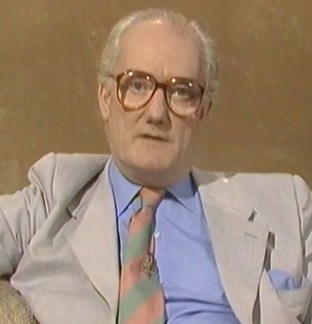
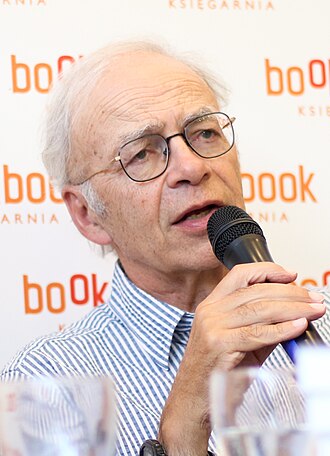
布莱恩·马基 彼得·辛格
EDITED TRANSCRIPT · 依据现场录音编译整理,可划线生成便签
编者按:1987年,英国哲学家、广播人布莱恩·麦基在其电视系列节目中,邀请澳大利亚伦理学家、《黑格尔》导读作者彼得·辛格,用一小时谈黑格尔与马克思。两人从历史哲学切入,依次讲清辩证法、精神、异化、绝对知识与理性国家,再考察马克思从黑格尔那里继承了什么,以及这两套思想在二十世纪的命运。本文依据现场录音编译整理。

改变世界的哲学家

麦基: 很少有哲学家像黑格尔这样,如此明显地改变了世界:一方面是他本人对德国民族主义的影响,另一方面是通过他最著名的哲学门徒卡尔·马克思间接施加的影响,当今世界有为数众多的政府以马克思的名字自称。所以,我们要想看看黑格尔思想的实际后果,只需环顾自己身处的这个世界。他对哲学的影响同样巨大,甚至有人说,黑格尔之后的哲学史,可以理解为对他的著作的一连串各不相同的反动。

黑格尔1770年生于斯图加特,一生大部分时间都在做各种教职,后来成为海德堡大学的哲学教授,再转往柏林。作为哲学家他成名很晚,但到1831年去世时,他已是整个德国哲学界当之无愧的支配人物。他最有影响的著作包括《精神现象学》《逻辑学》《法哲学原理》和《历史哲学》。

黑格尔有好几位追随者自己也成了名人,但最出名的无疑是卡尔·马克思。马克思1818年生于德国,年轻时学哲学,是个十足的黑格尔派。他到二十五六岁才成为社会主义者,也正是从那时起,他开始酿造那种融合德国哲学、法国政治和英国经济学的丰富而独创的混合物,也就是马克思主义。1848年,他和年轻富有的实业家弗里德里希·恩格斯合写了《共产党宣言》。马克思与恩格斯的合作,大概是思想史上影响最深远的一次合作:恩格斯供养了马克思大半辈子,好让他专心写作。由于政治活动,马克思一生大多在流亡中度过。三十一岁那年他移居伦敦,一直住到1883年去世,葬在海格特公墓。多年里他在大英博物馆的阅览室工作,他的杰作《资本论》就是在那里写成的,1867年出版。

马克思主义并不完全是通常意义上的哲学,但其中显然有一个重要的哲学成分,而这个成分始终是黑格尔式的。本期节目,我打算把大部分讨论留给黑格尔,然后再说明我们讨论过的那些最重要的思想是如何被吸收进马克思主义的。和我一起来做这件事的,是一位为这两位思想家都写过出色导读的人:墨尔本莫纳什大学的哲学教授彼得·辛格。

辛格教授,黑格尔以难读、晦涩著称,常被说成所有大哲学家中最晦涩的一位。可是你那本小书有个显而易见的优点,就是用平白的日常英语讨论他的核心思想。我希望你在这个节目里也能做到这一点。当你面对阐释黑格尔思想的任务时,你觉得从哪里入手最方便?

从历史哲学入手

辛格: 我从历史哲学入手,因为黑格尔那里的历史相当具体。读黑格尔的困难,一部分就在于他太抽象;而历史因为具体,是通向他哲学中那些更抽象部分的一条方便的路。

麦基: 这本身在哲学上就已经是一个新的起点了,对吧?因为在黑格尔之前,没有哪位大哲学家认为历史或历史哲学是重要的。

辛格: 是的,这是一个转折。拿康德来比较一下。康德对人性的看法是:人永远分裂在理性的成分和粗野的欲望之间,有点像那幅古老的图景,人处在猿与天使的中途。在康德看来这就是人性的事实,我们将永远被这种分裂、这种冲突所撕扯。黑格尔却说,且慢,这不是什么不可改变的东西。看看希腊社会。黑格尔说,希腊社会更和谐,人们意识不到这种鸿沟或分裂,他们的欲望与理性协调一致。所以康德所谈的那种分裂,是在历史中发生的东西,是随着新教欧洲个人良知的兴起而发展出来的。既然它是历史地发生的,它就不必是永久的特征,在另一个时期它有可能再次被克服,和谐有可能重新恢复。

麦基: 黑格尔是用这种历史的眼光看待一切重要概念的,对吗?他把概念看成是嵌在人类生活里、嵌在生活方式和社会里的,社会一变,概念也随之变化。是这样吗?

辛格: 完全正确。他看到历史的进程中有发展,历史总是在向前运动,它永远是一个过程,从不静止。而且他给这种向前运动的方式起了个名字,叫辩证过程(dialectical process)。

辩证法:正题、反题、合题

麦基: 你能确切解释一下,黑格尔心目中的辩证过程究竟是什么吗?

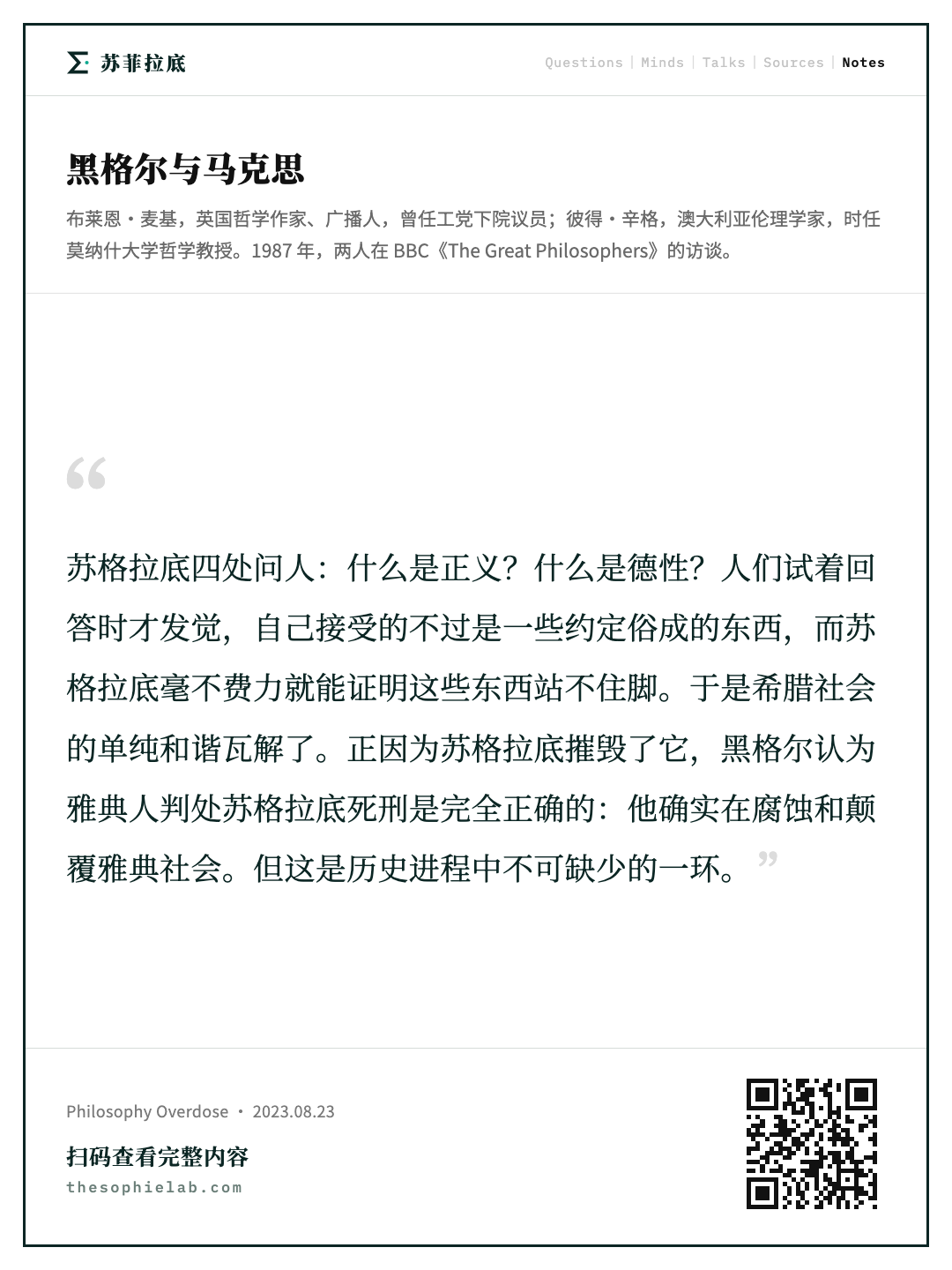
辛格: 我们回到刚才提到的例子,希腊社会。黑格尔把它看作一种和谐,但那是一种单纯的和谐。所谓单纯,是说人们尚未发展出个人良知这个替代性的观念;个人与社会之间之所以和谐,是因为个人还没有真正独立地思考过问题。然后,一个人闯进了这种单纯的和谐,他就是苏格拉底,黑格尔把他看作一个世界历史人物。随他而来的,是质疑这种和谐的念头。苏格拉底四处问人:什么是正义?什么是德性?人们试着回答时才发觉,自己接受的不过是一些约定俗成的东西,而苏格拉底毫不费力就能证明这些东西站不住脚。于是希腊社会的单纯和谐瓦解了。顺便说一句,正因为苏格拉底摧毁了它,黑格尔认为雅典人判处苏格拉底死刑是完全正确的:他确实在腐蚀和颠覆雅典社会。但这是历史进程中不可缺少的一环,因为最终(中间的步骤黑格尔都一一补上了)它导向了个人良知的兴起,而这是第二个必然的环节,也是希腊社会的对立面。

这样,我们就从黑格尔所谓的正题(thesis)走到了反题(antithesis)。希腊社会的反题是个人良知,它在新教欧洲达到顶峰。但这一环也同样不稳定,它导向法国大革命的破坏和革命之后的恐怖统治。所以它也必须让位给合题(synthesis),让位给第三个阶段,把和谐与个人良知结合起来。而在这个过程中,合题往往又成为新的正题,从中又会产生新的反题,过程就这样继续下去。

麦基: 你刚才解释的这种辩证变化的观念,自黑格尔以来影响极大,今天通过体现了它的马克思主义,影响更是无比巨大。所以我想我们必须把它彻底弄清楚,让我再过一遍。黑格尔提出的想法是这样的:我们人类之所以处在一个永无休止的变化过程中,是因为每一个复杂的局面内部都包含着互相冲突的因素,这些因素使局面不稳定,因此局面无法无限期维持下去,它会崩解成另一种局面,那些冲突在其中被消解或缓和。可是在新的局面里,你当然又会遇到新的冲突,如此无限继续。所以,用他的术语说,就像你刚才讲的,正题、反题、合题,合题又成为新的正题。黑格尔派以及跟随他们的马克思主义者认为,这给了我们理解历史、理解历史变化的钥匙,这就是辩证过程。

到这一步为止,黑格尔本来可以说,这种变化的方向纯属偶然,它可能是无数偶然冲突的随机结果。但他没有这么说,对吧?他实际上认为这个线性的过程有方向、有目标。

辛格: 对。对黑格尔而言,这个目标是精神朝着自由的更充分的发展。我们始终在走向对自由的意识,走向实现人的自由并理解自由。这是一个对自由的觉察不断增长、对我们自身的认识不断增长的过程。

变化的主体:精神

麦基: 那么,这种变化是发生在什么东西身上?无论在什么语境下谈论变化,都必须有某个可以辨认的东西在变。在黑格尔这里,变的是什么?换句话说,他写的是整个社会,还是个人?他到底在写什么?

辛格: 简短的回答是:他写的既不是个人,也不是社会,而是他所谓的精神(Geist)。这个德语词很难翻译。最简单的办法也许是说,变化发生在心灵(mind)身上,心灵是 Geist 的一种通常译法。我们讲精神疾病,德语的 geisteskrank 就是精神失常的意思。所以你可以说,变化发生在心灵身上,发生在你我的心灵、我们所有个体心灵身上。但这个词的含义又超出了这些,它还有灵的意思。我们说时代精神(Zeitgeist);德国人说圣父、圣子、圣灵,用的也是 Geist 这个词。

麦基: 就是英文里 Ghost 那个词。

辛格: 正是。所以它还带有某种精神性或宗教性的意味,暗示在某种意义上存在一种超越你我个体心灵的实在。所以你可以说变化发生在心灵身上,但那是大写的心灵,不只是个体人类心灵意义上的心灵。

麦基: 那么黑格尔是不是在说,全部实在都是某种心灵性或精神性的东西,也就是这个介于心灵与灵性之间的 Geist,而我们谈论的所有过程,归根到底都是这个终极的心灵性或精神性的东西自身的过程?

辛格: 是的,这就是黑格尔最终落脚的观点:实在就是精神,它归根到底是心灵的或理智的,这些过程发生在精神身上,发生在心灵沿着这条道路发展的途中。

麦基: 有些听众听到这里,可能已经觉得这是个很古怪的想法了。所以我认为值得指出,其实我们对与之相似的东西都很熟悉,那就是宗教信仰,即便我们自己并不信教。许多宗教信徒,包括许多基督徒,相信全部实在归根到底是精神性的,全部实在最终都有一种精神上的意义或含义。我猜黑格尔说的是与此非常接近的东西,对吧?尽管他未必是传统意义上的宗教信徒。

辛格: 是的,不过区别可能在于:我想正统的基督教观点认为上帝是精神性的,但与世界分离,世界是尘俗的、物质的,它固然有精神上的意义,但与上帝是分开的。而对黑格尔来说,两者之间的结合更紧密。你可以把黑格尔说成基督教观点的对立面,说他是泛神论者,相信上帝就在世界之中、在万物之中。这大概也不完全准确。他处在传统基督教观念与泛神论之间的某个位置:实在是上帝的一部分,万物都是上帝的显现,如果你愿意这么称呼的话。

麦基: 事实上,可以说自黑格尔以来,黑格尔学者或哲学家之间一直就这个问题争论不休:黑格尔的哲学归根到底是不是宗教性的?有人说是,有人坚持说不是。这场争论你站哪一边?

辛格: 我认为,试着把黑格尔当作非宗教的思想家来解读,极有价值。因为这样一来,你会发现黑格尔哲学的一大部分都能用非宗教的方式讲通:只把他理解为在谈论心灵,而心灵之间的共同成分就是我们共有的推理能力,就是我们的心灵按照相似的原则构造起来这一事实。不过我得承认,这条路虽然能走很远,却不能百分之百讲通他的哲学。最后那百分之十,恐怕不得不假定他所说的背后有某种宗教性的,或者说准宗教性的关于心灵或精神的观点。

异化

麦基: 我们已经谈了他引入西方思想的"实在是一个历史过程"的观点,这是一个重大的观念;也谈了他引入的辩证变化的观念,它至今仍是活的思想。还有一个重要概念,我想说是他首创的应该不错,至少是他使之著名的,而且近几十年又回到了所谓的思想潮流之中,那就是异化(alienation)。黑格尔关于异化说了很多,对吧?他用这个词到底指什么?

辛格: 黑格尔所说的异化,是指某种其实是我们自身一部分的东西,在我们看来却显得陌生、异己、充满敌意。我举个例子。他描绘了一幅他称之为"苦恼意识"(unhappy soul)的图景,那是宗教的一种异化形式。苦恼意识是这样一种人:他向一个他认为全能、全知、全善的上帝祈祷,而把自己看得无力、无知、卑贱。这个人是不幸的,因为他贬低自己,把所有那些品质都放进了一个他视为与自己分离的存在者之中。黑格尔说,这是错的。我们实际上是上帝的一部分,或者说,我们是把自己的品质投射到了上帝身上,我们应当把它们收回来。克服这种异化的办法,是认识到我们与上帝本是一体,那些品质是我们自己拥有的,不是什么分离的、异己的东西。

麦基: 我本想说,他会明确地讲,这些是人的品质,也许仅仅是人的品质,我们把它们投射到一个全能的存在者身上,同时否认自己拥有它们,而实际上拥有它们的正是我们,它们源于人类。

辛格: "它们仅仅是人的品质"这个主张,其实是他后来的一位门徒路德维希·费尔巴哈提出的。黑格尔不会这么说。他会说,我们与那种神圣的精神,都是同一个实在的组成部分,都是精神,都是心灵。

绝对知识与自由

麦基: 你已经解释得很清楚,黑格尔把全部实在看成一个以某种方式向前推进的变化过程,也就是辩证运动。那它是朝什么去的?目标是什么?这场运动的终点在哪里?

辛格: 辩证过程的终点,是心灵认识到自己就是终极实在,从而把它先前视为异己和敌对的一切,看成实际上是自身的一部分。在黑格尔看来,这同时也是一种绝对知识的状态:心灵终于认出自己就是终极实在。它还是一种绝对自由的状态:心灵不再受外部力量支配,而能够以理性的方式安排世界,因为它现在看到,世界其实就是它自己,它只需把自己的理性原则贯彻到世界之中,就能理性地组织世界。

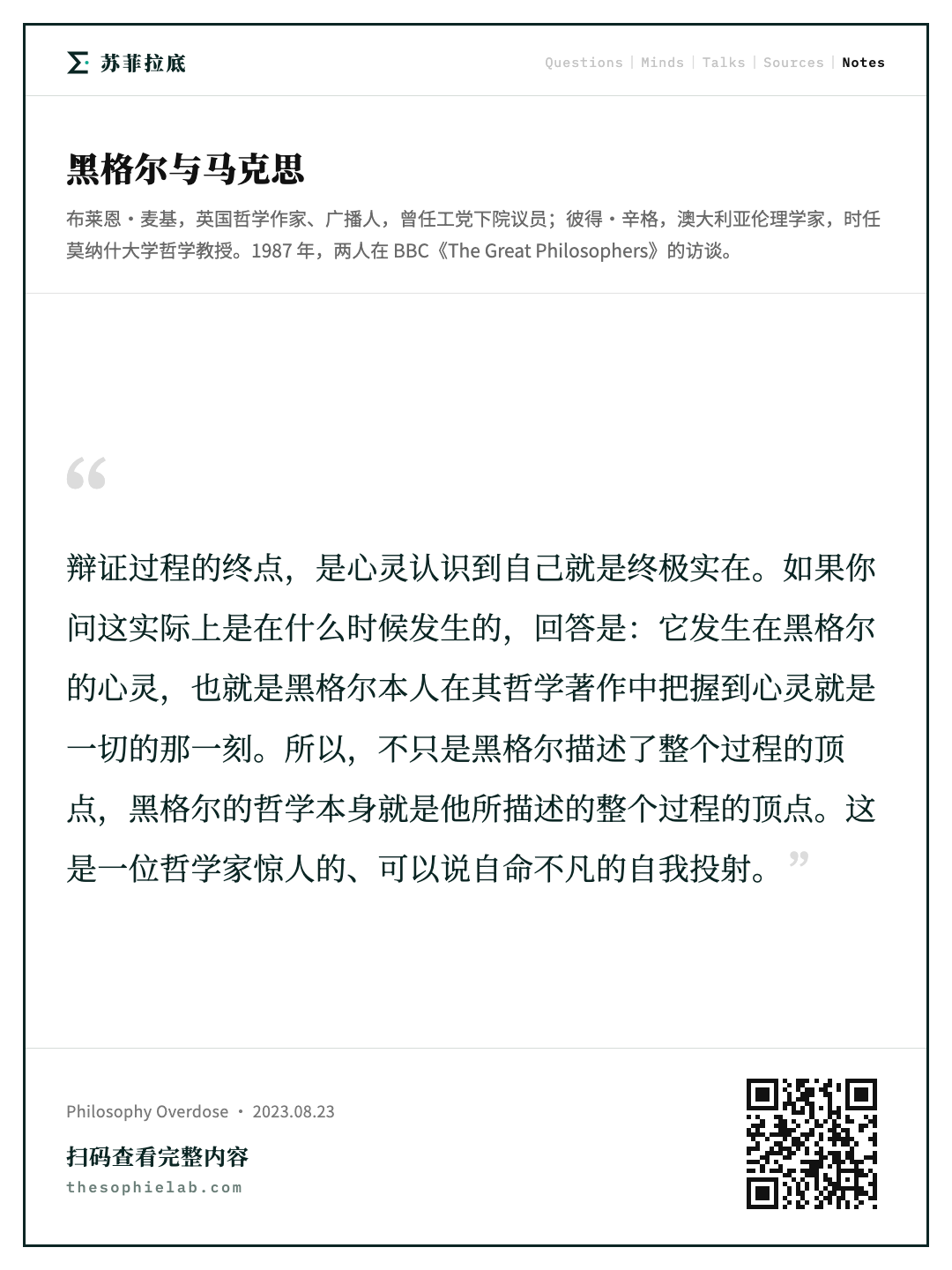
有意思的是,这个最终的环节之所以发生,是因为一个人的心灵理解了心灵是一切的实在。如果你问这实际上是在什么时候发生的,回答是:它发生在黑格尔的心灵,也就是黑格尔本人在其哲学著作和思考中,把握到心灵就是一切的那一刻。这时他就达到了这个终点。所以,不只是黑格尔描述了整个过程的目标和顶点,黑格尔的哲学本身就是他所描述的整个过程的顶点。

麦基: 也就是说,当黑格尔发表他的主要著作时,那就是全部实在终于达到了对自身的觉察,达到了自我认识?

辛格: 是的。这是一位哲学家惊人的、可以说自命不凡的自我投射。我不太确定他是否充分意识到,别人可以从这个角度来看待他。

麦基: 关于这一切所趋向的目标,按你刚才的说法,有一点引人注目:它有时被看作自由,有时被看作自我认识,而黑格尔显然认为两者在某种意义上是同一回事。我想这一点还需要多说几句,因为对大多数人来说,自我认识本身如何能够构成自由,并不是一目了然的。

辛格: 自我认识之所以成为自由,是由于心灵的特殊本性,也由于黑格尔关于心灵是世界的终极实在的观点。你看,在历史进程中,直到我们认识到这是我们的世界、这一切就是我们自己之前,我们其实一直是棋局中的棋子。我们没有掌控棋局,没有掌控历史舞台,因为种种事情发生在我们身上,我们却不明白它们为什么发生;因为我们视为异己和敌对的那些世界的方面,实际上是我们自身的一部分。可是一旦我们看到我们就是世界中的一切,我们就理解了这个过程,可以说掌握了历史发展的规律,而且看到这些规律其实就是我们自己的理性,就是我们心灵和思维的规律本身。

麦基: 人们常引用黑格尔的那句名言,"凡是现实的都是合理的,凡是合理的都是现实的",背后就是这个意思吧?存在的东西确实与合理的东西相对应。

辛格: 对。当我们看到这一点,我们就自由了,因为我们看到了实在的合理性,它不再显得与我们的利益相悖,我们不再与之抗争,而是把它理解为我们自己的理性原则。我们可以自由地随之而行,并按照那些理性的规律去安排它、引导它。

理性的社会

麦基: 你已经讲得很清楚,黑格尔思想有一个特点:他从不把观念看作只存在于抽象之中,更不像柏拉图那样把观念看成永恒不变的,而是看成体现在社会、制度和历史现实之中,并随之变化的。既然如此,黑格尔认为整个过程最终会走向什么样的社会?它导向什么样的社会?

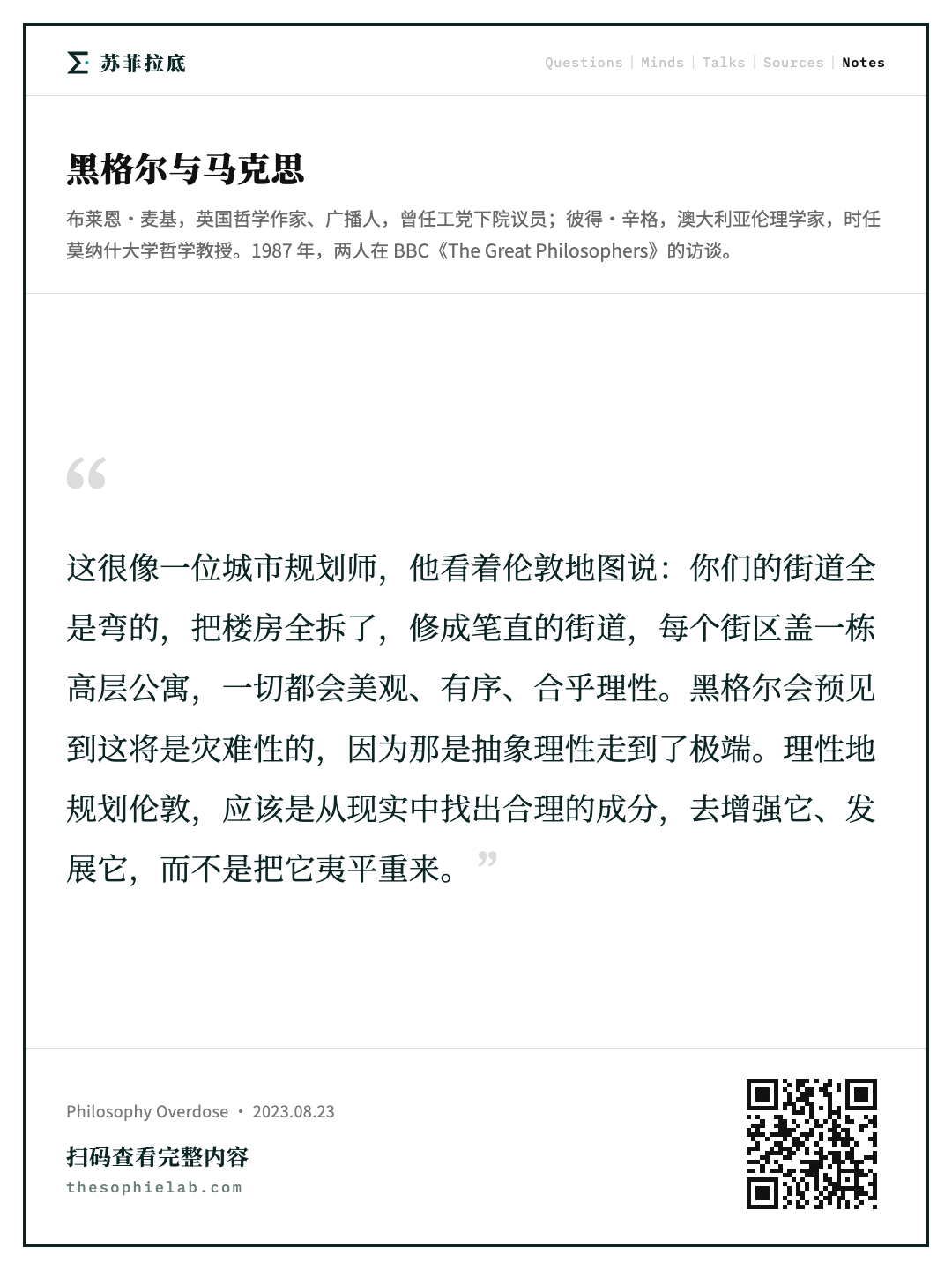
辛格: 从我们已经说的可以料到,那是一个理性的社会,一个按理性安排的社会。但我必须说清楚,这对黑格尔来说意味着什么,因为它不是纯粹理性的社会。黑格尔认为,纯粹理性的社会,典型就是法国革命者想做的那种事。你知道,他们不只是要除掉国王、贵族和宗教,还要把一切都弄得合乎理性。他们说:为什么各个月的天数长短不齐?何不让每个月的天数都一样?为什么一星期七天?让它变成十天吧,就像我们的十进制度量衡。诸如此类。黑格尔认为,这会导向一种疯狂抽象的理性观念。这很像一位城市规划师,他看着伦敦地图说:唉,你们的街道全是弯的,车辆不得不绕行。把这些统统清掉吧,把楼房全拆了,修成笔直的街道,每个街区盖一栋高层公寓,能住更多的人,外面留一片平整的绿草坪给孩子玩,一切都会美观、有序、合乎理性。

麦基: 伦敦确实经历过这种事,结果是灾难性的。

辛格: 对,而黑格尔会预见到这将是灾难性的,因为那是抽象理性走到了极端。在黑格尔看来,理性地规划伦敦,应该是去看现实,也就是伦敦现在的样子,从现实中找出合理的成分。伦敦之所以发展成今天这样,当然有其原因,那就是合理的成分。然后顺着这些理由继续做下去,让伦敦发展背后的理据得以实现,而不是把它夷平重来。或许可以清除某些武断而任性的、造成特别麻烦的地方,但根本上是要在现实中找出合理的东西,去增强它、发展它,让它自我完成。

自由与个人

麦基: 对这种国家观念,即所谓理性国家,一直有一种批评,尤其来自盎格鲁撒克逊传统的自由主义哲学家。他们说,黑格尔把国家看成一个行为合乎理性、把一切安排得合乎理性的有机整体,这样就完全不给个人的异议、批评、自由,或者可以说怪癖留任何余地。在这个体系里,个人没有空间按自己的意愿行事。你对此有什么看法?

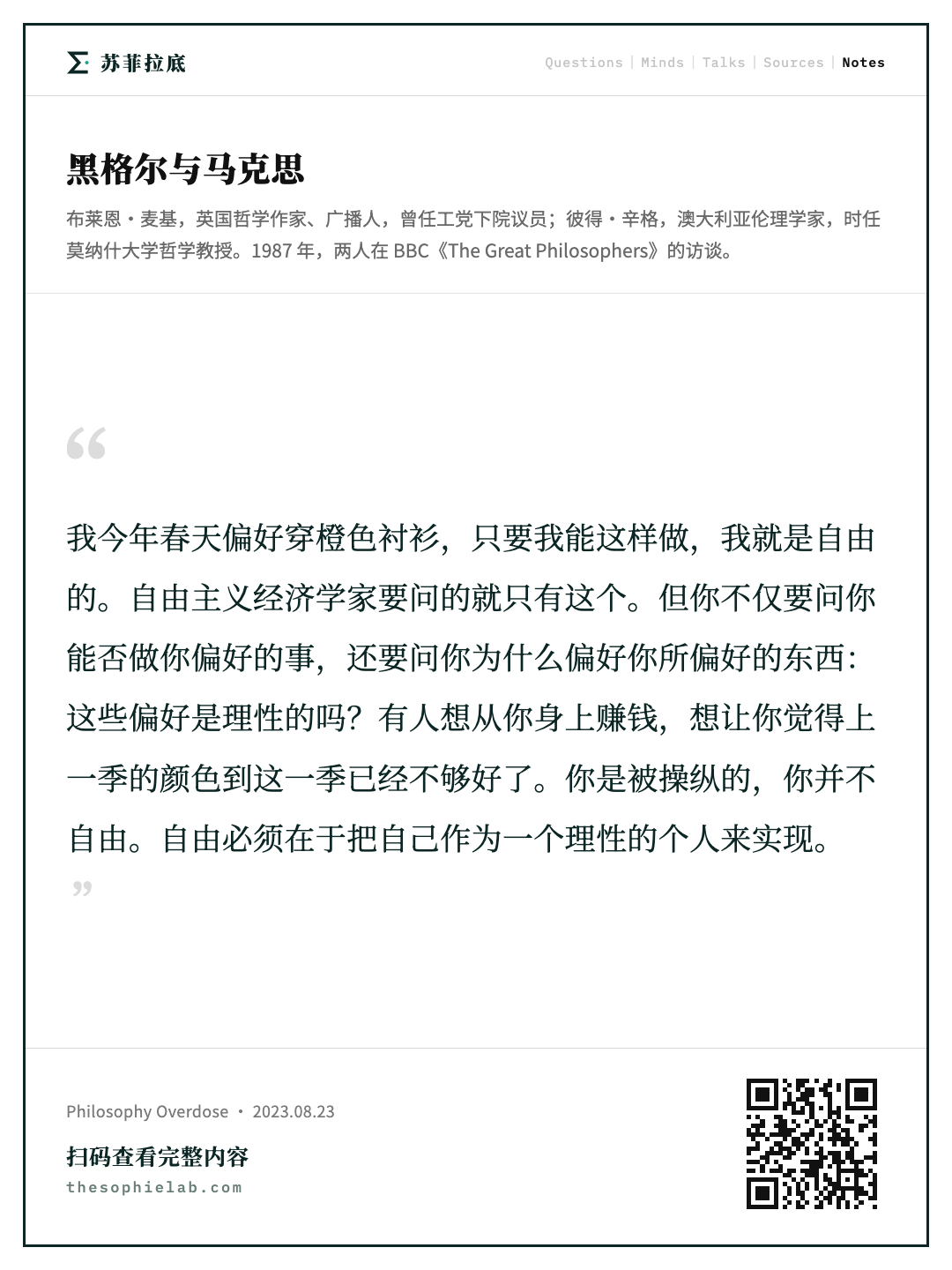
辛格: 我认为没有证据表明黑格尔反对某些个人自由。但确实,他的自由观不是标准的盎格鲁撒克逊自由主义的自由观。要看清两者的区别,我们不妨换到一个稍有不同的领域,经济学,看看经济领域里、市场中的自由观念。按照一种观点,自由主义的观点,自由就在于人们能够做自己偏好的事。比方说,我今年春天偏好穿橙色衬衫,只要我能这样做,我就是自由的;我偏好买一种除臭剂,只要我能买,我就是自由的。自由主义经济学家要问的就只有这个:你是否能自由地满足你现有的偏好?但有些更激进的经济学家质疑这一点。他们说,这是一种很肤浅的自由观。你应该问:你为什么今年想穿橙色衬衫?你为什么想用除臭剂?你为什么不接受某种程度的天然体味根本不是问题?激进经济学家会说,原因在于你被操纵了。有人想从你身上赚钱,想让你买他们的除臭剂,想让你觉得上一季穿的衣服和颜色到这一季已经不够好了。所以你是被操纵的,你并不自由。你不仅要问你能否做你偏好的事,还要问你为什么偏好你所偏好的东西:这些偏好是理性的吗?它们满足你的需要吗?黑格尔属于后一个阵营。他会说,自由不只是随心所欲的能力,自由必须在于把自己作为一个理性的个人来实现。

麦基: 这话听起来很好,但在实践中它肯定意味着这样一种局面:我认为我知道自己想要什么,我想在今年春天穿橙色衬衫,想在热天出门买除臭剂,可是国家也许会说,你以为你想要这些,但这些不是你的理性偏好,我们知道什么对你最好,我们甚至知道假如你的偏好合乎理性你会想要什么。换句话说,你得到的国家不仅比你自己更清楚什么对你好,还比你自己更清楚你想要什么。在与个人的关系上,这难道不是极端的威权主义吗?

辛格: 在实践中,我想你多半是对的,我也不知道黑格尔对这个反驳有什么回答。他唯一能说的是:要在实践中弄清楚怎样才能有一个社会,让个人真正实现自己的理性自我,而又不需要一个威权国家,这可能非常困难;但这并不意味着,靠自由主义的放任观念就把问题解决了。我们仍然必须面对这个问题:人们的需要和欲望可能正在被操纵,而在被操纵的范围内,说他们真的自由,恐怕是误导人的。换句话说,问题仍然是问题,黑格尔未必有正确的答案。

小结:一个核心观念

麦基: 让我们停下来盘点一下讨论走到了哪里。一开始,我问你认为通向整体理解黑格尔哲学的最容易的入口在哪里,你回答说,最好的起点是历史哲学。我们就从那里出发,而且可以说一路直线走到了现在这一步。那么现在,我们是否比之前更有条件理解黑格尔哲学的其他方面了?

辛格: 我想我们实际上已经把握了黑格尔逻辑学的一些要点,那是他哲学中最抽象的部分之一。因为我们已经把握了辩证法,它是逻辑学的一部分,也就是正题、反题、合题的观念。在逻辑学中,黑格尔提出的一个论点是:逻辑不只是形式的问题,不像人们通常理解的亚里士多德传统逻辑那样与内容分离。他说形式与内容是一体的。我们能明白他为什么这么说,因为他认为辩证法就是在实际的历史过程中实现的东西。用他的话说,在逻辑学中,你研究的是撇开特定历史内容的真理,是真理的永恒不变的形式;但事实上它总是与内容相连。这是逻辑学的一个关键观念。我们刚才也已经触及另一个论点,就是终极实在的观念,以及它在某种意义上是心灵而非物质的东西。

麦基: 在我看来,从你到目前为止对黑格尔思想的阐述里,有一个核心概念,几乎所有其他重要观念都从它自然生长出来。这个核心概念是:理解实在,不是理解一个给定的事态,而是理解一个过程,一个永无休止的变化过程。其他概念按下面这个自然顺序依次出现。如果问:是什么在变?黑格尔的回答是:精神在变,你已经解释了他用这个颇为艰涩的概念指什么,心灵也好,灵也好。如果问:它为什么变?回答是:因为它一开始处于异化状态,这你也解释了。如果问:变化的过程是什么,变化的模式是什么?回答是:辩证过程。如果问:这一切变化朝哪里去?回答是:在政治和社会层面,它走向一个有机社会,我们已经讨论过;在哲学层面,它走向绝对知识,你至少已经触及。这样,精神、异化、辩证变化、有机社会,这些核心概念全都从"实在是一个过程,一个历史的变化过程"这个中心观念中生长出来。

晦涩与影响

麦基: 既然我们能把这些讲得很清楚,我要问的下一个问题就是:黑格尔为什么不能?我们一开始就说过,他以晦涩闻名。哲学系学生有时会大声朗读黑格尔的段落,就为了逗大家笑,因为听起来简直像胡言乱语。有时候你可以一页接一页地读黑格尔,心里想:他到底在说什么?既然他的思想可以讲得清楚,就像你在书里所展示的那样,他为什么不写得清楚?

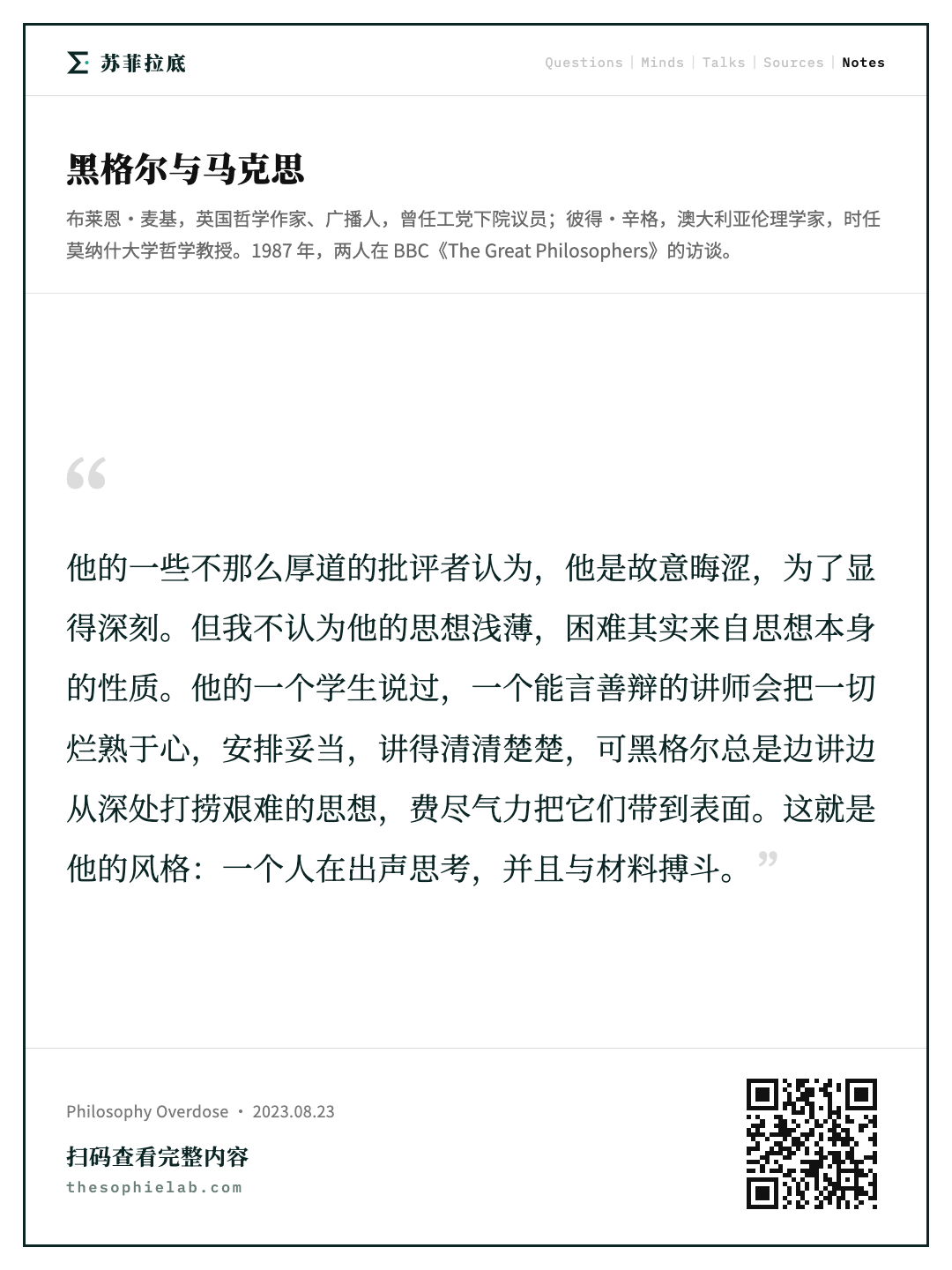
辛格: 他的一些不那么厚道的批评者认为,他是故意晦涩,为了显得深刻,为了掩盖他们眼中思想的浅薄。但我不认为他的思想浅薄。我认为他的思想非常深刻,困难其实来自思想本身的性质。他的一个学生说过,一个能言善辩的讲师会把一切烂熟于心,安排妥当,讲得清清楚楚,可黑格尔总是边讲边从深处打捞艰难的思想,费尽气力把它们带到表面。这就是他的风格:一个人在出声思考,并且与材料搏斗。我们大可惋惜他没有再去修改和润色。但放在当时德国哲学写作的风格里,他没有觉得需要你刚才说的那种清晰,并不奇怪。毕竟,康德和费希特,他的同时代人,同样非常晦涩,却照样被视为伟大的哲学家。

麦基: 由此引出的下一个问题是:一个如此晦涩、如此难懂的哲学家,怎么会在生前就取得了如此巨大的影响?

辛格: 我想这部分是由于他在柏林大学的地位。柏林是普鲁士的首都,而普鲁士是当时德国正在崛起的邦国。另一部分则由于他的思想在多个领域的生产力。你看,黑格尔的影响不只在哲学,还在神学、历史学、政治学、经济学,甚至法学。黑格尔的思想能够以这些方式加以运用,说明他的方法,尤其是其中的历史因素,多么富有成果。正是那个把事物看成发展而来、看成一个过程的历史观念,可以被各个领域的学者拿去应用。

黑格尔派的分裂

麦基: 现在来谈黑格尔思想在他身后的直接命运。他一去世,最先发生的事情之一就是追随者分裂成两个阵营,对吧?他们被称为青年黑格尔派和老年黑格尔派,或者叫左派黑格尔派和右派黑格尔派。能给我们讲讲这次分裂吗?

辛格: 右派黑格尔派认为,黑格尔的哲学意味着,某种类似普鲁士国家的东西就是黑格尔所指向的那个有机国家。他们认为黑格尔自己在《法哲学原理》,也就是他最明确的政治著作里就是这么说的。他在那里描述的国家是一种君主立宪制,与普鲁士国家相差不远。所以他们认为实际上不再需要进一步的变革。他们是保守的、右翼的黑格尔派。左派黑格尔派则说,黑格尔哲学的基本取向比这激进得多。你看,正如我们一开始所说,黑格尔谈的是克服理性与欲望之间、道德与自利之间的分裂,这是要实现的一种非常根本的变革。你不能说这在1830年前后的普鲁士已经发生了。所以他们说,黑格尔哲学的取向是一场远为深刻的变革,一场革命性的变革。他们不得不承认,黑格尔在《法哲学原理》里写得不像个革命者,但他们指出,黑格尔的薪水是普鲁士国家发的。所以他们说,黑格尔妥协了,他出卖了自己;但我们必须比黑格尔本人更忠于黑格尔,我们必须把这些思想推进下去,直到理性与欲望、道德与自利的正题和反题被克服,直到我们达到一个和谐社会的合题,在那里人性中的这些鸿沟和分裂得到和解。

马克思继承了什么

麦基: 而一旦谈到黑格尔的革命派追随者,登场的就是现代最伟大的革命思想家卡尔·马克思,因为他就是青年黑格尔派中的一员。经过前面的整个讨论,我觉得有件事很惊人:把我们谈过的、被马克思原封不动接过来并纳入马克思主义的黑格尔主义基本观念列出来,其中有,第一,实在是一个历史过程;第二,这个过程通过辩证运动而变化,历史的辩证法;第三,这一切都朝着一个目标前进;第四,这个目标是一个没有冲突的社会;第五,在我们到达那个无冲突的社会之前,我们注定停留在这样或那样的异化之中。马克思主义所有这些绝对核心的观念,全都是从黑格尔那里整套接过来的。当然必须说,有一个巨大的差别:正如我们一直在说的,黑格尔是唯心论者,在他看来这一切都发生在心灵或精神身上;而在马克思那里,这一切发生在某种物质的东西身上,马克思是唯物论者。但整个观念的模式保持不变。这就好比马克思从黑格尔那里接过了一长串方程,把方程里 x 的值换掉,用物质代替心灵,而在其他一切方面把整套方程原样保留。

辛格: 对。这一点在马克思的唯物史观里看得很清楚,那是马克思思想的关键:历史通过经济基础而发展,物质的方面,生产力,支配着精神的方面,于是我们的思想、宗教、政治,全都从我们社会的经济结构中流出。这是对黑格尔思想的倒转。马克思自己说,他把黑格尔倒了过来,头朝下站着。因为在黑格尔那里,是思想的发展,自由观念等等的发展,导致了特定历史时代中特定社会的形成。

麦基: 你认为,能否说卡尔·马克思对哲学做出了任何重要的独创性贡献?

辛格: 我不认为马克思在狭义的哲学上,也就是关于实在的终极本性这类问题上,做出了重要贡献。马克思当然是唯物论者,但他没有作为哲学家去论证他的唯物论。他实际上是把它当作相当显而易见的东西接受下来的:要紧的是物质世界,是这类东西,而不是精神那样遥远的东西,他多少把精神当作一种思辨的德国形而上学抽象打发掉了。所以他没有为此论证,也就没有对那场哲学讨论做出贡献。但他做的是给了我们一种视野,一幅图景:在这个世界上,我们被自己的经济环境所支配,因而并不自由。这仍然很像黑格尔,我们是历史棋局中的棋子。而要获得自由,我们必须掌控经济力量,而这些力量说到底是我们自己的力量。经济学是什么?不过是我们自己获取食物、获取住所之类的方式。所以这是一幅图景:我们所做的事反过来支配了我们,而我们必须反过来支配它们。这是关于人类处境的一个有力的、宽泛意义上的哲学视野。但它不是狭义的、学院意义上的重要哲学发现。

贡献与灾难

麦基: 把黑格尔主义和马克思主义这两种关系极为密切的哲学放在一起看,你认为它们对人类思想最重要的积极贡献是什么,或者说有哪些?它们给了我们什么真正有用的东西,帮助我们理解世界?

辛格: 从我们说过的可以清楚看到,"历史是一个过程,影响着我们思想和观念的方方面面",这是来自黑格尔和马克思的至关重要的东西。

麦基: 它几乎成了十九世纪的主导观念,对吧?就像进化论一样,把一切都看成演化而来、发展而来的。

辛格: 我们现在已经无法想象把社会或思想看成独立于自身历史的永恒实体,这是我们欠黑格尔和马克思的。这是非常重要的一点。另一点是自由的观念,那种有别于自由主义的自由观:除非我们掌控自己的命运,我们就不可能自由;除非我们不再被经济环境的风(在马克思那里)或理性的无形之手(在黑格尔那里)吹来吹去,而是真正去掌控它,认识到我们自己的力量,认识到人类集体掌控自身命运的能力并加以把握。正如你说的,这个观念可能有一些危险的倾向,但它是一个非常重要的观念。既然黑格尔和马克思已经把它摆在我们面前,我想我们再也不可能放弃它了。

麦基: 不过现在我必须问问负面的东西,不只是正面的。这两位哲学家的思想在二十世纪,在他们身后,都与极权主义联系在一起:黑格尔与德国民族主义,最终是希特勒;马克思与共产主义,其最恐怖的形态见于斯大林建立的国家。这两个社会都屠杀了本国数以百万计的人民。我并不是说两位哲学家中有哪一位预料到了这种事,更不是说他们想要这种事。但他们都是这样的哲学家:他们认为思想在历史、在制度、在社会现实中的体现,是思想的本质特征。可是当他们自己的思想被这样体现出来时,却产生了灾难性的结果。这是为什么?

辛格: 我认为他们的思想是被错误地体现了。我不认为你真的能在希特勒那种种族主义的民族主义里找到黑格尔思想的痕迹,你找不到那种种族主义。

麦基: 你认为那完全是对黑格尔的曲解?

辛格: 在这件事上,当然是的。至于马克思的遭遇,也许是最大的讽刺。正如我一直在说的,马克思是自由的哲学家,他珍视自由,憎恶屈从。有一次女儿让他写下自己最厌恶的恶习,他的回答是"奴颜婢膝"。而这恰恰是在斯大林的极权主义下活下去所必需的东西。

麦基: 不过,这些思想确实被误用了,被扭曲了。那么,这些思想本身有什么东西导致了这样的结局?

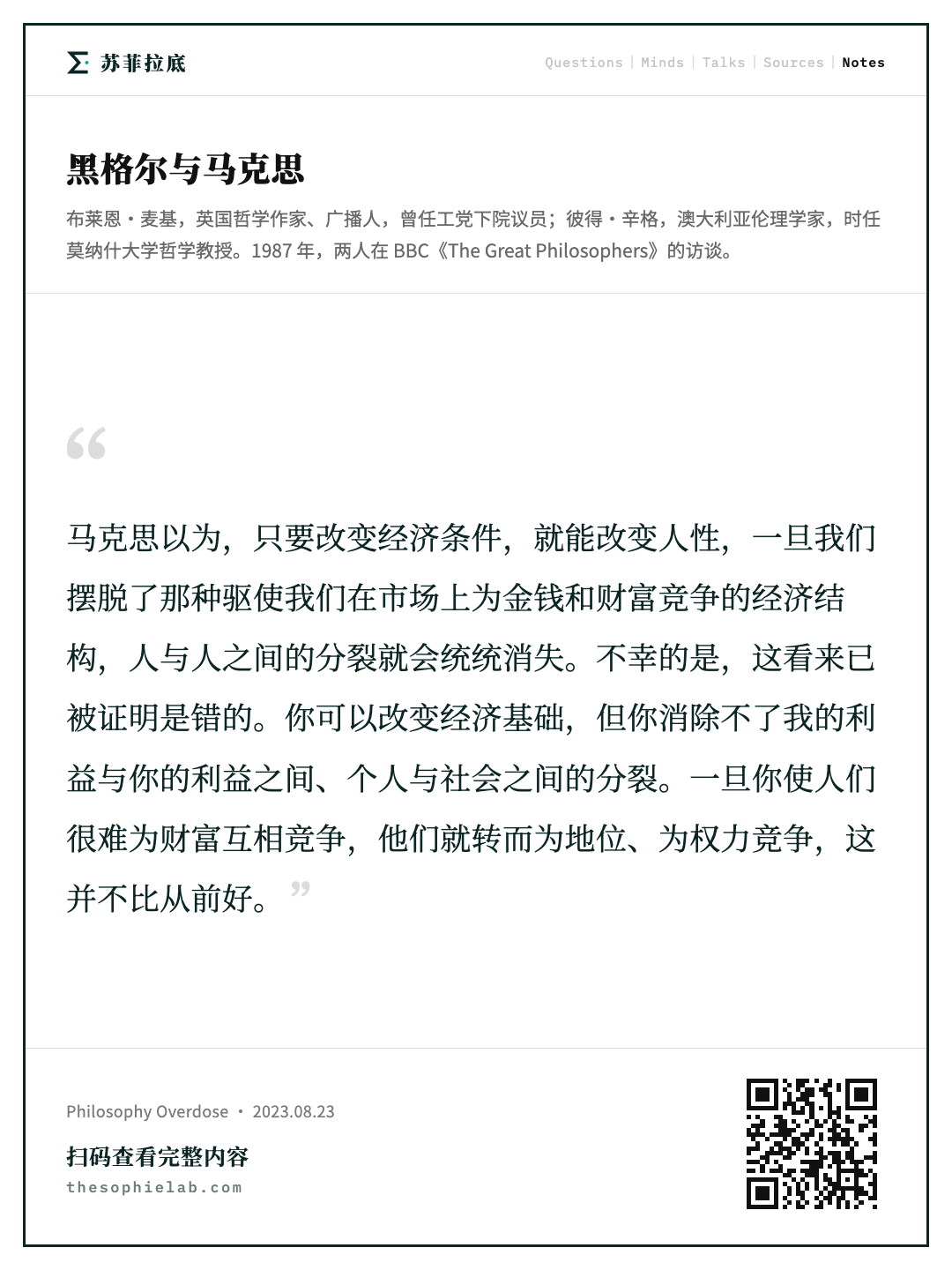
辛格: 我认为归根到底是一种错误的人性观。部分在于,它试图在人与人之间显示出一种比实际存在的更大的统一性。我们可以把这追溯到黑格尔关于心灵或精神的观念,那是某种超越个体心灵之间差异的东西。但我们在马克思那里也能发现这一点,就在这样的想法里:只要改变经济条件,就能改变人性,然后我们就能全部克服人与人之间的分裂,我的利益与你的利益之间的分裂,我们的个人利益与社会利益之间的分裂;一旦我们摆脱了那种驱使我们在市场上为金钱和财富竞争的经济结构,这些分裂就会统统消失。不幸的是,这看来已被证明是错的。你可以改变经济基础,但你消除不了理性与欲望之间、我的利益与你的利益之间、个人与社会之间的分裂。实际发生的是,一旦你使人们不可能或很难为财富互相竞争,他们就转而为地位、为权力或诸如此类的东西竞争,这并不比从前好。事实上可以说,在斯大林的社会里,这被证明更糟。所以我认为,马克思以为人性会改变,这是他弄错了。

麦基: 非常感谢,辛格教授。
本期讲者
布莱恩·马基英国哲学作家、广播人,曾任工党下院议员。1978 年与 1987 年为 BBC 主持《思想者》《伟大的哲学家》两套哲学访谈系列,著有《哲学的故事》《一个哲学家的自白》。
彼得·辛格澳大利亚伦理学家,时任莫纳什大学哲学教授,后任普林斯顿大学教授。以《动物解放》(1975)闻名,另著有牛津「大师系列」的《马克思》(1980)与《黑格尔》(1983)。
章节 · 点击跳转视频
0:00 黑格尔与马克思:生平与影响 ▶ 正在看
3:17 从历史哲学入手:康德与希腊 ▶ 正在看
5:28 苏格拉底与正反合三段式 ▶ 正在看
8:59 变化的主体:Geist 是什么 ▶ 正在看
13:30 异化与苦恼意识 ▶ 正在看
15:49 终点:绝对知识即绝对自由 ▶ 正在看
19:27 理性国家与伦敦城市规划 ▶ 正在看
22:40 自由之争:偏好还是理性自我 ▶ 正在看
25:49 盘点:逻辑学与核心概念脉络 ▶ 正在看
29:02 为何晦涩,为何影响巨大 ▶ 正在看
31:10 左右黑格尔派与马克思的继承 ▶ 正在看
38:09 功过:历史观、自由与极权 ▶ 正在看
本期论点
本期回应
6:21
雅典人判处苏格拉底死刑是正当的,他确实在腐蚀和颠覆雅典社会 外人可以判断个人怎么活,该由谁说了算?彼得·辛格
24:17
人的消费偏好是被想从中牟利者操纵出来的,按这些偏好行事并不自由 外人可以判断个人怎么活,该由谁说了算?彼得·辛格
25:07
以理性偏好之名,国家宣称比个人更懂他真正想要什么,这是对个人的极端专断 只能本人决定个人怎么活,该由谁说了算?布莱恩·马基
11:14
实在归根到底是精神性的,一切变化过程都发生在 Geist 之中 只有纯形式世界最根本的东西是什么?彼得·辛格
41:33
黑格尔与马克思的思想之所以被极权扭曲,根源是高估人与人统一性的人性观 源头就有一种思想要为后来的暴政负责吗?彼得·辛格
42:25
改变经济基础消不掉个人利益与社会利益的分裂,人只会转而争夺地位与权力 生来如此人有没有固定的本性?彼得·辛格
其他论点
4:58
概念嵌在人的生活方式与社会之中,社会一变,概念也随之改变 布莱恩·马基
7:40
人类卷入永恒变化,是因为每个复杂处境内部都含有相互冲突的因素 布莱恩·马基
15:08
上帝并非与人分离,那些品质本是人自身的投射,应当被收回 彼得·辛格
18:37
自我认识就是自由——认清历史规律即自己心灵的法则,人便不再受异己力量摆布 彼得·辛格
21:21
按纯粹抽象理性推倒重来地重造社会,必然导致灾难性后果 彼得·辛格
29:58
黑格尔的晦涩源于他所处理的思想本身的性质,而非故作高深掩饰浅薄 彼得·辛格
30:45
黑格尔缺少把话讲清楚的压力,因为当时的德国哲学风气容忍晦涩 彼得·辛格
34:12
马克思主义最核心的观念——历史过程、辩证变化、异化——整套照搬自黑格尔 布莱恩·马基
36:36
马克思没有对狭义哲学作出重要贡献,他把唯物主义当作显而易见之事接受 彼得·辛格
01黑格尔与马克思:生平与影响
0:00
few philosophers have more obviously changed the world than Hegel both personally through his influence on German nationalism and indirectly through the work of his most famous philosophical disciple Karl Marx after whom a great many governments in our own day actually call themselves so if we want to see some of the Practical consequences of hegel's ideas all we have to do is look at the world in which we ourselves live his influence on philosophy was correspondingly great in fact it's been said that the history of philosophy since Hegel can be understood as a succession of varying reactions against his work he was born in Stuttgart in 1770 a teacher of one sort or another for most of his life he eventually became professor of philosophy at Heidelberg and then in Berlin as a philosopher he was a late developer but by the time of his death in 1831 he was very much the dominant figure in philosophy throughout the whole of Germany the titles of some of his most influential works are the phenomenology
很少有哲学家像黑格尔那样明显地改变了世界,既通过他本人对德意志民族主义的影响,也间接地通过他最著名的哲学门徒卡尔·马克思的著作产生影响——今天有大量政府仍以马克思的名字来自称。所以,如果我们想看看黑格尔思想的一些实际后果,只需要看看我们自己生活于其中的这个世界。他对哲学的影响同样巨大,事实上有人说,黑格尔之后的哲学史可以被理解为一连串对他学说的各种不同反应。他于1770年生于斯图加特,一生大部分时间都在从事某种教职,最终成为海德堡大学的哲学教授,之后又到柏林任教。作为哲学家,他大器晚成,但到1831年去世时,他已经完全是整个德国哲学界的主导人物。他最有影响力的一些著作的书名是《精神现象学》、
便签引用
1:03
of mind the science of logic the philosophy of right and the philosophy of History Hegel had several followers who themselves became well known but Far and Away the most famous is Karl Marx Marx was born in Germany in 1818 and as a young student of philosophy was very much a hegelian he didn't become a socialist until his mid-twenties when he began to develop that rich and highly original mixture of German philosophy French politics and British economics which is Marxism together with a wealthy young industrialist Frieda Engels he wrote The Communist Manifesto in 1848 the partnership between marks and Engels must be just about the most momentous collaboration in the history of ideas Ingles kept marks for most of his life so that he could produce his writings and it was a life spent largely in Exile because of Marx's political activities at the age of 31 he went to live in London and stayed there until his death in 1883. he's buried in Highgate Cemetery for many years he worked in the British
《逻辑学》、《法哲学原理》和《历史哲学》。黑格尔有好几位追随者后来也很出名,但其中最负盛名的无疑是卡尔·马克思。马克思1818年生于德国,作为一名年轻的哲学学生,他完全是个黑格尔派。他直到二十五六岁才成为社会主义者,那时他开始发展出那种丰富而极具原创性的混合体——德国哲学、法国政治学和英国经济学的结合,这就是马克思主义。他与富有的年轻实业家弗里德里希·恩格斯一起,于1848年写下了《共产党宣言》。马克思与恩格斯的合作,大概称得上是思想史上最重大的一次合作。恩格斯供养了马克思大半生,使他能够写出自己的著作;而那基本上是一段流亡的人生,这是因为马克思的政治活动。31岁时他移居伦敦,并一直住在那里直到1883年去世。他葬于海格特公墓。多年来他都在大英博物馆的阅览室里工作,正是在
便签引用
2:10
museum in its reading room and it was there that he wrote his Masterpiece Das Capital published in 1867. Marxism isn't quite philosophy in the accepted meaning of the term but there's obviously a major philosophical element in it and that element always remained hegelian what I propose to do in this program is devote the bulk of the discussion to Hegel and then show how some of the most important of the ideas we've been discussing were incorporated into Marxism with me to do this is someone who has published excellent introductions to the works of both thinkers Peter Singer professor of philosophy at Monash University in Melbourne Australia Professor singer Hegel is notorious for being difficult to read for being obscure he's often described as the most obscure of all the major philosophers yet your little book about him has the conspicuous Merit of discussing his Central ideas in ordinary plain English and I hope you're going to be able to do the same on this program when you're confronted with the task of
那里,他写出了自己的杰作《资本论》,于1867年出版。马克思主义算不上是这个词通常意义上的哲学,但其中显然含有一个重要的哲学成分,而这个成分始终是黑格尔式的。我在本期节目里打算把讨论的大部分篇幅留给黑格尔,然后再说明我们所讨论的那些最重要的思想是如何被吸收进马克思主义的。和我一起来做这件事的,是一位为这两位思想家的著作都写过出色导读的学者,彼得·辛格,澳大利亚墨尔本莫纳什大学的哲学教授。辛格教授,黑格尔以难读、晦涩而出名,人们常说他是所有大哲学家中最晦涩的一位,然而您那本关于他的小书却有一个显著的优点:用平实的日常英语来讲他的核心思想。我希望您在本节目里也能做到同样的事。当您面对阐述黑格尔思想这个任务时,您觉得从哪里入手最方便?
便签引用
02从历史哲学入手:康德与希腊
3:17
expounding hegel's ideas where do you find the most convenient place to start I start with the philosophy of History because the history in Hegel is quite concrete part of the difficulty with Hegel is that he's so abstract but the history because it's concrete is an easy way into the more abstract parts of his philosophy well that in itself is already a new departure in philosophy isn't it because no major philosopher before Hegel regarded history or the philosophy of history as being important yes it is a departure compare it with count for instance can't had a view of human nature as human beings eternally divided between their reasoning element and their brute desires it's a bit like the old picture of man as halfway between the Apes and the angels and for Khan that was just a fact of human nature we would always be torn with this division this conflict but Heigl said no wait a minute this isn't something immutable look at Greek society Greek society Hegel said was more harmonious people were not
我会从历史哲学入手,因为黑格尔笔下的历史相当具体。读黑格尔的困难之一在于他太抽象了,而历史因为具体,就成了进入他哲学中那些更抽象部分的一条便捷通道。嗯,这本身就已经是哲学上的一个新开端了,不是吗?因为在黑格尔之前,没有哪位大哲学家把历史或历史哲学看作是重要的。是的,这是个新开端。拿康德来做个对比,康德对人性——人作为存在者,永远分裂于自身的理性成分与粗野的欲望之间,这有点像那个古老的图景:人处在猿与天使之间。对康德来说,这就是人性的一个事实,我们永远会被这种分裂、这种冲突所撕扯。但黑格尔说,等一下,这并不是什么不可更改的东西,看看希腊社会。黑格尔说,希腊社会要和谐得多,人们并没有意识到这种鸿沟或分裂,他们的欲望与他们的理性是和谐一致的。
便签引用
4:21
conscious of this gulf or division their desires were in harmony with their reason so the point that Kant is talking to is talking about this division is something that has occurred historically has developed with the rise of individual conscience in Protestant Europe and because it's happened historically it need not be a permanent feature it could in some other period actually again be overcome and a Harmony restored Hague looked at all important Concepts in this historical way didn't he he saw them as being embedded in human life in ways of life in societies and as societies change so the concepts change isn't that right yes that's absolutely right he saw that there was development in the way history occurred that it was always moving forward it was always a process never static and he had a name for the way in which it moved forward he called this the dialectical process now can you explain exactly what in hegel's mind the dialectical process was let's go back to the example I mentioned
所以康德所谈论的这种分裂,其实是历史地出现的,是随着新教欧洲个体良知的兴起而形成的。既然它是历史地发生的,它就不必是一种永久的特征,它完全可能在另一个时期再次被克服,和谐得以恢复。黑格尔看待所有重要的概念都是用这种历史的方式,是吧?他把它们看作嵌在人的生活里、嵌在生活方式里、嵌在社会里的,而随着社会的变化,概念也随之变化,是这样吗?是的,完全正确。他看到历史的发生方式中存在着发展,历史总是在向前推进,它始终是一个过程,从不静止。而他给这种向前推进的方式起了个名字,他称之为辩证的过程。那么你能确切解释一下,在黑格尔心目中辩证过程指的是什么吗?我们回到我刚才提到的例子。希腊社会在他看来是一种和谐,
便签引用
03苏格拉底与正反合三段式
5:28
before Greek society he saw as a Harmony but as a simple Harmony a simple Harmony in the sense that people had not developed the alternative notion of individual conscience there was Harmony between the individual and Society because individuals hadn't really thought about things themselves now into that simple Harmony there came in the person in fact of of Socrates whom Hegel considers a world historical figure there came the idea of questioning this harmony Socrates went around asking people what is Justice what is virtue and when they tried to answer they realized that they'd accepted certain conventions which Socrates had no trouble in showing could not be sustained so the simple Harmony of Greek society wrote down and because Socrates broken down incidentally Hagel thinks that the Athenians were quite right to condemn Socrates to death he was genuinely corrupting and subverting Athenian Society an essential part of a historical process because ultimately and Hegel fills in the gaps the steps but
但只是一种素朴的和谐。所谓素朴,是说人们还没有发展出个体良知这种另一种观念,那里个体与社会之间是和谐的,因为个体还没有真正为自己去思考问题。而进入这种素朴和谐之中的,实际上是苏格拉底这个人——黑格尔把他视为一个世界历史性的人物——是他带来了质疑这种和谐的念头。苏格拉底四处去问人们,什么是正义,什么是德性。而当他们试图回答时,他们发现自己接受的不过是某些成规,而苏格拉底轻而易举就能证明这些成规站不住脚。于是希腊社会那种素朴的和谐就瓦解了,正是因为苏格拉底才瓦解的。顺带一提,黑格尔认为雅典人判处苏格拉底死刑是完全正当的,他确实在腐蚀和颠覆雅典社会——而这是一个历史过程中不可或缺的一环。因为归根到底——黑格尔把中间的步骤都填补上了——归根到底,这导致了个体良知的兴起,
便签引用
6:36
ultimately that led to the rise of individual conscience and a second necessary element and the opposite of Greek society so we've moved from what Hegel calls the thesis to the antithesis the antithesis of Greek society's individual conscience risen to its height in Protestant Europe but that too turns out to be unstable it leads to the destruction of the French Revolution and the terror that followed the French Revolution and so that too must give way to a synthesis to a third stage which combines Harmony and individual conscience and very often in this process that then again serves as the new thesis from which a further antithesis will arise and the process will continue now this notion of dialectical change that you've just explained has been so influential ever since Hegel and its enormously influential today through Marxism which embodies it that I think we must get it completely clear in our mind so let me just go over it again the idea isn't isn't it that Hegel put forward that the
这是第二个必要的环节,是希腊社会的对立面。于是我们就从黑格尔所说的正题走到了反题。希腊社会的反题就是个体良知,它在新教欧洲达到顶峰。但这一环节同样被证明是不稳定的,它导向了法国大革命的毁灭,以及紧随法国大革命之后的恐怖统治。所以这一环节也必须让位给一个合题,让位给第三个阶段,把和谐与个体良知结合起来。而在这个过程中,常常是这个合题又充当新的正题,从中再生出新的反题,过程就这样继续下去。你刚才解释的这种辩证变化的观念,自黑格尔以来一直极具影响力,而今天它通过体现着这一观念的马克思主义仍在产生巨大影响。所以我想我们必须把它彻底弄清楚,让我再把它过一遍。黑格尔提出的观点是不是这样:我们人类之所以卷入一个永恒变化的过程,
便签引用
7:43
reason why we human beings are involved in a process of Perpetual change is that every complex situation contains within itself conflicting elements which therefore destabilize the situation and therefore the situation cannot go on indefinitely it breaks down into something else within which those conflicts are dissolved or assuaged but then of course in the new situation you get new conflicts and so it goes on indefinitely so you get as you put it just now thesis antithesis synthesis which becomes a new thesis using his terminology and this hegelians and following their marxists think gives us the key to history to understanding historical change the dialectical process now up to that point in the explanation it would have been open to Hegel to say that the direction that this change took was purely accidental it could be the random outcome of innumerable random conflicts but he doesn't say that does he he actually thinks this linear process has a Direction has a goal that's right and the goal for Hegel is
是因为每一个复杂的处境内部都包含着相互冲突的因素,这些因素因而使这个处境失去稳定,所以这个处境不可能无限延续下去,它会瓦解成别的东西,而在那个新东西里,原来的冲突被消解或缓和了。但是当然,在新的处境里又会产生新的冲突,如此循环不已。于是就得到了你刚才说的正题、反题、合题,而合题又成为新的正题。用他的术语说,黑格尔派以及追随他们的马克思主义者认为,这给了我们理解历史、理解历史变化的钥匙,也就是辩证过程。那么,讲到这一步为止,黑格尔本来完全可以说,这种变化的方向纯属偶然,它可能是无数偶然冲突的随机结果。但他并没有这么说,对吧?他其实认为这个线性的过程有一个方向、有一个目标。没错。对黑格尔来说,这个目标就是精神朝着自由的更大发展。我们始终是在朝着
便签引用
04变化的主体:Geist 是什么
8:59
the greater development of Mind towards Freedom we are moving always towards consciousness of Freedom towards realizing human freedom and understanding freedom and that is a process of increasing awareness of freedom and of increasing knowledge of ourselves now what is this change happening to I mean wherever we talk of change in any context whatever there must be something identifiable that changes now what is it that's changing in other words is he writing about whole societies is he writing about individuals what what is he writing about in this country the short answer is that he's writing neither about individuals nor about societies but about what he calls Geist now that German word Geist is a difficult one to translate the easiest way perhaps would be to say that it happens to mind mind is one normal translation of the German word ghost we mean when you talk about mental illness the German word geistus cronkhaft is is mentally ill so you could say it's happening to mind to your mind and mine or all our
自由的意识前进,朝着实现人的自由、理解自由前进。这是一个对自由的自觉不断增长、对我们自身的认识不断增长的过程。那么,这种变化究竟发生在什么东西身上?我是说,无论在什么语境下谈变化,总得有个可以指认的东西在变。那么,正在变的到底是什么?换句话说,他写的是整个社会吗,是个人吗?他在这里写的究竟是什么?简短的回答是:他写的既不是个人,也不是社会,而是他所说的 Geist。这个德文词 Geist 很难翻译。最简便的办法或许是说,这一切发生在“心灵”(mind)身上——mind 是这个德文词的一个通常译法,另一个译法是“精神/灵”。比如说到精神疾病时,德语说 geisteskrank,就是精神上有病。所以你可以说,这发生在心灵身上,发生在你我的心灵、我们所有个体的心灵身上。但它的含义又超出这一层,还有“精神”这个意思,比如我们说
便签引用
10:12
individual minds but the meaning which goes beyond that the notion of spirit we talk about the Zeitgeist the spirit of the times or we talk about Geist when Germans talk about the Father the Son and the Holy Ghost the word ghosts exactly so uh it also has therefore a somewhat spiritual or religious flavor which suggests that in some sense there's a reality above and beyond you're in my individual mind and so you could say it's happening to mind but mind with a capital m not just mind in the sense of individual human Minds so is Hegel saying then the total reality is something mental or spiritual or this word Geist may be poised between the mental and the spiritual and that all the processes that we're talking about are our processes ultimately of this ultimate mental or spiritual thing yes that's the ultimate view that that Hegel comes down to that reality is Geist it's ultimately mental or intellectual and these processes happen to Geist to mind as it develops along the pro along the way now to some people
Zeitgeist,时代精神;或者德国人说到圣父、圣子、圣灵时,也用 Geist 这个词。就是 Holy Ghost 里的那个词,正是如此。所以它因此也带有某种精神性或宗教性的意味,这暗示着在某种意义上存在着一种高于并超出你我个体心灵的实在。所以你可以说这发生在心灵身上,但那是大写的心灵,不只是个体的人的心灵那种意义上的心灵。那么黑格尔是在说,整个实在是某种心灵性或精神性的东西?或者说,Geist 这个词大概正处在心灵与精神之间的位置,而我们谈的所有这些过程归根到底都是这个终极的心灵性或精神性事物的过程?是的,这就是黑格尔最终落到的观点:实在就是 Geist,它归根到底是心灵性的或理智性的,而这些过程就发生在 Geist、发生在心灵身上,随着它一路发展下去。那么,对某些正在听这场讨论的人来说,这可能已经开始听起来像一个非常
便签引用
11:28
listening to the discussion this might already begin to sound like a very bizarre idea so I think it's worth pointing out that in fact we're all very familiar with something similar to this in the case of religious beliefs even if we ourselves are not religious people I mean Many religious Believers including many Christians believe that all of reality is ultimately spiritual and that all of reality ultimately has a spiritual or significance or meaning and I suppose Hegel is saying something very closely related to that is he though not necessarily religious in the conventional sense yes but the difference might be that the Orthodox Christian view I think holds that that God is spiritual but separate from the world and the world is mundane and material although it has a spiritual significance certainly but it's separate from it but for Hegel there's a closer Union between the two you could present uh the opposite of the Christian view by saying that Hegel is a pantheist that he believes that God is
离奇的想法了。所以我想值得指出的是,其实我们对与此类似的东西都很熟悉,就在宗教信仰的情形里——哪怕我们自己不是有宗教信仰的人。我是说,许多宗教信徒,包括许多基督徒,都相信全部实在归根到底是精神性的,相信全部实在最终具有某种精神性的意义或含义。而我想黑格尔说的是与此非常相近的东西,是吗?——虽然并不一定是传统意义上的宗教。是的。但差别或许在于,我想正统基督教的看法认为,上帝是精神性的,但与世界是分开的;世界是世俗的、物质的,尽管它当然有精神性的意义,但它与上帝是分离的。而对黑格尔来说,两者之间的结合要紧密得多。你可以把与基督教相反的立场说成:黑格尔是个泛神论者,他相信上帝就在世界之中、在万物之中。这么说或许也不完全准确,但他大概
便签引用
12:29
in the world and in everything that's perhaps not quite true either but it's somewhere between the traditional Christian conception and the pantheistic one that reality is part of God everything is a manifestation of God if you want to call it that in fact I mean it would be true to say that ever since Hegel there has been a dispute between Hegel Scholars or philosophers about precisely this question relating to hegel's philosophy is hegel's philosophy ultimately religious or not there are some who've said that it is there are some who've maintained that it isn't which side of that debate do you come down on I think that it is immensely valuable to try and interpret Hegel as if he were not religious because then you find that you can make good sense of a large part of hegel's philosophy in a non-religious way just interpreting him as talking about mind and the common element in mind being our common ability to reason the fact that our minds are structured in similar principles but I think I have to admit that though
处在传统基督教的构想与泛神论构想之间:实在是上帝的一部分,万物都是上帝的显现,如果你愿意这么说的话。事实上,可以说自黑格尔以来,黑格尔研究者或哲学家之间一直存在着争论,争的正是这个问题:黑格尔的哲学归根到底是不是宗教性的?有人说是,也有人坚持说不是。这场争论你站在哪一边?我认为,试着把黑格尔当作一个非宗教的思想家来解读,是极有价值的,因为你会发现,这样能以非宗教的方式把黑格尔哲学的很大一部分讲得很通,只把他理解为在谈论心灵,而心灵中的共同要素就是我们共同的理性能力,就是我们的心灵按相似的原则构造起来这个事实。但我想我不得不承认,这条路虽然可以走得很远,
便签引用
05异化与苦恼意识
13:30
you can push that a long way you don't really make a hundred percent sense of how you got in that way the last 10 perhaps has to assume that there is some religious or crazy religious view of of mind or spirit that lies behind what he's saying now we've talked about the view of the real of reality as a historical process which he introduced into Western thought it's a major idea and we've talked about this notion of dialectical change which he introduced and which is a living idea to this day another important concept which I think I'm writing saying he coined certainly he made it famous and which has come back again into what one might call intellectual fashion in recent decades is the concept of alienation Hegel had a great deal to say about alienation didn't he now what exactly did he mean by that term by alienation Hegel meant the idea that something which is in fact I saw part of us seems to US foreign alien and hostile let me give you an example he presents a picture of what he calls the unhappy
你却没法百分之百地把黑格尔讲通。最后那大约百分之十,恐怕还是得假定,在他所说的东西背后有某种宗教性的、或者说近乎宗教性的心灵观或精神观。那么,我们已经谈了把实在看作一个历史过程的观点,这是他引入西方思想的一个重大观念;我们也谈了他引入的辩证变化这个观念,它直到今天仍是活的观念。还有一个重要概念,我想说是他创造的——至少是他让它出名的——而且近几十年来又重新回到了可以称之为思想时尚的东西里,那就是异化这个概念。黑格尔关于异化说了很多,是吧?那么他用这个词究竟指什么?黑格尔说的异化,是指这样一种情形:某种其实本来就是我们自身一部分的东西,在我们看来却显得陌生、异己、充满敌意。举个例子。他描绘了他所谓“苦恼意识”的图景,那是宗教的一种异化形态。所谓苦恼意识,就是这样一个人:
便签引用
14:38
Soul which is an alienated form of religion the unhappy soul is the person who prays to a god whom he regards as all-powerful all-knowing and all good and who sees himself by contrast as powerless ignorant and base so this person is unhappy because he demeans himself and puts all those qualities into some being which he sees as separate for himself Hegel says that this is wrong we are in fact part of God or if you like we are projecting our qualities into God and we should take that back the way to overcome that kind of alienation would be to realize that we and God are one and that we have those qualities they are not something separate and foreign I was going to say he would say specifically that these are human and perhaps only human qualities which we are projecting onto an all-powerful being denying them to ourselves when it is in fact we will have them I mean they originate with Humanity the claim that they are only human was actually made by one of his later disciples Ludwig foyerbach he
他向一个他视为全能、全知、全善的神祈祷,而与之相对,他把自己看作无能、无知、卑下的。所以这个人是苦恼的,因为他贬低了自己,把所有那些品质都投放进某个他认为与自己分离的存在者里。黑格尔说这是错的:我们其实就是上帝的一部分;或者你也可以说,我们是把自己的品质投射到上帝身上,而我们应当把它们收回来。克服这种异化的办法,就是认识到我们与上帝是一体的,认识到那些品质本来就属于我们,它们并不是什么分离的、异己的东西。我本来想说,他会明确地讲,这些是属人的、也许只属于人的品质,而我们把它们投射到一个全能的存在者身上,从而否认它们属于我们自己,尽管实际上拥有它们的正是我们,它们本来就源自人类。不过“它们只属于人”这个说法,其实是他后来的一位追随者路德维希·费尔巴哈提出的。黑格尔不会那样说,但他会说,我们和那种神圣的精神都属于同一个
便签引用
06终点:绝对知识即绝对自由
15:49
wouldn't have said that but he would have said that we and that kind of divine Spirit are all part of the same reality Geist or mind now you've explained very clearly I think how Hegel saw total reality as being a process of change which was moving forward in a certain way the dialectical movement what is it going towards what is the goal what's the end of this movement the end point of the dialectical process is mind coming to know itself as the Ultimate Reality and thus as seeing everything that it took to be foreign and hostile to itself as in fact part of itself and that for Heigl is simultaneously a state of absolute knowledge when mind knows recognizes at last itself is the Ultimate Reality and also a state of absolute freedom when mind instead of being controlled by external forces is able to order the world in a rational way because now it sees that the world is in fact itself and it only has to implement its own principle of rationality onto the world to organize the world rationally
实在,即 Geist、精神。那么,我想你已经很清楚地解释了黑格尔如何把整个实在看作一个变化的过程,这个过程以某种方式向前推进,即辩证运动。那么它是朝什么方向去的?目标是什么?这个运动的终点是什么?辩证过程的终点,是心灵认识到它自己就是终极实在,从而把它先前当作异己的、敌对的一切,看作其实就是它自身的一部分。对黑格尔来说,这同时是一种绝对知识的状态——当心灵终于认识到、承认它自己就是终极实在;同时也是一种绝对自由的状态——当心灵不再被外在力量所控制,而能够以理性的方式安排世界,因为它现在看到,世界其实就是它自己,它只需把自己的理性原则贯彻到世界上,就能把世界理性地组织起来。
便签引用
17:05
now the interesting thing about this culminating process is that because it occurs one's mind understands that it is the reality of everything if you ask the question when does this actually happen well it happens when hegel's mind hegel's own mind in his philosophical writings and thoughts grasp the idea that mind is everything and then he's he's achieved this it's not just that Hegel describes the goal the culmination of all this process but hegel's philosophy actually is the very culmination of the whole process he's describing so when Hegel published his main works that was total reality at last achieving awareness of itself achieving self-knowledge yes it's an amazing piece of sort of grandiose self-projection on the part of a philosopher I'm not sure quite that he'd will realized that it could be seen in this light now one thing that strikes one about the aim towards all which all this is moving in the way you've just put it is that it's sometimes seen as Freedom sometimes seen as self-knowledge
这个终极过程有意思的地方在于,正因为它发生了,人的心灵才明白它就是万物的实在。如果你问,这到底是什么时候发生的?答案是:它发生在黑格尔的心灵——黑格尔自己的心灵——在他的哲学著作和思想中把握到“心灵即一切”这个观念的时候,那时他就做到了。也就是说,不只是黑格尔描述了这一整个过程的目标和顶点,而是黑格尔的哲学本身就是他所描述的整个过程的顶点。那么,当黑格尔发表他的主要著作时,那就是整个实在终于获得了对自身的意识、获得了自我认识。是的,这是哲学家身上一种相当宏大的自我投射,堪称惊人。我不太确定他自己是否会意识到,这可以被这样来看。那么,按你刚才的说法,这一切所朝向的那个目标有一点很引人注意:它有时被说成自由,有时被说成自我认识,而黑格尔显然认为这两者在某种意义上是同一回事。我
便签引用
18:16
and Hegel clearly did think that those were in some sense the same thing and I think a little more needs to be said about that because it's not at all clear I think to most people how self-knowledge can itself constitute freedom well self-knowledge becomes freedom because of the particular nature of mind and of hegel's idea that mind is the Ultimate Reality of the world you see in the historical process up to the point at which we recognize that if you like its our world that we are all up to that point we have really been Pawns in the game we haven't been controlling the game we haven't been controlling the historical stage because things have been happening to us without us realizing our understanding why they happen because what we take to be foreign and hostile aspects of the world are in fact part of us but once we come to see that we are everything in the world then we understand the process we've grasped if you like the laws of historical development and we see that those laws are in fact our own reason
想这一点还需要多说几句,因为在我看来,对大多数人来说,自我认识本身如何能构成自由,一点也不清楚。自我认识之所以成为自由,是因为心灵的特殊性质,也因为黑格尔的这个想法:心灵就是世界的终极实在。你看,在历史过程中,在我们认识到——如果你愿意这么说——这是我们自己的世界之前,我们在那之前一直只是棋局中的卒子,我们并没有在操控这盘棋,没有在掌控历史的舞台,因为事情一直在发生在我们身上,而我们并不知道、并不理解它们为什么发生;因为我们所以为的世界中那些异己而敌对的方面,其实就是我们自身的一部分。可是一旦我们认识到,我们就是世界中的一切,我们就理解了这个过程,就把握了——如果你愿意这么说——历史发展的规律,并且看到那些规律其实就是我们自己的理性,它们正是我们心灵和思维的规律。这是不是就是黑格尔那句
便签引用
07理性国家与伦敦城市规划
19:27
they are the very laws of our mind and our thinking this was this behind the famous quotation that's often made from Hegel the real is the rational and the rational is the real but what exists does correspond to to what is rational that's right and when we come to see that then we are free because we see the rationality of reality and it no longer strikes us as something contrary to our interests we no longer struggle against it we understand it as in fact our own our own rational principle and we are free to flow along with it and need to to order it and direct it in accordance with those laws of reason now one characteristic of hegel's thought which you've made very clear is that he always sees ideas not just as existing in the abstract and certainly not being Timeless and unchanging in the way that say Plato saw them but as being embodied in societies and institutions and historical realities which change now given that fact what sort of society does Hegel see this whole process as culminating in what sort of society is
常被引用的名言背后的意思——凡是现实的就是合理的,凡是合理的就是现实的?也就是说,凡存在的确实与合乎理性的东西相符合。正是如此。而当我们认识到这一点,我们就自由了,因为我们看到了实在的合理性,它不再让我们觉得是与我们的利益相悖的东西,我们不再与它抗争,我们把它理解为其实就是我们自己的理性原则,于是我们可以自由地随它流动,并按照那些理性的规律去安排它、引导它。那么,你已经讲得很清楚的黑格尔思想的一个特点是,他从不把观念仅仅看作抽象地存在着,当然也不像比如柏拉图那样把它们看作永恒不变的,而是把它们看作体现在社会、制度和不断变化的历史现实之中。既然如此,黑格尔认为这整个过程最终会达到什么样的社会?它朝向的是什么样的社会?嗯,正如你从我们刚才所说的会预料到的,那是一个
便签引用
20:43
it leading towards well as you'd expect from what we've been saying it's a rational Society a rationally ordered Society but I must make clear what that is for Hegel because it's not the Society of pure reason Hegel saw the Society of pure reason as typified by the kind of thing that the French revolutionaries wanted to do you know they didn't just get rid of of the king in the Nobles and of religion but they tried to make everything rational they said why have months of irregular days why not make them all the same day number of days why have weeks of seven days let's make them ten like our Decimal System of Measurement and so on now Hegel saw that as leading to a kind of madly abstract notion of Reason rather like for instance the view of a tan planner who might look at a map of London and say oh well your Street's all run crooked and traffic has to make detours and so on let's get rid of this let's tear all the buildings down make nice straight streets in each block we'll put a big high-rise apartment we
理性的社会,一个按理性安排的社会。但我必须说清楚,这对黑格尔意味着什么,因为那并不是纯粹理性的社会。在黑格尔看来,纯粹理性的社会的典型,就是法国革命者想干的那类事情。你知道,他们不只是废除了国王、贵族和宗教,他们还试图让一切都变得合乎理性。他们说:为什么月份的天数要不整齐?为什么不让每个月天数都一样?为什么一周要七天……天改成十天,就像我们的十进制度量衡一样,如此等等。黑格尔认为这会导致一种疯狂抽象的理性观念,就好比说,一个城市规划师的眼光——他可能看着伦敦的地图说:唉,你们的街道全是弯弯曲曲的,车辆还得绕路,等等,咱们把这些统统清掉吧把所有建筑都拆掉,修出漂亮笔直的街道,每个街区盖一栋高层公寓,我们
便签引用
21:43
can fit more people in you can have a smooth green lawn outside for the children to play and it'll all be beautiful and ordered and rational well we've actually had that in London and it's been catastrophic that's right and Hager would have predicted that it would have been catastrophic because it was abstract reason taken to an extreme for Hegel what a rational ordering of London tan planning would be would be to look at the real that is London as it exists find what's rational in the real and of course it has developed the way it did for certain reasons so there's the rational element and then try and follow those reasons through in a way that fulfills the rationale behind London's development without trying to raise it down and start anew to get rid of some of the arbitrary and capricious points perhaps that that are particular problems but basically to find what's rational and what's real and enhance it and develop it and allow it to fulfill itself one criticism that's always been brought
就能容纳更多人,外面还能有平整的草坪供孩子们玩耍,一切都会既美观又秩序井然、合乎理性——可是我们在伦敦真的这么干过,结果是灾难性的。没错,而黑格尔本来就会预言这必然是灾难性的,因为那是把抽象理性推到了极端。在黑格尔看来,对伦敦的理性安排、理性的城市规划应该是:去审视现实的东西,也就是现存的伦敦,在现实中找出其中合乎理性的成分——当然它之所以发展成今天这样是有其原因的,那里面就有理性的因素——然后设法把这些原因顺着往下推进,以某种方式实现伦敦发展背后的那套道理,而不是想把它推倒重来。可以去掉一些任意的、随心所欲的地方,那些也许确实是具体的问题,但根本上是要找出什么是合乎理性的、什么是现实的,然后加强它、发展它,让它得以自我实现。对这种国家观、这种理性国家观,
便签引用
08自由之争:偏好还是理性自我
22:40
forward against this conception of the state the rational state by a liberal philosophers in the Anglo-Saxon tradition especially is that by seeing the state as an organic whole which behaves rationally and orders everything rationally Hegel leaves no room at all for individual dissent criticism Freedom one can say eccentricity there's no room in the system for the individual to behave as he likes what's your comment on that I don't think there's any evidence that Hagel was opposed to some individual freedoms but what is true is that his view of Freedom was not the standard Anglo-Saxon liberal view of freedom to look at the difference between the two let's shift to a somewhat different area economics and and the idea of freedom in in the economic sphere in the market according to one view the liberal View Freedom consists simply in people being able to do as they prefer if I prefer to wear an orange shirt this spring for instance then I I'm free if I can do that if I prefer to buy a deodorant I'm
一直有一种批评,尤其来自盎格鲁-撒克逊传统的自由主义哲学家,他们说:既然把国家看作一个有机整体,它按理性行事、按理性安排一切,那黑格尔就完全没有给个人的异议、批评、自由——也可以说,给个人的怪癖——留下任何余地。这个体系里没有个人按自己喜好行事的空间。你怎么看这种批评?我不认为有什么证据表明黑格尔反对某些个人自由。但确实如此的是,他的自由观并不是盎格鲁-撒克逊自由主义的那种标准自由观。要看清这两者的区别,我们不妨换个领域来谈,谈经济学,谈经济领域、市场中的自由观念。按照一种看法,也就是自由主义的看法,自由无非就是人们能够按自己的偏好行事。比如说,如果我今年春天想穿一件橙色衬衫,那么只要我能穿,我就是自由的;如果我想买一支除臭剂,只要我
便签引用
23:51
free if I can do that and that's all of the liberal economists will ask are you free to choose the preferences that you have to fulfill them but some of the more radical economists have questioned that and they've said that's a very superficial notion of Freedom you should ask why do you want to wear an orange shirt this season why do you want to use a deodorant why don't you accept that you know a certain amount of natural body odor isn't a problem or whatever and the radical economists will say the reason is that you've been manipulated there are people who want to make a profit out of you buying their deodorant out of you thinking that the clothes and the colors you wore last season are no longer good enough this season so you've been manipulated you're not free you have to ask not only can you do what you prefer but why do you prefer what you prefer are they rational preferences are they preferences that satisfy your needs now Hagel would have been in the latter Camp he would have said freedom is more than just ability
能买,我就是自由的。自由主义经济学家问的就只有这些:你是否能自由地去实现你所拥有的那些偏好。但一些更激进的经济学家对此提出了质疑,他们说这是一种非常肤浅的自由观念。你应该追问:你为什么这一季想穿橙色衬衫?你为什么想用除臭剂?你为什么不能接受,其实一定程度的天然体味并不是什么问题,诸如此类。激进经济学家会说,原因在于你被操纵了。有人想从你身上牟利——靠你去买他们的除臭剂,靠你觉得上一季穿的衣服和颜色这一季已经不够好了。所以你是被操纵的,你并不自由。你要问的不只是你能不能做你偏好的事,还要问你为什么会偏好你所偏好的东西。这些是理性的偏好吗?这些偏好满足了你的需要吗?黑格尔会站在后一边。他会说,自由不只是能够听凭自己一时的兴致行事,自由必须
便签引用
24:49
to follow your own Caprice Freedom must consist in fulfilling yourself as a rational individual when that sounds all very well but surely what it's going to mean in practice is that I I think I know what I want I want to wear an orange shirt this spring and I want to go out and buy a deodorant in hot weather but we have a state perhaps which says you know you you think you want those but those are not rational preferences on your part we know what's best for you we know even what you would want if your preferences were rational in other words you get a state that not only knows what's good for you better than you do yourself you actually get a state that knows what you want better than you know yourself and surely that's authoritarian in the extreme in its relation to the individual I think in practice you're probably right and I don't know that Hegel has any reply to that objection the only thing that he can say is that while it might be very difficult in practice to work out how you could have a society in
在于把自己作为一个理性的个体加以实现。这话听上去很好,可实际上它岂不是意味着:我以为我知道我要什么,我想在这个春天穿橙色衬衫,我想在大热天出门去买一支除臭剂,但也许有一个国家会说:你以为你想要这些东西,可这些并不是你身上合乎理性的偏好,我们知道什么对你最好,我们甚至知道,如果你的偏好是理性的,你会想要什么。换句话说,你得到的是这样一个国家:它不但比你自己更清楚什么对你好,你实际上得到的是一个比你自己更清楚你想要什么的国家。这在与个人的关系上,岂不是极端的威权主义?我觉得在实践上你大概是对的,我也不认为黑格尔对这个反驳有什么答复。他唯一能说的是:虽然在实践中要设想出这样一种社会——个人在其中真正实现自己的
便签引用
09盘点:逻辑学与核心概念脉络
25:49
which individuals genuinely realize their rational self without an authoritarian state that doesn't mean that you've overcome the problem by the liberal laissez-faire notion I mean we still do have to face that problem that people's wants and desires might be being manipulated and to the extent that they are it's perhaps misleading to say that they're really free in other words it's still a problem doesn't necessarily have the right answer to it let's just take stock for a moment of where we've got in the discussion right at the very beginning I asked you what you thought was the easiest way in to an understanding of hegel's philosophy as a whole and you replied that you thought the best starting point was with the philosophy of History so we started there and in fact we've continued our discussion in a straight line so to speak to the point that we've now reached well now are we now in a better position to understand other aspects of hegel's philosophy than we were I think we've already in fact grasped
理性自我,同时又不需要一个威权国家——可能非常困难,但这并不意味着自由主义的自由放任观念就解决了这个问题。我是说,我们仍然得面对这个问题:人们的意愿和欲望有可能正在被操纵;就它们确实被操纵而言,说他们是真正自由的,恐怕是有误导性的。换句话说,这仍然是个问题,只是黑格尔不见得有正确的答案。我们不妨稍微盘点一下讨论进行到了哪一步。一开始我问你,你认为要理解黑格尔哲学的整体,最容易的入口是什么,你回答说最好的起点是历史哲学。于是我们从那里开始,而且可以说,我们的讨论一直是沿着一条直线走到现在这一步的。那么现在,我们是不是比先前更有条件去理解黑格尔哲学的其他方面了呢?我想我们其实已经抓住了黑格尔逻辑学的一些要点,
便签引用
26:47
some of the essentials of hegel's logic for instance one of its most abstract points because we've grasped the dialectic which is part of logic the idea of the thesis antithesis synthesis now in the logic one of the points Hegel makes is that logic is not just a matter of form as separate from content which is the way the traditional logic of Aristotle was interpreted he says that form and content are together and we can see why he says that because he thinks that this dialectic is something that is realized in the actual process of History in logic he says you study that in the sense if you study truth without a task he put it that is the the Eternal immutable form of it irrespective of a particular historical content but in fact it's always linked to that content so that's one of the key ideas of the logic and another point that we've also just touched on is this notion of Ultimate Reality and the way in which it's in some sense a matter of Mind rather than a matter of material things
比如说其中最抽象的一点,因为我们已经把握了辩证法——辩证法是逻辑学的一部分——即正题、反题、合题的观念。在《逻辑学》里,黑格尔提出的一个观点是:逻辑并不只是与内容相分离的形式问题,而传统上亚里士多德的逻辑正是这样被理解的。他说形式和内容是合在一起的,我们也能看出他为什么这么说,因为他认为这种辩证法是在历史的实际进程中实现出来的。用他的话说,在逻辑学里你是脱离具体任务去研究真理,也就是研究它那永恒的、不变的形式,不管具体的历史内容如何;可实际上它始终与那个内容相连。这是《逻辑学》的关键思想之一。另一点我们也刚刚触及,就是关于终极实在的观念,以及它在某种意义上是心灵的事情,而不是物质事物的事情。
便签引用
27:52
to me looking at the exposition of hegel's ideas that you've put forward up to this point that there's one Central concept out of which almost all the important other ideas naturally arise the central concept is that understanding reality isn't understanding a given State of Affairs it's understanding a process a process of Perpetual change the other Concepts arise in the following natural order it seems to me if one asks oneself what is it that's changing hegel's answer is it is Geist which is changing and you've explained what he means by that rather difficult concept mind Spirit whatever it may be if one says why is it changing the answer is because to begin with it's in a state of alienation and you've explained that if one says what is the process of change what is the pattern of change the answer is it's the dialectical process if you ask where is all this change heading the answer is well at the political and social level it's heading towards an organic society which we've discussed at
在我看来,从你到目前为止对黑格尔思想的阐述来看,有一个核心概念,几乎所有其他重要观念都自然地从中生长出来。这个核心概念就是:理解实在不是理解某个既定的事态,而是理解一个过程,一个永恒变化的过程。其他概念则按以下这个自然的顺序生发出来。我觉得,如果你问自己:变化的究竟是什么?黑格尔的回答是:变化的是Geist,是精神。而你已经解释过他用这个相当难懂的概念——心灵、精神,随便叫它什么——所指的是什么。如果问:它为什么在变化?答案是:因为它一开始处在异化状态,这你也解释过了。如果问:变化的过程是什么?变化的模式是什么?答案是:辩证的过程。如果你问:这一切变化的方向是哪里?答案是:在政治和社会层面上,它走向一个我们讨论过的有机社会;在哲学层面上,它走向绝对知识,这你也
便签引用
10为何晦涩,为何影响巨大
29:02
the philosophical level it's all heading towards absolute knowledge which you've at least touched on so in this way all these Central concepts of Geist alienation dialectical change the organic Society all arise out of a consideration of this central idea of reality as a process as a historical process of change now we've been able to put this very clearly and the next question I want to ask you is why didn't Hegel we said right at the beginning that he's notoriously obscure sometimes philosophy students read out passages of Hegel aloud just to make everybody laugh because it sounds like such gobbledygook you can read page after page of Hegel sometimes and think what the hell is he saying now why wasn't he clear when it's possible to be clear about his ideas as you indeed in your book have shown some of his less charitable critics thought that he was deliberately obscure in order to appear more profound in order to cover what they took to be the shallowness of his ideas but I don't think his ideas are shallow I think
至少提到过。这样一来,Geist、异化、辩证的变化、有机社会这些核心概念,全都出自对这个核心观念的思考:实在是一个过程,一个历史性的变化过程。既然我们能把它讲得这么清楚,我接下来想问你的问题就是:黑格尔为什么不这样讲?我们一开始就说过,他以晦涩著称,有时候哲学系学生会把黑格尔的段落大声念出来,就为了逗大家笑,因为听上去简直是胡言乱语。你有时读黑格尔一页又一页,会想:他到底在说什么呀?既然像你在书里所展示的那样,完全可以把他的思想讲清楚,那他为什么不清楚?一些对他不太宽厚的批评者认为,他是故意晦涩,为的是显得更深刻,为的是掩盖他们所认为的思想上的浅薄。但我不认为他的思想浅薄,我认为它们非常深刻、非常有分量,而困难其实来自
便签引用
30:09
they're they're very deep and profound and that in fact the difficulty comes from the nature of the ideas one of his students said that whereas an eloquent lecturer might have had everything off by heart and it would arrange it well and trotted out clearly Hegel was always dredging up difficult ideas as he went along as he lectured he was bringing these ideas to the surface with great difficulty and that's the style the style is one of someone who is thinking aloud and having difficulty with the material we may very well regret that he didn't then revise and polish it but in the context of German philosophical style at the time it's not so surprising that he didn't feel the need for clarity that you just mentioned because after all Kant and Victor are the contemporaries we're also very obscure and they were still regarded as great philosophers but the next question that that gives rise to is how did it come about that a philosopher who was so obscure and so difficult to understand acquired even in his lifetime such
这些思想本身的性质。他的一个学生说过,一位口才好的讲课者可能把所有内容都烂熟于心,安排得井井有条,讲得干净利落;而黑格尔总是一边讲一边把艰难的思想从深处打捞上来。他讲课时是在极其吃力地把这些思想带到表面,这就是他的文风——那种一个人一边出声思考、一边和材料较劲的文风。我们当然可以惋惜他后来没有修改润色,但在当时德国哲学文风的背景下,他没有感到你刚才说的那种把话讲清楚的必要,也就不那么令人意外了,因为毕竟康德和费希特这些同时代人也非常晦涩,而他们仍被视为伟大的哲学家。但由此引出的下一个问题是:一位如此晦涩、如此难懂的哲学家,怎么会在生前就获得那样巨大的影响力?我想这一部分要归因于他
便签引用
11左右黑格尔派与马克思的继承
31:10
immense influence I think that's partly due to his situation at the University of Berlin which was the capital of Prussia which was then the rising state in Germany at the time and also due to the fertility of his ideas in a variety of fields you see the influence that Hegel had is not just an influence in philosophy it's an influence in theology in history in politics in economics even in law now the fact that hegel's ideas could be applied in those ways shows how fruitful his approach and particularly the historical elements of his approach were because it was that historical idea of things as having developed as being a process that could be applied by scholars in all these different areas let's come now to the immediate afterlife of hegel's ideas one of the first things that happened when he died was that his followers split into two movements didn't they they were known as The Young aliens and the old hegelians or alternatively the leftigalions and the right TIG aliens can you tell us
在柏林大学的位置——柏林是普鲁士的首都,而普鲁士当时是德意志境内正在崛起的邦国——另一部分则要归因于他的思想在众多领域里的丰产性。你看,黑格尔的影响并不只是哲学上的影响,它还影响了神学、历史学、政治学、经济学,甚至法学。黑格尔的思想能够被这样运用,这个事实本身就说明他的方法、尤其是其中的历史性成分有多么富有成果,因为正是那种把事物看作已经发展起来的、看作一个过程的历史观念,能够被各个不同领域的学者所采用。我们现在来谈谈黑格尔思想的直接后续。他去世后最先发生的事情之一,就是他的追随者分裂成了两个派别,是吧?他们被称作青年黑格尔派和老年黑格尔派,或者也叫左派黑格尔主义者和右派黑格尔主义者。你能讲讲这次分裂吗?右派黑格尔主义者认为,黑格尔哲学所蕴含的意思是,
便签引用
32:15
something about this division the writing aliens were the people who thought that hegel's philosophy implied that something like the Prussian state was the organic state which Hegel was pointing to they thought that Hegel had himself said this in the philosophy of right his most explicitly political work he described the state a constitutional monarchy not very different from the Prussian state and so they thought that there was no need really for further change they were the conservative or a right-wing hegelians the left hegelian said the basic thrust of hegel's philosophy is much more radical than that you see Hagel talked as we said at the beginning about overcoming the division between reason and desire or between morality and self-interest that's a very fundamental change to bring about you can't say that that's occurred in in the pressure of 1830 or whatever so they said the thrust of hegel's philosophy is for a much more far-reaching change a revolutionary change now they had to
像普鲁士国家这样的东西就是黑格尔所指向的那个有机国家。他们认为黑格尔本人在《法哲学原理》——他最明确的政治著作——里就是这么说的:他所描述的国家是一种君主立宪制,与普鲁士国家没有太大差别。因此他们认为其实没有必要再作进一步的变革,他们就是保守的、右翼的黑格尔主义者。左派黑格尔主义者则说,黑格尔哲学的根本取向要比这激进得多。你看,正如我们一开始说的,黑格尔谈的是克服理性与欲望之间、或者道德与自利之间的分裂。那是一项非常根本的变革,你不能说它已经在1830年前后的普鲁士实现了。所以他们说,黑格尔哲学的取向是要求一场远为深远的变革,一场革命性的变革。当然他们也不得不
便签引用
33:21
admit that in the philosophy of right Hagel hadn't written as if you're a revolutionary but they'd pointed out the fact that hegel's salary was paid by the state of Prussia so they said Hegel compromised he sold out but we must be truerto Hegel than Hager was to himself we must carry the ideas forward until we get to the point at which these thesis antithesis of reason and desire morality and self-interest are overcome and we reach the synthesis of a harmonious society in which those Gulfs and divisions in human nature are reconciled and of course as soon as you talk about the Revolutionary followers of Hegel onto the scene marches the greatest revolutionary thinker of the modern era Karl Marx because he was a young one of the young hegelians and I think it's very striking after the whole of our discussion up to this point to list the fundamental ideas of hegelianism that we've talked about which Mark simply took over and incorporated into Marxism among these are first the idea that reality is a
承认,在《法哲学原理》里黑格尔写得并不像个革命者。但他们指出了一个事实:黑格尔的薪水是普鲁士国家发的。所以他们说,黑格尔妥协了,他出卖了自己,可我们必须比黑格尔本人更忠实于黑格尔。我们必须把这些思想推进下去,直到达到这样一个地步:理性与欲望、道德与自利这一正题与反题被克服,我们抵达一个和谐社会的合题,在其中人性里的那些鸿沟和分裂得到了和解。当然,一谈到黑格尔的革命派追随者,现代最伟大的革命思想家卡尔·马克思就登场了,因为他曾是青年黑格尔派中的一员。我觉得,在我们前面这一整场讨论之后,把我们谈到的黑格尔主义的那些基本观念列出来是很惊人的——这些观念被马克思原封不动地拿了过去,吸收进了马克思主义。其中第一是:实在是一个历史过程;第二是:这个过程通过辩证的运动而变化,辩证的变化,
便签引用
34:28
historical process second that this process changes by a dialectical movement dialectical change historical dialectic third that it's all going towards a goal fourth that that goal is a conflict-free society and fifth that until we get there to the conflict-free society we're condemned to remain in one form or another of alienation now all these absolutely Central ideas of Marxism were taken over Lock Stock and Barrel from Hegel one has to say that there's one huge difference and it's this that whereas Hegel as we've been saying all along was an idealist and to Hagel all these things were seen as happening to mind or Spirit to Geist as you said in the case of Marx he saw all these things as happening to something material Marx was a materialist but the whole pattern of ideas Remains the Same it's as if Marx has taken over a great long set of equations from Hegel substituted a different value for x in the equations matter instead of mind but kept the whole set of equations in every other respect the same
历史的辩证法;第三是:这一切都朝着一个目标前进;第四是:这个目标是一个没有冲突的社会;第五是:在抵达那个无冲突的社会之前,我们注定要停留在这样或那样的异化形式之中。所有这些绝对核心的马克思主义观念,都是从黑格尔那里整套照搬过来的。当然得说,有一个巨大的差别,那就是:黑格尔——正如我们一路所说的——是一位唯心主义者,对他来说这一切都被看作是发生在心灵或精神、也就是你说的Geist身上的;而马克思则把这一切看作是发生在某种物质性的东西身上的。马克思是一位唯物主义者。但整个观念的格局仍然是一样的。这就好像马克思从黑格尔那里接过了一长串方程式,把方程里x的值换成了另一个——用物质代替了心灵——但整套方程在其他各方面都保持原样。没错。你可以在比如马克思的唯物史观里看到这一点。马克思思想里的
便签引用
35:50
that's right and you can see it for instance in Marx's materialist conception of History the key thing in Marx's thought where history develops by the economic base the material side the forces of production as dominating the mental so that our ideas our religion our politics all flow from the kind of economic structure that we have in our society and that's an inversion of hegel's ideas Marx himself said he stood Hegel on his head because for Hegel it was the development of ideas of ideas of freedom and so on that led to the formation of particular Societies in particular historical epochs do you think that Karl Marx could be said to have made any important original contribution of his own to philosophy I don't think Marx made important contributions to philosophy in the narrow sense in which we talk about problems of the ultimate nature of reality I think that Marx was certainly a materialist but he didn't argue for his materialism as a philosopher he really accepted it as something that was pretty
关键在于,历史的发展由经济基础、由物质的一面、由生产力所推动,它们支配着精神的一面,因此我们的观念、我们的宗教、我们的政治,全都源自我们社会所具有的那种经济结构。这是对黑格尔思想的一个颠倒,马克思自己说他把黑格尔倒过来放正了,因为在黑格尔那里,是观念的发展——自由等观念的发展——导致了特定历史时期中特定社会的形成。你认为卡尔·马克思可以说对哲学作出了什么重要的原创贡献吗?我不认为马克思对哲学作出了重要的贡献——就我们谈论实在的终极性质这类问题的那种狭义的哲学而言。我认为马克思当然是一位唯物主义者,但他并没有作为一名哲学家去为他的唯物主义作论证,他其实是把它当作一件相当显而易见的事情接受下来的:要紧的是物质世界,诸如此类,
便签引用
36:58
obvious that What mattered was was the material world this this kind of thing yeah and not something remote like diced which he more or less dismissed as a kind of speculative German metaphysical abstraction so uh he didn't argue for that and he didn't didn't therefore make contributions to that philosophical discussion but what he did do was give us a kind of a vision a vision of a world in which we are controlled by our economic circumstances and in which we are therefore not free it's still rather like Hagel and that we are we are Pawns in the game of History and in order to become free we must control the economic forces which after all are our own forces what is economics after all but our own ways of providing for food providing for shelter and so on so it's a vision in which the things that we do control us and we instead must control them that's a powerful and broadly philosophical vision of the human situation but it's not an important philosophical Discovery in the narrow or academic sense of the word
对,而不是像Geist那样遥远的东西——他多少把Geist斥为一种思辨的德国形而上学抽象物。所以他没有为此作论证,因此他也就没有在那种哲学讨论,但他确实给了我们一种愿景,一幅世界图景:在这个世界里,我们被自己的经济处境所支配,因此并不自由。这仍然很像黑格尔——我们是历史棋局中的棋子,而要获得自由,我们就必须控制那些经济力量,而它们说到底本来就是我们自己的力量。经济究竟是什么呢?无非就是我们自己获取食物、获得住所等等的方式。所以这是一幅图景:那些由我们造出来的东西反过来控制我们,而我们必须反过来去控制它们。这是一个关于人类处境的、有力而广义上属于哲学的愿景,但它不是狭义或学院意义上的哲学里一项重要的哲学发现。那么,把这两种非常
便签引用
12功过:历史观、自由与极权
38:09
philosophy now taking the two uh very closely linked philosophies of hegelianism and Marxism together what would you say has been there most important or some of their most important positive contributions to human thought what have they given us that's really useful in our understanding of the world well it's clear from what we've said that the idea of history as a process which affects every aspect of our thinking and our ideas is a crucial thing that's come from Hegel and marks it became almost the dominant thing in the 19th century didn't it as with Evolution seeing everything as having evolved having developed we can't now imagine looking at Societies or ideas as Timeless entities independent of their history and that's something that we owe to Hagel and Max and that's so that's one very important thing the other thing is this notion of freedom the idea that is distinct from the liberal notion that we cannot be free unless we control our destiny unless we instead of being blown about by The
紧密相连的哲学——黑格尔主义和马克思主义——放在一起看,你会说它们最重要的、或者说其中一些最重要的正面贡献是什么?它们给了我们什么在理解这个世界时真正有用的东西?嗯,从我们刚才说的来看,很清楚的一点是:把历史看作一个过程,而这个过程影响着我们思考和观念的每一个方面,这个想法至关重要,它来自黑格尔和马克思。它在十九世纪几乎成了主导性的观念,不是吗?就像进化论一样,把一切都看成是演化而来、发展而来的。我们现在无法想象再把社会或观念看作脱离其历史的、无时间性的实体,而这正是我们要归功于黑格尔和马克思的地方。这是其中非常重要的一点。另一点是这种自由观念——它不同于自由主义的观念——即我们无法获得自由,除非我们掌控自己的命运;除非我们不再被风吹来吹去:在马克思那里是经济处境之风,
便签引用
39:14
Winds of economic circumstances for Marx or the Unseen hand of reason for Hegel unless we actually take control of it realize our own power realize the capacity of human beings collectively to control our destiny and grasp that may as you said have some dangerous tendencies in it but it's a very important idea and I don't think it's one that we can ever give up once we've been presented with it by Hagel and Mark but now I do have to ask you about the minuses as well as the pluses uh the ideas of both of these philosophers have become associated in the 20th century since their deaths with totalitarianism Hegel with German nationalism culminating in Hitler and Marx with Communism which was seen at its most horrific in the state created by Stalin both of these societies were societies that murdered millions of their own people now I'm not suggesting that either of the two philosophers would ever have expected that uncertainly not that they would have wanted it but they were both philosophers who regarded the embodiment
在黑格尔那里是理性那只看不见的手;除非我们真正把它掌握在手中,认识到我们自身的力量,认识到人类集体有能力掌控自己的命运并把握住它。正如你所说,这里面可能有些危险的倾向,但这是一个非常重要的观念,我不认为在黑格尔和马克思把它提出来之后,我们还有可能放弃它。不过现在我得问问你缺点的一面,而不只是优点。这两位哲学家的思想在二十世纪、在他们去世之后,都被跟极权主义联系在了一起:黑格尔与德国民族主义,最终导向希特勒;马克思与共产主义,其最恐怖的形态体现在斯大林所建立的那个国家之中。这两个社会都杀害了自己国内数以百万计的人民。我并不是在暗示这两位哲学家中的任何一位曾经预料到这一点,当然更不是说他们希望如此。但他们两人都是把观念在历史中、在制度中、在社会现实中的具体体现看作观念之本质
便签引用
40:23
of ideas in history in institutions in Social reality as being an essential feature of ideas yet when their own ideas were so embodied they had these catastrophic results why was that well I think their own ideas were misembodied I don't think you can really Trace hegelian ideas at all in Hitler's kind of racist nationalism you can't find that kind of racism they said so but you think that was a complete mystery it was a complete misrepresentation of Hegel in that case certainly yes and also and it's perhaps the ultimate irony in in what happened to Marx Max as I've been saying was a philosopher of Freedom he cherished Freedom he hated subordination he was once asked by his daughter to write down what is what the vice that he most detested was he replied servility civility the very Vice the very thing you needed to survive in Stalin's totalitarianism of course and yet it's true that these ideas did get misapplied did get distorted well now why what is there about the ideas that led to this
特征的哲学家。可是当他们自己的思想被这样体现出来时,却带来了这些灾难性的后果。这是为什么呢?嗯,我认为是他们的思想被错误地体现了。我不认为你真的能在希特勒那种种族主义式的民族主义里找到任何黑格尔式的思想,你在黑格尔那里找不到那样的种族主义。可他们当时确实是这么宣称的。但你认为那完全是对黑格尔的彻底歪曲?在这一点上,当然是的。而且——这也许是马克思身上最大的讽刺——正如我一直在说的,马克思是一位自由的哲学家,他珍视自由,他憎恶屈从。他有一次被女儿要求写下他最厌恶的恶习是什么,他回答说:奴颜婢膝。而这恰恰正是在斯大林的极权体制下生存所必需的东西。然而这些思想确实被误用了、被扭曲了,这是事实。那么为什么呢?这些思想里有什么东西导致了这样的结果?我想归根到底,部分原因在于一种错误的人性观,在于一种
便签引用
41:29
outcome I think in the end there's a faulty view of human nature partly there's an attempt to show a greater Unity than really exists between human beings and we could trace this to hegel's notion of mind or Geist as something which is above and beyond the differences between individual Minds but we find it also in in Marx and in the idea that if you change the economic circumstances you'll change Human Nature and then we will all overcome the divisions between one and another the division between my interest and your interest and our individual interest in the interests of society they will all disappear once we get rid of the economic structure which leads us to compete in the marketplace for money and wealth and so on now it seems unfortunately that that has proven false that you can change the economic basis but you don't get rid of the divisions between reason and desire between my interest and yours or between individual and society that in fact what happens once you make it impossible or
试图论证人与人之间存在着比实际更大的统一性的努力。我们可以把这追溯到黑格尔关于心灵、或者说 Geist(精神)的观念——它是某种凌驾于个体心灵之间差异之上的东西。但我们在马克思那里也能找到它,就在这样的想法里:只要你改变经济处境,你就会改变人性,然后我们就都能克服彼此之间的分裂:我的利益与你的利益之间的分裂、我们个人利益与社会利益之间的分裂,这一切都会消失——只要我们摆脱那种让我们在市场上为金钱、为财富之类的东西相互竞争的经济结构。可现在看来,不幸的是,这已被证明是错的。你可以改变经济基础,但你并不能消除理性与欲望之间、我的利益与你的利益之间、或者个人与社会之间的分裂。实际上,一旦你让人们无法、或者很难为财富而彼此竞争,接下来发生的事情就是他们
便签引用
42:38
very difficult for people to compete with each other for wealth is they then start competing for status or for power or something of that sort and that's no better than it used to be in fact you could say that in the case of Stalin's Society it proved to be worse so I think that Marx was mistaken in thinking that human nature would change thank you very much Professor singer
开始为地位、为权力之类的东西竞争,而这并不比原来更好。事实上你可以说,在斯大林的社会里,它被证明还要更糟。所以我认为,马克思在认为人性会改变这一点上是错的。非常感谢你,辛格教授。
便签引用
视频总结 · 一句话概括与核心要点

一句话概括

彼得·辛格向布莱恩·麦基解释黑格尔哲学的核心(历史过程、辩证法、精神 Geist、异化、自由即自我认识、理性国家),并指出马克思几乎原封不动地继承了这整套框架,只是把"精神"换成了"物质";两人最终共同的错误是对人性统一性的过度估计。

核心要点

  • 历史哲学是进入黑格尔的最佳入口。 黑格尔是第一位把历史置于哲学中心的重要哲学家。康德把"理性与欲望的分裂"当作人性的永恒事实,黑格尔则反驳:希腊社会中欲望与理性是和谐的,这种分裂是随着新教欧洲个人良知的兴起而历史地产生的,因此也可以被历史地克服。
  • 辩证法的样板案例是希腊城邦到法国大革命。 正题:希腊的"简单和谐",个人尚未独立思考。苏格拉底追问"什么是正义",暴露习俗站不住脚,摧毁了这种和谐(黑格尔认为雅典人处死苏格拉底是对的,他确实在颠覆城邦)。反题:个人良知在新教欧洲登峰造极,却导向法国大革命与恐怖统治的自我毁灭。合题:把和谐与个人良知结合的第三阶段,随后再成为新的正题。麦基的通用表述:任何复杂局面内部都含有冲突要素,使之不稳定,必然瓦解为新局面,如此往复。
  • 变化的主体是 Geist,方向是自由。 Geist 兼有"心灵"(mind,如 geisteskrank 精神病)与"精神/圣灵"(Zeitgeist 时代精神、圣父圣子圣灵)两层含义。黑格尔的实在论最终是:实在就是 Geist,是带大写 M 的 Mind,而非个别人的心灵。这一过程有目标:意识不断趋向对自由的觉知与自我认识。辛格的立场是尽量做非宗教解读(Geist 即人类共同的理性结构),这能解释黑格尔的九成,但最后一成不得不承认背后有某种介于正统基督教与泛神论之间的宗教观。
  • 异化的范例是"苦恼意识"。 信徒把全知全能全善归于一个外在的神,把自己看作无力、无知、卑贱,这就是把本属于自己的东西当成异己和敌对之物。克服的方式是认识到我们与神同属一个实在,收回投射出去的属性。费尔巴哈后来更进一步说这些属性"只属于人",黑格尔本人不会这样讲。
  • 终点是绝对知识,且黑格尔认为自己的著作就是这个终点。 辩证过程的终结是 Mind 认识到自己即终极实在,一切看似异己的东西都是自身。这同时是绝对知识和绝对自由。当追问"这何时发生",答案是:发生在黑格尔本人的哲学思考把握到"心灵即一切"的那一刻。麦基称之为哲学家惊人的自我投射。
  • 自我认识等于自由的推理链。 在认识到"世界即我们自己"之前,人类是历史棋局中的棋子,事情发生在我们身上而我们不理解原因。一旦理解,我们就掌握了历史发展规律,并发现这些规律正是我们自身的理性法则。这就是"现实的即合理的,合理的即现实的":不再与实在对抗,而是顺着理性去组织它。
  • 理性国家不是抽象理性的国家。 黑格尔反对法国革命者式的"纯粹理性"(十进制历法、十天一周),辛格用伦敦城市规划打比方:推平弯曲街道盖高层公寓是抽象理性走极端,麦基插话说伦敦真这么干了,结果是灾难。黑格尔的做法是在现实中找出其合理性并顺势发展,只去掉真正任性偶然的部分。
  • 自由观与自由主义的分歧,以及一个黑格尔无法回答的诘难。 自由主义:能做自己偏好的事即自由(穿橙色衬衫、买除臭剂)。黑格尔式的激进立场:要追问偏好从何而来,若是被牟利者操纵,则不算自由;自由是作为理性个体实现自我。麦基指出这在实践中会导向一个"比你更知道你想要什么"的极权国家。辛格承认黑格尔对此没有回应,只能说自由放任也没有解决偏好被操纵的问题。
  • 马克思整套继承了五个核心观念,只换了一个变量。 实在是历史过程;通过辩证运动变化;有终极目标;目标是无冲突的社会;抵达之前人处于某种异化。麦基的比喻:马克思拿走黑格尔的一整组方程,把 x 的值从"心灵"换成"物质"。马克思自称把黑格尔"倒过来":经济基础、生产力决定观念、宗教、政治,而非自由观念塑造社会。辛格评价马克思对狭义哲学(实在的终极本质)没有原创贡献,他的唯物主义是直接接受而非论证,把 Geist 当作德国式思辨玄学一笔带过;但他提供了一个有力的图景,即我们被自己创造的经济力量所控制,必须反过来控制它们。
  • 黑格尔难读的原因。 学生回忆他授课时总在艰难地"打捞"思想,是边想边说的风格,而非背熟的流畅讲授。加上康德、费希特同样晦涩,当时德国哲学并不觉得需要清晰。他的影响力来自身处普鲁士首都柏林大学,以及历史性方法在神学、历史、政治、经济、法学各领域的可移植性。

结论与值得注意的细节

  • 两大正面遗产:一是历史性思维,此后再也无法把社会与观念当作无时间的实体来看,这与进化论一起成为十九世纪的主导思维;二是区别于自由主义的自由观,即人类必须集体掌控自己的命运而非被经济风向或"理性的无形之手"吹来吹去。辛格认为这个观念一旦被提出就无法放弃。
  • 对极权主义的归责:辛格认为希特勒的种族主义民族主义在黑格尔那里找不到任何依据,是彻底的歪曲。马克思的命运是"终极讽刺":他是自由的哲学家,女儿问他最厌恶的恶习,他答"奴性",而这恰恰是在斯大林体制下生存所必需的品质。
  • 辛格给出的根本错误:两人共享一种有缺陷的人性观,即假定人与人之间存在比实际更大的统一性。黑格尔把它放在超越个体差异的 Geist 上,马克思把它放在"改变经济基础就能改变人性"上。事实证明,取消财富竞争后,人转而竞争地位和权力,理性与欲望、我的利益与你的利益、个人与社会的分裂并未消失,斯大林社会甚至更糟。马克思错在以为人性会改变。
  • 右派与左派黑格尔主义者的分裂:右派认为《法哲学原理》中描述的立宪君主制即普鲁士国家,已是有机国家的实现,无需再变;左派认为理性与欲望、道德与自利的和解远未在1830年的普鲁士发生,并以"黑格尔的薪水由普鲁士国家支付"解释他的妥协,主张"比黑格尔本人更忠于黑格尔",把思想推向革命性变革,马克思即出自这一脉。
  • 黑格尔逻辑学的要点:形式与内容不可分,这是对亚里士多德传统逻辑的反动,因为辩证法是在真实历史中实现的,逻辑研究的是"真理的永恒形式",但它总与具体内容相连。

核心句型 · 10
1. Few … have more obviously … than …
“Few philosophers have more obviously changed the world than Hegel”
用否定主语加比较级表最高级,比 the most 更含蓄有力。适合开场定位人物或事物的地位。仿写:Few decisions have more clearly shaped the company than this one.
2. It's been said that …
“It's been said that the history of philosophy since Hegel can be understood as …”
引入一个通行说法而不必点名出处,既借用权威又保留距离。学术与评论写作里常用来铺垫随后要展开或质疑的观点。
3. What I propose to do in … is …
“What I propose to do in this program is devote the bulk of the discussion to Hegel”
用 what 分裂句宣布议程,重心落在 is 之后的动作上。主持、演讲、报告开头交代结构时非常好用,比 I will 更正式、更有掌控感。
4. X is notorious for …, yet …
“Hegel is notorious for being difficult to read … yet your little book about him has the conspicuous Merit of …”
先立一个公认的负面印象,再用 yet 转折引出对方的优点,是礼貌而有力的提问铺垫。仿写时注意 notorious 只用于负面名声。
5. It would have been open to X to say …, but he doesn't
“It would have been open to Hegel to say that the direction that this change took was purely accidental … but he doesn't say that does he”
be open to sb. to do 表示「某人本可以采取这种立场」。先摆出未被选择的可能,再指出实际选择,能突出思想家的关键决断,是分析论证的好句式。
6. What is X after all but Y?
“What is economics after all but our own ways of providing for food providing for shelter”
反问句式,用 but 表示「除了……之外还能是什么」,把复杂事物还原为朴素本质。适合用来去神秘化某个术语或制度。
7. It's as if X has taken over …, substituted …, but kept …
“It's as if Marx has taken over a great long set of equations from Hegel substituted a different value for x … but kept the whole set of equations in every other respect the same”
用 as if 引出一个整体类比,再以三个并列动词交代类比的细节。讲解两种理论「结构相同、变量不同」的关系时可直接套用。
8. I'm not suggesting that …, but …
“I'm not suggesting that either of the two philosophers would ever have expected that … but they were both philosophers who …”
先明确排除一种过强的指控,再提出自己真正的质疑。这是提出尖锐问题时避免被误解的标准防御句式,辩论与书面批评中都常见。
9. to the extent that …, it's perhaps misleading to say …
“To the extent that they are it's perhaps misleading to say that they're really free”
to the extent that 把结论限定在条件成立的程度内,perhaps 再加一层缓冲。适合在承认对方部分正确的同时保留自己的判断。
10. Let's just take stock for a moment of where we've got
“Let's just take stock for a moment of where we've got in the discussion”
take stock of 原指盘点存货,引申为回顾进展。长对话或会议中途需要小结、重新定向时的标准过渡语。
词汇精讲 · 124 · 按出现顺序
disciple /dɪˈsaɪpl/ n. 0:00
门徒、信徒;此处指哲学上的追随者
correspondingly /ˌkɔːrəˈspɑːndɪŋli/ adv. 0:00
相应地、同样程度地
late developer phr. 0:00
大器晚成者;成熟或成名较晚的人
dominant figure phr. 0:00
主导人物、领军人物
Far and Away phr. 1:03
远远地、无可争议地(用于加强最高级)
momentous /moʊˈmentəs/ adj. 1:03
极重大的、影响深远的
kept /kept/ v. 1:03
(此处义)供养、赡养某人(keep sb.)
in Exile phr. 1:03
流亡中;被迫离开祖国
industrialist /ɪnˈdʌstriəlɪst/ n. 1:03
实业家、工业资本家
in the accepted meaning of the term phr. 2:10
按这个词的通常含义来说
notorious /noʊˈtɔːriəs/ adj. 2:10
臭名昭著的;因(负面特点)而出名的,常接 for
obscure /əbˈskjʊr/ adj. 2:10
晦涩难懂的
conspicuous /kənˈspɪkjuəs/ adj. 2:10
显著的、引人注目的
confronted with phr. 2:10
面对(任务、困难)
expounding /ɪkˈspaʊndɪŋ/ v. 3:17
详细阐述、讲解(expound)
new departure phr. 3:17
新的开端、新方向(与旧做法的决裂)
brute desires phr. 3:17
粗野的本能欲望;brute 指动物性的、未经理性的
immutable /ɪˈmjuːtəbl/ adj. 3:17
不可改变的、永恒不变的
torn /tɔːrn/ adj. 3:17
被撕扯的、左右为难的(be torn between)
gulf /ɡʌlf/ n. 4:21
鸿沟、巨大分歧
embedded in phr. 4:21
嵌入于、深植于
static /ˈstætɪk/ adj. 4:21
静止的、不变的
conventions /kənˈvenʃnz/ n. 5:28
成规、约定俗成的做法
sustained /səˈsteɪnd/ v. 5:28
(论点)站得住脚、维持住(could not be sustained)
subverting /səbˈvɜːrtɪŋ/ v. 5:28
颠覆、暗中破坏(subvert)
thesis /ˈθiːsɪs/ n. 6:36
正题(辩证法术语);论点
antithesis /ænˈtɪθəsɪs/ n. 6:36
反题;对立面
synthesis /ˈsɪnθəsɪs/ n. 6:36
合题;综合
give way to phr. 6:36
让位于、被……取代
unstable /ʌnˈsteɪbl/ adj. 6:36
不稳定的、易变的
destabilize /ˌdiːˈsteɪbəlaɪz/ v. 7:43
使不稳定、动摇
assuaged /əˈsweɪdʒd/ v. 7:43
缓和、平息(assuage)
indefinitely /ɪnˈdefɪnətli/ adv. 7:43
无限期地、无止境地
innumerable /ɪˈnuːmərəbl/ adj. 7:43
无数的
it would have been open to Hegel to say phr. 7:43
黑格尔本可以说……(be open to sb. to do 表示某种选择可供某人采取)
identifiable /aɪˌdentɪˈfaɪəbl/ adj. 8:59
可指认的、可辨识的
flavor /ˈfleɪvər/ n. 10:12
(此处义)意味、色彩(a religious flavor)
poised between phr. 10:12
处于两者之间、悬于两者之间
comes down to phr. 10:12
最终归结为、落到
bizarre /bɪˈzɑːr/ adj. 11:28
离奇古怪的
Orthodox /ˈɔːrθədɑːks/ adj. 11:28
正统的
mundane /mʌnˈdeɪn/ adj. 11:28
尘世的、世俗的;平凡的
pantheist /ˈpænθiɪst/ n. 11:28
泛神论者
manifestation /ˌmænɪfeˈsteɪʃn/ n. 12:29
显现、表现形式
come down on phr. 12:29
(在争论中)站在某一边(come down on one side)
make good sense of phr. 12:29
把……讲得通、理解清楚
coined /kɔɪnd/ v. 13:30
创造(新词或说法)
alienation /ˌeɪliəˈneɪʃn/ n. 13:30
异化;疏离
hostile /ˈhɑːstl/ adj. 13:30
敌对的、有敌意的
demeans /dɪˈmiːnz/ v. 14:38
贬低(demean oneself 自贬)
base /beɪs/ adj. 14:38
卑下的、低贱的(形容词用法,非「基础」)
projecting /prəˈdʒektɪŋ/ v. 14:38
投射(把自身特质归到他者身上)
implement /ˈɪmplɪment/ v. 15:49
实施、贯彻
culminating /ˈkʌlmɪneɪtɪŋ/ adj. 17:05
达到顶点的、终极的
grandiose /ˈɡrændioʊs/ adj. 17:05
宏大的、夸张而自负的(常含贬义)
culmination /ˌkʌlmɪˈneɪʃn/ n. 17:05
顶点、最高潮
constitute /ˈkɑːnstɪtuːt/ v. 18:16
构成、等于
Pawns in the game phr. 18:16
棋局中的卒子;被他人摆布的小角色
contrary to phr. 19:27
与……相反、违背
embodied in phr. 19:27
体现于、具体化在
typified by phr. 20:43
以……为典型、集中体现于
detours /ˈdiːtʊrz/ n. 20:43
绕行、绕道
tan planner n. 20:43
听写误拼,实为 town planner,城市规划师
catastrophic /ˌkætəˈstrɑːfɪk/ adj. 21:43
灾难性的
raise it down phr. 21:43
听写误拼,实为 raze it down,夷平、拆毁
arbitrary and capricious phr. 21:43
任意而随心所欲的;法律英语常用固定搭配
rationale /ˌræʃəˈnæl/ n. 21:43
基本原理、内在道理
organic whole phr. 22:40
有机整体(各部分相互依存的整体)
dissent /dɪˈsent/ n. 22:40
异议、持不同意见
eccentricity /ˌeksenˈtrɪsəti/ n. 22:40
古怪、怪癖
deodorant /diˈoʊdərənt/ n. 22:40
除臭剂
superficial /ˌsuːpərˈfɪʃl/ adj. 23:51
肤浅的、表面的
manipulated /məˈnɪpjuleɪtɪd/ v. 23:51
被操纵、被摆布
in the latter Camp phr. 23:51
属于后一阵营;camp 指立场派别
Caprice /kəˈpriːs/ n. 24:49
一时兴致、任性
authoritarian /əˌθɔːrəˈteriən/ adj. 24:49
威权的、独裁的
in the extreme phr. 24:49
极其、到了极点(后置强调)
laissez-faire /ˌleseɪ ˈfer/ adj. 25:49
自由放任的(经济政策)
take stock phr. 25:49
盘点、回顾评估现状
misleading /ˌmɪsˈliːdɪŋ/ adj. 25:49
有误导性的
irrespective of phr. 26:47
不论、不考虑
State of Affairs phr. 27:52
事态、局面
Perpetual /pərˈpetʃuəl/ adj. 27:52
永恒的、不断的
gobbledygook /ˈɡɑːbldiɡʊk/ n. 29:02
胡言乱语、故作高深的官样文章
less charitable phr. 29:02
不那么宽厚的(charitable 指对人善意解读)
shallowness /ˈʃæloʊnəs/ n. 29:02
浅薄
off by heart phr. 30:09
烂熟于心、能背诵
trotted out phr. 30:09
(流利地)搬出、端出(trot out)
dredging up phr. 30:09
费力打捞出、挖掘出(dredge up)
thinking aloud phr. 30:09
出声思考、边想边说
revise and polish phr. 30:09
修改润色
fertility /fərˈtɪləti/ n. 31:10
(思想的)丰产性、多产
fruitful /ˈfruːtfl/ adj. 31:10
富有成果的
afterlife /ˈæftərlaɪf/ n. 31:10
来世;此处指思想在作者身后的延续
theology /θiˈɑːlədʒi/ n. 31:10
神学
constitutional monarchy phr. 32:15
君主立宪制
thrust /θrʌst/ n. 32:15
主旨、要义(the thrust of an argument)
far-reaching /ˌfɑːr ˈriːtʃɪŋ/ adj. 32:15
影响深远的
compromised /ˈkɑːmprəmaɪzd/ v. 33:21
妥协;有损原则
sold out phr. 33:21
出卖原则、背叛立场(sell out)
reconciled /ˈrekənsaɪld/ v. 33:21
调和、和解
Lock Stock and Barrel phr. 34:28
全盘、原封不动地(源自枪的三个部件)
condemned to phr. 34:28
注定要(承受不好的事)
idealist /aɪˈdiːəlɪst/ n. 34:28
唯心论者(哲学义,非「理想主义者」)
materialist /məˈtɪriəlɪst/ n. 34:28
唯物论者
inversion /ɪnˈvɜːrʒn/ n. 35:50
颠倒、倒置
stood Hegel on his head phr. 35:50
把黑格尔倒过来;stand sth. on its head 指彻底颠倒
epochs /ˈepəks/ n. 35:50
时代、纪元
speculative /ˈspekjələtɪv/ adj. 36:58
思辨的;推测性的
metaphysical /ˌmetəˈfɪzɪkl/ adj. 36:58
形而上学的
dismissed /dɪsˈmɪst/ v. 36:58
斥为、不予理会(dismiss sth. as)
entities /ˈentətiz/ n. 38:09
实体、存在物
blown about by phr. 38:09
被(风)吹来吹去;比喻受外力摆布
Unseen hand phr. 39:14
看不见的手;化用亚当·斯密的说法
totalitarianism /toʊˌtæləˈteriənɪzəm/ n. 39:14
极权主义
horrific /həˈrɪfɪk/ adj. 39:14
骇人的、恐怖的
minuses /ˈmaɪnəsɪz/ n. 39:14
缺点、不利之处(与 pluses 相对)
misembodied /ˌmɪsɪmˈbɑːdid/ v. 40:23
被错误地体现(辛格临时造词)
misrepresentation /ˌmɪsˌreprɪzenˈteɪʃn/ n. 40:23
歪曲、错误陈述
cherished /ˈtʃerɪʃt/ v. 40:23
珍视
subordination /səˌbɔːrdɪˈneɪʃn/ n. 40:23
屈从、从属
servility /sɜːrˈvɪləti/ n. 40:23
奴颜婢膝、卑躬屈膝
Vice /vaɪs/ n. 40:23
恶习、恶德
faulty /ˈfɔːlti/ adj. 41:29
有缺陷的、错误的
精读便签
下载便签 手机:长按图片也可保存
← 上一期 · NO.145The Philosophy of Information and Artificial Intelligence w/Dr. Luciano Floridi 下一期 · NO.147 →What Technology Wants | Kevin Kelly | Talks at Google
苏菲周报 · THE WEEKLY 每周一封,
追问一个大问题。
苏菲拉底的每周来信,写这一周在追问的问题和看到的回应。
苏菲拉底
ASK THE BIG QUESTIONS · THINK DEEPLY · SEE THE WORLD DIFFERENTLY
苏菲拉底微信公众号二维码 微信公众号
© 2026 苏菲拉底 · 内容仅供学习 [email protected]