视频库 / NO.038ASK THE BEST MINDS THE BIG QUESTIONS一人,一实验室
视频库 / NO.038
字幕 字幕位置
--:--
点击播放,这里会跟随视频显示当前句的中英字幕。
第 38 期 · 回应 Ⅱ·09「我们凭什么相信别人的话?」

Daniel Dennett - Arguments for Atheism?

节目发布 2016-01-29
DDaniel Dennett RRobert Lawrence Kuhn
章节 · 点击跳转视频
0:00 翻转提问:无神论的正面论证 ▶ 正在看
0:48 铜球「go」:不设定不必要的实体 ▶ 正在看
1:57 恶的问题与动物界的残忍 ▶ 正在看
2:55 道德之恶、自然之恶与自由意志辩护 ▶ 正在看
3:47 「上帝是善的」是晚近驯化 ▶ 正在看
4:57 氪石类比:神学解释是叙事装置 ▶ 正在看
5:50 削弱全能:开放神论的妥协 ▶ 正在看
6:44 自洽不等于真:隐蔽性与无身心灵 ▶ 正在看
7:45 障眼法:拟人语言的退却 ▶ 正在看
8:59 不可理解的良善之灵:自洽但空洞 ▶ 正在看
本期讲者
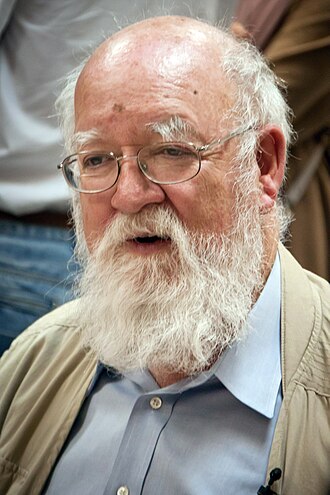
Daniel Dennett美国哲学家(1942–2024),塔夫茨大学教授,心灵哲学与认知科学代表人物,著有《意识的解释》《达尔文的危险思想》《Breaking the Spell》,「新无神论四骑士」之一。
Robert Lawrence Kuhn《Closer to Truth》节目创始人与主持人,长期采访科学家与哲学家探讨宇宙、意识与上帝问题。
01翻转提问:无神论的正面论证
0:00
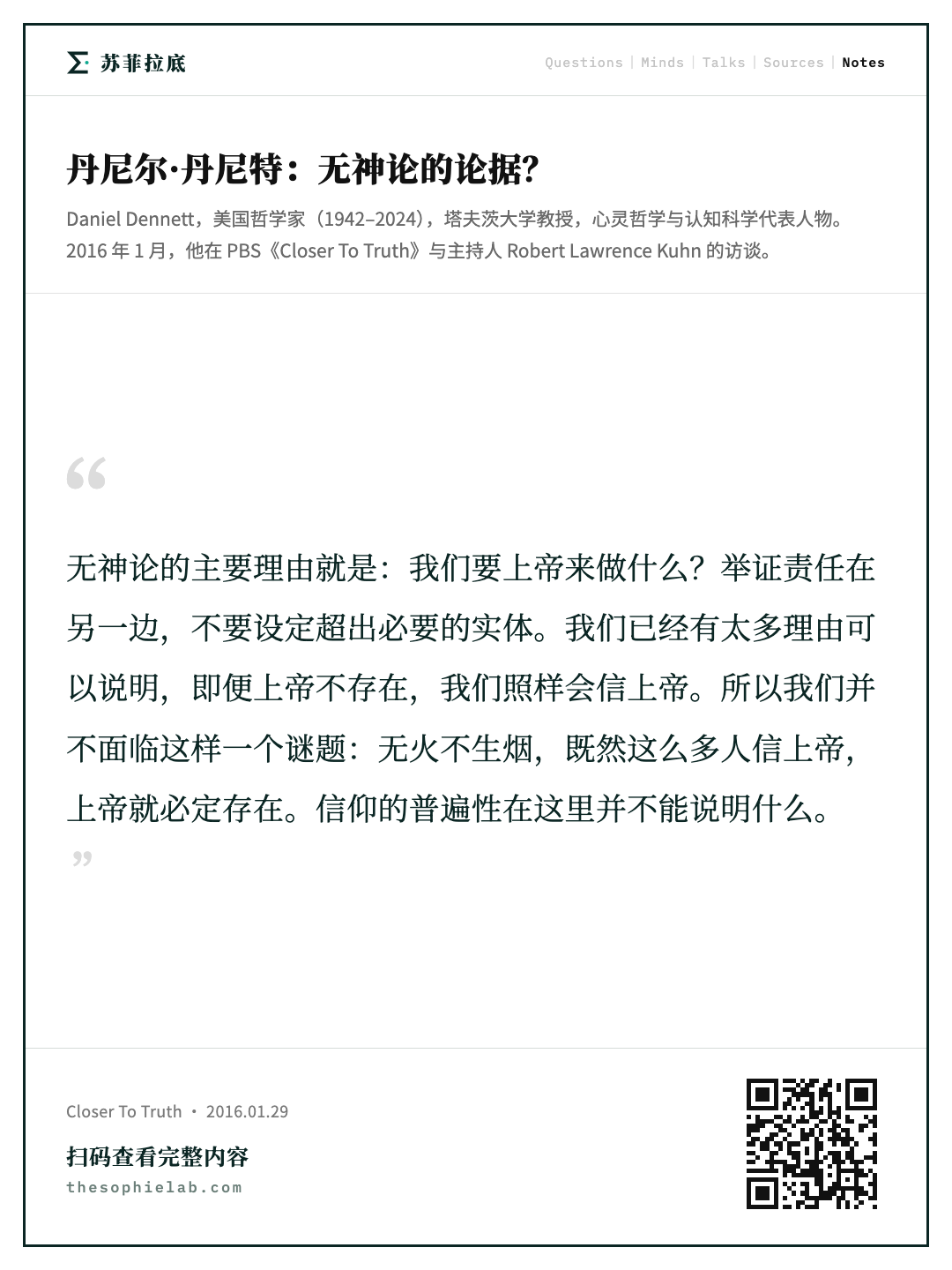
Dan, I would really like to know whether God exists. And I've been asking a lot of smart people questions uh about God and about arguments here and all that. Um and most of the people who don't believe in God would seek to attack and and undermine the arguments of those who do. Fine. I'd like to flip that around and say, what are the affirmative arguments for non-belief or for atheism? Well, I think the first one it simply has to be uh this is the way naturalism always argues. I mean the burden of proof is is is sort of on the other side. Uh don't multiply entities beyond necessity. So uh the main reason for atheism is what for what do we what do we need what do we need God for?
Dan,我真的很想知道上帝是否存在。我一直在向很多聪明人提问,关于上帝的问题还有关于这方面的论证等等。嗯,大多数不信上帝的人会试图攻击和削弱那些信上帝的人所提出的论证。这没问题。我想反过来问:支持不信、或者说支持无神论的正面论证有哪些?嗯,我觉得第一点,很简单,这就是自然主义一贯的论证方式。我的意思是,举证责任在对方那边。别在不必要的时候增加实体。所以,无神论的主要理由是什么呢——我们需要,我们要上帝干什么?尤其是我们还有一大堆理由可以解释,为什么在没有上帝的情况下,我们仍然会相信
便签笔记
02铜球「go」:不设定不必要的实体
0:48
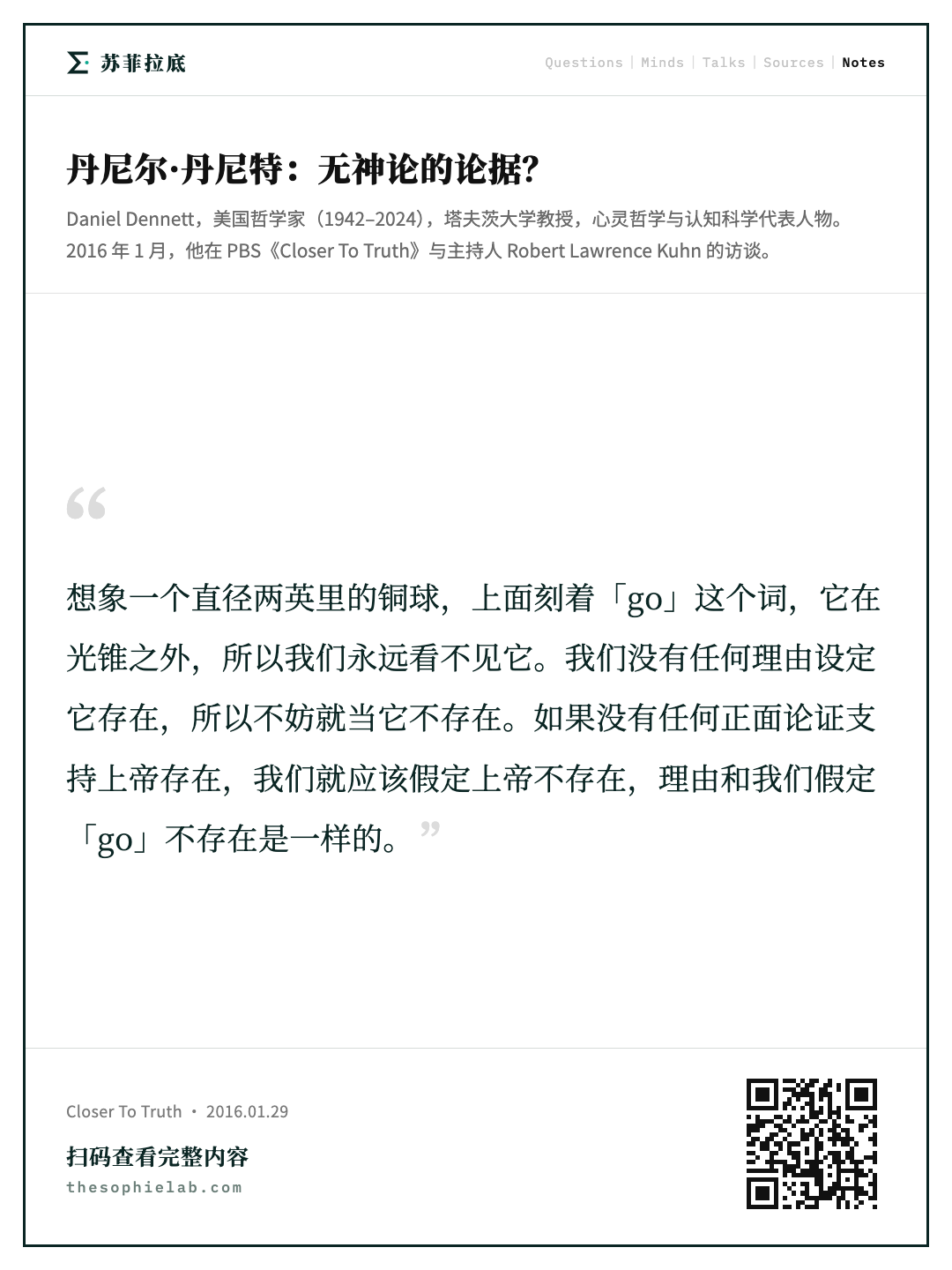
Especially since we've got a a surfet of reasons for seeing why in the absence of a God we would nevertheless believe in God. I mean, there's plenty of natural arguments explaining why this false belief would arise. So, we don't have the puzzle of gosh, you know, where there's smokeless fire, where there's so much belief that God must exist. No, I think we can just set that aside. So, now the neutral as neutral. Yeah. So, that that cuts no real ice here. So now the question is uh if there's no positive argument for the existence of God then we should just assume there isn't one for the same reason we should assume that there isn't um a go. Um what's go? Well, it's a a sphere of copper two miles in diameter with the word go stamped on it. Um and it's outside the lycom so we can never see it. Yeah, we have no reason to posit its existence. So we might just as well assume it doesn't exist. So the the core concept is that the burden is on the other side. Yeah. That that somebody has to come up with an affirmative burden
(有上帝)上帝。我是说,有大量自然主义的论证可以解释这种错误信念为什么会产生。所以我们并不面临那种困惑——哎呀,你知道,无火却有烟,为什么会有那么多人相信上帝必然存在。不,我觉得我们可以把这个放到一边。那么,现在这个中立就只是中立而已。对。所以这在这里起不了什么实质作用。那么现在的问题是,如果不存在支持上帝存在的正面论证,那我们就应该假定它不存在,理由和我们应该假定不存在一个「go」是一样的。嗯,什么是 go?它是一个直径两英里的铜球,上面印着「go」这个词。而且它在光锥之外,所以我们永远看不到它。对,我们没有任何理由设定它的存在。所以我们不妨就假定它不存在。所以核心概念是举证责任在对方那边。对,就是说得由某一方提出正面的举证责任,
便签笔记
03恶的问题与动物界的残忍
1:57
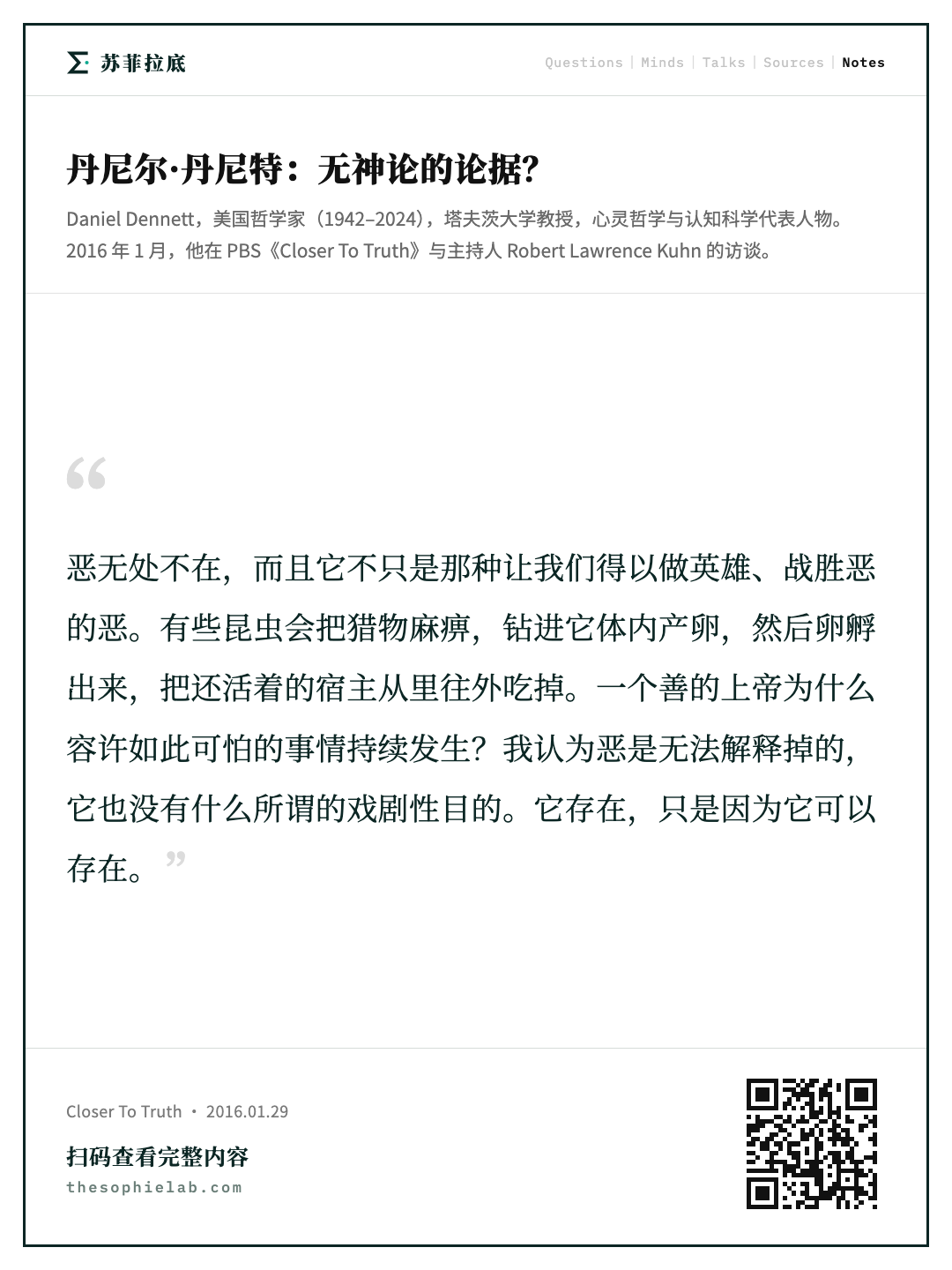
proof of God in order for us to see it because because that that is the best argument for atheism. Well, maybe if we want some further reinforcement on this, uh if you understand that God is supposed to be good and supposed to be all powerful, then the problem with evil really looms. Uh and evil is everywhere and it's not just uh uh evil so that we can be heroes and and triumph over evil. that that makes a good story and it makes us our lives more exciting and all that, but what about the extraordinary brutality that we discover in the animal world when we find uh insects that that uh uh sort of hypnotize their prey and then burrow inside and lay their eggs and then the eggs eat them out from the inside while they're still alive.
拿出上帝存在的证明,我们才需要接受——因为这才是支持无神论的最佳论证。嗯,如果我们想再加强一下这个观点的话,你想想,上帝被认为是善的,而且是全能的,那恶的问题就变得非常突出了。而恶无处不在,而且不只是那种'让我们能成为英雄、战胜邪恶'的恶。那种能编成好故事,让我们的人生更精彩什么的,但你怎么解释我们在动物界发现的那种极端残忍呢?比如有些昆虫会把猎物麻痹,然后钻进它体内产卵,接着卵孵化后从内部把还活着的猎物一点点吃空。
便签笔记
04道德之恶、自然之恶与自由意志辩护
2:55
There's all sorts of gruesome tales of this sort that we could tell about things that as we're animals do to each other. And uh why would a good god allow such such such horrible things to go on? Um I think that evil is you can't explain it away and it doesn't have as it were a dramatic purpose. Well, it exists because it can. The argument that you know is that evil is divided into two parts. The moral evil and the natural evil according to certain theologians and the the moral evil uh is to enable some kind of free will. There's a lot of different complications but the free will defense is generally the one given there. Natural evil is harder for them to deal with granted because that doesn't there's no free will involved.
这类骇人听闻的例子多得是,我们可以举出一大堆动物之间彼此这样对待的事。那么,一个善良的上帝为什么会允许这么可怕的事情发生呢?嗯,我觉得恶是无法被搪塞掉的,它也并没有什么所谓的戏剧性目的。它存在,只是因为它能存在。你知道,有一种论证是把恶分成两部分。按照某些神学家的说法,分为道德之恶和自然之恶。道德之恶是为了让某种自由意志成为可能。这里面有很多复杂的地方,但通常给出的就是自由意志辩护。诚然,自然之恶对他们来说更难处理,因为那里面并不涉及自由意志。
便签笔记
05「上帝是善的」是晚近驯化
3:47
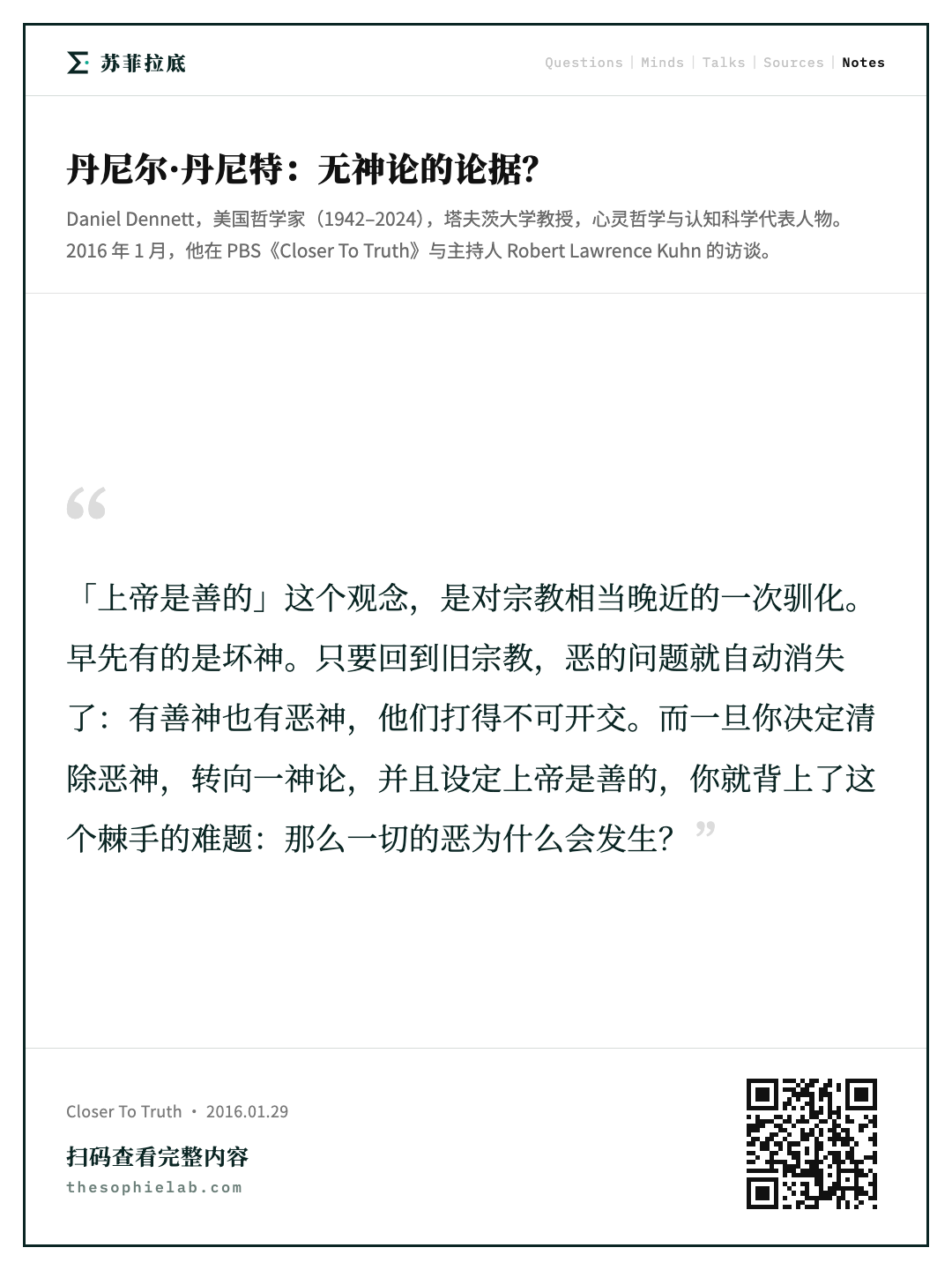
Nobody cares about the human spirit or whatever. Uh and there there are a bunch of arguments that the probabilistic world and uh you know things have to go that way and well those do strike me as from hunger fairly desperate fairly desperate arguments. Um we have to remember we have to remember that the idea that God is good is a fairly recent domestication of religion. There were plenty of bad gods uh in the early days and this is a a recent refinement. And of course the problem of evil just disappears if you go back to the old religion. We have good gods and bad gods and they're duking it out. And there's something very satisfying about that. And once you decide to get rid of the bad gods and and be monotheistic and supposed God is good, then you have this nasty problem of explaining uh uh why then all this evil happen. Not you're not arguing to go back to the old ways, are you? Well, I think there was a certain there was a certain uh dramatic integrity to them that is missing from the more recent
没人在乎什么人类精神之类的。呃,还有一堆论证说,那个概率性的世界,呃,事情就必须那样发展。嗯,那些论证在我看来确实相当牵强、相当绝望,相当绝望的论证。嗯,我们必须记住,我们必须记住,「上帝是善的」这个观念其实是宗教相当晚近的一种驯化。早期有大量的恶神呃,存在,这是一个晚近的修正。当然,如果你回到旧宗教,恶的问题就直接消失了。我们有善神也有恶神,他们彼此较量。这里头有种非常令人满足的东西。而一旦你决定摆脱恶神、变成一神论,并且假定上帝是善的,你就有了这个棘手的问题:得解释呃,呃,为什么会有这一切的恶发生。你并不是在主张回到旧的方式,对吧?嗯,我认为它们有某种,有某种呃戏剧上的完整性,而这是更晚近的上帝观念所缺乏的。
便签笔记
06氪石类比:神学解释是叙事装置
4:57
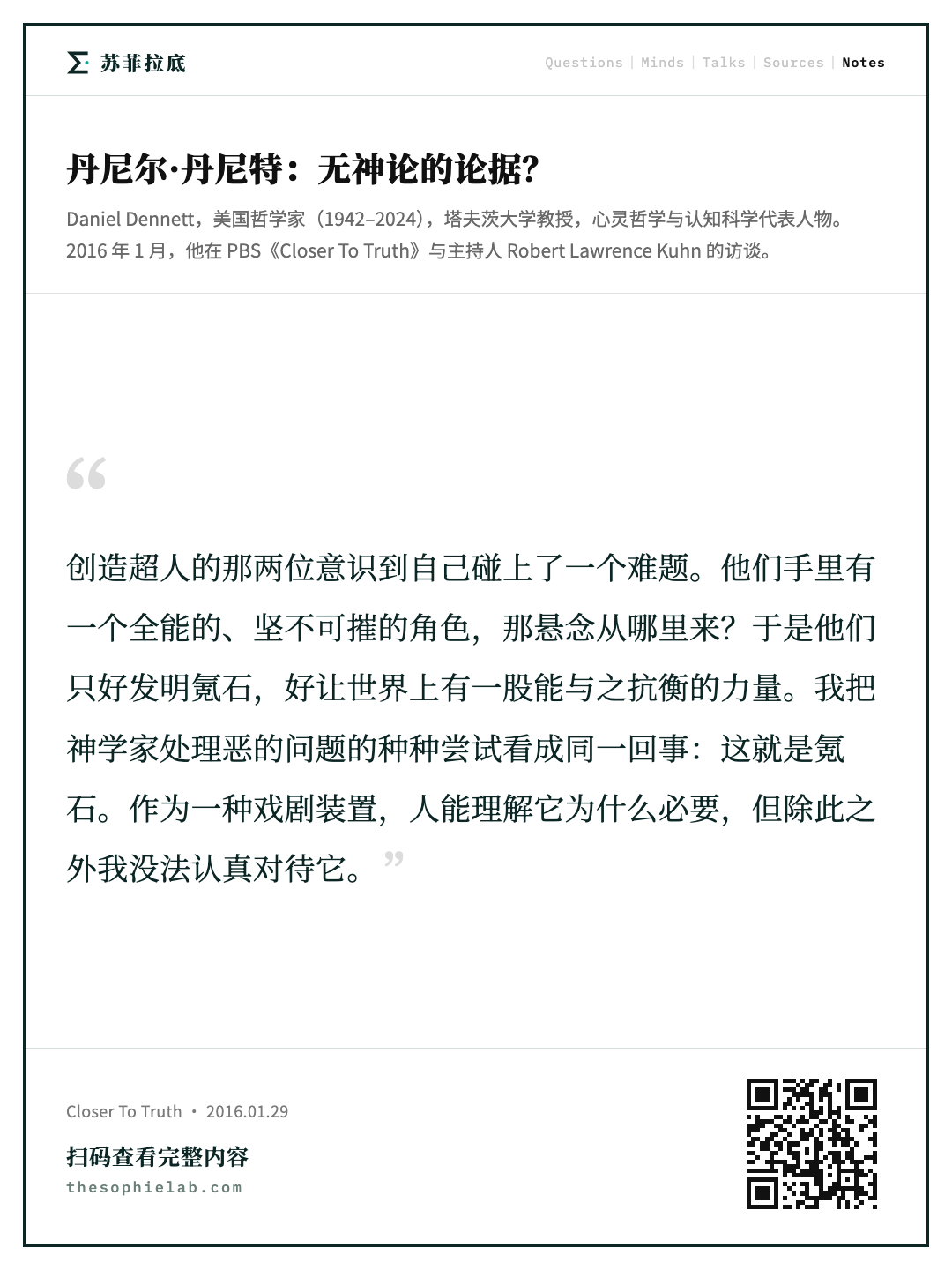
ideas of God. Um uh you know when when uh the I can't remember their names, the the people that that created the comic book character Superman, uh they realized they had a problem. They have this omnipotent indestructible uh agent and where can how can there be suspense? How can there be any storylines? They had to invent kryptonite. They had to invent kryptonite so that there would be a counterveiling force in the world. And I view theologians attempts to handle the problem of evil as this is this is just kryptonite. And it's it's one understands why it's necessary as a as a sort of dramatic device, but I can't take it seriously in any other way. Some theologians would try to harmonize an all good God with an all powerful God.
嗯,呃,你知道,当,当呃,我记不住他们的名字了,就是那些创造出漫画人物超人的人,呃,他们意识到自己遇到了一个问题。他们有了这么一个全能、不可摧毁的呃角色,那悬念要从哪儿来?怎么可能有任何故事线?他们不得不发明氪石。他们不得不发明氪石,好让世界上存在一种制衡的力量。而我看神学家处理恶的问题的种种尝试,就是,这就是不过是氪石罢了。人们能理解为什么作为一种呃戏剧手法它是必要的,但除此之外我没法认真对待它。有些神学家会试图调和一位全善的上帝和一位全能的上帝。
便签笔记
07削弱全能:开放神论的妥协
5:50
That those two concepts and that's a tough one. Other theologians have now come along and to say, okay, we really can't do that. So, we have to compromise one or the other. And in general what they do is they diminish the the all powerful and they somehow say that there was part of God that that is the from antiquities or everlasting that that's that's that's that is unchanging and and and then but there's part of God that's open and uncertain. He's done the best he can and and to the best that it's possible to do in order to maintain this relationship with with with the free agents. And so they diminish the all power and therefore eliminate the inconsistency. Well, that's but in your own telling it sounds to me like like a storyboard conference at Superman comics. Um how are we going to solve this problem? Well, let's see.
把那两个概念调和起来,这很难办。另一些神学家如今站出来说,好吧,我们其实做不到这一点。所以我们必须在其中一者上作出妥协。而他们一般的做法是削弱那个「全能」,他们不知怎么地会说,上帝有一部分是自古以来的、永恒的,那部分是那是,那是不变的,然后,但上帝也有一部分是开放的、不确定的。他已经尽了他所能做到的最好,尽到在可能范围内的最好,为的是维系与这些自由行动者的关系。于是他们削弱了全能,从而消除了那个不一致。嗯,那不过是——但照你自己的说法,我听着就像是超人漫画的分镜策划会。嗯,我们要怎么解决这个问题呢?嗯,让我想想。
便签笔记
08自洽不等于真:隐蔽性与无身心灵
6:44
if we if we if we tone down the the omnipotence a little bit, then we could we'd be back in business. All right, let's do it. Um, but the idea that that that little innovation of theirs is answerable to anything other than their own sense of consistency is to me just incredible. I mean, right, they're trying to tell a consistent story and they're playing by some pretty tough rules. They've made it. They've tied both hands behind their backs. And this is the best they can come up with. But what does that have to do with what's true? It's just how to tell a story. Other arguments that have been used affirmatively for atheism, I'd like to get your take on them are things like that if God is so wants me to believe why is he so hidden, the hiddenness of God. Another is uh that of God is a mind. We've never seen a mind uh outside of of an embodied form. Are these arguments good philosophical arguments for atheism?
如果我们,如果我们,如果我们把全能稍微调低一点,那我们就又能接着干了。好嘞,就这么办。嗯,但要说他们那个小小的创新除了对他们自己的自洽感之外还对别的什么东西负责,这在我看来简直难以置信。我的意思是,对,他们是在努力讲一个自洽的故事,而且他们遵守的规则相当苛刻。他们自己弄出来的。他们把两只手都反绑在背后了。而这就是他们能想出来的最好答案。可这跟什么是真的又有什么关系呢?这不过是怎么讲个故事罢了。还有一些论证被正面用来支持无神论,我想听听你的看法,比如说,如果上帝那么希望我相信,他为什么如此隐蔽——上帝的隐蔽性。另一个是呃,上帝是一个心灵。我们从没见过一个呃脱离肉身形式而存在的心灵。这些是支持无神论的好的哲学论证吗?
便签笔记
09障眼法:拟人语言的退却
7:45
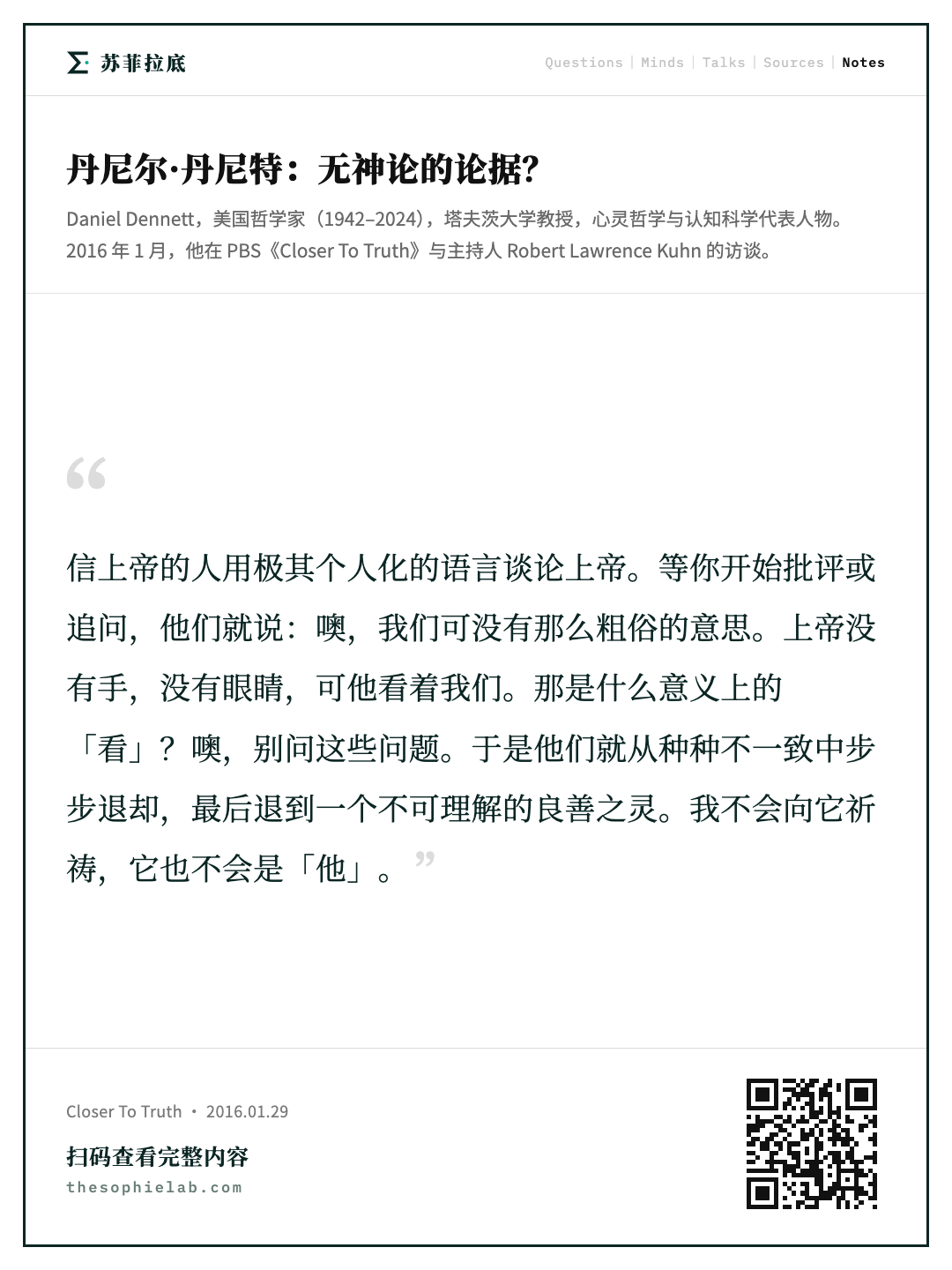
Well, they are against people who hold the positions that they're addressed to. So if if somebody really holds a position where God has a mind, and I think actually most people who believe in God do, I mean, sure, why are they praying? To whom are they praying if God doesn't have a mind? Then I think they're they're legitimate arguments. Um what we have to face though is that um there's a sort of shell game. Uh uh can I not mean that disparagingly? Yes, I suppose in the neutral sense there's a shell game uh in which uh uh people who believe in God use richly personal language to talk about God. And when you say wait a minute wait a minute and you start criticizing or asking them questions about oh we didn't mean anything as as as crass as that. No, God doesn't have hands, doesn't have fingernails, you know, doesn't have eyes, but he sees us. What sense? Oh, don't ask these questions. And so, they back off from the inconsistencies to a god which ends up being an incomprehensible spirit of
嗯,这些论证针对的是那些持有相应立场的人。所以,如果有人真的认为上帝是有心智的——我觉得实际上大多数信上帝的人都这么认为——我是说,不然的话,他们为什么要祷告呢?如果上帝没有心智,他们是在向谁祷告?那样的话,我认为这些论证是站得住脚的。嗯,不过我们得面对的是,这里有点像在玩障眼法。呃,呃,我这么说没有贬低的意思?是的,我想在中性的意义上说,这是一场障眼法游戏,呃,就是那些信上帝的人用非常拟人化的语言来谈论上帝。而当你说等一下、等一下,然后开始批评或者向他们提问的时候——哦,我们并不是那么粗浅的意思。不,上帝没有手,没有指甲,你知道的,也没有眼睛,但他看得见我们。这是什么意思?哦,别问这些问题。于是,他们就从这些矛盾中退了回去,退到一个最终成了不可理解的良善之灵的上帝那里。
便签笔记
10不可理解的良善之灵:自洽但空洞
8:59
goodness. Do I believe in an incomprehensible spirit of goodness? I don't know. Maybe. wouldn't pray to it. It wouldn't be he. Um, and maybe there's an incomprehensible spirit of badness, too. And don't see any reason to believe in it. But if you do, then at least you maybe find a consistent position.
我相信有一个不可理解的良善之灵吗?我不知道。也许吧。但我不会向它祷告。它也不会是个“他”。嗯,而且也许还存在一个不可理解的邪恶之灵。我看不出有任何理由去相信它。但如果你相信,那你至少可能找到了一个前后一致的立场。
便签笔记
视频总结 · 一句话概括与核心要点

本期是 Robert Lawrence Kuhn 主持的《Closer to Truth》对哲学家 Daniel Dennett 的访谈。主持人翻转常规提问:不是攻击有神论论证,而是请 Dennett 给出无神论的正面论证。

举证责任 Dennett 首先诉诸自然主义与奥卡姆剃刀:我们不需要上帝解释任何东西,举证责任在有神论一方。他补充说,既然自然主义已能解释信仰为何在无神的世界里产生,「普遍信仰」这一证据被中和。他用一个处于光锥之外、印着 go 的铜球类比:无理由设定的事物应默认不存在。

恶的问题 第二个论证是恶的问题,尤其是寄生昆虫活吃宿主这类无叙事意义的自然之恶。主持人引入道德之恶/自然之恶与自由意志辩护,Dennett 认为相关论证「相当绝望」,并作出关键历史转折:「上帝是善的」是宗教晚近的驯化,多神论里善恶神明较量,恶的问题本不存在,一神论的难题是自设的。

氪石类比 他把神学家对恶的问题的修补比作超人创作者发明氪石:为让故事讲通而引入的装置。面对削弱全能的开放神论,他指出这只对内部自洽负责,与真相无关。

隐蔽性与障眼法 对「上帝的隐蔽性」「无身体的心灵」两个论证,他有条件地肯定:对认为上帝有心智的多数信徒有效。最后他批评信仰语言的「障眼法」——被追问时从拟人描述退到「不可理解的良善之灵」,而那样的上帝无法被祷告,自洽却空洞。

核心句型 · 9
1. I'd like to flip that around and say …
“I'd like to flip that around and say, what are the affirmative arguments for non-belief or for atheism?”
flip sth around 表示「把问题反过来问」。适用于访谈或讨论中转换视角,先承认常规思路,再提出反向问题。
2. The burden of proof is on the other side.
“The burden of proof is sort of on the other side.”
论辩中把举证责任推给对方的标准表达。可仿写:The burden is on those who claim X to show that …
3. We might just as well assume …
“So we might just as well assume it doesn't exist.”
might (just) as well + 动词原形:既然没有更好的选择,不妨就……。语气克制,表示理性默认,而非强硬断言。
4. That cuts no ice here.
“So that cuts no real ice here.”
习语 cut no ice (with sb):对某人不起作用、没有说服力。适合在讨论中指出某论据无效。
5. What about …?
“But what about the extraordinary brutality that we discover in the animal world …”
先承认对方某种说法可以成立,再用 what about 抛出反例,是提出反驳的自然过渡。
6. X is a fairly recent Y of Z.
“The idea that God is good is a fairly recent domestication of religion.”
用名词化结构(domestication / refinement)把历史判断压缩进一句话,学术表达中常见,可仿写:This norm is a fairly recent refinement of …
7. I view A as (just) B.
“I view theologians attempts to handle the problem of evil as this is this is just kryptonite.”
view A as B 表示「把 A 看作 B」,用一个具体比喻给抽象事物定性,是表达立场的高效句式。
8. But what does that have to do with what's true?
“But what does that have to do with what's true? It's just how to tell a story.”
have to do with 表示「与……有关」;用反问指出对方论证与真相无关,再用短句总结,节奏有力。
9. They are X against people who hold the positions that they're addressed to.
“Well, they are against people who hold the positions that they're addressed to.”
有条件地肯定论证的效力:论证只对持有特定立场的人有效。适合给出「视情况而定」的严谨回答。
生词精讲 · 57 · 按出现顺序
affirmative /əˈfɜːrmətɪv/ adj. 0:00
正面的、肯定性的(论证);与「否定对方」相对
undermine /ˌʌndərˈmaɪn/ v. 0:00
削弱、逐渐破坏(论证、信心等)
naturalism /ˈnætʃərəlɪzəm/ n. 0:00
自然主义(哲学立场:只用自然原因解释世界)
burden of proof phr. 0:00
举证责任;the burden of proof is on sb 由某方负责证明
multiply entities beyond necessity phr. 0:00
不必要地增加实体(奥卡姆剃刀的表述)
surfeit /ˈsɜːrfɪt/ n. 0:48
过量、过剩(原文拼作 surfet);a surfeit of 多得用不完的
set that aside phr. 0:48
把……放在一边、暂不考虑
cuts no real ice phr. 0:48
习语 cut no ice:不起作用、没有说服力
posit /ˈpɑːzɪt/ v. 0:48
(作为前提)假定、设定……的存在
sphere /sfɪr/ n. 0:48
球体
might just as well phr. 0:48
不妨、倒不如(表示没有更好的选择)
reinforcement /ˌriːɪnˈfɔːrsmənt/ n. 1:57
加强、强化(论证的补充支持)
looms /luːmz/ v. 1:57
loom:(问题、危险)隐约逼近、显得突出
triumph over phr. 1:57
战胜、击败
brutality /bruːˈtæləti/ n. 1:57
残忍、野蛮行为
hypnotize /ˈhɪpnətaɪz/ v. 1:57
使催眠、使麻痹(此处指昆虫麻痹猎物)
prey /preɪ/ n. 1:57
猎物
burrow /ˈbɜːroʊ/ v. 1:57
钻入、挖洞进入
gruesome /ˈɡruːsəm/ adj. 2:55
令人毛骨悚然的、可怕的
explain it away phr. 2:55
把……搪塞过去、用解释来掩盖问题
as it were phr. 2:55
可以说、所谓的(缓和措辞)
theologians /ˌθiːəˈloʊdʒənz/ n. 2:55
神学家
free will defense phr. 2:55
自由意志辩护(回应恶的问题的经典神学论证)
granted /ˈɡræntɪd/ adv. 2:55
诚然、的确(承认对方某点后再转折)
probabilistic /ˌprɑːbəbɪˈlɪstɪk/ adj. 3:47
概率性的、基于概率的
from hunger phr. 3:47
俚语:拙劣的、不入流的、走投无路才想出来的
domestication /dəˌmestɪˈkeɪʃn/ n. 3:47
驯化;此处比喻宗教被改造得温和、可接受
refinement /rɪˈfaɪnmənt/ n. 3:47
改进、精炼;晚近的修正
duking it out phr. 3:47
duke it out:(俚语)打斗、较量
monotheistic /ˌmɑːnoʊθiˈɪstɪk/ adj. 3:47
一神论的
nasty /ˈnæsti/ adj. 3:47
棘手的、难对付的
dramatic integrity phr. 3:47
戏剧上的完整性/自洽性
omnipotent /ɑːmˈnɪpətənt/ adj. 4:57
全能的
indestructible /ˌɪndɪˈstrʌktəbl/ adj. 4:57
不可摧毁的
suspense /səˈspens/ n. 4:57
悬念
kryptonite /ˈkrɪptənaɪt/ n. 4:57
氪石(超人的弱点);引申为「致命弱点」
countervailing /ˌkaʊntərˈveɪlɪŋ/ adj. 4:57
制衡的、抵消的(原文拼作 counterveiling)
dramatic device phr. 4:57
戏剧手法、叙事装置
harmonize /ˈhɑːrmənaɪz/ v. 4:57
调和、使协调一致
compromise /ˈkɑːmprəmaɪz/ v. 5:50
在……上让步、损害(此处指削弱某一属性)
diminish /dɪˈmɪnɪʃ/ v. 5:50
削弱、减少
antiquity /ænˈtɪkwəti/ n. 5:50
古代、远古
everlasting /ˌevərˈlæstɪŋ/ adj. 5:50
永恒的、永久的
inconsistency /ˌɪnkənˈsɪstənsi/ n. 5:50
不一致、矛盾
storyboard /ˈstɔːribɔːrd/ n. 5:50
分镜脚本;storyboard conference 分镜策划会
tone down phr. 6:44
调低、缓和、减弱
back in business phr. 6:44
重新运转起来、又能接着干了
answerable to phr. 6:44
对……负责、受……约束
tied both hands behind their backs phr. 6:44
把双手反绑在背后:自设极苛刻的约束
hiddenness /ˈhɪdnnəs/ n. 6:44
隐蔽性;the hiddenness of God 上帝的隐蔽性(论证名)
embodied /ɪmˈbɑːdid/ adj. 6:44
有肉身的、具身的
legitimate /lɪˈdʒɪtəmət/ adj. 7:45
正当的、站得住脚的
shell game phr. 7:45
杯子藏球骗局;引申为障眼法、偷换概念
disparagingly /dɪˈspærɪdʒɪŋli/ adv. 7:45
贬低地、轻蔑地
crass /kræs/ adj. 7:45
粗俗的、粗浅的、不讲究的
back off from phr. 7:45
从……退缩、放弃(立场)
incomprehensible /ɪnˌkɑːmprɪˈhensəbl/ adj. 7:45
不可理解的、无法领会的
理解自测 · 11 题 · 是真懂了,还是以为自己懂
1. Dennett 给出的第一个、也是最主要的无神论论证是什么?

是自然主义的「举证责任」论证:不要在不必要时增加实体(奥卡姆剃刀),既然我们不需要上帝来解释任何东西,就应默认上帝不存在,举证责任在有神论一方。视频开头(第 0–1 段)他明确说「我们要上帝干什么」,并用一个处于光锥之外、印着 go 字样的铜球做类比:对于没有理由设定的事物,理性的做法是假定它不存在。

2. Dennett 用哪个动物界的例子来说明「自然之恶」?

他举了寄生昆虫的例子(第 2 段):某些昆虫麻痹猎物,钻进其体内产卵,幼虫孵化后从内部把仍然活着的宿主吃空。他强调这种残忍没有任何叙事意义,不是「让我们做英雄、战胜邪恶」的那种恶,因此对「善良且全能的上帝」构成直接挑战。这个例子与达尔文关于姬蜂的著名困惑一脉相承。

3. 主持人提到神学家把恶分为哪两类,各自用什么辩护?

分为道德之恶与自然之恶(第 3 段)。道德之恶通常用「自由意志辩护」解释:上帝允许人作恶是为了让真正的自由成为可能。自然之恶(如动物捕食、灾害)更难处理,因为其中没有自由行动者参与;主持人也承认这一点,并提到有人诉诸「概率性世界」的论证,而 Dennett 认为那些论证相当牵强。

4. 「氪石」在 Dennett 的论证中指什么?

氪石是超人创作者为解决「全能主角没有悬念」而发明的弱点(第 5 段)。Dennett 用它比喻神学家为处理恶的问题而做的各种修补:它们是为了让故事讲得通而引入的叙事装置,可以理解其必要性,但除此之外无法认真对待。这个比喻是他对整个神义论传统的核心评价。

5. 为什么 Dennett 认为普遍存在的宗教信仰不能作为上帝存在的证据?

因为已有大量自然主义解释说明,即使没有上帝,人类也会产生对上帝的信仰(第 1 段)——这是他在《Breaking the Spell》中的主要工作。他反用「无火不生烟」:既然烟(信仰)的来源已被自然机制解释,就不必推出火(上帝)。于是「那么多人相信」这一现象被中和,在论证上「起不了实质作用」。

6. Dennett 说「上帝是善的」是宗教晚近的驯化,这一点如何服务于他的整体论证?

他指出早期宗教有善神也有恶神,彼此争斗,因而恶的问题根本不存在;一神论把善集中到唯一的神身上,才制造出「善且全能的上帝为何容许恶」的结构性难题(第 4 段)。这说明恶的问题不是自然主义强加的,而是有神论自身设定的产物。他并非主张回归多神,而是借此揭示一神论神义论的困境是自找的。

7. 面对「削弱全能以消除矛盾」的开放神论,Dennett 的回应逻辑是什么?

他把这种做法比作超人漫画的分镜策划会(第 6–7 段):编剧发现设定有漏洞,就把全能「调低一点」,故事又能继续。他承认神学家在苛刻规则下努力保持自洽,「把两只手反绑在背后」,但关键反驳是:这种修改只对他们自身的自洽感负责,与什么是真的无关。自洽只是真理的必要条件,不是充分条件。

8. Dennett 如何评价「上帝的隐蔽性」和「无身体的心灵」这两个论证?他附加了什么条件?

他认为这些论证是有效的,但有条件:只针对持有相应立场的人(第 8 段)。既然大多数信徒确实认为上帝有心智——否则祷告就没有对象——那么这些论证对大众信仰是站得住脚的。他同时指出,一旦信徒退到「上帝没有心智、只是不可理解的灵」,这些论证就失去了靶子,这引出他对「障眼法」的批评。

9. Dennett 所说的「障眼法」揭示了信仰语言的什么问题?

信徒平时用高度拟人化的语言谈上帝(他看见我们、他爱我们),一旦被追问「他没有眼睛怎么看」,就退到「那只是比喻」,最后退到一个不可理解的良善之灵(第 8–9 段)。Dennett 的要点是:语义在两个层面之间来回移动,使论证无从着力;而彻底退却之后,「看见」「他」等词已失去内容,祷告也失去对象。这是关于语言意义与信仰内容的关系问题。

10. 有神论者可能反驳:「不能证明上帝不存在,所以应保持不可知论而非无神论。」Dennett 会如何回应?

他会用铜球 go 的类比回应(第 1 段):对于原则上不可观测、又没有任何正面理由设定的事物,理性的默认态度不是悬置判断,而是假定不存在——我们对光锥外的铜球正是如此。若坚持「不能证伪就应悬置」,我们将不得不对无穷多荒诞假设保持中立。此外他会补充:大量自然解释已说明信仰为何产生,普遍信仰这一唯一的「正面证据」也已被中和。

11. 把 Dennett「自洽不等于真」的批评迁移到科学理论:科学家修改理论以消除矛盾,是否也是「发明氪石」?

Dennett 的批评关键在于修改是否「对自洽以外的东西负责」(第 7 段)。科学理论的修改必须接受独立经验检验,会做出新的可证伪预测;而他认为神学家削弱全能只对内部自洽感负责,没有外部约束。因此区别不在于「是否修改」,而在于修改后是否能被世界纠正。若某个科学修补同样只为挽救理论、不产生可检验后果,按 Dennett 的标准它也应受同样批评——这恰是科学哲学中「特设性假说」的问题。

精读便签
下载便签 手机:长按图片保存
← 上一期 · NO.037Taking Time Seriously: Richard Rorty on Philosophy (1994)
问题周报 WEEKLY LEDGER 每周一封:本周入库的精读、一个值得带走的问题、一条苏菲按。随时退订。
免费 · 每周一封 · 一键退订
苏菲拉底 THE SOPHIE LAB · ASK THE BEST MINDS THE BIG QUESTIONS 内容仅供学习 · thesophielab.com