视频库 / NO.082ASK THE BEST MINDS THE BIG QUESTIONS
视频库 / NO.082
字幕 字幕位置
--:--
点击播放,这里会跟随视频显示当前句的中英字幕。

Daniel Goleman on Focus: The Secret to High Performance and Fulfilment

节目发布 2013-11-02 · Intelligence Squared
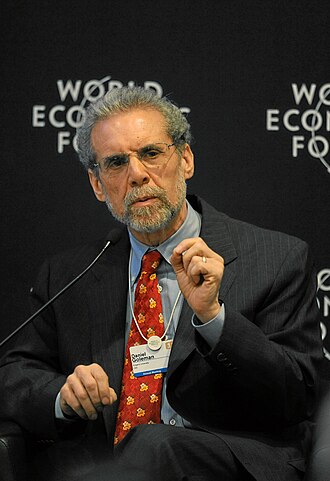
丹尼尔·戈尔曼 主持人 现场提问者
EDITED TRANSCRIPT · 依据现场录音编译整理,可划线生成便签
编者按:本文为心理学家丹尼尔·戈尔曼(Daniel Goleman)在伦敦一场公开演讲兼对谈中的现场记录。戈尔曼曾任《纽约时报》脑与行为科学记者,1995年以《情商》(Emotional Intelligence)一书把「EQ」推入公共语汇,此次他讲的是新著《专注》(Focus)的核心主张:注意力正在被围攻,而它恰恰是高绩效与人生满足感的底层能力。全文依据现场录音编译整理,仅删去口语枝节、寒暄与重复,论证、例证与问答一仍其旧。演讲结束后有近一小时的听众提问,涉及贫困与文化、遗传与习得、习惯改变、利他林过度处方等话题,一并收录于后半部分。

好撒玛利亚人的实验

戈尔曼: 谢谢刚才的介绍。今晚我想请各位把注意力放到「注意力」本身上来。先讲一个故事,是社会心理学里的一项经典实验,很多年前做于普林斯顿神学院,受试者是一群神学生。

每个学生都被告知,他要做一次布道练习:先领到一个题目去准备,然后走到另一栋楼里把这篇布道讲出来,接受评审。一半的学生拿到的题目是「好撒玛利亚人」的寓言,就是那个在路边停下来救助陌生人的人;另一半拿到的是随机抽取的圣经题目。当这些神学生穿过院子走向另一栋楼时,路上会经过一个人,那人弯着腰,痛苦地呻吟。

有意思的问题是:他们会不会停下来帮忙?更有意思的问题是:脑子里正想着好撒玛利亚人的寓言,这件事有没有影响?

各位怎么看?没有影响,一点影响都没有。真正起作用的只有一个变量:他们觉得自己的时间有多紧。

这差不多就是我们这一生的写照。这里有一条链条:先是注意到那个人,然后调频到那个人身上,再是共情、理解他正在经历什么,如果他有需要而我们又帮得上,才谈得上恻隐之心,谈得上伸手。但如果第一步就没有注意到,后面这条路根本走不下去。

注意力正在被围攻

戈尔曼: 这正是今天注意力的困境:它正在被围攻。

我意识到我们有麻烦了,是在动笔写《专注》之前的某一天。我住在新英格兰的乡下,那天我开车去开会,快迟到了,又想让对方知道我在路上,于是一边开车一边给他们发短信。这行为相当糟糕,因为不久之后我读到研究说,开车发短信和酒后开车是一回事,非常危险。事实上,我所在的州现在已经立法禁止了。

还有一件事我在写书时反复遇到。我写得正顺,几乎进入心流状态,忽然需要查一个资料,于是打开谷歌学术,我很爱用谷歌学术,因为它能通向学术数据库。可我一打开浏览器,浏览器就把当天的新闻推到我眼前,而我是个新闻瘾君子,于是我开始读新闻,等我回过神来,十五分钟、二十分钟已经没了,我才想起自己本来是要去查资料的。

今天我们都在同一条船上。我们使用的工具,电脑、手机等等,其设计初衷就包含打断我们、引诱我们,把我们的注意力从这里拽到那里,而拽过去以后,通常是要卖给我们点什么,一个弹窗广告之类。注意力遭受围攻的程度,是前所未有的。我去跟出版商谈这个选题时,有位出版人对我说:这题目太好了,我们非常想出这本书,不过,你能不能写短一点?

2007年,美国的《时代》杂志登过一篇小文章,说英语里出现了一个新词:pizzled。它由 puzzled(困惑)和 pissed off(恼火)拼成,专指这样一个瞬间:你正和某人在一起,他掏出黑莓手机开始跟别人聊天,把你晾在一边。2007年,这还算稀奇事。而如今 pizzled 这个词已经随着黑莓一起死掉了,因为它已经成了新的社会常规。你去一家很浪漫的餐厅吃饭,看见一对情侣同桌而坐,两人都盯着各自的手机,而不是望进对方的眼睛。

我们身上出了点事情。1977年,诺贝尔奖得主赫伯特·西蒙(Herbert Simon)写下过一句极有预见性的话:信息消耗的是注意力,因此信息的富足,制造的是注意力的贫困。我认为我们已经进入了一个有「注意力赤贫」之虞的时代。

征兆远不止情侣看手机不看彼此。前几天我看见一位妈妈抱着蹒跚学步的孩子,孩子一直想引起她的注意,她却忙着发短信,人在,却不可及。当然,爸爸那边也是同一个故事。去年夏天我在玛莎葡萄园岛度假,那是新英格兰海岸外的一个岛。我从码头打车回住处,是那种大面包车式的拼车,同车的是七个大学女生,同一个姐妹会的,结伴过周末。车开出去不到一两分钟,七个人全都盯进了手机和平板的屏幕,彼此一句话也不说。

融洽关系的三要素

戈尔曼: 我认为这是真正的损失。人与人之间的融洽(rapport)有三个成分。

第一是彼此全神贯注。第二样东西是从全神贯注里自然长出来的,叫非言语的同步。你若观察两个真正投契、真正连上了的人,把这一幕拍成视频,关掉声音去看,你会觉得两具身体像是被编排过的舞蹈。这件事由一类叫「振荡器」(oscillators)的脑细胞掌管,它决定我们如何回应他人,也决定我们如何回应物体。振荡器对人类这个物种的存续极其重要,想想看:初吻的那一刻,正是它决定了两个头颅相向而行的速度。要是算错了,那就是物种的终结,这一点我很确信。

第三个成分是:这件事让人愉快。与人连接得这么好,是一种相当欢愉的状态。我们一生中最丰盛、最要紧的时刻,正是这样的时刻。

可是最近《哈佛商业评论》上有一篇文章,标题叫《人的时刻》。文章说:如果你想和一个人建立真正的连接,比如他走进你的办公室,请记住,把身体从屏幕前转开,别管手机和其他一切设备,停下你的白日梦或者心里那些杂事,把全部注意力交给眼前这个人。我觉得可悲的是,这样的事居然要靠《哈佛商业评论》上一篇文章来提醒我们。但事情就是走到了这一步,因为注意力已经变成越来越稀有的东西,而它是极其珍贵的东西。

我认为,是时候在我们自己的生活里主动站出来,抵抗这场悄无声息的侵袭了。我认识一对夫妇,他们约定:一进家门就把手机放进抽屉,整个晚上都不看。还有一种新的聚会方式,不知道英国有没有,在美国是这样:一群人聚餐,所有人把手机掏出来摞在桌子中间,在账单来之前,谁第一个伸手去拿手机,谁买单。

选择性注意与情绪干扰

戈尔曼: 注意力不止一种。最显而易见的是选择性注意,就是聚焦于一件事而忽略其他。干扰源大体上有两大类。

一类是感官干扰。比如你们现在看着我,大概就没注意到这块白板,对吧?这一类相对容易处理。难的是第二类:情绪干扰。情绪干扰的力量极其强大,它们是那些念头:刚才那场谈得不太顺的对话,今天早上和伴侣的口角,大多是关系上的挂碍,是那些让我们心烦的事。

越是专注,我们做什么都做得越好,这话听起来近乎废话,但确有依据。比如给运动员做一次注意力集中度测验,就能预测他下个赛季的表现。同样,学生读一段文本时走神越少,对文本的理解就越好。不过研究发现,我们读书时平均有百分之二十到四十的时间在走神。我想这跟读什么书有关,那项研究用的是《傲慢与偏见》,如果换成《五十度灰》或者《眨眼之间》之类,结果也许不同。

要紧的是:注意力越是被切碎,尤其对年轻人来说,他们越难把握住知识,越难建立那种层层累积的心智模型,而任何领域的精通,说到底就是这种模型。

倒U曲线:心流与心力交瘁

戈尔曼: 有三种注意力的状态,我想请各位留意。我在这里画个示意图。纵轴是绩效,上面是高,下面是低;横轴是大脑的活跃程度,尤其是皮质醇、肾上腺素这类压力荷尔蒙的水平。两者的关系很能说明问题:它是一条倒过来的U形曲线。

绩效的最高点,出现在注意力百分之百、也许百分之一百一十的时候,这个状态被称作心流(flow)。心流是怎么被发现的呢?研究者去问各行各业的高手,篮球运动员、芭蕾舞演员、神经外科医生,问他们:请讲一次你超水平发挥、状态好到连你自己都吃惊的经历。结果不论哪个领域,人们描述的是同一种现象。这个状态的特征之一,就是注意力被彻底吸纳。

有位神经外科医生说,他要做一台手术,难到他自己都不确定做不做得下来,结果他做得极其漂亮,自己都惊讶。手术结束他一抬头,看见手术室角落里有一堆碎渣,就问:这是怎么回事?旁人说,你做手术的时候那边的屋顶塌了一块,你没注意到。这就是那种注意力,牢不可破。同时,这也是一种技能被调用到极致的状态:不管眼前的要求是什么,你都接得住,你非常灵活,非常有适应力。还有一点很能说明问题:这个状态令人愉快。它很像融洽,融洽其实就是双人的心流,人际间的心流。

那是专注度百分之百的地方。而当你要做的事太多、时间太少、支持太少,当你觉得被压垮,你就落到曲线的这一端,压力荷尔蒙飙到最高。《科学》杂志上最近有篇文章把这个状态称作「心力交瘁的神经生物学」(the neurobiology of frazzle)。不知道各位熟不熟悉这种心力交瘁,我可是去过很多次。那是持续不断的压力状态,而它的麻烦在于:你没法停止去想那件让你烦心、让你紧张的事。你在这里并没有专注,你没有专注在手头的任务上,你专注的是那件让你难受的事。这就是情绪的力量:情绪会接管注意力,会引导注意力,而如果情绪太强,你永远上不到高点去。

曲线的另一端,绩效低下的原因则是动力不足、心不在焉。职场里的「不投入」是个巨大的问题。哈佛做过一项很有意思的调查:给两千五百人装一个手机应用,应用会在一天中随机响起,请他们回答两个问题:你现在在做什么?你现在在想什么?两者之间的落差,就是走神的度量。结果是:我们平均有百分之五十的时间在走神。专注度最高的那项活动,毫无悬念,是做爱,不过那种时候谁还去填问卷,我至今没想明白。专注度最低的三项是:通勤、坐在电脑前,以及工作。所以说,如果你对手头的事毫不投入,你的皮质醇水平就低到了不该低的地步。

走神:敌人也是源头

戈尔曼: 我刚才一直在讲专注,好像它是唯一有价值的注意力形式。但事实上,走神虽然是专注的敌人(脑科学里的说法是两者「负相关」,你的心一旦游走,按定义就不在专注,反之亦然),却是创造性洞见绝对必需的东西。

创造的过程要求你先聚拢信息、聚焦于问题、真正下功夫钻研,然后放手。科学史、艺术史、数学史里满是这样的人:他们想出惊人的解法,是在洗澡时发呆、在上公交车、在遛狗的时候。原因在于,走神状态下我们能够把彼此遥远的元素以一种新的、有价值的方式连接起来,而这正是「创造性行为」的定义。当然,如果要执行,要把这个想法真的用起来,你还得回到专注中去。但走神极其、极其宝贵。

向内的专注:躯体标记

戈尔曼: 注意力还在另一个层面运作,这和领导力有关。我的主张是:领导者需要三种专注才能真正有效。

第一种是向内的专注。我给各位讲一个来自神经病学案例集的故事。有位公司律师不幸长了一个前额叶的小肿瘤,发现得早,手术也成功。可术后的情况非常费解:他和以前一样聪明,智商很高,注意力和记忆都没有问题,可他没法做他的工作了。他做不了任何工作,最后失了业,妻子离开了他,房子也没了,只能住在哥哥家的空房间里。绝望之中,他去看了一位著名的神经病学家,安东尼奥·达马西奥(Antonio Damasio)。

达马西奥专攻的正是这样一段回路:前额叶区域,也就是我们有意识地关注当下要紧之事、做决定、进行学习的地方,和中脑的情绪中枢,尤其是杏仁核,我们探测危险的雷达、引爆强烈情绪的开关,两者之间的连接。手术切断了前额叶与情绪中枢的连接。达马西奥起初也困惑:这个人所有神经系统检查都完全正常,但确实有什么地方坏掉了。后来他抓到了线索。他问这位律师:我们下次约什么时候?他发现,这位律师能就未来两周里的每一个钟点给出条分缕析的利弊分析,却不知道哪个最好。

达马西奥说:我们做决定的时候,任何决定,下次约在什么时候、要不要辞掉现在的工作换一份、未来该采取什么战略、我该和谁结婚,这个人和其他所有人相比怎么样,这些决定都要求我们调用一生的经验。而收集这些人生经验的那套回路,位于非常古老的底层脑区,它和用词语思考的那部分大脑没有直接连接,却和胃肠道有极其丰富的连接。所以我们才会有「gut feeling」,直觉上对劲,或者不对劲。达马西奥把它们叫作「躯体标记」(somatic markers),那是身体的语言。

能不能调频到这套信号上,极其重要,因为它也是有价值的数据。有人研究过加州的创业者,问他们如何做决策,这些人是把生意从零做到几亿甚至几十亿美元的人。他们的回答大同小异:我是个贪婪的信息收集者,我要看数字;但如果感觉不对,这笔交易我就不做。他们是在调频到那种直觉上。

我在加州中央谷地的农业区长大,我读的高中和邻镇的高中是对头。我认识一个从那所高中出来的人。他不是个好学生,差点没能毕业,真的很接近毕不了业。他去读了两年制的社区学院,摸索着进了电影这一行,他热爱电影,考进了电影学院。在电影学院里,他的学生作业被一位导演看中,请他去做助手。他做得非常好,那位导演便安排他自己去导一部片子,剧本是别人的。这部他又拍得非常好,于是人家让他拍一部自己写的剧本,那部片子的成绩出乎意料地好。投资那部片子的制片厂说:你要是想再拍一部,我们出钱。

但他痛恨制片厂剪片的方式。他觉得自己是个创作者,而他们把他的作品糟蹋了。他说:这部片子我自己来,我自己出钱。电影圈里他认识的每一个人都说:这是天大的错误,你不该这么干。他还是干了。后来钱用光了,他跑了十一家银行才贷到款。片子总算完成了,各位大概看过,叫《星球大战》。

乔治·卢卡斯是凭直觉做的这个决定。让制片厂去糟蹋他的下一部片子,这件事感觉不对。那是他的操守。这种内在的感觉是有伦理性的,它是一个道德的舵。它回答的是这样一个问题:我即将去做的事,是否合乎我对意义、价值和伦理的感受?这个问题我们不是先用语言回答的,我们先回答的是「对劲」还是「不对劲」,然后才把它翻译成话。今天每一位领导者都需要一个坚固的伦理之舵。所以我要说,向内的觉察、向内的专注,是必需的。

三种共情

戈尔曼: 第二种是向他人的专注,也就是读懂人的能力,能够调频到对方身上。共情有三种。

第一种是认知共情(cognitive empathy)。认知共情意味着我懂得你如何思考事情,懂得你的心智模型,懂得你眼中的世界是什么样。这意味着我能用你真正听得懂、真正有共鸣的语言和你交流。认知共情好的管理者和领导者,能从人身上带出超出预期的表现,因为他们知道如何调动人,知道什么对人要紧。

第二种是情绪共情(emotional empathy),是对另一个人内心正在发生什么的一种即时的、亲身的感受。这一种也绝对必需:如果你只有认知共情而没有情绪共情,你会打偏。

第三种同样重要,叫共情关切(empathic concern):我不但知道你怎么想、怎么感受,而且如果你有需要而我帮得上,我天然就倾向于去帮。那些最能赢得忠诚、最让人心甘情愿追随的领导者,三种共情都有。

《哈佛商业评论》上有篇文章叫《失控的领导力》,讲的正是那些只有认知共情、缺了另外两种的人。这类领导者很擅长把指标打下来,却不在乎手下人的处境,对他们没有感觉,于是把人的士气磨光,一有机会就想走。

看清系统:黑莓的教训

戈尔曼: 第三种是向外的专注。这一种在制定战略时尤其重要:你需要理解自己的组织身处怎样的生态,需要感知什么会奏效、未来该做什么。为此你需要一种系统视角,一种看大图景的思维。

这里有个令人惋惜的例子,就是黑莓。战略思维基本上有两种,一种是深耕(exploitation),一种是探索(exploration)。深耕是拿一个已经非常成功的产品或品牌,不断微调、不断打磨,让它越来越好,因为它一直在替你赚钱。黑莓做的就是这个。危险在于,如果你不同时探索,也就是放眼四望,看看正在发生什么、事情往哪儿走,去做研发,去琢磨下一个新东西,你就会输。他们没有看见,比如说,没有看见三星,没有看见竞争对手在做什么。

所以,如果缺了向内的专注、向他人的专注和向外的专注,对应的危险分别是:没有舵,没有头绪,以及被人从侧面撞翻。

把注意力当肌肉练

戈尔曼: 注意力是一块心智的肌肉。它就像去健身房:你举一次哑铃,就把正在锻炼的那块肌肉强化一分。注意力可以用同样的方式强化。事实上,如果各位愿意,我可以现在就演示一下,只要两分钟。

你要做的只是:坐直,闭上眼睛,把注意力带到呼吸上。不要试图控制呼吸,只是观察它,去感受它的进出,也许是在鼻孔那里。观察每一次呼吸,完整的吸气,完整的呼气,然后随着下一次呼吸重新开始,再随着下一次呼吸重新开始。充分地觉知那个感觉。如果你发现自己的心跑到别处去了,把它带回来,温和地重新开始。

好,现在可以睁开眼睛了。有人注意到自己走神了吗?有人把它带回来了吗?那一下就是一个「组次」。真正的练习不是让心保持专注,练习是在它游走的时候把它带回来,那才是强化注意力回路连接的动作。这是埃默里大学做的一项研究。这是最基础的一块心智肌肉。

让我觉得有意思的是,我们通常并不锻炼它。我们习惯于依赖外部的东西来抓住我们的注意力。事实上,我们的经济在某种意义上就建立在「抓注意力」上。习惯化(habituation)是大脑面对日复一日同一样东西时的反应,比如你每天走同一条路上班,走着走着就看不见了,大脑在注意力上做节省。定向反应(orienting)则相反,是一种打开:每当大脑遇上新鲜、新奇、出乎意料的东西,它就被激活。想想看,每一季都有新时尚,可什么是新时尚?其实是在一个基本款上做的小小变化。每一年都有新车,可什么是新车?就是差异刚好足够触发定向反应而已。这就是我们经济的基础。

所以,去培养一种管理自己心智的能力,让自己能够随意地定向,是一件相当激进的事。而这恰恰是注意力训练能做到的,我因此成了它的鼓吹者。

一个原因是研究。威斯康星大学的神经科学家理查德·戴维森(Richard Davidson)专攻大脑与情绪。他发现,当我们焦躁、心烦、愤怒、焦虑时,右前额叶区域(就在额头后面)活动很多,杏仁核,也就是战逃僵反应的扳机点,也很活跃。反过来,当我们处在真正积极的状态里,感觉很棒、兴致勃勃、觉得今天真好,左侧活动很多,右侧则安静。我们每个人在静息状态下都有一个右对左的活动比值,这个比值能预测我们日常的情绪波动范围。他发现这个比值和智商一样呈钟形分布:大多数人在中间,有坏日子,也有好日子。如果你非常偏右,你可能有临床意义上的抑郁或焦虑;如果你非常偏左,你的心理弹性极好,遭遇挫折马上就能弹回来。

戴维森和乔恩·卡巴金(Jon Kabat-Zinn)合作过。卡巴金把他所说的正念(mindfulness)推广开来,比如在医疗领域用于管理慢性病,最近在商界也有很多公司引入。他们去了一家全天候高压运转的生物技术初创公司,教员工做正念,内容差不多就是我们刚才做的观呼吸,但每天三十分钟,持续八周。结果是:练习之前,这些人的大脑是偏右的,相当疲于奔命、压力很大;八周之后,每天三十分钟,他们开始往左偏回去。特别有意思的是,人们自发地说起:我好像又开始享受我的工作了,我想起来当初我喜欢这份工作的是什么。换句话说,积极情绪确实起了作用。这也是企业引入它的一个原因。

童年已经变了

戈尔曼: 不过我自己觉得,最需要以这种方式关注注意力的,不是我们这些成年人,而是孩子。因为童年已经变了,这是数字世界大举侵入我们私人宇宙的一个副作用。

我和一位八年级的老师聊过,她抱怨现在的孩子发短信成瘾。在美国,短信已经取代电话,成为青少年首选的联络方式,有些孩子一天给朋友发一百条,这不算稀奇。她说:这本书我教了二十年,教给十三岁的孩子,是伊迪丝·汉密尔顿的《希腊罗马神话》。她说,最近这两三四年,我的学生开始说这本书读不动了,有点太难了。她把这归因于持续不断的分心造成的理解力流失。

我还见过一个大概九岁十岁的孩子,一边骑自行车一边发短信,你敢信吗?幸好那是在乡下的小路上。

我为孩子担心,是因为大脑是人体最后一个在解剖结构上成熟的器官。它从出生起就在生长,一直要到二十五岁上下才真正长完。在这段漫长的时间里,神经可塑性的原理极其重要。神经可塑性说的是:重复的经验塑造大脑,换个说法就是「用进废退」。如果一个孩子有一次共情的经验,又有一次共情的经验,共情的回路就会生长;如果一个孩子有专心致志、排除干扰的经验,也就是我们刚才做的那件事,那套回路的连接就会生长。孩子需要这些,他们的大脑才能发育得好。当我们看着一个孩子长大、经历童年的不同阶段,我们看到的其实是大脑生长的外部表征。我认为,帮助孩子以最好的方式塑造他们的大脑,是我们的责任。

呼吸伙伴与红绿灯

戈尔曼: 我去过曼哈顿西班牙裔哈莱姆区一间七岁孩子的教室。西班牙裔哈莱姆区非常贫困,孩子们住在公租房里,那些楼相当凄惨。有个孩子那天来上课时神情不对,老师告诉我,他刚刚亲眼看见有人中枪。老师就问全班:你们当中有多少人认识被枪击过的人?所有的手都举了起来。那就是那样一种童年,那是个很艰难的地方。

我那天去,是要看一个叫「呼吸伙伴」的活动。这间教室每天都有这么一段:孩子们跑到自己的小柜子那里,取出最喜欢的毛绒玩具,然后躺到地毯上,把玩具放在肚子上,看着它随吸气升起、随呼气落下,吸气数一二三,呼气数一二三。他们做的正是我们刚才做的那件事,正在强化的正是注意力这块心智肌肉。

而且这里有一个「买一送一」:同一套回路也能平息狂暴的情绪。管理情绪的能力和保持注意力的能力,是密不可分地绑在一起的。那位老师说:有一天因为排课出了问题,我们不得不跳过这个环节,那节课乱成一团。乱成一团。所以这件事对这些孩子来说,差别巨大。

我一直是「社会情绪学习」(social emotional learning,SEL)的鼓吹者。社会情绪学习把情商的几个成分,自我觉察、管理内在生活、共情、处理关系,做成课程的一部分,不是去挤占学业的时间,而是以增强孩子处理自身与关系的能力的方式融入进去。孩子的人际关系有多重要,在座各位如果做了父母,我大概不用多说:青春期之前,孩子生命中最重要的关系是家庭;青春期之后,家庭靠边站,最重要的是同龄人,是那些童年的连续剧,他们没请我去那个派对,等等。这些都是情绪上的翻腾,你越能管理这些翻腾,你能留给「听老师在讲什么」的注意力就越多。

这些课程会做的事情之一,我在纽黑文一个和西班牙裔哈莱姆区很像的社区里见过,是在每间教室的墙上贴一张海报,画的是交通灯,红灯、黄灯、绿灯,上面写着:当你心烦意乱时,记住这盏红绿灯。红灯,停下来,冷静,行动之前先想一想。

「停下来」这三个字说的是:你是有选择的。「冷静」说的是:你能管理自己内心的骚动。「行动之前先想一想」是一课非常宝贵的功课,因为它意味着:你无法决定自己会产生什么情绪,情绪是不请自来的,但情绪来了以后,你可以停一下,想想接下来要做什么。事实上,成熟的一个定义就是:把冲动与行动之间的那道缝隙拉长。黄灯,想一想你可以有哪几种做法,各会有什么后果。绿灯,挑出最好的那一个,试试看。

这是一堂关于「认知控制」(cognitive control)的课。

棉花糖与认知控制

戈尔曼: 有些人大概知道棉花糖实验,这是心理学里另一项传奇研究。斯坦福大学把四岁的孩子一个一个带进房间,让他坐在一张小桌前,面前放一颗又大又诱人的棉花糖。实验员对孩子说:你现在就可以吃掉它;但如果你能忍住不吃,等我办完事回来,你就可以拿到两颗。然后她走出房间。

我向各位保证,这是一个能拷问任何四岁孩子灵魂的处境。我看过录像:有的孩子会凑上去闻一闻,好像那是什么危险品,然后猛地跳开;有的跑到角落里又唱又跳,让自己分心。大约三分之一的孩子根本熬不住,一把抓过来当场吞掉;另外三分之一左右,撑过了那漫长的十到十二分钟,等到实验员回来,拿到了两颗棉花糖。

这项研究的回报出现在十四年后。研究者在这些孩子即将上大学时找到了他们,把两组人做了对比:吞掉的那组和等待的那组。结果是,等待的那组和同龄人相处得好得多,也依然能为了目标延迟满足,而这正是当年那个测验测的东西。还有一个意外的发现:在美国大学入学考试 SAT 上(当时满分是1600分),等待的孩子比一把抓走的孩子平均高出210分。这一点非常值得琢磨,因为这些孩子全都是斯坦福大学教职员工的孩子,也就是高智商、高成就的家庭。那么差别从哪儿来?看起来差别在于:如果你管不住自己的冲动,而走神就是这件事的一个微缩版本,那么你会更容易心烦,更容易被情绪牵走,也就没法专心听老师在讲什么,于是学得不如别人好。

几年前新西兰还做过一项研究。一座城市里在一年之内出生的每一个孩子都进入了这项研究。从四岁到八岁,他们在认知控制上接受了严格的测量,包括多种指标,其中就有棉花糖式的测验。等到这些人三十多岁时,研究者又把他们一一找到。结果是:认知控制,也就是把心留在此处、走神时能把它带回来的能力,对三十多岁时的经济状况和健康状况的预测力,超过智商,也超过原生家庭的社会经济地位。而且它是一个完全独立的因素。事实上,做这项研究的人主张:我们应当把这种能力教给孩子,以此拉平起跑线。

所以这件事正在成为社会情绪学习的一部分。

从贬损到「捧起来」

戈尔曼: 社会情绪学习也包括在人际关系上变得聪明。纽黑文有过这么一幕,主角是三个十一岁的男孩。他们要去踢你们叫「足球」而我们叫 soccer 的那个东西,我记得你们管它叫 football,是这样吧?

三个男孩里,走在前面的那个胖胖的,不太擅长运动;后面两个球踢得很好,很有运动天分,一路对前面那个说风凉话。其中一个满脸讥笑地说:怎么,你也想踢球?

那个胖男孩停下来,深吸一口气,像是要给自己撑住这场对峙。这种局面在学校里很容易演变成打架。他转过身说:是啊,我想试试看,我踢得不好。我擅长的是画画,你随便说个什么,我都能画得很好。可你,你踢球太厉害了,我真希望有一天能踢得跟你一样好。

那个孩子当场就化了,走上来搂住他的肩膀说:哎,你也没那么差,我教你两手。

这不是碰巧。这叫「捧起来」(put-up)。那个男孩是在社会情绪学习课上学会的,这是应对「贬损」(put-down)的一种方法,而贬损在十几岁、尤其是刚进入青春期的年纪,是个非常大的问题。它只是一套更大的课程中的一环,这套课程关心的是孩子真正在意的东西,而注意力必须成为其中的一部分。

而且这不只是学校的事。父母是所有这些事情上的第一位教练。当你抱起一个哭泣的婴儿去安抚她,你其实是在教她如何自我安抚;当你对一个学步的孩子说,你刚才那样做,让你的小伙伴很难过,那是一堂共情课。关于注意力和情商的功课,在生命非常早的阶段就开始了。但我认为我们得做得更好,原因之一是孩子暴露在越来越多不那么美妙的影响之下。

游戏、媒体与芝麻街

戈尔曼: 不知道各位认不认识哪个喜欢电子游戏、一玩就是几个钟头的年轻人。也许伦敦没有这个问题,但这在全世界都是个大问题。关于电子游戏的数据其实相当复杂。一方面,它们确实能增强注意力的某些方面。如果一个孩子喜欢玩打斗类、战斗类的游戏,必须时刻警戒随时可能冒出来杀你的敌人,这对提升警觉性非常有效,将来他可以做一个很好的空中交通管制员。可另一方面,这也意味着如果有人在走廊里不小心撞了他一下,他的第一个念头会是「这家伙跟我有仇」,也就是产生一种「敌意归因」的偏向。

所以现有的这些游戏是好坏参半的。但新一代的游戏正在出现,它们用上了认知科学的成果。有一款叫 Tenacity,我让我的四个孙辈玩过,当时他们七岁到十三岁。玩法是:你拿着一台平板,每呼气一次就点一下屏幕,第五次呼气时点两下。做对了就有视觉奖励,比如沙漠里开出花来。玩得越久,难度越高。它本质上是在训练注意力,但用的是能抓住孩子注意力的方式,跟其他电子游戏一样。

我们还有别的东西可以善用。作为一个「改邪归正」的记者,我要说:媒体给我们的世界图景是有毒的。我们得到的新闻大多是灾难、死亡、威胁、发生在人身上的可怕事情。那是给杏仁核看的新闻,杏仁核是大脑里非常原始的一块,它想知道危险在哪里。可是,如果我们把某一天全球范围内发生的所有善举放在天平的一边,一位母亲喂孩子吃饭就是一件善举,再把所有的暴行放在另一边,善举的分量会远远压过恶意。但透过媒体这块镜片,我们感受不到这样的世界。

不过媒体也可以用得更好。我很喜欢的一个例子是《芝麻街》。如果各位养过学步的孩子,我养过,你们大概陪着看过《芝麻街》。我去芝麻街工作室参观时发现,那是一套非常精密的运作。我去的那天,编剧们正在和两位认知科学家开会,讨论的正是认知控制,因为《芝麻街》的每一小段其实都是包裹在娱乐里的、有科学依据的课程。

这一季播出的其中一段叫「饼干品鉴俱乐部」。不知各位熟不熟悉「饼干怪兽」,它是《芝麻街》的明星之一,最爱把饼干整个吞掉。在芝麻街上开店的艾伦决定办一个饼干品鉴俱乐部,很像品酒俱乐部:你拿起一块饼干先端详,看有没有瑕疵,然后闻它的香气,再咬一小口尝味道。饼干怪兽当然急疯了想加入。艾伦给了它一块饼干,它当场就整个吞了下去,忍不住。于是艾伦告诉它:在这个俱乐部里,我们要尝各种各样的饼干,所以如果你不一口吞掉,我就能让你入会,你就能吃到许许多多不同种类的饼干。这一下就把饼干怪兽说服了。

这就是一堂课。这个节目的观众是两到四岁的孩子,而两到四岁的孩子主要通过模仿来学习。所以饼干怪兽身上发生的事,就是孩子们正在上的一堂认知控制课。我认为这样的东西越多越好。

情绪是会传染的

戈尔曼: 最后我想讲一讲如何聪明地运用积极情绪,如何管理我们自己的内在世界,也就是那种向内的专注。

有一位了不起的人,叫马蒂厄·里卡尔(Matthieu Ricard),写过几本关于幸福的书,他是我的朋友。他在巴斯德研究所拿到细胞生物学博士,他的导师后来因为他们当时做的研究拿了诺贝尔奖。可研究生毕业之后,他做了一个惊人的决定:放弃科学,去喜马拉雅山出家为僧,用余生打坐。他被他的出版商公关称作「世上最幸福的人」,因为科学家研究过他,在那个左右比值上,他极度偏左。

还有一位科学家叫保罗·艾克曼(Paul Ekman),是全世界研究面部表情与情绪的头号专家。保罗是最敏锐的面孔读者,他能从脸上看出你的感受,这是个非常危险的人。有一次我和保罗一起在街上走,去主持一场会议,他一路跟我讲他刚开发出来的一套训练系统,能教人变得擅长这件事。他讲着讲着,我们快到会场了,我心里想:这真有意思,不过我希望他快点讲完,我得想想会上该怎么办。就在那一刻,他对我说:如果一个人学过这套系统,他就会知道你现在有点生我的气了。所以说保罗是个危险人物。

保罗对情绪传染很感兴趣。他想知道,像马蒂厄这样极度乐观的人,对一个截然相反的人会产生什么影响。于是他在自己任教的大学里做了一次悄悄的电话调查,问同事们:我们学院里谁最难缠、最爱冲突、最不好相处?说来也怪,所有人都指向同一个人。于是他给这位X教授打电话:为了科学,您愿不愿意参加一项实验?教授很高兴,说当然,乐意之至。可随着日子临近,他开始提各种要求,越提越离谱,最后只好把他撤掉,换上了排名第二难缠的教授。

实验是这样的:马蒂厄和这位教授都接上生理测量仪,然后进行一场辩论。辩论的命题是:这位教授应该像马蒂厄那样去做。这位教授有一个很有影响力、很稳固、待遇优厚的终身教职,而辩论的前提是他要把这一切都放弃,去当僧人,余生住在隐修处。

辩论开始时,生理数据显示他一想到这个前景就极度躁动,马蒂厄则完全平静。讨论一开始,马蒂厄始终保持绝对的平静,而这位教授越来越平静,越来越平静。十五分钟之后,他聊得太开心了,都不想停下来。

所以,情绪是会传染的,可以往好里传,也可以往坏里传,尤其是在我们彼此全神贯注的时候。

有一次我在纽约等公交,是八月里一个又热又闷的日子。这种日子里,不知道伦敦怎么样,反正在纽约,我们每个人身上都罩着一只看不见的气球,浑身带刺,那气球写着:别跟我说话,别碰我,让我的气球保持完整。公交车来了,我带着气球上了车。结果那位司机做了一件相当意外的事:他居然跟我说话了,他问我今天过得怎么样。我吓了一跳,坐下来的时候还把大半个气球带在身上。然后我发现,这位司机在和车上每一个人聊天。他说:您要是找西装,右边那家百货店正在大减价;您听说没有,左边有个莫奈展,好得不得了;前面就是那家影城,我知道一号厅那部片子影评最好,可我那天晚上看的二号厅那部才叫棒,您该去看看。他就这么一路说下去。有人下车时,他会对人家说:祝您接下来这一天过得特别好。

那个人是一位都市里的圣徒。他改变了车上每一个人,他把一波一波的好情绪送进了一座急需这些的城市。我想,结论就是:你不必去喜马拉雅山上待几十年,只要我们留心,这件事在自己的生活里就能做。谢谢各位。

问答:贫困、文化与智商

戈尔曼: 我很乐意回答各位的问题。这边有麦克风,楼座里也有人拿着立式麦克风,有问题请举手。先请这一位。

提问者一: 您提到美国那些每天都有凶杀案的底层文化。史蒂芬·平克对这些文化写得很好,他解释说,在那里,人可能仅仅因为一次轻慢、一点不敬就被杀掉,这已经嵌进了文化里,是与生俱来的东西。我看到的问题是,今天的世界上有一种阴险的政治正确,我们不被允许说某种文化就是糟糕的文化,而这样一来,我们就没能真正面对这些人的问题。于是他们日复一日继续维持着低期望、凶杀,以及由此滋生并不断再生产的那种社会氛围,也就是你们美国人说的「破窗效应」。我想请教您怎么看:为什么人们没有能力诚实、公开地面对这些问题?而且再进一步说,我们的很多状况是遗传来的,大脑和身体里其他器官没什么两样,整整一群人可能就带着某一类基因。我觉得这一点完全没有被触及,我们因此吃了亏。

戈尔曼: 我知道有一些数据可以直接回应这个问题。首先我认为对刻板印象要非常小心,因为任何一个社区里都存在个体差异,谁碰巧住在那里是有变化幅度的。在一个问题重重的社区里,也可能恰好住着一些极有天分的年轻人。所以第一,我们应当为个体差异留出余地。

不过总体而言,如何对待在赤贫中长大的孩子,这是一个全球性的问题。首先,大脑非常脆弱。如果一个人在童年营养不良,大脑就长得不好。世界范围内,在贫困中长大的孩子可能拥有营养不足的大脑,这让他们容易出现各种行为问题,尤其是在前额叶的发育上。我刚才说过,前额叶正是管理情绪的部位。如果你管不住自己的暴怒,后果就很严重。研究发现,很多最终被关进死囚牢、杀过人的人,前额叶区域是有损伤的。

所以我们确实需要像您说的那样,赤裸裸地面对这件事,看清问题究竟在哪里,看看有哪些可能的干预。但我绝不会把一整群孩子一笔勾销。我宁可说:这些是正在发育的大脑,让我们帮他们尽可能地发育好。事实上,我提到的新西兰研究就提示我们要做主动的干预,尤其是在幼儿期。有一项著名的研究叫「佩里学前项目」(Perry Preschool),它把来自这类社区的孩子放进一个内容极其丰富的项目,结果这些孩子后来的人生,比同一社区里的其他孩子好得多。

至于智商与阶层的问题,这一点非常值得弄清楚。在全世界那些存在特权阶层与弱势阶层的文化里,特权者与弱势者之间的智商分数一直存在巨大的差距,而这个差距一向被当作遗传的证据。但有一个东西叫「弗林效应」。弗林是新西兰奥塔哥大学的研究者,他用海量数据证明:每隔三年、四年、五年,智商测验修订一次时,都必须把题目出得更难,因为每一代孩子都比上一代更聪明。换句话说,它不是固定的。他还发现另一件事:当一个来自受歧视的种姓或阶层的群体迁移到一个不存在这种偏见的国家,他们的孩子表现得和其他孩子一样好。所以这不是遗传的,主要是处境造成的。所以您说得完全对,我们必须正视那些处境,看看能做些什么。

麦克风在哪儿?下一个问题。

问答:延迟满足与成瘾

提问者二: 您好,谢谢您的演讲,我非常喜欢。我的问题回到棉花糖那件事。您说给孩子一颗棉花糖,如果他忍住不吃,稍后就能拿到两颗;您还说,等他们到了三十多岁,成就高的是当年愿意等的那些人。这在多大程度上和成瘾有关?

戈尔曼: 您是说想要马上就吃到那两颗?

提问者二: 我是说成瘾这件事。

戈尔曼: 是的,正是这样。控制不住冲动,会让一个人更容易染上酒瘾、药物成瘾、购物成瘾、赌博成瘾等等,因为你想要那一下快感,而你没有克制住自己,看不到还有别的路可以走。

顺便说一句,别在家里拿自己的孩子做棉花糖测验。我认识一个人拿他四岁的女儿试过,他偷偷看她会怎么做:他把棉花糖放好,走出房间,女儿拿起棉花糖,把中间掏空吃掉,再把它放回原处。这孩子现在大概已经是某家公司的CEO了。

问答:习惯能不能改

提问者三: 既然大脑要到二十多岁才在解剖结构上成熟,那之后还有没有可能改掉已经形成的习惯?

戈尔曼: 我有好消息也有坏消息。好消息是,虽然大脑在二十五岁上下解剖成熟,但这并不意味着改变习惯已经太晚。坏消息是,童年时期铭刻进大脑的习惯非常顽固。所以如果你最后成了瘾君子,或者过度焦虑,或者别的什么,改变仍然是可能的,但你得付出额外的努力。

原因在于,你必须把新的、更健康、更好的行为一遍一遍地练下去,因为旧的那一套你已经练过一万次了,你反反复复做过无数遍,那条回路强得很。

请各位把手臂交叉抱在胸前。这就是习惯的感觉。现在换一只手臂放在上面,重新抱一次。这就是改变习惯的感觉:一开始有点怪,有点别扭。但如果你肯下功夫,并且在每一个自然出现的机会里都继续下功夫,那么新路径的神经连接会越来越强,直到某一刻你越过一个发育上的、神经上的里程碑:你毫不费力地、想都不用想地就做出了新的习惯,它变成了自动的。这意味着新习惯的连接强度已经超过了旧习惯,它成了大脑的默认选项。但这需要功夫,需要更多的功夫。

问答:三种专注的关系

提问者四: 我的问题是关于您说的三种专注:向内、向他人、向外。我想知道它们是各自独立存在的,还是有层级关系?如果有层级,是否有办法在其中逐级推进?

戈尔曼: 我认为三种都可以提升,但我不认为存在层级。比如在对领导者的研究中我们发现,有些领导者可能其中一种或两种非常出色,而另外的很糟糕。换句话说,各种组合都存在。你可以情商很高,很会管理自己,也很会管理别人,却对系统、对组织所处的更大情境完全盲目;你也可以很擅长管理自己,却极不擅长读人。

职场里其实有一整类人,他们是杰出的个人贡献者,往往非常擅长系统,工作也非常拼命,比如某些程序员,但共情能力是零。我在欧洲跟一家公司的人聊过,他说:我们有个人在系统方面绝对出色,可我们不敢让他去见客户,因为一见客户他就滔滔不绝地讲个没完,从来不停下来去了解客户,去弄清对方心里想什么,从对方的角度理解问题。这就是一个内在专注和系统专注都很好、人的专注却不行的例子。

问答:文化与注意力

提问者四: 您的意思是不同文化对注意力的处理方式不同,或者说重视程度不同?

戈尔曼: 绝对是的。文化的差别非常大,尤其是在重视注意力这件事上。我们今天使用的注意力训练方法,绝大多数来自东方文化,因为在不丹这样的国家,很多人是禅修者,也许某种程度上说,几乎所有国民都是,这是文化的一部分,是背景的一部分。所以他们发展出来的方法非常成熟,经过千百年的打磨。像我提到的理查德·戴维森这样在这个领域做研究的人,会请那些文化中的专家做顾问,帮助他理解训练注意力的潜力究竟有多大,因为在西方,我们对如何训练注意力的认识相当发育不良。

所以我认为,在心智官能这件事上,文化的影响极其巨大。顺便说一句,情绪也一样:每一种文化对情绪的评价和表达方式都不同,但所有人的情绪线路是普适相同的。

问答:该跟谁待在一起

提问者五: 既然情绪会传染,那我们应该多花还是少花时间和那些愤怒的同事相处?我们该做那位美国公交司机,还是那位法国僧人?我们该去拯救世界,还是先拯救自己?

戈尔曼: 那位法国僧人其实很擅长拯救所有人,那是他的使命。不过撇开这一点,我认为重要的是理解情绪收发的动力学。在任何一次互动中,谁是发送方、谁是接收方,取决于几个因素。

有这样的实验:两个陌生人走进实验室,先填一份情绪问卷,回答此刻的感受,然后面对面静坐两分钟,一句话不说,再填一遍同样的问卷。结果是,这一对里情绪表达性更强的那个人,会在两分钟的沉默中把自己的情绪状态传给另一个人。所以表达性很重要。

另一方面,权力也很重要。在任何人类群体中,人们自然会最关注群体中最有权力的那个人,也最看重他说什么、做什么。所以情绪倾向于从有权力的人向外扩散。这在对团队做的实验里意味着什么呢?如果团队领导者心情很糟,团队成员会被感染,绩效下降;如果领导者心情很好、状态积极,成员也会被感染,绩效上升。这一点对商业决策成立,对创造力成立,对搭帐篷这类身体协调的任务也成立。所以第二个因素是权力关系。

第三个因素和马蒂厄·里卡尔有关,那就是你自己有多稳定。如果你要去和那位愤怒的同事相处,你在积极状态里稳不稳?稳到能像他,或者像那位公交司机一样,把对方带进这个状态?还是说你自己最后也变得愤怒?所以,至少有这三个因素决定答案。

问答:利他林与技能缺口

提问者六: 我对社会情绪学习的主张非常着迷。但看起来今天很多西方的父母,把关注点落到了另一处:给孩子开利他林。您描述的是一条改善专注力的有机路径,我很期待读到更多。可我想请您花一分钟谈谈:过度处方利他林会有什么影响?长期的效果是什么?

戈尔曼: 利他林当然是开给所谓患有 ADHD(注意缺陷多动障碍)的孩子的。五十年前人们会说,他就是个小男孩嘛,长大就好了。但现在这成了一个诊断类别。确实有些孩子在专注上有真实的困难,而今天的数字媒体对他们毫无帮助。这些孩子会从认知控制的训练中大大获益,而这类训练非常新,现在才刚刚开始被研究,像戴维森这样的人正在研究我们能如何运用注意力训练。

请各位想一想:为什么这个文化的默认选项,竟然是买一种药给我们的孩子吃,去应对一个本质上是技能缺口的问题?这是技能的缺口,注意力是一种技能。我认为原因在于,有一些制药公司靠卖这些药赚了很多钱,并且说服我们相信这是更好的选择。这是我个人的看法。而实际上我们一直没有做的,是关于 ADHD 所涉及的注意力机制的基础研究,以及什么样的训练能帮孩子在这方面变好。我认为在未来五年里,我们会看到一批针对这些状况的、非药物的直接干预手段出现。

问答:情绪是学来的还是天生的

提问者七: 我想问问您的看法:我们的情绪反应在多大程度上是习得的,在多大程度上是天生的?

戈尔曼: 我认为情绪本身是天生的,而我们各自具体的情绪反应方式,很大程度上是学来的。这里我得推荐一下我妻子的书,书名叫《心的低语》(Mind Whispering),她叫塔拉·贝内特·戈尔曼,是位心理治疗师。她在书里讲的正是情绪反应的模式如何在童年习得,以及如何运用正念、认知疗法和其他一些方法,去改变那些自我挫败的习惯。书名是《心的低语》,作者是塔拉·贝内特·戈尔曼。我觉得这本书非常有用,当然我觉得她本人更有用。

这方面是有数据的。悲观的人能不能学会乐观?宾夕法尼亚大学的马丁·塞利格曼做过研究,他开创了一个叫「积极心理学」的领域。他之所以开创它,是因为心理学在八十年里只研究病理,问题就在于,我们一直没注意到情绪和经验还有积极的一整段光谱。总之,塞利格曼找来一些有抑郁倾向的孩子,发现他们往往是悲观主义者:一旦遇到什么事没做成,或者遭遇挫折,他们会说,这是因为我不行,而且我永远都会这样。他教他们换一种想法:这是环境造成的,环境是可以变的,而我可以做点什么去改变它。这是一种更乐观的解释方式。他发现,大约一年之后,这些孩子的思维模式真的改变了。但正如我刚才说的,和任何这类行为一样,我们必须持续地做下去,在每一个自然出现的机会里坚持,并且在自己滑回旧模式时把自己抓住。所以,乐观是可以学会的。

我认识发明认知疗法的那位先生。认知疗法审视我们的思维,审视扭曲的思维模式,帮助我们更如实地看待事情,对抑郁非常有效。他叫阿伦·贝克(Aaron Beck),今年九十三岁了。他出过一次严重的事故,从此坐上轮椅。事故之后我碰巧和他说过话,他兴致很高,是我认识的最乐观的人之一。后来他一只眼睛失明了,我和他聊天,他说:我的右眼还好好的,我还能跑步。再后来右眼也瞎了,他说:我还可以听有声书。换句话说,他有一种能力,去看见还好的部分,而不是坏掉的部分。这正是您说的那件事。

问答:曲线两端怎么办

提问者八: 您好,我想问的是那张绩效曲线图。您讲了两个极端,一端是动力不足,另一端是心力交瘁。如果一个人正处在这两端之一,能做些什么?

戈尔曼: 我们能拿这类人怎么办,或者拿那类人怎么办。让我先问一句,这是个假设性的问题:我们说的是我们自己,是我们管理的人,还是我们的朋友?

提问者八: 我有个朋友一直是那样的。

戈尔曼: 好。一个唤起水平过低、心不在焉的人,需要的是「卷入」,是变得更有动力、更有热情、更投入。现在有一批文献研究一种叫「好工作」(good work)的东西。好工作把三件事合在一起:我们真正擅长的,也就是我们的卓越所在;我们真正热爱的,也就是能让我们投入的;以及我们真正看重的,也就是我们的伦理。如果这三样对齐了,你自然会从曲线的低处往上走,事实上你会更容易进入心流。

所以可以问问你的朋友一个问题:对你来说,什么才是「好工作」?你能做点什么,让它在你一天、一周、一个月里占的比重更大,或者在接下来五年的职业生涯里占得更多?这是针对那一端的个人策略。

如果你在另一端,处于心力交瘁的状态,你需要的是平静,这和认知控制密切相关。让自己平静下来的方法很多。但如果你实在做不到,那有两种策略。假如你之所以心力交瘁,是因为有个老板总要你在太短的时间里做太多的事,还不给支持,那你可以把老板的简历拿来投给猎头。不过这不是立竿见影的办法。所以另一条路是把自己的世界管理得更好:找到一件对你有效、能让你在生理上放松下来的事,可能是打坐,可能是瑜伽,可能是深层肌肉放松,也可能是去健身房练一练,每个人不一样。每天都做,而且要在去上班之前,或者在那件让你崩溃的事情之前做。因为随着时间推移,你身体的压力设定点会改变,你就能应付得更好,或者说在同样的处境里保持更放松的状态。这就是两种大方向上的策略。

问答:情商、专注与两岁的儿子

提问者九: 我有两个小问题。第一个可能有点傻,如果我漏听了请见谅:您认为专注是情商的延伸,还是属于认知范畴,或者两者都是?

戈尔曼: 我的看法是:注意力原本就嵌在情商里面,因为大脑中管情绪、管共情和管注意力的回路是彼此交织的。我以前从来没往这方面想过,也没意识到我得为它专门写一整本书,直到今晚。

提问者九: 第二个问题:我有个两岁的儿子。等他四岁的时候,我一定要做棉花糖测验。我想知道,从现在到那时候,我可以为他做些什么,让他更可能等得住?

戈尔曼: 您很可能已经在做了。做一个「足够好」的父母就非常了不起了。留心孩子的感受和需要,这一点非常重要。

问答:性别与个体差异

提问者十: 不久前我从一位朋友那里听到一件事,我并不特别意外。她在一家精神科医院工作。两性在情绪上的差别实在太大了。如果来做咨询的是女性,治疗师问一句「最近怎么样?你还好吗?」,事情的来龙去脉和她的感受就全出来了。如果来的是男性,说的话就非常少。于是治疗师会说:那边沙发上有一堆毛绒玩具,挑一个吧。于是这位男士走过去,拿起一只熊猫。治疗师就问:那么,熊猫先生今天过得怎么样?接着话就来了。我们总愿意认为大家本质上是一样的,可我认为我们差别巨大。

戈尔曼: 我也这么认为。

提问者十一: 我想回应刚才那位有两岁孩子的先生。我有三个孩子,我很确定,虽然他们来自完全相同的环境,但面对棉花糖测验,他们的反应大概会非常不同。所以这就回到我原先的问题:这是学来的还是天生的?我认为有些人就是天生具备某种情商。

戈尔曼: 是的,我刚才那个问题没有答完整。答案是:既是学来的,也是天生的。我们每个人生下来时,大脑中管理情绪的化学物质都有一套特定的设定范围,那就是我们的气质。如果您养过不止一个孩子就知道,孩子从第一天起就彼此不同。

但另一方面,表观遗传学告诉我们:起决定性作用的不是你携带哪些基因,而是哪些基因被打开、哪些被关掉,那才造成持久的差别。而孩子的行为是非常可塑的。如果一个孩子非常冲动,他可以学会认知控制;如果一个孩子过于拘谨,他可以学会放松一些。

关于孩子有这样的数据。哈佛的杰罗姆·凯根(Jerome Kagan)研究过一类所谓「行为抑制型」的儿童。他发现大约百分之十五的孩子对新刺激感到焦虑:新的游乐场,新的朋友,新的食物。这些孩子在很小的时候就是如此,到了学龄,就是被认定为「害羞」的那批人。人们一度认为这纯粹是遗传决定的。但凯根追踪了一组这样的孩子,发现其中有些人到了学龄反而不害羞了。于是他去看父母的养育方式,结果发现差别在这里:如果父母把你认定为「她很害羞」,然后处处保护你,这些孩子就不会改变;如果父母对孩子说,你也许会觉得有点怯,但还是去试试看吧,那么这个孩子学到的是:我一开始会有点害怕,可只要我上前去,我会玩得很开心。这些孩子最后就不害羞。所以,这是一个可塑的、两者兼有的混合。

主持人: 我想我们的时间到了。丹尼尔,我觉得您把我们的注意力抓得非常漂亮。请大家和我一起,感谢他带来这场精彩而极富启发的演讲。
排版 + 横图 + 来源,粘贴即成稿
章节 · 点击跳转视频
0:05 时间压力如何压倒善意 ▶ 正在看
2:44 注意力经济与「注意力贫困」 ▶ 正在看
5:32 融洽关系三要素与情绪干扰 ▶ 正在看
9:40 倒U曲线:心流与心力交瘁 ▶ 正在看
14:15 走神:专注的敌人与创造的源头 ▶ 正在看
15:32 向内的专注:躯体标记与卢卡斯的抉择 ▶ 正在看
20:51 读懂人与看清系统:共情与黑莓 ▶ 正在看
24:49 把注意力当肌肉练:呼吸与拉回 ▶ 正在看
31:14 童年改变了:可塑性与社会情绪学习 ▶ 正在看
36:35 棉花糖实验与认知控制的长期效应 ▶ 正在看
42:02 游戏、媒体与情绪传染的传播规则 ▶ 正在看
51:19 问答:贫困、智商、习惯与利他林 ▶ 正在看
本期小问 · 档案清单
0:05 知道了,为什么还是做不到? ▶ 正在看
15:32 好的判断从哪里来? ▶ 正在看
24:49 怎样学,才是真的在学? ▶ 正在看
2:44 注意力被抢走时,我们失去了什么? ▶ 正在看
本期讲者
丹尼尔·戈尔曼心理学家、前《纽约时报》脑与行为科学记者,以1995年《情商》(Emotional Intelligence)一书使 EQ 概念进入主流,本场演讲基于其著作《专注:卓越的隐秘驱动力》。
主持人活动主持人,负责开场介绍、组织现场问答并作结语,未在文本中报出姓名。
现场提问者多位听众,问题涉及贫困与文化、遗传与习得、习惯改变、三种专注的关系、利他林过度处方与育儿实践。
01时间压力如何压倒善意
0:05
I'm very pleased to be here and thank you for that introduction tonight this evening I'd like to call your attention to attention and let me begin with a story it's about a classic experiment in social psychology it was done many years ago at the Princeton Theological Seminary with divinity students each student was told that they're going to give a practice sermon they'd receive a topic to prepare and then they go to another building and give the sermon to be evaluated half of the students were given the parable of the Good Samaritan as their topic the man who stopped to help the stranger in need by the side of the road the other half were given random Bible topics as each divinity student went over to the other building to give their sermon they passed a man who was bent over and moaning in pain the interesting question is did they stop to help the more interesting question is did it matter if they're pondering the parable of the Good Samaritan what do you think didn't matter make no difference at all what mattered was how much time pressure
我很高兴能来到这里,也谢谢刚才的介绍。今晚我想请大家把注意力放到「注意力」这件事上。先讲个故事吧,是社会心理学里的一个经典实验,很多年前在普林斯顿神学院对神学院的学生做的。每个学生都被告知要做一次布道练习,他们会拿到一个题目去准备,然后到另一栋楼里去讲,接受评估。其中一半学生拿到的题目是「好撒玛利亚人」的寓言——那个在路边停下来帮助陌生人的人;另一半拿到的是随机的圣经题目。每位神学院学生走去另一栋楼做布道的路上,都会经过一个弯着腰、痛苦呻吟的人。有意思的问题是:他们会不会停下来帮忙?更有意思的问题是:题目有影响吗?如果他们脑子里正琢磨着好撒玛利亚人的寓言,会不会不一样?你猜怎么着?完全没影响,一点差别都没有。真正起作用的是他们觉得自己承受了多大的时间压力
便签笔记
1:22
people felt they're under and this is more or less the story of our lives there's a spectrum that runs from noticing the other person to tuning into the other person to empathizing and understanding what's going on with them and then if they're in need and there's something we can do compassion and maybe helping them but if we never notice in the first place we never go down that road and this is the problem with attention today it's under siege I think the moment I knew we're in trouble was a while back before I started writing the book focus I was on my way to a meeting I was driving I live out in the country in New England I was late but I was wanting people there to know I was coming so as I was driving I was texting them on my way that's rather horrible because it turns out as I read not very long after that that texting while driving is the same as drinking while driving it's really bad in fact in my state it's outlawed now another thing I've noticed is when I was writing the book I'd be kind of on a riff really in flow writing well then
这差不多就是我们人生的写照。这里有一个连续的谱系:先是注意到另一个人,然后调频到对方身上,再到共情、理解他正在经历什么,接着如果他有需要、而我们也能做点什么,那就是同情心,或许还会去帮他。可如果我们一开始压根没注意到,就永远走不上这条路。这正是今天注意力的问题所在——它正被围攻。我意识到我们真的有麻烦,是在我开始写《专注》那本书之前不久。当时我正开车去开会,我住在新英格兰乡下。我迟到了,但又想让那边的人知道我在路上,于是一边开车一边给他们发短信说我快到了。这挺可怕的,因为没过多久我就读到,开车发短信和酒后开车是一回事,非常糟糕。事实上现在我们州已经立法禁止了。另一件我注意到的事是,写那本书的时候,我常常写得很顺、真的进入了心流状态,然后
便签笔记
02注意力经济与「注意力贫困」
2:44
I'd have to look something up so I go to Google Scholar I love Google Scholar because it gives you access to the academic database so I opened my web browser and my web browser presents me with the news of the day and I'm a news junkie so all of a sudden I start reading news stories and before I know it I've been lot you know fifteen twenty minutes has gone by before I realized that oh I was supposed to be looking that up and today we're all in the same boat and that the tools that we use our computer our phone and so on are also devised to interrupt us to seduce us to draw our attention from this to that and usually under that is trying to sell us something a pop-up ad or whatever but attention is besieged in a way that has never been true before when I was going around to publishers and telling him I wanted to write about attention one publishers said to me that's wonderful we'd love to have that book but could you keep it short so what happened to us in in 2007 Time magazine a major American publication had a small article it said there's a
我得去查点东西,于是打开 Google 学术。我很喜欢 Google 学术,因为它能让你查到学术数据库。可我一打开浏览器,浏览器就给我推送当天的新闻,而我是个新闻迷,于是我突然就开始读新闻,等回过神来,十五、二十分钟已经过去了,我才想起来:哦,我本来是要去查资料的。今天我们都在同一条船上:我们用的这些工具——电脑、手机等等——本身就是被设计来打断我们、诱惑我们、把注意力从这里拉到那里的,而背后通常是想卖给我们点什么,一个弹窗广告之类的。注意力正以前所未有的方式被围攻。我去找出版商,说我想写一本关于注意力的书,有位出版商跟我说:太好了,我们很想出这本书,不过你能不能写短一点?2007 年发生了什么呢?美国一家大刊《时代》周刊上有一小篇文章,说英语里出现了一个
便签笔记
4:07
new word in the English language the word is pizzle it's a combination of puzzled and pissed-off and it refers to the moment when you're with someone who takes out their blackberry and starts talking to someone else and ignoring you in 2007 that was unusual but the word pizzle has died with the blackberry because now that's the new social norm you go out to a dinner very romantic restaurant you see a couple together and they're both looking at their phones instead of into each other's eyes something has happened to us in 1977 Nobel Prize winner Herbert Simon wrote a very prescient he said information consumes attention hence a wealth of information creates a poverty of attention I think we've entered a time when we're in danger of intentional impoverishment and the the signs of it are more than you know a couple watching they're looking at the phone instead of it into each other's eyes you the other day I saw a mom holding a little toddler and the toddler's trying to get her attention and she's busy texting he's just not available and you know of course dad's same story I was on a
新词,叫 pizzled,是 puzzled(困惑)和 pissed off(恼火)的合成词,指的是这样一个瞬间:你正跟某人在一起,对方掏出黑莓手机开始跟别人聊天,把你晾在一边。2007 年那还是件稀奇事,可 pizzled 这个词已经随着黑莓一起消亡了,因为如今这成了新的社会常态。你去一家很浪漫的餐厅吃晚饭,看到一对情侣坐在一起,两个人都在看手机,而不是看着彼此的眼睛。我们身上确实发生了某种变化。1977 年,诺贝尔奖得主赫伯特·西蒙写下过一句很有预见性的话,他说:信息消耗的是注意力,因此信息的富足带来的是注意力的贫乏。我觉得我们已经进入了一个有「注意力贫困」危险的时代。它的迹象不只是一对情侣看手机而不看彼此的眼睛。前几天我看到一位妈妈抱着一个刚会走路的孩子,孩子一直想引起她的注意,可她忙着发短信,根本顾不上他。当然,爸爸也是一样。去年夏天我在一个
便签笔记
03融洽关系三要素与情绪干扰
5:32
vacation island last summer Martha's Vineyard off the coast of New England and I was taking a taxi from the ferry to my house and I happened to share it with seven sorority sisters college students who were going for a weekend together and we got in the it was a shared taxi a big van and we got in the taxi and within a minute or two every one of the sorority sisters was staring into a screened iphone/ipad but they weren't talking to each other and I think this is a real long the ingredients of rapport are three the first is full mutual attention from that full attention comes a second ingredient it's a nonverbal synchrony if you look at two people who are really in rapport really connecting if you were to make a video of that and watch it in silence the two bodies look as though they're choreographed this is something that's managed by a category of brain cell called oscillators oscillators govern how we respond to someone else how we respond to physical objects oscillators are very important for the survival of the human species consider this at the moment of a first kiss they determine
度假的岛上,新英格兰海岸外的玛莎葡萄园岛。我从渡口打车回住处,碰巧跟七个姐妹会的女生拼车,她们是大学生,一起来过周末。我们上了车——是辆合乘的大面包车——上车才一两分钟,每一个姐妹会成员都盯着屏幕,iPhone、iPad,她们彼此之间根本不说话。我觉得这是个真正的损失。融洽关系(rapport)有三个要素:第一是彼此全神贯注。由这种全然的注意力,产生出第二个要素,就是非言语的同步。如果你看两个人真的处于融洽状态、真正连接上了,把这一幕录下来再静音观看,会发现两个人的身体像是被编排过一样。这是由一类叫「振荡器」的脑细胞掌管的。振荡器决定我们如何回应他人、如何回应实体物件。振荡器对人类这个物种的存续非常重要——想想看,在初吻的那一刻,是它们决定了
便签笔记
6:56
the velocity at which two skulls come together and if they get it wrong it would be the end of the species I'm sure the third ingredient after the full attention and the nonverbal synchrony is that it feels good it's a rather pleasant joyous state to connect with someone that well these are the moments in our lives that are the richest that that really matter however recently there was an article in the Harvard Business Review called the human moment it said if you want to have real connection with someone and if they come into your office or remember this turn away from your screen ignore your phone and on every other device stop your daydream or whatever's on your mind and pay full attention to the person in front of you I find it said that we have to have an article in a Harvard Business Review to tell us something like that but it has come to this because attention is a rarer and rarer commodity but it's a very precious commodity I think the time has come for us to take an active stand in our lives
两个脑袋凑近时的速度。要是搞错了,这个物种也就到头了。在全神贯注和非言语同步之后,第三个要素是:它感觉很好。跟人连接得那么好,是一种相当愉悦、令人欢喜的状态。这些是我们生命中最丰盛、最重要的时刻。不过最近《哈佛商业评论》上有一篇文章,叫《人的时刻》(The Human Moment),它说:如果你想跟某人建立真正的连接,如果他走进你的办公室,记住——把身子从屏幕前转开,别管手机和其他所有设备,停下白日梦或脑子里在想的任何事,把全部注意力放在你面前这个人身上。我觉得挺可悲的,我们居然需要《哈佛商业评论》上的一篇文章来告诉我们这种事,但事情就是到了这个地步,因为注意力越来越稀缺,而它又是极其宝贵的东西。我觉得是时候我们在生活中主动站出来
便签笔记
8:16
and fight back against this subtle onslaught I know a couple for example who when they come home have a pact that they'll put their phones in a drawer they won't look at them for the evening there's a new way of getting together I don't know if this has happened here in the UK but in the States for example when people get together for dinner everybody takes their phone out puts it in the middle of the table and the first person that reaches for their phone before the bill comes has to pay the bill now there's not just one kind of tension attention there's several varieties the most obvious is selective attention when we focus on one thing and ignore others there are two main kinds of distractors two general classes one is sensory distractors so if you're looking at me you're probably not noticing this whiteboard here right that's relatively easy the tough one is the second category it's emotional distractors our emotional distractors are extremely powerful they're thoughts about that conversation that didn't go so well the Tiff's I had with my partner
反击这场不动声色的围攻了。比如我认识一对夫妻,他们有个约定:一回到家就把手机放进抽屉,一整晚都不看。还有一种新的聚会方式,不知道英国这边有没有,但在美国,比如大家一起出去吃饭,每个人都把手机拿出来放在桌子中间,账单来之前第一个去拿手机的人买单。注意力不止一种,有好几个类型。最明显的是「选择性注意」,就是我们聚焦在一件事上而忽略其他。干扰主要有两大类:一类是感官干扰——比如你们现在看着我,多半就没注意到这边这块白板,对吧?这类相对容易应付。难的是第二类:情绪干扰。情绪干扰的力量极其强大,比如关于某次谈得不太顺的对话的念头,今早我跟伴侣拌的嘴,
便签笔记
04倒U曲线:心流与心力交瘁
9:40
this morning the mostly relationship concerns things that have upset us so the more focused we are the better we do at anything as a rather obvious but for example a test of concentration among athletes predicts how well they'll do the next season that's rather straightforward and the less our mind wanders or students mind modern rule reading a text the better we comprehend the text however it turns out on average while we're reading a book our mind wanders about twenty to forty percent of the time I think it depends on the book that particular study was done with Pride and Prejudice if it had been done say with I don't know fifty shades of gray or blink or whatever it might have been different but the the point is that the more disrupted attention is particularly for young people the harder it is for them to grasp to build the cumulative mental models that amount to mastery and in any subject there are basically three modes of attention I want to call your attention to and here's a schematic so this is generally the relationship between performance say this is high this is low and this is the the horizontal line is brain activity particularly levels of stress hormones like cortisol adrenaline and the relationship is very telling it goes like this it's an upside-down U and the highest
多半是关系上的牵挂,那些让我们心烦的事。我们越专注,做任何事就做得越好,这挺显而易见的。举个例子,对运动员做的专注力测试能预测他们下个赛季的表现,这很直接。学生读一段文字时走神越少,对文本的理解就越好。不过事实证明,我们读书的时候,平均有百分之二十到四十的时间在走神。我觉得这取决于是什么书——那项研究用的是《傲慢与偏见》,要是换成《五十度灰》或者《眨眼之间》之类的,结果可能就不一样了。但重点是,注意力越是被打断——尤其对年轻人来说——他们就越难真正掌握,越难建立起那种层层累积的心智模型,而那正是精通的实质。在任何领域,注意力基本上有三种模式,我想请大家关注一下。这里有张示意图:这条纵向大致代表表现水平,这是高,这是低;横轴是大脑活动,特别是压力荷尔蒙的水平,比如皮质醇、肾上腺素。两者的关系很说明问题,是这样的:一条倒 U 形曲线。而最高的
便签笔记
11:30
performance is when attention is absolutely a hundred percent maybe a hundred and ten percent it's been called flow flow is discovered for those of you who don't know about it by researchers who asked people in in many different domains of expertise basketball players ballerinas neurosurgeons tell us about a time you outdid yourself you were absolutely at your best even you were surprised and no matter what the domain was people were describing the same phenomena djegal state and one of the characteristics of the state is that attention is utterly absorbed there was a neurosurgeon who said I had to do a surgery an operation that I didn't really know if I could it was so difficult but I did it superbly I was really surprised myself at the end of the surgery I looked around and I saw some rubble in the corner of the operating theatre I said what happened they said while you were operating the roof you didn't over there and you didn't notice it's that kind of attention it's unbreakable it's also a state where your skills are called upon at the utmost and whatever the demand is you can meet it you're very flexible very adaptable and very tellingly it's a state that feels good it's it's like rapport rapport is
表现出现在注意力百分之百、甚至百分之一百一十的时候,这被称为「心流」。心流是怎么被发现的呢,给不了解的人说一下:研究者在许多不同的专长领域里问人们——篮球运动员、芭蕾舞演员、神经外科医生——请说说你超常发挥、绝对处于最佳状态、连自己都感到惊讶的那一次。不管是哪个领域,人们描述的都是同一种现象、同一种状态。这种状态的特征之一是注意力被完全吸收。有位神经外科医生说:我要做一台手术,我其实不确定自己能不能做下来,太难了,可我做得非常漂亮。手术结束时我自己都很吃惊。我环顾四周,看到手术室角落里有一堆碎渣,就问这是怎么回事?他们说,你做手术的时候那边的屋顶塌了一块,你完全没注意到。就是这种注意力,它牢不可破。这也是一种你的技能被调动到极致的状态,不管要求多高你都能应对,你非常灵活、非常有适应力。而且很能说明问题的是,这是一种感觉很好的状态,就像融洽关系一样——融洽关系其实就是
便签笔记
12:55
mutual flow interpersonal flow so that's when focus is a hundred percent when you have too much to do too little time too little support when you feel overwhelmed you're down here and the stress hormones at their highest you're in a state which was called recently in the scientific journal action of the journal Science in an article was called the neurobiology of frazzle I don't know if you're familiar with frazzle I've been there many times it's constant stress and here the problem is you can't stop thinking about what's upsetting you what's stressing you you're not focusing here you're not focusing on the task at hand you're focusing on what's upsetting you and that's the power of emotions emotions take over attention they guide attention and if they're too strong then you'll never get up here over here performance is low because people are under motivated disengage this is a huge problem of disengagement in the workplace people feel in fact there was a survey this is really interesting was done at Harvard 2,500 people are given
双向的心流、人际之间的心流。这是专注度百分之百的时候。而当你事情太多、时间太少、支持太少,当你感到不堪重负,你就掉到这下面来了,压力荷尔蒙处在最高水平,你进入的这种状态最近在《科学》杂志的一篇文章里被称为「frazzle 的神经生物学」——也就是心力交瘁的神经生物学。不知道你们熟不熟悉 frazzle 这种状态,我经历过很多次,那是持续不断的压力。这里的问题是,你没法停止去想那些让你烦心、让你有压力的事,你没在专注于手头的任务,你专注的是那些让你烦心的东西。这就是情绪的力量:情绪会接管注意力、引导注意力,如果情绪太强烈,你就永远上不到这上面来。而在另一边,表现低是因为人们动力不足、心不在焉。这种职场上的心不在焉是个巨大的问题。人们觉得——事实上有一项调查很有意思,是在哈佛做的,2500 个人拿到了
便签笔记
05走神:专注的敌人与创造的源头
14:15
an iPhone app and the app rings them at random times during the day and they answer two questions what are you doing now and what are you thinking about now and the discrepancy of course is a lot as a measure of mind wandering turns out 50 percent of the time on average our minds are wandering the one activity that had the highest focus no surprise was making love but who fills out that at a time like that I still haven't been able to figure that out the the lowest three were commuting sitting at a computer and work that's this so if you're not engaged in what you're doing your cortisol levels are too low so I've been talking about focusing as though it were the only valuable kind of attention but actually mind wandering which is the enemy of focusing the term they use in brain sciences they are anti-correlated
一个 iPhone 应用,这个应用会在一天中随机的时间响起来,他们回答两个问题:你现在在做什么?你现在在想什么?两者之间的落差当然很大,这被用来衡量走神的程度。结果发现,平均有百分之五十的时间我们的思绪在游荡。专注度最高的那项活动,不出所料,是做爱。可谁会在那种时候去填问卷呢?这我到现在都没想明白。最低的三项是:通勤、坐在电脑前,还有工作,就是这边这一段。所以如果你对手头的事没有投入,你的皮质醇水平就太低了。我一直在讲专注,好像它是唯一有价值的注意力,但其实走神——它是专注的敌人,脑科学里的说法是,两者是负相关的,
便签笔记
06向内的专注:躯体标记与卢卡斯的抉择
15:32
if your mind is wandering by definition you're not focusing and vice versa mind wandering is absolutely essential for creative insight the creative process demands that first of all you gather information you focus on the problem you really concentrate and then you let go the annals of science art and mathematics are full of people who came up with incredible solutions when they're just daydreaming in the shower getting on a bus walking your dog and that's because during mind-wandering we're able to make connections between remote elements in a new way that has value that's the definition of a creative act of course if you're going to execute if you're going to put the idea to use then you have to go back into focus but mind-wandering is extremely extremely valuable there's another level that which attention operates this has to do with leadership but I argue that leaders need three kinds of focus to be really effective the first is an inner focus let me tell you about a case that's actually from the annals of Neurology there was a corporate lawyer who unfortunately had a
如果你的思绪在游荡,那按定义你就不是在专注,反之亦然。可走神对于创造性的洞见来说绝对是必要的。创造的过程要求你首先收集信息、聚焦在问题上、真正集中精力,然后放手。科学、艺术和数学史上满是这样的例子:人们想出惊人的解决方案,都是在洗澡发呆、上公交车、遛狗的时候。这是因为在走神的时候,我们能以一种新的、有价值的方式把彼此遥远的元素联系起来,而这正是创造性行为的定义。当然,如果你要去执行、要把想法用起来,那就得回到专注状态。但走神是极其极其有价值的。注意力还在另一个层面上运作,这跟领导力有关。我认为领导者需要三种专注,才能真正有效。第一种是向内的专注。我给你们讲一个案例,其实来自神经病学的病例记录。有一位公司律师,不幸长了
便签笔记
16:53
small prefrontal brain tumor it was discovered early operated successfully after the surgery though he it was very puzzling picture because he was absolutely as smart as he had been before a very high IQ no problem with the tension or memory but he couldn't do his job anymore he couldn't do any job he in fact he ended up out of work his wife left him he lost his home he's living in his brother's spare bedroom and in despair he went to see a famous neurologist named Antonio Damasio Damacio specializes in the circuitry between the prefrontal area which is where we consciously pay attention to what matters now where we make decisions where we learn and the emotional centers in the midbrain particularly the amygdala which is our radar for radar for danger it triggers our strong emotions they had cut the connection between the prefrontal area and emotional centers and demacia at first was puzzled he he realized that this fellow on every neurological test was perfectly fine but he something was wrong and then he got a clue he asked the lawyer when should we have our next appointment and he realized the lawyer could give him the rationale pros and cons of every hour for the next two weeks but he didn't know which is best and Damacio says when we're making a decision any decision when to have the
一个前额叶的小肿瘤,发现得早,手术也很成功。但手术之后的情况很让人费解,因为他跟以前一样聪明,智商很高,注意力和记忆都没问题,可他再也做不了自己的工作了,任何工作都做不了。他最后失业了,妻子离开了他,房子也没了,住在他兄弟家的客房里。绝望之中,他去看了一位著名的神经科医生,叫安东尼奥·达马西奥。达马西奥专门研究前额叶区域与情绪中枢之间的神经回路——前额叶是我们有意识地关注当下重要事物、做决策、学习的地方,而中脑的情绪中枢,特别是杏仁核,是我们探测危险的雷达,它会触发我们的强烈情绪。手术切断了前额叶区域和情绪中枢之间的连接。达马西奥起初也很困惑,他发现这个人在每一项神经学测试上都完全正常,可确实哪里不对劲。后来他找到了线索:他问这位律师,我们下次约什么时候见面?他发现律师能给出未来两周内每一个小时的利弊分析,却不知道哪一个最好。达马西奥说,当我们做决定的时候——任何决定,比如什么时候
便签笔记
18:19
next appointment should I leave my job for another one what strategy should we follow going into the future who should I marry this fellow compared to all the other fellows I mean those are decisions that require we draw on our entire life experience and the circuitry that collects that life experience is very base brain it's very ancient in the brain and it has no direct connection to the part of the brain that thinks in words it has very rich connectivity to the Castro intestinal tract to the gut so we get a gut feeling feels right doesn't feel right Damacio calls them somatic markers it's a language of the body and the ability to tune into this is extremely important because this is valuable data - they did a study of California entrepreneurs and asked them how do you make your decisions these are people who built a business from nothing to hundreds of millions or billions of dollars and they more or less said the same strategy I'm a voracious gatherer of information I want to see the numbers but if it doesn't feel right I won't go ahead with the deal they're tuning into the gut feelings I know someone I grew up in a farm region of California the Central Valley and my high school had a rival High School in the next town and I
下一次任命该怎么定,我要不要跳槽去另一份工作,未来我们该采取什么战略,我该不该嫁给(娶)这个人而不是其他人——我是说,这些决定都需要我们调动整个人生的经验。而收集这些人生经验的神经回路属于非常底层的大脑,是大脑中非常古老的部分,它跟用语言思考的那部分大脑没有直接连接,却和胃肠道、和肠胃有着非常丰富的连接。所以我们会有一种“直觉”——感觉对,或者感觉不对。达马西奥把它们称为“躯体标记”,这是一种身体的语言,而能够调频、听懂它极其重要,因为这是很有价值的数据。有人做过一项针对加州创业者的研究,问他们是怎么做决策的——这些人都是把一门生意从零做到几亿甚至几十亿美元的人——他们的回答大同小异:我会疯狂地搜集信息,我要看数据;但如果感觉不对,我就不会推进这笔交易。他们是在倾听自己的直觉。我认识一个人,我是在加州的农业区、中央谷地长大的,我读的高中和隔壁镇上的另一所高中是死对头,我
便签笔记
19:38
met him someone who went to that other high school he almost he was not a good student he almost failed it didn't graduate came close to not graduating high school he went to a two-year college at community college that we call them found his way into film which he loved and got into a film school in film school his student project caught the eye of a director who asked him to become an assistant and he did so well at that that the director arranged for him to direct his own film someone else's script he did so well at that they let him direct a script that he had written and that film did surprisingly well so the studio that financed that film said if you want to do another one we will back you and he however hated the way the studio edited the film he felt he was a creative artist and they had butchered his art he said I'm gonna do the film on my own I'm gonna finance it myself this was everyone in the film business that he knew said this is a huge mistake you shouldn't do this but he went ahead then he ran out of money
认识了一个上那所高中的人。他几乎——他不是个好学生,差点不及格,差一点没能高中毕业。他去读了一所两年制的大学,就是我们说的社区大学,后来找到了自己热爱的电影,考进了一所电影学院。在电影学院里,他的学生作业被一位导演看中,导演请他去当助手,他做得非常出色,于是那位导演安排他自己去执导一部片子,用的是别人写的剧本。他又做得非常好,于是他们让他执导一个他自己写的剧本,而那部片子的成绩出人意料地好。所以出资的那家制片厂说:如果你还想再拍一部,我们给你投钱。可他很讨厌制片厂剪辑影片的方式,他觉得自己是个创作艺术家,而他们糟蹋了他的作品。他说:这部片子我要自己来做,我要自己出钱。当时电影圈里他认识的所有人都说,这是个天大的错误,你不该这么干,但他还是干了。后来他钱花光了,
便签笔记
07读懂人与看清系统:共情与黑莓
20:51
had to go to 11 banks before he could get a loan he finished managed to finish the film you may have seen the film it's called Star Wars so George Lucas made a decision on the basis of his gut it didn't feel right to let the studio mangle his next gnome he read was his integrity and this inner sense is ethical it's an ethical writer you know it answers the question is what I'm about to do in keeping with my sense of meaning values and ethics that's not a question that we answer first in words we answer first and what feels right and doesn't feel right then we put it into words and every leader today needs a strong ethical rudder so I'd say an inner awareness inner focus is essential then there's other focus which is being able to read people being able to tune into the person there are three kinds of empathy and this is empathy I'm talking about the first is cognitive cognitive empathy means I understand how you think about things your mental models how you see the world what that means is I'm able to communicate with you in terms you really
跑了 11 家银行才贷到款。他最终还是把片子拍完了。这部电影你们可能看过,叫《星球大战》。所以乔治·卢卡斯是凭直觉做的决定:让制片厂去糟蹋他的下一部作品,这感觉不对,他读到的是自己的正直。这种内在的感觉是有伦理性的,它是一个道德的舵。你知道,它回答的是这样一个问题:我即将要做的事,是否符合我对意义、价值观和伦理的判断?这个问题我们不是先用语言回答的,我们先用“感觉对不对”来回答,然后才把它变成语言。而今天每一位领导者都需要一个坚定的道德之舵。所以我会说,内在的觉察、向内的专注是必不可少的。然后是向外对人的专注,也就是能读懂人、能与对方同频。共情有三种,我说的就是这个共情。第一种是认知共情。认知共情意味着我理解你是怎么思考事情的,你的心智模式,你怎么看待这个世界。这意味着我能用你真正
便签笔记
22:10
understand you really resonate with managers leaders who are able to talk to other people with good cognitive empathy are able to get better than expected performance out of people because they know how to mobilize them they know what matters then there's emotional empathy emotional empathy is an immediate felt sense of what's going on in the other person and this is absolutely essential to if you only have cognitive empathy and you don't have emotional empathy you'll be you'll miss the mark the Third Kind of empathy is very important too it's empathic concern not only do I know how you think and how you feel but if there's something I something you need and I can help you with I'm predisposed to help the leaders who have the most loyalty who people love working for have all three kinds of empathy there's an article in the Harvard Business Review called leadership run amok leadership run amok is about people who may have cognitive empathy but lack the other two these are leaders who are very good at hitting the target for example but don't care about what happens to the people that they manage they have no feeling for them and so they demoralize people
能听懂、真正有共鸣的方式跟你沟通。那些认知共情很好、能这样跟别人对话的管理者和领导者,能从下属身上激发出超出预期的表现,因为他们知道怎么调动他们,知道什么对他们重要。然后是情绪共情。情绪共情是一种即时地、身体上感受到对方正在经历什么的能力,这同样绝对必要——如果你只有认知共情而没有情绪共情,你还是会抓不到点。第三种共情也非常重要,那就是共情关怀:我不仅知道你怎么想、你什么感受,而且如果你有什么需要、而我又能帮上忙,我天然就愿意去帮你。那些最有凝聚力、大家都愿意跟着干的领导者,三种共情都具备。《哈佛商业评论》上有一篇文章叫《失控的领导力》,讲的就是那些也许有认知共情、却缺了另外两种的人。这类领导者比如非常擅长完成指标,却不关心他手下的人会怎么样,对他们毫无感觉,于是他们让人心灰意冷,
便签笔记
23:31
our people are ready to leave if Abell the third kind of focus is outer focus this is very important for example in formulating strategy you need to understand the ecosystem within which your organization operates you need to be able to sense what's going to work what we'll need to do in the future and so on and for that you need a kind of systems view big-picture thinking the sad story here is actually the blackberry there are two kinds of basically two kinds of strategic thinking one is exploitation the other is exploration in exploitation you take a product or a brand that's worked very very well and you fine-tune it you tweak it you keep making it better because it keeps working for you that's what blackberry did the danger is if you don't also explore exploration means you see you look widely you see what's happening where things are going you do R&D you try to come up with the next new thing and they failed they failed to see for example Samsung they failed to see what the competition was doing if you so if you don't have an inner focus and an
他们的人随时准备走人。第三种专注是向外的专注,这一点非常重要,比如在制定战略时,你需要理解你的组织所处的生态系统,你要能感知到什么会奏效、我们未来需要做什么,等等。要做到这一点,你需要一种系统性的视角、大局观的思维。这里一个可悲的例子其实是黑莓。战略思维基本上分两种,一种是“利用”,另一种是“探索”。在“利用”里,你拿一个已经非常成功的产品或品牌,去微调它、打磨它,不断把它做得更好,因为它一直在为你带来回报——黑莓做的就是这个。危险在于,如果你不同时去“探索”。探索意味着你放眼四周,看看正在发生什么、事情往哪儿走,你做研发,努力搞出下一个新东西。而他们失败了,他们没有看到,比如说三星,他们没有看到竞争对手在做什么。所以如果你没有向内的专注、没有
便签笔记
08把注意力当肌肉练:呼吸与拉回
24:49
other focus and an outer focus the danger is being rudderless clueless or blindsided attention is a mental muscle it's it's like going to the gym if you go to the gym and you lift weights every time you do a repetition you strengthen the muscle that you're working a tension can be strengthened in the same way in fact I think I'll show you how if you're interested it just take two minutes all you have to do is sit straight up close your eyes and bring your attention to your breath don't try to control your breath just watch your breath to observe it try to sense it coming in and out maybe your nostrils and watch every breath the full in-breath the full out-breath start over again with the next breath and just start again with the next breath be fully aware of the sensation and if you find that your mind is somewhere else bring it back again and gently restart now you can open your eyes but did anybody notice their mind wandering did anybody bring it back that's the rep actually the exercise is
对人的专注、也没有向外的专注,危险就是没有方向、不明所以,或者被打个措手不及。注意力是一块心理肌肉,就像去健身房一样。你去健身房举铁,每做一次动作,你就强化了正在练的那块肌肉。注意力也可以用同样的方式来强化。其实,如果你们有兴趣,我可以演示给你们看,只要两分钟。你要做的就是:坐直,闭上眼睛,把注意力带到你的呼吸上。不要试图控制呼吸,只是观察它,去觉察它,试着感受它进来又出去,也许是在你的鼻孔处;关注每一次呼吸,完整的吸气,完整的呼气;然后随着下一次呼吸重新开始,就这样随着下一次呼吸再开始,完全觉察那个感觉。如果你发现自己走神了,就把它带回来,温和地重新开始。现在你们可以睁开眼睛了。有没有人注意到自己走神了?有没有人把它带回来?那一下就是一次“动作”,其实这个练习就是
便签笔记
27:07
not keeping your mind focus the exercise is when it wanders bringing it back that's what strengthens the connectivity in the attentional circuitry this is a study that was done at Emory University and this is a basic muscle to mind what's interesting to me is that we don't exercise it typically we depend on externals to grab our attention in fact our economy in a sense is built on the grabbing of attention habituation is what the brain does when it's this sees the same old thing day after day after day save walking the same way to work or whatever it is you don't see it after a while the brain economizes on attention orienting on the other hand is opening up it's whenever the brain encounter is something new novel and surprising it excites the brain and think about it every season there's a new fashion well what is a new fashion it's actually a minor variation on a basic product every year there's a new car well what's a new car it's just enough difference to excite the orienting response so it's
不是让你的注意力保持专注,练习本身在于当思绪游走时把它拉回来,正是这个动作强化了注意力回路的连接性。这是埃默里大学做的一项研究,这是一种最基本的「以肌肉喻心智」的训练。让我觉得有意思的是,我们通常并不锻炼它,我们依赖外部的东西来抓住我们的注意力。事实上从某种意义上说,我们的经济就建立在抢夺注意力之上。习惯化是大脑在日复一日看到同样东西时的反应,比如每天走同一条路去上班或者别的什么,过一阵子你就视而不见了,大脑在注意力上做了节省。而定向反应恰恰相反,它是一种打开,每当大脑遇到新鲜、新奇、出人意料的东西,它就会兴奋起来。想想看,每一季都有新的时尚,什么是新时尚?其实只是在一个基本款上做的小变化。每年都有新车,什么是新车?就是差别刚好大到足以激起定向反应。所以这就是
便签笔记
28:30
the basis of our economy it's a very radical move to cultivate the ability to manage your own mind so that you can orient at will but that's exactly what's possible with the tension training and I become a big advocate of it one of the reason is the research Richard Davidson who's a neuroscientist at the University of Wisconsin has expertise in the brain and emotion and he's found in his research that when were agitated when we're upset and angry and anxious there's a lot of activity in the right prefrontal area just behind the floor also in the amygdala of the brains trigger point for the fight flight freeze response when we're on the other hand in a really positive state I feel great enthusiastic what a wonderful day there's a lot of activity on the left side and no activity on the right each of us has a renter ratio at rest of right-to-left activity that predicts our mood range day to day he finds there's a bell curve for this like for IQ most of us are in the middle we have bad days we have good days if you're very far to the right you may be clinically depressed a clinically anxious if you're very far to the left you're very resilient you bounce right back from setbacks so
我们经济的基础。去培养管理自己心智的能力,让自己能够随心所欲地定向,这是一个非常激进的举动,但通过注意力训练这恰恰是可以做到的,而我已经成了它的坚定倡导者。原因之一是研究。理查德·戴维森是威斯康星大学的神经科学家,专长是大脑与情绪。他在研究中发现,当我们焦躁不安、生气、焦虑的时候,前额叶右侧区域,也就是额头后面那一块,会有大量活动,杏仁核——大脑「战斗、逃跑、僵住」反应的触发点——也是如此。而反过来,当我们处在非常积极的状态,感觉很棒、充满热情、觉得今天真美好的时候,左侧会有大量活动,右侧则没有活动。我们每个人在静息状态下都有一个右侧对左侧活动的比值,它可以预测我们日常的情绪区间。他发现这个比值呈钟形曲线分布,就像智商一样,我们大多数人处在中间,有糟糕的日子,也有好的日子。如果你非常偏右,你可能有临床意义上的抑郁或焦虑;如果你非常偏左,你的心理韧性就很强,能很快从挫折中反弹回来。于是
便签笔记
29:51
Davidson paired up with a fella named Jon kabat-zinn who has made mindfulness as he calls it very popular for example in the in the medical sector as a way to manage chronic conditions and also in the states of leasing business recently a lot of businesses are bringing it in and it's more or less what we just did Davidson and kabat-zinn went to a biotech startup 24/7 you know high pressure environment and they taught people how to do mindfulness which is more or less the exercise of watching the breath but they did it 30 minutes a day for eight weeks what he found was that before that people's brains were tilted to the right they're pretty hassled and stressed after eight weeks 30 minutes a day they were tilting back toward the left and what's very interesting is people spontaneously started saying hey you know I'm starting to enjoy my work again I remember what I loved about this job in other words the positive mood was really making a difference there's one reason that businesses are bringing it in I myself feel that it's not we adults
戴维森和一位叫乔恩·卡巴金的人合作,卡巴金让他所谓的「正念」变得非常流行,比如在医疗领域被用来管理慢性病,最近在商界也是如此,很多企业都把它引进来。而它差不多就是我们刚才做的那件事。戴维森和卡巴金去了一家生物科技创业公司,那是全天候高压的工作环境,他们教员工怎么做正念,也就是差不多是观察呼吸的练习,但他们要求每天30分钟、持续八周。他发现,在此之前这些人的大脑是偏向右侧的,他们相当焦头烂额、压力很大;而在每天30分钟、坚持八周之后,他们开始往左侧偏回去。非常有意思的是,人们自发地开始说:嘿,我又开始享受我的工作了,我想起来当初为什么爱这份工作了。换句话说,积极的情绪确实带来了改变。这是企业引进它的一个原因。我自己觉得,最需要以这种方式关注注意力的,并不是我们成年人
便签笔记
09童年改变了:可塑性与社会情绪学习
31:14
who our most in need of paying attention to attention in this way I think it's children because childhood has changed childhood has changed as a side effect of this onslaught of the digital world into our personal universe I was talking to an 8th grade teacher who was complaining about how kids now are texting in the States I didn't know about here texting has overcome phone calls among teenagers as a preferred way to connect their kids who will send a hundred texts a day to their friends and that's that's not unusual she said you know for 20 years I've been teaching the same book to my 13 year olds it's Edith Hamilton's mythology and she said in the last two three four years my students are starting to say they're having trouble reading this it's a little too hard and she attributes it to a loss of ability to comprehend because of this constant distraction I saw a kid maybe nine or ten years old riding a bicycle and texting while he was riding can you believe that luckily it was in the country on a country lane the reason I'm worried about children is
我认为是孩子,因为童年已经变了。童年之所以改变,是数字世界涌入我们个人生活的一个副作用。我跟一位八年级的老师聊过,她抱怨现在的孩子总在发短信。在美国——这里的情况我不清楚——短信已经超过打电话,成为青少年更偏爱的联系方式。有些孩子一天要给朋友发一百条短信,而这并不罕见。她说,二十年来我一直用同一本书教我那些13岁的学生,就是伊迪丝·汉密尔顿的《神话》。她说,最近这两三四年,我的学生开始说他们读这本书有困难,有点太难了。她把这归因于理解能力的下降,而这是持续分心造成的。我看到过一个大概九、十岁的孩子,一边骑自行车一边发短信,你能相信吗?幸好那是在乡下的小路上。我担心孩子们的原因是
便签笔记
32:34
that the brain is the last organ of the body to become anatomically mature it starts growing from birth and it actually doesn't finish until the mid 20s during that time the principle of neuroplasticity is extremely important neuroplasticity says that repeated experiences shape the brain use it or lose it as another way of saying it if a child has an experience for example of empathy and another experience of empathy the circuitry for empathy grows if a child has experience of paying full attention and ignoring distractors which is what we just did the connectivity for that circuitry grows and children need this in order for their brains to develop well when we see a child grow and go through different phases of childhood what we're seeing are the external signs of brain growth and I think it's it's incumbent on us to help children shape their brains in the best way I was in classroom of seven year olds in Spanish Harlem in Manhattan Spanish Harlem is a very impoverished place the children they're living in housing projects and the projects are pretty dire one child came to class the
大脑是人体最后一个在解剖学上成熟的器官。它从出生起就开始生长,实际上要到二十五六岁才发育完成。在这段时间里,神经可塑性这个原则极其重要。神经可塑性是说,反复的经验会塑造大脑,换句话说就是「用进废退」。如果一个孩子有一次共情的经历,然后又有一次共情的经历,负责共情的神经回路就会成长。如果一个孩子有全神贯注、忽略干扰的经历,也就是我们刚才做的那件事,那个回路的连接就会成长。孩子们需要这些,他们的大脑才能发育良好。当我们看到一个孩子长大、经历童年的不同阶段时,我们看到的其实是大脑发育的外在表现。我认为我们有责任帮助孩子们以最好的方式塑造他们的大脑。我曾经在曼哈顿西班牙哈莱姆区一间七岁孩子的教室里,西班牙哈莱姆区是个非常贫困的地方,那里的孩子住在公共住宅项目里,那些房子的状况相当糟糕。有一个孩子来上课时
便签笔记
33:57
teacher told me and was a little shaken he just seen somebody shot and the teacher said how many how many of you have know someone who's been shot every hand went up it's that kind of childhood it's a very tough place and I happen to be there to watch something called breathing buddies every day this classroom all the kids have a session where they go to their little cubbies and they get a favorite stuffed animal and they lie it down on a rug on the floor they put the animal on their belly and they watch it go up with the in breath and down when they breathe out and they count one two three on them one two three on the out-breath and they're doing exactly what we just did exactly what they're strengthening the capacity the mental muscle of attention there's something else there's a twofer here because the same circuitry also calms stormy emotions the ability to manage emotions is inextricably linked with the ability to pay attention and the teacher said you know one day because of a scheduling problem we had to skip this and the class was chaotic the class was chaotic so it makes a huge difference for these kids I've long been an advocate of what's called social emotional learning social emotional
——老师告诉我——有点发抖,他刚刚目睹有人被枪击。老师就问:你们当中有多少人认识被枪击过的人?所有人都举起了手。就是那样的童年,那是个非常艰难的地方。我当时正好在那里,去看一个叫「呼吸伙伴」的活动。每天,这间教室里所有的孩子都有一节课,他们会走到自己的小柜子那里,拿出一只最喜欢的毛绒玩具,然后躺在地板的地毯上,把玩偶放在肚子上,看着它随着吸气升起、随着呼气落下,他们数着:吸气一、二、三,呼气一、二、三。他们做的正是我们刚才做的事情,一模一样,他们在强化注意力这块心智肌肉的能力。还有另外一件事,这里有一举两得的好处,因为同样的神经回路也能平息汹涌的情绪。管理情绪的能力和集中注意力的能力是密不可分的。老师说,有一天因为课程安排出了问题,我们不得不跳过这个环节,结果整个班乱成一团,真的乱成一团。所以这对这些孩子来说意义重大。长久以来我一直是所谓「社会情绪学习」的倡导者,社会情绪
便签笔记
35:19
learning takes the emotional intelligence component self-awareness managing your inner life empathy handling relationships and makes it part of the curriculum not in a way that takes away from academics but in a way that enhances children's ability to handle themselves and their relationships and children's relationships if your paradise need to tell you this but from puberty on before puberty the most important relationships in a child's life are family after puberty forget family it's other kids and the melodramas of childhood they didn't invite me to the party whatever it me capture attention those are emotional upsets the more you can manage those upsets the more attentional capacity you have to hear what the teacher is saying one of the things they do in these classes in these programs I've seen this in New Haven in a neighborhood very similar to Spanish Harlem there's a a poster on the wall of every classroom it's a stop like a traffic light red light yellow light green light it says when you're upset remember the stop light red light stop calm down and
(社会情感)学习把情商的这些成分——自我觉察、管理自己的内心世界、同理心、处理人际关系——纳入课程,而且不是去挤占学业,而是提升孩子管理自己、处理人际关系的能力。说到孩子的人际关系,我想在座各位其实不用我多讲:青春期之前,孩子生命中最重要的关系是家庭;青春期之后,家庭就靠边站了,最重要的是同龄人,还有童年里那些狗血剧情——他们开派对没叫我,诸如此类,这些最抓注意力。这些都是情绪上的烦扰,你越能管理这些烦扰,你能用来听老师讲课的注意力就越多。这些课程里会做的一件事——我在纽黑文一个跟西班牙哈莱姆区非常相似的社区见过——每间教室墙上都贴着一张海报,是一个「停」,像红绿灯一样,红灯、黄灯、绿灯。上面写着:当你心烦的时候,记住这个红绿灯。红灯:停下来,冷静下来,然后
便签笔记
10棉花糖实验与认知控制的长期效应
36:35
think before you act well stop says you have a choice calm down means you can manage your inner turmoil think before you act is a very valuable lesson because it says you can't determine what emotions you're going to have our emotions come unbidden but once you have them you can stop and think what you're going to do in fact one definition of maturity is lengthening the gap between impulse and action yellow light think of a range of things you could do and what the consequences might be green light pick the best one and try it out this is a lesson in what's called cognitive control some of you may know about the marshmallow test it's another legendary study in psychology four-year-olds at Stanford University or brought into a room one by one sat down as a small table big juicy marshmallow put in front of them the experimenter says to this for you you can have the marshmallow now if you want but if you don't eat it till I come back from running an errand you can have to then then she leaves the room this is a predicament that tries the soul of any
三思而后行。「停」是在说你其实是有选择的;「冷静下来」是说你能管理自己内心的翻腾;「三思而后行」是非常宝贵的一课,因为它告诉你:你没法决定自己会产生什么情绪,情绪是不请自来的,但情绪来了之后,你可以停下来想一想接下来要怎么做。事实上,成熟的一个定义就是拉长冲动与行动之间的那段间隔。黄灯:想一想你可以有哪些做法,各自可能有什么后果。绿灯:挑最好的那个,试试看。这堂课讲的就是所谓的认知控制。你们有些人可能听说过棉花糖实验,这是心理学里另一个传奇研究。斯坦福大学的四岁孩子被一个一个带进房间,坐在一张小桌子前,面前放着一颗又大又诱人的棉花糖。实验者对他说:这颗是给你的,你现在想吃就可以吃;但如果你能等到我出去办完事回来还没吃,那时候你就能吃两颗。然后她就离开房间。这种处境,对任何一个四岁孩子来说
便签笔记
37:50
four-year-old I assure you I've seen video on it some of them will go up and sniff it is over dangerous and then jump back and others go off and sing and dance themselves in a corner to stay distracted about a third of the kids can't stand it they just grab it and gobble it down on the spot and another third or so wait the endless 1012 minutes until the experimenter comes back and they get the two marshmallows the payoff from the study came 14 years later when they're tracked down as they're about to go to university and the two groups are compared the ones who gobbled the ones who waited and it turns out the ones who waited get along much better with their peers they're still able to delay gratification and pursuit of their goals which is exactly what that's a test of and this was a surprise on the american university entrance exam the SAT which at that time had 1600 total points the kids who waited had a 210 point advantage over the kids who grabbed this is really interesting because these are all children of parents at stanford university these are high IQ high achieving families so what's going on but the difference seems to be that if you're not able to manage your impulse and mind-wandering is kind of a microcosm of that then you're going to
都是对灵魂的煎熬,我跟你保证,我看过录像。有的孩子会凑上去闻一闻,像是那东西很危险似的,然后又跳开;有的孩子跑到角落里又唱又跳,好让自己分心。大约三分之一的孩子完全忍不住,一把抓过来当场吃掉;另外三分之一左右能熬过那漫长的十到十二分钟,等实验者回来,拿到两颗棉花糖。这个研究真正的收获是十四年后来的:研究者在他们即将上大学时重新找到他们,把两组人做对比——当场吃掉的和忍住等待的。结果发现,等待的那组跟同伴相处得好得多,他们依然能够为了目标而延迟满足,而这正是这个实验测的东西。还有一个意外发现:在美国的大学入学考试SAT上,当时满分是1600分,等待的孩子比抓来就吃的孩子平均高出210分。这一点很有意思,因为这些孩子全都是斯坦福大学教职工的子女,都是高智商、高成就的家庭。那到底是怎么回事?差别似乎在于:如果你没办法管理自己的冲动——而走神在某种意义上就是这件事的缩影——那你就会
便签笔记
39:12
be more upset you're going to be more emotional you're not going to be able to pay attention to what the teacher is saying so you can't learn as well there was a study done just a few years ago in New Zealand every child in a city in New Zealand became part who was born over course of a year became part of the study from ages four to eight they were rigorously tested on cognitive control many different measures including the marshmallow type test and then when they're in their 30s they tracked down again and it turned out the cognitive control the ability keep your mind here or bring it back when it wanders was a better predictor of financial success and health in the mid-30s than either IQ or the social economic status of the family and it's a completely independent factor in fact the people who did the study argue that we should be teaching this ability to children in order to level the playing field so this is becoming part of social-emotional learning social emotional learning though also means being smart about your relationships so here's something that happened in New Haven among eleven-year-old boys they're going to play what we call soccer I think you erroneously call it football
更容易心烦,更容易情绪化,也就没办法专心听老师在讲什么,学习效果自然更差。几年前在新西兰做过一项研究,某个城市里在同一年出生的每一个孩子都成了研究对象。从四岁到八岁,他们接受了对认知控制的严格测试,用了很多不同的指标,包括棉花糖那类实验。等他们三十多岁时,研究者又把他们找了回来。结果发现,认知控制——也就是让心思留在当下、走神了能把它拉回来的能力——比智商或家庭的社会经济地位更能预测三十多岁时的财务状况和健康状况,而且它是一个完全独立的因素。事实上,做这项研究的人主张,我们应该把这种能力教给孩子,好让大家的起跑线更公平。所以这正在成为社会情感学习的一部分。不过社会情感学习也意味着在人际关系上更聪明。给你讲件发生在纽黑文的事,主角是几个十一岁的男孩,他们要去踢我们说的soccer,我想你们错误地把它叫做football
便签笔记
40:39
here is that right so the these kids were three boys going to play slightly the first kid is kind of pudgy not very athletic and the two kids behind them very good at soccer very athletic and they're making sarcastic remarks to this first kid and one of the other kids says to this first kid the big sneer oh so you think you're going to play soccer and the pudgy kid stops takes a deep breath as though to brace himself for the confrontation I had this could easily lead to a fight in the school turns around and says yeah I'm gonna try to play soccer I'm not very good at it what I'm good at his art show me anything I can draw her really well but you you're fantastic at soccer someday I'd like to be as good as you are and at that the other kid just melts comes up puts his arm around and says oh you're not so bad let me show you a thing or two that was no accident that is called a put-up that Boyd learned it in his sel it's a way to handle put-downs which is a very big problem in the teenage early teen years and it's just part of a wider curriculum which pays attention to what matters to kids and attention needs to be part of that curriculum and it's not just schools you know parents of the
是这样吧?总之这几个孩子,三个男孩要去踢球。第一个孩子有点胖,不太擅长运动;后面两个孩子球踢得很好,运动能力很强,他们一路对第一个孩子说风凉话。其中一个孩子一脸嘲讽地对他说:哟,你也想踢球啊?那个胖胖的孩子停下来,深吸一口气,像是在为一场对峙做准备——在学校里这种情况很容易演变成打架。他转过身说:是啊,我想试试踢球,我踢得不太好。我擅长的是画画,你随便说个什么,我都能画得很好。但是你,你踢球棒极了,我真希望哪天能踢得跟你一样好。听完这话,那个孩子整个人就软了下来,走过来搂住他的肩膀说:其实你也没那么差,我教你两手。这绝不是偶然,这叫「捧一句」(put-up)。那个男孩是在社会情感学习课上学到的,这是应对「贬一句」(put-down)的方法,而互相贬损在青少年、尤其是青春期早期是个很大的问题。这只是一整套课程的一部分,这套课程关注的是孩子真正在乎的事,而注意力也必须成为这套课程的一部分。而且这不只是学校的事,你知道,父母是
便签笔记
11游戏、媒体与情绪传染的传播规则
42:02
first coach and all of this when you pick up a baby who's crying and soothe her you're actually teaching her how to soothe herself when you point out to a toddler you know when you did that it made your friend feel bad that's a lesson in empathy so it's you know these the lessons in attention and emotional intelligence start very very early in life but I think we've got to get better at it one reason is the kids are being exposed more and more to influences that aren't so great I don't know if you know anyone any youngster who likes video games and spends hours that then maybe it doesn't happen here in London but it's a big problem worldwide and the data on video games is rather mixed for one thing they actually do enhance some aspects of attention if you're a kid who likes to play fighting games you know battle games and you have to be constantly on the lookout for the enemy who might pop up and kill you it's very good for enhancing vigilance you could be a very good air traffic controller for example however it also means that if a kid happens to bump you in the hallway your first thought is that he has a grudge against you you get a bias toward hostile attribution so the video
这一切当中的第一位教练。当你抱起一个哭泣的婴儿去安抚她时,你其实是在教她怎么安抚自己。当你对一个学步的孩子说,你刚才那样做,让你的朋友很难过——那就是一堂同理心的课。所以关于注意力和情商的学习,其实在生命非常非常早的阶段就开始了。但我认为我们得做得更好才行。原因之一是孩子们越来越多地暴露在一些不太好的影响之下。我不知道你们认不认识哪个喜欢打电子游戏、一玩就是几个小时的年轻人——也许在伦敦不存在这种情况——但这在全世界都是个大问题。关于电子游戏的数据其实是好坏参半的。一方面,它们确实能增强注意力的某些方面。如果你是个喜欢玩格斗游戏、战斗游戏的孩子,你必须时刻警戒随时可能冒出来干掉你的敌人,那对提升警觉性非常有帮助,比如你可能会成为一名很出色的空中交通管制员。但另一方面,这也意味着如果有个孩子在走廊里不小心撞了你一下,你的第一反应会是他对你有敌意,你会形成一种敌意归因偏差。所以我们现在的电子
便签笔记
43:27
games that we have now are rather mixed but there's a new generation coming along which is using findings from cognitive science there's one called tenacity that I had my four grandchildren play ages 7 to 13 at the time in tenacity you have an iPad every time you breathe out you tap the screen on the fifth out-breath you tap it twice if you do that you get a visual reward you know flowers blooming in the desert as you do it more and more it gets harder and harder so basically what it's doing is training attention but in a way that keeps the attention of kids the same way that all the other video games do there are there are other things that we could be using you know the media generally and I say this is a reformed journalist the media gives us a very toxic view of the world most of the news we get is about disaster death threats horrible things happening to people it's news for the amygdala the amend oh is a very primitive part of the brain that wants to know what are the dangers however if we were to take on any given day all of the acts of kindness performed around the globe you know a mom feeding her kid is an act of kindness and we would put it on one scale and then were to take all the atrocious acts
游戏是好坏参半的。但新一代的游戏正在出现,它们运用了认知科学的研究成果。有一款叫Tenacity,我让我的四个孙辈玩过,当时他们七到十三岁。玩Tenacity时你拿着一台iPad,每呼气一次就点一下屏幕,到第五次呼气时点两下。做对了就会得到视觉奖励,比如沙漠里花朵绽放。随着你玩得越多,难度越来越大。所以它本质上是在训练注意力,但方式上跟其他电子游戏一样抓得住孩子的注意力。还有一些别的东西我们也可以善加利用,比如媒体。作为一个「改邪归正」的记者,我要说:媒体给我们的世界图景相当有毒。我们看到的绝大部分新闻都是灾难、死亡、威胁、发生在人身上的可怕事情——那是给杏仁核看的新闻。杏仁核是大脑中很原始的一部分,它想知道危险在哪里。可是,如果我们把任意一天全球各地发生的所有善举拿出来——妈妈喂孩子吃饭就是一件善举——把它们放在天平的一端,再把所有残暴的行为
便签笔记
44:56
and put them on the loser scale the acts of kindness would far outweigh those of meanness but we don't get that sense of the world looking through a media lens but you we can use the media better one example I like is Sesame Street if you have ever if you have a toddler I've had a toddler you may have watched Sesame Street Sesame Street I found when I visited Sesame Workshop is actually a very sophisticated operation the day I went there the script writers were meeting with two cognitive scientists they're actually meeting about cognitive control because Sesame Street segments turn out to be lessons based in science wrapped in entertainment one of the things that segments that aired this season is the cookie connoisseur Club I know if you're familiar with Cookie Monster Cookie Monster is one of the stars of Sesame Street and he loves to gobble cookies but Alan who runs a store on Sesame Street decided to start a cookie connoisseur Club very much like a wine connoisseur club and the cookie
放在另一端,善举的分量会远远超过恶行。但透过媒体这面镜头,我们感受不到这样的世界。不过我们可以更好地使用媒体。我喜欢举的一个例子是《芝麻街》。如果你家有个学步的孩子——我也带过学步的孩子——你可能看过《芝麻街》。我去参观芝麻工作室时发现,《芝麻街》其实是一套非常精密的运作。我去的那天,编剧们正在跟两位认知科学家开会,他们讨论的正好就是认知控制,因为《芝麻街》的每一个小段落其实都是有科学依据的课程,只是包装成了娱乐。这一季播出的其中一个段落叫「饼干品鉴俱乐部」。不知道你们熟不熟悉饼干怪兽,他是《芝麻街》的明星之一,最爱狼吞虎咽地吃饼干。而在芝麻街上开店的艾伦决定成立一个饼干品鉴俱乐部,很像品酒俱乐部。在这个饼干
便签笔记
46:10
connoisseur Club you take a cookie and you study it to see if they're imperfections then you sniff it for aroma and then you take a nibble to taste it Cookie Monster of course was dying to get into the club so Alan gives him a cookie and he instantly gobbles it down he can't restrain himself so Alan tells him you know in this club we're going to try all kinds of cookies so if you don't gobble it down I can you into the club and you're going to be able to eat many many different kinds of cookie that does it for cookie so that's a lesson this is a show that is loved by two to four year olds and two to four year olds learn largely by modeling so what's happening with cookie is that people that the kids are learning a lesson in cognitive control and I think the more of that the better so let me finish with by telling you about a smart use of positive emotion of being able to manage our own internal world of that inner focus there is a remarkable man named matthieu ricard he's written some books on happiness he's his friend she
品鉴俱乐部里,你要拿起一块饼干仔细端详,看看有没有瑕疵,然后闻一闻它的香气,再咬一小口尝尝味道。饼干怪兽当然拼了命想加入这个俱乐部。艾伦给了他一块饼干,他立刻就一口吞了下去,完全控制不住自己。于是艾伦告诉他:在这个俱乐部里,我们会品尝各种各样的饼干,所以如果你不一口吞掉,我就能让你加入,你就能吃到很多很多不同种类的饼干。这句话对饼干怪兽奏效了。这就是一堂课。这个节目深受两到四岁孩子的喜爱,而两到四岁的孩子主要通过模仿来学习。所以饼干怪兽身上发生的事,其实是孩子们在学一堂认知控制的课,我觉得这样的内容越多越好。最后我想讲一个善用积极情绪、善于管理自己内在世界、也就是那种向内专注的例子。有一位了不起的人叫马修·理查德(Matthieu Ricard),他写过几本关于幸福的书,他是我的朋友。他
便签笔记
47:30
has a doctorate in cell biology from Pasteur Institute his mentor there actually won a Nobel Prize for the research they're doing but after graduate school he made a startling decision he decided he'd give up science and go to the Himalayas become a monk and meditate for the rest of his life he's been called I think by his publishers publicists the happiest man in the world because he's been studied by scientists and on this right-to-left ratio he's very far to the left there's a scientist named Paul Ekman who's the world's expert on the facial expression of emotion Paul is the keenest observer of the face as a revealer of what you're feeling is a very dangerous man I once was walking down the street with Paul on the way to a meeting that I was conducting and Paul was telling me about a system for training people to get good at this that he had just developed and as he's telling it we're getting to the meeting hall and I thought this is really interesting but I hope he wraps it up I've got to think about what I'm gonna do in the meeting at that moment he says to me and if someone had studied the system they'd know you're getting a little angry with me right now this is why pathes so dangerous Paul was interested in emotional
拥有巴斯德研究所的细胞生物学博士学位,他在那里的导师还因为他们做的研究拿了诺贝尔奖。但研究生毕业后,他做了一个惊人的决定:他决定放弃科学,去喜马拉雅山,出家为僧,用余生打坐修行。他被人称为——我想是他的出版商和公关人员起的——「世界上最快乐的人」,因为科学家研究过他,在那个左右脑活跃度的比值上,他极度偏向左侧。有一位科学家叫保罗·艾克曼,他是研究面部情绪表达的世界级专家。保罗是最敏锐的面部观察者,能从脸上看出你的感受,这是个非常危险的人。有一次我和保罗一起走在街上,去参加一个我要主持的会议,保罗正跟我讲他刚开发出来的一套训练人们掌握这项能力的系统。他讲着讲着,我们快走到会场了,我心想这真有意思,但我希望他赶紧讲完,我得想想会上要怎么做。就在那一刻他对我说:如果有人学过这套系统,他就会知道你现在对我有点生气了。这就是为什么保罗那么危险。保罗当时对情绪
便签笔记
48:46
contagion he wanted to know what would the effect be someone like Mathieu who was very very upbeat on someone who was quite the opposite so Paul did a quiet phone survey of faculty at the University of where he teaches asking who is the most abrasive difficult confrontational member of our faculty oddly enough everyone agreed who that was so he calls Professor X aces in the interests of science would you take part in a scientific experiment and the professor's delighted said sure I'd be happy to as the day drew near and error he started making demands which became increasingly outrageous and so they had to dump him and go with the second most difficult professor and the experiment was they're both they're having the Mathieu and the professor have their physiology measured and they're going to have a debate the debate is on the premise that the professor should do with Mathieu did the professor had a very influential secure well-paid tenured position but the premise of the debate was that he would give it up and become a monk and go to Hermitage for the rest of his life at the beginning of
传染很感兴趣。他想知道,像马修这样一个非常积极乐观的人,对一个性情完全相反的人会产生什么影响。于是保罗悄悄给他任教的那所大学的同事们打电话做了个调查,问谁是我们学院里最尖刻、最难相处、最喜欢对抗的人。说来也怪,所有人给出的答案都一致。于是他打电话给X教授,说为了科学,您愿意参加一个科学实验吗?教授很高兴,说当然愿意。可随着日子临近,他开始提各种要求,而且越来越离谱,最后只好把他换掉,改用排名第二难相处的教授。实验是这样的:马修和这位教授都接上仪器测量生理指标,然后进行一场辩论。辩论的题目是:这位教授应该像马修那样做。这位教授当时有一个很有影响力、很稳定、待遇优厚的终身教职,而辩题却是他应该放弃这一切,去出家当僧人,余生住在隐修处。在这场
便签笔记
50:03
this debate that physiology showed he was really agitated at the thought of that Mathieu was totally calm so as the discussion starts Mathieu stays absolutely calm and the professor gets calmer and calmer and calmer by the end of 15 minutes he's having such a good time he doesn't want to stop the discussion so our emotions are contagious for better or for worse particularly when we pay full attention to each other I once was waiting for a bus on a very hot humid day in New York City in August it's the kind of day I don't know about London but in New York we have a rather invisible balloon around us we're feeling a little prickly it says don't talk to me don't touch me and my balloon intact and the bus pulls up get on with my balloon and the bus driver did something quite surprising he actually spoke to me he said how is they Bend I was shocked but I sat down taking most of my bubble with me then I realized this bus drivers carrying on a conversation with everyone on the bus you're looking for suits I you know there's a great sale over here on the right in this department store and did you hear about the Monnet exhibit on the Left that the means wonderful and the Cineplex on were coming to here I know
辩论开始时,生理指标显示,一想到这件事他就非常激动焦躁,而马修则完全平静。随着讨论开始,马修始终保持绝对的平静,而教授变得越来越平静、越来越平静,到十五分钟结束时,他聊得太开心了,都不想停下来。所以我们的情绪是会传染的,好的坏的都一样,尤其是当我们全神贯注地面对彼此的时候。有一次我在纽约等公交车,八月里一个又热又闷的日子。那种天气——我不知道伦敦怎么样——在纽约,我们每个人身上都罩着一个看不见的气球,浑身不自在,那气球写着:别跟我说话,别碰我,让我的气球完好无损。车来了,我带着我的气球上了车。结果司机做了一件相当出人意料的事:他居然跟我说话了。他说,今天过得怎么样?我吓了一跳,但我带着大半个气泡坐了下来。然后我发现,这位司机在跟车上每一个人聊天。你在找西装吗?右边那家百货公司在大减价。你听说左边那个莫奈画展了吗?听说棒极了。还有我们马上要经过的那家多厅影院,我知道
便签笔记
12问答:贫困、智商、习惯与利他林
51:19
the movie and cinema for got the best reviews but the one in cinema 2 shot the other night fantastic you should on and on like that and then people would get off the bus and he'd say to them I hope the rest of your day is really wonderful that man was an urban Saint he transformed everyone on the bus he was sending ripples of good feeling through a city that sorely needed it and I think the bottom line is you know you don't have to go to the Himalayas for decades we all can do that in our lives if we pay attention thank you very much so I'm happy to I'm happy to answer any questions you might have their mics here and there's standing might some tools in the galleries so just raise your hand if you have a question first question over here you mentioned the low cultures in America where there are murders every day Steven Pinker writes very well about some of these cultures and explains that people will be killed over a simple slight a disrespect or something and it's ingrained in the culture it's innate the thing that I can see there's
那部电影,一号厅那部影评最好,但二号厅那部我前几天晚上看了,太精彩了,你应该去看看。就这样一直讲下去。然后每当有人下车,他都会对他们说:祝你今天剩下的时间过得非常美好。那个人是一位都市圣徒。他改变了车上的每一个人,他在一座极其需要这种东西的城市里,一圈圈地荡开美好的感觉。我想,归根结底就是:你不必去喜马拉雅山待上几十年,只要我们在生活中保持专注,人人都能做到这一点。非常感谢。我很乐意回答大家可能有的任何问题。这边有麦克风,那边也有,楼座上还有几支。有问题就举手。第一个问题在这边。您提到美国那些每天都在发生凶杀的低层文化,史蒂文·平克对这类文化写过很精彩的分析,他解释说,人可能会因为一点点轻慢、一点点不敬就被杀掉,这已经深植于那种文化,是与生俱来的。我看到的问题是
便签笔记
52:39
a there seems to be an insidious political correctness in the world today where we're not allowed to say that a culture is a rubbish culture and in doing that we don't address the problems with these people so every day they continue to have the low expectations the murders the the social Melia that creates and continues to create what you in America called the broken window syndrome and I wondered what your view was on the inability for people to address these problems honestly and openly and even going on to the fact that a lot of our condition is genetically inherited the brain is no different to any other organ in the body that whole groups of people get a particular kind of genetics sure well I think there's a very young after that it's it's not being addressed at all and we're losing out over that yes well I know of some data which speaks directly to that I think first of all we have to be very careful about stereotypes because in any given neighborhood there's a range of variation who happens to live there there may happen to be some very talented young people who live in a neighborhood which is otherwise rife with problems so for one thing we should allow for individual differences but generally it's a worldwide problem what to do with children who grow up in
,当今世界似乎存在一种阴险的政治正确,我们不被允许说某种文化是垃圾文化,而这样一来,我们就没有去正视这些人身上的问题。于是他们每天继续处在低期望、凶杀,以及由此产生并不断延续的社会环境中,也就是你们美国人所说的破窗效应。我想请教您怎么看人们无法诚实、公开地面对这些问题?甚至再进一步说,我们身上很多条件是遗传的,大脑跟身体里其他器官没什么两样,整群整群的人会带有某种特定的遗传特征。当然,我觉得这里面有很年轻的一代……总之这个问题根本没有被正视,我们因此付出了代价。好的,我知道有些数据正好跟这个问题直接相关。首先我认为我们必须非常小心对待刻板印象,因为在任何一个社区里,居住者之间都存在很大的个体差异,一个问题重重的社区里也可能住着一些很有天赋的年轻人。所以一方面我们要为个体差异留出空间。但总体而言,这是个全球性的问题:怎么对待那些在
便签笔记
54:08
dire poverty because from one thing the brain is very fragile so if you're not well nourished in childhood the brain doesn't grow as well and worldwide children who grew up in poverty can have undernourished brains which makes them susceptible to all kinds of behavioral problems particularly when it comes to prefrontal development as I mentioned that the prefrontal area is the one that manages emotions so if you can't handle your rage for instance many people who end up in murderers row who have killed someone have a damage to the prefrontal areas it's been found so we need to face this as you suggest starkly and see what the problems are and what the possible interventions might be because I would never write off an entire group of children I would say instead these are developing brains let's help them develop as well as they could and in fact I mentioned that the New Zealand study suggested that we have active interventions particularly an early childhood there's a famous study done in the it's called the Perry PE rry preschool study where children hadn't written children from a neighborhood like this at a very enriched program and they did much much better in life than other kids from the same neighborhood and the question of IQ and class is very
极度贫困中长大的孩子。原因之一是大脑非常脆弱,如果你在童年时期营养不良,大脑就发育不好。世界范围内,在贫困中长大的孩子可能大脑营养不足,这使他们更容易出现各种行为问题,尤其是在前额叶发育方面。我前面提过,前额叶区域正是管理情绪的地方。所以如果你控制不住自己的暴怒——研究发现,很多最终关进死囚区、杀过人的人,前额叶区域都有损伤。所以正如你所说,我们需要毫不回避地正视这个问题,看清问题出在哪里,可能的干预手段有哪些。因为我绝不会把一整群孩子一笔勾销,我会说:这些是正在发育的大脑,让我们帮助他们尽可能发育得好。事实上我提到过,那项新西兰研究提示我们应该进行主动干预,尤其是在幼儿期。有一项著名的研究叫佩里学前教育研究(Perry Preschool Study),研究者把来自这类社区的孩子放进一个高度丰富的教育项目,结果他们后来的人生比同一社区的其他孩子好得多。而智商与阶层的问题也非常
便签笔记
55:35
important to understand in cultures worldwide where there's a privileged caste or class and an underprivileged caste or class there was always a wide gap in IQ scores between the privileged and the underprivileged and it's taken to be genetic however there's something called the Flynn effect Flynn is a researcher at the University of Otago in New Zealand and he's shown with vast datasets that every three four five years when IQ tests are revised they have to make questions harder they have to make questions harder because kids become smarter every generation than previous generations in other words it's not fixed the other thing he's found is that when children a group from a caste which is our class which is underprivileged migrates to a country were the bias about that caste class doesn't exist their children do as well as other children so it's not genetic it's largely situational so you're absolutely right we have to look squarely at those situations and see what we can do to help where is the mic next question hello there thank you for
重要,值得弄清楚。在全世界的各种文化中,只要存在特权阶层和弱势阶层,特权者和弱势者之间的智商分数总是有很大差距,而这一直被认为是遗传造成的。然而有一个东西叫弗林效应。弗林是新西兰奥塔哥大学的研究者,他用海量数据表明,每隔三、四、五年,当智商测验修订时,题目就必须出得更难,因为每一代孩子都比上一代更聪明。换句话说,智商不是固定的。他还发现的另一件事是:当来自某个弱势阶层或阶级的孩子随家庭移居到一个不存在针对该阶层偏见的国家时,他们的孩子表现得跟别的孩子一样好。所以这不是遗传,很大程度上是处境造成的。所以你说得完全没错,我们必须正视这些处境,看看能做些什么去帮忙。麦克风在哪儿?下一个问题。你好,谢谢您的
便签笔记
56:50
your talk very much enjoyed it my question relates back to the the situation of the marshmallows and you said if you give one child one yes before you all to have one one and if one eats one later then he'll have two and you said when they got to their 30s you know the high achievers were the ones who waited right how much of that is linked to addiction you mean wanting the two marshmallows right away you could get addicted to marshmallows I think no but is that youth yes yeah exactly the inability to control impulse makes one susceptible to alcoholism addiction Shopaholic gambling addiction and so on because you you want the hit and you you don't restrain yourself and see that there are other ways to go yeah by the way don't try that at home with your child the marshmallow test I know someone who tried it with his four-year-old daughter and he peeked to see what she did he put the marshmallow and left the room she took the marshmallow she took out the middle of the marshmallow and ate it and then put it back she's probably CEO of a company now I
演讲,我非常喜欢。我的问题回到棉花糖那个情境。您说,给一个孩子一颗棉花糖,如果他先不吃,稍后就能拿到两颗;您还说,等他们到了三十多岁,成就高的那些正是当年忍住等待的人。这跟成瘾有多大关系?你是说想立刻拿到两颗棉花糖吗?棉花糖也是会上瘾的。不是,你是说……对,没错。无法控制冲动会让人更容易染上酗酒、药物成瘾、购物成瘾、赌博成瘾等等,因为你想要那种即时快感,你克制不住自己,也看不到还有别的路可以走。顺便说一句,别在家里拿自己的孩子做棉花糖实验。我认识一个人,他对自己四岁的女儿试了这个实验,还偷偷看她怎么做。他放下棉花糖就离开房间,她拿起棉花糖,把中间挖出来吃掉,然后又把它放回去。她现在大概已经是某家公司的CEO了。我
便签笔记
58:12
died I have good news good news and bad news if the brain becomes anatomically mature in the mid-20s but doesn't mean it's too late to change habit however habits instantiated in the brain in childhood are very strong so if you end up say addicted or overly anxious or whatever it may be it's still possible to change but you need to make an added effort and the reason is that you have to practice the new healthy better behavior over and over because you've practiced the bad way 10,000 times you know you've done it over and over in the circuitry is so strong but here cross your arms this is what a habit feels like now cross them the other way with the other arm on top that's what it feels like to change a habit it's a little weird at first little that's strange but if you make the effort and keep making the effort at every naturally occurring opportunity what happens is the neural connectivity for the new pathway gets stronger and stronger until at some point you pass a developmental landmark a neural landmark
笑死了。我有好消息,有好消息也有坏消息:大脑在二十五岁左右在解剖结构上就成熟了,但这并不意味着改变习惯为时已晚。不过,童年时期在大脑中固化下来的习惯非常牢固。所以如果你最后变得成瘾,或者过度焦虑,或者别的什么,改变仍然是可能的,但你需要付出额外的努力。原因在于,你必须把新的、更健康更好的行为一遍遍地练习,因为那种坏的做法你已经练过一万次了,你反反复复做过,神经回路太强了。你们可以试试:把双臂交叉抱在胸前——这就是习惯的感觉;现在换一只手在上面重新交叉——这就是改变习惯的感觉。一开始有点怪,有点别扭。但只要你付出努力,并且在每一个自然出现的机会里持续努力,接下来发生的事情是:新通路的神经连接会越来越强,直到某个时刻你跨过一个发育上的里程碑,一个神经层面的里程碑,
便签笔记
59:34
where you do the new habit you perform the new habit effortlessly without thinking about it becomes automatic and what that means is that the connectivity for the new habit has now become stronger than the old one it's the brains now the brains default choice but takes work takes more work my question is about the three focuses that you mentioned the inner the other and the answer I won I'm wondering whether they exist in isolation or whether they exist in a hierarchy and if so is there a method of moving through them well I think they each can be improved I don't think there's a hierarchy because for example in research on leaders we found that some leaders can be very good at any two or one of them and bad any of the others right in other words every combination is possible you can be really emotionally intelligent manage yourself well manage other people well but be absolutely blind to systems and to the larger context in which your organization is operating or you can be very good at managing yourself and very bad at reading people there are actually a lot of in the workplace there is a whole class of people who are outstanding individual contributors often very good at systems and work very hard computer programmers for example
到那时你做这个新习惯、执行这个新行为时毫不费力,根本不用想,它变成了自动的。这意味着新习惯的神经连接现在已经强过旧习惯了,它成了大脑的默认选择。但这需要努力,需要更多的努力。我的问题是关于您提到的三种专注:向内、对他人、对外部世界。我想知道它们是各自独立存在,还是存在某种层级关系?如果有层级,是不是有办法逐级推进?我认为这三者都可以被提升。我不认为存在层级,因为比如在对领导者的研究中我们发现,有些领导者可能其中一两项非常出色,其余的却很差。换句话说,各种组合都可能出现。你可能情商极高,很会管理自己,也很会管理他人,却对系统、对组织所处的更大情境完全视而不见;也可能你很会管理自己,却极不擅长读懂别人。事实上在职场里有一整类人是非常出色的个人贡献者,往往很擅长系统,工作也非常努力,比如程序员,
便签笔记
61:05
who have zero empathy I was talking to someone here in Europe who was with the company and he said we have a guy who is absolutely brilliant at systems and we can't put him in front of a client because when we do he just starts talking non-stop he never stops to you know meet the client to find out what's on their mind to understand the problem from their point of view so here's someone who's very good at inner and managing himself and its systems but not people is you mean is attention handled differently within different or value differently absolutely sure oh yeah I mean culture that the culture makes an enormous difference particularly for example in valuing attention attention training most of the attention training methods we use now come from Eastern cultures because because Eastern cultures like Bhutan for example many people in Bhutan and meditators may be to some extent almost all of them all of the citizens it's part of the culture it's part of the background and so the methodologies they have were quite
却毫无同理心。我在欧洲跟一位公司里的人聊过,他说我们有个人在系统方面绝对是天才,但我们不能让他去见客户,因为一让他去,他就开始滔滔不绝地讲个不停,从不停下来跟客户交流、了解客户在想什么、从客户的角度理解问题。所以这个人在向内、管理自己以及系统方面都很强,唯独不擅长人。你是说注意力在不同文化中被处理得不同,或者被赋予的价值不同吗?绝对是的。文化的差别极其巨大,尤其是在对注意力、对注意力训练的重视上。我们现在使用的大多数注意力训练方法都来自东方文化,因为像不丹这样的东方文化,很多人都在打坐修行,在某种程度上几乎全体国民都是,这已经成为文化和背景的一部分。所以他们拥有的方法论相当
便签笔记
62:25
sophisticated they've been developed over millennia and people like Richard Davidson who I mentioned who do research in this area are using expert advisors from those cultures to help him understand what is what the potential is for us to train attention because in the West we're rather stunted in our view of how to train attention so I think when it comes to to a mental faculty culture makes an enormous difference the same thing just true by the way of emotions every every culture values and expresses emotions differently everyone universally has the same wiring for emotion our our emotions are contagious yes therefore should we spend more or less time with our angry colleagues should we be the American bus driver or the French monk should we save the world or save ourselves hahahahaha well the French monk is actually good at saving everyone that's his mission but apart from that I think that it's important to understand the dynamic of sending and receiving emotions so there are several factors that determine in any given interaction who sins and who receives there are
精深,是在数千年间发展出来的。像我提到的理查德·戴维森这样在这个领域做研究的人,就在请这些文化中的专家顾问帮助他理解:我们在训练注意力上的潜力究竟有多大。因为在西方,我们对如何训练注意力的认识相当贫乏。所以我认为在心智能力这件事上,文化的差别极其巨大。顺便说一句,情绪也是一样:每种文化对情绪的重视和表达方式都不同,虽然全人类在情绪上的神经线路是相同的。既然我们的情绪会传染,那我们是应该多花还是少花时间跟愤怒的同事相处?我们该做那位美国公交车司机,还是那位法国僧人?我们该拯救世界,还是拯救自己?哈哈哈。嗯,那位法国僧人其实很擅长拯救所有人,那就是他的使命。不过撇开这个不谈,我认为重要的是理解情绪发送和接收的动力机制。在任何一次互动中,有几个因素决定谁是发送方、谁是接收方。比如有些
便签笔记
63:43
studies done for example where two strangers come into a lab they fill out a questionnaire mood questionnaire or how do you feel right now then they sit facing each other in silence for two minutes then they fill out the same genera turns out the person in that diet who's most emotionally expressive transmits his or her emotional state to the other person in two silent minutes so expressivity is very important on the other hand power matters in any human group it's natural to pay most attention to and put most importance on but the most powerful person in that group says and does so emotions tend to spread from the person who has power outward what this means for example these are experiments done on Keynes if the leader of a team is in a very bad mood people on the team catch the mood and performance goes down if the leader of the team is in a very good mood a positive mood people catch that and performance goes up and this is true for business decisions for creativity for physical coordination like putting up a tent so that's a second factor is the power relationship the third factor has to do with Mathieu Picard and that is how stable are you if you are going to go and be with your angry colleague are you stable enough in a positive state
研究是这样做的:两个陌生人走进实验室,各自填一份情绪问卷,写下此刻的感受;然后他们面对面静静坐两分钟;再填一次同样的问卷。结果发现,这一对当中情绪表达更外露的那个人,会在两分钟的沉默里把自己的情绪状态传递给对方。所以表达力非常重要。另一方面,权力也很关键。在任何人类群体中,人们天然会最关注、最重视群体中最有权力的人说什么、做什么。所以情绪往往是从有权力的人向外扩散的。举例来说,有些针对团队的实验发现:如果团队领导者心情很糟,团队成员会被感染,绩效随之下降;如果领导者心情很好、状态积极,大家也会被感染,绩效随之上升。这对商业决策、对创造力、对像搭帐篷这样的身体协作都成立。所以第二个因素是权力关系。第三个因素跟马修·理查德有关,那就是你有多稳定。如果你要去跟你那位愤怒的同事相处,你在积极状态里是否足够稳定,
便签笔记
65:05
that like him you can bring or the bus driver you can bring him into that state are you gonna end up angry yourself so those are at least three factors that might determine the answer fascinated by the advocacy of social emotional learning yes and it would appear that there are many Western parents today who have glommed onto the same focus in prescribing ritalin for many of their kids can you take a minute and talk a little bit about you've described an organic approach to improving focus and I look forward to reading more about those but what are the impact of the over prescription of Ritalin what are the effect in this long-term effects right so ritalin which of course is given to children who have so-called ADHD attentional deficit hyperactivity disorder you know 50 years ago they used to say well he's just a little boy he'll outgrow it but now it's a become a diagnostic category and there's some kids who have genuine problems paying attention they're not being helped by digital media as they are today they would be very helped by these lessons in cognitive control which are very new and are just now being studied so they're people like Davidson are studying the ways in which we can use attentional training think about it
稳定到能像他那样、或者像那位公交车司机那样,把对方带进那个状态?还是说你自己最后也变得愤怒?所以至少有这三个因素可能决定答案。我对社会情感学习的倡导非常着迷。是的。而看起来今天有很多西方父母抓住了同一个焦点,给孩子开利他林。您能不能花一分钟稍微谈谈——您描述了一种改善专注力的自然路径,我很期待读到更多相关内容——但过度开利他林会带来什么影响?长期效果是什么?好的。利他林当然是开给所谓患有ADHD、注意力缺陷多动障碍的孩子的。五十年前人们会说,他不过是个小男孩,长大就好了;但现在这成了一个诊断类别。确实有些孩子在集中注意力上有真正的困难,今天的数字媒体对他们毫无帮助。他们会从这些认知控制的课程中获益良多,而这类课程非常新,现在才刚开始被研究。像戴维森这样的人正在研究我们可以如何运用注意力训练。想一想,
便签笔记
66:29
why has this culture had as its default buying a drug and giving it to our children for something which is a skill deficit it's a skill deficit tension is a skill I think the reason is there are drug companies who are making a lot of money selling us those drugs and convincing us that this is the better alternative this is my personal opinion when in fact what we have not done is basic research on the attentional mechanisms involved in ADHD and what kind of training would help children get better at it and I think within the next five years we're going to see a set of very direct interventions that are non-pharmaceutical in those conditions I just wanted to ask your opinion is to what extent do you think our emotional reactions are learned or innate well our emotions are innate I think and our particular emotional reactions are largely learned I have to recommend my wife's book here it's called mind whispering her name's Tara Bennett gomen she's a psychotherapist because she talks about the way in which emotional
为什么这个文化的默认做法,是买一种药给我们的孩子吃,去解决一个其实是技能缺失的问题?那是技能缺失,专注是一种技能。我认为原因在于,有些制药公司靠把这些药卖给我们赚了很多钱,并且让我们相信这是更好的选择——这是我个人的看法。而实际上我们没有做的,是针对ADHD所涉及的注意力机制做基础研究,以及研究什么样的训练能帮孩子在这方面变得更好。我认为在未来五年内,我们会看到一批针对这些状况的、非药物的、非常直接的干预手段出现。我只是想问问您的看法:您认为我们的情绪反应有多少是习得的,有多少是天生的?嗯,我认为情绪本身是天生的,而我们具体的情绪反应模式在很大程度上是习得的。我得在这里推荐一下我太太的书,书名叫《Mind Whispering》(心灵低语),她叫塔拉·班尼特-戈尔曼,是一位心理治疗师。因为她讲的正是情绪
便签笔记
67:46
patterns of reactivity are learned in childhood and how you could use mindfulness cognitive therapy a number of interventions to change the habits that are self-defeating the name of the book is mind whispering and her name is Tara Bennett goleman I found it very useful actually find her even more useful actually there's data on that if you're a pessimist can you learn to be an optimist and there's research done by a fella named Martin Seligman at University of Pennsylvania who developed a field called positive psychology he developed the field because psychology for 80 years only studied pathology so there was a problem we hadn't noticed that there was a positive spectrum of emotion and experience but any rate Seligman took kids who were prone to depression turned out that they tended to be pessimists and to see if they had something that didn't work out or a setback in life they'd say it's because of me and I'll always be like that and he taught them to think differently well it was the circumstance circumstances can change and I can do something to
反应模式如何在童年习得,以及你可以如何运用正念、认知疗法等一系列干预手段,去改变那些自我挫败的习惯。这本书叫《Mind Whispering》,作者是塔拉·班尼特-戈尔曼。我自己觉得它非常有用,其实我觉得她本人更有用。这方面是有数据的:如果你是个悲观主义者,你能学着变成乐观主义者吗?宾夕法尼亚大学有位叫马丁·塞利格曼的研究者,他开创了一个叫积极心理学的领域。他之所以开创这个领域,是因为心理学在八十年里只研究病理,所以出了个问题:我们没有注意到情绪和体验还有积极的那一端。总之,塞利格曼找来一些容易抑郁的孩子,发现他们往往是悲观主义者——遇到不顺或挫折时,他们会说这是因为我,而且我永远都会是这样。他教他们换一种想法:这是当时的情境造成的,情境是会变的,而我可以做点什么去
便签笔记
69:04
change them it's a more optimistic outlook and he found that actually after about a year their thinking patterns had changed but it's what I said as with any such behavior we have to keep at it and keep at it at every naturally occurring opportunity and catch ourselves when we go back to the you know the old pattern so yes optimism can be learned I actually know the the gentleman who invented cognitive therapy cognitive therapy looks at our thinking distorted thinking patterns and helps us see more realistically and it's very effective for depression his name is Aaron Beck he's 93 now he had a terrible accident that put him in a wheelchair and happened to speak to him after that and he was very upbeat he's supposed one of the most optimistic people I know then he lost sight in one eye and I was talking to me said well you know my right eye works perfectly fine I can still run and then he went blind in his right eye and I said you know I can still listen to books on tape in other words he had the capacity to see what was right instead of what's wrong which is what you're talking about yes hi I just had a question about the performance graph that you have there yeah you mentioned two extremes you have the motivated performance and and then you have the frazzle and yes what can you do
改变它们,那是一种更乐观的心态。他发现,实际上大约一年后,他们的思维模式发生了改变。但正如我说过的,跟任何这类行为一样,我们必须坚持不懈,抓住每一个自然出现的机会去练习,并在自己退回到旧模式时及时察觉。所以是的,乐观是可以习得的。我其实认识发明认知疗法的那位先生。认知疗法着眼于我们的思维,那些扭曲的思维模式,帮助我们更现实地看问题,它对抑郁症非常有效。他叫 Aaron Beck,现在 93 岁了。他出过一次很严重的事故,从此坐上了轮椅。我碰巧在那之后跟他聊过,他情绪非常好,他大概是我认识的最乐观的人之一。后来他一只眼睛失明了,我跟他谈话,他说,你知道,我的右眼完全正常,我还能跑步。再后来他右眼也瞎了,他说,你知道吗,我还可以听有声书。换句话说,他有能力看到什么是好的,而不是什么是不好的,这正是你说的那件事。是的。你好,我想问一下你那边的那张表现曲线图。好的。你提到了两个极端,一端是有动力的高效表现,另一端是「崩溃耗竭」(frazzle)。是的。那能做些什么呢,
便签笔记
70:31
if you're one of those types of people what can I do how can you improve it well we can do with this type of person and with this type of person yeah well let me ask you in this hypothetical question are we this type of person are we managing this type of person or a friend of this who are we are we the person a friend of this type of person today talking I have a friend here that all the days so what the person needs who is under aroused who's disengaged is involvement to get more motivated more passionate more engaged and there's something there's a literature now on something called good work good work combines three things it combines what we're really good at our excellence with what we're really passionate about what engages us and what we value with our ethics if you align those three things you're naturally going to go up from here to there in fact you'll you'll get
如果你正好是这类人,我该怎么办?怎样才能改善?嗯,对这类人和那类人我们可以这样做。是的,那我先问问你,这个假设性的问题里,我们自己是这类人,还是我们在管理这类人,或者是这类人的朋友?我们是谁?我们是当事人,还是这类人的朋友?今天我说的是,我这里有一位朋友,一直都这样。那么,一个处于低唤醒、缺乏投入状态的人所需要的,是参与感,让自己更有动力、更有热情、更投入。现在有一类研究叫做「好工作」(good work)。好工作结合三件事:我们真正擅长的东西,也就是我们的卓越之处;我们真正热爱的东西,也就是能吸引我们投入的事;以及我们所看重的价值,也就是我们的伦理准则。如果你能让这三者对齐,你自然就会从这里升到那里。事实上,你会更容易进入
便签笔记
71:45
into flow much more easily so one question to ask our friend is what would be good work for you and what could you do to make it a larger proportion of the time in your day or your week or your month or over the course of the next five years of your career so that's a kind of individual strategy for that if you're here if you're frazzle in frazzle what you need is calm so which is very related to cognitive control but there are many ways to calm down however if you can't well there are there two strategies if you're say frazzle because you have a boss that asks you to do too much in too little time and give too little support you might get your boss's CV and send it out to a headhunter but that's not an immediate solution so instead you might manage your own world better by finding something that works for you that gets you physiologically relaxed it might be meditation it might be yoga might be deep muscle it might be working out at the gym everyone is different do it every day and do it before you go to work or whatever is frazzling you because what happens is that over time your body set point for stress changes and you'll be able to manage better or to be in a more
心流状态。所以可以问你这位朋友一个问题:对你来说,什么才是「好工作」?你能做些什么,让它在你一天、一周、一个月的时间里占更大的比重,或者在你接下来五年的职业生涯中占更大比重?这算是针对这种情况的一种个人策略。如果你在另一端,如果你处于「崩溃耗竭」状态,你需要的是平静,这和认知控制密切相关。让自己平静下来的方法有很多。不过如果你做不到——其实有两种策略。比如说你之所以崩溃耗竭,是因为你的老板要求你在太短的时间里做太多的事,又给的支持太少,那你可以把老板的简历弄来发给猎头。但那不是一个立竿见影的办法。所以你可以换个方式,更好地管理你自己的世界,找到一件对你有效、能让你在生理上放松下来的事。可能是冥想,可能是瑜伽,可能是深层肌肉放松,也可能是去健身房锻炼。每个人都不一样。每天都做,并且在上班之前做,或者在做任何让你崩溃的事之前做。因为随着时间推移,你身体的压力设定点会发生改变,你就能更好地应对,或者在那种情境下处于更
便签笔记
73:16
relaxed state in in the circumstance two general strategies yes I've got two quick questions the first one might be a silly question so I apologize if I've missed this but do you see focus as an extension of emotional intelligence or is it cognitive or is it is it both right so what I think is that attention was embedded within emotional intelligence because the brains circuits for emotions for empathy and for attention intermingle I just never thought about it I didn't realize I had to write a whole new book about it and tonight okay the second question is I've got a two-year-old son oh when he's four I fully intend to do the marshmallow just wandering between now and then are there things that I could be doing for him that will help him more be more likely to wait you're probably doing them already just being a good enough parent is terrific yeah but pay attention to you know your your child's feelings needs that's very important I wasn't entirely surprised to hear this from my friend a little while ago who works in a psychiatric resident hospital
放松的状态。这是两种大方向的策略。请讲。我有两个简短的问题。第一个可能有点傻,如果我漏听了什么请见谅:你认为专注力是情商的延伸,还是属于认知层面,还是两者都是?好的。我的看法是,注意力原本就内嵌在情商之中,因为大脑中负责情绪、共情和注意力的神经回路是相互交织的。我以前从没专门想过这一点,也没意识到我得为它单独写一本书。就是今晚(笑)。好的。第二个问题是,我有个两岁的儿子。哦。等他四岁的时候,我一定要做那个棉花糖实验(笑)。我只是想知道,从现在到那时候,我可以为他做些什么,能让他更有可能等下去?你很可能已经在做了。做一个「足够好」的家长就非常棒了。是的,但要留意你孩子的感受和需求,这非常重要。前段时间我朋友跟我说的一件事,我听了并不太惊讶。他在一家精神科住院医院工作,
便签笔记
74:35
and the difference between the emotions of the sexes is absolutely enormous if a woman comes in for a session the psychotherapist will say how's it going how are you and I will come exactly how it's going how they feel when a man comes in very little is said so the psychotherapist will say on the sofa over there are a collection of soft toys pick why not hahahahaha so the man will go and pick up the Panda uh-huh and the psychotherapist will say well how is mr. panda today and then it will come the difference of emotions between the sexes however we like to think we are basically all the same I think we are hugely different so do I thank you well I just wanted to make a response to the gentleman with the two-year-old I have three children and I'm sure that if all three coming out of exactly the same environment probably would react very differently to the marshmallow test so
两性在情绪表达上的差别绝对是巨大的。如果一位女士来做咨询,心理治疗师会说,最近怎么样?你还好吗?然后她就会把事情经过、自己的感受一五一十地说出来。而当一位男士来的时候,几乎什么都不说。所以心理治疗师会说,那边沙发上有一堆毛绒玩具,挑一个吧。(笑)于是这位男士就走过去,拿起了熊猫。嗯哼。然后心理治疗师会说,那么熊猫先生今天怎么样啊?接着话就出来了。这就是两性在情绪上的差别。尽管我们喜欢认为大家基本上都一样,我觉得我们的差异其实非常大。我也这么认为。谢谢你。嗯,我只是想回应一下那位有两岁孩子的先生。我有三个孩子,我很确定,即使三个孩子成长在完全一样的环境里,他们在棉花糖实验中的反应大概也会很不一样。所以
便签笔记
75:53
that goes back to my question is it learned or innate and I think often that some people just have a natural emotional intelligence yes I didn't answer question the answer is it's both learned and innate in that each of us is born with a particular range of set points in the brain chemicals that manage emotion that's our temperament and as you know if you have more than one child kids differ from day one on the other hand epigenetics tells us that it's not the genes you have it's which genes turn on and off that will make the lasting difference and the behavior in a child is very malleable so if a child is very impulsive that child can learn cognitive control if a child is too constricted that child could learn to loosen up there's data on children for example who are what are called behaviorally inhibited this is work of Jerome Kagan at Harvard he finds that about 15% of children are anxious of new stimuli new playground new friend new food and when they're very young these are the kids who at school-age are identified as shy and it had been
这就回到我的问题:这是习得的还是天生的?我觉得,有些人往往天生就具备某种情商。是的,我刚才没回答这个问题。答案是两者兼有。我们每个人生下来,大脑中调控情绪的化学物质就有一个特定的设定范围,那就是我们的气质。而且你如果不止一个孩子就会知道,孩子从第一天起就各不相同。另一方面,表观遗传学告诉我们,起决定性长期作用的不是你拥有哪些基因,而是哪些基因被开启或关闭。而孩子的行为是很有可塑性的。所以如果一个孩子非常冲动,这个孩子可以学会认知控制;如果一个孩子过于拘谨,这个孩子也可以学会放松一些。比如说,有关于所谓「行为抑制型」儿童的数据,这是哈佛大学 Jerome Kagan 的研究。他发现大约 15% 的孩子对新刺激感到焦虑——新的游乐场、新朋友、新食物。这些孩子在很小的时候,到了学龄期就会被认定为害羞。人们原本以为
便签笔记
77:14
thought that this was just genetic but what they he realized wouldn't he followed a group of these kids was that some of them by school-age weren't shy and he looked at the parenting may God and he noted he found that the difference was this if your parents identify you as she's shy and protect you those are the children who don't change if parents say to a child well you may feel a little timid about it but go ahead and try it anyway that child learns I'll feel little scared at first but if I go ahead I'm gonna have a good time and those are the children who don't end up shy so it's it's a malleable mix of both yeah and I think we've reached the end of our time Daniel I think you've them held our attention brilliantly peace will you join me in thanking him for a really fascinating stimulating [Applause]
这纯粹是基因决定的。但他跟踪了一组这样的孩子后意识到,其中有些孩子到了学龄期并不害羞。他去看这些孩子的养育方式,发现差别在于:如果你的父母认定「她很害羞」并处处保护你,那这些孩子就不会改变;而如果父母对孩子说,你可能会觉得有点胆怯,但还是去试试看吧,那么这个孩子学到的是:我一开始会有点害怕,但只要我去做,就会玩得很开心。这些孩子最后就不害羞了。所以这是一种可塑的、两者兼有的混合结果。是的。我想我们的时间到了。Daniel,我觉得你把我们的注意力抓得非常好。请和我一起感谢他带来这场真正精彩、发人深省的分享。(掌声)
便签笔记
视频总结 · 一句话概括与核心要点

一句话概括

丹尼尔·戈尔曼指出,注意力是一块可以像肌肉一样训练的心智资源,而它正被数字媒介系统性侵蚀;管好三种注意力(内在、对人、对外部系统)与三种模式(专注、心流、走神),才是高绩效、良好关系与人生满足感的底层能力。

核心要点

  • 决定你是否伸出援手的不是道德信念,而是时间压力。 普林斯顿神学院的经典实验中,被分配"好撒玛利亚人"寓言的神学生,在路过一个弯腰呻吟的人时并不比拿到随机圣经题目的同学更愿意停下——唯一有预测力的变量是他们感到多赶时间。共情链条是"注意到→调频→理解→关怀→帮助",第一环断了,后面全部不发生。
  • 信息过剩必然制造注意力贫困,这是 1977 年就写下的预言。 赫伯特·西蒙的判断在今天兑现:手机与浏览器被设计成打断和诱导(弹窗广告背后是卖东西),戈尔曼自己写书时点开 Google Scholar 却被新闻页面吞掉十五二十分钟。2007 年《时代》记录的新词 pizzle(puzzled + pissed off,指对方当面掏出黑莓跟别人聊)已随黑莓死去——不是问题解决了,是这变成了社交常态。
  • 融洽关系(rapport)由三个可拆解的成分构成,第一个正在消失。 全然的双向注意力 → 由振荡器(oscillators)脑细胞驱动的非言语同步(静音看视频时两人身体像被编排过;初吻时两颗头颅接近的速度也由它决定)→ 愉悦感。心流是个人的巅峰状态,rapport 则是"人际心流"。《哈佛商业评论》要专门写一篇《人性时刻》教人转身离开屏幕、正视对面的人,本身就是症状。
  • 绩效与压力激素呈倒 U 形,两端都是失败但解药相反。 皮质醇/肾上腺素过高是"frazzle"(《科学》期刊称之为 frazzle 的神经生物学):情绪劫持注意力,你满脑子是让你焦虑的事而非手头任务;过低则是脱离与低动机——哈佛用 iPhone 随机询问 2500 人"你在做什么/在想什么",走神率平均 50%,专注度最低的三项是通勤、坐在电脑前、工作,最高的是做爱。顶点是心流:注意力牢不可破(那位神经外科医生做完高难手术才发现手术室屋顶塌了一角)。
  • 走神不是纯粹的敌人,它是创造力的必要阶段。 走神与专注在脑科学上是"反相关"的,但创造过程要求先高强度聚焦收集信息、再放手——洗澡、坐公交、遛狗时才能把遥远元素以有价值的方式重新连接(这正是创造的定义)。要落地执行时再切回专注。代价在于持续分心会侵蚀累积性心智模型:一位教了 20 年 Edith Hamilton 神话学的八年级老师说,近三四年学生开始抱怨读不动;人读《傲慢与偏见》时平均 20%–40% 的时间在走神。
  • 领导者需要三种焦点,缺一种对应一种死法:无舵、无感、被偷袭。 内在焦点:达马西奥那位前额叶肿瘤术后的公司律师,IQ、记忆、注意力全部正常,却连"下次约哪个小时见面"都决定不了——他能列出未来两周每一小时的利弊却选不出来,因为前额叶与杏仁核的连接被切断,失去了"躯体标记"(somatic markers,身体的语言,走胃肠道而非语言脑)。加州白手起家的创业者们口径一致:疯狂搜集数据、要看数字,但"感觉不对就不做"。乔治·卢卡斯高中差点没毕业,为了不让制片厂剪坏自己的电影而自筹资金、跑了 11 家银行才拿到贷款——那部片子叫《星球大战》。
  • 共情分三层,只有第一层的领导者最危险。 认知共情(懂你怎么想、你的心智模型,因而能用你真正共鸣的语言沟通,能榨出超预期绩效)、情绪共情(当下即时感知对方状态)、共情关怀(你有需要且我能帮时,我倾向于帮)。《哈佛商业评论》的"leadership run amok"说的正是只有第一种的人:极擅长打指标,但对下属毫无感觉,结果是士气崩塌、人人准备跳槽。外在焦点则是系统与生态位思维——黑莓把"利用"(exploitation,把成功产品不断微调打磨)做到极致,却没做"探索"(exploration,广域扫描、研发、下一个新东西),没看见三星在干什么。
  • 注意力训练的"那一下"不是保持专注,而是走神后拉回来。 观呼吸时每一次"发现跑神→温和拉回"就是一次举铁的 rep,强化的是注意力回路的连接性(埃默里大学研究)。理查德·戴维森的发现给出了回报:右前额叶+杏仁核活跃对应烦躁焦虑,左侧活跃对应积极热情,每个人的左右比值呈钟形分布并预测情绪基线。他与卡巴金在一家 7×24 高压生物科技创业公司做每天 30 分钟、共 8 周的正念训练,员工的脑电偏侧从右向左回摆,并自发说"我又开始享受工作了"。
  • 认知控制在长期人生结果上的预测力超过 IQ 和家庭出身。 斯坦福棉花糖实验:约三分之一的四岁孩子当场吞掉,约三分之一熬满十来分钟。14 年后追踪,等待组同伴关系更好、仍能为目标延迟满足,SAT(满分 1600)平均高出 210 分——而这些全是斯坦福教职员工的高智商高成就家庭的孩子。新西兰某城市对某一年出生的全部儿童从 4 到 8 岁做认知控制测量,30 多岁再追踪:认知控制对财务状况与健康的预测力优于 IQ 和家庭社会经济地位,且是完全独立的因素。研究者据此主张应把这项能力教给所有孩子以拉平起跑线。
  • 大脑到二十多岁才解剖学成熟,所以童年的可塑性窗口是最该投资的地方。 神经可塑性意味着"用进废退":重复的共情体验长出共情回路,重复的"专注并屏蔽干扰"长出注意力回路。西班牙哈莱姆区的七岁孩子(老师问"谁认识被枪击的人",全班举手)每天做"呼吸伙伴"——把毛绒玩具放在肚子上,看它随吸气升起、呼气落下,数一二三;某天因排课取消,全班秩序崩坏。这里有一送一:同一套回路也平息情绪风暴。配套的还有社会情绪学习(SEL)的红黄绿灯——停下来(说明你有选择)、冷静、行动前思考(成熟的一种定义就是拉长冲动与行动之间的间隔),以及用"put-up"化解"put-down":那个胖胖的男孩没有开打,而是承认自己足球不行、亮出自己画画很强、真诚夸对方厉害,对方立刻软化并说要教他两手。
  • 情绪会传染,且传播方向由表现力、权力和稳定性决定。 实验中两个陌生人填完情绪问卷、沉默对坐两分钟,表现力更强的一方就把自己的状态传给了对方。团队里情绪从权力者向外扩散:领导心情差,团队接住并绩效下滑;心情好则反之(对商业决策、创造力、搭帐篷这类体力协作都成立)。埃克曼安排最难缠的教授与僧侣马修·李卡德辩论"你该放弃终身教职去当隐修僧"——教授起始生理指标极度激越,李卡德全程平静,15 分钟后教授平静到不愿结束谈话。稳定性决定你是被同化还是同化别人;纽约那位跟全车乘客聊打折、莫奈展、影院口碑并祝每个下车人一天愉快的公交司机,说明这事不需要去喜马拉雅山修行几十年。

结论与值得注意的细节

  • 他的落点是"主动反击"而非哀叹:把手机锁进抽屉的夫妻协定、聚餐时手机叠放桌心、谁先伸手谁买单——这些微小契约是对抗设计性诱惑的现实手段。
  • 注意力经济的机制被他讲得很直白:大脑对日复一日的东西会"习惯化"(habituation)以节省注意力,遇到新奇则"定向"(orienting)被激活。所谓每季新时尚、每年新车型,不过是在基本产品上做刚好足够触发定向反应的微小变化——整个经济建立在抢夺注意力之上,因此"能随意支配自己何时定向"是一件相当激进的事。
  • 关于 ADHD 与利他林,他明确标注为个人观点:注意力是一项技能,技能缺陷却默认用买药解决,他认为原因之一是制药公司靠此赚钱;真正缺的是对 ADHD 注意力机制的基础研究和相应训练方案,他预测五年内会出现直接的非药物干预。同时他也承认确有孩子存在真实的注意力障碍。
  • 电子游戏的数据是混合的:战斗类游戏确实提升警觉性("能当个好空管"),但同时制造"敌意归因偏差"——走廊里被撞一下,第一反应是对方有意针对你。新一代基于认知科学的产品如 Tenacity(每次呼气点屏幕、第五次点两下,做对给视觉奖励并逐级加难)在用游戏的黏性训练注意力。《芝麻街》的编剧会与认知科学家一起开会,"饼干鉴赏家俱乐部"让饼干怪兽学会先观察、闻香、小口尝——面向二到四岁靠模仿学习的孩子,这是包在娱乐里的认知控制课。
  • 对"先天还是后天"的回答是两者兼有,但可塑性一侧证据更强:气质来自天生的脑化学设定点(多子女家庭第一天就能看出差异),但表观遗传学说明关键是哪些基因被开关。凯根在哈佛发现约 15% 的孩子对新刺激(新游乐场、新朋友、新食物)表现焦虑,过去被当作纯遗传的害羞——差别在养育:被父母贴上"她害羞"标签并加以保护的孩子不会改变,被告知"你可能有点怯,但还是去试试"的孩子学会了"一开始会怕,但去了会玩得很好",长大后并不害羞。同理,塞利格曼把倾向抑郁的悲观儿童训练成归因方式更乐观的人(约一年见效),贝克的认知疗法也说明思维模式可改。
  • 他对文化决定论的回应值得注意:面对"某些文化就是差劲、且智力有遗传性"的提问,他没有回避,而是拆成三点——先警惕刻板印象(同一街区内部差异极大);再指出贫困导致营养不良、脑发育受损(尤其前额叶,许多重罪杀人犯被发现前额叶损伤),这是可干预的生理问题(佩里学前项目证明早期强化干预让同街区孩子人生结果显著更好);最后用弗林效应反驳遗传论——IQ 测试每三五年就得加难,因为每一代都更聪明,说明它不固定;且当受歧视阶层的家庭迁往不存在该偏见的国家,其子女表现与当地孩子无异。结论是情境性而非遗传性。
  • 改变旧习惯的代价被他量化为"重复":把手臂交叉,再换另一只手在上——这就是改变习惯的手感,别扭、陌生。旧回路练过上万次,新行为必须在每一个自然出现的机会里反复练,直到越过某个神经里程碑,新习惯变成不假思索的默认选项。
  • 三种焦点之间没有层级:任意组合都存在,比如那位系统能力出众却在客户面前滔滔不绝、从不停下来了解对方问题的技术专家——内在与系统皆强,对人则为零。
  • 对"要不要跟愤怒的同事待在一起"的实用回答:先判断你自己在积极状态里是否足够稳定——你是能把对方带过来,还是会被带走。

核心句型 · 9
1. The interesting question is …; the more interesting question is …
“The interesting question is did they stop to help the more interesting question is did it matter”
用递进的两问把听众从表层现象引向真正的变量。适合开场铺陈:先抛一个人人会问的问题,再抛一个更刁钻的,制造悬念。
2. It didn't matter … What mattered was …
“Didn't matter make no difference at all what mattered was how much time pressure”
先否定听众预期的解释,再用 what 分裂句突出真正原因。写作中做「反直觉揭示」的标准句式,比直接陈述更有力。
3. X consumes Y, hence a wealth of X creates a poverty of Y
“Information consumes attention hence a wealth of information creates a poverty of attention”
用 wealth 与 poverty 的反义对称制造警句感。仿写公式:A 消耗 B,因此 A 的富足制造 B 的贫乏,可套用于时间、信任、耐心。
4. It turns out (that) …
“It turns out on average while we're reading a book our mind wanders about twenty to forty percent of the time”
引出与常识相悖的研究结论的最常用口语框架,比 research shows 更自然。演讲中用来引数据,听感不生硬。
5. The more … the better / the harder …
“The more focused we are the better we do at anything”
双重比较级表达变量间的正相关。学术口语中用它概括研究趋势,简洁且不必给出精确数字。
6. Not only do I know … but if there's something … I'm predisposed to …
“Not only do I know how you think and how you feel but if there's something you need and I can help you with I'm predisposed to help”
not only 置于句首要部分倒装(do I know)。用于在已有条件上再加一层,适合定义某个概念的「更进一步」之处。
7. The danger is being A, B or C
“The danger is being rudderless clueless or blindsided”
三个形容词并列收尾,对应前文三个要素,形成一一映射的记忆点。演讲收束时用三连词比长句更容易被记住。
8. One definition of X is …
“One definition of maturity is lengthening the gap between impulse and action”
用 one definition of 而非 the definition of,既下判断又留余地。适合给抽象概念一个可操作的界定。
9. It's not …, it's largely …
“So it's not genetic it's largely situational”
先否定强归因、再给出弱化限定的替代归因(largely 而非 entirely)。反驳单因解释时既有力又不失严谨。
词汇精讲 · 176 · 按出现顺序
divinity /dɪˈvɪnəti/ n. 0:05
神学;divinity student 指神学院学生
sermon /ˈsɜːrmən/ n. 0:05
布道,讲道;引申指说教
parable /ˈpærəbl/ n. 0:05
(尤指圣经中的)寓言,比喻故事
moaning /ˈmoʊnɪŋ/ v./n. 0:05
呻吟;抱怨
pondering /ˈpɑːndərɪŋ/ v. 0:05
仔细思量,反复琢磨
compassion /kəmˈpæʃn/ n. 1:22
同情心,怜悯(常含想行动的成分)
under siege /ˈsiːdʒ/ phr. 1:22
被围攻,被围困;比喻持续受到压力
outlawed /ˈaʊtlɔːd/ v. 1:22
以法律宣布……为非法,取缔
junkie /ˈdʒʌŋki/ n. 2:44
瘾君子;口语中指某事的狂热爱好者,如 news junkie
in the same boat phr. 2:44
处境相同,同病相怜
devised /dɪˈvaɪzd/ v. 2:44
设计,想出(方法、装置)
seduce /sɪˈduːs/ v. 2:44
引诱,诱惑(使偏离原本目的)
besieged /bɪˈsiːdʒd/ v. 2:44
围困,围攻;被大量事物包围
prescient /ˈpreʃnt/ adj. 4:07
有先见之明的,预见性的
impoverishment /ɪmˈpɑːvərɪʃmənt/ n. 4:07
贫困化,匮乏
toddler /ˈtɑːdlər/ n. 4:07
学步期幼儿(约1–3岁)
sorority /səˈrɔːrəti/ n. 5:32
(美国大学的)女生联谊会
rapport /ræˈpɔːr/ n. 5:32
融洽关系,默契(结尾 t 不发音)
synchrony /ˈsɪŋkrəni/ n. 5:32
同步性,同时发生
oscillators /ˈɑːsəleɪtərz/ n. 5:32
振荡器;此处指调节动作时序的神经元
choreographed /ˈkɔːriəɡræft/ v./adj. 5:32
编排(舞蹈);比喻动作像经过设计一样协调
velocity /vəˈlɑːsəti/ n. 6:56
速度,速率(较 speed 更正式/技术性)
commodity /kəˈmɑːdəti/ n. 6:56
商品;可交易的稀缺资源
onslaught /ˈɑːnslɔːt/ n. 8:16
猛攻,猛烈冲击
pact /pækt/ n. 8:16
约定,协议(常指非正式的私下约定)
distractors /dɪˈstræktərz/ n. 8:16
干扰物,分心源(心理学术语)
comprehend /ˌkɑːmprɪˈhend/ v. 9:40
理解,领会(正式)
cumulative /ˈkjuːmjəleɪtɪv/ adj. 9:40
累积的,逐渐叠加的
mastery /ˈmæstəri/ n. 9:40
精通,掌握
schematic /skiːˈmætɪk/ n./adj. 9:40
示意图;概略的
cortisol /ˈkɔːrtɪsɔːl/ n. 9:40
皮质醇,主要的应激激素
adrenaline /əˈdrenəlɪn/ n. 9:40
肾上腺素
telling /ˈtelɪŋ/ adj. 9:40
很能说明问题的,意味深长的
ballerinas /ˌbæləˈriːnəz/ n. 11:30
(女)芭蕾舞演员
neurosurgeons /ˈnʊroʊˌsɜːrdʒənz/ n. 11:30
神经外科医生
utterly /ˈʌtərli/ adv. 11:30
完全地,彻底地
rubble /ˈrʌbl/ n. 11:30
碎石,瓦砾
superbly /suːˈpɜːrbli/ adv. 11:30
出色地,极好地
frazzle /ˈfræzl/ n. 12:55
精疲力竭、心力交瘁的状态(口语)
task at hand phr. 12:55
手头的任务,当下要做的事
disengagement /ˌdɪsɪnˈɡeɪdʒmənt/ n. 12:55
脱离投入,心不在焉(职场语境指敬业度低)
discrepancy /dɪˈskrepənsi/ n. 14:15
差异,不一致(尤指本应一致的两者)
commuting /kəˈmjuːtɪŋ/ n./v. 14:15
通勤
anti-correlated /ˌæntiˈkɔːrəleɪtɪd/ adj. 14:15
负相关的(一方升高另一方降低)
vice versa /ˌvaɪs ˈvɜːrsə/ phr. 15:32
反之亦然
annals /ˈænlz/ n. 15:32
编年史,史册;the annals of science 科学史上
prefrontal /ˌpriːˈfrʌntl/ adj. 16:53
前额叶的(大脑负责决策与自控的区域)
neurologist /nʊˈrɑːlədʒɪst/ n. 16:53
神经科医生
circuitry /ˈsɜːrkɪtri/ n. 16:53
电路系统;此处指神经回路
amygdala /əˈmɪɡdələ/ n. 16:53
杏仁核,大脑的威胁探测与情绪触发中枢
rationale /ˌræʃəˈnæl/ n. 16:53
(做某事的)根本理由,逻辑依据
somatic /soʊˈmætɪk/ adj. 18:19
躯体的,身体的;somatic marker 躯体标记
voracious /vəˈreɪʃəs/ adj. 18:19
贪婪的,如饥似渴的(读者、收集者)
caught the eye of phr. 19:38
引起……的注意,被……看中
butchered /ˈbʊtʃərd/ v. 19:38
屠宰;比喻把作品糟蹋得一塌糊涂
mangle /ˈmæŋɡl/ v. 20:51
损毁,弄得面目全非
integrity /ɪnˈteɡrəti/ n. 20:51
正直,操守;完整性
rudder /ˈrʌdər/ n. 20:51
舵;比喻方向依据,ethical rudder 道德之舵
in keeping with phr. 20:51
与……一致,符合……
resonate /ˈrezəneɪt/ v. 20:51
产生共鸣,引起共振
mobilize /ˈmoʊbəlaɪz/ v. 22:10
动员,调动(人力或资源)
miss the mark phr. 22:10
没打中要害,抓不到重点
predisposed /ˌpriːdɪˈspoʊzd/ adj. 22:10
倾向于……的,天然易于做某事的
empathic /ɪmˈpæθɪk/ adj. 22:10
共情的;empathic concern 共情关怀
run amok /əˈmʌk/ phr. 22:10
失控,横冲直撞地乱来
demoralize /dɪˈmɔːrəlaɪz/ v. 22:10
使士气低落,使灰心
exploitation /ˌeksplɔɪˈteɪʃn/ n. 23:31
利用,深耕现有优势(组织学习术语,与 exploration 相对)
tweak /twiːk/ v. 23:31
微调,稍作改动
rudderless /ˈrʌdərləs/ adj. 24:49
没有舵的;失去方向的
blindsided /ˈblaɪndsaɪdɪd/ v. 24:49
从盲区袭来,被打个措手不及
nostrils /ˈnɑːstrəlz/ n. 24:49
鼻孔
repetition /ˌrepəˈtɪʃn/ n. 24:49
重复;健身中的一次动作(rep)
habituation /həˌbɪtʃuˈeɪʃn/ n. 27:07
习惯化,对反复刺激反应递减
economizes /ɪˈkɑːnəmaɪzɪz/ v. 27:07
节省,节约使用(economize on sth)
orienting /ˈɔːrientɪŋ/ n./v. 27:07
定向(反应),朝向新异刺激
novel /ˈnɑːvl/ adj. 27:07
新奇的,前所未见的(此处非「小说」)
cultivate /ˈkʌltɪveɪt/ v. 28:30
培养,养成(能力、习惯)
at will phr. 28:30
随意地,想做就做地
agitated /ˈædʒɪteɪtɪd/ adj. 28:30
焦躁不安的,激动的
resilient /rɪˈzɪliənt/ adj. 28:30
有韧性的,能快速复原的
mindfulness /ˈmaɪndfəlnəs/ n. 29:51
正念(有意识地觉察当下的训练)
hassled /ˈhæsld/ adj. 29:51
被烦扰的,焦头烂额的
spontaneously /spɑːnˈteɪniəsli/ adv. 29:51
自发地,未经提示地
attributes it to /əˈtrɪbjuːts/ phr. 31:14
把……归因于……(attribute A to B)
anatomically /ˌænəˈtɑːmɪkli/ adv. 32:34
在解剖结构上
neuroplasticity /ˌnʊroʊplæˈstɪsəti/ n. 32:34
神经可塑性,经验重塑脑回路的能力
incumbent /ɪnˈkʌmbənt/ adj. 32:34
(责任)落在某人身上的,it's incumbent on us to…
dire /ˈdaɪər/ adj. 32:34
极其恶劣的,严峻的
twofer /ˈtuːfər/ n. 33:57
一举两得,买一送一(口语)
inextricably /ˌɪnɪkˈstrɪkəbli/ adv. 33:57
密不可分地(常搭 linked/bound)
curriculum /kəˈrɪkjələm/ n. 35:19
课程体系,教学大纲
puberty /ˈpjuːbərti/ n. 35:19
青春期(生理发育期)
turmoil /ˈtɜːrmɔɪl/ n. 36:35
(内心或局势的)动荡、翻腾
unbidden /ʌnˈbɪdn/ adj. 36:35
未经邀请的,不请自来的
predicament /prɪˈdɪkəmənt/ n. 36:35
困境,尴尬处境
running an errand /ˈerənd/ phr. 36:35
出去办点小事、跑腿
gobble it down /ˈɡɑːbl/ phr. 37:50
狼吞虎咽地吃掉
delay gratification /ˌɡrætɪfɪˈkeɪʃn/ phr. 37:50
延迟满足,为更大回报而克制当下欲望
tracked down phr. v. 37:50
追踪找到(人或线索)
rigorously /ˈrɪɡərəsli/ adv. 39:12
严格地,严谨地
level the playing field phr. 39:12
创造公平的竞争环境,拉平起跑线
erroneously /ɪˈroʊniəsli/ adv. 39:12
错误地(正式)
pudgy /ˈpʌdʒi/ adj. 40:39
矮胖的,圆滚滚的
sneer /snɪr/ n./v. 40:39
嘲笑,讥讽的表情
brace himself /breɪs/ phr. 40:39
(为困难或冲击)做好心理准备
put-downs n. 40:39
贬损、挖苦人的话(反义 put-up 抬举、称赞)
soothe /suːð/ v. 42:02
安抚,抚慰(情绪或疼痛)
on the lookout phr. 42:02
警戒着,留神提防
vigilance /ˈvɪdʒɪləns/ n. 42:02
警觉,戒备状态
grudge /ɡrʌdʒ/ n. 42:02
积怨,怀恨;have a grudge against sb
tenacity /təˈnæsəti/ n. 43:27
坚韧,不放弃;此处为一款注意力训练游戏名
atrocious /əˈtroʊʃəs/ adj. 43:27
暴虐的,极恶劣的
outweigh /ˌaʊtˈweɪ/ v. 44:56
在分量或重要性上超过
connoisseur /ˌkɑːnəˈsɜːr/ n. 44:56
鉴赏家,行家(源自法语)
aroma /əˈroʊmə/ n. 46:10
香气,芬芳(多指食物饮品)
nibble /ˈnɪbl/ n./v. 46:10
小口咬,一点点地吃
restrain /rɪˈstreɪn/ v. 46:10
抑制,克制(restrain oneself)
doctorate /ˈdɑːktərət/ n. 47:30
博士学位
startling /ˈstɑːrtlɪŋ/ adj. 47:30
令人震惊的,出人意料的
keenest /ˈkiːnɪst/ adj. 47:30
最敏锐的(keen 的最高级)
wraps it up phr. v. 47:30
把话讲完,收尾结束
contagion /kənˈteɪdʒən/ n. 48:46
传染,蔓延;emotional contagion 情绪传染
upbeat /ˈʌpbiːt/ adj. 48:46
乐观向上的,情绪高涨的
abrasive /əˈbreɪsɪv/ adj. 48:46
(言行)尖刻刺人的,磨人的
outrageous /aʊtˈreɪdʒəs/ adj. 48:46
离谱的,蛮不讲理的
tenured /ˈtenjərd/ adj. 48:46
有终身教职的
premise /ˈpremɪs/ n. 48:46
前提,论辩的预设
contagious /kənˈteɪdʒəs/ adj. 50:03
有传染性的(情绪、笑声等)
prickly /ˈprɪkli/ adj. 50:03
多刺的;(人)易怒的、浑身不自在的
ripples /ˈrɪplz/ n. 51:19
涟漪;扩散开来的影响
sorely /ˈsɔːrli/ adv. 51:19
非常,迫切地(sorely needed 急需)
ingrained /ɪnˈɡreɪnd/ adj. 51:19
根深蒂固的(习惯、观念)
innate /ɪˈneɪt/ adj. 51:19
天生的,与生俱来的
insidious /ɪnˈsɪdiəs/ adj. 52:39
潜伏而有害的,暗中侵蚀的
rife with /raɪf/ phr. 52:39
充斥着(多指负面事物)
undernourished /ˌʌndərˈnɜːrɪʃt/ adj. 54:08
营养不良的
susceptible /səˈseptəbl/ adj. 54:08
易受影响的,易感的(susceptible to)
starkly /ˈstɑːrkli/ adv. 54:08
赤裸裸地,毫不掩饰地
write off phr. v. 54:08
勾销,认定为无可救药而放弃
caste /kæst/ n. 55:35
(世袭的)种姓、阶层
situational /ˌsɪtʃuˈeɪʃənl/ adj. 55:35
由处境决定的,情境性的
squarely /ˈskwerli/ adv. 55:35
直截了当地,正面地(look squarely at)
peeked /piːkt/ v. 56:50
偷看,窥视
instantiated /ɪnˈstænʃieɪtɪd/ v. 58:12
具体实现,落实为实体(此处指固化在脑回路中)
landmark /ˈlændmɑːrk/ n. 58:12
地标;里程碑式的节点
effortlessly /ˈefərtləsli/ adv. 59:34
毫不费力地
hierarchy /ˈhaɪərɑːrki/ n. 59:34
层级结构,等级体系
in isolation phr. 59:34
孤立地,单独地(不与其他因素关联)
methodologies /ˌmeθəˈdɑːlədʒiz/ n. 61:05
方法论,成体系的方法
millennia /mɪˈleniə/ n. 62:25
千年(millennium 的复数)
stunted /ˈstʌntɪd/ adj. 62:25
发育受阻的,贫乏的
questionnaire /ˌkwestʃəˈner/ n. 63:43
问卷,调查表
expressivity /ˌekspreˈsɪvəti/ n. 63:43
表达力,情绪外显程度
advocacy /ˈædvəkəsi/ n. 65:05
倡导,公开支持
glommed onto /ɡlɑːmd/ phr. v. 65:05
(美式口语)一把抓住,紧盯不放
outgrow /ˌaʊtˈɡroʊ/ v. 65:05
长大后摆脱(习惯、状态)
deficit /ˈdefɪsɪt/ n. 66:29
缺失,不足;赤字
pharmaceutical /ˌfɑːrməˈsuːtɪkl/ adj. 66:29
制药的,药物的
reactivity /ˌriːækˈtɪvəti/ n. 67:46
反应性,(情绪)应激反应倾向
self-defeating /ˌselfdɪˈfiːtɪŋ/ adj. 67:46
自我挫败的,适得其反的
pathology /pəˈθɑːlədʒi/ n. 67:46
病理学;病态
prone to /proʊn/ phr. 67:46
易于(发生某种负面情况)
keep at it phr. 69:04
坚持不懈地做下去
distorted /dɪˈstɔːrtɪd/ adj. 69:04
扭曲的,失真的(thinking patterns)
hypothetical /ˌhaɪpəˈθetɪkl/ adj. 70:31
假设的,假想的
align /əˈlaɪn/ v. 70:31
使一致,使对齐(align A with B)
headhunter /ˈhedhʌntər/ n. 71:45
猎头(为企业物色高管的人)
set point n. 71:45
设定点,生理或情绪的基线水平
intermingle /ˌɪntərˈmɪŋɡl/ v. 73:16
交织,混合在一起
psychotherapist /ˌsaɪkoʊˈθerəpɪst/ n. 74:35
心理治疗师
temperament /ˈtemprəmənt/ n. 75:53
气质,天性(先天的情绪反应倾向)
epigenetics /ˌepɪdʒəˈnetɪks/ n. 75:53
表观遗传学,研究基因如何被开启或关闭
malleable /ˈmæliəbl/ adj. 75:53
可塑的,易受影响改变的
constricted /kənˈstrɪktɪd/ adj. 75:53
受束缚的,拘谨压抑的
timid /ˈtɪmɪd/ adj. 77:14
胆怯的,畏缩的
stimulating /ˈstɪmjəleɪtɪŋ/ adj. 77:14
启发思考的,令人振奋的
理解自测 · 11 题
1. 在开场的神学院实验中,真正决定学生是否停下来帮助路边呻吟者的因素是什么?

是学生感到的时间压力,而不是他们准备的讲道题目。实验让一半学生准备「好撒玛利亚人」寓言——正是关于停下来帮助陌生人的故事——另一半准备随机的圣经题目,两组在助人行为上毫无差别。真正起作用的变量是主试给出的紧迫程度。戈尔曼用这个结果引出全场论点:道德知识不构成行动,行动的前置条件是有没有注意到眼前的人。

2. 戈尔曼画的那条倒U曲线,横轴和两端分别代表什么?

横轴是大脑活动水平,特别是皮质醇、肾上腺素等压力荷尔蒙的浓度,纵轴是表现水平。曲线右端(激素过高)是 frazzle,即持续压力下的心力交瘁,注意力被烦心事占据,无法回到手头任务;左端(激素过低)是动力不足与心不在焉,对应职场敬业度问题。顶点是心流:注意力被完全吸收、技能被调动到极致、且感觉愉悦。两端都低效,说明压力不是越低越好。

3. 棉花糖实验十四年后的追踪,发现了哪些差异?这些差异为什么不能用智商解释?

能等待的孩子与同伴相处更好、仍保有为目标延迟满足的能力,并且在满分1600的 SAT 上平均比当场吃掉的孩子高出约210分。之所以难以归因于智商,是因为被试全部是斯坦福教职工的子女,同属高智商、高成就家庭,组间的家庭背景与智力水平高度同质。戈尔曼由此把差异指向自我调节这一独立变量,并在下一段用新西兰但尼丁队列研究加以印证:童年认知控制对三十多岁的财务与健康的预测力,超过智商和家庭社会经济地位。

4. 戈尔曼说领导者需要哪三种专注?缺失各自会导致什么后果?

向内的专注(inner focus)、对人的专注(other focus)、向外的专注(outer focus)。缺失内在专注就没有伦理与决策之舵,即 rudderless;缺失对人的专注就读不懂人,即 clueless;缺失向外的系统视角就看不到竞争与趋势,即 blindsided,黑莓只做「利用」而不做「探索」、没看到三星就是这个例子。他在问答中特别澄清,三者不构成层级,任意组合都可能出现,比如极擅长系统却毫无同理心的技术专家。

5. 为什么戈尔曼一方面说走神是专注的敌人,另一方面又说它极其有价值?

因为两者对应大脑中相互抑制的两套网络,走神时按定义就不在专注,反之亦然;但创造过程恰恰需要两者交替。他把创造拆成三段:先聚焦收集信息、真正钻研问题,然后放手让心思游走,最后回到专注去执行。走神状态下大脑能把彼此遥远的元素以新的、有价值的方式连接起来,这正是创造性行为的定义——科学、艺术和数学史上的顿悟多发生在洗澡、坐公交、遛狗时。所以他反对的不是走神本身,而是无法收放自如。

6. 达马西奥的病人案例,如何支撑「内在专注」这一主张?

那位公司律师切除前额叶小肿瘤后,智商、注意力、记忆在所有神经学测试上都完全正常,却丧失了做任何决定的能力,最终失业、离婚、失去住所。线索出现在约下次见面时间:他能列出未来两周每一小时的利弊,却不知道哪个更好。手术切断的是前额叶与情绪中枢的连接。戈尔曼由此论证:重大决策要调动整个人生经验,而承载这些经验的是与语言脑区无直连、却与肠胃高度相连的古老回路,其输出形式是「感觉对不对」,即达马西奥所说的躯体标记。缺了它,纯理性反而无法收敛。

7. 戈尔曼为什么认为今天的注意力危机不是个人自制力的问题?

因为他把矛头指向了结构而非意志。他指出电脑、手机等工具本身就是被设计来打断和诱惑用户的,背后是要卖东西——浏览器一打开就推送新闻,弹窗广告接踵而至。更进一步,他说「我们的经济在某种意义上就建立在抢夺注意力之上」:习惯化让大脑对重复刺激视而不见,商家于是靠制造刚好足够的新奇来触发定向反应,每年的新车、每季的新时装都是这个机制的产物。因此他给出的对策也偏向制度化:把手机放进抽屉的约定、聚餐时的手机叠塔游戏,以及可训练的注意力练习。

8. 在两分钟的呼吸练习里,真正起训练作用的是哪一步?为什么?

是「发现自己走神后把注意力带回来」这一步,而不是维持不走神。戈尔曼明确说:练习不在于让心保持专注,而在于它游走时把它拉回来,那一下相当于举铁时的一次重复(rep),正是它强化了注意力回路的连接性。他引用埃默里大学的研究作为依据。这个定义把训练的成功标准从「不走神」改成了「拉回的次数」,因此走神不再是失败信号;对儿童的「呼吸伙伴」练习和 Tenacity 游戏,用的都是同一个原理。

9. 面对「贫困社区的问题是文化或基因决定的」这一提问,戈尔曼的反驳链条是怎样的?

他没有否认现象,而是替换了因果。第一步提醒警惕刻板印象,因为任何社区内部都有很大个体差异。第二步给出生物学机制:大脑脆弱,童年营养不良会损害发育,尤其是负责情绪管理的前额叶;很多杀人犯被发现有前额叶损伤——所以问题指向发育条件而非群体基因。第三步给出干预证据:佩里学前教育研究显示,同一社区的孩子进入高质量早期项目后人生结果显著更好。第四步用弗林效应釜底抽薪:智商测验每几年就得出更难的题,说明分数逐代上升、并非固定;弱势群体移居到无相应偏见的社会后,其子女表现追平当地儿童。结论是「不是基因,很大程度上是处境」。

10. 若有人指出棉花糖实验在大样本重复研究中效应显著缩小、且受家庭背景干扰,戈尔曼可能如何回应?

从他现场的论证方式看,他多半不会死守棉花糖实验本身,而是把重量转移到新西兰但尼丁队列上——那是全城同年出生儿童的全样本追踪,从四岁到八岁反复测量认知控制,三十多岁时发现其对财务与健康的预测力独立于智商和家庭社会经济地位。他还会强调自己关心的不是预测而是可训练性:他反复说注意力是技能、是可以练的肌肉,并举出正念八周实验、SEL 课程、Tenacity 游戏作为干预证据。换言之,即便相关性被削弱,他的主张——教孩子认知控制以拉平起跑线——依赖的是干预有效性,而非早期实验的效应量。

11. 把「三种专注」的框架放到今天的 AI 工具与远程协作环境中,还成立吗?哪些部分会被冲击?

框架的骨架大体成立,但受力点会转移。向外的专注在 AI 时代压力最大:黑莓式的「只做利用、不做探索」正是模型能力快速迭代时最典型的失败模式,而信息由算法筛选会加剧「只看到自己愿意看到的生态」。向内的专注反而更被强化:他关于躯体标记的论证说明,最终的价值排序与伦理判断无法外包给可计算的利弊清单,而 AI 恰恰擅长生成那份清单、不擅长选一项。对人的专注则被远程协作直接削弱——他讲的融洽三要素(相互全神贯注、非言语同步、愉悦感)都依赖同处一室的身体信号,视频会议压缩了同步维度。同时他的注意力危机诊断在推送与生成式内容更密集的环境下只会更严重。

精读便签
下载便签 手机:长按图片也可保存
← 上一期 · NO.081Are We Thinking Correctly About AI Intelligence? | PODCAST: The Joy of Why 下一期 · NO.083 →Thinking, Fast and Slow | Daniel Kahneman | Talks at Google
订阅苏菲周报 每周一封:本周入库的精读、一个值得带走的问题、一条苏菲按。免费,随时退订。
免费 · 每周一封 · 一键退订
苏菲拉底 THE SOPHIE LAB · ASK THE BEST MINDS THE BIG QUESTIONS 内容仅供学习 · thesophielab.com