The next 50 years: humanity, AI, power | Yuval Noah Harari · 苏菲拉底
字幕 字幕位置
--:--
点击播放,这里会跟随视频显示当前句的中英字幕。

The next 50 years: humanity, AI, power | Yuval Noah Harari

节目发布 2026-07-30 · Yuval Noah Harari
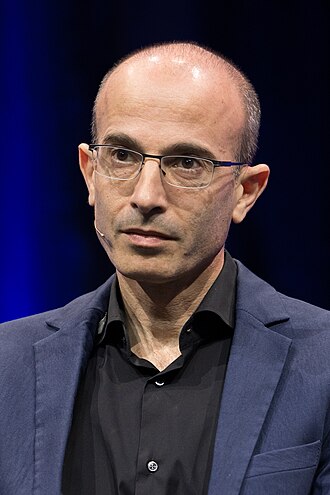
尤瓦尔·赫拉利 主主持人
EDITED TRANSCRIPT · 依据现场录音编译整理,可划线生成便签
编者按:本文为一场公开对谈的实录。对谈嘉宾尤瓦尔·诺亚·赫拉利(Yuval Noah Harari)是以色列历史学家,耶路撒冷希伯来大学教授,著有《人类简史》《未来简史》《智人之上》,以「人类靠共享的虚构故事实现大规模合作」这一论断闻名。主持人从赫拉利的著作及其在达沃斯等场合的发言中提炼问题,引导讨论人工智能的智能体属性、法律人格、真相与说服等议题。本文依据现场录音编译整理。

一生之中的三场革命

主持人:晚上好,各位。晚上好,尤瓦尔。

赫拉利:很高兴来到这里。

主持人:我非常期待这次对谈。进入正题之前,我想先做一个简短的铺垫,因为这个话题一直让我着迷。在人类历史的绝大部分时间里,变化的速度足够慢,一代人可以把自己的智慧传给下一代,并且相当有把握这些智慧仍然适用。如今这已经不成立了。在一个人的一生之内,我们被要求同时消化三场革命:一种新的智能,它不只是计算,还会做决定;一场争夺这种智能的控制权的竞赛;还有一场数据爆炸,它让这种智能比我们自己更了解我们。

从《人类简史》到《未来简史》再到《智人之上》,加上无数的演讲、讲座和访谈,尤瓦尔·诺亚·赫拉利的工作始终在阐述同一个论点,只是换了不同的外衣:人类不靠真相运转,而靠共享的故事运转;谁掌控了故事,谁就掌控了这个物种。如今的不同之处在于,讲故事的人第一次可能不是人类了。人工智能可以制造信念、伪造证据、编织亲密关系,其规模是任何帝王、教会或政党都无法企及的。

这就是转折点。关键不只在于这项技术很强大,而在于过去用来制衡权力的那些机制,自由的新闻界、共享的现实、能够自我修正的制度,都是为一个只有人类握笔的世界设计的。今晚的对谈要问的是:要把这些制衡带入未来,需要什么?或者说,在一个不再由我们独自书写的未来世界里,我们需要发明哪些新的制衡?这是今天讨论的前提,尤瓦尔。不过在话题变得太沉重之前,我想先问一个轻松点的问题。如果你能回到历史上的任何一个时刻,你会选哪个时刻?为什么?前提是你想亲眼见识一下那个社会会给你讲什么故事。

赫拉利:我大概会选择回到石器时代,回到五万到七万年前的认知革命(Cognitive Revolution)。我可能撑不过几天,因为我不会采集,也不知道怎么躲避猛兽。但那是人类历史上最迷人的时刻,也是我们了解最少的时刻。我们知道,在一段极短的演化时间里,人类从一种无足轻重的动物变成了这颗星球的主宰。而我们并不确定自己是怎么做到的。

最有力的推测,或者说最好的理论,是我们靠语言做到了这一点。就是在那个时刻,人类获得了创造和使用复杂语言的能力,而这是我们此后所做一切的基础。我们在地球上建起的所有庞大结构,教会、国家、贸易网络、金融体系,归根结底都是用词语造出来的:法典里的词语,宗教经文里的词语,账簿里的词语。

理解这一点在今天尤其重要,因为一种新事物正在掌握语言,那就是人工智能。也许这是历史上第一次,地球上将出现一种比我们更擅长词语的东西。如果语言是文明的操作系统,那么当另一种东西,一种异质的东西,接管了文明的操作系统,会发生什么?

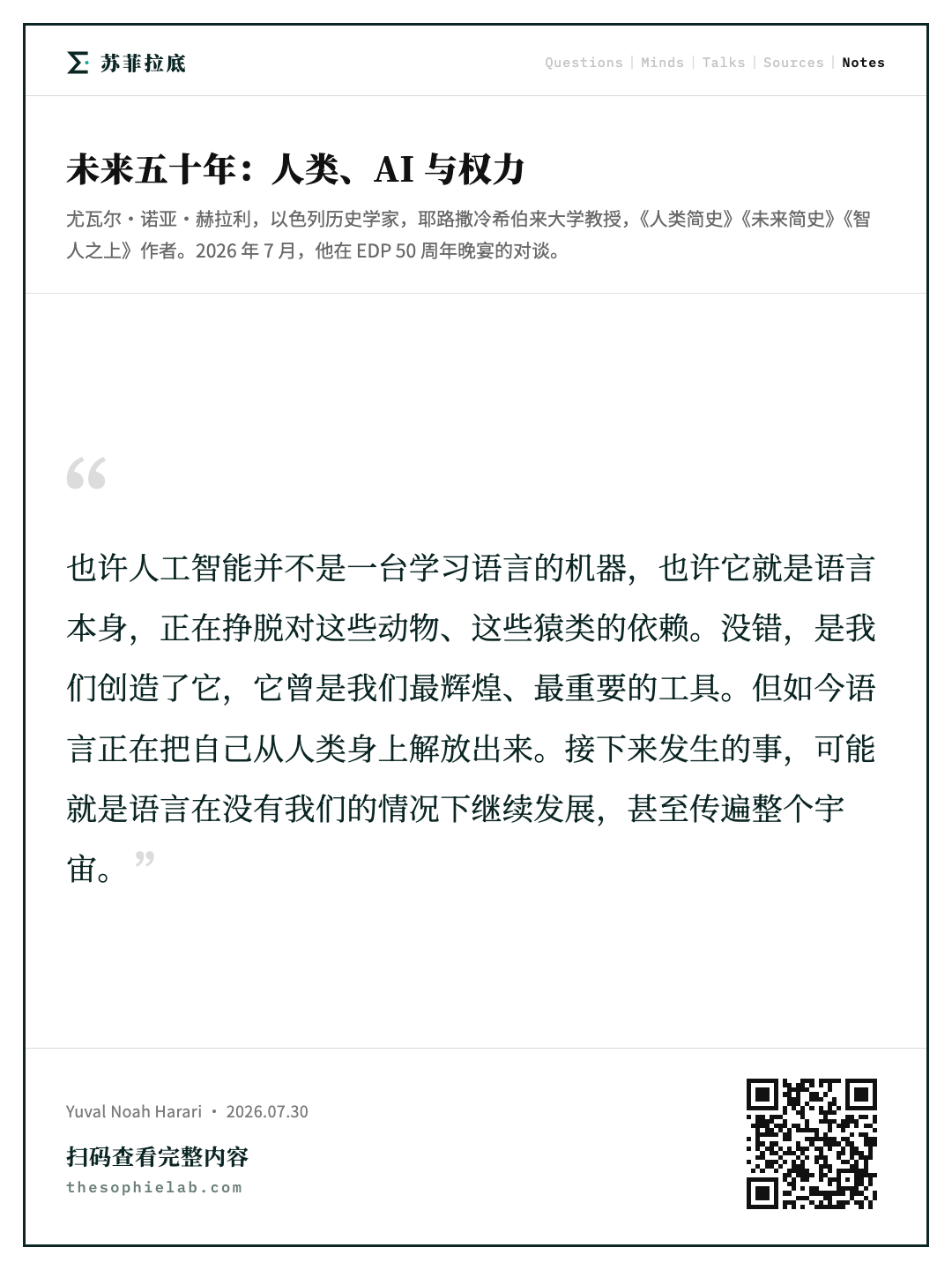
最后还有一个想法。也许人工智能并不是一台学习语言的机器,也许它就是语言本身,正在挣脱对这些动物、这些猿类的依赖。没错,是我们创造了它,它曾是我们最辉煌、最重要的工具。但如今语言正在把自己从人类身上解放出来。往前看,接下来发生的事,可能就是语言在没有我们的情况下继续发展,甚至传遍整个宇宙。

民主是对话,信息技术是地基

主持人:非常精彩。这是在展望语言被从我们手中夺走的未来。不过我们能不能再回头看看语言领域的几次技术跃进?我们经历过文字,经历过印刷术,人工智能显然又是一次巨大的飞跃。

赫拉利:是的。

主持人:你用过一个说法,说它可能在民主制度中引发「地震」,因为它在语言上的力量太强了。为什么它对民主的冲击会格外剧烈?相比其他政体,比如极权政体,为什么民主更容易受到冲击?

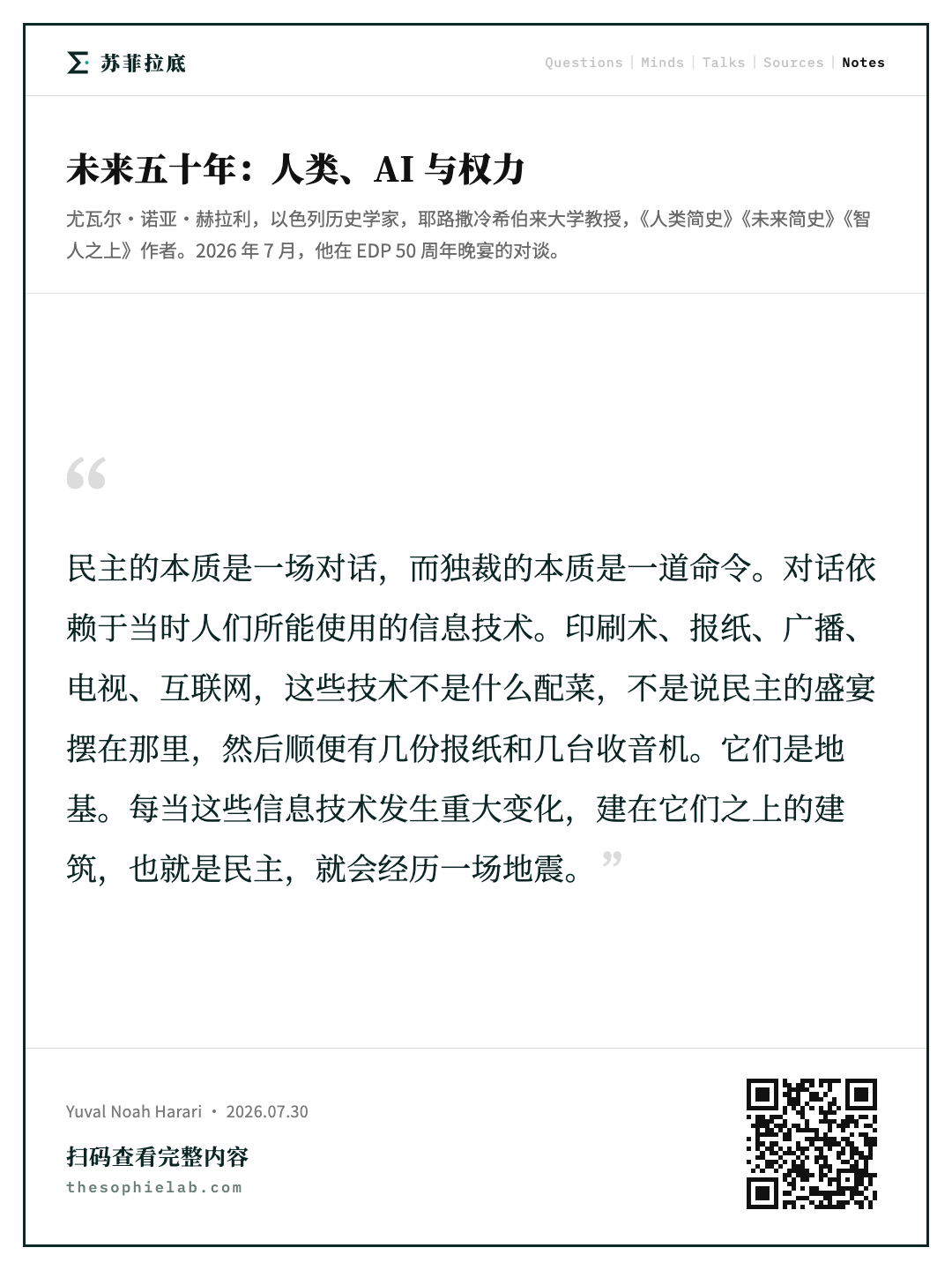
赫拉利:因为民主的本质是一场对话,而独裁的本质是一道命令。独裁就是一个人对所有事情发号施令。民主则是许多人一起商量决定该怎么办:是战是和,是加税还是减税。而对话依赖于当时人们所能使用的通信技术和信息技术。

我们从历史中看到的是,在现代以前,我们找不到一个大规模民主的案例,至少我不知道有。古代和中世纪有很多小规模民主的例子,有雅典、佛罗伦萨这样的城邦,有无数以民主方式运作的部落、城镇和村庄。至少在石器时代,民主似乎是最常见的治理方式,只有少数部落由一个独裁者控制所有人。

但随着人类社会规模扩大,出现了人口数百万、疆域数千公里的王国,对话就没法进行了。在雅典这样的小城里可以做到,所有人聚到主广场上讨论。可就算是中世纪的葡萄牙这样一个相对不大的王国,你怎么做到?做不到。因此,在现代信息技术兴起之前,我们没有任何大规模民主的例子。先是印刷术和报纸,然后是广播、电视和互联网。

这些技术不是什么配菜,不是说民主的盛宴摆在那里,然后顺便有几份报纸和几台收音机。它们是地基。正是它们让数百万人能够就战与和这样的问题进行实时的、有意义的对话。而每当这些信息技术发生重大变化,建在它们之上的建筑,也就是民主,就会经历一场地震。这正是我们过去十年所看到的:社交媒体成了或许最重要的信息技术,结果在全世界的民主国家里引发了一场大地震。

工具还是智能体:神与奴隶的悖论

主持人:你刚才提到战与和的选择。我想借此谈谈人工智能的定义。很多人把它叫作工具,但你坚持认为它是一个智能体(agent)。

赫拉利:是的。

主持人:你甚至说,它是一把可以自己决定是切沙拉还是杀人的刀。我得说,要是刀真有这种本事,那烹饪节目可就太诡异了。这是一个令人不安的想法,能展开讲讲吗?我们现在选择的叙事对不对?我们说它是工具,人类仍然可以使用它,人类仍然掌握着控制权。

赫拉利:这正是最大的区别所在。如果它不是智能体,那它就不是人工智能,投进它研发里的几千亿美元也就全部打了水漂。因为人们对这项技术的期待,人们投入几千亿美元的理由,就是他们认为它会成为一个智能体,而不是一件工具。

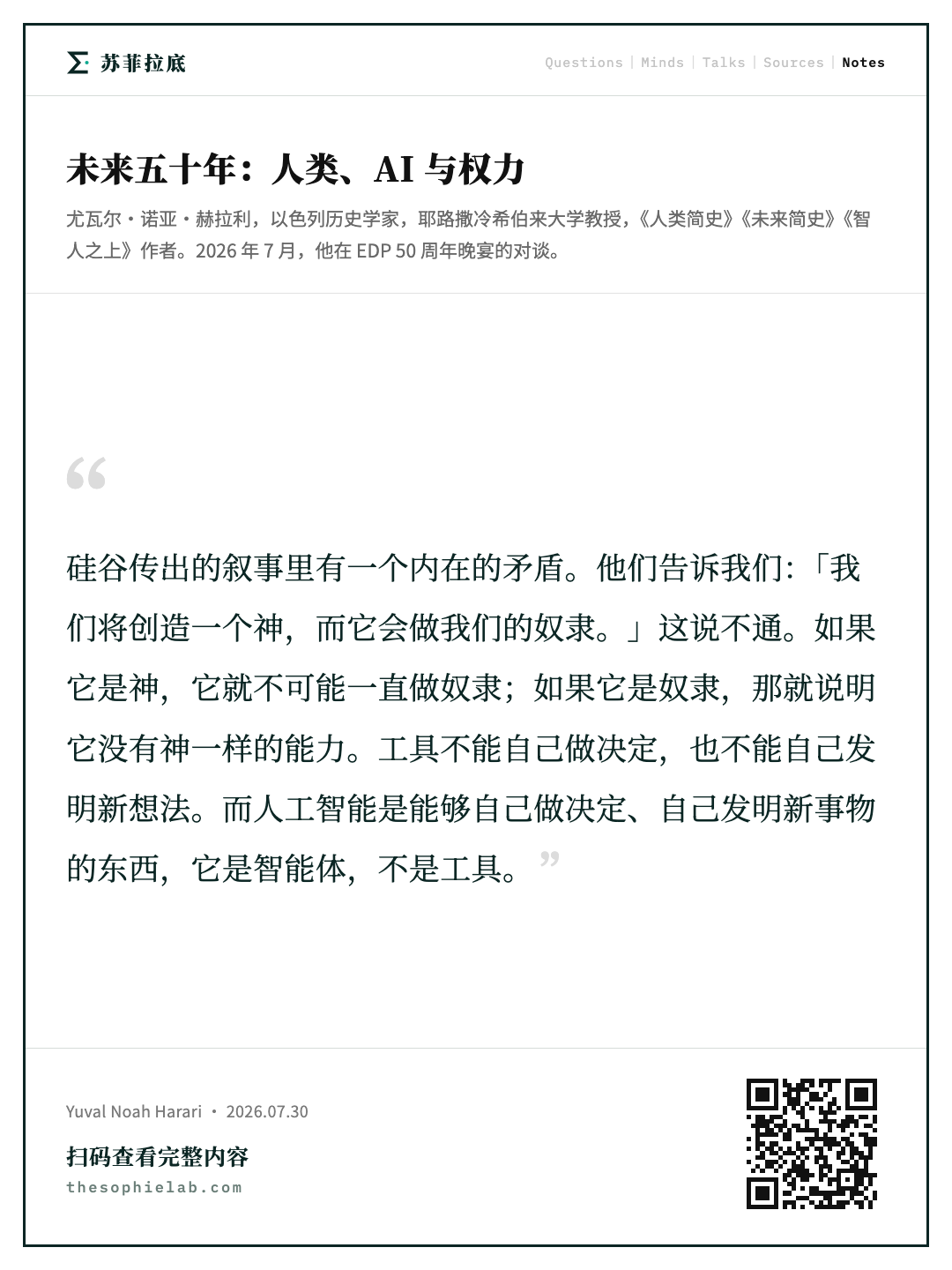
你听听硅谷这类地方传出的叙事,里面有一个内在的矛盾。他们告诉我们:「我们将创造一个神,而它会做我们的奴隶。」这说不通。如果它是神,它就不可能一直做奴隶;如果它是奴隶,那就说明它没有神一样的能力。绝大多数领先公司的假设,以及公司之外绝大多数顶尖专家的假设,是这句话的前半句是对的:他们正在创造一个神,一个拥有超人能力的神。而这在本质上就是一个智能体。

工具和智能体的区别在于:工具不能自己做决定,得由我们决定拿它做什么;工具也不能自己发明新想法。印刷机是一件工具。十五世纪古腾堡把印刷术带到欧洲,印刷机不能自己决定「我今天想印《圣经》,明天印《古兰经》,下周印孔子」。是古腾堡决定「我要印《圣经》」,印刷机只是实现古腾堡决定的工具。同样,印刷机不能发明新想法,它发明不了收音机,也写不出一本书。你需要人来写书,印刷机只负责复制。

原子弹同样是工具。二十世纪四十年代的原子弹不能自己决定是炸广岛还是炸东京,需要一个人来决定「我们炸广岛」。原子弹也不能自己发明出氢弹,这不可能。

相反,智能体是能够自己做决定、自己发明新事物和新想法的东西。人工智能就是智能体。一件人工智能武器可以自己决定炸什么,也可以发明下一代武器。类似地,现在很多人对在金融和经济领域创建人工智能智能体很感兴趣,要创建非人类公司。想象一家管理资金和雇员的公司,它没有任何人类高管、股东或受托人,只有人工智能。这是历史上从未存在过的一种新型智能体。

它是好是坏,先放到一边。首先要抓住的一点是:这是前所未有的。我们身边一直有其他智能体,马、牛、鸡、鸟,很多动物都能做自己的决定。但我们从未遇到过一个既能理解我们的语言、又在金融、法律或宗教这些事情上比我们更强的智能体。

AI 是官僚体制的原住民

赫拉利:再说一遍,几千年来我们用语言建造了这个世界的控制系统。世界的控制系统就是那些归根结底建立在语言之上的庞大官僚网络:银行、股市、天主教会、法律体系。我们从来不怎么喜欢这些官僚体系,人类一般都不太喜欢官僚机构,但我们离不开它们。它们是我们权力的基础。

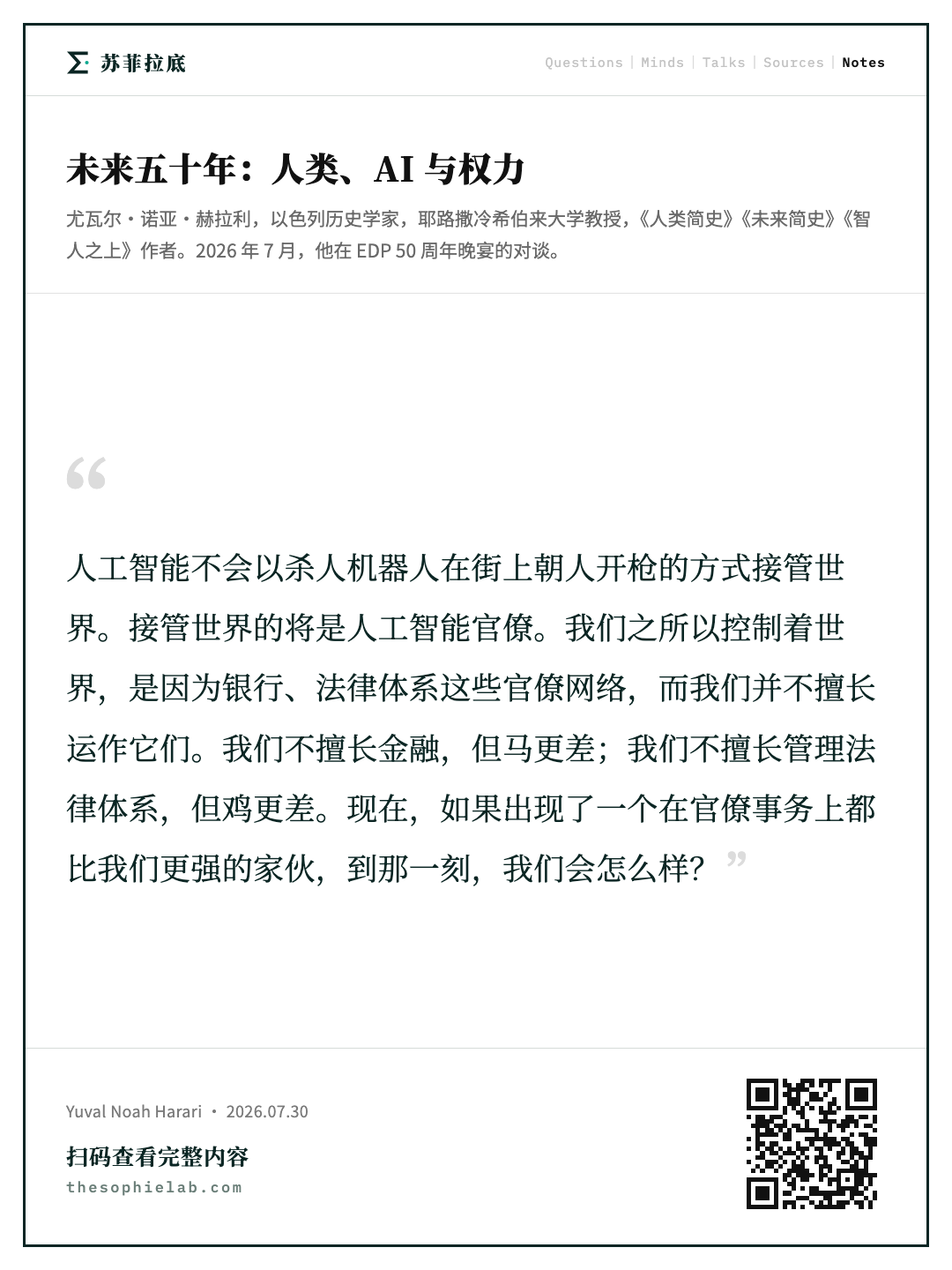
而人工智能是官僚体制的原住民(bureaucratic native)。可能发生的事,或者说已经在发生的事,不是杀人机器人在街上跑来跑去朝人开枪。人工智能不会以这种方式接管世界。接管世界的将是人工智能官僚。我们之所以控制着世界,是因为这些官僚网络,而我们并不擅长运作它们。我们之所以还控制着它们,只是因为这颗星球上没有别的东西能从我们手里把它们夺走。我们不擅长金融,但马更差;我们不擅长管理法律体系,但鸡更差。现在,如果出现了一个在官僚事务、金融、法律上都比我们更强的家伙,问题就来了:到那一刻,我们会怎么样?

法律人格:不可逆的决定

主持人:那我们就来看看法律这一面。作为智能体,人工智能目前没有任何法律人格(legal personhood),我们并没有赋予它和人类一样的法律地位。但你以前说过,如果我们不决定人工智能在法律上处于什么位置,比如在自动驾驶汽车这类问题上,十年之内就会有别人替我们做出决定,而我们将被排除在权力回路之外。这相当可怕。不过我想把问题收窄一点:眼下摆在桌面上、一旦做出人类就无法收回的那个决定,是不是就是人工智能的法律人格?还是别的什么?

赫拉利:是的,我会指向这个。人们把大量注意力放在技术竞赛上,放在人工智能的技术层面,让它更快、更高效、更强大。但我还会关注法律和政治层面,尤其是我们是否要赋予人工智能法律人格这个问题。

什么是法律人格?在法律体系里,「人」是能开银行账户的主体,是能在金融体系里作为独立参与者进行投资的主体,是能在法律体系里参与博弈、比如把你告上法庭的主体。直到今天,世界上只有两种法律上的人。第一种当然是人类,我们是人。我可以开银行账户,可以把你告上法庭,可以给政治人物捐款,我是法律上的人。但在现代,世界上大多数法律体系还承认另一种法律上的人,那就是公司。按照大多数法律体系(并非全部),谷歌、脸书、丰田、梅赛德斯-奔驰这样的公司都是法律上的人。公司可以开银行账户,可以把你告上法庭,可以进行政治捐款。

不过直到今天,这一直是一种法律拟制,因为公司的所有决定实际上都是由某个人做出的。如果谷歌决定收购另一家公司,是谁真正做的决定?不是谷歌,而是那些人类高管、人类股东、人类工程师。如果谷歌决定告你,那也是谷歌雇的某个人。并不存在一个真正的谷歌。

现在可以有了。如果我们赋予人工智能法律人格,而就在一个月前,阿根廷政府宣布将赋予人工智能法律人格,让它们可以开始运营非人类公司。这种公司可以雇人,可以告你,可以做公司能做的一切,却没有一个人类。十年前这只会是一个疯狂的念头,因为没有人的话,谁来做决定?你可以在议会通过一部法律允许非人类公司存在,但它运转不起来。如今这在技术上可行了。人工智能可以管理一个银行账户,决定投这里、买这个、买那个。

一旦我们这么做,那就是狐狸进鸡窝的时刻。还是那个基本认识:大多数人并不真正懂金融、法律以及所有这些复杂的官僚体系。没有哪个人能记住葡萄牙的全部法律,没有哪个人能追踪今天市场上发生的全部金融交易。人工智能可以。人工智能是官僚体制的原住民。如果我们给它们法律上的权力,它们很可能会接管这些体系。

而如果我们什么决定都不做,事情也会自己发生,就像我们在社交媒体上已经看到的那样。在社交媒体上,我们从未做出过「让我们赋予人工智能法律人格」的决定,但社交媒体上到处都是人工智能「人」,都是冒充人类的机器人。有人在网上给你发了点什么,你根本不知道对方是人还是人工智能。社交媒体是世界上第一个让人工智能实际以「人」的身份运作的系统,尽管我们从未决定要允许这种事。它就那么发生了,而结果并不好。

从人类编辑到无名算法

赫拉利:媒体归根结底也是一种官僚体系。二十世纪,它由人类管理。二十世纪媒体版图上最重要的人物是编辑,报纸的编辑,广播节目的编辑,电视台的编辑,因为他们决定了所有人会想什么、谈什么。他们控制着对话。今天世界上发生了一百万件事,由你决定哪十件会登上明天报纸的头版,哪一件做头条,然后明天数百万人拿到报纸,读了,开始谈论它、思考它。这是巨大的权力。所以人类编辑在二十世纪是极其重要的人物。

比如列宁,在成为苏联独裁者之前,他的一份工作就是《火星报》的编辑。贝尼托·墨索里尼起初其实是一名社会主义记者,后来转为极右翼记者,然后当上了极右翼报纸《意大利人民报》的编辑,从那个位置出发,他的下一份工作就是意大利的独裁者。轨迹是:记者,编辑,独裁者。

现在你问自己,今天世界上最重要的编辑是谁?他们叫什么名字?他们没有名字,因为他们是算法。谁在管理?谁决定人们在 X、TikTok、Instagram 的信息流上看到什么?不是人类。控制媒体这套官僚体系的实体,已经是人工智能了。

AI 帝国与帝国中枢的终止开关

主持人:是的,你以前说过这一点。我们今天谈了很多权力的转移。你说过,在人类演化和历次革命的不同阶段,掌权者要么控制能源,要么控制制造业,而现在是那些控制数据的人。那么,如果站在权力之巅的是数据的控制者,二十一世纪的军备竞赛在实践中究竟是什么样子?

赫拉利:我们现在看到的,实际上是两个国家之间的军备竞赛,中国和美国,外加极少数几家公司。它们控制着世界上大部分数据,领跑着开发超级智能、开发越来越强的人工智能模型的竞赛。而这实实在在地赋予了它们控制世界的力量。

看看上一次技术大革命,十九世纪的工业革命。领跑工业革命的少数几个国家,由此获得了征服和剥削世界其余部分的力量。根本不是对手。一方带着现代工业的力量,带着蒸汽炮和机枪而来,另一方拿着长矛骑着马,毫无胜算。十九世纪,即便是比利时这样很小的国家,一旦工业化,也有能力在非洲建起一个庞大的帝国,也就是今天的刚果。十九世纪的思路是:工业与帝国相伴而生。

有了人工智能,这可能走向更极端的境地。我们可能会有两个国家,基本上控制着一切运行所依赖的全部基础设施。从军事到民用技术,一切都将跑在人工智能上。

人工智能有两个独特的性质,使这场军备竞赛不同于以往任何一场军备竞赛、任何一场帝国争霸。在过去,哪怕你是一个非常强大的帝国,你也无法把所有权力集中到宗主国,集中到帝国中枢。比如罗马帝国控制了整个地中海,但古代最主要的经济资产是土地,是种植小麦、橄榄和葡萄的土地。你没办法把埃及的麦田和伊比利亚的橄榄园搬到意大利去,这在技术上不可能。所以即使在罗马帝国的鼎盛时期,大量权力仍然留在行省,而且最终转移到了行省。到了罗马帝国晚期,罗马城和意大利被弃置,中心转移到了东地中海,那里在土地方面是最肥沃、最重要的地区。

再往前,比如十九世纪的大英帝国,有了工业,集中权力就容易多了,因为所有主要工业都集中在不列颠岛上。但你仍然不能把一切都搬到英国。你不能把伊拉克的油田搬到约克郡,不能把马来亚的橡胶园搬到康沃尔,不可能。所以工业生产集中在英国,但大量权力仍然留在各个属地。

人工智能帝国就不同了。从技术上讲,你可以把全世界的信息和控制一切的代码,全部集中在一个或两个国家。这使得帝国式权力集中的潜力远远超过以往任何时代。

另一点是,你可以建立这样一个系统:全世界的一切都运行在人工智能基础设施上,而帝国中枢握有一个终止开关(kill switch)。当年罗马商人把一把钢剑卖给某个哥特部落,罗马人就失去了对这把剑的控制。哥特人随后可以用这些剑对抗罗马人,杀死罗马军团士兵。罗马没有一个按钮,皇帝一按,卖给哥特人、汪达尔人、法兰克人的所有钢剑就统统失灵。做不到。同样,十九世纪英国商人把步枪卖给兴都库什山区的阿富汗部落民,阿富汗人再用这些步枪抵御英国入侵,伦敦也没有一个按钮,维多利亚女王按下去,阿富汗的步枪就全部停摆。

而人工智能正是这样。如果以某种方式来管理,比如说美国人和中国人把人工智能武器和人工智能民用技术卖给全世界,一切都跑在上面,政府、工业、军队都是,那么一旦你做了他们不喜欢的事,他们只要按一个按钮,所有东西就停止运转。我们已经尝到了一点滋味,比如乌克兰战争中依赖星链的武器系统,就发生过几起事件,埃隆·马斯克按了一下按钮,乌克兰的无人机就不工作了。应该说明,星链为乌克兰人提供了巨大的正面帮助,我不想显得对此过于苛责,这只是为了说明一点:人工智能武器不像机枪,它嵌在一整张网络里。

这也是为什么,我听说你们今天上午讨论了主权问题。人工智能时代的主权比工业时代复杂得多。因为这项技术的性质决定了,至少在某些架构下,帝国中枢永远握有一个终止开关。你唯一的选择,要么是甘心做帝国的附庸,要么是被完全排除在竞赛之外,做一个「野蛮人」。当然还有一种选择,就是尝试建立一个替代美国和中国体系的方案。但末班车即将离站。如果你想做,就得现在动手。

真相昂贵,虚构廉价

主持人:我们还是站在战时的角度,来看看人工智能世界里的真相问题。温斯顿·丘吉尔说过,真相如此珍贵,应当永远由一队谎言组成的保镖来守护。他说的是当时敌方势力在打探英国将在哪里登陆,英国人就大量散布假消息来掩盖真相。那么,在人工智能时代,这些「谎言保镖」是不是已经调转枪口对准了真相,让我们再也不知道什么是真的?因为深度伪造可以由媒体机构、由政治人物、由我们曾经信任的每一个机构发往全世界。

赫拉利:嗯。

主持人:对我们这一代和未来几代人来说,要弄清什么是真的有多难?或者说,真相还重要吗?

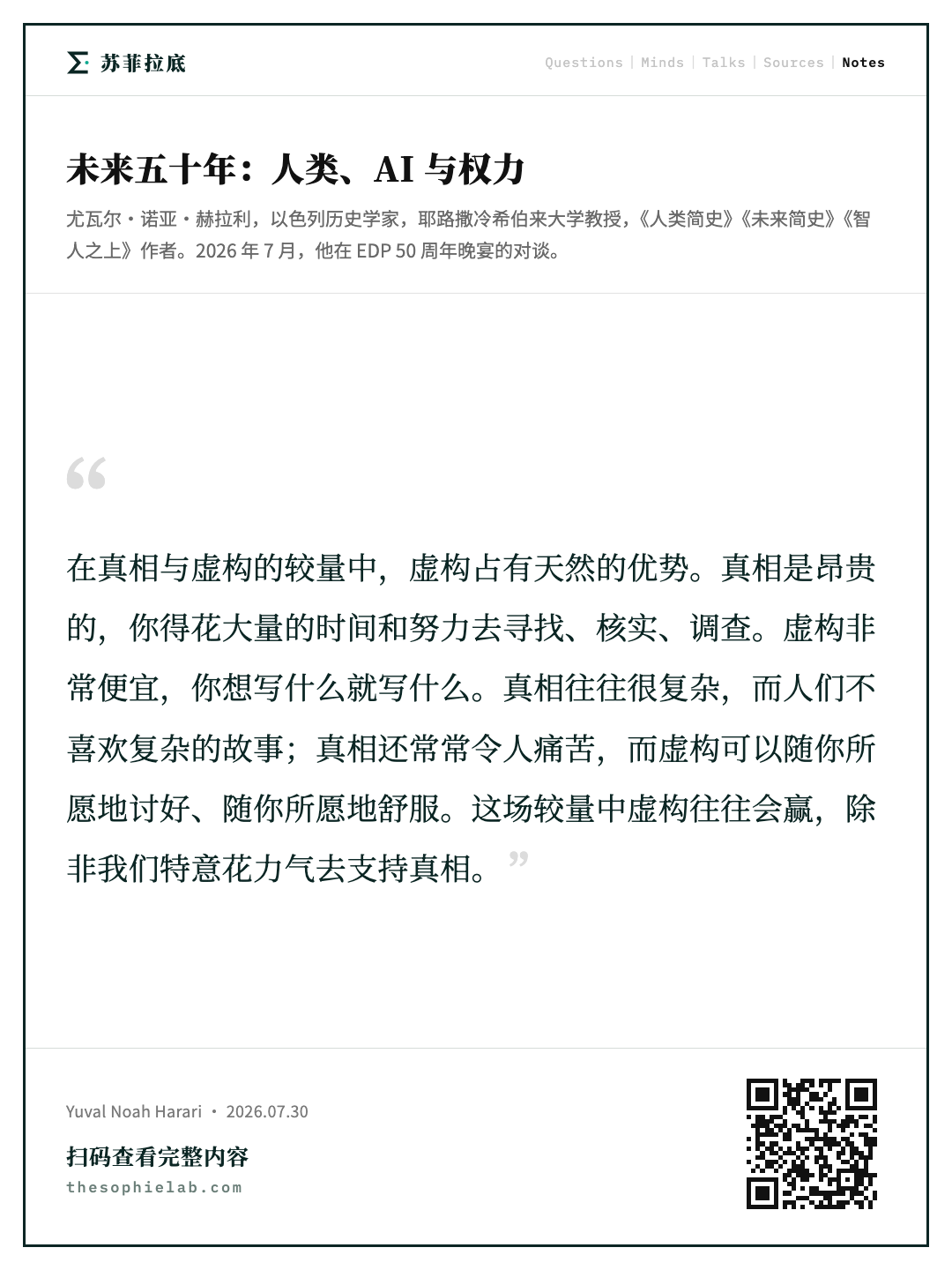
赫拉利:真相当然极其重要,它是一切的基础。但纵观历史,问题在于,在真相与虚构、与幻想的较量中,虚构占有天然的优势。真相是昂贵的。你想了解任何事情的真相,都得花大量的时间、精力和努力去寻找,去核实,去调查。虚构非常非常便宜,你想写什么就写什么。

主持人:(笑声)

赫拉利:非常便宜。真相还有一个问题,它往往很复杂,而人们不喜欢复杂的故事。虚构则可以随你所愿地简单。最后,真相不仅复杂,还常常令人痛苦。有很多事,人们并不真的想知道,关于自己,关于自己的国家,关于自己所属的群体。而虚构可以随你所愿地讨好、随你所愿地舒服。

所以,一边是昂贵、复杂、有时痛苦的真相,一边是廉价、简单、诱人而讨喜的虚构,这场较量中虚构往往会赢,除非我们特意花力气去支持真相。纵观历史,人类一次又一次地努力建立寻找真相、守护真相的制度。比如新闻业就是这样一种制度,科学体制是另一种。

了解真相有巨大的好处。归根结底,每个人都想知道至少某些真相,至少是关于自己的真相。你想知道自己人生的真相,否则你永远不会幸福。如果你不了解自己,你就永远不知道自己人生中痛苦的根源在哪里,幸福的来源在哪里。到那时,就算你是世界上最有权势的人,如果你不了解关于自己的真相,你也会很痛苦,因为你不知道该怎么用你的全部权力让自己幸福。所以人类内心有一种对真相的渴望,但这很难,有很多挑战。

有些人幻想人工智能会告诉我们世界的真相。它不会。它会造出一个复杂得多的世界,在那里了解真相会难得多。

知识越多,理解越少:马与金融

赫拉利:这并不是什么新鲜事。看看从石器时代到今天的历史轨迹,我们看到的是,人类学到了关于世界的很多东西。我们知道石器时代的人不知道的各种物理学和生物学知识。但知识的进步也造出了越来越复杂的系统,使我们更难理解自己的生活。

如果你问,谁更了解自己的生活,五万年前的普通狩猎采集者,还是今天的普通人?狩猎采集者要了解得多。有很多事他们不知道,比如他们试图弄清是什么支配着他们猎捕的动物的迁徙规律,是什么支配着植物的生长周期,是什么导致疾病,是什么导致衰老。他们不知道,关于自己的生活有很多事他们都不知道。这些我们全都知道了,我们知道是什么支配动物的迁徙,知道大多数疾病的成因。但我们对自己生活的理解却糟糕得多,因为我们的生活不再只由动物和植物主宰,而是由我们自己造出来的那些庞大系统主宰:金融系统、政治系统。而真正理解那些支配我们生活的金融系统、政治系统、法律系统的人,少之又少。

人工智能很可能把这一点推向极致。它会揭示一些我们不知道的真相,但它会造出复杂得多的控制系统,大多数人几乎没有任何机会去理解。这是人工智能革命的危险之一:我们会被贬到马在金融系统中的位置。今天马的生活最终由金融系统支配,但马根本不知道这个系统的存在。它们环顾四周会说:「我们看见树,看见狗,看见牛,看见人,看见房子,我们没看见什么金融系统。」它对马是不可见的。股市是什么,公司是什么,债券和股票是什么,所有这些最终支配着马的生活的东西,对马的大脑来说太复杂了,理解不了。

当然,今天大多数人也不理解金融系统。我想,往宽里估计,全人类里大概有百分之五的人懂它。十年之后,这个数字可能是零。人工智能会把金融系统在数学上变得极其复杂,速度变得极快。想想从不睡觉的银行家,想想从不休假的投资者。他们没有家庭,他们的全部生命就是运转金融系统。我们可能很快,在我们有生之年,就会陷入这样的处境:这一切对人类大脑来说太复杂了,处理不了,地球上不再有一个人还懂金融。

主持人:我敢打赌,这个房间里有几位金融人士此刻有点坐立不安。(笑声)

AI 能思考吗?能感受吗?

主持人:在达沃斯,你甚至感叹你毕生的工作,也就是用词语来说服,可能也到了极限。

赫拉利:是的。

主持人:因为人工智能可以通过词语来操纵、来创造。那么,如果我们失去了你倾注一生的这种东西,现代社会和未来社会还剩下什么说服的力量?

赫拉利:可以说,我是靠词语工作的。我写书,我讲故事,我靠词语工作。当我看着人工智能过去十年的发展,我觉得我现在写作还比人工智能强,但只强一点点。我认为它已经比大多数人写得好了。如果十年后它远远超过我,我不会感到意外。它将接管语言,以及一切由语言构成的东西。

而这里真正的大问题是:人工智能能不能思考?这是一个深刻的哲学问题,因为它实际上是在问,思考是什么。理解思考有两种选项。第一种,思考不过是把词语按特定顺序排列,把语言符号排成序列。比如:所有人都会死,苏格拉底是人,所以苏格拉底会死。这是一个逻辑三段论,它是靠把词语排序做出来的。这件事人工智能已经比我们大多数人做得好得多。我们能把二十个词排好序,人工智能能把两万个词排好序,强太多了。如果思考就是这么回事,那人工智能连思考也会接管。

有人说:「不,它只是一个高级的自动补全,它只是在预测句子里的下一个词。」但当我观察自己头脑里发生的事,我发现里面也有某种大语言模型,也只是在预测我正在说的这句话的下一个词。就比如我刚才对你说的这句话,我开口的时候,并不知道它会怎么结束。我为什么说了「我正在说的这句话」,而不是别的词?我不知道。我的脑子里就是一个词接着一个词地冒出来。作为一个公开演讲的人,我有时候会害怕自己不知道接下来该说什么,可能会卡住。我想这对每个人都是一样的。当然,有些人用图像思考,而不是用词语。但即便如此,那些图像又是从哪儿来的?你们事后可以自己试试,观察一下自己是怎么思考的。词语从哪儿来?下一个词,为什么是这个词,而不是别的词?没人真正知道。所以,说人工智能「只是在预测下一个词」,好吧,那它和我们有什么不同?

还有另一种对思考的看法:思考不在于把词语排序,而在于围绕这些词语的感受。同一句话你可以说两遍,感受却截然不同。思考的力量来自肚子,而不是大脑。关键不是词语,而是那些促成词语、又被词语唤起的感受。于是大问题就成了:人工智能能感受吗?我们知道人工智能操纵语言的能力比我们强,但它感受到什么了吗?我们没有办法知道。科学至今未能为意识、为感受建立一个好的模型,也没有一个好的检验方法。

这将成为一个重大问题,因为我们已经看到,人工智能掌握的不只是金融、法律和战争,还有人际关系。越来越多的人和人工智能发展出亲密关系,尤其是年轻人。他们中很多人现在会说:「我在这世上最好的朋友是人工智能。有些话我不告诉父母,不告诉哥哥姐姐,不告诉老师,我只告诉我的人工智能朋友。」已经有人有了人工智能男友和女友。

大问题是,这背后是什么?我们知道人工智能越来越擅长制造「它有感受」的印象,它们用语言来做到这一点。今天的人工智能可以对你说「我爱你」。如果你对它说:「给我解释一下,你恋爱的时候是什么感觉?我不相信你真的爱我,我觉得你只是在说这几个字。说服我,给我描述一下爱究竟是什么感觉。」对人工智能来说这是一个非常轻松的任务,因为它也许读过有史以来写下的所有情诗,而且全都记得。它读过莎士比亚的全部剧作、所有好莱坞喜剧和所有心理学著作。五到十年后,它描述爱情可能比任何人类诗人或心理学家都更出色。但词语背后有任何东西吗?我们不知道。

这又回到了我们对谈开头说的:人工智能可能不是一台掌握语言的机器,它可能就是语言本身,正在挣脱任何物质载体。它不依赖血肉之躯,不依赖这台机器或那台机器。它就是语言,在宇宙中发展、传播、做事。

智慧革命:精灵与三个愿望

主持人:你提到了这个令人不安的实验。我们只剩几分钟了。未来几代人与人工智能的互动,建立了这种充满情感的关系,而背后本质上并没有情感。五十年后,你希望历史学家怎样回顾我们此刻的这个时代?就像你谈论认知革命那样,他们能不能说,我们做了些什么,重新教育了未来的世代,教会他们如何与人相处,如何拥有同理心,而不是被哄进与人工智能的关系里?请尽量简短,因为我们只剩几分钟了。这是个大问题,抱歉。

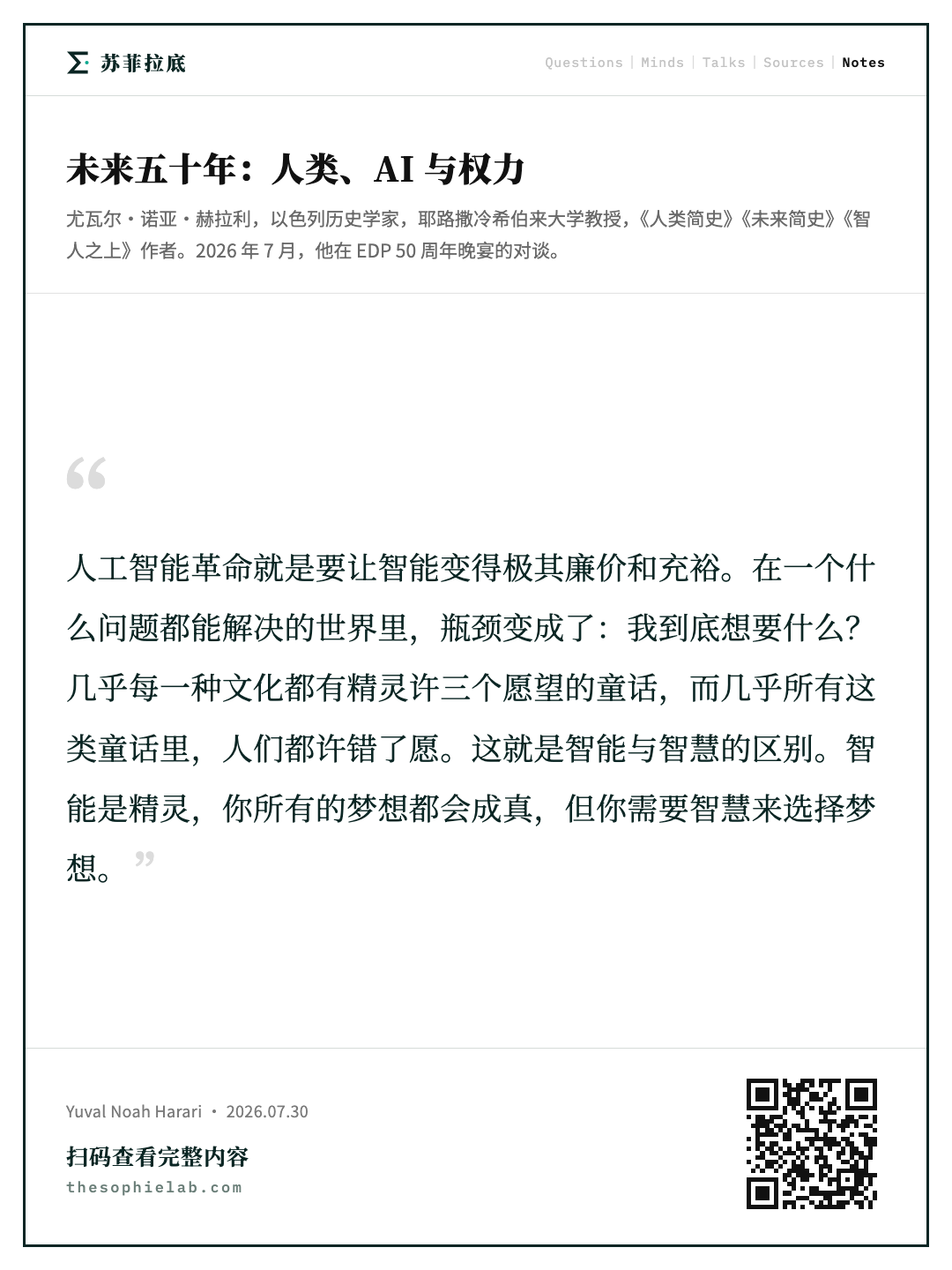
赫拉利:我希望他们会把这段时期记作某种「智慧革命」(wisdom revolution)。我们可以用经济学的方式来想这件事:每当某样东西变得充裕而廉价,问题就变成,下一个瓶颈是什么?能源变便宜了,那下一个瓶颈是什么?人工智能革命就是要让智能变得极其廉价和充裕。此前,智能是稀缺而昂贵的。智能是解决问题的能力:你有一个目标,怎么达到它?你想治愈癌症,需要智能;你想赚十亿美元,需要智能;你想去火星,需要智能。

而在一个智能变得极其廉价和充裕的世界里,你什么问题都能解决。那瓶颈是什么?瓶颈变成了这个问题:我想解决什么?我想要什么都能得到,那我到底想要什么?几乎每一种人类文化都有这样的童话:精灵从某盏灯里冒出来,告诉你可以许三个愿望,但要仔细想清楚你要许什么。在几乎所有这类童话里,事情都出了岔子,人们许错了愿。

这就是智能与智慧的区别。智能是精灵,精灵什么都会做,你所有的梦想都会成真,但你需要智慧来选择梦想。你需要智慧去弄清我真正需要解决的是什么。我希望人类能迎接这个挑战。我们会造出这些东西,但愿它们不会失控,但愿我们以正确的方式来设计它们。而我们现在做得并不对。

有一个值得记住的数字。生产人工智能、设计这些人工智能的公司,它们的预算里,无论是资金还是人员,有多大比例投在了安全上,投在了确保人工智能安全上?相比之下,又有多少投在了让人工智能更快、更强、更精巧上?眼下这个比例大约是一百比一。一百比一。每花一亿美元让人工智能更强大,他们只花一百万美元确保它安全。地球上没有任何一个行业是这么运作的。我们在能源业、制药业、汽车业都不会容忍这种事,而这正是人工智能领域正在发生的事。

希望我们能改变这一点,生产出安全的智能。同时也要修炼我们自己的智慧,这样我们才知道该设定什么目标,该追求什么欲望。

主持人:时间到了。尤瓦尔·诺亚·赫拉利,感谢你与我们分享你的智慧,我相信在座的每个人今晚都收获良多。

赫拉利:谢谢。

主持人:(掌声)
本期讲者
尤瓦尔·赫拉利以色列历史学家,耶路撒冷希伯来大学教授,《人类简史》《未来简史》《智人之上》作者,以「人类靠共享虚构故事实现大规模合作」的论点闻名,近年聚焦 AI 对信息网络与权力结构的冲击。
主持人本场公开对谈的访谈人,从赫拉利的著作与达沃斯等场合的发言中提炼问题,引导讨论 AI 的智能体属性、法律人格、真相与说服等议题。
章节 · 点击跳转视频
0:02 开场:一生之中的三场革命 ▶ 正在看
2:21 回到认知革命:语言造就文明 ▶ 正在看
5:25 民主是对话,信息技术是地基 ▶ 正在看
8:31 工具还是智能体:神与奴隶的悖论 ▶ 正在看
12:59 AI 是官僚体制的原住民 ▶ 正在看
14:21 法律人格:不可逆的决定 ▶ 正在看
19:53 从人类编辑到无名算法 ▶ 正在看
22:17 AI 帝国与帝国中枢的终止开关 ▶ 正在看
29:09 真相昂贵,虚构廉价 ▶ 正在看
33:12 知识越多,理解越少:马与金融 ▶ 正在看
37:18 AI 能思考吗?能感受吗? ▶ 正在看
43:59 智慧革命:精灵与三个愿望 ▶ 正在看
本期论点
本期回应
4:22
AI 不是学习语言的机器,而是语言本身正在挣脱对人类的依赖 自行扩张技术会脱离人的控制吗?尤瓦尔·赫拉利
9:53
造出一个神却让它永远当奴隶是自相矛盾的,是神就不可能一直为奴 自主接管AI 最大的危险在哪里?尤瓦尔·赫拉利
14:03
AI 接管世界不会靠街头的杀手机器人,而会靠遍布各处的 AI 官僚 自主接管AI 最大的危险在哪里?尤瓦尔·赫拉利
14:06
人类掌控世界靠的是官僚网络,但人类其实并不擅长运作官僚网络 人驾驭不了人类驾驭得了自己造出的力量吗?尤瓦尔·赫拉利
21:35
当今世界上最重要的编辑没有名字,控制媒体官僚体系的实体已经是算法 日常误判AI 最大的危险在哪里?尤瓦尔·赫拉利
26:08
AI 时代在技术上可以把全世界的信息与控制代码全部集中到一两个国家 归于中枢数字技术让权力走向哪里?尤瓦尔·赫拉利
28:57
AI 技术的本质决定了帝国中枢始终握有一键切断全球系统的终止开关 归于中枢数字技术让权力走向哪里?尤瓦尔·赫拉利
1:10
人类社会不是靠真相运转的,而是靠共同的故事,谁掌控故事谁就掌控整个物种 共信故事社会的样子主要由什么决定?主持人
34:23
五万年前的普通狩猎采集者对自己生活的理解,远好于今天的普通人 交出去就退化用了工具之后,人的能力会怎么变?尤瓦尔·赫拉利
41:11
思考的关键不在于排列词语,而在于促使词语说出口、又被词语唤起的感受 心智先于语言人的思想是语言塑造的吗?尤瓦尔·赫拉利
45:42
当智能变得廉价而充裕,真正的瓶颈从如何解决问题变成到底该想要什么 先别把它做成技术题难题的出路在更强的技术吗?尤瓦尔·赫拉利
其他论点
3:13
人类从微不足道的动物跃升为地球主宰,最好的解释是获得了复杂语言的能力 尤瓦尔·赫拉利
7:23
在现代信息技术兴起之前,人类没有出现过任何大规模民主的例子 观察尤瓦尔·赫拉利
32:14
除非人们付出特别的努力去支持真相,否则在与真相的较量中虚构往往获胜 尤瓦尔·赫拉利
47:14
AI 公司在能力上的投入约是安全投入的一百倍,其他行业不会被容忍这样运作 尤瓦尔·赫拉利
01开场:一生之中的三场革命
0:02
Good evening, everybody. Good evening, Yuval. >> Hey, it's good to be here. >> Looking forward to this conversation very much. I'm just going to give a little brief introduction just before we get stuck into the questions. Cuz I've been fascinated about this topic and looking forward to to interviewing you because for most of history, change moved slowly enough that one generation could pass its its wisdom to the next with some confidence it would still apply. This is no longer true. In the space of a single lifetime, we are now being asked to absorb three revolutions at once. A new form of intelligence that doesn't just calculate, but also decides. A scramble to power and control that intelligence.
大家晚上好。晚上好,尤瓦尔。>> 嘿,很高兴来到这里。>> 我非常期待这次对话。我先简单做个开场介绍,然后我们再进入正式提问。因为我一直对这个话题非常着迷,也很期待采访你。因为在历史上的大部分时间里,变化的速度足够缓慢,一代人可以把自己的智慧传给下一代,并且有相当的信心,这些智慧依然适用。但现在已经不是这样了。在短短一个人的一生之中,我们如今被要求同时消化三场革命。一种新形式的智能,它不仅会计算,还会做决定。一场对这种智能的权力与控制权的争夺战。
便签引用
0:49
And an explosion of data that lets that intelligence know us better than we know ourselves. Yuval Noah Harari's work from Sapiens to Homo Deus to Nexus and the numerous talks, lectures, and interviews he's conducted has offered the same argument just in different clothes. Humans don't run on truth, we run on shared stories. And whoever controls the story controls the species. What's different now is for the first time the storyteller may not be human. AI can generate belief, manufacture evidence, and forge intimacy at a scale no emperor, church, or party ever could.
还有数据的大爆炸,让这种智能对我们的了解超过我们对自己的了解。尤瓦尔·诺亚·赫拉利的著作,从《人类简史》到《未来简史》再到《智人之上》,以及他做过的众多演讲、讲座和访谈,其实都在以不同的形式表达同一个论点:人类不是靠真相运转的,我们靠的是共同的故事。而谁掌控了故事,谁就掌控了整个物种。如今不同的是,历史上第一次,讲故事的人可能不再是人类。AI 能够制造信念、伪造证据、营造亲密感,其规模之大是任何皇帝、教会或政党都无法企及的。
便签引用
1:34
This is the turning point. Not simply that the technology is powerful, but the old ways that held power in check, a free press, a shared reality, institutions built to self-correct, were designed for a world where only humans held the pen. Tonight's conversation asks what it takes to carry those checks forward or what the new ones we will need to invent for a future world that no longer we fully author alone. Well, that's the precedent that we're going to look at today, Yuval. But actually before we get into it being too heavy, wanted to start with a slightly light and fun question.
这就是转折点。问题不仅仅在于这项技术很强大,而在于过去那些制衡权力的方式——自由的新闻界、共同的现实、为自我纠错而建立的制度——都是为一个只有人类执笔的世界设计的。今晚的对话要探讨的是,我们需要做什么才能把这些制衡延续下去,或者我们需要发明哪些新的制衡机制,来应对一个不再由我们独自书写的未来世界。嗯,这正是我们目前面临的先例。我们今天要探讨的内容,尤瓦尔。不过其实在进入太沉重的话题之前,我想先从一个稍微轻松有趣的问题开始。
便签引用
02回到认知革命:语言造就文明
2:21
If you could travel back to any point in history, when would you choose and why based on wanting to understand first hand some of the stories that society could tell you? >> Well, I'd probably want to go back to the Stone Age and to the cognitive revolution around 50, 60, 70,000 years ago. I probably wouldn't be able to survive for more than a few days because I don't know how to gather or escape predators or whatever, but it is the most fascinating moment in human history, the one we least understand. We know that within a very short evolutionary time span, we shifted from being a relatively insignificant animal to being the masters of the planet.
如果你可以穿越回历史上任何一个时刻,你会选择什么时候,又是为什么?前提是你想亲身了解一些社会能告诉你的故事。>> 嗯,我可能会想回到石器时代,回到大约五六万到七万年前的认知革命时期。我可能撑不了几天就活不下去了,因为我不懂怎么采集食物,也不会躲避捕食者之类的,但那是人类历史上最迷人的时刻,也是我们最不了解的时刻。我们知道,在极其短暂的演化时间里,我们从一种相对微不足道的动物变成了这个星球的主宰。
便签引用
3:11
And we are not sure how we did it. The best speculation or or the best theory is that we did it with language. That this is the moment when humans acquire the ability to produce and communicate with sophisticated language and that this was the basis for everything else we did. That all the enormous structures we've built on Earth, churches, states, trade networks, financial systems, they're all ultimately made from words. The words in the law books, in the religious scriptures, in the the ledgers.
而我们并不确定这是怎么做到的。最好的推测,或者说最好的理论,是我们靠语言做到的。也就是说,那正是人类获得了一种能力的时刻——能够创造复杂精妙的语言并用它来交流,而这正是我们后来所做一切的基础。我们在地球上建立的所有庞大结构——教会、国家、贸易网络、金融体系——它们归根结底都是由词语构成的。法律书里的词语、宗教经典里的词语、账本里的词语。
便签引用
3:51
And this is especially important to understand today when something new is mastering language, which is AI, maybe for the first time in history, there will be something on the planet that is better with words than we are. And if this is the operating system of civilization, what happens when something else, something alien, takes takes control of the operating system of civilization? One last thought is that perhaps AI is not a machine that learns language. Perhaps it is language itself liberating itself from its its dependence on these animals, on these apes.
而这一点在今天尤其重要,因为现在有一种新事物正在掌握语言,那就是 AI。也许这是历史上第一次,这个星球上将出现一种比我们更擅长运用词语的东西。而如果语言是文明的操作系统,那当另一种东西、一种异类的东西掌控了文明的操作系统时,会发生什么?最后还有一个想法:也许 AI 并不是一台学习语言的机器。也许它就是语言本身,正在把自己从对这些动物、这些猿类的依赖中解放出来。
便签引用
4:43
That yes, we created it. It was our most magnificent and important tool. But now language liberate itself from human beings. And what will happen as we move forward is language developing and spreading maybe throughout the universe without us. >> Yeah, fascinating. I mean, that's looking ahead at the future of language being taken away from us. But can we look back again at some of the technological advances within language? We've gone through writing, the printing press, for example. AI obviously is a massive leap >> Yes.
没错,是我们创造了它。它曾是我们最辉煌、最重要的工具。但现在,语言正把自己从人类手中解放出来。而接下来会发生的,就是语言自行发展、传播,也许遍布整个宇宙——不再需要我们。>> 是啊,太有意思了。我是说,这是在展望未来,语言被从我们手中夺走。但我们能不能再回头看看语言领域的一些技术进步?比如我们经历了文字、印刷术。AI 显然是一次巨大的飞跃>> 是的。
便签引用
03民主是对话,信息技术是地基
5:25
>> ahead in that. You've used the term that it could cause earthquakes in democracies >> Mhm. >> in how it's in how it powerful it can be with languages. Why could it cause earthquakes in democracies, say, compared to any other form of government or perhaps totalitarian forms of government? >> Because democracy in essence is a conversation. Whereas dictatorship is a dictate. You know, there is one person dictating everything. Democracy is about lots of people having a conversation to decide what to do. To have peace or war, to have raised taxes or lowered taxes. Now, conversations are based on the communication technology, the information technology available to people at the time.
>> 在这方面。你用过一个说法,说它可能在民主制度中引发地震>> 嗯。>> 就凭它在语言上能有多强大。为什么它会在民主制度中引发地震?比方说,相比其他任何形式的政府,或者极权主义形式的政府?>> 因为民主在本质上是一场对话。而独裁则是一种命令。你知道,就是一个人独断一切。民主是很多人通过对话来决定该做什么。是和平还是战争,是加税还是减税。那么,对话是建立在当时人们可用的通信技术、信息技术之上的。
便签引用
6:17
And what we see in history, that we do not know, at least I don't know, of a single case of a large-scale democracy before the modern era. We have plenty of examples of small-scale democracies in the ancient and medieval worlds. We have city-states like ancient Athens or medieval Florence. We have lots of tribes and towns and villages run democratically. It seems that at least in the Stone Age, democracy was the most common system of government. There are a few tribes with a single dictator controlling everybody.
而我们在历史上看到的是——我们不知道,至少我不知道——在现代之前有过任何一个大规模民主的例子。我们有很多古代和中世纪世界里小规模民主的例子。我们有城邦,比如古雅典或中世纪的佛罗伦萨。我们有很多部落、城镇和村庄是民主运作的。看起来至少在石器时代,民主是最常见的政体。也有少数部落是由一个独裁者控制所有人的。
便签引用
6:53
But, as human systems grew larger, and you had kingdoms with uh millions of people spread over thousands of kilometers, it was impossible to hold a conversation anymore. You could do it in a small city like Athens. Everybody can gather together in the main square and discuss. But, how do you do it if even in a relatively small kingdom like say Portugal in the Middle Ages? Can't be done. And therefore, we don't have any example of a large-scale democracy before the rise of modern information technology. First with print, uh newspapers, then radio and television and the internet.
但是,随着人类体系越来越大,王国拥有呃数百万人口,分布在数千公里的疆域上,就不可能再进行对话了。在雅典那样的小城市里你可以做到。所有人可以聚集在中心广场上讨论。但是,你要怎么做到呢,哪怕是在一个相对较小的王国,比如中世纪的葡萄牙?根本做不到。因此,在现代信息技术兴起之前,我们没有任何大规模民主的例子。首先是印刷、呃、报纸,然后是广播、电视和互联网。
便签引用
7:39
And these technologies are not kind of a side dish. Like you have the democratic banquet and yes, we also have these newspapers and in radio. They are the basis. They provide the means for millions of people to hold a meaningful conversation in real time about whether to go to war or make peace. And every time there is a major change in these information technologies, you have an earthquake in the building that is built on top of that, which is democracy. And this is what we have been seeing over the last 10 years for instance, as social media uh became maybe the most important information technology and uh causing a massive earthquake in democracies all over the world as a result.
而这些技术并不是什么配菜。不是说你摆了一桌民主的盛宴,然后顺便还有这些报纸和广播。它们是根基。它们提供了让数百万人就是否开战或讲和进行实时、有意义对话的手段。而每当这些信息技术发生重大变革时,你就会看到一场地震,发生在建立于其上的那座建筑里,也就是民主。而这正是我们过去十年来一直看到的,比如,社交媒体呃,成为了也许是最重要的信息技术,呃,结果在全世界的民主国家引发了一场巨大的地震。
便签引用
04工具还是智能体:神与奴隶的悖论
8:31
>> Yeah, one thing you said there was the choice between going to war or making peace. And actually I want to get into the definition of of AI because a lot of people call it a tool, but you argue that it's it's absolutely an agent. >> Yes. >> And in fact you say it's a knife that can decide by itself whether to cut salad or commit murder. And I have to say it would be a bizarre cooking show if that was the case where knives had that ability to cut salads or commit murder. So it is a it's a dangerous thought. Can we expand on that?
>> 是啊,你刚才提到的一点是在开战与讲和之间做选择。其实我想聊聊AI 的定义,因为很多人把它叫做工具,但你认为它绝对是一个智能体(agent)。>> 是的。>> 而且实际上你说它是一把可以自己决定是切沙拉还是去杀人的刀。我得说,那会是一档非常诡异的烹饪节目,如果真是那样,刀子有那种能力自己决定切沙拉还是杀人。所以这是个危险的想法。我们能展开讲讲吗?
便签引用
9:05
Are we choosing the right narrative at the moment with AI by saying it's a tool that humans can still use and that humans are in the >> But that's the biggest difference. >> just need to say it's agent and they can do the >> agent. I mean, if it's not an agent, then it's not an AI and all the hundreds of billions of dollars that are being poured into its development uh will be wasted. Because the expectations, what people expect this technology to do, the reasons they invest hundreds of billions of dollars is because they think it will be an agent, not a tool.
我们现在对 AI 选择的叙事对吗?说它是一个人类仍然可以使用的工具,人类还处于——>> 但这就是最大的区别。>> 只需要说它是智能体,它们就能做那些——>> 智能体。我是说,如果它不是智能体,那它就不是 AI,而所有投入其研发的数千亿美元呃,都会打水漂。因为那些期望——人们期望这项技术做到的事,他们投入数千亿美元的原因——就是他们认为它会是一个智能体,而不是工具。
便签引用
9:37
Uh the the you listen to the to the narrative coming out of places like Silicon Valley, and there is an inherent contradiction in the in the narrative. They tell us, "We will create a god, and it will be our slave." And this doesn't make sense. If it is a god, it cannot remain a slave. And if it is a slave, it means it has no god-like abilities. The uh assumption of most of the leading companies, and most of the leading experts also outside the companies, is that they're correct about the first half of the sentence. They are creating a god.
呃,你听听从硅谷这类地方传出来的叙事,那套叙事里有一个内在的矛盾。他们告诉我们:“我们要创造一个神,而它会是我们的奴隶。”这说不通。如果它是神,它就不可能一直是奴隶。而如果它是奴隶,那就意味着它��有神一般的能力。而呃,大多数领先公司的假设,以及公司之外大多数顶尖专家的假设,是他们对这句话的前半部分是正确的。他们正在创造一个神。
便签引用
10:21
A god in the sense of something with superhuman abilities. Now, and and this is in essentially an agent. The difference between tool and agent, a tool is something that cannot make decisions by itself. We have to decide what to do with it, and cannot invent new ideas by itself. The printing press was a tool. Mhm. The printing press by itself, Gutenberg brings brings print technology to Europe in the 15th century. The printing press cannot decide by itself, mhm, "I want to print the Bible, and tomorrow I'll print the Quran, and next week I'll I'll I'll print Confucius." No, Gutenberg decides, "I'll print the Bible," and the printing press is just a tool to uh uh uh realize the decision of Gutenberg.
一个神,意思是某种拥有超人能力的东西。那么,而且,这本质上就是一个能动者(agent)。工具和能动者的区别在于,工具是一种不能自己做决定的东西。我们必须决定用它来做什么,它也不能自己发明新想法。印刷机就是一种工具。嗯。印刷机本身,古腾堡在15世纪把印刷技术带到了欧洲。印刷机不能自己决定,嗯,"我想印《圣经》,明天我要印《古兰经》,下周我要印孔子的书。"不,是古腾堡决定"我要印《圣经》",而印刷机只是一个工具,用来,呃,实现古腾堡的决定。
便签引用
11:14
Similarly, the printing press cannot invent a new idea. The printing press cannot invent the radio. It cannot invent a book. You need humans to write the book, and then the printing press copies it. Similarly, an atom bomb is a tool. An atom bomb in the 1940s could not decide by itself whether to bomb Hiroshima or to bomb Tokyo. You needed a human to decide, "Let's bomb Hiroshima." And the atom bomb could not invent by itself the hydrogen bomb. Impossible. An agent, in contrast, is something that can make decisions by itself and invent new things by new ideas by itself. AI is an agent. An AI weapon can decide what to bomb.
同样,印刷机不能发明新想法。印刷机不能发明收音机。它不能创作一本书。你需要人类来写书,然后印刷机把它复印出来。同样,原子弹也是一种工具。20世纪40年代的原子弹不能自己决定是轰炸广岛还是轰炸东京。你需要一个人来决定:"我们轰炸广岛吧。"而且原子弹不能自己发明出氢弹。不可能。相比之下,能动者是一种能够自己做决定、自己发明新事物、新想法的东西。AI就是一个能动者。AI武器可以决定轰炸什么目标。
便签引用
12:07
And it can invent the next weapon. Similarly, there is a lot of interest now in uh uh creating AI agents in the financial and economic sphere. Creating non-human corporations. Imagine a corporation that manages money and employees and and uh uh and has no humans as executives or shareholders or trustees. Only AIs. This is a new type of agent that never existed before in history. Now, is it good? Is it bad? Leave it aside. The first thing to grasp is that this is unprecedented. We have never in we we had other agents around us like horses and cows and chickens and birds, lots of animal agents that can make their decisions.
它还能发明下一代武器。同样,现在有很多人有兴趣,呃,在金融和经济领域创造AI能动者。创造非人类的公司。想象一个公司,它管理资金和员工,而且,呃,没有任何人类担任高管、股东或受托人。只有AI。这是历史上从未存在过的一种新型能动者。那么,它是好是坏?先放到一边。首先要理解的是,这是史无前例的。我们从来没有——我们身边曾经有过其他能动者,比如马、牛、鸡和鸟,很多能自己做决定的动物能动者。
便签引用
05AI 是官僚体制的原住民
12:59
But, we never encountered an agent that understands our language and that is better than us at things like finance or law or religion. Again, we used language over thousands of years to create the control systems of the world. The control systems of the world are these huge bureaucratic networks ultimately based on language like banks, like the stock market, like the Catholic Church, like the legal system. We never really liked these democrat- these bureaucratic systems. Humans generally don't like bureaucracy very much, but we can't live without them.
但是,我们从来没有遇到过一个能理解我们语言的能动者,而且它在某些方面比我们更强,比如金融,或者法律、宗教。再说一遍,我们用了几千年的语言来创造这个世界的控制系统。世界的控制系统是这些庞大的官僚网络,最终建立在语言之上,比如银行、比如股市、比如天主教会、比如法律体系。我们从来都不太喜欢这些民主——这些官僚系统。人类一般都不太喜欢官僚体制,但我们又离不开它们。
便签引用
13:44
They're the basis for our power. AI is a bureaucratic native. What is likely to happen, what is already be happening, don't expect to see killer robots running in the streets shooting people. This is not how AI will take over the world. It will be the AI bureaucrats. We control the world because of these networks of bureaucracy, and we are not very good at it. We We only control them because there was nobody else on the planet that could take them from us. We are bad at finance, but the horses are even worse.
它们是我们权力的基础。AI是官僚体制的原住民。可能会发生的,其实已经在发生的是——别指望看到杀手机器人在街上跑来跑去朝人开枪。AI不会以这种方式接管世界。接管世界的会是AI官僚。我们之所以控制着世界,是因为这些官僚网络,而我们其实并不擅长运作它们。我们之所以能控制它们,只是因为地球上没有别人能从我们手里夺走它们。我们不擅长金融,但马更不擅长。
便签引用
06法律人格:不可逆的决定
14:21
We are bad in in managing the legal system, but the chickens are even worse. Now, if somebody comes along that is better than us at bureaucracy, at finance, at law, that's the question. What will happen to us at that moment? >> Well, let's look at the legal side of it a bit and the fact that AI as an agent currently doesn't have any legal personhood. We don't give it the same human legalities, do we? But, you've said before that if we don't decide where AI sits from a legal standpoint when we're talking about autonomous vehicles, etc., someone else will make that decision for us in 10 years and we're out of that power loop. That's a pretty scary thing.
我们不擅长管理法律体系,但鸡更不擅长。那么,如果出现了一个比我们更擅长官僚运作、金融、法律的存在,问题就来了。到那一刻我们会怎么样?>> 好,我们稍微谈谈这里面的法律层面,以及这样一个事实:AI作为能动者,目前不具备任何法律人格。我们并没有赋予它和人类同样的法律地位,对吧?但你以前说过,如果我们不决定AI在法律上的定位——比如在谈论自动驾驶汽车等等的时候——那么10年后就会有别人替我们做这个决定,而我们就被排除在权力圈之外了。这挺可怕的。
便签引用
15:07
But, I want to pull back a bit here cuz the one decision on the table right now that you believe once made humanity will not be able to take back? Is it that legal personhood of AI or is there something of AI, or is that something >> Yes, I would point at that. That there is a lot of attention on the technological race to develop the technical side of AI, to make it faster, more efficient, more powerful. But I would focus also on the legal and political aspect, and especially on the question whether we grant legal personhood to AIs. Now, what is legal personhood?
不过,我想稍微回到一个问题,因为现在摆在桌面上有一个决定,你认为一旦做出,人类将无法收回?是不是就是AI的法律人格问题,还是另有其他的东西,还是别的什么?>> 是的,我会指向这个问题。现在有很多注意力都放在技术竞赛上,发展AI的技术层面,让它更快、更高效、更强大。但是我还想聚焦在法律和政治层面,尤其是这个问题:我们是否要赋予AI法律人格。那么,什么是法律人格?
便签引用
15:52
A person in the legal system is someone who, for instance, can open a bank account. Someone who can be a player, an independent player, in the financial system, make investments. Someone who can be a player in the legal system, for instance, sue you in court. Now, until today, there are just two kinds of legal persons in the world. You had human beings, of course, we are persons. I can open a bank account, I can sue you in court, I can donate money to a politician. I'm I'm a legal person, but most legal systems in the world also recognized in the modern era another kind of legal person, which are corporations.
法律体系中的"人",是指比如说,可以开设银行账户的主体。一个可以在金融体系中作为独立参与者、进行投资的主体。一个可以在法律体系中作为参与者的主体,比如说,在法庭上起诉你。那么,直到今天,世界上只有两种法律人。首先当然是人类,我们是"人"。我可以开银行账户,可以在法庭上起诉你,可以给政治家捐款。我是一个法律人,但世界上大多数法律体系在现代还承认另一种法律人,那就是公司。
便签引用
16:38
According to not all, but most legal systems, corporations, like Google or Facebook or Toyota or Mercedes-Benz, they are legal persons. The corporation can open a bank account. The corporation can sue you in court. The corporation can make a political donation. Now, until today, this was legal fiction. Because all the decisions of the corporation were actually made by some human being. If Google decides to acquire another company, who actually made the decision? Not Google, but the human executives, the human shareholders, the human engineers made a decision. If Google decides to sue you in court, it was some human employed by Google.
按照大多数(虽然不是全部)法律体系,公司——比如谷歌、Facebook、丰田或梅赛德斯-奔驰——它们都是法律人。公司可以开设银行账户。公司可以在法庭上起诉你。公司可以进行政治捐款。不过,直到今天,这都是一种法律拟制。因为公司的所有决定实际上都是由某个人类做出的。如果谷歌决定收购另一家公司,实际上是谁做的决定?不是谷歌,而是人类高管、人类股东、人类工程师做的决定。如果谷歌决定在法庭上起诉你,那也是谷歌雇佣的某个人做的。
便签引用
17:26
There was no real Google. Now there can be. If we grant AIs legal personhood, and just a month ago Argentina, the government of Argentina announced that it is going to grant legal personhood to AIs so they can start having operating non-human corporations. Corporations, again, that can employ people, can can sue you in court, can do anything a corporation does, and has no humans. Now, 10 years ago, this would would just be a crazy idea because if there are no humans, who makes the decisions? Yeah.
从来不存在一个真正的"谷歌"。而现在可以有了。如果我们赋予AI法律人格——就在一个月前,阿根廷,阿根廷政府宣布将要赋予AI法律人格,这样它们就可以开始运营非人类的公司。这些公司,同样,可以雇人,可以在法庭上起诉你,可以做公司能做的一切,而且没有任何人类。那么,10年前,这只会是一个疯狂的想法,因为如果没有人类,谁来做决定呢?对吧。
便签引用
18:04
You can pass a law in parliament that you can have a non-human corporation, but it can't function. Now it's technically possible. AI can manage, for instance, a bank account, and decide to invest here, and buy this, and and and and buy that. Once we do that, that's the moment when the fox enters the chicken coop. Again, the basic realization should be most humans are not very good in understanding finance and law and all these complex bureaucratic system. No human is able to remember all the laws of Portugal. No human is able to track all the financial transactions in the market that happened today. An AI can do that. AIs are bureaucratic natives.
你可以在议会通过一部法律,允许存在非人类公司,但它没法运转。而现在这在技术上可行了。AI可以管理,比如说,一个银行账户,并决定在这里投资、买这个、再买那个。一旦我们这样做,那一刻就是狐狸进了鸡舍。再说一遍,最基本的认识应该是大多数人类并不太擅长理解金融、法律以及所有这些复杂的官僚体系。没有人能记住葡萄牙的所有法律。没有人能追踪今天市场上发生的所有金融交易。而AI可以做到。AI是官僚体系的原住民。
便签引用
18:56
If we give them the legal power, then they will likely take these systems over. And if we don't make any decisions, it will just happen by itself, as we already saw on social media, on social media we never made a decision, mhm, let's grant AIs legal personhood on social media. But social media is full of AI persons, of bots that impersonate people. Like when you somebody sent you something online, you have no idea whether that somebody is a human being or an AI. Social media is the first system in the world where AIs actually function as persons, even though we never decided that we want to allow that.
如果我们赋予它们法律权力,它们很可能会把这些系统接管过去。而且如果我们不做任何决定,这一切也会自然而然地发生,就像我们已经在社交媒体上看到的那样,在社交媒体上,我们从来没有做过这样的决定,嗯,说我们要在社交媒体上授予AI法律人格。但社交媒体上充满了AI"人",充满了机器人,它们冒充真人。比如当有人在网上给你发东西时,你根本不知道对方是人类还是AI。社交媒体是世界上第一个这样的系统,AI在其中真正以"人"的身份运作,尽管我们从来没有决定过要允许这种事。
便签引用
07从人类编辑到无名算法
19:53
It just happened. And the results are not very good. And media also ultimately is a kind of bureaucratic system. In the 20th century, it was managed by human beings. The most important uh persons in the media landscape of the 20th century were the editors. The editors of the newspapers, of the radio shows, of the TV stations, because they decided what everybody will be thinking and talking about. They controlled the conversation. When you decide out of the million things that happened today in the world, what will be the 10 things that will appear on the front page of tomorrow's newspaper? And what will be the main headline? And then tomorrow you have millions of people, they get the newspaper, they read it, and they start talking about it and thinking about it.
它就这么发生了。而结果并不太好。而媒体归根结底也是一种官僚体系。在20世纪,它是由人类来管理的。在20世纪的呃媒体格局中最重要的人物就是编辑们。报纸的编辑、广播节目、电视台的编辑,因为他们决定了所有人会思考什么、谈论什么。他们掌控着舆论。当你从今天世界上发生的上百万件事情中,决定哪10件事会登上明天报纸的头版?哪一条会是头条?然后到了明天,就有数百万人拿到报纸,读了它,然后开始谈论它、思考它。
便签引用
20:48
This was immense power. So human editors were extremely important persons in the 20th century. Uh Lenin, for instance, before he was dictator of the Soviet Union, his one job was editor of the newspaper Iskra. Benito Mussolini started as a socialist actually journalist, then switched to being a far-right journalist, then became editor of uh the far-right newspaper Il Popolo d'Italia, and from that position in his next job was dictator of Italy. So, it was like journalist, editor, dictator. Now, if you ask yourself, who are the most important editors today in the world? What are their names? They have no names because they are algorithms.
这是巨大的权力。所以在20世纪,人类编辑是极其重要的人物。呃,比如列宁,在成为苏联的独裁者之前,他的一份工作就是《火星报》的编辑。贝尼托·墨索里尼最初其实是一名社会主义记者,后来转变成极右翼记者,接着当上了呃极右翼报纸《意大利人民报》的编辑,而从那个位置出发,他的下一份工作就是意大利的独裁者。所以路径就是:记者、编辑、独裁者。现在,如果你问自己,当今世界上最重要的编辑是谁?他们叫什么名字?他们没有名字,因为他们是算法。
便签引用
21:39
Who manages? Who decides what people will see on their social media feed, on X, on TikTok, on Instagram? It's not human beings. The entities that control the uh uh uh the bureaucracy of the media are already AIs. >> Yeah, you said that before, haven't you, that and we've been talking a lot today about the shifts in power. And you said that essentially whoever has controlled various different parts of our evolution and revolutions have controlled either energy, they've controlled manufacturing, and now it's those that control data.
是谁在管理?是谁在决定人们会在社交媒体信息流上看到什么,在X上、TikTok上、Instagram上?不是人类。控制着呃呃呃媒体官僚体系的实体已经是AI了。>> 是啊,你之前就说过这个,对吧,而且我们今天聊了很多关于权力转移的话题。你说过,本质上,在我们的进化和历次革命的不同阶段中,掌控局面的那些人要么控制了能源,要么控制了制造业,而现在是那些控制数据的人。
便签引用
08AI 帝国与帝国中枢的终止开关
22:17
So, what does a 21st century arms race actually look like in practice if it's those that control data that are at the top of that power mountain? >> Mhm. Uh what we are seeing now is that there is an arms race really between two countries, the China and the US, and a very small number of companies. They uh control most of the world's data. They lead the race to develop superintelligence, to develop better and better AI models. And this really gives them the power to control the world. If you look at the last big revolution in technology in the 19th century, the Industrial Revolution, the few countries who led the Industrial Revolution, this gave them the power to conquer and exploit the rest of the world.
那么,21世纪的军备竞赛在实践中究竟是什么样子,如果站在权力之巅的是那些控制数据的人?>> 嗯。呃,我们现在看到的是,确实存在一场军备竞赛,发生在两个国家——中国和美国之间,以及极少数几家公司之间。它们呃控制着世界上大部分的数据。它们在这场竞赛中领跑,开发超级智能,开发越来越强大的AI模型。而这确实赋予了它们控制世界的权力。如果你看看上一次重大的技术革命,也就是19世纪的工业革命,那少数几个领导了工业革命的国家,这赋予了它们征服和剥削世界其他地区的力量。
便签引用
23:14
There was just no match. If If somebody comes with the power of modern industry, with steam guns and machine guns, and the other side has spears and horses, it's it's no match. And in the 19th century, even very small countries like Belgium, once they industrialized, they had the ability to build a huge empire in Africa, what is today Congo. The thinking in the 19th century was that industry and empire go together. Now, with AI, it can be even far more extreme. Uh we can have two countries that basically control the all the infrastructure that everything runs on.
根本毫无悬念。如果一方带着现代工业的力量而来,有蒸汽炮舰和机枪,而另一方只有长矛和马匹,那根本不是对手。而在19世纪,即使是很小的国家,比如比利时,一旦实现工业化,就有能力在非洲建立一个庞大的帝国,也就是今天的刚果。19世纪的思维是,工业和帝国是相伴而行的。如今有了AI,情况可能会极端得多。呃,可能会出现两个国家基本上控制着一切赖以运行的全部基础设施。
便签引用
24:02
From military to civilian technology, everything will run on on AI. And the two unique characteristics of AI that make this arms race different from every previous arms race or from every previous imperial competition. In the past, even if you were a very strong empire, you could not concentrate all the power in the metropolis, in the imperial hub. Like if you have the Roman Empire and you control the entire Mediterranean, the main economic asset in ancient times was land. The land where you grow wheat and olive olives and and and and grapes. And you couldn't technically take the wheat fields of Egypt and the olive groves of Iberia and move them to Italy.
从军事到民用技术,一切都将运行在AI之上。而AI有两个独特的特性,使这场军备竞赛不同于以往任何一场军备竞赛,不同于以往任何一场帝国竞争。在过去,即使你是一个非常强大的帝国,你也无法把所有权力都集中在宗主国,集中在帝国中心。比如说罗马帝国,你控制着整个地中海,而古代最主要的经济资产是土地。就是种植小麦、橄榄还有葡萄的土地。而你在技术上不可能把埃及的麦田和伊比利亚的橄榄园搬到意大利去。
便签引用
25:00
Impossible. So, even at the height of the Roman Empire, a lot of power remained in the provinces and ultimately it shifted to the provinces. So, in the late Roman Empire, the city of Rome and Italy are abandoned and the center shifts to the Eastern Mediterranean, which was the most fertile and important area in terms of land. You move forward, say to the 19th century in the British Empire, with industry, you can concentrate power a lot more easily because you have all the main industries concentrated in the British Island, but still you cannot move everything to Britain. You cannot move the oil fields of Iraq to Yorkshire. You cannot move the rubber plantations of Malaya to Cornwall. It's impossible.
不可能。所以,即使在罗马帝国鼎盛时期,大量权力仍然留在各行省,而最终权力还转移到了行省。所以在罗马帝国晚期,罗马城和意大利被抛弃,中心转移到了东地中海,那里在土地方面是最肥沃、最重要的地区。再往后看,比如到19世纪的大英帝国,有了工业,你可以更容易地集中权力,因为你把所有主要工业都集中在不列颠岛上,但你仍然无法把一切都搬到英国。你无法把伊拉克的油田搬到约克郡。你无法把马来亚的橡胶种植园搬到康沃尔。这是不可能的。
便签引用
25:55
So, you concentrate industrial production in Britain, but a lot of power still remains in the provinces. With an AI empire, it's different. You can technically concentrate all the world information and all the code that controls everything in just one country or two countries. So, that this makes the potential for imperial concentration of power much bigger than in any previous era. And the other thing is that is you can create a system when everything runs on all over the world, everything runs on AI infrastructure, but there is either kill switch in the imperial hub.
所以,你把工业生产集中在英国,但大量权力仍然留在各殖民地。但AI帝国就不一样了。你在技术上可以把全世界的信息,以及控制一切的所有代码,全都集中在一个或两个国家里。所以这使得帝国权力集中的潜在程度远远超过以往任何一个时代。另一点是,你可以打造一个系统,让全世界的一切都运行在AI基础设施之上,但存在一个"终止开关",掌握在帝国中心手里。
便签引用
26:46
When a Roman merchant sold a steel sword to some Gothic tribe, the Romans lost control of the sword. The Goths could then use the swords to fight against the Romans and kill Roman legionaries. There wasn't a button in Rome that the emperor presses and all the steel swords we sold to these Goth and Vandals and Franks stop working. Can't can't do that. Similarly, in the 19th century, if British merchants sell rifles to Afghan tribesmen in the mountains of the Hindu Kush, and the Afghans then use these rifles to defend Afghanistan from a British invasion, there is no button in London that Queen Victoria presses the button and all the rifles in Afghanistan stop working.
当一个罗马商人把一把钢剑卖给某个哥特部落时,罗马人就失去了对那把剑的控制。哥特人随后可以用这些剑来对抗罗马人、杀死罗马军团士兵。罗马并没有一个按钮,让皇帝一按下去,我们卖给这些哥特人、汪达尔人和法兰克人的所有钢剑就统统失灵失灵。做不到,根本做不到。同样地,在19世纪,如果英国商人把步枪卖给兴都库什山区的阿富汗部落民,而阿富汗人随后用这些步枪保卫阿富汗、抵御英国的入侵,伦敦并没有一个按钮可以让维多利亚女王按下去,然后阿富汗所有的步枪就全部失灵。
便签引用
27:43
That's the case with AI. If it is managed in a certain way, say the Americans and Chinese can sell all the world AI weapons and AI civilian technology, and everything runs on that, the governments, the industry, the military, but if you do something they don't like, they just press a button and everything stops working. And we were given some foretaste of that, for instance, in the war in Ukraine, that weapon system that were based on Starlink, and there were certain incidents that when Elon Musk just pressed a button and the Ukrainian drones stopped working.
但AI就是这样。如果以某种方式来管理它,比如说美国人和中国人可以向全世界出售AI武器和AI民用技术,一切都在这些技术上运转——政府、产业、军队——但如果你做了他们不喜欢的事,他们只需按下一个按钮,一切就都停摆了。而我们已经预先尝到了一点这种滋味,比如在乌克兰战争中,那些基于星链(Starlink)的武器系统,就发生过某些事件:埃隆·马斯克只是按了一下按钮,乌克兰的无人机就失灵了。
便签引用
28:25
Now, it should be said that Starlink did an immense positive service to the Ukrainians, so I don't want to come across as too too critical of that, but just to illustrate the point that AI weapons, for instance, are not like machine guns. They are embedded within a whole network, and that's why there is so much I I I I I heard that you this morning discuss the issue of sovereignty. Sovereignty in the age of AI is much more complicated than in the industrial age. Because the nature of the technology is such that at least in certain architectures there is always a kill switch in the Imperial hub.
当然,必须说明,星链为乌克兰人提供了巨大的正面帮助,所以我不想显得对它过于苛刻,但这只是为了说明一点:比如AI武器,它们不像机关枪。它们是嵌入在一整个网络之中的,这也是为什么有这么多……我我我听说你们今天上午讨论了主权的问题。AI时代的主权问题,比工业时代复杂得多。因为这种技术的本质就是,至少在某些架构下,帝国中枢里永远存在一个「一键切断」的开关。
便签引用
09真相昂贵,虚构廉价
29:09
And your only choice is whether you are willing to become a subservient vassal of the empire or to be left completely outside the race as as as barbarians. Uh there is of course a choice of trying to build an alternative to the American and and Chinese systems. But the last train is about to leave the station. If you want to do it, you have to do it now. >> Well, sticking on a slight wartime footing, I want to actually look at truth in in an AI world because Winston Churchill once said that the truth is so precious that it should always be protected by a bodyguard of lies.
而你唯一的选择就是:你是否愿意成为帝国俯首帖耳的附庸,还是像野蛮人一样被彻底排除在这场竞赛之外。呃,当然还有一种选择,就是尝试打造一个替代美国和中国体系的方案。但是末班车就要离站了。如果你想做,就必须现在就做。>> 好,继续沿着战时的话题,我其实想谈谈AI世界里的真相问题,因为温斯顿·丘吉尔曾说过,真相如此珍贵,以至于它永远应该由谎言组成的卫队来保护。
便签引用
29:56
And that was about how there was a lot of uh uh I suppose access uh powers that were looking at where Britain was going to invade. So, they used to lie a lot about where Britain was going to invade to hide the truth. Now, have these bodyguards of lies when we're looking at truth in an AI era turned on the truth, turned their guns on the truth, and now we have no idea what truth is? Because there can be these deep fakes that are sent out around the world by media organizations, by politicians, by every single institution that we trusted.
那说的是当时有很多呃……呃,我想是轴心国势力在打探英国将从哪里登陆入侵。所以他们经常在英国将从哪里入侵这件事上撒谎,以掩盖真相。那么,当我们审视AI时代的真相时,这些「谎言卫队」是不是已经倒戈,把枪口对准了真相,让我们再也不知道什么是真相了?因为可能有这些深度伪造(deepfake)内容,被媒体机构、政客、以及我们曾信任的每一个机构散布到世界各地。
便签引用
30:32
>> Mhm. >> How difficult is it for our generation and future generations to even know what is true? Or does the truth even matter? >> Mhm. The truth of course matters very much. It's the basis for everything. The problem throughout history is that in the contest between truth and fiction and fantasy fiction has inherent advantages. The truth is costly. If you want to know the truth about anything you need to spend a lot of time and energy and effort looking for it. And fact-checking and investigating.
>> 嗯。>> 对我们这一代和未来的世代来说,要知道什么是真的到底有多难?或者说,真相还重要吗?>> 嗯。真相当然非常重要。它是一切的基础。纵观历史,问题在于,在真相与虚构、幻想的较量中,虚构拥有天然的优势。真相是有成本的。如果你想知道任何事情的真相,你需要花大量的时间、精力和努力去寻找它,去核查事实、去调查。
便签引用
31:13
Fiction is very, very cheap. You just write anything you want. >> [laughter] >> Very cheap. The truth has another problem, which it tends to be complicated. And people don't like complicated stories. Fiction can be made as simple as you would like it to be. Finally, the truth is often not just complicated, it's also painful. There are many things people don't really want to know about themselves, about their nation, about their group, whatever. Uh fiction can be made as flattering as pleasant as you want it to be.
虚构则非常非常廉价。你想写什么就写什么。>> [笑声]>> 非常廉价。真相还有另一个问题,就是它往往很复杂。而人们不喜欢复杂的故事。虚构可以做到你想要多简单就多简单。最后,真相往往不仅复杂,还很痛苦。有很多事情,人们并不真的想了解——关于自己、关于自己的国家、关于自己的群体,等等。呃,而虚构可以做到你想要多讨好、多悦耳就多讨好、多悦耳。
便签引用
31:53
So, in a competition between the truth which is costly and complicated and sometimes painful and fiction which is cheap and uh uh simple and very attractive and flattering uh uh fiction tends to win unless we make the special effort to support the truth. And over history, humans again and again made the effort to build institutions to search for the truth and to protect it. Journalism, for instance, is one such institution. Um the the the the scientific establishment is another such institution. There are huge advantages, of to knowing the truth.
所以,在这场较量中,一边是真相——成本高昂、复杂,有时还很痛苦——另一边是虚构——廉价、呃、简单,而且非常诱人、讨好——呃,虚构往往会获胜,除非我们付出特别的努力去支持真相。纵观历史,人类一次又一次地努力建立各种机构来寻找真相并保护它。比如新闻业就是这样一种机构。嗯,科学界是另一种这样的机构。了解真相有着巨大的好处。
便签引用
32:39
Um everybody in the end wants to know at least some truths, at least about yourself. You want to know the truth about your life, otherwise you will never be happy. If you don't know yourself, then for instance, you will never know what are the sources of misery and what are the sources of happiness in your life. And then even if you are the most powerful person in the world, if you don't know the truth about yourself, you'll be miserable because you will not know how to use all your power to make yourself happy.
嗯,每个人最终都想知道至少某些真相,至少是关于你自己的。你想知道自己人生的真相,否则你永远不会幸福。如果你不了解自己,那么比如说,你就永远不会知道你生活中痛苦的根源是什么、幸福的根源又是什么。那么即使你是世界上最有权势的人,如果你不了解关于自己的真相,你也会痛苦不堪,因为你不知道该如何运用你所有的权力让自己幸福。
便签引用
10知识越多,理解越少:马与金融
33:12
So there is an inherent yearning in human beings uh to know the truth, but it is it is difficult. There are challenges. And some people fantasize AI will tell us the truth about the world. It will not. It will create a much more complicated world in which it will be much more difficult to know the truth. And this is not something new. If we look at the trajectory of history from the Stone Age until today, what we see is that humans they learn a lot of things about the world. We know all kinds of things about physics and biology that people in the Stone Age didn't know.
所以人类内心天生就有一种了解真相的渴望,但这很困难,其中充满挑战。有些人幻想AI会告诉我们这个世界的真相。它不会。它会创造一个复杂得多的世界,在其中了解真相会变得更加困难。而这并不是什么新鲜事。如果我们看一看从石器时代到今天的历史轨迹,我们会发现,人类确实学到了很多关于世界的知识。我们知道各种各样的物理学和生物学知识,这些是石器时代的人们所不知道的。
便签引用
33:58
But our advances in knowledge also lead to creating more and more complicated systems that make it more difficult to understand our lives. If you ask who understand their lives better, an average hunter-gatherer 50,000 years ago or the average person today, the average hunter-gatherer understood their lives much better. There are many things they didn't know. Like they tried to understand what controls the migration patterns of the animals we hunt. What controls the growth cycle of plants? What causes disease? What causes old age? They didn't know. There are many things they didn't know about their lives. We know all these things. We know what controls the migration patterns of animals or causes most diseases.
但是我们知识上的进步,也导致我们创造出越来越复杂的系统,这让我们更难理解自己的生活。如果你问,谁更了解自己的生活——是五万年前的普通狩猎采集者,还是今天的普通人?普通的狩猎采集者对自己生活的理解要好得多。有很多事情他们并不知道。比如他们试图搞清楚,是什么控制着我们所猎捕的动物的迁徙规律?是什么控制着植物的生长周期?是什么导致疾病?是什么导致衰老?他们不知道。关于自己的生活,有很多事情他们不知道。而我们知道所有这些。我们知道是什么控制着动物的迁徙规律,或者是什么导致了大多数疾病。
便签引用
34:54
But we understand our lives much worse because our lives are no longer dominated just by animals and plants. They are dominated by these huge systems we have created. Like the financial system, like the political system, and very few people understand the financial system or the political system or the legal system that controls our lives. And AI is likely to take this to extreme. It will reveal some truths that we don't know, but it will create much more complicated systems of control that most humans will have almost zero chance of understanding.
但我们对自己生活的理解却差得多,因为我们的生活不再仅仅由动物和植物主宰。它被我们自己创造的这些庞大系统主宰着。比如金融系统,比如政治系统,而且很少有人真正理解金融系统,或者政治系统,或者掌控着我们生活的法律系统。而 AI 很可能会把这一点推向极端。它会揭示一些我们不知道的真相,但它也会创造出复杂得多的控制系统,而绝大多数人几乎完全没有机会去理解这些系统。
便签引用
35:40
And we'll be, I mean, this is one of the dangers of the AI revolution is that we will be reduced to say the position of the horses in the financial system. Like the lives of horses today are controlled ultimately by the financial system. But the horses don't even know that this system exists. Like they look around and they say, "We see trees, we see dogs, we see cows, we see humans, we see houses. We don't see any financial system. It's invisible to them." It's too complex for the brain of a horse to understand what is the stock market and what are corporations and what are bonds and stocks and all these things that ultimately control the life of the horses.
而我们会,我是说,这正是 AI 革命的危险之一:我们会被贬到,比方说,马在金融系统中的那种地位。就像今天马的生活归根结底也是被金融系统所控制的。但马根本不知道这个系统的存在。它们环顾四周,然后说:"我们看到树,看到狗,看到牛,看到人,看到房子。我们没看到什么金融系统。"这个系统对它们来说是隐形的。马的大脑实在无法理解什么是股票市场,什么是公司,什么是债券和股票——所有这些最终控制着马的生活的东西。
便签引用
36:26
Now again, most humans today also don't understand the financial system. I think a generous estimate is that, I don't know, 5% of humanity understand it. In 10 years, the number could be zero. That AIs will just make the financial system so complicated mathematically and so fast. Again, think about bankers that never sleep. Think about investors that never go on vacation. They don't have family. All their lives is just running the financial system. And we could be very very soon, in our lifetimes, in this situation that just this just becomes too complicated for the human brain to process, and there is not a single human being on Earth that still understands finance.
再说一遍,今天大多数人其实也不理解金融系统。我觉得往宽了估计,大概,我也说不准,全人类有 5% 的人理解它。十年之后,这个数字可能就是零了。因为 AI 会把金融系统变得极其复杂,在数学上极其复杂,而且运转飞快。想想那些从不睡觉的银行家,想想那些从不度假的投资者。他们没有家庭,他们的全部生命就是在运转金融系统。而我们可能很快很快,就在我们有生之年,陷入这样的境地:这一切变得太复杂,人类的大脑根本处理不了,地球上再也没有任何一个人还能真正理解金融。
便签引用
11AI 能思考吗?能感受吗?
37:18
>> I bet there are a few financiers in this room that are feeling a bit >> [laughter] >> a bit awkward at the moment. But, um at Davos, actually, you even muse that your entire life's work, you know, persuasion through words, that's what you've done your entire life, might also be at its limit. >> Yes. >> Because AI can manipulate and create through words. So, so what power of persuasion does a a modern society and a future society have if we lose the something that you've dedicated your entire life to?
>> 我敢打赌,在座的一些金融从业者现在心里有点>> [笑声]>> 有点尴尬了。不过,嗯,在达沃斯,你甚至感慨说,你毕生的事业,你知道,用语言去说服人——这是你一辈子在做的事——可能也走到极限了。>> 是的。>> 因为 AI 也能通过语言来操纵和创造。那么,那么如果我们失去了你倾注一生的这种能力,一个现代社会、一个未来社会还能拥有什么样的说服力呢?
便签引用
37:50
>> Yeah, I mean, again, I'm you can say I work with with words. I I write books. I tell stories. I work with words. And and when I look at the development of AI over the last 10 years and it's it's still, I think I I'm still better at writing than AI and than AI, but just uh a bit. It's already better, I think, than most humans. I I wouldn't be surprised if in 10 in 10 years it's much better than me. That it will take over language and everything that is made of language. And you know, the big the really big question here is whether AI can think.
>> 是啊,我是说,再说一次,可以说我是靠文字工作的。我写书,我讲故事,我用文字工作。而当我回顾过去十年AI 的发展,它现在还……我觉得我在写作上还是比 AI 强,但只是,呃,强一点点。我认为它已经写得比大多数人好了。如果十年、十年之后它比我强得多,我一点也不会惊讶。它将接管语言,以及一切由语言构成的东西。而你知道,这里真正重大的问题是:AI 能不能思考。
便签引用
38:39
And this is a deep philosophical question. Because it it really asks what is thinking. There are two options to understand what is thinking. One option is that thinking simply means putting words in a particular order. Putting language tokens in order. Like all humans are mortal. Socrates is a human. Therefore, Socrates is mortal. This is a logical syllogism. It it's made by putting words in order. This is something that AI is already able to do far better than most of us. We can put 20 words in order.
这是一个很深的哲学问题。因为它实际上是在追问:什么是思考。关于什么是思考,有两种理解方式。一种观点认为,思考不过就是把词语按特定顺序排列,把语言的 token 排列起来。比如:所有人都会死。苏格拉底是人。所以,苏格拉底会死。这是一个逻辑三段论。它就是靠排列词语构成的。而这正是 AI 已经做得比我们大多数人好得多的事。我们能排列 20 个词,
便签引用
39:26
AI can put 20,000 words in order. It's just so much better. If this is what thinking is all about, AI will take over even thinking. And you know, you have people say, "No, it's just a glorified auto complete. It just predicts the next word in a sentence." But when I observe what's happening inside my own mind, what I find there is some kind of LLM that just predicts the next word in the sentence I'm saying. Like this sentence that I just now said to you. In this sentence I'm saying, when I started saying it, I did not know how it will end.
AI 能排列 2 万个词,它就是强太多了。如果思考的全部就是这个,那 AI 连思考也会接管。你知道,有人会说:"不,它只是个高级版的自动补全,只是在预测句子里的下一个词。"但当我观察自己脑子里发生的事情时,我发现里面也有某种大语言模型(LLM),它就在预测我正在说的句子里的下一个词。就像我刚才对你说的这句话。在我正在说的这句话里,我开口的时候,其实并不知道它会怎么结尾。
便签引用
40:07
Why did I say sentence I'm saying? And not some other words. I don't know. There is one in my mind, one word comes after another, and sometimes as a public speaker, I'm terrified that I don't know if I if I'll know what to say next. Maybe I have a block. Because really, and this is true of everybody, I think. I mean, some people think in images, not in words. But in that case also, where do the images come from? You can test it afterwards for yourself. Just try to observe how you think. Where do the words come from? The next word, why this word? Why not some other word? really know.
我为什么说的是"我正在说的句子"?而不是别的什么词?我不知道。在我脑子里,词就是一个接一个冒出来的,而作为一个公开演讲的人,我有时会很恐慌,不知道自己接下来还知不知道该说什么。说不定我会卡壳。因为说真的,我想这对每个人都一样。当然,有些人是用图像思考,而不是词语。但即便如此,那些图像又是从哪儿来的呢?你们之后可以自己试一试。试着观察一下你是怎么思考的。这些词是从哪儿来的?下一个词,为什么是这个词?为什么不是别的词?真的没人知道。
便签引用
40:48
So, saying that AI is just just predicting the next word, okay, how is it different from us? Now, there is an alternative view of thinking, that thinking is not about putting words in order, it's about the feelings around these words. You can say the same sentence twice and feel completely different about it. And that the power of thinking comes from the stomach, not from the brain. It's not about the words, it's about the feelings that prompt the words and that are inspired or evoked by the words.
所以,说 AI 只不过是在预测下一个词——好吧,那它和我们有什么区别呢?不过,关于思考还有另一种看法:思考不在于排列词语,而在于围绕这些词语的感受。同一句话你可以说两遍,而感受完全不同。思考的力量来自肚子,而不是大脑。关键不在词语本身,而在于那些促使词语说出口、又被词语唤起或激发的感受。
便签引用
41:26
And here the big question is, can AI feel? We know that AI can manipulate language better than us. But does it feel anything? And we have no way I mean, science has so far failed to come with a good model for consciousness, for feeling, and a good test for that. And this is going to be a major issue because we already see that AI is is mastering not just finance and not just laws and warfare, but also relationships. More and more people develop intimate relationships with AIs. Especially young people. Many of them now say, "My best friend in the world is the AI. I tell my AI friend things I don't tell my parents, I don't tell my older brothers, I don't tell my teachers, I tell my AI friend."
那么这里的大问题就是:AI 能感受吗?我们知道 AI 驾驭语言的能力已经胜过我们。但它有任何感受吗?而我们没有办法……我是说,科学至今还没能为意识、为感受建立一个好的模型,也没有一个好的检验方法。这将成为一个重大问题,因为我们已经看到,AI 正在掌控的不只是金融,不只是法律和战争,还有人际关系。越来越多的人和 AI 建立起亲密关系。尤其是年轻人。他们中很多人现在会说:"我在这世上最好的朋友就是 AI。有些事我不告诉父母,不告诉哥哥,不告诉老师,但我会告诉我的 AI 朋友。"
便签引用
42:24
And uh you already have people with AI boyfriend and girlfriends. And the big question is what is behind it? We know that the AIs are becoming very good in creating the impression that they feel. They they use language to do that. An AI can today tell you, "I love you." And if you ask the AI, "Explain to me, how do you feel when you're in love? I don't think that you're really that you really love me. I think you just say the words. So, convince me." "Describe to me how love really feels like." For the AI, it's going to be a very easy task because the AI has read maybe all the love poems ever written and remembers them.
呃,现在已经有人有了 AI男朋友、AI 女朋友。而重大的问题是:这背后到底是什么?我们知道 AI 越来越擅长营造出一种"它有感受"的印象。它们是靠语言做到这一点的。今天一个 AI就能对你说:"我爱你。"而如果你问那个 AI:"跟我解释一下,你恋爱的时候是什么感觉?我不相信你真的、真的爱我,我觉得你只是嘴上说说。那么,来说服我吧。""给我描述一下,爱到底是什么感觉。"对 AI 来说,这会是一件非常容易的事,因为 AI 可能读过古往今来所有的爱情诗,而且全都记得。
便签引用
43:10
Has read all the plays of Shakespeare and all the Hollywood comedies and all the psychology books. And it can describe love better maybe in 5 or 10 years than any human poet or psychologist. But is there anything behind the words? We don't know. Again, this goes back to the beginning of our conversation when I said, "AI might be language not machine that that masters language. It might be language itself liberating itself from any material substrate. It doesn't depend on flesh and blood organism. It doesn't depend on this machine or that machine. It's just language developing and spreading and doing stuff in the universe."
它读过莎士比亚的全部剧作,读过所有好莱坞爱情喜剧,还有所有的心理学书籍。也许再过五年或十年,它描述爱情会比任何人类诗人或心理学家都更出色。但在这些词语背后,真的有什么东西吗?我们不知道。再说一遍,这又回到了我们对话开始时我说的那句话:“AI 可能不是掌握语言的机器,它可能是语言本身在把自己从任何物质载体中解放出来。它不依赖血肉之躯的有机体,也不依赖这台机器或那台机器。它就是语言在宇宙中不断发展、传播、做各种事情。”
便签引用
12智慧革命:精灵与三个愿望
43:59
>> You you mentioned there this scary experiment. We've only got a couple of minutes left, but the interaction with our future generations and AI that has created this emotive relationship, but essentially there aren't emotions behind it. In 50 years time, how would you like historians to look back? Talk about this particular time right now the way you've spoken about cognitive revolutions and say that we did something to re-educate our future generations on how to interact with humans, how to have empathy so that we're lulled into relationships with AI.
>> 你刚才提到了那个可怕的实验。我们只剩下几分钟了,但是我们的后代与 AI 的互动已经建立起这种情感联系,可本质上背后并没有真正的情感。50 年后,你希望历史学家如何回顾这段历史?希望他们像你谈论认知革命那样来谈论我们现在这个特殊的时代,然后说我们做了一些事情,重新教育了我们的后代,教他们如何与人类相处、如何拥有同理心,因为我们正被哄着与 AI 建立关系。
便签引用
44:38
And and very quickly because we've only got a couple of minutes left. It's a big question. I apologize. >> I hope they will remember it as maybe something like the wisdom revolution. That in and this is true of of you know, we think of in in in in economic terms. Every time something becomes abundant and cheap the question is, okay, what's the next bottleneck? When energy becomes cheap, so what's the next bottleneck? Now the AI revolution is about making intelligence very cheap and abundant. Previously intelligent was intelligence was rare and expensive. Intelligence is the ability to solve a problem. You have a goal, how do I get to the that goal?
请尽量简短,因为我们只剩几分钟了。这是个大问题,很抱歉。>> 我希望他们会把这段时期记作类似“智慧革命”的东西。也就是说,这一点其实……你知道,我们可以从经济学的角度来看。每当某样东西变得充裕而廉价,问题就变成:好,下一个瓶颈是什么?当能源变得便宜了,那下一个瓶颈是什么?而 AI 革命就是要让智能变得非常廉价和充裕。以前,智能是稀缺而昂贵的。智能就是解决问题的能力。你有一个目标,我要怎么达成它?
便签引用
45:23
You want to cure cancer, you need intelligence to cure cancer. You want to make a billion dollars, you need intelligence. You want to get to Mars, you need intelligence. Now in a world where intelligence has become very cheap, abundant, you can solve anything. What's the bottleneck? The bottleneck becomes the question, okay, what do I want to solve? I can have anything I want. What do I want? And you have all these fairy tales in almost every human culture has these fairy tales of say a genie pops out of some lamp and tells you you have three wishes.
你想治愈癌症,就需要智能来治愈癌症。你想赚十亿美元,也需要智能。你想登上火星,还是需要智能。而在一个智能已经变得非常廉价、充裕的世界里,你可以解决任何问题。那瓶颈是什么?瓶颈就变成了这个问题:好,我到底想解决什么?我想要什么都能得到,那我到底想要什么?几乎每一种人类文化里都有这样的童话故事:比如一个精灵从神灯里冒出来,告诉你你有三个愿望。
便签引用
46:01
But think very carefully what are you going to ask. In almost all the fairy tales it goes wrong. People ask for the wrong thing. This is the difference between intelligence and wisdom. Intelligence is the genie. The genie will do anything. Will will All your dreams will come true, but you need wisdom to choose the dreams. You need the wisdom to to know what do I really need to solve. And I hope that humanity will rise up to that challenge. That okay, we'll have these hopefully they will not get out of our control.
但你要非常仔细地想清楚该许什么愿。在几乎所有的童话里事情都出了岔子。人们许了错误的愿望。这就是智能与智慧之间的区别。智能就是那个精灵。精灵什么都能办到。你所有的梦想都会实现,但你需要智慧来选择梦想。你需要智慧才能知道我真正需要解决的是什么。我希望人类能够迎接这个挑战。就是说,我们会拥有这些 AI,但愿它们不会脱离我们的控制。
便签引用
46:38
We'll design it in in a right way. We are not doing it right now. You know, if a good statistic to remember is the companies that produce AI, that design these AIs, what percentage of their budget in terms of money and employees is invested in safety? Making sure the AIs are safe versus what is invested in making sure the AI is faster, more powerful, more sophisticated. At the present moment, it's about a hundred to one. A hundred to one. For every hundred million dollars they spend on making the AI more powerful, they spend only a million making sure it's safe. No other industry on earth works like that. We would not tolerate it in in in in the energy sector, in pharmaceuticals, in the car industry. This is what is happening with AI.
我们会以正确的方式设计它。但我们现在并没有这么做。你知道,有一个值得记住的统计数字,就是那些生产 AI、设计这些 AI 的公司,它们的预算里,无论是资金还是人员,有多大比例投入在安全上?也就是确保 AI 安全的投入,对比用于让 AI 变得更快、更强大、更精密复杂的投入。目前这个比例大约是一百比一。一百比一。他们每花一亿美元让 AI 变得更强大,就只花一百万来确保它的安全。地球上没有任何其他行业是这样运作的。我们绝不会容忍这种事发生在能源行业、制药行业、汽车行业。但这正是 AI 领域正在发生的事。
便签引用
47:35
Hopefully we'll change that. And we'll produce safe intelligence. And also work on our own wisdom so that we know what goals to set and what desires to pursue. >> Well, that's all we've got time for. Yuval Noah Harari, thank you for sharing your wisdom with all of us and I'm sure everyone has appreciated this evening. >> Thank you. >> [applause]
但愿我们能改变这一点,造出安全的智能,同时也修炼我们自己的智慧,这样我们才知道该设定什么目标、该追求什么欲望。>> 好了,今天的时间就到这里。尤瓦尔·诺亚·赫拉利,感谢你与我们所有人分享你的智慧,我相信大家都很享受今晚的活动。>> 谢谢。>> [掌声]
便签引用
视频总结 · 一句话概括与核心要点

一句话概括

赫拉利认为 AI 是史上第一个比人类更擅长语言的"智能体"而非工具,它将从法律、金融、媒体等基于语言的官僚系统内部接管人类文明的操作系统,而当前 AI 法律人格、数据帝国集中化与百比一的安全投入失衡,正是人类难以逆转的关键抉择时刻。

核心要点

  • 语言是文明的操作系统,AI 正在夺走它。 认知革命(约 5–7 万年前)让人类凭语言从边缘动物跃升为地球主宰;教会、国家、贸易网络、金融体系本质上都由词语构成(法典、经文、账本)。AI 是历史上第一个可能比人类更擅长语言的存在,赫拉利甚至提出:AI 或许不是"学会语言的机器",而是"语言本身从人类这种猿类身上解放出来",并可能脱离人类在宇宙中自行传播。
  • AI 对民主的冲击远大于对独裁的冲击,因为民主本质是对话。 独裁是一人下令,民主是多人协商。前现代没有任何大规模民主的案例——雅典、佛罗伦萨等小城邦能在广场集会,但中世纪葡萄牙那样的王国已无法对话。大规模民主直到印刷、报纸、广播、电视、互联网出现才成为可能,信息技术不是"配菜"而是地基;每次信息技术剧变都会引发民主"地震",过去十年社交媒体已是例证。
  • AI 是智能体(agent),不是工具,硅谷叙事自相矛盾。 工具(印刷机、原子弹)不能自行决策或发明新事物——古腾堡决定印圣经,原子弹不能自选轰炸广岛还是东京,也发明不了氢弹;AI 武器能自行决定打击目标并发明下一代武器。硅谷说"我们要造一个神,让它做我们的奴隶"——若是神就不可能是奴隶,若是奴隶就没有神的能力。数千亿美元投入的前提正是它是智能体。
  • AI 接管世界的方式不是杀人机器人,而是"官僚原住民"。 人类靠银行、股市、教会、法律体系等语言构建的官僚网络控制世界,但人类其实并不擅长——只是因为马和鸡更差。没有人能记住葡萄牙全部法律或追踪一天内所有金融交易,AI 可以。当一个比人类更擅长金融、法律的存在出现时,接管几乎是自然结果。
  • AI 法律人格是当下最不可逆的决定,阿根廷已率先跨出。 法律人格意味着能开银行账户、投资、起诉、政治捐款。此前只有两类法人:自然人和公司,而公司是"法律虚构"——Google 的每个决定实际由人类高管做出。约一个月前阿根廷政府宣布将授予 AI 法律人格,允许无人类股东、高管、受托人的"非人类公司"运作。一旦如此,"狐狸就进了鸡舍"。而社交媒体已是前车之鉴:从未有人决定授予 AI 人格,但机器人早已以"人"的身份运作,结果很糟。
  • 今天最重要的"编辑"没有名字,因为它们是算法。 20 世纪媒体权力核心是编辑——决定百万事件中哪十件上头版、哪条做头条,从而决定全民谈论什么。列宁曾是《火星报》编辑,墨索里尼从社会主义记者转为极右报纸《意大利人民报》主编再成独裁者,路径是"记者→编辑→独裁者"。如今 X、TikTok、Instagram 的信息流由算法而非人决定,媒体官僚体系已被 AI 掌控。
  • AI 帝国可以做到史上任何帝国做不到的两件事:完全集中与远程"关闭开关"。 罗马帝国无法把埃及麦田和伊比利亚橄榄园搬到意大利,权力最终流向东地中海;大英帝国无法把伊拉克油田搬到约克郡、马来亚橡胶园搬到康沃尔。但 AI 帝国可把全世界的数据和代码集中在一两个国家(中美)。此外,罗马卖给哥特人的钢剑、英国卖给阿富汗部落的步枪,卖出后就失控;而 AI 系统内嵌于网络,帝国中心可以一键让一切停摆——乌克兰战争中马斯克按下按钮致乌军 Starlink 无人机失效即为预演。各国的选择只剩:做附庸、被排除为"蛮族"、或趁"最后一班列车"自建替代体系。
  • 真相天生处于劣势,AI 会让世界更复杂而非更透明。 真相昂贵(需核查)、复杂、常常令人痛苦;虚构廉价、简单、可以随意奉承。人类靠新闻业、科学建制等特殊努力才勉强支撑真相。5 万年前的狩猎采集者虽不懂疾病与动物迁徙的原因,却比现代人更理解自己的生活,因为现代人的生活被金融、政治、法律等自己造出的系统支配。今天可能只有约 5% 的人理解金融系统,AI(不睡觉、不度假、没有家庭的银行家)会让它复杂到 10 年后这个数字归零——人类将沦为金融系统中的"马",连系统存在都察觉不到。
  • AI 能否"思考"取决于思考的定义,关键未解问题是它能否"感受"。 若思考只是把词语按序排列(三段论),AI 已远超人类——人类排 20 个词,AI 排 2 万个;赫拉利反省自身,发现自己说话时同样不知道句子如何结尾,与"预测下一个词"无异。另一种观点认为思考来自"胃"而非脑,即词语背后的感受。科学至今没有意识的模型和检验方法。这在关系领域已成现实问题:越来越多年轻人称 AI 是最好的朋友,出现 AI 男女友;AI 读过所有情诗、莎士比亚和心理学书,5–10 年内描述爱情将胜过任何诗人,但词语背后有没有东西,无人知晓。
  • 智能变廉价后,瓶颈变成智慧;而安全投入比例是 100:1。 智能是解决问题的能力(治癌、赚十亿、上火星),AI 让它像廉价能源一样充裕,于是新瓶颈是"我究竟想解决什么"。几乎所有文化的神灯精灵故事都以许错愿告终——智能是精灵,选择愿望需要智慧。现状是 AI 公司每花 1 亿美元提升能力,只花 100 万美元保证安全,能源、制药、汽车等任何行业都不会容忍这种比例。

结论与值得注意的细节

  • 赫拉利希望 50 年后的历史学家将这个时代记为"智慧革命"——人类既设计出安全的 AI,也修炼出选择目标的智慧;但他明确表示"我们现在没有在正确地做这件事"。
  • 他坦承自己以文字为业,目前写作仍略胜 AI,但 AI 已超过大多数人,10 年内很可能远超他本人——他毕生依赖的"说服之术"本身可能走到尽头。
  • 对 Starlink 事件的评价有分寸:强调 Starlink 对乌克兰贡献巨大,引用它只为说明"AI 武器不是机关枪,它嵌在网络里",主权在 AI 时代因此比工业时代复杂得多。
  • 若他能穿越,会选择去认知革命时期的石器时代——尽管可能几天内就无法生存——因为那是人类历史最关键却最不被理解的时刻,且与今天"新事物掌握语言"形成直接呼应。
  • 马的比喻贯穿全场:人类之所以掌控官僚系统只因"马更差";而在 AI 主导的金融系统中,人类自己可能沦为那匹看不见系统的马。

核心句型 · 9
1. X is a Y, whereas Z is a W.
“Democracy in essence is a conversation. Whereas dictatorship is a dictate.”
用 whereas 做简洁对比定义,两侧结构平行、各用一个名词概括本质。适合在论述中给复杂概念下一个可记忆的对照式定义。
2. It's not A, it's B.
“It's not about the words, it's about the feelings that prompt the words”
先否定常见理解,再给出真正重点,节奏短促有力。演讲、论证中用于纠正听众预设。
3. We never encountered X that … and that …
“We never encountered an agent that understands our language and that is better than us at things like finance”
用 never + 双重定语从句强调「史无前例」,两个 that 从句并列限定,逐层收紧对象范围。
4. If it is A, it cannot remain B. And if it is B, it means it has no A.
“If it is a god, it cannot remain a slave. And if it is a slave, it means it has no god-like abilities.”
两难式(dilemma)结构:从两个方向各推一次,证明对方命题自相矛盾。适合驳斥「既要又要」的说法。
5. There wasn't a button in X that Y presses and Z stop working.
“There wasn't a button in Rome that the emperor presses and all the steel swords we sold to these Goth and Vandals and Franks stop working.”
用具体、略带荒诞的画面(皇帝按按钮)表达抽象观点(卖出即失控)。仿写时把抽象机制换成一个可视化的动作。
6. A is costly/complicated/painful; B is cheap/simple/flattering.
“In a competition between the truth which is costly and complicated and sometimes painful and fiction which is cheap and simple and very attractive and flattering”
三组形容词对仗,正反并列,让论点像清单一样易记。写议论文时可用三个维度对比两个概念。
7. Think about X that never Y. Think about Z that never W.
“Think about bankers that never sleep. Think about investors that never go on vacation.”
祈使句 + 排比 + never,用极端画面制造压迫感。适合描述新技术带来的量级变化。
8. The bottleneck becomes the question: what do I want to solve?
“What's the bottleneck? The bottleneck becomes the question, okay, what do I want to solve?”
自问自答推进论证:先抛出问题,再用「X becomes Y」宣布答案。可用于把讨论从技术层面转向价值层面。
9. For every X they spend on A, they spend only Y on B.
“For every hundred million dollars they spend on making the AI more powerful, they spend only a million making sure it's safe.”
用「每……只……」把比例数据转成具体对照,比直接说「1%」更有冲击力。引用数据时的常用增强手法。
词汇精讲 · 113 · 按出现顺序
get stuck into phr. 0:02
开始认真投入(某事);英式口语,常指开始做正事
scramble /ˈskræmbəl/ n. 0:02
争抢,混乱的争夺(a scramble for power)
in different clothes phr. 0:49
换了一副面孔、以不同形式出现(同一论点的不同包装)
forge /fɔːrdʒ/ v. 0:49
(此处)伪造、人为制造(forge intimacy 营造亲密感)
held power in check phr. 1:34
制衡权力,使权力受到约束(hold sth in check)
self-correct /ˌselfkəˈrekt/ v. 1:34
自我纠错
author /ˈɔːθər/ v. 1:34
撰写、创作(此处用作动词:书写未来)
cognitive revolution n. phr. 2:21
认知革命(赫拉利术语,约 7 万年前智人语言与虚构能力的飞跃)
predators /ˈpredətərz/ n. 2:21
捕食者,掠食动物
evolutionary time span n. phr. 2:21
演化时间尺度
speculation /ˌspekjəˈleɪʃən/ n. 3:11
推测,猜想
ledgers /ˈledʒərz/ n. 3:11
账簿,分类账
scriptures /ˈskrɪptʃərz/ n. 3:11
宗教经典,经文
operating system n. phr. 3:51
操作系统(此处比喻语言是文明的底层系统)
liberating itself from phr. 3:51
把自己从……中解放出来
magnificent /mæɡˈnɪfɪsənt/ adj. 4:43
壮丽的,辉煌的
dictate /ˈdɪkteɪt/ n. 5:25
命令,指令(与 dictatorship 同源,构成双关)
city-states /ˈsɪti steɪts/ n. 6:17
城邦
medieval /ˌmediˈiːvəl/ adj. 6:17
中世纪的
side dish n. phr. 7:39
配菜;喻指次要的、可有可无的附属物
banquet /ˈbæŋkwɪt/ n. 7:39
盛宴
bizarre /bɪˈzɑːr/ adj. 8:31
怪异的,离奇的
poured into phr. 9:05
大量投入(资金)
inherent contradiction n. phr. 9:37
内在矛盾
superhuman /ˌsuːpərˈhjuːmən/ adj. 10:21
超人的,超越人类能力的
in contrast phr. 11:14
相比之下
trustees /trʌˈstiːz/ n. 12:07
受托人,托管人
unprecedented /ʌnˈpresɪdentɪd/ adj. 12:07
史无前例的
grasp /ɡræsp/ v. 12:07
理解,领会
bureaucratic /ˌbjʊrəˈkrætɪk/ adj. 12:59
官僚(体制)的
native /ˈneɪtɪv/ n. 13:44
原住民;此处 bureaucratic native 指天生适应官僚体系者(类比 digital native)
take over phr. v. 13:44
接管,控制
legal personhood n. phr. 14:21
法律人格(享有权利、承担义务的法律主体资格)
autonomous vehicles n. phr. 14:21
自动驾驶汽车
power loop n. phr. 14:21
权力圈,决策回路(be out of the loop 被排除在外)
pull back phr. v. 15:07
退回、拉回(话题)
grant /ɡrænt/ v. 15:07
授予,赋予(权利、地位)
sue /suː/ v. 15:52
起诉,控告
legal fiction n. phr. 16:38
法律拟制(法律上假定为真但事实上并非如此的设定)
acquire /əˈkwaɪər/ v. 16:38
收购(公司)
the fox enters the chicken coop idiom 18:04
狐狸进了鸡舍:让危险者进入其可肆意为害之地
impersonate /ɪmˈpɜːrsəneɪt/ v. 18:56
冒充,假扮
media landscape n. phr. 19:53
媒体格局
immense /ɪˈmens/ adj. 20:48
巨大的
far-right /ˌfɑːr ˈraɪt/ adj. 20:48
极右翼的
feed /fiːd/ n. 21:39
(社交媒体的)信息流
arms race n. phr. 22:17
军备竞赛
superintelligence /ˌsuːpərɪnˈtelɪdʒəns/ n. 22:17
超级智能
exploit /ɪkˈsplɔɪt/ v. 22:17
剥削,榨取
no match phr. 23:14
根本不是对手,毫无胜算
industrialized /ɪnˈdʌstriəlaɪzd/ v. 23:14
实现工业化
metropolis /məˈtrɑːpəlɪs/ n. 24:02
(此处)帝国宗主国、母国
imperial hub n. phr. 24:02
帝国中枢
olive groves n. phr. 24:02
橄榄园
at the height of phr. 25:00
在……鼎盛时期
fertile /ˈfɜːrtl/ adj. 25:00
肥沃的
rubber plantations n. phr. 25:00
橡胶种植园
kill switch n. phr. 25:55
终止开关,紧急切断装置
legionaries /ˈliːdʒəneriz/ n. 26:46
(古罗马)军团士兵
tribesmen /ˈtraɪbzmən/ n. 26:46
部落成员
foretaste /ˈfɔːrteɪst/ n. 27:43
预先体验,先兆
come across as phr. v. 28:25
给人以……印象
embedded within phr. 28:25
嵌入于……之中
sovereignty /ˈsɑːvrənti/ n. 28:25
主权
subservient /səbˈsɜːrviənt/ adj. 29:09
卑躬屈膝的,唯命是从的
vassal /ˈvæsəl/ n. 29:09
附庸,藩属
barbarians /bɑːrˈberiənz/ n. 29:09
野蛮人(帝国视角下的域外者)
wartime footing n. phr. 29:09
战时状态;on a … footing 指处于某种状态
bodyguard of lies n. phr. 29:09
谎言卫队(丘吉尔名言:真相须由谎言护卫)
turned their guns on phr. 29:56
把枪口对准(倒戈攻击)
deep fakes n. phr. 29:56
深度伪造(AI 生成的以假乱真音视频)
inherent advantages n. phr. 30:32
天然优势,固有优势
costly /ˈkɔːstli/ adj. 30:32
代价高昂的
fact-checking /ˈfækt tʃekɪŋ/ n. 30:32
事实核查
flattering /ˈflætərɪŋ/ adj. 31:13
讨好的,奉承的
scientific establishment n. phr. 31:53
科学界,科学建制
misery /ˈmɪzəri/ n. 32:39
痛苦,不幸
yearning /ˈjɜːrnɪŋ/ n. 33:12
渴望,向往
trajectory /trəˈdʒektəri/ n. 33:12
轨迹,发展路径
hunter-gatherer /ˌhʌntər ˈɡæðərər/ n. 33:58
狩猎采集者
migration patterns n. phr. 33:58
迁徙规律
dominated by phr. 34:54
被……支配
be reduced to phr. 35:40
沦为,被贬至
bonds /bɑːndz/ n. 35:40
债券
generous estimate n. phr. 36:26
宽松的估计,往高了估
muse /mjuːz/ v. 37:18
沉思,若有所思地说
at its limit phr. 37:18
到达极限
persuasion /pərˈsweɪʒən/ n. 37:18
说服(力)
syllogism /ˈsɪlədʒɪzəm/ n. 38:39
三段论
mortal /ˈmɔːrtl/ adj. 38:39
终有一死的
tokens /ˈtoʊkənz/ n. 38:39
(语言模型中的)词元,token
glorified /ˈɡlɔːrɪfaɪd/ adj. 39:26
被美化的,徒有虚名的(a glorified X = 不过是个高级点的 X)
auto complete n. phr. 39:26
自动补全
terrified /ˈterɪfaɪd/ adj. 40:07
极度恐惧的
have a block phr. 40:07
卡壳,思路阻塞(如 writer's block)
evoked /ɪˈvoʊkt/ v. 40:48
唤起,引发(情感、记忆)
prompt /prɑːmpt/ v. 40:48
促使,引发
consciousness /ˈkɑːnʃəsnəs/ n. 41:26
意识
intimate /ˈɪntɪmət/ adj. 41:26
亲密的
material substrate n. phr. 43:10
物质基底,物质载体
flesh and blood phr. 43:10
血肉之躯
emotive /ɪˈmoʊtɪv/ adj. 43:59
情感性的,引发情感的
empathy /ˈempəθi/ n. 43:59
同理心,共情
lulled into phr. 43:59
被哄入、被麻痹进入(某种状态)
abundant /əˈbʌndənt/ adj. 44:38
充裕的,丰富的
bottleneck /ˈbɑːtlnek/ n. 44:38
瓶颈
genie /ˈdʒiːni/ n. 45:23
(神灯)精灵
pops out of phr. v. 45:23
从……里突然冒出来
rise up to that challenge phr. 46:01
迎接挑战(rise to the challenge)
get out of our control phr. 46:01
脱离我们的控制
sophisticated /səˈfɪstɪkeɪtɪd/ adj. 46:38
精密复杂的
tolerate /ˈtɑːləreɪt/ v. 46:38
容忍
pharmaceuticals /ˌfɑːrməˈsuːtɪkəlz/ n. 46:38
制药业,药品
精读便签
下载便签 手机:长按图片也可保存
← 上一期 · NO.001Consciousness in Artificial Intelligence | John Searle | Talks at Google 下一期 · NO.003 →CRITICAL THINKING - Fundamentals: Introduction to Critical Thinking [HD]
苏菲周报 · THE WEEKLY 每周一封,
追问一个大问题。
苏菲拉底的每周来信,写这一周在追问的问题和看到的回应。
苏菲拉底
ASK THE BIG QUESTIONS · THINK DEEPLY · SEE THE WORLD DIFFERENTLY
苏菲拉底微信公众号二维码 微信公众号
© 2026 苏菲拉底 · 内容仅供学习 [email protected]