Kai-Fu Lee on the Global AI Race | The Mishal Husain Show · 苏菲拉底
字幕 字幕位置
--:--
点击播放,这里会跟随视频显示当前句的中英字幕。

Kai-Fu Lee on the Global AI Race | The Mishal Husain Show

节目发布 2026-09-03 · Bloomberg Podcasts
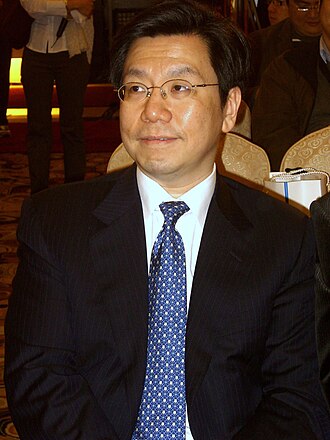
李开复 米米沙尔·侯赛因
EDITED TRANSCRIPT · 依据现场录音编译整理,可划线生成便签
2026 年夏,彭博周末节目《The Mishal Husain Show》主播米沙尔·侯赛因连线身在北京的李开复。李开复是创新工场董事长、零一万物创始人,曾任谷歌中国总裁,四十年间亲历中美两地的科技浪潮,新著《AI 原生:企业转型的使命》(AI Native: The Mandate to Transform Your Company)即将出版。这场谈话从 AI 对就业与组织的冲击谈起,涉及中美 AI 公司的商业模式、芯片管制下中国的追赶、开源的逻辑,也谈到他十一岁赴美的经历、患癌后的人生重排,以及一个每天批评他的 AI 管理教练。本文依据现场录音编译整理。

为何找李开复谈中国 AI

侯赛因: 从这档播客最早的日子起,AI 就常常是我们理解世界时绕不开的话题。我们想弄清它不断扩大的影响,所以先后请来过先驱和布道者,比如穆斯塔法·苏莱曼,也请来过现实主义者和批评者,比如梅雷迪思·惠特克和郝珂灵。这是一个由庞大的美国公司主导的领域,ChatGPT、Claude、Gemini 背后都是巨头。但这一周,我们真正想深挖的是中国正在产出什么:那些内嵌 AI 的产品、设备和应用,已经在服务一个庞大的人口,在许多其他国家同样受欢迎,并且有可能最终赢下全球 AI 竞赛。这些进展格外引人注目,因为美国已经限制中国获取最先进的芯片好几年了,而芯片正是让 AI 成为可能的核心部件。谁能把这幅图景讲清楚?我们想到的人,本身就是一位 AI 先驱。

李开复生于台湾,十一岁时被父母送到美国生活。他在田纳西州的学校里学会英语,八十年代攻读博士,研究的是计算机如何识别语音。此后他先后效力苹果、微软和谷歌。2005 年谷歌用数百万美元的薪酬把他挖走,足见他在谷歌眼中的分量。他曾站在美国科技公司进入中国的最前沿,如今定居北京。他投资了数十家科技初创公司,这意味着有一批中国亿万富翁的财富要归功于他。今天他有自己的 AI 公司零一万物。所以李开复见过太多。作为一位科技公司的首席执行官,他仍然身处一个将继续改变我们生活的行业。我认为他能以一种相当独特的方式,把技术的变革力量与我们的生活联系起来。他的新书《AI 原生:企业转型的使命》即将出版,但他真正思考和谈论的,是最广义的世界变迁。以下是我们的谈话。

被低估的两点:提速与降本

侯赛因: 感谢你抽出时间。我们是不是让你在北京的办公室里待得比平时更晚了?

李开复: 没有。你知道我们是「九九六」吧?

侯赛因: 九九六?

李开复: 早上九点到晚上九点,一周六天。

侯赛因: 你现在还这样工作?

李开复: 其实不是,但在中国,大家就是这么形容工作的。

侯赛因: 让我先大致交代一下,为什么此刻我们想听你的看法。眼下关于中美两国 AI 进展的头条和新闻太多了。这两个国家你都见过,事实上,这项技术四十年来的整个发展轨迹你都见证过。所以我先问这个:今天,AI 的力量还有什么是被低估的?

李开复: 我认为有两点。第一是改进的速度与成本的下降。多数人没有意识到,AI 现在能解决的任务,比一年前长了十倍。如果按人类完成任务所需的分钟数来衡量,一年前我能解决一个四分钟的任务,现在就能解决一个四十分钟的任务。

侯赛因: 明白,也就是说它在更长、更复杂的任务上越来越强。

李开复: 对。如果用怀疑的眼光看,它潜在替代的人类工作也多了十倍。所以,智能提升得快得多,成本又低得多,这种加速将以任何技术都不曾有过的方式推动普及。远超蒸汽机,远超互联网,远超摩尔定律。

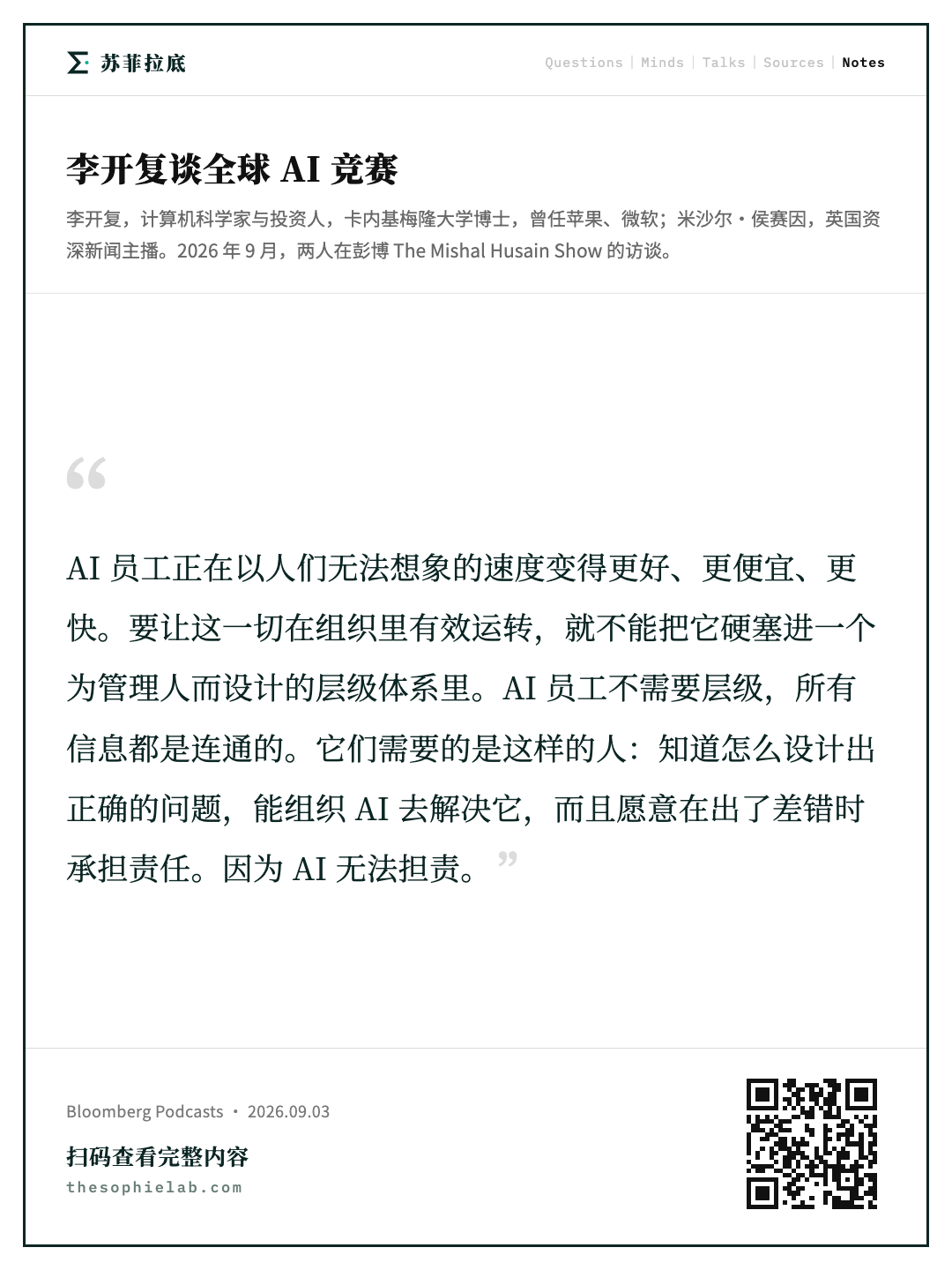
第二点是第一点的后果。AI 以这种势头改进,意味着我们的公司、企业、社会、政府的肌理都必须正视它将带来的剧变。在我看来,首席执行官们眼下恰恰是对这项技术的重要性和变革性最缺乏认识的一群人。而公司影响一切,对吧?我们都有工作,工作都会变。五年之后,典型的成功企业的组织架构会和今天大不相同,占据最重要位置的那些人,他们的资历也会和今天大不相同。因为 AI 员工正在以人们无法想象的速度变得更好、更便宜、更快。而要让这一切在组织里有效运转,就不能把它硬塞进一个为管理人而设计的层级体系里。AI 员工不需要层级,所有信息都是连通的。它们需要的是这样的人:知道怎么设计出正确的问题,能组织 AI 去解决它,而且非常重要的一点,愿意在出了差错时承担责任。因为 AI 无法担责。

五年后的组织与 DRI

侯赛因: 那么,什么样的资历能让人坐上这些位置?为了抓住这场变革,你主张人们去学什么?

李开复: 我建议只学一件事:如何解决难题,如何提出新问题,如何与 AI 一起解决问题,如何指挥 AI 大军大规模并行地攻克复杂问题。但这不是写代码,不需要任何工程背景,一个人文学科的学生完全可以胜任。它需要的是愿意面对复杂问题,能把多个信息来源融合起来。这些算是硬性要求,即使是年纪较大、没有技术背景的人也学得会。

侯赛因: 这倒是好消息。

李开复: 更重要的是你是什么样的人。如果这一点不匹配,那就没有机会。史蒂夫·乔布斯和杰克·多西把这个位置叫作 DRI,直接责任人(Directly Responsible Individual)。这些软性特质比硬性特质更重要。软性特质包括:第一,唯一的责任,出了任何问题,责任到此为止,不再往上推;第二,愿意不惜一切把事情做成,对项目有韧性和主人翁意识;第三,能与他人、与流程协作。

二十人团队会变成一人吗

侯赛因: 我能举个现实的例子吗?就说我们这个团队。做这档播客的是一个小团队:我、执行制片人、另外几位制片人、负责不同环节的视频剪辑。我很不愿意设想这样一种未来:只剩我一个人,身边是某种 AI 团队,我是那个直接责任人,周围的同事都是 AI。我希望你要我准备迎接的不是这样的未来?

李开复: 我不是说一个小组就是一个人加一堆 AI。人数取决于需要多少人,才能把「人与人的连接」这部分做好。我对你的行业了解不够,就用我自己的公司举例。也许一开始是二十个人配一百个 AI。往后,如果业务持平,大概人会更少,AI 更多;如果业务在增长,可能人更多,AI 也更多。所以我不是说不会有人留下。

但有些任务确实如此,比如你提到的视频剪辑。如果我想开一家一个人的公司,自动剪辑视频,我确实认识这样一家公司,就是一个人的。他们给美国的修理工和园丁做视频:修理工和园丁把照片和视频提交上来,AI 把它们剪开,配上音乐和背景,再推到 TikTok 和 Instagram 上,给他们带来生意介绍。同时它也把自己的服务推广到修理工和园丁的社群里。这本来会是一个大约二十人的团队,现在是一个人。

岗位消失后的再分配

侯赛因: 这背后的含义很明显,不是吗?不只是这个领域,很多领域都是。看看印度刚发生的抗议,那么多年轻人。他们的不满,部分是关于考试制度,但也有更普遍的挫折:过去他们本可以在呼叫中心之类的地方找到的入门岗位,现在没有了。所以社会影响非常严重。除非你的意思是,其他领域会有足够的工作接住所有这些人?

李开复: 我认为某些新产业、新板块会创造出工作。但我也认为整个社会需要重新思考我们对工作的依赖程度,因为 AI 会创造大量财富。对负担得起的国家来说,我们可以找到再分配的办法,让人们少工作一些小时,并为那些过去在经济上不算重要的活动获得报酬。但我知道,这些话对一个找不到工作或刚失去工作的人来说,很难讲得通。从 2018 年我的第一本 AI 书起,我就一直在谈这件事:岗位替代正在到来,赶快开始培训、开始准备。现在我觉得它只是最近才迅速升到了很高的位置。

苹果与安卓:中美模式

侯赛因: 我还想请教的一件事,是美国科技公司、尤其是 AI 公司,和中国公司之间正在发生什么。你在这两个世界都待过,处在一个独一无二的位置。你为苹果、微软、谷歌工作过,微软和谷歌在中国打根基的时候,你都站在最前线。拿 OpenAI 和 Anthropic 这样的公司来说,DeepSeek、月之暗面这样的中国对手对它们构成多大的挑战?

李开复: 我认为是重大挑战,尤其是如果它们能维持最近的水平。OpenAI 和 Anthropic 按多数指标衡量,一直稳居 AI 质量的第一或第二。但它们的模型是封闭的,不开源。中国模型基本上都是开源的,落后它们的距离在三个月到十五个月之间,眼下大概是六个月,因为大家都在推新模型。这意味着,假如你是 OpenAI 或 Anthropic,你有一个卖得很贵的产品,而市面上有一个大幅打折的开源版本,相当于你六个月前的最强模型。这就像,你是花五万美元买今年的特斯拉,还是花五千美元买一辆六个月前的特斯拉?显然后者是很强的价值主张。

侯赛因: 那么长远看,你认为更可能盈利的会是中国公司吗?

李开复: 不,我不这么认为。我认为美国公司会赚更多钱。Anthropic 和 OpenAI 造出了 iPhone,中国公司更像当年谷歌的心态:好,你有最好的产品,我们做一个几乎一样好的,卖得非常便宜。在这个案例里,是极低的价格,有时接近零。先拿下更大的份额,其余的以后也许来,也许不来,但眼下先赢市场份额。所以就像安卓一样,开源模型会有更大的份额、更广的覆盖、更多的使用量,但人们付的钱很少。有些情况下,人们直接把模型复制走,付钱给运行它的服务商,中国公司一分钱都拿不到。这是为了份额做出的牺牲。而 Anthropic 和 OpenAI 有美国的企业市场体系,卖的是备受重视的企业软件产品,大公司从中获得了实实在在的价值,所以愿意为软件付很多钱。iPhone 赚的钱遥遥领先,但安卓的市场份额更大。

侯赛因: 这个类比非常有用。我自然会想到世界上那些买不起 iPhone、用的是安卓手机的国家。那么你是否认为,DeepSeek、月之暗面的模型,比如月之暗面最近推出的 Kimi,会成为世界大部分地区、发展中国家人们所用的 AI?也就是说,中国会赢下这场全球竞赛?

李开复: 我认为这是一个可能性很大的结果。但它有几个前提。第一,中国公司要继续保持不太远的差距。硅谷公司的人才厚度惊人,有可能某家公司做出某样东西,需要更长时间才能追平,比如两年、三年,那这个判断就不成立了。第二,谁来为这些发展中国家的人构建应用?在这些国家赚不到多少钱,而中国的模型公司卖模型本来就赚不到多少钱。那么谁来做 OpenAI 等公司做出的那种漂亮的界面,并且适配所有这些发展中国家的语言?这要看后续怎么演变。眼下,中国产品还缺少足够的载体去征服发展中国家的消费者。

芯片管制下追到六个月

侯赛因: 中国在 AI 上能取得这种程度的进展,是怎么做到的?毕竟从拜登总统时期起,美国已经限制中国获得最强大的半导体好几年了。

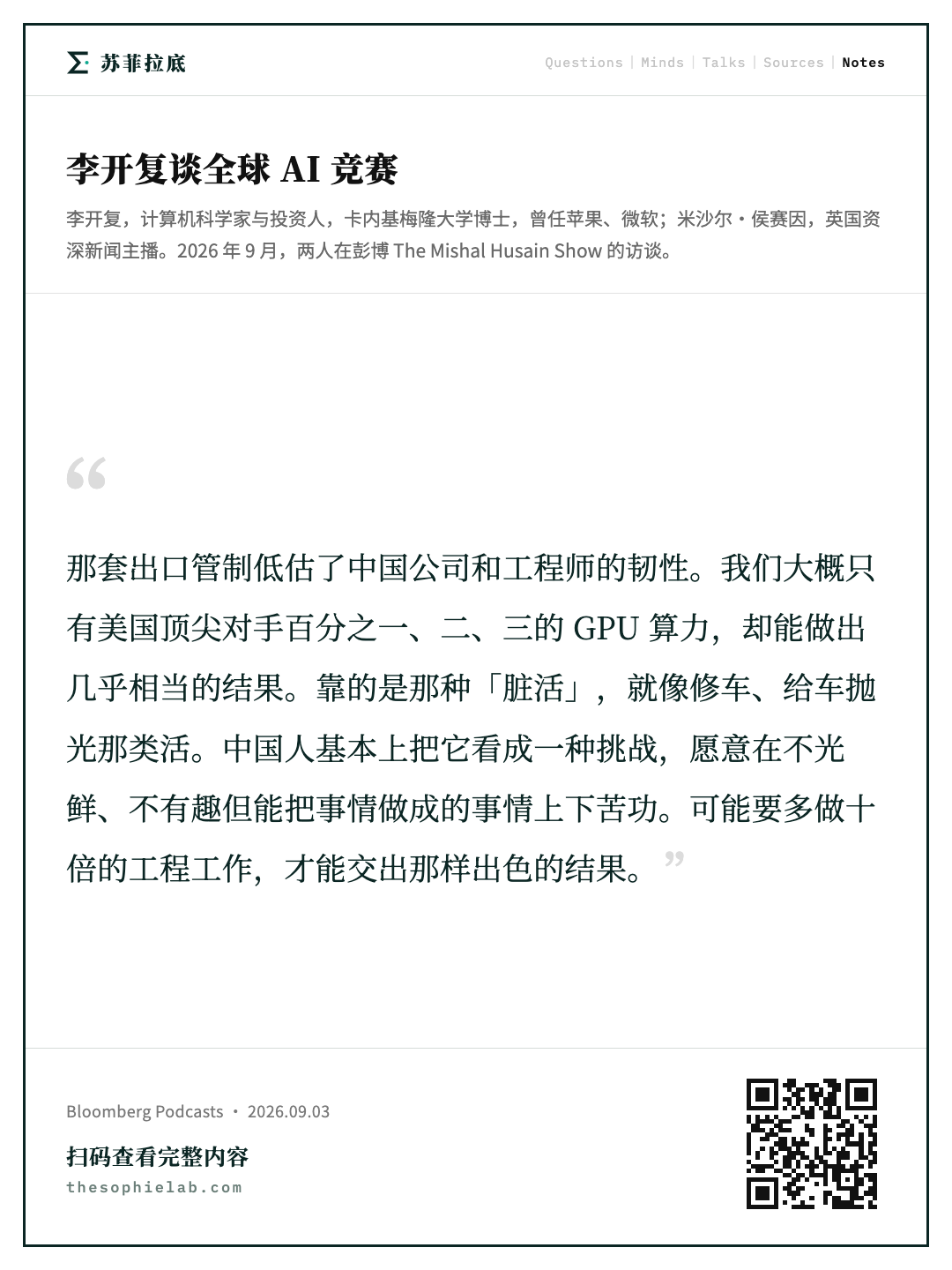
李开复: 我认为那套出口管制低估了中国公司和工程师的韧性,低估了他们在资源匮乏时不惜一切让东西跑起来的意愿。我们大概只有美国顶尖对手百分之一、二、三的 GPU 算力,却能做出几乎相当的结果。靠的是那种「脏活」,如果人们能想象什么叫脏活的话。就像修车、给车抛光那类活。中国人基本上把它看成一种挑战,愿意在不光鲜、不有趣但能把事情做成的事情上下苦功。可能要多做十倍的工程工作,才能交出那样出色的结果。我认为这是一处低估。

另一点是,中国公司学习这项技术的速度也经历了一个非常快的加速过程。ChatGPT 刚出来的那一刻,我会说美国领先中国三到四年;今天我们谈的是六个月。技术差距收窄的速度,以及苦干的工程在多大程度上弥补了硬件的欠缺,我认为这些都出乎政策制定者的意料。

侯赛因: 所以是低估了人的创造力和吃苦的能力。

开源:学习小组的选择

侯赛因: 我还好奇一点,中国模型往往是开源的,其他公司可以拿去开发、修改、做自己的产品。这就等于允许你的竞争者进来,做出比你更好的版本。那么中国公司为什么走开源这条路,而不像 OpenAI 和 Anthropic 那样闭源?后者显然不想把花钱研发出来的技术白白送人。

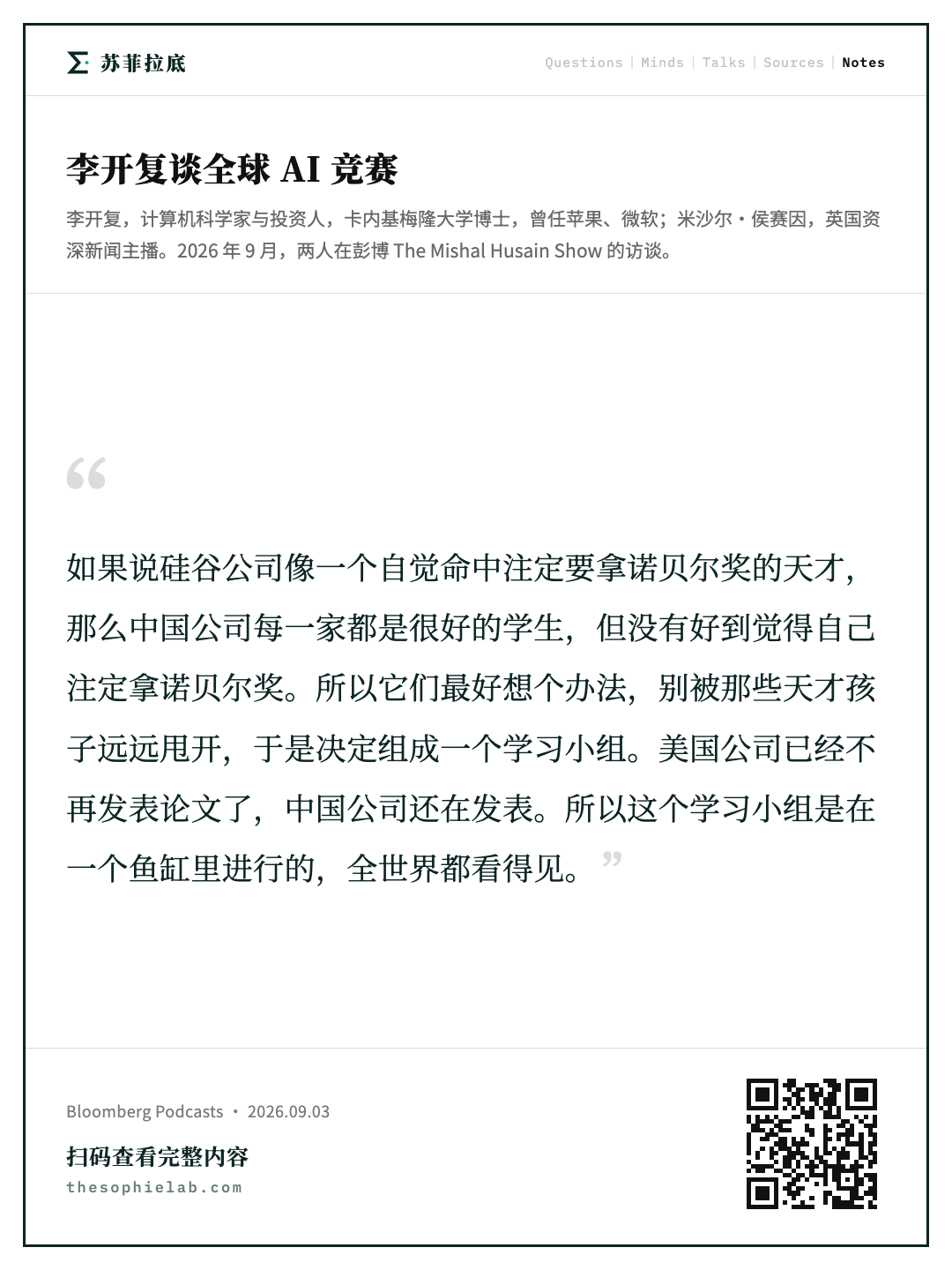
李开复: 我认为是因为它们不觉得自己在那条路上更可能赢。每家公司都会选择更可能成功的路。中国公司有点像一个学习小组。如果说硅谷公司像一个自觉命中注定要拿诺贝尔奖的天才,那么中国公司每一家都是很好的学生,但没有好到觉得自己注定拿诺贝尔奖。所以它们最好想个办法,别被那些天才孩子远远甩开,于是决定组成一个学习小组。它们并不真的坐在一起学习,但因为它们发论文、开放模型,人在公司之间流动,所以我会说中国公司在某种程度上是齐头并进的。它们对彼此的创新相当了解,你会看到 DeepSeek 引用 Kimi,反过来也一样。美国公司已经不再发表论文了,中国公司还在发表。所以这个学习小组是在一个鱼缸里进行的,全世界都看得见。

十一岁赴美:两套教育

侯赛因: 这很有意思。我在想,这两种路径背后是否有某种文化根源,部分来自教育体系。当然,你自己就是在十一岁时从台湾的学校体系转到了美国的学校体系,我记得是你哥哥告诉你父母,这样对你更好?

李开复: 对,完全正确。因为当时美国的体系,无疑是全世界最好的中学教育体系。我很幸运有机会去美国读书。

侯赛因: 十一岁到那里是什么感受?你并不是跟父母一起移民。你母亲陪了你一阵,然后就回台湾了。

李开复: 对。我跟哥哥嫂嫂住在一起,他们是美国一个国家实验室的科学家。那是一段大开眼界的经历。我觉得亚洲的学校倾向于把每个人都朝「好学生」的方向培养,而美国的学校让人成为他们自己想成为、或者应该成为的样子。这大概是最主要的差别。

侯赛因: 如果你留在台湾,成为那套体系的产物,你觉得你的人生会是什么样?

李开复: 我大概会是一个好学生,然后是某家公司的好员工。我可能仍然相当成功,也可能不,我不知道。但我认为去了美国以后,我的机会增加了,因为我既有亚洲体系、中国体系教给我的纪律和韧性,又有美国体系教给我的自由思考和自信。

癌症、母亲与人生重排

侯赛因: 你的那本书《AI 超级大国:中国、硅谷和新世界秩序》(AI Superpowers: China, Silicon Valley, and the New World Order)2018 年出版时,我感觉你写的几乎是人生中的一场危机。书的末尾,你母亲患了失智症,你自己得了癌症,那像是一个不得不重新审视自己某些选择的时刻。你写到去看望母亲:「我怎么会被一位情感上如此慷慨的女性养大,却把一生过得如此以自我为中心?」我很想多了解那段时期,以及它教给你什么。

李开复: 是的。我一辈子都是工作狂,尤其是从 2009 年创办公司到几年后患癌这段时间,是我工作最拼的岁月。我一直相信工作就是我的一切,它的优先级遥遥领先。家庭是我拥有的东西,我会给他们一些时间,但工作永远排在前面。

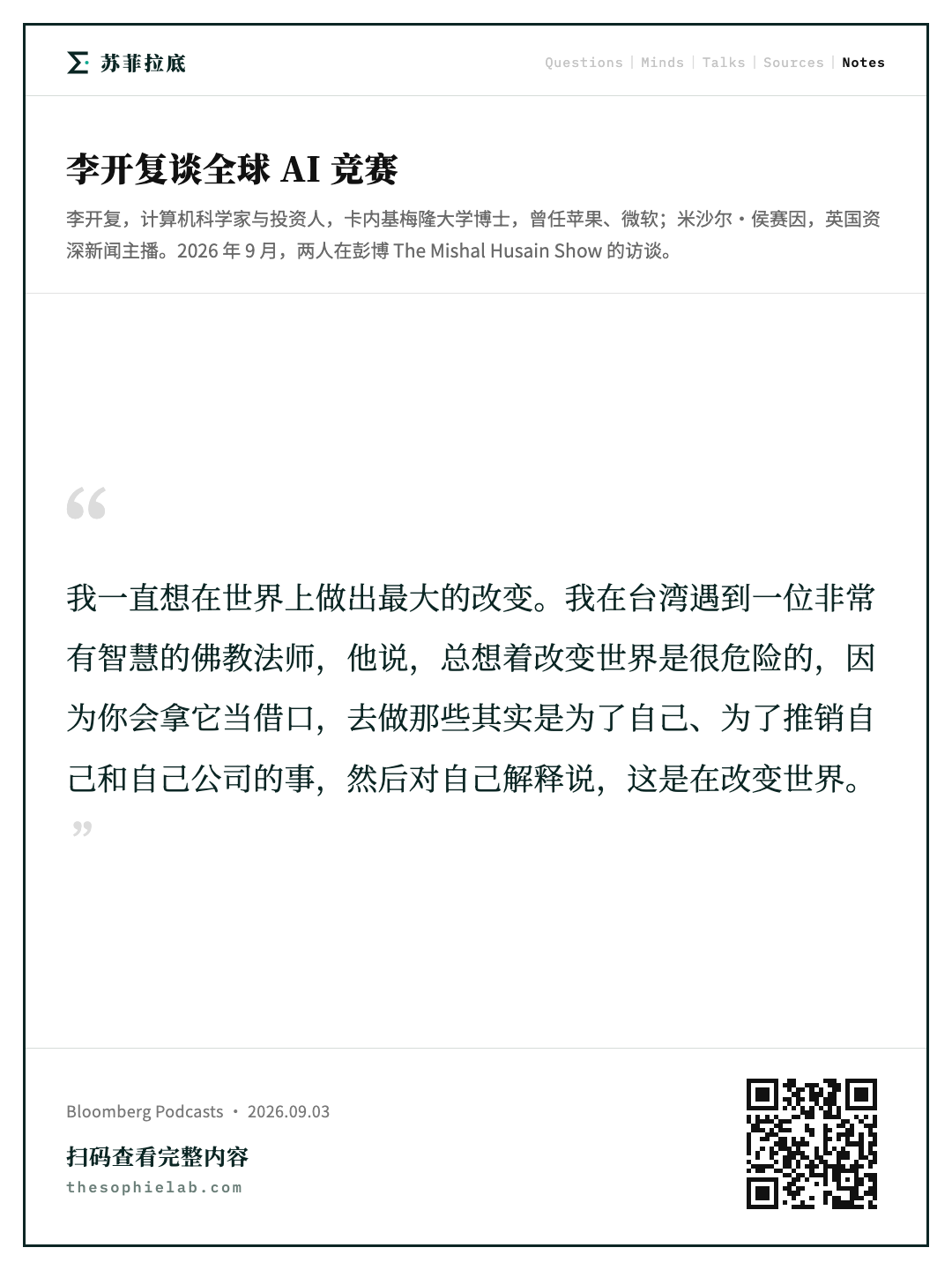
生病期间,我意识到两件事。第一,我倒下的时候,是家人不惜一切地照顾我,给我无条件的爱,尽管我陪他们的时间少得可怜。显然我需要重新审视我的优先级,人生不能只有工作。第二,我一直想在世界上做出最大的改变。我在台湾遇到一位非常有智慧的佛教法师,他说,总想着改变世界是很危险的,因为你会拿它当借口,去做那些其实是为了自己、为了推销自己和自己公司的事,然后对自己解释说,这是在改变世界。

这两件事在几个方面把我唤醒了。一是癌症缓解之后,我得以重新平衡生活,把更多时间给家人。我还是很忙,但优先级不再只是工作。陪家人的时候,我尽量确保那是有意义的、高质量的时间;他们真正需要什么的时候,我会把它放到最高优先级。这是一组变化。另一组变化和 AI 有关:它让我意识到,我身边很多人都和我一样,工作就是一切。你问一个人「介绍一下你自己」,他基本上会跟你讲他的工作。这种信念极其危险。当我们眼看工作被 AI 翻个底朝天,我们真的需要重新让人们明白,工作不是一切,人生远不止于此。

侯赛因: 可是你今天在帮人解释的这个世界,尤其是 AI 如何应用于企业,难道不是反而增加了这种风险吗?人们知道 AI 正在多大程度上改变职场,这会催生一种「饥饿游戏」式的竞争:你要成为那个胜出的人,而别人可能被淘汰出局。

李开复: 我在书里说得很清楚,首席执行官需要培养和训练什么样的员工,而不只是雇用和替换。我还向这些首席执行官呼吁:把公司翻转过来,不应该是一个非常快的过程。第一,因为过快会抹掉机构记忆,而 AI 还没准备好接手这些记忆。第二,我们都有责任培训人们去胜任那些将会出现的岗位和职位,早培训、好好培训。培训结束时如果你有岗位给他们,很好;如果没有,他们也能带着更好的训练去别的公司。就像我们看到 Meta 这样的公司大裁员,但我不怀疑一个从 Meta 被裁的人能在一家次一级的公司找到工作。我还举了个例子:如果整个世界都变得毫不留情,想用 AI 和更少的人以极快的速度往前冲,那谁来做消费者,谁来买产品?我们需要的是一个既有供给者也有消费者的社会。所以,社会责任、务实考量,这些都是我用来呼吁他们的理由:明白要做什么,但要审慎地做。

人脸识别与知情同意

侯赛因: 我想问问你帮助起步的那么多公司和你做过的投资。曾经有人这样写你:「制造中国亿万富翁的人」,因为你的风险投资公司扶植了那么多企业。有没有哪些时候,你不得不认真思考你支持的公司如何使用 AI?比如人脸识别。你能看到它所有正面的例子,但也能看到那些报道,比如几年前那份关于 AI 被用来识别中国西部维吾尔少数民族情绪的报道。

李开复: 我们不投任何做监控的公司,我们看的是民用应用。我认为人脸识别的问题正在两方面发生变化。第一,在很多中国应用里,实际上是需要用户同意的。我昨天刚去银行,他们要做人脸识别,先征求了我的同意,说有新规定要求必须获得同意。第二是街上的摄像头。伦敦也有类似的摄像头。有意思的是,中国街头的摄像头虽有争议,却带来了犯罪率的大幅下降,凶杀案几乎为零。如果你问人们,这就是被街头摄像头拍到的代价:这些录像不会被披露、出售或交给任何人,只用于侦破犯罪。是的,你会被录下来,但你会得到更高的安全,高得多。你愿意吗?在中国人们愿意,在别的国家可能不成立。

侯赛因: 那天在银行被征求同意时,你说的是行还是不行?

李开复: 当然同意了。我需要更新信用卡。

侯赛因: 所以那是个条件,你其实没法不同意?

李开复: 我可以换家银行吧,我想。

AI 教练如何批评他

侯赛因: 这也让我好奇 AI 在你自己生活里的位置。你个人的用法里,有什么可能让我们意外的?

李开复: 我什么事都用 AI。我有一个给首席执行官用的 AI,帮我把公司管得更好。我能真正听到那些预示危机或风险正在逼近的信号,在它变严重之前把它止住;我能在产品问题成为问题之前发现它;我还能找到那些力挽狂澜的英雄,感谢并表扬他们。很有意思的是,它成了我的管理教练。对首席执行官来说,找一位管理教练相当困难,因为你太忙了,教练又不可能一直在你身边。他们每周跟你坐一次,两个月后给你一份总结,但那只是你生活的一小片。我的 AI 教练在我参加的每一场会议里,每一场我说了什么、做了什么的会议里,而且它现在能纵向回看六个月里我参加的每一场会议。所以我可以问它:我说过哪些不恰当的话?我该怎么开会才能提高效率?作为首席执行官,你对我有什么指导,让我做得更好?它给出的东西非常有条理、非常有建设性,有时候相当直接,不给我留面子。但没关系,它是我的私人助理,别人看不到。它批评了我,或者说我必须改什么,我都放在心上。我放在心上,是因为它掌握了那么多数据,知道自己在说什么;也因为它是客观的,不会挑我爱听的说,不会过度苛责,也不会为了多赚几小时的费用而说什么。它只是告诉我它看到了什么。所以它帮我在管理上进步了不少。

侯赛因: 它说的话你真的信吗?你会觉得它确实有道理?它会不会犯错,你会不会对它感到沮丧?

李开复: 它确实会犯错。但我们开发这个产品的方式,不细讲的话,是它会提供一条证据链。当它说「嘿,你不是个好首席执行官,因为你不是个讲流程的人,这是我的证据」,我就可以逐条去看证据,看我同不同意。

侯赛因: 那些是你原本不会想到或注意到的事吗?

李开复: 绝对是。

侯赛因: 能举个你愿意分享的例子吗?

李开复: 可以。它说:最近公司面临若干风险,这似乎给你造成了一定程度的压力,以至于你偏离了平时温和的管理风格,在会上当着众人严厉批评人。考虑到这是一家中国公司,大家在意面子,下次发作之前你也许该克制一下。

侯赛因: 我猜一位心理治疗师或人类教练也可能对你说这些,但他们不会跟你一起坐在会议里。

李开复: 对,他们没有数据。那几个星期我压力很大,发作过几次之后就很明显了,对吧?基本上就是温和、温和、温和,哎呀,突然非常凶,然后又温和。多亏了那条建议,我又变回温和了。它给我的另一条建议也很有帮助:你的发言里有 93.6% 是在要细节、要澄清,是为了你自己弄明白。但会议是大家的,他们最想从你这里听到的是你的战略:你认为什么在顺利推进,什么不顺,什么需要改变。而不是我的新细节,比如别忘了提醒我某个会什么时候开。这也是有用的建议。

常开常听的硬件

侯赛因: 有意思。我想请你谈谈那些即将到来、但还没进入多数人视野的 AI 应用或进展。我知道你谈过「AI 优先」的硬件和设备。你设想的是什么?

李开复: 我认为像这样的设备,一个小小的录音装置,会变得非常非常流行。

侯赛因: 采访开始时我就在你手里看到它了,不比一枚领针大多少,一个小小的圆形设备。

李开复: 我们喜欢语音驱动的设备,因为语音识别已经足够好了。所以设备会由语音驱动。但手机作为语音驱动的 AI 优先设备并不好:你得打开手机,打开应用,点一下才能说话。等你说出第一句话,八秒钟已经过去了。你需要的是一个小设备,一直开着,一直在听。这样我就可以在这场采访中途对我的助理说「别忘了把去伦敦的机票发给我」,然后回到这场谈话,它会替我办好。

侯赛因: 那你是把它当作备忘录、当作第二部手机来用,还是它一直在录你?

李开复: 这个产品其实是我们产品里用的会议记录器,只在开会时打开。但总的来说,我认为技术的趋势会是语音驱动、常开、常听,不需要按钮。它能听,把一切传到你的手机上,在你的手机上转写它听到的一切,所以不会泄露到某家公司的某台大服务器上。硬件的趋势也会越来越小:现在已经这么小了,两年后就会隐形。

侯赛因: 那它要么是一个了不起的设备,要么是一个可怕的设备。

李开复: 这是不可阻挡的。我认为亚洲文化最终会接受这种设备,因为相比它索取的代价,它提供的好处太多了。但西方社会大概接受不了。

两种爱:连接与热情

侯赛因: 我想用你 2018 年那本书里的一个想法来收尾:我们共同的未来,取决于 AI 的思考能力,再加上人类爱的能力。我得承认,我对这两样东西能合到一起,没有太大信心。你有吗?

李开复: 我认为爱其实有两层意思。2018 年第一本书里,我指的是人与人之间的连接。那是更重要、更不可替代的东西。刚才我们谈到岗位替代,我其实认为增长最大的就业板块,会是人与人接触的领域。既包括现有的工作,也包括新的工作,比如寄养照护,有人上门做饭、把你的衣柜收拾得漂漂亮亮,或者一个很风趣、兼做喜剧演员的导游。当 AI 把活干了,人们会渴望人与人的连接,这可能有利于情感的联结,而 AI 做不到这一点。因为即便 AI 能模仿,人们也不想要。

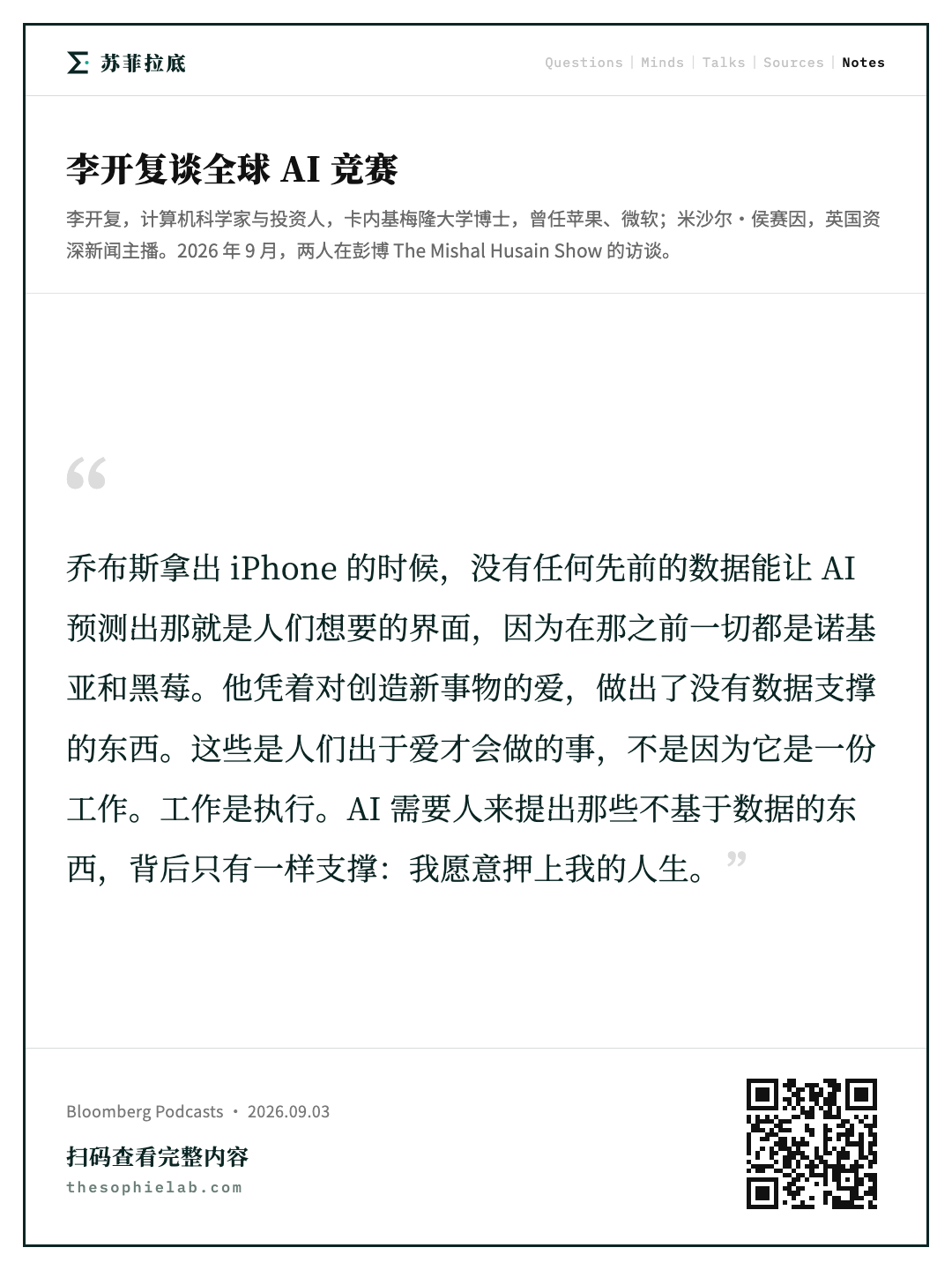
但还有第二层意思,在我的新书《AI 原生》里,我认为那也绝对是关于爱的:人对一个想法的爱,一种热情。我刚开始做 AI 的时候,人们笑话我。这个领域是个笑话,什么都不管用。人们说,凡是管用的东西都变成产品了,所以 AI 就是所有不管用的东西的集合。但我们这些 AI 科学家熬过来了,因为我们爱它、相信它,坚信 AI 会改变世界。史蒂夫·乔布斯拿出 iPhone 的时候,没有任何先前的数据能让 AI 预测出那就是人们想要的界面,因为在那之前一切都是诺基亚和黑莓。他凭着直觉、品味、设计,凭着对创造新事物的爱,做出了没有数据支撑的东西,改变了世界。可可·香奈儿有改变世界的爱,让女性不必再穿不舒服的衣服,让衣服可以既舒适又美丽。埃隆·马斯克有那种爱和热情,有勇气去造可回收的火箭、去造特斯拉。这些是人们出于爱才会做的事,不是因为它是一份工作。工作是执行。

所以这是一个很好的组合:AI 负责执行,而这些成了亿万富翁的人,各有他们所爱、并为之倾注一生的东西,现在他们有了 AI 来放大自己的力量,有了执行得如此出色的 AI。AI 需要人来提出那些不基于数据的东西,自由的、有创造性的、流动的东西,背后只有一样支撑:我愿意押上我的人生。如果你愿意押上你的人生,那我就跟你干。你会得到全部的功劳,也承担全部的后果,AI 会把活干得更快。所以我认为,人对彼此的爱,以及人对他们想创造的东西、想改变这个世界的东西的爱,和 AI 是一种可行的伙伴关系。

侯赛因: 我接受你的说法。李开复博士,非常感谢你抽出时间。北京现在已是晚上,不再耽误你了。希望我们有一天能当面见面。

李开复: 我也希望。谢谢。
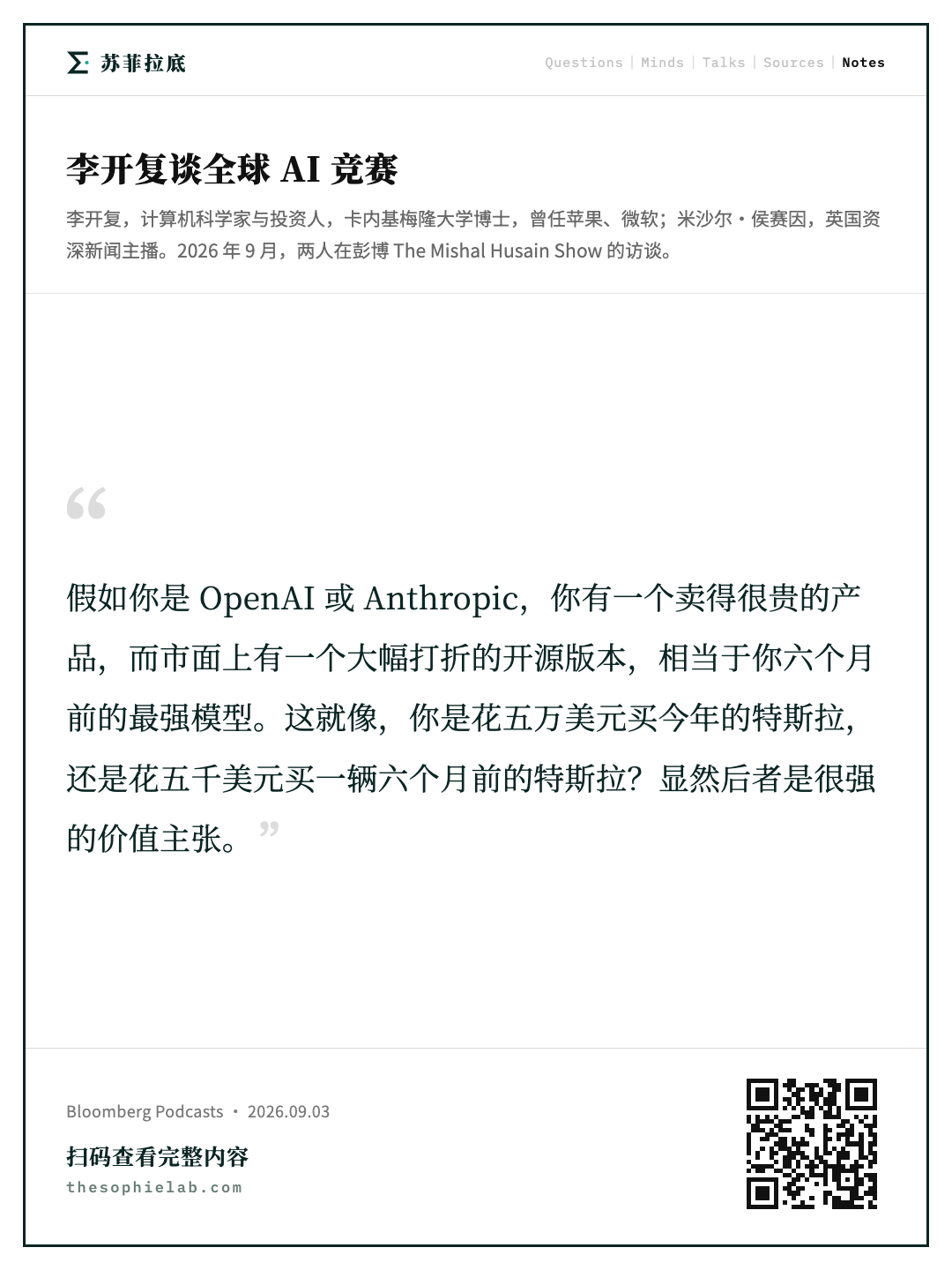
本期讲者
李开复计算机科学家与投资人,卡内基梅隆大学博士,曾任苹果、微软、谷歌高管并主持谷歌中国。2009 年创办创新工场,2023 年创办大模型公司零一万物,著有《AI 新世界》《AI Native》。
米沙尔·侯赛因英国资深新闻主播,曾长期主持 BBC 广播四台《Today》节目,2025 年加入彭博,主持访谈播客《The Mishal Husain Show》。
章节 · 点击跳转视频
0:00 片头预告:工作不是一切 ▶ 正在看
0:39 节目开场与李开复生平 ▶ 正在看
4:24 被低估的 AI:十倍任务与组织重构 ▶ 正在看
7:00 直接责任人与一人公司 ▶ 正在看
11:23 就业冲击与社会再分配 ▶ 正在看
12:33 开源对闭源:iPhone 与 Android 之喻 ▶ 正在看
17:30 算力受限下的追赶:脏活与学习小组 ▶ 正在看
21:19 台美教育与人生转折 ▶ 正在看
27:06 CEO 的责任与监控伦理 ▶ 正在看
31:55 AI 当管理教练:证据链与直言 ▶ 正在看
36:38 常开常听的 AI 硬件 ▶ 正在看
39:45 两种爱:人际连接与创造热望 ▶ 正在看
本期论点
本期回应
5:25
智能提速叠加成本下降,会让 AI 的普及速度远超蒸汽机、互联网和摩尔定律 会变便宜用 AI 会越来越便宜吗?
14:08
当开源模型达到闭源旗舰半年前的水准且价格大幅打折,闭源模型的高价就难以维持 几乎追平中美的 AI 差距在拉开还是在缩小?
17:56
美国的先进芯片出口管制低估了中国工程师在资源匮乏下埋头苦干的韧性 几乎追平中美的 AI 差距在拉开还是在缩小?
19:26
美国对中国的 AI 领先优势已从 ChatGPT 问世时的三到四年缩小到约六个月 几乎追平中美的 AI 差距在拉开还是在缩小?
7:19
AI 无法承担责任,出事时必须由人来担责 人须在场AI 做事时人还需要在场吗?
7:35
面对 AI 革命,人最该学的是提出新问题和解决难题,而不是写代码 学提问面对技术冲击,人该学什么?
12:09
负担得起的国家应通过再分配缩短工时,并为过去不被视为有经济价值的活动付酬 法律强制技术公司该怎么被约束?
26:53
把工作等同于自我、介绍自己就是介绍工作,这种信念极其危险 确实有一个我真的存在一个「我」吗?
28:56
若所有企业都靠 AI 极限裁员,就没人当消费者买产品,社会既需要供给方也需要消费者 净取代AI 会怎样改变人的工作?
34:01
AI 的管理批评值得听进去,因为它掌握足够数据、不挑人爱听的说,也没有多收钟点费的动机 看依据是否正当能不能用统计规律判断一个人?
39:13
常开常听的设备终将被亚洲文化接受,却难被西方社会接受 文化上本就能接受人为什么不拒绝被持续采集?
其他论点
6:02
CEO 是最没有意识到 AI 有多重要、多具颠覆性的人群之一
20:34
中国公司选择开源并非出于慷慨,而是判断闭源不会让自己更有可能赢
40:44
即便 AI 能模仿人际连接,人们也不想要 AI 提供的那种连接
42:39
真正的突破来自没有数据支撑的直觉与热爱,AI 只擅长执行
01片头预告:工作不是一切
0:00
I think our whole society needs to rethink how much we depend on jobs. The job displacement is coming. If you ask someone, tell me about yourself. They pretty much tell you about their job. It's extremely dangerous, as we look at jobs being turned upside down by AI. We really need to re-instill in people that a job isn't everything. There's more to it than that in life. Kai-Fu Lee, who's played a central role in the tech boom in the U.S. and China for 40 years. In the long run, do you think that the Chinese companies will be the ones which are more likely to make a profit?
我认为我们整个社会都需要重新思考,我们对工作的依赖到底有多深。工作被取代的浪潮正在到来。如果你让一个人介绍一下自己,他们基本上讲的都是自己的工作。这非常危险,因为我们看到 AI 正在把工作彻底颠覆。我们真的需要重新让人们意识到,工作并不是一切。人生远不止于此。李开复,四十年来一直在美国和中国的科技热潮中扮演核心角色。从长期来看,你认为中国公司会是更有可能赚到钱的那一方吗?
便签引用
02节目开场与李开复生平
0:39
No, I do not. Anthropic and OpenAI have built the iPhone. The Chinese companies are more like Android. iPhone makes by far the most money, but Android has the larger market share from Bloomberg weekend, This is the Mishal Husain Show. From the very early days of this podcast on making sense of the world, AI has often been part of the conversation. We have wanted to understand its ever expanding impact. And so I have talked to pioneers and evangelists, like Mustafa Suleyman, as well as realists and critics like Meredith Whittaker and Karen Hao. It's a field dominated by immense American companies, the giants behind ChatGPT, Claude Gemini and others.
不,我不这么认为。Anthropic 和 OpenAI 造出了 iPhone,中国公司更像是 Android。iPhone 赚的钱远远最多,但Android 拥有更大的市场份额。这里是彭博周末节目,《米沙尔·侯赛因秀》。从这档解读世界的播客最早期开始,AI 就常常是我们对话的一部分。我们一直想弄明白它不断扩张的影响。所以我既访谈过像穆斯塔法·苏莱曼这样的先驱和布道者,也访谈过像梅雷迪思·惠特克和郝珂灵这样的务实派与批评者。这是一个被巨型美国公司主导的领域——ChatGPT、Claude、Gemini 等背后的那些巨头。
便签引用
1:33
But this week we really wanted to dig into what's coming out of China. The AI embedded products, devices and apps that are already serving a huge population, that are popular in many other countries and may potentially end up winning the global AI race. These advances are especially notable because the United States has for some years been restricting Chinese access to the most advanced chips, the components that essentially make AI possible. Who can really explain this landscape we thought? And the person we turned to is himself an AI pioneer. Kai-Fu Lee was born in Taiwan, but at the age of 11, his parents sent him to live in the United States.
但这一周,我们特别想深入了解从中国走出来的东西。那些嵌入了 AI 的产品、设备和应用,它们已经在服务庞大的人口,在许多其他国家也很受欢迎,并且有可能最终赢得全球 AI 竞赛。这些进展尤其值得注意,因为美国这些年来一直在限制中国获取最先进的芯片——那些从根本上让 AI 成为可能的元件。我们想,谁真的能讲清楚这个格局?我们找到的这个人,本身就是一位 AI 先驱。李开复出生在台湾,但在11 岁那年,父母把他送到美国生活。
便签引用
2:23
He learned English at school in Tennessee and in the 1980s, he was doing his PhD on how computers could recognize speech. He went to work for Apple, then Microsoft, then Google, which poached him with a multimillion dollar pay deal, that showed his value to them, back in 2005. He was at the forefront of American tech going into China, and Beijing is where he lives today. He's invested in dozens of tech startups, which means there are a number of Chinese billionaires who owe their fortunes to him. And today he has his own AI firm, 01.AI. So Kai-Fu Lee has seen a lot.
他在田纳西州上学时学会了英语,1980 年代,他在读博士,研究计算机如何识别语音。他先后去了苹果、微软,然后是谷歌——谷歌用一份数百万美元的薪酬方案把他挖了过去,这足以说明他在他们眼中的分量,那是 2005 年。他曾站在美国科技进入中国的最前沿,而北京就是他今天生活的地方。他投资过几十家科技创业公司,这意味着有不少中国亿万富翁的财富要归功于他。如今他还有自己的 AI 公司,零一万物。所以李开复见过太多东西了。
便签引用
3:07
And as a tech CEO, he remains part of a landscape which will further change our lives. I think he is able to connect the transformative power of technology to our lives in a pretty unique way. He has a new book coming out called 'AI Native: The Mandate to Transform Your Company'. But really, he thinks and talks about our changing world in the broadest sense. Here's how our conversation began. Hello! Dr. Kai-Fu Li, can you hear me? Yes. Hi. Hi, Mishal. Yes. Thank you very much for taking the time.
而作为一位科技公司的 CEO,他仍身处这个将进一步改变我们生活的格局之中。我觉得他能够以一种相当独特的方式,把技术的变革力量和我们的生活连接起来。他有一本新书即将出版,叫《AI Native: The Mandate to Transform Your Company》(《AI 原生:企业转型的必答题》)。但他真正思考和谈论的,是我们这个正在变化的世界,从最广的意义上说。我们的对话是这样开始的。你好!李开复博士,能听到我说话吗?能。你好。你好,米沙尔。是的。非常感谢你抽出时间。
便签引用
3:47
Have we kept you later than usual in your office in Beijing to talk to us? No, no. You know we're nine, nine, six, right? Nine, nine six? 9 a.m. to 9 p.m. six days a week. Oh, wow. Okay. You still work like that? Actually, I do not, but that's the way people talk about working in China. Okay, I see. Let me set the scene broadly for you about why we wanted to turn to you and to hear your perspective, right now. It's because there is so many headlines and news of developments in AI in the U.S. and China.
我们是不是让你在北京的办公室里比平时待得更晚,来跟我们聊天?不不,你知道我们是九九六,对吧?九九六?早上九点到晚上九点,一周六天。哦,哇。好吧。你现在还这么工作吗?其实我没有,但在中国大家都是这么说工作的。好的,我明白了。让我大致交代一下背景,为什么我们现在想找你、想听听你的看法。因为眼下关于美国和中国人工智能进展的头条和新闻实在太多了。
便签引用
03被低估的 AI:十倍任务与组织重构
4:24
You know, both these countries you have seen, in fact, the entire trajectory of the development of this technology over 40 years. So let me just start by asking you this - What do you think today is still underappreciated about the power of AI? I think there are two things. One is the speed of improvement and the reduction of costs. Most people do not realize that AI is solving tasks, ten times longer than it was one year ago. So, if I solve a four minute task a year ago now, I can solve a 40 minute task a minute, measured by how many minutes a human would need to solve it. I see, okay, so it's getting better and better at longer, more complex tasks. Right, right.
要知道,这两个国家你都看着走过来,实际上你见证了这项技术四十年来的完整发展轨迹。那我就先问你这个问题——你觉得今天人们对 AI 的力量,还有什么是被低估的?我想有两点。一是进步的速度和成本的下降。大多数人没有意识到,AI 现在能解决的任务长度,是一年前的十倍。所以,如果一年前我能解决一个四分钟的任务,现在我就能解决一个四十分钟的任务——这是按一个人类需要多少分钟来完成它衡量的。我明白了,所以它在越来越长、越来越复杂的任务上做得越来越好。对,对。
便签引用
5:16
And if you want to look at it with a skeptical view, it is displacing ten times more human work potentially. So the acceleration of the much faster intelligence and improvement and the much lower costs is going to drive adoption like no technology ever has before. So much more than the steam engine, so much more than the internet, so much more than Moore's Law. The second is a consequence of AI improving that sense means that the fabric of our companies, enterprises, society, government will need to consider the drastic changes that will bring about. And in my view, the CEO is currently, one of the least aware of how important and transformative this AI technology is because the companies affect everything, right?
如果你想用怀疑的眼光看,那就是它有可能取代十倍于原来的人类工作。所以,智能大幅提速、不断进步,加上成本大幅下降,这种加速将会推动一种前所未有的技术普及速度。远远超过蒸汽机,远远超过互联网,远远超过摩尔定律。第二点是 AI 不断进步带来的后果,这意味着我们的公司、企业、社会、政府,其组织肌理都必须去正视它将带来的剧烈变化。在我看来,CEO 目前恰恰是最没有意识到这项 AI 技术有多重要、多具颠覆性的人群之一,因为公司影响着一切,对吧?
便签引用
6:19
We all have jobs and and the jobs are going to change. In five years, the typical successful companies organizational chart will be quite different from today. The people who occupy the most important places, their qualifications will look quite different than today because I workers are becoming better and cheaper, faster at a pace that people cannot fathom. And in order to make that work effectively in an organization, it cannot be retrofitted into an organization with a hierarchy intended to manage people.
我们都有工作,而这些工作都会改变。五年之内,一家典型的成功公司的组织架构图,会和今天很不一样。占据最重要位置的人,他们所需的资质也会和今天很不一样,因为 AI 员工正在变得更好、更便宜、更快,速度快到人们无法想象。而要让这一切在一个组织里真正跑起来,它没法被硬塞进一个原本为管理人而设计的层级架构里。
便签引用
04直接责任人与一人公司
7:00
AI workers don't need hierarchies. All the information is connected. What they need is people who will know how to design the right problem to solve, organize AI to solve it, and also, very importantly, willing to be accountable if anything goes wrong. Because AI can't be accountable. So what are the qualifications then that would put people in these positions? What are you advocating in terms of what people study in order to make the most of this revolution? I suggest they study one thing, which is how to solve hard problems and come up with new problems.
AI 员工不需要层级。所有信息都是连通的。它们需要的是这样的人:懂得设计出对的问题、组织 AI 去解决它,还有非常重要的一点,愿意在出事时承担责任。因为 AI 没法承担责任。那么,什么样的资质能让一个人胜任这些位置?在学什么、怎么学这件事上,你主张人们怎么做,才能最大限度地利用这场革命?我建议他们只学一件事,就是如何解决难题,以及如何提出新的问题。
便签引用
7:46
Work with AI to solve them, and to command the armies of AI to massively parallel solve complex problems. But this is not coding. This does not require any engineering background. A humanities student can easily do this. This does require a willingness to work on complex problems, ability to fuse multiple sources of information. So these are kind of the hard requirements. They can be learned even for an older non-tech background person. Good to know! What's more important is what kind of a person one is.
与 AI 一起解决它们,并指挥 AI 大军以大规模并行的方式解决复杂问题。但这不是写代码。这不需要任何工程背景。一个人文学科的学生完全可以做到。它确实要求你愿意钻研复杂问题,有能力把多种来源的信息融会贯通。所以这些算是硬性要求。哪怕是年纪较大、非技术背景的人也能学会。这倒是好消息!更重要的是,你是个什么样的人。
便签引用
8:25
And if that doesn't match then no chance. And this position has been called by Steve Jobs and Jack Dorsey as the DRI: Directly Responsible Individual. And these soft traits are more important than the hard traits. The soft traits include, singular responsibility. That means anything goes wrong. The buck stops here. Second is willingness to do whatever it takes to accomplish something with the tenacity and ownership of a project. And the third is ability to work with other people and processes. Can I put a real world example to you? Our team right here?
如果这一点不匹配,那就没戏。这个位置被史蒂夫·乔布斯和杰克·多西称为 DRI:直接责任人。这些软性特质比硬性特质更重要。软性特质包括:唯一责任。也就是说,出了任何问题,责任到此为止。第二是愿意为了完成一件事做任何必要的事,对一个项目有那种韧劲和主人翁意识。第三是与他人和流程协作的能力。我能给你举个现实中的例子吗?就说我们这个团队?
便签引用
9:13
We are a small team who work together to produce this podcast myself and executive producer, a handful of other producers, video editors working on different aspects of this. I would hate to think of a future where it's me and essentially a version of an AI team that I might be the directly responsible individua and everyone else around me is an AI colleague. I hope that's not the future that you're trying to prepare me for? I am not saying the group is one person and all AI. It's as many people as is needed to ensure that people connection part is worked out. I don't know enough about your business, so I'm using my business as an example. So maybe a unit of 20 people and 100 AI to begin with. Then over time, if the business is flat, then probably fewer people and more AI. If the business is growing, there may be more people and more AI. So I'm not saying there will be no people left. There are some tasks, You mentioned video editing - So if I want to set up a one person company that automatically edits videos, and actually I actually know
我们是一个小团队,一起做这档播客——我、执行制作人,还有几位制作人、视频剪辑,各自负责不同的部分。我很不愿意去想这样一种未来:只剩我,和某种版本的 AI 团队,我大概就是那个直接责任人,而我身边所有人都是 AI 同事。我希望这不是你正在为我准备的未来吧?我并不是说这个小组只有一个人,其余全是 AI。人数是多少,取决于要让人与人之间的连接这部分跑通需要多少人。我对你们这行了解不够,所以我就拿我自己的业务举例。也许一开始是一个二十人加一百个 AI 的单元。然后随着时间推移,如果业务不增长,那大概就是人更少、AI 更多。如果业务在增长,那可能是人更多、AI 也更多。所以我不是说不会再有人了。有些任务——你提到视频剪辑——比如我想开一家自动剪辑视频的一人公司,其实我真的知道
便签引用
10:39
a company like this is a one person company. They make videos for handymen and gardeners in the US. And basically the handyman and gardeners submit their pictures and videos, and AI chops them up, puts on music and background, and then promotes them on TikTok, Instagram and gets them referrals of deals and it also promotes their own service to the communities of handymen and gardeners. So this would have been a team of, probably 20 people, but now it's one person. I mean, the implications of that are obvious, aren't they?
有这样一家公司,就是一人公司。他们给美国的家庭维修工和园丁做视频。基本上就是维修工和园丁把自己的照片和视频传上来,AI 把素材切开、配上音乐和背景,然后在 TikTok、Instagram 上推广,帮他们拿到转介绍的生意,同时还在维修工和园丁的社群里推广他们自己的服务。这在过去大概需要一个二十人的团队,但现在只要一个人。我是说,这背后的含义是显而易见的,不是吗?
便签引用
05就业冲击与社会再分配
11:23
And I don't just mean in this field, in so many other fields. Look at the protests that have just happened in India with so many young people. Their frustrations, I mean, they were partly about the exam process, but there were also more general frustrations at the kind of entry level jobs they would have had in the past in places like call centers and others aren't there anymore. So there are very serious social implications. Unless you're saying there will be enough jobs just in other fields for all of those people? Well, I think there will be jobs in certain new industries, new segments created, and I think our whole society needs to rethink how much we depend on jobs, because I will generate a lot of wealth. And I think we can as countries that can afford it, find ways of redistribution so people can work fewer hours and be paid for activities that were not economically important, but I think this is all very hard to communicate to someone who couldn't find a job or lost his or her job. So this has been something since my
而且我指的不只是这个行业,还有那么多其他行业。看看印度刚刚发生的抗议,那么多年轻人。他们的挫败感……我是说,那部分是关于考试流程的,但也有更普遍的不满——就是他们过去本来能找到的那些入门级工作,比如呼叫中心之类的地方,现在已经不存在了。所以这会带来非常严重的社会影响。除非你是说,其他领域会有足够的岗位来容纳这些人?嗯,我认为在某些新兴产业、新出现的细分领域里会有工作机会,而且我觉得我们整个社会需要重新思考自己对"工作"的依赖程度,因为AI会创造大量财富。我认为,那些负担得起的国家可以找到再分配的办法,让人们工作时间更短,并且为那些过去不被视为具有经济价值的活动付酬。但我也知道,这些话对一个找不到工作、或者刚丢了工作的人来说,是很难听得进去的。所以从我2018年
便签引用
06开源对闭源:iPhone 与 Android 之喻
12:33
first I book in 2018, I've talked about. The job displacement is coming. Let's start the training, the preparation and now I think it's just recently rapidly risen to very high levels. Another thing on my mind that I'd love to get your insight on is what is going on at American Tech, and particularly AI companies and Chinese ones, and you're uniquely placed to, to tell us about both those worlds because you've moved within them. You worked for Apple, Microsoft and Google and for Microsoft and Google, You were at the forefront of their, their foundations in China. Let's take companies like OpenAI and Anthropic. How much of a challenge do Chinese versions like DeepSeek and Moonshot represent to them?
出版第一本书起,我就一直在讲这件事。工作岗位替代正在到来,我们该开始培训、开始准备了。而现在,我觉得这个问题只是在最近迅速上升到了非常严峻的程度。我心里还有一个问题很想听听你的看法,就是美国科技界、尤其是AI公司,和中国公司之间到底在发生什么。你处在一个很独特的位置,可以同时讲清楚这两个世界,因为你在两边都待过。你在苹果、微软和谷歌都工作过,而在微软和谷歌,你都处在它们在中国建立根基的最前沿。我们就拿OpenAI和Anthropic这样的公司来说,DeepSeek、月之暗面这类中国版本对它们构成了多大的挑战?
便签引用
13:25
I think they represent, a significant challenge, especially if they continue to keep up at the recent levels because OpenAI and Anthropic always stayed, number one or two by most metrics in the AI quality. But their models are closed and not open source. The Chinese models have been largely open source. The models trailing them trail between anywhere between three and 15 months. Right now, it's probably six months behind, because everyone's pushing on new models. So what this means is if you were OpenAI or Anthropic, you would have a product you sell for a very high price, that is deeply discounted with an open source version that is equivalent to your best model six months to go. So it's like, would you pay $50,000 for a Tesla this year or a you know $5,000 Tesla, that's six months old. Obviously the second is is a strong value proposition. So in the long run, do you think that the Chinese companies will be the ones which are more likely to make a profit?
我认为构成了相当大的挑战,尤其是如果它们能继续保持最近这种水准的话。因为OpenAI和Anthropic在AI能力的多数指标上一直稳居第一或第二,但它们的模型是闭源的,不开放。而中国的模型基本上都是开源的。这些模型落后的幅度在三个月到十五个月之间不等,现在大概是落后六个月,因为大家都在拼命推新模型。这意味着,如果你是OpenAI或Anthropic,你手里的产品卖得很贵,但市面上有一个大幅打折的开源版本,性能相当于你六个月前的最强模型。这就好比,你会花五万美元买今年的特斯拉,还是花五千美元买一辆只旧了六个月的特斯拉?显然后者的性价比很强。那么长期来看,你认为更可能赚到钱的会是中国公司吗?
便签引用
14:51
No, no, I do not. I think the American companies will make more money. So Anthropic and OpenAI have built the iPhone. The Chinese companies are more like the way Google felt. It's like, okay, you got the best product. We'll build something that's almost as good and sell it very cheaply. In this case, at very, very low costs, sometimes near zero. And and just win the larger share and the rest may, may come later or may not. But for now, let's gain market share. So like Android, the open source models will have more share, more footprint, more usage.
不,不,我不这么认为。我认为美国公司会赚更多钱。Anthropic和OpenAI造的是iPhone,而中国公司更像当年谷歌的做法:好,你有最好的产品,那我就做一个差不多好的东西,然后卖得极便宜。在这件事上,就是极低的成本,有时几乎是零。先拿下更大的份额,剩下的以后再说,或者根本不来。但眼下,先抢市场份额。所以就像安卓一样,开源模型会有更大的份额、更广的覆盖、更多的使用量,
便签引用
15:30
But people will pay very little. In some cases they just copy the model and they pay for the service on which it's run. But they don't actually pay the Chinese companies anything and that's being sacrificed to gain share. Whereas the Anthropic and OpenAI, they have the American enterprise system, selling enterprise software products that are very highly prized and large companies are getting good value, so they pay a lot of money for the software. So iPhone makes by far the most money, but Android has a larger market share. That is a really useful analogy, I think and obviously I'm thinking about all those countries in the world where iPhones are unaffordable and people are using Android phones. Do you think then, that DeepSeek and the Moonshot, models like Kimi, for example, which Moonshot really recently brought out, in most of the world in developing countries these will be AI to people that China will win that global race, if you like?
但人们付的钱很少。有些情况下,他们直接把模型拷走,只为运行它的服务付费,而并没有真正付给中国公司任何钱——这就是为了换份额而做出的牺牲。反观Anthropic和OpenAI,它们背靠美国的企业级市场体系,卖的是价格很高的企业软件产品,而大公司确实觉得物有所值,所以愿意为这些软件掏很多钱。所以iPhone赚的钱远远最多,但安卓的市场份额更大。我觉得这个类比非常有用。我自然也会想到世界上那些买不起iPhone、只能用安卓手机的国家。那么你是否认为,DeepSeek和月之暗面——比如他们最近推出的Kimi这类模型——在世界大部分地区、在发展中国家,会成为普通人用的AI?也就是说,中国会赢下这场全球竞赛?
便签引用
16:34
I think that's a likely outcome. It presumes a few things. One is that Chinese companies continue to trail not too far. It's possible, because of the talent depth in the Silicon Valley companies, that some company comes out with something that takes much longer to match, let's say two years, three years, in which case that may not hold. The second really is who's going to build the apps for the people in these developing countries. So there's not a lot of money to be made in these countries and the Chinese model companies already don't make much money on what they sell. So who's going to build that nice interface that OpenAI and other companies have done and cater to the languages for all of these developing countries.
我认为这是一个可能的结果。但它有几个前提。一是中国公司能继续把差距保持在不太远的范围内。也有可能,凭借硅谷公司深厚的人才储备,某家公司拿出一个要花很久才能追上的东西,比如两年、三年,那这个判断就不成立了。第二点其实是:谁来为这些发展中国家的人做应用?这些国家赚不到多少钱,而中国的模型公司本来在自己卖的东西上就没赚多少。那么谁来做出OpenAI它们那种漂亮的界面,并且适配这些发展中国家的各种语言?
便签引用
07算力受限下的追赶:脏活与学习小组
17:30
So we'll have to see how that plays out. Right now, there's not a enough carrier for the Chinese products to conquer the consumers of developing countries. How has Chinese advance in AI been possible to this extent, given that the US for several years now, from the time of President Biden, has restricted access to the most powerful semiconductors. I think that set of export controls, undervalued the Chinese companies and their engineers' tenacity and willingness to do whatever it takes to get things to work, despite a lack of resources. And, so we've probably had one, two, 3% of the GPU power of the top American rivals, and they were able to produce almost comparable results. And that's through the kind of dirty work if people can imagine the dirty work, right.
所以还得看后续怎么发展。就目前而言,中国产品还缺少足够的载体去拿下发展中国家的消费者。那么,在美国已经限制最先进半导体获取好几年——从拜登总统时期开始——的情况下,中国在AI上的进展怎么可能做到这个程度?我觉得那一整套出口管制低估了中国公司和中国工程师的韧性,以及他们为了把事情做成、在资源匮乏的情况下不惜一切的意愿。我们手上大概只有美国头部对手百分之一、二、三的GPU算力,却做出了几乎可比的结果。而这靠的是那种"脏活",如果大家能想象什么叫脏活的话——
便签引用
18:38
The dirty work it takes to you know, fix your car, polish your car and things like that. So the Chinese people basically view it as a challenge, and they'll work hard on things that are not glorious, not interesting, but gets the job done. So it's maybe ten times more engineering work to deliver that exceptional result. So I think that was an under underestimation. And, the other really is that, I think the speed at which the Chinese companies learned the technology also went through a very fast accelerating pace.
就是修车、给车打蜡抛光那一类的活。中国人基本上把它当成一种挑战,愿意在那些不光鲜、不有趣但能解决问题的事情上下苦功。要做出那种出色的结果,工程量可能要多出十倍。所以我觉得这一点被低估了。另外一点是,我认为中国公司学习这项技术的速度,也经历了一个非常快的加速过程。
便签引用
19:26
I think the moment ChatGPT came out, I would argue the US was three to four years ahead of China and I think today we're talking six months. So the speed at which the gap narrowed in technology and the degree to which, hardworking engineering overcame the hardware deficiency, I think those were surprises to the policymakers. So it's an underestimation of human ingenuity and capacity for hard work, I guess. I'm also curious about the fact that the Chinese models tend to be open source, and that other companies can take them, develop them, modify them, do their own products because, that does allow your competitors to come in and do a better version of of your product.
ChatGPT刚出来那会儿,我认为美国领先中国三到四年,而今天我们谈的是六个月。所以技术差距缩小的速度,以及埋头苦干的工程能力弥补硬件劣势的程度,我想这些都让政策制定者感到意外。所以说,这是对人的创造力和吃苦能力的低估。我还很好奇一点:中国的模型往往是开源的,别的公司可以拿去开发、修改,做成自己的产品——因为这确实等于让你的竞争对手进来,做出一个比你更好的版本。
便签引用
20:23
So why have the Chinese companies gone down that that open source street rather than make them closed source like OpenAI and Anthropic who obviously don't want to give away the tech that they've spent money developing. I think it's because they don't think they're more likely to win that. I mean, every company makes a choice that's more likely to have a successful outcome. So the Chinese companies, are kind of like a study group. So if the Silicon Valley companies are like a genius who feels destined to win a Nobel Prize one day, the Chinese companies are - Each one is a very good student, but not so good, they feel they're destined for a Nobel Prize, so they better figure out some way not to be kept way behind by the genius kids so that they decide to form a study group.
那中国公司为什么走了开源这条路,而不是像OpenAI那样做成闭源呢?还有 Anthropic,他们显然不愿意把自己砸钱研发出来的技术白白送出去。我觉得是因为他们并不认为那样做更有可能让自己赢。我的意思是,每家公司都会选择那条更可能通向成功的路。所以中国公司有点像——像一个学习小组。如果说硅谷公司像是那种觉得自己迟早注定要拿诺贝尔奖的天才,那中国公司呢——每一家都是很优秀的学生,但还没优秀到觉得自己注定能拿诺贝尔奖,所以他们最好想个办法,别被那些天才小孩甩得太远,于是他们决定组一个学习小组。
便签引用
08台美教育与人生转折
21:19
They don't physically really sit down and study together, but because they write papers, they open models and people move from company to company. So I would say the Chinese companies have moved somewhat in tandem. They're quite aware of each other's innovations. You'll see DeepSeek reference Kimi and vice versa. So while the American companies have stopped publishing, the Chinese companies continue to publish. So the study group is conducted in a fishbowl for the world to see. It's interesting, I'm wondering if there is a therefore a cultural basis and something that partly comes from maybe the education systems that leads to these two approaches and of course, you moved from the Taiwanese school system to the American school system at the age of 11, because I think your brother told your parents it would be better for you? Yeah, yeah.
他们并不是真的坐在一起学习,但因为他们会发论文、会开源模型,人员也在公司之间流动。所以我会说,中国公司多多少少是在同步前进的。他们对彼此的创新都相当清楚。你会看到 DeepSeek 引用 Kimi,反过来也一样。所以当美国公司停止发表的时候,中国公司还在继续发表。这个学习小组等于是在一个透明的鱼缸里进行,全世界都看得见。这很有意思,我在想,这背后是不是有文化上的根源,其中一部分也许来自教育体制,才导致了这两种不同的路径。当然,你自己就是在 11 岁那年从台湾的学校体系转到了美国的学校体系,我记得是因为你哥哥跟你父母说,这样对你更好?是的,是的。
便签引用
22:14
That's right. Exactly right. Because at the time, the American system, certainly is the best education system for middle school in the world. And I was lucky to have had the chance to study in the US. What was it like coming at the age of 11? Because it wasn't like you were emigrating with your parents. Your mother stayed with you for a bit, but then she went back to Taiwan. Right. I stayed with my brother and sister in law, and they were scientists in a US national laboratory, and it was, an eye opening experience. I think that Asian schools tend to train everybody in a good student direction and then the US schools let people be what they independently want to be, or should be.
没错,完全正确。因为在当时,美国的体制确实是全世界最好的中学教育体系。我很幸运,有机会到美国念书。11 岁就过去,是什么感觉?因为你并不是跟着父母一起移民过去的。你母亲陪了你一段时间,之后就回台湾了。对。我跟我哥哥、嫂子一起住,他们是美国国家实验室的科学家。那是一段让我大开眼界的经历。我觉得亚洲的学校倾向于把所有人都往「好学生」的方向培养,而美国的学校则是让人成为他自己想成为、或者说应该成为的样子。
便签引用
23:05
That's probably the primary difference. So if you had stayed in Taiwan and been a product of that system, what do you think your life would have been? I probably would have been a good student and a good employee at some company, I may still be quite successful or not, I don't know, but I think my chances, increased as I go to the U.S. because I have the discipline and tenacity that the Asian system, the Chinese system, taught me. And I have the free thinking and free - Well, and the confidence that the American system taught me. When you wrote, this book, 'AI Superpowers: China's Silicon Valley and the New World Order.' When it came out in 2018, I felt that the there was almost something resembling a crisis in your life that you were writing about. Towards the end of the book, your mother developed dementia. You yourself had cancer and it was like a moment where you had to think about some of your choices.
这大概是最主要的差别。那么,如果你当年留在台湾,成为那个体系培养出来的人,你觉得你的人生会是什么样?我大概会是个好学生,然后在某家公司当个好员工。也许照样挺成功,也许不,我不知道。但我觉得我的机会是在去了美国之后变大的。因为我既有亚洲体系、中国体系教给我的纪律和韧性,又有自由思考、自由——嗯,还有美国体系教给我的自信。你写那本书《AI 新世界》(AI Superpowers: China, Silicon Valley and the New WorldOrder)的时候——它 2018 年出版——我读的时候感觉,你当时的人生里几乎有一种近似危机的东西被你写了进去。书快结尾时,你母亲得了失智症,你自己罹患癌症,那像是一个你不得不重新审视某些选择的时刻。
便签引用
24:11
You said going to visit your mother: "How have I've been raised by such an emotionally generous woman and yet lived my life so focused on myself?" I'd love to know more about that period in your life and what it taught you. Yes. I have been a workaholic my whole life, and especially during the years of 2009 when I started my company, through the time I got cancer, which is, several years after that, my hardest working moments. I've always believed that my work is my everything. That, was by far the highest priority.
你写到去探望母亲时说:「我是被这样一位情感如此慷慨的女性养大的,为什么我却把一生活得如此以自我为中心?」我很想多了解你人生的那段时期,以及它教会了你什么。是的。我这辈子一直是个工作狂,尤其是从 2009 年创业开始,一直到我得癌症那几年——那是在创业几年之后——那是我工作最拼命的时候。我一直相信,工作就是我的一切。那是压倒性的第一优先。
便签引用
24:48
Family, it's something I have. I'll give them sometime. But, always work is higher priority. And I think during my illness, I realized two things. One is that, when I fell ill, that it was my family that really did whatever it took to, basically, unconditional love for me taking care of me and despite my spending minimal time with them. So obviously that's something that I feel like I need to rethink my priorities, that life can't just be my job. And the second thing is that I've always wanted to make the biggest difference I can in the world.
家庭,那是我「拥有」的东西。我会分一些时间给他们。但工作永远优先级更高。我想在生病期间,我意识到了两件事。第一是,当我倒下的时候,真正不惜一切照顾我的,是我的家人——那基本上是一种无条件的爱,尽管我陪他们的时间少得可怜。所以很显然,这件事让我觉得必须重新排列我的优先次序,人生不能只有我的工作。第二件事是,我一直想在这个世界上做出尽可能大的改变。
便签引用
25:41
And And I had an encounter with a very wise, Buddhist monk who in Taiwan. And he said it's very dangerous to always want to change the world, because you will use that as an excuse to do things that are for your own self, promotion of yourself, your own company, because you will explain to yourself that it changes the world. So these two things really, woke me up in a number of ways, I think. One is that after my cancer went into remission, I was able to rebalance my life, devote more time to my family.
然后我在台湾遇到了一位非常有智慧的法师。他说,老想着改变世界是很危险的,因为你会拿它当借口去做那些其实是为了你自己、为了抬高你自己、抬高你自己公司的事,因为你会跟自己解释说,这是在改变世界。所以这两件事在好几个层面上真正把我叫醒了。一个是,我的癌症缓解之后,我得以重新平衡自己的生活,把更多时间给家人。
便签引用
26:24
I'm still very busy, but I think the priorities are not strictly work. And when I spend time with my family, I try to make sure it's a meaningful, quality time. And then when they really need something, I would make that highest priority. These are one set of changes, but the other change really is related to AI is it made me aware that many people around me are were like me? That job is everything that that if you ask someone, tell me about yourself, they pretty much tell you about their job and in this kind of a belief is extremely dangerous.
我还是很忙,但优先次序不再只有工作。而且当我陪家人的时候,我会尽量确保那是有意义的、高质量的时间。当他们真的需要什么的时候,我会把那件事放在最优先。这是一组变化,但另一个变化其实跟 AI 有关——它让我意识到,我身边有很多人跟当年的我一样:工作就是一切。如果你问一个人「介绍一下你自己」,他基本上会跟你讲他的工作。而这种信念是极其危险的。
便签引用
09CEO 的责任与监控伦理
27:06
As we look at jobs being, uh, turned upside down by, we really need to re- instill in people that job isn't everything. There's more to it than that in life. But it isn't the world that you're helping to explain today how AI applies to companies in particular, doesn't it actually increase the risk of that people know how much AI is changing the workplace and that it can instill a kind of Hunger Games type competition so that you are the one who emerges when others might fall by the wayside? I think in the book, I was quite clear to talk about what kind of, employees a CEO needs to develop and train, not just to hire and replace.
当我们看到工作被彻底颠覆的时候,我们真的需要重新让人们相信:工作不是一切。人生远不止于此。可是在你今天正在帮忙解释的这个世界里——AI 具体如何应用到企业——这难道不反而增加了一种风险:人们知道 AI 正在多大程度上改变职场,于是它可能激起一种「饥饿游戏」式的竞争,让你必须成为那个活下来的人,而别人可能被淘汰?我想在书里我说得相当清楚,一位 CEO 需要培养和训练什么样的员工——而不只是招人和换人。
便签引用
27:56
And also, I make a plea to these CEOs that this should not be a very fast process to turn the company upside down. Number one, because a very fast process will remove the institutional memory which the AI is not ready to take over. But secondly, that, you know, we all have a responsibility to train people to become the jobs and the positions that will emerge and train them early, train them well. If at the end of the training you have a job for them, that's great. If not, they'll be better trained to go to another company, just like we're seeing big layoffs in companies like matter. But I don't doubt someone laid off at Meta could get another job at a lesser company and I gave the example that, if the whole world becomes very, merciless and want to move very fast with AI and fewer people, then who's going to become consumers who will buy the products.
而且我也向这些 CEO 恳求:把公司彻底翻转过来,这个过程不应该太快。第一,因为太快的过程会抹掉组织的机构记忆,而 AI 还没准备好接手这部分。第二,你知道,我们都有责任去训练人们胜任那些将会出现的工作和岗位,而且要尽早训练、好好训练。如果训练结束时你有岗位给他们,那太好了。如果没有,他们至少受过更好的训练,可以去别的公司——就像我们看到 Meta 这样的公司在大规模裁员。但我毫不怀疑,一个从Meta 被裁掉的人,能在一家没那么强的公司找到新工作。我还举过一个例子:如果整个世界都变得非常无情,都想用 AI 和更少的人快速推进,那谁来当消费者、来买这些产品呢?
便签引用
29:12
We do need a society with suppliers and consumers. So social responsibility, pragmatism are all reasons I appeal to them to understand what it takes, but do it with care. I want to ask you about the many companies that you've helped get off the ground, and the investments you've made. I think you were once written about as someone who manufactured Chinese billionaires because your venture capital firm, you know, got so many companies off the ground. Have there been times when you've really had to think about the use of AI within a company you've supported? Like, I was wondering about facial recognition. You can see all the positive examples of that, but you can also see the reports, such as the one that came out a few years ago, about AI being used to detect the emotions of people from the Uyghur minority in western China. We don't invest in any company, that works on surveillance, because we look at civilian applications, I think the issue of facial recognition is changing in two ways. I think first, in many of the
我们确实需要一个既有供给方也有消费者的社会。所以社会责任、务实考量,都是我呼吁他们去理解代价、并且谨慎行事的理由。我想问问你帮忙扶持起来的那么多公司,以及你做过的那些投资。我记得曾经有人写到你,说你是「批量制造中国亿万富翁的人」,因为你的风投机构扶持了那么多公司起步。有没有哪些时候,你真的必须认真思考你所支持的公司内部对 AI 的使用方式?比如我在想人脸识别。你能看到所有正面的例子,但你也能看到那些报道,比如几年前出来的那一篇,讲 AI 被用来识别中国西部维吾尔族人的情绪。我们不投任何做监控的公司,因为我们看的是民用应用。我认为人脸识别这个议题正在两个方面发生变化。我想首先,在很多中国的应用里,其实是需要用户同意的。
便签引用
30:31
Chinese applications, actually user consent is required. I was just at the bank yesterday and, they wanted to do facial recognition. They asked, they said there's a new regulation that requires consent. The second thing is the cameras on the streets. You know, there are similar cameras in London, but actually, interestingly, the Chinese cameras on the streets, while controversial, have led to a dramatic crime reduction and almost near zero murders. And if you ask people that's the trade off of cameras capturing you on the street.
我昨天刚去银行,他们想做人脸识别。他们问了我,说有一条新规定要求必须取得同意。第二件事是街上的摄像头。你知道,伦敦也有类似的摄像头。但有意思的是,中国街上的摄像头虽然有争议,却带来了犯罪率的大幅下降,凶杀案几乎接近于零。如果你去问人们,这就是街上被摄像头拍到所换来的东西:
便签引用
31:13
This video was not disclosed or sold or given to anybody and is used for for finding a crime. Yes, your video will be recorded, but you will get a higher level of safety. Much higher. Would you go for it? Well, in China they would and may not hold in other countries. And did you say yes or no when you were asked for your consent in the bank that day? Of course I gave consent. I needed to get my credit card updated. So it was a condition you couldn't really not consent? I can change banks, I guess. Well, it makes me curious also about AI in your own life. What do you?
这段影像不会被披露、出售或交给任何人,只用于侦破犯罪。是的,你的影像会被记录,但你会得到更高的安全水平。高得多。你愿意接受吗?在中国人们会接受,在别的国家可能就不成立了。那你那天在银行被问到是否同意时,你说了「是」还是「否」?我当然同意了。我得把信用卡更新一下。所以那是个条件,你其实没法不同意?我想我可以换一家银行吧。这也让我好奇 AI 在你自己生活里的样子。你会——
便签引用
10AI 当管理教练:证据链与直言
31:55
Well, what is your own personal use that might surprise us? So I use I for for it, for everything. I have AI for the CEO, which helps me run the company better. I really get to hear, signals that may indicate a crisis coming up, a risk coming up and stop it before it becomes more serious. And I'm able to catch product problems before they become problems And I'm able to find and thank and praise the heroes who saved the day. And also very interestingly, this has become my management coach. You know, for CEOs it's rather difficult to get a management coach because you're so busy and the management coach can't be with you all the time. So they sit with you once a week.
你个人的用法里,有什么可能会让我们吃惊的?我什么都用 AI。我有一个「给 CEO 用的 AI」,帮我把公司管得更好。我真的能听到那些可能预示危机、预示风险的信号,并在它变得更严重之前把它挡住。我也能在产品问题变成问题之前就抓住它。我还能找出那些力挽狂澜的功臣,去感谢和表扬他们。还有很有意思的一点是,它变成了我的管理教练。你知道,对 CEO 来说,找一个管理教练其实挺难的,因为你太忙了,而教练不可能一直待在你身边。所以他们一周跟你坐一次。
便签引用
32:52
After two months, they give you a summary. But that is just a tiny sliver of your life. AI, my AI coach is with me at every single meeting that I am in and every single meeting that I said something, did something and and now it can look, basically longitudinally over a six month period of every meeting I was in. So I could say, what are something I said that's inappropriate? How should I conduct my meetings to achieve higher productivity? What guidance do you have for me as a CEO so I can do a better job? And and it comes up with very cogent, very constructive and sometimes rather direct and not face saving kind of things for me. But, hey, it's okay.
两个月后,给你一份总结。但那只是你生活中极小的一片切面。而我的 AI 教练,是在我参加的每一场会议里、在我每一次说了什么、做了什么的场合里都在。而且现在它可以纵向地回看我这六个月里参加过的每一场会议。所以我可以问:我说过哪些不合适的话?我该怎么开会才能达到更高的效率?作为 CEO,你有什么建议能让我做得更好?然后它会给出非常有说服力、非常有建设性、有时相当直接、完全不给我留面子的东西。不过没关系,
便签引用
33:47
It's my personal agent. Nobody else sees it. The fact it criticized me or said I must change something. I take it to heart and I take it to heart because I have so much data that it knows what it's talking about. And I take it to heart because it's objective and and is not telling me something that I like to hear, or being overly critical or trying to earn more fees per hour. It's just telling me what it saw. So it's helped me quite a bit improving as a manager. And you do trust it when it says things you do? You do think actually it's got a point, or does it ever make a mistake and do you feel frustrated with it?
它是我的私人助理,别人看不到。它批评我,或者说我必须改变某件事——我会听进去。我听进去,是因为它掌握了那么多数据,它知道自己在说什么。我也听进去,是因为它是客观的,它不会挑我爱听的话说,也不会过度苛责,更不会为了多赚点钟点费而说什么。它只是把它看到的告诉我。所以它在提升我作为管理者这件事上帮了我不少。那它说的东西你真的会信吗?你会吗?你真的觉得它说到点子上了?还是它有时也会出错,让你觉得挺挫败的?
便签引用
34:30
Oh, it does make mistakes. But the way we the way we develop this product, without going into too much detail, it actually provides an evidence chain so that when it says: "Hey, you're not a good CEO because you're not a process person and here's my evidence", then I can dig into each evidence and see if I agree or disagree. And they are things that you wouldn't have otherwise thought of or noticed? Absolutely. Can you give me an example, one that you're willing to share? Yes. It says recently the company has a number of risks, and it's appears to be creating a degree of stress for you, so much so that you've moved away from your usual gentle management style and become harshly critical of people in front of others in meetings. Given this is a Chinese company and people care about face, you might want to hold back next time before you, let someone have it.
哦,它当然会出错。但我们开发这个产品的方式——不细讲太多——它其实会提供一条证据链。所以当它说「嘿,你不是个好 CEO,因为你不是个讲流程的人,这是我的证据」时,我可以去逐条查看每项证据,看我是同意还是不同意。而这些是你原本不会想到、也不会注意到的事?绝对是。能举个例子吗,一个你愿意分享的?可以。它说,最近公司面临若干风险,这似乎给你造成了一定程度的压力,以至于你偏离了你平常那种温和的管理风格,开始在会议上当着别人的面严厉批评人。考虑到这是一家中国公司,大家都很在意面子,你下次在开火之前,也许该收着点。
便签引用
35:45
And I guess a therapist or a human coach could have said that to you, but you, but they wouldn't be there in the meetings with you. And no, they wouldn't have the data. Because I was under a lot of stress for a couple of weeks, and after a few times it became obvious, right? It's basically, you know, gentle, gentle, gentle, oops, super mean and then gentle again. But thanks to that advice, I became more gentle again. But, you know, I think that kind of advice and also, I think the other advice that it gave me were very helpful, was, you know, 93.6% of your comments were asking for details, clarifications, for your own edification or to just to help you understand.
我想,一个心理治疗师或者人类教练也可能跟你说这些,但他们不会坐在你的会议里。是的,而且他们也没有那些数据。因为我确实有那么几周压力很大,反复出现几次之后就很明显了,对吧?基本上就是:温和、温和、温和,糟糕,突然特别凶,然后又温和。但多亏那个建议,我又变回更温和了。而且你知道,我觉得那类建议——还有它给我的另一条建议——都非常有帮助,比如说,你有 93.6% 的评论区里问的是细节、澄清,或者是为了让你自己搞明白、帮助你理解。
便签引用
11常开常听的 AI 硬件
36:38
But the meeting is for everybody. What they really want to hear the most from you is your strategy. What you think is going well, not going well. What needs to change? Not my new details about don't forget to remind me about this meeting happening when. So that's helpful advice too. Interesting. I'd love to get your insight into applications or uses of AI or developments that are just around the corner, which won't be on many people's radar. I know you've talked about AI first hardware or AI first devices. What are you envisaging?
但会议是给所有人开的。他们最想从你这儿听到的其实是你的战略。你觉得哪些进展顺利,哪些不顺利?有什么需要改变的?而不是我那些新的细节,比如别忘了提醒我某场会议什么时候开。所以这也是很有用的建议。挺有意思的。我很想听听你对人工智能的应用,或者那些即将到来、但还不在大多数人视野里的进展有什么见解。我知道你谈过 AI 优先的硬件、AI 优先的设备。你设想的是什么样子?
便签引用
37:16
Well, I think a device like this one, which is a little recording device, is going to be something that will be very, very popular. I saw it in your handout at the beginning of the interview as well. It's a small like, not much bigger than a lapel pin, really. A small circular, small circular device. We love speech driven devices because speech recognition is getting good enough. And so devices will be speech driven, but the phone is not good as a speech driven AI first device because you have to open the phone, open the app.
嗯,我觉得像这样的设备,一个小小的录音装置,会变成非常非常受欢迎的东西。采访一开始,我在你的资料里也看到了它。它很小,其实也就比一枚翻领徽章大一点点。一个小小的圆形装置,小小的圆形。我们很喜欢语音驱动的设备,因为语音识别已经做得足够好了。所以设备会是语音驱动的,但手机并不适合做语音驱动的 AI 优先设备,因为你得先解锁手机,再打开应用。
便签引用
37:54
Click to talk. You know eight seconds will have elapsed before you're able to say the first thing. So what you need is a little device that is always on, always listening. So I can, you know, in the middle of this interview I can say, to my agent and don't forget to send me the ticket to London. Then come back to this conversation and it will do so for me. So you're using it as kind of like an aide memoire or a second phone, or is it recording you all the time? This product is actually a meeting recorder that we use in our product. So it's only turned on for for meetings.
点一下才能说话。你知道吗,等你能说出第一句话,八秒钟已经过去了。所以你需要的是一个小小的装置,永远开着,永远在听。这样我就可以,比如在这次采访进行当中,对我的智能体说,别忘了把去伦敦的机票发给我。然后接着聊我们的对话,它会替我把这件事办好。所以你是把它当成一种备忘助手,或者第二部手机?还是说它一直在录音?这个产品其实是一个会议录音器,我们在自己的产品里用它。所以它只在开会的时候才打开。
便签引用
38:36
But in general, I think the trend for the technology is going to be speech driven, always on, always listening. So no button needed. And it's able to listen, transmit everything to your phone, transcribe everything it hears on your phone. So it's not, you know, leaking to to some large server by some company. And also the hardware trend, it's going to get smaller and smaller. If it's this small now, it'll be invisible in two years. So it's either an amazing device or a scary device. This is unstoppable because I think the Asian culture will ultimately accept this device because it offers so much benefit compared to the costs that that that it charges. But the Western society will probably not be able to accept it. I want to close with a thought that you put in your 2018 book that our shared future depends on AI's ability to think, but coupled with human beings ability to love.
但总体上,我认为技术的趋势会是语音驱动、常开、常听。所以不需要按钮。它能听、把一切传到你手机上,在你手机上把听到的内容全部转成文字。所以它不会,你知道的,泄露到某家公司的某个大型服务器上去。还有硬件的趋势,它会越做越小。如果现在是这么小,两年后它就是隐形的了。所以它要么是个了不起的设备,要么是个可怕的设备。这是挡不住的,因为我觉得亚洲文化最终会接受这种设备,因为它带来的好处远远超过它所要付出的代价。但西方社会大概没办法接受。最后我想以你在 2018 年那本书里提出的一个想法收尾:我们共同的未来取决于人工智能的思考能力,但要与人类去爱的能力结合在一起。
便签引用
12两种爱:人际连接与创造热望
39:45
I have to confess that I don't have that much confidence that we can bring those two things together. Do you? Well, I think there's really two meanings of love. In my first book in 2018 I meant the connection people have to each other. And that is the more important thing and the more irreplaceable thing. Earlier when we talked about job displacement, I actually feel the largest job sector that will increase is sectors of human to human touch. That goes from existing jobs, but also new jobs like foster home care, someone to come to your home and cook and make your closet beautiful, or a tourist guy who's very funny and also a comedian. So as AI does the work, people will long for human connections, which might be good for bonding, and AI cannot do it.
我得承认,我不太有信心我们能把这两样东西结合起来。你有吗?嗯,我觉得“爱”其实有两层含义。在我 2018 年的第一本书里,我指的是人与人之间的连接。那是更重要的东西,也是更不可替代的东西。刚才我们谈到工作被取代,我其实觉得,未来增长最多的工作领域,是那些需要人与人接触的领域。这既包括已有的工作,也包括新的工作,比如寄养照护、上门帮你做饭、帮你把衣柜整理得漂漂亮亮的人,或者一个特别幽默、还兼具喜剧演员气质的导游。所以当 AI 把活儿干了,人会更渴望人与人的连接,这对情感联结也许是好事,而这是 AI 做不到的。
便签引用
40:44
Because even if I could mimic it, people don't want it. But there is a second sense, that in my new book, 'AI Native', that I think is absolutely about love, and it's about human love of an idea, a passion. When I started working on AI, people were laughing at me. The field was a joke. Nothing worked. People said anything that worked became a product. So AI is a collection of everything that doesn't work. But we the AI scientists, we endured that because of our love and belief and conviction that AI will change the world.
因为即便我能模仿出来,人们也不想要。但还有第二层含义。在我的新书《AI 原生》里,我认为那绝对是关于爱的——是人对一个想法、一种热情的爱。我刚开始做 AI 的时候,人们都在笑话我。这个领域就是个笑话,什么都跑不通。当时有人说,凡是能跑通的,都变成产品了。所以 AI 就是所有跑不通的东西的集合。但我们这些做 AI 的科学家扛了下来,因为我们有那份热爱、信念和笃定,相信 AI 会改变世界。
便签引用
41:23
And when Steve Jobs came out with the iPhone, there was no previous data that an AI could predict that's the interface people want, because everything before had been Nokia and BlackBerry, and he came up with something with no data to back because he had this intuition and taste and design and the love for creating new things that changed the world. And Coco Chanel had the love of changing the world so that women don't have to wear uncomfortable clothes, and that clothing could be both comfortable and beautiful.
乔布斯拿出 iPhone 的时候,此前没有任何数据能让 AI 预测出那就是人们想要的交互方式,因为在那之前全是诺基亚和黑莓。他拿出了一个没有任何数据支撑的东西,因为他有那种直觉、品味、设计感,以及对创造能改变世界的新事物的热爱。可可·香奈儿也有那份热爱,想去改变这个世界,让女性不必再穿不舒服的衣服,让衣服可以既舒服又漂亮。
便签引用
42:00
And Elon Musk had that love and passion. And he had the courage to build, you know, recyclable rockets and build Tesla. And these are things that people would do because they do it for love. They don't do it just because it's a job. It's execution. So this is a good coupling because as AI does the execution, these people who are billionaires have things that they love and devote their lives to. They now have AI to amplify their power. And AI that could execute so well. They need people to come up with things that aren't based on data that are, free, creative, flowing things, backed by one thing that I bet my life on that. And that if you're willing to bet your life on it, then I will work with you. You will get all the credit and the consequences, and AI will get the work done faster.
埃隆·马斯克也有那种热爱和激情。他有勇气去造可回收火箭,去做特斯拉。这些事之所以有人去做,是因为他们出于热爱而做。他们不是仅仅把它当成一份工作。那是执行。所以这是一种很好的搭配:当 AI 负责执行,这些身家亿万的人有他们所热爱、并为之付出一生的事。现在他们有 AI 来放大自己的能量。而 AI 又能把执行做得非常好。它需要有人拿出那些不基于数据的东西——自由的、有创造力的、流动的东西,背后是一件你愿意押上性命去赌的事。如果你愿意为它押上性命,那我就跟你一起干。功劳和后果都归你,而 AI 会让事情做得更快。
便签引用
43:00
So I think humans love for each other, and humans love, for what they want to create and for what they want to change in this world, is a plausible partnership with AI. I will take it from you. Dr. Kai-Fu, Thank you so much for your time. We'll let you get on with what is now your evening in Beijing. But I hope we get to meet in person sometime. I hope so too. Thank you.
所以我认为,人与人之间的爱,以及人对自己想创造、想在这个世界上改变的事物的爱,都是与 AI 之间一种说得通的合作关系。我就说到这里,交还给你。李开复博士,非常感谢您抽出时间。北京那边已经是晚上了,就不多耽误您了。希望以后有机会当面见一见。我也希望。谢谢。
便签引用
视频总结 · 一句话概括与核心要点

一句话概括

李开复以 iPhone/Android 类比判断中美 AI 格局:美国闭源模型赚走绝大部分利润,中国开源模型以约六个月的差距、近乎零的价格拿下更大市场份额,而 AI 十倍速的能力提升正迫使企业、个人和整个社会重新定义"工作"的意义。

核心要点

  • AI 能力一年提升十倍,被严重低估。 以"人类完成同一任务所需时长"衡量,AI 能独立完成的任务长度从一年前的 4 分钟增至如今的 40 分钟;换个角度看,这意味着可替代的人类工作量也潜在增加了十倍。能力加速叠加成本骤降,其普及速度将超过蒸汽机、互联网和摩尔定律。
  • CEO 是对 AI 冲击认知最迟钝的群体,未来组织不应再为"管人"而设计层级。 五年内成功企业的组织架构将与今天大不相同。AI 员工不需要层级,需要的是能定义问题、调度 AI 并为结果担责的人,因为 AI 无法担责。李开复借用乔布斯与多西的"DRI(直接负责人)"概念,强调软素质优先:唯一责任制、不惜一切完成任务的韧性、与人和流程协作的能力。这不要求编程或工程背景,文科生也能胜任。
  • 人机比例取决于业务增长,而非"全员 AI"。 他以自身公司为例,起点可能是 20 人配 100 个 AI;业务持平则人减 AI 增,业务增长则两者同增。他举了一家美国一人公司的例子:为园丁和修理工自动剪辑视频、配乐并投放 TikTok/Instagram 获客,这项工作过去需要约 20 人。
  • 就业冲击已至,社会必须降低对"工作"的依赖。 印度年轻人的抗议部分源于呼叫中心等入门岗位消失。李开复自 2018 年第一本书起就呼吁提前培训与再分配:AI 创造的财富应让人少工作、并为过去"无经济价值"的活动付酬,但他承认这对失业者难以启齿。
  • 中美模型差距从 3–4 年缩至约 6 个月,靠的是"脏活"式工程。 美国出口管制低估了中国工程师的韧性:中国公司仅拥有美国头部对手 1%–3% 的 GPU 算力,却以约十倍的工程投入做出接近的结果。他直言这是政策制定者对人类聪明才智和苦干能力的误判。
  • 开源是中国公司"更可能赢"的理性选择,形成公开的"学习小组"。 硅谷公司像自认能拿诺贝尔奖的天才,中国公司则是一群优秀但不自认天才的学生,通过发论文、开源模型、人才流动彼此借鉴(DeepSeek 与 Kimi 互相引用)。美国公司已停止发表论文,中国公司仍在"鱼缸里"公开进行。
  • 利润归美国,份额归中国,但发展中国家市场仍缺"载体"。 花 5 万美元买今年的特斯拉,还是花 5 千买六个月前的款?开源模型的价值主张明显。但用户常常直接复制模型、只付运行服务费,中国公司几乎收不到钱。中国要赢下发展中国家还有两个前提:差距不能被硅谷某次突破拉大到两三年;以及需要有人为这些国家做本地化应用与界面,而这里没什么钱可赚。
  • AI 已成为他的"CEO 助手"与"管理教练"。 该系统参与他的每一场会议,可对六个月的会议记录做纵向分析并附带证据链。它曾指出:公司近期风险令他压力增大,一改温和风格在会上当众严厉批评下属,在讲究面子的中国公司应有所收敛;另一条反馈是他 93.6% 的发言都是在索取细节,而团队真正想听的是战略判断。
  • 下一代硬件是"始终在线、语音驱动"的微型设备。 手机需要解锁、开应用、点击,说第一句话前已过去八秒;他展示的领夹式录音设备两年内会"隐形化",本地转写不上传大服务器。他预判亚洲文化会因收益远大于成本而接受,西方社会可能无法接受。
  • 癌症与母亲失智让他重估"工作即一切"的信念。 生病时家人无条件照顾他,而他此前几乎不给家人时间;一位台湾高僧提醒他"总想改变世界很危险,会成为自我推销的借口"。他由此意识到,当 AI 颠覆就业时,必须让人们明白职业不等于人生。

结论与值得注意的细节

  • 李开复对"人机之爱"的回答分两层:一是人与人的连接,他预测增长最大的就业板块将是"人对人"服务(居家照护、上门烹饪整理、兼具喜剧感的导游),因为即便 AI 能模仿,人们也不想要;二是人对某个想法的热爱与押上一生的信念,乔布斯的 iPhone、香奈儿的服装、马斯克的火箭都无数据可循,而 AI 只能执行,不能产生这种直觉。他的分工设想是:人押注愿景并承担荣辱,AI 加速执行。
  • 他呼吁 CEO 不要用 AI 迅速"翻转"公司:一是会摧毁 AI 尚无法接管的机构记忆,二是企业有责任提前培训员工,三是若全世界都无情裁员,将没有消费者购买产品。
  • 关于监控:他的基金不投任何监控类公司;他称中国新规要求人脸识别须经用户同意,并认为街头摄像头换来了"近乎零谋杀"的安全,这一权衡在中国被接受、在别国未必。当被追问在银行是否"不得不"同意时,他答"我想我可以换家银行"。
  • 开场关于"996"的玩笑值得注意:他说自己并不这样工作,只是"中国人这么谈论工作"。
  • 他把 Anthropic 和 OpenAI 的商业优势归结于"美国企业软件体系":大公司愿为高价软件付费,这是中国开源模型商业化难以复制的结构性条件。

核心句型 · 10
1. Would you pay X for A this year or Y for B that's Z old?
“Would you pay $50,000 for a Tesla this year or a you know $5,000 Tesla, that's six months old”
用具体价格与时间差构造二选一,让抽象的性价比判断变得可感。适合解释商业取舍;仿写时保持两支平行、数字悬殊。
2. So much more than A, so much more than B, so much more than C.
“So much more than the steam engine, so much more than the internet, so much more than Moore's Law.”
三连排比递进强调程度,参照物由远及近、由弱到强。口语演讲中常用于给论断加重量。
3. It presumes a few things. One is … The second really is …
“It presumes a few things. One is that Chinese companies continue to trail not too far. The second really is who's going to build the apps”
先承认结论有前提,再逐条列出。用于谨慎表态,既回答又留有余地;really 在口语里起软化和过渡作用。
4. If A, then probably … If B, there may be …
“If the business is flat, then probably fewer people and more AI. If the business is growing, there may be more people and more AI.”
成对条件句覆盖两种情形,避免绝对化。probably 与 may 体现不同确信度,仿写时注意情态词分级。
5. measured by how many … a human would need to …
“I can solve a 40 minute task a minute, measured by how many minutes a human would need to solve it.”
过去分词短语补充说明度量标准,常见于数据后置解释。写报告时可用同一结构交代口径。
6. so much so that …
“Creating a degree of stress for you, so much so that you've moved away from your usual gentle management style”
表示程度之高以至于产生某种结果,比 so … that 更书面。适合描述连锁反应。
7. If A is like X, then B is like Y.
“If the Silicon Valley companies are like a genius who feels destined to win a Nobel Prize one day, the Chinese companies are - Each one is a very good student”
对偶比喻解释两类主体的差异,先设一方形象再引出另一方。用比喻时注意两边同域,方便读者对照。
8. not just to … but to …
“What kind of, employees a CEO needs to develop and train, not just to hire and replace”
否定单一做法、强调更高要求。此处顺序倒置为「要 A,而不只是 B」,口语中可先给正面主张再补否定对照。
9. I'd love to get your insight into …
“I'd love to get your insight into applications or uses of AI or developments that are just around the corner”
访谈中礼貌引出新话题的固定句式,比 tell me about 更尊重对方专业性。适合会议、邮件里请教他人。
10. You will get all the credit and the consequences, and AI will get the work done.
“You will get all the credit and the consequences, and AI will get the work done faster.”
用并列结构划分分工:功过归人、执行归机器。credit 与 consequences 押头韵,仿写时可保留这种对称。
词汇精讲 · 103 · 按出现顺序
re-instill /ˌriːɪnˈstɪl/ v. 0:00
重新灌输、重新培养(信念、价值观)
turned upside down phr. 0:00
被彻底颠覆、翻个底朝天
evangelists /ɪˈvændʒəlɪsts/ n. 0:39
布道者;此处指热情推广某项技术的人
dig into phr. 1:33
深入探究
embedded /ɪmˈbedɪd/ adj. 1:33
内嵌的、嵌入式的
poached /poʊtʃt/ v. 2:23
挖角、从竞争对手处挖走(人才)
at the forefront of phr. 2:23
处于……的最前沿
owe their fortunes to phr. 2:23
财富归功于……
transformative /trænsˈfɔːrmətɪv/ adj. 3:07
变革性的
Mandate /ˈmændeɪt/ n. 3:07
授权;必须完成的使命、硬性要求
set the scene phr. 3:47
交代背景、铺垫
trajectory /trəˈdʒektəri/ n. 4:24
轨迹、发展路径
underappreciated /ˌʌndərəˈpriːʃieɪtɪd/ adj. 4:24
被低估的、未获足够重视的
displacing /dɪsˈpleɪsɪŋ/ v. 5:16
取代、挤走(尤指岗位)
drive adoption phr. 5:16
推动普及、推动采用
fabric /ˈfæbrɪk/ n. 5:16
(社会、组织的)结构、肌理
drastic /ˈdræstɪk/ adj. 5:16
剧烈的、激进的
organizational chart n. 6:19
组织架构图
fathom /ˈfæðəm/ v. 6:19
理解、想象得到(常用于否定)
retrofitted /ˈretroʊfɪtɪd/ v. 6:19
改装、事后加装到既有系统中
hierarchy /ˈhaɪərɑːrki/ n. 6:19
层级制、等级体系
accountable /əˈkaʊntəbl/ adj. 7:00
负有责任的、可问责的
advocating /ˈædvəkeɪtɪŋ/ v. 7:00
主张、倡导
massively parallel phr. 7:46
大规模并行地(计算术语)
fuse /fjuːz/ v. 7:46
融合、整合
The buck stops here phr. 8:25
责任到此为止、由我最终负责(杜鲁门名言)
tenacity /təˈnæsəti/ n. 8:25
韧性、不屈不挠
ownership /ˈoʊnərʃɪp/ n. 8:25
主人翁意识、对事情的担当
a handful of phr. 9:13
少数几个
flat /flæt/ adj. 9:13
(业务、销量)持平、无增长
handymen /ˈhændimen/ n. 10:39
家庭维修工、杂务工
chops them up phr. 10:39
把(素材)切开、剪碎
referrals /rɪˈfɜːrəlz/ n. 10:39
转介绍、推荐客户
implications /ˌɪmplɪˈkeɪʃnz/ n. 10:39
含义、可能的后果
entry level adj. 11:23
入门级的(岗位)
redistribution /ˌriːdɪstrɪˈbjuːʃn/ n. 11:23
(财富)再分配
uniquely placed phr. 12:33
处于独一无二的有利位置
metrics /ˈmetrɪks/ n. 13:25
衡量指标
trailing /ˈtreɪlɪŋ/ v. 13:25
落后于、尾随
deeply discounted phr. 13:25
大幅打折的
value proposition n. 13:25
价值主张;此处指性价比吸引力
footprint /ˈfʊtprɪnt/ n. 14:51
覆盖范围、影响面
prized /praɪzd/ adj. 15:30
被珍视的、备受重视的
unaffordable /ˌʌnəˈfɔːrdəbl/ adj. 15:30
买不起的
presumes /prɪˈzuːmz/ v. 16:34
以……为前提、预设
cater to phr. 16:34
迎合、满足(特定需求)
plays out phr. 17:30
(局势)发展、演变
carrier /ˈkæriər/ n. 17:30
载体、承载渠道
export controls n. 17:30
出口管制
glorious /ˈɡlɔːriəs/ adj. 18:38
光鲜的、荣耀的
gets the job done phr. 18:38
把事情做成、解决问题
ingenuity /ˌɪndʒəˈnuːəti/ n. 19:26
创造力、巧思
deficiency /dɪˈfɪʃnsi/ n. 19:26
不足、缺陷
destined /ˈdestɪnd/ adj. 20:23
注定的
in tandem /ˈtændəm/ phr. 21:19
同步地、协同地
vice versa /ˌvaɪs ˈvɜːrsə/ phr. 21:19
反之亦然
fishbowl /ˈfɪʃboʊl/ n. 21:19
鱼缸;喻指毫无隐私、完全公开的环境
eye opening adj. 22:14
令人大开眼界的
a product of phr. 23:05
……的产物
dementia /dɪˈmenʃə/ n. 23:05
失智症、痴呆
workaholic /ˌwɜːrkəˈhɔːlɪk/ n. 24:11
工作狂
unconditional /ˌʌnkənˈdɪʃənl/ adj. 24:48
无条件的
remission /rɪˈmɪʃn/ n. 25:41
(疾病)缓解期
quality time n. 26:24
高质量的陪伴时间
fall by the wayside phr. 27:06
半途被淘汰、掉队
make a plea phr. 27:56
恳请、呼吁
institutional memory n. 27:56
机构记忆(组织积累的隐性经验)
merciless /ˈmɜːrsɪləs/ adj. 27:56
无情的、冷酷的
pragmatism /ˈpræɡmətɪzəm/ n. 29:12
务实主义
get off the ground phr. 29:12
(项目、公司)起步、启动
surveillance /sərˈveɪləns/ n. 29:12
监控、监视
consent /kənˈsent/ n. 30:31
同意、许可(法律语境)
trade off n. 30:31
权衡、取舍
disclosed /dɪsˈkloʊzd/ v. 31:13
披露、公开
saved the day phr. 31:55
力挽狂澜、化解危机
sliver /ˈslɪvər/ n. 32:52
一小片、极小的一部分
longitudinally /ˌlɑːndʒəˈtuːdənəli/ adv. 32:52
纵向地(跨时间连续追踪)
cogent /ˈkoʊdʒənt/ adj. 32:52
有说服力的、条理清晰的
face saving adj. 32:52
顾全面子的
take it to heart phr. 33:47
认真听取、放在心上
evidence chain n. 34:30
证据链
hold back phr. 34:30
克制、忍住
let someone have it phr. 34:30
痛斥某人、对某人发火
edification /ˌedɪfɪˈkeɪʃn/ n. 35:45
启发、增长见识(常带正式或戏谑色彩)
around the corner phr. 36:38
即将到来
on many people's radar phr. 36:38
进入很多人的视野
envisaging /ɪnˈvɪzɪdʒɪŋ/ v. 36:38
设想、展望
lapel pin /ləˈpel pɪn/ n. 37:16
翻领徽章
elapsed /ɪˈlæpst/ v. 37:54
(时间)流逝
aide memoire /ˌeɪd memˈwɑːr/ n. 37:54
备忘录、帮助记忆的工具(法语借词)
transcribe /trænˈskraɪb/ v. 38:36
转录、把语音转成文字
coupled with phr. 38:36
与……结合
irreplaceable /ˌɪrɪˈpleɪsəbl/ adj. 39:45
不可替代的
long for phr. 39:45
渴望
bonding /ˈbɑːndɪŋ/ n. 39:45
情感联结
mimic /ˈmɪmɪk/ v. 40:44
模仿
endured /ɪnˈdʊrd/ v. 40:44
忍受、熬过
conviction /kənˈvɪkʃn/ n. 40:44
坚定的信念
intuition /ˌɪntuˈɪʃn/ n. 41:23
直觉
amplify /ˈæmplɪfaɪ/ v. 42:00
放大、增强
bet my life on phr. 42:00
押上性命去赌、全然笃信
plausible /ˈplɔːzəbl/ adj. 43:00
说得通的、可信的
get on with phr. 43:00
继续做(手头的事)
精读便签
下载便签 手机:长按图片也可保存
← 上一期 · NO.160The AI Awakening: Implications for the Economy [Erik Brynjolfsson] 下一期 · NO.162 →Neil Postman: Talk in Los Angeles, 1993-07-28
苏菲周报 · THE WEEKLY 每周一封,
追问一个大问题。
苏菲拉底的每周来信,写这一周在追问的问题和看到的回应。
苏菲拉底
ASK THE BIG QUESTIONS · THINK DEEPLY · SEE THE WORLD DIFFERENTLY
苏菲拉底微信公众号二维码 微信公众号
© 2026 苏菲拉底 · 内容仅供学习 [email protected]