视频库 / NO.118ASK THE BIG QUESTIONS
视频库 / NO.118
字幕 字幕位置
--:--
点击播放,这里会跟随视频显示当前句的中英字幕。

Amartya Sen: The Idea of Justice

节目发布 2015-03-18 · Roberta Buffett Institute for Global Affairs
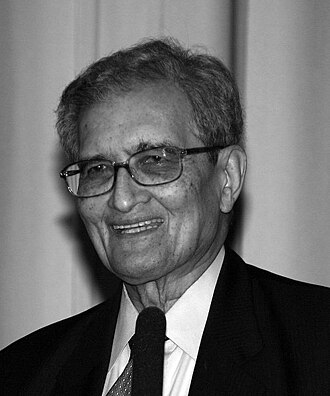
阿马蒂亚·森 主持人
本期追问 · 点击跳到视频对应位置
11:44 不先设想完美社会,能判定奴隶制这类具体不义吗?21:18 剔除私利之后,讲道理的人真的会得出唯一的正义原则吗?32:09 没有世界主权,正义就只能在国境之内成立吗?40:37 美国法官判案时该不该听取外国的推理?
归入 Ⅲ·10 公平可以被计算吗? →
EDITED TRANSCRIPT · 依据现场录音编译整理,可划线生成便签
编者按:本文为阿马蒂亚·森在美国西北大学法学院的演讲及现场问答实录。森为一九九八年诺贝尔经济学奖得主、哈佛大学教授,以饥荒研究、社会选择理论和「能力进路」著称,此次演讲与其新著《正义的理念》同名。讲座由该院主持人布莱恩引介并主持问答。本文依据现场录音编译整理,仅删去口语枝节,论证与例证悉数保留。

开场:一八一六年的饥荒通信

森:谢谢。多年来我一直不明白领带到底有什么用,现在总算知道了:它是夹麦克风的最佳工具,而且据我所知,这也是领带唯一的用处。另外我得先致歉,我刚做完两只眼睛的手术,不过是很不体面的白内障置换,顺带换了晶状体。再加上我五十八年前的口腔癌病史,眼下倒没什么危险,只是恢复需要时间。所以各位可能会看到我不时换眼镜:这一副管阅读和中距离,右眼那边则还没有矫正。今天来的人很多,我未必看得清每一张脸,必要时会换用左眼。

讲题定得没什么想象力,和我的书同名,叫《正义的理念》(The Idea of Justice)。这是我的责任,本该另想一个题目的。那就直接开始吧。

一八一六年夏天,英国遭遇严重旱灾。功利主义哲学家詹姆斯·密尔(James Mill),也就是约翰·斯图亚特·密尔的父亲,写信给当时最重要的政治经济学家大卫·李嘉图(David Ricardo),谈旱灾对农业产出的影响,以及随之而来的饥饿与死亡。密尔认为旱灾必然带来苦难,无可避免,「想到这一点,人不禁毛骨悚然,三分之一的人必将死去」。密尔的宿命论令人吃惊,他对一种极其简单的功利主义正义观的信仰同样令人吃惊,那种正义观只以减少痛苦为目标。我引密尔的原话:「把他们(挨饿的民众)拉到大街上和公路上割断喉咙,像我们对待猪那样,将是一种仁慈。」这剂功利主义药方够猛的。

李嘉图对密尔这番愤懑之论深表同情。他和密尔一样,鄙视那些「煽动者」,说他们错误地告诉民众政府能帮助他们,借此挑拨人们对既定秩序的不满。李嘉图给密尔回信说,他「很遗憾看到有人想煽动下层民众的情绪,让他们相信立法能给他们任何救济」。

这是十九世纪英国两位顶尖知识分子之间一段值得注意的通信。值得注意的不只是这两位英国精英谈论「下层民众」时的措辞和宿命论,还有更深的原因。李嘉图几乎可以肯定是当时英国最杰出的经济学家,可是他视为「煽动者」的那些人,论点其实相当有力。鼓励饥民相信政府立法和政策能够缓解饥荒的人,比悲观地认定社会救济无从奏效的李嘉图更接近真理。后来的经济分析和公共政策实践已经无可争辩地表明,好的公共政策可以彻底消除饥荒和饿死人的现象,而且这并不难做到。

这里的要害在于公共说理(public reasoning)的必要性,而不是对异见的当即拒斥。无论那些主张乍看多么不可信,无论那些粗糙的抗议听起来多么聒噪,我们仍然必须审视它们的论证:一来它们出自感到委屈的人,二来它们完全可能是对的,就像这个例子一样。开放心态地参与公共说理,是追求正义的核心。

愤慨与理性:沃斯通克拉夫特

森:对不义的抵抗通常同时依靠愤慨和论证。挫折感和怒火能推动我们行动,但归根到底,无论是为了判断还是为了见效,我们都得依靠理性的审视,弄清愤慨的根源何在,才能对「究竟能做什么来减少这些抱怨的根据」得到一种可信而站得住的理解。

愤慨与说理的双重作用,在开创性的女权思想家玛丽·沃斯通克拉夫特(Mary Wollstonecraft)的写作里体现得很好。她的第一本书是一七九○年的《人权辩护》(A Vindication of the Rights of Men),第二本是一七九二年的《女权辩护》(A Vindication of the Rights of Woman),书名里的「女人」用的是单数。两本书里都充满愤怒、恼火,甚至苦涩,尤其是在讨论必须彻底拒绝对女性的压迫时。第一本书谈的主要是男女共同承受的压迫,她在其中讨论了奴隶制。很有意思的是,她在第二本书里责备埃德蒙·伯克(Edmund Burke)不支持法国大革命,而在第一本书里责备伯克支持美国的《独立宣言》,理由是:你不能一边支持独立宣言,一边把奴隶排除在讨论之外。她是那个时代非常出色的思想家。女权主义者常把她奉为这个领域的开创者,但她值得的尊重和阅读远不止于此。她是我书里大量借鉴的人物之一,我想说明她对正义理念的理解何以如此深刻。人们常常只记得她是威廉·戈德温的妻子、玛丽·雪莱的母亲,这两点都是事实,可她本人就是一位相当重要的思想家。

然而,沃斯通克拉夫特总是从愤怒走向有力的说理,两本书都是如此。激烈的言辞之后,紧跟着的一定是她希望论敌认真考虑的理性论证。《女权辩护》是题献给法国政界领袖塔列朗(Talleyrand-Périgord)的,她在给塔列朗的信中,虽然怒气不小(她甚至建议,既然情形如此,英国不妨恢复从俄国进口鞭子的生意,好让男性的统治执行得更有威严,她在这一点上非常尖刻),却从不止步于此。全书在连续多页的理性论证之后这样收尾:「先生,我希望在法国发起一场这样的探究。倘若探究的结果证实了我的原则,那么当你们的宪法修订之时,女性的权利或许就会得到尊重,只要能够充分证明,理性要求人们不再轻蔑,并且大声疾呼,要求为人类的一半伸张正义。」她曾对最初的《人权宣言》几乎没有给女性平等留下空间感到失望。

由此可见,愤慨引出对不平等之根源的探究,但理性的角色和性质并不因此被削弱。这也和布莱恩刚才那番过于慷慨的介绍有关:正义这个概念出现在太多不同的语境中,而其中许多语境正是不义的语境,所以它也激起了太多的愤慨。

在此我要稍稍离题一下,说说眼下在美国如此活跃的茶党运动。如果说它在思想上有什么可以批评的,那绝不是因为这些活动者表达了愤怒,许多情况下愤怒都有充分的理由。可以批评的是愤怒之后的说理缺失,尤其是经验事实与激起愤怒的「所谓事实」之间的距离,以及对所提出的论点和所声称的事实缺乏理性审视。离题到此为止,回到正文。

启蒙内部的二分

森:一种把说理,尤其是公共说理,置于中心地位的正义观,我在书里也正是这样做的,从广义上说,只能被视为属于欧洲启蒙运动所特别培育的那种立场:把清醒的理性看作使社会变得体面和可接受的主要盟友。这个判断本身没错,但它留下了一个重大问题没有回答。

欧洲启蒙运动的思想领袖们,即便是那些坚定依靠理性的人,也并非众口一词。事实上,与启蒙时期激进思想相关的两批主要哲学家之间,存在着两条关于正义的不同思路,我认为这种二分至今没有得到足够的重视。

顺便说一句,如果我事先知道布莱恩会说什么,我会加进一点印度思想中相应的区分,即梵文里的「尼提」(niti)与「尼亚亚」(nyaya)。我曾应美国律师协会之邀,在维也纳一个关于全球法治的会议上就此写过一篇论文,现在网上仍能找到。不过我这里说的是欧洲启蒙,暂且不谈梵文。

第一种进路专注于识别完美正义的社会安排,把刻画完美正义的制度当作正义理论的首要任务,往往也是唯一的任务。这种看待正义的方式,以不同的形式围绕着一个假想的社会契约展开:一个想象中的契约,一个主权国家的全体人民被设定为契约的当事方。十七世纪的托马斯·霍布斯,稍后的约翰·洛克、让-雅克·卢梭,尤其是伊曼努尔·康德,都对这条思路作出了重大贡献。

两百五十多年之后,契约论进路(contractarian approach)成了当代政治哲学的主导力量,其领军人物是我们这个时代最杰出、也是最精湛的政治哲学家约翰·罗尔斯(John Rawls)。他一九七一年出版的经典《正义论》,对社会契约式的正义进路作出了定论式的表述。当代政治哲学中的主要正义理论,都以这样那样的方式借鉴社会契约进路,专注于寻找理想的社会制度。这不仅适用于罗尔斯,也适用于罗纳德·德沃金、罗伯特·诺齐克、大卫·高蒂尔(就其提出正义理论的部分而言),还有托马斯·内格尔。他们彼此分歧极大,但都同意正义理论就该干这件事。

与社会契约进路形成对照的是,同一时期另一批启蒙思想家采取了一系列彼此之间也很不相同的进路,却共享一个关切:比较人们的生活可能以何种不同的方式展开。这种展开同时受制度运作的影响,但不止于此,人们的实际行为、社会互动,以及其他显著影响实际结果的因素,都在考虑之列。社会选择理论(social choice theory)这门分析性的、颇为数学化的学科,其早期形态可追溯到孔多塞侯爵(Marquis de Condorcet)和其他十八世纪法国数学家,就属于这第二条脉络。同属这一脉络的还有亚当·斯密(《道德情操论》、身后出版的《法理学讲义》以及《国富论》的部分内容)、刚才提到的孔多塞和沃斯通克拉夫特,再从十八世纪往十九世纪走,还有约翰·斯图亚特·密尔和卡尔·马克思。

他们的方法截然不同,但都关注一件事:识别那些人们一致认定为不义的现象,考察它们能否消除;凡是可以消除的,就列入正义理论的议程。这与契约论的议程大不相同。在这条替代进路里,我们不像罗尔斯那样从「一个完美正义的社会是什么样」开始发问,而是问:哪些可补救的不义是我们能够看到的,而且消除它们能够取得理性的共识?

契约论的致命假定

森:社会契约进路的一个局限,在于它毫无根据地坚信:只可能存在唯一一套精确的正义原则组合,附带明确规定的优先次序;而且,尽管这个假定极不可信,它还要求所有讲理的人都对此达成一致。社会契约进路需要这个假定,因为它的任务是唯一地确定一套理想的社会制度组合。如果人们在正义的优先次序上还存在分歧,这件事就办不成。所以他们非要这个假定不可。

正如我在书里讨论的,这后来给罗尔斯带来了麻烦。他在第二本书和以后的著作中常说,除了他的「作为公平的正义」,还有别的立场也可以成立。但我们始终不清楚他打算怎样解决这个问题,也不清楚他是否充分意识到这会对他提议的整个流程造成多大的影响。他的流程是:先唯一地确定正义原则,然后建立制度,然后立法,然后执行,然后司法,一环扣一环。这是个宏大的故事,可如果第一步启动不了,就像冬天早晨的一辆汽车,你可以规划各种行程,但车根本没有发动。

与当代多数正义理论的这种僵硬坚持相反,社会选择进路允许多种相互竞争的原则并存,每一种原则都在经受批判性检验之后获得其地位。当然,对提交到我们面前的所有原则都必须严格审视,有些原则经过检验就会被淘汰,这一步非常重要。但经过理性辩护之后,仍然可能有不止一种相互竞争的原则、或者不止一种优先次序存活下来。

我甚至认为,下面这种想法带有某种天真:罗尔斯先排除既得利益的影响(这一步是对的),然后就认定,既得利益一旦不再左右推理,整个群体就会一致接受某一份具体的契约,附带一套完整规定的正义原则优先次序,据此把社会的基本制度全部搭建起来,让故事开动。我们的某些分歧确实源于个人利益,这一点康德和斯密也都看到了。但分歧还有别的来源:不同的观点各自都有理由声称,它对「不偏不倚的推理会得出什么」有着严肃的含义。

三个孩子争一支笛子

森:我在《正义的理念》里讨论过一个例子:三个孩子争一支笛子,你要来裁决。第一个孩子,我好像叫她安妮(Anne),她要笛子的理由是,三人中只有她会吹,其他两人对此并不否认。如果你只知道这一点,又时间紧迫,你多半会痛快地把笛子给她,事情向来是这么办的。

另一种假设情形里,第二个孩子先开口,我给他起了个 B 开头的名字,鲍勃(Bob)。鲍勃说他穷得一件玩具也没有,一件都没有,而安妮和第三个孩子卡拉(Carla)家里应有尽有。这支笛子将是他唯一能玩的东西。如果你只知道这一点,把笛子给鲍勃的理由就相当有力。

第三种情形,卡拉说,这支笛子是她辛辛苦苦刚做出来的。她刚一做完,安妮和鲍勃就跑来,带着这些复杂的说法想把笛子抢走。她当然不答应。同样,如果你只知道一个人做了笛子而另一个人想抢走,你有很好的理由把笛子给她。从法律上看,这当然毫无疑问。问题在于,从道德和政治哲学的角度,我们应该怎么做?

这三种主张没有一种能被当即驳回,一个公正的仲裁者必须权衡三种相互竞争的理由。在原则的层面,无法先验地、脱离具体情境和相关数量,机械地确定其中一条原则对另外两条的优先权。理由的多元有时对作出明确决定毫无妨碍,有时却构成严重挑战。三个孩子争笛子的例子说明,在决定何为正义之举时,可能出现僵局。但承认考虑因素的多样性,并不必然意味着僵局一定出现。就拿这三个孩子来说,在另一种情况下,做笛子的孩子可能同时也是最穷的,或者是唯一会吹的。又或者,鲍勃的贫困如此极端,他对一件玩物的依赖对于一种像样的生活和成长如此重要,以致基于贫困的论证压倒其他考虑,主导了正义判断。尽管来自不同人的(甚至同一个人的)不同的不偏不倚判断,可能给相互竞争的考虑赋予不同的权重,但在许多具体案例中,不同理由之间仍然可能汇合一致。

我自己就同时持有这三种信念:我确实认为消除贫困重要;我确实认为一个人辛苦劳动做出了东西很重要;我也确实认为把东西给能善用它的人是好的,「物尽其用」的道理。一个自由至上主义者对该怎么做不会有任何犹豫,尽管他会发现自己和主张劳动权利的马克思主义者站到了一起,后者也会把笛子判给用劳动生产出它的人,这或许让他很不自在。

不过马克思自己倒是会有麻烦。在他最后的文献、一八七五年的《哥达纲领批判》里,他把基于劳动的权利主张与基于需要的权利主张作了对比,并指出最终必须以需要为优先。马克思想要提醒人们注意,原则是多元的,所以他恰好可以纳入我的故事;他责备德国工人党看不到其中存在冲突。

偏序:完备理论与不完全排序

森:说到这里我不免感慨。来西北大学让我怀旧,因为我曾长期深度参与计量经济学会(Econometric Society),一九八四年前后担任过会长,在执委会待了十二年,而学会当时就是由西北大学运营的,不知道现在是否还是这样。那是社会选择理论的形成期,我们探讨的正是偏序(partial ordering)如何能以完全自洽的方式在数学上纳入决策程序。在这项工作里我得到了学会同仁以及《计量经济学》《经济理论杂志》《数理经济学杂志》等刊物领军人物的大量帮助。

剥去分析上的形式外衣,基本问题其实很简单:必须承认,一套完备的正义理论完全可能对备选方案给出不完全的排序。排序不完全,不等于理论不完备,理论说的就是这个。一个得到公认的偏序,在某些情形下会给出毫不含糊的结论,而在另一些情形下保持沉默。当孔多塞和亚当·斯密论证废除奴隶制会让世界远没有那么不义时,他们断言的是:有奴隶制的世界与没有奴隶制的世界可以排出高下,后者胜出。这就是在证明没有奴隶制的世界更为正义。作出这一结论时,他们并不需要进一步声称,所有社会制度可能生成的全部备选方案都能得到完全裁决。他们没有这样的主张,我也不相信他们曾这样想过。评估奴隶制这一制度,不必同时以同样的确定性评估世界面临的所有其他制度选择。我们并不生活在一个非全即无的世界里。这或许是我把《正义的理念》的进路与占主导地位的罗尔斯式契约论(以及其他契约论)作对比时,想强调的第一个区别。

顺便说明,罗尔斯对我影响巨大,既是朋友,在许多方面也是老师,虽然他从来不曾正式教过我,但我从他那里学到太多,我们一起开过好几门课。我的书是题献给他的,尽管书里不同意他的立场。没有人比罗尔斯更热切地鼓励我完成这部书。他很清楚我会批评他,因为我已经在《哲学杂志》上发表过六七篇这方面的论文,他对此毫无幻想。可他仍然劝我:不要出论文集,你常常想那么干,经济学家都爱那么干,可那不是和哲学家对话的办法,行不通,你必须写一本贯通的书。这是我得到过的第二重要的忠告。第一重要的来自艾萨克·列维(Isaac Levi):我在哥伦比亚大学哲学系讲课时提到一篇发表在《计量经济学》上的论文,艾萨克说:「阿马蒂亚,别再幻想你能说服哲学家去读《计量经济学》了,这种事不会发生。」

由于多种原则同时存活,凡涉及正义的问题,我们未必都能单凭正义的理由解决。比如,百分之四十的最高税率比百分之三十五更正义还是更不正义?不是每个问题都非得单凭正义解决不可。然而,我们完全有理由去努力看看,能否就消除那些可以明确认定的不义达成理性共识。十八世纪的例子是奴隶制、对妇女的严重压迫、对弱势劳工的极端剥削。今天的例子则是:世界上大部分人口在医疗上遭到严重忽视,非洲和亚洲的一些地区没有医疗设施,世界上多数国家缺乏全民医保,颇令人意外的是美国也在其列(虽然情况可能正在改变);酷刑在当今世界仍以惊人的频率被使用,有时施行者正是全球体制的支柱;还有对慢性饥饿的默然容忍,那种损害身心、阻碍体力与智力充分发育的饥饿,即便在没有饥荒的地方也是如此,印度就是例子。饥荒的消除值得庆贺,但要做的事还很多。

以上谈的是关于正义的公共审议的内容。既然稍后有问答环节,我就说到这里。我讲得慢了些,已经超时,得加快速度。

谁的声音算数:封闭与开放的公正

森:现在转到参与的问题:在关于正义要求的公共讨论中,谁的声音应当算数?

在社会契约传统里,必须得到重视的观点,只能来自那些可被视为契约当事方的人,而且只限于他们。社会契约的结构是一国一国、一民族一民族的,因为契约的执行需要一个主权国家,霍布斯在十七世纪就已经有力地指出了这一点,主流政治哲学在十八、十九、二十世纪直到今天一路沿袭。正因如此,契约论传统把讨论限定在某一政治体的成员之内,具体说就是各国的公民,由他们来决定这个主权国家的理想制度及相应的价值。罗尔斯后来在《万民法》(The Law of Peoples)里处理国与国之间的关系,但那里他不诉诸正义,而是诉诸人道主义。正义是国家内部的事。

托马斯·内格尔在一篇被广泛引用的论文里也这么说。那时他和我合开一门研讨课,我对他说:「杰克·罗尔斯一直想说服我,但真正让我确信必须写这本书的是你。」因为他主张,全球正义的理念是一种幻影、一种幻觉,理由是正义需要主权国家,而全球没有主权国家。问题是,这对吗?这当然是从霍布斯以来的契约论观点,却不是斯密的观点,就此而言也不是康德的观点,更不是托马斯·潘恩的观点。

对一国之内不同公民一视同仁的要求,在涉及全球正义时必须以某种方式加以补充,让远处和近处的声音都能进来。把不偏不倚只限于一国公民之内,我在书里称为「封闭的公正」(closed impartiality),也就是只对某个国家的公民作不偏不倚的考虑。

与之对照的是亚当·斯密在《道德情操论》里的坚持。该书出版于一七五九年,距今两百五十年。我有幸为二○○九年十二月出版的二百五十周年纪念版写了一篇长序,讨论斯密哲学的广度;这种广度被经济学家和哲学家相当彻底地忽视了,不只是《道德情操论》,还有《国富论》的部分内容和他的法理学讲义。斯密主张,需要一个「公正的旁观者」(impartial spectator),既倾听近处的人,也倾听远处的人。我称之为「开放的公正」(open impartiality):来自任何地方的推理都可以算数。斯密看到,对正义必不可少的不偏不倚考虑,要求我们超越每一个国家的边界。

斯密的两大理由

森:要求关于正义的公共说理超越国家或地区边界,有两条主要理由。第一,他人利益的相关性:我们的所作所为可能影响到他们。第二,他人视角和观点的相关性:它们能拓宽我们对相关原则的探究,帮助我们避免基于本地社群的价值和预设而陷入狭隘。

第一条理由,也就是利益的相互依赖,促使斯密处理了好几个全球正义问题。他讨论这些问题时流露出的愤怒相当惊人,可惜斯密这一面很少有人认真读,因为他被当作自由市场的旗手。我到芝加哥之后的第一场演讲,就是在芝加哥大学英国研究系讲苏格兰启蒙与亚当·斯密。我在那里引用过这样一段:斯密被白人自诩在智力上高于奴隶的傲慢激怒了,他用了当时通行的「黑人」一词,作出一个他惯有的、很强的概括,说非洲大陆上没有一个黑人对正义要求的理解,其精深程度不是「他那卑劣的主人连理解都无法企及」的。这是斯密真正动怒的一段。他认为,不让外来视角进入,本身就含有那种自以为高人一等的心态。当时的英国很快就要成为世界的中心,你可以看出这番话是冲谁说的。他同样批评了英格兰人对爱尔兰人的优越感,我就不展开了,否则讲不完。

同样出于这第一条理由,斯密痛斥了十八世纪英国早期统治印度的不义,说明它为何彻头彻尾不公正,早期的英国统治者根本没有能力统治任何一个国家。在今天这个相互依赖的世界,利益相互依赖的道理更容易理解:无论是全球恐怖主义、全球变暖,还是我们正在经历的世界经济危机,把关切局限在一国内部的审议之中,都不可能成为理解正义要求的基础。艾滋病和其他流行病跨国传播,药品同样跨国流动。

除了利益相互依赖的全球性,还有第二条理由,即避免狭隘的陷阱,这同样要求我们以开放的方式来审视不偏不倚的要求。如果关于正义要求的讨论局限在某一地方、某一国家,或者像欧洲这样的地区,就有可能忽略许多富于挑战性的反论:它们或许没有在本地的政治辩论中出现,或许无法被本地文化的话语所容纳,却完全值得从不偏不倚的视角加以考虑,而且在别的地方早已有人提出。布莱恩刚才对我的过奖,我更愿意看作是我在承续斯密的告诫:去看看印度、中国、日本、中东和非洲的思想对这些问题能贡献什么。

习俗的盲区:古希腊杀婴

森:斯密特别关注如何在法理学、道德推理和政治推理中避免狭隘的束缚。《道德情操论》里有一章,标题就很能说明问题:「论习俗与时尚对道德赞许与非难之情感的影响」。斯密在其中举了许多例子,说明局限于某一社会内部的讨论如何会被狭隘所致命地限制。

有意思的是,斯密谈到过别处的许多恶习,包括印度和中国的,比如缠足。可是要在思想层面进行批评时,他知道最有说服力的做法是拿英国人最尊敬的民族开刀,还有谁比古希腊人和古雅典人更合适?那是英国每一个公学男孩的必读书。斯密写道,杀害新生儿在几乎所有古希腊城邦都被容许,即便在文雅开化的雅典人中间,从未中断的习俗也已彻底将这种做法正当化,不但世俗的松散准则容忍这种野蛮的特权,就连本该更公正、更精确的哲学家学说,也被既定的习俗牵着走了。亚里士多德把杀婴说成官吏在许多场合应当鼓励的事;仁慈的柏拉图也持相同意见,他的全部著作似乎都洋溢着对人类的爱,却没有任何一处对这种做法表示非难。

斯密的论点不是说他们不能清晰地思考,而是说他们不熟悉没有奴隶制、没有杀婴的社会,尽管那样的社会即便在当时也是存在的,只是不在古希腊。柏拉图和亚里士多德提出过那么多假设性的论证,却从未认真设想过「如果改变这一点会怎样」,这一点很耐人寻味。

斯密所举的杀婴一例,可悲的是至今仍有现实意义,所幸只限于极少数社会。而他的其他一些关切,对许多当代社会同样适用。比如,斯密坚持认为,「必须请出其余人类的眼睛」,来判断一种惩罚是否公平。来自「远方」的审视,对于今天各种截然不同的做法都可能有用:塔利班统治下的阿富汗对通奸妇女的石刑,中国、韩国和印度部分地区对女胎的选择性堕胎,中国大量使用死刑,就此而言,美国也一样。我要指出,美国在这一点上与它平日关于人权的言论很不相称:全球执行死刑最多的四个国家,依次是中国、伊朗、沙特阿拉伯、美国。

远方视角与美国死刑

森:远方视角的相关性,与美国当前的一些辩论直接有关。比如不久前美国最高法院审理的一个问题:对未成年时犯下的谋杀罪判处死刑是否恰当。问题在于,你不能处决未成年人,可他犯了谋杀罪,于是就等他成年,一到成年就把他抓来绞死,噢,不对,是电死。即便在美国这样的国家,要让正义得以实现并被看到,也不能完全无视这样的追问所能带来的理解:这个问题在世界其他国家,从欧洲、巴西到印度、日本,是怎样被评估的?

必须认识到,倾听远方的声音,这是斯密召唤「公正的旁观者」的一部分,并不要求我们尊重每一个来自国外的论点。顺带说一句,当时最高法院以五比四裁定,不得处决那些在未成年时犯罪、成年后被捕的人。但如果法院的构成变了,五比四的多数很可能倒过来,而首席大法官罗伯茨已经说过那是一个错误的裁决,理由是美国法官不应当听取来自别处的观点,这是一桩纯粹的美国事务。这与斯密的视角是迎头相撞。下个月我要在牛津法学院的哈特讲座(Herbert Hart Lecture)上专门谈这个题目。

我们可以拒绝大量被提出的论点,有时甚至全部拒绝;但总会剩下某些特定的推理,促使我们重新审视那些与一国或一种文化中根深蒂固的经验和惯例相联系的理解和看法。要考虑的是来自任何地方的推理,而不是结论;而不是把一个国家当作孤岛,只看岛内的观点。这正是斯密召唤公正的旁观者时着重强调的。这种开放的视角,主要基于斯密式的理由,在我自己的正义分析中扮演着重要角色。谢谢大家。

问答:动物权利与理性的定义

主持人:我们确实还有时间做一些简短的问答。请提问者对着麦克风讲话,并先说明自己的身份和所属单位。

森:我不想把大家关在这里,因为我已经超时了。各位随时可以离开,甚至可以制造一种「我要去买书」的假象。

提问者(韦恩·肖,法学院三年级学生):我的问题涉及您的合作者玛莎·努斯鲍姆所说的「社会正义的前沿」,也就是物种成员资格和动物权利。我想先说两点观察。第一,人类文明和社会正在以前所未有的方式冲击自然界:仅气候变化就可能导致五十万到一百四十万个物种灭绝;工厂化养殖把数以百亿计的动物关在难以想象的恶劣条件里,甚至在印度和中国这些原本没有工厂化养殖的地方也是如此。第二,越来越多的心理学和认知研究表明人类与非人类动物之间的共性,海豚是最近通过镜子自我认知测试的物种。在我看来,传统的正义观,尤其是在美国,往往忽视了自然界和非人类世界。努斯鲍姆等人试图弥补这一根本缺口。您的正义理念对自然界和非人类世界有什么可说?我们能做些什么把它们纳入正义观念,或者究竟应不应该纳入?

森:这个问题我在书里讨论得相当多,它和我今天没来得及讲的一点密切相关,那就是我们如何理解理性。有一种影响很大的观点叫理性选择理论(rational choice theory),它倾向于把理性选择等同于追求自我利益。如果是这样,那么我们要关心物种的存续,就得设法证明我们自己的利益受到了影响。但如果采取我所认为的斯密式观点(斯密的观点在许多讨论里被严重扭曲了),即理性在于能够审视你有理由支持的东西,那么这种关心就不必寄生于你自己的利益之上。

也就是说,我可以主张,白头鹰不灭绝对我非常重要。要让我的观点在民主决策中算数,我不必说明我自己的利益如何受到影响,因为那根本不是问题所在。事实上,白头鹰跟我的生活毫无关系,我也绝不希望它们在我的花园里转悠。但我希望它们活下去。正如你所说,演化了数亿年的重要物种可能灭绝,这是可怕的事。所以处理这个问题的办法,是认清我们支持这一点的理由是什么。

你说得可能对,走出西方传统在这方面或许有些优势,部分原因是无论在印度、中国还是日本的思想里,人与其他物种之间都没有那种截然的分野。我在书里大段引用了《经集》(Sutta Nipata)中乔达摩佛陀的一段话,谈人对动物的义务。他打的比方是母亲对孩子的义务:不是因为母亲生了孩子(那一点另有讨论),而是因为母亲能为孩子做许多孩子自己做不到的事,这种力量的不对称赋予了更大的责任,人类对动物也是如此。你提到的工厂化养殖和虐待,都落在这个范畴之内。这就是我在这本书以及早先的《理性与自由》(Rationality and Freedom)里所阐述的理性观念与主流观念的区别,它直接关联到你的问题。很高兴你问了这个。

问答:正义能被参数化吗

提问者(亚当,应用数学研究者):我研究应用数学。我原本很失望您没有拿出一张图来。不过您的演讲暗示了一种可能:把某些正义理念参数化。每当您对一个模糊的情境给出理性的回应,本质上就是在提出某种模型。经典经济学假设有人能建立模型并拥有权威,公共政策领域也一样。现在我们正在开发的这些工具,以正义的方式塑造公共政策,与经典经济学那种完全竞争、无限多卖家的模型很不一样。您认为模型与实际公共政策的实施之间,变化会发生在哪里?您刚才提到了茶党,世界上有成千上万乃至数百万人认为,他们比一百个经济学家更懂得国家该怎么治理。

森:这一点肯定没错。不过我并不是在为经济学家应该做什么辩护,那个问题我在别处谈过。毫无疑问,经济学思维在许多这类问题上走得很偏。有人问我:「你修正自己的观点了吗?」我不觉得需要修正,因为我从来没有表达过那些观点。我从不认为市场是自我纠正的机制,从不认为市场能自我监管。作为一个斯密的追随者,我读的斯密可不只是那十三行关于屠夫、面包师和酿酒师的话。斯密在那里讨论的是一个很小的问题:人们为什么有动机进行交换,他不过是说,你不必是狂热的利他主义者才会去寻求交换。但当他讨论生产的分配这类别的问题时,他并没有说光靠追求自利就够了;当他讨论的不是发起交换而是维系交换时,他谈的是彼此之间需要信任。我去年三月前后在《纽约书评》上有一篇文章谈这个,也谈到为什么凯恩斯式的集体主张同样不够,凯恩斯其实也没有触及这个问题。我在文章里说凯恩斯在社会保障问题上要说的话比俾斯麦还少,结果惹了大麻烦,意大利银行的朋友们齐刷刷地写信来说:「收回,收回,你不能这样侮辱凯恩斯。」我并没有侮辱他。我认为他的《概率论》是他最好的书,至今仍这么想,那是一本非常好的书。《通论》在一两个相当重要的点上也很好,但要知道的事情还有很多。

我们的分歧会出在这里:你以为我想说所有相关变量都可以参数化。如果真是那样,在某种意义上就是罗尔斯的传统了,虽然数学结构不完全一样,因为他生成的不是完整排序,而只是一个顶点。ABC 和 ACB 的顶点都是 A,所以在这一点上不必达成一致;但同样的道理,确定了顶点并不能告诉你 B 好于 C 还是 C 好于 B,因为 ACB 和 ABC 都与「A 独占顶点」相容。这里有大量的数学结构需要考虑。

我的一个抱怨是,经济学家长期使用的数学深受物理学引导,而物理学中变量的性质完全不同,于是我们对另一类数学关注不够。当然,拓扑学最终还是进来了。数学家在讨论集合论、拓扑学等结构时,偏序是其中的核心。布尔巴基(Bourbaki)的法文数学经典里,最基本的序不是全序,而是所谓的预序(pre-ordering),那恰恰就是偏序,正是我想呈现的东西。此外还有更松散的形式结构,比如模糊集与模糊关系,它们在社会科学里的用处往往远大于在物理科学里(某些物理科学也用得上)。

我们没有时间彻底解决这个问题。正确的做法是,当你试图参数化时,看看是否过度设定了某种无法被设定的东西。这不意味着没有唯一参数就什么都说不了。你仍然能得到偏序允许的排序,仍然能得到模糊集与模糊关系允许的结论。这本书里当然不谈这些数学问题,但我在别处讨论过。所以你的关切是对的,但希望至少能让你稍感宽慰的是,这里并没有犯那样的错误。

问答:恐怖主义与远方视角

主持人:很好。请远处这一侧的提问者。

提问者(恐怖主义研究者):我专门研究恐怖主义。在我看来,恐怖主义与您所说的「远方视角」之间有些有趣的交集。恐怖主义可能在任何时候袭击任何人,似乎每个人都有利害关系。对于这样一个问题,在一个联系如此紧密的世界里,有没有可能真正拥有一种远方视角?

森:思考远方视角时,你必须小心,不要只局限于那些被强行推到你眼前的东西,而对其他一概不闻。恐怖主义当然不可避免地把注意力引向中东传统的某一部分,因为确实发生了那些事件。但这就忽略了很多,比如,奥斯曼帝国与任何一个欧洲帝国相比都是非常宽容的政权;再比如,乔尔丹诺·布鲁诺因异端罪在罗马鲜花广场被烧死的同一年、同一时候,印度的穆斯林君主、莫卧儿皇帝阿克巴正在阿格拉讲演,主张必须宽容不同信仰,不得强迫任何人接受某种观点。如果当时在阿格拉展开讨论,人们很可能会问:西方世界,比如罗马,究竟有没有可能明白宗教裁判所不是好事?那是一个与今天「文明冲突」之类说法硬塞给我们的世界截然不同的世界。所以,对过去讨论过的各种事情有更广阔的理解极其重要。如果你只在恐怖主义的语境里接触穆斯林世界,那对那里的传统就只能有非常狭窄的理解。

不幸的是,西方的这套思维如今如此强势,以至于在世界其他地方,无论是日本还是土耳其,它都成了标准读法。它之所以成为主流,是因为在西北大学、芝加哥、麻省理工、哈佛、牛津、剑桥,它都是主流,于是人们就习惯这样想。所以引入更广阔的视角,即斯密所说的既听远处也听近处,是极其重要的一件事。今天对它的需要远比斯密写作的时代更强烈:那时主要是缺乏兴趣,而今天是对其他文明的性质持有一种扭曲的看法。

再看常见的另一类问题:西方人遇到女性割礼之类的事,会觉得极其沮丧,该怎么办?要点是,对割礼的反对有很多来自本地。任何一种需要靠强制来执行的习俗,本身就表明有人反对它。哪怕谈伊朗,只用政府来描述伊朗社会的价值观,就忽略了一个事实:政府之所以要把很多人关进监狱,正因为他们不同意政府。所以必须把这种观点的多样性纳入我们生成的理解之中。

这里有两个不同的问题。一是理解其他文化和社会,而这里的「文化分野」非常扭曲事实:一国之内的差异可能很大,美国的茶党右翼和极左之间就是如此,观点五花八门,移到国外差异也未必大多少。二是斯密的问题:如果你把自己封闭起来,你的思考就会受限。

我得说,塞缪尔·亨廷顿是我的朋友,尽管我的上一本书《身份与暴力》(Identity and Violence)对他批评得很厉害。我确实认为,西方思维的狭隘在那本书对世界文化的解读中有所体现,相当惊人。比如,人们谈论《大宪章》的传统,却不承认,早在《大宪章》之前六百零六年,日本的《十七条宪法》就已指出,决策不能由一人作出而不与众人商议,这种语言与《大宪章》如出一辙。所以,正如你所问的,把这项工作拓宽是非常重要的。

主持人:好,请我们右手边远处的提问者。

提问者(萨拉·史密斯,中东史研究者):我研究中东历史。更广泛地说,「恐怖主义」这个词本身已经被问题化了,它是一个很主观的术语:什么是恐怖主义,什么是自由斗争或正当的暴力?我的问题是,您如何把暴力放进正义理论?美国施加暴力并造成平民伤亡,凭什么就比一个恐怖组织所做的更正义,或者说没有那么糟?

森:很好的问题,我说三点。第一,恐怖主义,我稍后再谈用这个词是否正当,按现在的用法,绝不是对世界其他地方施加不义的唯一方式。没有人会把美国干预伊拉克视为恐怖主义活动,它无论如何都不是;然而我认为那是一件极其错误的事。错误可以出于恐怖主义之外的理由,这是首先要认清的。

第二,我不认为恐怖主义是一个主观的术语。这个词有界定清楚的用法:杀害无辜的、不相干的人。这是一件大事。你当然可以合理地追问:轰炸广岛和长崎是不是恐怖主义行为?大量无辜者被杀,这个问题可以提,也确实重要。但你不能说,继续维持某种不平等,或者没有像样的专利法以致药品让人买不起,就是恐怖主义,因为它们不是。我一般不是主观主义者。如果有人认为这个词只能主观地使用,那我至少有足够的康德式立场认为,那只是说明我们还没有弄清游戏规则是什么;一旦规则明确了,它就不再是主观的,因为你在遵循规则。这正是哲学探究试图论证的要点之一。

第三,它并非总是要被一概否定。你可以说这是坏事,总的来说我也认为是坏事。但你可以持这样一种立场,而它并没有被排除:恐怖主义一般而言是错的,但有时是正当的。你不必非说「那就不是恐怖主义」。我可以提一个事实:甘地在印度与那些认为非暴力永远换不来独立的人论战时,有些人自称恐怖主义者,这是他们自己选的称号。他们的工作是到处放炸弹,比如曾试图刺杀孟加拉总督,没打中,炸死了另外三个人。他们用的就是「恐怖主义」这个词,但论证的是:鉴于英国统治的屈辱与不公,这是正当的。他们给出了可信的论证,这是一个严肃的议题。诗人兼小说家泰戈尔有一部小说《四章》(Char Adhyay),正是探讨这个问题:为什么那种论证只是一种情绪。像许多这类小说一样,给出最强论证的主人公最终随着复杂性的浮现而在论辩中落败。泰戈尔是在反对恐怖主义,但不是靠一句「恐怖主义永远是坏的」把它打发掉,而是说恐怖主义需要辩护,并最终指出,在这个案例里辩护没有成立。

我会这样回应你的问题。这丝毫不否认你对美国在海外某些作为的愤慨,我看得出来。但那并不使他们成为恐怖分子。作恶的方式太多了,恐怖主义只是其中之一。所以我们大家都还有希望。

问答:泰戈尔与和平乡

提问者:我也出生在和平乡(Shantiniketan)。据说是泰戈尔给您起的名字?

森:是的,是他起的。他也是我母亲的挚友。我出生时他写了一封相当惊人的信给我,我当时才十二小时大,当然记不得了。信里说,他很不满大家把同一批名字翻来覆去地用,我们必须开始创新,这里有一个从来没人用过的名字给你的儿子。这是真的,于是就用了这个名字。今天不该多谈泰戈尔,那不是今天的主题。但我要说,他正是我所描述的那种斯密式的人物,对异域的文化和思想充满兴趣。我家来自孟加拉的达卡,我头三年在缅甸,然后两年在达卡,之后到和平乡上学,一直读到大学初期。让我感动的是,在当时的印度极不寻常,我们在那里接触到法国、意大利、日本、中国的东西。那里有一座很大的「中国学院」(China Bhavan),是印度第一个中国研究机构;印度第一个日本研究机构也在和平乡;关于印度尼西亚艺术的第一批研究也在那里。我从小就知道泰国等等。我们当时完全浸润在世界文化之中。这就和今天讲的斯密式「公正的旁观者」联系上了。改天你我可以专门聊泰戈尔。

顺便一提,如今领诺贝尔奖金时必须写一篇自传,诺贝尔基金会会立刻挂到网站上。一九一三年没有人向泰戈尔提这个要求,所以他没有自传传世。我在《纽约书评》(这是我第二次提到这份刊物了,我常在那里发表文章)写过一篇《泰戈尔与他的印度》,诺贝尔基金会把它放在泰戈尔的页面上代替自传。想了解我对这些问题的看法,去那里找就可以。

问答:《薄伽梵歌》里谁赢了

提问者:关于笛子的故事,让我想起《摩诃婆罗多》里的一段:般度五子在赌局中输掉了王国,但战争之后又把它夺了回来。您觉得他们在赌输之后又拿回王国,这算正义吗?

森:说来也巧,我在书里恰好讨论过这个。倒不是因为预见到你会问这个问题,我有些先见之明,但没到这个程度。我讨论的是《薄伽梵歌》,你知道,它是《摩诃婆罗多》的一部分。故事很有意思:般度五兄弟中的老三阿周那,是那场战争中最强的战士,遥遥领先的第一大将,只要他出战,他毫不怀疑己方会赢,他也不担心自己的性命。可是就在开战前一天,他问:这是对的吗?没错,对方待我们不公,我们会夺回王位,可是这么多人会死,这样做对吗?第一,会有大量的屠杀;第二,有些人将死于我手,而我不喜欢杀人;第三,我要杀的人中有些是我所爱的,因为这是家族的两支在打仗,虽然分属两方,却并非一直相互为敌,其中一些人,用阿周那的话说,是他怀有感情的人。我将杀死我所爱的人,为什么?所以他说:我不想打。

于是黑天(Krishna)出场了。他是阿周那的御者,也被视为神的化身。他给出的论证,就是被单独辑出的《薄伽梵歌》:你必须履行你的职责,无论后果如何。阿周那起初不服,后来渐渐有些被说服,最终放弃,说我接受这个论证。他上阵打仗,赢了战争。这一切发生在开战之前,不是之后。

我的论点是,如果你看整部《摩诃婆罗多》,黑天究竟有没有赢得这场论辩,并不清楚。作为宗教文献,谁赢了毫无疑问。可《摩诃婆罗多》并没有在那里结束,它继续讲到你所描述的部分。史诗的结尾是:正义之战结束了,他们夺回了王国,却满心是一个很美的梵文词「aniha」,英文里没有对应的词,它不是「厌恶」,而是「无欲」,不再有过那种生活的欲望。带着这种无欲,他们几乎是被驱使着放弃了王位,一个接一个走向终局。当他们穿过满目疮痍的印度河与恒河平原,看到的是处处燃烧的火葬堆,无数妇女在为死去的男人哭泣。很难说《摩诃婆罗多》在告诉你,黑天真的公正地赢得了那场论辩。

这是个很棘手的事,因为《薄伽梵歌》是宗教文献。我在书里提到,中学时我觉得阿周那的论证更强,就去问梵文老师:可不可以认为阿周那的论证更有力,而黑天靠一个不完整、不令人信服的论证蒙混过关?老师想了想说:「可以,只要你怀着足够的敬意去做。」后来我在《哲学杂志》上发表了一篇论文,论证为什么不能像《薄伽梵歌》那样,也不能像康德以及现代许多义务论哲学那样,把后果一笔勾销。那篇文章大约在二○○○年发表,差不多十年前了。我在开头先讲了这个故事,然后说:我希望整篇文章是怀着应有的敬意写成的;但怀着应有的敬意,我不得不说,我读到的论辩走向并不是那样。

主持人:这是来自另一个传统的故事,用它来结束一场主张探寻、开放并邀请其他视角和传统之论证的演讲,再合适不过。请大家和我一起感谢阿马蒂亚·森带来的精彩讨论。

森:谢谢,非常感谢。
排版 + 横图 + 来源,粘贴即成稿
章节 · 点击跳转视频
0:16 开场:1816 年密尔与李嘉图的饥荒通信 ▶ 正在看
5:29 愤慨与理性:沃斯通克拉夫特的双重方法 ▶ 正在看
11:44 启蒙内部的二分:契约论与比较进路 ▶ 正在看
17:58 契约论的致命假定:原则必须唯一 ▶ 正在看
21:18 三个孩子争笛子:多元原则的冲突 ▶ 正在看
26:21 偏序:完备理论可给不完全排序 ▶ 正在看
32:09 谁的声音算数:封闭与开放的公正 ▶ 正在看
36:14 斯密的公正旁观者与两大理由 ▶ 正在看
40:37 习俗的盲区:古希腊杀婴与美国死刑 ▶ 正在看
47:14 问答:动物权利与理性的定义 ▶ 正在看
53:13 问答:正义能被参数化吗 ▶ 正在看
61:07 问答:恐怖主义、文明冲突与远方视角 ▶ 正在看
75:38 问答:《薄伽梵歌》里谁赢了辩论 ▶ 正在看
本期小问 · 档案清单
11:44 不先设想完美社会,能判定奴隶制这类具体不义吗? ▶ 正在看
21:18 剔除私利之后,讲道理的人真的会得出唯一的正义原则吗? ▶ 正在看
32:09 没有世界主权,正义就只能在国境之内成立吗? ▶ 正在看
40:37 美国法官判案时该不该听取外国的推理? ▶ 正在看
本期讲者
阿马蒂亚·森印度裔经济学家、哲学家,1998 年诺贝尔经济学奖得主,哈佛大学教授。以饥荒研究、社会选择理论和「能力进路」著称,代表作《贫困与饥荒》《以自由看待发展》《正义的理念》。
主持人西北大学法学院活动主持人,负责引介讲者并主持问答环节。
01开场:1816 年密尔与李嘉图的饥荒通信
0:16
Very good. Thank you. Actually, for many years I did not know when I first became familiar with wearing a tie as to what the usefulness of that thing might be, but I now know it. It's the best way of clipping on the heads of microphones. In fact, it's about the only use that I can think of to which a tie is put ever. But, anyway, um um I should apologize because I'm recovering from um pair of eye surgeries, which is only un- the unglamorous cataract replacement, but actually they also replaced the lens.
很好。谢谢。其实很多年来,我从最初开始习惯打领带的时候,就一直不知道这东西到底有什么用,但我现在知道了。它是夹麦克风头最好的地方。事实上,这几乎是我能想到的领带唯一的用途。不过,无论如何,嗯,我得道歉一下,因为我刚做完两次眼部手术还在恢复期,只是那种不太光彩的白内障置换手术,不过其实他们也换掉了晶状体。
便签笔记
0:55
And with a long past history of mine being called in also oral cancer and so on. They're they're going back 50, 8 years. I'm not in any great danger at this moment, I think, from that. Uh but, um it takes some time. So, occasionally you might see me I mean, the this one is um without um remedy on this side. This one is a a reading and a middle distance glass. And if there's somebody, since it's a quite a healthy gathering, I may not be able to see everybody's faces and I could change and try my left eye.
再加上我过去还有很长一段被诊断为口腔癌之类的病史。那都要追溯到五十年、八年前了。我想此刻我并没有因此面临什么大的危险。呃不过,嗯,这需要一些时间。所以,偶尔你们可能会看到我——我是说,这一只眼睛这边是没有做矫正的。这副是看书和中距离用的眼镜。而且如果有谁——因为今天来的人还真不少——我可能没办法看清每个人的脸,我可以换一下,试试我的左眼。
便签笔记
1:29
I'll do all those things. Thank you. Well, I think uh the I was called rather unimaginatively, I think we agreed on the same title as the title of my book, The Idea of Justice. So, I would have my fault. I should have suggested something different, but anyway, there we are. So, I'll get on with it. During the very severe drought in England in the summer of 1816 James Mill the utilitarian philosopher uh and father of John Stuart Mill wrote to David Ricardo the great political economist of his time about the effects of the drought on agricultural output and the likely hunger and starvation that would result from it.
这些我都会做的。谢谢。嗯,我想呃,这个演讲的题目起得相当没有想象力,我想我们商定用了跟我书名一样的题目,《正义的理念》。所以,这得算我的错。我本该建议换个别的,不过无论如何,就这样吧。那我就开始讲了。1816年夏天英格兰遭遇非常严重的干旱期间,功利主义哲学家、约翰·斯图亚特·密尔的父亲詹姆斯·密尔写信给当时伟大的政治经济学家大卫·李嘉图,谈到干旱对农业产出的影响,以及由此可能造成的饥饿和饿死的情况。
便签笔记
2:20
Mill was worried about the misery that would unavoidably result, he thought, from the drought. The thought of which make the flesh creep on one's bone. 1/3 of the people must die, unquote. If James Mill's fatalism was striking so was his faith in the demands of a rather simple version of utilitarian justice unquote. Geared only to reducing suffering. I quote from Mill. It would be a blessing to take them, the starving population into the streets and highways and cut their throats as we do with the pigs.
密尔担心的是那种在他看来将不可避免地由干旱导致的苦难。“一想到这些,就让人毛骨悚然。三分之一的人口必定会死去,”引文结束。如果说詹姆斯·密尔的宿命论令人震惊,那么他对一种相当简单化的功利主义“正义”要求的信念同样令人震惊,引文结束。那种正义只着眼于减少痛苦。我引用密尔的话。“把他们——那些正在挨饿的人——带到大街和公路上,像我们杀猪那样割断他们的喉咙,这将是一种恩赐。”
便签笔记
3:01
Unquote. Quite a strong utilitarian remedy there. Um Ricardo expressed great sympathy for Mill's line of exasperated thought. And like Mill expressed his disdain for agitators who tried to sow discontent about the established order by telling people wrongly that the government can help them. Ricardo wrote to Mill that he was, and I'm quoting from David Ricardo now he was sorry to see a disposition to inflame the minds of the lower orders by persuading them that legislation can afford them any relief. Unquote.
引文结束。这可真是相当强硬的功利主义解决方案。嗯,李嘉图对密尔这番愤懑的思路表示了极大的同情。并且和密尔一样,他对那些鼓动者表示了鄙夷——那些人试图通过错误地告诉民众政府能够帮助他们,来煽动对既有秩序的不满。里卡多写信给密尔说——现在我引用大卫·李嘉图的原话——他很遗憾地看到有人倾向于煽动下层民众的情绪,让他们相信立法能给他们带来任何救济。引用完毕。
便签笔记
3:49
There was a remarkable exchange of letters between two of the leading intellectuals of 19th century Britain. Not just for the language chosen and fatalism displayed by the two stalwarts of British intellectual elite talking about the lower orders but also for deeper reasons. Even though David Ricardo was almost certainly the most distinguished economist in Britain of his time the arguments of those whom he took to be mere instigators were actually quite strong. Indeed, those who encouraged those who were encouraging the people threatened by starvation to believe that government legislation and policy can mitigate hunger were actually more right than was Ricardo in his pessimism about the possibility of effective social relief.
这是19世纪英国两位顶尖知识分子之间一次非同寻常的通信。值得注意的不只是这两位英国知识精英中坚人物在谈论"下层民众"时所用的措辞和流露出的宿命论,还有更深层的原因。尽管大卫·李嘉图几乎可以肯定是他那个时代英国最杰出的经济学家,但那些被他视为纯粹"煽动者"的人,其论点其实相当有力。事实上,那些鼓励——那些鼓励濒临饥饿威胁的民众去相信政府的立法和政策能够缓解饥饿的人,比起李嘉图对有效社会救济可能性的悲观态度,其实更接近真理。
便签笔记
4:44
Indeed, as subsequent economic analysis and public policy making have made absolutely clear, good public policy can eliminate the in- incidental famines and starvation altogether. It's not a very hard thing to do, either. The big issue is the big issue here is the need for public reasoning rather than prompt rejection of contrary beliefs. No matter how implausible those beliefs might initially look and how voluble the crude and rough protest might appear one still has to examine these arguments both because they're held by people who feel aggrieved and also because they might well be right, as in this case.
确实,后来的经济分析和公共政策实践已经非常清楚地表明,好的公共政策可以彻底消除那些偶发性的饥荒和饥饿。而且这件事做起来并不算太难。这里的关键问题在于:需要的是公共理性思辨,而不是匆匆否定与自己相左的看法。无论那些看法初看起来多么不合情理,无论那些粗糙而激烈的抗议显得多么聒噪,人们仍然必须去审视这些论点——既因为持有它们的是那些心怀不平的人,也因为它们很可能是对的,就像这个例子一样。
便签笔记
02愤慨与理性:沃斯通克拉夫特的双重方法
5:29
Open-minded engagement in public reasoning is central to the pursuit of justice. Resistance to injustice typically draws both on indignation and on argument. Frustration and ire can help to motivate us and ultimately we still have to rely both for assessment and for effectiveness on reasoned scrutiny of what lies at the basis of uh indignation to get a plausible and a sustainable understanding of what can be done, if any at all, to reduce the basis of those complaints. The dual functions of indignation and reasoning are well illustrated by the attempts of Mary Wollstonecraft the pio- pioneering feminist to feminist thinker to achieve uh what she called a vindication um of the rights. Vindication, her first book, 1790, Vindication of the Rights of Men. Second book, Vindication of the Rights of Women.
以开放的心态参与公共理性思辨,是追求正义的核心所在。对不义的抵抗,通常既依靠愤慨,也依靠论证。挫败感和怒火能帮助激励我们,但归根结底,无论是为了作出判断还是为了取得实效,我们仍然要依靠理性的审视,去考察愤慨的根源究竟是什么,从而对"能做些什么(如果确实有什么可做的话)来消除"这些不满的根源,形成一种可信且可持续的理解。愤慨与理性思辨的双重作用,在玛丽·沃斯通克拉夫特——这位开创性的女性主义思想家——的努力中体现得淋漓尽致,她要实现的是她所称的对权利的"辩护"。《辩护》,她的第一本书,1790年,《男权辩护》。第二本书,《女权辩护》。
便签笔记
6:39
Rights of Woman, in fact, in singular there in 1792. In both these books, there's plentiful expression of anger, exasperation um and and and really some bitterness in Mary Wollstonecraft's discussion of the need for the radical rejection of the subjugation of women in particular. The first book, which is about the Rights of Man, is mainly about um those subjugations that apply to um men and women together. And here Mary Wollstonecraft discusses um um uh the issue of slavery. And indeed um it's quite remarkable that um while um Mary Wollstonecraft in the second book chastises Edmund Burke Burke for not supporting the French Revolution in the first book she chastises Edmund Burke for supporting the Declaration of Independence.
实际上原文是单数的"Woman",出版于1792年。在这两本书里,都能大量看到愤怒、恼火,以及确实带有几分苦涩的表达,尤其是在玛丽·沃斯通克拉夫特论及必须彻底否定对女性的压制时。第一本书讲的是"男人的权利",主要谈的是那些男女共同承受的压迫。在这本书里,玛丽·沃斯通克拉夫特讨论了奴隶制的问题。而且确实很了不起的是,在第二本书里她责备埃德蒙·柏克不支持法国大革命,而在第一本书里,她责备埃德蒙·柏克支持《独立宣言》。
便签笔记
7:37
Uh on grounds that you couldn't do that without bringing the slaves into the orbit of discussion. And that's quite a I mean, she was quite a remarkable thinker of her time and I must say, even though feminists of often do give her credit for originating the subject, she often receives more respect and reading uh and indeed, it's not just feminism. It's one of the persons I draw on in my book quite a lot and try to show there why her understanding of the idea of justice was very deep. Um she's often remembered mainly as wife of William Godwin and mother of Mary Shelley both of which are true, but she was also quite a considerable thinker in her own right.
理由是:你不可能一边支持它,一边又不把奴隶纳入讨论的范围。这真是——我是说,她是那个时代非常了不起的思想家。我得说,尽管女性主义者常常承认她开创了这一议题,她也常常得到更多的尊重和阅读,但其实这不只关乎女性主义。她是我在书中大量援引的人物之一,我试图在书里说明,为什么她对正义理念的理解是非常深刻的。人们记住她,往往主要是把她当作威廉·葛德文的妻子、玛丽·雪莱的母亲——这两点都属实——但她本身也是一位相当有分量的思想家。
便签笔记
8:24
Nevertheless, from anger Mary Wollstonecraft moved to powerful reasoning which characterized both her books. Um and I rate rhetoric is consistently followed by reasoned arguments which Wollstonecraft wants her opponent to consider. In her letter letter to uh Talleyrand Périgord, the one of the leaders of the French political society to whom Mary's book, A Vindication of the Rights of Women, is addressed Wollstonecraft concludes by reaffirming her strong confidence on relying on reason despite all that anger. The anger is quite strong. She advises, or when she's talking about the inequality that from which women suffer that given where we are, that maybe Britain should revive the trade of getting whips from Russia in order to for the male order to be executed with greater authority. She's very tough on that.
不过,玛丽·沃斯通克拉夫特从愤怒出发,走向了有力的理性论证,这两本书都有这个特点。激烈的言辞之后,总是紧跟着她希望论敌认真考虑的说理论证。在她写给塔列朗-佩里戈尔的信中——他是法国政界的领袖之一,玛丽的《女权辩护》正是题献给他的——沃斯通克拉夫特在结尾重申了她对依靠理性的坚定信心,尽管书中充满了愤怒。那愤怒相当强烈。在谈到女性所遭受的不平等时,她建议说,照眼下这个局面,也许英国该重新恢复从俄国进口鞭子的生意,好让男性的统治秩序能以更大的权威来执行。她在这一点上非常尖锐。
便签笔记
9:31
And um um um uh but it never stopped there. And and the book ends with, and I quote, after consistent reasoning over a number of pages I wish, sir, to set some investigation of this kind afloat in France. And should they lead to a confirmation of my principles when your French constitution is revised, he was disappointed that there was little room made for equality of women in the in the original Declaration of Rights of Man, is revised the rights of women may be respected if it be fully proved if it be fully proved that reason calls for disrespect and loudly demands that justice for one half of the human race.
但她从来没有止步于此。这本书的结尾是这样的,我引用:在连续数页的说理之后——先生,我希望在法国推动展开某种这样的探讨。如果这些探讨最终印证了我的原则,那么当你们的法国宪法修订之时——她当时很失望,因为最初的《人权宣言》里几乎没有给女性平等留下位置——当宪法修订之时,女性的权利或许能得到尊重,只要能够充分证明,只要能够充分证明理性呼唤尊重,并大声要求给予人类另一半以正义。
便签笔记
10:22
End quote. The role and nature of reason are not undermined by the indication that leads to the investigation of the ideas underlying the nature and basis of inequity. And that relates to the point that Brian very kindly well rather I should have thanked him for his very very kind over kind introduction. But in the process he also made me think that the idea of justice and the the concept of justice comes up in so many different contexts. And that's also why it's also generated so much indignation because many of the contexts are the one of injustice. Which that make a big difference.
引用完毕。理性的作用和性质,并不会因为"是愤慨引发了对不平等的性质与根源背后那些观念的探究"而被削弱。这也关系到布莱恩刚才很客气地提到的一点——其实我应该先感谢他那番非常非常客气、甚至过誉的介绍。但在这个过程中,他也让我想到,正义这个理念、正义这个概念,会出现在如此多不同的语境里。这也正是它引发了如此多愤慨的原因,因为其中许多语境恰恰是不义的语境。这一点很不一样。
便签笔记
10:57
Um So the even though the investigation um leads to even though the initial talk leads to indignation because of the inequities that characterized the world in which Wil- Wollstonecraft lived in the 18th century and also the world in which we live today. And there's something to complain about and here I'm straying from my subject matter as it were about the intellectual basis of the Tea Party movements that are so active in America today. This is not cannot be based on the fact that they express anger that the activists display.
所以,尽管这种探究——尽管最初的讨论会引向愤慨,因为那些不平等既是沃斯通克拉夫特生活的18世纪世界的特征,也是我们今天所处世界的特征。确实有值得抱怨的地方。这里我要稍稍偏离一下我的主题,谈谈今天在美国十分活跃的茶党运动的思想基础。我的批评不能建立在"他们表达了愤怒"、"活动人士流露出愤怒"这一点上。
便签笔记
03启蒙内部的二分:契约论与比较进路
11:44
There can be good reason for anger in many situations. But must relate to the lack of reasoning that seems to follow that anger. And in particular the distance between the empirical reality and the perceived facts that animate the anger without the fears what appears to be reason scrutiny of the arguments presented and the alleged facts that put forward. But that there the excursion ends. I come back to the paper. Uh And a first to justice that gives such a central role to reasoning in general and to public reasoning in particular which is what also I tried to do in my book cannot but be seen as belonging in some broad sense to an outlook that was particularly cultivated during with what is called European Enlightenment which tended to see clear headed reasoning as a major ally of making societies decent and acceptable.
在很多情况下,愤怒是有充分理由的。问题必须在于:这种愤怒之后,似乎并没有跟上理性的思辨。尤其是,激起这种愤怒的"事实认知"与经验现实之间存在着距离,而人们对所提出的论点和所声称的事实,似乎并没有做过理性的审视。好了,这段题外话到此为止。我回到我的讲稿。一种把理性——尤其是公共理性思辨——置于如此核心位置的正义论,也就是我在书里试图做的事情,从广义上说,不能不被看作属于所谓"欧洲启蒙运动"时期特别培育出来的那种视野:它倾向于把清晰的理性思辨看作使社会变得体面、可接受的一个主要盟友。
便签笔记
12:52
That diagnosis is indeed correct. But the diagnosis leaves a major issue unaddressed. The leaders of thought in the Enlightenment European Enlightenment I'm talking about here even those who were very committed to relying on reasoning did not speak in one voice. In fact there is a substantial dichotomy which had not received I argue sufficient attention between two different lines of reasoning about justice that can be seen among two groups of leading philosophers associated with the radical thought of the Enlightenment period.
这个判断确实是对的。但这个判断留下了一个重大问题没有处理。启蒙运动——我这里说的是欧洲启蒙运动——的思想领袖们,即使是那些非常坚定地依靠理性的人,他们的声音也并不一致。事实上,关于正义存在着一种重要的二分,我认为它没有得到足够的重视——这是两条不同的理性思路,分别体现在与启蒙时期激进思想相关的两组主要哲学家身上。
便签笔记
13:32
By the way if I knew what Brian was going to say I would have put in a little bit of reference from corresponding distinction of the two of Indian thought and Niti I did do a paper on that that was asked by the by asked by the American Bar Council which had a discussion on global just global rule of law in Vienna and it was presented and it's still getting since it's incorporated but it's also available online as well as other places in the American Bar Council thing. One approach concentrated on identifying perfectly just This is the European Enlightenment back again not the Nat Niti and Naya distinction in Sanskrit.
顺便说一句,如果我早知道布莱恩会讲那些内容,我就会加进一点关于印度思想中相应区分的引述——"Niti"。我确实写过一篇这方面的论文,是美国律师协会约我写的,他们当时在维也纳就全球法治问题举行了一场讨论,那篇论文在会上宣读了,因为已经收录进去,所以现在还在流传,不过它在网上以及美国律师协会那边的其他地方也都能找到。一种进路专注于确认完全公正的——这里又回到欧洲启蒙运动了,不是梵文里"Niti"和"Naya"的那个区分。
便签笔记
14:13
One approach in the European Enlightenment concentrated on identifying perfectly just social arrangements and took the characterization of perfectly just institutions to be the principle and often the only identified task of the theory of justice. This way of seeing justice is woven in different ways around the idea of a hypothetical social contract. An imagined contract that the population of a sovereign state are supposed to be a party to. Major contributions were made in this line of thinking by Thomas Hobbes in the 17th century and later by John Locke Jean-Jacques Rousseau and Immanuel Kant in particular.
欧洲启蒙运动中的一种进路,专注于确认完全公正的社会安排,并且把刻画完全公正的制度当作正义理论的主要任务,往往还是唯一被明确认定的任务。这种看待正义的方式,以不同的形式围绕着"假想的社会契约"这一理念展开。那是一份想象出来的契约,一个主权国家的全体民众被假定是它的缔约方。在这条思路上做出重大贡献的,有17世纪的托马斯·霍布斯,以及后来的约翰·洛克、让-雅克·卢梭,尤其还有伊曼努尔·康德。
便签笔记
14:57
The contractarian approach had become the dominant influence in contemporary political philosophy more than a quarter of a millennium later led by the most prominent political philosopher and indeed the finest political philosopher of our time namely John Rawls whose classic book A Theory of Justice published in 1971 presented a definitive statement on the social contract approach to justice. The principal theories of justice in contemporary political philosophy draw in one way or another on the social contract approach and concentrate on the search for ideal social institution. And this applies not just to Rawls but also to Ronald Dworkin Robert Nozick David Gauthier to the extent you can hear see a theory of justice and Thomas Nagel Thomas Nagel too.
两个多世纪之后,契约论进路成为当代政治哲学中的主导影响,领军者是我们这个时代最杰出的政治哲学家、也确实是最优秀的政治哲学家,那就是约翰·罗尔斯——他1971年出版的经典著作《正义论》,对正义的社会契约进路作出了权威性的表述。当代政治哲学中的主要正义理论,都以这样或那样的方式借助社会契约进路,并专注于寻找理想的社会制度。这不仅适用于罗尔斯,也适用于罗纳德·德沃金、罗伯特·诺齐克、大卫·高蒂耶——就他那里能看出一套正义理论而言——以及托马斯·内格尔,内格尔也是如此。
便签笔记
15:51
They differ from each other radically but they agree that that's what the theory of justice is about. In contrast to the social contract approach a number of other Enlightenment theories right at the same time took a variety of approaches that were quite different from each other but which nevertheless shared a common interest in making comparisons between different ways in which people's lives may go jointly influenced by the working of institutions but not just that people's actual behavior their social interaction and other factors that significantly impact on what actually happens.
他们彼此之间分歧极大,但都同意正义理论要处理的就是这件事。与社会契约进路相对,同一时期还有若干启蒙理论采取了各式各样的进路,它们彼此差别很大,但都有一个共同的关切:比较人们的生活可能呈现的不同状态——这些状态不仅受到制度运作的共同影响,还受到人们实际行为、社会互动,以及其他显著影响现实结果的因素的影响。
便签笔记
16:35
The analytical and rather mathematical discipline of social choice theory in the early form of which can be traced to the works of Marquis de Condorcet and indeed other French mathematicians in the 18th century belongs to the second line of investigation to which also belongs Adam Smith Theory of Moral Sentiments Lectures on Jurisprudence posthumously published also parts of Wealth of Nation Marquis de Condorcet already mentioned Mary Wollstonecraft already mentioned and moving from 19th 18th to 19th century also John Stuart Mill and Karl Marx.
社会选择理论这门分析性的、相当数学化的学科,其早期形态可以追溯到18世纪孔多塞侯爵以及其他法国数学家的著作,它属于第二条探究路线。属于这条路线的还有亚当·斯密的《道德情操论》、身后出版的《法理学讲义》,以及《国富论》的部分内容,还有刚才提到的孔多塞侯爵、刚才提到的玛丽·沃斯通克拉夫特,再从18世纪走到19世纪,还有约翰·斯图亚特·密尔和卡尔·马克思。
便签笔记
17:18
Their approaches were totally different but they share a certain concern with identifying injustices on which there would be agreement that they are injustices and whether they are removable and to the extent that they are removable that they come to agenda of a theory of justice. Very different agenda from that of the contractarian approach. In this alternative approach we don't begin by asking what would a perfectly just society look like as Rawls does but asking what remediable injustices could be seen on the removal of which there would be a reasoned agreement.
他们的进路截然不同,但都共有一种关切:辨识出那些大家能够一致认定为不义的现象,看它们是否可以消除;而在可以消除的范围内,它们就进入了正义理论的议程。这与契约论进路的议程非常不同。在这种替代性的进路里,我们不像罗尔斯那样一上来就问"一个完全公正的社会会是什么样子",而是问:有哪些可以补救的不义是我们能够看到的,并且对于消除它们能够形成理性的共识。
便签笔记
04契约论的致命假定:原则必须唯一
17:58
One of the limitations of the social contract approach to justice is the unjustified conviction that there could be only one precise combination of principles of justice with specified priorities and despite the improbability of that assumption that there would be agreement on that kind of a thing among all reasonable people that assumption is needed for the social contract approach to justice because its job is to identify uniquely a combination of ideal social institution you couldn't do if there were different to the views left on the priority of justice. So they needed. And that's actually as I discussed in the book gives Rawls some problem later in the second in his second book and later writing. He goes on often to say well there are other positions other than my justice and fairness which could also be a matter that but we are never actually clear how he would resolve that well or even fully admitting or fully recognizing how much it would affect the entire course of action he was suggesting that you
正义的社会契约进路的局限之一,是它毫无根据地确信:只可能存在一组精确的、带有明确优先次序的正义原则组合;而尽管这极不可能,假定在这类问题上所有讲道理的人都会达成一致——社会契约论的路径需要这个假定,因为它的任务是唯一地确定一套理想的社会制度组合;如果人们对正义的优先次序看法不一,那就做不到。所以他们需要这个假定。而这一点,正如我在书中讨论过的,其实后来给罗尔斯带来了一些麻烦——在他的第二本书以及后来的著作里。他常常说,除了我的“作为公平的正义”之外,还有别的立场也可能成立;但我们始终不清楚他要如何解决这个问题,也不清楚他是否充分承认、充分意识到这会在多大程度上影响他所主张的整个行动进程:你
便签笔记
19:07
have to get the principles of justice uniquely defined then the institution then they all start legislation uh then the execution then judicial etc. All the phases coming to the story. It's a big story but if it doesn't start it's like a car in a wintry morning you can plan various journeys all it but it hasn't started. In contrast with this rigid insistence in most contemporary theories of justice the alternative of the social choice approach allows the possibility of a plurality of competing principles each of which is given a status after subjecting them all to critical examination.
必须先唯一地确定正义原则,然后是制度,然后才开始立法,呃,然后是行政,然后是司法,等等。整个故事的各个阶段都要走一遍。这是个宏大的故事,但如果它启动不了,那就像冬天早上的一辆车,你可以规划各种各样的旅程,可它根本没发动起来。与当代大多数正义理论这种僵硬的坚持相反,社会选择路径这一替代方案容许多元的、相互竞争的原则并存,每一条原则在经受批判性检审之后都获得一定的地位。
便签笔记
19:50
It is of course important to scrutinize critically all principles that are presented for our attention and some may well get rejected after a certain probe and that's very important to do. But more than one competing principles or competing priorities over principles may actually survive on the basis of their reason justification. Indeed, I would argue that there is some naivety involved in assuming that once people tested interests are removed which is the way Rawls proceeds and which is the right step, but then he proceeds to think that once that goes then there is they're all going to agree that there's only one kind of impartial reasoning.
当然,对所有摆在我们面前的原则进行批判性审查是很重要的,其中有些经过一定的推敲之后很可能会被否定,这一步非常重要。但在合理论证的基础上,可能确实会有不止一条相互竞争的原则、或不止一种关于原则优先次序的主张同时存活下来。确实,我认为有一种想法是相当天真的:以为一旦把人们的既得利益剔除掉——罗尔斯正是这么做的,而这一步是对的——但接下来他就认为,一旦利益因素消失,大家就都会同意只存在一种公正无偏的推理方式。
便签笔记
20:32
Um once those vested interests influence on reasoning goes then the entire group would come to accept unanimously one specific contract with one fully specified priority of principles of justice on the basis of which the basic institutions of the society could be fully set up to get the story going. Even though some of our disagreement do relate to our personal interests and also certainly there right there and then and that's also applies to Kant and applies to Adam Smith. There are other sources of disagreement among distinct points of view each of which can claim to have serious um um implications for the way to think about what impartial reasoning would yield.
呃,一旦既得利益对推理的影响消失了,整个群体就会一致接受某一份特定的契约,其中正义原则的优先次序被完全确定下来,社会的基本制度就可以在此基础上完全建立起来,让故事运转下去。尽管我们的一些分歧确实与个人利益有关,这一点当然是实实在在存在的——这对康德适用,对亚当·斯密也适用——但分歧还有别的来源,来自不同的视角,而每一种视角都可以宣称自己对“公正无偏的推理会得出什么”这个问题有着重要的意涵。
便签笔记
05三个孩子争笛子:多元原则的冲突
21:18
In my book I I discuss a case in the idea of justice. I discuss a case in which three children are competing for a flute. He had to judge. One of them I think I called her Anne um demanding it on grounds that she alone knows how to play the flute. Others don't deny it. Uh that indeed the case. And if that's all you knew and if you were in a hurry then I think you'd quite easily give that to her because that's the way it's done. In an alternative counterfactual scenario if the second second child who speaks first I think I began to give a name with B like Bob.
在我的书里,我在《正义的理念》中讨论过一个例子,讲的是三个孩子争夺一支笛子。他得来做裁判。其中一个,我想我给她起名叫安(Anne),她要笛子的理由是只有她会吹笛子。另外两个也不否认这一点。呃,事实确实如此。如果你只知道这一点,而且你又赶时间,那我想你会很轻易地把笛子给她,因为通常就是这么处理的。换一个反事实的情形:第二个孩子——我想我是按字母顺序取名的,第二个用 B 开头,比如鲍勃(Bob)。
便签笔记
22:01
So Bob says that he's so poor that he has no other toys to play with none at all. Whereas Anne and the person with C like Carla uh have huge supply of amenities. This flute will give him something to play. If that's all you knew the argument for giving it to Bob would be quite strong. In a still further scenario third scenario Carla says she had been working very hard to make the flute which he had just done. The moment she finished making the flute this Anne and Carla and Anne and Bob arrived trying to snatch it away with these all these complicated arguments.
鲍勃说他太穷了,除此之外一个玩具都没有,一个都没有。而安和那个 C 开头的孩子卡拉(Carla)呢,呃,家里的东西多得很。这支笛子能让他有个东西玩。如果你只知道这一点,那么把笛子给鲍勃的理由就相当有力。再看第三种情形:卡拉说这支笛子是她辛辛苦苦刚做出来的。她刚做好笛子的那一刻,安和鲍勃就跑过来,带着这一大堆复杂的论证想把它抢走。
便签笔记
22:46
Of course she doesn't approve. And again if you knew only that one has made the flute and another is trying to snatch it you have very good reason for giving it. It's legally of course totally definitive what it would do. The question is morally and political philosophy why what is it that we need to do? Um None of the claims are immediately dismissible and a just arbitrator has to weigh the claims of all three competing grounds. No mechanical priority of one of these three principles over the other two at the level of principles could be arrived at a priori independently of the concrete circumstances and the magnitudes involved.
她当然不同意。同样,如果你只知道一个人做出了这支笛子、另一个人想把它抢走,那你就有很充分的理由把它判给她。从法律上讲,该怎么办当然是完全确定的。问题在于道德上、在政治哲学上,我们究竟应该怎么做?呃,这三种主张没有哪一种可以被一口否定,一个公正的仲裁者必须权衡这三种相互竞争的理据。在原则层面上,不可能先验地、脱离具体情境和相关量级,就得出这三条原则中某一条机械地优先于另外两条的结论。
便签笔记
23:30
Plurality of reason can sometimes pose no problem for a definitive decision whereas in another case it can pose a serious challenge. The case of three children we just discussed uh with with the flute came on the flute um it illustrate the possibility of an impasse in deciding what would be the just thing to do. But the acceptance of a diversity of consideration does not necessarily entail that an impasse would definitely arise. Even in the case of these three children it may turn out that the child who is I mean in another case may turn out that the child who had made the flute is also the poorest or the only one who knows how to play the flute.
理由的多元性有时并不妨碍作出确定的决断,但在另一些情形下,它会构成严峻的挑战。我们刚才讨论的三个孩子争笛子的例子,呃,说明了在判定“何为正义之举”时可能陷入僵局。但承认考量的多样性,并不必然意味着僵局一定会出现。哪怕就这三个孩子而言,也可能出现这样的情况——我是说在另一个版本里可能出现——做出笛子的那个孩子同时也是最穷的,或者是唯一会吹笛子的。
便签笔记
24:14
Or it might be the case that child B's deprivation and poverty is so extreme and his dependence on something to play with so important for a plausible life and for growing up that the poverty-based argument swamps and trumps to dominate the judgment of justice. There could be a congruence of different reasons in many particular cases despite the disparate weights on the competing concern that may be allowed in different impartial judgment coming from distinct persons on the same or or indeed from the same one.
又或者,孩子 B 的匮乏和贫困极其严重,他对“有个东西可玩”的依赖对于过上像样的生活、对于成长如此重要,以至于基于贫困的论证压倒并盖过了其他理由,主导了正义的判断。在许多具体情形中,不同的理由可能是趋同的——即便不同的人(甚至同一个人)在作出公正无偏的判断时,对这些相互竞争的关切所给予的权重各不相同。
便签笔记
24:51
Even I mean I could entertain all the three of these beliefs which I I do believe poverty removal is important. I do believe that people working hard to do something is quite important. I do believe that giving um someone who can make good use of it is a good you know waste not want not argument in favor of it. And a libertarian will have no difficulty deciding what to do. However uncomfortable the libertarians might be in being in the company of Marxist labor right champions who would also give it to the one who had produced it with his labor.
就连我自己,我是说,我可以同时怀有这三种信念:我确实相信消除贫困很重要;我确实相信一个人辛勤劳动做出东西是相当重要的;我也确实相信,把东西给能够善加利用的人是好事,也就是那种“物尽其用、免致浪费”的论证,支持这么做。而一个自由至上主义者会毫不费力地作出决定。哪怕自由至上主义者会觉得别扭——因为他们发现自己跟马克思主义的劳动权利倡导者站在了一起,后者同样会把笛子给那个用自己的劳动生产出它的人。
便签笔记
25:34
Marx would have some problem though. In the critique of Gotha program his last document 1875 he contrast the claim of right based on labor as opposed to right based on need and suggest that ultimately it's the needs which will have to have priority. Um and of course Marx leaves I mean he wants to draw attention to the fact and therefore he fits into my story well that there are these plurality of principles and he chastises the German Workers' Party not to see that there is a conflict there. The basic issue here which is simple enough shorn of analytical um uh sorry I I skipped a sentence. The idea of justice does um it seems include cases of different types.
不过马克思自己会有点麻烦。在他 1875 年最后的那份文献《哥达纲领批判》中,他把基于劳动的权利主张与基于需要的权利主张作了对比,并提出归根到底应该是需要具有优先性。呃,当然,马克思——我是说,他想提请大家注意这个事实,所以他很契合我的论述——即确实存在这样一种原则的多元性;而他批评德国工人党没有看到这里存在冲突。这里的基本问题其实很简单,只要剥去分析上的……呃,抱歉,我跳过了一句。正义的理念呃,看来包含了不同类型的情形。
便签笔记
06偏序:完备理论可给不完全排序
26:21
Sometimes with an easy resolution and other times very hard decisional problem. You know when I come to Northwestern it's very nostalgic for me because I I was very involved with Econometric Society for a long time. I was president of it. I was in the executive for 12 years and it's run from Northwest. I don't know whether it's still done that when I became president I think it was '84. Uh it certainly was run. It was a long time ago though and I think it was all in Northwestern base society I was on came here. And these were things that that those were days of formative social choice theory as to why partial ordering can be mathematically integrated into the decision procedure in a perfectly consistent way. That was one of the engagements I was involved in in which I got a huge amount of help from others in the Econometric Society and leaders of Econometrica Journal of Economic Theory Journal of Mathematical Economics and so on.
有时候很容易解决,有时候则是极其困难的决策难题。你知道,我来到西北大学时特别怀旧,因为我曾长期深度参与计量经济学会(Econometric Society),我做过它的会长。我在执委会待了 12 年,学会是从西北大学运作的。我不知道现在是否还是这样。我当选会长那年,我想是 1984 年。呃,那时肯定是在这里运作的。虽然那是很久以前的事了,我想学会当时都设在西北大学,我参加的会议就是在这儿开的。而那些日子正是社会选择理论的形成期,我们在探讨为什么偏序可以以完全一致的方式在数学上整合进决策程序。那是我参与的研究之一,在这个过程中我从计量经济学会的同行、以及《计量经济学》(Econometrica)、《经济理论杂志》、《数理经济学杂志》等刊物的负责人那里得到了极大的帮助。
便签笔记
27:17
The basic issue here is simple enough shorn of analytical formalities. It's the need to recognize that a complete theory of justice may well yield an incomplete ranking of the alternative courses of decision. The fact that it's an incomplete ranking doesn't mean that it's not a complete theory. That's what it says. And that an agreed partial ranking will speak unambiguously in some cases and very unusually in those and hold its silence in others. When Condorcet and Adam Smith argued that the abolition of slavery would make the world world far less unjust as it may well come they were asserting the possibility of ranking the world with and without slavery in favor of the latter that is without slavery.
这里的基本问题,剥去分析上的形式化外衣之后,其实很简单。那就是必须认识到:一个完备的正义理论,完全可能给出一个不完全的备选决策序列排序。排序不完全这一事实,并不意味着这个理论不完备。它说的就是这个意思。而一个被共同接受的部分排序,在某些情形下会给出毫不含糊的答案——虽然这种情形并不多见——而在另一些情形下则保持沉默。当孔多塞和亚当·斯密论证废除奴隶制会使这个世界远没有那么不正义时——事实也确有可能如此——他们是在断言:可以对“有奴隶制的世界”和“没有奴隶制的世界”作出排序,并判定后者更优,也就是没有奴隶制的那个世界更好。
便签笔记
28:06
That is showing the superiority or greater justice of a world without slavery. In asserting such a conclusion they were not obliged to make the further claim that all the alternatives that can be generated but all social institutions um can be fully resolved. There was no such claim I don't believe that they thought that was the case. Slavery as an institution can be assessed without evaluating with the same definitiveness all the other institutional choices the world faces. We do not live in an all or nothing world and this is perhaps the first distinction I want to emphasize in contrasting the approach I've tried to present in the idea of justice from the dominant Rawlsian contract again the approach of justice and fairness. And that's the other contractarian approach.
也就是说,他们展示了一个没有奴隶制的世界更优越、更为正义。在作出这样一个结论时,他们并不需要进一步宣称:所有能够设想出来的备选方案、所有社会制度都能被彻底解决。他们没有这样的主张,我不认为他们是那么想的。奴隶制作为一种制度是可以被评判的,而不必以同样的确定性去评价世界面临的所有其他制度选择。我们并不生活在一个非此即彼、要么全有要么全无的世界里。这大概是我想强调的第一个区别,用来对照我在《正义的理念》中试图呈现的路径与占主导地位的罗尔斯式契约论——也就是“作为公平的正义”那条路径。那是另一种契约论进路。
便签笔记
28:54
I should say by the way Rawls was a huge influence on me as a as a friend and in many ways a teacher though he was never formally never a teacher but I learned so much and I have done various classes together with him. My book is dedicated to him though he disagrees. Uh I I with the though he disagrees with his position. And no one was as keen as Rawls was in encouraging me to finish the work. He knew perfectly well that I was going to be critical of him since I had published already about six or seven Journal of Philosophy papers on the subject. So he had no illusions. But he still went on to say don't do collection of papers because you often attempted to do it and economists tend to do it. That's not a good way of talking with philosophers that doesn't work.
顺便我要说,罗尔斯对我影响极大,他是朋友,在很多意义上也是老师,尽管他从来不是我正式的老师,但我从他那里学到太多,我们还一起开过好几门课。我的书是献给他的,尽管他并不同意。呃,我……尽管他不同意我对他立场的批评。而且没有谁比罗尔斯更热切地鼓励我把这项工作完成。他非常清楚我会批评他,因为我在这个题目上已经在《哲学杂志》上发表了大概六七篇文章。所以他毫不抱幻想。但他还是说:别搞成论文集,因为你常常想这么干,经济学家也往往这么干。那不是跟哲学家对话的好方式,那样行不通。
便签笔记
29:40
You have to write a coherent book. That's the second biggest advice I had gotten. The other came from Isaac Levi when I was giving a lecture in Colombia in the philosophy department and I referred to a paper in Econometrica. And Isaac said, "Amartya, stop having the illusion that you'll persuade philosophers to read Econometrica. It will not happen." Um Thanks to the plurality of surviving principles, we may not be able to resolve on grounds of justice alone all the questions that may be asked involving justice.
你必须写一本前后连贯的书。那是我得到的第二重要的建议。另一个来自艾萨克·列维(Isaac Levi)。当时我在哥伦比亚大学哲学系做讲座,我引用了《计量经济学》上的一篇论文。艾萨克说:“阿马蒂亚,别再抱有幻想以为你能说服哲学家去读《计量经济学》了。那不会发生的。”呃,正因为存活下来的原则是多元的,我们也许无法仅凭正义的理由就解决所有可能提出的、涉及正义的问题。
便签笔记
30:14
For example, whether a 40% top tax rate is more just or less just than a 35% top tax rate. And yet, I mean, not every issue need be resolved on grounds of justice alone. And yet, we have every reason to try to see whether we can get reasoned agreement on removing what can be identified as clear injustices in the world in which we live. Such as in the 18th century, slavery, or gross subjugation of women, or extreme exploitation of vulnerable labor, or gross medical neglect of the bulk of the world population today.
比如说,最高税率定为 40% 比定为 35% 更正义还是更不正义。但话说回来,我是说,并不是每个问题都必须仅凭正义的理由来解决。然而,我们完全有理由去尝试:看能不能就消除我们所生活的这个世界中那些能被明确指认的不正义,达成有理据的共识。比如在 18 世纪,奴隶制,或者对女性的严重压迫,或者对弱势劳工的极端剥削,或者对当今世界大部分人口医疗上的严重漠视。
便签笔记
30:55
And this is moved from 18th century to today, medical neglect of the bulk of the world population right now, through the absence of medical facilities in parts of Africa and Asia, or a lack of universal health coverage in most countries in the world, including rather surprisingly the United States of America. Though it might be changing. Or the prevalence of torture, which continues to be used with remarkable frequency in the contemporary world, sometimes practiced by the pillars of the global establishment.
这一点从18世纪一直延续到今天,此时此刻对世界大部分人口的医疗漠视,表现为非洲和亚洲部分地区缺乏医疗设施,或者世界上大多数国家没有全民医保,其中相当令人意外的是美利坚合众国。不过这可能正在改变。或者酷刑的普遍存在,在当代世界它仍然被以惊人的频率使用,有时施加者正是全球体制的支柱国家。
便签笔记
31:27
Or the quiet tolerance of chronic hunger, debilitating hunger, which prevents full development of physical physical and mental abilities, even though there is no famine as it is in the case of India. And the end of the the the fact that planning's eliminated, it calls for celebration, but there's still there are things to do. I've so far been discussing the subject matter of public deliberation of justice. And since there will be Q&A, I'm going to leave it there. I'm already taking more time since I've been a bit um slow in presentation. I have to speed up.
或者对长期饥饿、使人衰弱的饥饿的默默容忍,这种饥饿妨碍了身体和心智能力的充分发展,即使并没有发生饥荒,比如印度的情况就是如此。而最后,饥荒已被消除这一事实值得庆贺,但仍然还有很多事情要做。到目前为止我一直在讨论关于正义的公共讨论的主题内容。既然后面还有问答环节,我就讲到这里。我已经超时了,因为我讲得有点慢。我得加快速度。
便签笔记
07谁的声音算数:封闭与开放的公正
32:09
Uh I now turn to the subject of participation. Whose voices should count in interacting public discourse on the demands of justice? In the social contract tradition, the views that most that must receive attention have to come from those who can be seen as parties to the social contract. And only them. Given the country by country and nation by nation structure of social contract, because you need a sovereign state for a social contract to be executed, which was powerfully identified already in the 17th century by Thomas Hobbes and pursued in mainstream political philosophy in 18th century as well as 19th and the 20th and today.
呃,现在我转到参与这个主题。在关于正义诉求的公共讨论中,谁的声音应该被计入?在社会契约传统中,那些最应该受到重视的观点,必须来自那些可以被视为社会契约缔约方的人。契约。而且只有他们。鉴于社会契约在结构上是按国家、按民族划分的,因为要执行一份社会契约,你需要有一个主权国家,这一点早在17世纪就被托马斯·霍布斯有力地指出,并在18世纪的主流政治哲学中得到延续,19世纪、20世纪乃至今天也都是如此。
便签笔记
32:58
Because of that, the contractarian tradition uh makes the discussion confined the voices confined to members of a given polity, in particular the citizens of each country who are engaged in deciding on the ideal institution and corresponding values for that particular sovereign state. Rawls later goes into the exercise in a later book called Laws of People. And that's about about how to uh actually Law of Peoples, I think. And that is about relation between countries, but he doesn't invoke justice. It's humanitarianism.
因此,契约论传统使得讨论——使得发声的范围——被限定在某个特定政治共同体的成员之内,尤其是每个国家的公民,是他们在决定理想的制度以及与之相应的价值观,而这些都是针对那个特定的主权国家而言的。罗尔斯后来在一本较晚的著作里做了这样的探讨,那本书叫《人民的法则》。那本书讲的是……其实应该是《万民法》(Law of Peoples),我想是的。那本书讲的是国家之间的关系,但他在其中并不诉诸正义,而是人道主义。
便签笔记
33:38
Justice is national. Thomas Nagel in fact also stated them in a in a widely quoted paper, which had a part in my It was Tom and I were doing a joint seminar together and I said, "Look, Jack Rawls has been trying to convince me, but what you really convinced me that I have to do this book because he was arguing that the idea of global justice is a chimera, is an illusion, because you need a sovereign state for that. They don't have a sovereign state. The question is is that right? And that is certainly the contractarian view Hobbes onward.
正义是国家层面的。实际上,托马斯·内格尔(Thomas Nagel)也在一篇被广泛引用的论文中提出了这些观点,那篇文章里有一部分是我……当时是汤姆和我在做一个一起办研讨班,我说:'你看,Jack Rawls 一直想说服我,但真正说服我的人是你,'让我明白我必须写这本书,因为他当时主张全球正义的理念是空中楼阁,是一种幻想,因为那需要一个主权国家。而他们并没有一个主权国家。问题是,这种说法对吗?这当然是从霍布斯以降的契约论观点。
便签笔记
34:12
It's not the view of Smith or all the same or Rawls and Kant for that matter, Tom Paine. Um the the need for impartiality in the treatment of different citizens within the country uh has to be supplemented in some way or other when it comes to global justice in allowing voices voices coming from far as well as near. The idea of confining impartiality only to the citizens of a state, I called closed impartiality in my book, where impartial consideration is confined to the citizens only of a given country.
但这不是斯密的观点,也不是罗尔斯和康德的观点,还有托马斯·潘恩。嗯,一个国家内部对待不同公民时所需要的公正无偏,在涉及全球正义时,必须以某种方式加以补充,要让远方的声音和近处的声音一样都能被听见。把公正无偏只局限于一个国家公民范围内的想法,我在书里称之为'封闭的公正',也就是把不偏不倚的考量只局限于某个特定国家的公民。
便签笔记
34:57
And we can contrast this with Adam Smith's insistence in his Theory of Moral Sentiments, published 250 years ago, 1759. I was privileged to write a long introduction to the anniversary edition of uh of of Smith, which came out this kind of thing in December of 2009, making the 250th anniversary. Uh and I had a long introduction discussing the reach of Adam Smith's philosophy, which had been neglected both by economists and by philosophers fairly comprehensively. But not just in Theory of Moral Sentiments, but also in parts of Wealth of Nations and his lectures on jurisprudence.
我们可以把这与亚当·斯密在《道德情操论》中的坚持作个对比,那本书出版于250年前的1759年。我有幸为斯密这本书的周年纪念版写了一篇很长的导言,那一版是在2009年12月出版的,正好是250周年纪念。嗯,我在那篇长导言里讨论了亚当·斯密哲学思想的广度,而这一点长期以来被经济学家和哲学家相当普遍地忽视了。不只是在《道德情操论》里,在《国富论》的部分章节和他的法理学讲稿中也是如此。
便签笔记
35:37
And in there, Smith argues that you need an impartial spectator to pay attention to the views of people from far as well as near. What can and and I call that open impartiality. Reasoning coming from anywhere can count. Smith saw that impartial consideration, which must be essential for justice, demanding that we go beyond the boundaries of each state. There are two principal grounds for requiring that the encounter of public reasoning about justice should go beyond the boundaries of a state or a region.
在这些著作里,斯密主张,你需要一个公正的旁观者,既关注近处的人的看法,也关注远处的人的看法。我把这称为开放的公正性。来自任何地方的推理都可以被纳入考量。斯密看到,这种对正义而言必不可少的公正考量,要求我们超越每一个国家的边界。有两个主要理由,要求关于正义的公共推理所展开的交锋应当超越一个国家或一个地区的边界。
便签笔记
08斯密的公正旁观者与两大理由
36:14
One, the relevance of other people's interests, which may be affected by what we do. And two, the pertinence of other people's perspectives and points of view to broaden our own investigation of relevant principles for the sake of avoiding our parochialism based on the values and presumptions in the local community. The first ground related to the interdependent related to the interdependence of interests motivated Adam Smith to take up many several issues of global justice. He also discusses that in a kind of display of anger, which is really quite extraordinary in this part of Smith, since he's seen so much as a free market champion is not ever read very seriously. I did give my first talk in in in coming after coming to Chicago the talk on uh Scottish Enlightenment and Adam Smith and to the to the um British Studies department of of of of of um of um uh at Chicago University. And there I quoted the fact that there Smith refers to uh he's at one stage is so inflamed by the pretension of of the white man's
第一,他人的利益是相关的,因为这些利益可能受到我们行为的影响。第二,他人的视角和观点也是切题的,它们能拓宽我们对相关原则的探究,从而避免我们陷入基于当地社群的价值观和预设的狭隘偏见。第一个理由与利益的相互依存有关,正是它促使亚当·斯密着手处理许多全球正义的问题。他在讨论这些问题时还流露出一种愤怒,这在斯密的这部分论述中其实相当不寻常,因为他太常被看作自由市场的斗士,以至于人们从来没有认真读过他。我到芝加哥之后所做的第一场演讲,就是一场关于苏格兰启蒙运动和亚当·斯密的演讲,是对……的英国研究系做的嗯……在芝加哥大学。在那里我引用了一个事实,斯密提到——他在某个阶段非常愤慨于白人所谓的优越性这种自负,也就是他们声称自己的智力能力高于奴隶。而且
便签笔记
37:31
superiority, alleged superiority over the intellectual ability of the slave. And he goes on to say that uh it's actually a big generalization using the term Negro, of course, which was common, that he's that there is not a and he often made very strong generalization. There's not a single Negro anywhere in the African continent whose ability to understand the demands of justice is um had levels of sophistication that his I quote here again, "Sordid master is utterly incapable even to understand."
他接着说,这其实是一个很大的概括,当然用的是"Negro"这个词,那在当时很常见,他说——他常常做出非常强烈的概括。在整个非洲大陆上,没有任何一个黑人,他理解正义要求的能力不具备这样的成熟度——我在这里再引用一句——那是"他那卑劣的主人根本连理解都做不到的"。
便签笔记
38:08
So there is is is a is a piece of real anger in Smith's part part. And and if and he thought that that not allowing foreign perspective to come in has an element of that concern that we are self-superior. And living in Britain at that time, which was shortly served as the center of the universe, there was you can see what what that was addressed to. He similarly takes up the English against the on the superiority sense of superiority over the Irish, but I won't go into it. Otherwise, I won't be able to finish this paper.
所以斯密这里是有真正的怒气在的。而且他认为,不让外来视角进来,就带有那种我们自视优越的隐忧。而在当时的英国生活,那里一度被视为宇宙的中心,你就能明白这话是针对什么说的。他同样也批评了英国人对爱尔兰人的那种优越感,但我就不展开了。不然我这篇讲稿就讲不完了。
便签笔记
38:40
The first ground related to the interdependence of interests that I mentioned made Smith chastise injustice, for example, of early British rule in India in the 18th century, discussing why it was utterly unjust and that the British early British rule was at at the early British rule of the utterly incapable of ruling any any country whatsoever. In today's interdependent world, it's easy to appreciate the need to consider our interdependence of interests, whether we consider the challenges posed by global terrorism or by global warming or the world economic crisis that we are currently experiencing, confining our interests to national deliberations only cannot be the basis of understanding the demands of justice.
我提到的第一个理由,与利益的相互依存有关,它使斯密痛斥不义,比如18世纪早期英国在印度的统治,他论述了为什么那是极不正义的,为什么早期的英国统治根本没有能力去统治任何一个国家。在今天这个相互依存的世界里,我们很容易体会到考虑利益相互依存的必要性,无论我们面对的是全球恐怖主义带来的挑战,还是全球变暖,或是我们当下正在经历的世界经济危机,把我们的关切局限在国内的审议之中,都不可能成为理解正义要求的基础。
便签笔记
39:29
Also, AIDS and other epidemics move from country to country, as do the medicine from one country to another. In addition to the global features of interdependent interests, there is a second ground, that of avoidance of the trap of parochialism, for accepting the necessity of taking an open approach to examining the demands of impartiality. If the discussion of demands of justice is confined to a particular locality, a country or or a region like Europe, there is a possible danger of ignoring or neglecting many challenging counterarguments that might not have come up in local political debate, or been accommodated in the discourses confined to the local culture, but which are eminently worth considering in an impartial perspective, and which have actually been advanced elsewhere. And part of the thing for which Brian was giving me unjustified credit, I saw myself carrying on some of Smith's admonitions, namely to see what the Indian, the Chinese, and the Japanese, and the Middle Eastern, and African
还有,艾滋病和其他流行病会在国与国之间传播,药物也同样在国与国之间流动。除了利益相互依存的全球性特征之外,还有第二个理由,那就是避免陷入狭隘主义的陷阱,从而接受以开放的方式来审视公正性的要求这一必要性。如果对正义要求的讨论被局限在某个特定的地方,一个国家,或者像欧洲这样一个区域,那就有可能忽视或漠视许多富有挑战性的反面论证——它们也许不会在本地的政治辩论中出现,也不会被局限于本地文化的话语所容纳,但它们从公正的视角看是极其值得考虑的,而且实际上在别的地方已经被提出来过。而且布莱恩给了我一些并不应得的赞誉,其中一部分,我自己看来是在延续斯密的一些告诫,也就是去看看印度、中国、日本,以及中东和非洲的思想对这些问题能提供什么。
便签笔记
09习俗的盲区:古希腊杀婴与美国死刑
40:37
thoughts have to offer to these issues. Smith was particularly concerned about avoiding the grip of parochialism in jurisprudence and moral and political reasoning. In a chapter entitled, and rather revealing, I quote the title of the chapter, "On the Influence of Custom and Fashion upon the Sentiment of Moral Approbation and Disapprobation", unquote, in the Theory of Moral Sentiments, Smith gives various examples of how discussion confined within a given society can fatally be fatally limited by parochialism.
斯密尤其关心的是,在法理学以及道德和政治推理中避免被狭隘主义所束缚。在一章里——章名相当能说明问题,我引用这一章的标题——《论习俗与风尚对道德赞许与不赞许情感的影响》,在《道德情操论》中,斯密举了各种例子,说明局限于某一特定社会内部的讨论会如何受制于狭隘的地方主义,甚至可能是致命的。
便签笔记
41:11
I quote from Smith. It's interesting Smith discusses many bad practices elsewhere, including in India and China, foot binding, but when it comes to criticizing on the intellectual ground, he knows what the most convincing would be to take the people for whom the British have the greatest respect. Who better than ancient Greek and ancient Athenians? Compulsory reading for any public school boy in Britain. The murder of newborn I'm quoting Smith. "Murder of newborn infants was a practice allowed of in almost all the states of ancient Greece, and even among the polite and civilians civilized Athenians, uninterrupted custom had by then so totally authorized the practice that not only the loose maxims of the world tolerated this barbarous prerogative, but even the young doctrine of philosophers, which ought to have been more just and accurate, was led away by this established custom."
我引用斯密的话。有意思的是,斯密在别的地方也讨论了很多陋习,包括印度和中国的、缠足之类的,但当他要从思想层面进行批评时,他知道最有说服力的做法,是拿英国人最尊敬的那群人来说事。还有谁比古希腊人和古雅典人更合适呢?那是英国公学男生的必读内容。杀害新生儿——我这里引用斯密的原话。「杀害新生婴儿这种做法,在古希腊几乎所有城邦都是被允许的,甚至在彬彬有礼、文明开化的雅典人当中,长期不曾中断的习俗也早已使这种做法完全获得认可,以致于不仅世俗那些松散的道德准则容忍了这种野蛮的特权,就连本应更加公正准确的哲学家们的稚嫩学说,也被这一既定习俗牵着走。」
便签笔记
42:12
Aristotle talks of it as of something that the magistrates ought upon many occasions to encourage, infanticide. The humane Plato is of the same opinion, with all the love of mankind which seems to animate all his writing, nowhere marks this practice with disapprobation." Unquote. His argument here is not that they can't couldn't think clearly, it's just that they they were unfamiliar with the society in which there's no slavery, and uh in which there was no infanticide, which still survived. And there were such societies even even at that time.
亚里士多德谈到这件事时,说执政官在许多场合都应当鼓励它,也就是杀婴。「仁厚的柏拉图也持同样的看法,尽管他所有的著作似乎都洋溢着对人类的爱,却从未在任何地方对这种做法表示过反对。」引用完毕。他在这里的论点并不是说他们不能清晰地思考,而是说他们不熟悉那种没有奴隶制、也没有杀婴现象的社会,而杀婴的做法一直延续了下来。而在当时其实已经存在这样的社会了。
便签笔记
42:48
Not in ancient Greece, I think it happened. Um and there was not even a general hypothesis allowed of what would happen if you change that. There's so many hypothetical arguments in Plato and Aristotle. It's interesting that this one never comes up seriously. While Smith's example of infanticide remains sadly contemporary even today, though only in a very few societies, happily, some of his other concerns have relevance to many other contemporary societies as well. This applies, for example, to Smith's general insistence that, I quote from Smith, "The eyes of the rest of mankind must be invoked to understand whether a punishment appears equitable", unquote.
我想,在古希腊没有,但确实发生过。而且当时甚至连一个一般性的假设都不被允许提出——如果改变这一点会发生什么。柏拉图和亚里士多德的著作里有那么多假设性的论证,有意思的是,唯独这一个从来没有被认真提出过。斯密关于杀婴的例子,可悲的是直到今天仍然具有现实意义,不过令人欣慰的是,只存在于极少数社会中;而他的另一些关切,对当今许多其他社会同样具有现实意义。比如说,这适用于斯密一贯的坚持,我引用斯密的话:“必须诉诸其余人类的目光,才能判断一项惩罚是否显得公正”,引用完毕。
便签笔记
43:29
Scrutiny from a, quote unquote, distance may be useful for practices as different, in terms of today, as the stoning of adulterous women in Taliban, Afghanistan, selective abortion of female fetuses in China, Korea, and parts of India, and plentiful use of capital punishment in China, or for that matter, the United States. I might mention here that US is in odd company there uh in terms of its usual statements on on on human rights and so on. The four top executing countries is China, followed by Iran, followed by Saudi Arabia, followed by the United States.
来自所谓“远处”的审视,可能对各种不同的做法都有用处,就今天而言,比如塔利班统治下的阿富汗对通奸妇女处以石刑,中国、韩国和印度部分地区对女性胎儿的选择性堕胎,以及中国大量使用死刑——就此而言,美国也是如此。我在这里也许可以提一句,就美国在人权等问题上一贯的表态而言,它在这件事上的同伴相当不寻常。执行死刑最多的四个国家是中国,其次是伊朗,然后是沙特阿拉伯,再然后就是美国。
便签笔记
44:14
The relevance of distant perspectives has a clear bearing on some current debates in the USA. For example, that in the US Supreme Court not long ago, in the appropriateness of death sentence for crimes that are murder that are committed in a person's juvenile year. The issue is you can't execute a minor, but he has committed a murder. You wait until he becomes major, and the moment he becomes major, you catch him and hang him. Oh, okay. Electrocute him. The demands of justice being seen to be done, even in a country like the United States, cannot entirely neglect the understanding that maybe generated by asking questions about how the problem is assessed in other countries in the world, from Europe and Brazil to India and Japan.
远方视角的相关性,对美国当下的一些辩论有着明显的意义。比如说,不久前美国最高法院讨论的问题:对谋杀罪判处死刑是否恰当——而这些罪行是一个人在未成年时期犯下的。问题在于,你不能处决未成年人,但他确实犯了谋杀罪。于是你等他成年,等他一成年,就把他抓来绞死。哦,好吧。或者用电椅处死他。“正义不仅要实现,还要被看到实现”这种要求,即便在美国这样的国家,也不可能完全忽视这样一种认识:去追问这个问题在世界其他国家——从欧洲、巴西到印度和日本——是怎样被评判的。
便签笔记
45:01
It's important to recognize that to listen to distant voices, which is part of Adam Smith's exercise of invoking the impartial spectator, does not require us to invoke uh does not require us to be respectful for every argument that comes from abroad. And by the way, the US Supreme Court justice uh then, by five to one majority, ruled against hanging people executing people when they become major if they've committed crime in the minor. But the five four majority would have been the other way when they would have been um uh more than compensated by the fact that court composition has changed, and the Chief Justice Roberts had already said that was the wrong decision as to why American judges should not listen to points of view coming from elsewhere.
重要的是要认识到,倾听远方的声音,这属于亚当·斯密诉诸“公正的旁观者”的做法,但这并不要求我们对来自国外的每一个论点都心悦诚服。顺便说一句,美国最高法院当时以五比一的多数,裁定不得因一个人在未成年时犯下的罪行,等他成年后再将其处死。但那个五比四的多数本来完全可能倒向另一边,而且这还会被下面这个事实进一步抵消:法院的组成已经变了,而首席大法官罗伯茨此前就说过那个判决是错的,理由是美国法官不应该听取来自其他地方的观点。
便签笔记
45:49
It is a distinctly American affair. This is a headlong collision clash with the with the with the with the Smithian perspective. I'm actually giving a full talk on this in something called the Herbert Hart Lecture in the Oxford Law School um in in next month on on this kind of subject. We may reject the great many of the proposed arguments, sometimes even all of them, and yet there would remain particular cases of reasoning that could make us reconsider our understanding and views linked with the experiences and conventions that are entrenched in a given country or culture.
这纯粹是美国自己的事。这与斯密的视角是正面冲突。我其实下个月要在牛津法学院做一个叫赫伯特·哈特讲座(Herbert Hart Lecture)的完整演讲,讲的就是这类主题。我们可能会否定其中很多论点,有时甚至全部否定,但仍然会剩下某些具体的推理,它们可能让我们重新审视自己的理解和观点——那些与根深蒂固的经验和习俗相联系的观点,而这些经验和习俗又属于某个特定的国家或文化。
便签笔记
46:25
It's the necessity to consider reasoning, not conclusions, coming from anywhere, and not just um views and and and and and points of view uh in a given country seen as an island on which Smith Adam Smith puts his big emphasis in invoking the idea of impartial spectator. That open perspective plays an important role on largely Smithian grounds on the analysis of justice and kind to present in my own work. Thank you.
关键在于,必须考虑来自任何地方的推理,而不是结论,而不只是把某个国家看作一座孤岛,只考虑岛内的看法和观点——斯密,亚当·斯密在诉诸“公正的旁观者”这一理念时,正是把重点放在这里。这种开放的视角,在很大程度上基于斯密的立场,在正义的分析中起着重要作用,这也是我在自己的著作里想要呈现的。谢谢。
便签笔记
10问答:动物权利与理性的定义
47:14
I think there's left very little time for quick Q&A. Can we take still take some? Yes, we do indeed have time for Okay, good. And then we're going to be seated over here. There there should be the microphone right here, and we ask that you speak into the microphone. Yeah, and I don't want to hold everyone in prison because it's uh taking longer. You can easily go away and even generate the illusion that you'll be buying the book. Uh but so Very good. So, um we're going to have a seat here, and um let me entertain um questions from the from the audience.
我想留给快速问答的时间已经很少了。我们还能提几个问题吗?是的,我们确实还有时间。好的,很好。那我们到这边坐下。麦克风应该就在这里,我们请各位对着麦克风讲话。是啊,我也不想因为拖太久把大家都困在这儿。你们完全可以离场,甚至还能制造出一种你们会去买这本书的错觉。呃,那么,很好。我们在这儿坐下,我来请观众提问。
便签笔记
47:56
I'd like to start with the question. You've got a question right over here. If they will announce who they are. My question is that um if you could just let us know as people ask questions um who you are and who you are and your affiliation. Sure, my name is Wayne Shaw. I'm actually a third year law student here at the law school. But the question I have is about what one of your co-authors and collaborators has described as the frontier of social justice, Martha Nussbaum, and namely what I have in mind is species membership and animal rights.
我想先从这个问题开始。这边有位观众有问题。请他们先自报家门。我的问题是……请大家提问时先告诉我们你是谁、你的单位是哪里。好的,我叫韦恩·肖,我其实是这里法学院三年级的学生。我的问题是关于您的一位合著者和合作者所说的“社会正义的前沿”,也就是玛莎·努斯鲍姆,我具体想说的是物种成员身份和动物权利。
便签笔记
48:32
Um I guess my perspective is that there's been a gap between conventional perspectives on justice that has not been confronted directly in every small between national the national perspective? Excuse me? Gap between national I'm not hearing properly. You know, sometimes I have to request people to hold it very close, but in your case it's a bit No, in your case it's awful, it's farther away. Farther away, yeah. You're booming in my ears with sound, but not necessarily sentences, so uh that's my problem.
呃,我的看法是,传统的正义观之间存在一个缺口,一直没有被正面面对,在每一个层面上……在国家视角之间?抱歉?国家之间的缺口?我没听清。你知道,有时候我得请人把麦克风拿得很近,但你的情况有点……不,你的情况很糟糕,是拿得太远了。太远了,对。声音轰隆隆地进我耳朵,但不见得成句子,这就是我的困扰。
便签笔记
49:03
Yeah, much better. Okay. So, um I'll I'll start from the beginning. The question I have is about what one of your co-authors, Martha Nussbaum, described as the frontier of social justice, namely species membership and animal rights. And let me not make it questions, I'm just making two quick observations. Human civilization and society are impacting the natural world in ways that are completely unprecedented. Climate change alone, for example, is putting anywhere from 500,000 to 1.4 million species or tens of billions of animals confined in the most atrocious conditions imaginable on factory farms, even in places like India and China where factory farming has not existed. The second observation is the growing body of psychological cognitive research showing the commonality between human and non-human animals, dolphins being the most recent species to pass the mirror test for self-awareness.
对,好多了。好。那我从头讲起。我的问题是关于您的一位合著者玛莎·努斯鲍姆所说的“社会正义的前沿”,也就是物种成员身份和动物权利。我先不把它变成问题,只讲两点简短的观察。人类文明和社会正在影响自然界,其方式是完全前所未有的。比如仅气候变化一项,就使得五十万到一百四十万个物种受到威胁,或者说数百亿只动物被关在工厂化农场里最恶劣、最难以想象的条件下,甚至在印度和中国这些原本没有工厂化养殖的地方也是如此。第二点观察是,越来越多的心理学和认知研究显示出人类与非人类动物之间的共通之处,海豚是最近一个通过镜像自我认知测试的物种。
便签笔记
49:51
So, I guess my perspective is that conventional views of justice, especially in the United States, tend to neglect the natural world, the non-human world. Martha Nussbaum, among others, has tried to remedy this fundamental gap. And And I'm wondering what your idea of justice has to say about the natural world and the non-human world, and what we can do to include them, or whether we should include them at all in a conception of justice. I do discuss the question quite a bit in the book. Um and it's quite relevant for one point that I didn't discuss that issue here in the book. Um in my presentation today.
所以,我的看法是,传统的正义观,尤其是在美国,往往忽视自然界、忽视非人类的世界。玛莎·努斯鲍姆等人试图弥补这个根本性的缺口。我想知道,您的正义理念对自然界和非人类世界有什么看法,我们能做些什么把它们纳入进来,或者说,我们究竟是否应该把它们纳入正义的构想之中。我在书里确实相当多地讨论了这个问题。而且这跟一点很有关系,只是我今天没有在这里讨论那个问题——在书里有,呃,在我今天的演讲里没讲。
便签笔记
50:25
That is what what we understand rationality to be. There's a very strong view called rational choice theory, which tends to see rational choice as the pursuit of self-interest. And if that is the case, then in order for us to take an interest in the species survival, somehow our interest will have to be affected. But if you take a view, which I think is a Smithian view, those Smith views are so badly badly distorted in many discussions. Um if you take the view that rationality consists of your your of being able to test for those things which you have reason to support, then that not be parasitic on your own interest on the matter.
那就是我们如何理解“理性”。有一种很强势的观点叫理性选择理论,它倾向于把理性选择看作对自身利益的追求。如果真是这样,那么我们要关心物种的存续,就必须以某种方式牵涉到我们自己的利益。但如果你采取另一种观点——我认为那是斯密式的观点,斯密的这些观点在很多讨论中被严重、严重地扭曲了。呃,如果你认为,理性在于能够检验那些你有理由去支持的东西,那么这就不必寄生在你自己在这件事上的利益之上。
便签笔记
51:15
That is, I could claim that it's very important for me that uh you know, um bald-headed eagles do not get extinct. But if I were to That doesn't In order to qualify that my point of view should count as in a democratic decision-making, it must. I don't have to say that how my own interest is affected, because that's not what the issue is. In fact, I'm not interested in bald head I you know, my life would not be affected by a bald-headed eagle, and I certainly don't want any uh hanging around in my garden either. But I would like them to survive. I think it's it's a terrible thing for the reason that you're discussing that very important species which have taken hundreds of million years to evolve could be extinct.
也就是说,我可以说,白头海雕不灭绝对我来说非常重要。但如果我要……这并不……要让我的观点在民主决策中被算数,它必须必须如此。我并不需要说明我自己的利益如何受到影响,因为问题不在这里。事实上,我对白头海雕并没有什么兴趣,你知道,我的生活不会因为一只白头海雕而改变,而且我当然也不希望有哪只在我的花园里晃悠。但我希望它们能活下去。我认为,正如你所说的那些理由,这是很可怕的事:那些花了几亿年才演化出来的重要物种,可能会就此灭绝。
便签笔记
52:07
So, the way to deal with it is to recognize what our reasoning for that is. And um you may be right that that that that leaning outside the uh Western tradition may have some advantage in that. Partly because both in Indian as well as in Chinese thinking, and Japanese, too, there have been a not this sharp distinction between human beings and other species. And I do quote actually quite extensively um a passage from Gautam Buddha in Sutta Nipata, where he is talking about one's obligation to animals, giving an analogy in terms of mother's obligation to a child, not on ground that the mother has produced the child, but that we'll discuss that we'll be a reason to discuss it elsewhere. But what I'm saying here that the mother can do many things for a child which a child cannot, because there's this asymmetry of power, which gives a greater responsibility to human beings in a way that it doesn't apply. And And all those things like the factory farming and the torture that you referred to will fall
所以,应对之道就是认清我们对此的推理理由究竟是什么。而且,你可能说得对:在这方面,借鉴西方传统之外的思想或许有一定优势。部分原因是,在印度思想和中国思想里,还有日本思想里,人类与其他物种之间并没有这么尖锐的区分。我确实相当详尽地引用了《经集》(Sutta Nipata)中乔达摩佛陀的一段话,他在其中谈到人对动物的义务,用母亲对孩子的义务来作类比,理由并不是母亲生下了这个孩子,而是……那个我们可以在别处再讨论。但我这里想说的是,母亲能为孩子做很多孩子自己做不到的事,因为存在这种力量上的不对称,而这种不对称赋予人类更大的责任,反过来则不适用。你提到的工厂化养殖、虐待等等,都会
便签笔记
11问答:正义能被参数化吗
53:13
fall under this category. So, that's the kind of issue that distinguishes the kind of idea of rationality that I also present in my book and in other book, in particular in an earlier book called Rationality and Freedom, that directly links to that question. So, I'm delighted you asked that question. Right back here, please. Hi, my name is Adam. I research in applied math, and I guess I think with a really mathematical sciences. When I was very disappointed that you didn't have a graph to discuss the first design of the block diagram.
归入这一类。所以,正是这类问题,凸显出我在书中以及在别的书里所提出的那种理性观念,尤其是在更早的一本叫《理性与自由》的书里,那本书直接和这个问题相关。所以我很高兴你问了这个问题。请后面这位。你好,我叫亚当。我做应用数学研究,我想我是用数理科学的方式思考的。刚才我很失望,您没有用一张图来讲最初那个方框图的设计。
便签笔记
53:56
Um but uh regardless, your talk did hint at uh perhaps at a framework of decision that you talked about in the blank space. Basically, what it is. So, regardless of that, my talk being what? I'm sorry. I missed the word. My talk is what? Oh, it hints at uh at the possibility of parameterizing certain Parameterizing, yes, yes. certain ideas of justice. Um whenever you answer a question or you propose a um a situation that is ambiguous, um and give a rational response, that is um in essence proposing transportation.
不过不管怎样,您的演讲确实暗示了……也许是一种决策的框架,就是您在那个空白处讲的东西。基本上就是这个意思。那么,不管怎样,我的演讲是什么?抱歉,我漏听了一个词。我的演讲是什么?哦,它暗示了把某些……参数化的可能性。参数化,对,对。把某些正义的理念参数化。每当您回答一个问题,或者提出一个含糊不清的情形,并给出一个理性的回应时,那本质上就是在提出一种转换。
便签笔记
54:33
And um my thinking is that that like general economics proposes that um that there are people who can make models and be authoritative, much like people in public uh in public policy. So, the question is, now that we have um this tool, or we're developing these tools that shape public policy in a manner of justice that um that's much different from say, you know, uh the classical model of economics where you have the perfect line of uh competition, and you see that there's an infinite number of sellers that you can actually shape policy based on this. So, where would you see the change? It would be good if the question was shorter. Uh uh between models that we develop and an actual public policy Yeah.
我的想法是,就像一般经济学所设想的那样,有些人能建立模型、具有权威性,就像公共政策领域的人那样。所以问题是,既然我们现在有了这种工具,或者说我们正在开发这些塑造公共政策的工具,而它塑造正义的方式,跟比如古典经济学模型很不一样——在古典模型里你有完全竞争,有无穷多的卖家,而你其实可以据此来制定政策。那么,您觉得变化会出现在哪里?问题要是能短一点就好了。呃,就是在我们建立的模型和实际的公共政策之间。对。
便签笔记
55:21
implement. Um because you mentioned the key parties arguments earlier. There's thousands of people in the world, or millions of people in the world who think that they know more about how the country should be run than 100 economists. The economists. That's certainly true. Um But But uh the um I think um um I I wasn't defending what the economists should do. I have talked about that elsewhere. And I think there's no question that I think um in many ways the economic thinking went very very bad actually on many of these issues.
……的落实之间。因为您前面提到了那些论点。世界上有成千上万,甚至上百万的人认为自己比一百个经济学家更懂这个国家该怎么治理。那些经济学家。这当然没错。呃,不过……我想我并不是在为经济学家该做什么辩护。这个我在别的地方讲过。我认为毫无疑问,在很多方面,经济学的思考在这些问题上确实错得非常非常离谱。
便签笔记
56:04
I When people say, "Have you revised your view?" Well, I don't think I have to revise my view because I never actually expressed these views. It's like never thought that the market is a self-correcting mechanism. Never thought that market polices itself. Uh and being an Adam Smithian, I never read Smith, which main reading is confined to about 13 lines about butcher, baker, and brewer, where Smith is discussing a very minor problem, namely why is it that people have an interest, and basically saying you don't have a to be a raving altruist in seeking an exchange.
当人们问“你修正你的看法了吗?”——我觉得我不需要修正,因为我从来就没表达过那些看法。比如我从没认为市场是一种自我纠正的机制,从没认为市场会自我约束。而且作为一个亚当·斯密的信奉者……很多人根本没读过斯密,他们的主要阅读就限于关于屠夫、面包师和酿酒师的那十三行左右,而斯密在那里讨论的是一个很小的问题,即人们为什么会有动机去交换,基本上是在说,你不必是个狂热的利他主义者才会去寻求交换。
便签笔记
56:40
Seeking an exchange. But when he's discussing other things like distribution of production, he's not saying that all you need is pursuit of self-interest. When he's discussing how to not seek exchange, but sustain them, he's not discussing that. He's discussing how you need uh trust in each other. Uh and and and I I I have a paper in the um in the in the um in the New York Review of last year, I think around March, uh dealing with that, and and also why the Keynesian collective is not an adequate one.
寻求交换。但当他讨论别的问题,比如生产的分配时,他并没有说你需要的只是追求自利。当他讨论的不是如何寻求交换,而是如何维系交换时,他讲的就不是那个了。他讲的是,你需要彼此之间的信任。呃,我在去年的《纽约书评》上有一篇文章,我想大概是三月份,就是讨论这个的,也讨论了为什么凯恩斯式的那套并不充分。
便签笔记
57:20
Uh that Keynes is again not really addressing the issue. I got into a huge problem by saying that Keynes has almost as much to say about uh um social support of human life. No, I didn't say as much as that. I said worse than that. I said Keynes had less to say less to say on social security than Bismarck had. And as a result, the whole of my all my friends in Bank of Italy rose like one man to write immediate letters saying, "Withdraw, withdraw. You can't insult Keynes like that." I did not really insult him. I thought that his book on Treatises in Probability was his best book. I still think that. It is a very good book. But I And the general theory is pretty good for one or two points, which are quite important. But there are many other things to know. But where our disagreement will arise that is your belief that I'm trying to say that all the variables involved could be parameterized.
呃,凯恩斯这一点其实还是没有真正触及问题。我曾经因为说凯恩斯对人类生活的社会保障几乎有同样多的论述而惹上大麻烦。不,我没有说到那种程度。我说的比那更糟。我说凯恩斯在社会保障问题上的论述,比俾斯麦还要少。结果呢,我在意大利银行的所有朋友像一个人似的全都站了起来,立刻写信说:"撤回,撤回。你不能这样侮辱凯恩斯。"我其实并没有侮辱他。我一直认为他那本《概率论》是他最好的著作。我现在仍然这么认为。那是一本非常好的书。但我——而《通论》在一两个点上相当出色,而且那些点相当重要。但还有很多别的东西需要了解。不过我们的分歧会出现在这里:你认为我是想说,所涉及的所有变量都可以被参数化。
便签笔记
58:20
It If it were the case, I mean, that is in some way the Rawlsian tradition. It's not exactly The mathematical structure is not exactly the same, because you're not generating a full ranking, you're generating only a top. And you know, ABC and ACB have exactly the same top, A. So, you don't have to agree uh to generate on that. But for the same reason, the fact that you've identified top doesn't tell you whether B is better than C or C is better than B, because both ACB and ABC are consistent with A having only A on the top. So, there's a lot of the mathematical structure to consider here.
如果真是那样的话,我是说,那在某种意义上就是罗尔斯的传统。它并不完全是——那个数学结构并不完全相同,因为你并不是在生成一个完整的排序,你只是在生成一个顶端。你知道,ABC 和 ACB 的顶端完全一样,都是 A。所以在这一点上你并不需要取得一致。但同样的道理,你确定了顶端这件事并不能告诉你 B 比 C 好还是 C 比 B 好,因为ACB 和 ABC 都与"只有 A 在顶端"相容。所以这里有很多数学结构需要考虑。
便签笔记
58:57
And one of my complaints is that the kind of math that economists have tended to use for a long time was so guided by physics, where the nature of the variables are different, that we didn't pay enough attention to the other kind of math. Of course, ultimately topology did get in place. Those were very much the ma- matter in in the in in kind of discussion that um uh that takes place among mathematicians dealing with um uh you know, um um the structure of uh set theory, topology, and so on, where partial ordering In fact, the If you take a great classic book of maths of Bourbaki in in French, the first the basic ordering is not a a complete order. It's what is called a pre-ordering, which is exactly a partial order, which is what I'm trying to present. And then there are other formal looser mathematical structure like fuzzy sets and fuzzy relations, all of which have much greater use in the social sciences than they have in in in in in in in in the physical sciences often. In some physical sciences, too. So, the
我的抱怨之一就是,经济学家长期以来倾向使用的那类数学,太受物理学的引导了——而在物理学里变量的性质是不同的——以至于我们对另一类数学关注得不够。当然,最终拓扑学还是进来了。这些在数学家们的那种讨论中是相当核心的问题,就是那些处理呃,你知道的,集合论、拓扑学等等结构的讨论,其中偏序——事实上,如果你去看布尔巴基那部法文的伟大数学经典,最开始、最基本的序并不是完全序。那叫做预序,也正是偏序,这恰恰是我想要呈现的东西。此外还有其他形式上更宽松的数学结构,比如模糊集和模糊关系,所有这些在社会科学中的用处,往往比它们在物理科学中的用处大得多。在某些物理科学里也有用。所以,
便签笔记
60:05
right thing we don't have really time to resolve this issue is to see that when you're trying to parameterize it, whether you are over specifying something to the extent that it could not be. And that doesn't mean that you haven't got a unique parameter, means that you can't say anything. You would still get rankings that a partial order would admit. You'd still get things that is fuzzy set and fuzzy relation would allow. I don't go into these mathematical question in this book, of course, but I've discussed them elsewhere. And so, I think your your concern is right, but it's slightly I mean, I hope it's comforting at least to you to to say that that's not an error that is being committed here.
正确的做法是——我们其实没有时间解决这个问题——去看当你试图对它进行参数化时,你是否过度设定了某种本来不可能被这样设定的东西。而这并不意味着因为你没有得到唯一的参数,就意味着你什么都说不了。你仍然会得到偏序所允许的那些排序。你仍然会得到模糊集和模糊关系所允许的东西。当然,我在这本书里并没有深入讨论这些数学问题,但我在别处讨论过。所以我认为你的关切是对的,不过它稍微——我是说,我希望至少能让你感到安心的是,这里并没有犯那样的错误。
便签笔记
60:51
Very good. Right over here, please, on the far side.
很好。请这边,最远那一侧。
便签笔记
61:00
Hi, um
你好,呃
便签笔记
12问答:恐怖主义、文明冲突与远方视角
61:07
And um so, I specialize in terrorism studies, and so when you look at terrorism, and you talk to your colleagues, it occurs to me that there's some interesting intersections with the idea Close that. Further question. No, close that microphone. There are some interesting intersections with what you suggested about distant perspective in that theory of terrorism and so on. Of course, terrorism is something that can strike anyone at any time of day or night. And so, I was thinking, is there a way that you can actually have a distant perspective on such a theoretically progressive problem that really everyone seems to have a stake in, and how maybe you could use that to think about that in distance or a world of such close communication and ties, you know, or Well, I think when you're thinking about distant perspective, you have to be careful that you're not confined only to those which have been forcefully drawn to your attention and to no other.
呃,我是研究恐怖主义的,所以当你去看恐怖主义,去和同行交谈时,我觉得这跟那个想法有一些有趣的交叉——把那个关掉。下一个问题。不,把那个麦克风关掉。你所提出的"远方视角"与恐怖主义理论之类的东西之间有一些有趣的交叉。当然,恐怖主义是那种可以在任何时间、白天或黑夜袭击任何人的东西。所以我在想,对于这样一个在理论上不断发展、而且似乎每个人都利益攸关的问题,你真的有办法拥有一种远方视角吗?在这样一个交流和联系如此紧密的世界里,你又怎么可能用它来思考距离的问题呢,你知道,或者——嗯,我认为当你思考远方视角时,你必须小心,不要只局限于那些被强行推到你注意力面前的东西,而排除其他一切。
便签笔记
62:14
Now, terrorism, of course, inescapably draws an attention to a part of a Middle Eastern tradition which is present in the sense that there has been these cases involved. But that overlooks the fact, for example, that um the Turkish Empire, for example, was a very tolerant regime compared with any European empire. It overlooks the fact that when Giordano Bruno was being burned at the stake in Rome in Campo de Fiori for heresy, exactly the same year, the same time, uh Indian Muslim king, Mughal emperor Akbar, was giving lecture on on in Agra about the need to tolerate different faiths and not force anyone to take any particular view.
现在,恐怖主义当然不可避免地把注意力引向中东传统的某一部分,从确实发生过这些事件的意义上说,它是存在的。但这忽略了一个事实,比如说,土耳其帝国跟任何欧洲帝国相比,都是一个非常宽容的政权。它忽略了这样一个事实:当乔尔达诺·布鲁诺因异端罪在罗马的鲜花广场被烧死的时候,恰恰是同一年、同一时期,印度的穆斯林君主、莫卧儿皇帝阿克巴正在阿格拉发表演讲,讲要宽容不同的信仰,不要强迫任何人接受某种特定的观点。
便签笔记
63:03
And actually, if you discuss it then, it would have looked as if I mean, you could easily see a discussion in Agra as to whether it would ever be possible for the Western world, like in Rome, to understand that um inquisitions are not a good thing to do. And it's a completely different um world from the one which which now is standardly put down our throats by, say, the clash of civilizations and so on. And that's why it is very important to take a broader understanding of different things that have been discussed in the past, and not just that, you know, if you come across the Muslim world only in the context of terrorism, that would be a very limited understanding of what the traditions there are.
而实际上,如果你当时讨论这件事,看起来会像是——我是说,你完全可以想象在阿格拉有人在讨论,西方世界,比如罗马,是否有可能有朝一日明白宗教裁判所并不是一件好事。这和现在被人们,比如通过"文明的冲突"之类的说法,硬塞进我们喉咙里的那个世界,是完全不同的。这就是为什么,对过去讨论过的各种事情有一个更宽广的理解非常重要,而不只是说,你知道,如果你只在恐怖主义的语境下接触穆斯林世界,那对那里的传统的理解就会非常有限。
便签笔记
63:50
Unfortunately, thing is so dominant is the Western uh thinking on that today that even in in the rest of the world, that becomes the standard reading, whether it's in Japan or, for that matter, even in Turkey. It may end up being that dominant thing a thing because it's so dominant here in Northwestern and Chicago and MIT and Harvard and and Oxford and Cambridge that that becomes the that's the way you tend to think of it. So, I think it's a hugely important thing to bring in these broader perspectives, the Smithian issue about the need to listen to far as well as near. I mean, the need for it is much stronger today than at the time when Smith was writing, where there was mainly lack of interest.
不幸的是,今天西方在这方面的思考如此占主导地位,以至于即使在世界其他地方,那也成了标准的解读,不管是在日本,或者就此而言,甚至在土耳其。它最终可能就变成那种占主导地位的东西,因为它在这里——在西北大学、芝加哥、麻省理工、哈佛、牛津和剑桥——如此占主导,以至于那就成了你惯常思考它的方式。所以我认为,引入这些更宽广的视角是极其重要的事情,就是斯密所说的既要倾听近处也要倾听远方的必要性。我是说,今天对它的需要比斯密写作的时代要强烈得多,那时主要只是缺乏兴趣而已。
便签笔记
64:38
On the other hand, not a kind of distorted view of the nature of other civilizations. And then you take the question, as it often happens, I mean, it's so frustrating for Westerners when you encounter such things as genital mutilation. How can you deal with that? Well, the point is that there's a lot of the opposition to genital mutilation uh mutilation is local. Uh there's also that any kind of custom that had to be um executed by force indicate that there are some people opposed to it. Um even if you're discussing Iran, to describe the Iranian society's values in terms of the only the government overlooks that the fact is government is having to put many people to prison because they don't agree with it. So, I think it's that variety of views that have to be involved in the understanding that is generated.
而另一方面,现在则是对其他文明性质的一种扭曲看法。然后你会遇到这样的问题,这经常发生,我是说,对西方人来说,遇到像女性生殖器切割这样的事情实在令人沮丧。你该怎么处理?嗯,关键在于,对生殖器切割的反对有很多本身就是本地的。还有,任何必须靠强制才能执行的习俗,都表明有人在反对它。呃,即使你讨论的是伊朗,仅仅用政府来描述伊朗社会的价值观,这忽略了一个事实:政府不得不把许多人关进监狱,因为他们不同意。所以我认为,正是这种观点的多样性必须被纳入所形成的理解之中。
便签笔记
65:30
There's two different issues going on. One is to understand other cultures and other societies, and I think the cultural divisions here is is is very distorting because the differences within a country can be very large between the Tea Party uh right and the and the extreme left in the United States. You have a huge variety of views, and and and and that's not much larger if you were to move abroad. Um and that's one thing. The other thing is the Smithian question that you were if you are confined, your your thinking would be would be limited. And I have to say, I must say, I do think since uh Sam Huntington was a friend of mine, though I found just as this one in the is a critical of all my love, but one book, Identity. No, it was my last book. Identity and Violence was very critical of him.
这里有两个不同的问题。一个是理解其他文化和其他社会,我认为这里的文化划分是非常有误导性的,因为一个国家内部的差异可能非常大——在美国,茶党右翼和极左之间。你会看到极其多样的观点,而且如果你到国外去,差异也未必大多少。呃,这是一件事。另一件事是斯密的那个问题:如果你被局限住了,你的思考就会受到限制。而我必须说,我确实认为——因为萨姆·亨廷顿是我的朋友,虽然我发现我的书大多对他有所批评,但有一本书,《身份》——不,那是我上一本书。《身份与暴力》对他批评得很厉害。
便签笔记
66:22
Um but I did think that it to some extent there was a kind of the narrowness of the parochialism of Western thinking is reflected in that book in terms of the Western reading of world culture. It's quite amazing. It's it's no recognition, for example, of the fact when you say the tradition of Magna Carta, well, 600 years before 606 years before Magna Carta, um the constitution of 17 articles in Japan was pointing out why decision cannot be taken by one person without consulting everybody. That's language that is exactly like Magna Carta.
呃,但我确实认为,在某种程度上,西方思维的那种狭隘、那种地方主义,在那本书对世界文化的西方式解读中有所体现。这相当令人惊讶。比方说,它完全没有认识到这样一个事实:当你说《大宪章》的传统时,在《大宪章》之前 600 年——606 年前——日本的十七条宪法就指出了,为什么决定不能由一个人在不征询大家意见的情况下作出。那种表述跟《大宪章》一模一样。
便签笔记
67:04
So, I think it's very important to broaden the exercise in the way that I think you you were asking about. Okay. On the far uh right of us.
所以我认为,按照你所问的那种方式来拓宽这项工作,是非常重要的。好的。最右边那位。
便签笔记
67:23
Hi, I'm Sarah Smith. Um I'm studying Middle Eastern history Okay. Um my my question changed to that, but more broadly speaking, um terrorism itself as a term has been problematized in that it's a very subjective term. What is terrorism versus what is freedom fighting or justified violence, etc. And I guess my question is, how do you fit violence in general uh into the theory of justice? How is it maybe more just for the United States to inflict um violence and then whatever damage to civilians um and any any worse than what a perhaps a a terrorist um organization Good.
你好,我是莎拉·史密斯。呃,我在研究中东历史。好的。呃,我的问题因此有点改变了,但更宽泛地说,呃,"恐怖主义"这个词本身已经被问题化了,因为它是一个非常主观的词。什么算恐怖主义,什么算争取自由或正当的暴力,等等。我想我的问题是,你如何把一般意义上的暴力纳入正义理论?为什么美国施加暴力、造成平民伤亡之类的后果,可能就更正义,而且并不比一个恐怖主义组织更糟糕呢?好。
便签笔记
68:17
whatever example you want. Yeah. Uh let me say three things in response to that very interesting question. Um one is that terrorism is, and I'll come back to whether it's legitimate to use the word terrorism, um but I'm postponing that for the moment. Terrorism, as the word is used now, is not the only way in which you could do injustice to the rest of the world. No one could regard the American intervention in Iraq to be a terrorist activity. It wasn't in any way. And yet, I thought it was a deeply wrong activity. Wrongness can arise for reasons other than terrorism. That's the first thing to recognize.
随便你举什么例子都行。是的。呃,针对这个非常有意思的问题,让我说三点。第一点是,恐怖主义——我待会儿再回到使用"恐怖主义"这个词是否正当的问题,但我暂时先放一放。按现在这个词的用法,恐怖主义并不是你能对世界其他地方施加不义的唯一方式。没有人会把美国对伊拉克的干预看作恐怖主义活动。它无论如何都不是。然而,我认为那是一件极其错误的事。错误可以出于恐怖主义之外的原因。这是首先要认识到的。
便签笔记
68:57
Second, I don't think terrorism is a subjective term. I think there are well-defined uses of the term terrorism when you kill innocent people and, you know, who are not involved. That's a big thing. Now, you could raise the question legitimately, was the bombing of Hiroshima and Nagasaki a terrorist activity? A lot of innocent people got killed. And you could raise that question. That's an important issue, certainly. But you couldn't say that the issue of intervention of continuing to have inequalities of some kind or not having decent patent laws whereby medicine remains beyond the reach of people are terrorism because they are not.
第二,我不认为恐怖主义是一个主观的词。我认为"恐怖主义"这个词有明确界定的用法——当你杀害无辜的人,你知道,那些并未卷入其中的人。这是很重要的一点。当然,你可以正当地提出这个问题:轰炸广岛和长崎是不是恐怖主义行为?有很多无辜的人被杀死了。你可以提出这个问题。那当然是个重要的问题。但你不能说,干预的问题、继续存在某种不平等、或者没有像样的专利法以至于药品仍然让人们买不起——你不能说这些是恐怖主义,因为它们不是。
便签笔记
69:42
And so I think one of I'm not a subjectivist generally. It seems to me the term is can be used only in subjective thing then I'm enough of a with Kantian to think that we haven't arrived at a an understanding of how the world what the rules of the game would be. And if the rules of the game are specified, then it's no longer subjective because you're following that rules of the game. That is one of the main thing that it can stand philosophical investigation tries to argue. The third point is to say that it need not always be federated. That is you might say is that a bad thing to do and on the whole I think it is a bad thing to do.
所以我认为——我总体上不是一个主观主义者。在我看来,如果这个词只能在主观的意义上使用,那么我身上有足够的康德式成分,会认为我们还没有就世界该怎样、游戏规则该是什么达成一种理解。而如果游戏规则被明确规定下来,那它就不再是主观的了,因为你是在遵循那套规则。这正是哲学探究所试图论证的主要内容之一。第三点是要说,它未必总是如此。也就是说,你可能会说这是件坏事,而总体上我认为这确实是件坏事。
便签笔记
70:18
But if you might take the view and that's not ruled out that terrorism may be in general wrong but sometimes it's justified. You don't have to say it's not terrorism. And I might mention that say they as a fact that when Gandhi was battling with those who did did think in India that non-violence would never get India independent. There were people who described themselves as terrorists. That is self-described epithet. Their job was to plant bombs here and there. And they tried to kill the governor of Bengal for example they missed.
但你也可能持这样一种看法——这并没有被排除——即恐怖主义一般来说是错的,但有时是正当的。你不必说它不是恐怖主义。我还可以提一下,事实上,当甘地与印度那些认为非暴力永远不可能让印度获得独立的人争论时,有些人是自称恐怖主义者的。那是自我描述的称号。他们的工作就是到处安放炸弹。他们曾试图刺杀孟加拉总督,举个例子,他们没打中。
便签笔记
70:54
They got three other people. But they were not using they were using the term terrorism but arguing that whether it is an justified you know it would be justified given the indignity and the iniquity of the British rule. And they gave a plausible argument. It was a serious subject. There's a novel of Rabindranath Tagore the poet and the novelist also called Char Adhyay four chapters which actually engages on this issue as to say why the argument is a feeling and ultimately like in many of these novels the protagonist who gives the strongest argument ultimately loses the loses out on the argument as more complexity emerges. So he was arguing against terrorism but not by saying we dismiss it because it just terrorism is always bad. He's just saying that terrorism would require justification and ends by saying that that justification didn't emerge in this case.
他们打死了另外三个人。但他们并不是……他们确实在使用“恐怖主义”这个词,只是主张说,这是否正当,你知道,考虑到英国统治带来的屈辱和不公,这么做是正当的。他们给出的论证是站得住脚的。这是个严肃的题目。诗人兼小说家罗宾德拉纳特·泰戈尔有一部小说,叫《Char Adhyay》,也就是《四章书》,正是探讨这个问题的,去追问为什么这个论证是一种情绪;而最终,就像在很多这类小说里一样,提出最有力论证的那个主人公,随着更多复杂性浮现,最后反而在辩论中败下阵来。所以他是在反对恐怖主义,但并不是说我们要一口否定它,因为恐怖主义本身就总是坏的。他只是说,恐怖主义需要正当性论证,而结论是:在这个案例里,那种正当性并没有站得住脚地出现。
便签笔记
71:48
So I think this is the way I would take your thing but that doesn't in any way deny which I see it perceive as your indignation at some of the things that the America may be doing abroad. But that doesn't make them terrorists but there are other there's so many ways of going being bad. And terrorism is only one of them. So there is hope for all of us.
所以我想我会这样来理解你说的这件事,但这丝毫不否认——我能感受到你的——你对美国在海外某些作为的义愤。但那并不能让他们变成恐怖分子,不过还有很多别的方式可以变坏。而恐怖主义只是其中一种。所以我们所有人都还有希望。
便签笔记
72:33
I was born there too. Shantiniketan
我也是在那里出生的。桑蒂尼克坦
便签笔记
72:47
He did. He did. He did name me. He was a close friend of my mother too. And um he wrote a rather startling letter to me when I was born. I mean I I don't have much recollection since I was about 12 hours old then. Uh saying that he was very upset by the fact that everyone uses the same lot of names again and again. We have to start being innovative and here's a name for your son which no one had had it before which is true. Uh and and um it was given that. But I really shouldn't go into Tagore now because that's not the theme of today's discussion. But I would mention that he was very much a Smithian the way I'm describing in being interested in in cultures abroad and other thoughts elsewhere. Even in Shantiniketan when I was at school I I was my family is from Dhaka in Bangladesh and first two years at first three years I spent in Burma and then two years in Dhaka then I came to Shantiniketan I was school there until early college.
是的,是他取的。是他。是他给我取的名字。他也是我母亲的密友。嗯,我出生的时候他给我写了一封相当惊人的信。我是说,我当时并没有太多记忆,因为我那时才大约出生12个小时。呃,信里说他非常不满一点,就是大家总是翻来覆去地用那么几个名字。我们得开始有点创意才行,所以这里有个名字给你的儿子,是以前没人用过的——这倒是真的。呃,嗯,于是就取了这个名字。不过我现在真的不该扯到泰戈尔上去,因为那不是今天讨论的主题。但我要提一句,他非常有斯密的气质,正如我所描述的那样——对海外的文化、对别处的思想抱有兴趣。哪怕在桑蒂尼克坦,我上学的时候,我……我家是孟加拉国达卡的,头两年——头三年我是在缅甸度过的,然后在达卡待了两年,接着我到了桑蒂尼克坦,我在那里一直读到大学初期。
便签笔记
73:46
And I was touched by the fact that we were being exposed to unusually for India at that time because foreign men written but we were being exposed to French and Italian and the Japanese and the Chinese. There was a huge China Bhavan the Chinese studies the first Chinese studies department in India. Uh it was in Shantiniketan. The first Japanese studies was in India. The first thing on Indonesian art was in Shantiniketan sorry not Indian Shantiniketan. Um the I knew about Thailand and so forth. So we were we were being totally exposed to world culture at that time. And that is the connection with with the Smithian impartial spectator issue today. But someday you and I could chat on Tagore.
让我很受触动的是,我们所接触到的东西——在当时的印度是很不寻常的,因为那些外国人的著作——但我们确实接触到了法语、意大利语、日语和汉语。那里有一座很大的中国学院(China Bhavan),中国研究——印度第一个中国研究系,呃,就在桑蒂尼克坦。第一个日本研究也在印度。第一个关于印尼艺术的项目也在桑蒂尼克坦,抱歉,不是印度,是桑蒂尼克坦。嗯,我那时就知道泰国等等。所以我们当时是完全浸润在世界文化里的。这也就和今天谈的斯密的“公正的旁观者”这个议题连上了。不过改天我们可以聊聊泰戈尔。
便签笔记
74:30
I might say also that you see in these days when they give you the money for the Nobel Prize the illicit prize you have to write a bio which they immediately put on their website the Nobel Foundation does. Since Tagore no one uh asked that question to Tagore in 1913 then there's no self-written bio available for him. So I I did a paper in the New York again in New York Review and second time I'm referring to the that journal. I often publish there. So and that was called Tagore and his India. And you could one way of getting what my views on all these are is to if you did the Nobel site Nobel Foundation site and did Tagore they put my bio there since Tagore didn't have time to write it also.
我还想说,你看,如今他们把诺贝尔奖金发给你的时候——那笔不义之财——你得写一份自传,诺贝尔基金会会立刻把它放到他们网站上。而从泰戈尔那时起——1913年没有人向泰戈尔提出过这个要求,所以他没有留下自己写的自传。所以我在《纽约……》上写过一篇文章,又是《纽约书评》,这是我第二次提到那份刊物了。我常在那里发表文章。那篇文章叫《泰戈尔和他的印度》。要了解我在这些问题上的看法,一个办法就是去诺贝尔的网站、诺贝尔基金会的网站,搜泰戈尔——他们把我写的那篇放在了那里,因为泰戈尔也没来得及写。
便签笔记
75:18
biography there.
传记就在那儿。
便签笔记
13问答:《薄伽梵歌》里谁赢了辩论
75:38
the story the story about the flute Oh the flute yeah. Yeah. So it kind of reminded me of a story in the Mahabharata um where the Pandavas gamble away their kingdom um after speaking speaking in the middle of the game and they got it away but then after the war they get it back. Um I just wanted to know what you thought. Is it actually just that they got it back after they had gambled it away and they kind of went back to Um I do actually oddly enough you may be surprised to hear discuss it. Not because I was expecting that you would ask me this question. Uh I had some foresight but not that much.
那个故事……关于笛子的那个故事——哦,笛子,对,是的。它让我想起《摩诃婆罗多》里的一个故事,嗯,般度五子把他们的王国赌输了,嗯,在在赌局中途说了话,他们把它输掉了,但后来战争结束后他们又拿了回来。嗯,我只是想知道您怎么看。是不是其实就是他们赌输之后又拿了回来,然后就有点回到了——嗯,说来也巧,你可能会很惊讶地听到,我确实讨论过这个。并不是因为我预料到你会问我这个问题。呃,我是有点先见之明,但也没那么神。
便签笔记
76:21
Uh But I discussed the Gita because that's a but you may recall that it's a part of Mahabharata. The story is very interesting because there's the very powerful warrior Arjuna who is going to lead his side to victory. He's one of the five Pandava brothers the third brother in fact. And he is the by long margin the biggest general there. And he if he fights he doesn't doubt that he will win the war. He doesn't doubt that. He doesn't doubt he doesn't worry about his life. But he asked the question just the day before the war began saying is this the right thing to do?
呃,但我讨论的是《薄伽梵歌》,因为那是……不过你大概记得,它是《摩诃婆罗多》的一部分。这个故事非常有意思,因为有一位极其强大的战士阿周那,他将要带领己方走向胜利。他是五位般度族兄弟之一,其实是老三。而且他是那里遥遥领先、最了不起的统帅。而且如果他出战,他毫不怀疑自己会赢得这场战争。这一点他毫不怀疑。他不怀疑,他也不担心自己的性命。但就在开战前一天,他提出了一个问题,他说,这样做是对的吗?
便签笔记
77:00
Of course they have treated us unjustly. We will capture the the the the throne. Would that be the right thing to do given the fact that so many people would die? A there will be a lot of carnage. B some of the people uh that will be killed will be killed by me. I don't like killing people. And C some of the people I'd be killing are people for whom I have affection because this is on two sides of the family. And each side depending on which part of the clan you came from were fighting the other. But they they were not constantly uh warring with each other and some of them as Arjuna says I have I have affection for. I will be killing people that I love. Why?
当然,他们对我们不公。我们会夺回那个王位。但考虑到会有那么多人因此丧命,这样做真的是对的吗?第一,会有大量的杀戮。第二,其中一些被杀的人,是要死在我手上的。我不喜欢杀人。第三,我要杀的一些人,是我心怀感情的人,因为这场仗是发生在同一个家族的两边。每一边,取决于你出自宗族的哪一支,都在和另一边作战。但他们并不是一直在彼此交战,而且正如阿周那所说,其中有些人是我怀有感情的。我将要杀死我所爱的人。为什么呢?
便签笔记
77:46
And he says that therefore I don't want to fight. Now Krishna who is um Arjuna's charioteer but meant to be an incarnation of God then gives this argument which Gita is captured as a separated document where Krishna says that you have to do your duty no matter what the consequences are. Arjuna is not convinced first and then gradually becomes somewhat convinced and finally he actually gives up and says that I accept the argument. And he goes and fights the war wins the war. So this this takes place not at the end of the war but before the war.
于是他说,因此我不想打这一仗。而克里希那,他是阿周那的御者,但同时被视为神的化身,接着给出了那番论证,也就是《薄伽梵歌》被单独辑录成一部文献所记载的内容,克里希那在其中说,无论后果如何,你都必须履行你的职责。阿周那起初并不信服,随后渐渐有些被说服,最后他其实是放弃了坚持,说我接受这个论证。然后他出战,打了这场仗,赢了这场战争。所以这一切发生的时间点不是在战后,而是在战前。
便签笔记
78:28
Uh what I argue is that if you look at the Mahabharata it's not clear that Krishna wins the argument. Uh in the sense that the as a as a religious document there's no question who wins the argument. But Mahabharata doesn't end there. It goes to what you are describing. The end the end of the Mahabharata of the epic is the just war has ended. They have captured they're full of it's a lovely Sanskrit word doesn't exist in English aniha not repulsion aniha meaning not a desire. There's a lack of desire to lead that life.
呃,我的论点是,如果你通读《摩诃婆罗多》,克里希那是否赢了这场辩论其实并不清楚。呃,我的意思是,作为一部宗教文献,谁赢了这场辩论毫无疑问。但《摩诃婆罗多》并没有到此为止。它接着讲到了你所描述的那些内容。这部史诗的结尾是:那场正义之战已经结束。他们夺取了王位,可他们内心充满了——这是一个很美的梵文词,英语里没有对应的说法——aniha,不是厌恶,aniha 的意思是没有欲望。他们对过那样的生活失去了兴致。
便签笔记
79:07
So with that aniha they're driven to basically abdecate their their their throne. And one by one they all come to an end. The Gita is Mahabharata is telling that story but as they're making a journey through the devastated Indo-Gangetic Plain, they see funeral fires burning everywhere. Women in large number weeping for men who have been killed. And it's very difficult to see that the Mahabharata is telling you that Krishna really justly won the argument. So, I think um uh it's a you know, it's a quite difficult thing because Gita is a religious document. I mentioned in the book that when in school, when I thought that Arjuna had a stronger argument, I did ask my Sanskrit teacher whether it is uh allowable to take the view that Arjuna had the stronger argument than Krishna got away with an incomplete and incon- convincing unconvincing argument. And unconvincing argument, and he said he thought about it, and he said, "Yes, it's all right to do it as long as you do it with adequate respect."
带着这种 aniha,他们最终被驱使着放弃了自己的王位。然后他们一个接一个走向了终结。《薄伽梵歌》——是《摩诃婆罗多》——在讲这个故事,而当他们穿越那片被战火摧毁的印度河—恒河平原时,他们看到到处燃着火葬的柴堆。大批妇女在为被杀死的男人们哭泣。所以很难看出《摩诃婆罗多》是在告诉你,克里希那真的正当地赢了那场辩论。所以我想,呃,你知道,这是件相当为难的事,因为《薄伽梵歌》是一部宗教文献。我在书里提到过,上学的时候,当我觉得阿周那的论证更有力时,我确实问过我的梵文老师,是否可以持这样的看法:阿周那的论证更有力,而克里希那是靠一个不完整、不具说服力的论证蒙混过关的。他想了想,然后说:“可以,只要你带着足够的敬意去这样做,就没问题。”
便签笔记
80:19
So, when I did that Journal of Philosophy paper on why you can't cannot shoot consequences out either in the way that Gita suggests or in the way that Immanuel Kant suggested or much of modern deontological philosophy does, I began by recounting the story there first and saying that I hope that this Journal of Philosophy paper, this was published in 2000, I think. 2000 uh yeah, about a decade ago, I think. A decade ago. Well, just about a decade ago. Um saying that I hope this whole article is presented with um due respect. But with due respect, I have to say that that's not the way I read how the argument went.
所以后来我在《哲学杂志》上写那篇论文,讨论为什么不能像《薄伽梵歌》所主张的那样,或者像伊曼努尔·康德所主张的那样、以及许多现代义务论哲学所做的那样,把后果排除在考量之外,我一开始先复述了这个故事,并且说我希望这篇《哲学杂志》的论文——这篇是我想是2000年发表的。2000年,呃,是的,大概十年前吧。十年前。嗯,差不多就是十年前。嗯,我说我希望整篇文章都是带着应有的敬意来呈现的。但恕我直言,我不得不说,我读到的那场辩论的走向并不是那样。
便签笔记
81:06
Very good. I think that's actually um a story from a a different tradition, very nice way to end the talk that advocated um searching and being open to and inviting in um arguments from other perspectives and other traditions. So, I want to um ask you all to join me in thanking Amartya Sen for a very stimulating discussion. Thank you. Thank you very much. Thank you.
很好。我想这其实是一个来自不同传统的故事,用它来结束这场演讲再合适不过了,因为这场演讲所倡导的正是去探寻、去敞开心扉,并主动引入来自其他视角和其他传统的论证。所以,我想请大家和我一起,感谢阿马蒂亚·森带来这场非常发人深省的讨论。谢谢。非常感谢。谢谢。
便签笔记
81:45
So, now we can de-microfy you. Yes.
那么,现在我们可以把您的麦克风摘下来了。好的。
便签笔记
视频总结 · 一句话概括与核心要点

一句话概括

阿马蒂亚·森在这场讲座中系统阐述其《正义的理念》的核心主张:正义不应以罗尔斯式"先设计完美公正的制度"为目标,而应通过开放的公共理性去识别并消除可达成共识的明显不义,并主张比较性、允许多元原则并存的部分排序,以及听取"远近之声"的斯密式"开放的不偏不倚"。

核心要点

  • 公共理性是正义追求的核心,哪怕"底层"的抗议看似粗糙也必须认真检视。 森以1816年英国大旱为例:功利主义者詹姆斯·密尔致信李嘉图,认为三分之一人口必死,甚至说不如"像杀猪一样割断他们的喉咙"以减少痛苦;李嘉图则斥责煽动者"误导下层民众相信立法能给他们救济"。但后来的经济分析和公共政策证明,好的政策完全可以消除饥荒——那些被鄙视的"煽动者"反而是对的。
  • 义愤与推理缺一不可,愤怒必须走向论证。 玛丽·沃斯通克拉夫特的两本《辩护》(1790年《男权辩护》、1792年《女权辩护》)充满愤怒,但始终以严密推理收尾;她甚至同时批评伯克支持美国独立宣言却不谈奴隶问题。森借此反衬美国茶党运动:问题不在于愤怒本身,而在于愤怒之后缺乏推理,以及"感知的事实"与经验现实之间的距离。
  • 启蒙运动内部存在两条被忽视的正义思路。 一是社会契约论(霍布斯、洛克、卢梭、康德,当代集大成者为罗尔斯1971年《正义论》,另有德沃金、诺齐克、高蒂尔、内格尔),专注于刻画"完美公正的制度";二是比较性进路(孔多塞与社会选择理论、亚当·斯密、沃斯通克拉夫特、密尔、马克思),关注人们实际生活的比较,聚焦"哪些不义是可消除的且能形成共识的"。
  • 契约论的致命假设:所有理性人会一致同意唯一一套带优先次序的正义原则。 森认为这是"天真"的——即便剔除既得利益(罗尔斯正确的一步),不偏不倚的推理仍可能得出多个互相竞争的原则。罗尔斯后期承认存在"正义即公平"之外的立场,却从未说明如何处理这一点,而整个制度—立法—执行—司法的链条都依赖这个起点,"就像冬天早晨的汽车,规划了各种旅程却没有发动"。
  • "三个孩子争一支笛子"说明多元原则无法先验排序。 安唯一会吹笛(效用/物尽其用)、鲍勃穷得没有任何玩具(需要/平等)、卡拉亲手制作了笛子(劳动/产权)。三种主张各有道理,公正的仲裁者必须在具体情境和程度中权衡,没有机械的先验优先级。森指出自由至上主义者会毫不犹豫给卡拉,而马克思在1875年《哥达纲领批判》中也承认劳动权与需要权的冲突,并主张最终需要优先。
  • 一个完整的正义理论完全可以产生不完整的排序。 这是森结合社会选择理论(他曾任计量经济学会会长,该学会当时设于西北大学)的核心数学主张:部分排序可以被一致地纳入决策程序。孔多塞和斯密断言"没有奴隶制的世界更公正",并不需要同时对所有制度选择做出定论。我们无法仅凭正义判断40%还是35%的最高税率更公正,但完全可以就废除奴隶制、妇女受压迫、极端剥削、全球多数人口的医疗忽视、酷刑、慢性饥饿等明显不义达成共识。
  • "封闭的不偏不倚"vs"开放的不偏不倚":谁的声音应该被听到? 契约论要求主权国家作为契约载体,因而讨论只限于本国公民;罗尔斯《万民法》处理国家间关系时诉诸人道主义而非正义,内格尔更直言"全球正义是幻象"。森引斯密1759年《道德情操论》的"不偏不倚的旁观者",主张来自远方和近处的推理都应计入,理由有二:一是利益的相互依赖(恐怖主义、全球变暖、金融危机、疫病跨国传播;斯密曾痛斥早期英国在印度统治的不义),二是避免狭隘主义。
  • 狭隘主义的经典例证:斯密论古希腊杀婴。 斯密指出,杀婴在几乎所有古希腊城邦被允许,连亚里士多德鼓励、"仁慈的"柏拉图也从未反对——不是他们不会思考,而是身处的社会让他们缺乏对照。森将此延伸到当代:塔利班对通奸妇女的石刑、中韩印的选择性堕胎、以及死刑——全球执行死刑最多的四国依次为中国、伊朗、沙特、美国。美国最高法院曾以5:4裁定不得处决未成年时犯罪者,而首席大法官罗伯茨认为美国法官不应参考外国观点,这与斯密的立场"迎头相撞"。
  • 听取远方的声音不等于接受远方的所有结论。 森强调需要考虑的是"推理"而非"结论",可以拒绝大多数甚至全部外来论证,但仍可能有个别论证促使我们重新审视本国根深蒂固的惯例。

结论与值得注意的细节

  • 森的结论:正义理论应转向比较性、以消除可识别不义为目标、容纳多元原则的部分排序,并在斯密式开放不偏不倚框架下让全球视角参与推理。
  • 森透露本书献给罗尔斯,尽管两人立场相左;罗尔斯明知他会批评自己,仍力劝他写一本连贯的书而非论文集,因为"和哲学家对话论文集行不通"。另一条忠告来自艾萨克·列维:"别幻想哲学家会读《计量经济学》。"
  • 问答环节亮点:
  • 动物与自然界:森反对把理性等同于自利,认为人可以出于"有理由支持"的立场关心物种存续(如白头鹰),无需证明自身利益受影响;引佛陀《经集》中母子类比,强调权力不对称带来更大责任,工厂化养殖等落入此范畴。
  • 数学化质疑:森指出罗尔斯式只产生"顶点"而非完整排序(ABC与ACB顶点相同却无法比较B与C),经济学过度借鉴物理学数学,忽视了布尔巴基的预序、模糊集等更适合社会科学的结构。
  • 恐怖主义:森不认为"恐怖主义"是主观概念(杀害无辜者有清晰定义),但指出行不义远不止恐怖主义一种方式——美国入侵伊拉克不是恐怖主义但"深深错误";广岛长崎轰炸是否属于恐怖主义是值得提出的问题。他提醒不要只在恐怖主义语境中认识穆斯林世界:布鲁诺在罗马被烧死的同一年,莫卧儿皇帝阿克巴正在阿格拉讲授宗教宽容;日本"十七条宪法"比大宪章早606年就主张决策须协商。
  • 《摩诃婆罗多》:森认为史诗并未真正让克里希纳赢得与阿周那的论辩——战后遍地火葬堆与哭泣的寡妇、胜利者的"aniha"(无欲)暗示后果不可忽视;他童年时的梵文老师允许他认为阿周那论证更强,"只要带着足够的尊重"。
  • 个人细节:森的名字由泰戈尔所起(因泰戈尔厌恶重复的名字),他在寂乡(Shantiniketan)就学,那里设有印度最早的中国学、日本学研究,这被他视为"斯密式开放视角"的早期熏陶。

核心句型 · 10
1. If X was striking, so was Y.
“If James Mill's fatalism was striking so was his faith in the demands of a rather simple version of utilitarian justice.”
用「如果 X 令人震惊,Y 同样如此」把两个并列现象串起来,第二句用 so + 助动词倒装。适合对比评价,仿写:If the cost was high, so was the payoff.
2. not just for A but also for B
“Not just for the language chosen and fatalism displayed … but also for deeper reasons.”
先给表层理由再引出深层理由,制造层次感。学术写作中用于说明「为什么值得注意」。
3. X is central to Y.
“Open-minded engagement in public reasoning is central to the pursuit of justice.”
表达「X 是 Y 的核心」的正式句式,比 important for 更强。可替换 essential to / integral to。
4. cannot but be seen as …
“Cannot but be seen as belonging in some broad sense to an outlook …”
「不能不被视为」,双重否定表强肯定,语气书面、克制。仿写:This cannot but be read as a concession.
5. In contrast to A, B …
“In contrast to the social contract approach a number of other Enlightenment theories … took a variety of approaches”
引出对立阵营的标准开头,后接完整主谓。论文中划分两派时首选。
6. If that's all you knew, … would be quite strong.
“If that's all you knew the argument for giving it to Bob would be quite strong.”
限定信息条件下作判断的虚拟结构,用来逐层呈现思想实验。仿写:If that were all we had, the case would be compelling.
7. The fact that X doesn't mean that Y.
“The fact that it's an incomplete ranking doesn't mean that it's not a complete theory.”
澄清误推的经典句式,先承认事实再否定推论。辩论与学术反驳中高频。
8. does not require us to …
“To listen to distant voices … does not require us to be respectful for every argument that comes from abroad.”
为自己的主张划界,防止被过度解读:「主张 A 并不等于要求 B」。说理时用于预先回应反驳。
9. Let me say three things in response to that.
“Let me say three things in response to that very interesting question.”
口头回答复杂问题的组织句,先报数再逐条展开,让听众有预期。面试与答辩场合极实用。
10. That's the first thing to recognize.
“Wrongness can arise for reasons other than terrorism. That's the first thing to recognize.”
在说完一个要点后加一句收束,标记层级并加重语气。可与 The second point is … 配套使用。
词汇精讲 · 127 · 按出现顺序
cataract /ˈkætəˌrækt/ n. 0:16
白内障
unglamorous /ʌnˈɡlæmərəs/ adj. 0:16
不起眼的、不光鲜的
unimaginatively /ˌʌnɪˈmædʒɪnətɪvli/ adv. 1:29
缺乏想象力地、老套地
utilitarian /juːˌtɪlɪˈtɛriən/ adj./n. 1:29
功利主义的;功利主义者
make the flesh creep phr. 2:20
令人毛骨悚然
fatalism /ˈfeɪtəˌlɪzəm/ n. 2:20
宿命论
Geared /ɡɪrd/ v. 2:20
(be geared to)以…为目标、为…而设计
exasperated /ɪɡˈzæspəˌreɪtɪd/ adj. 3:01
恼怒的、忍无可忍的
disdain /dɪsˈdeɪn/ n. 3:01
鄙视、轻蔑
agitators /ˈædʒɪˌteɪtərz/ n. 3:01
煽动者、鼓动者
sow discontent phr. 3:01
散播不满情绪
inflame /ɪnˈfleɪm/ v. 3:01
煽动、激起(情绪)
the lower orders phr. 3:01
(旧)下层阶级
stalwarts /ˈstɔːlwərts/ n. 3:49
中坚分子、坚定支持者
instigators /ˈɪnstɪˌɡeɪtərz/ n. 3:49
煽动者、挑起事端者
mitigate /ˈmɪtɪˌɡeɪt/ v. 3:49
缓解、减轻
implausible /ɪmˈplɔːzəbəl/ adj. 4:44
不合情理的、难以置信的
voluble /ˈvɑːljəbəl/ adj. 4:44
滔滔不绝的、聒噪的
aggrieved /əˈɡriːvd/ adj. 4:44
心怀不平的、受委屈的
indignation /ˌɪndɪɡˈneɪʃən/ n. 5:29
义愤、愤慨
ire /aɪr/ n. 5:29
(书面)怒火
reasoned scrutiny phr. 5:29
理性的审视
vindication /ˌvɪndɪˈkeɪʃən/ n. 5:29
辩护、证明正当
subjugation /ˌsʌbdʒəˈɡeɪʃən/ n. 6:39
征服、压制
chastises /tʃæˈstaɪzɪz/ v. 6:39
严厉批评、责备
in her own right phr. 7:37
凭自身实力、本身就是
draw on phr. 7:37
借鉴、援引
rhetoric /ˈrɛtərɪk/ n. 8:24
修辞、激烈言辞
set … afloat phr. 9:31
发起、使…开始运作
inequity /ɪnˈɛkwəti/ n. 10:22
不公平(注意与 inequality 区别)
straying from phr. 10:57
偏离(主题)
animate /ˈænɪˌmeɪt/ v. 11:44
驱动、激发
excursion /ɪkˈskɜːrʒən/ n. 11:44
题外话、离题
cannot but be seen as phr. 11:44
不能不被视为
clear headed adj. 11:44
头脑清晰的
dichotomy /daɪˈkɑːtəmi/ n. 12:52
二分法、对立
hypothetical /ˌhaɪpəˈθɛtɪkəl/ adj. 14:13
假设的
woven /ˈwoʊvən/ v. 14:13
(weave 过去分词)编织、围绕…构建
contractarian /ˌkɑːntrækˈtɛriən/ adj. 14:57
契约论的
definitive /dɪˈfɪnətɪv/ adj. 14:57
权威性的、决定性的
posthumously /ˈpɑːstʃəməsli/ adv. 16:35
身后地、死后出版地
Jurisprudence /ˌdʒʊrɪsˈpruːdəns/ n. 16:35
法理学
remediable /rɪˈmiːdiəbəl/ adj. 17:18
可补救的
improbability /ɪmˌprɑːbəˈbɪləti/ n. 17:58
不大可能
naivety /naɪˈiːvəti/ n. 19:50
天真、幼稚
impartial /ɪmˈpɑːrʃəl/ adj. 19:50
不偏不倚的、公正的
vested interests phr. 20:32
既得利益
unanimously /juːˈnænəməsli/ adv. 20:32
一致地
counterfactual /ˌkaʊntərˈfæktʃuəl/ adj. 21:18
反事实的
amenities /əˈmɛnətiz/ n. 22:01
便利设施、生活享受
snatch /snætʃ/ v. 22:01
抢夺
dismissible /dɪsˈmɪsəbəl/ adj. 22:46
可被否决的、可轻易驳回的
arbitrator /ˈɑːrbɪˌtreɪtər/ n. 22:46
仲裁者
a priori /ˌeɪ praɪˈɔːraɪ/ adv. 22:46
先验地、不依赖经验地
impasse /ˈɪmpæs/ n. 23:30
僵局
entail /ɪnˈteɪl/ v. 23:30
必然导致、蕴含
swamps and trumps phr. 24:14
压倒并胜过
congruence /ˈkɑːŋɡruəns/ n. 24:14
一致、契合
disparate /ˈdɪspərət/ adj. 24:14
截然不同的
waste not want not phr. 24:51
(谚)不浪费则不匮乏
libertarian /ˌlɪbərˈtɛriən/ n. 24:51
自由至上主义者
shorn of phr. 25:34
剥去、去除…之后
nostalgic /nɑːˈstældʒɪk/ adj. 26:21
怀旧的
partial ordering n. 26:21
偏序(并非任意两项皆可比较的排序)
unambiguously /ˌʌnæmˈbɪɡjuəsli/ adv. 27:17
毫不含糊地
abolition /ˌæbəˈlɪʃən/ n. 27:17
废除
definitiveness /dɪˈfɪnətɪvnəs/ n. 28:06
确定性、决定性
had no illusions phr. 28:54
不抱幻想
gross /ɡroʊs/ adj. 30:14
严重的、恶劣的
pillars of the global establishment phr. 30:55
全球体制的支柱
debilitating /dɪˈbɪlɪˌteɪtɪŋ/ adj. 31:27
使人衰弱的
polity /ˈpɑːləti/ n. 32:09
政治共同体、政体
chimera /kaɪˈmɪrə/ n. 33:38
空想、幻影
supplemented /ˈsʌpləˌmɛntɪd/ v. 34:12
补充
impartial spectator n. 35:37
公正的旁观者(斯密道德哲学核心概念)
pertinence /ˈpɜːrtənəns/ n. 36:14
切题、相关性
parochialism /pəˈroʊkiəˌlɪzəm/ n. 36:14
狭隘的地方主义
presumptions /prɪˈzʌmpʃənz/ n. 36:14
预设、推定
pretension /prɪˈtɛnʃən/ n. 36:14
自负、妄称
Sordid /ˈsɔːrdɪd/ adj. 37:31
卑劣的、肮脏的
deliberations /dɪˌlɪbəˈreɪʃənz/ n. 38:40
审议、商议
eminently /ˈɛmɪnəntli/ adv. 39:29
极其、非常
admonitions /ˌædməˈnɪʃənz/ n. 39:29
告诫、劝诫
Approbation /ˌæprəˈbeɪʃən/ n. 40:37
赞许、认可
maxims /ˈmæksɪmz/ n. 41:11
格言、准则
barbarous /ˈbɑːrbərəs/ adj. 41:11
野蛮的
prerogative /prɪˈrɑːɡətɪv/ n. 41:11
特权
magistrates /ˈmædʒɪˌstreɪts/ n. 42:12
地方执政官、治安法官
infanticide /ɪnˈfæntɪˌsaɪd/ n. 42:12
杀婴
equitable /ˈɛkwɪtəbəl/ adj. 42:48
公平的、公正的
adulterous /əˈdʌltərəs/ adj. 43:29
通奸的
in odd company phr. 43:29
与不寻常的同伴为伍
has a clear bearing on phr. 44:14
对…有明显关联/影响
juvenile /ˈdʒuːvəˌnaɪl/ adj. 44:14
未成年的、少年的
headlong /ˈhɛdˌlɔːŋ/ adj. 45:49
正面的、猛烈的
entrenched /ɪnˈtrɛntʃt/ adj. 45:49
根深蒂固的
atrocious /əˈtroʊʃəs/ adj. 49:03
极其恶劣的
parasitic on phr. 50:25
依附于、寄生于
asymmetry /eɪˈsɪmətri/ n. 52:07
不对称
parameterizing /pəˈræmɪtəˌraɪzɪŋ/ v. 53:56
参数化
self-correcting adj. 56:04
自我纠正的
raving /ˈreɪvɪŋ/ adj. 56:04
狂热的、疯狂的
rose like one man phr. 57:20
齐心一致地站出来
topology /təˈpɑːlədʒi/ n. 58:57
拓扑学
fuzzy sets n. 58:57
模糊集
over specifying v. 60:05
过度设定
have a stake in phr. 61:07
与…利益攸关
inescapably /ˌɪnɪˈskeɪpəbli/ adv. 62:14
不可避免地
burned at the stake phr. 62:14
被处以火刑
heresy /ˈhɛrəsi/ n. 62:14
异端
inquisitions /ˌɪnkwɪˈzɪʃənz/ n. 63:03
宗教裁判所
put down our throats phr. 63:03
硬塞给我们、强加于人
genital mutilation n. 64:38
生殖器切割
problematized /ˈprɑːbləməˌtaɪzd/ v. 67:23
被问题化、被质疑其合理性
subjectivist /səbˈdʒɛktɪvɪst/ n. 69:42
主观主义者
epithet /ˈɛpəˌθɛt/ n. 70:18
称号、绰号
indignity /ɪnˈdɪɡnəti/ n. 70:54
屈辱
iniquity /ɪˈnɪkwəti/ n. 70:54
极端不公、罪恶
protagonist /proʊˈtæɡənɪst/ n. 70:54
主人公
illicit /ɪˈlɪsɪt/ adj. 74:30
不正当的(此处自嘲)
carnage /ˈkɑːrnɪdʒ/ n. 77:00
大屠杀
charioteer /ˌtʃæriəˈtɪr/ n. 77:46
战车御者
incarnation /ˌɪnkɑːrˈneɪʃən/ n. 77:46
化身
abdecate /ˈæbdɪˌkeɪt/ v. 79:07
(=abdicate)退位、放弃
got away with phr. 79:07
蒙混过关
deontological /ˌdiːɑːntəˈlɑːdʒɪkəl/ adj. 80:19
义务论的
with due respect phr. 80:19
恕我直言
理解自测 · 11 题
1. 1816 年詹姆斯·密尔在给李嘉图的信中对饥荒提出了什么「解决方案」?森引用这段话的目的是什么?

密尔写道,把挨饿的人带到街上「像杀猪一样割断他们的喉咙」将是一种恩赐,并断言三分之一的人必定会死。森在开场引用这段话,是为了展示一种只以「减少痛苦总量」为目标的简化功利主义可以推出多么骇人的结论,同时揭示当时最杰出的知识精英对「下层民众」的宿命论态度。更关键的是,森随即指出:被李嘉图鄙视为「煽动者」的人——他们相信政府政策能缓解饥饿——在事实上是对的,而权威的经济学家错了。这个例子为全篇「必须认真审视对立观点」的主张提供了历史依据。

2. 「三个孩子争笛子」的例子里,三个孩子各自的理由是什么?森用它说明什么?

安的理由是只有她会吹笛子(功利:物尽其用);鲍勃的理由是他最穷、没有任何玩具(平等:需要优先);卡拉的理由是笛子是她亲手做的(劳动应得)。森在演讲中段用这个思想实验说明:三种理由都不能一口否定,且分别对应不同的正义传统——功利主义、平等主义、自由至上主义与马克思主义的劳动权利论。他的结论是,在原则层面不可能先验地、脱离具体情境和量级,机械地判定某一原则优先于其他两条。这直接反驳了罗尔斯「讲道理的人剔除私利后会同意唯一一组原则」的假定。

3. 森所说的「封闭的公正」与「开放的公正」分别指什么?各自源自谁?

「封闭的公正」指把不偏不倚的考量只限于一个主权国家的公民之内,这是从霍布斯到罗尔斯的社会契约传统的必然推论,因为契约需要一个能执行它的主权者;罗尔斯的《万民法》因此只谈国家间的人道主义而不谈全球正义。「开放的公正」源自亚当·斯密《道德情操论》中的「公正的旁观者」:判断是否公正时必须诉诸「其余人类的目光」,来自远方的推理与近处的推理同样应被计入。森在演讲后半段明确站在斯密一边,并给出两大理由:利益的相互依存,以及避免狭隘的地方主义。

4. 森提到的美国最高法院案件是什么?他用它说明什么?

森指的是 2005 年 Roper v. Simmons 案:最高法院以五比四裁定,不得对犯罪时未满 18 岁者执行死刑,多数意见援引了国际社会的普遍做法。森用此案说明「远方视角」在现实政治中的实际分量:即便在美国这样的国家,「正义要被看到实现」也无法完全忽视其他国家如何评判同一问题。他同时指出,首席大法官罗伯茨认为该判决是错的,理由是美国法官不应听取来自别处的观点——森称之为与斯密立场的「正面冲突」,并预告将在牛津哈特讲座上专门讨论。

5. 为什么森认为契约论进路「像冬天早上发动不了的车」?

契约论的方案是一条多阶段的链条:先唯一地确定正义原则,再设计制度,然后立法、行政、司法逐一展开。森指出这条链条的第一环依赖一个极不可能成立的假定——所有讲道理的人会同意唯一一组带明确优先次序的正义原则。若这一步达不成共识,后续所有精巧的规划都无法启动,就像车发动不了,规划再多旅程也没用。森还提到罗尔斯本人在后期著作中承认存在其他合理立场,却没有正视这对整个体系意味着什么。这一批评出现在演讲的中段,是森与罗尔斯的「第一个根本分歧」。

6. 森说「一个完备的正义理论可以给出不完全的排序」,这句话如何回应「多元原则会导致什么都判不了」的担忧?

森借用社会选择理论中的「偏序」概念:排序不要求任意两项都可比较,但在可比较的地方给出确定答案。他举例说,40% 与 35% 的最高税率哪个更正义,正义理论可以保持沉默;但奴隶制与无奴隶制的世界孰优,孔多塞和斯密可以毫不含糊地判定,且无需先解决所有其他制度问题。因此多元并不导致瘫痪:理由在具体案例中可能趋同(做笛子的人恰好最穷),或某一考量在量级上压倒其他(极端贫困)。这段论证位于笛子例子之后,是全篇的理论核心。

7. 斯密批评习俗蒙蔽道德判断时,为什么选择古希腊杀婴而不是印度或中国的陋习作为例子?森如何解读这一选择?

森指出斯密在别处也讨论过印度、中国的陋习,但在做思想层面的批评时,他刻意挑选了英国精英最崇拜的古希腊——亚里士多德甚至主张执政官应鼓励杀婴,「仁厚的」柏拉图也从未反对。这一修辞策略让读者无法用「他们落后」来回避,只能承认:哪怕最聪明的头脑也会被本地习俗牵着走。斯密的解释不是希腊人不会思考,而是他们从未接触过没有奴隶制和杀婴的社会,缺乏对照。森由此推出「开放的公正」的第二个理由:远方视角能揭示本地讨论中根本不会出现的反驳。

8. 面对「理性选择理论把理性等同于自利」,森如何论证人可以正当地关心白头海雕不灭绝?

森在回答动物权利提问时指出,若理性只是追求自利,那么关心物种存续就必须绕道说明「这对我有什么好处」,而这是对理性的扭曲。他采取斯密式的理性观:理性在于能够审视并支持那些你有理由支持的东西,这种理由不必寄生于自身利益。他自嘲说自己的生活不会因白头海雕而改变,也不想它们在花园里晃悠,但仍希望它们存活——这个观点在民主决策中应被计入,无需证明自身利益受影响。他还引用佛陀「母亲对孩子」的类比:责任来自力量的不对称,这为人对动物的义务提供了非契约的依据。

9. 森如何区分「恐怖主义是主观的」与「恐怖主义可能被正当化」这两个问题?

森明确说自己不是主观主义者:恐怖主义有明确定义——杀害与冲突无关的无辜者。广岛长崎是否算恐怖主义是可以正当提出的问题,但不平等、专利法阻碍药品可及等不义不是恐怖主义,概念必须有边界。与此独立的是第二个问题:承认某事是恐怖主义,并不自动否定它可能有正当性论证。他举 1930 年代印度自称「恐怖主义者」的反英革命者为例,他们用这个词自我描述,同时主张在英国统治的屈辱下这样做是正当的。泰戈尔《四章书》的态度正是森所赞同的:不是「恐怖主义天然错」,而是要求它给出正当性,并展示该论证在此案中不成立。

10. 如果有人反驳说:「森的比较进路只能修修补补,缺乏理想目标就无法判断改革方向」,森会如何回应?

森可能会从两个方向回应。第一,理想目标既不必要也不充分:判断珠峰是最高峰,对比较两座普通山峰的高度毫无帮助;同理,知道完美社会的样子,并不能告诉你奴隶制与严重医疗漠视哪个更急迫。他在演讲中引孔多塞和斯密对奴隶制的判断,正说明无需完美方案即可确定方向。第二,理想目标在实践上无法达成共识——笛子例子表明多元原则会存活下来,若改革必须等待「唯一正确的理想」,改革就永远发动不了。森会承认比较进路会在某些问题上「沉默」(如具体税率),但他认为这是对多元价值的诚实,而不是缺陷。

11. 把森的「开放的公正」放到当今算法治理或跨国平台内容审核的情境中,这一主张还成立吗?会遇到什么新困难?

森的核心主张——判断是否公正应考虑来自任何地方的推理,且这是推理而非结论——在跨国平台情境中仍然成立:一家总部在美国的公司制定的审核规则会影响印度、巴西的用户,利益相互依存的第一理由更加突出;而本地价值预设的盲区(如对何为「仇恨言论」的理解)正需要远方视角来揭示。新困难在于:森的模型预设了公共理性的「交锋」场域,但平台决策往往不透明、不可辩驳,远方声音进入的渠道本身就被算法过滤。此外森强调「听推理不等于服从结论」,而在多数政府施压平台的现实中,区分「有价值的远方推理」与「强权的远方要求」比斯密时代困难得多。森会说这恰恰说明公共理性的制度建设比以往更重要,而不是放弃开放的公正。

精读便签
下载便签 手机:长按图片也可保存
← 上一期 · NO.117Margaret Boden - Creativity and AGI - AGI12 - Oxford Winter Intelligence 下一期 · NO.119 →Fairness, part 1 - Moritz Hardt - MLSS 2020, Tübingen
订阅苏菲周报 每周一封:本周入库的精读、一个值得带走的问题、一条苏菲按。免费,随时退订。
免费 · 每周一封 · 一键退订
苏菲拉底 THE SOPHIE LAB · ASK THE BIG QUESTIONS · THINK DEEPLY · SEE THE WORLD DIFFERENTLY 内容仅供学习 · thesophielab.com