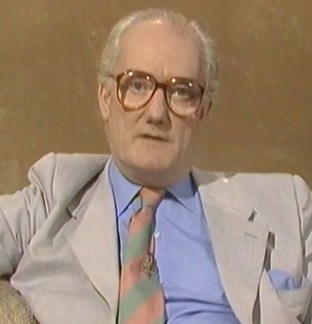
Men of Ideas: The Ideas of Quine - Bryan Magee & Quine (1978)
节目发布 2023-06-25
字号跟随播放
章节 · 点击跳转视频
0:11蒯因其人:当代最重要的哲学家▶ 正在看
1:18哲学与科学连续:更抽象的追问▶ 正在看
3:43排除起源问题:世界与生命从何而来▶ 正在看
4:52两大分野:本体论与谓述问题▶ 正在看
6:59唯物论立场:只承认物理对象▶ 正在看
10:52二元论从何而来:万物有灵与梦的遗迹▶ 正在看
15:03决定论与自由意志的混淆▶ 正在看
17:49身心问题消解:心理词汇如何安置▶ 正在看
20:32行为主义的作用:主体间可观察标准▶ 正在看
23:28阶段小结:从本体论转向知识论▶ 正在看
24:28数与集合:抽象实体也是世界家具▶ 正在看
29:48意义、翻译与必然性的根基动摇▶ 正在看
33:42蒯因的总体本体论与谓词标准▶ 正在看
37:47语义上升:为何谈词语而非事物▶ 正在看
40:25三项待突破:语言、命题态度与集合论▶ 正在看
01蒯因其人:当代最重要的哲学家
0:11
thank you if we took a poll among professional teachers of philosophy on the question who is the most important living philosopher it's not at all obvious to me at least who would get the most votes but we can be fairly sure about some of the names that would be in the top half dozen probably though strictly speaking he's not exactly a philosopher well the first of those names and one on which I'd lay pretty short odds is that of Willard van oremenquin one of the professors of philosophy at Harvard Quan was born in 1908 and is still highly productive so he's had a long career and it's by no means over yet he's published innumerable articles and over a dozen books the best known of which are from a logical point of view published in 1953 and word and object published in 1960 first and foremost he's a logician and the original contributions to the subject which made him famous are for the most part highly Technical and not really accessible to the Layman though they always had their ultimate roots and
problems fundamental to philosophy however in the latter part of his career he's become more overtly interested in philosophy in a more General sense and I thought it would be uniquely valuable in this program to have a philosopher at the very Summit of world reputation talking about the basics of philosophy and of his own activity Professor kwine what do you regard as the central tasks or tasks of philosophy I think a philosophy is concerned with the with the the with our knowledge of the world and the nature of the world like a consider I think of philosophy as attempting to round out the system of the world as uh Newton would it there have been philosophers who have thought of philosophy as somehow separate from science and as providing a firm basis on which to build science but this uh I consider an empty dream science much of science is firmer than philosophy is or can even perhaps aspire to be I think of philosophy as continuous with science even as a part of science well if it's continuous with science and
even part of science how does it differ from the rest of science uh it differs in generality and in abstractness science uh is a Continuum extending from history and engineering and at one end if we think of science broadly uh to such abstract Pursuits as philosophy and Mathematics at the other philosophy considers the the question of the nature of cause for instance where physics uh condense itself with defining causal relations between specific sorts of events biology between other sorts of events again whereas the zoologists will tell us that there are wombats and the physicists will tell us that there are electrons the mathematicians will tell us there are no end of prime numbers the philosopher is interested rather in what sorts of things there are altogether and it's in these ways that philosophy is more abstract in general in other words the philosopher is investigating what constitutes the connective tissue of everyone's thoughts including other people's thoughts so that they the
physicist is is trying to find out whether or not a causes B but the philosopher is saying but what does it mean to say that anything causes anything uh the physicist is trying to find out say what particular subatomic particles there are uh and the philosopher says but what does it mean to say of anything that it exists yes it's at this level of complete generality that the Philosopher's investigations occur is that right now do you uh do you include in this or do you exclude from it the age-old questions of how the world got here in the first place or how life began uh I exclude these from philosophy um how the world began uh is a problem for the physicist and astronomer and of course there have been conjectures from that quarter how life began is a problem for the biologist and which he's made notable progress in recent years why the world began why life began on the other hand I think uh uh our our pseudo questions because I can't uh um I I can't imagine what an answer would look like and you think that because
there is no conceivable answer to these questions they are said to speak meaningless questions yes it is yes so in other words you'll regard the the central tasks of philosophy as the analysis and elucidation of Concepts that are Central to various fields of human activity and also in particular Notions like core what it is for something to be a cause of something else what it is for something to exist uh what it is for something to be shall we say a scientific law the most General Notions that that are as it were the connecting tissue of thought and that we have to use and have to imply in the specific activities that people like scientists or it could even be politicians lawyers and so on are engaged in is there is that a correct way of putting your view yes yes I would agree with that do you think that the main or the most important questions that philosophers have to deal with can be grouped under any uh particular headings there are two headings uh uh which I think provide an important
classification to begin with there are the ontological questions as they might be called well I think you'll need to explain that term uh these would be interesting questions as to what there is the general questions as to what sorts of things there are as well as the question of what it means to what what it means to exist uh for there to be something um and the other um classification the other class would be uh might be called the predicated questions um questions questions as to what sorts of things can meaningfully be asked about what there is in other words you've got two enormous spheres of questioning here one about what there is and the other about what we can know about what there is or what we can say about people yes and epistemology would be included in the letter yes yes yes now I think since you've made this distinction for clarity's sake in our discussion we ought to cling to it a little and I think we'll take these two areas one at a time and we'll take your first one first the whole group of questions about
what there is what exists or as you say what is called ontology by philosophers although there are innumerable theories about this I think it's fair to say that throughout the history of the subject there have been two broad opposing views in metal ontology between what you might very roughly called materialists and what you might call idealists I mean although there are innumerable different versions of both doctrines you do have on the one hand a view that reality consists of matter or material objects in space and time which exist independently of any ones or anything's experience of them and on the other hand you have a view of reality as consisting ultimately in spirits or minds or is existing in the mind of God or as being put together in our minds now can I put very crudely the 64 question to you and ask you which side you're on I'm in the materialist side yes uh yes I hope that uh physical objects are real and exist externally and independently of us um I don't know that there are only
these physical objects there are also abstract objects um objects of uh mathematics that seem to be needed to fill out the system of the world but uh I don't uh I I don't recognize the existence of minds of mental entities uh in any sense other than as attributes or activities on the part of physical objects mainly persons uh uh that must mean then that you not only reject idealism it must also mean that you reject dualism I mean one might describe dualism as almost the common sense view I think throughout human history most human beings have taken the view that reality consists ultimately of entities of two categorially different kinds minds and bodies and as far as we know in all civilizations past and present most people seem to have thought this that there were bodies and that there were minds and that these were two fundamentally different kinds of things now that's what is meant by the term dualism that's now you must reject this view if you don't believe in the existence of Minds it's true I do reject
the view um the dualistic View presents problems creates problems which are uh neither uh soluble nor it seems to me necessary uh it's uh it's clear that that a an individual's decisions uh will affect his movements will determine his movements in many cases and his movements in turn will uh will have consequences in the movements of other physical objects uh at the same time the natural scientists the physicists um uh insist on a a closed system they're being physical causes physical explanations in principle for uh for the physical events they allow no place for the incursion of influences from outside the physical world uh given all this it would seem then that a person's decisions must themselves be uh activity on the part of a physical object of the alternative of rejecting the this basic uh principle of the of of physical science to the effect that uh every change is that there's no change without a change in the distribution of microphysical properties over space time over over space
um that alternative I find uh uncongenial because the success is in Natural Science have been such that we must take their presuppositions very seriously in other words what you are saying is that that wishes emotions feelings decisions thoughts are all things which take place in physical objects namely people and of course in a sense that's an obvious fact and what you're saying is that not only are these always accompanied by microphysical changes changes in our brains and our central nervous systems and so on but they indeed are those microphysical changes exactly now before I go on to raise with you some of the apparent difficulties inherent in that view I wonder if you could explain how it is that almost all of mankind as I said only a few minutes ago has disagreed with you about this so why people in general take a dualist view of reality stuff I mean let me at this point I mean if I put that question to almost anyone else he could say well it's obvious why people think like that because dualism corresponds to directly
experienced reality that is how we experience things but you can't say that because you don't think it is how we experience things so what would your answer be I I recognize uh certainly a a profound difference between uh so-called metal events um and uh externally observable physical ones in spite of construing these mental events as uh themselves event States activity on the part of a physical object the reason uh and as for the the traditional dualistic attitude uh certainly this goes back to primitive times I think one cause of it uh partial explanation May uh be the experience of dreams and the seeming separation of the of the the uh mind from the body in that state um certainly animism antidated science thales the first of the Greek philosophers is said to have said that all things are full of Gods primitive people peoples today are said to be animists uh very largely and to believe that that what we call inanimate objects are are animated by spirits the um one can even imagine traces of animism in the basic concepts
of of our science itself the notion of cause I suspect began with the feeling of effort of pushing on the part of the individual the subject of feeling the uh um as a as a mental uh entity and force surely had that sort of origin but as time has gone on and as science has progressed and uh in in recent centuries of the the dissociation of these Concepts from their original a mental context seems to have been conducive to to a great scientific progress and I think of the I think of physicalism as a departure a product of uh Latter-Day science which of course is a phenomenon that's a very uh uncharacteristic of the uh the history of mankind but I don't think that the chief reason why most people take a dualist view of reality is to do with dreams or the other things that you've mentioned I think it's chiefly because we all do have uh it seems to me direct experience of an internal flow of thoughts and emotions and responses and desires and Fantasies and memories and so on which is going on
all the time that we're awake and which is extremely complex not only in the sense that it may be about complicated things but also in the sense that there may be several different things going on at once and I think we're all directly aware of something like this going on inside ourselves and this doesn't manifest itself in any way in observable external Behavior we are aware of these things uh and and um and I'm not denying their existence but I'm construing them or reconstructing them as activities on the part of physical objects uh namely on our part and um the the fact that these are not observable on the whole from the uh from the outside it doesn't distinguish them from much that the physicist assumes in the way of internal microscopic or submicroscopic structure of inanimate objects a great deal goes on that we don't observe from the outside and that we have to account for conjecturally of the uh import important reason for construing all this activity as activity on the part of bodies is to preserve the the uh
closed uh character of the system of the physical world does this mean that you deny the real existence of the age-old problem about whether or not we have free will it doesn't mean that but I I uh because the will would retain its uh its status even though becoming a a ultimately a a neural phenomenon and a an aspect of the activity of a physical object however I think the problem with the freedom of the will is an outcome of a of a confusion uh there's no question in my mind about the freedom of the will of that the will is free in the sense that people very often uh do what they will to do they are free to within limits of uh constraint into the within limits of their their strength or Talent to do things that they will to do freedom of the will does not mean that the will is free to will as it will that would be nonsense and it doesn't mean that the will is uncaused the will is caused and we all uh are prepared to recognize that the will is caused when we try to train children in such a way as to
influence their behavior or enact laws to discourage criminals or we uh we try to get you try to get votes people try to sell things all these are cases of of cause causing uh people to will but they're the freedom of their will remains insofar as their activity uh is the result of a causal chain one link of which is the willing and that willing can be itself caused it is given you to hold these views how do you see the traditional body-mind problem I mean let me just remind uh viewers of what that is I mean I've said earlier that most people seem to take a dualist view of reality uh the view that everything in the universe consists ultimately of either minds or bodies that there are both kinds of entity and that has given rise to a traditional problem which no one has ever come up with a thoroughly satisfactory solution to it that is the question how are these incorporeal or abstract non-material Minds able to actually move and push about the material bodies now it's clear that you since you don't believe in the
existence of Minds as independently embodies the problem does not present itself to you in that form do you uh given your views do you simply bypass the Mind Body problem totally um no um as you said about it the my uh the body mind problem doesn't exist in that form for me uh there's no longer that problem of interaction and in fact it's uh in order to eliminate the problem in that Forum uh that I uh that I opt for physicalism however the problem then arises um how are we to talk about all these uh ordinarily so-called metal events and mental activity uh this flux of experience um if we're not recognizing Minds not recognizing mental entities um it's no good trying to paraphrase all this into a neurological terms because it would take too much in the way of detailed uh understanding of the mechanism of the nervous system now there's a there's a as a first step a quick easy solution to that one's uh May simply keep the mentalistic terminology but regard all these terms as terms applicable to bodies and to the activity
of bodies this is easy this is too easy in a way because there's another point about the uh in favor of the physicalistic attitude which uh I haven't touched on up to now namely the advantage of intersubjectivity objectivity the data are not introspective data the data are shared care can be shared by other Observers uh it's because of this uh in large part at least that uh that the Natural Sciences have been so successful now and and introspective psychology has not been comparably successful well now if we simply take over all the concept conceptual apparatus of introspective psychology and mentalism and simply try to excuse it by saying all these uh attributes or activities of bodies we're no longer getting the benefit of the intersubjectivity of of Natural Science however there's a there's a way of coping with this difficulty and it is behaviorism in the sense of which I think behaviorism is important and and valuable I think its role the role of behaviorism um is the legitimation of mentalistic
terms of without having to go through the the uh indirect and in fact impractical uh uh channel of of Neurology um criteria observable inter-subjectively observable criteria for mental States uh are found um in behavior in observable behavior that would include verbal Behavior including verbal Behavior yes and insofar as such criteria are available uh we do have the benefits of Natural Science after all and this is without uh full neurological explanation so the extent to which I'm a behaviorist is uh in seeing behaviorism as a way of making objective sense of metallistic Concepts I don't identify the metal states with the behavior I identify the mental States rather with uh neural States nor do I regard behavioral accounts as uh in the last analysis explanatory of the metal uh States mental phenomena I think the full explanation of these is to be found rather at the neurological level in other words if you're saying that behaviorism is not an explanation of the kind of problems of which the
philosopher deals but a way of formulating them I mean it's a kind of language in which the problems should be couched or formulated before we then go on to try and provide Solutions exactly yes I think it would be helpful if we pause the moment at this point Professor Klein and if I try to recapitulate uh the ground that we've covered before we attempt any forward moves I started this discussion by asking you what you regarded as the as the central tasks of philosophy and you you not only said what you thought philosophers ought to be doing you also said what you thought they ought not to be doing and you ruled out a number of questions but you you grouped the questions that you thought philosophers ought to concern themselves with under two main heads first head being questions about what exists what does reality consist of and the second group being what can we know about this and how can we know and what can we say about it and so on now from that point onwards we've been pursuing the first of
those uh those two groups of questions and you've said that in your view your view of reality is physicalist you think all reality consists in physical entities that there are not Minds separate from physical entities and that the notion that there are leads us into all sorts of conceptual confusions which you think uh a behaviorist analysis liberates us from I'd like us know to to start going over to questions of the second kind because we were beginning to get into them already and that's why I thought it time to stop and reassess where we were can we now move into the second area of how we acquire knowledge of this physical world in which we find ourselves good um one one correction would make though um my position is not that there are only physical objects there are also abstract objects but these abstract objects are not mental it's important but they're not section isn't it you don't believe in the existence of Minds at separate from physical things but you do believe in the existence of certain abstract
entities yes numbers notably but I think you need to explain that a bit if you are a physicalist how can you justify your belief in the existence of abstract entities at all the um the status of sets or classes in numbers and functions I think from the again not not from the point of view of the predicated side of philosophy uh is uh not basically different from the status of hypothetical entities such as Elementary particles in physics uh in both cases it's a matter of framing hypotheses which uh imply are of past observations which imply future observations under uh under uh specifiable conditions uh which uh would uh then serve to corroborate or refute these hypotheses and these General hypotheses uh contain reference not only to the ordinary ordinary observable objects but also to many auxiliary objects we might say in the way of unobservable physical particles and also in the way of numbers and functions because these come into the formulations into the hypotheses of a quantitative kind
and even classes or sets of the the biologist speaks of general and species of of organisms and all these entities are uh Furniture of the of the world uh posited on an equal footing in our system of the world what do you say on an equal footing but it does seem to me that there is a very important difference between the sense in which subatomic particles are unobservable and the sense in which say numbers are unobservable and subatomic particles are bits of stuff but it just so happens perhaps because of the accident of our Optical apparatus that they're bits of stuff which are too small for us to see but if we had microscopic eyes or super microscopic eyes perhaps we could see them and if we had different kinds of fingers we could pick them up I mean they are bits of material but numbers aren't bits of material however small are they I mean they are as it were abstract through and through there is nothing but abstraction to them it's true that they there's this discount annuity but the continuity of ordinary
observable objects with the uh Elementary particles uh uh is rather more attenuous than uh had once been supposed because an elementary particle is too small for instance even in principle to be uh detected by by light because it's uh because it's a smaller than any uh any wavelength furthermore the behavior of the elementary particles is basically unlike that of a larger of bodies so much so that it says I think only by courtesy that they're called uh material of the the indeterminacy with respect to whether two segments of the uh to segments of Paths of an electron are segments of path of the same electron or two different ones into term indeterminacies of a position the the antithesis between wave and corpuscle as a uh in the interpretation of light and other anomalies something called the Bose Einstein statistic all suggests that uh the analogy of body is an analogy that was useful for extrapolation up to a point but then the uh the reshuffling the the evolution of hypotheses in the light of further
experimentation and further refutations I have finally uh carried us to the point where these uh where the the continuity is no longer so evident I I would like to leave at that particular point there Professor Klein because I want to step back three Paces in our discussion and take up something which strikes me as being a very much more general interest that we were talking about a moment ago and then we got slightly sidetracked and I think it was partly my fault that we did I want to go back to the point where you were saying or suggesting anyway that the adoption of a physicalist approach to reality or a behaviorist analysis A behaviorist where formulating problems has the effect of liberating you from the spell of certain entrenched ways of looking at things which though they may be part of Common Sense are nevertheless mistaken now that's the point I want to take you up at can you say what some of the entrenched ideas are from which you believe your approach would liberate us good um
Liberation is one way of looking at it a Sterner discipline is another way of looking at behaviorism uh but at any rate uh a a major example is the notion of meaning the the um there's the Common Sense notion that word somehow convey meanings how do we know that these that the same words convey the same meaning to two uh speakers we can see that the speakers react in the same way all this is describable in behavioral terms but might the meanings themselves be different yet what behavioral sense can be made of the question no behavioral sense no adequate behavioral sense has been made of it there are other Notions that uh come similarly into question translation once the notion of meaning is questioned uh the um notion of translation becomes more complex we can no longer say it's simply a matter of producing another another sentence it has the same meaning as the sentence that's being translated um the the notion of necessity again comes into question um the well there are two kinds of Necessities
yes they're logical and causal yes the one uh commonly has uh understood as necessity by virtue of the meanings of the words the sentence is true by virtue of the meanings of the words that it contains uh this uh characterization uh goes by the board if the notion of meaning does uh then there's the uh notion of physical necessity um especially by virtual physical law that this doesn't depend in the same way on meaning but by somehow the same sort of Scruples it also becomes uh questionable the uh it's not clear that there's a not clear to me that there's a difference between um a general truth uh truth in the form of a general proposition general statement which uh just happens to be true and one that is a law the uh the the term not necessary the adverb necessarily is in very common use and that suggests that perhaps people have a distinction in mind between two sorts of Truth the necessary and The Accidental or contingent but I think the use of the uh the ordinary use of of that word
can be explained otherwise I think it's uh it's dependent on situation on context once says necessarily and follows it with a sentence or when he's when he thinks that the other person is bound to admit it because of what he already has committed himself to or because he may be presumed to believe uh and uh that uh this will vary with the context for calling into the question such very fundamental Notions of our thinking as uh causal necessity logical necessity the idea of a law uh the notion of meaning yes the ground is beginning to disappear from under our feet and I think what I would like to do at this stage Professor Quan is ask you to characterize for us as a whole the kind of view of the world that we're coming out with uh can can you good well now uh let's proceed Again by the uh in terms of that dichotomy between the ontological and the predicate predicational um on the ontological side uh of what I am accepting assuming uh surprise physical objects the physical object being construed
quite uh generously as the content of any portion however scattered and discontinuous of space-time and all classes of such things and all classes are such classes and so on uh and mathematicians have known uh discovered over the past Century how all talk of numbers and functions and other mathematical uh uh entities can be paraphrased into Talk of the pure set theory of classes classes classes of classes appropriate ones can be made to do the work of numbers and the functions and the rest so we need these on the other hand these are abstract objects that I accept there are others that I would reject properties I would reject because there's a question of there's the question in what circumstances do to descriptions to characterizations determine the same property uh and uh in what circumstances do they determine different properties we just happen to be properties of all the same things in chart of individuation identification of properties and it's ordinarily said that to two two Clauses let's say two phrases
determine the same property if they have the same meaning but of course this characterization goes by the board if we don't accept the notion of meaning in the case of classes this problem of identification does not arise because classes are are identical simply if they have the same members uh properties I I'm persuaded are dispensable in science it's not clear how to dispense with the classes so this uh would be my tentative ontology and I would regard it as part of Science and subject to the infallibility of the rest of science namely the individuals and the hierarchy of classes and classes of classes and so on build upon them the individuals being physical objects on the on the predicative side of uh my view is I think mainly rather negative it's one of uh rejecting uh predicates that that have too little in the way of of Behavioral or let's say of observable uh criteria for their application or failing that uh I think one one we must also accept theoretical predicates which don't admit of observable of
observational criteria but there one must insist on there being um pretty firmly related to uh predicates of the observation observational kind through laws uh hypotheses better uh General uh physical Theory which makes for uh a uh well-knit system of the world which expedites prediction so that I would uh insist not that predicates have a uh have necessary and sufficient conditions in observation but that they have a good share in the way of observable um criteria symptoms of application or that they uh play a quite a promising role in the theoretical hypotheses one thing that pleases me very much about the discussion that we've had is that none of it so far has been specifically about language or about words and I say that because a lot of intelligent laymen who begin to take an interest in philosophy are sometimes put off by what they take to be the discovery that modern philosophers are doing nothing but talking about words talking about terms analyzing sentences statements and so on and you haven't
talked in that way at all and it's quite clear the problems with which you are concerned are not problems about language nevertheless uh someone opening your books uh or a student coming to study with you at Harvard for the first time would find that a great deal of your technique of approach to these problems is via the analysis of Concepts and therefore careful attention towards the elucidation of sentences and statements and so on um why is it that you and other contemporary philosophers adopt this linguistic approach to what are after all essentially non-linguistic problems one one reason is a strategy that I call somatic ascent a-s-c-e-n-t um philosophical issues uh are often concerned with very fundamental traits of one's conceptual scheme and if two philosophers disagree on such points it's difficult for them to discuss their disagreement without each of them begging the question because it's hard to reason and argue without making use of the fundamental principles of One's Own conceptual scheme
and a way of avoiding or or some of minimizing this difficulty uh is uh the device of moving up one step semantically and talking about words instead of using the words to talk about the things and if one makes this move then one can talk about the rival systems as systems of sentences one can compare them in point of Simplicity and uh endpoint of inclusiveness and make a judgment on a on a shared basis without the circularity the question banking we're coming to the end of our discussion now Professor crime but I would like just before we do literally end I'd like to ask you if you can say anything at all uh perhaps in the light of the discussion we'd head up to this point about what you are currently working on I I have to ask you to be briefer than I would like because we have so little time left I would like you before we end to say something about what you're doing original work on that well um and president I'm uh I've been writing short things in an effort to elucidate some of the points already in
my uh in my other writings or to extend and improve them but there are several uh problems on which I would like to see someone make breakthroughs one of them is connected with language uh namely the development of some conceptual scheme to take the place of the untenable old-fashioned theory of meaning uh something new and uh something more acceptable in the way of theory of what goes into good translation for instance um this is a a job perhaps for linguists but it's something with a philosophical interest and it's a job also where someone with a philosophical curiosity is apt to be helpful to the linguist a second one is related rather to psychology uh I should like to see a concept a system of Concepts developed which would do the work of the old mentalistic idioms of propositional attitude X believes that p x regrets that p e x hopes that b the sort of thing these idioms are subject to some subtle logical difficulties and complications and they're very wanting in large part of their applications wanting in
adequate behavioral criteria I should like to see for not for General discourse but for scientific purposes uh some apparatus of which would uh be of which would serve the same purposes as these and be free of those faults the third is related rather to mathematics now the uh somewhat somewhat begrudgingly when I accept I accept um the apparatus of uh abstract objects sets and the rest um as our exhilarated science because it seems to be needed but I should like to see a a a minimum basis an economical basis uh and a a and and a very clear clearly intelligible basis uh for uh for set theory which was adequate just barely adequate to so much mathematics as is needed in Natural Science and it might be that if this were developed it would among other things uh give us a more intuitive uh understanding of the so-called paradoxes the antinomies of set theory and their solution such things as Russell's Paradox which are familiar to some of our viewers I'm sure and not to all so that might be a good