视频库 / NO.050ASK THE BEST MINDS THE BIG QUESTIONS一人,一实验室
视频库 / NO.050
字幕 字幕位置
--:--
点击播放,这里会跟随视频显示当前句的中英字幕。
第 50 期 · 核心追问 Ⅱ·07「语言还承载意义吗?」

Logical Positivism & its Legacy - A. J. Ayer & Bryan Magee (1977)

节目发布 2022-04-05
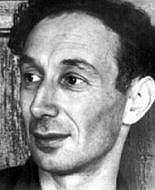
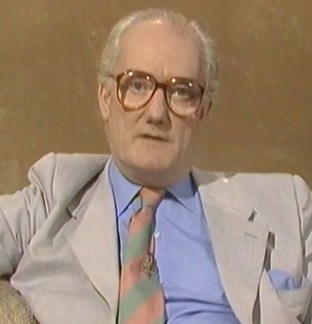
AA. J. 艾耶尔 布莱恩·麦基
章节 · 点击跳转视频
0:00 现代主义与哲学的同步转向 ▶ 正在看
3:13 反形而上学:维也纳学派的敌人 ▶ 正在看
4:10 石里克、卡尔纳普、纽拉特 ▶ 正在看
6:14 马赫、休谟与新逻辑的渊源 ▶ 正在看
9:07 相对论与量子论的哲学印证 ▶ 正在看
11:04 三大核心学说:证实、重言式、活动 ▶ 正在看
14:09 证实原则的困境与弱化 ▶ 正在看
17:28 复述框架与伦理学的情感主义 ▶ 正在看
20:27 哲学成为二阶学科 ▶ 正在看
22:19 语言转向:为何不是文字游戏 ▶ 正在看
28:16 艾耶尔的维也纳之行与成名作 ▶ 正在看
32:27 皇帝的新衣:影响与自我清算 ▶ 正在看
本期小问 · 档案清单
—— 什么是「真实」? ▶ 正在看
—— 知识从哪里来? ▶ 正在看
—— 语言还承载意义吗? ▶ 正在看
—— 道德可以计算吗? ▶ 正在看
本期讲者
A. J. 艾耶尔英国哲学家(1910-1989),牛津大学威克姆逻辑学教授,25岁出版《语言、真理与逻辑》将逻辑实证主义引入英语世界,提出伦理学的情感主义理论。
布莱恩·麦基英国哲学家、广播人和工党议员(1930-2019),主持BBC哲学访谈系列《Men of Ideas》(1978)和《The Great Philosophers》(1987),以向大众清晰讲解哲学著称。
01现代主义与哲学的同步转向
0:00
[Music] in the world of the arts the remarkable fact has very often been noted that what we still think of as modern painting and modern music and modern poetry and the modern novel all developed roughly speaking simultaneously they all got going in the early years of this century and first became fashionable in about the 1920s and in all the arts modernism has had some strikingly similar consequences for instance in each of the arts there was a turning away from the unself-conscious depiction of the world or of experience and are turning in on itself art actually became its own subject matter that's to say it became familiar for say the subject of a poem to be the process of writing a poem or the difficulties of being a poet ditto with plays and novels and later even films music and painting too in their different ways exhibited the same concern with their own innards and very often turned them into their own subject matter and put them on display in all the arts too and perhaps this is
[音乐]在艺术领域,人们经常注意到一个引人注目的事实:我们今天所说的现代绘画、现代音乐、现代诗歌和现代小说,大致上是同时发展起来的,它们都在本世纪初起步,并在1920年代前后开始流行;而在所有这些艺术门类中,现代主义都带来了一些惊人相似的后果,比如说,在每一门艺术中,人们都不再不假思索地去描绘世界或经验,而是转向了自身——艺术本身成了自己的题材,也就是说,人们习以为常地看到,一首诗的主题就是写诗的过程,或者当一名诗人的种种困难;戏剧和小说也是如此,后来连电影也是;音乐和绘画同样以各自的方式,表现出对自身内在构造的这种关注,并且常常把它们变成自己的题材,公开展示出来。在所有艺术门类中——也许这一点
便签笔记
1:12
related to the last point there was a disintegration of traditional forms a tendency to build new structures and to build them out of small carefully shaped fragments i'm emphasizing this because all this is true and with remarkable exactitude of philosophy as well a fact which illustrates how deeply embedded the development of philosophy is in the cultural matrix of its time modern philosophy can be said to have started in 1903 with the breakaway of g.e moore and bertrand russell from the idealism which had dominated the 19th century and then after the pioneering work of russell followed by that of wittgenstein who was a pupil of russell they're developed in the 1920s in austria the first fully-fledged school devoted to the new philosophy school which was known as the vienna circle to the philosophy they developed they gave the name logical positivism and for a long time afterwards that label was attached to modern philosophy generally in the minds of very many laymen the person who introduced logical
和刚才那一点有关——传统形式都出现了瓦解,出现了一种建构新结构的倾向,而且是用一些精心打磨的小碎片来搭建。我之所以强调这一点,是因为这一切同样惊人准确地适用于哲学——这个事实说明,哲学的发展是多么深地嵌入在它那个时代的文化母体之中。可以说,现代哲学始于1903年,当时G.E.摩尔和伯特兰·罗素与统治了19世纪的唯心论决裂;随后,在罗素开创性的工作之后,又有他的学生维特根斯坦的工作,到了1920年代,在奥地利出现了第一个致力于这种新哲学的成熟学派,它被称为维也纳学派。他们发展出来的哲学被命名为逻辑实证主义,此后很长一段时间里,在许多外行人心目中,这个标签就等同于现代哲学。把逻辑实证主义引入英国的人是A.J.艾耶尔,
便签笔记
2:13
positivism into england was aj air and his is the name that has been chiefly associated with it ever since in this country he did so in a still very famous and widely read book called language truth and logic which he published in january 1936 when he was only 25. it's very much a young man's book explosively written and it's still the best short guide to the central doctrines of logical positivism the aggressiveness of that book was typical of the movement as a whole they self-consciously organized themselves like a political party with regular meetings and publications and international congresses and they propagated their doctrines with missionary zeal if we look at the question of what they were fighting against so passionately and why i think that will provide us with the clearest starting point for our consideration of logical positivism and then we'll be in a better position to go on and examine their own doctrines professor what was it that the logical positivists were campaigning so
从那以后,在这个国家,他的名字就主要与它联系在一起。他是通过一本至今仍非常著名、流传很广的书做到这一点的,那本书叫《语言、真理与逻辑》,出版于1936年1月,当时他才25岁。这非常像是一本年轻人写的书,写得酣畅淋漓、火气十足,而且它至今仍是了解逻辑实证主义核心学说的最佳简明指南。那本书的攻击性也是整个运动的典型特征。他们非常自觉地把自己组织起来,像一个政党一样,有定期的聚会、出版物和国际大会,并且以传教士般的热忱传播他们的学说。如果我们来看看他们如此激烈地反对什么、以及为什么反对,我想这会为我们考察逻辑实证主义提供一个最清晰的起点,然后我们就能更好地接着去审视他们自己的学说。教授,逻辑实证主义者如此激烈地反对的到底是什么?嗯,首先,他们
便签笔记
02反形而上学:维也纳学派的敌人
3:13
passionately against well primarily they were against metaphysics what they call metaphysics and that was any suggestion that there might be a world going beyond the ordinary world of science and common sense the world revealed to us by our senses or already kant at the end of the 18th century had said it was impossible to have any knowledge of anything that wasn't within the realm of possible sense experience but these viennese people went further they said that any statement that wasn't either a formal statement like a statement of logic or mathematics or one that was empirical politically testable was simply nonsensical and so they cut away therefore all metaphysics in that sense and this had some further implications it was for example obviously a condemnation of any theology any any notion of there being a transcendent god and this although they were themselves not politically conscious conscious with one exception of one of them who are the only one man called otto naira had political implications because there
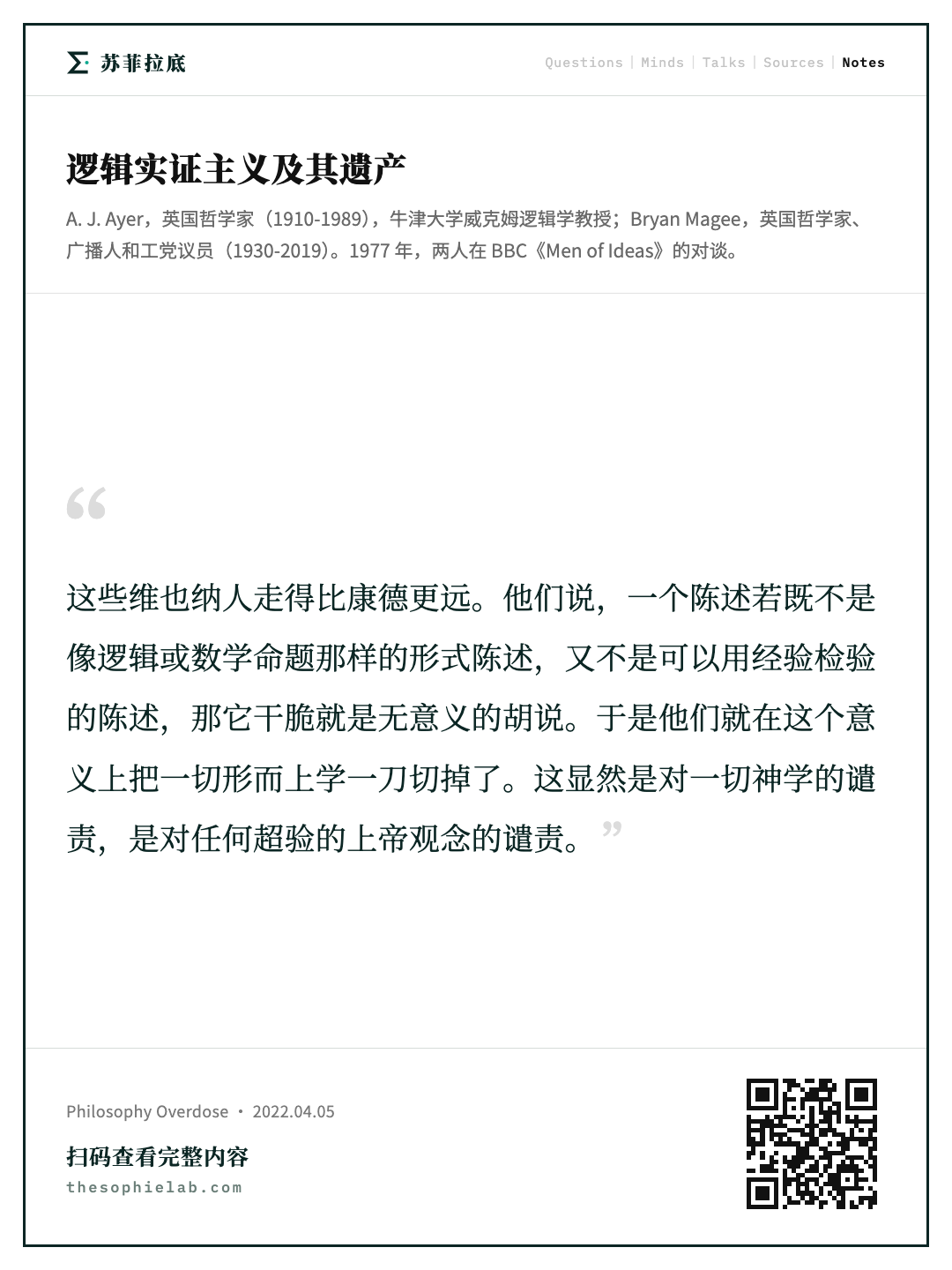
反对形而上学——他们所谓的形而上学,也就是任何认为可能存在一个超出科学和常识的日常世界、超出感官向我们揭示的那个世界的说法。早在18世纪末,康德就已经说过,凡是不在可能的感觉经验范围之内的东西,我们都不可能对它有任何知识;但这些维也纳人走得更远,他们说,任何一个陈述,如果它既不是形式陈述——比如逻辑或数学的陈述——也不是经验上可检验的陈述,那它就纯粹是无意义的。于是他们就此把所有那种意义上的形而上学都一刀砍掉了。这还有一些进一步的影响,比如说它显然就是对任何神学、任何关于存在一个超验上帝的观念的否定,而且尽管他们本身并没有政治意识——只有其中一个人例外,那个唯一的人叫奥托·纽拉特——这一点还是有政治含义的,因为当时的奥地利,社会主义者和
便签笔记
03石里克、卡尔纳普、纽拉特
4:10
was india at that time a rather bitter struggle between the socialists and a right-wing clerical party headed by by dolphus and the opposition of the the underserved physics was in part a political act even though they weren't themselves primarily conservative politics now you mentioned one of them by name otto noirart since we're going to be talking about this circle of people i think it'll be helpful if we get clear who the main individuals were who were they well the chief person the leader of the circle the official leader of the circle was a man called moritz schlick who was originally a german and he came to vienna at the age of about 40 in the early 1920s in his early 40s and he had like most of them or many of them had been trained originally as a physicist and was interested mainly in the philosophy of physics in fact one of the leading uh traits of the circle is the extreme reverence for net for natural sciences and schlick was their chairman and he um took up his champion middle twenties and
以陶尔斐斯为首的右翼教权党之间正进行着相当激烈的斗争,所以他们对形而上学的反对在一定程度上就是一种政治行为,即使他们本身主要并不是搞保守政治的。你刚才提到了其中一位的名字,奥托·纽拉特,既然我们要谈这个圈子里的人,我想先弄清楚主要人物有哪些会比较有帮助,他们都是谁呢?嗯,最主要的人物、这个学派的领袖、正式的领袖,是一位叫莫里茨·石里克的人,他原本是德国人,大约四十岁时来到维也纳,那是二十年代初,他四十出头。他和他们中的大多数、或者说很多人一样,最初受的是物理学训练,主要兴趣在物理学哲学。事实上这个圈子一个突出的特点就是对自然科学极度的推崇。石里克是他们的主席,他是在二十年代中期担任教席的,几乎一到那里就开始组织这个圈子了。
便签笔记
5:13
started organizing the circle i think almost the moment he arrived there then the next most important person was another german called rudolph carnap and he had been a pupil of the great german edition fraga he'd been the people of fragrance in yena and he came to vienna a few years after slick in the late 1920s and in fact left vienna in the early 30s for prague but was still a very powerful influence in the movement he was the chief contributor to that journal this is a general called kentness the third person was a man i've already mentioned called nairat i think he was an austrian but he was the most active of them politically and in fact did have some post in the revolutionary spartacus government in munich after the first world war and he was very nearly a marxist he wanted to combine combined pastors and marxism and he was he who was mainly conscious of it as a political movement he wants to organize it politically and tell us from what you said that this was a radically uh revolutionary movement i mean they were
接下来最重要的人物是另一位德国人,叫鲁道夫·卡尔纳普。他曾是伟大的德国人弗雷格的学生,在耶拿跟弗雷格念书,他比石里克晚几年来到维也纳,是二十年代末,实际上又在三十年代初离开维也纳去了布拉格,但对这个运动仍有非常强大的影响力。他是那份期刊的主要撰稿人,那份刊物叫《认识》。第三个人是我已经提到过的纽拉特,我想他是奥地利人,不过他是他们当中政治上最活跃的,事实上一战后他还在慕尼黑的斯巴达克斯革命政府里担任过职务。他几乎算是个马克思主义者,他想把实证主义和马克思主义结合起来。正是他主要把这看作一场政治运动,他想把它组织成一个政治运动。从你说的这些看来,这是一场相当激进的、革命性的运动,我是说他们要摧毁既有的观念,摧毁宗教,摧毁政治上
便签笔记
04马赫、休谟与新逻辑的渊源
6:14
destructive of established ideas and religion destructive and established ideas in politics and above all destructive advice established ideas in the german philosophical tradition and i suppose that the two main scalpels that they used to tear away what they regarded as all that diseased or dead intellectual tissue were logic and science hence the name logical positivism indeed uh it wasn't quite so novel as all that it was continuing in an old uh of uh previous viennese tradition there was a scientist and philosopher of science called ernst mach he's the man against whom lenin wrote his materialism and imperial criticism who flourished in vienna at the end of the 19th century he was a professor in prague from about 1860s almost then came to vienna and it was he who took the view of science for example slit also talked that it must deal in in the last resort simply with human sensations since uh all our knowledge of scientific facts comes through our senses and mark reasoned that in the last resort science to be a
的既有观念,尤其是要摧毁德国哲学传统中的既有观念。我猜他们用来切除掉他们眼中那些病变或坏死的思想组织的两把主要手术刀,就是逻辑和科学,因此才叫逻辑实证主义。确实如此。不过它并没有那么新奇,它其实是延续了一个古老的、此前维也纳的传统。有一位科学家兼科学哲学家叫恩斯特·马赫,就是列宁写《唯物主义与经验批判主义》时要批判的那个人,他活跃于十九世纪末的维也纳。他大约从1860年代起在布拉格当教授,之后来到维也纳。正是他提出了那种科学观——比如石里克也这么讲——即科学归根到底必须只处理人的感觉,因为我们对科学事实的一切知识都是通过感官得来的。马赫由此推论,科学归根到底就是对感觉的描述。这就是
便签笔记
7:15
description of sensation and this was the the vietnamese people took over and of course they were following an old empiricist uh tradition although they didn't themselves don't know or care much about the history of philosophy what they said was very like what was said by the english philosopher scottish philosopher david hume in the 18th century to that extent they weren't all that novel they weren't all that revolutionary what was the revolution was in the sense that they're further and they're seeing this as putting philosophy on a new road they thought here at last we've now discovered what fluffy is going to be it's going to be the handmaiden of science it wasn't so much as they used science in their philosophy as they thought that the whole field of knowledge was taken up by science i mean science describes the world the only world there is this world the world of things around us and so on and this is what science describes and there isn't any other domain for philosophy to occupy itself with that
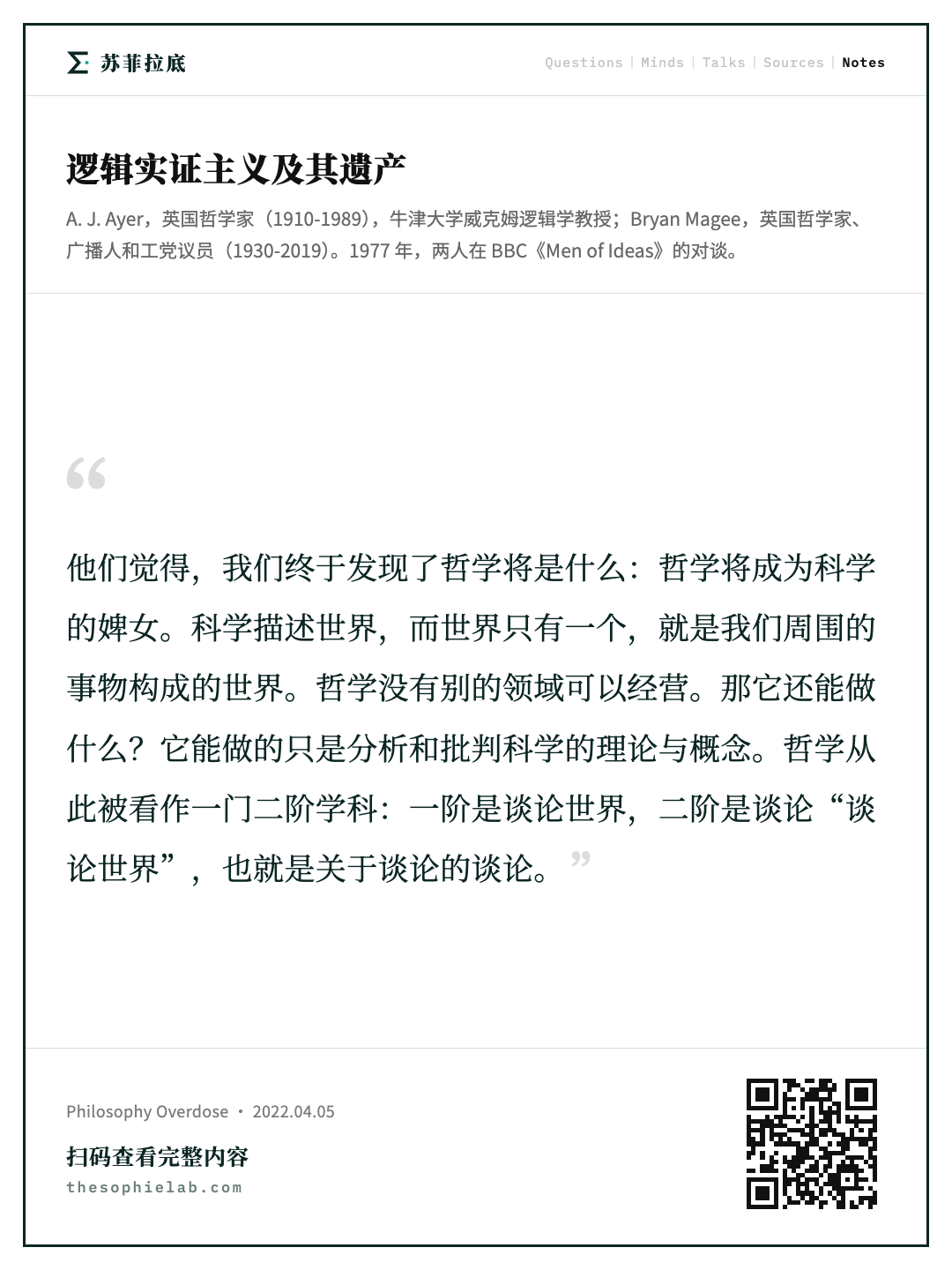
维也纳这些人所继承下来的东西。当然他们是在追随一个古老的经验主义传统,尽管他们自己并不了解、也不怎么在意哲学史。他们所说的和十八世纪那位英国哲学家、准确说是苏格兰哲学家大卫·休谟所说的非常相似。就这一点而言,他们并没有那么新奇,也没有那么革命。革命之处在于他们走得更远,在于他们把这看作是把哲学引上一条新路。他们觉得,我们终于发现哲学该是什么样子了,它将成为科学的婢女。与其说他们是在哲学中运用科学,不如说他们认为整个知识领域都已经被科学占满了。我是说,科学描述这个世界,唯一存在的世界,就是我们周围事物构成的这个世界,等等,这就是科学所描述的。除此之外没有别的领域留给哲学去经营,那么
便签笔记
8:06
what can it do all it can do is analyze and criticize the theories the concept of science is how science came in logic came in as supplying them with a tool logic had remained pretty much stagnant since the days of aristotle and then at the beginning of the 19th century it took a move forward there were some precursors there was bull and de morgan but the real jump came at the end of the 19th century with fraga in germany and as you yourself said earlier russell and whitehead in in in england and this um generalized logic more widely than dumb they didn't actually refute aristotle they showed the aristotle's little corner of logic but they had a much more uh wide reaching far-ranging logic which provided them with a very powerful tool of analysis it enabled them to express things much more precisely and since they were very interested uh in structure since they thought that science was largely concerned with structure with relations between things the uh development by originally by schroeder and purse in the 19th century
哲学还能做什么呢?它所能做的就是分析和批判科学的理论和概念。科学就是这样进来的,而逻辑进来则是为他们提供了一件工具。逻辑自亚里士多德以来基本上一直停滞不前,然后在十九世纪初有了一点推进,此前有一些先驱,有布尔和德摩根,但真正的飞跃出现在十九世纪末,德国的弗雷格,以及你自己刚才提到的英国的罗素和怀特海。这就把逻辑推广得比以往宽广得多。他们并没有真正驳倒亚里士多德,他们表明亚里士多德的逻辑只是一小块角落,而他们有一种覆盖面广得多、涉及范围大得多的逻辑,这给了他们一件非常强大的分析工具。它使他们能够把事情表达得精确得多。而且因为他们对结构非常感兴趣,因为他们认为科学在很大程度上关乎结构、关乎事物之间的关系,所以十九世纪最初由施罗德和皮尔士,
便签笔记
05相对论与量子论的哲学印证
9:07
and by russell and whitey and the famous relations gave them a tool he gave them a tool of philosophical analysis this is what happened well i entirely take your point about mark being a precursor of the logical positivist movement it is true isn't it that in addition to there being a new logic at the turn of the century there was also a new science i mean dramatically personified above all by einstein but there was this enormous breakthrough a a thought system of ideas which had started with newton and which had been accepted as incorrigible fact by most of the western world for nearly 300 years this was beginning to break down breakdown under the influence of einstein and the new physics and surely that must have had an enormous uh impact on what this had a very impor important uh very important stimulus to them because in fact einstein had been uh affected by mark uh i've had i heard it from his own mouth that he heard a great deal too to march and they saw einstein's work in their relativity and also they saw the
后来由罗素和怀特海对关系所作的那些著名研究,就给了他们一件工具,给了他们一件哲学分析的工具。事情就是这样。你说马赫是逻辑实证主义运动的先驱,这一点我完全接受。不过除了世纪之交出现了一种新逻辑之外,是不是也出现了一种新科学?我是说最突出、最戏剧性地体现在爱因斯坦身上。当时有这么一个巨大的突破:一套从牛顿开始的思想体系,近三百年来被西方世界大多数人当作不容置疑的事实来接受,而它在爱因斯坦和新物理学的冲击下开始瓦解了。这肯定对……产生了巨大的影响吧?这对他们是一个非常重要、非常重要的刺激,因为事实上爱因斯坦本人就受过马赫的影响。我曾亲耳听他说过,他从马赫那里获益良多。他们把爱因斯坦相对论方面的工作,还有新的量子理论,都看作是对那种进路的印证。因为无论如何,
便签笔记
10:07
new quantum theory as a vindication of that approach because what um einstein had done anyhow as they interpreted him was to say there's no you can't attach any sense to something like simultaneity unless you consider how statements about some of the data are verified that doesn't say that what what is meant by talking of things being being uh simultaneous depends it upon how determined in observation and they saw this as a great vindication within science of the of their philosophical approach similarly with quantum theory and the fact that that quant in quantum theory no meaning is attached to a particle simultaneously having a precise velocity and a precise position because this can't be tested because if you measure the velocity it distorts the position if you measure position at the thoughts of velocity therefore the scientists actually mean they said this is a proof that what is what scientific conflict concepts mean is determined by how they are verified and this is what we're saying and so this gave them an enormous
按他们的解释,爱因斯坦所做的就是说:像同时性这样的东西,如果你不考虑关于它的陈述是如何被验证的,你就无法赋予它任何意义。也就是说,说事物是同时的,这话的意思取决于如何通过观察来确定它。他们把这看作是在科学内部对他们哲学进路的一次重大印证。量子理论也是一样,事实上在量子理论中,说一个粒子同时具有精确的速度和精确的位置是没有意义的,因为这无法被检验:如果你测量速度,就会扰乱位置;如果你测量位置,就会扰乱速度。因此,他们说,科学家实际上的意思就证明了:科学概念的含义是由它们如何被验证来决定的,而这正是我们所主张的。所以这给了他们巨大的
便签笔记
06三大核心学说:证实、重言式、活动
11:04
stimulus they said well science is on our side we're interpreting sounds properly and and they were as i said khan happened and and schlick were originally physicists no narak was a sociologist so in other words now we're getting at what the revolutionary nature of their work consisting is yes that they were applying the new logic and the new science yes to traditional methods of thought and breaking these methods down as it were under the impact of the of the new methods is that so well yes what they wanted to say was that the old philosophical problems were either senseless or else capable of being solved by purely logical techniques now what were the doctrines the main doctrines they developed uh in the course of doing this well uh there were three really or the first the everything hinged on the so-called principle of verifiability which was put succinctly by schlicht as the meaning of the proposition is its method of verification and this is slightly vague as it's their expressed and we've labeled ever since somehow to
刺激,他们说,科学站在我们这边,我们在正确地解读那些声音——而正如我所说,他们是……库恩出现了还有石里克,最初都是物理学家;纽拉特则是社会学家。换句话说,我们现在触及到了他们工作的革命性究竟体现在哪里。是的,他们把新的逻辑和新的科学应用到传统的思维方法上,让这些方法在新方法的冲击下瓦解,是这样吗?嗯,是的。他们想说的是那些旧的哲学问题要么是无意义的,要么就可以用纯粹的逻辑技术来解决。那么他们在这个过程中发展出了哪些学说、哪些主要学说呢?嗯,其实主要有三条。第一条,一切都取决于所谓的可证实性原则。石里克把它简洁地表述为:一个命题的意义就在于它的证实方法。而这个说法在他们的表述中略显含糊,从那以后我们一直在设法让它精确起来,却从未完全
便签笔记
12:08
make it precise never only holy successfully but it had two consequences one was that anything that couldn't be empirically verified verified by since observation was meaningless i've already referred to this and secondly it was interpreted by schleich later it got loosened but in the early days especially as entailing that what a hypo what a problem meant uh could be um described to be by saying what would verify it and so you get a reduction of all statements the statements about uh statements of immediate observation this was the first point which had both negative and a participle negative is excluding metaphysics positive as showing a way we're not analyzing uh what sort of statements were significant then they held this they um got partly from victim right but there is evidence that slick held this describe this on his own that the propositions of logic and mathematics necessarily true statements were what wittenstein called tautologies they they said the same thing over again i mean they were they really unpacked
成功过。但它带来了两个后果。其一是,任何无法被经验证实的东西——通过感官观察来证实——都是无意义的。这一点我前面已经提到过。其二是,石里克后来的解读——虽然后来放宽了,但在早期尤其如此——认为它意味着:一个假设、一个问题的含义,可以通过说出什么东西能证实它来加以描述。于是你就得到了把一切陈述还原为关于……还原为直接观察的陈述。这是第一点,它同时具有消极和积极的两面:消极的一面是排除形而上学,积极的一面是指出一条路子,让我们去分析什么样的陈述是有意义的。接着他们还持有这样一个观点,这部分来自维特根斯坦,但也有证据表明石里克是自己独立得出并表述这一点的:逻辑和数学的命题、那些必然为真的陈述,就是维特根斯坦所说的重言式——它们只是把同一件事又说了一遍我是说,它们其实都是可以拆解开来的,就像说所有单身汉都是未婚男子、所有兄弟都是男性一样,但是
便签笔记
13:13
unpackable they like saying all all bachelors of unmarried men all brothers are male but all largely mathematics simply was uh what plant had called analytic let's say um as you put it unpacking the content of what you've already said and then the third main thing was about philosophy itself they thought that philosophy must consist in what we can stand in sleep called an activity of elucidate elucidation i mean i think there is a there was a saying of victor stein which was quoted again by schlick that philosophy is not a doctrine but an activity he doesn't listen in a body of true or false propositions because it's covered by the sciences but simply is the activity of clarifying analyzing uh and in certain cases uh exposing nonsense i mean which is at the end of his famous book the triathlon said the right man's philosophy seems to wait till somebody says something about physical then show him it is nonsense which is a bit of course negative and discouraging philosophers and now taking off the
逻辑和数学基本上就是康德所说的“分析的”,可以说,就像你讲的,只是把你已经说过的内容展开来讲而已;第三个要点则是关于哲学本身,他们认为哲学必须在于——用维特根斯坦的说法——一种“阐明”的活动。我想有一句维特根斯坦的话,石里克也曾引用过,就是:哲学不是一种学说,而是一种活动;它并不在于一套真的或假的命题,因为那些由科学来处理,哲学只是澄清、分析的活动,并且在某些情况下,是揭穿胡说八道。这也正是他那本名著《逻辑哲学论》结尾所说的:哲学的正确方法似乎是等着别人说出某些形而上学的东西,然后指出那是胡说;当然,这多少有点消极,也让哲学家泄气。那么先说这三点中的第一点吧,我想对大多数
便签笔记
07证实原则的困境与弱化
14:09
first of those three points first um i think it it it'll be very clear to most people what's meant by the view that any statement about the world must make some observable difference to something if it's true yes otherwise it's difficult to see what how it can have any application yes when you say that the meaning of a statement consists in the method by which you verified i think that's probably not clear to some of the people who are listening to this discussion what can you explain that a bit yes i can um originally it was thought by sikh and by um mach before him and possibly also by wittenstein though it's not quite clear what mr stein's atomic elementary statements are meant to be that you could translate out all statements into statements about uh sense data since about immediate data of observation and this was never actually achieved and clearly runs in into very great difficulties for instance in the case of uh universal problems propositions saying all ravens are black i mean all gases expand
人来说,“任何关于世界的陈述如果为真,就必须在某处造成某种可观察的差别”这个观点,含义是相当清楚的,否则就很难看出它能有什么应用。可是当你说,一个陈述的意义在于你验证它的方法,我想对某些正在听我们这场讨论的人来说,这可能就不那么清楚了。你能稍微解释一下吗?可以。最初,石里克,以及在他之前的马赫,可能还有维特根斯坦——尽管维特根斯坦所说的“原子的”“基本的”命题究竟指什么并不十分清楚——都认为,可以把一切陈述都翻译成关于感觉材料的陈述,也就是关于直接观察材料的陈述。但这一点其实从未真正做到,而且显然会遇到很大的困难,因为比如说,对于全称命题——像'所有乌鸦都是黑的',或者'所有气体受热都会膨胀'——因为它所涵盖的范围
便签笔记
15:20
when heated because the range covered by the oil might be infinite because if it's infinite then you couldn't possibly translate out and so um they then were ripped into all the death but expedient slick actually said that that that statements of this kind weren't propositions at all but rules simply rules getting from one particular statement this way in reflection and then the rather difficulties and clearly it seems perfectly clear if you take very high level abstract scientific propositions about atoms electrons nuclei and so on to try and write this out in terms of sensations in terms of blues and rounds and warm feelings of warmth and so it simply doesn't work and for various reasons then the principle got weakened and it was uh the idea that you could translate out and became given up and all it was required was that that these uh propositions were significant should be uh confirmable by by a sense uh observation and this meant that their meaning remained so partially undetermined
可能是无限的,如果是无限的,你就根本不可能把它翻译出来。所以他们当时就被撕成了碎片。但权宜之计是,石里克实际上说,这一类陈述根本就不是命题,而是规则,只是一些规则,用来从一个特定的陈述以这种方式推出另一个。然后又出现了不少困难,而且这一点似乎非常清楚:如果你拿那些层次很高、很抽象的科学命题——关于原子、电子、原子核之类的——试图用感觉的语言把它写出来,用蓝色、圆形、温暖的感觉之类的来表达,那就根本行不通。出于种种原因,这条原则后来就被削弱了。原本那种认为你可以把它翻译出来的想法被放弃了,剩下要求的只是:这些有意义的命题必须能够被感官观察所确证。而这就意味着,它们的意义仍然是部分不确定的,以至于人们认为,我是说,
便签笔记
16:28
that it was thought that that uh i mean they got meaning from the cases where they were in fact confirmed where the tests would be carried out and the rest was left rather vague also this original view led to very implausible views for example about the past because statements about the past were equated with the evidence we could now get for them so saying caesar crossed the rubicon which held actually to mean if i look up in the central history book i will see it written or if i go and dig i will find something such such and such relics and so on and i actually i actually put forward desperately and implausible to me and again there's different about other minds of course i say that you're feeling such and such i can only observe your behavior and in the early days the genius once said all those statements meant one statement about people's behavior that again became doubted so i think that the verification principle in its strong form really didn't last very long let me just we're covering a lot of
它们的意义来自那些实际上被确证的情形,来自那些可以进行检验的地方,而其余部分则相当含糊。另外,这种最初的观点还导致了一些非常不可信的看法,比如关于过去的看法,因为关于过去的陈述被等同于我们现在能为它们找到的证据。所以说'凯撒渡过了卢比孔河',实际上被认为意思是:如果我去翻中央历史书,我会看到上面这样写着;或者如果我去挖掘,我会找到某些某些遗物,等等。我确实觉得这种说法是硬撑出来的,在我看来很不可信。同样,关于他人心灵的问题也有类似的情况,当然。比如我说你有某种某种感受,我能观察到的只是你的行为。在早期,那些天才们曾说,所有那类陈述都只是关于人们行为的陈述。而这一点后来也受到了怀疑。所以我认为,验证原则的强形式其实并没有持续很久。我们讲得很快,涉及了很多
便签笔记
08复述框架与伦理学的情感主义
17:28
ground very fast let me recapitulate uh just to make sure that we've got things absolutely clear up at this point according to this what we might call a strong version of logical positivism all meaningful statements were of two kinds yes uh if either they were empirical statements about the world yes in which case they must make some observable difference to something and therefore must be verifiable if they're to be meaningful exactly it doesn't mean to say they're necessarily true because we might try and verify them and find that they're not true it must be possible for them to be true and therefore possible for them to be very found if they're to have any meaning that's one lot of statements empirical statements or they must be about mathematics or logic in which case they are purely self-referential uh the true ones uh unpack what is already in the premises the false ones are self-contradictions that's right and if a statement is of neither of these two kinds then it's meaningless and with that as a kind of weapon they
内容,让我来复述一下,确保到这里我们把事情弄得绝对清楚。按照我们或许可以称之为逻辑实证主义强版本的说法,所有有意义的陈述都分为两类。是的,要么它们是关于世界的经验陈述,是的,在这种情况下它们必须对某些东西造成可观察的差别,因此,如果它们要有意义,就必须是可验证的。正是如此。这并不是说它们必然为真,因为我们可能试着去验证它们,结果发现它们并不为真。而是说,它们为真必须是可能的,因此,如果它们要有任何意义,被验证也必须是可能的。这是一类陈述,经验陈述;要么它们必须是关于数学或逻辑的,在这种情况下它们纯粹是自我指涉的——真的那些只是把前提里已有的东西展开,假的那些则是自相矛盾。没错。而如果一个陈述既不属于这两类中的任何一类,那它就是无意义的。有了这个作为武器,他们
便签笔记
18:27
were able to chuck overboard whole areas of traditional discourse not only in religion and not only in politics but also in philosophy and no doubt all other areas of life now one query that occurs to one straight away is this if we make uh moral judgments or value judgments or aesthetic judgments it seems pretty clear that these are neither statements about the world nor are they tautologies now that must have been obvious to the logical positivists from the start how did they deal with this well it wasn't obvious to them they weren't statements about the world um this is quite a long tradition in ethics which makes ethical statements what is called naturalistic that is as a statements about what or is not conducive to satisfaction of human desires or to the furtherance of of human happiness and so on and this is the rule that for example slick took he wrote a book probably a good book called ethical questions fragmented in which he put forward the doctrine that what ethics is about is what human
就能把一整片一整片的传统论说扔到船外去,不只是宗教领域,不只是政治领域,还包括哲学,无疑还有生活中所有其他领域。那么马上会让人想到的一个疑问是:如果我们作出道德判断、价值判断或审美判断,似乎相当清楚,这些既不是关于世界的陈述,也不是同义反复。这一点对逻辑实证主义者来说从一开始就应该是显而易见的,他们是怎么处理这个问题的呢?嗯,这对他们来说并不是显而易见的。它们不是关于世界的陈述,嗯,这在伦理学中是一个相当长的传统这就使伦理陈述成为所谓自然主义的,也就是说,把它们当作关于什么有助于、什么无助于……的陈述……满足人的欲望,或者促进人的幸福等等,这就是那条路子,比如说石里克走的就是这条路,他写过一本书,大概是本好书,叫《伦理学问题》,在书里他提出了这样一种学说即伦理学讲的就是人想要什么、他们希望怎样得到满足,大致上是一种功利主义
便签笔记
19:27
beings want and how they want to be satisfied and roughly a form of utilitarianism this is possible now other people khannap for instance and also myself took a different view we took the view that that ethical statements were much more like commands i mean not true or false but i i developed what's called the emotive theory that the ethical statements were expressions of feeling uh khanap took the view of their more like imperatives so ethics is brought in in that in therefore one of two ways either in a naturalistic way as being about what conducive to human happiness which is then i'm a scientific matter of fact to do this matter of psychology and sociology and so on or being treated as not indeed metaphysical nonsense but as being uh not fat stating either imperative or emotive well when they used the verification principle like a sort of occam's razor i mean slashing about right and left and getting rid of all sorts of uh things what difference did this make to the philosophical outlook of the people who
这是可能的。而另一些人,比如卡尔纳普,还有我自己,则持不同看法,我们认为伦理陈述其实更像是命令,我是说,无所谓真假。而我提出了所谓的情感理论,认为伦理陈述是情感的表达;卡尔纳普则认为它们更像是祈使句。所以伦理学被纳入进来因此有两种方式:要么按自然主义的方式,把它看作是关于什么有助于人的幸福的问题那样它就成了科学的事实问题,属于心理学、社会学等等;要么把它当作虽然不是形而上学的胡话,但也不是在陈述事实,而是祈使的或情感的。那么,当他们像用奥卡姆剃刀一样使用证实原则时,我是说左砍右砍,清除掉各种各样的东西这对那些受其影响的人的哲学眼光带来了什么样的改变?因为它确实
便签笔记
09哲学成为二阶学科
20:27
were influenced by it because it did have an enormous effect on the way people saw the world and the way they saw philosophy well one effect uh it had is one you were mentioned in in your uh opening remarks that it made flossers very much more self-conscious about what they were doing i mean they had to justify their own activity on the assumption the natural sciences took up the field as it were you then had to find a place for philosophy philosophy wasn't as it were allowed to be a competitor with them and then people became much more self-conscious about what philosophers were about and on the whole the um the inner circle wasn't the only influence there was also the influence of people like jimmy in england who were defending rather similar views of very different reasons more i believe for example for instance the propositions of common sense were certainly true and so on and to be shown this could extend also to the science is that the each domain had its own criteria through the influence of the circle and
对人们看待世界的方式、看待哲学的方式产生了巨大的影响。嗯,它带来的一个后果就是你在开场白里提到的那一点:它使哲学家对自己在做什么变得自觉得多我是说,他们得为自己的活动作辩护。假定自然科学已经把那块地盘占了那你就得为哲学另找一个位置,哲学可以说是不被允许去跟科学竞争的于是人们对哲学家究竟在干什么变得自觉多了。而总的来说,维也纳学派并不是唯一的影响,还有像英国的摩尔那样的人的影响,他们出于很不同的理由,为相当类似的看法辩护更多的理由,我想,比如说,常识的那些命题肯定是真的,等等而且这一点还可以推广到科学上去,即每个领域都有它自己的标准。通过维也纳学派的影响,以及
便签笔记
21:23
through the influence of people like philosophers came to think that the function could be only that of analysis and then the question arose what analysis was how it was practiced what were its methods what the criteria et cetera et cetera and so that in fact under this stimulus the techniques of analysis reached a degree of sophistication far greater than they ever reached i think is sir would it be a non-unreasonable simplification to say this that they thought that the job of finding out about the world and describing the world yes was the task of science all the various sciences were doing that yes and therefore it wasn't the task of philosophy to find out about the world or explain our idea yes i mean it couldn't does it no it wasn't there wasn't any space yes so the task of philosophy in fact was to refine the methods of science to clarify the concepts being used to clarify the methods of argument being used and perhaps most importantly of all to separate out the legitimate methods
通过这些人的影响,哲学家开始认为哲学的功能只能是分析接着问题就来了:什么是分析、分析怎么做、它的方法是什么、标准是什么,等等等等。于是事实上在这种推动之下,分析的技巧达到了前所未有的精致程度我想,这样简化是不是并非不合理:他们认为,弄清世界、描述世界——是的——是科学的任务,各门科学都在做这件事——是的——因此这就不是哲学的任务,哲学不去弄清世界或解释……是的,我是说它做不了。不是,没有那个余地是的。所以哲学的任务实际上是提炼科学的方法、澄清所使用的概念、澄清所使用的论证方法,也许最重要的是,把合法的论证方法
便签笔记
10语言转向:为何不是文字游戏
22:19
of arguments available to science to the ill from the illegitimate that's right um you could put it in a technical way by saying that philosophy then came to be seen as a second order subject the first order being talking about the world the second order being talking about talking about the world and i think talk about talk i think everyone's going to give a rather expression that's plus the occasion we've seen us talk about talks yes yes and now now we're talking about talk about talk yes uh this brings us on to the whole area of language yes uh one striking feature of logical positivism was that it it brought a wholly new emphasis to bear on the importance of language and philosophy i have a quotation here from bertrand russell from his book my philosophical development and it's very striking in this context because he tells about how until he was in his mid-40s and it's important to remember that by that time he'd done nearly all the work which he's now posted all the important work done the important work he said
同不合法的区分开来。对,就是这样。嗯,你可以用一种技术性的说法来表述就是说,哲学从此被看作一门二阶的学科:一阶是谈论世界,二阶是谈论关于世界的谈论。我想,谈论谈论——我想大家都会觉得这说法有点绕。我们刚才是在谈论谈论,是的,是的,而现在我们是在谈论关于谈论的谈论。是的。这就把我们带到了语言这整个领域。是的。逻辑实证主义一个引人注目的特点是,它以一种全新的方式强调了语言对哲学的重要性。我这里有一段引文,出自伯特兰·罗素的《我的哲学的发展》,在这个语境里它特别耐人寻味,因为他讲到,直到他四十多岁——要记住,到那时候他几乎已经完成了他如今……所有重要的工作都做完了——他说,在那之前,我引用他的话,他一直把语言看作是透明的,也就是说看作一种媒介
便签笔记
23:12
this that until that time he and i'm quoting had thought of language as transparent that is to say as a medium which could be employed without paying attention to it now i should think it's almost certainly true that virtually all philosophers until this century took a similar view they didn't actually turn in upon themselves and examine the medium of thought and expression language they used it unself-consciously as if you didn't have to pay attention to it you could simply use it about the world now the logical positivist took an entirely different approach language from that didn't they yes i think this is right you could say that the interest in language starts very early even with socrates who went around asking his fellow citizens what is justice what is knowledge what what his perception and so on um what his courage but he didn't see these i think as verbal questions i think plato saw them as questions about the nature of abstract entities we thought of it as as being real they weren't seen as
使用它时可以不必去注意它。我想,几乎可以肯定地说,实际上所有哲学家在本世纪以前都持类似的看法。他们并没有真正反身自省,去考察思想和表达的媒介——语言。他们不自觉地使用语言,好像你不必去注意它,只要用它去谈世界就行。而逻辑实证主义者对语言采取了一种完全不同的态度,是不是?是的,我想是这样。你可以说对语言的兴趣起源很早,甚至可以追溯到苏格拉底,他到处问他的同胞:什么是正义、什么是知识、什么是知觉,等等,什么是勇敢。但我想他并不把这些看作是关于词语的问题我想柏拉图把它们看作是关于抽象实体之本性的问题,我们把这些实体看作是实在的。它们并不被看作
便签笔记
24:10
verbal questions although we in retrospect when can see them having been questions about about meanings at least i think that um it probably does start only um being in this century this extremely um conscious practitioners language wittgenstein and russell at the beginning of the century were interested in the relation between language and the world this was the great problem of viktor and the problem uh which the tractatus was meant to be an answer to and was he ended by saying it couldn't be described but only only shown but the the notion the intense preoccupation of philosophers with the way that language functions perhaps begins only in quite a late period after after the last war it leads philosophers into a situation where as soon as anyone makes an assertion of any kind about the world what you then do is examine the assertion and you get straight away into the examination of statements the analysis of propositions uh an analysis of the relation to the terms of the proposition to each other its logical
词语的问题,尽管我们事后回过头去看,可以看出它们至少是关于意义的问题我想,真正出现这种对语言极为自觉的实践者,大概只是在本世纪。维特根斯坦和罗素在本世纪初就对语言与世界的关系感兴趣,这就是维特根斯坦的大问题,也是《逻辑哲学论》想要回答的问题,而他最后说这种关系无法被描述,只能被显示。但哲学家们如此专注地关注语言是怎样运作的,这也许要到相当晚的时期,到上一次大战之后才开始。它把哲学家带入这样一种处境:只要有人对世界作出任何一种断言,你接下来要做的就是考察那个断言,于是你立刻就进入了对陈述的考察、对命题的分析、对命题各项之间关系的分析、对它逻辑形式的分析,等等等等。这样一来,哲学很快就会显得
便签笔记
25:08
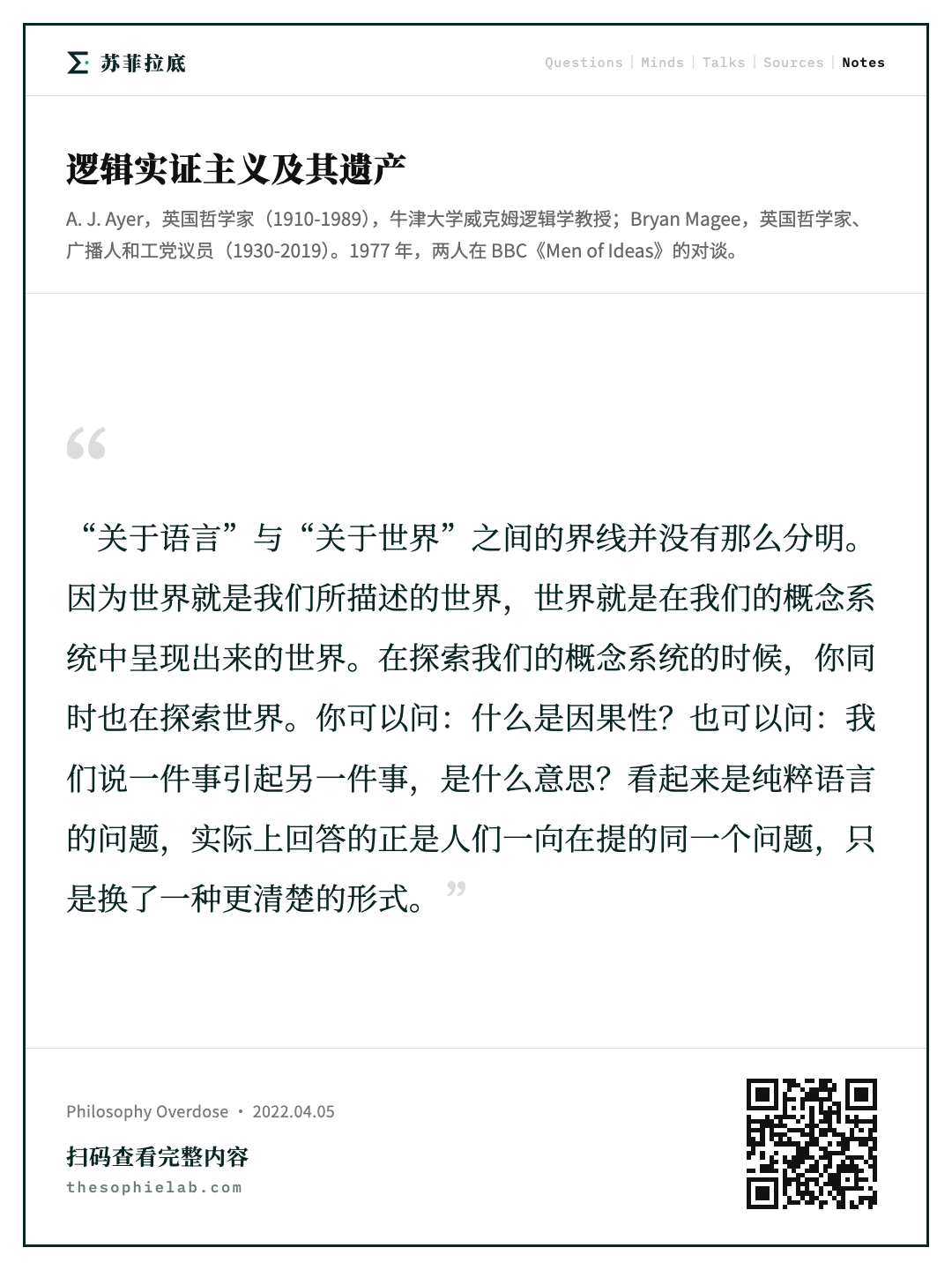
form and so on and so forth and philosophy soon can soon seem to become on that basis about language and indeed it would be true to say wouldn't it that a lot of non-philosophers have acquired the view that philosophers are only concerned with language and sometimes this is put disparagingly that they're only playing with words can you give some explanation of why that sort of prejudice against philosophy which is very widespread is misplaced well a great deal of philosophy certainly is about language and as far as as it distinguishes between different types of utterance and analyzes certain types of expression i think the main i mean i would make no apology for this but beyond that i think the answer i would give is that the distinction between being about language and being about the world isn't all that sharp because the world is the world as we describe it the world is the world as it figures in our system of concepts and in exploring um our system of concepts you are at the same time exploring the world
似乎是关于语言的。而且确实可以这么说,对吧,很多非哲学专业的人形成了这样一种看法:哲学家只关心语言。有时候这话说得带贬义,说他们只是在玩弄文字游戏。你能不能解释一下,为什么这种对哲学的、非常普遍的偏见是错置的?嗯,哲学中确实有很大一部分是关于语言的,而就它区分不同类型的话语、分析某些类型的表达式而言,我想主要的……我是说,我对此完全不必辩解但除此之外,我想我要给出的回答是,“关于语言”和“关于世界”之间的区别并没有那么分明因为世界就是我们所描述的那个世界,世界就是它在我们的概念系统中所呈现的样子,而在探究我们的概念系统的同时,你也就是在探究世界。举个例子吧,比如说现在有人
便签笔记
26:12
let's take an example suppose now one is interested in the question of causality now and we certainly believe that causality is something that happens in the world i i'm bitten by the anopheles mosquito i get malaria and so on one thing causes another and one to put it by saying what is causality and uh this is perfectly respectable important traditional philosophical question you can also put it by saying how do we analyze causal statements what do we mean by saying and what one thing causes another and in fact although you look as though you're opposing a purely linguistic question you're answering exactly the same questions have always posed and they put it in a different form and we think well versus not potentially a rather clearer form now the point is that i think that there was a time i think the fashion has passed it happened about 20 years ago and and came to be known as the philosophy of the oxford school mainly through the workforce particular philosopher john austin wasn't universal
对因果性问题感兴趣。我们当然相信因果性是世界中发生的事情我被按蚊叮了,我得了疟疾,等等,一件事引起另一件事。你可以这样提问:什么是因果性?这是一个完全正当的、重要的传统哲学问题。你也可以这样提问:我们如何分析因果陈述?我们说一件事引起另一件事时,究竟是什么意思?其实,虽然你看上去是在提一个纯粹语言学的问题,你回答的却正是人们一直以来提出的那同一些问题只不过换了一种形式提出来,而我们认为这也许是一种更清楚的形式。现在的关键是,我认为曾经有过那么一个时期——我想这股风气已经过去了,那是大概二十年前的事——后来被称为牛津学派的哲学主要是通过约翰·奥斯汀这位哲学家的工作。即便在当时它也不是普遍的,那时哲学家有点倾向于
便签笔记
27:13
even then when philosophers were a bit inclined to to start using for its own sake without seeing it as a means of solving any problems and this i think is sterilized that did become married i didn't become married yes but i think mostly now when people [Music] try to investigate the meanings of words it is because these are concepts they're studying which do play important part in our description what we think the world is really like i mean well i think that what you've just said really boils down to saying that the investigation of our use of language now use of concepts is an investigation of the structure of the world yes the world is experienced by a human being yes there's an obvious relationship between what you just said there and wittgenstein's and the logical positivists doctrine that that philosophy the proper task of philosophy consists not in uh formulating doctrines about in the activity of analysis the philosophy to be analysis yes and the organ of science yes now this it seems to me had enormous
为语言而研究语言,而不把它看作解决任何问题的手段,我想这就变得贫瘠了那确实变得……我倒不觉得变成那样了。是的,但我想现在大多数情况下,当人们去考察词的意义时那是因为他们所研究的这些概念,在我们描述我们认为世界究竟是什么样子时起着重要作用。我是说,嗯,我想你刚才说的那些归结起来就是:对我们语言使用的考察对概念使用的考察,就是对世界结构的考察。是的,是人所经验到的那个世界。是的你刚才说的那些,跟维特根斯坦和逻辑实证主义者的那个学说之间有明显的关系,那个学说是说哲学,哲学真正的任务不在于表述什么学说,而在于分析这项活动哲学就是分析。是的。是科学的工具。是的。在我看来,这对受过教育的普通人产生了巨大的影响。战后那几年
便签笔记
11艾耶尔的维也纳之行与成名作
28:16
influence on the educated layman i went up to oxford as an undergraduate uh during the years after the war and people who were not studying philosophy at all seemed to me to have come very much under the influence of some of these doctrines uh in particular one was if one tried to make an assertion of any kind about any subject one was immediately pinned against the wall by people who said to you how would you go about verifying that statement or what exactly do you mean by that what kind of an answer you want to that question are you you're conscious of that having been said i think it was so i think i was partly responsible for that yes now coming to your responsibility for this and i think it would be interesting at this stage to come to your connection with the movement you've described who the main people in vienna were you've talked about what some of their central doctrines were now you are well known as the figure who introduced these doctrines into england where they have i'm saying had an enormous influence
我作为本科生上牛津,在我看来,那些根本不学哲学的人似乎也很深地受到了其中某些学说的影响。特别是有一点:如果你想对任何题目作出任何断言,你马上就会被人逼到墙角,他们会问你:你打算怎么去证实这句话?或者你这话到底是什么意思?你想要那个问题得到什么样的回答?你意识到当时确实有人这么说吗?我想是有的我想我对此负有部分责任。是的。那么就说到你在这件事上的责任吧,我想在这个阶段谈谈你和你所描述的那个运动的关系会很有意思。你已经讲了维也纳那边的主要人物是谁也讲了他们的一些核心学说。现在,你以把这些学说引入英国而闻名,这些学说从那以后在英国一直有着巨大的影响,一直到今天
便签笔记
29:08
ever since right up to an including this day how did you come to do that well i was up at oxford in late when i came up in 29 took my schools in 1930 1932 and i was at christchurch pupil of jewett riles and when i took my schools i was appointed a lecturer at christchurch and given a few months leave of absence and i thought i'd go to cambridge to study under wittgenstein but gilbert rail said no don't do that go to vienna instead he happened to meet schlick at the congress i think you know it was in oxford also two years before and he had half an hour's conversation with him and thought that he was interesting and got the impression something was going on in vienna i think he'd also read some of the articles they produced so he said to me why not go to vienna find out what's happening there we know roughly about because i came if you don't know what's happening in vienna you'll come back and go there and find out and tell us well i didn't speak very much german i thought i had any german at that time but i thought i
你是怎么做到的呢?嗯,我是1929年上的牛津,1932年参加学位考试我在基督堂学院,是赖尔的学生。考完试之后,我被聘为基督堂学院的讲师,并获准休几个月的假。我本来想去剑桥跟维特根斯坦学习,但吉尔伯特·赖尔说,不,别去那儿去维也纳吧。他碰巧在一次大会上见过石里克,我想那次大会就是两年前在牛津开的他跟石里克谈了半小时,觉得他挺有意思,得到一个印象:维也纳那边正在发生些什么。我想他还读过他们发表的一些文章。所以他对我说,你为什么不去维也纳,看看那里在发生什么呢我们只大致知道一点。既然你不知道维也纳在发生什么,那你就去那儿弄清楚,回来告诉我们。嗯,我德语说得不好,那时候我几乎不会德语,不过我想我
便签笔记
30:03
probably could learn enough just to follow what's going on and so i went um with a letter of introduction to slick from gilbert and and slick i now see in reached us he's astonishing at the time seemed quite natural but said come and join the circle uh and so i did and the only other foreigner allowed in was uh quine the american philosopher the information philosophy we were there together this was in what i went to vienna in november 32 and stayed until spring of 33. you when you're very early 20 i was in my disciples i was tweeted i was but everything's in this younger than that i must have been just 23 yes yes no 22 i was 32. 22. just 22.
大概能学到足够跟上讨论的程度。于是我就去了,带着一封吉尔伯特写给石里克的介绍信。石里克——我现在回想起来觉得很惊人,当时却觉得挺自然——他说,来加入我们这个小组吧。我就加入了。当时唯一另一个被允许进来的外国人是美国哲学家蒯因……我们一起在那儿。那是在——我是1932年11月去的维也纳,一直待到1933年春天。你那时才二十出头吧。我当时……我一定刚满23岁吧。是的是的,不,22岁,那是32年。22岁,刚满22岁
便签笔记
30:43
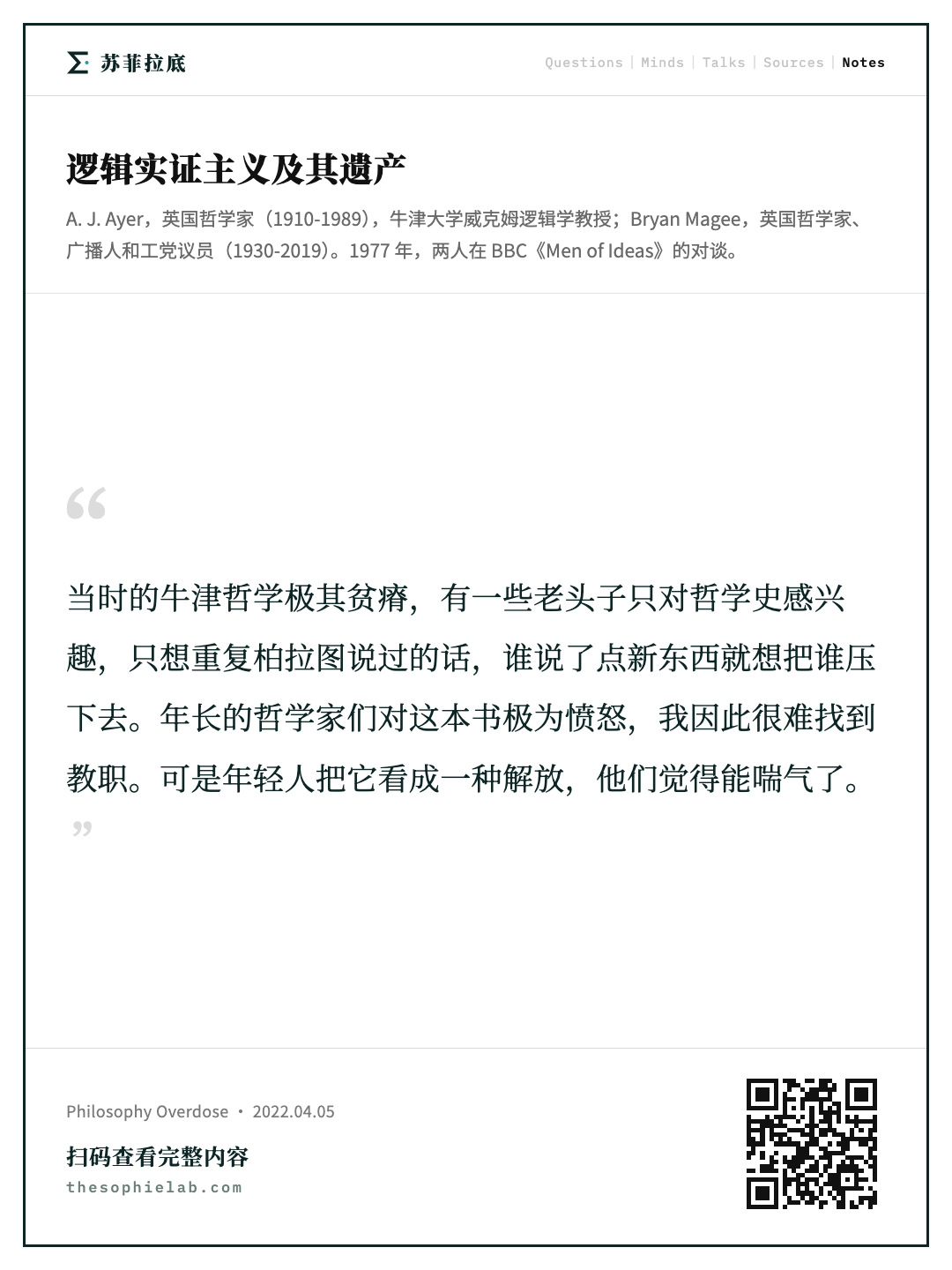
and um i sat then and i didn't contribute my journal wasn't good enough and it was mainly debates between schlicht and nairat at that time on and on and on the discussion went and i sat and listened and then came back to england very full of all this i wrote a paper in mind called demonstration of the impossibility of metaphysics which is simply borrowed from the verification principle and then isabel lin said to me i was we used to meet regularly and talk to us together he said you're so full of this why didn't write a book about it and i said why not and so i sat down in 18 months wrote language truth and logic and it i was ready when i was 24 and it was published when i was just 25. were you astounded by the explosive consequences well it didn't have all that uh um greater success at the beginning it had a success the older philosopher's blocks are absolutely outraged by it and in fact it was very hard for me to get a teaching job a doctor that i didn't get violent before the while the research
我就坐在那儿,没怎么发言,我的德语不够好。当时主要是石里克和纽拉特之间的辩论,就这么一直讨论下去,我就坐着听。后来我回到英国,满脑子都是这些东西,我写了一篇发表在《心灵》上的文章,叫《论形而上学之不可能的证明》,那完全是从证实原则那里借来的。然后以赛亚·伯林对我说——我们那时经常见面聊天——他说,你满脑子都是这个,为什么不写本书呢?我说,为什么不呢。于是我坐下来,用十八个月写出了《语言、真理与逻辑》,我24岁时写完,出版时刚满25岁。它引起的爆炸性反响让你震惊吗?嗯,它一开始并没有那么大的成功。它有点反响,那些年长的哲学家被它彻底激怒了。事实上我很难找到教职……真正是在战后重印之后,它才取得了这样巨大的成功
便签笔记
31:36
was only after the war when it got reprinted that there's this that was this it had this enormous success and got i suppose already before the world it first came out it did impress the younger people they were very excited about it because they did see the liberation was the opposite philosophy was terribly sterile there were some old men who were only interested in the history of philosophy only interested in repeating what plato had said and and trying to put down anyone say anything new and now certain logic with his dead seal with his huge mind put under these people did seem to the younger people as a liberation they did they didn't feel they could breathe and i've never had a big historical affair and i'd like to hear you say something about the influence you think it had outside philosophy it seems to me to have had obvious effects not only in science and logic and philosophy but in things like literary criticism or history and so on it probably had less effect than than on in within science than for example the
不过我想,在战前它刚出来的时候,它确实打动了年轻人,他们对它非常兴奋,因为他们确实把它看作一种解放。当时的哲学极其贫瘠,有些老先生只对哲学史感兴趣只对复述柏拉图说过的话感兴趣,还想压住任何说点新东西的人。而现在有人用严密的逻辑、用强大的头脑去对付这些人,这在年轻人看来确实是一种解放,他们觉得终于能喘上气了。那真是一件历史性的大事。我想请你谈谈,你认为它在哲学之外产生了什么影响在我看来,它显然不仅在科学、逻辑和哲学上有影响,在诸如文学批评、历史等等方面也有。它在科学界内部产生的影响可能比不上,比如说
便签笔记
12皇帝的新衣:影响与自我清算
32:27
work of karl popper is his uh his logical scientific discoveries came out in the german edition in in about the same time that year or so earlier i think probably appealed more to the scientists themselves but even so even with language and logic the scientists felt that this was all right i mean they were told they were after all the most important people that they didn't after they liked that they didn't have to worry about the philosopher's daniels at all we mustn't say that they ever had worried much but it was nice to be told that what they were doing was really the fundamental thing but you want it can i if i think it's not in your book yes but but the whole movement which obviously is about logical positivism yes what do you think the influence of that was well i think i think there was a great emphasis on on clarity and a great opposition to what might be called woolliness um there was a kind of uh injunction to look at the facts to see things as they are be a bit of hamburg all this is very attractive to
卡尔·波普尔的工作——他的《研究的逻辑》德文版大约在同一时间、或者早一年左右出版,我想那可能对科学家本身更有吸引力。但即便如此,即便是《语言、真理与逻辑》,科学家们也觉得这挺好,我是说,他们被告知,他们毕竟是最重要的那些人,他们不必再……他们喜欢这一点,他们根本不必再去操心哲学家的那些说法。我们不该说他们以前真的操心过多少,但被告知自己所做的事才是根本性的,这总归是件愉快的事。不过你想……我可以如果我认为它不在你的书里——是的,但是整个这场运动,显然是关于逻辑实证主义的——是的,你认为它的影响是什么?我想,我认为当时非常强调清晰性,非常反对可以称之为含混不清的东西。嗯,那是一种要求,要去看事实,如实地看待事物,要有点儿实事求是。这一切对任何领域的年轻人来说都非常有吸引力,
便签笔记
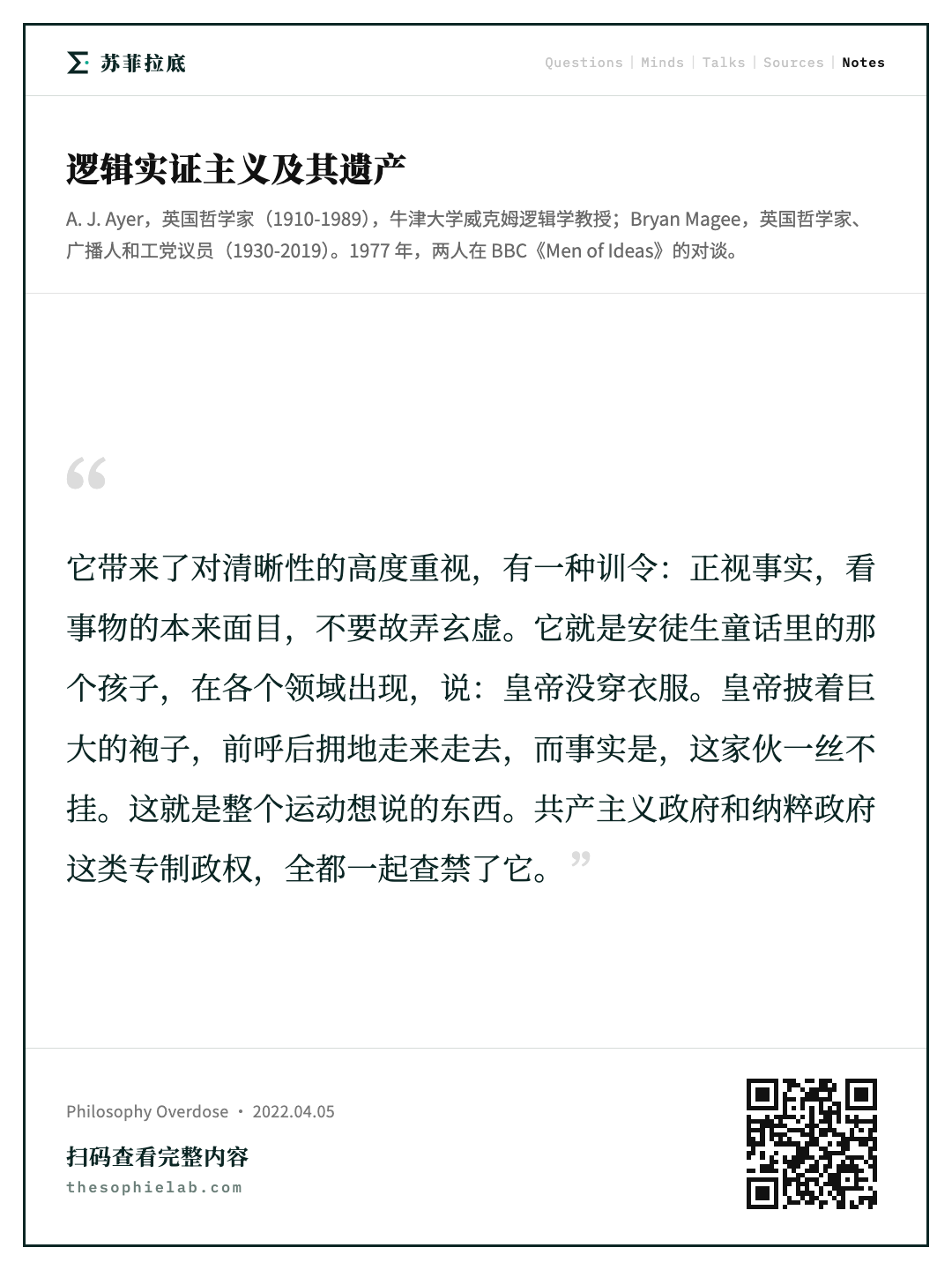
33:19
young people in any field and that and it went with i think a um a general reaction against victorian hypocrisy really this was seen as stripping off it was the it was the the the hans anderson child which as you said in opening remarks was functioning everywhere saying the emperor has no clothes that is parading around with these huge robes and so on and and places about our room the fact the fella's naked and this notion the fellas naked which that what the were things to be saying was very exciting for anyone to get any subject and of course that that is enough in itself to explain the huge and passionate hostilities that arise against yes authoritarian governments like the communist nazi governments banded all together even uh liberals were discomforted by just a little yes yes yes they thought it was too iconoclastic yes yes but now it must have had actually some real defects what do you know in retrospect think that the main shortcomings of the movement were well i suppose most of the defects is that you know it
而且我想,它还伴随着一种针对维多利亚时代虚伪风气的普遍反弹,这被看作是一种剥去伪装,就是那个安徒生笔下的孩子——正如你在开场白里说的,那个到处都在起作用的角色——说皇帝没穿衣服,说他披着那些华丽的长袍招摇过市,等等,而事实是这家伙光着身子。而这个「这家伙光着身子」的说法,当时说出这些话,对任何做任何学科的人来说都非常令人兴奋。当然,这本身就足以解释为什么会引起那么巨大而激烈的敌意——是的,像共产主义、纳粹这样的极权政府都一致地禁了它,甚至连自由派人士也感到不太自在,只是有那么一点点——是的是的是的,他们觉得它太离经叛道了。是的是的。但它现在看来一定确实有一些真正的缺陷。你现在回过头来看,认为这场运动的主要不足之处是什么?嗯,我想大部分缺陷在于,你知道,它
便签笔记
34:17
was false i think you need to say a little more about that well that's being too harsh on it because i think that i still want to say that it was true in spirit in a way that the attitude was right but if one goes for the details first of all the verification principle never got itself properly formulated i i tried several times and always it always letting either too uh too little or too much and to this day it hasn't received a properly logically precise uh formulation then the reductionism just doesn't work you you you can't reduce statements even state you can't use even state ordinary simple statements about cigarette cases and glasses and ashtrays the statements about sense data uh let alone the more aztec statements of science so the really exciting strict reductionism of the early russell and so on uh doesn't work and the annual thing called the wishiwashi which almost nobody would descend from that a scientific hypothesis must be have some relation to observation i mean this is all
是错的。我想这一点你得再多说几句。嗯,这么说对它太苛刻了,因为我想我仍然想说它在精神上是对的,那种态度是对的。但如果深究细节,首先,可证实性原则从来没有得到妥善的表述。我自己试过好几次,结果总是要么放进来太少,要么太多。而且到今天为止,它也还没有得到一个逻辑上足够精确的表述。其次,还原论根本行不通。你没法把陈述还原——甚至连关于烟盒、玻璃杯和烟灰缸这些普通简单的陈述,你都没法还原成关于感觉材料的陈述,更不用说科学中那些更抽象的陈述了。所以早期罗素等人那种真正令人兴奋的严格还原论是行不通的,最后剩下的只是一种含含糊糊的东西,几乎没人会反对:科学假说必须与观察有某种关联。我是说,剩下的就只有这个了。
便签笔记
35:23
that remains there it seems to me at least very doubtful whether statements of logical mathematics are analytically in any interesting sense that the whole analytics and daily distinction be put in question by the work of recent philosophers like like quiet no longer i think so i still want to maintain it in some form it's never so clear chats i once thought it was and um i'm not sure in some sense obviously the statements are different from from statements about the empirical world but saying as i said they're true by convention i'm not torture this is right anytime i please a lot of defending again um the whole i mean certainly in naming logic the reduction of statements about the past two statements about uh their future evidence evidence for them is wrong my team brother mines was wrong my genetics i think was still on the right lines though though much to uh uh summary so if you if you go in detail very very little survives what survives this is a general rightness of the approach i think the
在我看来,至少非常可疑的是,逻辑和数学的陈述是否在任何有意思的意义上是分析的。整个分析与综合的区分,被最近一些哲学家比如蒯因的工作打上了问号。我想已经不再成立了吧?我还是想以某种形式坚持它。它从来没有我曾经以为的那么清晰。嗯,我不确定。在某种意义上显然这些陈述不同于关于经验世界的陈述,但像我当年那样说它们是靠约定为真的——我现在不这么想了。这需要做很多辩护。嗯,整个——我是说,当然,在命名逻辑上,把关于过去的陈述还原为关于未来证据的陈述,这是错的,我关于他人心灵的理论也是错的。我关于伦理学的看法,我想大方向还是对的,虽然太过简略了。所以如果你深究细节,能存活下来的非常非常少。存活下来的是这套进路总体上的正确性。我想
便签笔记
36:30
the um would you agree with it with me if i try to put it this way that looking back on it what seems to have been enormously uh good about the achievement of logical positivism is almost entirely negative that is to say it did clear away hitherto plausible philosophizing yes which were now seen under the through the lenses of the new logic and the new science not to be acceptable so that whole traditional areas got said to be cleared of lumber yes but it now looks as if all they actually succeeded in doing was clear the ground because what they tried to build on that ground that they cleared isn't standing up well it's a little more than this it was very liberating i think if we perhaps we can go back to something said not biological process but by a pragmatist william james and of course pragmatism which came earlier in many ways very akin to logical passivism william james had a phrase in which which he asked for the cash value of statements now i think this is very important on the positive side the early
这个——你会同意我这么说吗:回过头来看,逻辑实证主义的成就中极其出色的部分几乎完全是否定性的,也就是说,它确实清除了此前看似言之成理的哲学思辨——是的——那些在新逻辑和新科学的透镜下被看出是不可接受的东西,于是整片传统领域被说成是清理掉了废料。是的。但现在看来,他们实际上做成的只是把地基清空了,因为他们试图在清空的地基上盖起来的东西并没有立住。嗯,还不止于此,它非常有解放性。我想,或许我们可以回到一句话,那不是逻辑实证主义者说的,而是实用主义者威廉·詹姆斯说的。当然,实用主义出现得更早,在很多方面与逻辑实证主义非常相近。威廉·詹姆斯有一个说法,他要求给出陈述的「现金价值」。我想这一点在正面意义上非常重要。早期的
便签笔记
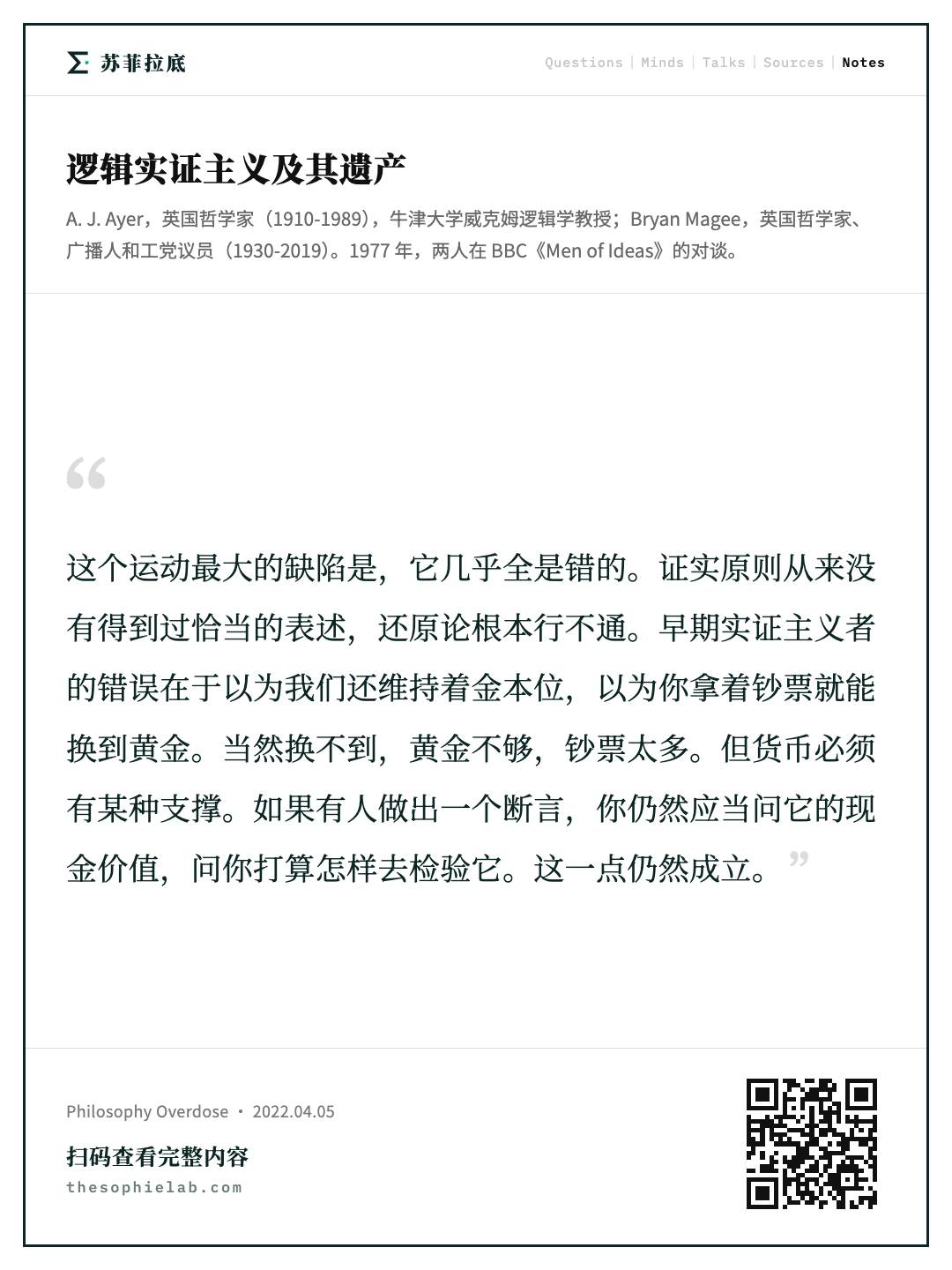
37:27
parties went wrong thinking that we still maintain the gold standard that if you took you said your notes you could get gold for them which of course you can't there's enough gold and then too many notes but nevertheless there must be some backing to the currency and this this is i think what's what comes out but if someone makes an assertion all right perhaps you can't translate it uh into observational terms but still it's important to ask for california how you would set about testing it what observations were but this i think still held thoughts and it is positive logical positivists like yourself yes uh although you you now say that most of the detailed doctrines are still immensely influenced by that oh yes and are addressing yourself to much the same question yes but in a more liberal open sort of i would say this is so yes yes no i'm not much older i do much more slowly possibly more certainly with this brilliance of the world neighborhoods before perhaps more soundly i hope perhaps i've learned
那伙人错在以为我们仍然维持着金本位,以为你拿着钞票就能兑换到黄金——这当然是做不到的,黄金不够而钞票太多。但尽管如此,货币总得有某种支撑,我想这才是要点所在。如果有人做出一个断言,好吧,也许你没法把它翻译成观察的语言,但去追问它的现金价值仍然很重要——你会如何着手检验它?有哪些相关的观察?我想这一点至今仍然成立。而像你这样的逻辑实证主义者——是的——尽管你现在说大部分具体的学说都错了,你仍然深受它的影响?哦,是的,并且仍在处理大体相同的问题?是的,但用一种更开放、更宽容的方式,我会这么说。是的是的。不,我只是老了一些,做事慢了很多,可能更有把握,但少了从前那种锋芒,也许更稳当一些吧,我希望。也许我确实学到了
便签笔记
38:23
something with the earth thank you very much professor
一些东西。非常感谢您,教授。
便签笔记
视频总结 · 一句话概括与核心要点

一句话概括

A. J. Ayer 与 Bryan Magee 回顾维也纳学派逻辑实证主义的起源、核心学说(可证实性原则、分析命题即重言式、哲学即分析活动)及其在英国的传播,并坦承其细节大多“是错的”,但在精神与态度上仍然正确且极具解放性。

核心要点

  • 逻辑实证主义是现代主义在哲学中的对应物。 Magee 指出现代绘画、音乐、诗歌、小说均在 20 世纪初兴起、1920 年代流行,共同特征是艺术转向自身内部、传统形式解体;哲学亦然:1903 年 Moore 与 Russell 与观念论决裂,经 Russell、Wittgenstein 铺垫,1920 年代维也纳学派成为第一个成熟的“新哲学”流派,并像政党一样组织例会、刊物与国际会议。
  • 核心敌人是“形而上学”,且带有政治意味。 他们主张任何命题若非逻辑/数学的形式命题、亦非经验可检验的命题,即为无意义——比康德“不能认识超越可能经验之物”更激进。这直接否定神学与超越的上帝;在当时奥地利社会党与 Dollfuss 领导的右翼教权党激烈对立的背景下,反形而上学本身就是一种政治姿态,尽管成员中只有 Neurath 明确政治化。
  • 三位核心人物各有分工。 Schlick(原为物理学家,1920 年代初 40 余岁到维也纳,随即组织学派并任主席);Carnap(Frege 在耶拿的学生,1920 年代末来维也纳,1930 年代初赴布拉格,仍为《Erkenntnis》期刊主要撰稿人);Neurath(社会学家,曾参与一战后慕尼黑革命政府,近乎马克思主义者,力图将实证主义与马克思主义结合并政治化)。
  • 思想渊源并非全新:Mach 与休谟的经验论传统。 Mach(列宁《唯物主义与经验批判主义》的批判对象)主张科学最终只是对感觉的描述,学派全盘继承;其主张与 18 世纪休谟极为相似,但他们本身对哲学史既不了解也不关心。真正的“革命”在于他们认为终于为哲学找到了新道路——做科学的婢女:科学描述唯一的世界,哲学只能分析和批判科学的概念与理论。
  • 新逻辑与新物理提供了工具和“背书”。 逻辑自亚里士多德以来停滞,经 Boole、De Morgan,到 Frege、Russell 与 Whitehead 实现飞跃,关系逻辑为结构分析提供精确工具。爱因斯坦(自承受 Mach 影响)否认“同时性”脱离验证方法有意义,量子理论否认粒子可同时有精确速度与位置(因测量无法兼得),学派将此解读为“概念意义由验证方式决定”在科学内部的胜利。
  • 三大学说:可证实性原则、重言式、哲学即活动。 (1)Schlick 表述“命题的意义即其证实方法”,负面推论是排除形而上学,正面推论是所有命题可还原为直接观察陈述;(2)逻辑与数学的必然真理是 Wittgenstein 所谓重言式,如“单身汉都未婚”,即康德的分析命题;(3)哲学不是学说而是活动,只做澄清、分析与揭露胡说——即“二阶”学科:谈论“关于世界的谈论”。
  • 强版本很快崩溃。 全称命题(“所有乌鸦是黑的”)覆盖范围可能无穷,无法翻译为有限观察,Schlick 只好说它们不是命题而是推理规则;原子、电子等高阶科学陈述根本无法写成“蓝的、圆的、暖的”感觉语句;关于过去的陈述(“凯撒渡过卢比孔河”)被等同于查史书或挖掘遗迹的证据,Ayer 认为“荒谬得令人绝望”;他人心灵陈述被还原为行为陈述也遭放弃。原则遂弱化为只要求命题“可被观察确证”,意义因而部分悬置。
  • 伦理学的两种处理。 既非经验陈述也非重言式的价值判断,Schlick 走自然主义路线(伦理是关于人类欲望与幸福的事实,近似功利主义,属心理学社会学);Carnap 视其为祈使句,Ayer 提出情感理论——伦理陈述是情感表达,无真假,但也不是形而上学胡说。
  • 语言转向及其辩护。 Russell 自述 45 岁前一直把语言当作“透明”媒介;逻辑实证主义使哲学家对自身活动空前自觉,分析技术达到前所未有的精密。针对“哲学家只是玩弄词语”的指责,Ayer 回应:语言与世界的界线并不分明,世界即我们用概念系统描述的世界,探究概念系统就是探究世界,例如“什么是因果性”与“如何分析因果陈述”是同一问题的更清晰表述;但他也承认约 20 年前以 Austin 为代表的牛津学派一度为分析语言而分析语言,流于无果。
  • Ayer 的传入经过。 1932 年他在牛津基督堂拿到讲师职位后,导师 Ryle 劝他不去剑桥跟 Wittgenstein 而去维也纳“看看那边在发生什么”;22 岁的他(1932 年 11 月至 1933 年春)与 Quine 是仅有的两名外国成员,德语不够好只听不说,主要旁听 Schlick 与 Neurath 的争论。回国后发表《论形而上学的不可能性》,Isaiah Berlin 劝他写书,18 个月写成《语言、真理与逻辑》,1936 年 1 月出版时 25 岁。

结论与值得注意的细节

  • 对于“主要缺陷是什么”,Ayer 的回答是:“我想主要缺陷是它是假的。”随后细数:可证实性原则至今没有逻辑上精确的表述(要么排除太多要么太少);还原论对烟盒、玻璃杯这种普通陈述都行不通;Quine 等人已动摇分析/综合之分,他仍想以某种形式坚持,但“真理来自约定”的说法他已不再确信;关于过去与他人心灵的还原是错的;情感伦理学他认为方向对但太粗略。
  • Magee 概括其成就“几乎完全是否定性的”——清理了地基,但建在上面的东西没有立住。Ayer 补充说不止如此:它极具解放性。借用 William James 的“陈述的现金价值”比喻,早期实证主义者错在坚持“金本位”(每张纸币都能兑换成黄金/观察),但货币仍需某种支撑——追问“你如何检验这个断言”依然是正确且有价值的,这一点存留至今。
  • 书出版之初并无爆炸性成功:老一辈哲学家极为愤怒,Ayer 因此很难找到教职,直到战后重印才获巨大影响;但当时年轻人视之为解放,因为牛津哲学当时被只重复柏拉图、压制新说的老人主宰。
  • 在科学界的影响可能不如 Popper 同期出版的《科学发现的逻辑》,但科学家乐于被告知自己在做“最根本的事”、无需理会哲学家。
  • 更广泛的文化影响是崇尚清晰、反对含混、“皇帝没有穿衣服”式的反维多利亚虚伪的姿态;也正因此招致纳粹与共产政权的一并查禁,连自由派也感到不适。
  • Ayer 自述晚年思考“更慢、也许更稳妥”,仍关注同样的问题,但以更自由开放的方式。

核心句型 · 8
1. It wasn't so much that … as that …
“It wasn't so much as they used science in their philosophy as they thought that the whole field of knowledge was taken up by science”
「与其说……不如说……」,用于纠正对方的理解、重新定位重点。仿写:It wasn't so much that he lacked talent as that he lacked discipline.
2. Would it be a not unreasonable simplification to say that …?
“Would it be a non-unreasonable simplification to say this that they thought that the job of finding out about the world…”
双重否定的委婉提问,主持人用来在复述对方观点时留出被纠正的余地。学术讨论中确认理解时极好用。
3. anything that couldn't be X was Y
“Anything that couldn't be empirically verified by since observation was meaningless”
用「凡不能……即……」的句式给出严格的判定标准,语气斩钉截铁,适合概括规则或原则。
4. X, let alone Y
“You can't reduce … ordinary simple statements about cigarette cases … let alone the more abstract statements of science”
「连X都不行,更别说Y了」,由易到难递进以强调不可能性。let alone 后接更强的情况。
5. what seems to have been … is almost entirely negative
“What seems to have been enormously good about the achievement of logical positivism is almost entirely negative”
用 what 引导的名词性从句做主语,先铺垫评价对象再给出判断,是英语书面评论的典型结构。
6. if you go into detail, very little survives; what survives is …
“If you go in detail very little survives what survives this is a general rightness of the approach”
「细究之下……幸存的只是……」,先承认失败再挽回核心,是自我批评时兼顾诚实与立场的表达框架。
7. boil down to saying that …
“What you've just said really boils down to saying that the investigation of our use of language … is an investigation of the structure of the world”
「归结起来就是说……」,用于把对方冗长的论述压缩成一句话,是讨论中推进共识的常用句。
8. I would make no apology for this, but beyond that …
“I would make no apology for this but beyond that i think the answer i would give is that…”
先坦然承认指责中的部分事实(不辩解),再转入更深层的回应。回应批评时既显自信又不回避。
生词精讲 · 104 · 按出现顺序
unself-conscious /ʌnˌself ˈkɑːnʃəs/ adj. 0:00
不自觉的、不带自我审视的
innards /ˈɪnərdz/ n. 0:00
内脏;(口)内部构造
disintegration /dɪsˌɪntəˈɡreɪʃn/ n. 1:12
瓦解、解体
exactitude /ɪɡˈzæktɪtuːd/ n. 1:12
精确性
cultural matrix phr. 1:12
文化母体、文化基质
idealism /aɪˈdiːəlɪzəm/ n. 1:12
(哲)唯心论、观念论
fully-fledged /ˌfʊli ˈfledʒd/ adj. 1:12
成熟的、羽翼丰满的
laymen /ˈleɪmən/ n. 1:12
外行人、非专业人士
explosively /ɪkˈsploʊsɪvli/ adv. 2:13
爆炸性地、火气十足地
self-consciously /ˌself ˈkɑːnʃəsli/ adv. 2:13
自觉地、有意识地
missionary zeal phr. 2:13
传教士般的热忱
propagated /ˈprɑːpəɡeɪtɪd/ v. 2:13
传播、宣传(学说)
metaphysics /ˌmetəˈfɪzɪks/ n. 3:13
形而上学
empirical /ɪmˈpɪrɪkl/ adj. 3:13
经验的、基于观察的
nonsensical /nɑːnˈsensɪkl/ adj. 3:13
无意义的、荒谬的
transcendent /trænˈsendənt/ adj. 3:13
超验的、超越的
theology /θiˈɑːlədʒi/ n. 3:13
神学
clerical /ˈklerɪkl/ adj. 4:10
教权的、教会的
reverence /ˈrevərəns/ n. 4:10
崇敬、敬畏
pupil /ˈpjuːpl/ n. 5:13
(学术上的)弟子、学生
scalpels /ˈskælpəlz/ n. 6:14
手术刀(此处喻分析工具)
tear away phr. v. 6:14
撕去、剥除
in the last resort phr. 6:14
归根到底、最终
empiricist /ɪmˈpɪrɪsɪst/ adj./n. 7:15
经验主义的;经验主义者
handmaiden /ˈhændmeɪdn/ n. 7:15
婢女;(喻)附属物、仆从
stagnant /ˈstæɡnənt/ adj. 8:06
停滞的
precursors /priˈkɜːrsərz/ n. 8:06
先驱、前身
refute /rɪˈfjuːt/ v. 8:06
驳倒、反驳
far-ranging /ˌfɑːr ˈreɪndʒɪŋ/ adj. 8:06
范围广泛的
personified /pərˈsɑːnɪfaɪd/ v. 9:07
(被)人格化、集中体现于某人
incorrigible /ɪnˈkɔːrɪdʒəbl/ adj. 9:07
不可纠正的;(哲)不可修正的
vindication /ˌvɪndɪˈkeɪʃn/ n. 10:07
证实、辩护、印证
simultaneity /ˌsaɪmltəˈniːəti/ n. 10:07
同时性
hinged on phr. v. 11:04
取决于、依赖于(hinge on)
succinctly /səkˈsɪŋktli/ adv. 11:04
简洁地
verifiability /ˌverɪfaɪəˈbɪləti/ n. 11:04
可证实性
entailing /ɪnˈteɪlɪŋ/ v. 12:08
(逻辑上)蕴含、必然导致
tautologies /tɔːˈtɑːlədʒiz/ n. 12:08
重言式、同义反复
analytic /ˌænəˈlɪtɪk/ adj. 13:13
(哲)分析的(谓词已含于主词中)
elucidation /ɪˌluːsɪˈdeɪʃn/ n. 13:13
阐明、阐释
sense data n. phr. 14:09
感觉材料(哲学术语)
universal propositions n. phr. 14:09
全称命题
expedient /ɪkˈspiːdiənt/ n. 15:20
权宜之计
confirmable /kənˈfɜːrməbl/ adj. 15:20
可确证的
implausible /ɪmˈplɔːzəbl/ adj. 16:28
难以置信的、不合情理的
equated with phr. 16:28
被等同于
relics /ˈrelɪks/ n. 16:28
遗物、遗迹
recapitulate /ˌriːkəˈpɪtʃuleɪt/ v. 17:28
扼要重述、总结
self-referential /ˌself ˌrefəˈrenʃl/ adj. 17:28
自我指涉的
self-contradictions /ˌself ˌkɑːntrəˈdɪkʃnz/ n. 17:28
自相矛盾(的陈述)
chuck overboard phr. v. 18:27
(口)扔掉、抛弃
aesthetic /esˈθetɪk/ adj. 18:27
审美的
naturalistic /ˌnætʃrəˈlɪstɪk/ adj. 18:27
(伦理学)自然主义的
conducive to phr. 18:27
有助于、有益于
utilitarianism /ˌjuːtɪlɪˈteriənɪzəm/ n. 19:27
功利主义
emotive theory n. phr. 19:27
情感主义理论(伦理学)
imperatives /ɪmˈperətɪvz/ n. 19:27
祈使句;命令
occam's razor n. phr. 19:27
奥卡姆剃刀(如无必要勿增实体)
slashing about phr. v. 19:27
到处乱砍
sophistication /səˌfɪstɪˈkeɪʃn/ n. 21:23
精密、复杂精致的程度
legitimate /lɪˈdʒɪtɪmət/ adj. 21:23
合法的、正当的
second order adj. phr. 22:19
二阶的(关于一阶话语的话语)
transparent /trænsˈpærənt/ adj. 23:12
透明的;(喻)不被察觉的媒介
abstract entities n. phr. 23:12
抽象实体
in retrospect phr. 24:10
回顾起来、事后看来
preoccupation /priˌɑːkjuˈpeɪʃn/ n. 24:10
全神贯注、专注之事
assertion /əˈsɜːrʃn/ n. 24:10
断言、主张
disparagingly /dɪˈspærɪdʒɪŋli/ adv. 25:08
贬低地、轻蔑地
misplaced /ˌmɪsˈpleɪst/ adj. 25:08
错置的、不恰当的
utterance /ˈʌtərəns/ n. 25:08
话语、言语表达
make no apology for phr. 25:08
对……毫不歉疚、理直气壮
causality /kɔːˈzæləti/ n. 26:12
因果性
respectable /rɪˈspektəbl/ adj. 26:12
正当的、值得尊重的
for its own sake phr. 27:13
为其自身之故、为……而……
sterilized /ˈsterəlaɪzd/ adj. 27:13
(喻)贫瘠化的、失去生命力的
boils down to phr. v. 27:13
归结为
pinned against the wall phr. 28:16
被逼到墙角、被追问得无路可退
leave of absence n. phr. 29:08
休假、准假
letter of introduction n. phr. 30:03
介绍信
outraged /ˈaʊtreɪdʒd/ adj. 30:43
极为愤怒的
astounded /əˈstaʊndɪd/ adj. 30:43
震惊的
sterile /ˈsterəl/ adj. 31:36
贫瘠的、无创造力的
put down phr. v. 31:36
贬低、压制
appealed to phr. v. 32:27
吸引、对……有吸引力
woolliness /ˈwʊlinəs/ n. 32:27
含糊不清、思路混乱
injunction /ɪnˈdʒʌŋkʃn/ n. 32:27
命令、要求
hypocrisy /hɪˈpɑːkrəsi/ n. 33:19
虚伪
parading around phr. v. 33:19
招摇过市
iconoclastic /aɪˌkɑːnəˈklæstɪk/ adj. 33:19
离经叛道的、打破偶像的
discomforted /dɪsˈkʌmfərtɪd/ adj. 33:19
感到不安的
harsh /hɑːrʃ/ adj. 34:17
严苛的
reductionism /rɪˈdʌkʃənɪzəm/ n. 34:17
还原论
let alone phr. 34:17
更不用说
wishy-washy /ˈwɪʃi wɑːʃi/ adj. 34:17
含糊软弱的、没有立场的
by convention phr. 35:23
依照约定、按惯例
on the right lines phr. 35:23
方向正确、路子对
hitherto /ˌhɪðərˈtuː/ adv. 36:30
迄今为止、此前
cleared of lumber phr. 36:30
清除掉废料、清理杂物
akin to phr. 36:30
类似于、近似于
pragmatist /ˈpræɡmətɪst/ n. 36:30
实用主义者
cash value n. phr. 36:30
现金价值(詹姆斯喻命题的实际检验后果)
gold standard n. phr. 37:27
金本位;(喻)最高标准
backing /ˈbækɪŋ/ n. 37:27
支撑、后盾
set about phr. v. 37:27
着手做
理解自测 · 11 题 · 是真懂了,还是以为自己懂
1. 艾耶尔指出逻辑实证主义者最主要反对的是什么?他们的判定标准是什么?

他们主要反对「形而上学」,即任何主张存在超出科学和常识、超出感官所揭示的日常世界的说法。判定标准是可证实性原则:一个陈述若既不是逻辑或数学那样的形式陈述,又不能被经验检验,就是无意义的。艾耶尔在第3段特别对比了康德——康德只说超经验之物不可知,维也纳学派更进一步说谈论它本身就无意义。这一标准由此顺带否定了神学,并在陶尔斐斯执政的奥地利带有反教权的政治意味。

2. 维也纳学派的三位主要人物是谁?各有什么背景?

第一是学派正式领袖莫里茨·石里克,德国人,物理学出身,1920年代初四十出头来到维也纳并几乎立即开始组织小组。第二是鲁道夫·卡尔纳普,也是德国人,弗雷格在耶拿的学生,1920年代末来维也纳,1930年代初转赴布拉格,是期刊《认识》的主要撰稿人。第三是奥托·纽拉特,奥地利社会学家,政治上最活跃,曾参与一战后慕尼黑的革命政府,想把实证主义与马克思主义结合。艾耶尔强调该圈子的共同特点是对自然科学的极度推崇。

3. 艾耶尔是如何到维也纳的?《语言、真理与逻辑》是怎样写成的?

艾耶尔1932年在牛津基督堂学院考完学位后被聘为讲师并获准休假,本想去剑桥跟维特根斯坦学习,但导师赖尔因两年前在牛津大会上与石里克谈过半小时,劝他改去维也纳「弄清那里在发生什么」。他带着赖尔的介绍信于1932年11月至1933年春旁听学派讨论,22岁,另一位外国人是蒯因。回英国后他先在《心灵》发表《形而上学之不可能的证明》,经以赛亚·伯林鼓励用18个月写出该书,24岁完稿,25岁出版。

4. 逻辑实证主义者为何把爱因斯坦的相对论和量子理论视为对自己学说的「印证」?

按他们的解读,爱因斯坦表明「同时性」这类概念只有在考虑相关陈述如何被观察验证时才有意义——意义取决于测定方法;量子理论中,说粒子同时有精确速度和精确位置没有意义,因为测量一者必然扰乱另一者,无法检验。他们认为这证明科学概念的含义本身就是由验证方式决定的,而这正是可证实性原则的主张。艾耶尔还补充爱因斯坦本人受过马赫影响。这一段(第9-10段)解释了为何学派自信「科学站在我们这边」。

5. 强形式的证实原则遇到了哪些具体困难,导致它被弱化?

第一,全称命题如「所有乌鸦都是黑的」涵盖可能无限的实例,无法被有限观察完全翻译或证实,石里克只好把它们降格为「规则」而非命题。第二,高层科学概念如原子、电子无法用「蓝色、圆形、温暖」等感觉语言表达。第三,关于过去的陈述(凯撒渡卢比孔河)被迫等同于现在可找到的证据,关于他人心灵的陈述被等同于行为描述,艾耶尔称这「硬撑而不可信」。于是原则从「可翻译为观察陈述」退为「可被观察确证」,代价是意义变得部分不确定。

6. 为什么可证实性原则对伦理学构成难题?石里克与艾耶尔分别怎样回应?

道德、价值和审美判断既不是关于世界的经验陈述,也不是逻辑重言式,按原则应属「无意义」。石里克走自然主义路线:伦理学研究人想要什么、如何得到满足,成为心理学与社会学的经验事实问题,近似功利主义。艾耶尔和卡尔纳普则认为伦理陈述更像命令而非真假命题——艾耶尔提出情感理论,认为它们是情感的表达;卡尔纳普视之为祈使句。两条路线的共同点是都不把伦理当作形而上学胡话,但也都否认它是在陈述特殊的道德事实。

7. 艾耶尔如何反驳「哲学家只是在玩文字游戏」的指责?请复述其论证。

他先承认哲学确有很大一部分关于语言,对此无需辩解;然后指出「关于语言」与「关于世界」的界线并不分明,因为世界就是我们所描述的世界、在概念系统中呈现的世界,探究概念系统就是探究世界。他以因果为例:「什么是因果性」与「我们说一物引起另一物是什么意思」是同一个传统问题的两种表述,后者更清楚。主持人将其归结为:考察语言使用即考察人所经验的世界的结构。艾耶尔同时批评牛津学派曾为语言而研究语言,认为那样会变得贫瘠。

8. 「哲学是二阶学科」是什么意思?这一定位是如何从证实原则推出来的?

一阶话语是谈论世界,二阶话语是谈论「关于世界的谈论」。推理链是:证实原则规定有意义的陈述要么是科学式的经验陈述要么是逻辑重言式;科学已经占据了描述世界的全部地盘,哲学不能与之竞争、没有自己的对象领域;于是哲学只剩下分析活动——澄清科学的概念和论证方法、区分合法与不合法的推理、揭露无意义的话。维特根斯坦「哲学不是学说而是活动」即此意。艾耶尔说这迫使哲学家空前地反思自己在做什么,也推动分析技术达到前所未有的精致程度。

9. 艾耶尔为什么说逻辑实证主义「主要缺陷在于它是错的」,却又坚持它「精神上是对的」?两者矛盾吗?

不矛盾,因为他区分了具体学说和整体进路。具体学说上他逐一承认失败:证实原则从未得到精确表述,总是放进太少或太多;还原论连烟灰缸这类普通陈述都处理不了;分析/综合区分被蒯因动摇;关于过去和他人心灵的理论是错的。但精神层面,他借用詹姆斯「现金价值」的比喻:早期错在坚持「金本位」——每句话都能兑换为观察;可货币仍需支撑,追问一个断言「你会怎样检验它、相关观察是什么」至今有效。他仍处理同样的问题,只是方式更开放宽容。

10. 如果有人反驳说:证实原则本身既非经验陈述也非重言式,按其自身标准也是无意义的。根据本片内容,艾耶尔可能怎样回应?

这是对逻辑实证主义最经典的自反性质疑。从本片看,艾耶尔不会正面否认,因为他已承认该原则「从未得到逻辑上精确的表述」,且强形式「没持续多久」。他更可能的回应是把原则从「学说」降为「方法」或「活动」——正如维特根斯坦所说哲学不是命题集合而是澄清活动,证实原则是一条询问「现金价值」的方法论要求,而非一个需要自我证实的事实断言。他在结尾也正是这样保留它的:不再主张一切可翻译为观察,只主张断言必须有某种观察支撑。这一退却使原则免于自我否定,但也承认了它作为「意义判据」的失败。

11. 把「一个断言必须能说出如何检验它」这一要求放到今天的数据科学或AI领域,还成立吗?它可能遇到本片中提到的哪种困难?

大体仍成立:一个模型的「理解」「涌现」等说法若不能转化为可观察的测试与预测,就有沦为艾耶尔所说「含混不清」的危险,这正是他保留的「现金价值」精神。但它会重演本片中的困难:首先是高层理论词项问题——「表征」「意图」这类概念像原子、电子一样无法直译为具体观测;其次是全称命题问题——「模型在所有情形下安全」涵盖无限实例,只能被证伪不能被证实,这正是波普尔取代可证实性的理由;再者是他人心灵问题——把「机器是否理解」还原为行为表现,正是艾耶尔承认自己错了的那种还原。所以该要求作为方法有效,作为意义判据则同样会「放进太少或太多」。

精读便签
下载便签 手机:长按图片保存
← 上一期 · NO.049Men of Ideas: The Ideas of Quine - Bryan Magee & Quine (1978) 下一期 · NO.051 →Frege, Russell, & Modern Logic - A. J. Ayer & Bryan Magee (1987)
问题周报 WEEKLY LEDGER 每周一封:本周入库的精读、一个值得带走的问题、一条苏菲按。随时退订。
免费 · 每周一封 · 一键退订
苏菲拉底 THE SOPHIE LAB · ASK THE BEST MINDS THE BIG QUESTIONS 内容仅供学习 · thesophielab.com